

In her interview with ECPS, Professor Susan Stokes explains how rising inequality and polarization create fertile ground for democratic backsliding. “There’s a kind of direct, almost organic effect of income inequality on polarization,” she notes, adding that the United States is “a very unequal country—and the oldest democracy—yet being an old democracy does not protect us from backsliding.” Despite these vulnerabilities, Professor Stokes rejects fatalism. Civil society mobilization and the courts, she emphasizes, have been “major blocks in the way of autocratization under the second Trump administration.” Ultimately, she remains cautiously optimistic: “There are lots of reasons to be hopeful that democracy will survive and can be rebuilt in a more robust way.”
Interview by Selcuk Gultasli
In this wide-ranging interview, Professor Susan Stokes—Tiffany and Margaret Blake Distinguished Service Professor and Director of the Chicago Center on Democracy at the University of Chicago—offers an empirically grounded and conceptually rigorous analysis of democratic erosion in the United States and beyond. Speaking with the European Center for Populism Studies (ECPS), she underscores the structural forces propelling contemporary backsliding, most notably rising inequality and partisan polarization. As she succinctly puts it, “there’s a kind of direct, almost organic effect of income inequality on polarization. Then backsliding leaders… benefit from operating in a polarized polity. Therefore, once in office, they do what they can to exacerbate partisan conflict.”
A core insight from her recent work is that inequality—rather than classic institutional safeguards—best predicts democratic decline. Drawing on extensive comparative research, Professor Stokes highlights that “being an older democracy offers no more protection against backsliding than being a younger democracy.” The United States, therefore, faces a distinct vulnerability: “We are a very unequal country, and we are the oldest democracy. Being very unequal raises our chances of experiencing backsliding, and being an old democracy does not protect us from it.” These findings challenge long-standing institutionalist theories that assumed democratic age alone could inoculate systems from erosion.
At the same time, Professor Stokes emphasizes that democratic decline is never uncontested and rarely linear. Civil society resistance—particularly through mass mobilization—remains a crucial barrier to autocratization. Reflecting on recent US cases, she notes that “protests, as well as the courts, have been a major block in the way of autocratization under the second Trump administration.” Even when repression intensifies, the protest–voting linkage proves resilient, reinforcing democratic engagement rather than severing it.
Yet Professor Stokes ultimately insists that the current moment, while perilous, is not predetermined. She resists fatalist narratives that portray autocratization as inevitable or unstoppable. Instead, she stresses the multiplicity of democratic resources that persist even under considerable strain: electoral accountability, civil society activism, independent media, and crucially, the lower federal courts. As she concludes, “there are lots of reasons to be hopeful that democracy will survive and can be rebuilt in a more robust way.”
This interview explores these themes in depth—from inequality and polarization to institutional attacks, populist rhetoric, and the prospects for democratic renewal. Professor Stokes’s analysis combines empirical precision with comparative breadth, offering a clear-eyed but ultimately hopeful assessment of democracy’s capacity for resilience and reconstruction.
Here is the edited transcript of our interview with Professor Susan Stokes, slightly revised for clarity and flow.
Inequality, Polarization, and the New Backsliding

Professor Susan Stokes, thanks very much for joining our interview series. Let me start right away with the first question: Your recent analyses suggest that Trump’s second-term agenda—including regressive fiscal policy, attacks on universities, and intensified politicization of state institutions—accelerates inequality and democratic erosion simultaneously. How do these US-specific dynamics compare to earlier episodes of backsliding you have studied in India, Hungary, or Turkey?
Professor Susan Stokes: It’s such a pleasure to be here. Thank you so much for the invitation. We don’t yet have systematic evidence about the impact of backsliders on inequality. The research I’ve done that is in my book, as well as in a co-authored article with Eli Rao that appeared in the Proceedings of the National Academy of Sciences, looks at the impact of inequality on the probability of a backsliding leader coming to power. But there is some evidence—some of it systematic, some of it more anecdotal—about the behavior of these kinds of leaders with regard to social spending, fiscal policy, and the like. I make a distinction between right-wing ethno-nationalist backsliding leaders and left populist ones, and the left populist ones do have incentives to decrease inequality, address inequality, and improve social spending and the material conditions of people at the bottom.
So, leaders like Andrés Manuel López Obrador in Mexico were left populists who increased and made retirement benefits more generous, raised the minimum wage, and also undermined democratic institutions. There is evidence from European research—I’m thinking about a study by Russell Dalton and Carl Berning—that shows that far-right parties in Europe tend to take a position that is more pro–social spending than the traditional right. And in the US, I think the country is a bit exceptional in that we have a right-wing backsliding leader, a right-wing ethno-nationalist, who has stuck with fairly traditional conservative policies: lowering taxes on the wealthy and cutting social spending rather drastically. I think that has to do with a conflict in the Republican Party between a populist subgroup and a more traditional subgroup.
We think of Donald Trump as utterly dominating the Republican Party. In some respects, he does, but he hasn’t been fully successful—he hasn’t always; he’s ambivalent himself on this. In some ways, his preferences tend toward a small state, low regulation, and so forth. But he does respond to electoral incentives to try to improve social conditions, and some of the party doesn’t go along with that, so you see that conflict playing out. What it has added up to thus far is a leader who is rhetorically populist, but whose policies have been fairly straightforward, traditional anti-state, anti-regulation policies of the conservative party.
Why Autocrats Fear Independent Universities
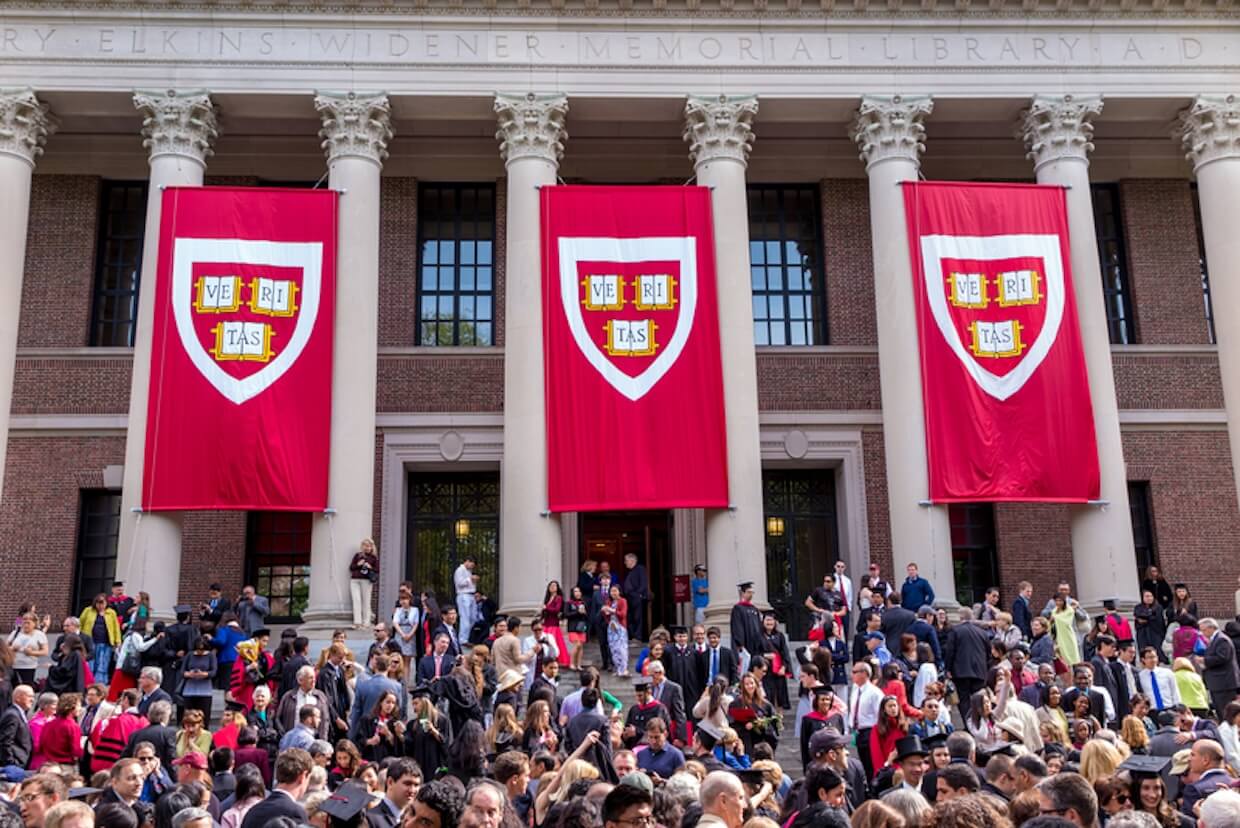
In your writing on Trump’s assault on epistemic institutions, you argue that universities pose a threat to autocrats because of their independence. How does the targeted dismantling of academic autonomy reshape the informational environment through which citizens evaluate inequality, trustworthiness, and democratic legitimacy?
Professor Susan Stokes: That’s certainly the case—that it’s the independence of institutions of higher education, especially their capacity to challenge the factual basis of governments’ claims, that is part of what we do in producing independent information and knowledge. None of that is particularly welcomed by these kinds of governments. And it’s interesting: we think of the ideological conflict between these governments and universities, but in fact, whatever ideology the government embraces, they tend to have the same conflicts. So, you know, Erdogan attacks Boğaziçi University and says that it’s too secular and anti-national, Trump attacks American universities because they’re too woke, and López Obrador in Mexico attacks elite universities on the grounds that they are “too neoliberal and too conservative.” So, whatever the ideology, there seems to be something more structural going on.
What’s the effect? I would say that, again, we don’t have great systematic evidence, but it does seem that—especially in situations where a prominent university like the Central European University when it was in Budapest, or in Nicaragua, where higher education has been almost erased and replaced by very pro-regime forces—there is a real narrowing of the scope of information: solid information and counter-narratives that are available to people.
Big Money, Racial Politics, and America’s Autocratic Drift
You note that Trump is unusual among autocrat-leaning leaders in refusing to adopt redistributive or pro-poor policies. What explains this deviation from the global pattern—seen in AMLO, Modi, or Erdoğan—and what does it reveal about the class, racial, and ideological coalitions sustaining backsliding in the US?
Professor Susan Stokes: That’s a wonderful question, and I think there are two parts to the answer. One of them has to do with the rather extreme role of capital in democratic politics in the United States—small-d democratic politics. For more than a century we’ve had a great deal of involvement—whether it was the railroads once upon a time, or big oil, or today, Elon Musk—an extraordinary level of direct involvement by large corporations and very affluent individuals in our politics. Some of that has to do with the highly decentralized nature of American electoral politics. Elections are run at a very local level, and our equivalent of a national election administration body, the Federal Election Commission, is very weak. So, very decentralized elections create a lot of room for involvement and distortion by big money. And while this is an old pattern, it was made much worse by the 2010 Citizens United decision of the US Supreme Court, which made it very difficult to regulate campaign contributions—or limited our ability to regulate them. So, that’s part of the story which is that, partly through elections but also through other forms of influence, the ability to make substantial donations gives big capital a major impact and constrains what political parties and governments can do. Mostly that impact affects the Republican Party, but it has significant effects on the Democratic Party as well.
The other part of it, as your question suggested, is the long-standing racialization of politics in the United States, where racial conflict—some of it organic and some of it encouraged by interested parties—allows conservative forces to gain more support for an anti-state, anti-regulatory position. A lot of people think of the welfare state as equivalent to benefits for minorities, particularly for Black people. So, you get large numbers of people who don’t think of welfare and social spending as benefiting them but benefiting somebody else—our tax dollars going to these other people who are supposedly cutting in line, and so forth. Of course, none of that is based on reality, but that’s the discourse, and that’s one reason our politics look a bit different from the politics of other advanced democracies in this regard.
When Partisanship Makes Voters Excuse Autocracy
Your work links widening inequality to declining trust in the judiciary, Congress, and the press. To what extent does affective polarization mediate this link—transforming socioeconomic grievance into a willingness among partisans to condone norm violations and executive aggrandizement?
Professor Susan Stokes: It does have an effect, for sure. The argument in my book is that when societies are more income-polarized—that is, when there are bigger gaps between the wealthy and the rest, both in wealth and in income—that in itself feeds into polarization and partisan polarization. That’s not actually my own original research; other people have shown that to be true, and it probably has to do with the sense that the stakes are very high when one party or the other comes to power. So, there’s a kind of direct, almost organic effect of income inequality on polarization. Then backsliding leaders, autocratizing leaders, benefit from operating in a polarized polity. Therefore, once in office, they do what they can to exacerbate partisan conflict.
They say all kinds of terrible things about the other party. They demonize the other party. They try to marginalize parts of the country or cities controlled by the other party. The reason they benefit from operating in a polarized setting, as your question suggested, is that when people operate in a polarized, highly partisan, affectively polarized environment—when they think that if the other party comes to power, it’s the end of the world—they are more willing to look the other way at incursions into democratic practices and attacks on democratic institutions.
There is very good research in this regard. Milan Svolik at Yale has done truly groundbreaking work, as has Jennifer McCoy and her co-authors at Georgia State. So, this is well established. It’s theoretically quite intuitive, and it has been shown empirically that, other things being equal, the more somebody believes the sky is going to fall if the other party comes to power, the more willing they are to say to themselves: well, I’m not crazy about the fact that he’s always attacking the courts or the press, or that he seems to be politicizing the military, or what have you, but if that’s the price we have to pay for keeping the other terrible side out, then so be it.
Electoral College Inversions and the Fragility of Democratic Legitimacy

How do repeated electoral inversions in the US Electoral College—combined with rising inequality—affect democratic consent and citizens’ tolerance for anti-democratic appeals, and what do your legitimacy experiments suggest about the durability of these effects?
Professor Susan Stokes: Thank you for that question. So, for people who are interested, I’m part of a group that founded an organization called Bright Line Watch, which we started as a small collaboration among several universities. All our publications and the original data from our surveys are available online. Anyone who wants to take a look or use the data is more than welcome to do so—just Bright Line Watch.
We did a study based on experiments examining the effect of inversions on legitimacy—the legitimacy of the winning candidate. Just to explain, inversions occur when who wins an election depends not only on how many votes they get but also on the geographic distribution of those votes. When votes are tallied in subnational districts, like states, and the geographic distribution of votes matters as much as their number, you can end up with an inversion in which the loser of the overall popular vote becomes the winner. The Electoral College in the United States has produced that outcome several times. It has also occurred in other countries—the UK, New Zealand, Canada—but in the US we saw it in 2000, when George Bush first won the presidency, and again in 2016, when Hillary Clinton won the popular vote and Donald Trump won the Electoral College vote and became president.
That’s a side effect of systems in which the distribution of votes matters. The reason parties like the Democratic Party tend to lose out in these situations is that their voters are much more geographically concentrated. They tend to be in big cities and are not spread across the national territory to the same extent. What we found is that politicians who lose the popular vote but win the election—becoming the president or the prime minister—do take a hit in terms of their legitimacy. We looked at this in the US, and the effect is driven by Democrats. Republicans are less troubled by inversions; Democrats are more troubled. And that probably has to do with people’s intuitive or basic understanding that Democrats are more likely to suffer under this system because of their geographic distribution.
It’s a pretty powerful effect, even though it’s driven primarily by Democratic respondents. Interestingly, it isn’t much affected by the margin of victory. Any loser of the popular vote who gets into office—whether that person loses (hypothetically) by a large or small margin—takes a substantial hit in legitimacy. We see the inverse of that in the 2024 election. Unlike in 2016, when Trump won via the Electoral College but not the popular vote and was seen as much less legitimate, for a period there was a kind of aura around his second-term presidency because he had won the popular vote—and won not a landslide (he claims it was a landslide) but reasonably decisively. So, you see the opposite effect in that case.
How Populist ‘Trash Talk’ Weakens Democratic Defenses
Drawing on your research on Manichean populist rhetoric with Çınar and Uribe, how does the escalation of zero-sum, anti-institutional language in the US accelerate the shift from inequality-induced distrust to permissiveness toward democratic norm erosion?
Professor Susan Stokes: I would just add that Ipek Çınar and Andres Uribe are co-authors of that paper, which appeared in the journal Comparative Political Studies, and another co-author is Lautaro Cella—I don’t want to forget him. So, what we observe in that study… let me back up a little bit. Returning to the issue of polarization, a polarized population is good for would-be autocrats because their own followers will be more willing to support them when they violate democratic institutions, since they say to themselves, “God forbid that the other side come to power.” On the other hand, what politicians do to exacerbate that polarization is to say really terrible things about the opposition party, and my book has lots of piquant examples of that. You can see Jair Bolsonaro saying that the military should have gone ahead and killed 30,000 people when they were in power, of the opposition types. Donald Trump calls the Democrats the party of lawlessness, says they hate the country, want to destroy the country, want no borders, and so on and so forth.
That kind of rhetoric can be very effective if you put yourself in the position of a MAGA Republican voter. If they hear that message and believe it, they are going to be more firmly in support of their leader. But put yourself in the position of an opposition voter who hears that message, is offended by it, and doesn’t think it’s true—they might be more likely to turn out for elections and to encourage others on their side to turn out. So, there is a potential downside to a polarizing strategy for some leaders.
What I spend quite a bit of time on—and present quite a bit of evidence for—in my book is that another strategy backsliding leaders have at their disposal is to attack institutions and what I call “trash talk democracy.” That is, take institutions—say the courts or election administration bodies—and say, “hey folks, you shouldn’t worry about my gutting these institutions or weakening them; they’re really terrible institutions anyway. They are corrupt, full of corrupt people, ineffective, expensive,” and so on. That is a way of getting people to go along with, or at least not resist, an autocratizing project, even if at heart they really do support democracy.
So, it’s not actually an attack on democratic norms; it’s more an attack on institutions as falling short of democratic norms. What’s interesting in my book is that I show evidence that they do use this strategy, and they use it in ways that are quite effective in the sense that their followers—that is, opposition party followers—are actually somewhat won over by the negative things these leaders say about the institution. In our Mexican samples, respondents who supported opposition parties and did not support López Obrador’s party were, to some degree, influenced by the negative things he said about the courts or the election administration body. And at the very least, there was no backlash. They didn’t turn around and say, “hey, he’s saying these terrible things about these institutions, I’m going to rally in their defense.”
Inequality Fuels Modern Democratic Erosion
Your finding that high inequality significantly raises the probability that voters will elect would-be autocrats challenges institutionalist theories emphasizing democratic age and rule-of-law strength. How should existing regime stability theories be revised to incorporate distributive conflict as a core causal driver?
Professor Susan Stokes: I would say that some of the older literature was studying an older reality in which the military coup was the main source of instability for democracies. There has been a lot of theorizing—it’s been an obsession of comparative politics, and I’ve been part of this literature as well—aimed at explaining the causes of regime dynamics. Why do democratic governments fall apart and get replaced by autocratic ones? Why do autocratic governments fall apart and get replaced by democracies? That has been a very important theme in comparative politics and political economy for 60-70 years.
The older literature focused on a period when military coups were the primary threat to democracies. Studying democratic instability in that era was essentially equivalent to studying the probability of a military coup—a coup that would come to power, boot out a democratic regime, send its leaders into exile, imprison them, sometimes execute them, and close down the constitution, all at once. Now we are in a world in which, although military coups still happen, the greater numerical threat to democratic stability is democratic erosion or backsliding.
These are two quite different processes involving different actors. Military coups are carried out by military leaders who deploy force; democratic backsliding is carried out by civilian leaders—elected civilian leaders—and usually unfolds much more slowly. It is a gradual process. The objectives of these leaders are quite different from those of military officials who carry out coups. So, these are fundamentally different phenomena, different dependent variables, requiring different theories. We should not be surprised that factors important in predicting coups do not necessarily play as much of a role in predicting democratic backsliding.
Now, inequality actually has played a big role in theories of democratic breakdown and regime transitions in an era when instability was linked to military intervention. There were strong theoretical reasons put forth—Carles Boix, and my colleagues James Robinson and Daron Acemoglu, for example—emphasizing income inequality as an important factor in democratization and in support for military regimes. But the empirical evidence wasn’t very strong. There were theoretical reasons to think inequality mattered, but the empirical support was weak. Empirically, income per capita appeared to play a more important role in determining how likely a democracy was to be destabilized.
Now we’re in a different world. When we sat down to identify the predictors—structural, economic, and other kinds—that increase or decrease the probability of a country experiencing democratic erosion, we expected income inequality to play a role. We were also interested in income per capita because of its historical importance in earlier theories of democratic instability.
We were surprised to find inequality such a prominent factor. It is really robust and strong—by far the most powerful factor we could identify. We subjected our findings to all kinds of statistical models, controls, different ways of measuring inequality (wealth inequality, income inequality, different operationalizations), and we really couldn’t get rid of the inequality effect.
Let me say a word about the age of democracy, which you also mentioned. That, again, was a consistent and robust factor in the probability of a democracy falling—how long it had been a democracy without interruption. There was a nice paper from the early 1990s by Adam Przeworski and Fernando Limongi that showed that poverty, or income level, was an important factor in whether a country would experience a coup, and another important factor was how long it had been since the last coup. Like cancer: if you’ve had it, gone into remission, and stayed in remission for a certain number of years, your probability of recurrence is no higher than someone who’s never had it. They found that if a country was coup-free for six years, it was no more likely to have another coup than a country that had never had one. That’s an age-of-democracy kind of consolidation effect.
We did not find that with democratic backsliding. Being an older democracy offers no more protection against backsliding than being a younger democracy. And the twin facts—that income inequality is a major predictor, and that democratic age does not protect you—help resolve the puzzle of why the United States is experiencing democratic erosion. We are a very unequal country, and we are the oldest democracy. Being very unequal raises our chances of experiencing backsliding, and being an old democracy does not protect us from it.
Trump’s Regressive Agenda Risks Coalition Fracture
Many autocrat-leaning leaders strategically redistribute to shore up mass support, while Trump intensifies regressive inequality. How does this divergence shape the prospects for long-term authoritarian consolidation versus potential coalition fracture in the American case?
Professor Susan Stokes: There are a lot of people in this country scratching their heads over those questions. As I mentioned earlier, there’s a sort of conflict within the Republican Party between populists who would like to be spending more and doing more to address inequality, and the more traditional Republican conservatives who favor the smallest state possible. The famous quip of a Republican activist from the Reagan era was that they wanted to shrink the size of the state to the point where you could drown it in a bathtub. That wing of the Republican Party remains very strong.
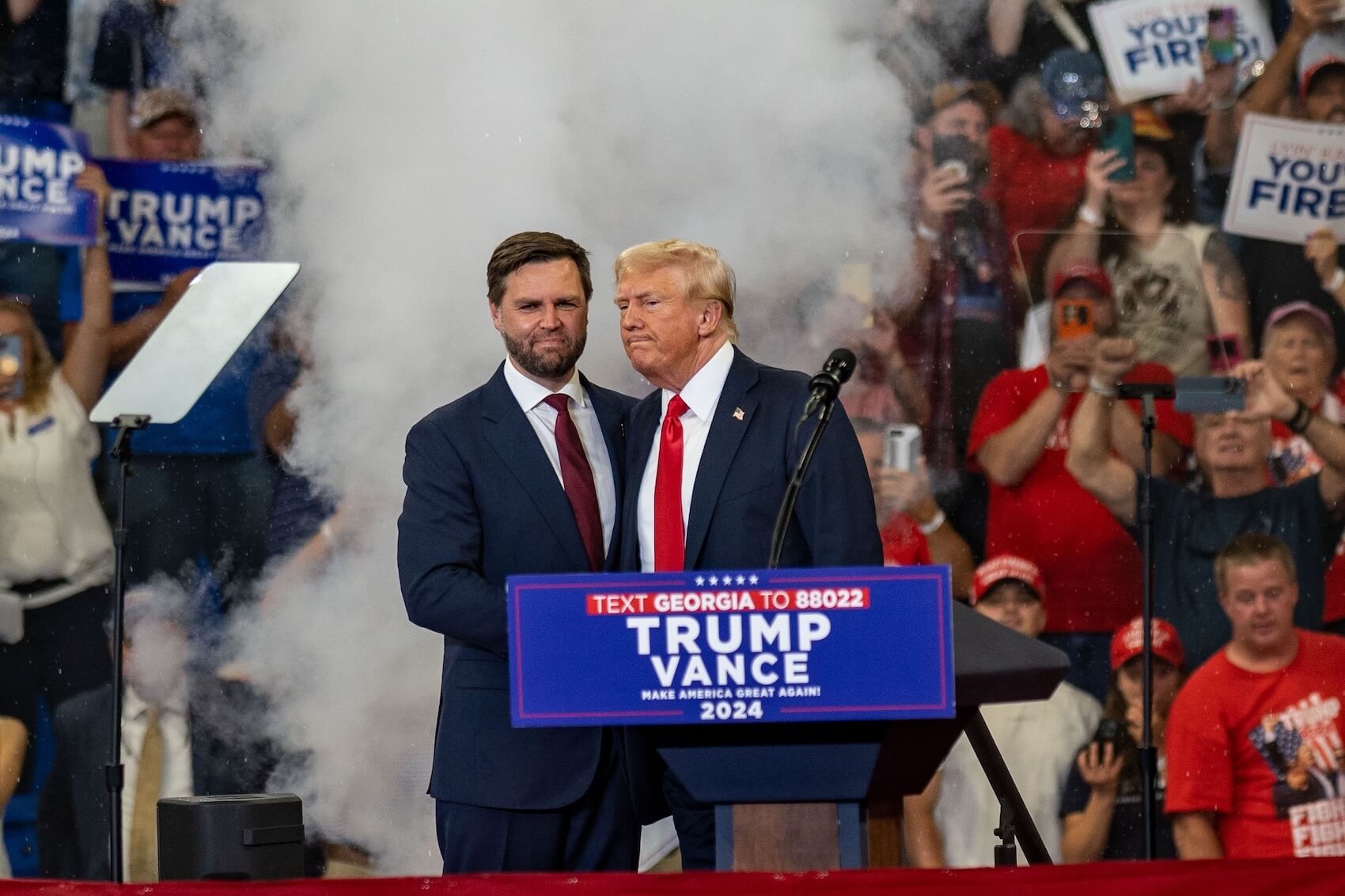
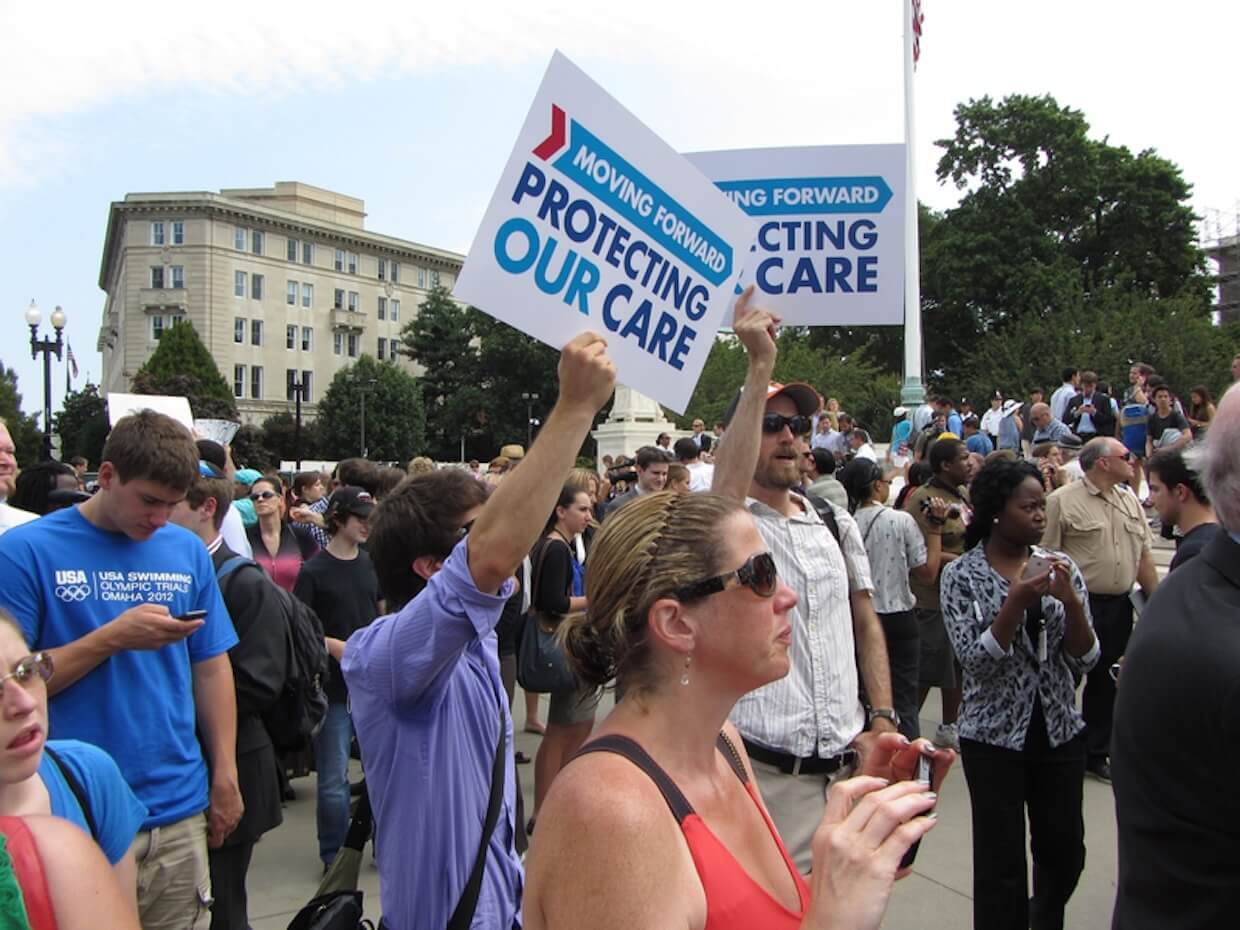
So, populist leaders within the Republican Party include people like J.D. Vance, the Vice President, and Josh Hawley, an important senator from Missouri. They’re pushing for a more populist agenda in terms of economic populism. I mentioned before that Trump himself seems to be ambivalent but does respond to pressures. At the moment, Trump would like to reach some sort of deal on the Affordable Care Act, on Obamacare, that would avoid the steep increases in the cost of health care for many Americans, which is a big electoral liability—and Trump understands electoral liabilities. He’s not a deep thinker, but he does know that he can get himself in trouble in electoral terms. His approval ratings are really tanking, and his approval on economic performance is really tanking.
So, his instinct is to push for these more populist measures, but that hasn’t happened, and so this tension within the party does undermine the longer-term viability of the MAGA project. You see that conflict play out a bit more in the US for some of the reasons we talked about earlier than in other cases. Either there are left-wing populists who have every reason to try to address inequality, or there are right populists where, somehow, the barriers to that kind of more populist economic policymaking have been lower.
Delegitimization and Tear Gas Can’t Stop Democratic Mobilization
Your studies of protest show that protesters are often more likely to vote than non-protesters. In a backsliding democracy where protest is increasingly criminalized, how do autocrats’ repressive strategies attempt to sever this protest–voting linkage?
Professor Susan Stokes: It’s a wonderful question. I’m not sure that they’re trying to sever that linkage. I think that linkage is a natural social phenomenon. It’s harder to protest—it’s costlier, it takes more planning, more time, more commitment. You usually face more risks for protesting than for voting. So typically, people who are willing to pay the costs of protesting are quite willing to pay the costs of voting. That’s why 10 to 1 is a kind of rule of thumb.
So, I’m not sure they’re trying to sever that link, and I don’t think they could, but they definitely are trying to suppress and delegitimize both protesters and decrease turnout among opposition voters. The protest side has been very interesting, and I have to say, being here in Chicago, I’ve had a sort of front-row seat to the efforts at both delegitimizing protesters and repressing them—kind of old-fashioned, not quite Gezi Park levels, but heading in that direction.
We’ve had an enormous incursion of ICE and the Border Patrol—deportations, measures, efforts at mass deportation here in Chicago—and that sparked enormous protests and activism, initially among Hispanic communities, but it really spread more broadly. It became a major confrontation in which the government side used tear gas and sound bombs and all kinds of so-called less lethal tactics to suppress protesters, with many arrests and many accusations and attempted prosecutions that have not held up in court. And it really didn’t work.
I would say the protesters won and the government lost. They left town. Of course, they arrested a ton of people and deported a ton of people, but it’s well known that those they deported did not fall into the category of criminals and so forth that the Trump administration claimed. They were pretty much normal people, and it has been a real black eye for the administration. They’re now facing similar strategies in other cities, and there is a lot of communication among protest organizers and activists across these cities.
So, they’re trying to do that, but it’s complicated for them. And delegitimization is also a big part of it—claiming that protesters are Antifa, or that they just don’t matter. You know, 7 million people across the country protested—joined the No Kings demonstrations last month—and still the claim was, or I guess it was in October, that they tried to shrug it off. But I would say protests, as well as the courts, have been a major block in the way of autocratization under the second Trump administration.
Affordability, Inequality, and the Next Chapter of Democratic Survival
And lastly, Professor Stokes, looking ahead, what empirical indicators—economic, institutional, or behavioral—would you consider most predictive of either continued backsliding or democratic recovery in the US and globally? And what time horizon do comparative cases suggest for policy interventions (e.g., social democracy, redistribution) to meaningfully rebuild trust?
Professor Susan Stokes: It’s a big and very important question, and so I’ll take the last part of it first. Our finding, again, is that income inequality is a big part of the background of democratic backsliding in individual countries, and it also helps explain the uptick at this particular moment in history. So, why is it that the early 21st century has been a period of backsliding? It has to do with accumulated increased levels of income inequality across the globe in the 20th century, exacerbated during the period of globalization.
So, addressing income inequality is going to be really important for pro-democracy forces in these countries. And I think that we here in the United States are sort of stumbling toward that understanding. There has been a lot of attention recently—the popular word of the day is affordability. What is affordability? Affordability doesn’t just mean nominal prices need to be stabilized or come down. It means that the cost of living, taking into account people’s incomes—incomes need to go up at the bottom and that makes things more affordable. Furthermore, in some markets, income inequality makes it tougher for people who live at the bottom.
Think about housing. There’s a housing crisis in the United States; there’s a housing crisis in many European countries. It means that there is not a sufficient supply of housing, rental or for purchase, that is accessible for people with low incomes. That’s partly because the profit margin for housing oriented toward high-income people is vastly greater, so resources tend toward the high-end market, and there’s no perfect market mechanism for increasing supply at the low end. So that means that, everything else being equal, you’re better off in terms of housing costs living in Sweden than in the United States. Apart from whatever programs there might be to make housing more affordable in Sweden—and I’m sure it’s not particularly affordable for many people—but if you were going to be dropped down on planet Earth into a democracy and had a choice between going to a more equal or a less equal one, you would choose the less unequal one because it’s just going to be more affordable. So, affordability is a term that also contains a message about income inequality.
Those things have to be addressed, and they have to be addressed quickly. One of the things that we learned in the United States in 2024 is that you have to pay attention to what political scientists call retrospective economic voting, which basically means people look at what’s going on with the economy and they vote—and they look at what’s going on with their pocketbooks and their family financial situation in the very short term, the last six months. And they will kick out governments that are overseeing what they view as bad economies, whether they’re good governments or bad governments. So, you still have to pay attention to good performance on those basic measures. So, long-term projects to deal with important problems like climate change, or even longer-term issues having to do with income inequality, have to be included alongside short-term attention to people’s basic economic situations.
Democracy Endures: How Societies Push Back Against Autocratization
I think the other part of your question has to do with how we are going to respond to the rise of authoritarianism, and what is going to need to be done. I’ve been talking about addressing income inequality as one of the things that must be done, but there are other things as well. In the United States, we’ve had a big debate about how much attention political parties—pro-democracy campaigns and political parties—should pay to the problem of democratic erosion as opposed to economic issues. What we’re learning now is that when things really go off the rails to a sufficient degree—when a government acts extremely autocratically—ordinary people start paying attention.
So, the situation here is that you have a government that acts as though we live in an autocracy, and you have a civil society and a population that still acts as though we live in a democracy. Our expectations are that we will have freedom of speech and assembly, and that we won’t have a society in which people can be picked up off the streets by masked men, taken away, and end up in a terrible prison in El Salvador. And that’s a message that’s getting through more and more to people who, when things were less acute—when we had less fully autocratic behavior by the government—didn’t pay as much attention to those things.
The last thing I’ll say on this is: autocratic governments like to give off the impression that either everybody supports what they’re doing or, even if a lot of people don’t support them, what they’re doing is inevitable, unstoppable, and that there’s nothing we can do about it. That’s really incorrect. We see in many countries that there are a lot of obstacles to autocratization. Sometimes autocratic governments have been voted out of office; sometimes they’ve been removed from office by their own political parties when they become a liability. Autocratic governments tend to be bad decision-making machines because autocrats favor loyalists over competent people, and so they get no feedback or bad feedback, and they make big mistakes.
Therefore, there are all kinds of reasons to continue to act as though we live in democracies, and to continue to hold governments to account any way that we can—through the ballot box, through protests, through the independent press. The courts in the United States below the level of the Supreme Court have been amazing. The federal courts have been amazing blocks on autocratic behavior. So, there are lots of reasons to be hopeful that democracy will survive and can be rebuilt in a more robust way.
