

As democracies worldwide confront populism, democratic erosion, and authoritarian normalization, Hungary remains one of the clearest examples of contemporary illiberal transformation. In this interview with the ECPS, Stefania Kapronczay—former director of strategy at the Hungarian Civil Liberties Union (HCLU)—analyzes how Viktor Orbán’s regime hollowed out democracy while preserving its formal facade. She argues that Orbánism relied not only on institutional capture, but also on reshaping citizens’ “sense of possibility” and portraying human rights as foreign and disconnected from everyday life. Reflecting on democratic repair under the new Tisza administration, Kapronczay insists that “democracy in Hungary must not simply return, it must return in a better form,” emphasizing participation, accountability, civic trust, and democratic renewal beyond mere restoration.
Interview by Selcuk Gultasli
Giving an interview to the European Center for Populism Studies (ECPS), Stefania Kapronczay, former director of strategy at the Hungarian Civil Liberties Union (HCLU) and one of the leading voices analyzing democratic backsliding, civic resistance, and authoritarian transformation in Central Europe, argues that Hungary’s future cannot simply be defined by a return to the pre-Orbán status quo. “My hope,” she says, “is that Hungary can become a case study not simply for returning to democracy, but for rebuilding democracy in a better form—one that not only functions better for people, but also makes people genuinely feel that it works for them.”
In this wide-ranging conversation with the ECPS, Kapronczay reflects on the political, institutional, and psychological legacy of sixteen years of Orbánism and examines what democratic repair may require after one of the most influential illiberal experiments in contemporary Europe. Drawing on years of frontline human rights advocacy under Viktor Orbán’s rule, she argues that Hungary should not be understood as a straightforward democratic collapse, but rather as a sophisticated process of “democratic hollowing-out,” in which “the facade of democracy—elections and even institutions—was preserved,” while institutions were gradually transformed into instruments designed to secure the regime’s long-term survival.
Throughout the interview, Kapronczay emphasizes that Orbánism relied not only on institutional capture, but also on reshaping public consciousness and narrowing citizens’ sense of political possibility. “What fundamentally shifted,” she notes, “was people’s sense of possibility—the belief that, as citizens, they could have an impact on government decision-making.” In her view, the deepest damage inflicted by Orbánism was not merely constitutional or administrative, but cultural and psychological: the successful portrayal of human rights as “foreign,” externally imposed, and disconnected from everyday life.
Kapronczay also offers a powerful analysis of what she calls modern “legalistic authoritarianism,” a system in which “everything appears legal,” institutions formally remain intact, and constitutions are endlessly rewritten in order to preserve political dominance. From electoral manipulation and clientelist dependency networks to propaganda structures and the fusion of party and state resources, she demonstrates how authoritarian resilience can be embedded within formally democratic systems.
At the same time, the interview is not only an analysis of democratic erosion, but also a reflection on democratic recovery. Kapronczay argues that rebuilding democracy requires more than restoring pre-existing institutions. It demands confronting social polarization, rebuilding trust, and creating more participatory forms of democratic governance. “We cannot simply entrust elected representatives with making decisions on our behalf for four years at a time,” she argues, emphasizing the importance of participatory democracy, citizens’ assemblies, and broad civic involvement in constitutional reconstruction.
Importantly, Kapronczay situates Hungary within a broader regional and global context, warning that “authoritarians learn from one another,” while also insisting that civil society must learn to compete not only through principles, but through narrative power, emotional engagement, and citizen mobilization.
As democracies across the world continue to confront populism, democratic erosion, and autocratization; this interview offers both a sobering diagnosis of Orbánism and a compelling vision for democratic renewal beyond mere restoration.
Here is the revised version of our interview with human rights defender Stefania Kapronczay, lightly edited for clarity and readability.
Orbánism Kept Democracy’s Facade While Emptying It Out
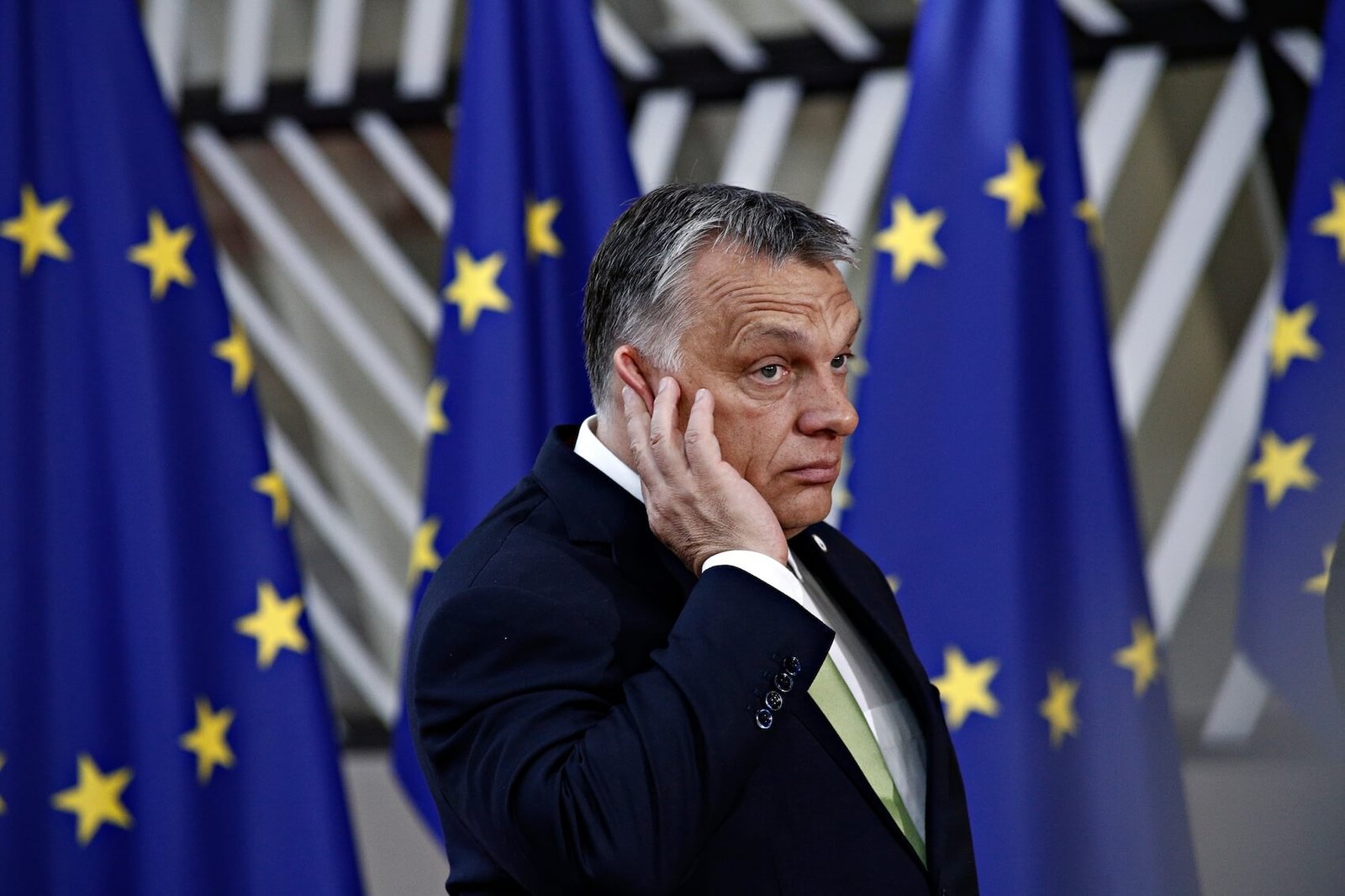
Stefania Kapronczay, welcome! To begin, after sixteen years of Orbán’s rule, should Hungary be understood as a case of democratic breakdown, democratic hollowing-out, or a more subtle transformation in which human rights were formally preserved while substantively emptied of enforceability? What do you see as the deepest and most enduring damage inflicted on Hungary’s human rights architecture—not only institutionally, but socially and culturally?
Stefánia Kapronczay: Thank you so much for this question. It is a very complex one and let me start with the first part: Hungary represents more than a case of democratic hollowing-out. It was very important for the Orbán regime to maintain the facade of democracy. This is also crucial to understanding why he eventually conceded, why elections continued to take place, and why he could ultimately be defeated electorally. Even though the playing field was incredibly uneven and it was extremely difficult to win against Fidesz in an election, significant sacrifices had to be made in order to achieve this result. There could only be one challenger, one contender, which, of course, meant that different voices could not enter the race if the opposition wanted to remove the Orbán regime.
So, this was a form of democratic hollowing-out in which the facade of democracy—elections and even institutions—was preserved, but all of them were adjusted in ways that served the regime’s interests, either through the appointment of political loyalists or through changes to the rules themselves. In the end, these institutions were transformed into mechanisms that allowed Orbán to remain in power for as long as he wished.
As for the second half of your question, I believe the cultural and psychological impact of these sixteen years is the most important. Not because the institutional damage was insignificant, but because the Orbán regime managed to convince ordinary citizens that human rights are not something that matters to them—that they are foreign, imposed from outside, and not something relevant to Hungarians. The regime promoted the idea that human rights have nothing to do with everyday life. By waging cultural wars around migration and LGBT rights, it portrayed human rights as something concerning only “other people,” never the average citizen.
Even though many LGBT people are themselves ordinary citizens, the regime succeeded in presenting human rights as something alien and externally imposed, disconnected from daily life. In reality, however, human rights emerged precisely from the understanding that protecting rights directly improves people’s lives. If individuals are not discriminated against, they have greater opportunities, and if the state is required to comply with human rights standards, this ultimately leads to a better life for citizens.
This cultural transformation will be even more difficult to reverse than the institutional damage. In my view, human rights should be considered whenever policy decisions are made. And we are still very far from that point today.
Everything Looked Legal, but Justice Became Impossible
In your analysis, Fidesz did not abolish democracy outright but hollowed it out through legal instruments, institutional capture, and narrative control. How should we understand this model of “legalistic authoritarianism” from a human rights perspective?
Stefánia Kapronczay: Yes, as I said before, it all seems legal. It appears to be merely a series of legal changes. The institutions are still there: there is an ombudsman, there is the Constitutional Court, and you can still bring your case before the regular courts. But whenever a case concerns a political question—and everything important to the government eventually becomes political—you have no chance of winning.
This is certainly true for migration and LGBT issues, as I mentioned earlier, but it also became true for freedom of expression cases and even for cases concerning disability rights, particularly when these issues appeared capable of generating public mobilization and when that mobilization, that citizen power, could potentially turn against the government.
So, the facade remains in place. Everything appears legal. They never technically break their own rules, so to speak. Instead, they simply modify the constitution, even for the fifteenth time. But at the same time, this cannot be regarded as compliance with constitutional standards, human rights standards, or international law.
Authoritarianism Depends on Mental Control as Much as Institutions
In your writings, you emphasize that Fidesz’s authoritarian resilience rests not only on institutional capture, but also on shaping citizens’ expectations, incentives, and sense of political possibility. How did Orbánism turn human rights from a universal democratic language into something portrayed as alien, partisan, or elitist?
Stefánia Kapronczay: I think I addressed the second part of your question earlier, so I will focus a bit more on the first. This issue is extremely important. What fundamentally shifted was people’s sense of possibility—the belief that, as citizens, they could have an impact on government decision-making, whether at the local or national level. This was a key element in how Orbán managed to maintain his power. And it was especially powerful for two reasons. First, there was already a historical precedent for it. Before the regime change in 1989–1990, there was essentially a tacit pact between the socialist state and its citizens: you could have a relatively good life—especially compared to other countries in the region and particularly compared to the Soviet Union—but you had to stay out of politics. So, this was a political arrangement with which many people were already familiar.
Just as importantly, for a period of time Fidesz was able to sustain both sides of this arrangement. Economic prospects appeared relatively favorable, and people felt that they were moving ahead. Of course, this was not solely because of the government itself. Hungary received enormous—historically unprecedented—amounts of funding from the European Union, especially between 2010 and 2022.
Even though much of this money was used to enrich government cronies, and a significant share disappeared into corruption instead of being invested in public services such as healthcare or education, people nevertheless experienced improvements in their daily lives because of these funds and the relatively favorable global economy. Compared to their parents’ generation, they felt they had greater stability. Compared to neighboring countries, this was no longer necessarily true, but public opinion surveys and sociological research consistently show that most people do not compare themselves to people in other countries; they compare themselves to their parents’ generation.
After 2022, however, this arrangement could no longer be sustained by the Orbán regime. People increasingly felt in their everyday lives that they were no longer living better, that life had become far more uncertain, and that their livelihoods had become increasingly insecure. At the same time, they began to experience very directly the collapse of public services—whether in transportation, education, healthcare, or elsewhere.
Once this arrangement broke down, the Orbán regime also lost its ability to shape people’s sense of political possibility. More and more people began to feel that the situation was no longer sustainable or acceptable. Then someone emerged who convinced them that things could be different, and their sense of possibility began to shift.
It is very important to observe how something like this—something that is not discussed very often—can become so decisive. We speak a great deal about institutions and formal political structures, but we should pay much more attention to the ways in which the mental architecture of an authoritarian state is maintained. And this is precisely what began to crumble.
The Real Fraud Happened Outside the Polling Stations

You have described Hungary’s elections as a “special version of a stolen election,” where manipulation occurs less through ballot-box fraud than through an unlevel playing field. How should we rethink electoral integrity when abuse is legalized, normalized, and embedded long before election day?
Stefánia Kapronczay: Yes, elections do not happen only on election day. Usually, international institutions come to monitor only during that period—perhaps a few days before the election and a few days afterward. But in Hungary’s case, the manipulation and the systemic nature of how elections were effectively stolen operated every single day. It was not only about the media—how it was captured, how people were fed false information, and how certain information was withheld from them—but also about how Fidesz maintained a clientelist system in which citizens, especially in smaller towns and villages, became dependent on local power structures.
People relied on these structures for social services, for access to schools or nurseries for their children, or simply because they were employed by the local government. This created a system in which citizens were kept in conditions of dependency that could then be exploited. And this system was maintained continuously, every day.
This is something that is very difficult to capture when we discuss the fairness and integrity of elections. It also took civil society quite a long time to fully understand it, because for years much of the focus was on what happened inside the polling stations. But as we monitored the process more closely, we realized that the real fraud was taking place around the polling stations.
Already during the 2019 local government elections, there were initiatives aimed at identifying and disrupting the chain of voter manipulation occurring outside polling stations—practices involving the exploitation of citizens, vote-buying, organized transportation of voters, and various forms of coercion. By 2022, there were already widespread civil society initiatives dedicated to uncovering these practices. And in 2026, this became a major effort involving both civil society organizations and political party activists, as well as ordinary citizens who were present in all the districts where these practices were taking place.
We are still waiting for some of the data, but it seems that they were finally able to break the cycle I described earlier.
State Resources Became Tools of Party Politics
How has the fusion of party, state, public media, regulatory bodies, and state-linked economic networks damaged the practical meaning of political equality and equal citizenship in Hungary?
Stefánia Kapronczay: Just for the readers, what increasingly happened was that Fidesz began using state resources to advance its party-political goals. This became especially visible in 2020 and 2021 during the COVID pandemic, when people had to register in order to receive vaccinations, and later their email addresses were used by the government to distribute government or Fidesz propaganda.
It was also extremely difficult to remove yourself from those mailing lists. There is actually an interesting—perhaps even ironic—story about this. After Tisza came to power, while the old regime was still partially in place, we all received an email from the very same address that had previously been used to send propaganda, explaining how we could finally remove ourselves from the list. Suddenly, it had become very important.
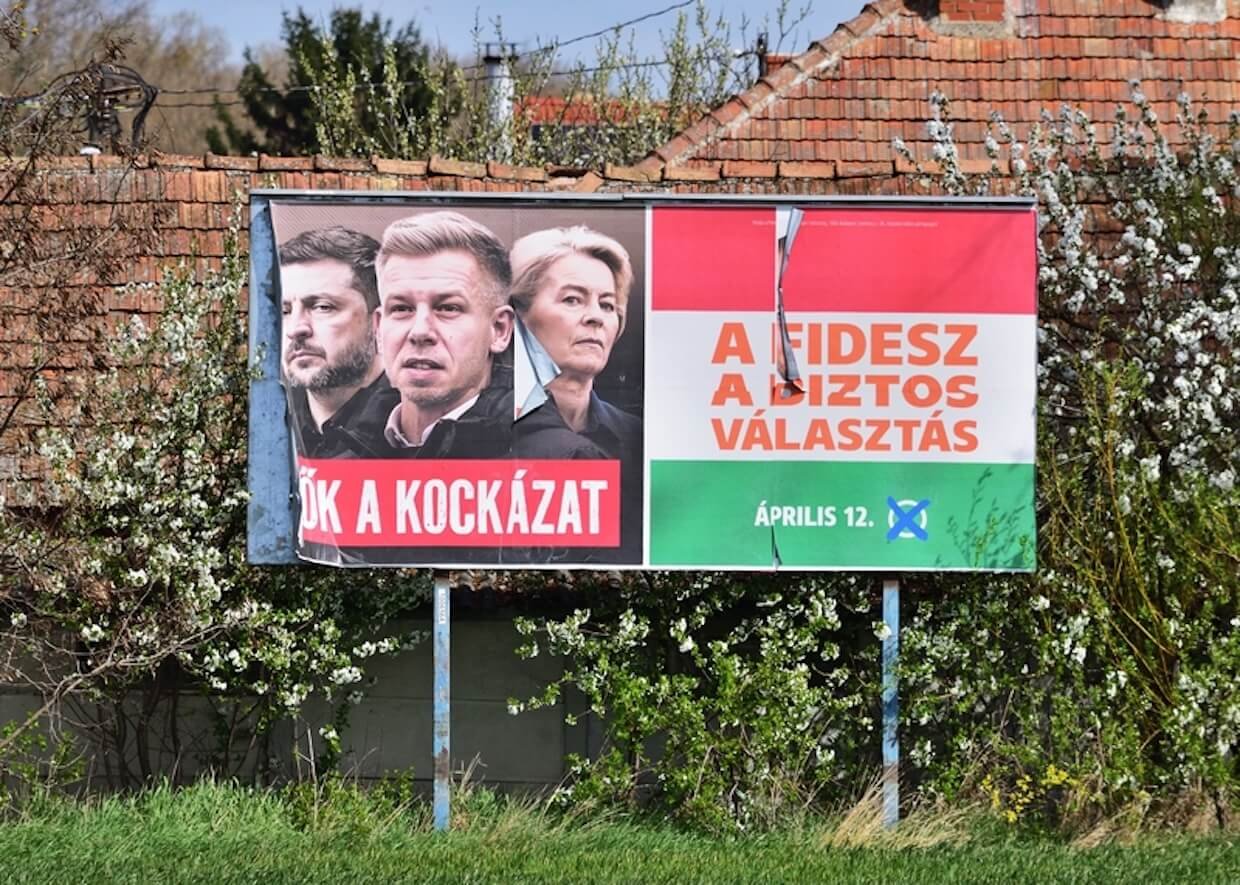
That was an early example, but the practice reached another level during the election campaign. Even before that, there were Fidesz billboards displayed alongside billboards supposedly issued by the government, using the same language, colors, and visual style, making it extremely easy to confuse the two. And that was precisely the point.
Then, in 2026, this escalated even further, as government and state resources were deployed on a massive scale to support Fidesz’s campaign, including the organization of huge events across the country, each costing billions of Hungarian forints.
This is where the line between party and state becomes fundamentally blurred. Yes, citizens vote for a government—for a party that will form a government. But once a party assumes governmental power, it is supposed to represent all citizens, not only those who voted for it. By using government or state resources for partisan political purposes, the government breaks that trust and effectively communicates that it represents only those who agree with it.
But this is not surprising. Already in 2002, after losing the election, former Prime Minister Orbán delivered one of his most infamous speeches, declaring that “the homeland cannot be in opposition,” implying that his political camp alone represented the nation, while those voting for others somehow did not. So, this way of thinking has been present since at least 2002.
The Damage to Civil Society Runs Deeper Than We Realized
The Orbán government repeatedly portrayed NGOs and human rights defenders as “foreign agents,” “Soros mercenaries,” and threats to national sovereignty. How deeply did this stigmatization campaign damage the legitimacy, safety, and public reach of civil society actors? More broadly, how successful was Orbánism in eroding public trust in independent civic organizations, and what forms of democratic and social repair are now needed to rebuild that trust under the Magyar administration?
Stefánia Kapronczay: We are only beginning to understand how deep the damage went. From the everyday experience of civil society organizations, we could already see the effects very clearly. Local governments and schools—because of increasing centralization and because they required approval from the central government for nearly every decision—became unwilling to cooperate with civil society organizations. Even businesses became hesitant to work with NGOs, especially those that were critical of the government or engaged with contentious issues such as child protection.
So, the effects were already visible. Some civil society organizations were ultimately forced to stop operating because of the pressure and administrative burdens placed upon them. Others, such as my former organization, the Hungarian Civil Liberties Union, managed to build a constituency during this period. Because we had resources, both financial and human, we were able to turn some of these attacks into opportunities to rethink our methods and reshape our communication strategies. But this was certainly not the typical experience. And now, after the system change, more and more stories are beginning to emerge.
We already knew that foreign intelligence-linked groups such as Black Cube had been used to discredit civil society actors before the 2022 elections. For example, fake job advertisements were used to lure civil society actors into staged interviews, where they were pressured and manipulated into saying negative things about civil society organizations. Then isolated snippets—sometimes only single sentences—were selectively used to discredit the entire sector.
But now even more troubling revelations are surfacing. Recently, a video emerged involving a very prominent civil society actor working with Roma communities, Roma children, and education. The video revealed that the actual State Secret Service had approached her in an attempt to obtain information about civil society organizations. In the Black Cube case, there has long been strong suspicion that the operation was commissioned by circles close to the government, or perhaps even by the government itself. But in this case, it was directly the State Secret Service that was involved.
This is why I believe a formal process is needed to uncover what happened. I am advocating for a process that draws lessons from Truth and Reconciliation Commissions. I think such a process is necessary for at least three reasons. First,what is currently happening is unfolding largely through media coverage and public debate, and not everyone follows these discussions. In my opinion, it is crucial to design a process that is participatory, that uses language accessible to ordinary people, and that brings these conversations into the places where people actually live and gather, so that society can develop a shared understanding of what happened. It should not remain a conversation limited to elites or to those who regularly consume political media.
The second reason is that there are still enormous numbers of Fidesz voters—at least one or perhaps two million people—who are now beginning to realize that they were misled. It is extremely important that they receive information and are not excluded from the political community. A Truth and Reconciliation Commission–type process could help bring as many of them as possible back into the political community, create a shared understanding of these sixteen years, and allow a society to move forward from there.
And last but not least, I believe such a process is necessary because so many people were harmed by this regime. A formal process could create ways to acknowledge and compensate for those harms, both symbolically and perhaps also in more material terms.
Orbán Went from Feared to Ridiculed
In your analysis of Hungary’s civil society crackdown, you link government attacks to older legacies of political passivity, low institutional trust, and suspicion toward public advocacy. Did Orbánism merely exploit these post-socialist inheritances, or did it actively deepen and weaponize them?
Stefánia Kapronczay: At first, it exploited them, but then it deepened and weaponized them even further. It was not simply a matter of winking at civil society and signaling, “Okay, this is how we are going to operate.” Through hate campaigns targeting certain groups, and more broadly through the demonization of anyone who criticized the government, these sentiments were actively intensified.
And it is very interesting to observe how this form of power actually functioned. Modern autocrats do not primarily operate through torture or enforced disappearances, but rather through the power of narrative. On the one hand, they cultivate fear, self-censorship, and self-correction. On the other hand, they strategically deploy state power—for example, by dismissing teachers who participated in protests in certain ways.
What I also find striking is how this kind of power structure that Orbán created—and that is so characteristic of modern authoritarianism—seemed to evaporate within just two months. He went from being feared to becoming almost ridiculous. And I think this is something we need to study much more carefully.
Democratic Repair Requires Dismantling the Entire System
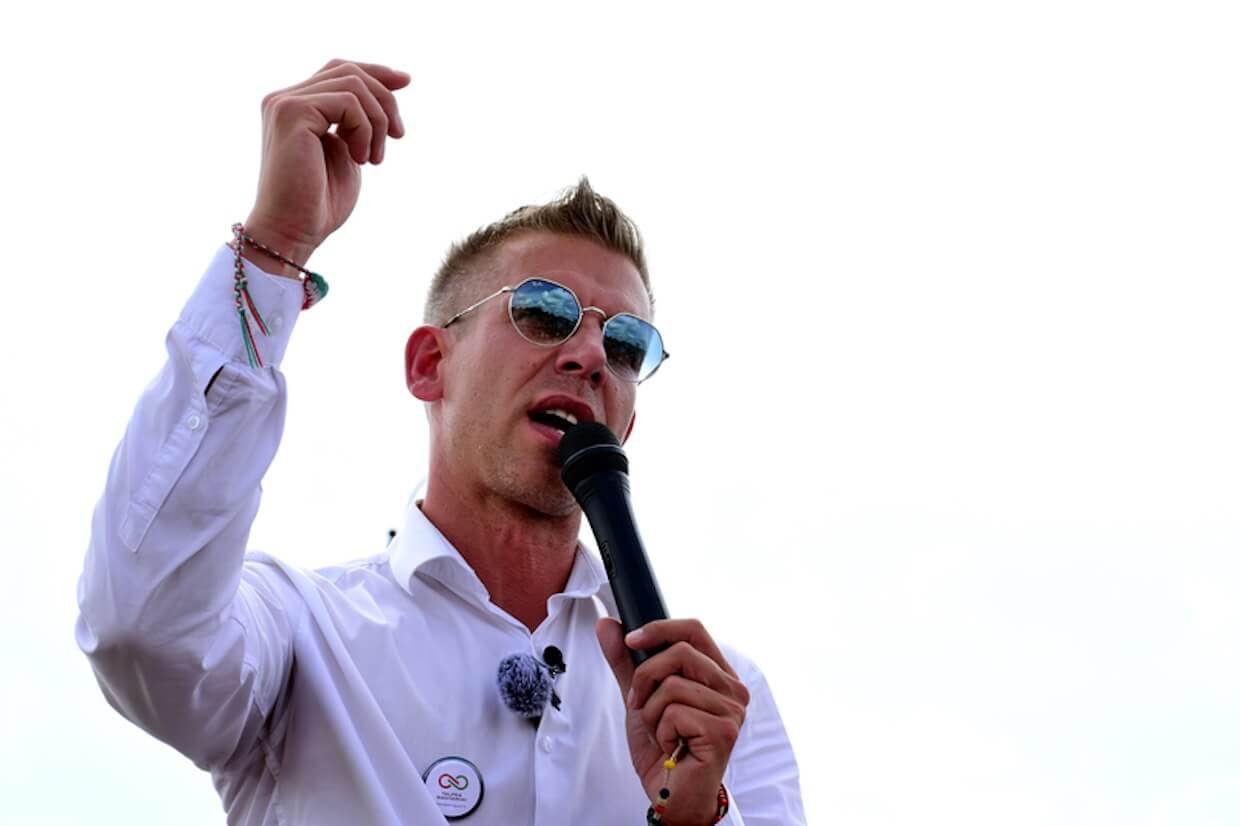
Now that Péter Magyar and the Tisza administration are in power, what should be the first-order priorities of democratic repair after sixteen years of Orbánism: dismantling propaganda structures, restoring judicial independence, reforming electoral institutions, rebuilding media pluralism, protecting civil society, addressing systemic corruption, or repairing public trust and democratic culture?
Stefánia Kapronczay: The difficult thing is that all of these issues are deeply interconnected. That is precisely why Orbánism functioned as a system. You cannot simply pull on one thread and expect the entire structure to unravel. You have to address all of these interconnected elements simultaneously in order for the system itself to break down. And this represents an enormous challenge for the current government. There is an immense amount of hope invested in them, and because of that, people are still relatively patient. But the government will need to demonstrate tangible results quite soon in order to sustain the hope, trust, and patience that citizens have placed in them.
Judging from the public discourse in the country, addressing propaganda is especially important for people, because propaganda was something everyone confronted daily through billboards, media coverage, and constant messaging. So, I think dismantling the propaganda machinery is one particularly urgent priority. Another key priority is demonstrating that public services—healthcare, education, transportation—can actually function better, and delivering visible progress in those areas. The government must also show clearly that it is not willing to compromise with the previous system, and that there will in fact be consequences for the harms that were committed.
These are among the most immediate priorities, although, of course, they touch upon all the issues you mentioned. At the same time, the government also has to rebuild public trust in institutions. So, they must pursue accountability without further damaging trust.
They also need to be extremely careful about polarization and avoid deepening it further. That is why I believe a carefully designed Truth and Reconciliation Commission–type process—one that brings these issues closer to ordinary people and actively involves them—could be extremely beneficial.
And then, in parallel—or at least soon afterward—we also need to begin thinking not only about the past, but about the future. What kind of state do we actually want to build now? What should these institutions look like?
I also believe this must be a deeply participatory process involving citizens as well as civil society organizations. It is not enough simply to hold a referendum at the end. We need people, each contributing according to their own expertise and experience, to participate throughout the process. That is why citizens’ assemblies could play a very important role within the constitution-making process.
Principles Alone Are No Longer Enough
Looking beyond Hungary, how has Orbánism functioned as a regional template for populist and illiberal actors in Central and Eastern Europe, especially in attacks on NGOs, independent media, minority rights, judicial checks, and foreign-funded organizations?
Stefánia Kapronczay: We often say that authoritarians learn from one another, and we can clearly see how certain Russian laws were copied by Hungary and then adapted to the realities of Hungary’s membership in the European Union. I also hear from Slovak and Czech activists that they recognize strong similarities between what their governments are now proposing and what Hungary has already experienced.
The similarities are visible not only in the policies themselves, but also in how these processes begin: first with smear campaigns and public attacks, followed by the use of familiar narratives of stigmatization. The rhetoric is almost always about foreign funding, sovereignty, and alleged external influence. These patterns are very recognizable across the region.
I think NGOs throughout Central and Eastern Europe can learn a great deal from the Hungarian experience, and I believe there are two particularly important lessons.
The first is that strength lies in unity. We were able to resist many of these laws and attacks because, at an early stage, we began working together. It was a difficult process, and our first attempts at coalition-building were not always successful. But we learned from those earlier efforts and eventually succeeded in creating effective alliances. That cooperation allowed us to combine our strengths instead of remaining fragmented. Those who were strongest in advocacy focused on advocacy; those skilled at mobilizing citizens concentrated on organizing; others handled communications; and others prepared administrative or legal responses.
The second lesson is that we must understand how crucial citizen mobilization and narrative-building have become in contemporary politics. This is very visible today. If there is at least one similarity between the Tisza and Fidesz governments, it is that both understand the importance of narrative power. Tisza even refers to this as “absolute cinema.” They frame their actions in ways that are easily consumable, emotionally engaging, and rich in symbolism—ways that ordinary citizens can immediately connect with.
And civil society must also recognize this reality. The power of principles alone is not enough. Civil society also has to succeed on the emotional level, through compelling stories and by demonstrating how its principles affect people’s everyday lives. It also has to become more effective at using narrative strategies. I do not think this is something entirely new for civil society. I often look at the American civil rights movement as, in many respects, the first human rights movement. And it used exactly these kinds of tools, adapted to its own historical moment. So, we simply need to recognize that this is not manipulation. It is part of our strength and part of our democratic power.
Democracy Must Return in a Better Form
Finally, if Hungary evolves from being a cautionary tale of democratic backsliding into a case of democratic repair, what would genuine recovery require—constitutionally, socially, and morally—to restore pluralism, civic courage, and belief in human rights after years of normalized illiberalism? Moreover, what lessons could Hungary’s experience offer to other societies confronting populism, democratic erosion, and autocratization?
Stefánia Kapronczay: I would begin from a broader perspective. It is undeniable that democracy is currently in crisis. According to Freedom House, this is now the nineteenth consecutive year in which the number of democracies worldwide has declined.
At the same time, research consistently shows that democracies deliver better outcomes for people and that people genuinely live better in democratic societies. So, while democracy is clearly facing a profound crisis, I remain convinced—not only on a principled level but also based on empirical evidence—that democracy is worth fighting for because it ultimately provides a better quality of life for citizens.
What happened in Hungary in 2010, when Fidesz came to power, also teaches us an important lesson: democracy as it existed at the time—with its institutions and structures—was already struggling to meet citizens’ expectations. That means we have to think seriously about how democracies can function better. I would not consider it a success if, in 2026, Hungary simply returned to the pre-2010 status quo, because that version of democracy was also failing to provide the kind of outcomes people deserved. Economic inequality, for example, still prevented many people from participating meaningfully in public life, which meant that equal citizenship did not truly exist in practice. So, my hope is that Hungary can become a case study not simply for returning to democracy, but for rebuilding democracy in a better form—one that not only functions better for people, but also makes people genuinely feel that it works for them.
Moreover, one of the key elements in this process is participation—participatory democracy. We cannot simply entrust elected representatives with making decisions on our behalf for four years at a time. Expanding participation and deepening citizens’ involvement are essential, because this is how people build relationships with institutions and, consequently, develop trust in them. At the same time, participatory systems allow citizens’ needs, concerns, and aspirations to be incorporated more directly into political decision-making. So, I envision democracies recovering and becoming more resilient if they succeed in creating more meaningful forms of participation and rely less exclusively on the traditional model in which elected officials merely represent citizens from above.