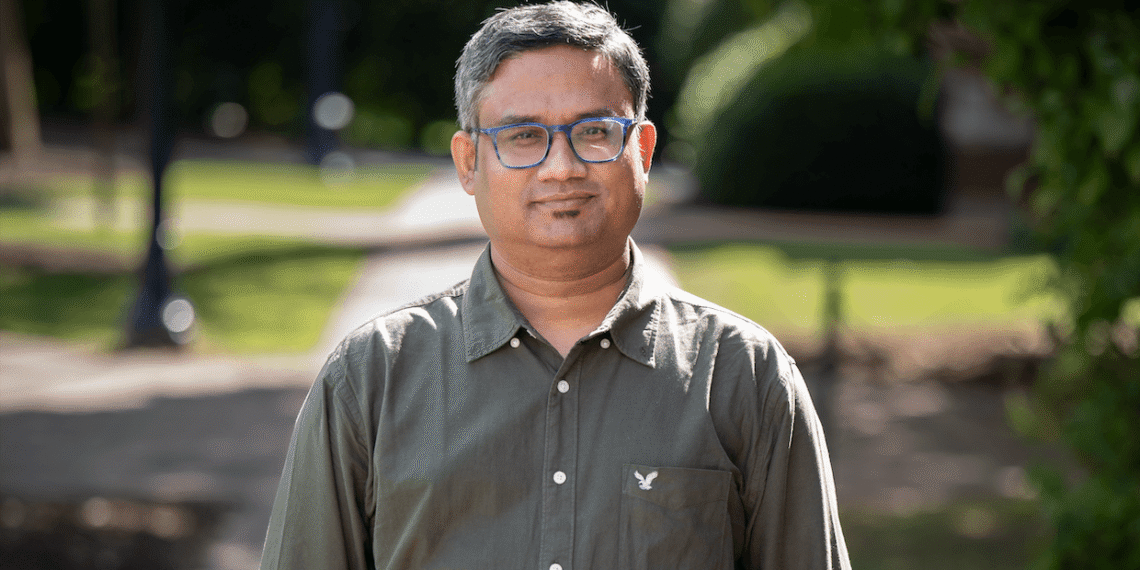
In this interview with the ECPS, Associate Professor Kazi A. S. M. Nurul Huda offers a nuanced assessment of Bangladesh’s post-2026 political transition. Reflecting on the first general election after the 2024 uprising that toppled Sheikh Hasina, he argues that a landslide electoral mandate alone cannot resolve the country’s democratic deficit. What matters, he emphasizes, is whether “procedural legitimacy, constitutional legitimacy, and sociological legitimacy are present.” Dr. Huda warns that preventing a “reverse norm cascade” depends less on electoral formalities than on how political actors behave in power—especially the ruling party. Stressing trust, institutional restraint, and freedom of criticism, he argues that Bangladesh’s democratic future will hinge on whether political parties govern responsibly, inclusively, and within genuinely pluralist constitutional limits.
Interview by Selcuk Gultasli
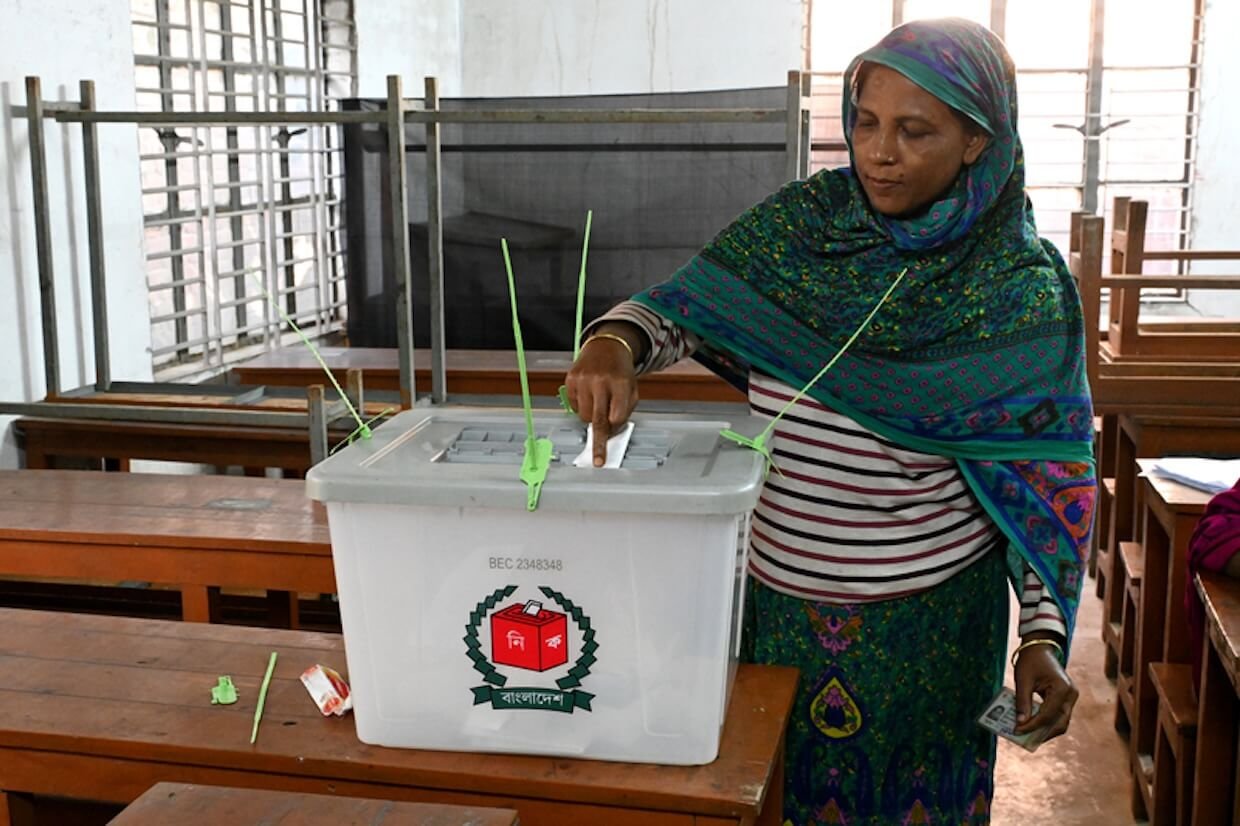
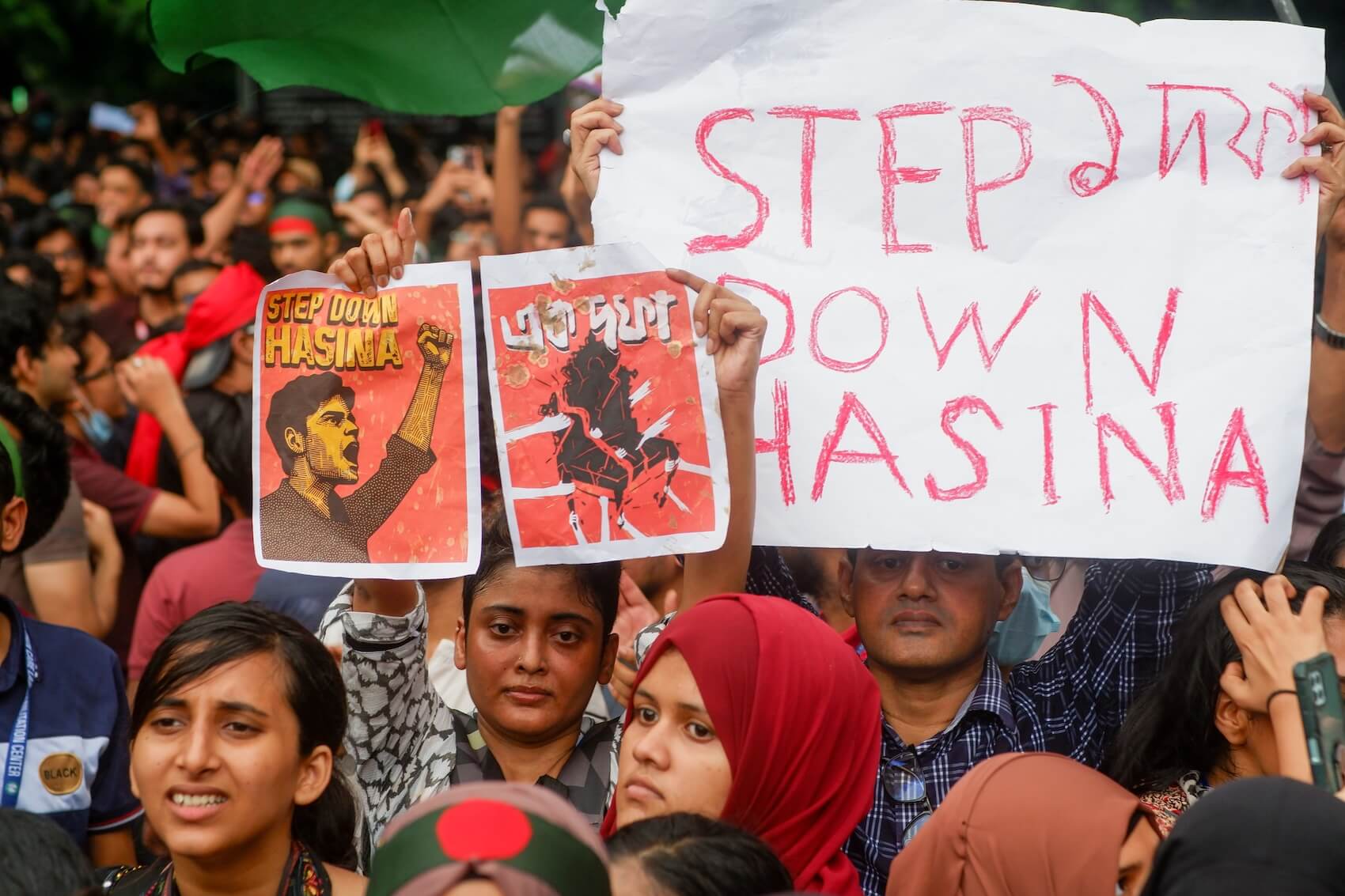
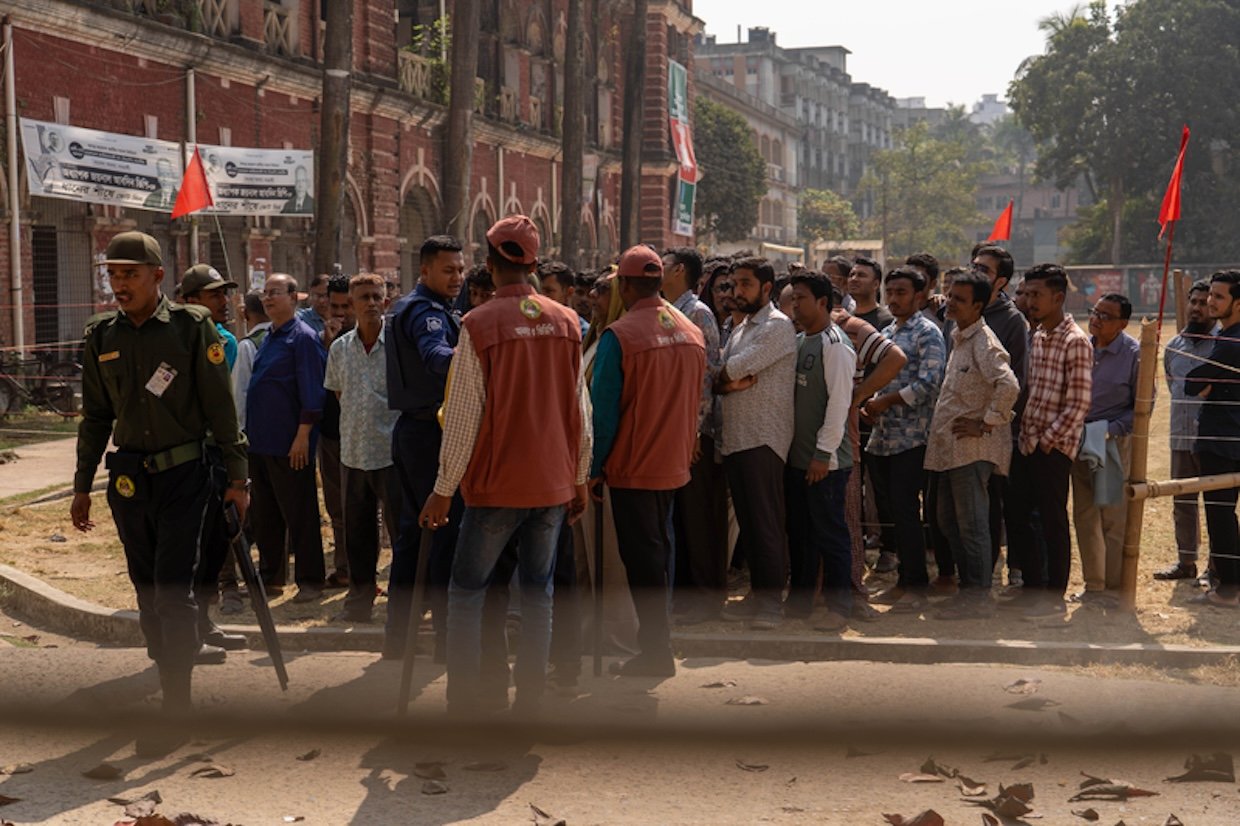
Bangladesh’s February 2026 general election marked the country’s first national vote since the Gen Z-led uprising of August 2024 that toppled Sheikh Hasina after fifteen years in power. That uprising, which followed a violent crackdown on protesters that reportedly left around 1,400 people dead, was widely interpreted as a decisive rupture with one of South Asia’s most entrenched hybrid regimes. The election that followed was therefore more than a routine transfer of power: it was a test of whether Bangladesh could move from revolutionary mobilization to institutional politics. With turnout approaching 60 percent and many voters describing the experience as an opportunity to cast ballots “without fear,” the election appeared to signal at least a partial reopening of democratic space.
Yet, as Associate Professor Kazi A. S. M. Nurul Huda from the University of Dhaka makes clear in this interview with the European Center for Populism Studies (ECPS), electoral change alone does not resolve the deeper crisis of democratic legitimacy. While the Bangladesh Nationalist Party (BNP) returned to power with a commanding parliamentary majority and the Jamaat-e-Islami-led alliance emerged as the principal opposition, Assoc. Prof. Huda cautions against equating electoral victory with democratic repair. “A landslide victory helps, but it is not everything,” he argues, insisting that such a result “does not by itself wash away the democratic deficit.” For Assoc. Prof. Huda, what ultimately matters is whether “procedural legitimacy, constitutional legitimacy, and sociological legitimacy are present.”
This emphasis on institutional and relational legitimacy is central to the interview’s broader argument and directly underpins its headline claim: Bangladesh’s democratic future depends less on who wins power than on how power is exercised. In Assoc. Prof. Huda’s formulation, the post-2026 order will be judged not simply by the fact of electoral competition, but by whether political actors—above all the ruling party—act with restraint, responsibility, and democratic seriousness. “Whether Bangladesh avoids returning to previous patterns—or prevents a reverse norm cascade—largely depends on how political parties behave,” he says. Most pointedly, he stresses that “the greatest responsibility rests with the ruling party,” especially in protecting freedom of speech and ensuring that opposition parties can criticize the government.
Assoc. Prof. Huda’s analysis gains further relevance in light of the new political landscape. Alongside the parliamentary vote, citizens endorsed the reform-oriented July Charter, which proposed constitutional reforms including term limits, bicameralism, and stronger judicial independence. At the same time, Bangladesh remains marked by unresolved tensions: the Awami League was barred from contesting the election, Sheikh Hasina remains in exile in India, and debates over justice, accountability, Islamist mobilization, and political inclusion continue to define the fragile post-uprising order.
Against this backdrop, Assoc. Prof. Huda offers a sober but cautiously hopeful assessment. “If the current political parties—those in power and those in the opposition—behave responsibly, then we do not have to retreat,” he observes. The decisive question, then, is not whether Bangladesh has entered a new era, but whether its political class can transform a moment of rupture into a durable democratic settlement.
Here is the edited version of our interview with Assoc. Prof. Kazi A. S. M. Nurul Huda, revised slightly to improve clarity and flow.
A Landslide Victory Cannot by Itself Eliminate the Democratic Deficit
Professor Kazi Huda, thank you very much for joining our interview series. Let me begin with the first question: After years of competitive authoritarianism and the post-2024 rupture in Bangladesh, how should we evaluate the legitimacy of the new order? Does a landslide electoral mandate reduce the democratic deficit, or is legitimacy contingent on deeper institutional reconstruction and renewed civic trust?
Assoc. Prof. Kazi A. S. M. Nurul Huda: Thank you for having me. A landslide victory helps, but it is not everything, and it does not by itself wash away the democratic deficit that you mentioned. A landslide victory helps a political party—it gives the party a certain level of comfort in ruling or governing. It provides some confidence that people are with them. At the same time, what is actually important is whether there is procedural legitimacy, constitutional legitimacy, or what I would call sociological legitimacy.
When election procedures are fair, we can easily claim that the victory is fair—that is procedural legitimacy. If there is constitutional legitimacy, then we can say that power is structured legitimately. On the other hand, sociological legitimacy concerns the relationship with the opposition and the broader political environment—a kind of politically professional relationship.
So, I do not think a landslide victory resolves everything when it comes to the democratic deficit. It may take you some distance along the path of democratization, but what ultimately matters are whether procedural legitimacy, constitutional legitimacy, and sociological legitimacy are present.
Without Political Trust, Elections Risk Becoming Procedural Rituals
In the post-2026 context, what minimum institutional guarantees are necessary to prevent a “reverse norm cascade”—where elections remain procedurally competitive yet politically hollow, especially under conditions of parliamentary supermajority?
Assoc. Prof. Kazi A. S. M. Nurul Huda: To understand whether the post-2026 election context can prevent what is called a reverse norm cascade, we first need to understand why Bangladesh held an election in 2026 at all.
As you know, Bangladesh experienced a mass uprising in 2024 that ousted an authoritarian regime. After five or six weeks of bloodshed, a government that had been in power from 2009 to 2024 came to an end. During that long period, Bangladeshi people experienced disappearances, killings, and many other abuses that should never have occurred. The mass uprising created a new aspiration among citizens that Bangladesh might finally develop a political landscape that would not revert to authoritarian tendencies—what we often describe as democratic backsliding.
To prevent a reverse norm cascade, it is essential to ensure a relationship of trust among all political parties. Equally important is a trusting relationship between political parties and the general public. Why did people protest in 2024? Because they had lost trust in the existing political parties. As a result, the general public came out into the streets to take matters into their own hands, believing that mainstream political parties had failed for the past 15 years—or at least the past decade.
One of the key reasons the 2024 mass uprising succeeded was that it was led by a non-partisan student body rather than by any political party. Political parties joined the movement in large numbers, but they did not act under their own banners when they took to the streets. Instead, they followed the leadership of the student body that organized and led the uprising.
Now, in the post-2026 election context, if political parties fail to regain people’s trust—or if there is no trust among the political parties themselves—then there is a real possibility of returning to the conditions we experienced before. This includes a lack of trust between the ruling party, the Bangladesh Nationalist Party (BNP), the opposition party, Bangladesh Jamaat-e-Islami, and the student-led National Citizen Party.
So, what is required in this context? The primary responsibility lies with the ruling party, the BNP. As we know, power comes with responsibility. Since they are now in government, they must behave responsibly and in ways that support a democratic and sustainable political environment.
Whether Bangladesh avoids returning to previous patterns—or prevents a reverse norm cascade—largely depends on how political parties behave. Among them, the greatest responsibility rests with the ruling party: whether it seeks to control everything, whether it protects freedom of speech, and whether it ensures that opposition parties have the opportunity to criticize the government—conditions that are fundamental to any democratic environment. If the ruling party, together with other political parties, can uphold these principles and fulfill their responsibilities as they should, then I believe Bangladesh has a very promising future ahead.
Legitimacy in Transition Depends on Both Reform and Timely Elections
You have cautioned that elections without credible reform can reproduce dysfunction. How would you design a sequenced transition that preserves electoral legitimacy while avoiding the destabilizing vacuum and contestation that prolonged interim rule can generate?
Assoc. Prof. Kazi A. S. M. Nurul Huda: This is a difficult question: how can we design a sequenced transition that ensures a timely election while also guaranteeing that meaningful reforms are implemented?
In my view, what was needed was a time-bound interim government. Initially, when the interim government came to power on 8 August 2024, it was unclear how long it would remain in office or when the election would be held. Many expected that elections might take place within the first six or seven months.
However, as time passed, the interim government realized that this uncertainty was creating confusion among the public. People were in the dark about whether an election would occur at all, and pressure was mounting from major political parties such as the Bangladesh Nationalist Party. At some point they announced that elections would be held in the first half of April (2025). In fact, as you know, the election eventually took place this year on February 12.
A time-bound interim government is therefore essential for the kind of sequenced transition you mention. Such a government should also have a clear agenda—one that specifies what it intends to do, what it will not do, and how it plans to proceed. Because this was an interim administration, people placed a certain degree of trust in it to carry out reforms, and in some respects it did so. It facilitated dialogue among political parties, excluding the Bangladesh Awami League, which had been the previous ruling party.
As a result of these dialogues, what came to be known as the July National Charter was produced and broadly agreed upon by most active political parties in Bangladesh, although there were some dissenting views—something that could be discussed separately.
The key point is that an interim government should have a clear reform agenda. This might include constitutional reform, police reform, or other institutional reforms. At the same time, it must remain strictly time-bound and pursue these reforms within a clearly defined time frame.
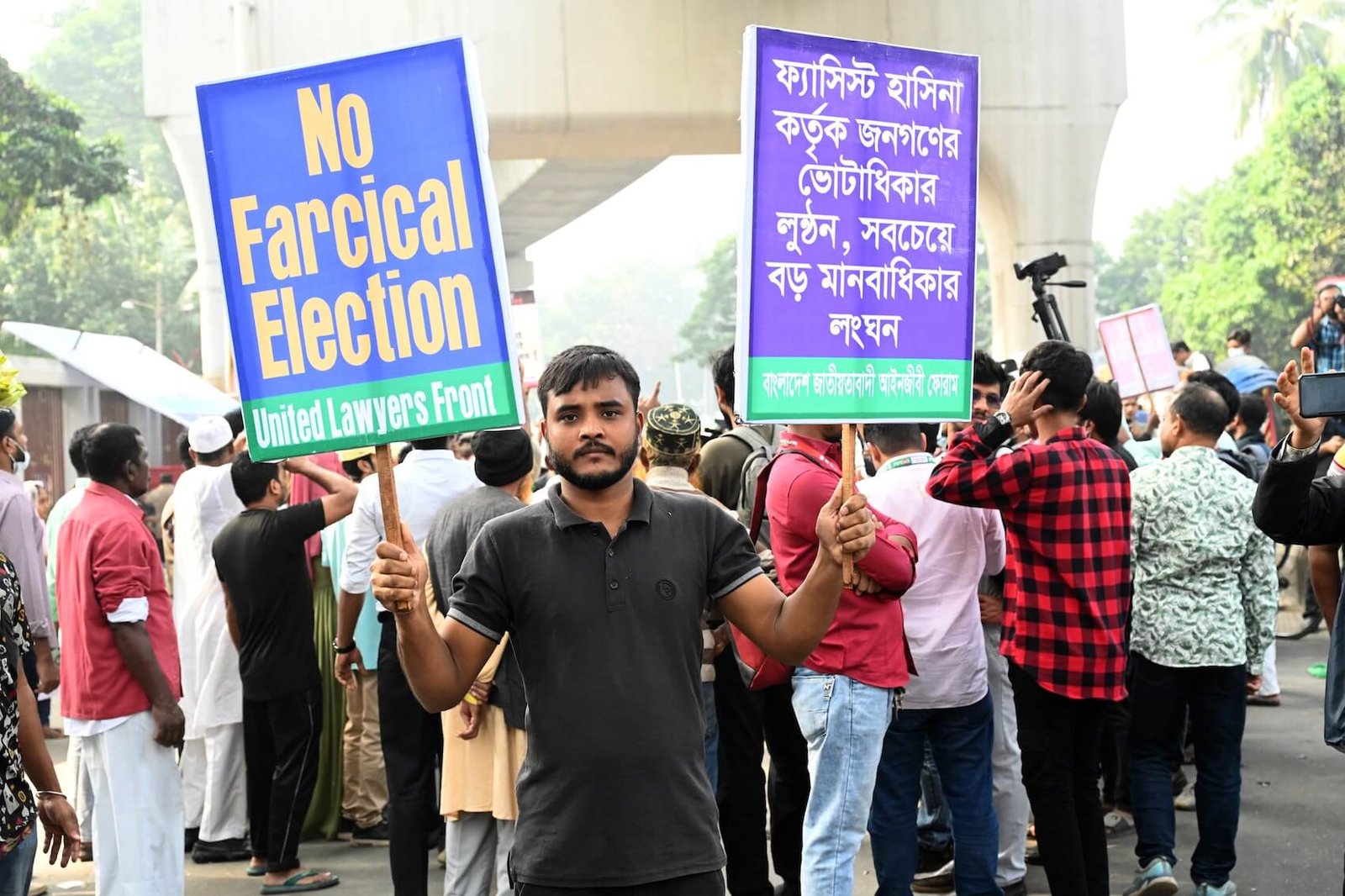
Finally, the interim government must organize an election that is widely accepted—both domestically and internationally. In this respect, I think the Bangladeshi interim government was largely successful, and it deserves recognition for arranging an election that was, to a considerable extent, fair.
Public Trust Is the Foundation of Any Neutral Electoral Administration
Bangladesh’s recurring crisis over “who runs the election” seems to reflect a deeper legitimacy problem. What would a constitutionally durable, neutral election-time administration look like—one that cannot be easily abolished, captured, or informally intimidated by incumbents?
Assoc. Prof. Kazi A. S. M. Nurul Huda: A durable and neutral election-time government must, above all, be a government that people can trust. Trust is crucial here. If people perceive that there is an election-time administration—whether it is called a caretaker government, an interim government, or something else—and if they believe that those responsible for organizing the election cannot conduct it impartially, then the system simply will not work.
Therefore, during the caretaker or interim period, the election-time government must be able to command public trust. How can it achieve that? This is where the broader state apparatus becomes relevant.
Individuals appointed to positions within such a government—whether as advisers, election commissioners, or in other roles—are not elected; they are selected. Therefore, it is essential to select individuals from civil society and from different sectors of society who have strong professional reputations, personal integrity, and respected public standing.
The first priority should always be appointing individuals whom the public can trust and rely upon. In situations like this, public perception matters enormously. Second, during the caretaker government period, the administration must have a certain degree of authority over key institutions, including the security forces, the civilian bureaucracy, and the military bureaucracy.
At the end of the day, the caretaker government is responsible for governing the country during the election period. If it lacks authority over these institutions, then its directives will not be taken seriously.
For that reason, an election-time government must consist of strong personalities—individuals who possess both credibility and the capacity to act decisively. At the same time, they must also be impartial.
Bicameralism Only Makes Sense if It Provides Genuine Institutional Balance
How do you assess the reform proposals (e.g., bicameralism and proportional representation in an upper chamber) as remedies to Bangladesh’s recurrent winner-takes-all dynamic? Under what conditions could these reforms actually constrain executive concentration rather than be circumvented?
Assoc. Prof. Kazi A. S. M. Nurul Huda: The question you just raised will likely become one of the major points of contention in the coming months in Bangladesh. As I mentioned, the July National Charter includes 47 or 48 proposals for constitutional reforms. One of them, as you noted, is bicameralism and the creation of a proportional representation (PR)-based upper chamber.
The basic proposal is that the distribution of seats in the upper chamber should be proportionate to the public votes received in the lower chamber. However, the major political party, the BNP—which is now the ruling party—has expressed its dissent, arguing that the seats of the upper chamber should instead be proportionate to the shares of seats in the lower chamber.
If that position is accepted, then the structure would be quite different. One important point to note is that in the charter, proposals that are not agreed upon by all political parties—such as the proposal regarding the upper chamber—include formal notes of dissent. The BNP expressed such a note.
There is also a provision stating that if a dissenting political party wins the election on the basis of an election manifesto that clearly mentions this dissent, then after winning the election it may proceed according to its own position. In other words, it is not strictly bound by the proposal.
Therefore, the ruling party—the BNP—can potentially argue that it expressed its dissent, included this position in its election manifesto, and after forming the government should now be able to proceed accordingly.
Interestingly, however, the referendum ballot did not mention this dissent. The referendum ballot only stated that there should be a PR-based upper chamber. Because of this, I assume there will be debates and contestation in Parliament—and possibly even in the streets—over how the upper chamber should be formed: whether it should be based on public votes or on lower-chamber seat shares.
If you ask for my own view, I do not agree with the BNP’s position regarding the formation of the upper chamber. In fact, I do not see a strong necessity for bicameralism or for an upper chamber in a country like Bangladesh. We already have around 300 members in our National Assembly. Adding another 100 members in an upper chamber and bearing the associated costs is quite burdensome for a country with Bangladesh’s economic conditions.
However, if one still believes that an upper chamber is necessary, then it should not simply become a replica of the lower chamber. If it merely replicates the lower chamber, there is little point in having it at all.
The BNP has also expressed dissent on several other proposals. Some of those points are understandable, but particularly regarding the PR-based upper chamber, I do not think their position makes much sense.
Collective Blame Risks Undermining Democratic Inclusion
Post-authoritarian transitions often elevate “accountability” into a mandate. How can Bangladesh pursue accountability for past repression while avoiding collective punishment, party bans, or exclusionary practices that risk undermining democratic inclusion and long-term stability?
Assoc. Prof. Kazi A. S. M. Nurul Huda: Accountability is important. It is important in personal life, and it is also important when it comes to governing the state and conducting politics. However, if accountability is interpreted as collective responsibility, then this is something we should question. Collective responsibility—or collective culpability—can exclude an entire political party from the political landscape. What we need instead is individualized culpability. We need fair trials, and we need institutional reforms so that we do not return to the previous situation. As you mentioned, we should avoid a reverse norm cascade.
Therefore, what happened before August 2024 should not be addressed through collective blame. We should not claim that a political party as a whole is responsible for particular crimes. Rather, through fair trials, we should identify the individuals who were involved in these crimes and bring them to justice, instead of stigmatizing an entire political party.
Political Actors Often Convert Grievances into Moral Mandates
In your critique of populist narratives, you emphasize how symbolic indignation can displace problem-solving governance. What are the main discursive mechanisms through which Bangladeshi actors convert grievances (justice, sovereignty, moral renewal) into mandates for exclusion, retribution, or institutional bypass?
Assoc. Prof. Kazi A. S. M. Nurul Huda: The use of discursive mechanisms through which political actors convert grievances into mandates is not unique to Bangladesh. It happens worldwide, as many political actors try to capitalize on grievances in order to garner public support. Bangladesh is no exception.
In Bangladesh, we see such mechanisms in practices like invoking martyrdom—what I would call Shahidhood. Sometimes, when you criticize a particular political party, you may be labeled as anti-nationalist. You might be branded as pro-Pakistani, pro-Indian, pro-American, and so on. Political parties also frequently portray their opponents as traitors while presenting themselves as morally pure. At times, they even act as though they are the sellers of a “ticket to heaven.”
These are the kinds of discursive mechanisms we observe in Bangladesh today. Another important pattern—visible both under the previous regime and even now—is that some political actors try to capitalize on narratives of victimhood. In effect, they market victimhood in order to mobilize public support and secure electoral mandates.
The Post-Uprising Divide Reflects Competing Visions of Justice and Reform
Revolutionary coalitions often mobilize around a shared enemy but fragment after victory. How does this dynamic apply to the 2024 student-led uprising, and what risks follow when “people vs regime” narratives persist into the period of institution-building?
Assoc. Prof. Kazi A. S. M. Nurul Huda: In 2024, not surprisingly, Bangladeshi people had only one enemy: the ruling authoritarian regime. After successfully removing that regime, however, the coalition that had formed during the uprising began to show many fractures. We now observe that it has divided into different groups.
This division—or, as you noted, fragmentation after victory—depends on several factors, particularly in the Bangladeshi context. One form of fragmentation is based on ends, specifically the question of justice and how it should be ensured. One group believes that justice can be achieved through reform. If the constitution is sufficiently reformed, they argue, Bangladesh may avoid returning to a regime-like situation in the future. Others believe that those responsible must be brought into the justice system and punished. There is also another group that advocates a mechanism of reconciliation and healing.
Thus, some groups are divided based on ends. At the same time, there are also divisions based on means, and these groups often overlap. Groups defined by their goals and those defined by their strategies frequently intersect. Among those divided by means, some political parties and individuals believe that elections should come first, with reforms following afterward. Another group argues that before holding elections, the constitution and various institutions and sectors of the state should first be reformed.
We also see fragmentation shaped by identity-based narratives—whether someone is labeled nationalist or anti-nationalist, whether they are described as pro-Indian, and so on, as I mentioned earlier.
This fragmentation is therefore quite widespread. The coalition that emerged during the mass uprising has now divided into different groups. I think this is a normal development after a successful movement, because different interest groups pursue different priorities, and people tend to divide according to their interests.
Islamist Parties Can Participate in Democracy if They Respect Constitutional Limits
With Islamist actors gaining unprecedented parliamentary weight, how should we distinguish analytically between (a) democratic inclusion of religious parties, (b) rightward drift of the political center, and (c) programmatic Islamization that constrains pluralism—particularly on gender equality, minority rights, and academic freedom?
Assoc. Prof. Kazi A. S. M. Nurul Huda: Personally, I do not have any problem with the democratic inclusion of religious political parties. Unless they are too extreme, every ideology—whether religious or political—has the right to participate in politics in a liberal democratic system, provided that they operate within constitutional limits, respect equal citizenship, and do not violate human rights.
I also have a particular view regarding the rightward drift of the political center. The political center is never fixed; it shifts depending on circumstances. Sometimes it tilts toward the right, and sometimes toward the left. Therefore, if a leftward drift of the center is not considered problematic, then a slight drift to the right should not necessarily be seen as a problem either.
If we try to analytically identify a rightward drift of the political center in Bangladesh, we can observe that even secular political parties often use religious symbolism when campaigning for votes. We see politicians wearing religious caps or clothing, praying with people, and engaging in similar practices. Even some leftist political figures have done this recently. Bangladesh is a country where about 90 percent of the population is Muslim, so even so-called secular politicians often resort to such symbolism during elections in order to connect with Muslim voters.
Regarding the third issue—programmatic Islamization that constrains pluralism—the rise of religion-based political parties is not unique to Bangladesh. It is a global phenomenon. We see similar developments in Europe and other parts of the world, where religion-based political parties are gaining visibility and influence in political discourse.
In such contexts, both the state and society must play an important role. By society, I mean civil society organizations, other political parties, and the government itself. All of them have responsibilities to ensure that religious political actors do not undermine gender equality, minority rights, or other democratic principles.
If we want to assess whether programmatic Islamization is increasing in Bangladesh, we should examine whether these parties are gaining popularity. Indeed, they are becoming more prominent. For example, a major religion-based political party, Bangladesh Jamaat-e-Islami, received around 32 percent of the vote. However, this outcome was achieved partly through alliances with other political parties—many of which are also religious—and partly through cooperation with the National Citizen Party, a student-led political movement.
One interesting aspect of Jamaat-e-Islami is that it appears to be trying to reshape itself in order to operate within a liberal democratic framework. We can observe changes in its language. In the past, the party frequently used strongly religious terminology, but during the recent election it appeared to adopt more liberal political language rather than explicitly religious rhetoric.
So, we do see some changes within these political parties. If they are allowed to operate within a liberal political sphere, they may gradually adapt themselves to that environment. For this reason, I do not currently see a major risk that Bangladesh will soon experience a sharp rise in extremism or a dramatic escalation of religion-based politics.
Responsible Political Leadership Can Still Secure Bangladesh’s Democratic Future
And lastly, Professor Huda, looking ahead to the next decade, what are the most plausible political trajectories for Bangladesh? Do you envision a pathway toward democratic consolidation anchored in institutional reform and pluralist consensus, or does the current configuration—marked by populist mobilization, Islamist resurgence, and intense polarization—risk entrenching a new hybrid order where competitive elections coexist with ideological majoritarianism and periodic instability? What key indicators should scholars and policymakers watch to assess which trajectory is unfolding?
Assoc. Prof. Kazi A. S. M. Nurul Huda: So, you mentioned three trajectories: one is a consolidation pathway, another is a hybrid order, and the third is a cycle of instability. As a person, I am an optimist. I think that if the current political parties—those in power and those in the opposition—behave responsibly, then we do not have to retreat. This is a moment that we should seize and use to look forward to a better future.
However, to understand whether we are moving forward or backward, we need to look at certain indicators. For example, we need to see whether elections in Bangladesh take place regularly, whether those elections are fair, and how opposition parties are treated by the ruling party. We also need to observe whether security forces behave impartially or whether the government uses security forces to pursue its own political agenda.
Another important factor is whether the bureaucracy functions properly and whether citizens are able to enjoy their fundamental and human rights. If we examine these indicators over the next two or three years, we will be able to predict where Bangladesh is actually heading.
If we see that these indicators are improving and functioning well, then we can hope for and predict a democratic and sustainable future. In that case, Bangladesh may develop into a stable democracy that does not repeatedly slip into instability.