
In this interview, Professor Adam Przeworski, Emeritus Professor of Politics at New York University, challenges dominant narratives of a global democratic crisis. Against widespread claims of democratic recession and authoritarian resurgence, he argues: “I do not believe there is a worldwide crisis of democracy.” For Professor Przeworski, democracy remains best understood as a mechanism for processing conflict through elections rather than as a system that resolves all social, economic, or moral disagreements. While he acknowledges unprecedented developments—party-system instability, polarization, and the rise of new right-wing parties—he cautions against conflating these shifts with systemic collapse. His analysis highlights democracy’s self-preserving capacity, insisting that while “small transgressions may be tolerated,” major violations of democratic rules eventually encounter resistance.
Interview by Selcuk Gultasli
In an era increasingly defined by claims of democratic recession, authoritarian resurgence, and the global diffusion of populist politics, few voices carry the analytical weight and empirical authority of Professor Adam Przeworski, Emeritus Professor of Politics at New York University (NYU). A foundational figure in democratic theory, Professor Przeworski has long conceptualized democracy not as a teleological endpoint, but as a contingent institutional arrangement grounded in electoral competition and the management of conflict. His minimalist definition—“a system in which governments can be selected and removed through elections”—offers a parsimonious yet powerful framework for evaluating both democratic resilience and vulnerability. In this interview, conducted against the backdrop of intensifying scholarly and public concern about democratic backsliding, Professor Przeworski advances a deliberately counterintuitive claim: “I do not believe there is a worldwide crisis of democracy.”
This assertion stands in sharp contrast to dominant narratives, including those informed by datasets such as V-Dem, which suggest a global shift toward autocratization. Yet Professor Przeworski challenges both the empirical basis and the interpretive framing of such claims. “What does it really mean to say that a majority of the world’s population lives under authoritarian governments?” he asks, expressing skepticism toward measurement strategies that, in his view, risk overstating crisis dynamics. Instead, he emphasizes a more structural and historically grounded perspective: “There are more democratic regimes—more democratic countries—in the world today than ever before.” For Professor Przeworski, the proliferation of democratic regimes, even amid evident tensions, complicates the narrative of systemic collapse.
At the core of his argument lies a reconceptualization of democratic instability. While acknowledging “recent changes that are indeed unprecedented—such as the weakening of political parties, the instability of party systems, and the emergence of new parties, particularly on the political right,” he resists interpreting these developments as evidence of a generalized breakdown. Rather, they reflect shifting configurations within democratic systems that have always been characterized by conflict, contestation, and dissatisfaction. Indeed, as he notes, “as much as half of the population is always dissatisfied with what democracy produces,” a condition intrinsic to competitive politics rather than indicative of systemic failure.
Crucially, Professor Przeworski situates contemporary democratic challenges within a broader theory of political conflict and institutional equilibrium. Democracy endures not because it resolves all conflicts, but because it provides a mechanism—elections—through which they can be processed and temporarily settled. Even processes of democratic erosion, he suggests, remain bounded by this logic. While incumbents may attempt to “undermine democracy without abolishing elections,” such strategies are neither universally successful nor irreversible. On the contrary, recent electoral developments in countries such as Poland and Brazil illustrate democracy’s capacity for self-correction. “Attempts to usurp power through various means eventually encounter resistance,” he observes, emphasizing that “small transgressions may be tolerated, but major violations of democratic rules are not.”
This perspective invites a more nuanced understanding of both populism and authoritarianism. Rather than external threats to democracy, they emerge as endogenous features of political competition under conditions of inequality, polarization, and institutional strain. At the same time, Professor Przeworski underscores the enduring appeal of democratic choice itself. “The very possibility of choosing who governs us,” he argues, “is an extraordinarily strong value to which people adhere.”
By challenging prevailing assumptions about democratic decline, this interview offers a sobering yet cautiously optimistic account of contemporary politics. It suggests that while liberal democracy faces significant pressures, its foundational mechanisms—and the normative commitments that sustain them—remain more resilient than often assumed.
Here is the edited version of our interview with Professor Adam Przeworski, revised slightly to improve clarity and flow.
Democracy as Conflict Management
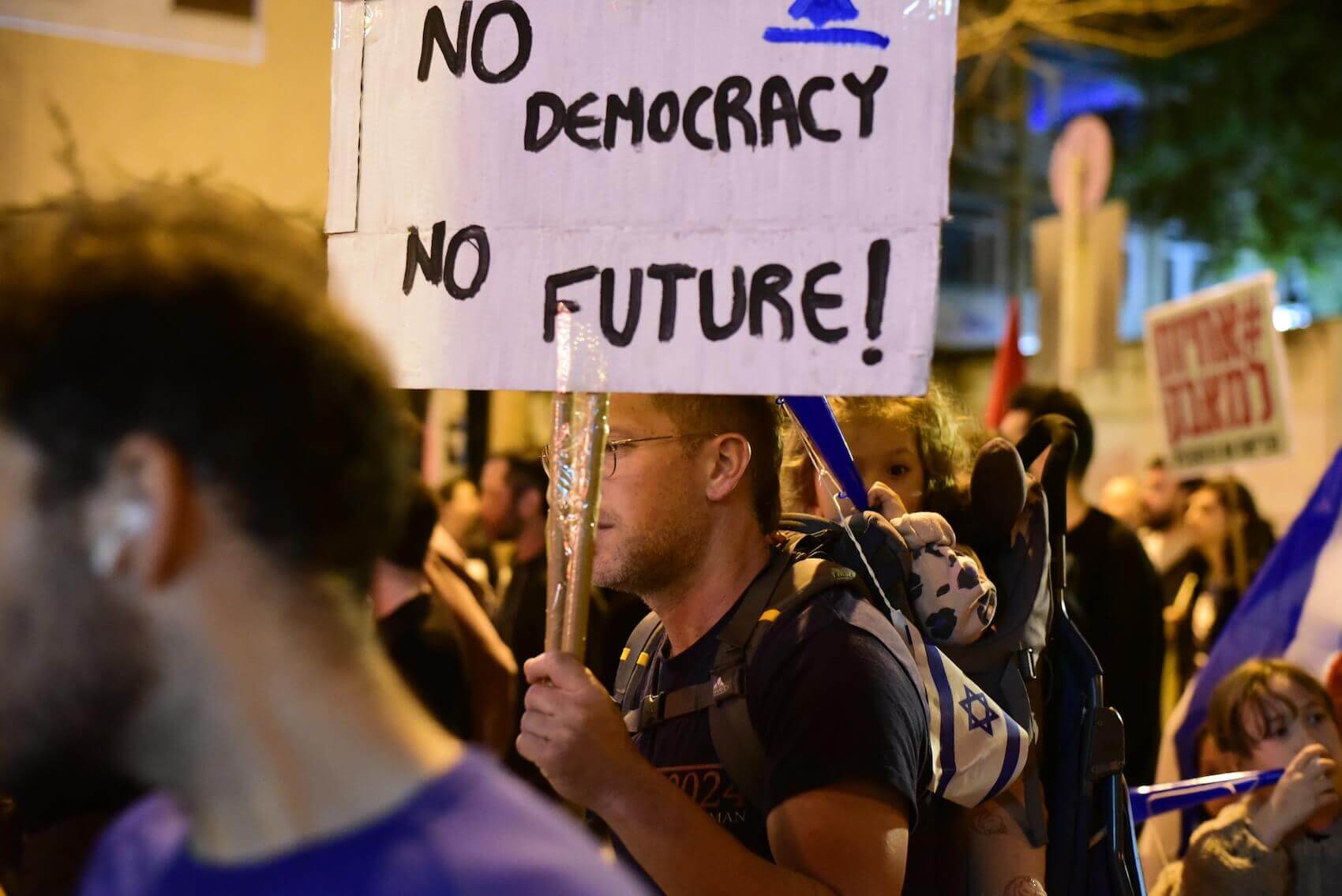
Professor Przeworski, welcome. Your minimalist conception defines democracy as a system in which governments can be selected and removed through elections. In light of contemporary backsliding, does this procedural definition remain analytically sufficient, or do recent developments compel us to integrate more substantive criteria concerning rights, accountability, and the rule of law?
Professor Adam Przeworski: I think that to understand my view of democracy—the minimalist view of democracy—one has to start with the observation that, in every country, at every time, there is conflict. These conflicts are often normative; that is, people expect democracy to implement certain values, such as those you mentioned. There are also economic conflicts—indeed, most conflicts are economic—dealing with the distribution of income, work, and so on. Sometimes they are purely symbolic. I often cite the example of a government in the Weimar Republic that fell because it changed the colors of the national flag. But the key point is that there was conflict.
The essence of the minimalist conception is that we must find ways to manage these conflicts—ways to resolve them, at least temporarily. After all, different people expect different things from democracy: some emphasize freedom, others equality. So how do we resolve these conflicts? This is where my argument comes in. I contend that we resolve them through elections. Whatever else people expect from democracy, we must have a mechanism through which conflicts are processed and resolved.
No Generalized Crisis of Democracy
You distinguish democracy as a mechanism for processing conflict from democracy as a normative ideal. To what extent has the growing expectation that democracy should deliver not only representation, but also economic equality and moral outcomes contributed to its current crisis of legitimacy?
Professor Adam Przeworski: I am not sure that this represents something new. As long as democracy has existed—in some countries for 200 years, and in at least 13 countries for 100 consecutive years—there have been such divergences. We have always disagreed about what we should expect of democracy, and which values it ought to implement. There is nothing new about that.
From this perspective, some people—and perhaps, in many cases, as much as half of the population—are always dissatisfied with what democracy produces. From time to time, they express this dissatisfaction by voting incumbent governments out. That is the instrument available to them, and that is how the system works.
For this reason, I do not think there is something like a generalized crisis of democracy. That said, there are recent changes that are indeed unprecedented—such as the weakening of political parties, the instability of party systems, and the emergence of new parties, particularly on the political right. These are significant developments, and they should prompt concern. But I would not characterize them as evidence of a new, generalized crisis of democracy. As I said at the outset, I do not believe such a generalized crisis exists.
The US as the Exception
Your work emphasizes that democracy endures when the stakes of losing power are not existential. How should we interpret rising inequality, identity polarization, and winner-takes-all political competition in this regard—do they structurally raise the cost of electoral defeat beyond sustainable thresholds?
Professor Adam Przeworski: The stakes in elections have indeed increased in recent years. At the same time, however, I do not see a generalized threat to democracy. There is, of course, an elephant in the room: the United States. In the United States, democracy is truly in danger. But if we consider similar countries—economically highly developed societies with comparable, perhaps somewhat lower, levels of inequality, significant political polarization, and long democratic traditions—the picture looks different.
In these countries, even when right-wing parties, including those with fascist roots, come to power—at least as members of governing coalitions—they do not necessarily threaten democracy. What strikes me is that, if you look at Italy, for example, where a party with explicit fascist roots is governing, or Austria or Sweden, where such parties have been part of coalitions, they still adhere to democratic values. They may advance unprecedented programs—programs that many of us, including myself, may strongly dislike—but they do not, in themselves, threaten democracy. In that sense, the threat to democracy appears to be largely exceptional to the United States.
Democracy Under Formal Trappings
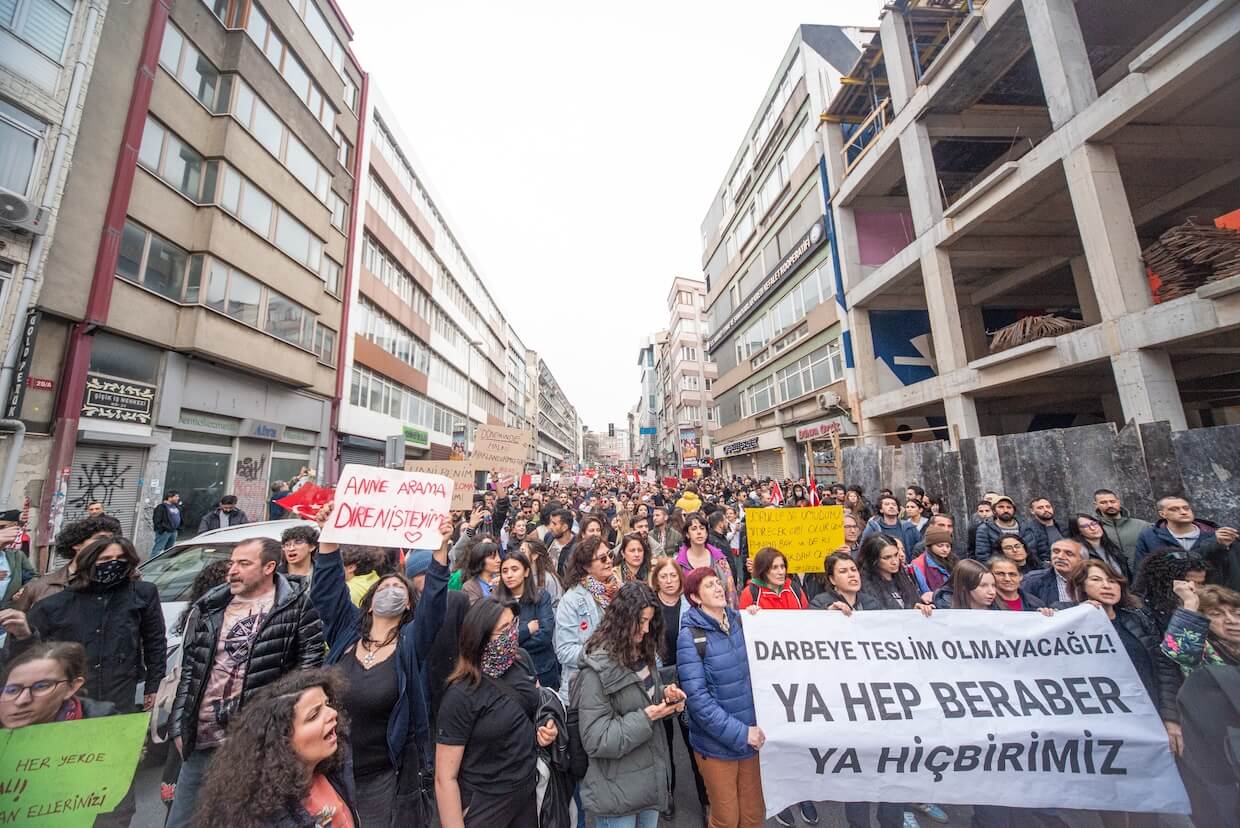
Photo: Dreamstime.
You have argued that contemporary democratic breakdowns occur primarily through elected incumbents. Does this shift from coups to endogenous erosion indicate that the institutional architecture of modern democracies has become intrinsically vulnerable to strategic capture?
Professor Adam Przeworski: That is an extremely controversial topic, but the answer is probably yes. When you look at the data, military coups have almost completely disappeared in the 21st century. Until around the year 2000, democracies were typically destroyed in a visible way—through military takeovers and coups. Since then, the only democracy that has experienced a coup is Thailand. While there have been many coups in Africa, particularly in North Africa, they have not been directed against democratic regimes. This suggests a new pattern.
It is likely new because some governments have learned that they can remain in power while preserving the formal trappings of democracy—by subordinating institutions other than the executive, controlling the media and economic resources, and employing a degree of repression, as in Turkey. In other words, they have learned to operate under the guise of democracy while using a range of instruments to entrench their rule.
At the same time, these governments do lose elections. They lost an election in Poland, and more recently in Hungary, contrary to many expectations and the more pessimistic forecasts of some analysts. This indicates that, while incumbents have developed strategies to gradually undermine democracy without abolishing elections or fully delegitimizing the opposition, the process is neither complete nor irreversible. For that reason, I would not characterize this as a universal phenomenon, and it remains unclear how durable it will be.
The Dilemma of Democratic Resistance
Within your strategic framework, incumbents choose whether to uphold or subvert electoral competition. How should we conceptualize “stealth authoritarianism,” where legalistic and incremental institutional changes cumulatively undermine democracy without triggering immediate resistance?
Professor Adam Przeworski: Let me begin with the question of immediate resistance. These governments win elections—Erdoğan won elections; Chávez and then Maduro won elections; Orbán won elections; and in Poland, the right-wing party won elections. They come to power on a program, and then the opposition faces a difficult choice. The opposition may see that these governments threaten democracy but opposing them can itself appear undemocratic. After all, these leaders have just won an election. Taking to the streets to say, “No, these people cannot govern,” risks being perceived as an anti-democratic act.
At some point, however, it may become too late. If these governments succeed in consolidating their partisan advantage—as in Venezuela or Turkey—then by the time the opposition decides that it can no longer tolerate the situation because democracy is being undermined, incumbents may already be too strong. They may be able to repress their opponents or otherwise entrench themselves in power. So, strategically, this is a very difficult situation. The opposition must be extremely careful about what to oppose and when to oppose it.
Public Tolerance and Democratic Erosion
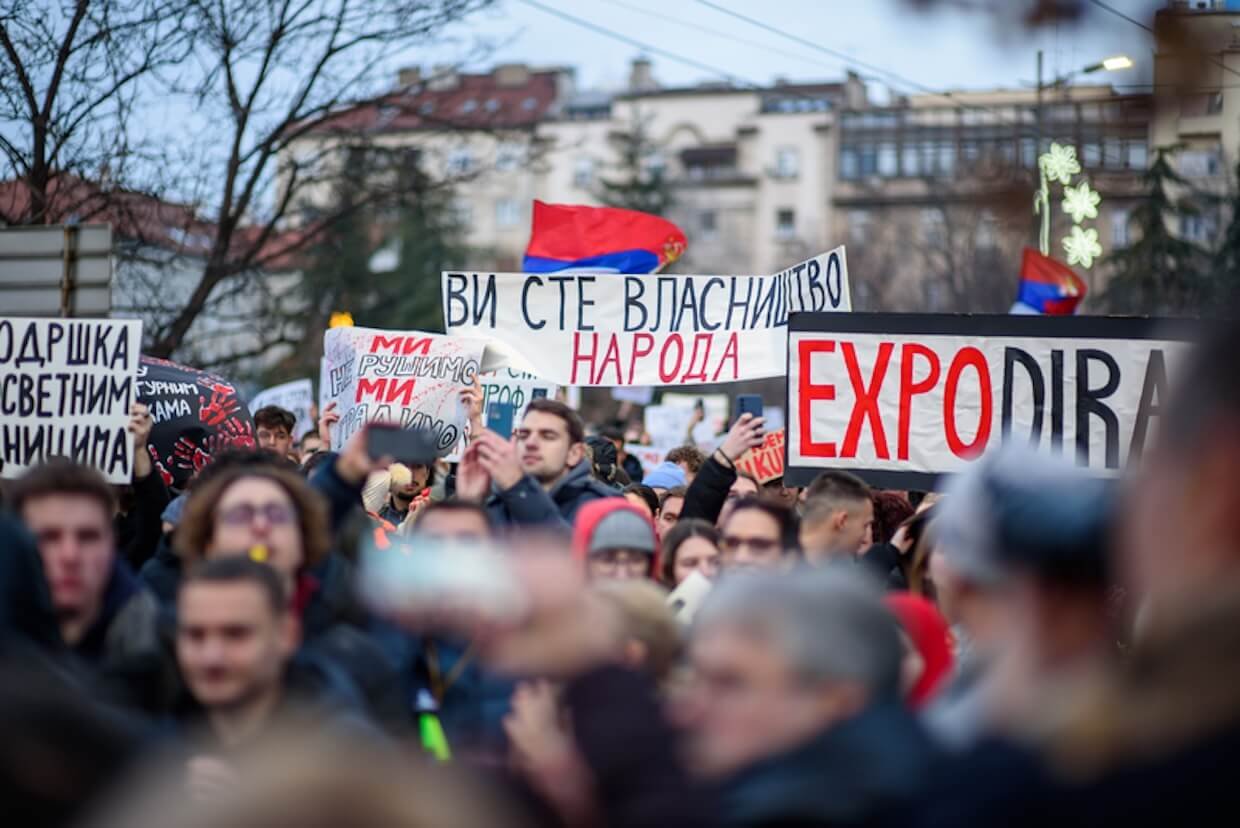
You suggest that democratic vulnerability can arise both from highly popular incumbents through populism and from deeply unpopular ones through polarization. How should we interpret cases where these dynamics converge, producing simultaneously mobilized support and entrenched opposition?
Professor Adam Przeworski: The way I think about it is that governments which, in fact, threaten democracy sometimes win elections. We now have extensive evidence, originally due to Professor Milan Svolik at Yale, showing that people are willing to tolerate certain violations of democratic norms and rules in exchange for substantive outcomes they value. As Svolik and Matthew H. Graham demonstrate in a well-known article, the number of unconditional democrats—that is, people who would not tolerate any violation of democratic norms for any substantive outcome—is very small in the United States. If I recall correctly, they estimate it at around 6 percent.
At the same time, evidence from Carlos Boix and his collaborators shows that when the question is framed more broadly—whether people are willing to give up democracy altogether—the answer is strongly negative. In other words, people may tolerate some transgressions, but not a complete abandonment of democracy. This creates a particular dynamic in processes of democratic backsliding. People may accept certain violations, but when governments go too far, they react—they protest, object, and sometimes vote incumbents out of office, as seen in Hungary and Poland.
In this sense, governments sometimes backslide because they can—because such actions are tolerated. At other times, however, they may backslide defensively, because failing to do so could risk electoral defeat. Thus, there are two distinct forms of backsliding: one supported by public tolerance, and another that unfolds in tension with public opinion.
Delegation, Trust, and Anti-Democratic Populism
Populist leaders frequently claim to embody a unified “people” against institutional constraints. In your analytical framework, is populism best understood as a pathology of democratic representation, or as an endogenous feature of electoral competition under conditions of high stakes and limited trust?
Professor Adam Przeworski: This is, again, a theme that is inherent in democracy. We do not like to be ruled. There is always a government that tells us what we can do and, very often, what we cannot do—and we do not like it. There have always been movements demanding a greater voice for the people in governance. As you know, there are many proposals aimed at increasing the role of voters in governing—various kinds of assemblies, referendums, participatory budgeting, and so on. Numerous reforms have sought to expand the role of citizens in their governments.
At the same time, there is a form of right-wing or anti-democratic populism in which people are willing to delegate governance to a leader, as long as that leader governs well. In such cases, people say, “We will place our trust in a government that does what we want.” Both of these tendencies can be dangerous to democracy.
Populism Is Inherent in Democracy
You have argued that citizens may knowingly tolerate democratic erosion when incumbents are perceived as highly appealing. Does this imply that populism is not external to democracy, but rather a rational equilibrium outcome within it?
Professor Adam Przeworski: I think that populism, understood as a desire among voters to have a stronger and more direct voice in governing, is inherent in democracy. Populism is a slippery concept. This is why Mudde, who popularized the term, has described it as a “thin” or weak ideology. At its core, it presents a view of the world that pits elites against the people. Some version of this dynamic has always been present. It was already visible at the time the American Constitution was being written. The Anti-Federalists, for example, were populists in this sense. They advocated very short terms of office—sometimes as short as one year—as well as prohibitions on re-election, reflecting a fear that elites would capture power and use it in their own interests rather than in those of the broader population.
This dynamic is therefore as old as democracy itself, and it resurfaces from time to time. At the same time, when the question is framed more fundamentally—whether people are willing to give up democracy altogether for some alternative—we have overwhelming evidence that they are not. People are not willing to accept that; they will defend democracy.
Dissatisfaction Is Democracy’s Constant
Given your argument that political conflict is structured by the available policy alternatives, how does populism reshape the political agenda in ways that both intensify polarization and foreclose the possibility of compromise?
Professor Adam Przeworski: We do have a great deal of evidence of polarization. The proportion of the electorate willing to change its partisan preferences is almost zero, which is somewhat surprising given that party systems themselves are quite unstable. People are increasingly likely to see one another as enemies, and as a result, they are less willing to accept compromise. That said, I do not think we are living in an era of a generalized crisis of democracy. Democracy continues to function quite well in several countries. The fact that we are often dissatisfied with the outcomes of governments and their policies is nothing new.
Consider that there are almost no democratic elections in which any party wins more than 50 percent of the vote. This means that roughly half of voters are dissatisfied with the result from the outset. Once in power, governments inevitably fail to implement all their promises, and perhaps about half of their own supporters become dissatisfied as well. What we observe, then, is a broad and persistent dissatisfaction with both electoral outcomes and government performance. Yet people continue to expect that next time they will prevail, and that the government will deliver on its promises. Elections are, in a sense, a siren song—they renew our optimism that, even if it did not work this time, it might work next time. This dynamic is inherent in democracy and is likely to persist. That is why I am not inclined to interpret current developments as evidence of a generalized crisis.
Why Some Autocracies Gain Support
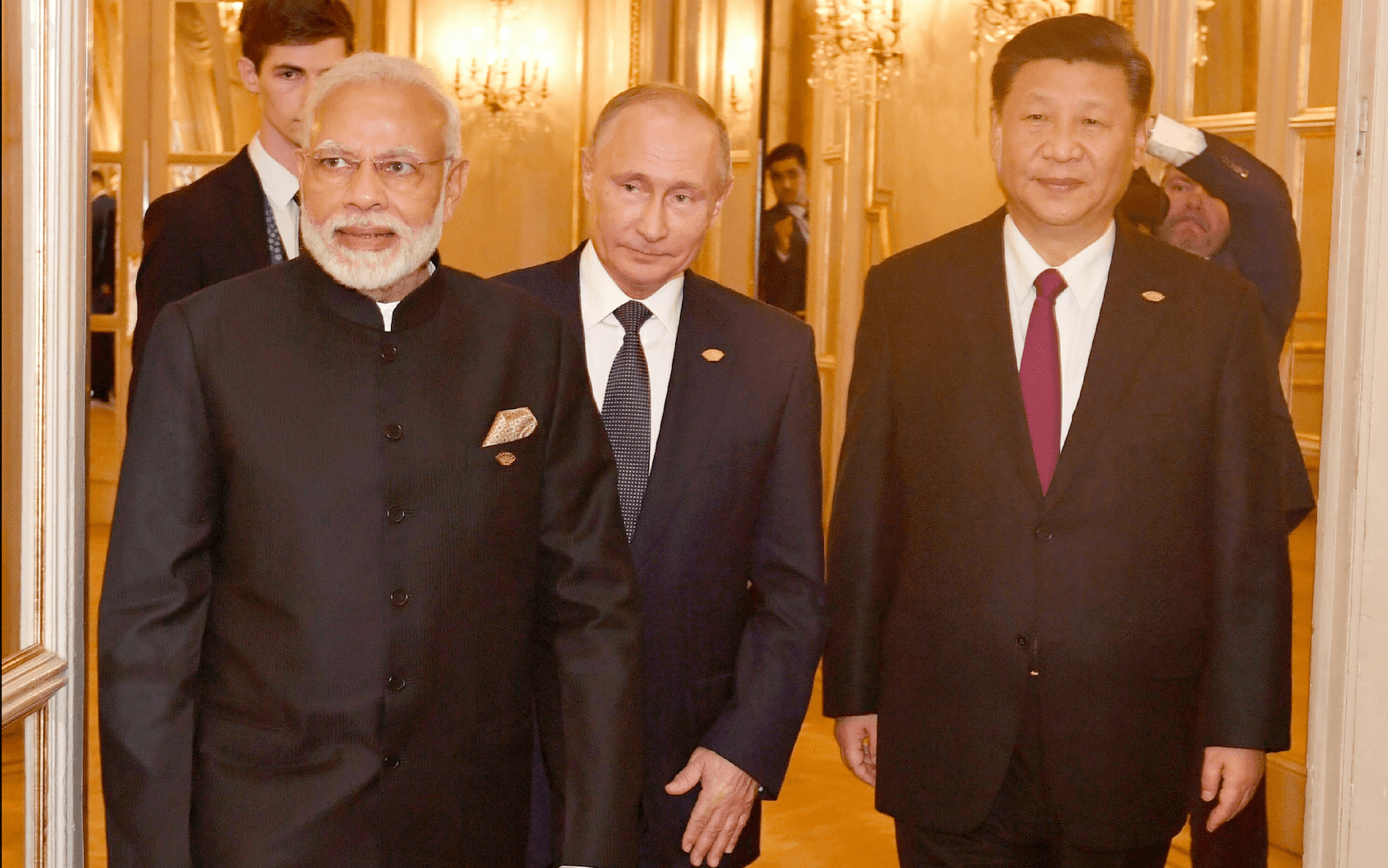
Your work challenges the assumption that authoritarian regimes are inherently fragile, highlighting instead their capacity to govern effectively and generate support. Does this require a fundamental revision of democratic theory’s expectations about the instability of autocracies?
Professor Adam Przeworski: It is difficult for democrats to understand why someone would be satisfied with, or even support, an authoritarian regime. We tend to assume that people would not be willing to give up their political freedom—and sometimes more than that, their cultural freedom—and trust that a government will act in their interests. As a result, much of the literature we produce in the West suggests that authoritarian regimes survive only because of misinformation, censorship, and propaganda. I do not think that is entirely true. There are authoritarian regimes that enjoy passive acceptance, and perhaps even passive support. China is one example. Why? Because authoritarian governments still have to govern—and they do govern. They repair streets, issue licenses, collect garbage; in short, they perform the everyday functions of governance. Moreover, people often do not see viable alternatives. In China, for instance, many do not seriously consider a different system; they simply live within the one they have.
So, my view is that we should not be surprised that some authoritarian regimes are relatively successful and enjoy a degree of popular support. Singapore might be one example, China another. This does not mean that all authoritarian regimes do so—many rely heavily on repression, arbitrariness, and violence in the interests of narrow elites. But the broader point is that authoritarian regimes are not sustained only by deception. Some of them do enjoy genuine support.
Development Sustains Democracy, But May Not Create It
If authoritarian regimes can derive legitimacy through economic performance, symbolic politics, or identity appeals, how does this complicate the long-standing modernization thesis linking development to democratization?
Professor Adam Przeworski: This is a long topic on which I have written extensively. What we know from the evidence is that if a democratic regime exists in an economically developed country, it is very likely to endure. That is the central lesson. In a 1997 article co-authored with Fernando Limongi, we observed that no democracy had ever fallen in a country with a per capita income higher than Argentina’s in 1976. Since then, only Thailand has experienced a democratic breakdown at a slightly higher income level. Overall, however, the evidence is clear: when democracy exists in a developed country, it tends to persist.
A different question is whether countries are more likely to become democratic as they develop economically. This was a widespread belief in the 1960s and 1970s and formed the basis of modernization theory. My conclusion, based on empirical research, is that we have no evidence supporting this claim. In other words, higher levels of economic development do not necessarily make a country more likely to become democratic. So, in a sense, one half of modernization theory is supported by the evidence, while the other half is not.
Why Some Autocracies Endure
What, in your view, distinguishes durable authoritarian regimes from fragile ones—particularly in terms of their ability to balance repression, co-optation, and everyday governance?
Professor Adam Przeworski: I do not really know; I have not studied this question directly. My view is more of a conjecture—and it is no more than that, not strongly supported by empirical evidence, largely because we do not yet have sufficient data. My sense is that when authoritarian regimes reach high levels of income, they tend to become more stable. Singapore and China, for me, are illustrative examples.
When we look at the empirical data, authoritarian regimes appear to be most vulnerable at intermediate levels of income. That is when they are more likely to collapse. By contrast, once they reach sufficiently high levels of income—and there are very few such cases—they seem more likely to endure.
At present, there is only one authoritarian regime with a per capita income comparable to that of most democracies, and that is Singapore. China, despite its significant development, has not yet reached that level. So, from this perspective, we still do not know with certainty whether authoritarian regimes are more likely to survive in developed contexts. However, the available empirical patterns suggest that they probably are.
Legitimacy Without Alternatives
You have critiqued formal models of authoritarianism for neglecting the quotidian practices of governance. How should scholars reconceptualize authoritarian stability to account for these routine, non-coercive dimensions of rule?
Professor Adam Przeworski: I have a particular view of legitimacy, which I spelled out many years ago. I think a regime is legitimate when people do not perceive organized alternatives. When you think about China, whatever else may be true, people simply do not see an alternative. More broadly, our regime preferences are, to a large extent, endogenous—endogenous in the sense that people living under particular regimes, unless those regimes are especially flagrant, tend to accept them. They accept them passively because they do not see much chance of changing them.
Someone living in the state of Iowa in the United States does not think, “What if the American system were like the Chinese one?” Similarly, someone living in Guangdong does not think, “What if our system were like the American one?” People live their everyday lives, and they do not perceive politically organized alternatives. That is simply the way things are.
When such alternatives do appear—when there is a genuinely organized democratic opposition—open conflict emerges, and some authoritarian regimes collapse. We saw this in the fall of the communist bloc, where regimes collapsed one after another.
Challenging the V-Dem Crisis Narrative
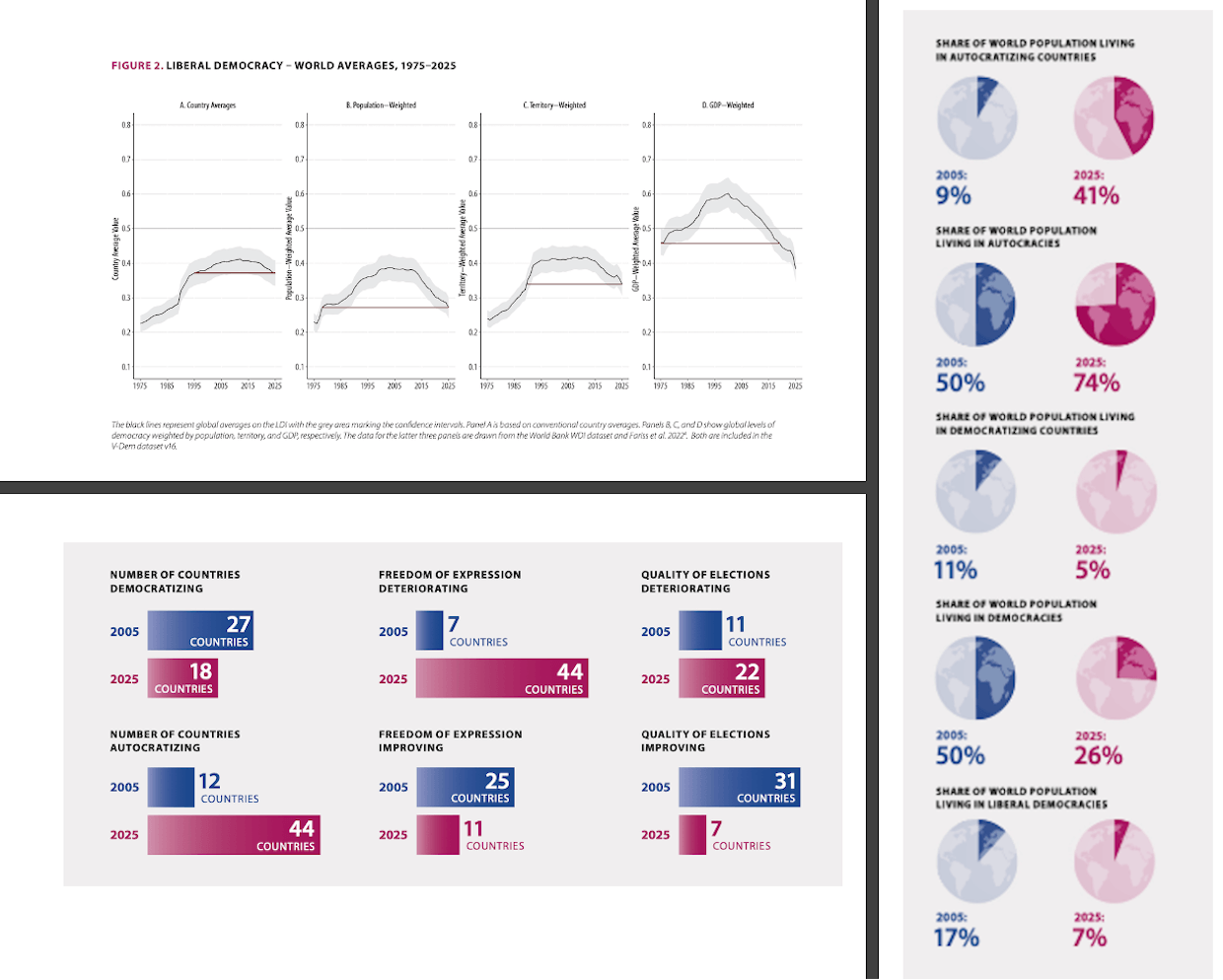
Recent V-Dem report findings indicate that a substantial majority of the world’s population now lives under authoritarian regimes, with autocracies outnumbering democracies. How should we interpret this reversal in light of your argument that democracy is historically contingent rather than teleologically progressive?
Professor Adam Przeworski: I think this claim is simply false. In a sense, I see V-Dem as a figment of the imagination. What does it really mean to say that a majority of the world’s population lives under authoritarian governments? How is that measured? I do not have much trust in V-Dem’s measurements of democracy. I think they seek media exposure by heralding crises of democracy. I do not believe there is a worldwide crisis of democracy, so I do not take this claim seriously. On the contrary, there are more democratic regimes—more democratic countries—in the world today than ever before. I am not referring to population, but to the number of countries.
Electorates Can Reverse Illiberal Drift
And finally, Professor Przeworski, recent political developments in countries such as Poland, Brazil, and—potentially—Hungary suggest that electorates can reverse authoritarian or illiberal trajectories through democratic means. To what extent do these cases support the view that democracy retains a self-correcting capacity, and what structural or institutional conditions are necessary for such reversals to succeed rather than produce only partial or fragile restorations?
Professor Adam Przeworski: You are right that what has happened in Brazil, Poland, and Hungary shows that democracies possess a kind of self-preserving capacity. When democracy is truly at stake, people are willing to set aside other values and preferences in order to defend it. There is something about the very possibility of choosing who governs us that constitutes an extraordinarily strong value, to which people remain deeply attached. The examples you cited illustrate this clearly. Attempts to usurp power through various means eventually encounter resistance. Small transgressions may be tolerated, but major violations of democratic rules are not.