Dr. James Loxton argues that today’s democratic backsliding is driven less by authoritarian successor parties than by populist leaders who promise to return power to “the people” but then concentrate it in their own hands. In this ECPS interview, he explains how authoritarian legacies often survive democratization through parties, institutions, networks, and political brands. Yet, looking at Hungary, Turkey, Brazil, and the United States, Dr. Loxton identifies populism as the more significant common thread. He also discusses “authoritarian inheritance,” the appeal of authoritarian nostalgia, and the rise of gray-zone regimes marked by “competitive authoritarianism,” where elections continue but the playing field is “fundamentally uneven and unfair.”
Interview by Selcuk Gultasli
Dr. James Loxton, Senior Lecturer in Comparative Politics at the University of Sydney and one of the leading scholars of authoritarianism, democratization, and party politics, argues that the contemporary crisis of democracy cannot be understood simply through the persistence of old authoritarian elites. While much of his influential scholarship has focused on “authoritarian successor parties” and the enduring legacies of dictatorship after democratic transition, Dr. Loxton warns that the principal engine of democratic backsliding today is increasingly populism itself. “When I think about the democratic backsliding occurring across much of the world today,” he tells the European Center for Populism Studies (ECPS), “I see populism—not authoritarian successor parties—as the more significant common thread.”
In this wide-ranging interview, Dr. Loxton explores why authoritarian actors, institutions, and political cultures so often survive democratization rather than disappear with regime change. Challenging conventional understandings of democratic transition, he argues that most transitions are not revolutionary ruptures in which authoritarian systems are swept away entirely. “It is extremely rare for all aspects of the old regime simply to disappear and be replaced by a completely blank slate,” he explains. Instead, authoritarian legacies persist through constitutions, institutions, party organizations, and political networks that continue operating long after democratization formally occurs.
At the center of Dr. Loxton’s work is the concept of “authoritarian inheritance,” the idea that ties to a former dictatorship can function not only as liabilities but also as electoral assets. “Having roots in a dictatorship can sometimes be as much of an asset as it is a liability for parties operating under democracy,” he argues. In some cases, voters consciously embrace authoritarian legacies because they associate former regimes with “stability,” “order,” or “national strength”. In others, historical memory itself becomes distorted through nostalgia, revisionism, and digital propaganda. Reflecting on cases such as Ferdinand Marcos Jr. in the Philippines and Jair Bolsonaro in Brazil, Dr. Loxton warns of the growing appeal of what he calls “authoritarian nostalgia parties,” particularly among younger generations with no lived experience of dictatorship.
Yet Dr. Loxton also draws a crucial distinction between authoritarian successor parties and the broader populist dynamics reshaping democratic politics today. Looking at countries such as Hungary, Turkey, Brazil, and the United States, he argues that the deeper pattern is not simply authoritarian continuity but the rise of leaders who campaign against elites in the name of “the people” and then centralize power once in office. “Populist leaders run for office promising to smash the elites and return power to ‘the people,’” he notes. “Then, once in office, they proceed to concentrate power in their own hands and tilt the political playing field in their favor.”
The interview also explores Dr. Loxton’s reflections on “competitive authoritarianism,” the influential concept developed by Steven Levitsky and Lucan A. Way to describe regimes occupying the gray zone between democracy and dictatorship. For Dr. Loxton, these hybrid systems capture one of the defining political realities of the 21st century: democracies increasingly hollowed out not through military coups, but through elections, populism, institutional manipulation, and the gradual erosion of liberal norms from within.
Here is the edited version of our interview with Dr. James Loxton, revised slightly for clarity and flow.
Transitions Rarely Begin from a Blank Slate

Dr. Loxton, welcome. Let me begin with a broader question about authoritarian continuity across generations and democratic systems. In your work on authoritarian successor parties, you argue that former regime elites often survive democratization by transforming themselves into competitive democratic actors. To what extent do you think this organizational continuity explains the remarkable intergenerational resilience of authoritarian politics in many contemporary democracies?
Dr. James Loxton: I think a good place to start is by considering what a regime transition actually is. Many people, when they imagine a transition from dictatorship to democracy, picture some kind of big bang in which the old regime is completely obliterated, and a new democratic order is created from scratch. But what I have tried to show in my work—and what many other scholars have demonstrated as well—is that this is almost never the case. It is extremely rare for all aspects of the old regime simply to disappear and be replaced by a completely blank slate. Legacies of the old dictatorship almost always persist in one form or another. In many countries, for example, constitutions created under authoritarian rule continue to be used by democratic governments. That is a very common pattern.
What I have focused on in my own research is political parties that emerge from former dictatorships and continue to operate after a transition to democracy. I call these authoritarian successor parties, and they are extraordinarily common. When I first began studying this topic more than a decade ago, I expected the numbers to be high, but I was still surprised by just how widespread the phenomenon turned out to be.
I examined every new democracy established between the 1970s and 2010 and looked at whether an authoritarian successor party emerged and whether that party was eventually elected back to office. What I found was that in roughly three-quarters of all new democracies, an authoritarian successor party emerged as a viable political actor. In more than half of all new democracies, voters freely and fairly used the ballot box to return the “bad guys” to power. So, this is not a marginal phenomenon at all; it is an incredibly common one.
Authoritarian Inheritance Can Outlive the Dictator
Your concept of “authoritarian inheritance” highlights how former ruling elites retain organizational resources, networks, and legitimacy after democratic transitions. Could we extend this framework to explain why voters in democratic systems continue electing the children, relatives, or political heirs of authoritarian rulers decades after democratization?
Dr. James Loxton: Yes, I think so. The term I use to make sense of authoritarian successor parties is authoritarian inheritance. The basic idea—although it is quite an uncomfortable one, and it certainly makes me uncomfortable—is that having roots in a dictatorship can sometimes be as much of an asset as it is a liability for parties operating under democracy. This can take many forms, ranging from connections to business elites to, more disturbingly, possessing a political brand that voters actually find attractive. Such parties are able to say: “Remember that dictatorship? Remember how you liked it? Well, we are going to continue that legacy. We are going to continue to represent the old regime. Vote for us.”
Let me give you an example. Right now, Peru is in the middle of a presidential election. The first round has already taken place, and the country is now heading into the second round. One of the top two candidates is Keiko Fujimori. She has run for president three times before. On each occasion, she reached the second round and then lost by a very narrow margin. We will see whether she is luckier on her fourth attempt. Who is she? She is the daughter of former Peruvian autocrat Alberto Fujimori, who served as the country’s president-slash-dictator during the 1990s.
In fact, just before our interview, I was looking at her official campaign website. On the very first page, if you scroll down to the bottom, there is a section titled “Positive Legacies,” where she highlights what she views as her father’s major accomplishments—stabilizing the economy, ending hyperinflation, and defeating a powerful guerrilla insurgency in the country. So, she is fully embracing the legacy of her father. Will she get elected? We will see. But it clearly appears to be a message that resonates with many Peruvian voters.
Authoritarian Memory Can Become an Electoral Resource
In “Why We Elect Former Dictators and Their Children,” you suggest that authoritarian legacies can be politically normalized over time. Under what conditions does collective memory fail to generate democratic accountability, allowing authoritarian family dynasties to reinvent themselves electorally rather than remain politically stigmatized?
Dr. James Loxton: I’m going to push back a little bit on the way that question is framed. The idea of “collective memory failing” suggests that if people vote for someone like Keiko Fujimori, or for parties such as the KMT in Taiwan or the PRI in Mexico—former ruling parties of authoritarian regimes—they must somehow be mistaken or have misremembered the past. In some cases, that may indeed be true. But in other cases, it is almost certainly the case that people do remember the old regime, and they simply liked it. They liked the way the old regime operated. They felt safer, they felt things were more stable, things were more predictable. Whatever the reason may be, they simply viewed that period positively. So, now the regime has changed, and citizens are free to vote for whomever they want. Who do they choose? In some cases, they choose the people they already like—whether that means the old ruling party, a family member of the former ruler, or even the former dictator himself.
Democracy Does Not Always Bury the Old Regime
Many authoritarian successor parties appear to thrive not despite democratization, but because of it. Does this suggest that electoral democracy itself may unintentionally provide institutional shelter for authoritarian continuity, especially in weakly institutionalized democracies?
Dr. James Loxton: Again, I think all this really shows is that voters do not always vote the way I might want them to vote, or the way you might want them to vote, or the way the people watching this video might want them to vote. Let’s suppose you are a conservative and would really like everyone always to vote for the Conservative Party. But guess what? Some people vote for the left. Or let’s suppose you are a leftist and want everybody to vote for the Social Democratic Party. Well, many people are conservatives, and so they vote for conservative parties.
Why do I say that, and why do I think this is particularly important when it comes to authoritarian successor parties and, more specifically, former dictators and their children? The reason is that these phenomena involve political actors who run for office under democracy but have roots in former dictatorships. What makes them unique is that, unlike constitutions imposed by former regimes, or amnesties granted to militaries responsible for human rights abuses, these are not institutional arrangements simply forced upon society and made difficult to remove under democracy.
That is not the case with authoritarian successor parties, former dictators, or the children of former dictators. Voters must willingly cast their ballots for these people. And it turns out that this is exactly what happens in most new democracies. In fact, across most of the so-called third-wave democracies—those established from the mid-1970s onward—voters have freely and willingly used the ballot box to support political actors who had some connection to the former dictatorship.
The Greater Danger Today Is Populist Power-Grabbing
Your scholarship frequently emphasizes the “double-edged” nature of authoritarian successor parties: they may stabilize democracy by incorporating former regime actors, yet simultaneously preserve authoritarian enclaves. In today’s context of democratic backsliding, do you believe the balance has shifted more decisively toward the harmful side of that equation?
Dr. James Loxton: What you say is true. Authoritarian successor parties are, in many ways, a double-edged phenomenon. On the one hand, they can be surprisingly helpful because they provide a political voice for people who supported and identified with the old regime. On the other hand, they can also be harmful. They may protect undemocratic constitutions or shield human rights violators from accountability. In some extreme—though actually quite rare—cases, they can undermine the new democracy itself and push the country back toward authoritarianism.
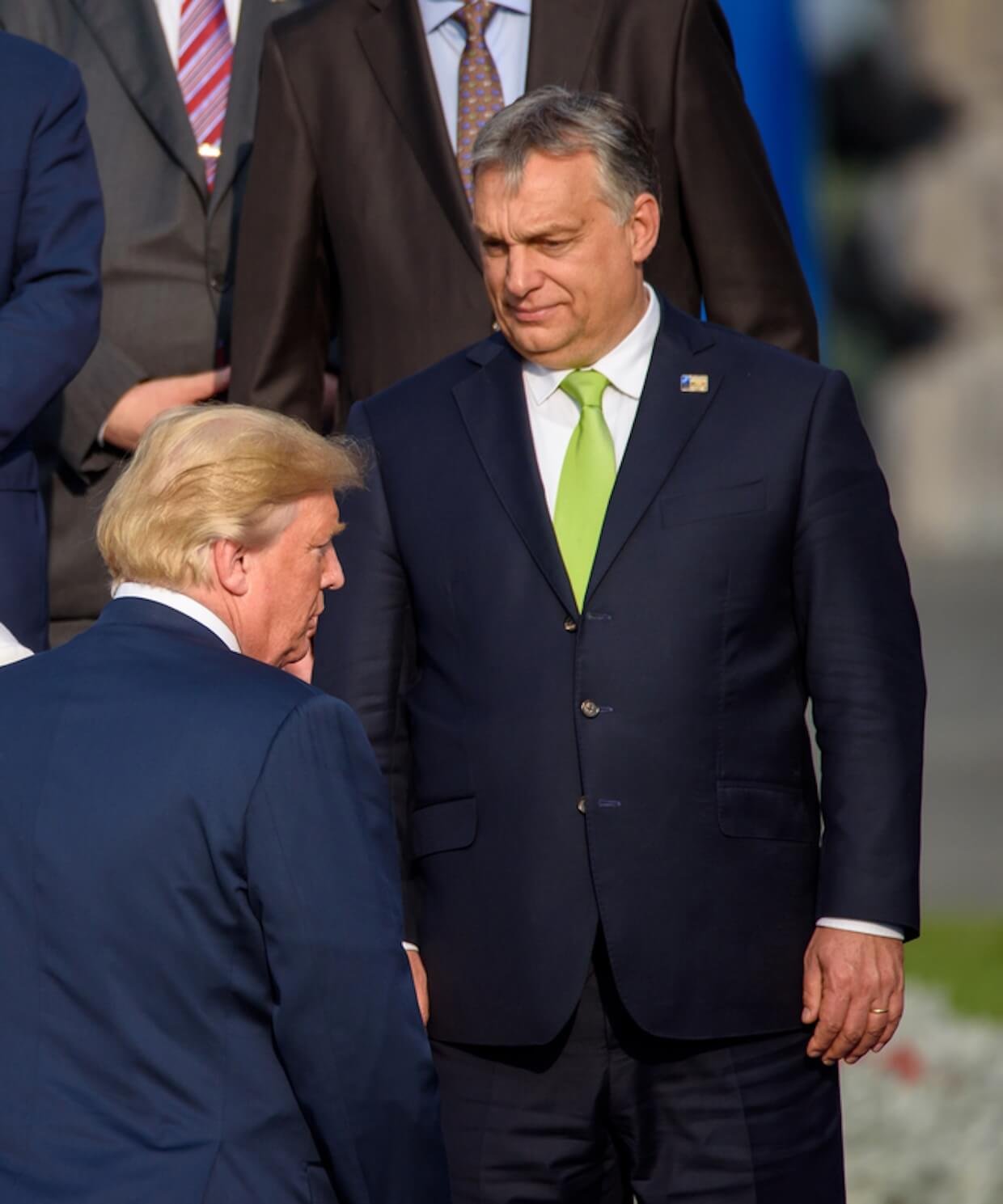
But when I look around the world today at countries such as Hungary until very recently, Turkey, the United States, or Brazil until recently—cases where democracy has either come under severe stress or, in some instances, broken down altogether—I do not see authoritarian successor parties or the children of former dictators as the primary common denominator. Rather, the recurring pattern is that populist leaders run for office promising to smash the elites and return power to “the people.” Then, once in office, they proceed to concentrate power in their own hands and tilt the political playing field in their favor. So, when I think about the democratic backsliding occurring across much of the world today, I see populism—not authoritarian successor parties—as the more significant common thread.
Some Populists Turn Dictatorship into a Golden Age
In recent years, we have seen populist leaders invoke nostalgia for “strong states,” “order,” and “national greatness.” How much of contemporary populism do you see as a repackaging of authoritarian inheritance into emotionally resonant democratic narratives?
Dr. James Loxton: It depends on the case. A common populist message is the promise to “make X great again”—whether that means making America great again, Turkey great again, Hungary great again, or something similar. If a country has an authoritarian past, then celebrating that past can certainly become part of the populist appeal. But that is not true in every case.
At the same time, I find the phenomenon of authoritarian nostalgia both fascinating and extremely widespread. And I want to return to something I mentioned earlier: the idea that voters often do remember the old regime and vote accordingly, even if that may make some of us uncomfortable to acknowledge. However, there are also cases in which the public memory of the past is clearly inaccurate or heavily distorted. The best contemporary example, in my view, is the Philippines under Ferdinand Marcos Jr., or Bongbong Marcos, as he is commonly known.
If we look across authoritarian regimes globally and consider those marked by extreme corruption and incompetence, the Marcos dictatorship ranks very high on the list. This was not a case like Park Chung-hee’s South Korea or the KMT in Taiwan—authoritarian regimes that were undoubtedly repressive but also highly developmental. The Marcos regime was essentially a kleptocracy. Yet, when Bongbong Marcos ran for president, he fully embraced his father’s legacy and presented it as a kind of golden age. He described his father as a genius, while a vast network of supporters produced YouTube videos and social media content portraying the Marcos years in a completely misleading way.
This narrative appears to have resonated with many Filipino voters who were frustrated with the many grievances facing the Philippines today. So, in some cases, people genuinely remember the past and vote accordingly, while in other cases, historical memory itself becomes seriously distorted.
Former Regime Elites Can Colonize the Party System
Your work on authoritarian diasporas argues that former authoritarian elites often disperse across multiple parties after transitions rather than remain concentrated in a single successor organization. Could this fragmentation actually make authoritarian influence more durable and difficult to detect within democratic systems?
Dr. James Loxton: Yes. This is part of a research project I worked on with Timothy Power at Oxford. Tim is an expert on Brazil, which provides a particularly interesting case. In 1985, Brazil’s two-decade-long military regime came to an end, and the country transitioned to democracy. Yet for roughly the next 20 years, the party system remained heavily dominated by figures connected to that military regime. The dictatorship had created an official party and organized elections while still under authoritarian rule. Then, once democratization occurred, politicians from that party dispersed across the political spectrum. In effect, they colonized the broader party system.
Now, the official party of the old regime did continue to exist. It performed relatively well and, in fact, still exists today, although under several different names over the years. But the real influence of the broader authoritarian diaspora—the wider coalition that had governed Brazil during military rule—was far more consequential and far more influential than one might assume simply by looking at the authoritarian successor party itself.
Young Voters Can Embrace Dictatorships They Never Experienced
One of the most striking developments globally is the rehabilitation of authoritarian reputations among younger generations with no lived memory of dictatorship. How should scholars understand the role of generational distance, digital media ecosystems, and historical revisionism in the electoral resurgence of authoritarian heirs?
Dr. James Loxton: The case of Bongbong Marcos in the Philippines is a very clear example. He appears to enjoy substantial support among younger voters. Another example is Bolsonaro in Brazil. Bolsonaro was a relatively low-level figure—a captain in the Brazilian military—and a young man during the years of military rule. Yet he has fully and enthusiastically, and often quite provocatively, embraced the legacy of the old dictatorship. In doing so, he has attracted considerable support from many Brazilian voters, including younger generations.
I find this to be a deeply disturbing phenomenon: people who never directly experienced authoritarian rule nevertheless developing a kind of fantastical understanding of what those regimes were actually like. We see this not only in Brazil and the Philippines, but also in countries such as Spain and Chile. We also see it in what I call “authoritarian nostalgia parties.” These are not necessarily parties that emerged organically from the old regime itself. In many cases, decades have passed since the return to democracy. Yet these parties place nostalgia for the former authoritarian order at the very center of their electoral appeal. And unfortunately, this phenomenon appears to be becoming increasingly common.
Democracy Requires More Than Elections
In “Authoritarianism: A Very Short Introduction,” you discuss authoritarianism not simply as a regime type but as a broader political logic. Do you think contemporary democracies are increasingly experiencing what we might call the “authoritarianization of democratic culture,” even before formal regime breakdown occurs?
Dr. James Loxton: No, actually, in that book I very clearly present authoritarianism as a regime type. An authoritarian regime is one that fails to meet all the criteria associated with what is commonly known as the procedural minimum definition of democracy. To qualify as a democracy, a regime must have free and fair elections, universal suffrage, and protections for a broad range of civil liberties. If any one of those elements is absent, then the regime is not democratic; it is authoritarian.
Authoritarian Actors Do Not Always Need Populism
In several countries, authoritarian successor parties have successfully repositioned themselves as defenders of democracy against allegedly corrupt or dysfunctional democratic elites. Is anti-establishment populism today becoming the primary mechanism through which authoritarian actors regain democratic legitimacy?
Dr. James Loxton: Some authoritarian successor parties do adopt a populist message, presenting themselves as challengers to entrenched elites and claiming to speak on behalf of “the people.” Others, however, do not. It really varies from case to case. Just like politicians more broadly, some choose to campaign as populists, while others pursue very different strategies. Ultimately, it depends on the specific party or candidate in question.
Authoritarian Branding Survives Radio, Television, and X
Your research demonstrates that authoritarian successor parties often inherit organizational advantages such as party brands, territorial networks, and clientelist infrastructures. In the digital age, have these inherited assets become less important than affective polarization, social media mobilization, and charismatic personalization? Or do old authoritarian networks still matter beneath the surface?
Dr. James Loxton: The term authoritarian inheritance functions as a broad umbrella concept encompassing a wide range of assets that authoritarian successor parties—or, in the case of my more recent work, former dictators themselves or their children—can draw upon. Now, some of these assets are probably less important than they once were. I still believe that having a strong territorial organization matters, but perhaps it matters somewhat less in the age of social media and digital communication. However, one element that I think remains just as important as ever is the power of the party brand.
And this brings us back to a deeply uncomfortable—but fundamentally important—idea that we need to take seriously if we want to understand why these actors so often succeed electorally under democracy. The key point is that an association with the old regime may actually function as an asset. Some people may look back at that regime, accurately or inaccurately, and conclude: “You know what? I really liked that. I would like more of it.” That kind of political branding remains highly relevant regardless of whether parties are communicating through radio, television, or X.
Some Regimes Combine Democracy and Dictatorship

And finally, Dr. James Loxton, if authoritarianism today increasingly survives not through coups, but through elections, constitutional manipulation, and dynastic succession, do we need an entirely new conceptual vocabulary beyond the classic democracy-authoritarianism binary to understand 21st-century regime evolution?
Dr. James Loxton: I’m a student of Steven Levitsky. He was my PhD supervisor, and he has had a profound influence on how I understand politics. Levitsky, together with his longtime collaborator Lucan A. Way, coined the term “competitive authoritarianism” to describe a hybrid regime that combines elements of both democracy and authoritarianism. One of the things I find particularly fascinating is how widely the concept of competitive authoritarianism has spread—not only within academia, but increasingly in broader public discourse as well. You now hear journalists and commentators regularly using the term in mainstream political discussions.
I think this is one of the most important concepts political science has produced over the past few decades because it so effectively captures cases such as Hungary until very recently or Peru in the 1990s. These are systems where elections still exist and where the opposition retains at least some possibility of winning, however limited. Opposition parties continue to operate, and dissenting voices can still communicate their messages—perhaps not through the main state broadcaster, but through alternative forms of media. So, we are not talking about fully closed regimes like Russia or North Korea.
There is genuine political competition, but the playing field is fundamentally uneven and unfair. That is the great danger in countries such as the United States today. In fact, Levitsky and Way argue that the United States is no longer a full democracy and has drifted toward a form of competitive authoritarianism. Similarly, Brazil under Bolsonaro appeared to be moving in that direction, and that is essentially what Hungary became under Fidesz.
So, to be honest, I still find the democracy-versus-dictatorship binary useful. At the same time, I also recognize that some regimes occupy a gray zone in between—systems that combine important features of both democracy and dictatorship.