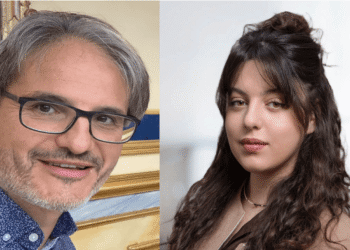

In an interview with the ECPS, Associate Professor Petar Stankov offers a nuanced assessment of Bulgaria’s post-election trajectory under Rumen Radev. Challenging alarmist comparisons, he argues that “it is too early to tell” whether Radev will become an Orbán-style leader, suggesting instead that he “looks more like Fico,” pursuing a pragmatic balancing strategy. Assoc. Prof. Stankov interprets the electoral outcome as “a demand for stabilization after prolonged institutional volatility,” rather than a clear ideological shift. While economic constraints limit disruptive policymaking, he warns that the greater risk lies in institutional capture, particularly if opportunities for judicial reform are missed. Ultimately, Bulgaria’s trajectory will depend on whether reformist or rent-seeking dynamics prevail.
Interview by Selcuk Gultasli
In the aftermath of Bulgaria’s April 2026 parliamentary elections, the country finds itself at a critical juncture shaped by the tension between political stabilization and the risk of democratic erosion. Following years of fragmentation, repeated elections, and institutional fatigue, Rumen Radev’s newly established Progressive Bulgaria party secured a decisive majority, capitalizing on anti-corruption sentiment, voter exhaustion, and socioeconomic anxieties linked to eurozone integration. While this outcome has brought a measure of political clarity, it has also intensified debates over Bulgaria’s democratic trajectory and its positioning between the European Union and Russia.
In a written interview with the European Center for Populism Studies (ECPS), Associate Professor Petar Stankov, Senior Lecturer in Economics at Royal Holloway, University of London, offers a nuanced and analytically grounded interpretation of these developments. Challenging alarmist comparisons, Assoc. Prof. Stankov argues that “it is too early to tell” whether Radev will evolve into an Orbán-style leader, suggesting instead that he “looks more like Fico,” pursuing a pragmatic balancing strategy rather than an overtly confrontational illiberal project.
At the core of Assoc. Prof. Stankov’s analysis is the argument that Radev’s victory reflects “a demand for stabilization after prolonged institutional volatility,” rather than a coherent ideological realignment. The electoral coalition that brought him to power, he notes, was “mobilized against discredited incumbents, not a coherent positive ideology,” drawing support from both left- and right-leaning constituencies. This heterogeneity, in turn, underscores the enduring salience of identity politics in Bulgaria, where Radev’s “balanced position” on Russia’s war in Ukraine resonated deeply “on identity grounds.”
Situating these dynamics within his broader framework of populist cycles, Assoc. Prof. Stankov characterizes Radev as “a short-term manifestation of populist demand,” rooted less in economic distress than in identity and fairness concerns, particularly dissatisfaction with the judicial system. In this sense, Bulgaria’s political landscape reflects structural patterns rather than exceptional rupture.
The interview also addresses the central question of whether Radev’s anti-corruption mandate will lead to institutional renewal or facilitate a new phase of power concentration. Here, Assoc. Prof. Stankov highlights a fundamental tension between reformist impulses and entrenched interests, warning that outcomes will depend on whether political actors pursue “institutional repair” or the redistribution of “political rents.”
On foreign policy, Assoc. Prof. Stankov underscores the importance of strategic ambiguity. While Radev may be “a natural candidate to do the Kremlin’s bidding,” he is unlikely to pursue a confrontational course vis-à-vis the EU, instead maintaining a careful balancing act shaped by Bulgaria’s structural constraints. Economically, these constraints significantly limit his room for maneuver, but Assoc. Prof. Stankov cautions that “politically, he may do more damage” if opportunities for judicial reform are squandered.
Ultimately, this interview with ECPS presents a measured yet critical assessment of Bulgaria’s evolving political order. By rejecting simplistic analogies and foregrounding structural dynamics, Assoc. Prof. Stankov highlights both the constraints and the risks inherent in Radev’s ascent—capturing a moment in which the promise of stability coexists uneasily with the possibility of democratic backsliding.
Here is the edited version of our interview with Associate Professor Petar Stankov, revised slightly to improve clarity and flow.
A Vote for Stability, Not Ideology
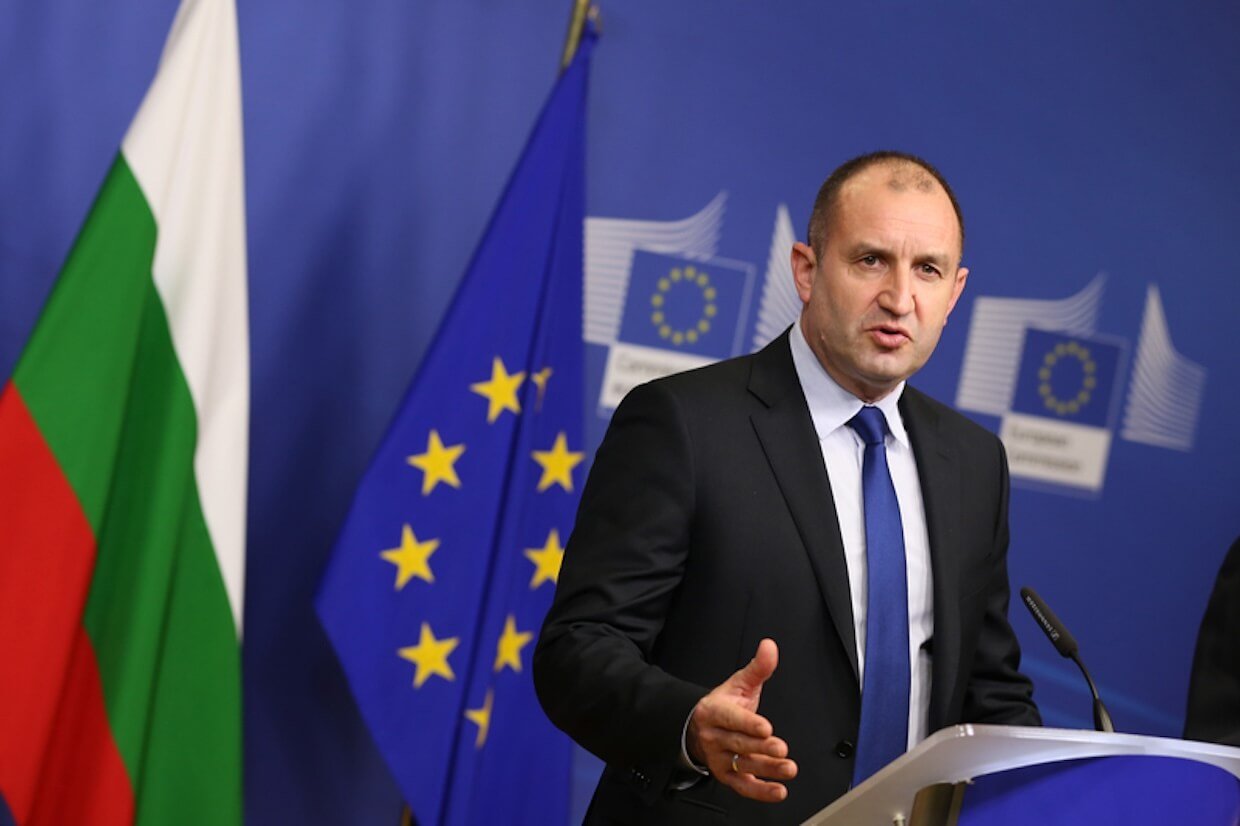
Professor Stankov, what does Rumen Radev’s landslide victory tell us about Bulgaria’s current political position after eight elections in five years? Should this outcome be interpreted primarily as a demand for stability and anti-corruption reform, or as evidence of a deeper ideological realignment?
Assoc. Prof. Petar Stankov: Radev’s victory is best read as a demand for stabilization after prolonged institutional volatility, rather than a clear ideological departure from underlying voter preferences. It mobilized a coalition against discredited incumbents, not a coherent positive ideology. What earned Radev support from the electorate was also his balanced position on the war that Russia started in Ukraine. As Russia has, justifiably or not, a special place in the hearts and minds of many Bulgarians, this stance resonated deeply on identity grounds.
How should we situate Radev’s victory within your broader theory of populist cycles? Does his rise reflect a classic populist moment in which economic anxiety, elite discredit, and identity-based grievances converge into a new electoral coalition?
Assoc. Prof. Petar Stankov: Populist cycles are a long-term phenomenon. Radev is a short-term manifestation of populist demand, which is consistently strong in Bulgaria. The theory of populist cycles rests on identity, fairness, and economic pillars. If it offers the appropriate lens through which to view Bulgarian politics at the moment, then identity and fairness certainly played a role, though less so the state of the economy. Identity mattered because voters appear to have stopped associating themselves with previous pro-Western populists, finding insufficient representation in them. Fairness also played a role, as the condition of the judicial system is no longer tolerable.
Identity Over Economics, Structure Over Cycles
In your earlier work on Bulgaria and Germany, you identify unemployment, inequality, trade openness, and migration as factors associated with stronger right-wing populist support. To what extent do these structural pressures help explain Radev’s success in 2026, even if he does not fit neatly into a conventional far-right mold?
Assoc. Prof. Petar Stankov: Yes, but only imperfectly. Cyclical pressures such as inflation and emigration may have been relevant. However, Radev’s support draws from both left- and right-leaning constituencies. This is consistent with identity factors and deeper structural issues shaping Bulgarian voters, rather than the cyclical factors that typically underpin a populist rise.
Radev won on an anti-corruption platform, but anti-corruption discourse in Central and Eastern Europe often serves as a bridge between democratic renewal and populist concentration of power. In your view, does his mandate open a path toward institutional repair, or does it risk legitimizing a new phase of executive centralization in the name of cleansing the system?
Assoc. Prof. Petar Stankov: This will depend on two opposing forces. On the one hand, there are new faces in politics under Radev who would like to start from scratch. This would be consistent with the institutional repair hypothesis. On the other hand, there are also some older figures among the incoming cohort of politicians who have not yet had the chance to secure a share of “political rents.” This would be consistent with the hypothesis that consolidation of power serves the redistribution of political rents rather than the renewal of democracy in Bulgaria. Whichever force prevails will determine whether Bulgaria moves toward rebuilding or redistributing. I sincerely hope that idealism will prevail, but history suggests that, in poorer countries, political rents often outweigh ideals.
Closer to Fico Than Orbán in Europe’s Fault Lines
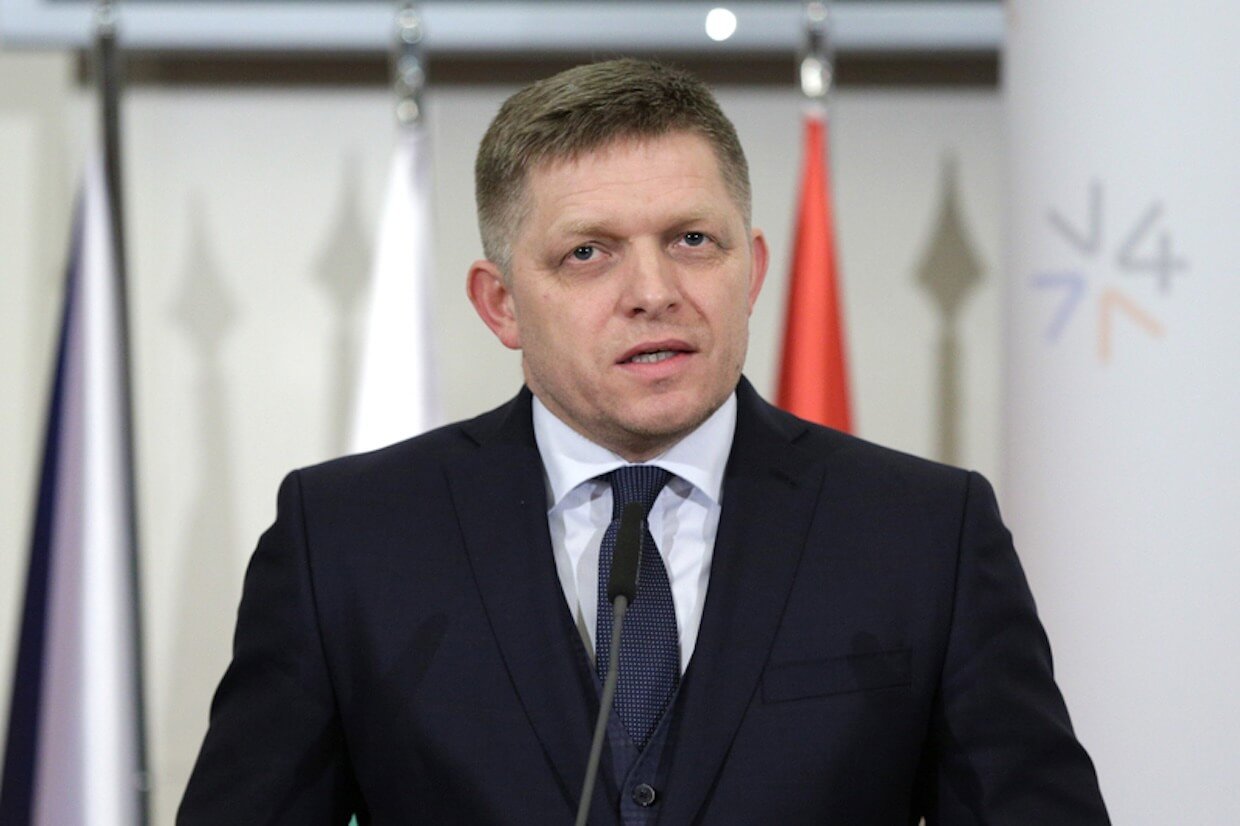
A central question for European observers is whether Radev represents the emergence of a new Orban-type actor inside the EU. Do you see him as a potential ideological successor to Orban in the nexus of EU-Russia tensions, or is that analogy too blunt for the Bulgarian case?
Assoc. Prof. Petar Stankov: On the surface, Radev and Orban appear more aligned with the interests of the Kremlin than with those of the EU. However, I think Radev strikes a more balanced tone, at least for now. Whether he will act as an Orban 2.0 is too early to tell, but I do not expect him to go as far as Orban did in his last term in office in terms of aligning with the Kremlin. At the same time, we should not be naive about Radev’s background: he is a military officer from a period when the Bulgarian army perceived NATO as an adversary and Russia as a source of public and ideological goods. It would be unnatural for him to suddenly change his identity.
If not Orban, is Radev better understood as closer to Robert Fico: rhetorically skeptical of Brussels and supportive of “pragmatic” relations with Moscow, yet constrained by economic dependence on the EU and by Bulgaria’s embeddedness in NATO and European institutions?
Assoc. Prof. Petar Stankov: I believe Radev fits that description. I expect him to pursue a balancing act without creating major disruptions for NATO or the EU.
How should we interpret Radev’s position on Ukraine? He has opposed military support and criticized parts of the EU’s approach, yet analysts suggest he may avoid outright vetoes while preserving Bulgaria’s role in the broader European defense ecosystem. Does this amount to strategic ambiguity, domestic balancing, or a more systematic geopolitical repositioning?
Assoc. Prof. Petar Stankov: It is not natural for Radev to oppose the interests of the Kremlin; doing so would run against who he is and how he has developed as an individual and as a politician. However, I do not think he is inherently confrontational. He projects confidence and a desire for dialogue, which may serve his strategy of ambiguity. Given his current level of electoral support, I do not think he needs to balance domestically—he holds the strongest political mandate in recent memory.
Pragmatism or Russophilia? A Shifting Political Language
What do Radev’s statements about renewing ties with Russia and rethinking Europe’s security architecture tell us about the evolving vocabulary of pro-Russian politics inside the EU? Are we seeing old-style Russophilia, or a newer populist language of “pragmatism,” sovereignty, and anti-moralism designed to be more electorally acceptable?
Assoc. Prof. Petar Stankov: Because of who Radev is, he is a natural candidate to do the Kremlin’s bidding in Europe, to re-legitimize the economic and political relationships between Europe and the Kremlin, and, why not, to do their dirty laundry. Let us not forget, however, that Radev represents a small and declining nation among many others. In that sense, although Radev is a valuable asset—the Kremlin will take any asset that comes its way at this stage—he is not its prime candidate. The Kremlin’s prime European asset is not even in Europe.
Your work argues that populists weaponize identity conflicts and economic hardships for political gain. In the Bulgarian case, which mattered more in this election: material grievances such as inflation, euro adoption, and living costs, or identity and geopolitical divisions over Russia, Europe, and national sovereignty?
Assoc. Prof. Petar Stankov: I believe the latter mattered more. Russian propaganda in Bulgaria is very strong, while the economy is not performing poorly enough for cyclical factors to outweigh identity conflicts.
Balancing Brussels and Moscow While Eyeing Judicial Reform
Radev is not a newcomer; he governed for years from the presidency before stepping down to seek executive power. Looking back at his presidential record, what patterns in his political style, institutional behavior, and crisis communication most help us anticipate how he may govern now as prime minister?
Assoc. Prof. Petar Stankov: It is hard for me to predict his moves as prime minister. Although he came to power with one of the most remarkable electoral victories in Bulgarian democratic history, he will probably not rush to disrupt what has worked well so far for the Bulgarian economy. For example, he attempted to launch a referendum on joining the Eurozone in his final year as president, but he would not take Bulgaria out of the Eurozone. He may be inclined to cozy up to the Kremlin, but he would not forgo the benefits of EU membership. What he could attempt—and history may credit him for—is to secure a constitutional majority for large-scale judicial reform. Whatever his rhetoric abroad, if he manages to fix that system, which has long hindered the development of a level playing field in Bulgaria, he will be remembered for his domestic achievements rather than his external balancing act.
Do you see Progressive Bulgaria as a durable governing project, or as a typical new-party vehicle built around a single leader and a temporary coalition of discontented voters? In other words, does this victory mark the stabilization of a new political order, or simply the latest phase in Bulgaria’s volatile anti-establishment cycle?
Assoc. Prof. Petar Stankov: Like any party built around a single leader rather than a consensual political platform, Progressive Bulgaria will likely fizzle out once Radev is no longer at its helm.
Reform Window or Lost Generation?
One of the themes in your research is that not all populists are equally damaging in economic governance, especially in Europe, where institutional constraints can mute the worst forms of macroeconomic populism. Given Bulgaria’s EU obligations, eurozone membership, and fiscal constraints, how much room does Radev actually have to behave as a disruptive populist in office? Yet your work also stresses that the economic moderation of populists does not necessarily prevent damage to the rule of law, democratic accountability, or civil society. If Radev is constrained economically, should the greater concern be institutional capture rather than macroeconomic irresponsibility?
Assoc. Prof. Petar Stankov: Economically, Radev has little room to do significant damage. His external constraints are substantial, and he would therefore be unable to pursue the kind of macroeconomic populism that has plagued Latin American economies in the past.
Politically, however, he may do more damage if he squanders his opportunity to build a majority for constitutional reforms that are vital for the country’s long-term development. If he does squander it, Bulgarians may need to wait another generation—or even two—before a similarly strong political figure emerges with a popular mandate for reform.
This broader concern, that European populists may do more damage politically than economically, raises an important question: if economic constraints limit their capacity for harm, should political constraints also be strengthened? There has recently been a proposal for EU institutional reform to limit the consensus principle in certain areas, particularly foreign policy. Proposals of this kind may bring the European project closer to its original vision of uniting European nations under shared values. However, the trade-off is that many smaller states could become less influential in decision-making. To protect itself from malign external influence, the EU may need to reconsider some of its foundational principles—evolve, or else…
Looking ahead, what is your medium-term forecast for Bulgaria under Radev? Do you expect a pragmatic, nationally framed but still fundamentally European government; a creeping illiberal turn marked by pressure on the judiciary and media; or a shorter-lived experiment in which governing responsibilities quickly erode the broad electoral coalition that brought him to power?
Assoc. Prof. Petar Stankov: That depends on how quickly he starts forming a coalition for constitutional change. If this part of his agenda starts finding excuses to be pushed further back in time while mundane issues take centre stage, the medium-term forecast for Bulgaria would not be great. If a majority for constitutional changes takes centre stage in the political narrative coming from Radev, then I would be more optimistic. In general, I would be an optimist until proven wrong, which, given the Bulgarian experience of the last few decades, has never been a hard theorem to prove.