Please cite as:
ECPS Staff. (2026). “ECPS Symposium 2026 / Panel 3: Normalizing Authoritarian Populism — Institutions, Algorithms, and Fascist Drift.” European Center for Populism Studies (ECPS). April 28, 2026. https://doi.org/10.55271/rp00151
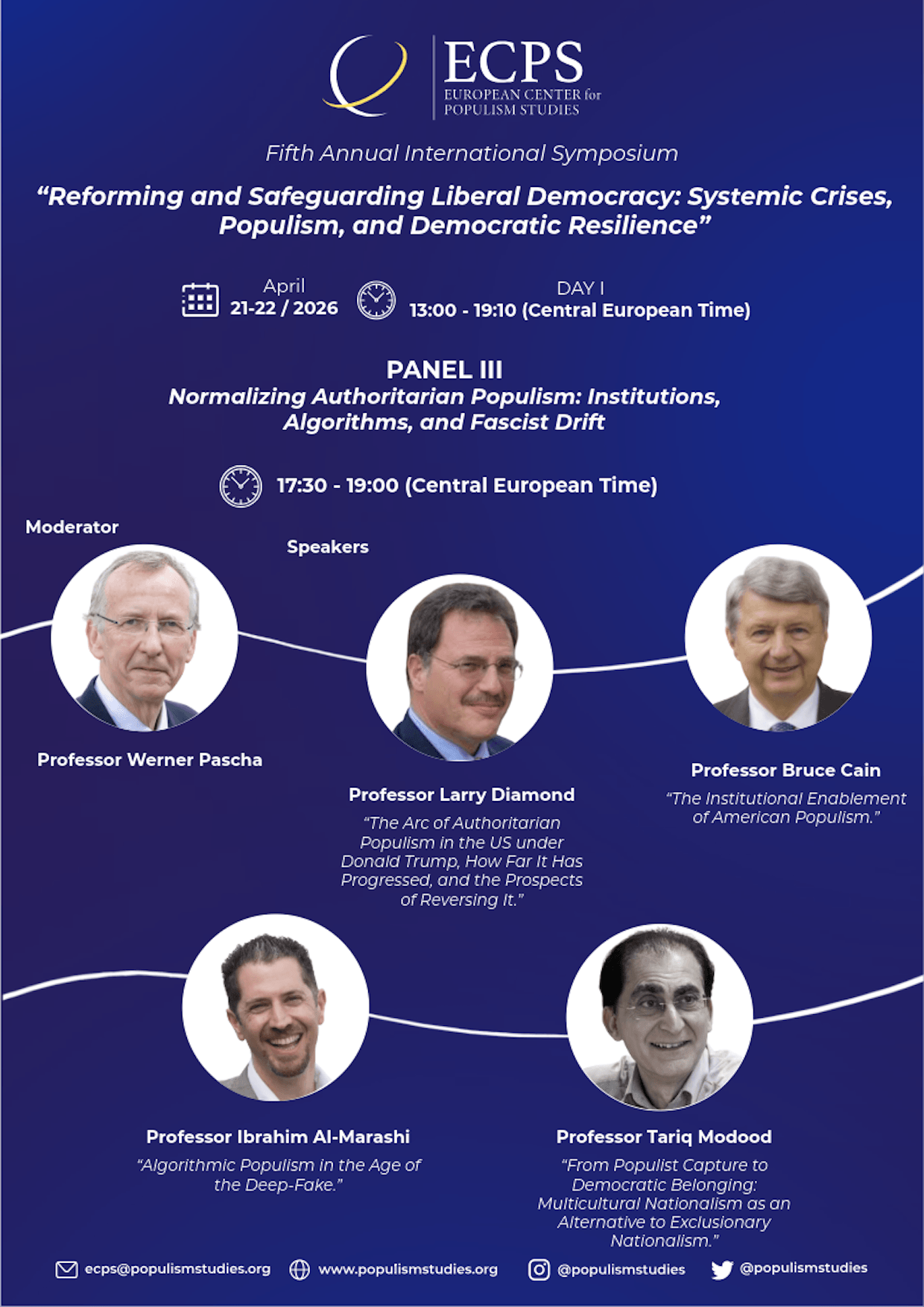
The third panel of the ECPS Fifth Annual International Symposium examined how authoritarian populism becomes normalized across institutions, media ecosystems, and political identities. Bringing together perspectives from political science, media studies, and political theory, the session highlighted the interplay between executive overreach, institutional erosion, and algorithmically amplified communication. Contributions by Professor Larry Diamond and Professor Bruce Cain underscored the dynamics of democratic backsliding and “autocratic drift” within the United States, while Assoc. Prof. Ibrahim Al-Marashi demonstrated how AI-driven media and “slopaganda” reshape populist mobilization in a hyperreal digital environment. Concluding the panel, Professor Tariq Modood proposed multicultural nationalism as a unifying alternative to exclusionary populism. Collectively, the panel offered a multidimensional framework for understanding and resisting contemporary authoritarian trajectories.
Reported by ECPS Staff
Third Panel of the ECPS Fifth Annual International Symposium, “Reforming and Safeguarding Liberal Democracy: Systemic Crises, Populism, and Democratic Resilience,” convened under the title “Normalizing Authoritarian Populism: Institutions, Algorithms, and Fascist Drift.” Moderated by Professor Werner Pascha, Emeritus Professor of Economics at Duisburg-Essen University and affiliated with the Institute of East Asian Studies (IN-EAST), the panel examined how authoritarian populism becomes normalized through institutional weakening, executive overreach, media transformation, algorithmic amplification, and exclusionary forms of nationalism.
Professor Pascha guided the session as a moderator attentive to both institutional and conceptual linkages. His role was especially important in bringing together the panel’s diverse disciplinary perspectives—from comparative democratization and American political institutions to media studies, war narratives, and multicultural political theory—into a coherent discussion on the contemporary vulnerabilities of liberal democracy.
The panel opened with Professor Larry Diamond, William L. Clayton Senior Fellow at the Hoover Institution, Mosbacher Senior Fellow in Global Democracy at Stanford’s Freeman Spogli Institute, and Bass University Fellow. In his presentation, “The Arc of Authoritarian Populism in the US under Donald Trump, How Far It Has Progressed, and the Prospects of Reversing It,” Professor Diamond assessed the trajectory of authoritarian populism in the United States, drawing on V-Dem indicators and comparative lessons from Hungary, Poland, and Turkey. He emphasized electoral manipulation, corruption, attacks on institutions, and the importance of broad democratic mobilization.
The second speaker, Professor Bruce Cain, Professor of Political Science at Stanford University and Director of the Bill Lane Center, presented “The Institutional Enablement of American Populism.” Professor Cain offered a measured analysis of autocratic drift in the United States, distinguishing between rule-of-law erosion and longer-term shifts in America’s federalized institutional structure. His remarks highlighted executive power, emergency authority, judicial interpretation, federalism, and the political economy of democratic resilience.
The third presentation, “Algorithmic Populism in the Age of the Deep-Fake,” was delivered by Assoc. Prof. Ibrahim Al-Marashi, Associate Professor at The American College of the Mediterranean and the Department of International Relations at Central European University. Assoc. Prof. Al-Marashi explored how AI-generated media, memes, “slopaganda,” and hyperreal digital narratives reshape war, propaganda, and populist communication.
The final speaker, Professor Tariq Modood, Professor of Sociology, Politics and Public Policy at the University of Bristol, presented “From Populist Capture to Democratic Belonging: Multicultural Nationalism as an Alternative to Exclusionary Nationalism.” Professor Modood proposed multicultural nationalism as a constructive response to exclusionary populism, seeking to integrate majority anxieties and minority vulnerabilities within a shared framework of equal citizenship and belonging.
Together, the panel offered a rich interdisciplinary account of how authoritarian populism is institutionalized, mediated, normalized, and potentially resisted.
Professor Larry Diamond: The Arc of Authoritarian Populism in the US under Donald Trump, How Far It Has Progressed, and the Prospects of Reversing It
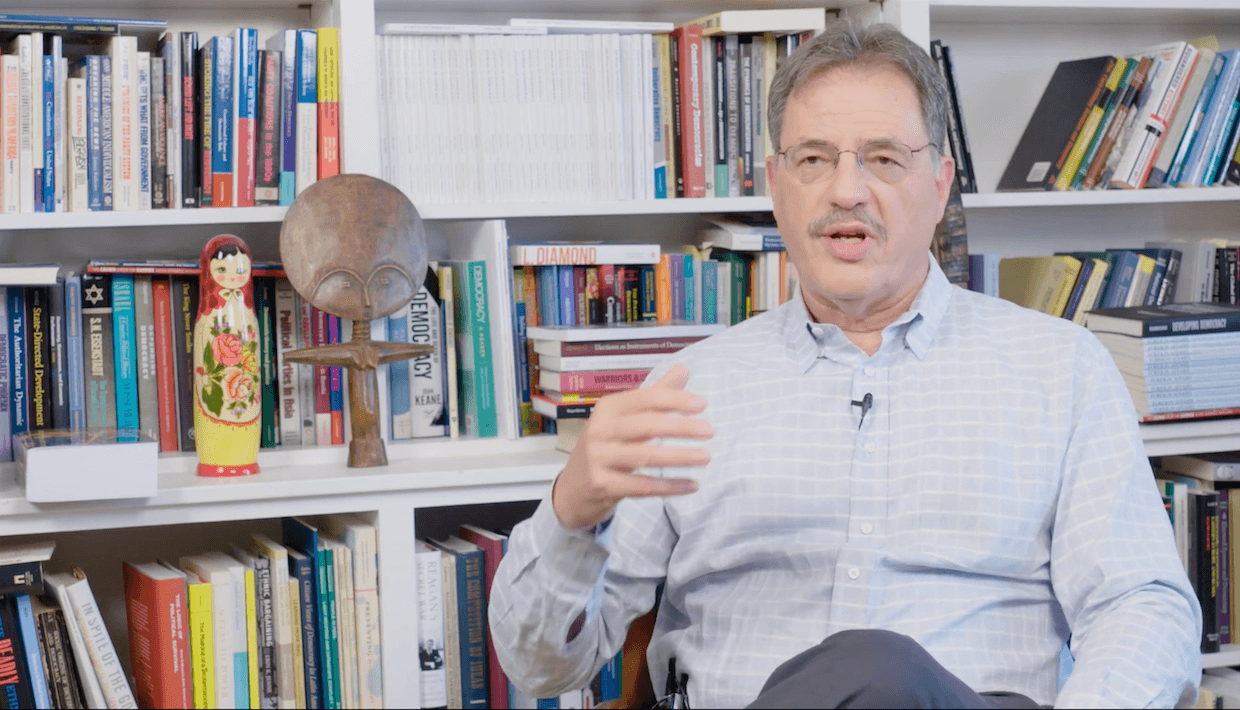
As the first speaker of the third panel, Professor Larry Diamond delivered a wide-ranging and analytically grounded presentation that examined the trajectory of authoritarian populism and the prospects for reversing democratic backsliding. Moving briskly through his slides, Professor Diamond framed his remarks around two central questions: how far authoritarian populism has advanced, and what strategies may effectively counter its expansion. Drawing in part on V-Dem data as well as arguments developed in his book Ill Winds, Professor Diamond outlined what he described as an “autocrat’s 12-step program,” emphasizing the cumulative and systematic nature of democratic erosion.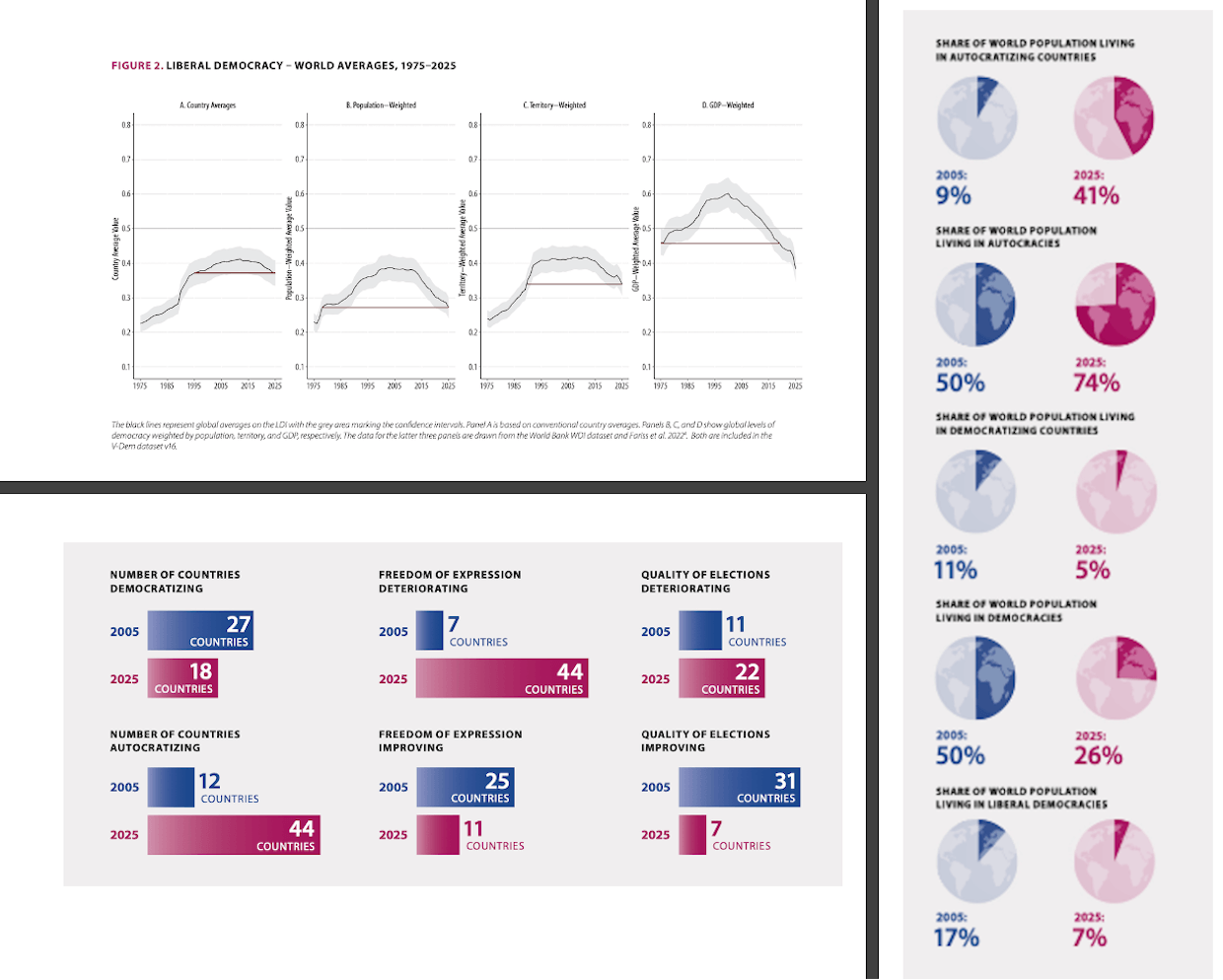 While not elaborating each step in detail, Professor Diamond underscored the critical importance of electoral manipulation and control, identifying it as the decisive stage in authoritarian consolidation. He noted that this dimension often determines whether democratic decline becomes entrenched, referencing recent developments in Hungary as a salient example. Turning to the United States, Professor Diamond traced the evolution of authoritarian tendencies under Donald Trump, emphasizing both continuity from the first term and new developments in the second.
Executive Power and Erosion
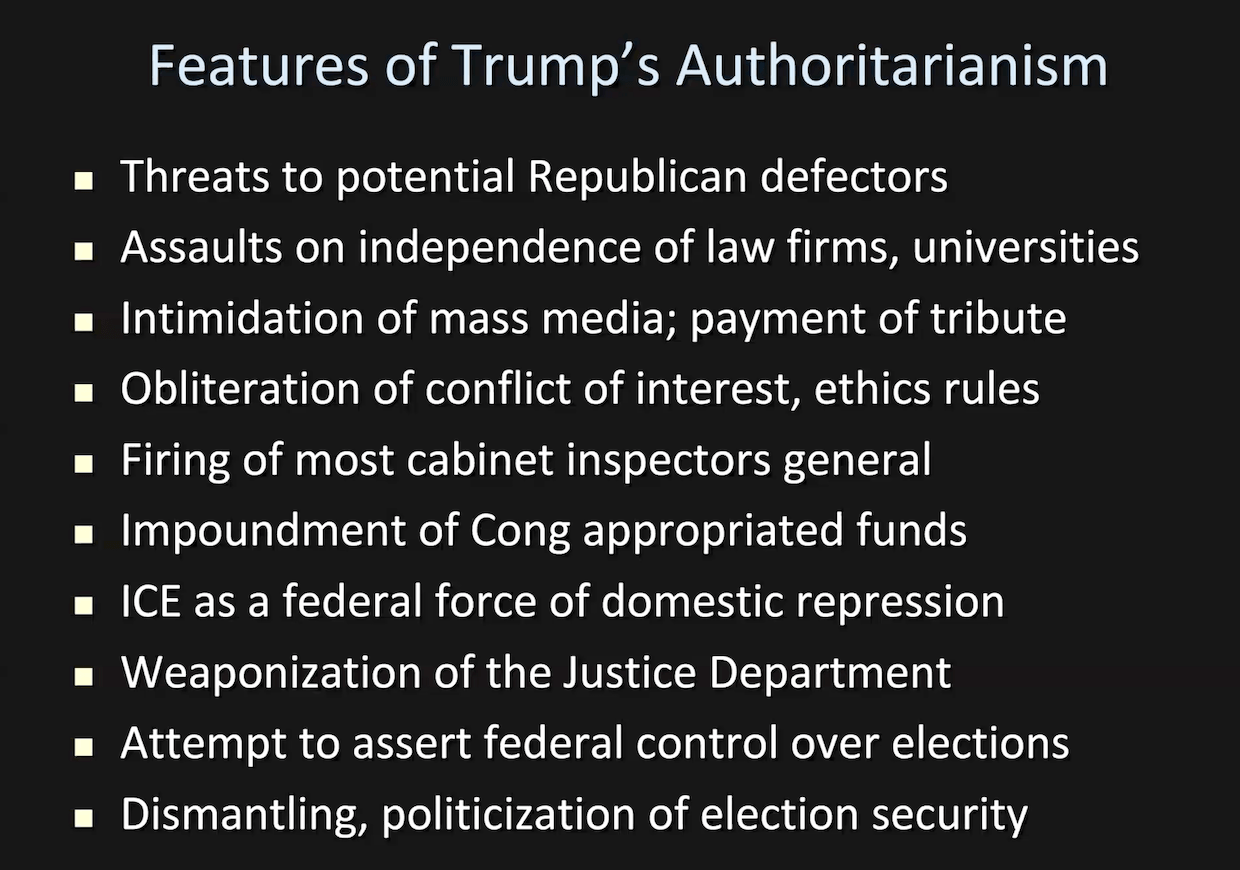
Among the defining features identified by Professor Diamond were the use of political pressure to deter intra-party dissent, particularly among Republican legislators, and the expansion of attacks on independent institutions, including law firms, universities, and media organizations. He highlighted the increasing concentration of media ownership in the hands of political allies, suggesting that such developments have already begun to shape editorial practices in major outlets. In addition, Professor Diamond pointed to the erosion of conflict-of-interest norms, arguing that corruption has become deeply embedded within the governing project and may ultimately prove politically destabilizing.
Further institutional concerns included the dismissal of inspectors general, the impoundment of congressionally appropriated funds, and the transformation of Immigration and Customs Enforcement (ICE) into a broader instrument of political enforcement. Professor Diamond also emphasized attempts to weaponize the Justice Department and to gain control over electoral administration, including efforts to weaken election security infrastructure. These actions, in his view, reflected a coherent strategy aimed at consolidating executive power.
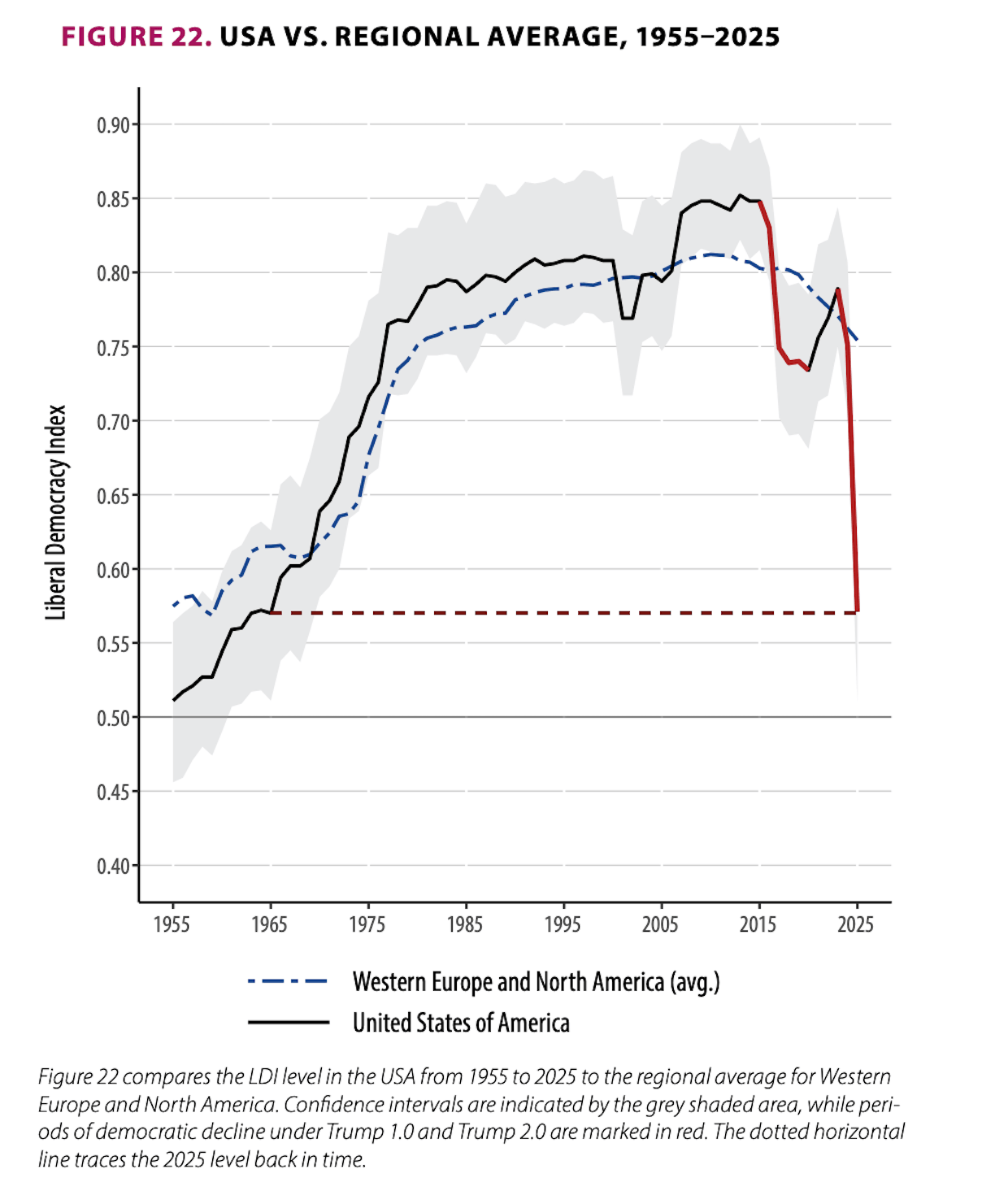
Assessing the extent of democratic decline, Professor Diamond drew on V-Dem indicators to demonstrate a significant deterioration in the United States’ liberal democracy score. He highlighted a particularly sharp decline during the first year of Trump’s second presidency, noting that the country has shifted from a high-performing liberal democracy to a more illiberal form. Quantitatively, he described a 28-point decline from the end of the Obama administration, a scale of regression comparable only to early developments under Viktor Orbán among advanced democracies.
Disaggregating these trends, Professor Diamond identified pronounced declines in academic freedom, freedom of expression, and legislative constraints on the executive. At the same time, he suggested that these constraints could partially recover depending on electoral outcomes, particularly if opposition parties regain control of one or both houses of Congress. This possibility led him to argue that the trajectory toward autocracy, while serious, has recently slowed.
Courts, Protests, and Declining Support
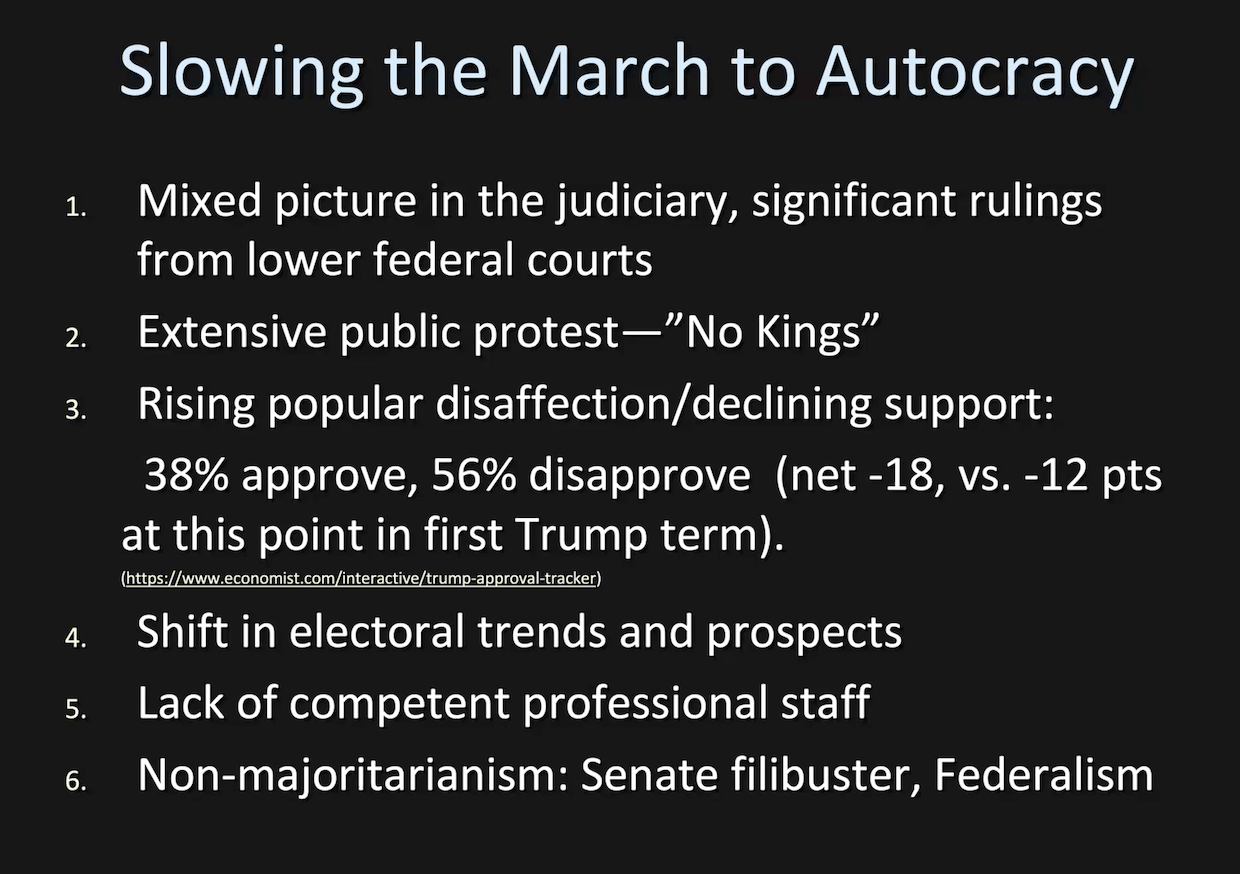
Several factors, according to Professor Diamond, have contributed to this deceleration. The judiciary, though uneven in its responses, has played a significant role. Lower federal courts have blocked numerous executive actions, while even the Supreme Court, despite issuing decisions that expand presidential authority, has begun to show signs of resistance. Professor Diamond pointed in particular to anticipated rulings on birthright citizenship as potential indicators of judicial limits.
Equally important, in his view, has been the scale and geographic breadth of public protest. Mass mobilizations, including demonstrations in both urban centers and traditionally conservative regions, have signaled widespread opposition. However, the most decisive constraint, Professor Diamond argued, is declining presidential popularity. He emphasized that public approval functions as a critical political resource, and that current approval ratings—marked by substantial negative margins—place the administration in a vulnerable position.
Electoral dynamics, he suggested, have also shifted. Policy decisions, including military engagement with Iran and its economic consequences, have contributed to declining support and may influence forthcoming elections. These developments, combined with structural features such as the Senate filibuster and the federal system, have limited the administration’s capacity to enact more sweeping institutional changes. Professor Diamond noted that resistance within the Senate, particularly regarding efforts to remove the filibuster, has been a key factor in constraining legislative overreach.
Electoral Integrity Under Pressure
Turning to governance capacity, Professor Diamond highlighted patterns of administrative instability and perceived incompetence. Frequent turnover in key positions, coupled with broader depletion of the federal workforce, has created gaps in institutional effectiveness. Drawing on observations from public service monitoring organizations, he warned that these deficiencies may have tangible consequences for crisis response and public service delivery, further undermining political legitimacy.
In the legal domain, Professor Diamond cited data indicating that federal courts have blocked a substantial number of executive actions, suggesting that judicial resistance has been more extensive than often assumed. Nonetheless, he cautioned that such interventions have not always been sufficient to prevent institutional damage, particularly when agencies are dismantled before legal remedies take effect.
A central concern in Professor Diamond’s analysis was the potential manipulation of electoral processes. He identified legislative initiatives such as the SAVE Act as instruments that could be used to restrict voter participation, and warned of more extreme scenarios involving the declaration of electoral emergencies or interference with vote counting. While acknowledging that such outcomes are contingent on political conditions, he stressed that close electoral contests increase their plausibility.
Strategies for Democratic Renewal
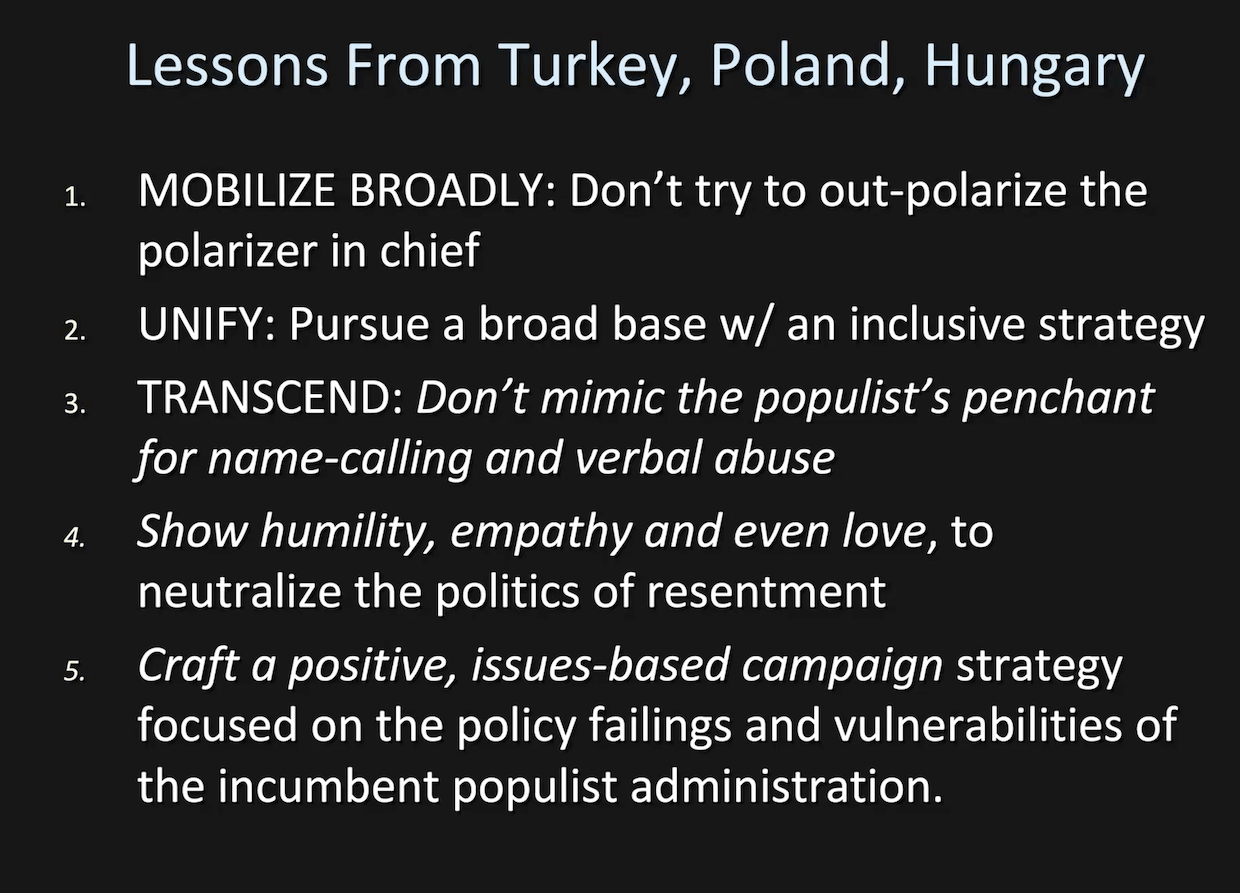
In concluding his presentation, Professor Diamond turned to strategies for democratic reversal. He emphasized the importance of early and coordinated intervention, noting that the probability of successful resistance increases when democratic actors mobilize before authoritarian consolidation is complete. Drawing on comparative examples, including recent electoral developments in Turkey, Poland, and Hungary, he highlighted the necessity of broad opposition unity and effective mobilization.
Importantly, Professor Diamond argued against adopting the polarizing tactics of authoritarian leaders, instead advocating for strategies that transcend political divisions and appeal to a wider electorate. He underscored the importance of addressing economic concerns and everyday issues, while also exposing vulnerabilities related to corruption and wealth concentration. Reclaiming national symbols and articulating an inclusive democratic vision were identified as key components of successful opposition strategies.
Finally, Professor Diamond stressed the importance of leadership. Effective democratic leadership, in his view, must project optimism, confidence, and strength, offering a compelling alternative to authoritarian narratives. Through this combination of institutional analysis and strategic reflection, Professor Diamond provided a comprehensive assessment of both the challenges posed by authoritarian populism and the conditions under which democratic resilience may be restored.
Professor Bruce Cain: The Institutional Enablement of American Populism

As the second speaker of the third panel, Professor Bruce E. Cain presented an institutionally grounded analysis. Positioning his remarks between alarmist and dismissive interpretations, Professor Cain described himself as “seriously concerned,” offering a measured assessment of democratic change in the United States. His intervention built upon earlier contributions while introducing a distinctive analytical framework centered on institutional dynamics, historical precedents, and the structural features of American governance.
At the outset, Professor Cain engaged directly with the empirical evidence of democratic decline, particularly the V-Dem data referenced throughout the symposium. While acknowledging the sharp downward trajectory, he emphasized that the decline effectively returns the United States to levels comparable to the mid-twentieth century. This regression, he argued, is normatively troubling given subsequent democratic reforms, yet it does not constitute a transition to outright autocracy. Rather, Professor Cain conceptualized the current situation as “autocratic drift”—a directional movement that erodes democratic quality without fully dismantling democratic status. This distinction, he suggested, is essential for maintaining analytical clarity.
Trump as Accelerator, Not Origin
Structuring his presentation around two central questions, Professor Cain first addressed whether autocratic drift has occurred and whether it is attributable to Donald Trump. He answered affirmatively, while also emphasizing that such drift must be understood in context. His second question concerned normalization: whether these changes are becoming embedded in institutional practice and therefore more difficult to reverse. This latter issue, he indicated, is closely tied to the problem of reversibility raised by other speakers.
A key contribution of Professor Cain’s analysis lies in his differentiation between two forms of autocratic drift. The first pertains to the erosion of the rule of law and fundamental democratic principles. The second concerns shifts in the distinctive institutional structure of the United States, characterized by a highly federalized and fragmented system of governance. This dual framework allowed Professor Cain to separate concerns about core democratic norms from changes in institutional balance, arguing that while both are significant, the former poses a more serious threat.
In discussing the institutional structure of American democracy, Professor Cain emphasized the importance of federalism and the vertical and horizontal fragmentation of power. He noted that while unified partisan control—so-called “trifecta government”—can weaken horizontal checks, vertical fragmentation remains a critical source of resistance. State and local governments retain substantial autonomy, complicating efforts to centralize authority. This institutional design, he argued, was deliberately constructed to prevent the concentration of power, and continues to function as a constraint on executive overreach.
At the same time, Professor Cain acknowledged that the very features that limit executive power can also produce governance difficulties, particularly under conditions of polarization. The paralysis associated with divided government has encouraged successive administrations—both Democratic and Republican—to rely increasingly on executive actions as institutional workarounds. In this sense, Professor Cain argued that autocratic drift predates Trump and reflects longer-term adaptations within the American system. Trump, in this framework, is both an accelerant and an innovator: he has intensified existing practices while also introducing new forms of institutional challenge.
From Institutional Change to Norm Erosion
Historically situating these developments, Professor Cain traced shifts in the balance of power between branches of government. The nineteenth century, he noted, was characterized by strong legislatures, while the Progressive Era marked a transition toward stronger executive authority. A partial reassertion of legislative power followed Watergate, but recent decades have again seen movement toward executive dominance. These oscillations, in his view, suggest that institutional balance is inherently dynamic, and that not all shifts toward executive power necessarily constitute democratic breakdown.
However, Professor Cain distinguished this structural evolution from the more troubling erosion of the rule of law. He identified several areas where recent developments represent a significant departure from established norms. Foremost among these was the attempt to disrupt the electoral process in 2020, which he described as a “serious and almost unthinkable act.” He also highlighted the pardoning of individuals involved in the January 6 events, noting that the combination of expansive pardon powers and judicially affirmed presidential immunity creates a particularly concerning institutional configuration.
In this regard, Professor Cain emphasized that the interaction between legal immunity and pardon authority raises the risk that individuals may engage in unlawful actions on behalf of the executive, anticipating protection from legal consequences. This possibility, he suggested, is a central concern within the election law community, which has responded by increasing monitoring efforts and preparing legal challenges. Despite these risks, Professor Cain expressed cautious optimism, citing the failure of many previous legal challenges to succeed and the presence of institutional actors willing to resist.
Executive Power and Conflict-of-Interest Gaps
Another dimension of rule-of-law erosion identified by Professor Cain was the use of public office for personal enrichment. He pointed out that the president is uniquely exempt from conflict-of-interest regulations, creating opportunities for financial gain that extend beyond direct transactions to include networks of associates and affiliates. This structural gap, he argued, undermines anti-corruption efforts and poses a significant challenge for reform.
Turning to the issue of normalization, Professor Cain argued that contemporary developments are partly rooted in earlier precedents. Instances of misconduct by previous administrations—across party lines—have contributed to a gradual lowering of normative standards. Trump’s actions, in this context, represent an amplification rather than a complete departure. This cumulative process, he suggested, increases the risk that practices once considered exceptional may become institutionalized.
Professor Cain also addressed the role of the judiciary, particularly the use of the “shadow docket,” whereby courts allow contested policies to remain in effect pending review. He suggested that recent criticism of this practice may prompt judicial recalibration, though its long-term implications remain uncertain. Similarly, he discussed the politicization of judicial appointments, linking it to procedural changes such as the elimination of the filibuster for judicial nominees, which has facilitated partisan control over the courts.
In examining the broader institutional landscape, Professor Cain identified multiple factors contributing to the concentration of executive power, including the expansion of unilateral war powers, the use of emergency authorities, and the increasing reliance on executive orders. He emphasized that these developments are not confined to a single administration, but reflect broader systemic trends shaped by both parties.
Reversibility and Enduring Change
In considering reversibility, Professor Cain suggested that many recent changes could be undone relatively quickly, particularly those associated with executive actions. However, deeper institutional shifts—especially those affecting legal interpretations and structural balances—may prove more enduring. The future direction of the judiciary, particularly regarding the unitary executive theory, will be a critical factor in this regard.
In his concluding remarks, Professor Cain introduced a provocative argument concerning the relationship between democracy and capitalism. He observed that the United States’ institutional stability has historically supported a favorable business environment, and suggested that disruptions caused by executive unpredictability may undermine this stability. He further posited that, for many voters, economic considerations may outweigh concerns about democratic norms. In this sense, the political consequences of current developments may be driven as much by economic performance as by institutional integrity.
Ultimately, Professor Cain’s presentation offered a layered and historically informed analysis of autocratic drift in the United States. By distinguishing between different forms of institutional change and situating contemporary developments within longer-term trajectories, he provided a framework that highlights both the resilience and the vulnerabilities of American democracy.
Associate Professor Al Marashi: Algorithmic Populism in the Age of the Deep-Fake
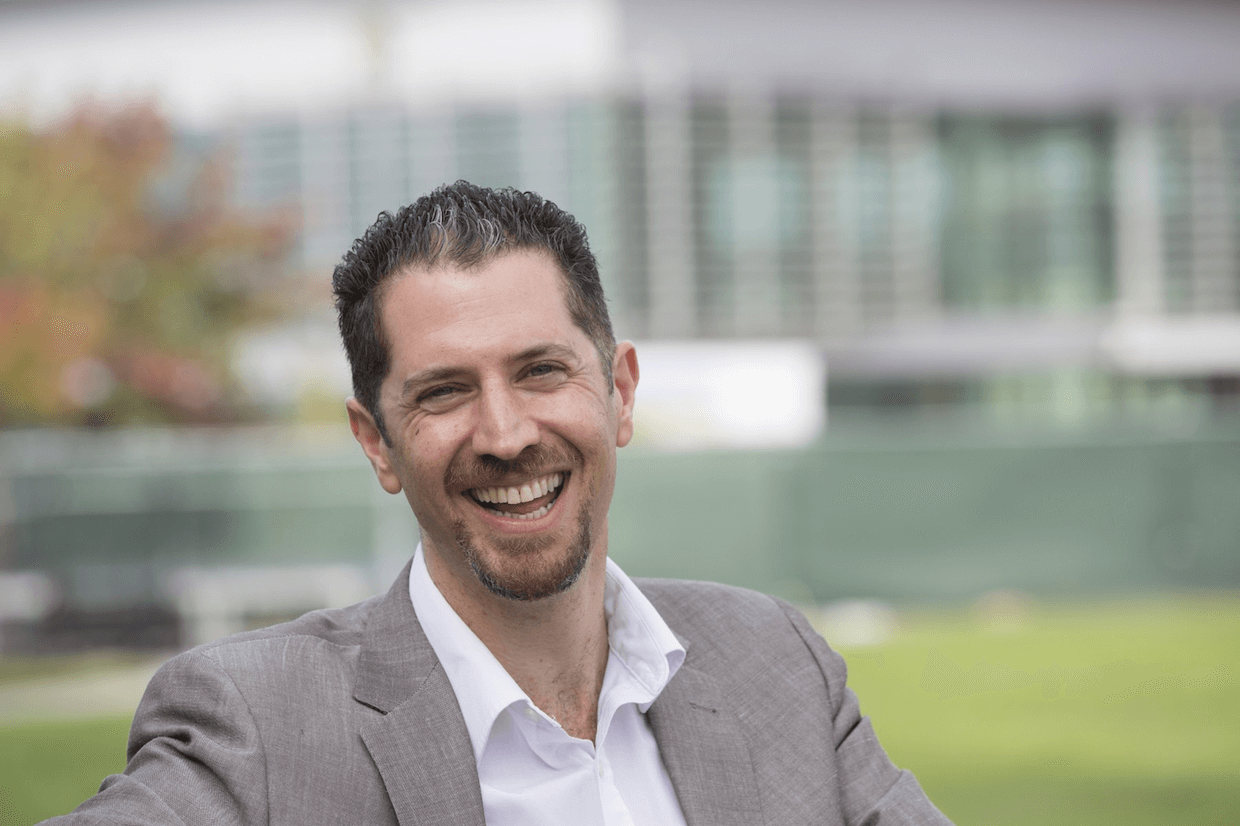
As the third speaker of the session, Associate Professor Al Marashi delivered a conceptually rich and interdisciplinary presentation that brought together insights from history and media studies to examine the evolving relationship between warfare, communication technologies, and populism. His intervention underscored the rapid transformation of contemporary conflict environments, emphasizing that the analytical frameworks used to interpret war must adapt to the accelerating pace of technological change—particularly the rise of artificial intelligence (AI) and digitally mediated communication.
Assoc. Prof. Al Marashi opened by noting the obsolescence of his earlier research on what he had initially framed as the “12-Day War,” explaining that subsequent developments had already rendered that framing outdated. Instead, he proposed understanding the current situation as a prolonged and continuous conflict—extending to approximately forty days—thereby challenging conventional temporal boundaries used in historical analysis. From a geopolitical perspective, he suggested that this conflict could be interpreted as the third Gulf War from a United States vantage point, and the fourth from the perspective of the Gulf region. This reframing illustrated the fluidity of contemporary conflict narratives and the difficulty of capturing them in real time.
From CNN to Slopaganda
Central to Assoc. Prof. Al Marashi’s argument was the interplay between media evolution and the conduct of war. He traced a historical trajectory beginning with the 1991 Gulf War, often referred to as the “CNN War,” which marked the emergence of the 24-hour news cycle and introduced a model of continuous, real-time broadcast coverage. This phase, characterized by one-way communication, allowed audiences to consume war as a mediated spectacle, reinforcing a centralized narrative shaped by state and corporate media institutions.
He then contrasted this with the 2003 Iraq War, which he described as the “Al Jazeera War,” highlighting the emergence of alternative global media platforms that challenged Western-centric narratives. The early presence of blogs during this period signaled the beginnings of participatory media, although such participation remained limited in scope. These developments, according to Assoc. Prof. Al Marashi, laid the groundwork for the current media environment, in which social media, Web 2.0 technologies, and AI-driven content production have fundamentally transformed the dynamics of information dissemination.
In this contemporary phase, Assoc. Prof. Al Marashi introduced the concept of “slopaganda,” referring to the proliferation of AI-generated content—often low-quality but highly viral—that saturates digital platforms. Unlike earlier forms of propaganda, which were largely centralized and controlled by state actors, slopaganda operates in a decentralized and participatory environment. This shift enables not only governments but also individuals to generate and disseminate persuasive content at unprecedented speed and scale.
AI, Hyperreality, and Memetic Warfare
Drawing on Marshall McLuhan’s famous dictum that “the medium is the message,” Assoc. Prof. Al Marashi argued that the significance of AI-generated media lies not only in its content but in its form. The ease with which such content can be created and shared transforms the very nature of political communication. In the context of populism, this facilitates direct engagement with mass audiences, bypassing traditional intermediaries and amplifying the personalization of political narratives.
Assoc. Prof. Al Marashi illustrated this dynamic through examples of AI-generated imagery depicting political leaders in exaggerated, often mythologized forms. These representations contribute to the construction of a digital “cult of personality,” reinforcing populist leadership styles while simultaneously creating easily recognizable targets for opposition narratives. This dual function—both consolidating support and inviting critique—highlights the interactive nature of contemporary propaganda ecosystems.
To further conceptualize this transformation, Assoc. Prof. Al Marashi invoked the work of Jean Baudrillard, particularly the notion of hyperreality. He revisited Baudrillard’s controversial claim that the 1991 Gulf War “did not take place,” clarifying that the argument referred not to the absence of physical conflict but to the dominance of mediated representations over lived experience. In the current context, Assoc. Prof. Al Marashi suggested that AI-generated media intensifies this condition, producing a form of warfare that exists simultaneously in physical and digital domains.
A key feature of this new media environment, as highlighted by Assoc. Prof. Al Marashi, is the participatory nature of content production. Unlike earlier conflicts, where propaganda was disseminated through hierarchical channels, contemporary warfare involves widespread public engagement in the creation and circulation of narratives. Metrics such as likes, shares, and comments become integral to the propagation of these narratives, transforming audiences into active participants in what he described as “memetic warfare.”
Personalized War and Symbolic Power
Assoc. Prof. Al Marashi also examined the personalization of conflict narratives, noting that contemporary wars are often framed around central political figures. In this case, he identified the prominence of a single leader as the focal point of one side’s narrative, while observing that the opposing side’s representation relied on a different kind of symbolic figure—one that may not occupy a formal leadership position but nonetheless becomes a viral emblem of resistance.
This observation led Assoc. Prof. Al Marashi to a deeper exploration of the cultural and historical dimensions of political representation, particularly in the Iranian context. He argued that understanding the nature of Iranian political communication requires engagement with the historical and religious traditions of Shiism, especially the concept of martyrdom rooted in the Battle of Karbala. This tradition, centered on the figures of Imam Ali and Imam Hussein, provides a powerful symbolic framework through which contemporary political events are interpreted.
Assoc. Prof. Al Marashi emphasized that this framework differs fundamentally from Western conceptions of political succession and legitimacy. Rather than viewing leadership transitions through a purely institutional or dynastic lens, the Iranian context incorporates elements of charismatic authority and inherited symbolic meaning. The notion of martyrdom, he suggested, serves as a potent mobilizing force, capable of generating emotional resonance and collective identity.
Importantly, Assoc. Prof. Al Marashi noted that the absence of a central figure in certain visual representations does not diminish their impact. On the contrary, the symbolic power of absence—rooted in the historical narratives of Shiism—can enhance the effectiveness of these representations. In this sense, the production of memes and viral content becomes intertwined with deeply embedded cultural narratives, creating a hybrid form of communication that blends tradition with technological innovation.
War in the Age of Digital Hallucination
In concluding his presentation, Assoc. Prof. Al Marashi returned to the broader theoretical implications of his analysis. Drawing on the science fiction writer William Gibson’s concept of cyberspace as a “consensual hallucination,” he argued that AI-driven media environments create a new kind of political reality—one that exists beyond physical space yet exerts tangible influence on perceptions and behavior. This “political hallucination,” as he described it, challenges conventional distinctions between reality and representation.
Assoc. Prof. Al Marashi’s final reflection posed a provocative question: whether the contemporary conflict, as experienced through these mediated forms, can be said to have “taken place” in the traditional sense. By framing the war as both a physical and a digital phenomenon, he invited a reconsideration of how scholars conceptualize and analyze conflict in the age of AI and networked communication.
Overall, Assoc. Prof. Al Marashi’s presentation offered a compelling synthesis of historical perspective and media theory, highlighting the transformative impact of digital technologies on the practice of warfare and the dynamics of populism. His analysis underscored the need for interdisciplinary approaches to understanding contemporary conflicts, as well as the importance of adapting analytical frameworks to the rapidly evolving landscape of global communication.
Professor Tariq Modood: From Populist Capture to Democratic Belonging –Multicultural Nationalism as an Alternative to Exclusionary Nationalism
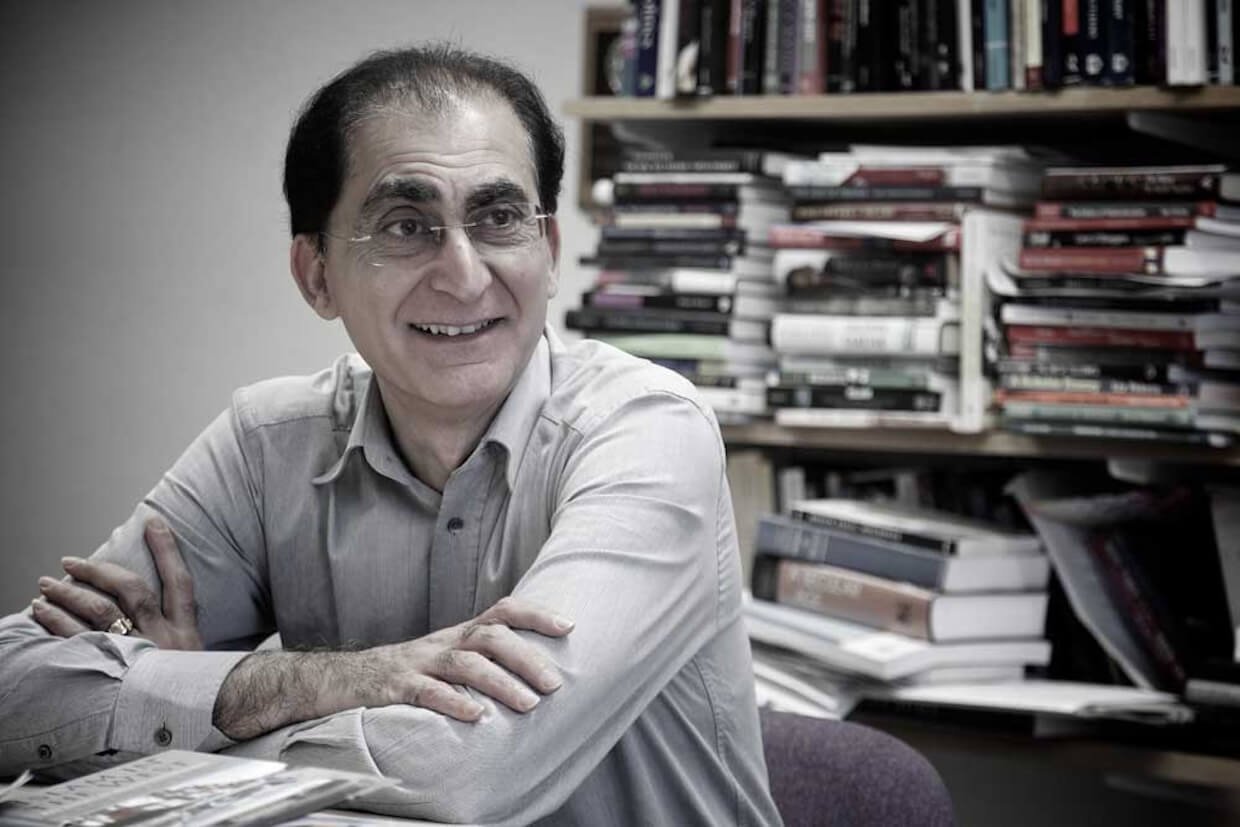
As the final speaker of the third panel, Professor Tariq Modood presented a theoretically grounded and normatively oriented intervention that addressed one of the central ideological tensions of contemporary politics: the relationship between populist nationalism and multiculturalism. His presentation sought not merely to critique exclusionary nationalist narratives but to articulate a constructive alternative capable of reconciling majority and minority identities within a shared political framework.
Professor Modood began by outlining the core challenge posed by populist forms of exclusionary nationalism, which frequently depict multiculturalism as privileging minorities at the expense of the majority. In response, he argued that analytical critique alone is insufficient. Instead, what is required is a positive and politically viable framework that affirms the normative status of both majorities and minorities. This framework, which he termed “multicultural nationalism,” aims to cultivate a shared sense of belonging that does not demand the erasure of distinct identities.
Pluralistic Nationhood and Shared Identity
Central to Professor Modood’s conceptualization of multiculturalism is the notion of subgroup identity. He defined multiculturalism as the right of subgroups—understood as communities smaller than the polity as a whole—to have their identities recognized and incorporated within the framework of equal citizenship. This recognition is not limited to symbolic affirmation but extends to institutional accommodation and the reconfiguration of public identity. In this sense, multiculturalism involves a transformation of the national community itself, enabling previously marginalized groups to participate in shaping the collective identity on equal terms.
A key dimension of this process, as emphasized by Professor Modood, is the principle of mutual or dialogical recognition. Rejecting the idea that recognition operates in a one-directional manner—where some groups bestow recognition while others receive it—he argued that all members of the polity must participate as both givers and receivers of recognition. This reciprocity is essential for establishing a genuinely inclusive form of citizenship, in which belonging is co-constructed rather than unilaterally granted.
Professor Modood further clarified the relationship between majority and minority rights within this framework. Contrary to populist claims that minority rights undermine majority status, he argued that the rights of minorities are logically grounded in the pre-existing rights of majorities. Majorities already benefit from a national culture and identity that reflects their historical experiences and values. Extending similar recognition to minorities, therefore, is not a matter of granting special privileges but of ensuring equal participation in the shared national project. Multicultural citizenship, in this view, entails a continuous process of remaking national identity to accommodate diverse contributions.
This perspective led Professor Modood to distinguish multicultural nationalism from liberal nationalism. While liberal nationalism emphasizes individual rights, redistribution, and a neutral or secular public sphere, multicultural nationalismforegrounds the recognition of group identities, including ethno-religious communities. Moreover, he challenged the liberal nationalist notion that national culture should be “thinned” to minimize alienation among minorities. Instead, he proposed a process of “pluralistic thickening,” whereby the national culture is enriched through the inclusion of diverse identities. This additive approach seeks to expand, rather than dilute, the symbolic and cultural content of the nation.
Inclusive Nationhood Against Polarization
In addressing the contemporary political context, Professor Modood identified three key contributions that multicultural nationalism can make in responding to polarization and populism. First, he distinguished multiculturalism from cosmopolitan human rights frameworks, emphasizing that it is not inherently linked to open-border policies or specific immigration regimes. Rather than focusing on immigration, multiculturalism is concerned with citizenship and the formation of a shared “we.” This distinction allows it to engage with concerns about migration without adopting positions that may alienate segments of the electorate.
Second, Professor Modood highlighted the importance of addressing identity anxieties, particularly those experienced by majority populations. While multiculturalism has traditionally focused on minority vulnerabilities, he argued that it must also take seriously the concerns of majorities, which are often dismissed in public discourse. Recognizing these anxieties does not entail endorsing exclusionary views but rather integrating them into a broader framework of mutual respect and understanding. This approach seeks to move beyond polarized narratives that pit majority and minority identities against each other.
Third, Professor Modood emphasized the centrality of national identity in sustaining democratic citizenship. He argued that citizenship cannot function solely as a legal or institutional construct; it must be accompanied by a sense of belonging rooted in shared narratives and collective self-understanding. National identity, in this sense, is not static but continuously evolving, shaped by both historical legacies and contemporary agency. Multicultural nationalism embraces this dynamism, advocating for an inclusive national identity that reflects the diversity of the population while maintaining a coherent sense of collective purpose.
In elaborating this vision, Professor Modood stressed the need for institutional and symbolic reforms that support inclusion. These include accommodating the specific needs of minority communities, particularly in relation to ethno-religious practices, as well as reimagining public symbols and spaces to reflect a more diverse national narrative. Such measures are intended to foster a sense of belonging among all citizens, reinforcing the legitimacy of the national community.
Multicultural Nationalism as a Middle Path
In his concluding remarks, Professor Modood presented multicultural nationalism as a feasible and necessary alternative to the current dichotomy between monocultural nationalism and anti-nationalist or purely cosmopolitan approaches. By affirming the value of collective identities—both majority and minority—within the framework of equal citizenship, it offers a unifying political vision capable of bridging ideological divides. Importantly, this vision does not abandon the principles of multiculturalism but seeks to integrate them more fully into the concept of the nation.
Overall, Professor Modood’s presentation provided a sophisticated normative framework for addressing the challenges posed by populism and polarization. By reconciling the demands of diversity with the need for shared belonging, his concept of multicultural nationalism offers a pathway toward a more inclusive and resilient democratic order.
Discussions
The discussion at the end of the panel extended the presentations’ core concerns by focusing on institutional reform, executive discretion, emergency powers, constitutional safeguards, and the practical meaning of multicultural nationalism. The exchange brought together questions of democratic vulnerability in the United States with broader normative reflections on national identity and belonging.
Professor Kent Jones opened the discussion by identifying a central institutional dilemma in the American system: the broad deference often granted to presidential discretion. He noted that many legal and constitutional questions depend on executive judgment, particularly in areas framed as emergencies. Whether a situation qualifies as an emergency, whether emergency tariffs are justified, or whether extraordinary powers may be invoked often depends heavily on presidential interpretation. In the current context, this becomes especially troubling because, as Professor Jones observed, almost any justification may be constructed as an “emergency” if institutional constraints are weak.
Professor Jones connected this concern directly to anxieties surrounding future elections. If a president can define emergencies expansively, such powers could be used to justify extraordinary measures, including martial law, deployment of enforcement agencies near polling places, or other interventions that could intimidate voters or disrupt electoral administration. He therefore asked whether meaningful reform would require changes in judicial doctrine, statutory law, or even constitutional amendment, particularly in relation to powers such as presidential pardons.
Procedural Limits on Executive Authority
Responding first, Professor Bruce E. Cain agreed that reforms are necessary, though he cautioned that reliance on constitutional amendment would be unrealistic. He outlined two possible approaches. The first would be to define “emergency” more precisely in law, thereby limiting the executive’s capacity to invoke emergency powers arbitrarily. Yet Professor Cain also recognized the practical difficulty of this path: genuine emergencies may be unpredictable, and excessively rigid definitions might hinder legitimate executive action in unforeseen crises.
For that reason, Professor Cain emphasized a procedural solution modeled on the War Powers Act. Rather than trying to define every emergency in advance, he argued that arbitrary executive power should require subsequent validation by another branch of government, especially Congress. In this model, the executive could act initially, but legislative affirmation would be required within a specified period. Such a framework would force members of Congress to go on record, preventing them from hiding behind presidential action while avoiding political responsibility.
Professor Cain’s response highlighted a deeper institutional problem: the American constitutional system assumes that Congress will defend its own prerogatives. Yet under conditions of polarization and professionalized politics, legislators may be less interested in preserving institutional authority than in avoiding political risk or pursuing career advancement. As a result, Congress may fail to resist executive overreach even when its constitutional role is being weakened. Professor Cain suggested that courts may need to play a stronger role in compelling Congress to live up to its own laws and procedural responsibilities.
Professor Larry Diamond largely endorsed Professor Cain’s analysis, describing himself as strongly aligned with his approach. However, he offered one “friendly amendment” to Professor Cain’s skepticism about constitutional reform. Professor Diamond proposed that one constitutional amendment might be both politically viable and democratically valuable: a requirement that any presidential pardon take effect only with two-thirds approval of the United States Senate. In his view, the abuse of the pardon power has become a serious threat to liberal democracy, especially when combined with executive immunity and loyalty-based political networks. A president who voluntarily proposed such a constraint at the beginning of a new administration, Professor Diamond argued, would make a visionary democratic gesture and place opponents in a difficult political position.
Defining Nationhood in Plural Societies

The discussion then turned from American institutional design to the normative and political content of multicultural nationalism. Professor Werner Pascha addressed Professor Modood’s concept directly, noting its relevance to countries such as Germany, where debates over national identity remain intense and unresolved. He asked what the concrete content of multicultural nationalism might be and how one might answer the question of what it means to be German, British, French, or American in a plural society.
Professor Tariq Modood responded by affirming the value of national debates about identity. For him, multiculturalism is fundamentally dialogical: it requires listening, learning, negotiation, and, where possible, compromise. He stressed that such dialogue does not always produce easy consensus and may sometimes remain unresolved. Yet it is still essential because national identity cannot be imposed unilaterally if it is to include all citizens.
Professor Modood used Britain as his principal example. He argued that the British case has been shaped by two important factors. First, Britain has been influenced by American debates over hyphenated identities, such as Irish American, Jewish American, and Black American. Second, Britain has long been a multinational polity, incorporating Scotland, Wales, Northern Ireland, and broader plural traditions. These historical conditions have made it somewhat easier to imagine Britishness in plural terms. If one can be Scottish-British, Professor Modood suggested, then the idea of being Black British or British Muslim becomes less anomalous.
In institutional terms, Professor Modood pointed especially to education and the school curriculum. A multicultural national identity would require teaching national history, geography, literature, and civic belonging in ways that recognize contemporary diversity and its relationship to the past. This includes confronting difficult histories such as empire and slavery. Such engagement, he argued, is not a threat to national unity but a condition for building a more inclusive and credible national narrative.
Conclusion
The third panel of the symposium brought into sharp relief the multidimensional processes through which authoritarian populism is not only advanced but also normalized across institutional, communicative, and ideological domains. Taken together, the contributions of Professor Larry Diamond, Professor Bruce E. Cain, Assoc. Prof. Ibrahim Al-Marashi, and Professor Tariq Modood underscore that contemporary democratic backsliding cannot be reduced to a single trajectory or causal mechanism. Rather, it emerges through the interaction of institutional vulnerabilities, political agency, technological transformation, and competing visions of collective identity.
A central analytical thread running through the panel is the distinction between erosion and consolidation. As Professor Diamond emphasized, the trajectory of authoritarian populism is cumulative, often advancing through incremental yet coordinated steps that target electoral integrity, institutional autonomy, and normative constraints. At the same time, Professor Cain’s concept of “autocratic drift” provides an important corrective to overly deterministic narratives, highlighting both the resilience and the fragility of democratic systems. His distinction between structural shifts in governance and the erosion of the rule of law clarifies that not all institutional change is equally consequential, even as both may contribute to a broader pattern of democratic weakening.
The panel also demonstrated that normalization operates not only through formal institutions but through the transformation of the public sphere. Assoc. Prof. Al-Marashi’s analysis of AI-driven media ecosystems revealed how the proliferation of “slopaganda” and hyperreal digital narratives reshapes the conditions under which political legitimacy is constructed and contested. In this environment, populist communication is amplified, personalized, and decentralized, blurring the boundaries between producers and consumers of political meaning. This shift complicates traditional understandings of propaganda and underscores the need to rethink democratic accountability in an era of algorithmic mediation.
Against this backdrop, Professor Modood’s intervention offers a normative horizon for democratic renewal. By articulating multicultural nationalism as an inclusive and dialogical framework, he addresses the identity-based anxieties that populist movements often exploit. His emphasis on mutual recognition, institutional accommodation, and the dynamic remaking of national identity suggests that democratic resilience depends not only on institutional safeguards but also on the capacity to construct a shared sense of belonging.
Finally, the panel discussion reinforced the urgency of institutional reform, particularly in relation to executive discretion, emergency powers, and constitutional safeguards. The exchanges between Professor Kent Jones, Professor Cain, and Professor Diamond highlighted both the difficulties and the necessity of recalibrating the balance of power in democratic systems. While no single reform can fully resolve these challenges, the emphasis on procedural accountability, legislative responsibility, and targeted constitutional change points toward a pragmatic path forward.
In sum, the panel illuminated both the depth of the current democratic crisis and the range of intellectual and political resources available to confront it. By integrating empirical analysis, institutional theory, media studies, and normative political thought, it provided a comprehensive framework for understanding—and ultimately resisting—the normalization of authoritarian populism.