
In this ECPS interview, Associate Professor Emilia Zankina, Dean and Associate Professor of Political Science at Temple University Rome, analyzes Rumen Radev’s rise after Bulgaria’s 2026 parliamentary election. She argues that Radev’s success reflects “growing frustration” with instability and mainstream parties, as well as his ability to combine “the pro-EU versus pro-Russian divide” with the “corruption versus anti-corruption divide.” While Radev presents himself as an anti-corruption reformer and defender of sovereignty, Assoc. Prof. Zankina warns that his strategy is to “walk a fine line—embracing pro-Russian positions on issues such as energy while maintaining pro-EU policies.” Despite persistent Russophilia and political fragmentation, she stresses that “the majority of the Bulgarian population remains fundamentally pro-European.”
Interview by Selcuk Gultasli
Bulgaria’s 2026 parliamentary election has opened a new and uncertain chapter in European politics. After years of fragmented parliaments, unstable coalitions, caretaker governments, and anti-corruption protests, Rumen Radev’s Progressive Bulgaria secured a decisive parliamentary majority and unveiled a new cabinet promising stability, institutional reform, and a break with what it describes as Bulgaria’s “oligarchic governance model.” Yet Radev’s rise also raises profound questions about populism, democratic resilience, Euroscepticism, corruption, and Bulgaria’s geopolitical positioning between Brussels and Moscow. Is this a democratic correction against institutional paralysis and elite capture, or the emergence of a more sophisticated form of personalized populist rule within the European Union?
To explore these questions, the European Center for Populism Studies (ECPS) spoke with Associate Professor Emilia Zankina, Dean and Associate Professor of Political Science at Temple University Rome, whose scholarship on populism, democratic backsliding, corruption, and party politics in Eastern Europe offers important insight into Bulgaria’s evolving political landscape.
In this wide-ranging interview, Assoc. Prof. Zankina argues that Radev’s victory reflects “growing frustration among the population with recent instability” and widespread “disillusionment with the mainstream parties.” Yet she stresses that his success rests above all on his ability to merge two enduring cleavages in Bulgarian society: “the pro-EU versus pro-Russian divide” and “the corruption versus anti-corruption divide.” According to Assoc. Prof. Zankina, Radev has successfully positioned himself as both an anti-corruption outsider and a defender of Bulgarian sovereignty, while simultaneously appealing to voters disillusioned with the established political class.
At the center of the discussion is the geopolitical balancing act captured in the headline of this interview. As Assoc. Prof. Zankina explains, “he will try to walk a fine line—embracing pro-Russian positions on issues such as energy while maintaining pro-EU policies, especially in matters related to EU funding.” She repeatedly emphasizes that, despite political fragmentation and persistent pro-Russian sentiment, “the majority of the Bulgarian population remains fundamentally pro-European.” This structural reality, she suggests, places important limits on how far Radev can move Bulgaria away from the European mainstream.
The interview also explores the deeper historical and sociological roots of Bulgarian Russophilia, including Orthodox and Slavic cultural ties, communist-era modernization, energy dependency, and economic anxieties linked to inflation and insecurity. At the same time, Assoc. Prof. Zankina warns against underestimating Radev’s populist strategy. Drawing on her research on Eastern European populism, she argues that Radev exemplifies a “transaction-cost approach” to politics that bypasses formal institutions in favor of direct, personalized leadership and media-centered political communication.
Throughout the conversation, Assoc. Prof. Zankina offers a nuanced and cautious assessment of Bulgaria’s trajectory. While she acknowledges that there is “some genuine political will” for anti-corruption reform, she also warns that oligarchic networks may simply adapt to new political realities. Whether Bulgaria ultimately moves toward democratic renewal or toward a softer form of hybrid governance, she argues, will depend on institutional reforms, opposition cohesion, media pluralism, and the willingness of political elites to resist the temptations of centralized power.
Here is the edited version of our interview with Associate Professor Emilia Zankina, revised slightly to improve clarity and flow.
Radev Unified Bulgaria’s Two Deepest Political Divides
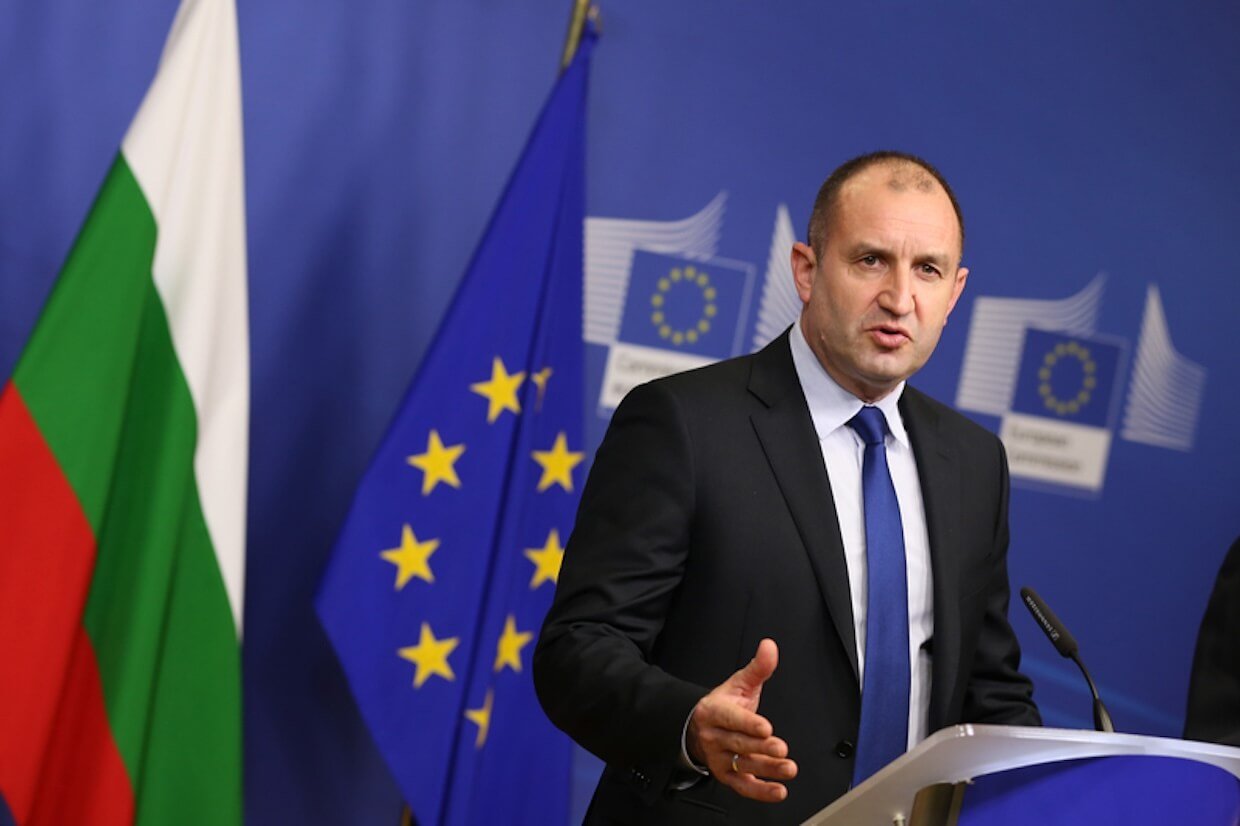
Professor Zankina, welcome. Bulgaria’s 2026 election appears to mark the end of a prolonged cycle of fragmented coalition politics and repeated snap elections. To what extent should Rumen Radev’s victory be interpreted as a democratic correction against institutional paralysis and corruption, and to what extent does it reflect the broader European trend of populist personalization of politics?
Assoc. Prof. Emilia Zankina: The first thing I would like to say is that Rumen Radev’s success is a result of growing frustration among the population with recent instability, but also disillusionment with the mainstream parties. More than anything, however, his victory reflects his ability to combine two deep divisions within Bulgarian society. One is the pro-EU versus pro-Russian divide, and the other is the corruption versus anti-corruption divide. Let me say a little about each of them.
More than one party in Bulgaria has won elections on anti-corruption platforms. In fact, twice in recent history, we have had a new savior emerge and sweep parliamentary elections without even existing as a party before the campaign. One example is the 2001 victory of Bulgaria’s former king, Simeon Saxe-Coburg-Gotha, who received 43 percent of the vote with a party formed only a few months before the election. Certainly, he was not a new public figure and had been widely respected throughout the years.
He ran on an anti-corruption and pro-European platform. After serving a full four-year mandate, his party became a junior coalition partner in the next government and then disappeared altogether. Boyko Borisov’s GERB, on the other hand, has been much more successful.
Borisov similarly emerged as a well-known political figure, having served as General Secretary of the Interior Ministry and later as Mayor of Sofia. He formed a party and swept the 2009 elections with 43 percent of the vote, again running on an anti-corruption platform and promising to save the country. Unlike Simeon’s movement, however, Borisov proved far more successful in maintaining power and, with a few exceptions, governed almost uninterruptedly until 2021, when the current instability began.
So once again, we see a population searching for a new savior—someone promising to clean the slate and eliminate corruption. The problem, of course, is that corruption is easy to mobilize voters around, but extremely difficult to address in practical terms and within specific institutions. It is therefore quite possible that voters may once again become disappointed with a government promising to eradicate corruption.
Disillusionment with Elites Helped Radev Consolidate a Broad Coalition
The second division I mentioned is even deeper. Pro-Russian and anti-Russian sentiments have shaped Bulgarian politics since independence in the late nineteenth century. Bulgaria has always had camps of Russophiles and Russophobes, and this divide has played out throughout Bulgarian history, including during the communist period and throughout the post-communist era.
Rumen Radev is clearly pro-Russian. He is a pilot who trained with both NATO and Russian forces, and he has repeatedly expressed support for Russia and Putin’s regime. For example, during the war in Ukraine, he refused to call it a war and continued referring to it as a “military operation.” When the caretaker government of Andrei Gurov signed a ten-year military cooperation agreement with Ukraine, Radev criticized it forcefully. He has also opposed sanctions, especially in the energy sector involving Russian gas and oil, as well as military aid to Ukraine, arguing that such measures threaten Bulgaria’s sovereignty and risk dragging the country into a war that is not its own.
Clearly, he has been able to draw on strong pro-Russian sentiment. If we look at the voters his newly formed party attracted, we see support coming from across the political spectrum. He has certainly taken votes from GERB, especially from voters disillusioned by Borisov’s association with Delyan Peevski, the leader of the ethnic Turkish party whom Borisov effectively co-opted. Peevski was sanctioned under the US Magnitsky Act and by the United Kingdom for corruption. He has become the epitome of the corrupt political model and the “octopus” that has penetrated Bulgarian politics. Borisov’s association with Peevski clearly damaged him, and many GERB voters shifted to Radev.
Radev also attracted voters from the urban democratic opposition, Democratic Bulgaria, which discredited itself to some extent through a short-lived coalition arrangement with Borisov in recent years.
Despite Russophilia, Bulgaria Remains Fundamentally Pro-European
Most interestingly, however, he has almost completely displaced the Bulgarian Socialist Party (BSP), the successor to the Communist Party and historically the country’s most consistently pro-Russian—though also pro-European—party. The BSP fell from one million votes in 2017 to failing to pass the four-percent threshold, losing more than tenfold of its support.
He has also taken more than half the support of the radical-right, pro-Russian party Revival. Bulgaria has a long history of radical-right pro-Russian parties receiving Russian funding, with one replacing another over time. Revival is simply the latest in this line, following parties such as Ataka. Radev succeeded in attracting more than half of their voters. He also drew support from various flash parties, such as There Are Such People, Glory, and Sword.
So we see that he has managed to combine these two major cleavages within Bulgarian society and successfully mobilize voters around them.
As for whether this reflects the broader trend of personalist politics, we have certainly seen this across Europe and beyond—in the United States, in India under Modi, and in Turkey under Erdoğan. With a few exceptions, such as Péter Magyar defeating Orbán in Hungary, strong personalities with increasingly illiberal tendencies have continued to attract support. So yes, Radev is certainly part of that broader trend.
The question, however, is whether he will be able to consolidate such a diverse coalition of support. It is one thing to win elections with heterogeneous backing; it is quite another to pursue concrete policies while maintaining that support. I think he will try to walk a fine line—embracing pro-Russian positions on issues such as energy while maintaining pro-EU policies, especially in matters related to EU funding.
If he were to threaten Bulgaria’s EU affiliation or seriously obstruct Bulgaria’s entry into the Eurozone, which he has publicly opposed, we would immediately see massive protests in the streets. Despite political fragmentation, the majority of the Bulgarian population remains fundamentally pro-European.
Populism Thrives Where Institutions Lose Trust
In your work on populism in Eastern Europe, you conceptualize populism not merely as an ideology but as a political strategy that reduces reliance on formal institutions while privileging direct, personalized political action. How does Radev’s rise illustrate this “transaction-cost” logic of populism, particularly in a context where public distrust toward parties, parliament, and the judiciary has become deeply entrenched?
Assoc. Prof. Emilia Zankina: It’s an excellent question, and I think Radev is a perfect example of this transaction-costapproach because he entered politics as an independent and won two consecutive presidential elections.
From his presidential position, he has been able to spearhead criticism of and opposition to the governing party, GERB. He has skillfully utilized the visibility of the presidency and his ability to address the population directly. For example, on January 1 at midnight, on New Year’s Eve, the president is the only political figure who addresses the nation. Radev used this privilege to advocate for a referendum on the euro. No other politician enjoys such a platform. At the very moment the euro issue became politically salient, he was speaking directly to the entire nation, advocating for a referendum and opposing euro adoption.
He has therefore used presidential authority in a very strategic way, expanding his influence far beyond the office’s formal constitutional limits. He has benefited from extensive media attention and has exercised his veto power more than any other Bulgarian president. Although the presidential veto carries limited institutional weight in Bulgaria, since it can be overturned by a simple parliamentary majority, he nevertheless used it to expand his political influence significantly.
The fact that Bulgaria lacked regular governments for five years also allowed him to appoint caretaker governments chosen by him without parliamentary approval. So, even though he acted nominally within legal limits, he effectively bypassed numerous checks and balances and institutional constraints in order to augment his power, increase his popularity, and, above all, create a direct link with voters in the absence of a party structure and institutional parliamentary mechanisms.
And it is no surprise that it almost did not matter what the party itself was going to be. If you look at his government, it is a hastily assembled coalition made up of people from previous political parties, some experts, and individuals from his presidential cabinet. It is clear that he does not have a deep bench. It is clear that this is not a solid organization. It is clear that he is cashing in precisely on this non-intermediated approach to politics.
Moderate Rhetoric Can Mask a Euroskeptic Agenda
Radev presents himself simultaneously as an anti-corruption reformer, a defender of Bulgarian sovereignty, and a pragmatic critic of Brussels. How should we analytically distinguish between democratic sovereignty claims and the gradual normalization of Eurosceptic majoritarian politics in the Bulgarian case?
Assoc. Prof. Emilia Zankina: I personally do not trust his arguments. He is very clever, highly educated, and extremely erudite. He comes across as very professional and speaks excellent English. He is, in many ways, a polished and highly skilled politician. The arguments he makes are delivered in a moderate and reasonable tone, but we should not fool ourselves about what lies behind them.
In a situation of geostrategic chaos, when America appears to be abandoning its European allies and adopting increasingly unpredictable behavior under the current Trump administration, Bulgaria, as a country of under seven million people, has very limited options for security, whether military or economic. Bulgaria’s future therefore lies with the European Union for both economic and security reasons. EU membership, together with accession to Schengen and the Eurozone, has demonstrated that Bulgaria has been following a path that has led to significant growth in average income, despite current inflation, which is a global phenomenon.
Moreover, despite the political instability of the last five years, Bulgaria’s integration into the European project has limited politicians’ ability to seriously damage the country’s economic situation. Despite public complaints, wages are rising, labor opportunities are improving, and Bulgarians are far more connected to Europe and travel much more frequently. One simply cannot compare life in Bulgaria before and after EU membership in 2007.
So, when Radev makes arguments that may sound reasonable—for example, claiming that Europe is imposing this or that directive—he is taking advantage of the fact that, within such a large union, some directives will inevitably be unpopular. Take a simple example from years ago: anti-smoking regulations. In Eastern Europe, this was a major issue because people in the region tend to smoke and drink heavily. When these regulations were introduced, they generated significant resistance, partly because they required investments in ventilation systems and imposed additional costs on the hospitality sector.
It is therefore very easy to take a directive that is actually quite straightforward—there is no serious debate about the health benefits of non-smoking—and politicize it by claiming that Europe is imposing laws that contradict local culture or create unnecessary financial burdens.
So again, I would interpret the cautious remarks he makes about sovereignty and Bulgaria asserting its proper role within the European Union as reflecting a hidden Euroskeptic and pro-Russian agenda.
Dictators Are Not Born, They Become Dictators
Many observers compare Radev to Viktor Orbán or Robert Fico, while others argue he is more ideologically flexible and strategically ambiguous. In comparative terms, where would you place Radev within the broader family of contemporary European populist leaders?
Assoc. Prof. Emilia Zankina: I would agree with the argument that he is much more flexible and ideologically unbound. He is a political survivor, so I do not think we would immediately see an Orbán-type figure in Radev. But again, we should not forget that Orbán became who he is over the course of several decades. In the late 1980s, before the collapse of communism, Orbán was strongly criticizing the communist regime and was among the first to give a pro-NATO speech. Orbán became a dictator over time.
And this is important to note here: dictators are never born; dictators become dictators. When Erdoğan first came to power, he was not a dictator. Even when Putin first won elections, he was not a dictator. What happens is that once leaders gain power and begin accumulating more and more control, their willingness to relinquish that control declines very sharply. Most of the dictators we see today actually began as democratically elected leaders. They started that way and then gradually chipped away at democratic mechanisms.
So, for Radev to become an Orbán-type figure, it would take time, even if that is ultimately where he is headed. But I do agree that he is much more ideologically flexible and less rigid than either Orbán or Fico.
If I were to place him within the broader European landscape, especially in the absence of Orbán, I would say that he would probably resemble Fico, though not as firmly positioned. The moment Orbán was no longer there, the €90 billion aid package to Ukraine was immediately approved. So Fico standing alone is not the same as Fico standing together with Orbán. Yes, Fico was the only European leader to attend the May 9 parade in Moscow, but he has not voted as aggressively within the European Union as Orbán has.
So, I would expect Radev to subvert European politics where possible, but he would not dare to do so as explicitly as Orbán has done. Partly, this is because he still does not have a fully consolidated party structure or support base in Bulgaria, and he would risk once again bringing people into the streets in protest.
Replacing Figureheads Does Not Dismantle State Capture
Bulgaria has long suffered from what many analysts describe as “captured institutions,” oligarchic patronage networks, and weak judicial independence. Do you believe Progressive Bulgaria possesses the institutional depth and political discipline necessary for genuine democratic reconstruction, or is there a risk that anti-corruption rhetoric merely legitimizes a new configuration of centralized power?
Assoc. Prof. Emilia Zankina: People are cautiously hopeful that he at least has the motivation to dismantle that model, even if he may not yet possess the institutional resources to do so. However, one of the first votes in Parliament by his new majority—an absolute majority, something Bulgaria has not seen in many years—was, in fact, a vote against investigating Borisov and Peevski.
Some analysts argue that Bulgaria first needs a chief prosecutor before any serious investigation can begin, and that Radev is being strategic by delaying investigations until the judicial system and the prosecutor’s office are cleaned up. I remain very skeptical of that argument.
On the other hand, he did retain the General Secretary of the Interior Ministry, who distinguished himself by cleaning up the ministry within just a few months, removing individuals involved in electoral manipulation, and, together with the Interior Minister and the caretaker Prime Minister, organizing what was probably the fairest and most transparent election in Bulgaria’s post-communist history.
So, on the one hand, I do think there is some genuine desire to combat corruption among many of the people who joined Radev’s project, even if not necessarily from Radev himself, including some of the individuals he is now appointing to key positions. Institutionally, however, the challenge is extremely difficult. Simply removing people would not solve the problem. Constitutional reforms require a supermajority, and we already saw under the previous GERB, DPS, and Democratic Bulgaria majority that constitutional reforms did pass, but they were very poorly designed to address corruption in any meaningful way.
So, I do believe, certainly, there is some genuine political will. At the same time, however, there are many obstacles. There will also be enormous pressure from oligarchic circles to preserve the system simply by replacing one figurehead with another, while continuing to operate through behind-the-scenes deals and informal arrangements. The temptation will therefore be very strong, and it will become a real ethical test for every individual in every position whether they will be able to resist.
Progressive Bulgaria Fits the Classic Populist Formula
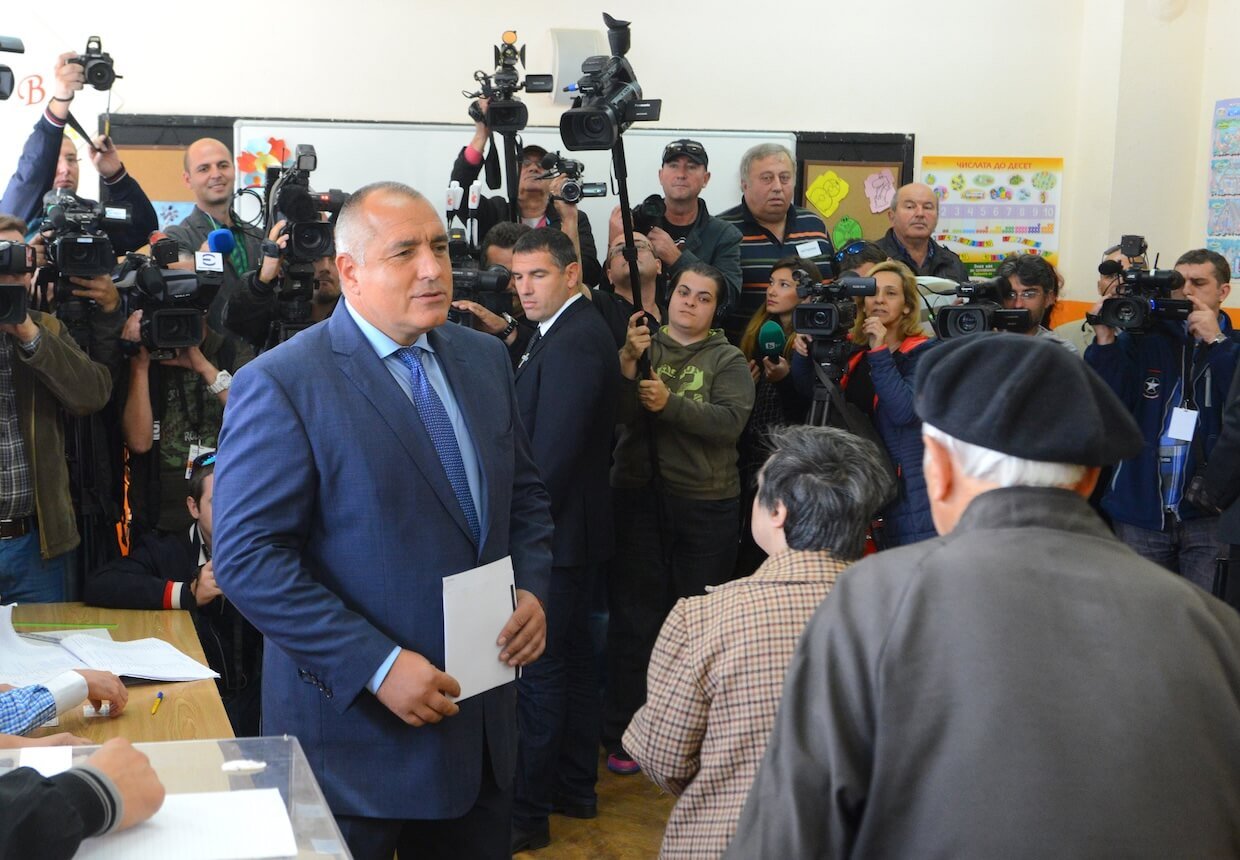
Your research on Bulgarian populism highlights the role of personalist parties and informal political mechanisms. To what extent does Progressive Bulgaria represent another iteration of Bulgaria’s recurring cycle of charismatic anti-establishment movements that mobilize frustration but struggle to institutionalize durable democratic governance?
Assoc. Prof. Emilia Zankina: Progressive Bulgaria fits the perfect recipe for winning elections through a personalist, populist, anti-establishment appeal. What is really interesting—and what scholars have only recently started examining more rigorously—is not how populist parties win. We already know that formula. The more important question is why some of them survive while others disappear so quickly.
If we look at the Bulgarian case, why was it that Simeon Saxe-Coburg-Gotha’s party and the NDSV did not survive for more than eight years, while Boyko Borisov’s party has endured for almost twenty years? And let us not forget, GERB is still not finished—it remains the second-largest party in Parliament.
So, the key question regarding Radev is how quickly this new party will be able to establish local structures. If we examine the GERB example, we can distinguish between two types of local structures. One consists of entirely legitimate local branches, ranging from youth organizations to various municipal party organizations that legitimately mobilize voters, recruit candidates, and so forth.
The second, however, is GERB’s ability to engage in pork-barrel politics by distributing EU funds, legal protection, and other advantages to local businesses. Those businesses then remain loyal and deliver votes through what is known in Bulgaria as “corporate voting.” This differs from direct vote-buying, where individuals are simply paid to vote. In the corporate voting model, entire companies effectively vote for a given party because management instructs employees to do so. And management does so because it benefits from favorable treatment, contracts, and protection from government sanctions.
So, the real question is whether Rumen Radev will be able to establish a local presence, what type of local presence he will build, and how quickly he can do so. It is clear that he has swept the national vote. It is also clear that he can probably attract some of the strongest local supporters from existing party structures and convert them into supporters of Progressive Bulgaria.
But building local networks was one of GERB’s greatest strengths. Borisov’s longtime second-in-command, Tsvetan Tsvetanov, essentially replicated military- and police-style organizational networks in constructing the party’s local structures. He was extremely skilled at doing that. I do not know whether Radev has someone capable of performing a similar role for him.
Radev Balances Electoral, Geopolitical, and Ideological Interests
Radev has repeatedly criticized military support for Ukraine while simultaneously insisting that Bulgaria will remain committed to its European path. Is this strategic ambiguity primarily ideological, geopolitical, or electoral in nature?
Assoc. Prof. Emilia Zankina: Actually, it is probably a combination of all three. Electorally speaking, he can simultaneously appeal to fears of Bulgaria being dragged into the war, to pro-Russian sentiments, and, of course, to the strong pro-European sentiments held by the majority of the Bulgarian population. So, electorally, this positioning is certainly advantageous.
Geostrategically, he genuinely believes he can be the clever actor who secures cheap Russian gas and oil while also benefiting from European funds at the same time. And he is not the first to think this way. Borisov believed something similar before him. Erdoğan also positioned himself as a mediator between Russia and the European Union. And let us not forget that Germany, under Angela Merkel, practiced this approach for decades—benefiting from cheap Russian gas and maintaining bilateral relations with Putin while simultaneously serving as a pillar of the European Union. So, geostrategically speaking, one could argue that this is not necessarily a foolish strategy; it may, in fact, be a clever one.
Ideologically, again, Radev is very flexible. But I do think he has a profound appreciation for Russia’s power and its historical ability to withstand external attacks and survive. Certainly, Russia and the Soviet Union lost many wars, but they did not lose wars fought on their own territory. Whether we look at Napoleon or Hitler during World War II, no one was able to defeat Russia on its own soil. Of course, it is a different matter when Russia fought in Afghanistan, Chechnya, Georgia, and, most recently, Ukraine.
So, I do think he harbors some genuine admiration for the Russian military tradition. And, this is one aspect of his ideological worldview that I would emphasize, even though his views remain much more flexible than those of hardline pro-Russian politicians.
Bulgarian Russophilia Has Deep Historical Roots
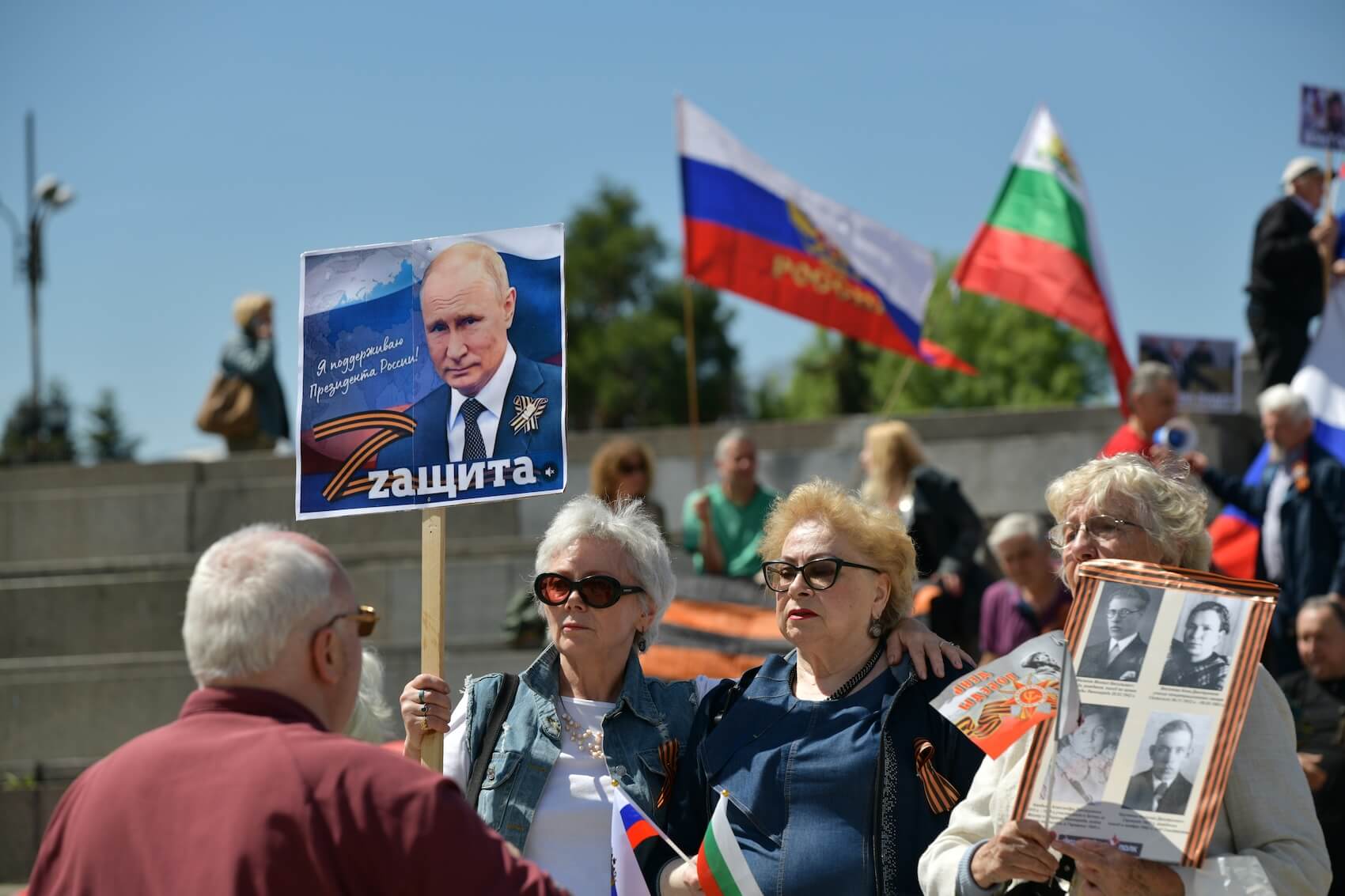
How do you interpret the persistence of pro-Russian sentiment in Bulgaria despite the country’s integration into NATO, Schengen, and the eurozone? To what extent is this sentiment rooted in historical memory, cultural affinity, energy dependency, economic insecurity, or disappointment with liberal democratic elites?
Assoc. Prof. Emilia Zankina: You listed all of the reasons, so let me say a few things about each of them. The historical legacy is very strong. Bulgaria is an Orthodox, Slavic country that speaks a language very similar to Russian. During the Russo-Turkish War of 1876–78, Russian soldiers fought side by side with Bulgarian fighters to secure Bulgaria’s independence from the Ottoman Empire.
When the Red Army crossed the Danube in 1944, it was certainly what many historians—and large parts of the population—would describe as an outright Soviet invasion. But many people also saw it as yet another liberation of Bulgaria, this time from fascism. Then, of course, there were 45 years of Soviet-backed communist rule, which brought industrialization to the country and improved living standards for many people, especially those living outside the large cities.
At the outset of communist rule, Bulgaria was around 70 percent agrarian, and it emerged from communism as a country that was roughly 70 percent industrialized. People who had lived in villages without indoor plumbing or running water suddenly gained privileged access to universities in major cities. So, the social stratification of society was fundamentally reshaped. Many people therefore support Russia because of the communist legacy, historical ties, and linguistic affinity.
Others support Russia because of economic interests, especially in tourism. Bulgaria receives a large number of Russian tourists, and many people along the Black Sea coast depend economically on that tourism sector. They therefore feel genuinely anxious when geopolitical developments threaten the ability of Russian tourists to travel to Bulgaria.
And then, of course, there is the energy sector. Before the war in Ukraine, Bulgaria’s dependence on Russian gas was around 90 percent. This dependence has since fallen to below 40 percent because of sanctions, European policies, and external pressure—mostly external pressure rather than internal willingness. Nevertheless, people remain highly sensitive to energy prices. Energy costs in Bulgaria are much higher as a percentage of income—and often even in absolute terms—than in many Western European countries. Part of this is due to the country’s long-term dependence on a single supplier, as well as the lack of diversification and investment in green energy.
People become anxious very easily because they understand that once energy prices rise, everything else becomes more expensive as well. So, this is a complex combination of factors, with different elements playing different roles for different people. In the current context, uncertainty and inflation are probably more important than cultural arguments, but the historical and cultural dimensions should certainly not be underestimated either.
Bulgaria Could Become a Softer Voice for Moscow
Some analysts argue that Bulgaria risks becoming Moscow’s new “voice” inside the European Union after Orbán’s defeat in Hungary. Do you consider such fears exaggerated, or do you see the emergence of a broader East-Central European bloc seeking to challenge the EU consensus on Ukraine, sanctions, energy, and strategic autonomy?
Assoc. Prof. Emilia Zankina: I do think that Rumen Radev would try to challenge the consensus when it comes to Russia, sanctions on Russia, and especially energy policies affecting Russian oil and gas. He would have Fico as an ally in that regard.
We need to remember, however, that he can only do this at the level of the EU Council and meetings of heads of state and foreign ministers. He cannot do this in the European Parliament, because there are still another three years until the next European parliamentary elections. By that time, who knows whether his party will still be in power and whether, in the 2029 elections, he will be able to secure a strong presence in the European Parliament.
So, his ability to influence the broader European agenda will be somewhat limited, but he will certainly try to challenge the existing consensus. At the same time, Bulgaria remains highly dependent on EU funds. The idea that these funds could somehow be replaced by Russian support would be catastrophic in terms of maintaining popular support within Bulgaria.
Bulgaria Stands Between Reform and Hybrid Rule
Finally, Bulgaria now seems to stand at a crossroads between democratic stabilization and the possibility of a softer, more sophisticated form of hybrid governance. What indicators should scholars and European policymakers watch most carefully during Radev’s first year in office to determine whether Bulgaria is moving toward democratic renewal—or toward a new model of populist state capture?
Assoc. Prof. Emilia Zankina: Fortunately, one very important indicator we need to watch is the ability of the opposition to remain united and provide a coherent alternative through parliamentary debates, upcoming local elections, and so forth. The first thing that happened after Radev’s victory, however, was that the largest opposition force, Democratic Bulgaria, split into its component parts. So, this is not particularly encouraging.
The other major opposition party is GERB, which is also problematic because it is currently behaving in a very neutral and very cunning way. Borisov, for example, did not vote against the new government. When the government was approved on Friday, he abstained, and his party abstained as well. Borisov is very smart and very experienced. He is a strong political animal, as we say. So, he will likely pursue a very calculated strategy of waiting for Radev to commit a faux pas, especially on European issues, and then step in and say: “You see, I respected the will of the people. You wanted a consolidated government, but it turned out not to be a truly pro-European government, and GERB remains the only genuine pro-European force.”
So, Borisov will probably be more successful than the fragmented parts of Democratic Bulgaria, which are now divided into separate formations instead of remaining in coalition. They performed pitifully, both electorally and in terms of their internal politics. And it is a shame, because they were really the mobilizing force behind the latest anti-government protests, yet all of that energy went to waste, and Radev was able to capitalize on it while PP completely lost it. I am afraid that their political inexperience and naivety caused them a major political defeat.