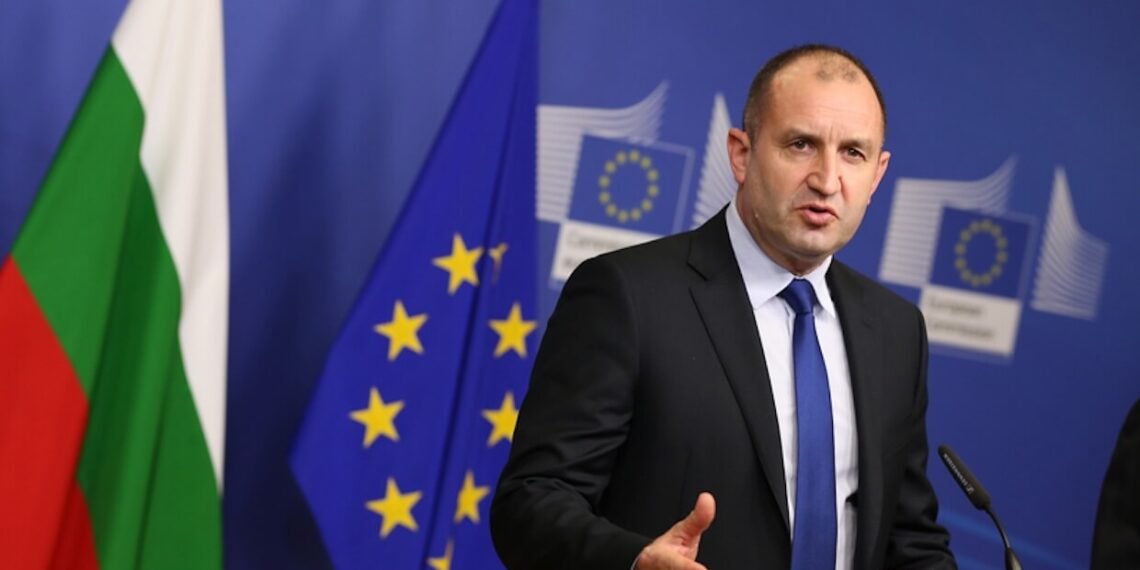
Associate Professor Ildiko Otova, in an interview with the ECPS, offers a compelling analysis of Bulgaria’s post-election trajectory under Rumen Radev. Following a landslide victory driven by anti-corruption sentiment and political fatigue, Radev has consolidated power in a system marked by institutional fragility. Assoc. Prof. Otova argues that his success reflects not a new geopolitical shift, but a strategic exploitation of existing cleavages, enabled by a “specific discursive situation” of empty rhetoric and symbolic politics. While his ambiguity has mobilized a broad electorate, it also masks deeper risks. As populism transitions from protest to governance, Assoc. Prof. Otova warns that, under conditions of concentrated power and weak safeguards, “the path to autocracy becomes all too easy.”
Interview by Selcuk Gultasli
In the aftermath of Bulgaria’s April 2026 parliamentary elections, the country has entered a new and uncertain political phase marked by both the promise of stability and the risk of accelerated democratic erosion. Rumen Radev’s newly formed Progressive Bulgaria party secured a decisive majority after years of political fragmentation, capitalizing on widespread anti-corruption sentiment, voter fatigue with repeated elections, and growing socioeconomic anxieties following eurozone accession. While his victory ended a prolonged cycle of unstable coalition governments, it also raised urgent questions about the future trajectory of Bulgarian democracy, particularly given Radev’s ambivalent positioning between the European Union and Russia.
Giving an interview to the European Center for Populism Studies (ECPS), Associate Professor Ildiko Otova, Head of Political Science Department at New Bulgarian University, offers a nuanced and analytically rigorous assessment of the structural and discursive dynamics underpinning Radev’s rise. As she argues, his victory “should not be attributed solely to Russia or to the broader Europe-Russia divide”; rather, it reflects a more complex political environment in which he has “skillfully exploited” existing cleavages, often “using minimal words and gestures to convey what different audiences want to hear.” This strategic ambiguity has allowed him to mobilize a remarkably heterogeneous electorate, ranging from pro-European reformists to nationalist and pro-Russian constituencies.
Assoc. Prof. Otova situates this development within a broader pattern of normalized populism in Bulgaria, where “what was once an episodic phenomenon has become a structural feature of the system.” In such a context, Radev’s success appears less as an anomaly than as the predictable result of a political order shaped by institutional distrust, party-system exhaustion, and what she terms a “specific discursive situation” characterized by cycles of “empty rhetoric” and symbolic politics. His campaign slogan, “We are ready, we can do it, and we will succeed,” captured this dynamic, offering not policy substance but an affective promise of exit from political stagnation.
At the same time, Assoc. Prof. Otova underscores the deeper identity tensions that continue to shape Bulgarian politics. Euroscepticism, she notes, is structured by enduring paradoxes, including the perception of the EU as an external imposition, contrasted with the framing of Russia as culturally “internal.” This ambivalence has enabled Radev to navigate competing geopolitical imaginaries while maintaining what she describes as a dual discourse, one directed at domestic audiences, another at Brussels.
Yet the central concern animating Assoc. Prof. Otova’s analysis is the transformation of populism from oppositional rhetoric into governing practice. With a consolidated parliamentary majority and limited institutional constraints, “concrete actions and policies are required,” and it is precisely under these conditions, she warns, that “the path to autocracy becomes all too easy.” In a system already marked by weak institutional safeguards and vulnerability to state capture, the concentration of executive power risks reproducing, rather than dismantling, entrenched oligarchic networks.
This interview with ECPS situates Bulgaria at a critical juncture. While Radev’s rise reflects broader global trends of democratic backsliding and populist normalization, Assoc. Prof. Otova’s insights highlight the contingent nature of political outcomes, shaped not only by leadership, but by institutional resilience, societal mobilization, and the unresolved tensions at the heart of Bulgaria’s democratic and European identity.

Here is the edited version of our interview with Associate Professor Ildiko Otova, revised slightly to improve clarity and flow.
Not a New Cleavage, but a Strategic Exploitation of Old Divides
Professor Otova, given your argument that Bulgarian Euroscepticism must be read through the historically embedded Europe–Russia axis, does Rumen Radev’s victory mark a new phase in this cleavage, or merely its latest institutional expression?
Assoc. Prof. Ildiko Otova: Relations with Russia have long been central to Bulgarian politics, shaped by shared history, culture, personal connections, economic ties, and geopolitical factors. A widely circulated photo of Radev with Putin drew significant attention, prompting international media to describe him as “Russia’s new Trojan horse in Europe.” Experts have rightly pointed to Russia’s involvement in Radev’s political rise and raised concerns about campaign interference, online influence operations, and opaque funding sources suggesting substantial investment.
However, Radev’s victory should not be attributed solely to Russia or to the broader Europe–Russia divide. His win does not mark a new phase in this cleavage; rather, he has skillfully exploited it, using minimal words and gestures to convey what different audiences want to hear. In a campaign—and a political environment—often full of empty rhetoric, Radev has become adept at using silence, paradoxically communicating exactly what various constituencies seek.
In practice, little is known about the figures in his party, but among those who have become visible, we observe both openly provocative pro-Russian positions and the exact opposite. This is not to downplay Russia’s role; instead, it underscores the need for more comprehensive explanations.
Euroscepticism Built on Cultural Paradoxes and Identity Tensions
To what extent does Radev’s rise reflect not only geopolitical ambivalence but also a deeper identity crisis in post-communist Bulgaria, where competing civilizational imaginaries—Europeanization, Slavic-Orthodox affinity, and post-socialist nostalgia—intersect? In your framework, how does this identity fragmentation reshape the nature of Bulgarian Euroscepticism?
Assoc. Prof. Ildiko Otova: Bulgarian Euroscepticism rests on several paradoxes. The first is that the EU and “Europe” are frequently depicted as external to Bulgaria and Bulgarians—as actors that impose unacceptable values and adopt a lecturing posture. Yet this hostility toward external influence does not extend to all external actors. Russia, for example, is often not perceived as foreign in the same way; rather, it is framed as culturally “internal” due to a presumed Slavic-Orthodox affinity.
The second paradox is temporal. Resistance to the EU did not precede Bulgaria’s accession but developed alongside it. Until the early 2000s, Bulgaria was characterized by a broad pro-European consensus.
Third, although Bulgaria has been an EU member state for years, European issues remain weakly embedded in its domestic political agenda. This does not mean that anti-EU narratives are absent. On the contrary, they are visible in discourses about massive migration allegedly changing the national gene pool, “stealing” the pensions of the elderly because EU policies and values are too liberal, and attacks on so-called “gender ideology,” among other themes.
Fourth, the deeper Bulgaria’s European integration becomes, the more its political elites tend to adopt anti-European positions. This shift occurs primarily through the normalization of populism. In this sense, within the Bulgarian context, the relationship between Euroscepticism and populism is particularly important—though not predetermined. There are also examples of populist, anti-establishment projects that remain pro-European. Among voters, too, there are those who are anti-establishment and anti-corruption yet remain pro-European. Notably, Radev has managed to mobilize them as well, including a significant portion of the so-called Generation Z.
There is also one more factor that should not be overlooked: his flirtation with the idea of a potential referendum on the euro. People do not necessarily need a rational explanation for why food is expensive; they need someone or something to blame. Prices do not even have to rise in reality—it is enough to sustain a narrative of rising costs. In this sense, the timing and the overall situation played perfectly into Radev’s hands.
Exhaustion, Silence, and the Power of Narrative Control
Should Radev’s success be understood primarily as anti-establishment populism, geopolitical revisionism, or a hybrid formation in which anti-corruption discourse masks a deeper pro-Russian reorientation?
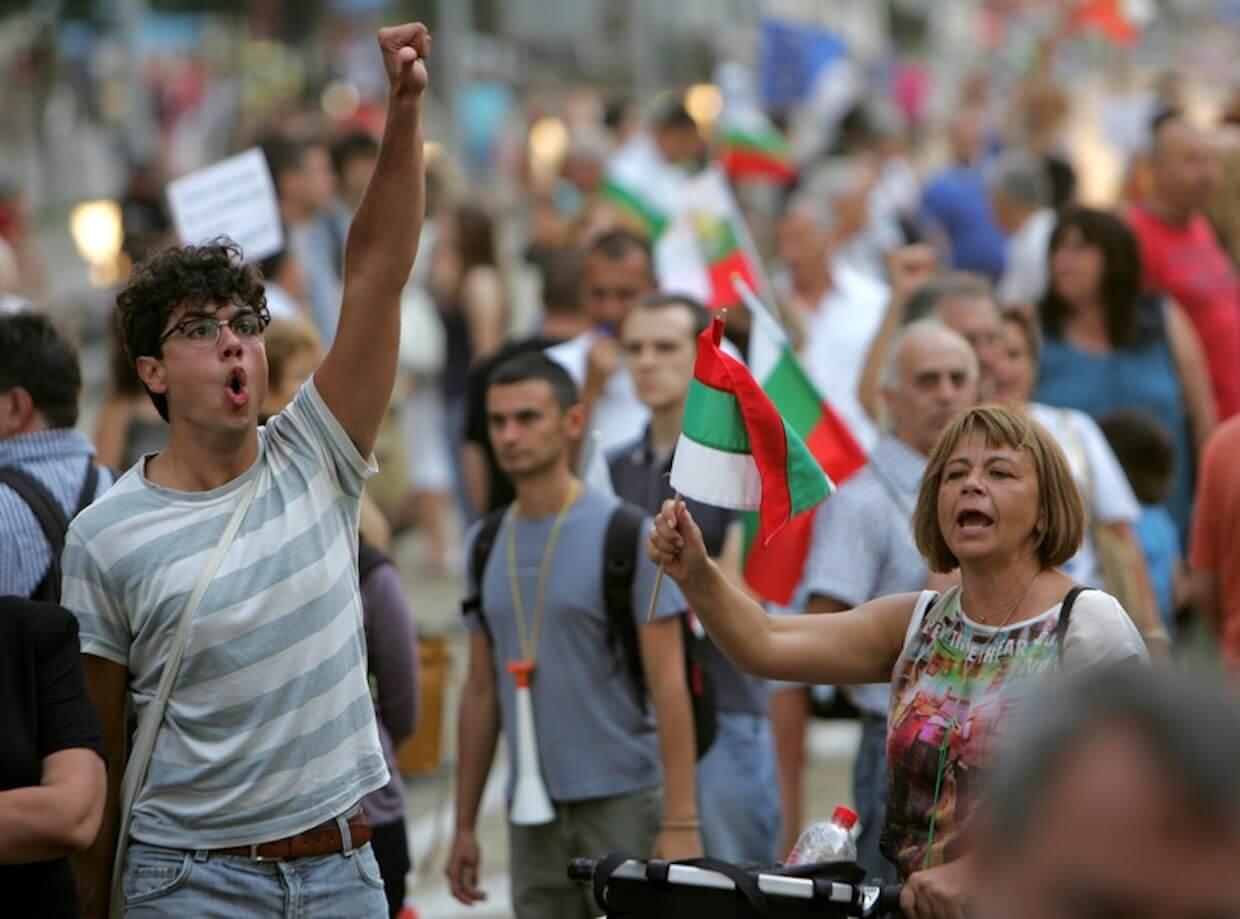
Assoc. Prof. Ildiko Otova: Any of these three explanations is valid, yet even taken together, they remain too simplistic. As a citizen, I find it increasingly difficult to remain silent about the pervasive corruption in Bulgaria and the broader condition of the country, or to withhold my solidarity with the despair my fellow citizens feel toward the political elite. After the events of recent years, and the evident futility of going to the polls for an eighth time, there is a sense of collective exhaustion. Nevertheless, I will attempt an answer within an academic framework.
In my view, the main reason for his victory lies in what I would describe as a specific discursive situation. Since 2020, Bulgaria has been caught not only in a cycle of repeated elections but also in a cycle of empty rhetoric. Radev has managed to control the narrative so effectively that he appears to tell everyone what they want to hear—largely through silence. This is neither classic anti-elitist rhetoric built on the populist trope of the corrupt elite versus the honest, long-suffering people nor a standard expression of movements grounded in a thin-centred ideology.
“We are ready, we can do it, and we will succeed”—the words with which he announced his departure from the presidency, later adopted as his campaign slogan—projected a sense of purpose. They offered not concrete details, but hope for an exit from a cycle of meaningless repetition. In a political environment where emotions and symbolic gestures carry greater weight than rational argument, and where both traditional and digital media amplify urgency and a pervasive sense of crisis, this has proven sufficient. For citizens who are exhausted and perceive threats as omnipresent, such messaging resonates deeply.
Populism as the New Normal in Bulgarian Politics
In your work with Evelina Staykova, you argue that populism in Bulgaria has become normalized through party-system exhaustion, state–economy fusion, institutional distrust, and the digital turn. Does the 2026 election represent the culmination of this normalization?
Assoc. Prof. Ildiko Otova: Since 2001, Bulgaria has experienced several so-called waves of populism: the return of Simeon Saxe-Coburg-Gotha, the rise of GERB, and the emergence of post-2020, protest-driven, short-lived “pop-up” political projects. Taken together, these developments illustrate how what was once an episodic phenomenon has become a structural feature of the system. Paradoxically, the populist wave has itself become a constant.
Populism is now the defining characteristic of Bulgaria’s political order—the norm rather than the exception—making it unrealistic to expect fundamentally different outcomes. Radev fits squarely within this pattern: his victory represents not an unexpected populist surge, but the predictable result of a persistently populist political environment, shaped by the specific discursive situation I mentioned.
If this moment does represent a culmination, one might expect either a subsequent decline in populism or a reversion to pre-populist politics. However, such a scenario currently appears unlikely.
Radev has long combined anti-corruption, nationalist, and anti-establishment rhetoric from within one of the state’s highest institutions. Does his transition from the presidency to executive power illustrate the transformation of populism from protest discourse into governing logic?
Assoc. Prof. Ildiko Otova: This is the greatest challenge he faces. The presidency, even though he ultimately governed alone through caretaker governments and later during the pre-election period, gave him the opportunity to craft narratives. However, when one commands such a majority and holds executive power, concrete actions and policies are required.
We have had populists in power before—the GERB administration is one such example—but the dynamics were different. The coalition nature of those governments, especially the most recent one, created room to maneuver. Under Radev, there will be no such leeway. And that is the greatest challenge we face. Under these conditions, the path to autocracy becomes all too easy.
Limits of the Orbán Analogy
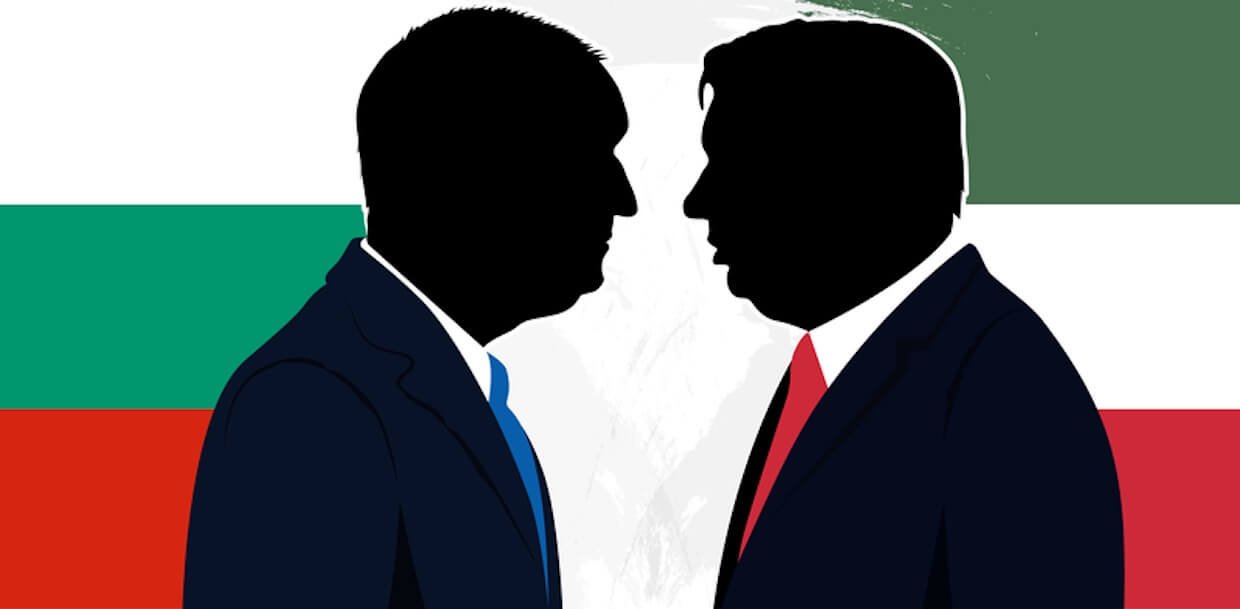
How should we assess the analogy between Radev and Orbán? Does Radev possess the ideological coherence and institutional ambition required for Orbán-style illiberal state-building, or is Bulgaria’s EU dependency likely to constrain him?
Assoc. Prof. Ildiko Otova: Let us begin with the obvious: Orbán is an experienced politician with a long, well-documented, and easily traceable career. Radev, by contrast, was effectively parachuted from the military into the presidency—a role he has never fully mastered. He entered politics without a solid ideological, political, or broader conceptual foundation, essentially as an empty vessel into which almost anything could be poured.
Another obvious point is that Bulgaria is not Hungary. Radev lacks ideological consistency and has no substantial political background or prior experience; he is, to a large extent, a product of the circumstances that enabled his rise—a product of the status quo, the absence of alternatives, and the prevailing populist momentum. Looking back, we also cannot entirely rule out the possibility that his ascent was shaped by external forces. What is beyond doubt, however, is the presence of clear ambition.
In this sense, the emergence of a non-liberal form of democracy in Bulgaria cannot be ruled out. The European Union, having learned from its experience with Hungary, is likely to be far more cautious. Against this backdrop, Radev’s first major test will be the so-called judicial reform.
Is Radev better understood as an Orbán-type system builder, a Fico-type pragmatic Eurosceptic, or a specifically Bulgarian figure shaped by Russophile memory, anti-corruption politics, and institutional volatility?
Assoc. Prof. Ildiko Otova: I do not think these comparisons meaningfully deepen our understanding of Radev or improve our ability to predict future developments. There are simply too many specific factors at play, and the international landscape is in constant flux. What existed elsewhere yesterday may not necessarily apply here tomorrow.
The Politics of Dual Discourse
Your research suggests that Bulgarian populism often blurs ideological distinctions. How should we classify Progressive Bulgaria: left-conservative, national-populist, technocratic-populist, or post-ideological?
Assoc. Prof. Ildiko Otova: Yes, populism undoubtedly blurs ideological distinctions; this is intrinsic to its nature. Consider Progressive Bulgaria’s program: despite the label “progressive,” its economic agenda is largely far right, even though some members of its expert economic team previously worked on more left-leaning projects. This example alone illustrates the extent to which ideological lines are being blurred.
For this reason, I see the party as best fitting within a post-ideological framework. Populism can be understood as a de-ideologized ideology. It incorporates elements from other ideologies, yet remains neither left nor right, and this is precisely one of the greatest dangers it poses—the de-ideologization, and consequently the depoliticization, of the political. Progressive Bulgaria, at least for now, aligns well with this understanding.
Does Radev’s discourse of “pragmatism” toward Russia and “critical thinking” toward Europe signal a strategic foreign policy stance, or does it reveal a more profound ontological insecurity in Bulgaria’s self-understanding as both a European and historically Russia-linked polity? How does identity anxiety translate into political legitimacy for such leaders?
Assoc. Prof. Ildiko Otova: I believe these statements by Radev are part of a broader strategy to tell each audience what it wants to hear. It is highly likely that he will continue to use one discourse in Bulgaria and another in Brussels. This is nothing new; Bulgarian politicians have long maintained such a dual discourse. In Radev’s case, however, it will be especially evident, likely conveyed through various spokespersons as well.
At the same time, Radev will have to speak not only to pro-Russian citizens at home. The EU still enjoys the support of more than half of Bulgarians, and some of those who backed Radev did so not because of his pro-Russian stance, but because of his anti-corruption declarations. He will have to meet their expectations with tangible actions, as narrative alone will no longer suffice.
Strategic Ambiguity Between Brussels and Moscow
Radev’s Ukraine stance appears to combine opposition to military aid with reluctance to openly block EU decisions. Is this strategic ambiguity a governing necessity, or a sign of deeper tension between his electorate’s geopolitical pluralism and his own Russophile instincts?
Assoc. Prof. Ildiko Otova: I cannot say whether Radev holds Russophile instincts. If he does, it would be rather ironic given his background in American military academies. Joking aside, there is a Russian saying: “We will live and we will see”—time will tell. However, I would assume that Radev will not openly oppose EU decisions.
To what extent did Radev absorb the political space of openly pro-Russian and nationalist parties such as Revival, and does this suggest moderation of the far right or mainstreaming of its core themes?
Assoc. Prof. Ildiko Otova: The myth of moderation is remarkably persistent, but I do not find it convincing. For years, analysts have claimed that once the far right gains power, it will be tamed. The opposite has happened: instead, far-right views have steadily become the norm. One need only look across the EU to observe this trend.
When it comes to Revival, Radev succeeded in attracting a significant portion of its electorate. As I have already noted, he now faces the difficult task of continuing to speak to multiple constituencies at once—and to do so convincingly through his actions. This will determine whether he fully absorbs the Revival electorate or, conversely, whether that electorate becomes further radicalized and shifts into opposition. I would not underestimate the leader of Revival, who is a seasoned political actor.
Given Bulgaria’s captured institutions, weak trust, and repeated anti-corruption mobilizations, can Radev realistically dismantle oligarchic networks, or does his concentration of power risk reproducing the same state-capture logic under a new banner?
Assoc. Prof. Ildiko Otova: This issue is extremely important. The resignation of the acting chief prosecutor, coming just days after Radev’s victory, was among the first signs of a new arrangement and already signals a realignment within oligarchic networks. I would also return to the question of how Radev’s seemingly expensive campaign was funded. Where did that money come from? Even these few points leave little room for optimism.
Radev’s regime is likely to reconstitute a state-capture model—perhaps initially in a more covert and less overtly assertive form—but such a configuration is unlikely to remain restrained over time.
From Anti-Elite Narrative to Elite Reality
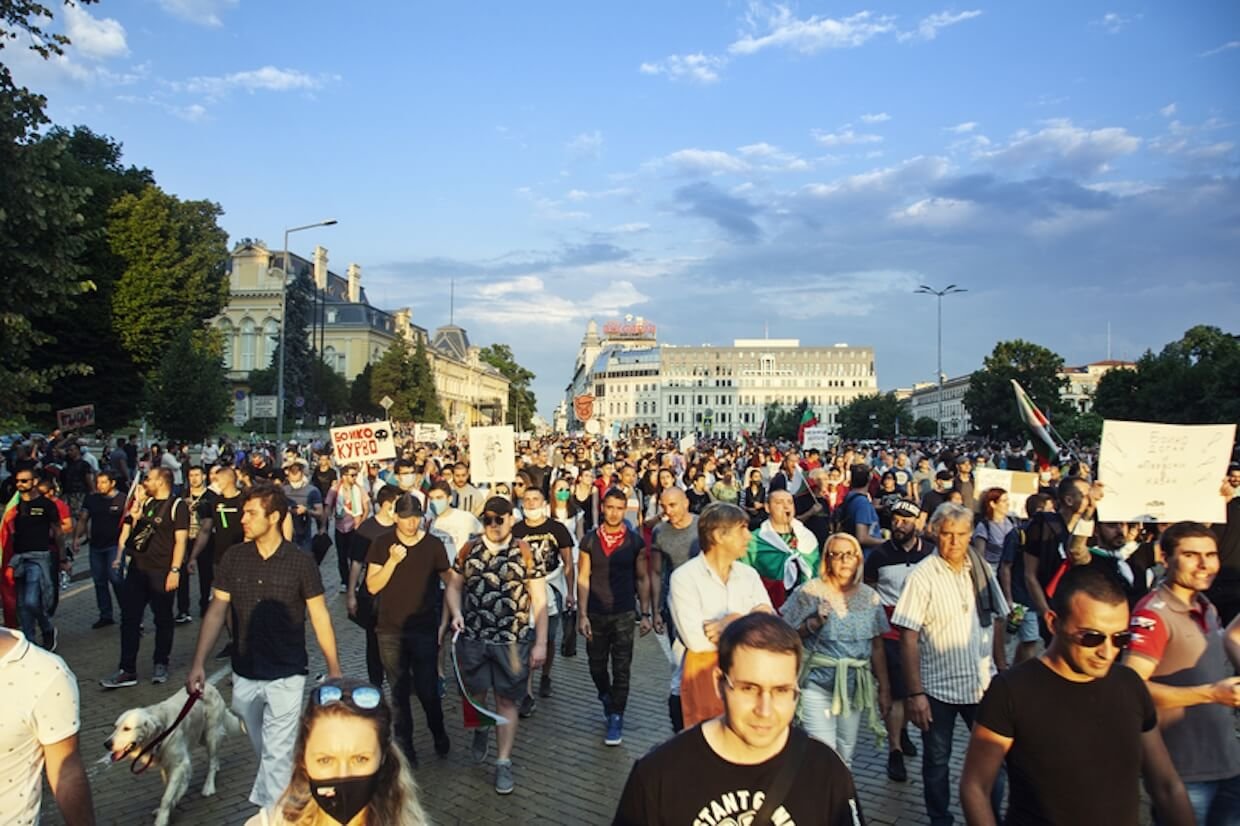
You have argued that anti-establishment populists in power may themselves become the new elite. How quickly might this paradox confront Radev once he assumes responsibility for inflation, eurozone adjustment, corruption reform, and EU funding?
Assoc. Prof. Ildiko Otova: Radev has long belonged to the elite. After all, he has been the sitting president for nearly nine years. His seemingly modest gestures—driving his own car, grumbling about the lack of parking spaces in Sofia, and publicly paying his parking tickets—are mostly for show, part of the narrative drafting.
That said, I understand the core of the question. Given the international environment and the many urgent issues awaiting resolution, the risk that mounting challenges will overwhelm the new status quo is very real. Radev’s victory will ultimately need to be substantiated through concrete actions. Let us return to the notion of a “de-ideologized ideology” and the broader process of depoliticizing politics. How can genuinely sustainable policies be designed when they are no longer anchored in a clear and coherent vision?
My concern is that the emerging political reality is stripping politics of its very essence: not only the capacity to deliver immediate solutions, but also the obligation to develop policies grounded in a substantive vision of the world and its internal order. Returning to Radev, it is entirely possible that the failure of the new elite could trigger a fresh wave of protests. The key questions are whether such protests would be strong enough and, more importantly, what kind of new political configuration they might produce.
A new, powerful actor—a new master of the narrative who can and will succeed—will not emerge overnight. The possibility that, if Radev fails, Bulgaria could enter yet another cycle of instability cannot be ruled out. Even so, I am inclined to believe that Radev and those around him will, at least for a while, remain in power.
Diaspora Divides and the Limits of Democratic Agency
In your work on contestatory citizenship, you highlight the transformative potential of civic agency. In the current context, can civic mobilization and diaspora engagement mitigate what appears to be an emerging crisis of democratic and European identity, or are these forms of participation themselves being reshaped by populist narratives of belonging and exclusion?
Assoc. Prof. Ildiko Otova: Let me begin by noting that the diaspora is not necessarily pro-European—quite the contrary. While some are pro-European, others are anti-European, including Bulgarian emigrants in other EU member states. I continue to believe in the power of contestatory citizenship. However, as I have already noted, the key question is what exactly a new wave of protests might bring about.
Looking ahead, do you expect Radev’s Bulgaria to become a pragmatic EU-anchored government with Russophile rhetoric, a soft illiberal regime inside the EU, or an unstable populist experiment likely to fracture under the burdens of governance?
Assoc. Prof. Ildiko Otova: I do not think these three options are mutually exclusive.