In this timely ECPS interview, Rudy deLeon—former US Deputy Secretary of Defense and Senior Vice President for National Security and International Policy at the Center for American Progress (CAP)—offers a far-reaching assessment of the mounting challenges confronting the liberal international order. Drawing on decades of experience in national security and alliance management, de Leon argues that the world is entering a period of profound uncertainty marked by geopolitical rivalry, democratic strain, technological disruption, and a vacuum of strategic leadership. Criticizing what he describes as an increasingly unpredictable and insular US foreign policy, he warns that “what America says on Monday is not what it says on Thursday.” The interview explores NATO’s future, transatlantic relations, US–China competition, populism, artificial intelligence, migration, and the strategic dilemmas shaping global governance in the twenty-first century.
Interview by Selcuk Gultasli
At a moment when the liberal international order faces mounting pressures from geopolitical rivalry, democratic backsliding, technological disruption, and the resurgence of authoritarian power, questions about the future of American leadership have acquired renewed urgency. In this wide-ranging interview with the European Center for Populism Studies (ECPS), Rudy deLeon—former US Deputy Secretary of Defense and Senior Vice President for National Security and International Policy at the Center for American Progress (CAP)—offers a sobering assessment of the strategic challenges confronting the United States and its allies in an increasingly fragmented world.
Drawing on decades of experience in defense policy, alliance management, and international security, de Leon, as one of Washington’s most experienced national security practitioners, argues that the world is entering a period of profound transition marked by uncertainty and the absence of strategic leadership. While emphasizing that the post-1945 order helped prevent great-power war, preserve peace in Europe, and facilitate the rise of global economic integration, he warns that many of the assumptions underpinning that order are now under strain. As he puts it, “all these things are in play,”from climate change and migration to artificial intelligence, shifting demographics, and renewed geopolitical competition. Yet, he contends, the situation has been aggravated by “a president and an administration that are not strategic, that are not diplomatic, and that are very insular.”
Throughout the interview, deLeon repeatedly returns to the importance of long-term strategic thinking. Contrasting the institution-building vision of Franklin D. Roosevelt, Harry Truman, and Dwight Eisenhower with contemporary policymaking, he argues that today’s American leadership often operates without a coherent strategic framework. “What America says on Monday is not what it says on Thursday,” he remarks, describing a pattern of unpredictability that has generated anxiety among allies and weakened confidence in US commitments.
The discussion examines a wide range of contemporary issues, including NATO’s future, transatlantic relations, the rise of China, the implications of populism for international cooperation, and the evolving relationship between democracy and globalization. De Leon also explores how technological transformations, particularly artificial intelligence, may reshape labor markets, democratic governance, and international competition. In his view, policymakers remain overly distracted by ongoing military conflicts while neglecting the strategic questions that will define the coming decades. “The most pressing issue right now,” he argues, “is to figure out what the rules are for artificial intelligence and what that means for the nature of work.”
Ultimately, this interview is not simply an assessment of American foreign policy under Donald Trump. It is a broader reflection on leadership, institutions, and the future of international order in an era when, as de Leon suggests, the questions confronting policymakers may be more consequential than the answers currently available.
Here is the revised version of our interview with Mr. Rudy deLeon, lightly edited for clarity, readability, and publication.
Has the Postwar US Leadership Model Ended?
Mr. Rudy deLeon, welcome! To begin, for decades, the United States positioned itself as the principal guarantor of the liberal international order. How do you assess the Trump administration’s apparent shift from alliance leadership toward a more transactional understanding of international relations? Does this represent a temporary deviation or a structural transformation in America’s global role?
Rudy deLeon: That’s an excellent question, and it’s being asked in the capitals of Europe, in Asia, but particularly here in the United States.
We had a period from 1945 to 2016, where there was an architecture globally to prevent another big war. NATO, outreach in Asia—if you go back to the big summit of Roosevelt, Churchill, and Stalin as World War II was coming to an end, Stalin was all about the boundaries of Poland, and Churchill wanted to reestablish the British Empire, particularly in the Levant. What FDR and the Americans wanted were institutions to prevent a third world war from occurring. One of those institutions was the Marshall Plan, which later became the US Agency for International Development (USAID). Another was, simply, to reconcile Germany with France and England.
The only way that meeting would occur was if Eisenhower returned to active duty and became president of Columbia University in New York. Truman recalled him to active duty, and he chaired the first NATO meeting between Germany, Britain, and France. The alliance grew and expanded. It had different roles in the Cold War. The key was those institutions that would prevent another big war from occurring. It allowed for the mostly peaceful rise of China into this modern period. It also kept the peace in Europe.
One of the downsides, as much as we protested, was that Americans became the policemen of the world. Usually, it didn’t end well. Nonetheless, the intentions were there. That gets us to the 2016 presidential election. So now, you’re right: what is the status of America’s global alliances?
We have a lot of economic changes that are in progress. We also have generational changes going on now. All of those are on the table. So, the current president, Donald Trump, comes along, and he stirs the pot everywhere.
But whereas FDR, Eisenhower, and Truman were very strategic at the beginning, the current administration does it one day at a time. What it says on Monday is not what it says on Thursday. As a consequence, there is an insecurity, a disruption that is in progress, all while hotspots remain. China is potentially gaining economic centers. All these things are in play right now.
Why Strategic Leadership Matters More Than Ever
Many scholars now speak of a process of “negative convergence,” in which democratic and authoritarian powers increasingly adopt similar practices of executive centralization, nationalism, and disregard for international norms. Do you see evidence of such convergence in contemporary global politics, and what implications does it have for the future of democratic governance?
Rudy deLeon: You’ve described the current global situation, which is one of change. In many ways, it’s remarkable how, from 1945 to 2016, there was a consensus. You know, when Neil Armstrong set down on the moon, the population of the planet was 3 billion. Today, it’s 9 billion, and it’s increasing very quickly. And with that have come these new issues of climate and migration, as well as the issue of globalization and economic distribution.
In ways that the US and Europe were once central, they are now key partners. So, we’re in a period of change, and what we would like most right now would be a steady leader—one who had a strategic bone, who could create a consensus with the Congress, as well as allies. We don’t have that right now, and that is part of the disruption. Again, what America says on Monday is not what it says on Thursday.
Considering the role that the Americans have played, not simply in balancing a lot of rivalries and tensions around the world, but also in navigating their own sometimes complicated politics, that’s part of the tension points that we see right now. Add to that the role of climate. Add to that migration.
Then there is the rise of technology, first going from analog to digital and now, soon, potentially to artificial intelligence. What does this mean for the Americans, for the Europeans, for the Chinese, in terms of their own economic solvencies? All these things are in play. And yet there’s a vacuum of leadership and strategic thinking globally, and that is to our detriment.
NATO’s Enduring Value Beyond Military Power
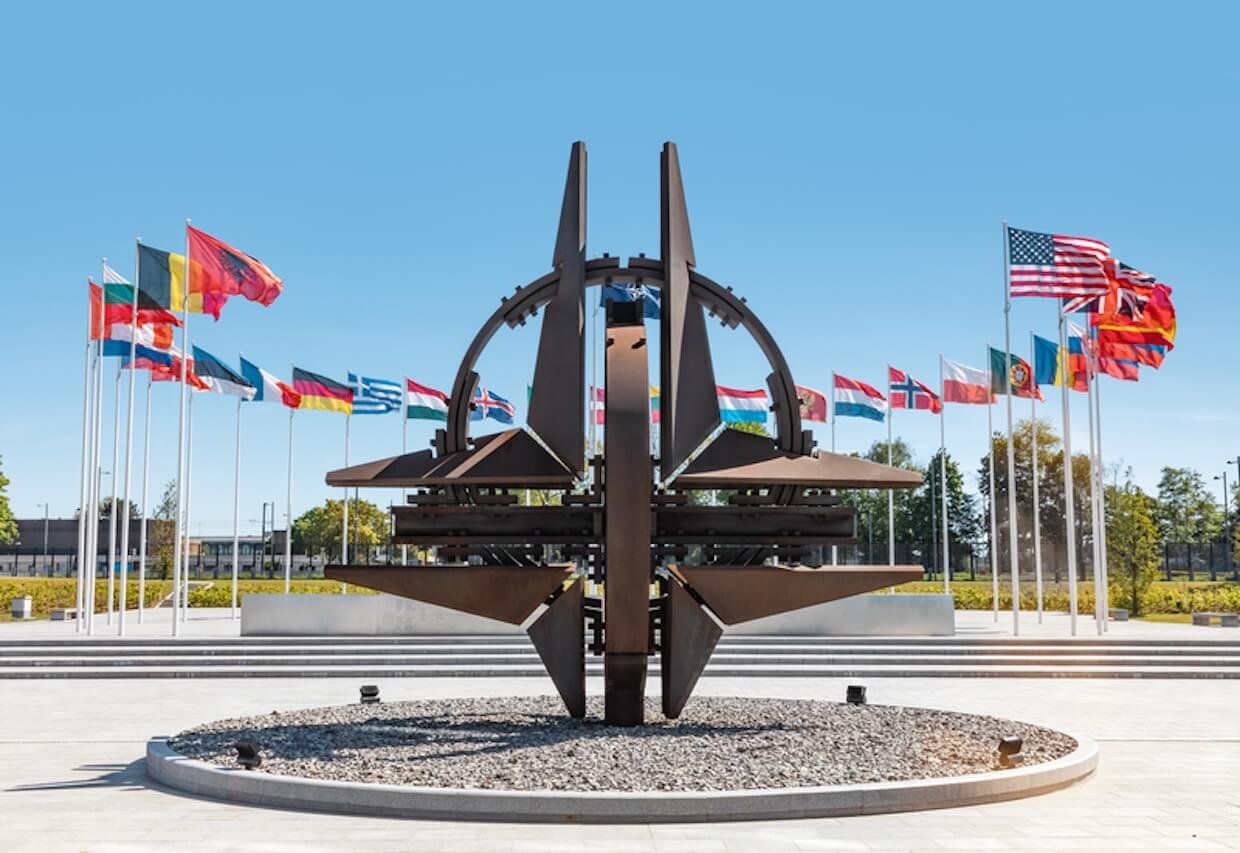
President Trump’s decision to reduce the US military presence in Germany has raised concerns about the future of transatlantic security. How significant is this move for NATO’s credibility, and could it accelerate Europe’s search for greater strategic autonomy?
Rudy deLeon: We’re best when we find ways to work together and to share common interests as well as values. The decision to remove 5,000 troops from Germany may not necessarily reflect a long-term change. Definitely, it reflects Trump’s thinking. And again, as we’ve noted, this is not a strategic administration. This is something that changes day to day, and we see that in our politics.
I think Congress, particularly the Senate, has had a long-time vested interest in institutions like NATO. They were a military alliance, but they were also a political alliance. And, as we see these new forums—Shangri-La in Asia, but also Munich—the Munich Security Conference has become a key moment in terms of the transatlantic dialogue.
So, right now, you can hear some of the strongest voices coming from the Senate and the congressional delegations that go and attend, while the administration, the Secretary of State, and the National Security Advisor play a secondary role.
So, yes, the administration in power, the Trump administration, would like to cut back on NATO. The institutionalists in Congress, who actually, at the end of the day, write the appropriations bills, have a different view—a more long-term view. But that’s playing out, and it played out in the 2024 election. It’ll play out again in the midterms that are coming up here in 2026, and then in the 2028 presidential election.
The long-term view in America and the world—Americans were isolationists. Coming out of World War I, it left a reminder of why young Americans should not necessarily end up on European battlefields. There was a tremendous discussion in the country on that topic. But, at the end of World War II, we’re back to FDR’s view that these institutions could hold a global dialogue together. And that was Eisenhower. That was certainly Truman. Definitely Ronald Reagan. Bill Clinton, too.
But since then, we’ve seen sort of less of a focus. we’re back to the policemen of the world, whether it’s Afghanistan or the Korean Peninsula, South Korea. You know, entangling ourselves in these long-term regional conflicts has not worked out very well for the Americans, but we learn this lesson over and over.
There’s still a little bit of a residue from the long-term deployments of troops to Iraq, as well as Afghanistan. And so now, we see those changes reflected in the current administration. They’re not necessarily long-term. But I’m back to it being a much larger world, going from 3 billion to 9 billion. And migration—going to where the food and the water are—is part of that story.
All these things are in play. We’re in a turbulent time, made even more turbulent by a president and an administration that are not strategic, that are not diplomatic, and that are very insular.
Are US Allies Losing Confidence in Washington?
You have previously argued that American leadership remains indispensable to regional and global security. In light of recent developments, are traditional US allies beginning to view Washington less as a security guarantor and more as a source of strategic uncertainty?
Rudy deLeon: I think that’s a fair description of the messages that are coming from Washington, and if you’re not a Washington policy insider, you can quickly come to that conclusion. These long-term relationships are at risk. The relationship between the United States and NATO was—is—more than simply a security arrangement. It is a diplomatic center of dialogue and exchange that covered issues well beyond Europe, including the Middle East process.
When peacekeepers need to go in, you’ll see Americans, but more likely you’ll also see British, French, Italian, and sometimes now even German peacekeepers join those deployments. When NATO countries are deployed into a tense third-party area, the Americans and their European partners bring with them a dedication to the rule of law, a commitment to diplomacy, and an open door in terms of dialogue and exchange.
It’s been tough in the Middle East. There have been a lot of painful lessons for Americans and the French, in particular, as peacekeepers in challenging areas. The Turks can sometimes play a constructive role here. But to step back from that is to invite chaos coming forward. And again, this period from 1945 to 2016 was one of mostly great stability and continuous dialogue.
The Americans still have to come to grips with this intense, intrinsic desire to be the policeman to settle disputes. But indeed, these relationships have been essential, need to be essential, and these will be topics for the presidential debate in 2028.
Global Governance in an Era of Strategic Drift
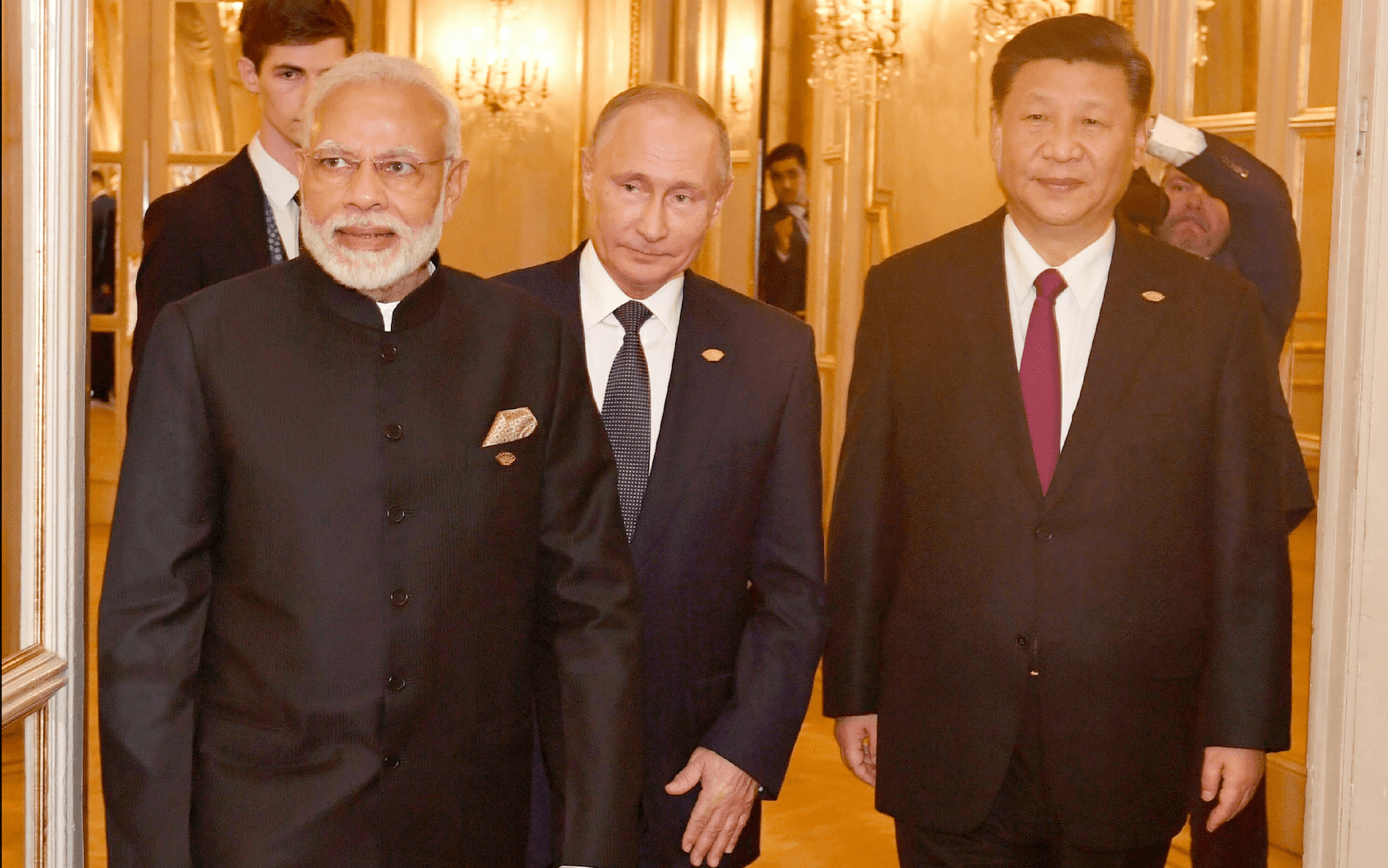
Across Europe, Asia, and the Middle East, we are witnessing efforts by states to hedge against American unpredictability. To what extent do initiatives such as the 2026 Shangri-La Dialogue reflect a broader search for alternative security architectures beyond US-led frameworks?
Rudy deLeon: Good question and the answer is well decided and written about by historians. But I think that you have other factors. First, we have the unpredictability of the Trump administration. They don’t know where they are on Monday, let alone on Thursday. So there is a lack of a strategic approach.
Second, you have the rise of China, not so much as a regional power, but in particular as a global economic power. And so that is changing relationships. The notion of “made in China,” rather than “made in Europe” or “made in the United States,” has definitely been a factor in globalization.
The migration of people, again, as populations increase, from areas where there is not food and water to trying to get to other places, particularly North America or Western Europe, is a challenge that needs a long-term solution.
So I would say that in 2026, we are dealing with a world that is now much different. Not quite 100 years later, but much different from the world that was created at the end of World War II. Dean Acheson referred to that as Present at the Creation, which is about how to build peace across the European continent and then peace across the Pacific. And so now, with these factors of population, the unpredictability of American leadership, and a Middle East that tries to move in a progressive way but, it seems, takes one step forward and then two steps back, all these are challenges on the agenda. They suffer from an administration that right now is not strategic, that has simply a short-term view of all of these factors, and tends to go back and forth.
Why Dialogue Still Matters in Global Politics
How do you interpret the relationship between contemporary populism and the weakening of the rules-based international order? Are populist governments inherently skeptical of multilateral institutions, or is something deeper occurring in the structure of global politics?
Rudy deLeon: I think the generations have changed. We had a World War II generation that Americans would sometimes call their greatest generation. Then we have the baby boomers. If Truman, Eisenhower, and Roosevelt are World War II generation, then Kennedy, Reagan and Clinton were part of the baby boomers in their period. Now, as we’re into this next changing generation that has mostly risen with computers, lived in the digital world, and has more information flow than any previous generation, not only have the politics of the era changed, but the nature of work has changed, as well as the distribution of resources. All of these things need to be settled out.
I do think that if the Americans can continue to have a strategic rather than a populist orientation, then we can develop those partnerships that have been so valuable over the last 80 years. But it’s a challenge. The modes of communication are so much different. The availability of information is instantaneous. I can read the papers in Europe, or the China Daily, the papers from San Francisco or Seattle with regularity in Washington, D.C.. The availability of information has made everything instantaneous. Yet, our processes for making decisions still require consensus and dialogue back and forth. As we come to grips with how we use all of these new tools of information in constructive ways—because I think we’re still learning—that will be a big change.
There’s an interesting parallel to this in terms of American history, and that was the arrival of the telegraph in the early nineteenth century. Prior to the telegraph, information would move only as quickly as a horse could ride from one town to the next. But with the telegraph, the debates in New England could suddenly be shared in Ohio, Pennsylvania, and Illinois. And so the politics, the issues, started to change because the regions could talk to each other.
Now, we have constant back and forth. One thing that unites the ‘souk’ shopping area in the Emirates and the student in Shanghai is the earbuds. You see young people connected to that Apple iPhone with earbuds in. So that is making some changes as well.
We can look beyond the disruptors in our politics, but also recognize that the economic relationships are changing, and the sharing of information is changing. Now, what Americans, along with the British and the Soviets, did was learn how to lead. They created their separate spheres of interest, but they always were able to maintain a dialogue. I think right now, the notion that somehow everybody can go their own way and take care of themselves turns out not to be a recipe that works. We’ve seen that play out far too many times.
The Information Age and the Limits of Liberal Assumptions

The post-Cold War order rested heavily on the assumption that economic integration would reinforce liberal democracy. Yet today, authoritarian powers appear increasingly confident and influential. Has that assumption fundamentally failed?
Rudy deLeon: I don’t think it’s failed. I think it’s the vulnerability of transitioning into this information-based world, where everyone can dial into the information that they want. What does that mean? It means you’re going to dial into a place where you have an agreement with them. You’re not going to necessarily dial into places that are offering a different viewpoint. So, you’re susceptible to an echo chamber of political thought.
But I do think that, at the end of the day, the rise of the powerful individualist nationalists will have to give way to a common world that has to deal with climate. It has to deal with the distribution of resources, the West and its engagement with the developed and developing worlds of Africa and Asia. Those will have huge consequences for everyone.
At the same time, in Asia, for example, we see the deployment of DPRK, North Korean soldiers, to Ukraine to fight with the Russians. We see that as the emergence of an unexpected power center in Asia. That should be sending off alarm bells in Tokyo, Seoul, as well as Beijing. Because suddenly, an unexpected Asian power has demonstrated an expeditionary capability to send troops to Europe.
What does that mean in the long term? It’s an interesting discussion in terms of what goes on in Tokyo. Thought in Tokyo is less examined than what Kim Jong-un is wanting to do right now. The North Korean soldiers end up with better food and better equipment on the Russian side in Ukraine. So that’s a surprise—the expeditionary nature of the North Koreans going to Europe. What does that mean for the Republic of Korea, which has its own internal disputes right now, its own set of arguments? And then what does that mean for a rising China that looks at the North Koreans on its border and has to wonder: What is our relationship with that country, and what kind of a threat does that essentially mean for the region?
The Unfinished Story of China’s Global Role
You have written extensively about US–China cooperation and competition. In an era marked by growing geopolitical rivalry, do you still see meaningful space for cooperation between Washington and Beijing on global challenges, or are we entering a prolonged period of strategic fragmentation?
Rudy deLeon: That chapter is still to be written. In terms of China and its integration with the West, it’s a different model than we have seen historically. When Japan rose in the 1930s, it was an exceptional builder of ships, airplanes, and the tools of war. China has those skills. But as a global supplier of, essentially, products ranging from electronics—not automobiles, which Europeans and Americans still dominate on the consumer side—but other utilitarian items, China has to decide: Does it want to be a global military power? It has a long way to go to achieve that, as opposed to being an economic power.
David Miliband, who was the Foreign Minister of Britain while President George W. Bush was in office, came to Washington and said, “Well, you Americans are focused on Iraq and the Middle East. The rest of the world now notes that everything is made in China. That’s an issue for you to consider and to think about.” Power is being redefined in that period from 2016 going forward, as part of Trump’s tenure. How are we going to deal with the economic power of China, its potential use of political influence, and Russia, which is in decline but still has the ability to project military power?And then, despite all of the efforts to secure some kind of regional balance in the Middle East, that’s become extremely difficult.
So agendas are changing. I think you’re right to postulate that question. China’s going to play a big role. They seem to be more interested in their economic role as a manufacturing power than they do in terms of being a diplomatic or political power.
Why Policymakers Must Look Beyond Current Wars
Some analysts argue that the retreat of the United States from global leadership creates opportunities for authoritarian powers to shape international norms and institutions. Do you share this concern, and if so, where do you see the most significant risks emerging?
Rudy deLeon: I agree with the first part of the question, which is that the Americans have been less strategic, particularly since 2016. Can that change? The twenty-first century began in 2001 with the highest of expectations, but here we are in 2026, a quarter of a century later, and we’re once again facing all of these challenges. The distribution of economic resources. Military conflicts that don’t have an easy end. Troublesome diplomacy.
So, I would say the future is still to be shaped. The next 25 years are still open to be shaped, and they could go in many different directions. The most pressing issue right now for policymakers is to figure out what the rules are for artificial intelligence and what that means for the nature of work.
For Americans and Europeans alike, the availability of work was one of the things that made for healthy democracies. However, the availability of work today is certainly changing. If you have high-end skills in one economy, but lesser skills in another, you’re at minimum wage and don’t have as many opportunities.
So, these are all factors in play right now. We’re too distracted by wars in Iraq or Afghanistan, by Ukraine, or now by Iran. We need to get back to some of the strategic issues that are going to be so critical going forward.
What King Charles Revealed About America’s Political Moment
The Trump administration often frames international politics in terms of sovereignty and national interest rather than shared democratic values. What impact does this discourse have on democratic forces and civil societies operating under authoritarian or semi-authoritarian regimes around the world?
Rudy deLeon: We’ve always had this notion of Jacksonian democracy, going back to Andrew Jackson in the nineteenth century. In shorthand, it was that “one man smells like the next,” meaning the farmer in West Tennessee or Ohio had as much right to economic opportunity as the banker in Philadelphia. That populist battle has remained present in America and has always been part of our political life. And I think we’re seeing it move forward right now. Again, in terms of the nature of work being a great equalizer, I’ll end with that: work, learning, and change. The distribution of resources is changing as well.
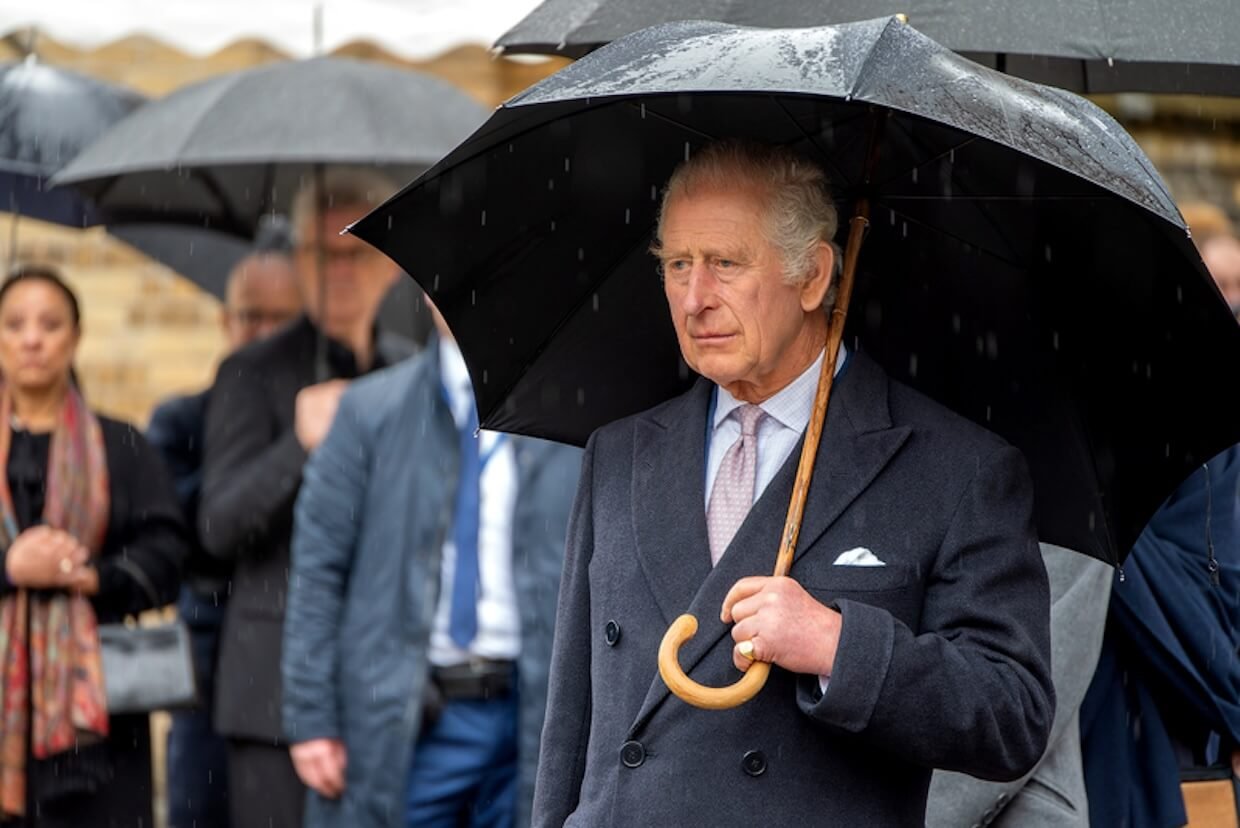
So, I think we start not so much with an answer, but by constantly trying to reframe and narrow the questions into areas that are workable in terms of reaching out. But I was just going to add the great irony of having the King of England speaking to the Congress of the United States.
King Charles, along with his mother, Queen Elizabeth, are the only monarchs of that nature to come and speak to the Congress. King Charles was very warmly received for the clarity of his remarks and for the stability of his personality. Remember, the Americans are still the creation of the Europeans, with a lot from Britain, not so much from France, but a great deal from Germany and Italy, as well as from Ireland and Scotland.
I think the King’s remarks were a reminder of our roots and of the fact that we have more to gain from each other. It was also a reflection of the fact that the clarity with which the King spoke was probably a wish that our own leadership right now could have that same clarity of strategy, purpose, and integrity when they speak.
Can the West Renew Strategic Leadership?
You have participated in and written about major security dialogues throughout your career. Looking beyond the 2026 Shangri-La Dialogue, what kinds of alliances, institutions, or coalitions are most likely to shape the next phase of global governance? Will the future belong to renewed multilateralism, competing blocs, regional security architectures, or entirely new forms of international cooperation?
Rudy deLeon: You have framed something important here. Sometimes generations are described by answers, and sometimes they are framed by questions. You have really, for 2026, framed so much that the questions right now are more important than the answers. Will the Americans and the West continue in a series of alliances that will bring stability to the global order? That’s been essential. We took it for granted. It was there, and now that we see it being less influential, we worry a little bit more.
Now, the American reach still remains. Our Navy can still reach places that no one else can reach. China is trying, and it can get to some places, but not all places. And those Americans in Germany had less to do with German security and more to do with keeping the historic European competitions from rising again and troubling each other on the European continent. Those 5,000 US soldiers in Germany were a reminder of the stability that was brought through the diplomatic and economic tools established at the end of World War II. For more than 75 years, we were able to keep broad peace in Europe, together with North America, and for the most part in Asia. So, we did better on strategic security than we did on our irresistible tendency to rely on a powerful military and end up being the policeman in Korea, Vietnam, Afghanistan, Iraq, and Iran.
When World War II came to an end, the Deputy Japanese Foreign Minister showed up on the deck of the USS Missouri in Tokyo Bay and, in his formal diplomatic attire, stood across from Douglas MacArthur. He offered what the British call a kowtow. It’s not a complete bow, but it is a lowering of the head and body. Conflicts don’t end like that now. They end up with murky lines of demarcation that require diplomacy and economic efforts.
So, I think that, for the Americans coming out of Afghanistan and Iraq, and now dealing with Iran, the policing role is not necessarily a successful global strategy. We’ve got to get back to the broader question of how we maintain strategic dialogue. How do we maintain critical alliances? How do we talk to each other when we agree, and how do we talk to each other when we disagree?
History is full of surprises. What holds China back right now is the one-child policy. The assumption in the West was that China would become the largest consumer economy in the world and therefore come to dominate everything. Well, it turns out that, with the one-child policy, there aren’t enough consumers, let alone enough young people to join the Army and Navy of the People‘s Republic of China. So, history has a way of introducing its own surprises. And that’s where we are right now.
But can Americans lead again in a constructive way after 2028? That is one of the big questions that hangs over American politics, our transatlantic dialogue, and the role of America and the West in the world.