
Peru’s razor-thin 2026 presidential election has reopened fundamental debates about democratic legitimacy, populism, institutional resilience, and political representation in Latin America. As Keiko Fujimori returns to power amid allegations of electoral fraud, rising insecurity, and deep public distrust, critical questions emerge about whether Peru is entering a period of democratic stabilization or renewed political crisis. In this timely interview, Professor Cynthia McClintock of George Washington University examines the structural forces reshaping Peruvian politics—from fragmented party competition and the enduring legacy of Fujimorismo to the regional rise of right-wing populism. She argues that “the desire for the iron fist” has helped shift Peru to the right while warning that the country remains democratically vulnerable despite important institutional and economic advances.
Interview by Selcuk Gultasli
Peru’s 2026 presidential election represents one of the most consequential democratic tests in contemporary Latin America. The razor-thin runoff between Keiko Fujimori and Roberto Sánchez unfolded against a backdrop of escalating organized crime, allegations of electoral fraud, institutional reform, and profound public distrust in political institutions. Although the election culminated in the return of Fujimorismo to the presidency, it also exposed the enduring fragility of Peru’s democratic order and highlighted broader regional debates over populism, representation, democratic legitimacy, and state capacity. Rather than resolving Peru’s long-running political crisis, the election underscored the persistent tensions between demands for democratic accountability and growing public desires for order and security.
In this timely interview, Professor Cynthia McClintock, Professor of Political Science and International Affairs at George Washington University and Director of GWU’s Latin American and Hemispheric Studies Program, offers a nuanced assessment of Peru’s political trajectory while placing recent developments within broader comparative debates on democratic resilience in Latin America. Drawing on decades of scholarship on Peruvian politics, electoral institutions, democratization, and runoff elections, Professor McClintock argues that the 2026 contest should not be understood simply as a story of ideological polarization. Instead, she contends that “most Peruvian voters were actually not at these extremes; rather, their vote fragmented,” pointing to the unprecedented presence of thirty-five presidential candidates and the collapse of the democratic center before the runoff.
Throughout the interview, Professor McClintock examines why democratic legitimacy has become increasingly fragile despite Peru’s comparatively strong macroeconomic performance. She warns that declining trust in electoral institutions constitutes “a very worrisome pattern,” while emphasizing that rising insecurity has fundamentally reshaped political competition. In her view, “there’s been a particularly tragic increase in extortion in Peru, which has led to this desire for the iron fist,” helping explain both the electoral shift to the right and the growing appeal of right-wing populism across the region.
At the same time, Professor McClintock cautions against simplistic interpretations of Peru’s political evolution. She argues that institutional reforms—including bicameralism and runoff elections—remain valuable, insisting that “institutions matter,” even though “there is no magic formula for high-quality democracy.” Likewise, while recognizing the continuing appeal of Fujimorismo, she stresses that Peru’s persistent fragmentation has prevented any single populist actor from fully consolidating power, making Alberto Fujimori “an exception” rather than the rule.
Ultimately, Professor McClintock presents Peru as a democracy caught between meaningful progress and persistent vulnerability. Although she concludes that the country “is still vulnerable to these problems,” she also reminds us that Peru has made remarkable democratic advances over recent decades. The conversation therefore offers not only an illuminating analysis of Peru’s turbulent political landscape but also broader insights into the evolving relationship between populism, democratic representation, institutional resilience, and political legitimacy across Latin America.
Here is the revised version of our interview with Professor Cynthia McClintock, edited lightly to enhance clarity, readability, and overall flow for publication.
Peru Was Less Polarized Than Fragmented in 2026
Professor McClintock, welcome, and thank you for joining us. To begin, how should we interpret the outcome of Peru’s 2026 election? Keiko Fujimori appears to have secured the presidency by one of the narrowest margins in Peru’s democratic history. What does such an extremely polarized and contested outcome reveal about the current state of democratic legitimacy and political representation in Peru?
Professor Cynthia McClintock: It’s a very important question, and I worry a lot about democratic legitimacy in Peru. I think we all do. There’s definitely been a shift to the right in Latin American elections. I’m sure you’ve seen it too, and, of course, that’s represented here. It’s important to keep in mind that the third-place candidate was also involved in another razor-thin, delayed result, which was problematic for legitimacy, but it did signal the strength of the right. I assume that most of the votes for the third-place candidate went to Keiko Fujimori.
There’s been a particularly tragic increase in extortion in Peru, which has led to this desire for the iron fist, as we say. It’s clear that, with such a razor-thin result in the runoff, most folks would talk about polarization. But, in fact, Keiko Fujimori and Roberto Sanchez together received only 29% of the vote in the first round of the elections —it was 17% and 12%, respectively. So most Peruvian voters were actually not at these extremes; rather, their vote fragmented. There was serious fragmentation. There was a record 35 presidential candidates. So, it was a very fragmented, splintered vote, and unfortunately, from a lot of folks’ standpoints, the sort of more democratic center didn’t make it to the runoff.
Slow Vote Counts Are Fueling Distrust Across Democracies
Roberto Sánchez has refused to recognize the results and has alleged electoral fraud, echoing patterns seen in several democracies around the world. How concerned should we be about the normalization of post-electoral de-legitimization, and what does it suggest about the erosion of trust in democratic institutions?
Professor Cynthia McClintock: It’s a very serious problem. Ironically, Keiko Fujimori also alleged fraud in the 2021 election, which she narrowly lost to the leftist. It was a reversal of the 2021 runoff here in 2026 in Peru. Of course, the United States, Brazil, and so many others have experienced similar patterns. It’s a very serious problem. The percentage of Peruvians who believe in the elections, or trust that the elections represented their outcome, was 30% in 2021, and it’s going to go down and down. There were problems with the ballot boxes in the first round. There’s also this question of the overseas vote. Whenever there’s a slow count throughout the world, it leads to doubts. It’s a very worrisome pattern.
Peru’s Political Geography Is More Complex Than Rural Versus Urban
The 2026 election once again exposed the deep divide between Lima and Peru’s rural and indigenous regions. To what extent is Peru’s political crisis fundamentally a crisis of territorial representation and unequal citizenship rather than simply a crisis of institutions?
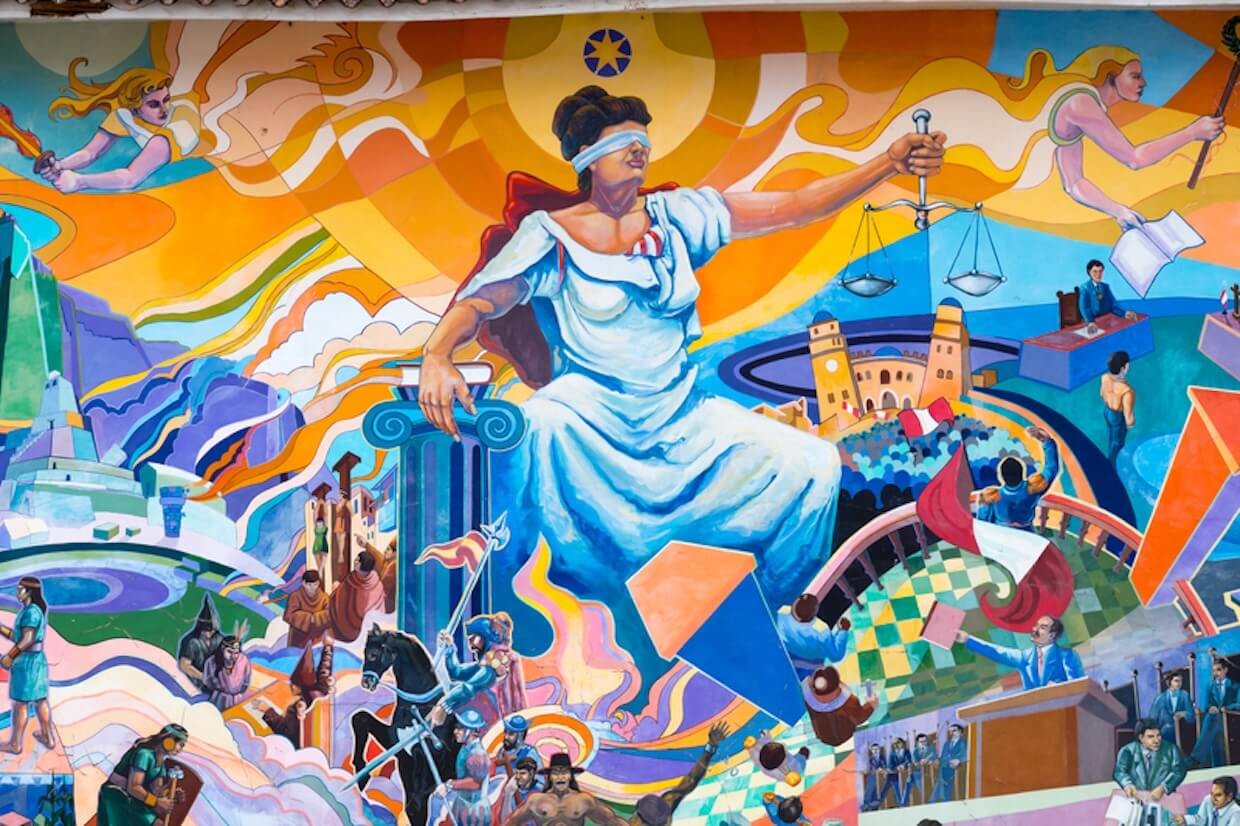
Professor Cynthia McClintock: This has been the case really since the conquest, and unfortunately, it does continue. It’s a very deep divide. Some of the folks reading this may remember the protests back in 2022 and 2023 in Peru. The name of the protest was “Take Over Lima”. It was people from the South, reflecting historical resentments. So it’s a very significant divide. By the same token, just as I was talking before about polarization versus fragmentation, as of the 21st century, more than two-thirds of the population of Peru is urban.
This is true throughout Latin America now. It’s not really this image of the coffee farmer way off in the Ceja de Selva. This is not really accurate anymore. There are an awful lot of Peruvians elsewhere, who live in the cities and in the informal sector, and they’re what we would probably call lower middle class. So, it’s true that there’s this major divide. We’ve seen this in every single election, where the Southern Highlands, in particular, vote to the left, and Lima and the north coast vote to the right. But it shouldn’t be exaggerated either. As I said, all of these sort of candidates, more or less in the democratic center, were closer to a majority than these two extremes.
Security Has Become Fujimorismo’s Strongest Political Asset
Keiko Fujimori has inherited and reshaped one of Latin America’s most enduring populist political legacies. To what extent can Fujimorismo still be understood as a form of right-wing populism, and how has its appeal evolved in the context of contemporary Peru’s demands for order, security, and political stability?
Professor Cynthia McClintock: Keiko Fujimori is now very much the establishment. This was the fourth time running to win, but she has held a lot of power in the country, especially since the razor-thin 2016 election. She can’t really claim to be an outsider any longer. Her tone has varied over time, so it’s a little unclear exactly how Fujimorismo is going to evolve going forward.
When she was campaigning this time, she campaigned as a Democrat who’s got her eyes on security. Yes, we’re going to be tough on security, but a lot of the things she proposed, most of us would say, “Yeah, go for it,” in this climate of severe crime. Bigger, better jails. Virtually 99% of Peruvians support that. When she was asked about human rights violations, she didn’t say much. She’s moderated her tone quite a bit, but then there’s also not quite as much self-criticism. There’s no criticism of the Fujimori era either.
There’s definitely still Fujimorismo and anti-Fujimorismo in Peru. The South is anti-Fujimorismo because of the concerns about human rights violations.
One of the reasons why she lost in 2021, in particular, was that memories of the corruption allegations against her were still strong. That was less the case now. There is a generation that’s less familiar with all of this and was probably more willing to vote for “Fujimorismo.” But given that it was 2026, (five, six years later,) the people who support it don’t see the human rights violations or the corruption allegations, so it’s a different vision, and we’ll see how it evolves.
Anti-Fujimorismo Has Weakened, But It Has Not Disappeared
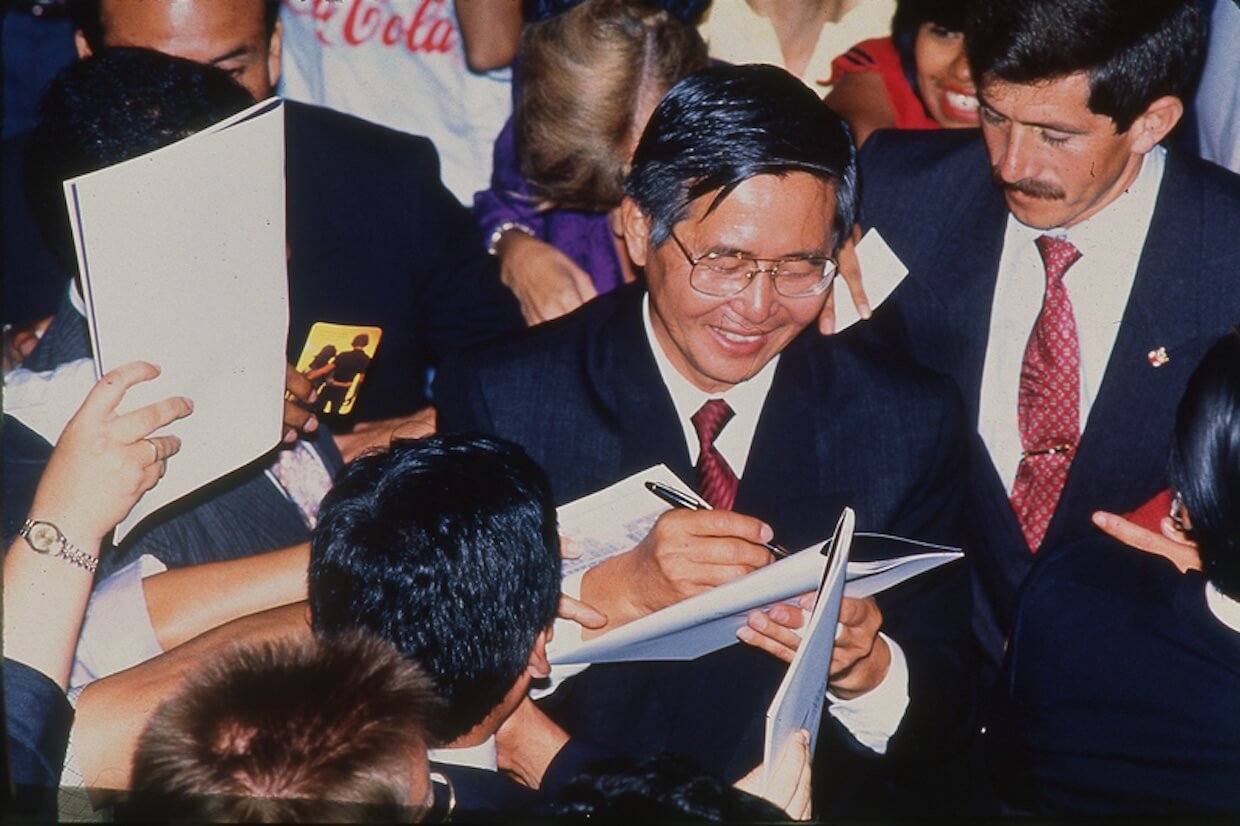
Does Keiko Fujimori’s apparent victory suggest that anti-Fujimorismo is finally losing its mobilizing power, or does the narrowness of the result indicate that the country remains deeply divided over the Fujimori legacy?
Professor Cynthia McClintock: I would say both. There’s still deep division about this. If you consider that the third-place candidate was far to the right, I assume that Keiko got a lot of those votes. But considering that you had both the first- and the third-place candidates on the right, one would have thought that she would have won by a much wider margin. So, there’s still a considerable anti-Fujimorismo vote.
On the other hand, she did prevail this time. So, as I was saying a little bit in response to the previous question, Some of the memories… corruption… the anti-Fujimorismo folks definitely highlight human rights violations and corruption under her father, as well as the protests and some of the more recent events. But those memories have faded a bit now. For younger folks, the 1990s are ancient history.
So, both are true. It exists. That’s why she didn’t win by a larger margin. Sánchez in the first round only got 12%. So, the vote for the far left in the first round was very low. The fact that he brought it to a virtual tie suggests there’s still a lot of anti-Fujimorismo, but she won.
Keiko’s Alliances Could Determine Peru’s Democratic Future
Throughout your scholarship, you have emphasized the importance of democratic legitimacy. Given both the contested outcome and Fujimori’s polarizing political history, what challenges will the incoming administration face in building a broadly accepted mandate to govern?
Professor Cynthia McClintock: I think she needs to continue with the more moderate positions that she tended to highlight during the campaign. The runoff tends to mean that candidates have to look toward the center, but then there’s the question of how they will govern afterward—their base versus trying to appeal to a broader center. She will have a plurality in both houses of Congress. For the first time since the 1990s, Peru has a Senate. It’s a very powerful Senate. She’ll have a little more than a third of the seats in both houses, so she’s in a very strong position.
She’ll be in an even stronger position if the third-place candidate, a former mayor of Lima named López Aliaga, who also finished third in 2021, supports her. We don’t know what his positions are going to be with respect to Keiko. It was not Sánchez charging fraud in the runoff; he was charging fraud in the first round. So he’s not happy with how that went, with Keiko. But, on the other hand, they’re both considered rightists. We’ll see how that relationship goes. Keiko, in the past, especially during this 2021–2026 term, often allied with the left.
Sánchez’s party is called Perú Libre. The current president of Peru is actually also from Perú Libre. His ascendance to the presidency was supported by Keiko’s party. So; she’s had a history of being able to make these kinds of deals and negotiations— I would argue, not necessarily for the best. There are big questions, for example, about illegal mining in Peru and how to deal with it. It’s a very difficult issue. Illegal mining is terrible for the environment, very dangerous for a lot of Indigenous communities, and for law and order in general. But there are a lot of folks who see this as a huge bonanza, with gold prices through the roof. On the right, a lot of people say it’s just bureaucracy that’s preventing more of this mining from becoming legal. On the left, there are a lot of poor people out there who want, need this kind of financial boon. So there often are positions that I might not favor, but that different groups on the left and the right can come together on.
There’s a lot of concern that if, for example, Keiko does forge an alliance with the rightist forces of López Aliaga, that could mean more of a mandate for authoritarianism. Hopefully not. We have now had something reasonably democratic in Peru for basically most of the period since the return to democracy in 1980, so hopefully the norms have settled in, and there are a lot of very honest, professional people doing their best to make democracy work and to make the country prosperous.
Peru’s Greatest Instability Is the Expectation of Failure
Peru has experienced extraordinary presidential turnover, with nine presidents in roughly a decade. Does the election of a candidate whose party possesses a stronger organizational structure than most competitors offer a genuine opportunity for political stabilization, or are the underlying drivers of instability still intact?
Professor Cynthia McClintock: It’s a really good question. On the one hand, there is a very long-standing driver of instability, which is the expectation that things are not going to work out very well. As you may know, Peru’s political parties are notoriously fragile. It’s a sharp contrast to countries like neighboring Colombia, where the Conservatives and the Liberals were present for something like 100 years.
Peru’s never had that, and there’s a tendency for people to expect failure, to say, “Oh, we’re going to abandon a sinking ship. Obviously, it’s not going to work out well for Keiko. Let’s go somewhere else.” Of course, that leads to, “Let’s get on the bandwagon of saying, no, we don’t like this president. Let’s have a new president.” Then you begin with this kind of hope, and then, again, cynicism, and turning against him. This was what happened a lot with Pedro Castillo. His view of things was that he was trying, he was being obstructed, and people didn’t give him a chance. That dynamic has been very common, unfortunately.
On the other hand, we can’t rule out the fact that Keiko’s been around a long time. As you said, she’s forged quite a lot of alliances. Almost all of us following Peru would say she’s been the primary architect of everything that’s happened since 2016. Even though the president elected in 2016, again by this very narrow margin, (former Peru President) Pedro Pablo Kuczynski, was also considered a very pro-market guy, more or less on the right, center-right, she was after him at every turn for a lot of different reasons. Anyway, she’s been a very powerful figure for quite a while. She has alliances. She has some very smart people, good tacticians, working with her.
So, there is this potential that, again, if she’s able to forge a good tie with López Aliaga and maintain the ties that she built with Perú Libre during the last couple of years, then this could be more “stable” than we want. Stability is always considered a good thing, and there are lots of problems with instability, particularly in Peru recently. All the turnover of ministers has made it very difficult to have continuity in security policy in particular. But that said, there are also concerns when you’re talking about the stability of an authoritarian regime or authoritarian tendencies.
Economic Success Alone Cannot Solve Peru’s Democratic Challenges
The 2026 election unfolded under newly reformed institutional rules, including the return of a bicameral legislature and measures intended to reduce party fragmentation. Do these reforms represent a meaningful step toward strengthening democratic governance, or are Peru’s problems rooted more deeply than institutional engineering can address?
Professor Cynthia McClintock: It’s a very important question for political scientists, and we definitely believe institutions matter. I’ve worked a lot on the almost Latin America-wide implementation of runoff rules for the election of the president, and I definitely feel that they have been helpful. There’s never been any question in Peru about returning to elections without a runoff. You can imagine, in this case, if Keiko Fujimori had been elected president of the country after receiving only 17% of the first-round vote. All the questions that would have been raised if that had been the case. So there definitely are institutions that are helpful.
Most of my colleagues believe that bicameralism is a positive thing—a little more debate, a little more opportunity for checks and balances, and a little more opportunity for politicians to become senior in office, learn, and gain experience. That said, we’re also worried about the powers of this particular Senate and how they could be used. So there’s a lot of variation. Most institutions have pluses, but they also have minuses. Now, if there were some kind of magic formula for high-quality democracy, we’d have it. But there isn’t. Presidentialism versus parliamentarianism, no?
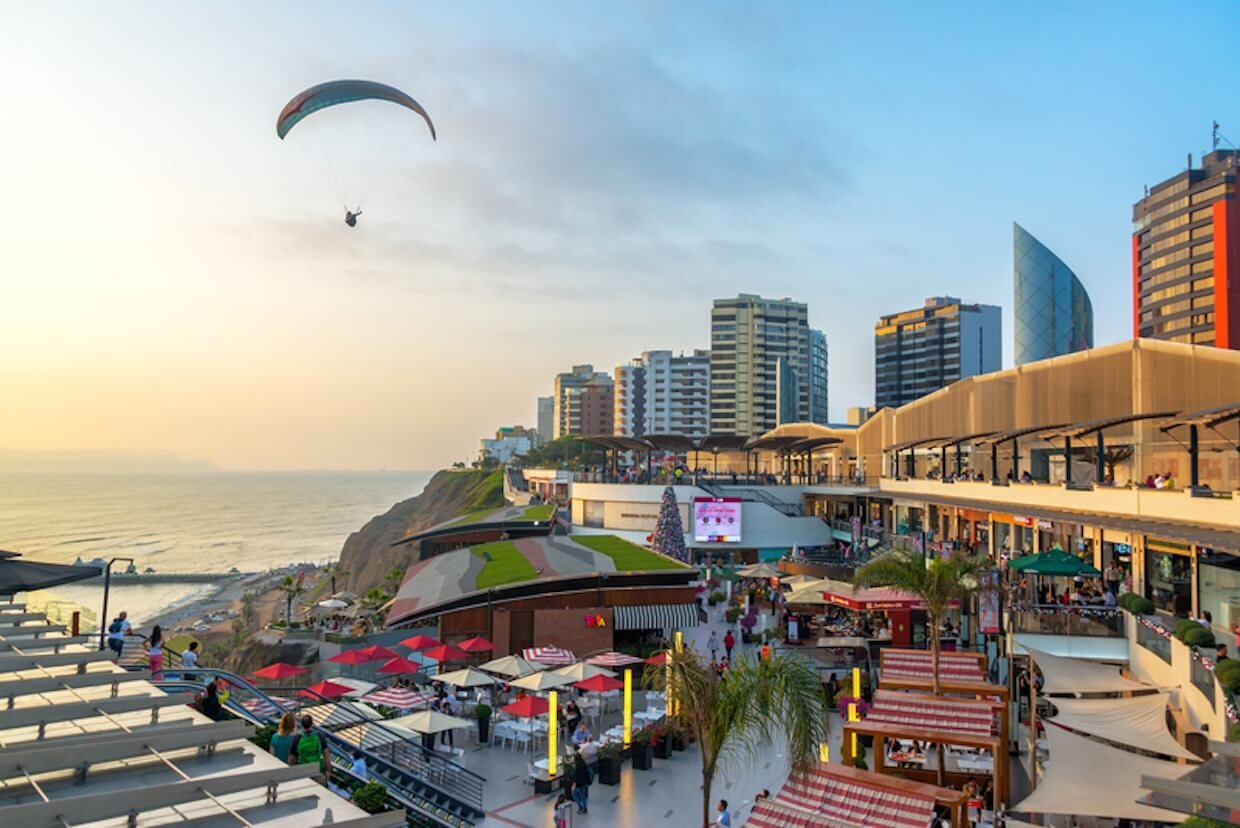
We believe that institutions matter, but so do social and historical norms and economic factors. “It’s the economy, stupid.” The famous phrase from Bill Clinton. Peru has enjoyed—it’s very ironic—an economy that has fared quite well over the last couple of years in particular, despite the political instability.
Campaign Moderation Does Not Always Survive Governing
In your work on run-off elections, you have argued that second-round systems can enhance legitimacy and encourage moderation. Looking at the Fujimori-Sánchez contest, do you believe the runoff system fulfilled those expectations, or did it instead reinforce polarization and anti-system mobilization?
Professor Cynthia McClintock: I do think it helped with moderation. Both Keiko Fujimori and Roberto Sánchez were acknowledging and recognizing, in their campaigns—and in the runoff in particular—what we might call the democratic center. That is one of the main reasons why Roberto Sánchez was able to increase his vote so much. As I mentioned, he only got 12% in the first round. Of course, a lot of the increase was due to the anti-Fujimorismo that we’ve talked about, but he was also campaigning on a much more moderate platform in the runoff than he had in the first round.
As we’ve said before, the big question is how they actually govern, and whether that changes. What we see in general in Latin America is that political leaders moderate during the runoff. Perhaps they move back a little toward their base once they’re in office, if they’re elected, but not entirely. So, it probably does help in terms of bringing the country together. But again, no panaceas.
Illegal Economies Have Undermined Democratic Consolidation
One of the most striking features of contemporary Peru is the coexistence of recurring political crises and long periods of macroeconomic stability. Why has economic performance repeatedly failed to translate into stronger democratic legitimacy and more institutionalized political competition?
Professor Cynthia McClintock: There is modernization theory, which is one of the classic theories in political science. We argue that with economic development and the growth of the middle class—which has happened in Peru, and I would argue very strongly that economic growth has been helpful—there’s really no doubt that economic growth, the emergence of a middle class, and the emergence of more educated and professional folks all help. If this were not happening, Peru would be in much worse shape today.
We don’t have to go that far back in history, to the Shining Path insurgency or the problems of political exclusion back in the 1930s, when the country was more or less a feudal society, to see that economic development has helped the country build middle classes, professional folks, and much more educated people who participate much more fully in a democratic society. But again, there are no panaceas.
We have to keep in mind that Peru was at the heart of the Spanish conquest in South America. It was incredibly traumatic. The Spanish arrived and, with a small group of men on horseback, conquered the country. This was the heart of the Incan civilization. So, when we’re talking about polarization in the South, this goes back to Atahualpa. The Spaniards said to him, “If you bring us all that gold and silver, your life will be saved. Everything will be fine.” Then they totally reneged on their promise and murdered Atahualpa. So this was an incredibly traumatic beginning.
Then, although there’s been economic growth, there’s also been incredible variation—a lot of booms and busts, historically. There was the infamous guano boom in the early twentieth century, and for about 10 years that was the motor of the Peruvian economy. Then, all of a sudden, there was a bust. So that meant all these changes in elites and changes in economic bases.
Currently, too, some of the economic growth comes from illegal mining. Some of the growth is in illegal sectors. Notoriously, coca, cocaine, and these illegal sectors reflect the robust demand from people in the North for gold, cocaine, and other drugs. That has meant the bolstering of illegal economies, and that’s been very unhelpful to the consolidation of democratic institutions.
Security Has Become Latin America’s Dominant Political Issue
The campaign highlighted competing visions of Peru’s future: Fujimori emphasizing order, security, and economic continuity, and Sánchez advocating constitutional reform, redistribution, and stronger state intervention. How should we understand this divide within broader debates about populism, representation, and democratic responsiveness?
Professor Cynthia McClintock: It’s classic, to a large degree. In general, the political right tends to appeal to groups that are doing better, are more prosperous, like the way things are going economically, are more pro-market, and believe that the market will solve other problems. In general, the left says, no, we need a lot of state intervention to have social policies that benefit everybody. The distribution of wealth here is very skewed.
So, given the social bases that we’ve talked about, it’s not that surprising. It’s very important for the left to deal with the security challenge. Almost all Peruvians are worried about security. Again, we’ve seen this throughout Latin America. Just look at the Colombian election. This is a key issue. It’s been very hard for a lot of Latin American countries to control organized crime.
We could spend lots of time talking about that. There are problems related to the role of the North. A lot of guns go across the border from the United States, which is not helpful. Lots of the demand for these goods comes from here. But that doesn’t change the fact that, on the ground in Latin America, for most people this is the number one concern: security, being able to go out in the street at night.
The political left should not ignore trying to solve this problem in a democratic fashion.
Weak Parties Continue to Fuel Political Fragmentation
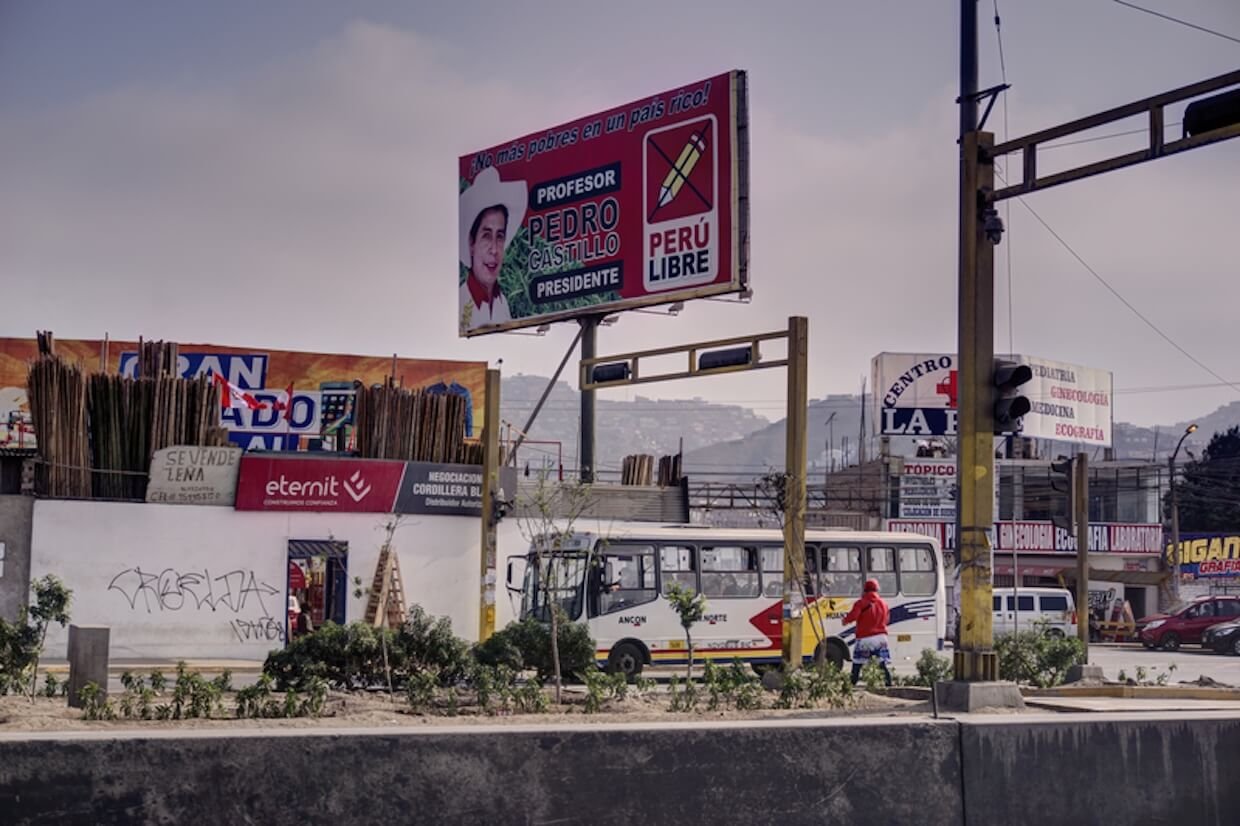
Peruvian politics has increasingly been characterized by outsider candidates, weak parties, and personalized leadership. Has Peru become an archetype of what some scholars call “representation without parties,” and what are the democratic consequences of such a trajectory?
Professor Cynthia McClintock: That’s true, except for Fuerza Popular under Keiko. Fuerza Popular is the name of Keiko’s party. Fuerza Popular built on Alberto Fujimori and the popularity of some of his policies during the 1990s, but also tried to say, “Hey, no, we are more democratic than Alberto Fujimori was.” For most of the period since 2016, they’ve had a plurality, but they’re the only party that has consolidated.
Unfortunately, it’s just been very hard. As I said, there’s not a lot of social trust among Peruvians, and political leaders tend to have rivalries or quarrels and not be able to stick together. Bringing together the different parts of the country is hard, so it’s hard to consolidate political parties. Some of that’s worse now because of social media.
This is not uncommon. In the 2021 election, nobody had heard of Pedro Castillo until about a month before the election. So he was a classic outsider, but he was able to get 17% or 19% of the vote. Then, again, anti-Fujimorismo moved ahead. So it’s a classic example of an outsider being able to prevail. Once you have that example, lots of other people say, “Well, Pedro Castillo could do it. I can do it too. So let me throw my hat in the ring. Why not me?” So that was one of the reasons why there were 35 presidential candidates in the 2026 election.
It didn’t help that Fuerza Popular and some of the other parties believed they had enough of a political base to get into Congress. It’s a complicated situation, but Fuerza Popular was definitely hoping there would be this fragmentation so that they could get into the runoff with a relatively low percentage of the first-round vote, as they had in 2021.
Inclusion Depends on Trust, Presence, and Effective Public Policy
The Sánchez campaign drew substantial support from rural, indigenous, and historically marginalized constituencies. Regardless of the electoral outcome, what lessons should Peru’s political establishment draw from the persistence of these grievances and demands for inclusion?
Professor Cynthia McClintock: It’s always important for leaders to travel to these areas, listen, speak with folks there, and then try to resolve these problems by working with local people. One of the former Peruvian presidents after Pedro Pablo Kuczynski, Martín Vizcarra, back in about 2018–2021, was one of the more popular Peruvian presidents. He was ultimately impeached, but he did a lot of getting out to local areas, and his popularity was based in good part on that. Peruvians really like it when the leader shows up, listens, and then tries to help.
Obviously, in 2026, too, social media is very important for leaders. It’s the way people communicate these days, and this was the case in Brazil and Colombia, etc. Leaders need to stay in touch with this space, trying to communicate, trying to say, “Yeah, this is what I’m doing for you lately.” Then they need to actually follow through, because people do notice. There are programs in Peru that have been quite successful. A lot of these conditional cash transfer programs throughout Latin America have been successful. It was under Ollanta Humala that there was a scholarship program, a pension program, and enhancements to the conditional cash transfer program. A lot of these programs were meaningful for people in these areas. So it’s a matter of continuing them.
Obviously, there’s always this question about Peru’s strong economy. A lot of analysts attribute its success to the central bank president. Peru has had the same central bank president, Julio Velarde, for a long time. They’ve been very good at keeping macroeconomics stable. So that’s important, but it’s also important to address inequality. Throughout Latin America, inequality is egregious. Peru is no exception, and there are programs that help.
The Hardest Question Is Balancing Local and Central Power
Your research on Peru’s mining conflicts highlights the importance of local state capacity in mediating social tensions. As social conflicts surrounding extraction continue to shape Peruvian politics, how important will governance reform be for preventing renewed cycles of protest and instability?
Professor Cynthia McClintock: Peru, back under Toledo in the early 2000s, implemented decentralization reform. Again, it comes back to, “Be careful what you wish for,” with institutions, because decentralization was something that we all favored. We’ve talked many times about the exclusion of folks in Peru’s highlands and Peru’s jungle, and the tremendous power that Lima is perceived to have. So this was considered really important in terms of trying to ameliorate that cleavage—to give more power to local governments and to what’s called departments in Peru, which are like states in a lot of other countries. It’s a subnational level of government, and then there are local governments as well.
There have been successes, and this has been very meaningful for folks on the ground. They like it. But it’s been hard. Some of it is education. Some of it is experience. It’s quite new. There are often problems of corruption, so you need accountability and vigilance. But, on the other hand, you don’t want to strangle people with red tape either. So, these are challenging questions that I’m not sure have really been worked out anywhere—how to get the best balance between power to the localities and power to the center.
Peru’s Populism Remains Divided Rather Than Dominant
Comparative research often associates democratic erosion with populist leaders who claim exclusive representation of “the people” against corrupt elites and institutions. Does Peru’s experience suggest a different pattern, in which populism operates within a context of institutional fragmentation and state weakness rather than executive concentration of power?
Professor Cynthia McClintock: Alberto Fujimori was considered a rightist populist, and he was able to consolidate power. He has been an exception. Given the political fragmentation, it’s been challenging. Again, Martín Vizcarra, whom I mentioned before as being quite popular, definitely had populist traits. He might have been able to consolidate a movement, but, as we’ve talked about before, there was Keiko Fujimori as a rival, the fragmentation in the country, and others saying, “We don’t want him to consolidate a hegemonic position.”
So there have been moments of that. I’d say that, probably in the 2026 election, in part because Keiko has been around for so long, the politician who most claimed the mantle of rightist populism was López Aliaga, the former mayor of Lima. He clearly was not able to consolidate that position in the 2026 election.
How he’ll go forward is one of the biggest question marks because he could decide, as a rightist, to ally with Keiko, giving her a very strong position in Congress, which could lead her to become quite a hegemonic force. Or he could say, “It was Keiko who prevented me from getting to the runoff. I would have won easily. I’m angry.” That would very much be a continuation of division within the forces of populism. So, once again, you have both answers to both questions. Both positions are possible.
Security Is Driving the New Wave of Right-Wing Populism
Across Latin America, populism has appeared in both left-wing and right-wing forms, from Hugo Chávez/Nicolás Maduro and Andrés Manuel López Obrador to Javier Milei and Nayib Bukele. Where does contemporary Peru fit within this broader regional landscape, and what can the 2026 election tell us about the relationship between populism, democratic representation, and institutional resilience in the region?
Professor Cynthia McClintock: We see populism gaining force. In part, it’s related to social media and the capacity for these quick one-liners, reaching more people by being able to say, “I’m gonna be the savior.” In part, that’s also related to perceptions of corruption. As more information and corruption allegations come to light, more average folks say, “Yeah, no, I’m really angry at these elites.” To a certain extent, too, with economic growth, people are saying, “Oh, X has done really well, and I haven’t,” so there’s more resentment. It’s happening throughout the world, from the United States to Colombia to Argentina. It’s also the case that rightist populism has fared very well. We’ve referred to that a couple of times today.
Clearly, this is based on the desire for security, as we’ve talked about before—the iron fist. The Bukele model is often incorrectly understood. A lot of folks say, “Bukele succeeded because he was tough.” In El Salvador, Bukele had a lot of tactical advantages going for him. There had been truces between the gangs and the government for a long period of time. Gang members wear tattoos. El Salvador is a very small country. Criminals can’t hide very easily. It’s not a country like Peru or Colombia, where a lot of the criminal groups are out in remote parts of the country where there are no police. So, he had a lot of advantages.
Abelardo de la Espriella bills himself as this right-wing populist, and I was watching his speech on election night in Colombia, and he’s just a copycat. But anyway, it’s the security issue that’s fueling this a lot. There’s also, as in many parts of the world, this backlash against secularism and a desire for a return to religious Christianity. So that’s part of it, too. But definitely we’re seeing a move toward rightist populism.
Peru Has Come Far, But It Remains Democratically Fragile
Finally, after the turbulent 2026 election, what do you see as the most plausible scenarios for Peru over the next five years? Are you cautiously optimistic that institutional reforms and electoral competition can restore democratic stability, or do you believe the country remains vulnerable to further cycles of polarization, protest, and constitutional crisis?
Professor Cynthia McClintock: It’s still vulnerable to these problems. But all Peruvians, and everyone who knows about Peru, would be hoping that that is not the case. As we’ve talked about today, there’s this incredibly traumatic history in the country, the problems associated with economic growth, the expansion of organized crime, the difficulties in establishing and consolidating strong political parties, and the tendency, when there is a strong political party, for it to move in an authoritarian direction, which is obviously antithetical, by definition, to democracy. These are all very serious problems.
But at the same time, we have to acknowledge how far Peru has come in the twenty-first century. This is true of a lot of Latin American countries. Many of these countries had totally excluded the left, with a sort of veto against the left being in power at all, one of the factors behind the egregious inequality in so many of them. In Colombia, Petro became the first leftist president in the country’s history. It finally happened.
In the case of Peru, the election of Ollanta Humala and Alejandro Toledo brought forward people who were not your classic Lima-based politicians—people with Indigenous roots coming to the fore in the country.
So, in general, I’d say the 2026 election in Peru was very worrisome in terms of perceptions of whether it was free and fair. But overall, in most of these countries, we have free and fair elections, which would have been unheard of 80 years ago. So there have been big advances. But yes, Peru is vulnerable, and I’m glad you’re focusing on it, because attention is a positive for everybody trying to do better and learn.