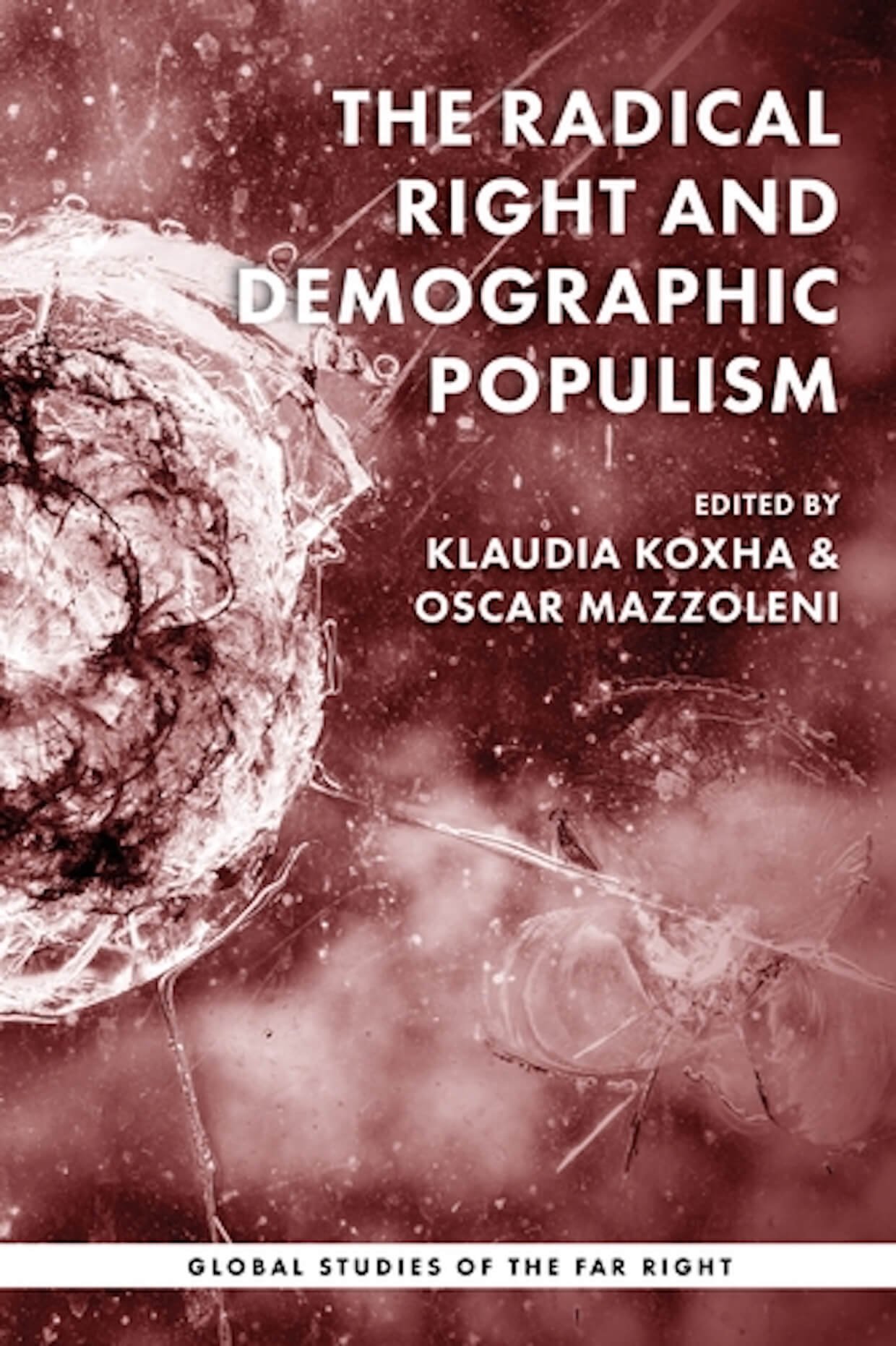

In this interview, Professor Oscar Mazzoleni and Dr. Klaudia Koxha, editors of the recently published volume ‘The Radical Right and Demographic Populism,’ examine how contemporary populist radical right politics increasingly connects immigration, fertility, gender, family, religion, and national identity through the politics of demographic survival. They conceptualize “demographic populism” as a framework linking cultural survival to biological reproduction and transforming demographic change into an existential political struggle. The discussion explores demographic weaponization, conspiracy narratives, Fratelli d’Italia’s calculated ambivalence, and generational adaptations within the Austrian Freedom Party’s youth organizations. Moving beyond Europe, Professor Mazzoleni and Dr. Koxha also address transnational diffusion, political sovereignty, aging, migration, labor shortages, and AI, highlighting how demographic transformations may create new opportunities for populist radical right mobilization while posing significant challenges to democratic resilience.
Interview by Selcuk Gultasli
Contemporary populist radical right (PRR) politics increasingly organizes questions of immigration, fertility, gender, religion, family, and national identity around a common concern: the demographic reproduction of “the people.” In this ECPS interview, Professor Oscar Mazzoleni of the University of Lausanne and Dr. Klaudia Koxha (a Postdoctoral Fellow at the University of Lausanne), editors of the recently published volume The Radical Right and Demographic Populism, explain how this convergence can be understood through the concept of “demographic populism.” As Professor Mazzoleni puts it, issues conventionally treated as separate increasingly converge on a fundamental political question: “Who is entitled to reproduce the true people?” Demographic populism, he argues, reveals how anti-immigration, anti-gender, and pronatalist claims can share “a single Manichean logic of demographic survival versus extinction.” Dr. Koxha sharpens this argument, explaining that “cultural survival” becomes tied to “the biological reproduction of a specific people with specific characteristics.”
The interview begins by developing this conceptual intervention and distinguishing demographic realities from their political weaponization. Aging, declining fertility, and migration are genuine policy challenges, Dr. Koxha stresses; what distinguishes populist radical-right politicization is the question of whose reproduction constitutes the desirable demographic future. This is how demographic change becomes “existential and moralized.” Professor Mazzoleni similarly identifies “demographic weaponization” as central to understanding how statistical and social transformations are reframed as political struggles over collective survival. Their approach consequently bridges populism studies and critical demography, treating demography simultaneously “as a set of conditions and as a political frame.”
The discussion then turns to how demographic populism operates in concrete political settings. Professor Mazzoleni examines Giorgia Meloni’s Fratelli d’Italia, arguing that governmental participation has encouraged not straightforward ideological moderation but “more sophisticated strategies.” Through calculated ambivalence, coded references to “demographic winter,” and a division of discursive labor, radical ideas can be maintained while communication is adapted to broader audiences. In this formulation, demographic populism shifts the perceived threat “from political and economic dispossession to biological and cultural survival,” while immigration becomes embedded within a wider master frame encompassing natality, family, welfare, and religion.
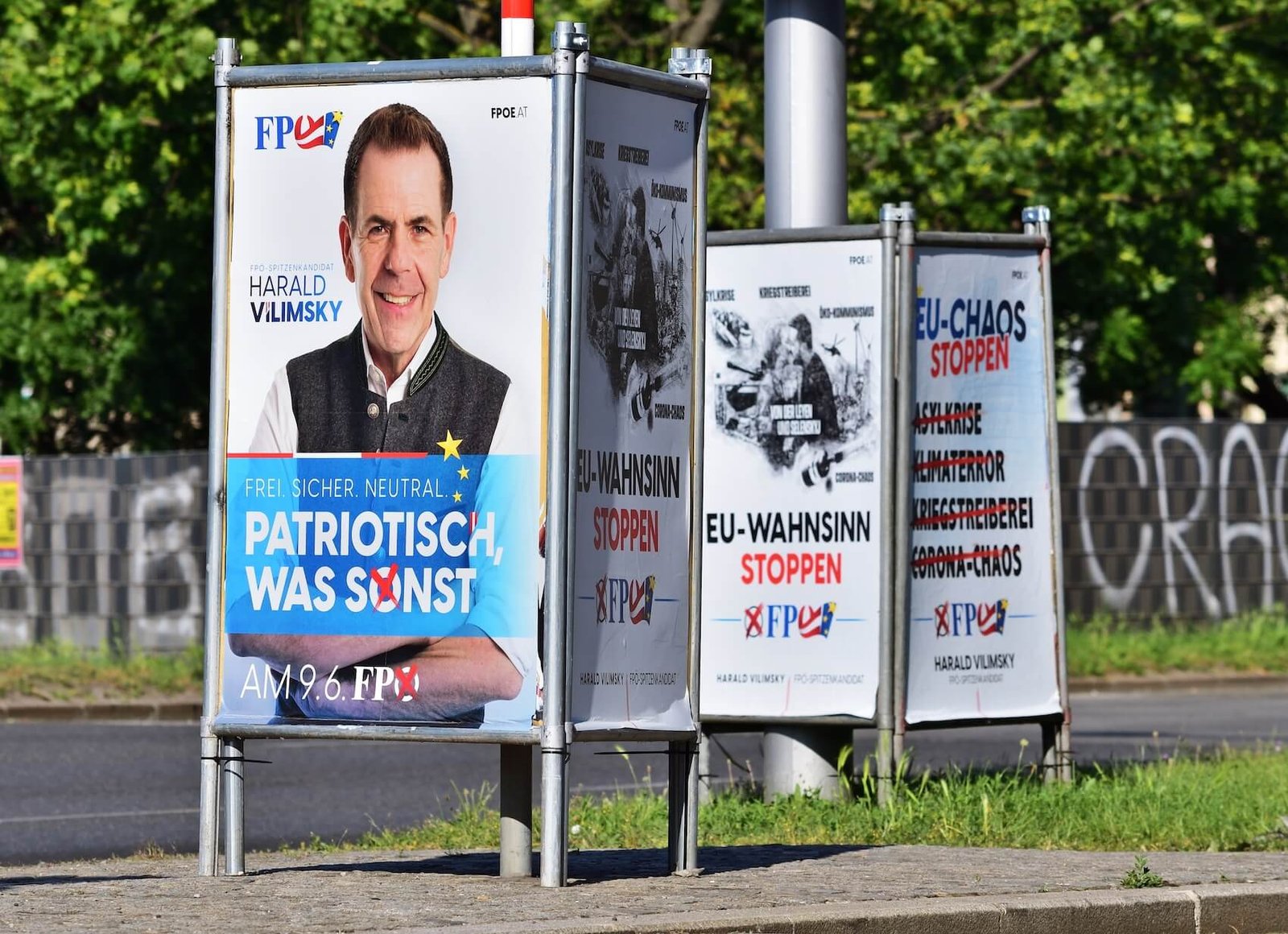
Dr. Koxha’s analysis of the Austrian Freedom Party’s (FPÖ) youth organizations then introduces a generational dimension. While youth branches reproduce core radical-right positions, they adapt them to young people’s concerns and can sometimes “radicalize it further.” Yet Dr. Koxha also identifies greater internal heterogeneity than might be expected, particularly regarding religion, abortion, and LGBTQ+ issues. Crucially, declining religiosity does not necessarily entail rejecting cultural Christianity, which can instead operate “as a marker of national or civilizational identity.”
Finally, the interview broadens comparatively to transnational diffusion, sovereignty, demographic decline, migration, labor shortages, and artificial intelligence. Professor Mazzoleni argues that these transformations “can create a structure of opportunities for radical-right populism,” while Dr. Koxha highlights the political contradiction whereby migration can simultaneously be a practical response to aging and be reframed as evidence of “demographic displacement.” The democratic challenge, she concludes, is to confront the material consequences of demographic transformation without accepting that demographic change necessarily entails “cultural extinction” or that “one group’s security requires another’s exclusion.”
Here is our interview with Professor Oscar Mazzoleni and Dr. Klaudia Koxha, edited lightly to enhance clarity, readability, and overall flow for publication.
Who Is Entitled to Reproduce the True People?
Professor Oscar Mazzoleni and Dr. Klaudia Koxha, welcome! Throughout the book, you argue that immigration, fertility, gender, religion, LGBTQ+ rights, and family politics should not be studied as separate cultural issues but as interconnected elements of what you call ‘demographic populism.’ What convinced you that existing theories of populism were no longer sufficient to explain these developments, and what analytical blind spots does your concept overcome?
Professor Oscar Mazzoleni: Scholarship usually treated immigration, gender, religion, and family as separate cultural issues, also when we talk about populism, largely because of disciplinary divisions, and read them through the cultural backlash lens alone. What convinced us otherwise was recognizing that all these issues converge on one question: Who is entitled to reproduce the true people? Demographic populism overcomes the blind spot of separating nativism from reproduction, showing that anti-immigration, anti-gender, and pronatalist claims share a single Manichean logic of demographic survival versus extinction.
Dr. Klaudia Koxha: I would just briefly contextualize what this means in terms of the research that we know so far. Exactly as Oscar mentioned, research already tells us about how radical right populist parties engage with these topics separately. They started out with immigration, with these positions against non-native others, the cultural others. Then we learned how their agenda expanded and how gender equality, LGBTQ+ advocates, or advocates of diverse forms of family, of religious tolerance, etc., can become sources for fueling this typical Manichaean logic.
So, the proponents of such diversity become enemies to the people in the populist logic. However, these are not just different sources that fuel the Manichaean logic. If we put them together in one common framework, which is ‘demographic populism,’ they reveal exactly the demographic logic that Oscar just mentioned. In other words, the cultural survival, which is what these parties had been mostly politicizing, becomes tied to the biological reproduction of a specific people with specific characteristics.
Demographic Change Becomes Existential and Moralized
Your framework suggests that demographic change is not politically consequential by itself; rather, it becomes politically powerful once interpreted through narratives of existential threat. How should scholars distinguish between legitimate democratic debates about demographic trends and the populist politicization of demography?
Dr. Klaudia Koxha: The book is really clear that demographic developments are real. So, when we talk about aging, fertility decline, migration, these are legitimate policy questions. We also know that welfare regimes or pension systems depend on such characteristics. Societies try to hold on to these systems by partly relying on migration, a younger population, which is usually the active labor force. Then some of these migrants eventually form families, and this can help to offset aging populations. At the same time, we also see discussions across societies about how to support young working couples to form families, women to reconcile work and family life, so that they can have the means to follow their careers, provide for themselves, for the children. So, we have these different discussions around demographic change, and this is the broader aspect.
But for the populist radical right, these alternatives are not considered as solutions in themselves, because the populist radical right specifically asks: Who are these people, this active labor force that we need to support our welfare regimes, our pension systems, etc.? Who are these prospective families that will support our systems and push back aging populations?
Here we see the continuity for the radical right is on the so-called native population. So, the disagreement isn’t whether aging or fertility decline exists, but we go back to what Oscar mentioned in the first question: Whose reproduction is imagined as the desirable solution? And this is how demographic change becomes existential and moralized.
Professor Oscar Mazzoleni: It’s important to underline the point that demographic weaponization is the key point. So, demography is at the center, it becomes at the center of political battle, in which radical right populism is a clear and an important actor, shaping and reshaping demography as a political issue. Of course, demography is, for demographers, about fertility, about immigration, is about statistics of these dynamics, but this aspect can be demographically framed in a specific way. This is exactly what radical right populism tries to do.
Demography Is Both a Set of Conditions and a Political Frame
One of the book’s most important contributions is its attempt to bridge populism studies with critical demography. Do you see this as the beginning of a new interdisciplinary research agenda, and what questions should future scholars prioritize?
Professor Oscar Mazzoleni: Yes, of course, we try to open an interdisciplinary agenda. Critical demography’s attention to power relations behind births, fertility, mortality, and migration allows us to treat demography simultaneously as a set of conditions and as a political frame. Future research should prioritize the supply-side link between populism and conspiracy, the appeal of demographic weaponization among specific groups—youth, women, rural voters—and its institutional and policy effects on democratic resilience.
Dr. Klaudia Koxha: I don’t have anything to add to that. I guess exactly the last point, particularly, is interesting on the demand side: When and why do citizens of different societal groups accept these otherwise separate issues as parts of one whole demographic thread?
Demographic Populism Is No Longer Confined to the Radical Right
You conclude that demographic populism increasingly connects conspiracy theories with mainstream party politics. Does this suggest that conspiracy thinking has evolved from a fringe phenomenon into a governing logic of parts of the contemporary radical right?
Professor Oscar Mazzoleni: Yes, this is a key point: demographic populism is not just about the radical right. It could be mainstream; it’s part of the contemporary discussion about the demographic winter. It’s not just about the radical right. Conspiracy can be a mediation or a fuel for this kind of increasing interest and use of demographic populism. This is an important point that we try to underline in the conclusion.
Dr. Klaudia Koxha: I think it’s exactly that—the amplification, maybe we could put it. It’s a complementary amplification force for populism. Because what conspiracy does is it adds this intentionality. So it’s not just a populist anti-elite discourse that relies on some sort of elite that looks after its own interests, but the conspiracy also adds this dimension of the elite deliberately undermining the people. So it’s like a deliberate choice, and this is how, like Oscar mentioned, conspiracy becomes an amplifier, in some ways, for populism.
Calculated Ambivalence Allows Moderation and Radicalism to Come Together
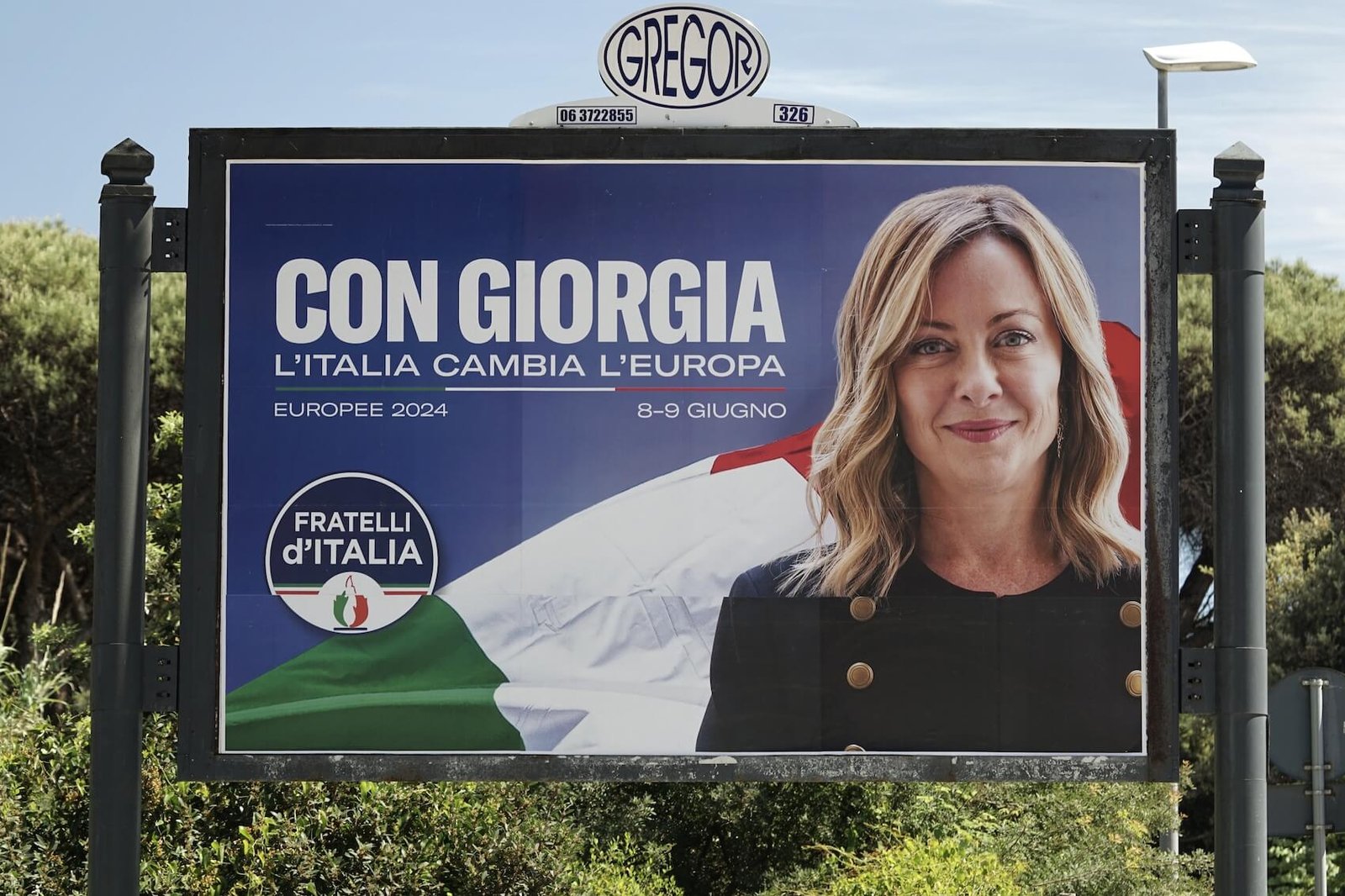
Dear Professor Mazzoleni, in your chapter on Fratelli d’Italia, you argue that the party has successfully reconciled governmental responsibility with radical-right ideology through ambivalent populist and conspiratorial discourse. Why has ambiguity become politically more effective than explicit radicalism?
Professor Oscar Mazzoleni: Relevant parties in government face a trade-off between demarcation and accommodation, between the capacity to maintain radicalization and to integrate into the system. At the same time, they must retain radical support without losing moderate voters and coalition allies. So, it’s important to consider this trade-off, not just unethical or moral issues. It’s a question of electoral survival and electoral success. So, calculated ambivalence—this concept came from Ruth Wodak, the specialist in sociolinguistics—resolves this by producing, in the discourse, assumed associations between contradictory meanings.
This is not just anecdotal, but it’s based on a strategy, trying to cope with different audiences, decoding that there are different expectations. Because parties are not unitary actors, that’s also important. Intra-party, intra-leader ambivalence lets moderation and radicalism come together, normalizing controversial claims while avoiding public condemnation. Because we have this party needs to be in the system and they sometimes reproduce anti-establishment stances. With this kind of calculated ambivalence, and with many discursive tools, they try to do that. We show that Fratelli d’Italia is able, during the first part of the government coalition period, to achieve this kind of ambivalence strategy.
Fratelli d’Italia Adapts Its Communication While Maintaining Radicalization
Your analysis suggests that Fratelli d’Italia rarely invokes the Great Replacement theory directly, preferring coded demographic language instead. Does this represent ideological moderation, or simply a more sophisticated communication strategy aimed at broader electoral legitimacy?
Professor Oscar Mazzoleni: Primarily, more sophisticated strategies, not ideological moderation. Meloni’s manifesto and speeches drop ethnic substitution in favor of demographic winter, so trying to have a kind of mainstream label, while ministers of Fratelli d’Italia inside the government led by Meloni, such as Lollobrigida, Roccella, and others, voice fuller conspiratorial versions of Great Replacement.
So, they resonate with Great Replacement theory, and it is important to underline this division of discursive labor + de-racialization. This question of Great Replacement theory is strongly connected with racial issues, but also denialism and euphemism allow the Great Replacement, for itself, to survive intact behind a government facade. That’s important in the sense that these discursive tools are able to adapt communication, maintaining radicalization by the party.
Demographic Populism Shifts the Threat to Biological and Cultural Survival
You have written extensively on populism for many years. Compared with earlier waves of European populism, what is genuinely new about demographic populism? Is it primarily an ideological transformation or an adaptation to new electoral realities?
Professor Oscar Mazzoleni: It’s important to say that populism is the defense of the true people, in terms of discursive claims—a true people under threat by different kinds of external powers. This deals with sovereignty, of course, political sovereignty, economic prosperity, and anti-establishment protests. Demographic populism shifts the threat from political and economic dispossession to biological and cultural survival.
In a sense, it’s both an ideological transformation and an adaptation to new electoral realities, trying to cope with new, emerging demands. It’s an ideological revival in which demography becomes the symbolic battlefield of the radical right’s long counter-revolution against LGBT rights, feminism, and so on. At the same time, it’s an adaptation to declining birth rates, aging, and migration, which are part of a broader demographic transformation in many countries, especially European ones, but not only.
In a sense, it’s both an ideological transformation and an adaptation to new electoral realities, trying to cope with new, emerging demands. In this sense, it’s an ideological revival in which demography becomes the symbolic battlefield of the radical right’s long counter-revolution against LGBT rights, feminism, and so on. At the same time, it is an adaptation to declining birth rates, aging, and migration, which are part of a broader demographic transformation in many countries, especially European ones, but not only.
It is interesting to say that, unlike interwar genetics in the past, today’s version is civilizational and culturally racist, rather than openly biological. It’s important to connect this aspect with biology and culture, and try to introduce this kind of demographic populism as able to frame the entire discourse nowadays by the radical right.
The Great Replacement Reframes Anti-Immigration Politics Demographically
Many populist radical-right (PRR) parties increasingly combine welfare protection, national sovereignty, and family policies into one political package. Is demographic populism gradually replacing immigration as the master frame through which these parties organize their broader ideological projects?
Professor Oscar Mazzoleni: Immigration remains central, according to this book, but is increasingly subsumed, integrated within a demographic master frame that links natality, family, welfare, and religion. The Great Replacement is precisely the device through which anti-immigration stances are reframed demographically. So, rather than substitution, we observe absorption, integration. Immigration becomes one variable in a broader ideological project about who reproduces the nation and under what moral authority. The nation is the people, and these people and the nation are to be built under a specific moral authority—of course, the traditional family.
Youth Branches Adapt Radical-Right Politics to Generational Concerns
Dear Klaudia, your chapter examines how the youth organizations of the Austrian Freedom Party reinterpret demographic issues through specifically generational concerns. What surprised you most about the differences—and similarities—between youth activists and the senior party leadership?
Dr. Klaudia Koxha: First of all, the similarities were actually quite strong, because the youth branches do reproduce the FPÖ’s anti-immigration, anti-gender diversity, climate-skeptic positions. The difference is specifically in the generational framing. So, if the senior party tends to emphasize security, sovereignty, civil liberties, economic stability, youth branches emphasize how these issues supposedly affect young Austrians, in particular, and their future.
But to be quite frank, it was not this alignment between the youth branches and the senior party regarding core ideological positions, or this generational framing, that surprised me about the findings. What really, really struck me instead was some intra-youth variation regarding topics such as LGBTQ+ rights, abortion, or the role of the church. Now, I wouldn’t overstate this variation based on the data set, because it’s quite subtle. But it did make me think that there’s probably much more heterogeneity within radical-right youth than we tend to assume.
Being Less Religious Does Not Mean Rejecting Cultural Christianity
Young people are statistically less religious and often more socially liberal than older generations. Yet your research suggests that radical-right youth organizations remain highly receptive to demographic narratives. What explains this apparent paradox?
Dr. Klaudia Koxha: The question ties quite nicely to the point I made in the previous answer regarding this heterogeneity within youth branches. Religion, for instance, is also rather inconsistent across the youth branches. We see, for example, anti-abortion discourse as largely absent, except in Vienna. There are inconsistencies also when it comes to LGBTQ+ issues. Sometimes they’re silenced, sometimes they’re moderated. So, the youth branches don’t simply reproduce every conservative issue equally.
At the same time, they do remain strongly receptive to anti-immigration narratives and can instrumentalize gender equality against Muslim migrants. Regarding your point about the paradox, I think there’s a distinction that might help explain it. Being less religious does not necessarily mean that you reject cultural Christianity or nativist identity politics. Christianity here can also function as a marker of national or civilizational identity, rather than primarily as a religious practice.
Classical Nativism Is Underneath Demographic Populism
Your findings indicate that youth activists frame migration not only as a cultural issue but also as competition over education, employment, and future opportunities. Does demographic populism therefore represent a generational adaptation of classical nativism rather than a fundamentally new ideology?
Dr. Klaudia Koxha: Clearly, classical nativism is underneath it, so I would not claim that demographic populism is this entirely new ideology. But its analytical value is precisely in showing how different issues become connected. As you mentioned, in my chapter, migration is linked to education, to employment, to gender, to family, to youth, and ultimately to demographic survival, by focusing on the so-called native youth as, basically, the agents of reproduction of a specific kind of people. Moreover, Great Replacement also, as a way of thinking, extends beyond migration into gender equality, diversity. In this regard, I would see the analytical value precisely in demonstrating how these different issues can be connected together in the framework of demographic survival.
Youth Branches Can Reproduce Party Ideology and Radicalize It Further
Youth organizations often function as ideological laboratories for future party elites. Based on your research, do you expect today’s demographic narratives to become even more central to tomorrow’s radical-right politics?
Dr. Klaudia Koxha: The chapter in itself does not longitudinally establish that today’s youth discourse becomes tomorrow’s party discourse. That needs to be clear. But it does show that youth branches can and do reproduce party ideology. And what they also do quite well is contextualize it to their cohort and adapt it to generational concerns. Sometimes, even radicalize it further, as we’ve seen in the examples of Vienna or Tyrol, where we saw the most explicit articulations of Great Replacement narratives. For instance, while the central party actually continued to frame immigration more around security rather than these openly conspiratorial framings. This can suggest that youth branches may reproduce party ideology, but also, at times, radicalize it further. This might potentially have an impact on the main party’s discourse over time, but we would have to research that more systematically.
Transnational Networks Reinforce Demographic Anxieties
Your volume spans Europe as well as North and South America. Despite these different historical contexts, remarkably similar demographic narratives appear across countries. Are we witnessing policy diffusion between radical-right actors, or do these narratives emerge independently in response to similar social anxieties?
Professor Oscar Mazzoleni: Both, and they reinforce each other. Similar anxieties related to structural transformation, declining fertility, aging, secularization, shrinking white or Christian majorities arise independently. However, they only become politically powerful once framed and mobilized by political actors. So, transnational infrastructures, such as the World Congress of Families, are relevant for the radical right across the world. US-Russia anti-abortion cooperation and social media circulation demonstrate deliberate diffusion, including astroturfing that manufactures the appearance of grassroots demand.
Dr. Klaudia Koxha: I would not have much to add. I think the transnational linkages that Oscar mentioned explain it very well, that these are not credential. Just very briefly on what the comparative question is, I would say it is basically how similar narratives are adapted to different national settings. This could be due to these transnational linkages; it could be due to diffusion through social media messaging. The mechanisms are different, but the core issue is how these similar narratives are indeed adapted across different national contexts.
Sovereignty Is Also Based on the Reproduction of the People Exercising It
One of the most striking themes of the book is that demographic populism links biological reproduction with political sovereignty. Does this represent a shift away from classic economic populism toward what might be called ‘biopolitical populism,’ where the central political question becomes who has the right to reproduce the nation?
Professor Oscar Mazzoleni: Of course, the point here is not just to talk about sovereignty as a political dimension, but sovereignty is also based on the reproduction of the people exercising this sovereignty. The question is not just the capacity of the people to respond to the threat in terms of sovereignty, or political sovereignty, but other political dimensions, in terms of elections, in terms of decision-making, but also about the way by which we reproduce ourselves in terms of cultural belonging, national dimension, religious belonging etc. So, that’s important to frame this aspect, because all these dimensions—all diaspora, religion, cultural, national belonging—pass through biological reproduction and the family. The family is considered a pillar of this reproduction of the good and the true people. In this sense, we can we talk about biopolitical populism.
Dr. Klaudia Koxha: I would just add, regarding your question about which concept could work better, that I would still retain demographic populism because, in the end, demographic populism is broader than reproduction alone. It’s not just about who gets to be reproduced and who gets to reproduce the nation, but also about under what moral authority. So, fertility is not simply about fertility; it becomes about what kind of society should continue, and here there are other mechanisms that come into play, like religion, heteronormative views of family, and so on. Therefore, I still consider demographic populism conceptually better able to capture this dynamic.
AI Can Create New Opportunities for Radical-Right Populism

And lastly, looking ahead, demographic decline, population ageing, migration, artificial intelligence, and labor shortages are likely to reshape democratic politics simultaneously. Which of these developments do you believe will most profoundly transform the future of radical-right populism, and how should democracies respond without reinforcing the very narratives they seek to challenge?
Professor Oscar Mazzoleni: I think all these different aspects—aging, labor shortages, also pushed by artificial intelligence—can create a structure of opportunities for radical-right populism. They, of course, help these kinds of actors connect these developments to immigration and pro-natalist policies. In a sense, they can exploit this kind of structural transformation to propose their own demographic populist message. In this sense, I think the response is, of course, about defending gender and reproductive rights and all liberal democratic values, but at the same time, we have to be aware that this kind of defense should also address the structural transformation that I mentioned before.
Dr. Klaudia Koxha: Again, the question ties back to one of the first questions in this interview. Aging societies do need an active labor force. So far, migration has been one way of responding to that. But as we can see, the radical right can simultaneously take the same migration that comes as a solution to aging societies, transform it, and present it as evidence of demographic displacement. This is how the policy response to one demographic challenge—aging populations—becomes framed as another demographic threat, while at the same time, there are policies that actually try to address it through counteraction by relying partly on migration. So, I think this tension is perhaps the most consequential—the interaction between aging, labor shortages, and migration—precisely because of the political contradiction it creates.
I think democracies need to address the real material consequences of demographic change, so this is something that needs to be talked about and addressed, without accepting the premise that demographic change necessarily means cultural extinction. Or that one group’s security requires another’s exclusion. So, those are points that must enter the public debate to have a constructive discussion around the demographic challenges that societies experience.
Professor Oscar Mazzoleni: Can I say something more about the book? Because you stress the point that the book covers different contexts—not just European, but also American and Russian contexts. I think it’s also important to mention the methodological and disciplinary approaches, because we are political scientists and sociologists, and we also have anthropologists. In the book, we also have supply-side and demand-side approaches to these issues.
It’s important to mention these multidisciplinary, multi-method approaches that converge in the book and also in this proposal about demographic populism. There is also intergenerational scholarship in the book, ranging from PhD students to senior scholars. In this project, we really try to bring together different perspectives and, at the same time, create a convergent and common project in order to explain what is happening today in the transformation of radical-right populism.