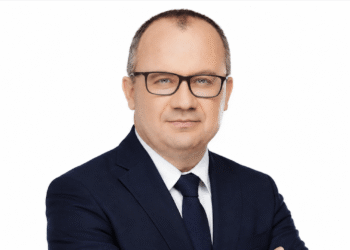
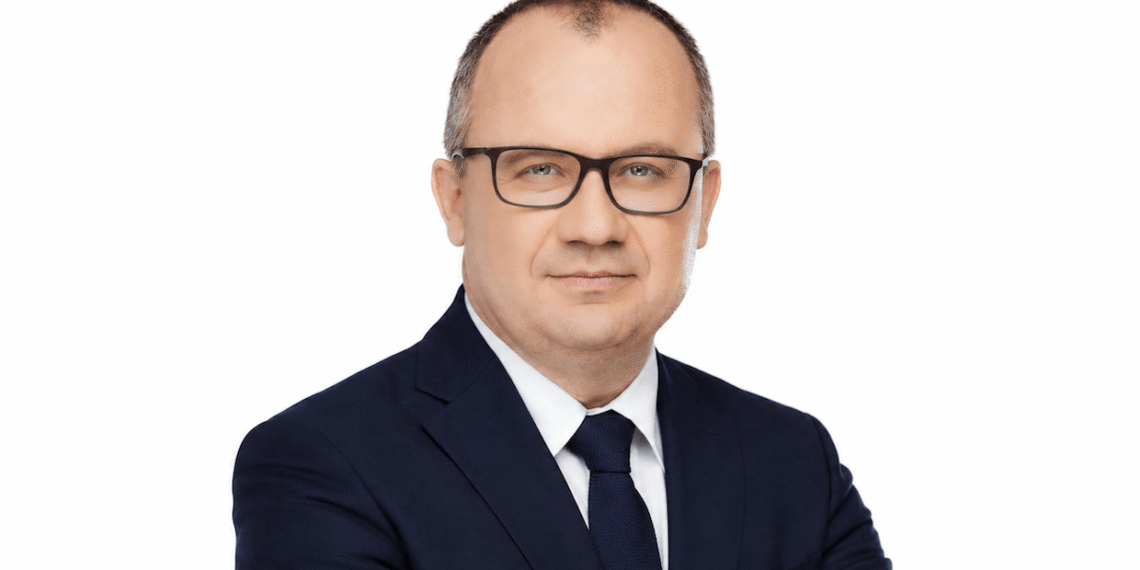
In an interview with the ECPS, Professor Adam Bodnar, Poland’s Minister of Justice from 2023 to 2025, reflects on Poland’s experience of democratic backsliding and rule-of-law recovery, arguing that electoral victory alone cannot reverse years of institutional capture. He stresses that democratic resilience depends on protecting independent institutions while strengthening civil society, civic education, professional associations, media, and academia before illiberal pressures intensify. Poland’s experience, he notes, showed that democratic forces had won “only partial power within the state” after 2023 and that restoration must proceed within constitutional constraints. For Professor Bodnar, civil society proved indispensable: “We would not have been able to win the elections in 2023 without civil society.” His broader lesson for Europe is preventive — democracies must build durable institutional and civic safeguards before the next crisis arrives.
Interview by Selcuk Gultasli
Giving an interview to the European Center for Populism Studies (ECPS), Professor Adam Bodnar, a constitutional lawyer and human rights scholar who served as Poland’s Minister of Justice from 2023 to 2025 and previously as Commissioner for Human Rights from 2015 to 2021, argues that the durability of democracy ultimately depends not only on constitutional design, courts, or European enforcement mechanisms, but also on the strength of civil society before an illiberal challenge emerges. His work has placed him at the center of both resistance to democratic backsliding and the difficult process of rule-of-law recovery. In this interview, we examine what Poland got right and wrong after the defeat of the Law and Justice Party (PiS), the dilemmas of restoring captured institutions, and the broader lessons for liberal democracy in Europe. We also discuss Hungary, Germany, EU enforcement, judicial independence, accountability, civil society, and democratic resilience.
Drawing on Poland’s experience of democratic backsliding and subsequent rule-of-law recovery, Professor Bodnar presents democratic resilience as an ecosystem in which independent institutions, civic organizations, professional associations, public-interest lawyers, judges, media, and citizens reinforce one another.
A central lesson of Poland’s experience, he stresses, is that electoral victory does not automatically translate into institutional control or democratic restoration. Looking back at the 2023 election, Professor Bodnar recalls that the democratic camp treated the result “as more or less a total victory,” only to discover that it had won “only partial power within the state.” The deeper difficulty was that eight years of PiS rule had transformed not only laws but also institutional personnel, incentives, and expectations. State capture, he explains, involved “filling institutions with people who are loyal to you” and producing “a chilling effect” on those seeking to remain independent.
For Professor Bodnar, however, the answer cannot lie solely in redesigning constitutional safeguards. His strongest emphasis is preventive: democracies must cultivate civic resilience before institutions come under sustained pressure. “Protecting ourselves against illiberal democracy also requires strengthening civic education and civil society,” he argues, adding that civil society actors must possess the capacity to protest, monitor governments, and make institutional capture more difficult. Poland’s own experience reinforces that conclusion. “We would not have been able to win the elections in 2023 without civil society,” Professor Bodnar says, recalling periods when civic organizations continued protesting even as political parties were preoccupied with political competition.
This leads to the interview’s broader argument: democratic resilience should be treated as a permanent institutional and societal investment rather than an emergency response. Professor Bodnar describes government support for civil society as “a form of insurance for unknown times to come.” His concluding principle is equally clear: following Timothy Snyder’s injunction to “protect institutions,” democracies must preserve as many independent strongholds of the rule of law as possible, while ensuring that civil society, professional associations, media, academia, and local institutions retain sufficient autonomy to sustain political pluralism.
The interview therefore moves beyond the question of how democracy can recover after capture. It asks a more fundamental question: how can democratic societies build enough institutional and civic resilience that, when illiberal actors return, the state is no longer so easy to capture?
Here is our interview with Professor Adam Bodnar, edited lightly to enhance clarity, readability, and overall flow for publication.
‘We Won the Election in 2023, but Not Full Power Within the State’

Professor Bodnar, welcome! Let me begin with Poland’s 2023 democratic breakthrough. Poland’s October 2023 election demonstrated that an illiberal governing party can be defeated through democratic mobilization. Yet your subsequent work makes clear that electoral turnover and democratic restoration are very different things. Looking back from 2026, what did Poland get right after removing the Law and Justice Party (PiS) from government, and where did the democratic camp underestimate the depth, durability, or legal complexity of state capture?
Professor Adam Bodnar: I think one of our major mistakes, or perhaps political miscalculations, was to treat the 2023 election as more or less a total victory because we had this sense of a revolutionary moment. The Polish elections of 2023 were quite often compared to the elections of 1989.
But, to be honest, looking back, we did not win full power, only partial power within the state, because the presidency remained in the hands of someone associated with the ancien régime and the previous political leadership. Moreover, we believed that we would be able to achieve significant progress in restoring the rule of law after the subsequent presidential election in June 2025. There was great hope—I would not say certainty, but certainly great hope—that a pro-European, pro-democratic candidate would win. Basically, we failed.
We are therefore still left with a parliamentary majority committed to rule of law recovery and a president affiliated with the right-wing camp who is not interested in that process. He is interested in polarization, in undermining the credibility of the current government, and in bringing the right-wing parties back to power.
In my opinion, this is the major problem because, at the end of the day, what we can achieve in terms of restoring the rule of law depends to a great extent on existing regulations, existing legislation, and the interpretative use of different institutions. We cannot proceed in the same way as is being done right now in Hungary; we never had that possibility. Moreover, we do not even have the ability to override the presidential veto, which makes things much more complicated. So, it is not even easy to pass legislation that would comply with basic rule of law standards.
Eight Years of State Capture Cannot Be Reversed Overnight
PiS was able to transform Poland’s Constitutional Court, prosecution service, public media, civil service, and judicial institutions without possessing a constitutional majority, often through ordinary legislation, institutional faits accomplis, and practices that violated constitutional constraints. Why has reversing those transformations proved so much harder? Does this reveal an inherent asymmetry whereby liberal democracy is procedurally constrained in repairing damage that illiberal actors were willing to inflict without equivalent restraint?
Professor Adam Bodnar: First of all, please note that this process of change lasted for eight years. Even without a constitutional majority, if you have the possibility to change legislation, you can achieve quite a lot because you can change the way institutions operate.
And it is not only about changing legislation. It is also about filling institutions with people who are loyal to you, or who at least will not create problems for you, and about creating a chilling effect on other actors who would like to remain independent.
Over such a long period, you can achieve a great deal. Sometimes we had the sense that this was the end of a liberal regime and that the Law and Justice (PiS) government would last forever. Interestingly, quite many judges, prosecutors, civil servants, and public media officials seemed to think: okay, we are going to work under this new power. We are going to serve this new power, or at least we are going to do our jobs. But we will not interfere in political relations. So, I will sit somewhere in the public media, remain silent, do my work, and basically they will not bother me. I will simply retain the possibility to earn money.
In this way, they were able to exploit different weaknesses in the Polish system and the fact that, through legislative acts, you can change the way institutions operate. Sometimes it was also about passing legislation that abused the language of the Constitution.
But please look at the major, most important reform, which began in 2015–2016 and concerned the political subordination of the Constitutional Court. Once that happened, even if legislation was passed that went against constitutional values, there was nobody able to check it because judicial review had effectively come under the control of the ruling party.
At the second stage—and I think this is quite interesting—you could see pieces of legislation aimed at gluing or cementing the legal system. A good example is the prosecution service. Just half a year before the elections, the law on the prosecution service changed the way deputy prosecutors general are appointed and dismissed. Basically, they have to be appointed after obtaining the opinion of the President of the Republic, but they cannot be dismissed without confirmation by the President.
So, even now, three years later, we still have deputy attorneys general who cannot be dismissed because of this law. As a result, you have to find different ways to circumvent their powers or limit their impact on the daily operation of the prosecution service. This is one of the difficulties we face today in restoring the rule of law.
Restoring the Rule of Law Requires More Than Formal Legalism
This asymmetry creates what might be called the central paradox of democratic restoration: a new government is expected to restore constitutional legality while operating through institutions partly captured by actors who violated that legality. How far can a democratic government legitimately go in correcting unconstitutional appointments, restructuring captured bodies, or refusing to recognize decisions produced by improperly constituted institutions without itself weakening legal continuity and the rule of law?
Professor Adam Bodnar: That’s a very good question, because we face this dilemma and debate on a daily basis. There is no easy or quick answer, but, at the end of the day, you should work in good faith to restore the proper functioning of constitutional institutions.
Second, you should adopt an approach that prevents existing institutions from paralyzing this effort. You should not be blocked by certain formal rules when adopting particular solutions. If you relied solely on formal legalism, you would simply end up doing nothing. So, you need to be somewhat constructive in taking certain actions, while also ensuring that those actions have political legitimacy.
Consider three central institutions that were important from the perspective of rule of law recovery: the public media, the National Council of the Judiciary (NCJ), and the Constitutional Court. In each case, legal action aimed at recovering those institutions was preceded by resolutions of the Polish Parliament. By adopting those resolutions and identifying the legal and constitutional problems, their sources, and the relevant jurisprudence of the Court of Justice and the European Court of Human Rights, Parliament was essentially saying: we see a problem, we are going to repair it, and we are going to use certain measures that may not be typical but that we believe are necessary from the point of view of law. Even so, those measures were adopted in accordance with basic rules. Interestingly, they were still not accepted by the president who was serving the previous regime.
I think the most interesting and exemplary case of these dilemmas is the recovery of the National Council of the Judiciary (NCJ). Under the Polish system, the NCJ is composed of 25 members. It is a hybrid body, with roughly 10 politicians and 15 judicial members. The key question is: who appoints those judicial members? Traditionally, under Polish law, they were appointed by their peers—other judges.
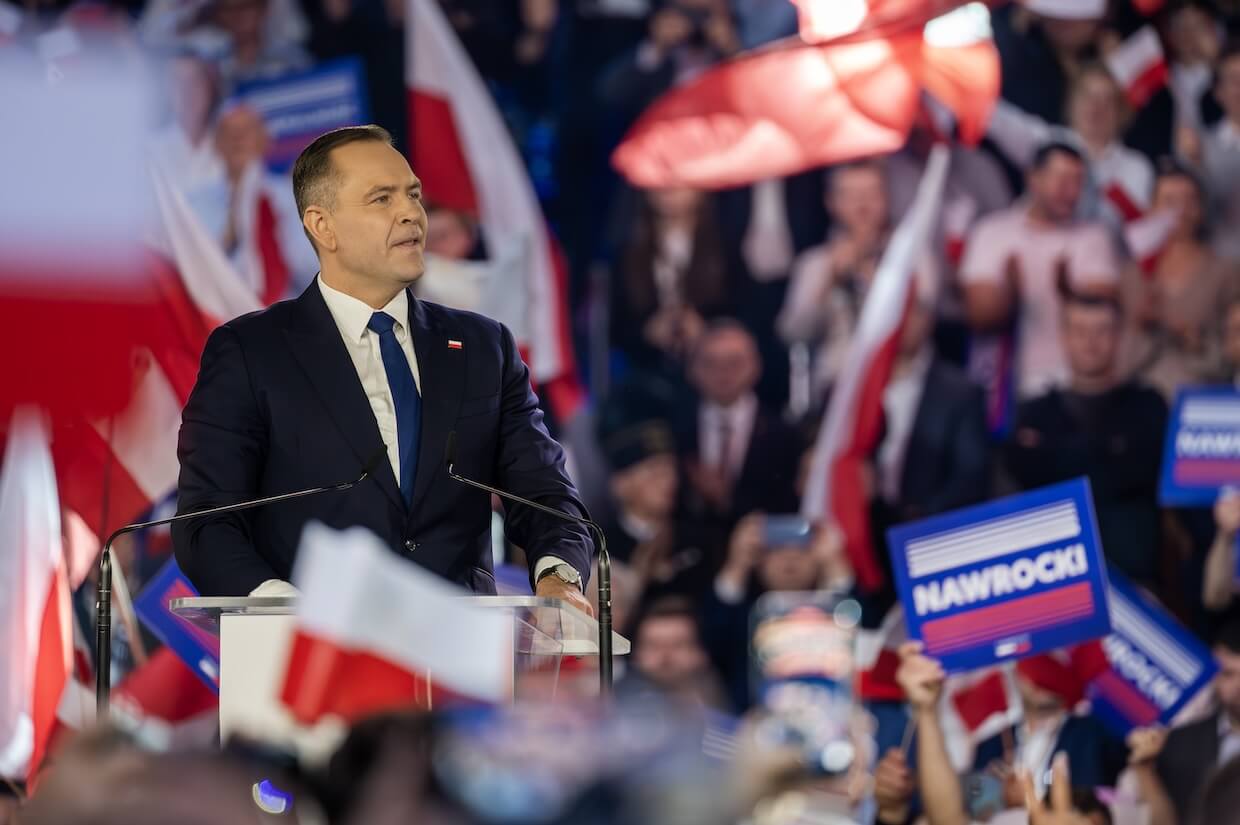
But in 2018, Parliament changed the law so that those judicial members would be elected by Parliament, on the grounds that the sovereign should have more influence over the operation of the NCJ. Interestingly, after 2023, we twice passed legislation that would have returned this power to judges. But both laws were vetoed by the presidents—first Duda, then Nawrocki.
So, in the end, the ruling majority decided to appoint the judicial members in accordance with the existing law. Parliament formally voted to select them, but the preselection of candidates was carried out by judges themselves. They organized local general assemblies and selected the judges they wanted to see on the NCJ. In this way, we essentially implemented the constitutional spirit.
Although we did this on the basis of existing law, which should not be binding, we had no other solution in such circumstances. So, basically, you have to resolve these dilemmas constructively, while adhering very closely to constitutional language and constitutional values, and keeping in mind the ultimate need to restore and recover certain state institutions.
Poland Must Resolve the “Neo-Judges” Question Without Creating Chaos in the Judiciary
Your work anticipated that the status of so-called “neo-judges” would become one of the most difficult questions of Poland’s transition. How should a recovering democracy distinguish between judges who actively participated in political capture, those who accepted promotion within a distorted system, and those who simply continued functioning within it? Is individualized review the only defensible solution, even if it makes restoration painfully slow?
Professor Adam Bodnar: You’re absolutely right that the status of neo-judges was the central issue in resolving these problems. I spent more or less the whole of 2024 trying to find a legislative solution to this dilemma: how to make the process, on the one hand, as automatic as possible and, on the other, how to provide remedies and individualize the assessment. There was also a third consideration: within this group of so-called neo-judges, there were different categories.
There were judges who voluntarily accepted first appointments or higher positions in the judiciary, but there were also those who were simply graduates of the School of Judiciary and had little say in how the nomination process unfolded in their cases.
In my opinion, we found a solution, and we presented it more or less in March or April 2025. This solution was subject to the opinion of the Venice Commission. But because of the result of the presidential election in June 2025, we no longer have any real political chance of implementing it. So, to some extent, this has become a theoretical discussion, based on existing draft laws, but with a low probability that the law could ever enter into force.
In general, our idea was to proceed in this direction: on the one hand, we wanted to secure the proper functioning of the judiciary; on the other, we tried to make the process as swift as possible. The third element was that, in cases involving promotion, a judge would either be sent back to the court from which their position and career originated or be dismissed from the judicial position and return to another legal profession—as an attorney, legal advisor, prosecutor, or scholar—with remedies allowing an appeal to the court.
But please note that this was only a proposal. As I said, it was enshrined in the draft law, but it did not enter into force. To be honest, we are now in a very difficult moment because we still have one year to go before the parliamentary elections due to take place in October 2027. It seems to me that the issue of what to do with these new judges will become part of the political debate in the context of the elections. But my feeling is that there will be little willingness on either side of the political spectrum to reach a compromise.
On the other hand, we have jurisprudence from the Court of Justice, as well as the European Court of Human Rights, questioning the status of these judges. So, we cannot avoid thinking about what to do with them and how to evaluate their status, or at least how to confirm it. Most probably, this discussion will continue after the elections of October 2027. At the end of the day, we will have to find some kind of compromise solution to this question.
But let me add one more point. The general philosophical difficulty with this problem is that, on the one hand, you can argue that these judges should be questioned from the point of view of the legitimacy and legality of their appointments. On the other hand, they have been adjudicating cases in courts on a daily basis.
Moreover, it has been difficult to determine what should happen to judgments issued by them, because if we were to say, simply by virtue of legislation or some other measure, that all those judges were invalid, it would create a total disaster for the Polish judiciary. So, it has been a little like repairing the sails while the boat is still moving.
But, as I said, this discussion is now much more abstract because of the position of the president. The president maintains that all his judicial appointments are valid and is not going to accept any challenge to them. So, the question will be whether, after the elections, there will be some room for compromise and for finding solutions that could serve everyone.
Public Demands for Immediate Justice Can Collide with the Rule of Law
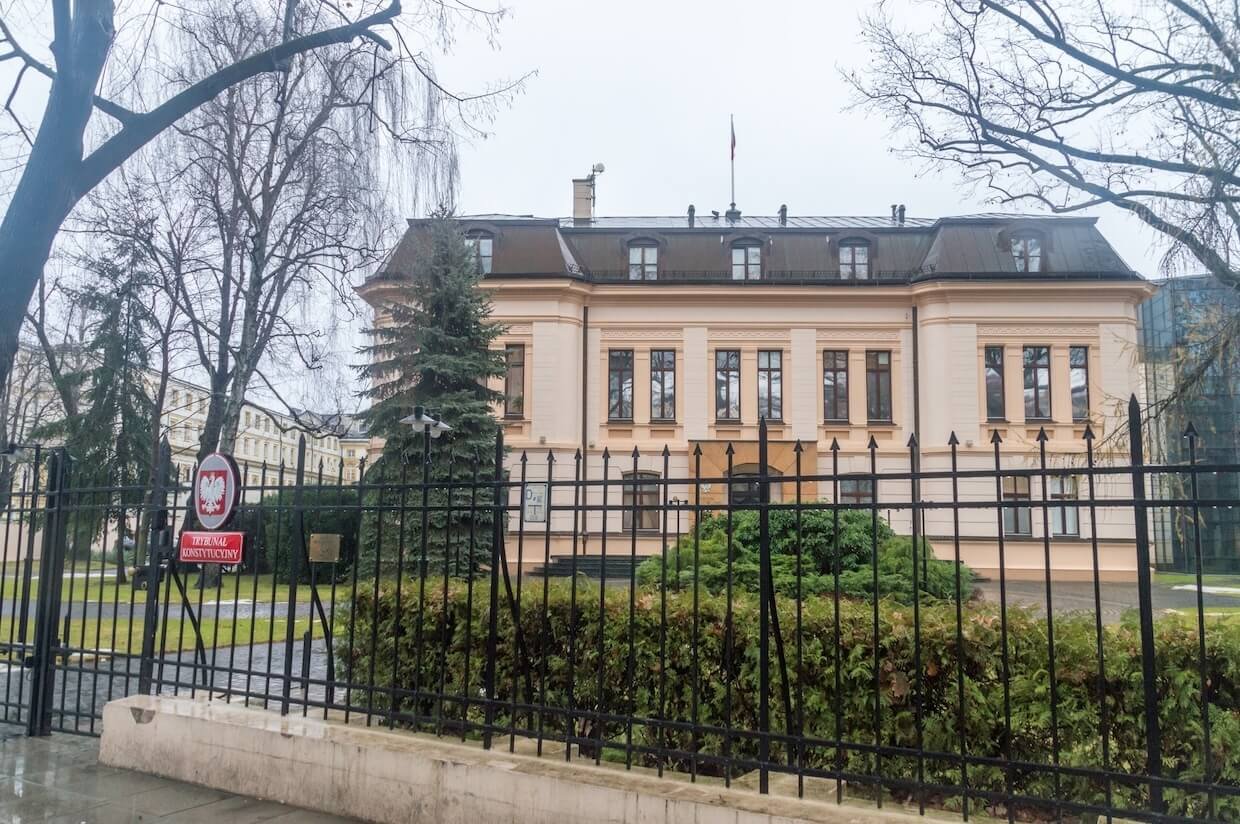
You have stressed that recovery requires accountability for abuses—from the partisan use of public funds to Pegasus surveillance—but that accountability must proceed through fair-trial guarantees rather than revolutionary justice. How can a democracy satisfy legitimate public demands for accountability without allowing transitional justice to be portrayed as political revenge? And conversely, at what point does excessive procedural caution turn constitutional immunity into practical impunity?
Professor Adam Bodnar: First of all, to be honest, we do not have a proper theory of transitional justice for periods like this. If you look at typical theories of transitional justice, they usually concern moments following major reconfigurations in a nation’s history. We can point to different examples of transitional justice in the United States, after wars, or after periods of authoritarian or totalitarian rule.
In Poland, certainly, we are a liberal democracy, but if you look at the level of rights abuses, it was, of course, significant. There were numerous abuses involving freedom of assembly, police brutality, surveillance, and so on. But still, this is incomparable to communist times, when people were killed in prisons, police stations, or police units, or when there were sweeping restrictions on fundamental rights. The same applies to Hungary. There have been different abuses of rights, but you still cannot compare them to the situation before 1989.
So, the broader problem we face as a community is what kind of transitional justice system we should adopt and to what extent we should create new institutions to implement it. Once again, Hungary is an interesting example because they created this Office for the Recovery of State Assets. It is quite an interesting institution. If I had tried to create that kind of institution, I would simply have faced a presidential veto, and that would have been the end of it. I would have had no chance of creating such an institution.
So, I had to rely either on the regular operation of the Polish Prosecution Service or on investigative committees established in the Polish Parliament. Basically, I could pursue accountability through existing procedures for auditing, investigating, and examining the conduct of previous authorities. We have been extremely creative in doing this.
But then, if you do this and provide voters with a great deal of information—if you disclose different abuses and try to recover assets—what becomes apparent quite quickly, and this was to some extent a surprise to me, is that people expect immediate results. People think that because they suffered so much, all those political actors they hated will almost immediately be prosecuted, jailed, convicted, and put behind bars.
When you proceed in accordance with fair-trial guarantees, however, you cannot do things just like that, because you do not have revolutionary mechanisms. Moreover, if you follow fair-trial standards, the process takes time. A proper investigation takes time, the defense needs time to prepare, immunities have to be lifted, and so on.
Why do I mention this? Because the absence of immediate results creates frustration among voters. They start to say: okay, if you have not delivered on this, if we still see all those actors who perpetrated political abuses in the past, then maybe you are not competent enough, maybe you are not effective enough. So, there is this sense that, while you are carrying out rule of law recovery, you are also expected to act like a sheriff who restores order and uses every possible mechanism to do so.
In my opinion, one of the mistakes we may have made is that perhaps we promised too much. There was this political promise when we were fighting for power: sooner or later, those guys will be prosecuted and jailed. Maybe we should instead have promised that we would do everything possible to disclose the truth and engage all state institutions in a general state audit and a broad investigation into different cases. But perhaps we should not have promised that we knew what results the courts would deliver or what judgments they would issue, because we have no influence over that.
So, if I were now advising a government in a similar situation, I would probably say: be careful with this. Check your resources. Check the loyalties of people working in institutions such as the Prosecution Service, the secret services, or the police. Promise only those things that you can realistically deliver. Of course, be energetic in pursuing accountability, but perhaps you should promise the delivery of truth—an account of how the state operated—rather than the delivery of convictions. Otherwise, you may create too much frustration and dissatisfaction among voters, and that may ultimately undermine your future electoral prospects.
It Is Easy to Demand Faster Restoration in Retrospect
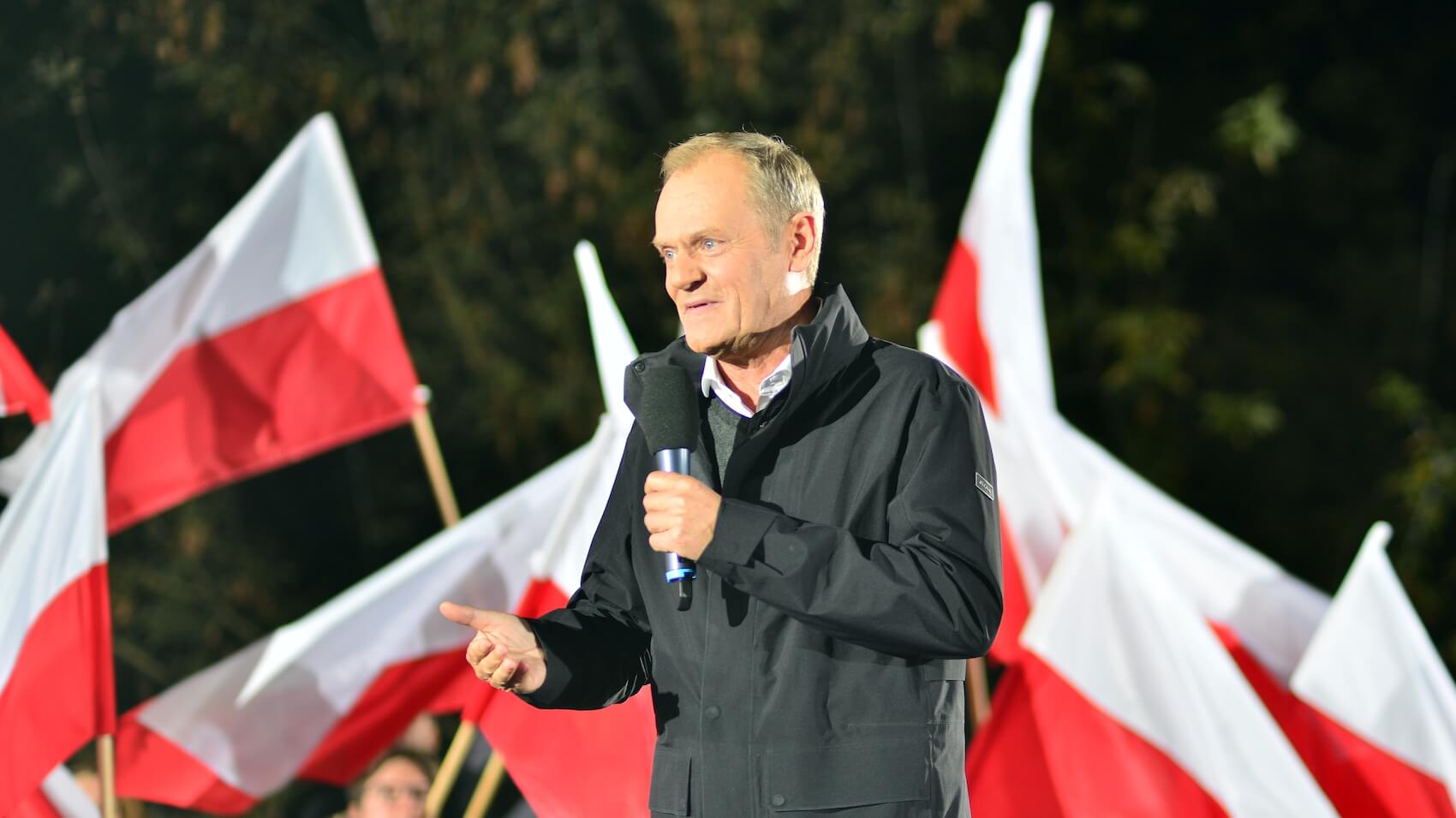
In an earlier essay you warned that “time is of the essence” when European institutions confront rule-of-law deterioration. Does the same principle apply to democratic restoration? Looking back at the first years after 2023, did the Polish government move quickly enough on the Constitutional Tribunal, judicial governance, prosecution service, and accountability—or did constitutional obstacles and the desire to proceed legally create delays that allowed the old institutional networks to consolidate their defensive positions?
Professor Adam Bodnar: No, by now we are all wiser about what worked and what did not. It is easy to criticize in retrospect, but I remember that we really tried to use every day to pursue rule of law recovery properly and to repair the state. I also think we do not sufficiently appreciate the scale of the damage we had to repair after those eight years—how many abuses there were and how much time it takes to properly examine them. So, in my opinion, it is quite easy to say: you should have moved faster, you should have acted immediately, you should not have waited, and so on. But, to be honest, when I look back, I do not see any really good examples of what could have been done more efficiently.
I also remember moments when I considered possible political compromises with the president in order to avoid a veto and move forward with the restoration of the rule of law. But, at the same time, there was no appetite or support for political compromise. There was a sense that because we had won the elections, we should pursue all possible changes without making moral or legal compromises.
Maybe one of our mistakes was that we assumed the presidential election result would be in our favor. If we had had a pro-democratic, pro-European president, then by the end of 2025 we would have had all the necessary laws passed. They would already have been in force and would have made it possible to restore the rule of law. After that failure, we had to look for alternatives and other solutions.
But when I look at the situation now, the National Council of the Judiciary, as I said, has been resurrected and is functioning properly. There is a certain chance that the Constitutional Court will also begin to operate properly. The Prosecution Service may not be a perfect institution, but its current shape still guarantees the independent exercise of prosecutorial power and accountability.
Interestingly, we have a very good example today. One of my successes, and something I am really proud of, was Poland’s joining the European Public Prosecution Office (EPPO). Today, the EPPO won an important victory in the Polish Parliament because it obtained consent to lift parliamentary immunity and also consent to arrest a member of Parliament. What is particularly interesting is that this member of Parliament is associated with the existing ruling coalition.
So, if the EPPO is able to go after a member of the existing coalition, it shows that we are restoring quality in terms of the independence of the prosecution service and the operation of European institutions on Polish soil. The vote in the committee was something like 14 votes in favor and two against. So, there was no defense of “our guy” by the ruling coalition against the accusations made by the EPPO.
In my opinion, a lot of things also happen on a daily basis at this symbolic level. When you look at the operation of the courts and the prosecution service, they are much more independent and much more trusted than they were during the illiberal period. I think this is also the consequence of a certain approach to, and a certain way of thinking about, the state.
Democratic Recovery Also Means Restoring Public Servants’ Trust in the State
Your recent comparison of Poland and Hungary argues that democratic transition is not merely constitutional or legislative reconstruction but also a matter of regaining the trust of institutions and citizens. What actually restores that trust? Is it successful prosecution of abuses, functioning public services, impartial courts, transparency, political restraint—or the visible demonstration that institutions will no longer be treated as spoils of electoral victory?
Professor Adam Bodnar: I think the truth lies in all the things you have mentioned, but creating institutions that are genuinely independent from politicians—and that also project an image of independence through real action—is extremely important.
One aspect that is often neglected is how the legislative process works and how transparent the operation of the state is. My feeling is that trust in the legislative process is now much greater than it was before. Moreover, decisions are made with a high degree of transparency regarding how the state operates, even if this sometimes comes at a daily political cost.
But, in my opinion, one of the most neglected aspects of recovery is the question of people: to what extent those serving in the judiciary, the prosecution service, public media, and other institutions feel that they have regained trust in the state and can act in accordance with their professional oath, ethical commitments, and the law. My feeling is that when politicians stop pushing the state in particular directions, judges and prosecutors gradually regain the sense that what they are doing is simply part of the ordinary, day-to-day functioning of the state. In turn, this affects public perceptions.
Let me give you one example. It was certainly not a typical rule of law recovery case, but recently there was a case involving a drunk driver who killed four people in a car accident in Warsaw. He escaped to Germany, was brought back under the European Arrest Warrant, and was subsequently convicted. The trial was conducted properly and did not last very long—only a couple of months. The court sentenced him to 25 years in prison and provided a very strong justification for the judgment. What I found particularly interesting was that the judgment was applauded across the political spectrum: left, right, far right, extreme right—whatever. Everybody was basically satisfied with both the court’s decision and the reasoning behind it.
In my opinion, when you have that kind of moment, you can see that something is changing. The case is no longer interpreted politically but is instead understood simply as a matter of public interest and as an instance in which justice has been done. So, I would hope that we will see more and more cases like this, in which courts are assessed on the basis of what they actually do, rather than through calculations about whether this or that judge is politically affiliated.
TISZA Must Avoid Reproducing the Winner-Takes-All Logic It Inherited
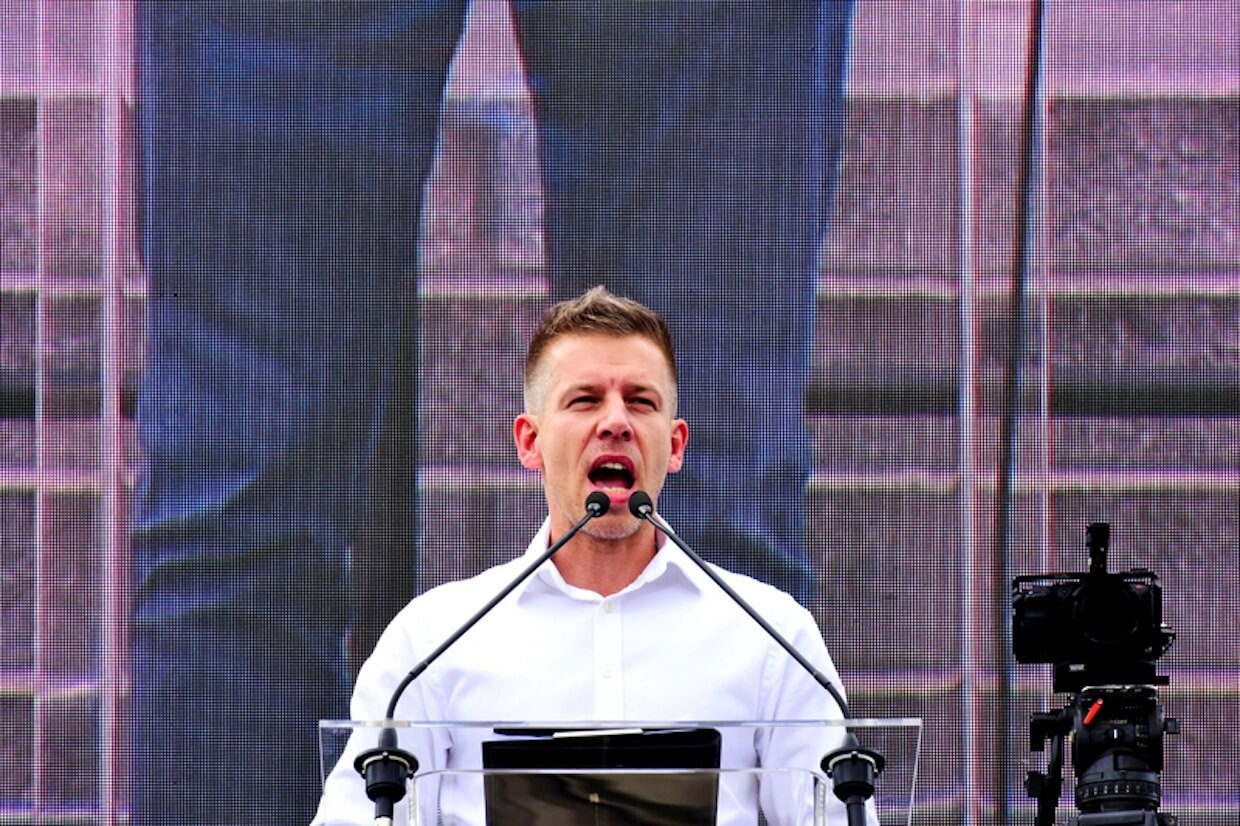
You argue that Péter Magyar’s victory and TISZA’s constitutional majority potentially give Hungary far greater room for institutional reconstruction than Poland possessed after 2023. But does that greater capacity also create a greater democratic danger? How can Hungary dismantle deeply entrenched Orbán-era structures without reproducing Orbán’s own winner-takes-all constitutional logic under new political ownership?
Professor Adam Bodnar: I remember when I made this point, it was just at the beginning of the transition in Hungary. But it seems to me that Péter Magyar is handling this quite intelligently, and even the reconstruction concerning the President of the Republic has been carried out in a way that respects some basic guarantees. The clearest proof of this is that the person who accepted the position of the new president is one of the judicial dissidents from the Orbán era—András Baka. So, let’s hope that Hungary continues in this direction.
What concerns me more is the accountability process. With the passage of time, there may be growing dissatisfaction among voters with what TISZA is doing. People will expect miracles and major economic change; they will look at the promises that were made, and the government will not be able to deliver on everything. We may also begin to see a struggle for power within the TISZA movement. We can imagine all kinds of things happening.
The question is whether accountability will proceed effectively, especially at the local level. If the prosecution service and the secret services were built over 16 years by Orbán, there are many people within those institutions who received their appointments to a great extent thanks to Fidesz. They may have developed internal networks and connections that are not even visible to the general public, particularly at the local level. The question, then, is how this will affect the accountability process and how strong that process will ultimately be. This is where I see the major danger in Hungary’s transition.
Civil Society Is Democratic Insurance for Unknown Times to Come
One lesson from Poland and Hungary seems to be that constitutional democracies often assume political actors will exercise self-restraint, respect conventions, and accept institutional pluralism. Populist governments exploit precisely those assumptions. Should European democracies now redesign their constitutional architecture on the premise that future governments may be deliberately hostile to liberal-democratic constraints—through stronger appointment rules, dispersed powers, entrenched judicial protections, independent prosecution, and more robust safeguards for public media?
Professor Adam Bodnar: In my opinion, they should, but the question is whether they will have enough popular support to make that kind of change. Some countries are already moving in this direction. Look at the Netherlands or Germany. We also have solutions at the European level, such as the European Media Freedom Act, which is intended to support public media.
But, to be honest, I believe that protecting ourselves against illiberal democracy also requires strengthening civic education and civil society. Society needs instruments of resilience and pressure, and civil society actors need the capacity to protest and keep the democratic flame alive when populists come to power. They should be able to monitor government actions, scrutinize what is actually being done, and make institutional capture much more difficult.
The question, then, is whether European societies have enough energy for this. A great deal can be achieved through pro-democratic support for civil society organizations, by building national and transnational networks, and by supporting independent judicial associations, bar associations, and similar institutions. The real question is whether we are doing enough in this area, or whether we have become too accustomed to taking the existence of these institutions for granted.
Democratic Resilience Depends on People Willing to Defend Institutions
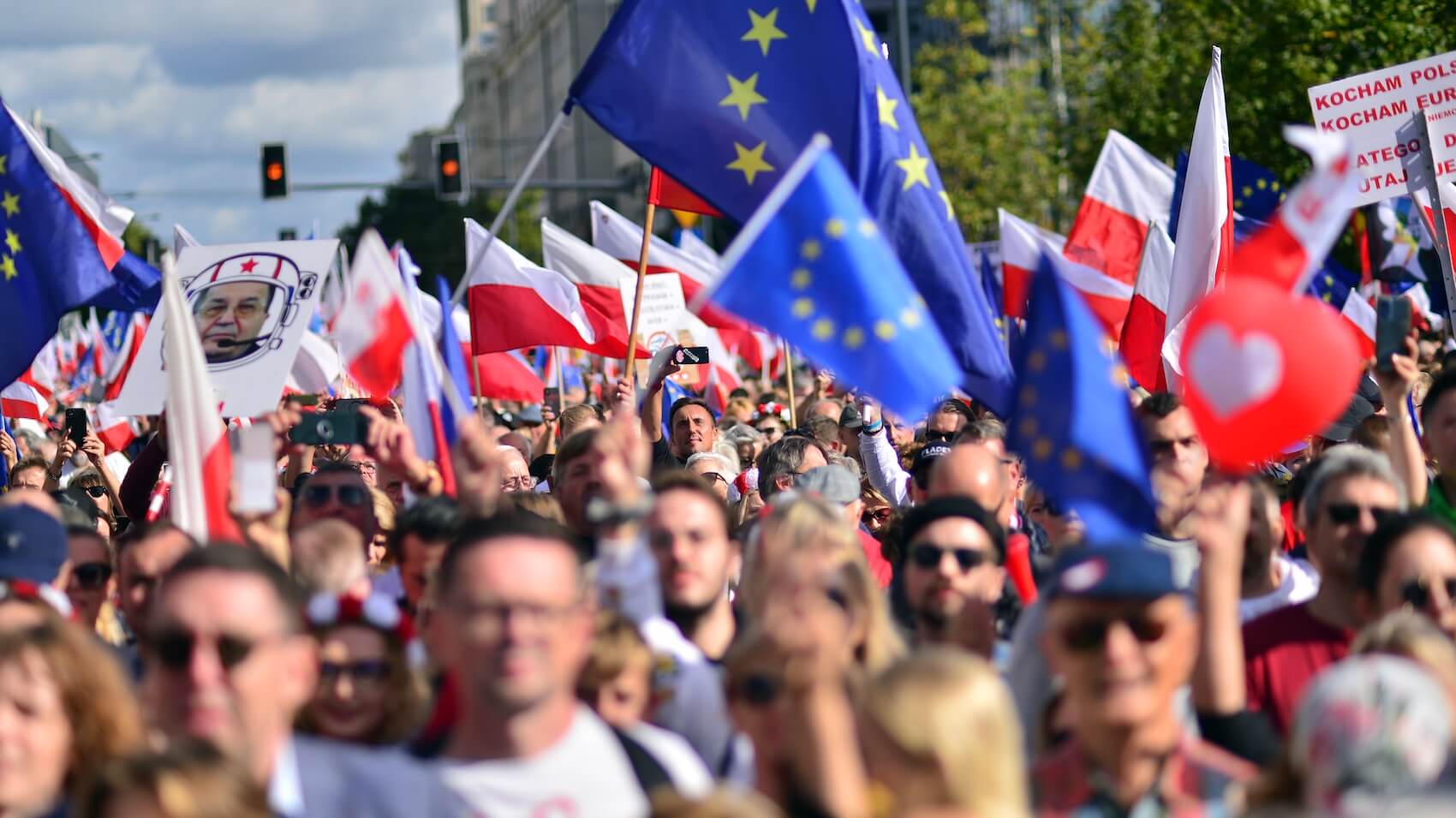
Your account of Poland’s resistance places unusual emphasis on civic activism, lawyers, judges, the Ombudsman, and what you describe as the emergence of constitutional patriotism. Does Poland demonstrate that democratic resilience ultimately depends less on constitutional text than on a social infrastructure of people willing to defend it? If so, how can democracies cultivate that civic capacity before a crisis rather than discovering its importance only after institutions come under attack?
Professor Adam Bodnar: I truly believe that we would not have been able to win the elections in 2023 without civil society. I remember many moments when it was only civil society organizations that were still protesting, while political parties were simply playing political games and were not so deeply interested in what was happening on a daily basis in the judiciary, the prosecution service, and public media. But because of civil society, we were still able to protest.
A good example is the operation of judicial associations, but also different forms of civic education and other formats. Of course, the question is to what extent this was specific to Poland and whether it is a global phenomenon. But right now, I see that in the United States some of the Polish practices are being repeated, and they are very interested in what we were doing during those difficult times.
I believe that the result of the 2023 elections was the result of a combination of, on the one hand, political motivation and, on the other, different civil society streams and concerned people who came together and fought for the same values.
What should be done in a situation when you have a relatively stable position? In my opinion, you should constantly create space for the development of civil society. You should create different incentives for new NGOs to appear on the scene, for private donations, for crowdfunding, and for different forms of support. The government should be a guardian supporting civil society, because by supporting it, it is creating a form of insurance for unknown times to come.
My feeling is that right now the government is making this effort, and I believe that, in the event of another challenge, there will be enough actors willing to protest and ready to make sacrifices for the sake of defending democratic values.
EU Must Protect the Institutions That Sustain Democratic Values
You have written that populist governments do not necessarily silence criticism through spectacular censorship; they can instead use state advertising, friendly ownership, public broadcasters, litigation, and government-sponsored Strategic Lawsuits Against Public Participation (SLAPPs) to make criticism progressively more costly. Should media pluralism, academic freedom, and protection against legal harassment be understood as part of Europe’s constitutional security architecture rather than merely as sectoral rights?
Professor Adam Bodnar: If I look at statements by Ursula von der Leyen, State of the Union addresses, and different speeches by Věra Jourová, former Commissioner, my feeling is that Europe understands this. The adoption of the European Media Freedom Act, the creation of funds supporting independent NGOs, the adoption of anti-SLAPP legislation, and support for local media are all movements in this direction.
The question is to what extent these measures really have an impact domestically—to what extent policies developed at the EU level, such as the Democracy Shield or democracy resilience policies, are actually implemented at the local level. Here, I am a little concerned that EU policies do not always receive the same recognition locally. Please note that I am saying this from the Polish perspective. I think national governments should also be taking certain actions in this regard.
Certainly, academic freedom is extremely important, but my feeling is that, in Europe at least, academic freedom is suffering too much because of bureaucratism and a certain kind of commercialization. It is not so much based on promoting values as the most important component; rather, it is increasingly about treating science and scholarship as part of the EU economy. That is why there is so much emphasis on grants, proficiency, excellence, and not necessarily on fighting for values.
So, in my opinion, at the end of the day, we should remember that without actors such as civil society, the media, and academia, democratic values will not survive. The European Union, but also its member states, should be very much aware that taking care of these actors is a precondition for the survival of democratic values. Of course, this should be a predominant consideration in the EU’s different political strategies.
Poland Became a Laboratory for the EU’s Rule-of-Law Instruments
Your writings repeatedly point to a timing problem in European rule-of-law enforcement: Article 7 became politically stalled, litigation took years, and domestic institutional capture often produced immediate political benefits while European legal consequences arrived much later. Has the EU learned this lesson? Or does its rule-of-law architecture still operate too slowly to stop an elected government determined to transform institutions before Brussels, Luxembourg, or Strasbourg can react?
Professor Adam Bodnar: When I commented on the operations of the European Union, it was partly out of frustration, because we observed the decay and destruction of the rule of law on a daily basis, while the government learned how to play the game regarding Article 7. But later on, more or less at the end of 2017 and in 2018, the European Commission started to use the infringement procedure in a very efficient way. Thereafter, we had a series of judgments from the Court of Justice of the EU, and finally, we had the conditionality regulation and the suspension of EU recovery funds. In my opinion, the Polish case was a little bit like a laboratory for the practical use of all those instruments. So, I think that right now, the European Union is much more powerful.
But, on the other hand, the EU is perhaps not using enough of its capabilities to check whether this so-called democratic front-sliding is being done in a proper way. There should be better observance of how different states are complying with the rule of law. I have read papers by my friends Thomas Pavone and Christophe Hillion about this relationship between the EU and so-called democratic front-sliding. So, this kind of compliance check by the EU is an important element of the European Union’s rule-of-law architecture.
Protect Every Democratic Stronghold Before It Is Captured
And lastly, Professor Bodnar, if you were to draw one overarching lesson from Poland for Hungary, Germany, and other European democracies confronting populist radical-right pressure, what should “democratic resilience” mean in institutional terms? Is the priority stronger courts and constitutional safeguards, more effective EU enforcement, independent media, social and territorial inclusion, civic education, accountable political parties—or, ultimately, a democratic culture capable of accepting electoral conflict while refusing the idea that winning an election gives a majority the right to capture the state?
Professor Adam Bodnar: I think I would concentrate on what Timothy Snyder called lesson number two: protecting institutions. Because, in my opinion, if I look back, we would not have been able to survive if we had not trusted state institutions that created room for maneuver, protest, resilience, and different forms of change. One of them was the Ombudsman’s office. But it was also the Polish Senate, the upper chamber of Parliament, which, after 2019, was really important in terms of preventing backsliding.
On the other hand, we would not have been able to survive without civil society. Civil society, of course, may operate separately from state institutions, but when it has support from some state institutions and when they can cooperate with one another, this can have a significant impact, because it gives you a sense that pluralism still exists. Maybe it is not pluralism in Parliament, because you have the domination of one political party, and that political party has a great deal of influence over decision-making. But still, this pluralism exists in different state institutions that continue to perform their checks-and-balances function.
It also exists at the local level, and I think that in a number of countries, including Turkey, we can see how important the existence of pluralism at the local level is. But it is also in the hands of civil society, civil society leaders, bar associations, judicial associations, and all those institutions that have not been captured and that still preserve the spirit of citizenship and the spirit of true democratic values.
So, I would go in this direction: protecting as many institutions as possible that believe in and serve as strongholds of the democratic state and the rule of law. If you have this, then it gives you enough power to fight for the values you believe in and for the survival of the democratic regime.