
In an interview with ECPS, Professor Natália Sátyro argues that Brazil’s 2026 presidential election reflects a conflict extending far beyond the Lula–Flávio Bolsonaro runoff. At its center is a Bolsonarismo that, she says, “has already become bigger than Bolsonaro himself”—a durable movement combining neoconservative cultural politics, neoliberalism, anti-system mobilization, and competing notions of who deserves state protection. Professor Sátyro examines how family, religion, gender, race, class, and welfare policy have become intertwined in this struggle, contrasting Bolsonarismo’s “familialism by default” with a more state-centered social-protection model. Ultimately, she sees Brazil confronting two competing projects: “one very conservative and neoliberal, and the other more progressive and focused on social justice,” with profound implications for democracy, citizenship, and social rights.
Interview by Selcuk Gultasli
Brazil’s 2026 presidential election has become more than a contest between President Lula and Flávio Bolsonaro. It has developed into a struggle over competing conceptions of democracy, citizenship, social protection, family, gender relations, and the role of the state. The first round placed Flávio Bolsonaro at 47 percent and Lula at 45.1 percent, sending the election to an October 25 runoff. Against this backdrop, Professor Natália Sátyro, Professor of Political Science in the Department of Political Science at the Federal University of Minas Gerais (UFMG), brings to the debate a distinctive perspective grounded in her scholarship on family policy, social protection, institutional change, state capacity, gender, and minority access to welfare.
At the center of Professor Sátyro’s analysis is the argument captured in the headline of this interview: “Bolsonarismo has already become bigger than Bolsonaro himself.” In her view, Bolsonarismo has developed into “a strong movement with neoconservative characteristics” and “a powerful neoliberal appeal,” combining anti-PT and anti-system politics with a differentiated conception of state protection for those considered deserving and undeserving. She argues that its electoral advance has come not only at the expense of the left but also of Brazil’s traditional mainstream right, making Bolsonarismo, in her words, “certainly here to stay.”
The durability of Bolsonarismo, Professor Sátyro suggests, cannot be understood solely through electoral competition. It is embedded in a broader cultural and institutional project in which the family occupies a central place. She describes an “explicit defense of a traditional patriarchal type of family” and emphasizes the political importance of evangelical networks in mobilizing support around family, gender, sexuality, education, and moral order. For Professor Sátyro, the cleavage is therefore not simply between cultural conservatism and redistribution. “What is at stake today,” she argues, “is democracy versus something non-democratic
Her analysis also brings welfare-state politics into this broader conflict. Professor Sátyro characterizes the Bolsonaro project as one of “familialism by default,” in which “the family and the market should be the pillars of social protection in Brazil.” This model, she argues, reinforces gendered caregiving roles and deepens class inequalities because affluent families can purchase care in the market while poorer families depend more heavily on extended family and community networks.
Ultimately, Professor Sátyro sees Brazil as confronting two competing political projects: “one very conservative and neoliberal, and the other more progressive and focused on social justice.” The runoff, therefore, is not merely about presidential succession. It raises a larger question about what kind of citizenship, welfare regime, social order, and democratic state Brazil will seek to consolidate in the years ahead.
Here is our interview with Professor Natália Sátyro, edited lightly to enhance clarity, readability, and overall flow for publication.
Bolsonarismo Is Certainly Here to Stay

Professor Sátyro, welcome, and thank you for joining us. Let me begin with Bolsonarism itself: Flávio Bolsonaro finished the first round ahead of Lula, while Bolsonarist candidates also performed strongly in congressional and gubernatorial contests. Does this suggest that Bolsonarism has become an institutionalized political identity capable of surviving Jair Bolsonaro’s personal leadership?
Professor Natália Sátyro: First of all, it’s important to emphasize that I’m not an expert on elections or political behavior, but I have no doubt that Bolsonarismo has already become bigger than Bolsonaro himself. It’s a strong movement with neoconservative characteristics and certainly a powerful neoliberal appeal. But, as I did show in the book, it embraces two conceptions of the state: one for those deemed deserving and another for those deemed undeserving. Essentially, however, it is an anti-PT—the Workers’ Party—and anti-system movement with strong popular appeal.
In the absence of a satisfactory response from the left over these 20 years, this far-right movement has defeated both the left and the mainstream right at the same time. Traditional and mainstream right-wing parties have shrunk, apparently irreversibly. In this election, even the Centrão, what we call the “Big Center” or broad bloc, which consists of transactional parties has lost ground. So, it’s a massive win for the far right.
We therefore need to understand this powerful movement in our society better and not think that it is unique to the Brazilian political arena at this moment. However, in Brazil, Bolsonarismo is certainly here to stay. It is strongly inspired by fascism. It is no coincidence that its first proposed move is to co-opt the judiciary.
I read recently that what is happening in Brazil and around the world is a far-right cultural revolution. The huge change that we need to study better—that description fits what we are seeing. Each country is identifying its enemies and determining its own setbacks.
There Is an Explicit Defense of a Traditional Patriarchal Type of Family
Your work shows how strongly family policy reflects the ideological project of the government in power. Does the Lula–Flávio Bolsonaro runoff represent two fundamentally different conceptions of the family and its relationship to the state?
Professor Natália Sátyro: Yes, absolutely. There is an explicit defense of a traditional patriarchal type of family, with no room for the diversity of family arrangements that is already part of our society. Bolsonaro has massive support from the Evangelical Church, and there is no doubt that this is one source of his power and broader reach. It is one of the mechanisms used for electoral mobilization.
Yet, this entire defense is deeply contradictory in itself because Bolsonaro, the father, has been married three times, and Flávio Bolsonaro’s running mate—the future vice president—has been accused of raping a five-year-old child. So, we are talking about a hypocritical defense. The fact remains, however, that any non-traditional family arrangement will, at the very least, receive less attention from public policy.
In Brazil today, 52% of households are headed by women. This is equivalent to 41 million female-headed families in a population of 214 million. As I showed in the book, during Bolsonaro’s time in office, all concepts of family other than the traditional one were removed from official documents, as were any references to gender issues. In other words, despite the actual composition of our families, the type of arrangement being defended is already a minority one.
What Is at Stake Today Is Democracy Versus Something Non-Democratic
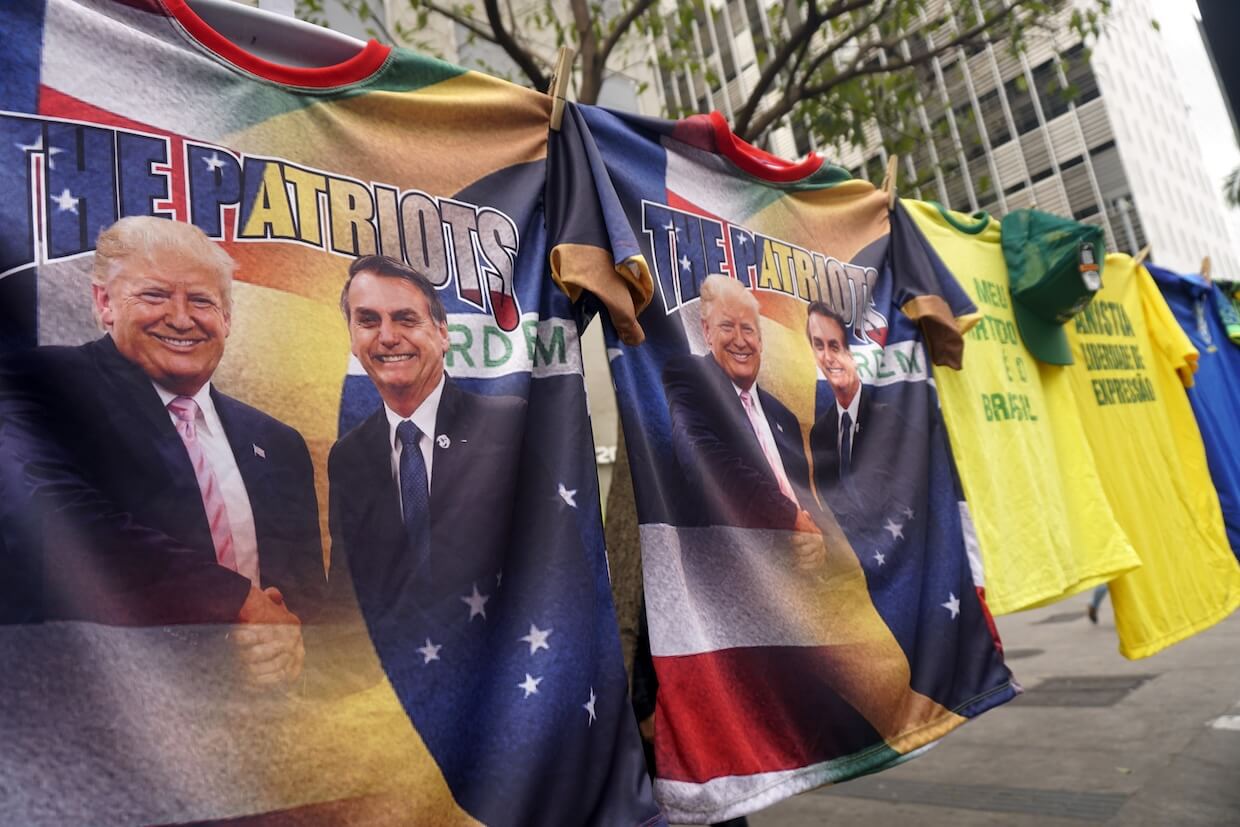
You describe the Bolsonaro period as a “neoconservative turn” that elevated the traditional family and gender roles. Is this family-centered cultural politics still one of Bolsonarism’s strongest mechanisms of electoral mobilization in 2026?
Professor Natália Sátyro: Yes, that is the point I tried to make before, because this family-centered cultural politics is very closely linked with the Evangelical Church project. I have no doubt that they are very strongly territorialized in Brazil and that, for sure, this is one of the mechanisms for electoral mobilization. Not only in 2026; since 2018, this has already been mapped in the literature.
Can the second round be understood as a contest between Bolsonarism’s culturally conservative politics of identity and moral order, and Lulism’s emphasis on redistribution and social protection? To what extent is this divide still structured by class, and how far is it now mediated by religion and family values?
Professor Natália Sátyro: Analytically, that is what is happening, but it is more than that, because it is not limited to conservatism versus redistribution. What is at stake today is democracy versus something non-democratic. When Lula won in 2022, his coalition included former rivals from the far right that existed before Bolsonaro and what united that entire spectrum was a commitment to the rule of law.
The election was characterized by a contest between those who defend democracy and democratic institutions and those who openly spoke against the democratic regime, defending military dictatorship, torture, and a coup. That is the scenario once again. Flávio Bolsonaro performed well electorally without talking about his political project itself. Yet there are slogans directed against the Supreme Federal Court and the Federal Constitution of 1988.
That said, I will return to the core of your questions. Yes, there is a cultural war centered on the family and moral issues. The candidate for governor of Espírito Santo, one state in the Southeast, who is expected to win in the runoff now, was the politician who intervened to prevent an abortion for an 11-year-old girl who had been raped and was pregnant.
Amid all this, there is also the interesting ability of Brazilians to make jokes in difficult situations. There is now an online wave of gays and trans people saying that if Bolsonaro wins, they will expose heterosexuals who are not real ones. In some cases, they are already doing so. These are examples of the cultural and moral war that we are living now. Of course, I have just taken two instances, but it is spread across the digital and virtual debate today. It’s not only in the literature, but we can see it even in the cooperative media.
The Entire LGBTQI+ Community Is at Risk
Your research emphasizes that Brazilian governments differ not simply in how much they support families, but in what kind of family they recognize. How politically consequential is this distinction for women, single-parent families, LGBTQ+ citizens, and other non-traditional family arrangements?
Professor Natália Sátyro: As I said, if what we are discussing is democracy rather than competing government programs or projects, we can imagine the imminent risk—in other words, a civilizational setback. In a conservative society, the entire LGBTQI+ community is at risk. The study that I have recently shows how transphobic our society is.
Your recent research finds that transphobia can operate through street-level discretion in social assistance, restricting transgender citizens’ access to rights. How vulnerable are minority protections when political polarization legitimizes competing moral definitions of deservingness and citizenship?
Professor Natália Sátyro: As I said, if what we are discussing is democracy rather than competing government programs, you can imagine the imminent risk—in other words, a civilizational setback. In a conservative society, the entire LGBTQI+ community is at risk. The study in question shows how transphobic our society actually is, while other studies show that it is conservative, racist, hostile to poor people, and now fascist as well. This is cultural. The far right has found fertile ground and, in addition, is better than the left at using social media.
To answer your question directly, I would consider two dimensions. In terms of public policy, the answer is straightforward. I have no doubt that policies for this population have been dismantled and, for the most part, terminated. He has already promised to privatize everything possible and make the deepest cuts he can. So, it’s a very clear project.
But Bolsonaro and Bolsonarism are violent. They want to eliminate the enemy almost literally. That is why I call it fascism, despite the conceptual imprecision. The level of insecurity experienced by minority groups is therefore very high.
In 1968, one of the harshest years of Brazil’s military dictatorship, when Institutional Act Number Five was promulgated, constitutional rights and habeas corpus were suspended. A remark by Vice President Pedro Aleixo became well known. He was the only one who voted against this act, and his words are still quoted today in Brazil. Referring to the act, he said, “The problem with a law like this is not you”—he was addressing the president at the time—“nor those who govern the country. The problem is the policeman on the street corner.”
Thus, a government like the one Flávio Bolsonaro would lead, modeled on his father’s, would authorize everyday violence against these people. I have no doubt that this would be a civilizational setback, together with no protection for them from the government or from the rule of law.
Brazilian Society Has Always Been Conservative
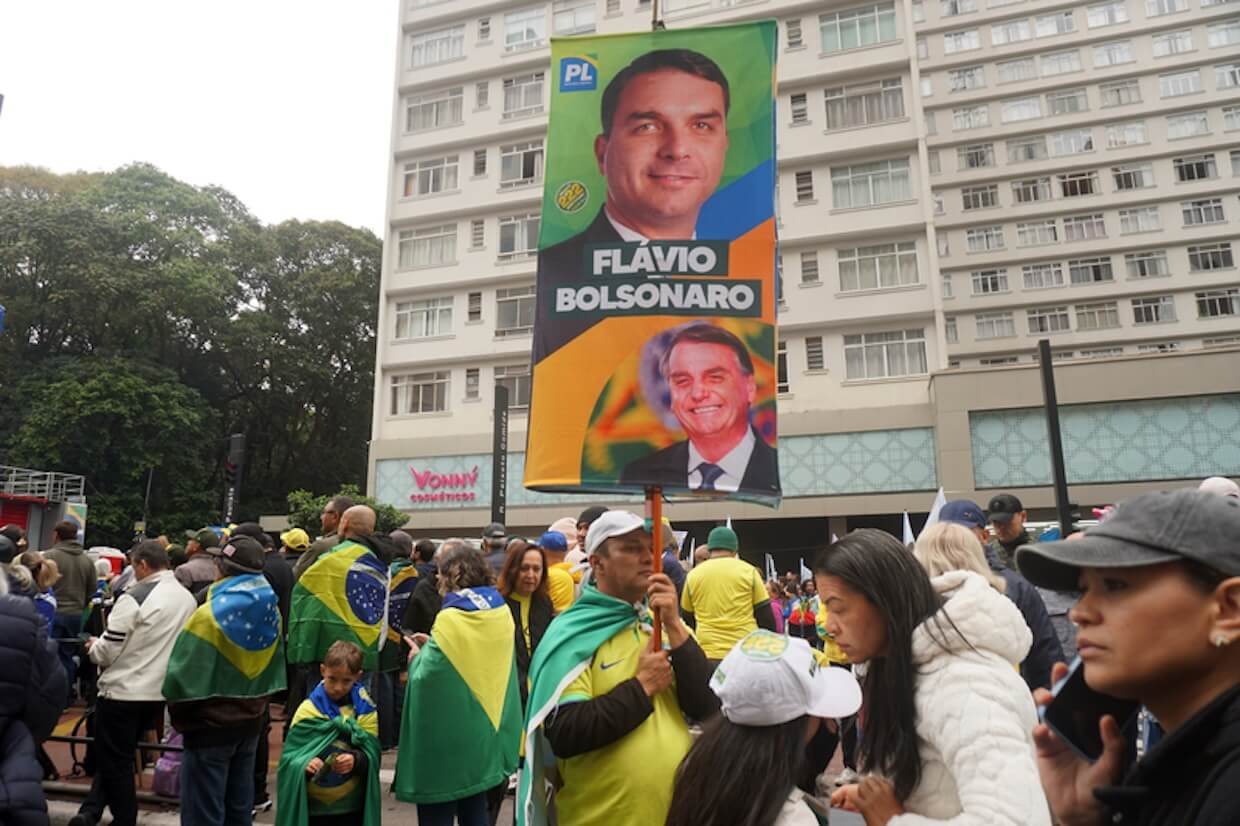
The Bolsonaro governments promoted a heteronormative, patriarchal conception of family while seeking to roll back rights associated with sexual and gender minorities. To what extent has this become a durable component of Brazilian right-wing populism rather than merely a Bolsonaro-era policy agenda?
Professor Natália Sátyro: Studies from the 1990s show that Brazilian society has always been conservative. Other studies from the 2000s showed that even poor people were conservative, which is one reason Lula took so long to win the presidency. Unfortunately, I do not think this will end easily. To respond directly to your question, these people used to be ashamed, and they are still ashamed. Recent polls refer to a shy vote: voters who do not discuss or talk about their choice but vote for Flávio Bolsonaro.
Brazilian society is deeply marked by slavery, and its traces remain. White people struggle to acknowledge improvements in the well-being of poor people. Recent opinion polls from Quaest, conducted less than a month ago, show that the middle class feels it has not gained much under Lula’s government, although it has not lost either, but they resent improvements experienced by the poor classes. So, it’s a kind of class conflict as well.
The difference between now and 38 years ago is that half of the population now knows its rights, and our minorities have learned during these 38 years because last week the Constitution marked 38 years of our democracy. This part of the population now knows about their citizenship. They know that they are citizens. I can’t say that, at the end of the 80s and the beginning of the 90s, it was so clear what citizenship was for most people.
The other side, however, wants to return to a time that was even close to slavery. I am saying that because elected senators are already saying they will abolish labor laws, that working 16 hours a day is acceptable, and that workers can negotiate such working conditions directly with their employers. This is also a culture war.
It’s a change, but it is also undoubtedly a class and racial conflict. For example, the Northeast votes overwhelmingly for Lula; the white South of the country votes for Flávio Bolsonaro. People in South Brazil see themselves as white and do not see Northeast Brazilians as white, and they see them as undeserving people.
Lula, the Left, and Mobilizing Younger Voters

Conversely, the PT governments expanded social participation, women’s rights, racial-equality agendas, and policies directed toward vulnerable groups. Can Lula still mobilize these constituencies as effectively when his present coalition is broader and more politically constrained?
Professor Natália Sátyro: We will find out in two weeks whether he can mobilize enough people to turn the result around. There is no doubt that he mobilized these groups effectively, but the left in general has difficulty communicating with young people specifically. My generation failed to teach them that democracy and social rights can never be taken for granted.
A generation that grew up with universal public health care does not understand what a world without it would be. Research shows that young people are dissatisfied with the well-being produced by redistributive policies. They want more. They want the world of influencers from TikTok—a world of wealth that does not reflect the reality of Brazil.
In addition, the left has not yet gone digital, including in its campaign, as the right and far right have. The Brazilian left uses social media poorly and has not yet understood the power of the virtual world, at least so far, either to mobilize or to understand its impact on people.
The fact is that the PT, the Workers’ Party, has grown old just as Lula has. However, Lula made a very smart move on the eve of the election. He did not attend the debate on the country’s largest television network. It’s a very traditional one. Instead, he gave an interview to a podcast that is more right-wing than left; it’s not a left-wing channel, and it reaches young people outside this left bubble. In his closing remarks, he challenged young people, saying that if they think all politicians are corrupt, they should enter politics and do their part.
I don’t know whether this was the reason, but since Monday, social media has been flooded with messages about how to increase online engagement, and students and young people are taking to the streets across Brazil. There is a different mobilization underway. We will see whether it persuades some part of the 33 million people who do not vote, many of whom are young. The source is Jairo Nicolau, a political scientist who studied this. Nicolau said that most of the people who do not vote are young.
Lula remains particularly strong among poorer voters and beneficiaries of social programs. Does this indicate the continuing resilience of Lulism as a class-based social-protection coalition, or has redistribution become increasingly filtered through cultural and religious identities?
Professor Natália Sátyro: It’s a class-based social protection. Actually, this new religious identity has certainly changed the cultural and political scene in Brazil. It means that changes in culture and in the way, people see public policy are very important explanatory factors.
Evangelicals, Family, and the Seven Mountains
Brazil’s electoral divide also has a strong religious dimension, with Bolsonarism particularly strong among evangelicals and Lula stronger among Catholics. How has the politics of family transformed religious belonging into a broader political cleavage over gender, sexuality, education, and social order?
Professor Natália Sátyro: I am not sure if I can answer that question. It is very sociological for a political scientist. But studies show that evangelicals in Brazil have had a project of political power since at least the year 2000. It seeks to occupy the seven mountains: family, religion, education, politics, media, arts and entertainment, and business. So, your question makes perfect sense. The family is central to this project and is an institution to be preserved. This means that any arrangement that departs from these values is seen as a threat to this project, and every threat must be eliminated. This is the point that I was trying to make before with the LGBTQIA+ and other communities. I think it is on the same page here.
Your work distinguishes “familialism by default” from “supported familialism.” Where would you place the competing social-policy projects represented by the Lula and Bolsonaro camps along this continuum, and what do their differences reveal about the role assigned to the state, the family, and gender relations in Brazil’s welfare regime?
Professor Natália Sátyro: Bolsonaro would be strongly on the side of familialism by default, not the supported one, because of conservatism and the whole project of the Evangelical Church: women as caregivers and men as providers. Therefore, the advances made in recent years will certainly be lost. For example, since 2023, we have had a national care policy. But there will be no retrenchment; there will be termination of this policy, which is so central to social protection. So, it has a very low probability of surviving.
The emphasis among evangelicals and in what is called the far-right project is that the family and the market should be the pillars of social protection in Brazil. However, this brings with it a class divide. Rich people turn to the market, either by hiring a poor woman as a maid—usually a Black one—to care for those who need care, or by using services from the market, such as daycare centers and nursing homes. The poor, meanwhile, have to rely on extended family and community networks.
Public services will become increasingly precarious, and healthcare will be privatized under Bolsonaro. I have no doubt about that.
The Setback Is Therefore Already Looming

Your work on Brazilian social assistance stresses the importance of state capacity and federal coordination. How much would either candidate actually be able to redirect social and family policy given Brazil’s federal structure, congressional constraints, and uneven municipal capacities?
Professor Natália Sátyro: To answer these questions, we need to understand the elections in the first place. The far right has a majority in both houses. To give you an idea, in the Chamber of Deputies alone, the Bolsonaro party, the PL, will now hold 121 seats, representing 24 percent of the total. It’s only this party, and then, together with the others on the far right, they would be able to form a qualified majority relatively easily, which would even allow them to make constitutional amendments. The setback is therefore already looming. But a Lula victory would at least act as a brake because he could work with the judiciary to constrain congressional action. This is one point.
Regarding the policies that are the focus of your questions, it is important to remember how the Brazilian Federation is structured. Federative entities are politically autonomous, so municipalities can independently determine a policy if they want to and have the capacity to do so. The literature shows that they usually cannot. It distinguishes policymaking from policy decision-making because of the level of policy capacity of the municipalities. In other words, most municipalities depend on funding from the federal government.
However, the cited study found that during the presidency of Bolsonaro, the father, municipalities kept social assistance services operating even without federal funding because they are politically autonomous. Thus, to consider what the elected candidate may do, it’s important to consider both the composition of this new Congress and the autonomy of the municipalities and states.
I have no doubt about family policy. I already said that they will terminate it. If we think about conditional cash transfers, they will be different from services. Public services directed to families will survive only if municipalities put in their own financial resources, their own budget.
Thirty-Three Million People Did Not Go to the Polls
Looking toward the second round, which social cleavage deserves the closest attention: class, religion, race, gender, region, or attitudes toward the family—and how do these cleavages intersect rather than operate independently?
Professor Natália Sátyro: Thirty-three million people did not go to the polls, even though voting is compulsory in Brazil. Lula’s campaign is focusing, as I told you, strongly on young people and older adults, since they were the groups with the highest abstention rates. First, people over 70 are no longer required to vote.
I read research from yesterday saying that a huge number of women, poor women, are no longer required to vote and did not go to the polls, but they will certainly be affected by cuts, given that Bolsonaro has said he will change Social Security. So, one of the points is that Lula is trying to reach this part of the population. This would mean not adjusting—these cuts that I told you about mean not adjusting pensions and making it harder to enter the system.
There is also a strong campaign targeting women, who make up the majority of the electorate. The increase in Bolsa Família benefits is due to begin on October 19, before the runoff. The suspension of online betting, which was permitted by Bolsonaro and has now been suspended by Lula by decree, was also a measure aimed at this audience, that is, women.
Bolsonaro, meanwhile, is already speaking as if he had won and has been addressing the market, while emphasizing how he will cut the budget. So, for Lula, his aim is young people, women, and the elderly in the population because of the abstention.
Finally, Professor Sátyro, beyond the question of who wins the runoff, does the first-round result suggest that Brazil is consolidating two competing models of citizenship—one centered on social inclusion and state-backed protection, and another combining conservative family values, market-oriented responsibility, and populist cultural mobilization?
Professor Natália Sátyro: Yes, I have no doubt. I think my previous answers have already addressed that. We are really at a moment when we will choose between these two projects for Brazil. Today, we are a divided society between these two: one very conservative and neoliberal, and the other more progressive and focused on social justice. We will see in two weeks which one of them will win.