UNTOLD Europe Workshop

UNTOLD Europe Workshop – Case Study Session Report

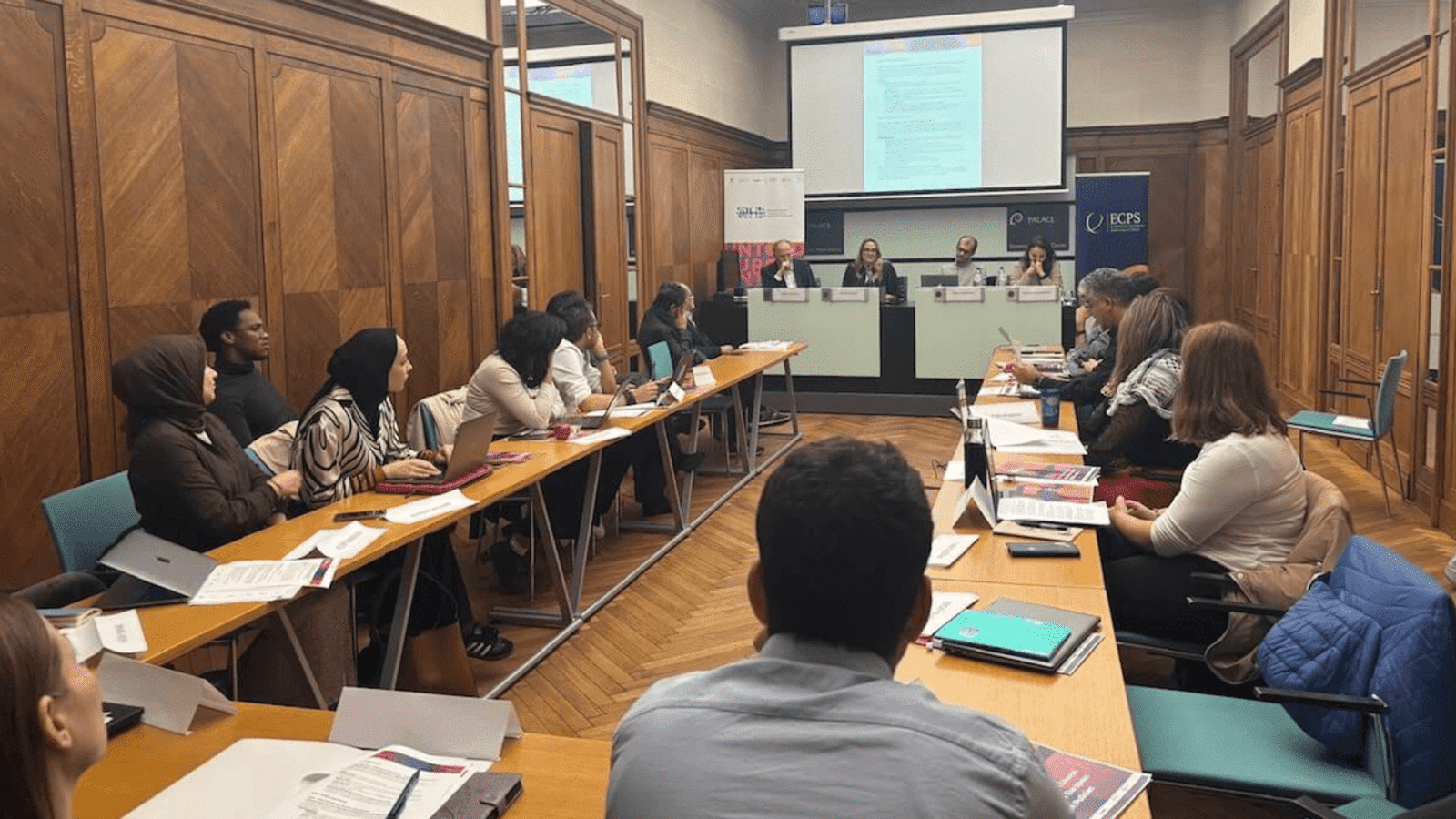
The interactive case study session of the UNTOLD Europe Workshop (Brussels, 21 October 2025) translated critical discussions on colonial legacies, migration narratives, gender, and human rights into comparative policy analysis. Participants worked in four groups examining labour migration to Greece, the EU Migration Pact, the EU–Tunisia Memorandum, and Spain–Morocco circular migration schemes. Across cases, recurring patterns emerged: securitization over protection, racialized labour hierarchies, gendered recruitment structures, and externalisation practices rooted in asymmetrical power relations. By combining structural analysis with creative reframing, the session encouraged participants to challenge dominant narratives and articulate rights-based alternatives. The findings underscore how colonial continuities remain embedded in contemporary migration governance—and highlight the need for dignity-centred, inclusive policy approaches across the Euro-Mediterranean space.


Case Study Session Overview

The case study session, held during the UNTOLD Europe Workshop on Migration Narratives on 21 October 2025 in Brussels, constituted a central interactive component of the workshop and was designed to translate the workshop’s conceptual discussions on colonial legacies, migration narratives, gender, and human rights into concrete and comparative analysis.

Participants were divided into four small working groups of 5-person, each focusing on a distinct case reflecting contemporary forms of migration governance and externalisation in the Euro-Mediterranean context. The session combined collective analysis, critical reflection, and creative reframing, encouraging participants to interrogate how historical power asymmetries and colonial continuities remain embedded in current migration frameworks.

Objectives of the Case Study Session

The case study session pursued three interrelated objectives:
– To analyse how colonial legacies, racialised hierarchies, and unequal power relations shape present-day migration policies and narratives;
– To examine the implications of these frameworks for labour rights, gender equality, and human rights;
– To encourage participants to reframe dominant migration narratives and develop alternative, rights-based perspectives.

Structure and Methodology

The session was conducted in two stages. In the first stage, groups familiarised themselves with their assigned case and identified key narrative frames, policy mechanisms, and governance logics. In the second stage, groups shifted from analysis to reflection and creative reframing. Each group concluded by formulating key observations and insights, which were later shared in the closing plenary.

Case Study Groups and Thematic Focus

Group 1: Labour Migration from Egypt and Bangladesh to Greece

This group examined labour migration pathways from Egypt and Bangladesh to Greece, focusing on temporary and irregular labour regimes in sectors such as agriculture and construction. Discussions highlighted how colonial and postcolonial labour hierarchies shape recruitment practices, legal precarity, and working conditions. Particular attention was paid to racialisation, the commodification of migrant labour, and limited access to rights and legal protection.

Group 2: The EU Migration Pact

This group analysed the EU Migration Pact as a framework reshaping migration governance across the European Union. Discussions focused on securitisation, border procedures, and differentiated treatment of migrants, as well as the broader narrative implications of managing migration primarily through control-oriented approaches.

Group 3: The EU–Tunisia Memorandum of Understanding

This group explored the EU–Tunisia Memorandum of Understanding as an example of migration externalisation. The analysis centred on asymmetrical power relations, the delegation of border management, and the implications for accountability and human rights protection.

Group 4: Spain–Morocco Circular Migration

This group focused on Spain–Morocco circular migration schemes, particularly in seasonal agricultural labour. Discussions examined how controlled mobility regimes reproduce colonial patterns of labour extraction, gendered recruitment, and structural dependency.

Conclusion

Across all four case studies, participants identified recurring themes, including the persistence of colonial and racialised hierarchies, the prioritisation of labour and security concerns over rights, and the gendered dimensions of migration governance. The session enabled participants to connect theoretical discussions with concrete cases and to reflect collectively on alternative narratives grounded in dignity and inclusion.

The case study session underscored the value of participatory and comparative analysis in understanding contemporary migration dynamics. By engaging with diverse cases, participants contributed to a shared reflection on how migration narratives can be critically examined and reimagined beyond colonial continuities.

Untold Europe

Towards Coherent and Human Rights-Based Migration Governance in Europe: Addressing Structural Imbalances in the Light of Colonial Narratives on Migration in Europe

This policy paper, developed from the Untold Europe workshop (Brussels, 21 October 2025), examines structural imbalances in European migration governance across three domains: circular labour migration, external migration cooperation, and internal EU asylum systems. While each field operates within distinct legal frameworks, comparative analysis reveals a recurring tension between control-oriented management tools and the consistent safeguarding of rights. From employer-dependent seasonal labour schemes to accountability gaps in external partnerships and uneven asylum protection standards within the EU, the findings highlight the need for stronger monitoring, legal clarity, and enforceable safeguards. The paper argues that sustainable migration governance requires integrating mobility management with equal treatment, transparency, and human rights-based benchmarks—ensuring coherence, credibility, and long-term legitimacy across EU migration policies.


Executive Summary

This policy paper synthesises findings from three thematic case studies examined during the Untold Europe workshop in Brussels on 21 October 2025. Each case examined a different layer of European migration governance: circular labour migration, external migration cooperation, and internal asylum governance. Through comparative analysis, the workshop identified recurring structural patterns in how mobility is managed, how responsibilities are distributed, and how protection standards are implemented.

While each policy field has its own legal and institutional logic, the cases revealed common tensions between management objectives and rights safeguards. This paper consolidates those findings into a coherent policy analysis aimed at supporting more balanced, sustainable, and legally consistent migration governance within and beyond the European Union.

Case Study 1 – Circular Labour Migration and Agricultural Work

The first case study focused on circular migration schemes in the agricultural sector, discussed during the workshop as an example of labour mobility designed to address seasonal workforce shortages. Participants examined how such programmes operate in practice, particularly in Southern Europe, and how recruitment, residence status, and working conditions are structured. The discussion highlighted that while these schemes offer employment opportunities and address labour market needs, they frequently rely on highly temporary statuses and employer-dependent residence arrangements.

Workshop participants concluded that this structural design could limit workers’ bargaining power, restrict mobility between employers, and create differentiated access to social and labour rights. The case demonstrated how labour migration governance can unintentionally contribute to segmented labour markets if mobility, equal treatment, and access to remedies are not adequately safeguarded. These findings informed the broader policy recommendation that labour migration frameworks should integrate stronger rights protections alongside economic objectives.

Case Study 2 – External Migration Cooperation and Responsibility Distribution

The second case study addressed EU cooperation with third countries on migration management, examined through the lens of recent partnership frameworks discussed at the workshop. Participants analysed how operational responsibilities related to border control and containment are shared between the EU and partner countries. The discussion focused on governance capacity, accountability mechanisms, and the alignment between financial support and protection standards.

The workshop concluded that external cooperation could contribute to migration management objectives but also creates potential responsibility gaps where monitoring, legal safeguards, and access to remedies are limited. Participants emphasised that policy effectiveness depends not only on reducing movements but also on ensuring that protection outcomes are verifiable and consistent with international and EU legal standards. These conclusions shaped the recommendation that external partnerships should be systematically linked to transparency, independent monitoring, and rights-based benchmarks.

Case Study 3 – Internal EU Asylum Governance and Solidarity Mechanisms

The third case study examined recent developments in EU asylum governance, with particular attention to solidarity mechanisms, procedural harmonisation, and the treatment of vulnerable applicants. Workshop participants explored how reforms aim to improve system functionality and coordination among Member States while managing pressures on national systems.

Discussions highlighted that while solidarity tools are intended to distribute responsibilities more evenly, protection standards and reception conditions remain unevenly implemented across the Union. Participants noted that procedural obligations for asylum seekers are increasingly detailed, whereas enforcement of Member State compliance with protection standards can be inconsistent. The workshop, therefore, concluded that solidarity and system functionality must be closely linked to enforceable protection guarantees to ensure long-term system credibility and legal coherence.

Integrated Analysis

Across the three cases, the workshop identified a shared governance pattern: migration is frequently addressed through instruments designed to manage distribution, containment, and procedural compliance. By contrast, mechanisms ensuring participation, equal treatment, and consistent protection standards often develop more slowly or unevenly.

The comparative discussion showed that these dynamics are not confined to one policy field but arise across labour migration, external cooperation, and asylum governance. This insight underpins the paper’s central argument: strengthening accountability, legal clarity, and rights consistency across all migration governance domains is essential for effective and sustainable policy.

Policy Directions

Building on the workshop conclusions, the paper proposes policy directions aimed at better aligning management tools with protection standards. Strengthened monitoring and accountability mechanisms, clearer procedural standards, and improved access to remedies are key elements across all governance areas.

In labour migration, ensuring mobility rights and equal treatment would support fair labour market outcomes. In external cooperation, linking funding and partnerships to verifiable protection benchmarks would reduce legal and reputational risks. Within the EU, solidarity mechanisms should be directly tied to minimum protection standards to ensure that responsibility-sharing also guarantees rights consistency.

The workshop-based comparative approach demonstrates that structural imbalances between control-oriented measures and protection safeguards can emerge across different migration governance fields. Addressing these imbalances does not require abandoning management objectives but integrating them more closely with legal certainty, accountability, and protection standards.

A more coherent and rights-consistent migration governance framework would strengthen the EU’s capacity to manage migration sustainably and credibly while upholding its legal and normative commitments.

Untold Europe

UNTOLD Europe: Uncovering Neglected Truths and Outlining Legacies of Decolonization

The European Center for Populism Studies (ECPS) is proud to be part of UNTOLD Europe – Uncovering Neglected Truths and Outlining Legacies of Decolonization, an ambitious EU-funded project coordinated by Oxfam Intermón under the CERV European Remembrance Programme. The initiative brings together a dynamic consortium of European partners– including EquinoxInnovatoAspichiQualia, and ECPS – to examine how the legacies of colonialism continue to shape contemporary European societies, policies, and digital environments.

Rethinking Europe through a Decolonial Lens

At its core, UNTOLD Europe seeks to analyse and raise awareness of how Europe’s colonial past continues to influence its present through public policy, dominant narratives, and the digital sphere. The project recognises that colonialism, slavery, and imperialism have left deep marks on global and European histories, entrenching intersecting forms of discrimination that persist in structures of governance, social hierarchies, and cultural representations.

Through this lens, UNTOLD Europe aligns with the European Commission’s priority to foster remembrance, inclusion, and understanding by exploring the relationship between migration, decolonization, and multicultural European societies. It encourages European citizens to engage critically with their shared past, reflect on the historical roots of inequality, and imagine more just and inclusive futures.

The 2RB Model: Recognizing, Retelling, Balancing

The project is structured around a unique Recognizing–Retelling–Balancing (2RB) model, designed to connect historical awareness with present-day transformation:

  1. Recognizing Colonial Public Policies: Developing tools and spaces to identify the colonial legacies embedded in European public policies and practices, especially in fields such as migration, international cooperation, and development.
  2. Retelling Narratives of Europe: Promoting decolonial, anti-racist, gendered, and transformative narratives—particularly concerning migration and belonging—to challenge existing stereotypes and foster inclusive public debates.
  3. Balancing the Digital World: Generating critical insights into how digital technologies and algorithms reproduce racial and gendered inequalities, and how Europe can pursue a more just, equitable, and non-discriminatory digital future.

Across these three dimensions, the consortium will engage diverse groups—activists, scholars, artists, journalists, and young people—to co-create knowledge and drive change through research, artistic practices, and civic dialogue.

Innovative Methodologies and Participatory Approaches

UNTOLD Europe employs participatory and creative methodologies to bridge the gap between academic research and social action. These include action research, theatre and artistic residencies, cine-forums, courageous conversations, virtual reality storytelling, and critical community-building workshops. Such approaches invite participants not only to reflect on Europe’s colonial past but also to collaboratively envision decolonial futures.

These formats are deliberately designed to connect the local with the regional, fostering transnational learning across Spain, Belgium, Greece, Ukraine, and Slovenia. Each country offers distinct historical experiences and contemporary challenges, enriching the project’s comparative and inclusive European perspective.

ECPS’s Role in the Project

As part of the consortium, the European Center for Populism Studies contributes its analytical expertise on populism, migration, and identity politics. ECPS plays a key role in linking decolonial and anti-racist narratives with contemporary populist discourse, exploring how colonial legacies continue to inform political rhetoric and public sentiment around migration and belonging in Europe.

Through its scholarly network, ECPS will facilitate dialogues among academics, policymakers, and civil society actors, and will contribute to several work packages focused on narrative transformation, digital coloniality, and policy reflection. ECPS’s involvement also underscores its commitment to democratic pluralism, human rights, and evidence-based policymaking—values that are central to the UNTOLD Europe mission.

Building Awareness and Lasting Impact

The project aims to reach and benefit more than 180,000 European residents across its participating countries. By engaging artists, activists, scholars, and young citizens, UNTOLD Europe strives to cultivate a more reflective and inclusive European public sphere—one that acknowledges the continent’s complex histories and reimagines its role in a globalized, postcolonial world.

Ultimately, UNTOLD Europe is not only a remembrance project but also a transformative process: it seeks to recognize historical injustices, retell collective stories from new perspectives, and balance the inequalities embedded in our digital and political systems. By combining research, art, and activism, it aspires to build bridges between past and present, memory and policy, and between the ideals and realities of Europe.

ENCODE project

ENCODE – Unveiling the Emotional Dimensions of Politics to Foster European Democracy

Programme: Horizon Europe
Duration: 1 June 2024 – 31 May 2027

The ENCODE (Emotional and Normative Coherence for Democratic Engagement) project is an ambitious, multidisciplinary initiative that seeks to strengthen democratic governance in Europe by recognising and integrating the emotional dimensions of political life. Rather than treating politics as a purely rational domain, ENCODE acknowledges that emotions are central to how citizens perceive, engage with, and respond to political processes.

At the heart of the project lies the concept of affective pluralisation—an innovative framework that promotes emotionally inclusive political spaces while preserving democratic competition. By fostering positive emotional narratives, ENCODE aims to address the emotional needs of European citizens and promote a more constructive, empathetic democratic discourse.

Key Areas of Research

ENCODE explores several urgent challenges facing contemporary democracies:

✨ The emotional appeal of populism and conspiracy theories: By investigating how emotional responses correlate with susceptibility to disinformation and anti-democratic narratives, the project will develop strategies to mitigate their influence.
✨ The role of social media in emotional amplification: ENCODE examines how digital platforms intensify emotional reactions and shape public opinion.

✨ European identities and values: The project assesses how shared identities and democratic values can foster positive emotional connections across diverse populations.

To gain a deeper understanding of emotional responses, the project uses advanced, interdisciplinary methods, including biometric analysis, facial-tracking technologies, and in-depth qualitative interviews.

How ENCODE Engages with Society

The ENCODE project operates beyond the boundaries of traditional academic research by actively engaging with real-world stakeholders to ensure its findings are relevant, impactful, and accessible. Recognising that democratic challenges are experienced across all levels of society, ENCODE prioritises inclusive dialogue and collaboration throughout the project lifecycle.

Key engagement activities include:

✨ Workshops and stakeholder events involving civil society organisations, policymakers, and citizens to exchange perspectives and provide feedback on project findings.

✨ International conferences and expert meetings to disseminate insights, stimulate informed debate, and foster interdisciplinary exchange.

✨ Strategic collaborations with other EU-funded projects focused on democracy, governance, and civic participation.

✨ Public-facing communication tools, such as podcasts, videos, and articles, to translate academic research into accessible, engaging content.

✨ Practical outputs, including policy briefs and implementation guidelines, are designed to support evidence-based decision-making and democratic innovation.

Target Stakeholders

ENCODE is designed to serve a diverse range of stakeholders who are actively involved in or affected by democratic governance. The project seeks to support and collaborate with:

✨ Policymakers and public institutions, at both national and European levels, are responsible for legislative and governance processes.

✨ Researchers and academic institutions contribute to the scientific understanding of political behaviour, communication, and democratic systems.

✨ Non-governmental organisations and grassroots movements are working to strengthen civic engagement and social cohesion.

✨ Journalists and media professionals who shape public discourse and inform democratic debate.

✨ Engaged citizens and civic actors are committed to fostering inclusive, transparent, and emotionally intelligent democratic practices.

ENCODE’s inclusive approach ensures that its research not only advances academic knowledge but also contributes meaningfully to public dialogue and policy development across Europe.

For more information, please visit the project website: https://encodemotions.eu/ 

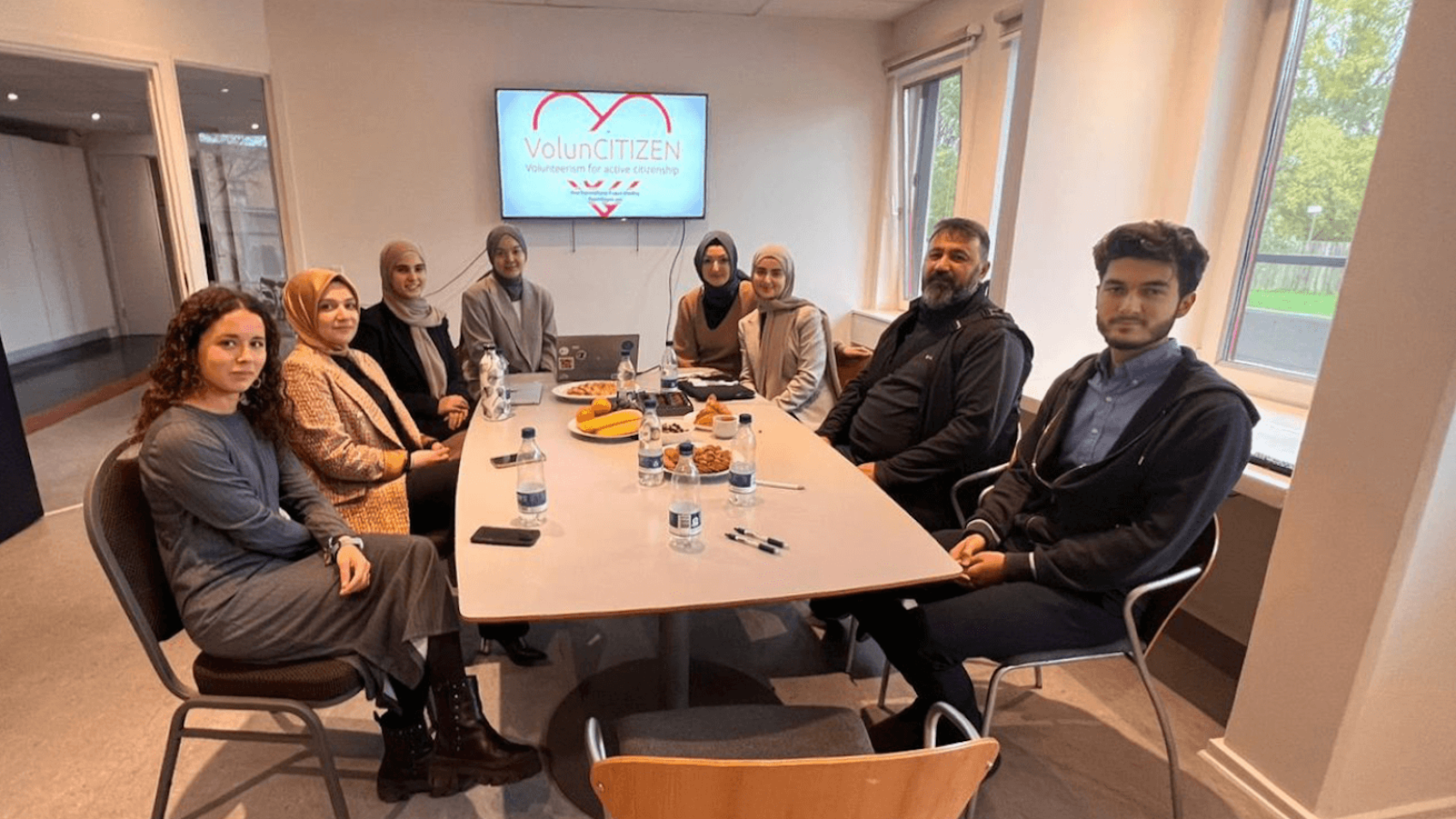
The VolunCITIZEN Erasmus+ journey was launched in Denmark with the first kickoff meeting in January 2024, marked by passion and collaboration with partners from Poland, Estonia, and Belgium.

Celebrating Success: ECPS’s First Erasmus+ Supported Project

We are thrilled to announce the successful completion of VolunCITIZEN, the very first project supported by Erasmus+ funds at ECPS! This milestone marks an exciting chapter for us as we work to empower civil society, youth, and migrants through active citizenship and intercultural exchange. Thanks to the support of Erasmus+ and the dedication of our partners, VolunCITIZEN has left a lasting impact, inspiring meaningful participation and fostering vibrant communities. Join us in celebrating this achievement and the incredible potential of collaboration for a brighter future!

Empowering Communities Through Active Participation

VolunCITIZEN is an innovative initiative that bridges civil society organizations, youth, and migrants on a dynamic online platform. By fostering active citizenship, promoting social participation, and encouraging intercultural exchange, the project empowers individuals to make meaningful contributions to their communities. As a participant, you can connect with civil society organizations, become an engaged volunteer, and collaborate to create a more inclusive and participatory society. 

Please visit the project website for more information: https://voluncitizen.eu/