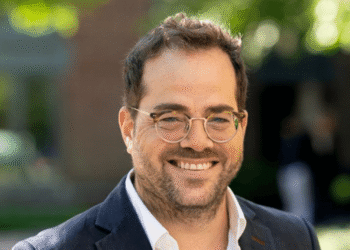
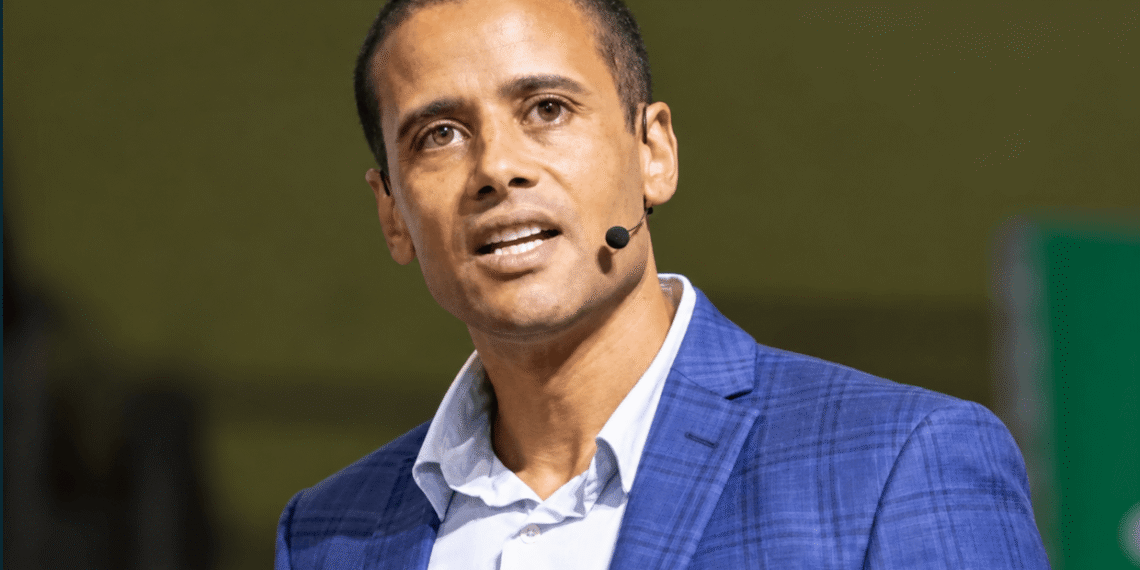
In an in-depth interview with the ECPS, Professor Jacob Mchangama warns that liberal institutions are becoming “increasingly illiberal” in their efforts to combat populism and disinformation. Examining electoral censorship in Brazil, Germany’s militant democracy, and the EU’s Digital Services Act, he argues that restrictive speech policies risk undermining democratic legitimacy while strengthening authoritarian forces. Emphasizing the democratic significance of independent digital media, particularly in Hungary, he cautions that “imposing government control is ultimately a cure worse than the disease.” Professor Mchangama also examines the dangers of AI-driven censorship, selective free-speech advocacy, and declining institutional trust, advocating decentralization, transparency, and user empowerment as alternatives to increasingly technocratic approaches to regulating the democratic public sphere.
Interview by Selcuk Gultasli
At a time when democratic institutions confront populism, disinformation, political censorship, and the growing influence of artificial intelligence and technology giants, freedom of expression has become both a cornerstone of democratic resilience and a deeply contested principle. Brazil’s presidential election and the US midterms offer particularly revealing examples of these tensions. Across liberal democracies, efforts to counter extremist mobilization and digital disinformation raise an increasingly urgent question: Can democracy be protected through restrictions on the very freedoms that sustain it?
In an in-depth interview with the European Center for Populism Studies (ECPS), Professor Jacob Mchangama, Executive Director of The Future of Free Speech, Research Professor at Vanderbilt University, Senior Fellow at the Foundation for Individual Rights and Expression (FIRE), and author of Free Speech: A History from Socrates to Social Media, examines this paradox. His central concern is that the erosion of public trust has prompted liberal institutions to adopt increasingly illiberal responses. As he observes, “this collapse of trust has led liberal institutions to become increasingly illiberal, responding to mistrust from the demos with mistrust of the demos.” Such efforts to control political narratives, he warns, create “a vicious cycle that, in the long term, will undermine rather than strengthen democracy.”
Professor Mchangama develops this argument through Brazil’s judicial interventions in electoral expression, Germany’s increasingly restrictive speech legislation, and the European Union’s Digital Services Act (DSA). Questioning the effectiveness of Europe’s militant democracy model, he invokes the Weimar Republic’s historical experience, when emergency powers intended to safeguard democratic institutions were subsequently exploited by the Nazis. His conclusion is stark: “the very instruments intended to protect democracy were used to abolish it.” For Professor Mchangama, contemporary restrictions risk reproducing this institutional vulnerability, particularly when political forces hostile to liberal pluralism acquire governmental power.
The dangers become especially pronounced in the digital sphere. Reflecting on Hungary’s opposition mobilization through independent online media, Professor Mchangama emphasizes that social platforms remain indispensable instruments of democratic dissent, even when dominated by powerful corporations. Although acknowledging the internet’s toxicity and concentrated ownership, he argues that “imposing government control is ultimately a cure worse than the disease.” Similarly, he cautions that Europe, historically central to developing legal protections for expression, is now “creating the blueprint for online censorship,” potentially legitimizing authoritarian restrictions elsewhere.
Beyond censorship, the interview explores artificial intelligence, decentralized factchecking, governmental transparency, and the democratic potential of digital participation. Professor Mchangama distinguishes user empowerment from preemptive safetyism, warning against transforming AI governance into preventive ideological gatekeeping. Ultimately, drawing inspiration from Frederick Douglass, he insists that freedom of expression protects listeners as well as speakers. His overarching democratic principle is unequivocal: “You’re not going to strengthen democracy by hiding that reality.”
Here is our interview with Professor Jacob Mchangama, edited lightly to enhance clarity, readability, and overall flow for publication.
Democracies Must Rebuild Trust Instead of Trying to Control the Political Narrative

Professor Mchangama, thank you for joining us. Let me begin with your essay on Brazil and the dangers of combating populism through censorship. In your essay, “Don’t Resort to Censorship to Fight Populism,” you argue that censorship can undermine the democracy it claims to protect. With Brazil heading into its October 25 presidential runoff between Lula da Silva and Flávio Bolsonaro, how should democratic institutions confront disinformation and anti-democratic mobilization without restricting legitimate political debate?
Professor Jacob Mchangama: That’s a big question. I don’t think anyone has a perfect formula or algorithm, partly because the definition of populism is itself contested, as is the extent to which populism represents a legitimate response to institutions that have failed to address the needs of their populations.
But I think one of the structural problems in many democracies is a collapse of trust—in political systems, elite institutions, and so on. I believe this collapse of trust has led liberal institutions to become increasingly illiberal, responding to mistrust from the demos with mistrust of the demos. In other words, they attempt to control the narrative through increasingly restrictive measures on speech.
This creates a vicious cycle that, in the long term, will undermine rather than strengthen democracy, especially liberal democracy, which is inconceivable without free speech and access to information as central pillars.
So, rather than focusing on technocratic, top-down decisions about how to manage the public sphere, I would focus on examining how governance should function in a digital-age democracy. How can we create modes of governance that cultivate trust? That would be my starting point. For trust to exist, the populace must have the ability to criticize the government and have transparency into how the government operates.
Democratic Institutions Must Punish Attacks on Democracy Without Criminalizing Political Expression
You have criticized Justice Alexandre de Moraes for concentrating extraordinary powers over online political expression. Given Brazil’s continuing judicial interventions in election-related content, where should the boundary lie between protecting electoral integrity and allowing unelected judges to determine the limits of political speech?
Professor Jacob Mchangama: Let me make it easy for myself. When Bolsonaro supporters attack democratic institutions in Brasília, in a sort of rerun of the January 6th attack on the Capitol in the US, that’s obviously not protected speech. The government and authorities must stand firm, not only to prevent such actions but also to punish those who try to stop the peaceful transfer of power in a democracy. That is absolutely unacceptable and should be punished.
But there’s a tendency to argue that spreading what is labeled disinformation leads to such events and that, therefore, we have to crack down on it. The interesting thing is that, in Brazil, the fake news investigation started in 2019, well before the events in Brasília. To me, that suggests that these interventions do not necessarily work and can actually help fuel the narrative of populist forces that view elite institutions as rigging the game.
Of course, the way de Moraes and other Brazilian judges have wielded their powers is anathema to any liberal democratic conception of free speech, even if you agree, as some do, that there was a need to crack down on fake news, however you define it. Giving a judge the power to act essentially as legislator, prosecutor, and judge all in one is simply not compatible with liberal democratic institutions.
I also think the way things have played out has shown that this was not a wise move and that Brazilian judges themselves are not beyond reproach. The 2019 fake news investigations came after reports alleging the judiciary’s involvement in the Car Wash scandal. That, in and of itself, is unlikely to increase trust in the judiciary as an impartial actor in Brazilian politics.
Unequal Content Moderation Does Not Necessarily Mean Political Discrimination

Brazil’s Superior Electoral Court has ordered Meta to ensure equal treatment of Lula and Flávio Bolsonaro amid allegations of algorithmic bias and unequal content moderation. Can courts realistically guarantee a level electoral playing field without becoming arbiters of political visibility and editorial discretion?
Professor Jacob Mchangama: That should certainly be the goal. The problem is how to define equal protection and ensure it. Let’s say Meta has its own policies and ways of enforcing them. If one side of the political debate is more likely to violate, for instance, rules on hate speech, then the fact that more content from that side is removed is not necessarily evidence of unequal treatment.
Of course, if you can demonstrate that platforms have an ideological bias and systematically favor one side over the other, that can be problematic. But how do you define such bias, and how do you ensure that the assessment is not based merely on cherry-picked examples? That is an issue.
You also have to take into account the larger media ecosystem. What if one side of a political debate has much better access to traditional media than the other? Then it becomes a broader question of how to ensure an equal playing field.
But the very detailed interventions that the Electoral Court has made in Brazilian politics also affect speech that, at least in my interpretation, constitutes core political expression. Accusing a political candidate of holding certain positions, for example, may sometimes involve exaggeration, but that is a core component of political speech.
Let’s say someone in Hungary accused Viktor Orbán of being a dictator, and a Hungarian electoral court responded, “No, no, you can’t say that because there’s no evidence that Viktor Orbán has ever said he wants to be a dictator, and therefore you have to remove it.” I think most people would say, “Well, that’s outrageous,” because expressing the view that Viktor Orbán is moving toward becoming a dictator in Hungary is a political opinion.
Blanket Restrictions on AI-Generated Political Content Will Mainly Restrict Free Speech
Brazil’s 2026 electoral rules restrict certain AI-generated political content, while recent judicial decisions have required campaign-related material to be removed. Could such interventions unintentionally strengthen populist narratives of persecution? What less restrictive alternatives would better protect electoral integrity?
Professor Jacob Mchangama: As I understand it—and I don’t follow Brazilian politics that closely, since I’m mostly an expert on international human rights and free-speech standards—it seems that these interventions have strengthened populist narratives during the last elections. So, this is one of those situations where such measures can backfire.
I’m also not that afraid of AI-generated content. I remember that, prior to the 2024 global elections, with 2024 being a super election year and around 2 billion people eligible to vote worldwide, there were a lot of dire warnings. The World Economic Forum said that AI-generated deepfakes or disinformation were the largest short-term threat to humanity. There were also breathless warnings from politicians and the media about democracy drowning in deepfakes.
Yet forensic analyses conducted afterward showed that, while there was a lot of AI-generated information, including deepfakes, these had very little impact on election outcomes. In some cases, such as India, AI could even be used by candidates to communicate in other languages, thereby reaching different groups with their political messages.
So, I’m not convinced that deepfakes and AI-generated content online represent an existential threat to the democratic process. That doesn’t mean there can’t be problematic instances. Imagine, for example, someone leaking an audio deepfake of a candidate on election day that purports to show the candidate involved in corruption. In such cases, it could certainly be a problem.
But in general, blanket rules—very elaborate requirements to label or remove AI-generated content—will mainly restrict a lot of speech because this is simply how modern political communication works. Most people who are online will use AI to generate text and create memes, GIFs, and short videos. All of these have a strong expressive element, conveying particular political opinions, whether through satire or otherwise.
Imagine, here in the United States, if all AI-generated criticism of President Trump had to be removed or labeled as such. Whenever I scroll through my feeds, I see lots of memes and videos mocking and criticizing Trump. That’s simply part of how we communicate today, and I don’t think it’s problematic in and of itself.
The Trump Administration Has Demonstrated a Deep Level of Hypocrisy on Free Speech
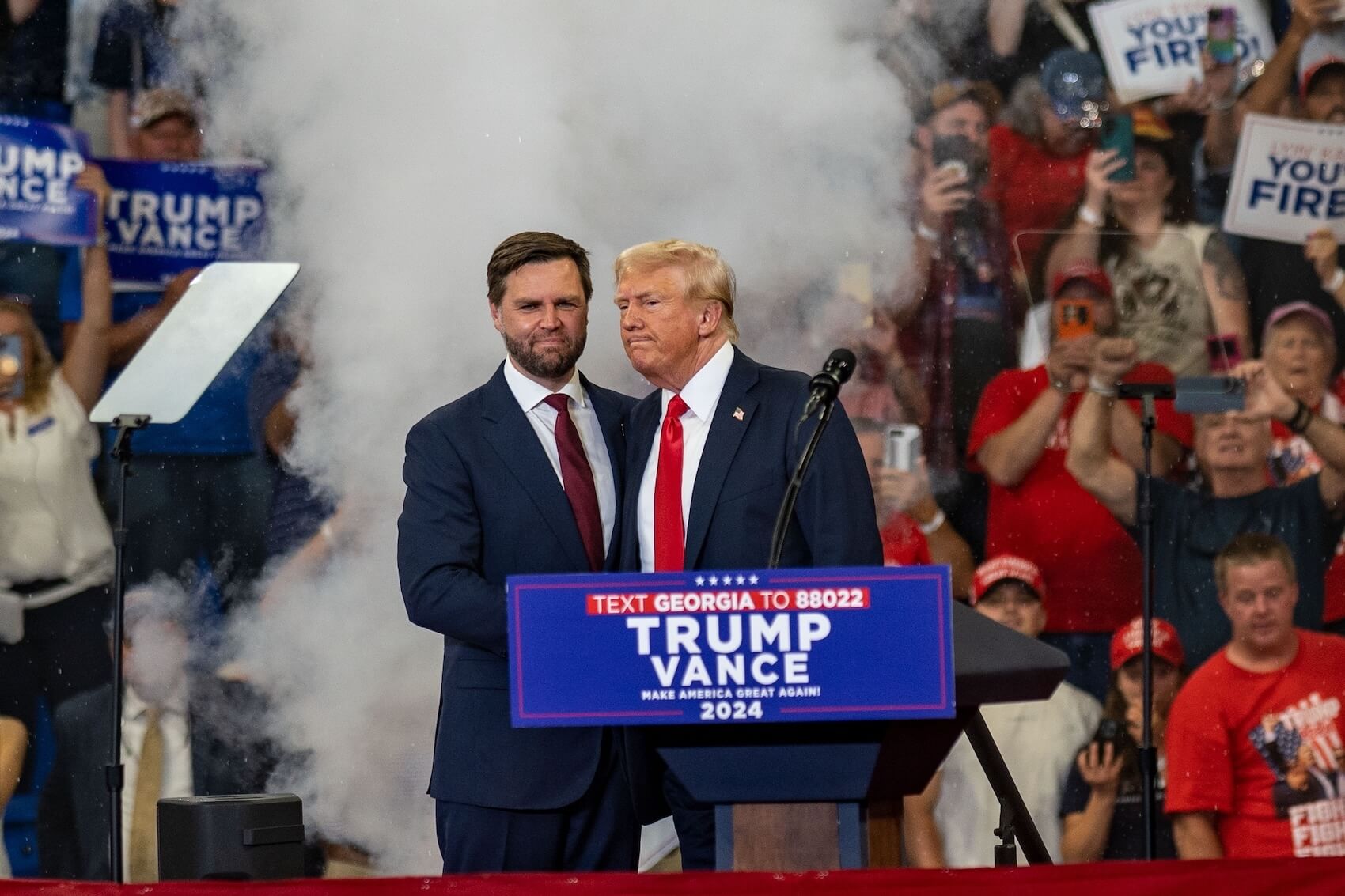
You have highlighted the contradiction between the Trump administration’s criticism of censorship abroad and its treatment of domestic critics. With a federal court recently blocking restrictions on White House access for CNN, MS NOW, and Politico journalists, has freedom of speech become an increasingly selective political principle rather than a universal democratic commitment?
Professor Jacob Mchangama: Free speech has always been unevenly enforced, but I don’t think there has been a US administration as hostile to free speech as the Trump administration since perhaps the Second Red Scare. Reuters reported in August that the Trump administration had lost around 75 cases in federal courts on First Amendment grounds—that is, involving free-speech restrictions—during Trump’s second term. That’s much, much higher than the number lost by the Biden administration during a comparable period.
This is quite instructive in many ways. First, it reveals a deep level of hypocrisy. We remember J.D. Vance traveling to Munich and criticizing European democracies for restricting speech. He had a point. But when he subsequently traveled to Hungary to support Viktor Orbán without saying a word about the systematic ways in which the Orbán government has restricted the media and protests, shut down universities, tried to intimidate civil society, and banned LGBT protests and content, that demonstrated a high degree of hypocrisy.
The Trump administration has also tried to deport foreign citizens for engaging in political speech that is otherwise constitutionally protected. It has nothing to say about Russian authoritarianism but criticizes Zelensky for not holding elections, and so on. The list is very long. But—and this is the important thing—this is where I get really frustrated with those in liberal democracies who view speech as problematic and are increasingly willing to restrict free speech in order to counter populism.
First, the First Amendment in the United States has been a very powerful roadblock against the Trump administration’s attempts to punish its critics. If constitutional protections for free speech in the United States were equivalent to those in Germany, Trump could have steamrolled many of his critics simply because they insulted him or wrote something critical about him on social media, as is actually happening in Germany.
Second, this shows that when populist politicians come to power, they are absolutely going to restrict their opponents’ free speech. So, if those who claim to be liberal democrats and supporters of democracy essentially create tools that those who are not liberal democrats can use to undermine free speech, pluralism, and so on, they will be playing into the hands of those governments.
But there is a complete denial of this, especially in Europe. If you look at statements from the Commission or from Macron, Merz, or Sánchez, they essentially portray free speech, especially online speech, as an existential danger to liberal democracies, which is hugely misguided.
I mean, what will you do if Le Pen or AfD comes to power with all these speech restrictions that you have adopted or proposed? It will then become very difficult to claim, “No, this goes too far. These speech-restrictive tools were only meant to be used by us because we are on the right side.” I don’t think that’s credible. That’s not something that will convince those parts of the population who have lost faith in traditional political parties and are tempted by more populist politicians.
Free Speech Alone Cannot Save Democracy, but Without It There Can Be No Democracy
As the United States approaches its November 3 midterm elections, disputes over media access, political advertising rules, and federal regulatory power have intensified. How effectively can First Amendment protections prevent political leaders from using governmental authority to disadvantage critical media and electoral opponents?
Professor Jacob Mchangama: Quite effectively so far, as we’ve seen. I just mentioned the 75 cases, and there have been more since. We also have a number of cases in which courts have found in favor of media outlets targeted by the Trump administration.
The First Amendment is a critical component of that, but it’s not enough. Free speech is an absolutely vital component of liberal democracy, but free speech in and of itself is not going to save democracy. Without it, however, there can be no democracy. Obviously, there are many other components that are needed.
I opened by talking about trust. That’s part of the secret sauce of successful, thriving liberal democracies. But how do you legislate trust? Many factors go into creating societies with a high degree of trust. You can’t simply have a majority in Parliament adopt a law declaring that there will be high trust and expect trust to emerge once that law is passed. That’s not how democracy works.
I also think transparency is important. We rightly talk a lot about the need for transparency in big tech platforms, but there’s much less discussion of, and willingness to ensure, transparency in government. A higher degree of transparency in government decision-making is likely to increase trust.
I also think there are ways we can use digital tools to bring democratic decision-making much closer to people and involve them directly. You can have these alignment assemblies, for instance, where local decisions could be informed or even decided upon by people, alongside technological solutions that optimize for agreement rather than outrage among citizens.
Suddenly, you might find that all the disagreement you see online does not necessarily reflect reality and that people actually share far more positions than those that divide them. I think approaches like these are much more likely to be fruitful for liberal democracies than the DSA (Digital Services Act), laws against deepfakes, or similar measures that treat symptoms and where the cure can be worse than the disease.
Younger Generations and Declining Support for Free Speech

Your research documents declining support among younger Americans for controversial and offensive expression. How do you explain this reversal of the free-speech activism historically associated with younger generations? Does it reflect changing understandings of equality, polarization, or a deeper weakening of democratic pluralism?
Professor Jacob Mchangama: That’s a really good question. There are probably a number of contributing factors, although I’m speculating here because I’m not a social scientist and can’t give you a peer-reviewed response. But I suspect several issues are at play.
First, younger generations have taken free speech for granted. It’s been a very long time since people in Western democracies really had to fight for free speech. They don’t remember an era when free speech was threatened by movements. That’s one factor.
Another might be the fact that younger generations have grown up with social media and the internet, where speech is ubiquitous, cheap, and often not very pleasant. As a result, they view the balance between the harms and benefits of free speech differently from previous generations. They encounter a lot of speech they consider hateful, bullying, or otherwise harmful. So they may not appreciate the value of free speech in the same way as older generations because it has always been everywhere, and they’re essentially marinating in it.
Then there’s another viewpoint, which I see quite often in the United States: the idea that free speech and equal dignity are values in tension, or perhaps even mutually exclusive. Yet the views of the Civil Rights Movement in the 1950s, 1960s, and 1970s, which were also reflected in landmark Supreme Court decisions on the First Amendment, were very much the opposite. Free speech and equality were understood as mutually reinforcing values. Free speech was considered essential to the full and equal protection of the rights of persecuted minorities.
Today, however, you’re much more likely to encounter groups fighting for minority rights that are suspicious of free speech, arguing that their equality depends on the government and social media companies restricting their opponents’ views.
These are some of the factors that may be contributing to this development. But again, this is a hypothesis.
Government Control of Online Speech Is Ultimately a Cure Worse Than the Disease
With Elon Musk and Mark Zuckerberg exercising enormous influence over political visibility through X, Facebook, and Instagram, have technology billionaires become unelected gatekeepers of democratic debate? How can democracies prevent private concentrations of communicative power without inviting government censorship?
Professor Jacob Mchangama: To a certain extent, they have. Content moderation decisions by big tech platforms have an outsized impact on the practical exercise of free speech in many countries around the world. In that sense, they wield power in ways that can pose real challenges, which is why I think we would be better served by a more decentralized social media ecosystem.
On the other hand, it’s also true that someone like Elon Musk has very directly aligned himself with Trump and the Republicans. But if you go on X, you can find plenty of criticism of Trump and the Republicans. The same is true of Meta platforms. So it’s not as though these platforms are completely one-sided, and I still think they’re essential for mobilizing protests.
Again, I think it would be dangerous to regulate online speech. I keep coming back to Hungary because the opposition’s victory in April, after 16 years of Orbán’s rule, demonstrated something very profound about the power of online speech.
Hungary was a country where Orbán controlled perhaps 80% of the media and 90% of government advertising revenue for the media, had banned universities, weaponized laws against civil society and the opposition, banned protests, and so on. In theory, it should have been impossible for him to lose the election.
But what you saw was a small group of independent online outlets that held the government accountable, exposed corruption scandals, and so on. In fact, Péter Magyar’s political career was launched on Partizán, a YouTube channel that quickly attracted millions of views in a country of 10 million people.
There are several reasons why Orbán lost, but I think it would have been very difficult for the opposition to mobilize and get its message out without the internet and social media. That’s one of the differences between Hungary and Russia, where Putin is very much aware that controlling broadcast media, newspapers, and other traditional media is not enough. He also has to control the online sphere because, without that control, the opposition can organize protests, establish small, nimble online media outlets, spread satire and mockery, and so on.
So, even though the internet can be a toxic place, and even though it would be better to have more, smaller social media platforms, imposing government control is ultimately a cure worse than the disease.
Decentralized Fact-Checking Can Build More Trust Than Decisions Made by a Small Group of Gatekeepers
You welcomed aspects of Meta’s transition from third-party factchecking to community-based moderation while warning against political accommodation. In light of Brazil’s current dispute with Meta over alleged algorithmic discrimination, how can we distinguish genuine commitments to free expression from politically convenient changes in platform governance?
Professor Jacob Mchangama: That’s a good question. Again, I don’t think we should expect private tech platforms to have a consistent and principled commitment to free speech. Ultimately, they are concerned about their bottom line and are likely to be influenced by a number of factors, including political interference.
It’s interesting that, in Brazil, Lula’s account was suspended for around an hour, which is obviously outrageous. But we also have to remember that Lula’s government threatened to ban entire platforms in the country because of criticism of a fake news law.
This goes to the heart of the problem with political regulation. On the one hand, yes, it’s bad that Lula’s account was suspended during an election. But if, at the same time, you are a government willing to shut down entire platforms, thereby affecting the right to free speech and access to information across the entire country, that suggests you’re not really concerned about an underlying principle. You’re perhaps more concerned about your own ability to reach voters.
This is why I think a more decentralized model works better. Community Notes and crowdsourced factchecking contribute to that model because they allow ordinary people to take a more organic, bottom-up approach, rather than concentrating power in platforms that governments can then pressure.
There was a very strong example of Community Notes following the killing of Alex Pretti by Border Patrol agents during ICE protests in Minnesota in January of this year. Senior public officials in the Trump administration quickly called Alex Pretti a domestic terrorist and claimed he had pulled a gun, and so on.
But there were many people on the streets with smartphones who were livestreaming the events, providing extensive documentation that disproved the administration’s narrative. Very quickly, senior officials, including FBI Director Kash Patel, Stephen Miller, and Kristi Noem, had Community Notes added to their statements.
In other words, on X, a platform that is normally quite friendly to the Trump administration, people were fact-checking the American government in real time. That’s quite powerful and demonstrates some of the benefits of a bottom-up approach.
Now, does that mean Community Notes will save democracy? Obviously not. But the underlying model is preferable to relying on dedicated factcheckers. Of course, factchecking remains important, and many Community Notes will be based on the work of journalists, factcheckers, and so on.
But the model of a bridging algorithm, in which a Community Note depends on people with different political perspectives agreeing on its usefulness, is much more likely to instill trust and acceptance than having a small group of third-party factcheckers make the decisions.
We Must Choose User Empowerment Over Preemptive Safetyism in AI
Your research has documented how leading AI chatbots sometimes refuse to generate lawful but controversial political content. As generative AI increasingly shapes political information and public debate, could these systems become invisible ideological gatekeepers? What would politically neutral AI governance require in practice?
Professor Jacob Mchangama: Yes, that’s absolutely a danger, and it’s already happening. This is not science fiction. China is a very good example. It has detailed rules requiring AI companies to comply with so-called core socialist values, which are set out in various decrees. Essentially, this means that AI companies must respect the red lines of the Chinese Communist Party under Xi Jinping, and those red lines are very strict.
This is why, even though China releases high-quality open-source models, you’ll see these models refusing to answer questions about Taiwan, Tiananmen Square, and so on. As generative AI becomes the interface to the wider ecosystem of information and ideas, government control or filtering would have an outsized impact not only on free speech and freedom of information but potentially even on freedom of thought, because AI is also part of search, word processing, and so on.
The dangers here are very real. There are also risks associated with market concentration. Let’s say Google, OpenAI, and Anthropic collectively control 80% of the market. The decisions and filtering practices of these companies would then have an outsized impact on the practical exercise of free speech, access to information, and potentially even freedom of thought. This is one of the reasons why I think open-source models are important.
Right now, there’s a lot of discussion about AI regulation, which is an important discussion to have. I’m not against regulating AI when it comes to catastrophic risks. We all have, as human beings, a vested interest in mitigating the risk of AI models facilitating the creation of biological weapons by terrorist groups or unleashing devastating cyberattacks that could shut down hospitals or financial systems on a national or global scale. That is absolutely crucial.
What I would warn against is treating disinformation, hate speech, and so on as critical or existential risks. These are not the kinds of things that should be regulated in the same way. AI is also different from social media. If you post something on your social media account, it’s visible to the entire world. But if you have a conversation with a large language model (LLM), you’re essentially having an iterative discussion.
In countries with hate speech laws, you can argue that if someone publishes hateful content on social media, making it visible to the whole world, the rules against hate speech should apply, whether you think those rules are wise in the first place or not. The same applies if someone threatens another person or incites violence on social media.
But you should be able to have a discussion with an LLM. Let’s say you’re interested in the rise of Nazism in Germany. You should absolutely be able to have a conversation with an LLM in which it shows you the rhetoric of the National Socialist Party in Germany or examples of antisemitism that would violate hate speech laws if you published them yourself.
If governments say, “No, we can’t allow AI models to generate hateful content or disinformation because it might potentially be used for nefarious purposes,” then that defeats the purpose of these powerful models. It undermines their potential to act as an exoskeleton of the mind. They can really help you if you use them properly and don’t outsource your brain to them. They can teach you a great deal, and you should be allowed to engage in difficult, controversial discussions and access difficult, controversial content online.
So, I distinguish between what I call user empowerment and preemptive safetyism. Preemptive safetyism can essentially be compared to the way pre-publication censorship was used to control the printing press. Churches and monarchs believed that the printing press was too dangerous. They thought, “If you allow pamphlets to be written that undermine religion or the rule of a monarch, everything will go to hell. Therefore, we have to ensure that everything printed has been vetted before it is circulated to the population.”
We’ve moved away from that model in most democracies. Now, you generally face potential liability only after the fact, once you’ve published or said something.
We need to take the same approach to AI. I might be able to write something or obtain information that could be hateful or otherwise controversial, but only if I use it—if I publish it afterward—should I potentially be held liable, rather than the model itself.
If you adopt that preemptive safetyism approach and try to filter models to avoid potential risks down the line, outside of catastrophic risks, that would be very detrimental to free speech.
Democracies Need Narrow, Targeted Rules Against Electoral Deception
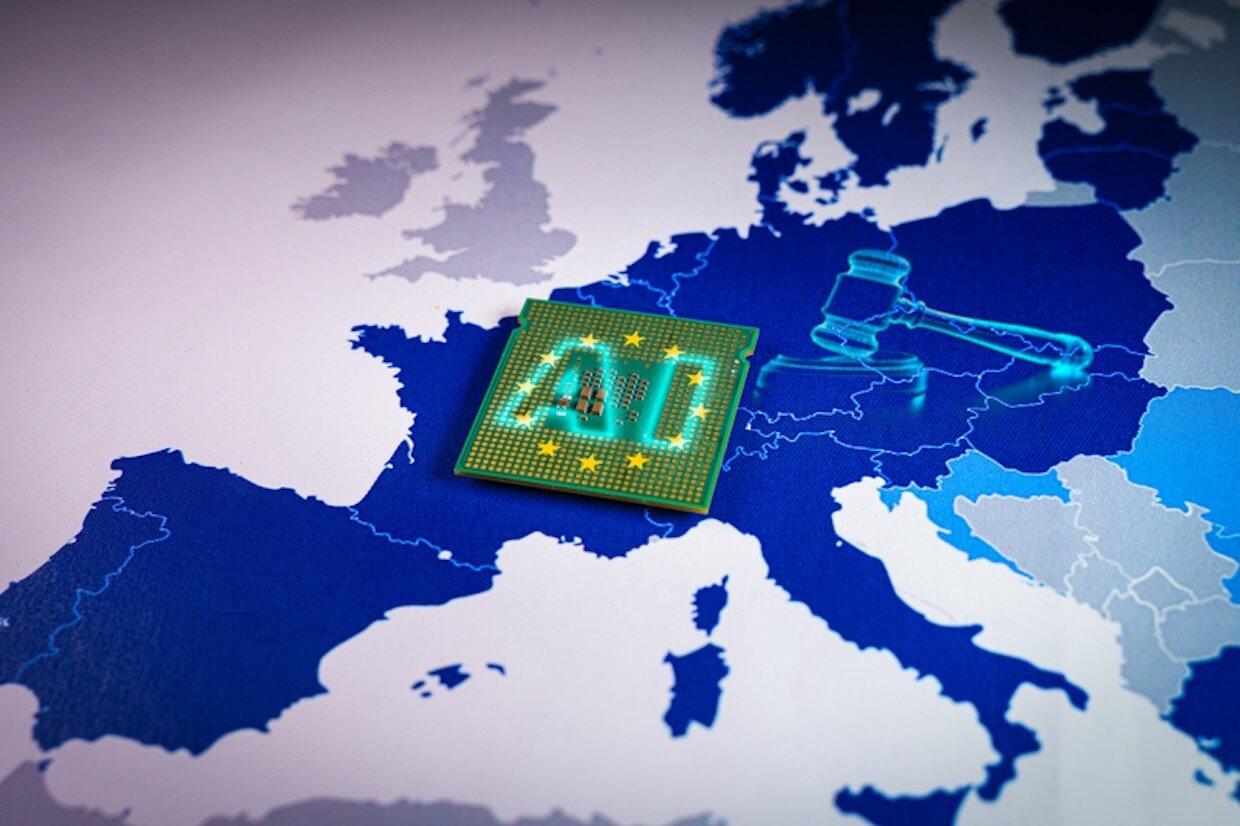
In Brazil, electoral authorities have imposed restrictions on synthetic campaign material, while the United States is debating AI-generated political robocalls ahead of its midterms. Where should democracies draw the line between preventing electoral deception and protecting lawful AI-assisted political expression?
Professor Jacob Mchangama: You need to draw very narrow, targeted lines. Consider, for example, robocalls. If a political campaign creates robocalls targeting people in areas where they know their opponents are strongest, falsely claiming that “the election has been canceled” just before election day, that’s something you would want to prevent, and those responsible should face potential legal liability because it’s a direct attempt at voter suppression.
But if you use robocalls to criticize your opponent, employing hyperbole or calling them a dictator or corrupt, I don’t think that should be regulated. So, my approach would be to establish very narrow, targeted rules governing such practices.
The Very Instruments Intended to Protect Democracy Can Be Used to Abolish It
You have questioned whether Germany’s restrictions on hate speech and extremist expression have effectively contained the far right. With the AfD challenging established political boundaries, does Europe’s concept of militant democracy risk empowering the very authoritarian forces it seeks to restrain?
Professor Jacob Mchangama: Yes, I think it does. It’s very interesting. If you look at the German domestic intelligence service, it publishes very detailed reports on political extremists, both on the right and the left, as well as on religious groups. What you’ll see is that, for a decade or so, there has been a constant rise in political extremism and often in political violence, including from the far right.
This has occurred during a period when Germany has introduced increasingly restrictive laws on speech. There was the Network Enforcement Act in 2017, which required social media companies to remove manifestly illegal content or risk fines of up to 50 million euros. There have also been laws expanding restrictions on hate speech and laws specifically protecting politicians against insults. Enforcement has intensified, including raids against people who have written something illegal. There has also been a crackdown since October 7th, and so on.
But none of these initiatives seems to have helped. You can see this in important state and regional elections in Germany, where the AfD has won victories, as well as in the polls and the collapsing support for traditional political parties.
Yet every time, especially in Germany, the response seems to be that we need to do more to restrict these political parties’ ability to speak out. Proposals range from banning the AfD and online anonymity to a recent proposal requiring 20% of algorithmic feeds to consist of approved media.
This is a very top-down, technocratic attempt to address collapsing trust in democratic institutions and mainstream political parties, which is likely to make things worse rather than better. There’s a historical irony here. We all understand why Germany wants, at all costs, to avoid a repeat of a political party coming to power and destroying democracy.
But during the Weimar Republic, there was a move toward increasingly restricting speech and adopting emergency laws that could ban fake news and shut down newspapers. Ultimately, when the Nazis came to power, they used some of these emergency laws, including provisions of the constitution itself that allowed the president to suspend all civil liberties, including freedom of expression.
So the very instruments intended to protect democracy were used to abolish it. That’s why I don’t have much faith in the militant democracy model that has gained the upper hand in Europe. I don’t think there’s a strong historical basis for assuming that it will work.
That doesn’t mean that simply introducing First Amendment-style protections in Europe would cause populists to wither away or guarantee that liberal democracy would always prevail. But such protections would serve as a stronger bulwark than the current trajectory, which treats free speech, especially online free speech, as a kind of Trojan horse that allows democracy’s enemies, both internal and external, to undermine it.
Europe Is Now Creating a Blueprint for Online Censorship

You have warned that the EU’s Digital Services Act and related regulatory approaches may encourage excessive content removal and provide authoritarian governments with models for controlling online expression. How can Europe counter disinformation, protect vulnerable groups, and hold platforms accountable without undermining the free speech it seeks to defend?
Professor Jacob Mchangama: I’ve outlined some ways forward in my previous answers, particularly decentralization, increasing trust, and transparency, which I consider more fruitful measures than the DSA and other initiatives, such as banning Russian disinformation. These initiatives actually demonstrate weakness on Europe’s part rather than strength.
I understand why such measures may sound good as soundbites, but ultimately, Europe is the continent where free speech was developed. This is where the first legal protections of free speech were established, yet Europe has now become a place that is creating the blueprint for online censorship.
I mentioned Germany’s 2017 Network Enforcement Act earlier. Within a couple of years, that law was being invoked by Russia, Belarus, Iran, and dozens of authoritarian states as a justification for their own online censorship models. We’re seeing something similar with the DSA, as other jurisdictions that are not necessarily open democracies use it as a justification.
We’re also seeing that the European Court of Human Rights, for instance, is increasingly failing to extend free-speech protections to online expression. Earlier this year, the Court considered a case from Georgia involving a food courier who had insulted the mayor of Tbilisi, Kakha Kaladze. Football fans will recognize his name. He was a very successful AC Milan player who won the Champions League twice and now serves as Tbilisi’s mayor.
The food courier had made some really insulting remarks about him on TikTok and was fined. He took his case to the European Court of Human Rights, which ruled that public officials must be protected against vehement and gratuitous insults. The Court also stated that, because of the massive potential reach of social media platforms, governments should enjoy wider powers to regulate online speech.
This was catastrophic because Georgia is in a much worse position than Hungary under Orbán. You have an embattled opposition and pro-European democracy activists who are being suppressed and persecuted by a Putin-aligned government. That government can then use the case law of the European Court of Human Rights to go after its critics.
In fact, it has recently done so. A journalist was sentenced to 30 days in prison for insulting politicians online. Georgia has also created an Office Against Hate Speech, which is being used quite openly for political purposes to target critics of the current Georgian authoritarian government.
One of the only ways Georgians can still express dissent and organize protests is online, through social media and bottom-up mobilization. Yet those are precisely the mechanisms that Brussels is undermining. This demonstrates the unintended consequences of this model of online militant democracy.
US’s Retreat from Defending Dissidents Will Play into the Hands of Russia and China
In “The Voice of America Falls Silent,” you warn that America’s retreat from supporting independent media and dissidents abroad could strengthen authoritarian information control. As Russia and China promote increasingly sophisticated surveillance and censorship systems, who can defend global free speech if both Washington and Brussels compromise their commitments?
Professor Jacob Mchangama: That’s a good question. It’s really sad to see the United States retreating from defending dissidents and free speech globally. J.D. Vance went to Munich and criticized Europe, but then the administration pulled funding for embattled dissidents in authoritarian states who have long been able to do their work thanks to funding from Washington.
It’s ironic that this is happening under a Republican administration, given that the National Endowment for Democracy (NED), for instance, was established by Ronald Reagan, who had a very clear vision of the importance of strengthening and defending democracy around the world.
This is really sad. It will contribute to further eroding the soft power of the United States and the ideals that the country has championed around the world, however imperfectly. It will also definitely play into the hands of Russia, China, and other actors working hard to undermine international norms of human rights and free expression.
Unfortunately, the European Union is not in a good position to fill the void. This is partly because Europe no longer has the same geopolitical clout it once had, but also because it increasingly restricts free speech at home, which undermines its credibility.
It’s difficult to tell other countries that they cannot use laws against disinformation when the European Union itself does so. Even if you view Russian disinformation as a threat, that approach undermines credibility.
So, the responsibility now largely falls to civil society. One of the good things about the digital era is that, with AI, we can create tools that empower dissidents around the world. But at this moment, it’s really up to civil society to strengthen broad institutions that will fight for liberal democracies, including a robust, principled conception of free speech everywhere, and to try to fill the gap as best we can until the free-speech recession has been reversed.
You Are Not Going to Strengthen Democracy by Hiding Uncomfortable Realities
Finally, Professor Mchangama, your book Free Speech: A History from Socrates to Social Media demonstrates how freedom of expression has repeatedly empowered marginalized groups against political authority. In today’s world of authoritarian populism, AI-driven manipulation, concentrated technological power, and selective free-speech advocacy, what principles should guide a genuinely democratic and resilient public sphere?
Professor Jacob Mchangama: We should view free speech and access to information as meta-principles that are essential to liberal democracies. I’m very inspired by the example of embattled minorities, which you mentioned. Perhaps the most underrated, yet one of the most important, champions of free speech was Frederick Douglass, an American orator and abolitionist who was born into slavery but dedicated his career to the fight for human equality.
It’s really incredible to read his speeches and articles spanning four decades because the central thread running throughout his work was the importance of free speech. He was so dedicated to free speech that, during the American Civil War, which was fought over slavery, he defended the right of people to speak out in favor of the Confederacy—in other words, the treasonous rebels who had seceded from the United States to preserve slavery.
He was very clear that the right to free speech is particularly precious to the oppressed. He also said something very profound: restricting free speech is a double wrong because it violates the rights of both the speaker and the listener.
That’s particularly important in our digital age. When you restrict free speech on social media, you don’t just restrict the rights of a particular speaker; you also restrict the broader public’s right to hear ideas that might be uncomfortable, wrong, or constitute disinformation, but that ultimately reflect a reality, however uncomfortable it may be: there are voices out there that don’t share your values and may want something very different.
You’re not going to strengthen democracy by hiding that reality.