Hungary’s democratic transition has entered a decisive new phase following Péter Magyar’s electoral victory, but, as Professor Kim Lane Scheppele argues, defeating an autocrat is only the beginning of democratic restoration. In this timely interview, Professor Scheppele examines the constitutional dilemmas confronting Hungary’s new leadership: dismantling autocratic legalism without reproducing it, restoring judicial independence, ensuring accountability without political revenge, and rebuilding institutions capable of sustaining genuine democratic competition. Drawing broader lessons for democracies facing executive aggrandizement, she contends that successful democratic recovery requires more than electoral change. Hungary’s experience, she argues, may become a comparative model for constitutional reconstruction—provided that democratic reformers succeed in limiting their own power while rebuilding the institutional foundations of liberal constitutional democracy.
Interview by Selcuk Gultasli
For more than a decade, Hungary has occupied a central place in comparative debates on democratic backsliding, constitutional capture, and the rise of legalistic authoritarianism. Under Viktor Orbán, the country became the paradigmatic example of how elected leaders could gradually dismantle liberal democracy not by suspending constitutional order but by systematically reshaping it from within. Through constitutional amendments, judicial restructuring, electoral engineering, and the concentration of executive authority, Hungary demonstrated that democratic erosion in the twenty-first century increasingly proceeds through law rather than outside it. Yet the electoral defeat of Orbán has fundamentally transformed the scholarly conversation. The central question is no longer how democracies decay, but whether they can be successfully rebuilt once authoritarian legal structures have become deeply institutionalized.
In this wide-ranging interview with the European Center for Populism Studies (ECPS), Professor Kim Lane Scheppele, the Laurance S. Rockefeller Professor of Sociology and International Affairs at Princeton University, examines one of the most consequential constitutional experiments currently unfolding in Europe: Hungary’s attempt to move from autocratic rule toward democratic restoration. Drawing upon decades of research on constitutionalism, judicial independence, autocratic legalism, and democratic resilience, Professor Scheppele argues that Hungary may now become not only the world’s foremost laboratory of democratic backsliding but also an unprecedented laboratory of democratic recovery.
Throughout the interview, Professor Scheppele repeatedly distinguishes democratic restoration from ordinary democratic transition. Electoral victory, she insists, represents only the first step. As she memorably observes, “The real test of democracy is not the first election—but the next one.” The ultimate challenge is whether a new democratic government can dismantle institutions deliberately designed to prevent future political alternation while simultaneously avoiding the temptation to reproduce concentrated executive power.
One of the interview’s central contributions concerns what Professor Scheppele describes as the paradox of autocratic legality. Because Orbán entrenched political domination through constitutional and legal mechanisms, democratic reformers may confront situations in which “when law entrenches autocracy, following it may preserve the regime.” This raises profound constitutional dilemmas concerning judicial reform, constitutional replacement, accountability, and the relationship between legality and democratic legitimacy.
Professor Scheppele also explores the practical architecture of democratic reconstruction. She argues that “power must be limited even during democratic restoration,” advocates a constitutional process in which “the rules of the game” are democratically rewritten, and proposes a broader understanding of the rule of law rooted in European constitutional standards rather than exclusively in national legal continuity. Her discussion of judicial reconstruction, constitutional redesign, and transnational legal constraints offers an important comparative framework extending well beyond Hungary.
Perhaps most significantly, Professor Scheppele identifies the political conditions that made democratic change possible. Hungary’s experience demonstrates, she argues, that successful democratic opposition must “fight corruption, build a big tent, and take people out of fear.”
Looking ahead, she concludes that the durability of democratic recovery will depend upon three immediate institutional priorities: reforming the Constitutional Court, restoring meaningful judicial checks, and redesigning the electoral system. Whether Hungary succeeds or fails, she suggests, will shape how democracies around the world think about rebuilding constitutional government after authoritarian capture.
Here is the revised version of our interview with Professor Kim Lane Scheppele, edited lightly to enhance clarity, readability, and overall flow for publication.
The Real Test of Democracy Is Not the First Election—but the Next One
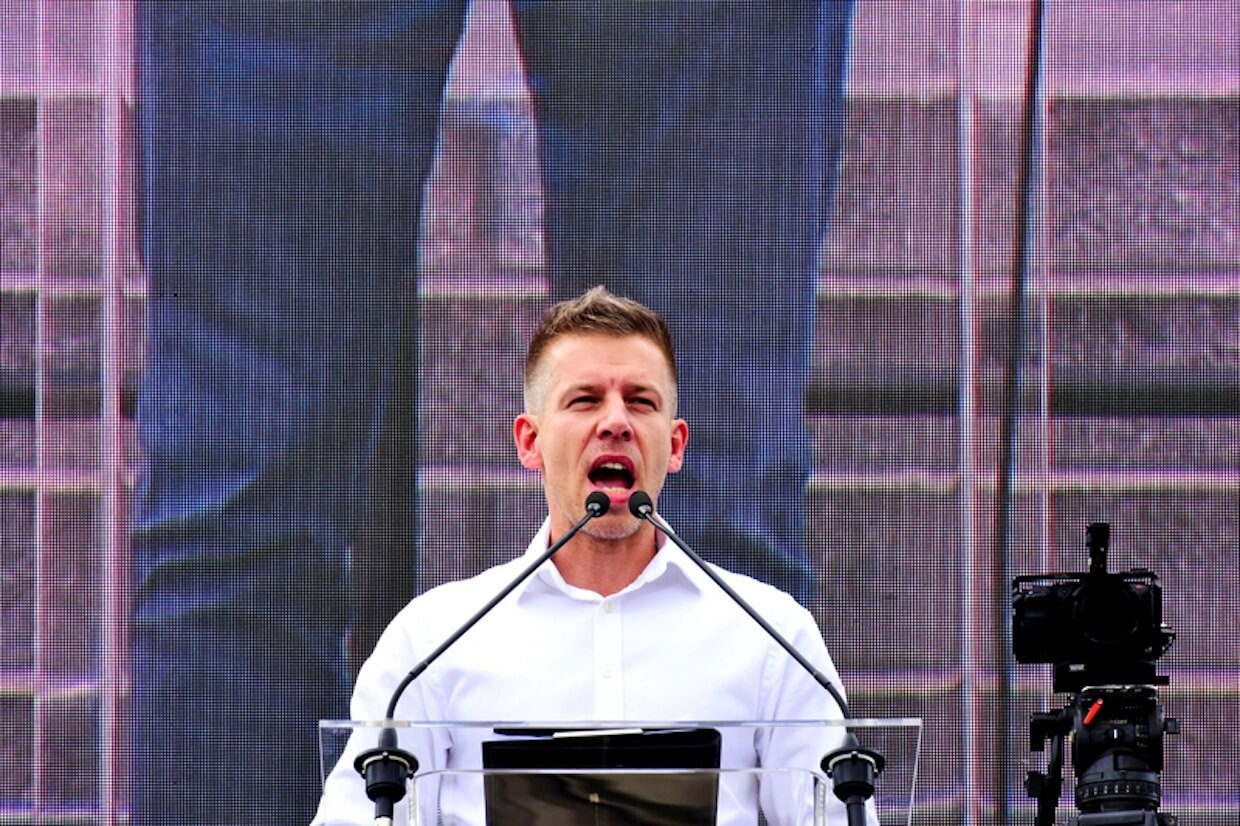
Professor Scheppele, welcome! To begin, in your recent Journal of Democracy article, you argue that Péter Magyar’s electoral victory represents only the beginning—not the culmination—of Hungary’s democratic recovery. Why is defeating an autocrat at the ballot box fundamentally different from dismantling an autocratic regime? More broadly, what distinguishes democratic transition from democratic restoration after more than a decade of constitutional capture?
Professor Kim Lane Scheppele: This is such a good question. It depends on what we think democracy is. There’s a very thin version of democracy in which democracy simply means that you’re ruled by whoever you last elected. But there’s also a separate question, and this is more how I tend to think about democracy and what it requires. Democracy is about getting to the next election so that you can rotate power. It’s not just about whether the people who are currently in charge were elected. In order to achieve a fully democratic transformation, you have to guarantee not only that the election you just had was free and fair and capable of rotating power, but also that whatever happens after that first election—or, shall we say, the election that brings new people into office—they will be able to guarantee democratic elections in the future.
This is where there has to be a pivot from winning a campaign, which is what a challenger has to do to overthrow an autocrat, to actually governing, which means dismantling the structures that any new democrat could simply walk into. I mean, Péter Magyar in Hungary could just step into the driver’s seat of this convoy that Viktor Orbán has built and drive it off into the sunset as Hungary’s newest dictator. He could do that. But the crucial question is whether he can actually transform the system so that it is capable of replacing even him. That’s a different kind of project and, in some ways, a much more difficult one because of the temptations of power.
When Law Entrenches Autocracy, Following It May Preserve the Regime
Throughout your scholarship, you have shown that contemporary autocrats increasingly govern through law rather than outside it—a phenomenon you famously conceptualized as “autocratic legalism.” If authoritarian consolidation has been accomplished through constitutional amendments, ordinary legislation, judicial appointments, and legally entrenched institutions, can democratic restoration also proceed exclusively through legal means, or are there moments when strict constitutional fidelity risks preserving the very architecture of autocracy?
Professor Kim Lane Scheppele: Another great question. These new legalistic autocrats—and Viktor Orbán really sets the gold standard for how to do this in a bad way—show that one thing you can do is simply lock down all power by law. That was what Viktor Orbán did. He was able to do it because he had this kind of constitutional majority, with two-thirds of the parliamentary seats. When he was elected, he was able to install a friendly president. They expanded the number of judges on the Constitutional Court to capture it. They basically legally changed the entire environment in which they operated, so that within only three years, Orbán controlled all of the levers of government that could make a real difference in governing.
Now Péter Magyar walks into that system. The Orbán holdovers are still there. The problem is that he can’t govern as long as those holdovers block anything he does that either makes the outgoing Fidesz party accountable or prevents its return to power. So this is the dilemma. In order to remove those folks, it turns out they’ve all been protected by the laws that Viktor Orbán put in place. Just to give you one example, the president of the country—who’s sort of a figurehead—has one important task, which is to sign all laws and constitutional amendments. Now, he can block anything the parliament passes, even with Péter Magyar’s overwhelming majority. His term, however, lasts three more years.
So, what do they do about him? It turns out the law on the presidency was amended just last year to remove the one avenue the parliament would have had to impeach him. Which is to say, there are no legal avenues left for the Parliament to remove the President without hitting another roadblock, which is the packed Constitutional Court. And then, if they go after the Constitutional Court, the only way to get rid of judges is for the other judges to vote to remove their colleagues, which they won’t do because the institution’s packed. So, when you’ve got a situation like that—where it’s been deliberately constructed to make it impossible for the next government to actually govern—you may have to break the law to get to the point where democratic recovery is possible.
If democratic recovery means getting to the next election so that rotation of power is possible, you’ve got to get rid of the roadblock. This is what Péter Magyar is up against now. There’s a constitutional amendment that may be voted as we speak, that would have the effect of removing the president and changing the composition of the Constitutional Court, among many other things. It’s being attacked by “rule-of-law advocates” because it doesn’t actually follow legal procedures.
So this is where you have a choice. Do you follow the law set up by the autocrat to preserve their capture even when they lose elections? Or do you have to break that law to create the possibility of a more robust democracy? I’m in favor of the latter. I know a lot of international organizations are in favor of the former. That’s where we have the debate.
Power Must Be Limited Even During Democratic Restoration
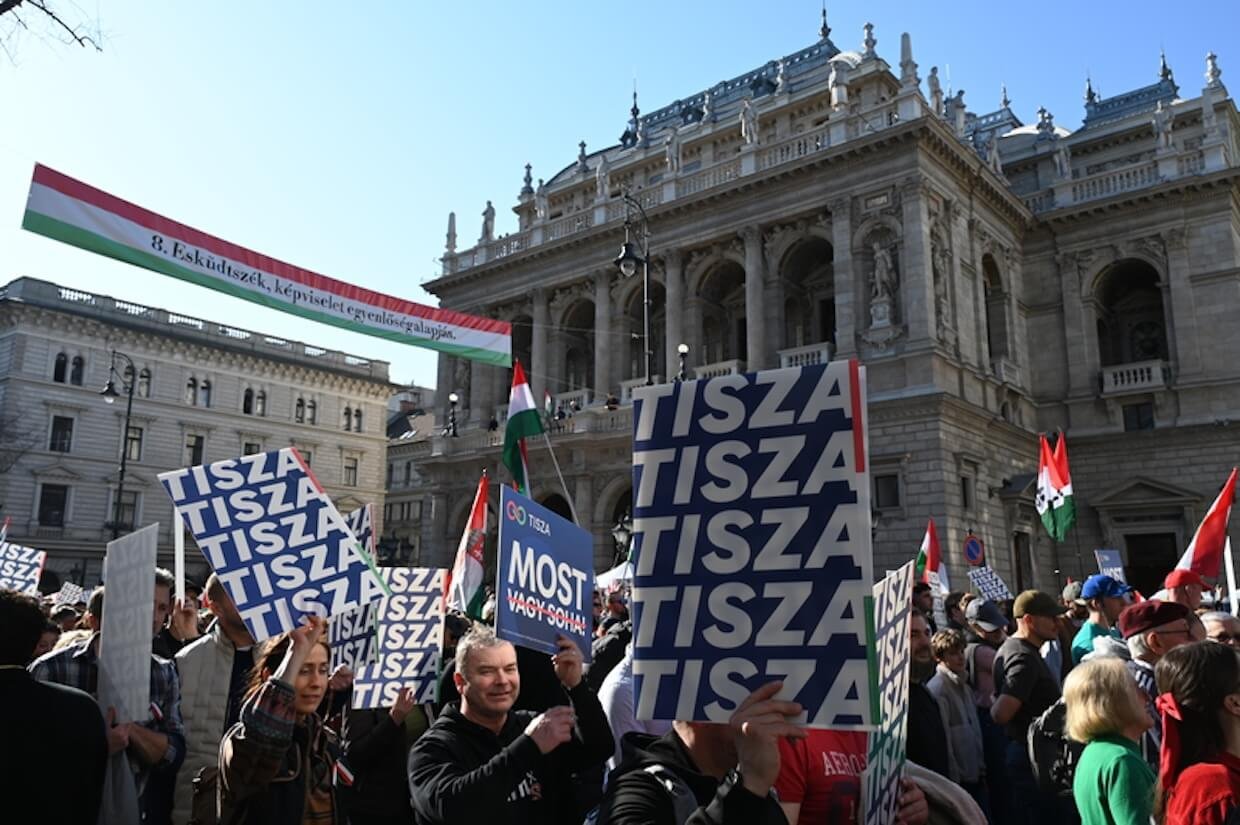
One of the deepest dilemmas facing any post-autocratic government is how to dismantle institutions deliberately designed to prevent democratic change. How can a democratic government undo constitutional capture without itself appearing to engage in the same kind of majoritarian constitutional engineering that characterized Viktor Orbán’s rule? Where should democrats draw the line between constitutional correction and constitutional overreach?
Professor Kim Lane Scheppele: Again, this is great, and it follows from what we were just talking about. Basically, Péter Magyar has to get rid of these roadblocks. There’s just no way he can govern without doing that. In some sense, he will have to break the law to make the law. That’s where he is.
Now, what people are nervous about—and ironically, what Orbán’s followers have been doing—is saying, “What about checks and balances? What about the rule of law?” At that point, you want to say, “Look, you guys had 16 years in which you abolished checks and balances and designed the rule of law so that it only benefited you.” So I don’t think those are the folks we need to listen to here. But here’s the dilemma. It’s entirely possible for somebody who comes into Péter Magyar’s position, with this level of parliamentary support, to run off the rails and create the next dictatorship. It’s absolutely possible. So there have to be checks on that process.
Here are a couple of things that give me hope about the Hungarian transition.
The first constitutional amendment that Péter Magyar put before the Parliament was one that would limit the lifetime occupancy of the prime ministership to eight years over a lifetime. Now, that law—which the president signed, although he signed it with a signing statement that makes it ambiguous what the law does, but that’s for the next challenge—disqualifies Viktor Orbán from coming back. But it also disqualifies Péter Magyar from serving more than one more term. He said, “I will follow this law and only stay here a maximum of eight years, provided you reelect me the next time.” That’s good. That’s a power-limiting move. There are some other power-limiting moves that they’ve been making as well.
One of the things they’ve also done is limit the terms of members of parliament to 12 years. That will also prevent a lot of Orbán’s cronies, who helped set up that system, from coming back. It controversially also excludes a lot of the old communist dissidents who sat in parliament for many years and are still around, still useful, and still helpful. So it’s a controversial amendment, but again, it’s a kind of cleaning house. We don’t want anybody to be in power forever. All of those are good signs.
What they’re also doing now with this new giant 17th Amendment to the Constitution is shortening the terms of office of some of the officeholders. One way Orbán entrenched himself was by appointing the public prosecutor for nine years, the head of the Constitutional Court for 12 years, and all of these key offices that lasted beyond elections, through multiple electoral rounds. So they’re shortening the terms of office of a number of those officials, which is good because it makes entrenchment harder.
They’re also, through this 17th Amendment, trying to make it much more difficult for the government to capture policy. Another thing Orbán did was to create almost 50—what are called in Hungarian cardinal laws, as they get translated, or constitutional laws for those who do comparative constitutional politics. These are laws that require almost the parliamentary strength of a constitutional amendment to amend.
Orbán locked down everything from social welfare policy—just across the board—on issues that ought to rotate with a rotation of power. Orbán locked his system in. So they’re also reducing the number of two-thirds laws, which makes it easier for any successor government to change whatever it is that the Magyar government is doing. In other words, they’ve looked at the whole system and they’re trying to un-entrench it, so that whoever follows them in power is not bound by the same strictures that they have to govern with. They have to break the law to do that. That’s what they’re doing. A lot of it is power-limiting on their behalf.
When the Rules of the Game Are Captured, the Rules Must Be Rewritten
Your work repeatedly warns that legal continuity may paradoxically preserve autocratic power. How should democratic reformers approach inherited constitutions that remain formally valid but have been systematically transformed into instruments of executive domination? Is there a point at which constitutional legality itself becomes an obstacle to constitutional democracy?
Professor Kim Lane Scheppele: The point of a constitution is to set the rules of the game, politics being the game. What happens when politics captures the rules of the game? That’s what happens under autocratic capture, where autocrats design the rules of the game so that only they can win. It was something of a miracle that Péter Magyar was able to break through Orbán’s electoral system, which has guaranteed Orbán these supermajorities.
Magyar was only able to do that by essentially reverse-engineering Orbán’s system and campaigning in the countryside because, under Orbán’s system, the votes in the countryside counted two or three times as much as votes in the cities. That’s another story. I have another Journal of Democracy piece, published right after the election, that shows how he did that. Once he breaks through that system, you’ve got this whole other problem with the constitution, which locks in the rules of the game to benefit Fidesz.
So what Péter Magyar has now said is that they’re going to start, in September, a constitutional drafting process that will be inclusive, that will review all of this, and that, under his watch, will produce a new constitution. These two amendments—the 16th, which limits the prime minister’s term of office to eight years over a lifetime, and this new, very large 17th Amendment, which essentially removes the president and some of the Constitutional Court judges, cuts back the number of two-thirds laws, and shortens the terms of office of these officeholders—are all meant to be provisional. They are intended simply to allow the government to govern in the meantime until it reaches a new constitutional drafting process. They haven’t announced what that process looks like. But that’s one way to overcome an autocratic constitution: involve the public, through a democratic process, in rewriting it. That’s what they’ve said they’re going to do.
Europe’s Rule of Law Must Help Democracies Escape Autocratic Capture
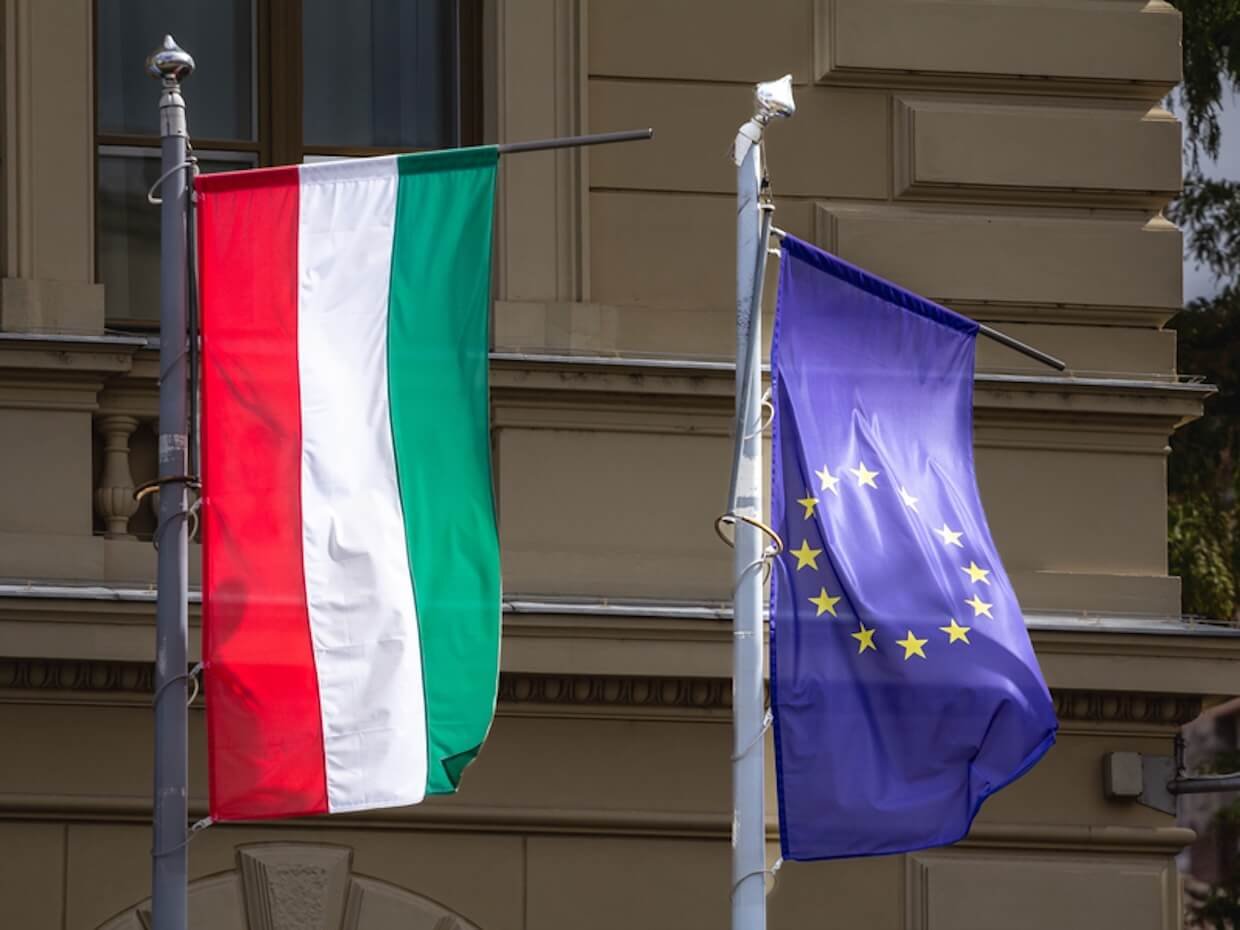
You have written extensively about the systematic dismantling of judicial independence in Hungary and Poland. Once a judiciary has been politically captured over many years, can genuine judicial independence simply be restored through new appointments, or does democratic reconstruction require a more fundamental rethinking of judicial institutions, appointment mechanisms, and constitutional guarantees?
Professor Kim Lane Scheppele: In Hungary and Poland, the judiciaries were captured in different ways, and that’s why you need different mechanisms to undo the capture. In Poland, when the Law and Justice Party (PiS) government came into power, they just took a sledgehammer to the courts. They put judges onto the Constitutional Court unlawfully because the PiS government did not have the constitutional majority that Orbán had to change the Constitution. So they just rammed their folks onto the Constitutional Court, changed the procedure for appointing constitutional judges, and captured the court by brute force. It wasn’t literally force, but the point was that it wasn’t legal.
They, then, changed the system for appointing judges so that judges were appointed through an overtly political process. After eight years of PiS, which was the pro-autocratic party—there had been 3,500 judges appointed. What do you do with that? You don’t have a spare judiciary. What the Ombudsman Adam Bodnar, who became the Justice Minister, tried to do was to say, “Let’s dissolve the Constitutional Court and start over.” The Venice Commission, which is the advisory body of the Council of Europe, came in and said, “No, you can’t do that.”
To which—and I have a critique of the Venice Commission in Verfassungsblog—my response is that you’ve got to actually help these governments get over autocratic capture, or nothing else matters. Unfortunately, the Venice Commission is not doing that.
So that was the first proposal. The Constitutional Court remains there. Instead, what the government has been doing in Poland is simply refusing to publish its decisions, at which point they can’t take effect. It’s not an elegant solution, and it’s not a legal solution, but it keeps the court from becoming an obstacle to the transition.
As for the ordinary judiciary, the Bodnar proposal was to classify judges into multiple categories. One approach was to recognize that, in most of Europe, the judiciary is a civil-service-type organization. You go to law school to train to be a judge. You come out as a baby judge. You get appointed to a small judgeship and then get promoted through the ranks. Bodnar’s proposal was that anyone who came through that system should get to stay because it was not a politically influenced process.
Then there were the judges who were already judges when PiS came to power, and PiS promoted them through this politically charged process. Bodnar said, “Okay, you take all those judges, and you put them back where they were when PiS came in.” So they’re not going to lose their jobs; they’re just going to lose their promotions.
Then there’s a set of judges that PiS brought in from the outside to populate especially the highest reaches of the judiciary, and they were really the political force within the judiciary. Bodnar proposed firing them. The Venice Commission also didn’t like that.
So we’re sort of between a rock and a hard place. You’ve got the Venice Commission—and now Human Rights Watch on the new Hungarian proposals. These organizations are committed to the rule of law, and their view is that you can’t escape autocratic capture unless you do every step by lawful means.
My worry about that is that if the law was put in place to prevent a transition to any other government, you’re never going to get out of it if that’s your view of the rule of law. So what I proposed was something else. Actually, I’m going to say something about Hungary, and then I’ll come back to that broader point.
In Hungary, it’s a little bit easier to deal with the judiciary. The Constitutional Court is totally packed. That really has to be either dissolved or dealt with by either putting new judges on or taking judges off. You cannot live with that court as it stands.
In the Hungarian case, I’ve proposed that the parliament establish a court above the Constitutional Court, which can review all Hungarian legislation—all Hungarian normative acts, as they’re called, meaning acts that have legal force—for their compliance with European law. So there’s a double review. The Constitutional Court does whatever it does with the Constitution as it stands. Then you’ve got this other court that tries to bring Hungary into line with European standards. I don’t know if they’re going to do that, but that’s one way out without firing the judges.
This gets me to my broader proposal. The great thing about being in Europe is that Europe has a very dense network of transnational organizations. It has the European Union for Hungary and Poland. It also has the Council of Europe. Between those two bodies, there is a really substantial set of laws and principles to which any constitutional government should adhere.
The European Court of Justice, just after the Hungarian election, handed down its pending case against Hungary concerning Hungary’s abolition of LGBTQ rights. In that judgment, Commission v. Hungary, the Court said that Article 2 of the Treaty on European Union—that’s the provision requiring member states to honor democracy, the rule of law, and human rights—actually has an independent legal force above and beyond other violations of European law.
That gives us a framework for thinking that there is a set of standards outside the national governments that they have to adhere to in order to be a constitutional democracy in good standing. The European Court of Human Rights also has an additional body of law that can be used to stabilize these governments.
So what I’ve been suggesting is a different conception of the rule of law. You can have the rule of law as the Venice Commission and Human Rights Watch understand it, which is to say, you just look at the national law and ask, “Is it following national law?” If you’ve been through all these years of autocratic capture, national law is awful. Or national law is designed to keep the autocrats in place.
If you’re in a place like Europe—or, actually, the same works with Latin America and the Inter-American Court system—you’ve got transnational law that also binds your country. That actually counsels the restoration of democracy. If you violate national law in order to bring your country back into alignment with transnational law, that is what I call the rule of law writ large. You’re not violating the rule of law. You’re resolving a conflict-of-laws problem, as lawyers would say, between national law and the European standards to which all these countries have pledged themselves and which are legally binding.
So, we should understand this as an ordinary conflict-of-laws problem. What happens when you’ve got two laws in a legal system that clash with each other? You’ve got to resolve that somehow. This is a standard conflict-of-laws problem where you resolve the conflict in favor of European law, and that gives you the wiggle room, in some sense, to violate national law as long as you’re following these standards. And this goes back to one of your earlier questions: What constrains these new democrats—let’s call them democrats for now, the people who just won the election? What prevents them from simply engaging in a power grab? The answer is that they’re constrained by these transnational standards. There is a rule of law that they are accountable to. As long as that’s true, and as long as the transnational organizations pledge to work with these countries through the transition, I’m much less worried about the violation of national law than I would be otherwise.
Make Orbán Poor Again—Not Necessarily a Prisoner
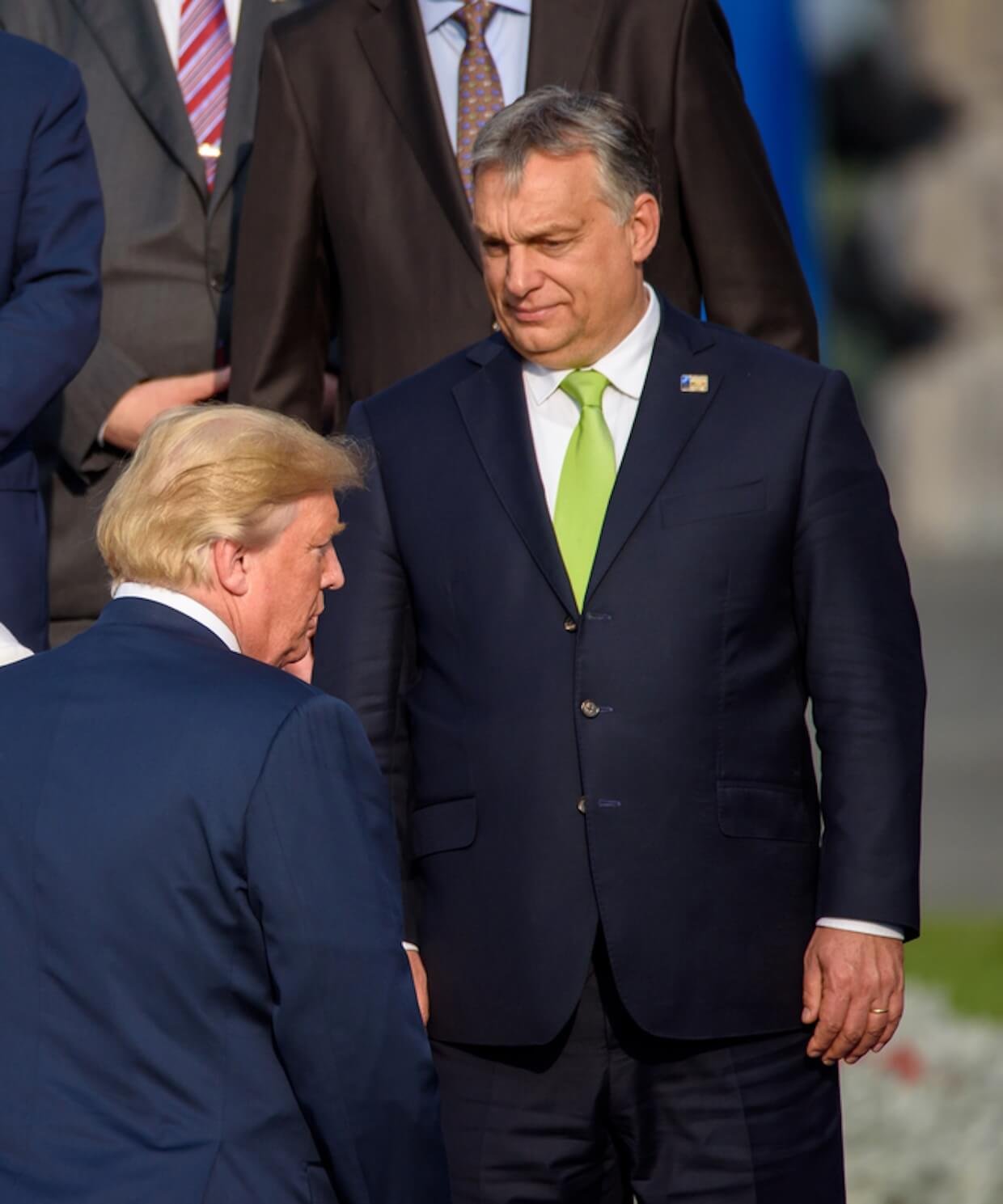
Many Hungarians understandably demand accountability for corruption, abuse of power, and constitutional dismantling under the Orbán government. Yet democratic transitions have often struggled to distinguish legitimate accountability from political revenge. How can a new government pursue meaningful legal and political accountability while preserving due process, judicial impartiality, and the rule of law that it seeks to restore?
Professor Kim Lane Scheppele: This is a very important question. Right after the election in Hungary—and also in Poland several years ago—the first reaction was simply joy. “Oh my God, we’ve gotten rid of them. We have this chance to start over. We have this possibility of democratic renewal.” People were dancing in the streets of Budapest. Hungarians are not always an optimistic lot.
I keep saying that one of the reasons why I moved to Hungary, learned this crazy language, and decided to focus on Hungary was that when they translated Winnie-the-Pooh into Hungarian, the most important character became Eeyore the donkey. It was completely changed in the translation, and Eeyore is really depressive. Everything is kind of awful. So there’s a kind of national tendency to be suspicious of people who are too optimistic. Yet, after this election, it was just amazing. As many of my friends wrote to me—I couldn’t be there for the election—it was like a totally changed country. It was just amazing. So, there’s this kind of euphoria. Then what starts to happen is that people remember what the prior government did to them.
We’re now seeing people writing. By the way, if you want to follow Hungary, Facebook is the place. We’re seeing a lot of people writing: “The Orbán government deprived me of my career. The Orbán government shut down my business. The Orbán government prevented my kid from getting into college. The Orbán government made me leave the country.” You see all of these things as the cost of dictatorship, which was real for many people.
Now you’re seeing that Péter Magyar promised during the campaign that this would no longer be a country without consequences. He said there would be consequences for the people who stole democratic government in Hungary. Now there’s this debate about what those consequences should be. You do see an increasing number of calls to take Viktor Orbán and his inner circle and put them all in jail. That’s not what Péter Magyar, so far at least, has talked about.
From what I can tell from his pronouncements—and I must say I agree, if this is what he intends—he wants to disqualify them from coming back into government again. That’s an absolutely reasonable militant-democracy move. This is what happened after World War II, when neo-Nazi groups were prevented from governing across Europe. By the way, communist groups that promised to overthrow the government were also banned.
There has to be a sense that if you’re an enemy of democracy, you can’t stand for election again. That’s a perfectly reasonable thing to do. There’s always a question about how far down you go, which of Orbán’s people were simply carrying out orders and would carry out the orders of any other government, and which people were really the engineers. But it’s a small country. That’s the first thing.
The second thing is that Orbán’s government was not a government that engaged in massive crimes against humanity or war crimes. Yes, perhaps against refugees and asylum seekers. That was where the carnage was, and that’s a separate matter. But with regard to Hungarians, it was mostly a matter of depriving people of their livelihoods, and it was mostly a matter of stealing all the money in sight. So, my slogan has been: “Make Orbán poor again.” Claw back the assets that they spent all those years stealing.
Now this has also been one of Péter Magyar’s priorities. As part of the next round of constitutional amendments, there’s an amendment on the floor of parliament to establish something called the National Asset Recovery Authority. Along with parliamentary committees that have already started work, it would be tasked with figuring out what happened to all the corruption in the Orbán regime. Who benefited? Where did all this money go?
The budget is now deeply in debt. The oligarchs around Orbán, his family, and his close circle are all massively rich. They stole public funds, so the goal is going to be to claw back those public funds and make them poor again. That’s revenge enough. I would not go the route of criminal prosecutions and prison because, once you start talking about depriving people of their liberty, you’re really in a different world—one in which not only do you need due process protections, but you also need to be able to convict them of crimes that existed at the time they were committed. So, I’m in favor of disqualification and disgorgement as kind of my slogan: keep them from coming back, take away all the assets they stole, and be done with it.
Fight Corruption, Build a Big Tent, and Take People Out of Fear
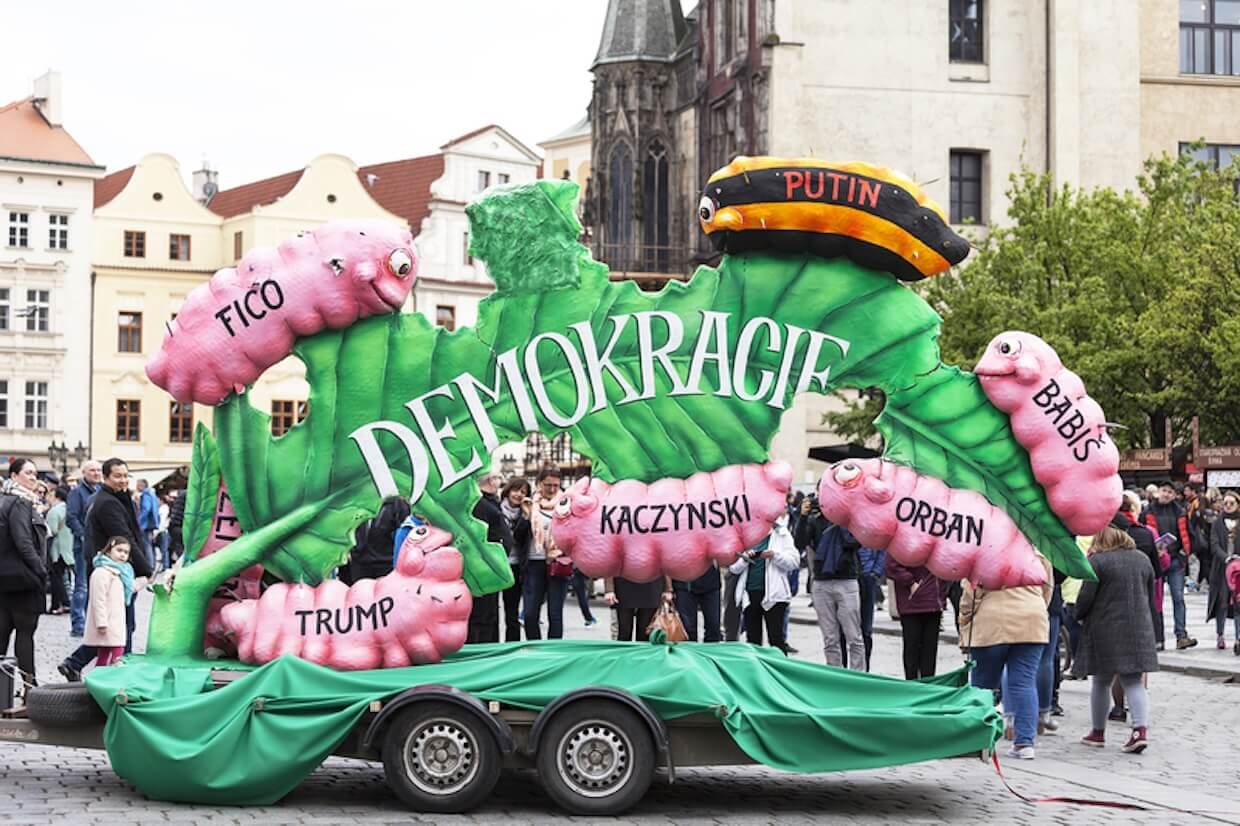
Photo: Jolanta Wojcicka.
Hungary has frequently served as the laboratory of democratic backsliding, with institutional innovations later appearing elsewhere. As countries across Europe and beyond confront increasingly sophisticated forms of executive aggrandizement, should Hungary now also become a laboratory for democratic recovery? Which lessons from Hungary’s experience do you believe have the greatest comparative significance for democracies facing similar trajectories?
Professor Kim Lane Scheppele: I’m a Hungary specialist, so I always think Hungary is a laboratory for everything interesting. But here’s the thing: I do think it’s a really interesting model for democratic recovery.
We can start with elections. One of the dilemmas with elections in autocratic systems is that the autocrat, the autocrat’s party, and its cronies spend a lot of time delegitimizing the opposition. They also rig the electoral system. So, it becomes very difficult to change power through elections. That’s really what autocracy means. The question is how you achieve a change of government in a peaceful, lawful manner. This is where Hungary provides a really good lesson.
First of all, Péter Magyar is a very unlikely candidate. He was a member of Orbán’s party for 20 years. He broke with the party in February 2024. Before that, very few Hungarians knew who he was. He essentially emerged out of nowhere because there was a corruption scandal in Hungary. What had happened was that the president of the country, allegedly with the support of the justice minister, engineered a pardon for a man who had covered up a pedophilia scandal in a state school.
Orbán’s government had been presenting itself as “Mr. Christian Europe,” defending children and all that kind of stuff. Once people realized they were pardoning pedophiles, this became a moral crisis for the government. Viktor Orbán responded by firing the justice minister, whom he said had recommended the pardon, and by calling on the president to resign, which she did. These were the only two women in Orbán’s governmental orbit. Suddenly, he had an all-male cabinet again.
At that moment, Péter Magyar stepped out of obscurity into the public spotlight and said, “Viktor Orbán, how dare you hide behind women’s skirts?” Macho thing, right? To understand why he did that, it’s important to know that this is where the story becomes very personal. At the time, he was going through an acrimonious divorce from the justice minister, Judith Varga. He had emerged from that marriage—and every woman I know finds this immensely creepy—having secretly taped their dinner conversations in order to have dirt against her in the divorce. During those conversations, she also exposed some of the corruption of the Orbán regime.
So he emerges from all this and this is not a promising start. It starts to raise the broader question—we’re in the middle of the Graham Plattner scandal in the United States at the moment—of how abusive these people are who suddenly become charismatic political figures. So I was skeptical from the beginning, given this background. He comes out of the marriage, gallantly defends his wife and the president who had just resigned, and then uses the tapes to say, “I know all about the corruption in the Orbán government, and we need to get rid of it.” That attracts a crowd. Then, in February 2024, he suddenly realizes, “Geez, I can actually cobble together a party and run in the June European Parliament elections.”
Which he does. He attracts crowds with his anti-corruption message. He cobbles together a party. I don’t think he knew half the people who were on his party list. They stand for election, and that’s when it becomes evident that there is so much anger at the Orbán government and such a desire for a new face. It’s a center-right face. This is a center-right country. You’re not going to get a left-wing victory out of this electorate except under very unusual circumstances.
Suddenly, in the European Parliament election, he gets one-third of the vote. You can build something out of nothing, and it was all centered on corruption. That became the theme. The first lesson, then, is: don’t campaign on left-right issues. Corruption was not something unique to the left. It’s not like campaigning on gay rights—which, much as I believe in them, is divisive in a center-right country. Nor was it campaigning on immigration, which is the far right’s hot-button issue.
He campaigned on corruption, and then he began saying: corruption is what has deprived you of all the things you expect the state to provide. The healthcare system is falling apart. You know that because you go to hospitals and they’re simply not up to standard. The transportation system is terrible. Public transit breaks down all the time. Your schools are failing. Why? Because they stole the money. That became the foundation of his campaign. He stayed relentlessly on that message: they stole the money, and that’s why you don’t have services. And how do you recover what the state should be providing? You recover your democratic voice and get rid of the autocrats. He stayed on that message for two years.
Let me just say a couple more things. That’s one lesson. If you build a big tent around a political message that is neither left nor right, you can attract support across the political spectrum. Péter Magyar also very carefully studied the electoral system. He’s a lawyer. They’re all lawyers in Hungary. As a law professor, I love that because it means I understand how they think. He clearly understood how the electoral system worked. Rural votes were where all the action was. If you could win the countryside, you could win the election.
Under the Hungarian electoral system, there was a tipping point where, if you reached a certain number of rural votes, you received bonus seats that produced constitutional supermajorities. So, Péter Magyar spent two years campaigning in villages. Sometimes he visited four, five, six, even seven villages in a single day. There’s a wonderful election map showing everywhere he went and comparing those places with the areas that voted for Orbán and those that voted for Magyar. Overwhelmingly, the villages he visited voted for him.
He would arrive with no security and tell people, “You don’t have to live in fear. We should not live in fear in this country.” Because one thing autocrats do—and we’re seeing this now in the United States—is to wield the power of the state. If they decide to go after you, they can crush you through criminal prosecutions, tax audits, or by making sure your family loses access to social benefits.
I had one friend who had lived abroad for a while, and suddenly those years disappeared from his pension calculations, cutting his pension in half. The state can do all kinds of things to individuals if they stand up to it. So, people retreat. They begin to treat politics the way they treat the weather. It’s terrible today, so I’ll put on a raincoat, but I’m not going to try to change it because I can’t. You have to bring that passive population, captured by fear, back into the active electorate.
The Magyar rallies mattered not only because of what he said. He talked about everything I’ve just described. But he also sang patriotic songs, recited the poetry everyone learns in grade school, waved the Hungarian flag, and projected patriotism. That was crucial for winning conservative voters in the countryside. Most importantly, though, he kept saying, “We shouldn’t live in fear.”
As people came to those rallies, they saw that their neighbors were there too. That emboldened them to bring in others who had still been hiding from politics. The rallies became moments when people could finally see that everyone else felt exactly as they did—that the Orbán regime had become intolerable. All of this is a way of saying that you can build an election campaign around a centrist message focused on corruption and state dysfunction.
You have to build a big tent. You have to bring people out of the defensive crouch they adopt under autocracy, where they’re simply trying to stay beneath the radar of a government that can crush them through the machinery of the state. Once you’ve built that kind of political force, you can win. What Péter Magyar ultimately did was to win the countryside and hit that tipping point. It’s like winning the lottery. Suddenly, he has 53 percent of the vote and 71 percent of the seats in parliament. Then you’re living in a completely different political world.
Just one last thing. In Brazil, the United States, and Poland—other cases where aspirational autocrats were defeated through elections—the margins of victory were very narrow. That meant the incoming governments had much less room to remove the autocratic holdovers left behind by their predecessors. Sure enough, in Brazil we see Bolsonaro’s son leading in the polls. He was recently damaged by a financial scandal, but absent that, it looked as though he would surely have won. Bolsonaro’s movement remains strong enough to return. We’ve had the re-election of Donald Trump. And PiS remains very strong in the polls in Poland, and we still don’t know how things will unfold there.
In other words, unless you break the cycle of autocrat-democrat —which always occurs along a declining trajectory for democracy because the new democrats lack the strength to dismantle the autocratic capture left behind by the previous government—the autocrats simply come back and deepen the process. That’s why you need this kind of overwhelming electoral victory. That’s what Péter Magyar’s victory teaches us, and it’s something other countries should aim for.
There’s going to be a second part to this story: Will Magyar succeed in overcoming all of these autocratic roadblocks without installing himself as the new autocrat? That’s where we are now. I think the signs are optimistic. But I’m also a little nervous, because any political power without checks is potentially devastating. When you have this kind of parliamentary majority and you’re dismantling the existing checks while saying, “Look, in the future we’re going to have more checks,” that’s a very vulnerable moment. We’ve all got to keep our eyes on the prize here. Is Hungary going to come back? We hope it will—and that it will become a model.
The First Years Will Determine Whether Democracy Truly Returns
Finally, if you were advising Hungary’s new democratic leadership today, what would you identify as the three most urgent priorities during the first years of democratic reconstruction? And perhaps even more importantly, what mistakes must democratic governments avoid if they hope not merely to remove an autocrat but to build a constitutional democracy capable of enduring long after today’s political moment has passed?
Professor Kim Lane Scheppele: Okay, that’s hard. The first thing is that, in the Hungarian system—and this is where every system is going to be a little bit different—you have to draw what Viktor Orbán himself would call a power map. Where is power concentrated? Where are the choke points?
In the Hungarian system, the most important choke point is the Constitutional Court. If I were Péter Magyar, I would have gone after the Constitutional Court first, rather than the presidency and many other offices, because that’s really where everything funnels together, and it’s going to be his biggest roadblock. So I would say the first priority is figuring out how to deal with the Constitutional Court. I think there are ways to do that. For example, changing its jurisdiction by law so that it can’t review many of the things the government is about to do. I also think the idea of putting a court above it has merit. There are a lot of possible approaches, but the Constitutional Court would be the first priority.
The second priority is putting checks on the new government. I think those checks can come in several different ways. Take this National Asset Recovery Authority, for example, which they’re setting up to investigate how state money was stolen. My concern is that the draft proposal doesn’t build in judicial review. It needs checks on these essentially unlimited prosecutorial powers.
Then there’s the ordinary judiciary. I mentioned the Constitutional Court, but I didn’t talk about what happened to the ordinary judiciary in Hungary. It’s much easier to fix than it is in Poland. The way they captured the judiciary in Hungary was by appointing the court presidents, appointing enough friendly judges on every court, and giving the court presidents the power to assign any case to any judge. Most judges in Hungary are still independent. If you get rid of the court presidents and deal with that small group of friendly judges on each court, you don’t have to replace the entire judiciary as you would in Poland, where you’ve got 3,500 judges. Getting rid of the court presidents alone would do a great deal to restore judicial independence. Then you need to build judicial checks into some of the new institutions that the Magyar government has created.
The third priority is that—not immediately, but not too far into the future—they need to revisit the election law, because it was designed to produce these constitutional supermajorities. Hungary needs to return to a proportional representation system. That has to be put in place so that the Magyar government can guarantee that, even if it is reelected, it won’t come back with another two-thirds majority. You need to make all of these changes while they still have this parliamentary majority. But you also need to reassure the public that the next election will not allow any single party to dominate the system like this again.
So, my top three would be: reform the Constitutional Court, restore the ordinary judiciary by building checks throughout the system, and then change the election law.