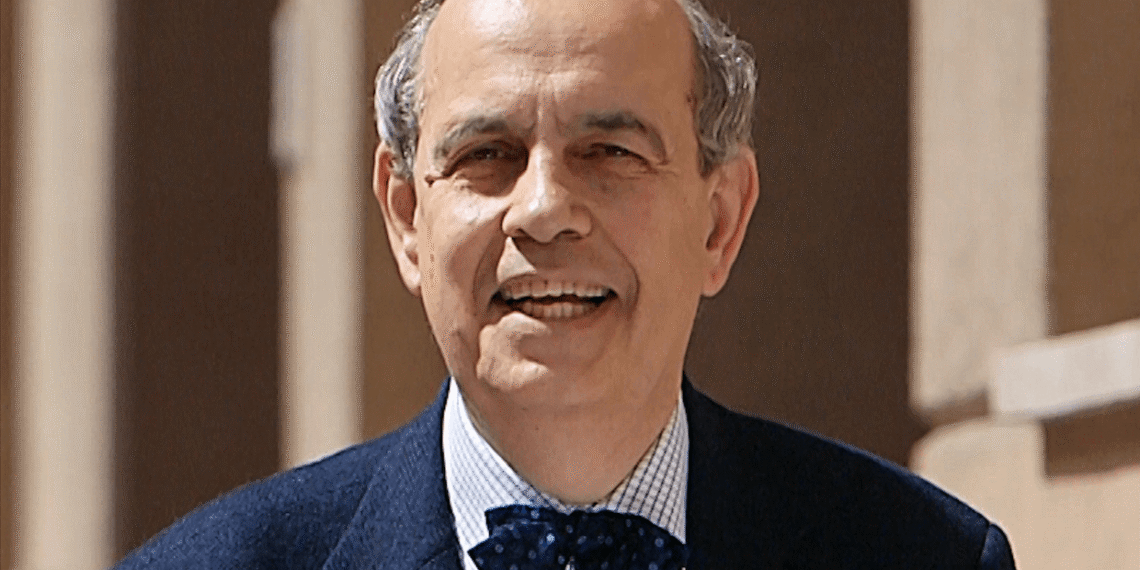
In this ECPS interview, Professor Marco Tarchi offers a nuanced interpretation of Italy’s recent referendum defeat, arguing that the outcome reflects not merely institutional disagreement but a deeper political conflict shaping democratic contestation. Rather than a technical rejection of judicial reform, the vote became a broader judgment on government authority, where competing visions of democracy—majoritarian mandate versus constitutional constraint—collided. Professor Tarchi underscores how political narratives, rather than policy details, drove voter behavior, with opposition forces successfully framing the reform as a threat to institutional balance. At the same time, he highlights the enduring role of historical memory and ideological legacies in structuring contemporary debates, while emphasizing that the result ultimately reveals both the resilience of Italy’s constitutional order and the limits of governing authority in a polarized political environment.
Interview by Selcuk Gultasli
Italy’s Prime Minister Giorgia Meloni has suffered her first major political setback after voters rejected her proposed judicial reform in a referendum, with around 54% voting “No.” Although framed as a technical institutional change, the vote quickly evolved into a broader judgment on her government, revealing growing political vulnerability ahead of next year’s general election. High turnout—close to 60%—underscored strong public engagement, yet failed to deliver the mandate Meloni sought. Opposition forces have seized on the result as evidence that she can be defeated, while analysts suggest the loss has weakened her image of political invincibility and complicated her wider constitutional ambitions, including proposals to strengthen executive authority. Amid economic pressures, geopolitical tensions, and escalating rhetoric toward the judiciary, the referendum signals a more competitive and uncertain political landscape.
Answering written questions from the European Center for Populism Studies (ECPS), Marco Tarchi, Professor Emeritus at the Faculty of Political Science at the University of Florence, offers a sharply contextualized reading of the outcome—one that shifts attention away from institutional technicalities toward the primacy of political conflict and historical memory. For Professor Tarchi, the referendum cannot be understood as a straightforward assessment of judicial reform. Rather, it was “heavily influenced by the political conflict between the center-right government and the center-left opposition,” a confrontation that “overshadowed the discussion on the specific content of the reform.”
At the core of this conflict lies a deeper struggle between competing conceptions of democracy and legitimacy. The government framed the reform as the fulfillment of an electoral mandate—“a commitment to those who had granted it the legitimacy to govern”—thus advancing a majoritarian understanding of democratic authority. By contrast, opponents invoked the limits of the rule of law and the post-fascist constitutional order, effectively denying that “the people [are] the ultimate and primary source of government legitimacy” when institutional balances are at stake. In this sense, the referendum crystallized a long-standing tension between popular sovereignty and constitutional constraint.
Crucially, Professor Marco Tarchi situates this tension within Italy’s enduring historical framework, noting that “the appeal to anti-fascism has certainly served to mobilize left-wing voters” and continues to influence political contestation, particularly given the post-fascist lineage of Brothers of Italy (Fratelli d’Italia, FdI). In this respect, historical memory operates not merely as rhetorical strategy but as a durable structuring force in contemporary Italian politics.
Far from signaling institutional fragility, however, Professor Tarchi interprets the outcome as evidence of systemic resilience: the referendum demonstrates that popular will can “grant a mandate” but also “revoke it,” reaffirming the solidity of Italy’s constitutional architecture. Yet politically, the message is unmistakable. What prevailed, as he concludes, was “a purely political conflict”—one that has re-opened Italy’s competitive political arena and exposed new limits to governing authority.
Here is the edited version of our interview with Professor Marco Tarchi, revised so slightly to improve clarity and flow.
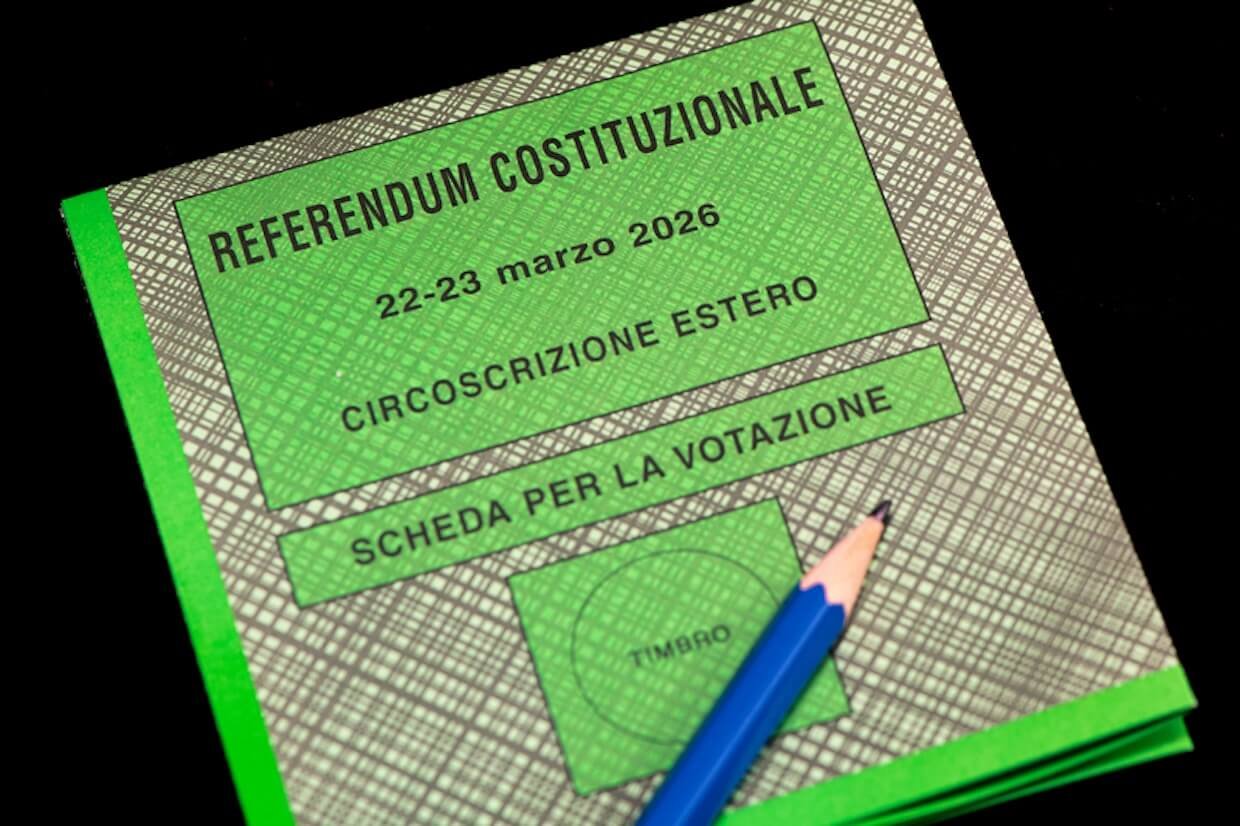
The Referendum Reflected a Politicized Clash, Not a Technical Judgment
To what extent should the recent referendum defeat be interpreted not simply as a rejection of a specific judicial reform, but as a broader refusal of an attempt to redefine the constitutional equilibrium between popular mandate and judicial autonomy?
Professor Marco Tarchi: It should be noted that the referendum result was heavily influenced by the political conflict between the center-right government and the center-left opposition, which overshadowed the discussion on the specific content of the reform. The issue of the constitutional balance between the popular mandate and the autonomy of the judiciary was raised by the opposition to accuse the government of seeking an authoritarian shift—an accusation obviously rejected by those who had voted for the reform in Parliament. The referendum result demonstrates that supporters of the "No front" succeeded in convincing a majority of the electorate that the reform would alter this balance.
In your view, what does this referendum reveal about the political risks that populist-led governments incur when they seek to transform anti-elite rhetoric into concrete institutional engineering?
Professor Marco Tarchi: Since I don’t consider the Meloni government populist, this question makes no sense to me.
Opponents Denied That Popular Mandate Alone Could Justify Institutional Change
The Meloni government presented the reform as a necessary correction to judicial corporatism, while its opponents depicted it as a threat to the post-fascist architecture of checks and balances. How should we understand this clash of narratives in light of competing conceptions of democracy, sovereignty, and the rule of law?
Professor Marco Tarchi: In the Meloni government’s view, the reform—having been included in the program presented to voters in 2022—constituted a commitment to those who had granted it the legitimacy to govern. It thus reflected a substantive interpretation of the concept of democracy, one also implicit in the use of a popular referendum to approve or reject choice made by the parliamentary majority.
Opponents, however, invoked the limits of the rule of law and, in this case, denied the government the right—despite its adherence to parliamentary procedures—to alter the existing balance of power. In doing so, they signaled that they do not regard the people as the ultimate and primary source of governmental legitimacy.
Does the outcome suggest that, in Italy, the judiciary still retains a distinctive symbolic status as a constitutional counter-power, such that reform projects in this domain are almost inevitably judged through the prism of democratic suspicion?
Professor Marco Tarchi: "Democratic suspicion" toward the reform was expressed only by opposition parties and the association representing the judiciary, which proved to be a de facto political counter-power, significantly contributing to the referendum result.
References to Anti-Fascism Will Continue to Shape Opposition Strategy

To what extent did the referendum confirm that constitutional politics in Italy remains deeply shaped by historical memory, particularly the legacy of fascism, anti-fascism, and the constitutional settlement designed to prevent the concentration of power?
Professor Marco Tarchi: The appeal to anti-fascism has certainly served to mobilize left-wing voters, but it has already been used on numerous other occasions since the creation of the Meloni government, due to the post-fascist ideological affiliation of Fratelli d’Italia, and will most likely continue to be used by the opposition to counter the government’s actions in many other areas.
How far can this vote be read as a test of the limits of majoritarianism in contemporary Italy—namely, the point at which electoral strength ceases to confer legitimacy for altering institutions intended to restrain executive dominance?
Professor Marco Tarchi: This vote demonstrates that the concept of popular will can be used either to grant a mandate to transform the institutional structure—as happened in the 2022 elections—or to revoke it, as in the referendum.
Majoritarian Reform Has Occurred Before Without Any Populist Label
How does the politicization of judicial reform in this case illuminate the tension between majoritarian conceptions of democracy and liberal-constitutional principles within populist radical right governance?
Professor Marco Tarchi: On a previous occasion—the 2001 reform passed by the Amato government, which radically modified Articles 114 to 133 of the Constitution without making concessions to the opposition’s proposals—the "majoritarian conception of democracy" was applied without there being any populist party in government and without any denunciation of a violation of liberal constitutional principles.
In the Italian case, where populism has often thrived on the denunciation of intermediary powers, does the referendum reveal that the rhetoric of popular sovereignty is more effective when directed against institutions than when deployed to restructure them?
Professor Marco Tarchi: Beyond this specific case, many examples in other countries – from the Austrian case of 2000 onwards – show us that this is one of the typical limits of populist action.
Political Conflict Overshadowed the Substance of the Reform
How should we interpret the high turnout in this referendum? Does it suggest that a significant segment of the electorate understood the vote as a constitutional choice of first-order importance, or that the referendum was successfully transformed into a plebiscitary judgment on the government itself?
Professor Marco Tarchi: The judgment on the government certainly prevailed, but it is impossible to empirically calculate how much the specific content of the reform influenced the outcome.
How should we situate this referendum within the longer trajectory of Italian populism, particularly the enduring distrust toward political and judicial institutions since the crisis of the First Republic?
Professor Marco Tarchi: Italian populism, especially during the crisis of the First Republic, extolled the judiciary’s role as a bulwark against political corruption. If the referendum vote was viewed from this perspective, one would paradoxically argue that it marked a success for the populist vision of the relationship between professional politicians and judges. But I repeat, what prevailed in this case was a purely political conflict.
No Political Actor Has Easily Translated Support into Structural Reform
Could the defeat be seen as evidence that populist radical right actors are more successful at politicizing dissatisfaction than at building broad consent for complex institutional redesign, especially when such redesign touches the judiciary?
Professor Marco Tarchi: With the already stated reservations about the alleged populist nature of the Meloni government— which I dispute —I would answer yes. I would add, however, that other political actors also found it difficult to transform the dissatisfaction that had fueled their success into consensus for the institutional overhaul. This was demonstrated by the failure in 2016 of Matteo Renzi, then both head of the government and the Democratic Party, to pass his constitutional reform to abolish the Senate.
To what extent can the referendum be read as a test of “state capture” dynamics, and does its outcome suggest resilience or fragility in Italy’s institutional architecture?
Professor Marco Tarchi: Given the result, one should deduce a substantial solidity of the Italian institutional architecture.
In comparative perspective, how does this referendum differ from those moments in which governments in Turkey, Hungary or Poland were able to advance far-reaching judicial transformations? Does Italy’s constitutional culture still provide stronger antibodies against that trajectory?
Professor Marco Tarchi: I see no substantial similarity between the Italian situation and the others mentioned, which are also very different from each other.
The Future of Reform Now Depends on the Next Election Outcome
To what extent might this result affect Meloni’s wider constitutional ambitions, especially proposals aimed at strengthening executive authority or introducing direct popular legitimation for the premiership?
Professor Marco Tarchi: This certainly represents a setback to Meloni’s proposed reform of the role of Prime Minister. Whether it can be revived or permanently shelved will depend on the outcome of the next general election.
Finally, what does this referendum tell us about the medium- and long-term trajectory of Italian and European politics: are we witnessing a momentary setback for a successful populist radical right government, or an early sign that constitutional resistance can still interrupt projects of hegemonic consolidation?
Professor Marco Tarchi: I repeat that I do not consider the Meloni government a "radical right-wing populist government," and therefore this question is irrelevant to me.