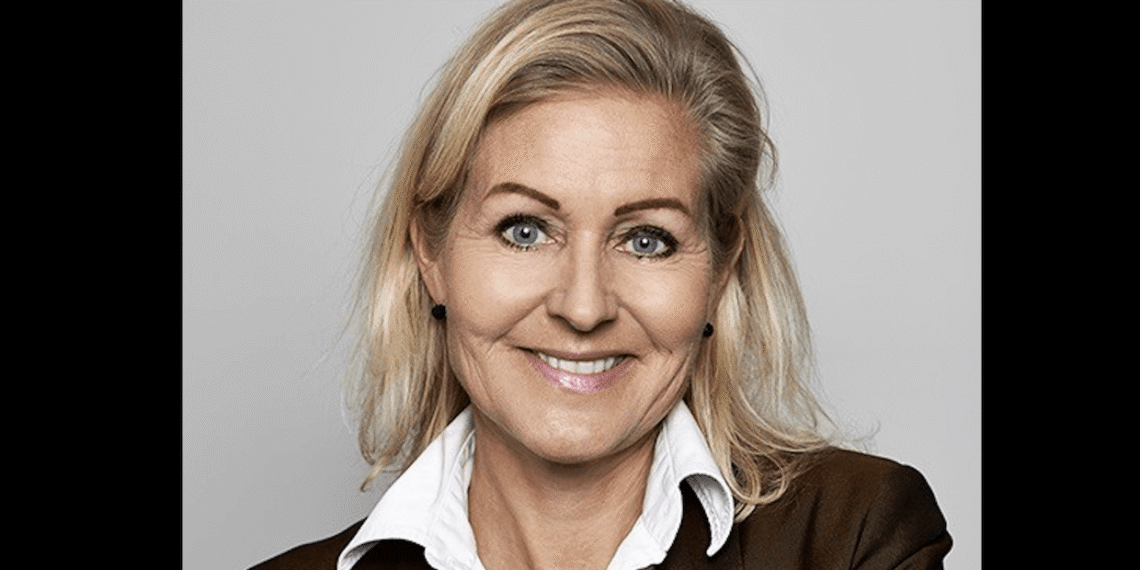
Professor Marlene Wind argues that Denmark’s 2026 general election is not only a contest over leadership and crisis management, but also a revealing test of how liberal democracies internalize radical-right agendas. In her interview with the ECPS, Professor Wind contends that mainstream Danish parties have “absorbed, not neutralized, the radical right,” warning that electoral containment has too often meant ideological normalization. Situating the campaign within the wider context of Trump’s pressure over Greenland, Europe’s security crisis, and Denmark’s pragmatic turn toward the EU, she highlights the deeper structural dilemmas facing contemporary democracy: the normalization of restrictive politics, the fragility of liberal institutions, and the growing entanglement between populist forces, geopolitical instability, and weakened democratic boundaries. Denmark, in her view, offers a critical case for understanding these broader European transformations.
Interview by Selcuk Gultasli
Giving an interview to the European Center for Populism Studies (ECPS), Professor Marlene Wind—Professor of Political Science at the University of Copenhagen and Director of the Centre for European Politics—offers a penetrating analysis of Denmark’s parliamentary election campaign against the backdrop of geopolitical rupture, institutional recalibration, and the longer-term normalization of radical-right politics. As Denmark heads toward the March 24, 2026 general election, the contest has unfolded under the shadow of Donald Trump’s renewed pressure over Greenland, a crisis that briefly revived Prime Minister Mette Frederiksen’s standing after months of domestic political weakness. Reuters reported that Frederiksen’s Social Democrats rebounded from a December polling low of 17% to around 22% in recent weeks, while the broader electoral landscape remained fragmented and without a clear majority for either bloc.
Yet for Professor Wind, the most consequential issue is not simply whether Frederiksen’s crisis management can secure a third term. Rather, the Danish case exposes a more structural dilemma at the heart of contemporary European democracy: how mainstream actors respond when radical-right agendas become embedded within the political center. This concern is captured in the interview’s headline argument: “Mainstream parties in Denmark have absorbed, not neutralized, the radical right.” Professor Wind also cautions that “the argument that we have managed to eradicate the extreme right is simply not accurate,” because “the policies adopted by the majority of politicians and political parties… have effectively incorporated right-wing positions.” The result, she argues, is not democratic containment but ideological normalization.
Professor Wind’s intervention is especially timely because the election has developed at the intersection of two seemingly contradictory dynamics. On the one hand, geopolitics has returned forcefully to Danish politics: Trump’s Greenland posture, Russia’s war against Ukraine, and uncertainty surrounding transatlantic guarantees have elevated questions of sovereignty, territorial integrity, and Europe’s strategic future. On the other hand, the campaign itself has remained anchored in domestic concerns—cost of living, welfare, migration, leadership fatigue, and social trust. As Professor Wind observes, geopolitics has functioned largely as “a background condition for everything else,” not as a fully articulated debate about Denmark’s future in Europe.
Within that setting, her analysis moves beyond the immediate election cycle to a broader diagnosis of European political development. She argues that Denmark’s majoritarian political culture, limited judicial review, and long-standing transactional view of European integration have made it easier to mainstream restrictive agendas without eliminating their social base. Indeed, she notes, aggregate support for right-wing parties remains “roughly 17% to 20%,” even if now dispersed across smaller formations. That continuity leads to her central normative warning: “Adopting the positions of the extreme right is not an effective strategy to counter it.”
In sum, Professor Wind’s remarks present Denmark not as an exceptional success story in containing the far right, but as a revealing case of how liberal democracies may gradually internalize the very forces they claim to resist.
Here is the edited version of our interview with Professor Marlene Wind, revised slightly to improve clarity and flow.
Mainstreaming the Far Right Has Not Reduced Its Support
Professor Marlene Wind, thank you very much for joining our interview series. Let me begin with the broad picture. To what extent should the current Danish election be understood not merely as a domestic contest over welfare, inflation, and leadership fatigue, but as a referendum on sovereignty, geopolitical anxiety, and Denmark’s place in an increasingly post-Atlantic Europe?
Professor Marlene Wind: Thank you very much for having me here. I will try to answer as well as I can. I think there was some anticipation that this election would be largely about geopolitics and Denmark’s place in Europe. However, it has actually turned out to be more of a background condition for everything else. It has not been particularly dominant, even though there have, of course, been questions about who we can trust to run the government in times of crisis, and this kind of very broad framing of the situation. There has not really been any detailed discussion about what kind of Europe we should have if we can no longer trust the US after Greenland, and so on. It has remained in the background. I also think this has to do with the fact that journalists covering national elections tend to be quite narrow-minded in terms of what should be debated and asked about, focusing mainly on healthcare, immigration, and similar issues. So, while the international situation and geopolitics are certainly present, they have not displaced other debates.
Domestic Priorities Prevail Despite Geopolitical Anxiety
In your work, you have explored the tension between national constitutional traditions and European integration. How do you interpret Mette Frederiksen’s transformation from one of Denmark’s most sovereignty-conscious and Eurosceptic leaders into a prime minister who now presents deeper European cooperation as a strategic necessity? Does this reflect ideological conversion, geopolitical realism, or a broader restructuring of Danish statecraft?
Professor Marlene Wind: It is really based on national interests. The current government, and in particular the Danish Prime Minister, has realized that everything Danish foreign policy has relied on since the Second World War has been NATO and our alliance with the Americans. This is also one of the reasons why Denmark has approached the EU in a very transactional way. We often accuse Trump of being transactional, but Denmark has also been incredibly transactional in its EU policy—and this is not limited to the current Prime Minister; it has been the case since we joined in 1973.
Our prime ministers and politicians more generally have viewed the European Union primarily as a market for creating wealth in Denmark—a market where we could sell our products—and little more. Every time we have held referendums on the EU over the years, the public debate has followed the same pattern: this will not become a federation, this will not become a political union. Please vote for this treaty; it will not develop into anything beyond a market. This reflects a consistently skeptical approach toward the more political idea of Europe. There has not really been much engagement with that dimension.
What has changed now is the impact of the illegal full-scale invasion of Ukraine, and, in particular, Donald Trump’s return to the White House—questioning support for Ukraine, questioning who is responsible for the war, and even questioning NATO, including whether the United States would honor Article 5 commitments. In response, the Danish Prime Minister has effectively made a U-turn.
Pragmatically, she has turned to her closest allies in Denmark and to civil servants, asking what the wisest course of action is. Europe is there, and it is the only viable option left. That explains this shift.
It is not driven by idealism or sentiment. It is highly pragmatic and transactional. The United States is no longer a reliable anchor in the same way. Geopolitics has fundamentally changed. And now, after 50 years of EU membership, we are finally beginning to see the EU as a more political entity than before—but this shift has emerged out of necessity and national interest, not out of idealism.
Denmark’s European Reorientation Reflects Geopolitical Realism, Not Ideological Conversion
The Greenland dispute has elevated questions of sovereignty to the center of Danish politics. In your view, has Donald Trump’s revived interest in Greenland merely triggered a short-term “rally around the flag” effect, or has it fundamentally altered how Danes think about territorial integrity, alliance dependence, and the fragility of the liberal international order?
Professor Marlene Wind: I think it is fair to say that there was a distinct Greenland moment, during which many European leaders—until the threat to invade Greenland emerged—had tried to accommodate Trump and please him; I would even say to cozy up to him. We have seen this across many European governments.
However, when the threat to invade an ally and seize part of the territory of an allied kingdom materialized, both Danes and Europeans more broadly began to realize that we need to stand together and rethink our position. This has brought renewed attention to questions of territory, integrity, and sovereignty—but not sovereignty in the narrow sense of protecting only our own borders. We saw clearly that France, Germany, and even the UK, despite being outside the EU, came to Denmark’s support in this moment.
I also think that Danes have become much more aware of the importance of resisting aggressors who threaten territorial integrity. After all, Europe has effectively been in a state of conflict for four years—not only Ukraine in relation to Russia. The prevailing narrative has emphasized that countries must be able to protect their borders and determine for themselves whether they wish to be democracies.
For that reason, when Trump and the United States began threatening an ally, we quickly realized that such threats could also affect us. It is not only Ukraine that can be targeted by external actors; this is a broader phenomenon and a direct challenge to the liberal international order. The principles of territorial integrity and the right of countries to determine their own political systems must not be undermined by threats of force.
All these elements have converged in the Greenland crisis, and the parallels with Ukraine have been striking. After all, what have Ukrainians been doing for the past four years? They have been defending their territorial integrity. That is precisely the principle at stake when Trump threatened Denmark.
Trumpism as Symptom: The Rise of ‘Designer Populism’ from Above
How should we understand Trumpism in this Nordic context? Is Trump best seen as an external disruptor of Danish politics, or as a transnational amplifier of political tendencies that already exist within Europe—such as executive personalization, nationalist rhetoric, distrust of institutions, and the normalization of coercive sovereignty claims?
Professor Marlene Wind: I have written about this myself in my Tribalization of Europe book, which came out in 2020, that Trump, Brexit, and the erosion of democracy in Hungary, and earlier in Poland, are part of the same story. Even the return of Trump 2.0 has been inspired, to a large extent, by the populism and the extreme right that we have seen rising in Europe since 2010. So, I think Trump is a symptom not only of populism and its rise, but also of a new type of autocratic leadership—leaders who manipulate in order to gain and retain power.
Within the academic literature, there has been an ongoing debate. On the one hand, there is a left-wing analysis of populism that attributes it primarily to inequality. On the other hand, newer strands of research suggest that it is not the poorest who support autocrats, but rather segments of the middle classes who are receptive to narratives about external enemies, “draining the swamp,” and immigrants taking over society.
In my view, both Trump and many right-wing populists in Europe represent a largely top-down phenomenon. What we see is what I would call “designer politics”: political actors who deliberately construct narratives and manipulate conditions in order to secure and maintain power. They generate antagonisms by portraying elites as liberal or “woke,” and by identifying external and internal enemies.
This pattern is evident across Europe—in figures such as Nigel Farage, the AfD in Germany, Marine Le Pen, and previously in the Netherlands, as well as in many Central and Eastern European countries. It is, in fact, less about a dissatisfied citizenry rejecting liberal elites and more about kleptocracy and the concentration of power. If we look at the data, for example in Poland, we see that people have become increasingly affluent, yet still vote for right-wing parties.
A similar pattern can be observed in the United States. In 2016, it was not the poorest voters who supported Trump; many of them voted for Hillary Clinton. This suggests that we should be cautious about reducing these developments to questions of inequality alone. They also reflect the strategies of highly cynical political leaders who actively manufacture dissatisfaction, create antagonism, and construct narratives of threat from which they claim to offer protection.
Why the Far Right Persists in Denmark
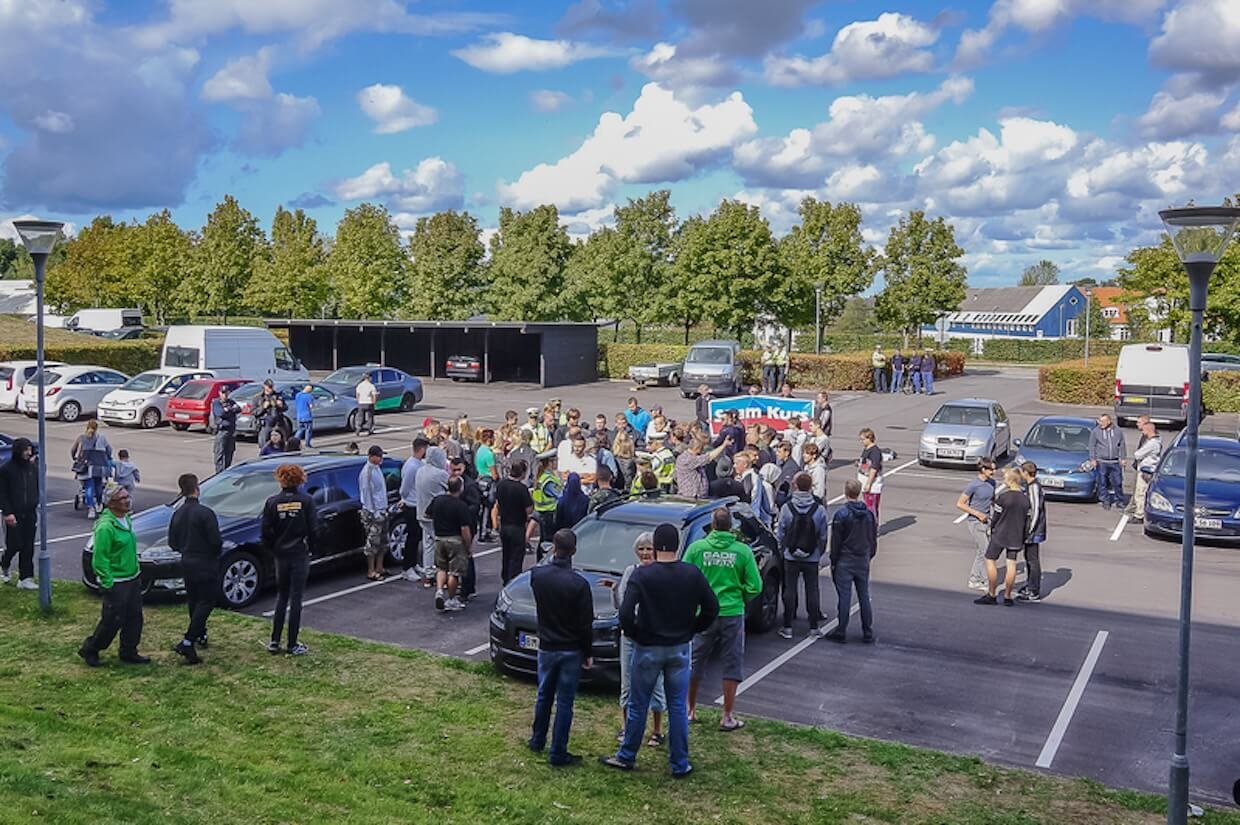
Denmark has long been seen as a case where mainstream parties absorbed parts of the anti-immigration agenda, thereby containing the electoral breakthrough of the far right. Do you see this as a successful inoculation strategy, or has it instead normalized core elements of far-right politics by translating them into state policy?
Professor Marlene Wind: To a large extent, it has become normalized in the Scandinavian countries. The reason it has been so easy to normalize is that we are not constitutional democracies; we are majoritarian democracies, where there is very little judicial review, and where there is no strong tradition of minorities challenging majority policies in court against a robust constitutional framework. We have a political culture in which the majority decides. In such an environment, it is much easier to normalize right-wing policies than in constitutional democracies, such as Germany, where minority groups can turn to the courts to assess whether policies are compatible with their rights and protections.
So, it has been easier in Denmark, and this process has been ongoing for many years. The argument that we have managed to eradicate the extreme right is simply not accurate. If you look at the policies adopted by the majority of politicians and political parties, they have effectively incorporated right-wing positions. We also see that support for right-wing political parties remains at similar levels as before; it is simply distributed across smaller parties. If aggregated, this support still amounts to roughly 17% to 20%. Moreover, there is currently a competition within Danish politics over who can adopt the toughest stance on these issues.
I believe it is a misconception in many European countries that this challenge has been resolved. I am not suggesting that the discussion itself is not legitimate—it certainly is. We must uphold our liberal values and firmly reject all forms of intolerance toward women, as well as attempts to promote Islamist and other extreme positions. Protecting liberal democracy remains essential. However, adopting the positions of the extreme right is not an effective strategy to counter it. In fact, the overall level of support for these views remains largely unchanged compared to 20 years ago.
Social Democracy at the Edge of Populist Politics
Relatedly, what does the Danish case tell us about the contemporary relationship between mainstream social democracy and populist political logics? Can restrictive migration politics coexist with a democratic center-left project without eroding the normative distinctions between social democracy and the populist radical right?
Professor Marlene Wind: That is a very political question. If you ask the Social Democrats, they would absolutely say yes. Even the Socialists on the left side of the Danish Social Democratic Party fully support this, so they would argue that it can coexist. This is a clear example of how such positions have become normalized. It is entirely legitimate to raise and debate the major questions and challenges associated with immigration, particularly when it comes to differing values. Where I see a problem, however, is when there is no judicial review of political decisions that sometimes approach the limits of what one would consider the rule of law, and where it becomes difficult to obtain a second opinion on the policies being implemented. That, in my view, is where the real issue lies—not in having an open discussion about challenges that certainly exist. So yes, any Social Democrat in Denmark would say that this is fully compatible, but it remains a highly political question.
Crisis Governance Expands Executive Power While Suspending Accountability
Professor Wind, do you think the incoming election demonstrates that external geopolitical crises can temporarily suspend domestic political accountability? In other words, can international confrontation—whether over Greenland, Ukraine, or transatlantic instability—re-legitimate incumbents whose domestic credibility had previously weakened?
Professor Marlene Wind: This is what happens every time there is a crisis. Political leaders go into crisis mode and argue that they need more power and greater competences to deal with the situation, and as a result, other issues are set aside. This is a very common phenomenon. You can see it in Hungary as well, where there has been a state of emergency since the COVID period. As far as I know, it is still in place. I am not entirely sure whether it has been lifted, but you can certainly observe similar crisis rhetoric in Denmark.
We have a Prime Minister who is highly effective in managing crises. However, the concern is always that more fundamental questions of accountability—democratic accountability in particular—as well as reasonable limits, may be overlooked in such situations. It is certainly open to debate whether we are currently in that kind of scenario.
At the same time, I do agree with the Prime Minister that we are, in a sense, in a state of war—and not only in relation to Ukraine. Europe is facing a very dangerous situation, being pressured from both the East and the West, while struggling to act collectively. This is deeply problematic, and it underscores the need for political leaders who are capable of addressing these challenges. So it is always a matter of balance, and something we must continuously reflect upon: has a given political leader gone too far in this regard? But at this moment, I believe that Europe needs strong and decisive leadership in order to endure as a continent.
The Fragile Foundations of Renewed Public Trust
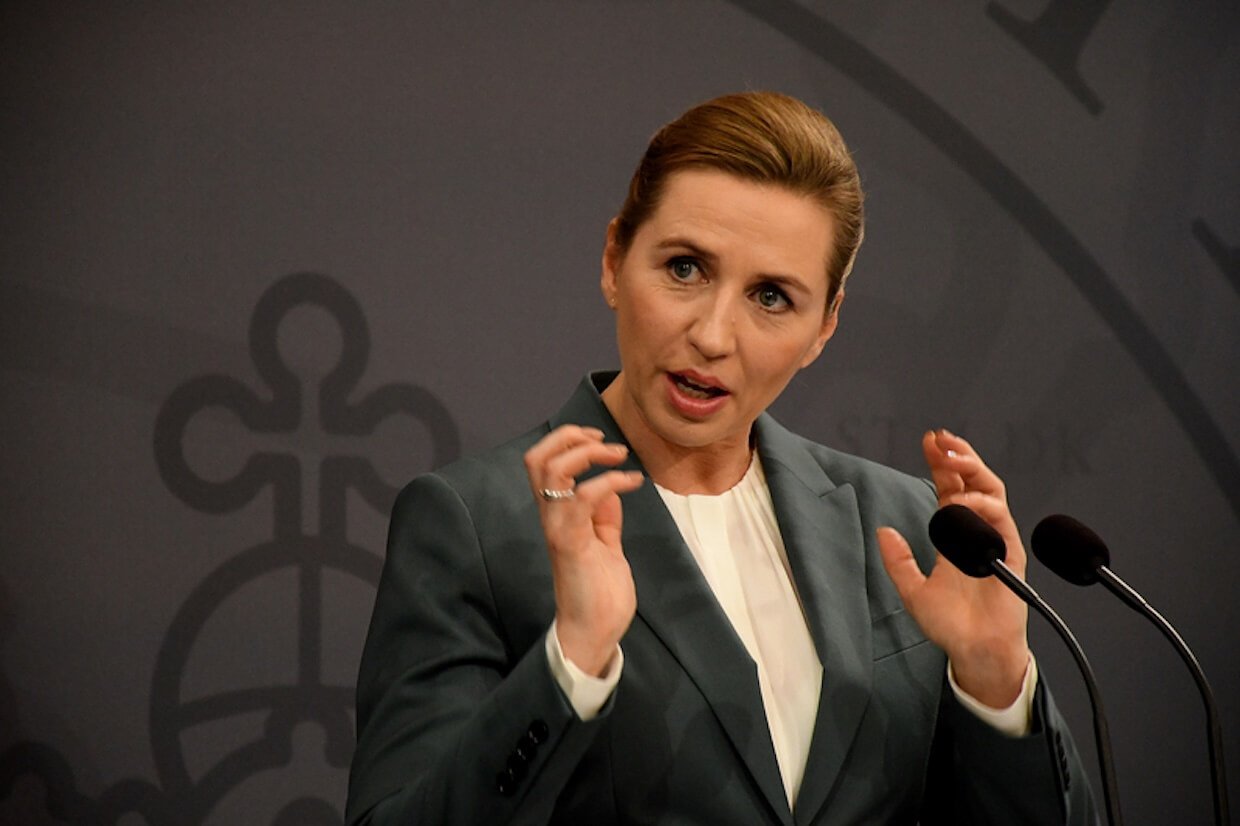
Much of the current debate revolves around whether Frederiksen’s firmer line toward Washington has restored public trust. But from a democratic-theoretical perspective, how durable is trust that is rebuilt through crisis leadership rather than through institutional responsiveness, social compromise, or policy coherence?
Professor Marlene Wind: That is a big question, which I think can only be answered when we look back in a few years. As citizens and voters, we tend to appreciate when politicians stand up and demonstrate leadership. At the same time, many Europeans were deeply dissatisfied with the initial responses to Donald Trump, when we sought to please him, accommodate him, and turn the other cheek.
The so-called Greenland moment marked a turning point, when we finally rejected his demand to take part of another ally’s territory. This was an important development that fed into a broader European effort to assert itself and say no. We observed a similar dynamic in the Middle East, where European actors emphasized that it was not their war, that they had not been consulted about Iran, and that they could not simply accommodate—even under threats that Trump might withdraw from or dissolve NATO.
In many ways, that phase is over. Europe has, to some extent, been constrained by a sense of inferiority and dependence on the United States. The Greenland crisis made it abundantly clear to many European leaders, and certainly to the Danish Prime Minister, that this approach is no longer sustainable when dealing with an unpredictable partner. A firmer stance became necessary, and we have seen this reflected in the decision to place Greenland within a working group while avoiding further escalation.
It is also worth noting that Mark Carney, the Canadian Prime Minister, was among the first to adopt this approach and openly resist Trump. After being publicly humiliated—referred to as merely a governor, with suggestions that Canada should become the 51st state—and after firmly rejecting such rhetoric, Trump appeared to step back and has not revisited the issue since.
In this context, there is a growing sense that political leaders must be able to stand up to forms of coercion and authoritarian behavior. Such pressures do not emanate from a single source; while they are evident in Russia, similar dynamics can also be observed in the United States at present.
From Opt-Outs to Integration?
You have written extensively on Europe’s legal and political development. In light of recent events, do you think Denmark is now moving from its traditional status as a semi-detached, opt-out-oriented member state toward something closer to the European core? Or is this shift still contingent, fragile, and driven more by fear than by conviction?
Professor Marlene Wind: As I said in the introduction to this interview, where you asked something similar, that at least initially the turn to Europe has been very transactional and very pragmatic—simply a question of, alright, we lost our ally, now we need to find new friends, and therefore we turn to Europe. But I actually believe that this could develop into a closer attachment, in general, to the European project. In fact, that what we are seeing right now could be a more fundamental shift, where Danish politicians have started suggesting that we could move from unanimity to qualified majority voting in foreign policy, that we could build up a European army, that we could even federalize, take on debt in common, and give the EU a bigger budget to create better conditions for business, innovation, and tech companies in Europe.
All these kinds of measures—removing barriers in the internal market that have grown to a rather extreme level, as illustrated in the Draghi report and the Enrico Letta report as well—would require more Europe.
And the Danes, and Danish politicians in particular, are gradually realizing that if Europe is to survive in a new global context with adversaries all around us, and where we strategically have to avoid excessive dependence on any major power and instead “de-risk,” as von der Leyen has said several times, then Europe simply has to become stronger and more independent. It must also become a power that projects its influence outward—not only a union that defends itself and builds military capabilities, whether within NATO as a European pillar or within the European Union itself, but also one that can project power externally.
Danish top politicians are gradually moving in that direction. I could anticipate it, and I think we have seen some signs of it, but again, I would say that there has not really been much public debate about this during the current campaign. There is still a sense among many political leaders that it is somewhat risky to address these issues openly.
But we will see in the coming years whether we are moving closer to Europe and toward the core, possibly by removing our remaining opt-outs. Denmark still has opt-outs in Justice and Home Affairs and regarding the euro, as it is not part of the euro area, even though its currency is pegged to the euro. If the next step is to remove these opt-outs and fully join the European core and its power center, then that would signal a more definitive shift—should this trajectory materialize.
How Economic Interests Shape Transnational Populism
How do you assess the relationship between today’s European far right and Trumpism? Should we think of them as part of a coherent transnational ideological family, or are they better understood as overlapping but ultimately fragmented projects—united by anti-liberal impulses, yet divided by national interests, geopolitical alignments, and competing visions of sovereignty?
Professor Marlene Wind: My analysis is that something much bigger is at stake here. We are dealing with a rather strange combination of populist leaders who are kleptocrats and, as I said earlier, who are designing populism from above, creating tensions and antagonism among the people they lead. I think that is very dangerous. It represents a very different way of understanding populism than in the past.
What we have seen, particularly in the United States, and increasingly also in Europe, is that many figures from Silicon Valley—J.D. Vance, who was supported by Peter Thiel, Musk, Bezos, and other tech oligarchs—are playing a significant role. They are actors who, in different ways, seek to challenge Europe. We also saw in the American foreign and security policy strategy published before Christmas that there is a willingness to support regime change in Europe and to weaken the European Union.
At first glance, one might think this is simply about supporting Orbán and other right-wing groups, such as the AfD, which Musk has also openly supported. But if you look more closely, it is fundamentally about economic interests. It is about control by major tech companies that want access to a less regulated European market.
What is happening in Europe, and why parts of the American administration appear to support the extreme right, is closely tied to the interests of US-based tech giants that seek access to a wealthy European market while opposing EU regulatory frameworks. They resist European regulation of digital platforms and often frame such regulation as censorship. Yet, in reality, the United States has dropped to 57th place in the Press Freedom Index, suggesting that concerns about censorship are not limited to Europe.
This connects to a broader transformation of populism and autocratic leadership, which is increasingly engineered from above, with “tech elites” playing a central role. Their interest in weakening the European Union and empowering far-right actors lies in the expectation that such actors will renationalize power, undermine EU integration, and create fragmented markets that are easier to dominate.
In that sense, the dynamic is not only ideological but also economic and structural. It may sound conspiratorial, but there is a growing body of research pointing to these linkages. The more one examines the connections between far-right populism and segments of the US tech industry, the more concerning the picture becomes.
Unanimity or Fragmentation: The Existential Choice Facing the European Union
Finally, Professor Wind, looking beyond the election itself, what do you see as the most important long-term question for Denmark and Europe: how to defend national sovereignty without collapsing into nationalism, how to deepen European cooperation without reproducing democratic alienation, or how to confront far-right normalization without simply borrowing its political vocabulary?
Professor Marlene Wind: How to strengthen the European Union in the current situation is very difficult because it was built as a market which, over time, developed to 27 or 28 members into a larger and larger union. We want more members; we want Ukraine in the Union. We face many institutional problems in terms of how to ramp up decision-making processes.
Some member states, because they have governments that are very concerned with their sovereignty, including Denmark, have also been very much against transferring further power to the European Union. And you have several countries with nationalist leaders—the Czech Republic, Slovakia, Hungary, and a president in Poland—so we have had, and continue to have, significant disagreement about how to strengthen the European Union. That is what makes me perhaps not so optimistic in the short run, because we currently have a system in the European Union where unanimity is required. When we want to integrate further, we need unanimity. When we want new members, we need unanimity, as you can see with the loan to Ukraine that Orbán is blocking because he is afraid of losing the election on the 12th of April.
So there are some inbuilt weaknesses that are very strong in the European project. We also have an upcoming election in France, where we may see yet another extreme right party enter the Élysée Palace. We are facing very significant institutional problems, and I am almost tempted to say that it can make or break: either we truly feel the pressure from the global stage—not just from the US and Russia, but also China—and get our act together, or we do not.
We need to move from unanimity to qualified majority voting quickly, or perhaps create a new club for those who are willing. I think we already see signs of that in relation to Ukraine. We have this “alliance of the willing,” and that could become an alternative within or alongside the European Union. We even talk about having Canada join, at some point, some of the structures in Europe.
So either we get our act together—the liberal democracies that are still left in the world—and ramp up our cooperation, or the whole thing risks collapsing. If current political leaders are not able to see the dangers of failing to preserve our way of life in Europe, also for our children and grandchildren—protecting democracy and free speech, and being able to defend ourselves and survive in a very competitive global market, perhaps through a more assertive industrial policy—then I am afraid that the entire European project could fall apart.
We know that there are actors, including in the United States, who would welcome such an outcome. Trump, for instance, prefers to deal with individual leaders rather than with the EU as a bloc. But we also have to remember that we are a very powerful bloc. We are almost 500 million Europeans. We are a wealthy continent. We have some of the highest life expectancies in the world. We have free education, welfare systems, and broad access to public goods.
So we have all the opportunities to become a strong, united power on the global stage. But we need political leaders right now who can see this, recognize its necessity, and act accordingly. That is why, despite all the criticism that can be directed at political leaders in times like these, when they do take leadership, I think that is exactly what we need—because the alternative is much worse.