Please cite as:
ECPS Staff (2026). “Virtual Workshop Series / Session 12 — Decolonizing Democracy: Governance, Identity, and Resistance in the Global South.” European Center for Populism Studies (ECPS). February 23, 2026. https://doi.org/10.55271/rp00143
Session 12 of the ECPS Virtual Workshop Series explored how “decolonizing democracy” requires attention to the material and symbolic structures shaping participation, legitimacy, and representation. The presentations framed democracy not as a settled institutional model but as a contested field shaped by colonial legacies, extractive political economies, and identity-based struggles over inclusion and authority. Dr. Oludele Mayowa Solaja’s comparative study of Nigeria and the United Kingdom showed how environmental governance can produce “participation without power,” where formal inclusion coexists with persistent injustice. Dr. Salomon Essaga Eteme’s analysis of Cameroon highlighted how pluralism has intensified communal claims to state ownership, complicating political alternation. Supported by Dr. Gabriel Cyril Nguijoi’s feedback, the session underscored the value of concepts such as biocultural sovereignty and communocratic populism and emphasized the need for context-sensitive, interdisciplinary approaches to democratic renewal in the Global South.
Reported by ECPS Staff
On Thursday, February 19, 2026, the European Center for Populism Studies (ECPS) convened Session 12 of its Virtual Workshop Series, “We, the People” and the Future of Democracy: Interdisciplinary Approaches, under the theme “Decolonizing Democracy: Governance, Identity, and Resistance in the Global South.” The session foregrounded a core problem in contemporary democratic theory and practice: how democratic institutions—often inherited, transplanted, or externally modeled—are reshaped, contested, and resisted in postcolonial contexts marked by extractive political economies, unequal state–society relations, and enduring struggles over recognition and voice.
Moderated by Neo Sithole (University of Szeged), the workshop approached “the people” not as a stable category but as a contested political project—produced through governance arrangements, mobilized through identity, and asserted through resistance. Across the session, democracy emerged less as an institutional endpoint than as a field of struggle in which colonial legacies, state power, and community agency intersect. Rather than treating decolonization as a symbolic discourse, contributors examined its concrete implications for how participation is structured, how resources are governed, and how legitimacy is claimed in environments where the state’s democratic form may coexist with exclusionary or coercive practices.
The session brought together two presentations that, while distinct in focus, converged on a shared concern with democratic deficit: the gap between formal mechanisms of participation and the effective capacity of communities to shape political and material outcomes. First, Dr. Oludele Mayowa Solaja (Olabisi Onabanjo University) examined environmental governance as a critical site of democratic contestation in a paper jointly authored with Busayo Olakitan Badmos (Olabisi Onabanjo University), titled “Decolonial Environmentalism and Democracy: A Comparative Study of Resource Governance in Nigeria and the United Kingdom.” Positioning environmental politics within the broader architecture of power, he explored how colonial histories and technocratic governance models marginalize local knowledge and produce “participation without power,” while proposing biocultural sovereignty as a pathway toward more inclusive ecological governance.
Second, Dr. Salomon Essaga Eteme (University of Ngaoundéré) analyzed electoral politics and identity mobilization in Cameroon in “Africa at the Test of Populism: Identity Mobilisations, Crises of Political Alternation, and the Trial of Democracy,” jointly authored with Dr. Yves Valéry Obame (University of Bertoua / Global Studies Institute & Geneva Africa Lab). His contribution interrogated how multiparty competition can intensify communal claims to representation, framing elections not as programmatic contests but as struggles over inclusion, alternation, and the symbolic ownership of the state.
The discussion was anchored by Dr. Gabriel Cyril Nguijoi (National Institute of Cartography; ICEDIS), whose role as discussant helped connect the papers’ empirical insights to broader debates on coloniality, accountability, and democratic substance. His interventions highlighted how both contributions disrupt common analytical shortcuts—whether the assumption that environmental injustice is confined to the Global South, or the notion that repeated elections necessarily constitute democratic consolidation.
Taken together, Session 12 offered a layered and comparative exploration of how democracy is challenged—and potentially renewed—through the politics of governance, identity, and resistance in postcolonial settings.
Dr. Oludele Mayowa Solaja: “Decolonial Environmentalism and Democracy: A Comparative Study of Resource Governance in Nigeria and the United Kingdom”
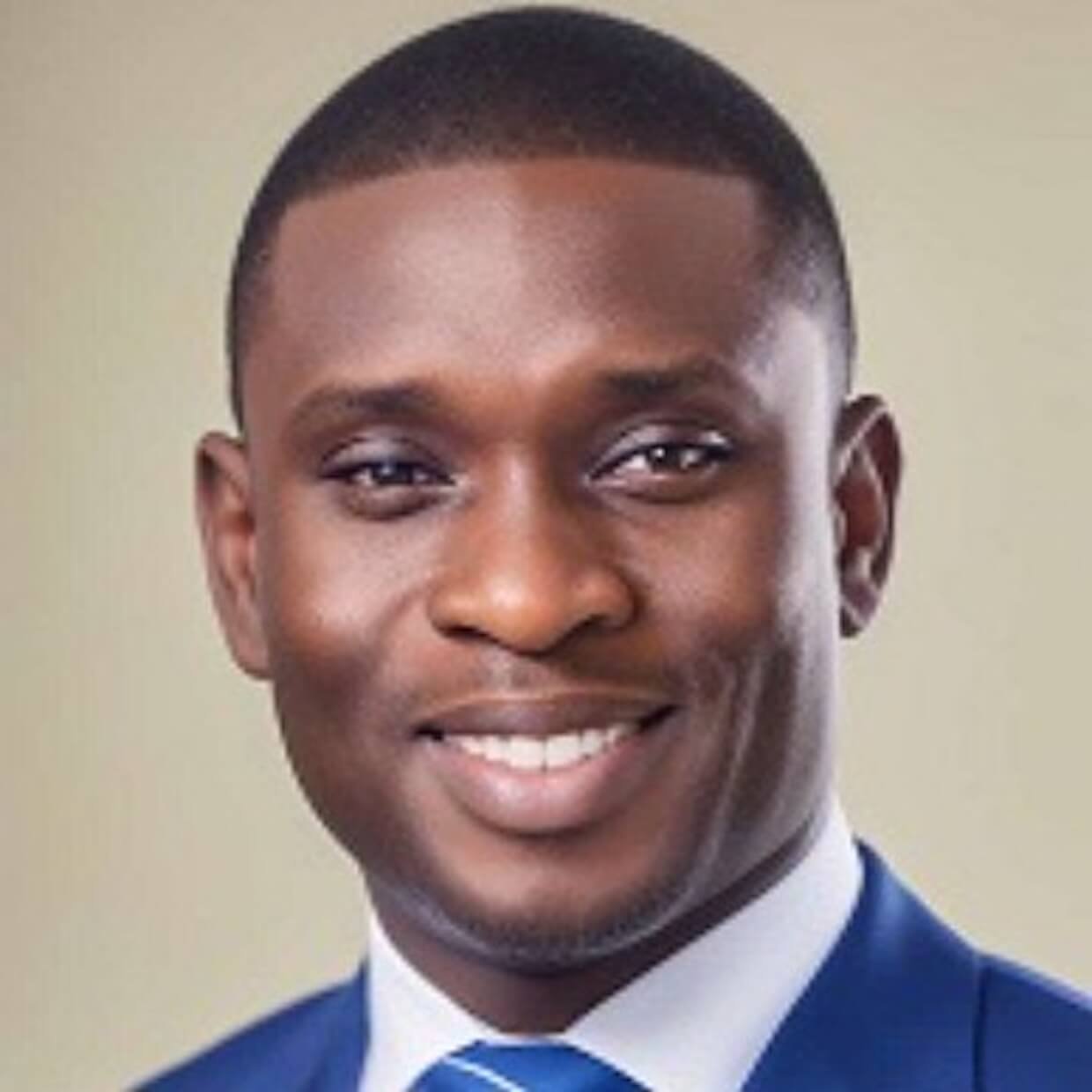
Dr. Oludele Mayowa Solaja of Olabisi Onabanjo University delivered a thought-provoking presentation examining the entanglement of environmental governance, colonial legacies, and democratic practice. Speaking from a comparative Nigeria–United Kingdom framework, he advanced the central claim that environmental governance should be understood not merely as a technical or administrative domain but as a site of democratic struggle shaped by historical power asymmetries and contemporary political economies.
Positioning his research within ongoing debates on participation and sustainability, Dr. Solaja noted that mainstream environmental governance literature often assumes that stakeholder inclusion naturally enhances democratic legitimacy and ecological outcomes. However, he argued that such frameworks frequently overlook how colonial histories and extractive economic structures continue to shape decision-making processes. In many contexts, governance systems privilege capital accumulation over community well-being, thereby reproducing ecological inequality across regions. From this perspective, environmental governance cannot be treated as politically neutral; rather, it reflects contested struggles over resources, voice, and knowledge.
The study was guided by three principal research questions: i) how colonial legacies continue to shape environmental governance in both Nigeria and the United Kingdom; ii) how distributive, procedural, and recognitional injustices manifest across the two cases; and iii) how Indigenous and decolonial approaches might offer alternative pathways toward sustainable governance.
By placing a Global South extractive economy alongside a Global North post-industrial democracy, the project sought to challenge the assumption that environmental injustice is primarily a Southern phenomenon and instead reveal its structural character across diverse political systems.
Dr. Solaja explained that the comparison was deliberately constructed. Nigeria’s Niger Delta represents a post-colonial, resource-dependent region marked by centralized control, oil extraction, and militarized environmental conflict. In contrast, the United Kingdom’s post-industrial regions—particularly South Wales and Northern England—illustrate an advanced industrial democracy navigating decarbonization and energy transition. Despite these differences in institutional capacity and policy development, both contexts exhibit what he termed a “democratic deficit” embedded within environmental governance arrangements.
The presentation’s theoretical foundation drew on decolonial environmentalism, particularly the work of Walter Mignoloand related scholars. Dr. Solaja argued that dominant environmental governance models are shaped by Eurocentric and technocratic assumptions that privilege market-oriented and state-centric solutions while marginalizing relational, place-based, and Indigenous ecological knowledge systems. Decoloniality, in this sense, involves challenging the presumed universality of Western sustainability paradigms and embracing what he described as “epistemic disobedience”—the refusal to accept a single authoritative model of environmental knowledge. Environmental conflicts, therefore, emerge not only from competition over resources but also from struggles over recognition and authority.
Methodologically, the study employed a cooperative qualitative case-study design grounded in critical interpretivism. The research team analyzed legislative archives, reports from NGOs and international organizations, media coverage, environmental indices, and data from the Environmental Justice Atlas. Through thematic coding, they identified patterns related to governance models, justice dimensions, and underlying power relations shaped by colonial continuities.
Turning to the findings, Dr. Solaja highlighted stark contrasts and parallels. In the Niger Delta, thousands of oil spill incidents in recent years have produced severe ecological damage, including heavy-metal contamination and concentrated environmental risk zones near pipeline infrastructure. While official narratives often attribute spills to sabotage, the research emphasized the role of weak regulation and aging infrastructure. The result is pronounced distributive injustice, with local communities bearing disproportionate environmental burdens.
The United Kingdom, by contrast, has achieved measurable progress in decarbonization, including the phase-out of coal and expansion of renewable energy. Yet structural tensions remain: fossil fuels continue to dominate overall energy consumption, new oil projects are still approved, and community influence over environmental decision-making is often limited. Thus, although distributive injustice may appear less severe in absolute terms, procedural and recognitional deficits persist.
Across both cases, environmental injustice manifested along three dimensions. Distributive injustice concerned the unequal allocation of environmental harms and benefits. Procedural injustice involved exclusion from meaningful decision-making processes, whether through repression in Nigeria or limited consultation mechanisms in the United Kingdom. Recognitional injustice referred to the marginalization of local knowledge, identities, and historical experiences. Dr. Solaja summarized this dynamic as “participation without power”: communities may be consulted, yet they rarely possess the authority to shape outcomes.
The presentation also underscored the role of resistance movements. In the Niger Delta, environmental activism is intertwined with ethnic identity, territorial sovereignty, and cultural survival, exemplified by movements such as the Ogoni struggle. In the United Kingdom, climate justice activism often reflects class, regional, and generational concerns. Despite contextual differences, movements in both regions increasingly share strategies, including civil disobedience, digital mobilization, and transnational solidarity networks—suggesting the emergence of a broader planetary justice framework.
In concluding, Dr. Solaja proposed alternative pathways centered on “biocultural sovereignty” and plural ecological governance. In Nigeria, this could involve ethical extractivism grounded in free, prior, and informed consent, equitable benefit sharing, and stronger accountability mechanisms. In the United Kingdom, community-owned renewable energy initiatives and locally driven transitions could advance energy democracy. Ultimately, he argued that democracy must extend beyond electoral institutions to encompass ecological sovereignty, epistemic plurality, and intergenerational justice. Only through such transformations, he concluded, can environmental governance become genuinely democratic.
Dr. Salomon Essaga Eteme: “Cameroon at the Trial of Democracy: Presidential Elections, Communaucratic Populism, and the Crisis of Political Transition”

In his presentation, Dr. Salomon Essaga Eteme offered a sociologically grounded analysis of electoral politics in Cameroon, advancing the concept of “communocratic populism” to explain the enduring tensions between democratic pluralism and community-based political mobilization. The presentation situated Cameroon’s contemporary political trajectory within the broader challenges of democratic transition in postcolonial African states, where formal multiparty systems coexist with deeply rooted communal identities.
Dr. Essaga Eteme began by framing the study within Cameroon’s transition to political pluralism in 1990, a watershed moment that introduced multiparty competition after decades of single-party dominance. While this transition generated widespread optimism about democratic reform, he argued that it also revealed structural constraints. Cameroon is composed of more than 250 ethnic communities, each with distinct historical and political aspirations. In such a context, electoral competition has increasingly become a mechanism for negotiating communal representation rather than contesting ideological programs. Presidential, legislative, and municipal elections alike are thus shaped by the imperative to secure community backing, transforming democratic participation into what Dr. Essaga Eteme conceptualized as communocratic populism—political mobilization grounded in communal identity claims rather than policy platforms.
The presentation traced the historical roots of this phenomenon to Cameroon’s post-independence political consolidation. From 1972 until the early 1990s, the country operated under a highly centralized system characterized by limited political freedoms and restricted avenues for dissent. The transition to multiparty democracy raised hopes for political alternation and broader participation. However, Dr. Essaga Eteme noted that the persistence of long-term incumbency—particularly the extended tenure of President Paul Biya—has generated both expectations and frustrations. While some citizens initially viewed democratic reforms as an opportunity for renewal, others increasingly perceived them as insufficient to produce meaningful change, thereby fueling community-based demands for political inclusion.
Central to the analysis was the observation that presidential elections have become focal points for communal competition. The announcement of President Biya’s candidacy in the 2025 election, after decades in power, intensified perceptions among various groups that political authority had been monopolized by a particular regional or ethnic constituency. This perception, Dr. Essaga Eteme argued, reinvigorated communocratic narratives asserting that leadership should rotate among communities. Such narratives do not necessarily reject democracy but reinterpret it as a mechanism for redistributing access to state power among identity groups.
The research was guided by three principal questions: i) identifying the forms and manifestations of communocratic populism during presidential elections; ii) examining how community affiliation shapes voter alignment; and iii) analyzing how political actors exploit communal sentiments either to legitimize incumbency or to challenge it. To address these questions, Dr. Essaga Eteme employed a mixed-methods approach combining field observations, social media analysis, and electoral data from recent presidential contests, particularly those of 2025. This methodology enabled a multi-layered understanding of both elite strategies and grassroots perceptions.
Empirical findings highlighted patterns of continuity across successive elections. Electoral outcomes revealed the sustained dominance of the incumbent leadership, accompanied by accusations of fraud and declining trust in electoral institutions. At the same time, opposition candidates frequently mobilized support by appealing to communal solidarity. For example, challengers from northern, western, or Anglophone regions framed their campaigns around the notion that their respective communities deserved access to national leadership after prolonged exclusion. Such appeals resonated strongly with voters who interpreted political power as a collective resource to be shared among groups.
Dr. Essaga Eteme illustrated how these dynamics have evolved over time. Earlier opposition figures, including prominent Anglophone leaders in the 1990s and 2000s, mobilized regional grievances against perceived Francophone dominance, contributing to tensions that later fed into the Anglophone crisis. More recent challengers have similarly invoked regional identity, arguing that the concentration of power within one community undermines national cohesion. Even post-electoral disputes often reflect communal narratives, with defeated candidates attributing outcomes to structural favoritism toward the incumbent’s group rather than to programmatic differences.
The presentation emphasized that communocratic populism shifts the focus of democratic competition from ideological debate to identity-based claims. Elections become symbolic contests over which community will control the state apparatus rather than deliberations over policy direction. This dynamic, Dr. Essaga Eteme suggested, contributes to a broader crisis of political transition, as democratic institutions struggle to mediate between national integration and communal representation. Instead of fostering a shared civic identity, electoral politics may reinforce divisions by encouraging leaders to frame political demands in communal terms.
At the same time, the analysis acknowledged the ambivalent character of communocratic mobilization. On one hand, it can serve as a vehicle for marginalized groups to articulate grievances and demand inclusion. On the other hand, it risks entrenching zero-sum perceptions of power, where one group’s gain is viewed as another’s loss. This tension complicates efforts to build stable democratic institutions capable of transcending identity politics.
Dr. Essaga Eteme concluded that Cameroon’s experience demonstrates the limits of procedural democratization in deeply plural societies. The introduction of multiparty elections does not automatically produce programmatic competition or institutional trust; instead, it may activate preexisting communal cleavages. Addressing the crisis of political transition therefore requires reimagining democracy beyond electoral mechanics, fostering inclusive governance structures that balance communal recognition with national cohesion. Without such reforms, communocratic populism is likely to remain a defining feature of Cameroon’s political landscape, continuing to shape both the aspirations and anxieties of its democratic experiment.
Discussant Dr. Gabriel Cyrille Nguijoi’s Feedback

Dr. Gabriel Cyrille Nguijoi offered substantive and analytically rich feedback on the presentations delivered by Dr. Oludele Mayowa Solaja and Dr. Salomon Essaga Eteme, highlighting their contributions to contemporary debates on populism, governance, and democratic transformation from African perspectives. His remarks underscored both the conceptual significance and the empirical originality of the two studies while posing clarifying questions aimed at strengthening their theoretical implications.
Regarding Dr. Solaja’s presentation on decolonial environmentalism and democratic deficit, Dr. Nguijoi characterized the paper as a stimulating and timely contribution to populism and governance studies. He was particularly struck by the comparative framework linking environmental governance in Nigeria and the United Kingdom, which juxtaposed a Global South extractive context with a developed post-industrial democracy. This transnational comparison, he emphasized, offered a compelling analytical lens that challenged conventional assumptions that environmental injustice is primarily a problem of the Global South. Instead, the paper demonstrated that tensions between resource governance and democratic accountability transcend regional boundaries and manifest across different political systems.
Dr. Nguijoi highlighted the presentation’s central argument that environmental governance is not politically neutral but historically embedded in colonial legacies and extractive political economies. He noted that this insight implicitly raised a profound normative question: whether democracy can genuinely flourish within development models that reproduce forms of colonial extractivism. In his view, this question extended beyond environmental politics to the broader relationship between governance structures and historical power asymmetries.
He further praised the paper for introducing environmental issues into populism discourse, an area often dominated by identity, economic, or institutional analyses. By situating environmental governance within debates on decolonization, identity, and resistance in the Global South, the presentation expanded the conceptual terrain of populism studies. At the same time, Dr. Nguijoi invited further clarification on the concept of decolonial environmentalism. Specifically, he asked whether the approach implied epistemic recognition of Indigenous knowledge systems alone, or whether it also entailed deeper institutional transformation involving ownership, participation, accountability, and governance restructuring. He also questioned whether environmental resistance movements, while democratizing public discourse, were capable of transforming governance architectures in practice. Overall, he expressed strong appreciation for the paper’s innovative integration of environmental governance into analyses of populism and democratic transformation.
Turning to Dr. Salomon Essaga Eteme’s presentation on communocratic populism and the crisis of political alternation in Cameroon, Dr. Nguijoi described the case as particularly significant given the country’s long-standing presidential incumbency and its implications for democratic renewal. He framed the study as addressing a structurally sensitive question: whether identity-based mobilization in electoral politics represents democratic participation or contributes to democratic erosion.
Dr. Nguijoi identified two principal analytical strengths in the presentation. The first concerned the centrality of identity mobilization in Cameroonian politics. He observed that political competition in this context appears structured less around ideological programs than around communal belonging, regional solidarity, historical grievances, and narratives of stability and protection advanced by political elites. In his interpretation, this dynamic captured the essence of communocratic populism, whereby electoral alignment becomes embedded in community affiliation, particularly during presidential elections. He noted empirical examples illustrating how opposition candidates mobilized regional and communal support bases in recent electoral contests, reinforcing the salience of identity in political mobilization.
The second strength he highlighted was the analysis of political alternation as a test of democratic substance. Although elections have been regularly held since the country’s transition to pluralism, executive turnover has not occurred, raising questions about whether democracy can be reduced to procedural repetition or must include a credible possibility of leadership change. Dr. Nguijoi suggested that Cameroon exhibits a pattern of electoral persistence without alternation, where communal rhetoric frames political competition as a struggle for survival, regional balance, or national stability. This dynamic, he argued, renders alternation structurally improbable and complicates assessments of democratic consolidation.
In concluding his feedback, Dr. Nguijoi emphasized that both presentations addressed crucial themes linking populism, identity, governance, and democratic transformation. He commended their focus on historically embedded structures — colonial legacies in the Nigerian case and identity-based mobilization in Cameroon — while encouraging further theoretical clarification. His remarks framed the two studies as important contributions to understanding how democratic processes are shaped, constrained, and contested in diverse political contexts.
Responses to Discussant’s Feedback
Dr. Oludele Mayowa Solaja
In his response to Dr. Nguijoi’s feedback, Dr. Oludele Mayowa Solaja expressed appreciation for the questions and comments, clarifying key aspects of his comparative framework on environmental governance in Nigeria and the United Kingdom. Speaking from a reflective standpoint, he emphasized that the contrast between the two cases was deliberate and methodological rather than evaluative. The study, he explained, did not seek to measure or compare the degree of environmental injustice across the two countries. Instead, its primary objective was to identify and illuminate democratic deficits present in both contexts despite their differing levels of development.
Solaja underscored that the United Kingdom, as a developed country with robust institutional structures, regulatory frameworks, and environmental governance mechanisms, nonetheless exhibits forms of democratic deficit. He noted that certain communities and groups remain marginalized in decision-making processes, particularly regarding environmental policy formulation and implementation. Even within a system characterized by strong democratic representation, unequal participation and limited voice for affected communities persist, revealing that institutional strength alone does not eliminate governance shortcomings.
Turning to the Nigerian case, Dr. Solaja highlighted the enduring influence of colonial legacies on environmental management. He argued that Nigeria inherited centralized, state-centric governance structures from colonial administrations, which continue to shape contemporary environmental policies. In this framework, the state retains dominant control over natural resources and extraction activities, often without meaningful consultation with indigenous populations or local communities. As a result, those who bear the ecological consequences of extraction are frequently excluded from decision-making processes, creating a pronounced democratic deficit.
He reiterated that the comparative analysis aimed to demonstrate that environmental governance challenges are not exclusive to the Global South. By juxtaposing Nigeria with the United Kingdom, the study sought to challenge the assumption that democratic deficits in environmental management are primarily a Southern phenomenon. Instead, Dr. Solaja argued, such deficits manifest in different forms across both the Global South and Global North, shaped by distinct historical and institutional trajectories.
Dr. Salomon Essaga Eteme
In his response to Dr. Nguijoi’s feedback, Dr. Salomon Essaga Eteme expressed gratitude for the discussant’s observations and used the opportunity to clarify key dynamics underlying his concept of communocratic populism in Cameroon. He focused particularly on the role of alliance formation among opposition forces and communities during presidential elections, presenting it as empirical evidence reinforcing his analytical framework.
Dr. Essaga Eteme explained that the persistent contestation of electoral procedures since the country’s transition to pluralism in 1990 has created a political environment marked by distrust and accusations of fraud. While acknowledging that post-electoral disputes are not uncommon in many democracies, he emphasized that in Cameroon such contestation often takes on a communal dimension. Opposition parties and communities excluded from power tend to interpret electoral outcomes as illegitimate, prompting efforts to build cross-community alliances against the incumbent’s support base.
He highlighted the 2025 presidential election as a revealing example. According to his account, when a prominent opposition figure was deemed ineligible to run by electoral authorities, segments of his regional support base redirected their backing to another candidate from a different community. This strategic convergence of voters across communal lines, he argued, illustrates how alliance-building operates within a communocratic logic: electoral behavior becomes driven less by ideological affinity than by the shared objective of displacing the community perceived to monopolize power.
Dr. Essaga Eteme concluded that these alliance dynamics demonstrate the adaptive nature of communocratic populism. Faced with a dominant ruling party and entrenched incumbency, opposition actors mobilize communal solidarities and forge temporary coalitions to challenge the status quo. In his view, such practices further substantiate his argument that identity-based mobilization remains central to understanding Cameroon’s electoral politics.
Q&A Session
The Q&A session developed into a wide-ranging and intellectually engaged dialogue that deepened the themes raised in the presentations, particularly the intersections between populism, environmental governance, democratic legitimacy, and identity-based political mobilization. Moderated by Neo Sithole, the discussion brought together conceptual reflections, empirical clarifications, and comparative insights, revealing the broader implications of the research beyond the specific case studies of Nigeria and Cameroon.
Opening the session, Sithole offered strong praise for Dr. Oludele Mayowa Solaja’s paper, emphasizing its methodological rigor and its successful integration of theory with empirical evidence. He noted that the study provided not only a clear conceptual framework but also concrete proof, particularly through environmental data from the Niger Delta demonstrating the presence of harmful chemicals and minerals in topsoil affecting local populations. Sithole framed the discussion within a broader critique of minimalist understandings of democracy, arguing that governance should not be confined to electoral processes but must extend to everyday conditions of life, including environmental quality and access to clean resources. In his view, the paper effectively illustrated how democratic governance—or its absence—directly shapes environmental outcomes.
Sithole also situated the Niger Delta within a wider global political economy, highlighting how multinational corporations often relocate environmentally harmful extraction activities to regions in Africa, Latin America, and Asia where regulatory frameworks are weaker. He characterized the Niger Delta as both one of the longest-running cases of environmental degradation and one of the most sustained examples of environmental resistance, noting that such resistance has become embedded in local identity. Extending the argument, he suggested that dissatisfaction with democratic governance across Africa stems from unmet expectations following the democratic transitions of the 1990s and 2000s, when many citizens assumed political liberalization would lead to improved living conditions. Instead, he observed, many postcolonial states continue to operate within institutional frameworks inherited from colonial administrations that were not designed to address local needs.
Drawing on examples from Kenya and South Africa, Sithole highlighted ongoing disputes over land rights and resource ownership, illustrating how colonial-era patterns of dispossession persist in contemporary governance. He posed a forward-looking question about whether environmental resistance movements across the continent could serve as catalysts for democratic renewal at a broader scale.
In response, Dr. Solaja clarified the intent of his research. He stressed that the study did not advocate dismantling existing environmental governance frameworks but rather reforming them through the integration of indigenous ecological knowledge systems. According to Dr. Solaja, contemporary democratic institutions in many postcolonial societies were externally derived and insufficiently adapted to local realities. The proposed solution, which he described as a biocultural approach, involves incorporating indigenous practices and knowledge into formal governance structures to create more inclusive and effective systems. This approach, he argued, would address democratic deficits while strengthening environmental stewardship by recognizing the long-standing expertise of local communities.
The discussion then shifted toward the question of accountability and reporting mechanisms. Sithole raised concerns about the effectiveness of multinational institutions and international organizations in contexts where domestic environmental reporting systems are weak or unreliable. He asked whether reliance on external actors was sufficient to ensure environmental justice or whether strengthening state capacity should be prioritized.
Dr. Solaja responded by emphasizing the importance of community participation in monitoring environmental conditions. He proposed bottom-up reporting mechanisms that would enable local populations to communicate environmental challenges directly to authorities, potentially using technological tools such as mobile applications. While acknowledging the necessity of formal institutional frameworks, he argued that they must be complemented by indigenous knowledge and grassroots engagement to achieve meaningful environmental democracy.
Dr. Bülent Kenes expanded the discussion by introducing a geopolitical perspective that connected environmental governance in Africa to the rise of contemporary populist movements in Western countries. He framed his question around the potential global implications of political ideologies associated with figures such as Donald Trump and the MAGA movement, which he characterized as challenging postcolonial frameworks and signaling a form of renewed imperial assertiveness. Dr. Kenes invited the speakers to reflect on whether African states and societies should be concerned about the broader consequences of these developments, particularly in relation to historical patterns of external domination. He specifically asked whether such political trends could generate new forms of re-colonization or intensified exploitation of African resources, labor, and environmental assets. His intervention underscored the possibility that shifting power dynamics in the Global North might place renewed pressure on Africa’s ecological systems and resource governance, thereby linking domestic environmental issues to wider geopolitical transformations.
In his response, Dr. Solaja addressed the geopolitical concerns surrounding potential renewed exploitation of African resources by situating them within a longer historical continuum of extractivism. He emphasized that African communities have endured the adverse consequences of intensive resource extraction both during colonial rule and in the post-independence period, often with limited benefits for local populations. According to Dr. Solaja, the well-being of affected communities has frequently been compromised, while state interventions have tended to be delayed, insufficient, or absent altogether. In many cases, assistance has been mediated through international donors or multinational corporations rather than delivered directly by national governments, creating complex arrangements that do not always serve the interests of local beneficiaries.
Dr. Solaja noted that although most African countries have been politically independent for decades, the persistence of asymmetrical global economic relationships continues to shape environmental governance and resource management. He argued that while no country can operate in isolation, interactions between the Global North and Global South should evolve toward more equitable and mutually beneficial partnerships rather than exploitative ones.
Returning to the conceptual framework of his paper, Dr. Solaja reiterated the importance of biocultural sovereignty, which advocates integrating indigenous knowledge systems into formal environmental governance structures. He suggested that empowering local communities to participate in decision-making over resource control, distribution, and management could reduce conflict and resistance movements. By drawing on longstanding indigenous ecological practices, he concluded, marginalized communities could gain greater democratic voice and contribute to more sustainable and inclusive resource governance.
The session also addressed conceptual issues arising from Dr. Salomon Essaga Eteme’s presentation on communocratic populism. Dr. Kenes noted the novelty of the concept and requested clarification of its meaning and applicability beyond the Cameroonian context. Dr. Eteme explained that communocratic populism refers to a form of political mobilization grounded in community identity rather than ideological programs. In this framework, electoral competition becomes a contest among communal groups seeking access to state power, often leading to alliances between communities aiming to displace incumbents.
He elaborated that political discourse frequently attributes governmental actions to entire communities rather than to individual leaders, reinforcing identity-based interpretations of power. As a result, electoral campaigns focus less on policy proposals and more on demonstrating communal strength, intelligence, or entitlement to rule. Dr. Eteme further explained that communocratic alliances emerge when communities perceive the existing power structure as monopolized by a particular group. These alliances are pragmatic and strategic, formed not around shared ideological visions but around the collective objective of redistributing political power.
Throughout the discussion, participants acknowledged that such dynamics complicate conventional democratic theory, which assumes competition based on policy alternatives and public interest. Instead, identity-based mobilization can transform elections into zero-sum contests among communities, challenging the ideal of governance oriented toward the common good.
The Q&A session concluded with a recognition of the originality and relevance of the concepts introduced by the presenters, particularly the integration of environmental governance into populism studies and the articulation of communocratic populism as a framework for understanding identity-driven electoral politics. The exchange underscored the importance of interdisciplinary approaches that consider historical legacies, institutional structures, and socio-cultural dynamics in analyzing contemporary democracy.
Overall, the session demonstrated how localized case studies—whether environmental conflicts in the Niger Delta or identity politics in Cameroon—can illuminate broader structural challenges facing democratic governance in the Global South and beyond. By fostering dialogue between empirical research and theoretical reflection, the discussion highlighted the value of comparative and context-sensitive analyses for advancing the study of populism, governance, and democratic transformation.
Concluding Remarks
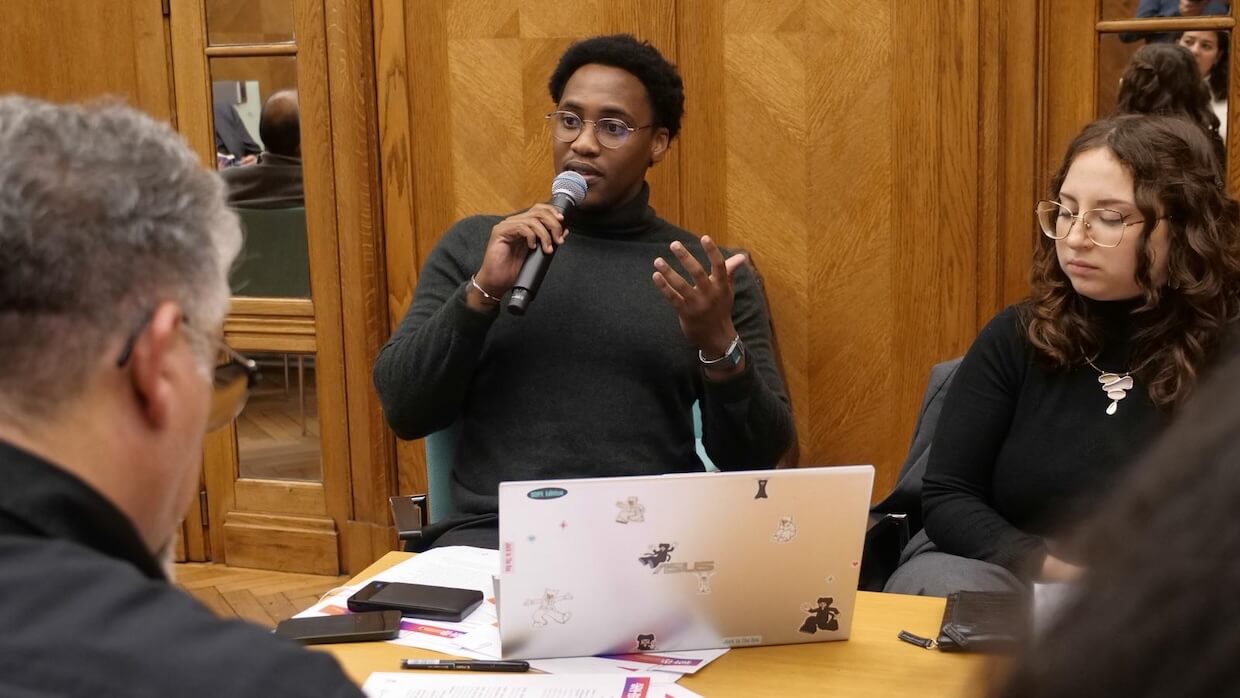
In his concluding remarks, moderator Neo Sithole reflected on the thematic contributions of the presentations and highlighted their broader significance for understanding populism and democracy in African contexts. He began by acknowledging his limited familiarity with the politics of Central Francophone Africa but noted that the presentations resonated with patterns he had observed elsewhere, particularly the role of geographical and historical divides in shaping populist mobilization. Drawing on comparative examples, he emphasized how north–south disparities rooted in colonial infrastructure development have produced enduring political imbalances in several postcolonial states. He commended the presenters for illuminating these structural divides and their implications for democratic governance. Sithole also encouraged further scholarly development of the concept of communocratic populism.
Offering brief feedback on the presentations, Sithole observed that both papers revealed understudied dimensions of populist expression in Africa. He noted that Dr. Solaja’s research demonstrated how environmental resistance can become central to local identity while exposing the persistence of colonial-era governance practices that continue to marginalize affected communities. In contrast, Dr. Essaga Eteme’s work shed light on identity-based mobilization and the enduring dominance of strong leadership patterns in certain Francophone states, where communal affiliation shapes political competition.
Conclusion
Session 12 of the ECPS Virtual Workshop Series underscored the urgency of rethinking democracy through the lenses of decolonization, governance, and identity in the Global South. By juxtaposing environmental struggles in Nigeria and the United Kingdom with identity-driven electoral politics in Cameroon, the session demonstrated that democratic deficit is neither geographically confined nor institutionally uniform. Rather, it manifests in diverse forms shaped by colonial legacies, political economies of extraction, and enduring contestations over representation and authority. The discussions revealed that formal democratic procedures—whether participatory environmental frameworks or multiparty elections—do not automatically translate into substantive inclusion or equitable outcomes. Instead, communities often confront structures that allow consultation without empowerment and participation without transformative capacity.
A key takeaway was the necessity of expanding democratic theory beyond procedural benchmarks toward a more substantive understanding that incorporates ecological justice, epistemic plurality, and communal recognition. The concept of biocultural sovereignty advanced in the environmental context, alongside the notion of communocratic populism in electoral politics, illustrated how locally grounded analytical frameworks can illuminate dynamics that conventional models overlook. Both contributions highlighted the ambivalence of resistance movements and identity mobilization, which may simultaneously articulate legitimate grievances and risk reinforcing new forms of exclusion.
Ultimately, the session emphasized that decolonizing democracy requires confronting the historical and structural conditions that shape contemporary governance, rather than merely adapting existing institutional templates. By bringing empirical case studies into dialogue with broader theoretical debates, Session 12 contributed to a more nuanced understanding of how democracy is negotiated, contested, and reimagined in postcolonial settings. It thus reinforced the importance of interdisciplinary and context-sensitive approaches for advancing scholarship on populism, governance, and democratic transformation in an increasingly interconnected world.