Please cite as:
ECPS Staff (2026). “Virtual Workshop Series — Session 11: Inclusion or Illusion? Narratives of Belonging, Trust, and Democracy in a Polarized Era.” European Center for Populism Studies (ECPS). February 6, 2026.https://doi.org/10.55271/rp00142
Session 11 of the ECPS Virtual Workshop Series examined the tension between democratic inclusion as a normative promise and inclusion as an everyday institutional practice. Bringing together interdisciplinary perspectives, the panel explored how belonging is constructed, experienced, and contested across administrative, participatory, historical, and theoretical domains. Contributions highlighted how exclusion often operates through subtle mechanisms—bureaucratic encounters, identity-based narratives, digital mobilization, and post-revolutionary boundary drawing—rather than overt denial. Across cases from the United States, Sub-Saharan Africa, Iran, and liberal democracies more broadly, the session underscored that democratic legitimacy today depends on both representation and effective, fair governance. Collectively, the discussions illuminated why gaps between democratic ideals and lived experiences continue to fuel distrust, polarization, and populist mobilization.
Reported by ECPS Staff
On Thursday, February 5, 2026, the European Center for Populism Studies (ECPS) convened Session 11 of its Virtual Workshop Series, “We, the People” and the Future of Democracy: Interdisciplinary Approaches, under the theme “Inclusion or Illusion? Narratives of Belonging, Trust, and Democracy in a Polarized Era.” The session brought together scholars working across political theory, political sociology, comparative politics, and historical analysis to examine a central tension of contemporary democracy: the growing disjuncture between formal promises of inclusion and the everyday experiences and institutional practices through which belonging is granted, denied, or conditionally recognized.
The workshop opened with welcoming and framing remarks by ECPS intern Stella Schade, who situated the panel within the broader aims of the series: to scrutinize how invocations of “the people” can function both as a democratic claim-making device and as a mechanism of boundary drawing that facilitates exclusionary politics.
Associate Professor Andreea Zamfira (University of Bucharest) chaired and moderated the session, providing an interpretive frame that foregrounded the duality between the “defined” and the “definers.” Her introduction emphasized that inclusion operates simultaneously as an affective, lived experience of belonging and as a political-institutional process through which elites, parties, bureaucracies, and other authorities define legitimate membership in the demos. This perspective oriented the panel toward subtle mechanisms—discursive, administrative, legal, and historical—through which democratic inclusion may become performative, selective, or strategically narrowed.
The papers collectively illuminated how legitimacy and exclusion are produced at multiple levels of governance and across distinct contexts. PhD candidate Ariel Lam Chan (Stanford University) examined citizen engagement with the administrative state through a conjoint experimental design that tested how procedural and performance cues shape “approach intention” toward public-facing agencies.
Dr. Dieudonné Mbarga (Independent Researcher) brought a comparative Global South perspective to democratic resilience, analyzing how active citizenship and participatory governance can strengthen accountability while also risking polarization and instrumentalization—particularly in digitally mediated political environments.
Dr. Ali Ragheb (University of Tehran) offered a historically grounded account of the Iranian Constitutional Revolution (1905–1906), arguing that democratic breakdown followed from the post-victory narrowing of “the people,” especially through the exclusion of women and minorities.
Complementing these empirical interventions, PhD candidate Saeid Yarmohammadi (University of Montreal) developed a theoretical argument about how identity politics and contested procedures of social justice can unintentionally intensify populist dynamics by deepening “us/them” boundaries within liberal democracies.
The session’s discussion was enriched by interventions from Professor Jennifer Fitzgerald (University of Colorado) and Dr. Russell Foster (King’s College London), whose feedback linked the presentations to wider debates on legitimacy, polarization, civic participation, and the variable meanings of “the people.”
Taken together, Session 11 offered a cohesive and analytically layered exploration of how contemporary democracies confront not only the challenge of governing effectively, but also the deeper question of who is recognized as belonging—and on what terms—in an increasingly polarized political age.
Assoc. Prof. Andreea Zamfira: The Defined and the Definers — Power, Inclusion, and Democratic Meaning

In her opening assessment of Session 11, Associate Professor Andreea Zamfira offered a conceptually rich and analytically nuanced framing of the panel’s central theme, “Inclusion or Illusion?”, situating it firmly within contemporary debates on democracy, populism, and representation. Drawing on insights developed during the ECPS hybrid conference “We, the People and the Future of Democracy,” she emphasized that the question of inclusion is not merely empirical but deeply political, normative, and discursive.
Dr. Zamfira structured her reflection around a key duality: the defined and the definers. On the one hand, inclusion and exclusion refer to citizens’ lived experiences of belonging within the political community—the demos. On the other, they point to the actors and institutions with the power to define “the people,” impose official narratives, and translate these narratives into policy. This distinction allowed her to foreground both bottom-up perceptions of political membership and top-down constructions of political identity.
She further argued that the panel’s contributions collectively interrogate subtle and often overlooked mechanisms of inclusion and exclusion, moving beyond formal citizenship or electoral participation to examine discursive, symbolic, and institutional practices. In this sense, the session was positioned as an effort to bridge the gap between how political belonging is experienced socially and how it is strategically constructed by political elites.
Dr. Zamfira critically engaged with competing explanations for the contemporary “deplorable state of democracy.” While some scholarly accounts attribute democratic decline to citizens’ alienation, mistrust, and limited understanding of governance, others place responsibility on political parties and governing elites that increasingly fail to represent societal interests while demanding popular trust. She leaned toward the latter interpretation, highlighting a growing distance between political elites and citizens, marked by disregard for personal autonomy, popular sovereignty, and the general will.
Invoking the work of scholars such as Peter Mair and Colin Crouch, Dr. Zamfira framed this rupture as a symptom of post-democracy, generated by the convergence of state bureaucracies and dominant economic actors. This convergence, she argued, erodes democratic sovereignty and fuels populist mobilization. Importantly, she warned against reductive or dogmatic analyses of populism, emphasizing instead Mair’s proposition that populism should be understood first as a symptom of de-democratization, and only secondarily as its cause.
In closing, Dr. Zamfira turned to the contentious concept of militant democracy, noting its growing prominence in responses to democratic crises. While some view it as a necessary safeguard, she cautioned that its restrictive logic risks undermining pluralism and further narrowing the political community. Her concluding question—whether such models protect democracy or deepen exclusion—set a critical and reflective tone for the panel discussions that followed.
Ariel Lam Chan: “What Does the Public Want? A Multidimensional Analysis of Cues in the Administrative State”

In her presentation, Ariel Lam Chan offered a theoretically grounded and methodologically innovative contribution to ongoing debates on democratic legitimacy, administrative governance, and citizen–state relations. Her study interrogates a central but underexplored question in the literature on public administration and democratic governance: what cues motivate citizens to engage with the administrative state, particularly in everyday encounters that shape perceptions of government legitimacy?
Chan situated her research within the administrative state as the primary and most tangible interface between citizens and government. Rather than abstract institutions such as legislatures or courts, she emphasized that citizens’ lived experiences of the state are mediated through street-level bureaucrats—police officers, teachers, welfare officials, and frontline administrators. These quotidian interactions, she argued, play a decisive role in shaping trust, avoidance, or engagement with public authority. The metaphor of the Department of Motor Vehicles (DMV) served as an emblematic site where bureaucratic friction, frustration, and legitimacy are most acutely felt.
The presentation engaged critically with existing scholarship on administrative burden, which traditionally focuses on learning costs, compliance costs, and psychological costs that deter service take-up. Chan identified two limitations in this literature. First, service take-up captures only completed interactions and overlooks the prior decision of whether to approach the state at all. Second, attitudinal surveys often measure abstract preferences without embedding respondents in decision-making contexts that approximate real-world choices. To address these gaps, Chan introduced a conjoint experimental design that centers on approach intention—the subjective willingness of citizens to engage with a public service agency before interaction occurs.
Theoretically, the study bridges two influential but often competing frameworks of legitimacy. On one side is performance-based trust, which views legitimacy as a function of efficiency, speed, and outcome effectiveness. On the other is procedural justice theory, which emphasizes fair, respectful, and impartial treatment as the foundation of relational legitimacy. Chan’s intervention does not privilege one framework a priori; instead, it empirically tests how citizens respond to competing process and outcome cues when making hypothetical but realistic choices between public service offices.
Methodologically, the study employed a nationally representative survey experiment with 1,073 US respondents. Participants evaluated pairs of public service agencies across three decision tasks, yielding over 6,000 agency evaluations. Agencies spanned fourteen domains, including the DMV, Social Security Administration, and welfare offices. Cues were randomized along two dimensions: process cues (fairness and respectful treatment) and outcome cues (efficiency and performance). Importantly, cue statements were designed to mimic short online reviews, thereby approximating informational environments citizens commonly encounter.
Chan’s findings offer several important insights. First, all positive cues—both procedural and outcome-oriented—significantly increased citizens’ willingness to approach an agency, confirming that legitimacy signals matter at the point of engagement. However, the relative importance of these cues varied by measurement context. When respondents evaluated agencies on an ordinal confidence scale, considerations of fairness and efficiency carried comparable weight. Yet when forced into a binary choice between two offices, respondents prioritized outcome cues over process cues. This distinction suggests that while procedural justice remains normatively salient, instrumental performance becomes decisive when choices are constrained.
A particularly robust finding concerned fairness. Across both ordinal and binary models, fairness emerged as a stable predictor of approach intention, indicating that it functions as a foundational element of perceived legitimacy rather than a contingent preference. At the same time, the study found no evidence that process cues systematically outweighed outcome cues, challenging some expectations derived from procedural justice theory.
The analysis further revealed important interaction effects. High process cues amplified the impact of favorable outcome cues beyond their additive effects. Agencies perceived as both competent and respectful enjoyed a 5.2–6 percent boost in likelihood of selection, suggesting that relational capacity operates as a multiplier of performance rather than a substitute for it. This finding underscores the complementary, rather than competitive, relationship between efficiency and procedural justice.
Chan also examined subgroup differences, testing hypotheses related to racialized administrative burden, political ideology, and socioeconomic status. Contrary to expectations, marginalized groups and frequent welfare users did not exhibit stronger preferences for relational cues over outcomes. Similarly surprising was the ideological pattern: Democrats displayed a significantly stronger preference for outcome cues than Republicans, suggesting a potential shift toward demands for a high-capacity, high-performing state even among traditionally process-oriented constituencies. In contrast, higher-income and more highly educated respondents prioritized outcomes over relational ease, aligning with established literature.
In conclusion, Chan argued that public trust in the administrative state rests on a dual expectation of competence and fairness. While efficiency and results guide immediate engagement decisions, procedural justice remains the aspirational bedrock of institutional legitimacy, as reflected in respondents’ open-ended responses. Her presentation closed by advancing a normative implication: investments in relational capacity should not be treated as ancillary but as essential to rebuilding trust, reducing avoidance, and strengthening the democratic fabric linking citizens and the state.
Dr. Dieudonné Mbarga: “Active Citizenship, Democracy and Inclusive Governance in Sub-Saharan Africa. Nexus, Challenges and Prospects for a Sustainable Development”

In his presentation, Dr. Dieudonné Mbarga offered a comparative and empirically grounded analysis of the role of active citizenship in fostering inclusive governance and democratic resilience in Sub-Saharan Africa. Speaking from the perspective of a Global South scholar, Dr. Mbarga emphasized both the analytical relevance and normative urgency of situating debates on inclusion, participation, and populism within contexts marked by fragile democratic transitions, deep social pluralism, and uneven institutional capacity.
Dr. Mbarga framed his intervention around a central puzzle: how active citizenship can strengthen democratic governance in polarized environments without reinforcing exclusionary or populist narratives of “the people.” He noted that Sub-Saharan Africa presents a particularly complex terrain for addressing this question, given the coexistence of declining institutional trust, intensifying political polarization, and rising mobilization of youth and women—dynamics increasingly mediated by digital platforms.
Conceptually, Dr. Mbarga defined active citizenship as the sustained commitment of individuals to participate meaningfully in public governance, drawing on established definitions from governance and citizenship studies. His theoretical framework combined insights from deliberative democracy, participatory governance, and contributivist approaches to populism. While participation is often normatively associated with accountability, legitimacy, and inclusion, Dr. Mbarga cautioned that it can also generate division when political actors instrumentalize popular mobilization through exclusionary definitions of “the people.”
Methodologically, the study adopted a qualitative and comparative approach, combining interviews, participant observation, policy analysis, and secondary literature across five country cases: Kenya, Ghana, Ethiopia, Senegal, and Cameroon. This design allowed Dr. Mbarga to trace both common patterns and context-specific dynamics of civic engagement across diverse political and institutional settings.
The findings revealed a dual and ambivalent role of active citizenship in the region. On the one hand, civic engagement has demonstrably strengthened accountability and policy performance. In Kenya, youth and women’s mobilization has shaped climate governance and inclusion agendas. In Ghana, participatory budgeting initiatives have enhanced transparency and local accountability. Ethiopia’s community-based participation mechanisms have contributed to improved social protection outcomes. These cases underscore the democratic potential of active citizenship when embedded in participatory institutions.
On the other hand, Dr. Mbarga highlighted the risks of politicized and instrumentalized mobilization. In Senegal, digitally mediated youth participation has energized political engagement but also intensified polarization. In Cameroon, civic engagement persists despite restrictive institutional environments, yet often takes fragmented and informal forms. Across cases, Dr. Mbarga observed that digital platforms simultaneously expand opportunities for inclusion and amplify fragmentation, enabling political elites to mobilize citizens—particularly youth—without fostering sustained civic understanding or democratic learning.
A recurring theme in Dr. Mbarga’s analysis was the salience of ethnic and tribal identities in shaping political participation. Unlike racialized dynamics more common in Western democracies, Sub-Saharan African contexts are often structured around multi-ethnic and multi-tribal cleavages. These identities, he argued, can be readily activated by populist leaders, transforming civic participation into a vehicle for exclusion rather than inclusion and undermining institutional trust.
In terms of policy implications, Dr. Mbarga emphasized the need to institutionalize participatory governance mechanisms, strengthen civic education, support youth and women’s leadership, protect civic space, and promote inclusive digital participation in line with SDG 16. His concluding assessment stressed that active citizenship could enhance democratic resilience only when anchored in inclusive institutions, structured participation, and protected civic freedoms.
Overall, Dr. Mbarga’s presentation contributed a nuanced Global South perspective to the session’s broader inquiry into inclusion and illusion, highlighting both the democratic promise and the political risks of active citizenship in polarized and plural societies.
Dr. Ali Ragheb: “Silenced Voices in a Democratic Dawn: How the Iranian Constitutional Revolutionaries (1905–1906) Weaponized ‘the People’ Against Minorities”

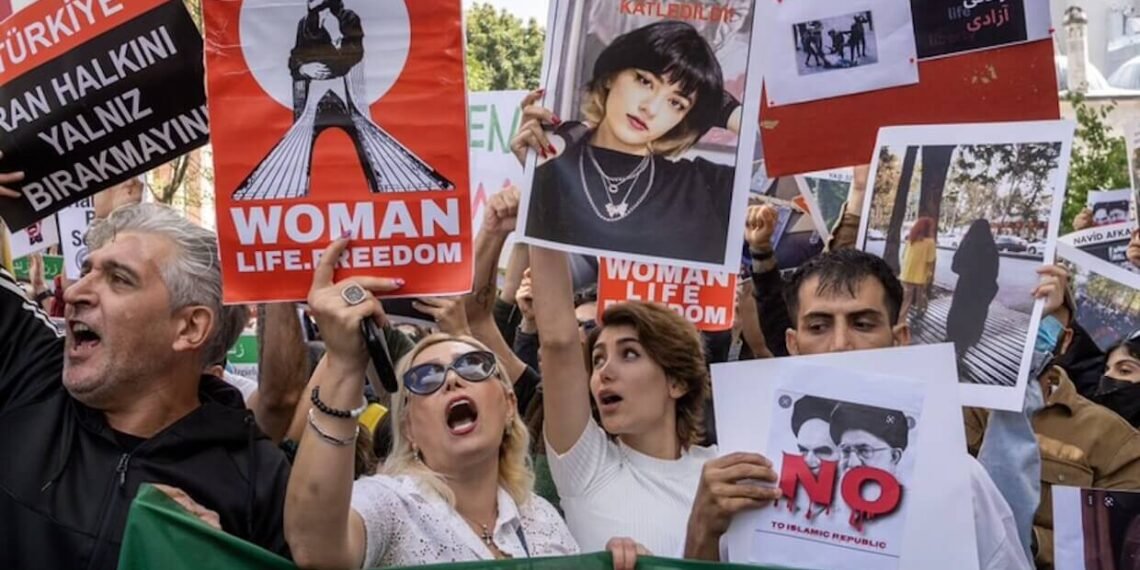
Dr. Ali Ragheb’s contribution to Session 11 was delivered in the form of a pre-recorded presentation, necessitated by repeated and ultimately unsuccessful attempts to join the session live due to enforced internet restrictions in Iran. This constraint, which Dr. Ragheb explicitly framed as an instrument of political control during a moment of acute national crisis, served not merely as a logistical obstacle but as a poignant extension of the substantive themes of his paper. His intervention thus unfolded at the intersection of historical inquiry, political theory, and lived authoritarian experience.
Dr. Ragheb’s presentation addressed the Iranian Constitutional Revolution of the early twentieth century as a critical historical case for understanding the paradoxes of popular mobilization, inclusion, and democratic failure. He began by situating the phrase “We, the People” not as a constitutional abstraction for Iranians, but as a lived and contested condition—one shaped by resistance, repression, and repeated cycles of hope and betrayal. This framing connected Iran’s contemporary crisis, marked by violent repression of popular protests and renewed exposure to war, to a longer genealogy of failed democratic aspirations.
The core research question guiding Dr. Ragheb’s study was deceptively simple yet theoretically ambitious: why did a revolution that succeeded through mass participation fail to defend itself once it achieved institutional power? While existing historiography has emphasized external imperial intervention and internal structural weaknesses—such as low literacy rates or institutional fragility—Dr. Ragheb argued that these explanations overlook a crucial dynamic: the deliberate narrowing of the political meaning of “the people” by revolutionary elites after victory.
Theoretically, Dr. Ragheb approached “the people” as a political construction rather than a fixed sociological entity. Drawing on Ernesto Laclau’s notion of the people as an “empty signifier,” he conceptualized revolutionary mobilization as a moment in which heterogeneous social demands were temporarily unified under an ambiguous political banner. Jacques Rancière’s work informed his analysis of political visibility, helping to explain how marginalized groups briefly entered the political stage before being rendered invisible once again. Partha Chatterjee’s distinction between civil society and political society further clarified how revolutionary elites selectively recognized some actors as legitimate citizens while governing others through exclusion and control.
Methodologically, the study was grounded in extensive qualitative analysis of parliamentary debates, constitutional drafts, electoral laws, petitions, underground pamphlets, intelligence reports, newspapers, memoirs, and visual materials. This rich archive allowed Dr. Ragheb to trace the transition from inclusive mobilization to exclusionary consolidation with empirical precision.
The findings highlighted the internal heterogeneity and fragility of the revolutionary coalition. Intellectuals sought legal-rational representation, merchants prioritized property and trade security, clerics were divided between constitutionalist and conservative camps, and the urban poor mobilized largely in response to economic precarity. During the revolutionary phase, these divergent interests were held together through strategic ambiguity. After victory, however, revolutionary leaders increasingly prioritized stability, elite consensus, and property rights, reframing mass participation as disorderly and dangerous.
This shift had far-reaching consequences. The urban poor, whose economic grievances were largely ignored by parliament, became disillusioned and politically volatile, making them susceptible to counter-revolutionary mobilization. Women, despite their active participation through demonstrations, boycotts, armed resistance, and petitions, were systematically excluded from political recognition; electoral laws explicitly denied them suffrage, transforming revolutionary visibility into post-revolutionary invisibility. Religious minorities—Armenians, Jews, and Zoroastrians—faced similarly entrenched exclusion. Although early constitutional debates promised equality, political belonging was ultimately defined in Islamic terms, rendering minorities conditionally visible and politically expendable.
Dr. Ragheb emphasized that this exclusion was not accidental but the result of strategic compromises between secular constitutionalists and conservative clerics, in which minority rights were sacrificed to preserve elite unity. Exclusion was further institutionalized through restrictive suffrage laws, class-based representation, and the overrepresentation of Tehran at the expense of provinces, tribes, peasants, and ethnic minorities.
At the discursive level, revolutionary elites increasingly portrayed the masses as ignorant and irrational, legitimizing demobilization and repression. When counter-revolutionary forces regrouped, parliament stood isolated—not because of popular apathy, but because the social base that had enabled revolutionary victory had been systematically excluded and betrayed.
Dr. Ragheb concluded by situating the Iranian case within a broader comparative frame, noting parallels with the French Revolution and the Young Turks Revolution. His central lesson was universal: revolutions that rely on broad coalitions cannot survive if they consolidate power by narrowing the definition of the people. Without institutionalized pluralism across class, gender, religion, and region, revolutionary victories remain fragile. His closing remarks, honoring those silenced in Iran’s current crisis, powerfully underscored the enduring relevance of this historical insight.
Saeid Yarmohammadi: “When Identity Politics and Social Justice Procedures Contribute to Populism”

In his presentation, PhD candidate Saeid Yarmohammadi offered a theoretically oriented and normatively reflective analysis of the relationship between identity politics, social justice procedures, and the expansion of populist discourse in liberal democracies. Despite joining the session with technical difficulties and presenting in a condensed format, Yarmohammadi articulated a coherent argument that linked sociological theories of otherness with political-philosophical debates on democracy and justice.
Yarmohammadi framed his intervention around a central concern: how contemporary identity politics and the politicization of social justice principles can unintentionally reinforce populist dynamics rather than counter them. His point of departure was the concept of “otherness,” which he traced to ethnographic traditions historically rooted in colonial modes of knowledge production. Although ethnography has increasingly turned its analytical lens toward Western societies, he argued that the conceptualization of outsiders—particularly immigrants and marginalized groups—often continues to reproduce a dichotomous logic of “us” versus “them.” This persistent distinction, he suggested, provides fertile ground for populist narratives that claim to represent a homogenous “people” against constructed outsiders.
Building on this foundation, Yarmohammadi examined identity politics as a central mechanism through which the “We, the People” discourse is articulated. Identity politics, in his account, seeks to define a unified in-group by emphasizing selected cultural, social, or political characteristics while marginalizing or essentializing others as an out-group. This process intensifies polarization by shifting political disagreement away from contestation over shared problems and policy solutions toward the assertion of incompatible group interests. As a result, the political community becomes fragmented into competing “we’s,” a condition that populist actors can readily exploit.
To deepen this analysis, Yarmohammadi drew on social identity theory, highlighting four key components relevant to populist mobilization: categorization, identification, social comparison, and psychological distinctiveness. Together, these mechanisms help explain how individuals derive political meaning and emotional attachment from group membership, reinforcing in-group solidarity while sharpening out-group exclusion. In politicized contexts, this dynamic transforms identity from a social marker into a political weapon.
The second major strand of the presentation focused on the formation of social justice principles. Yarmohammadi argued that debates over justice, when conducted under conditions of polarized identity politics, tend to exacerbate rather than mitigate populist tendencies. He contrasted populist conceptions of democracy—where “the people” are treated as a singular collective agent—with alternative democratic models grounded in liberal egalitarian and republican traditions. Drawing on John Rawls and Jürgen Habermas, he emphasized that democratic legitimacy in liberal democracies depends on public reason, overlapping consensus, and the recognition of citizens as free and equal participants in a shared political enterprise.
In this framework, justice emerges not from the dominance of particular groups but from inclusive deliberative processes embedded in democratic institutions. However, Yarmohammadi argued that when identity politics reshapes democratic participation, agreement on social justice principles shifts from individual reasoning to group-based priority setting. This transformation undermines the possibility of shared consensus and instead deepens polarization, creating conditions conducive to populist democracy.
A key implication of this argument concerned the failure of bottom-up democratic efforts to formulate social justice principles within civil society. Yarmohammadi suggested that such efforts are increasingly overridden by top-down identity-based mobilization, resulting in the erosion of liberal democratic norms, rising inequality, and heightened social anger and anomie. These conditions, in turn, further enable populist movements to thrive.
In conclusion, Yarmohammadi maintained that the relationship between social justice and populism is contingent on the underlying model of democracy. Where justice is grounded in inclusive, deliberative, and institutionally mediated processes, populism can be constrained. Where justice becomes politicized through polarized conceptions of “the people,” populist discourse finds fertile ground. His presentation thus contributed a critical theoretical lens to the session’s broader exploration of inclusion, exclusion, and the fragility of democratic norms.
Discussants’ Feedback
Dr. Russell Foster

In his role as discussant, Dr. Russell Foster offered an intellectually generous, theoretically informed, and methodologically attentive commentary on the panel as a whole and on each of the individual papers presented. His intervention did not merely evaluate the technical merits of the papers but situated them within a broader diagnosis of the contemporary democratic condition, thereby reinforcing the session’s overarching theme of the growing gap between political institutions and the demos.
Dr. Foster opened by explicitly engaging with Assoc. Prof. Zamfira’s framing of the session, noting that all papers directly addressed what she identified as the widening “void” between political elites and popular constituencies across different contexts. He highlighted the relevance of her discussion of militant democracy, connecting it to Karl Popper’s paradox of intolerance. In particular, Dr. Foster underscored the normative tension inherent in militant democratic strategies: while potentially necessary in moments of democratic crisis, such approaches risk excluding precisely those segments of the demos that democracy claims to represent. This conceptual tension, he suggested, resonated strongly with the empirical findings of the papers under discussion.
Turning first to the presentation by Ariel Lam Chan, Dr. Foster praised the paper as a “rich” and “refreshing” contribution to the study of the administrative state, particularly for its focus on street-level bureaucracy rather than elite institutions. He commended the paper’s attention to the psychological and somatic dimensions of administrative burden, noting that these factors are often overlooked in studies of legitimacy and governance. By foregrounding everyday encounters with public institutions—such as interactions with the DMV—the paper illuminated how legitimacy is constructed or eroded through mundane, routine experiences rather than grand constitutional moments.
At the same time, Dr. Foster offered several constructive critiques and suggestions for refinement. He questioned the applicability of the phrase “voting with one’s feet” in the context of what he described as “captive bureaucracies,” where citizens lack meaningful alternatives to state-provided services. This raised an important conceptual issue about agency and choice within administrative systems. Dr. Foster also engaged critically with the paper’s discussion of instrumental versus relational legitimacy, suggesting that the empirical failure of initiatives such as the US “Department of Government Efficiency” (DOGE) might call into question the coherence or sustainability of purely instrumental legitimacy models. He encouraged the author to further explore alternative institutional cases that might better illustrate instrumental legitimacy in practice.
Methodologically, Dr. Foster expressed appreciation for the paper’s extensive dataset and sophisticated experimental design, while recommending greater clarity regarding case selection. He suggested that the paper would benefit from explicitly identifying the public agencies included in the study and clarifying whether they operated at federal, state, or local levels. This distinction, he argued, could significantly shape citizens’ perceptions of competence and fairness. Dr. Foster also proposed expanding the analysis of age-based differences in perceptions of administrative legitimacy, particularly given the growing salience of generational divides in populist politics. Finally, he encouraged greater transparency regarding the use of AI tools, such as ChatGPT, for coding qualitative data, including clearer justification and documentation of prompts and procedures.
In his discussion of Dr. Dieudonné Mbarga’s paper on active citizenship in sub-Saharan Africa, Dr. Foster emphasized the importance of hearing Global South perspectives articulated by scholars embedded in the contexts they study. He praised the paper’s nuanced account of polarization, uneven democratic consolidation, declining institutional trust, and expanding youth civic engagement. Dr. Foster noted that the paper offered valuable insights into how active citizenship can simultaneously strengthen accountability and intensify populist dynamics.
Here too, Dr. Foster suggested avenues for further development. He encouraged greater temporal specificity, asking whether the patterns identified were recent phenomena, post-pandemic developments, or part of longer historical trajectories. He also proposed deeper comparative reflection across the selected case studies, including attention to linguistic differences between Anglophone and Francophone contexts and their implications for populist communication. A particularly salient contribution of Dr. Foster’s feedback was his emphasis on blame attribution in populist discourse. He invited the author to more explicitly analyze who populist actors in sub-Saharan Africa identify as internal and external enemies, noting emerging narratives that simultaneously reject Western powers while embracing alternative global actors such as Russia. Dr. Foster also highlighted the paper’s compelling comparison between racism in the Global North and tribalism in the Global South, suggesting that this analytical parallel could be further elaborated.
In his final set of remarks, Dr. Foster addressed Dr. Ali Ragheb’s pre-recorded presentation on the Iranian Constitutional Revolution. He expressed solidarity with the author’s situation and praised the paper as both theoretically sophisticated and historically illuminating. Dr. Foster emphasized the originality of the argument, particularly its challenge to conventional explanations for revolutionary failure that focus on foreign intervention or elite factionalism. Instead, he highlighted the paper’s central claim that revolutionary leaders narrowed the definition of “the people” after achieving power, thereby undermining the very coalition that had enabled success.
Dr. Foster commended the paper’s creative integration of Western political theory—particularly Laclau’s concept of empty signifiers and Chatterjee’s distinction between civil and political society—into the Iranian historical context. He also welcomed the shift away from elite-centered narratives toward everyday political experiences, drawing on Reinhart Koselleck’s notion of Alltagsgeschichte. At the same time, he suggested that the paper could be strengthened by greater methodological transparency regarding archival sources, translation challenges, and criteria of selection. He also encouraged further exploration of intra-urban dynamics, asking whether the revolutionary experience differed across Iranian cities beyond the Tehran–province divide.
In closing, Dr. Foster characterized all three papers as theoretically rich, empirically grounded, and highly relevant to understanding what he described as “the great crisis of our time.” His feedback not only affirmed the scholarly quality of the contributions but also demonstrated how they collectively advance critical debates on populism, legitimacy, and democratic fragility across diverse global contexts.
Professor Jennifer Fitzgerald

Professor Jennifer Fitzgerald’s intervention as discussant offered a reflective, conceptually rich, and methodologically attentive assessment of the papers presented. Her remarks were unified by a strong concern with how foundational democratic concepts—legitimacy, accountability, transparency, inclusion, and exclusion—are not merely institutional abstractions but are actively produced and contested through everyday political experiences. Across her discussion, Professor Fitzgerald consistently emphasized the importance of connecting macro-level democratic theory to micro-level encounters between citizens and the state.
At the panel level, Professor Fitzgerald highlighted the shared strength of the presentations in foregrounding lived experience. She praised the “street-level” orientation running through the papers, noting that citizens’ daily interactions with bureaucracies, civic institutions, and political movements profoundly shape how democracy is perceived, trusted, or rejected. These encounters, she argued, inform whether individuals feel that rules apply fairly to them, whether they belong to the political community, and whether they are seen as politically consequential. In this sense, the panel collectively illuminated how democratic legitimacy is built—or eroded—not only through formal institutions but through routine practices and symbolic recognition.
Turning to Ariel Lam Chan’s presentation, Professor Fitzgerald described the project as innovative and intellectually exciting. She singled out the concept of “approach intention” as a particularly original contribution, interpreting it as a promising analytical bridge between individual political behavior and the administrative state. In her view, this concept captures how citizens anticipate and navigate interactions with public services, thereby expanding political analysis beyond elections and party competition.
Professor Fitzgerald encouraged deeper theoretical engagement with political science debates that seek to broaden the definition of politics to include service delivery as a core democratic outcome. She suggested that integrating this literature could substantially widen the paper’s audience and underscore its relevance to scholars concerned with how governance is experienced at the ground level. She also proposed several potential extensions, including closer attention to gender and generational dynamics. Drawing on existing research, she noted that women and men often engage differently with public services and possess distinct forms of political knowledge, while age cohorts may vary in their expectations of state responsiveness—patterns that could further enrich the analysis.
Additionally, Professor Fitzgerald raised the possibility that citizens’ experiences of legitimacy may be shaped by the perceived identity of bureaucratic actors themselves. Inspired by work on interviewer effects, she suggested that factors such as gender, age, language, or cultural similarity between citizens and street-level officials could influence how fairness and competence are evaluated. While framed explicitly as future research directions rather than critiques, these reflections reinforced her broader emphasis on relational dynamics in democratic governance.
In discussing Dr. Dieudonné Mbarga’s presentation, Professor Fitzgerald characterized the work as ambitious, timely, and normatively significant. She expressed particular interest in the paper’s focus on digital polarization, emphasizing that scholars still lack a sufficient understanding of how digital environments reshape political participation, trust, and fragmentation. The notion of inclusive digital governance, in her view, represented a particularly fertile conceptual space with strong potential for theoretical and policy-relevant contributions.
Professor Fitzgerald also situated Dr. Mbarga’s analysis within a broader comparative framework, suggesting connections to research on local governance and gendered leadership in contexts such as India, as well as to historical analyses of democratic fragility, including work on interwar Europe. These linkages, she argued, could help position the paper within wider debates on institutional design, democratic resilience, and participation in polarized societies.
Her engagement with Dr. Ali Ragheb’s presentation was marked by both scholarly admiration and personal reflection. Professor Fitzgerald openly acknowledged the privilege of conducting academic work in secure environments and expressed humility in light of Dr. Ragheb’s circumstances and subject matter. She praised the paper’s theoretical clarity and framing, describing it as exemplary in its ability to demonstrate how revisiting neglected dimensions of a historical event can fundamentally reshape understanding.
A central theme she drew from Dr. Ragheb’s work was the fluidity and political malleability of “the people.” Professor Fitzgerald emphasized the analytical power of treating “the people” not as a fixed category but as a rhetorical construct that can be strategically expanded or narrowed. She underscored how such shifts carry profound consequences for inclusion, exclusion, and political violence, making the paper highly relevant to contemporary debates on populism and authoritarianism.
Importantly, Professor Fitzgerald noted that Dr. Ragheb’s analysis demonstrated how redefining the boundaries of the people is never merely symbolic; it has concrete implications for political participation, rights, and historical trajectories. She viewed this insight as one of the paper’s most enduring contributions, with clear pedagogical value for graduate training and broader comparative research.
Finally, Professor Fitzgerald offered reflections on Saeid Yarmohammadi’s presentation, which examined the intersection of identity politics and social justice procedures. She described this thematic space as critically important, particularly in polarized liberal democracies where democratic participation can paradoxically reinforce populist dynamics. Professor Fitzgerald highlighted the paper’s core insight that when social justice principles are formulated within fragmented and politicized conceptions of “we, the people,” democratic deliberation risks being displaced by group-based prioritization and zero-sum logic.
Drawing from political science and anthropology, she suggested that Yarmohammadi’s work could be fruitfully connected to the concept of “culture as points of concern,” which posits that what defines a political culture is not consensus, but the issues over which disagreement is most intense. From this perspective, the paper sheds light on how contested understandings of justice and identity become focal points for populist mobilization. Fitzgerald also recommended engagement with scholarship on emotions in politics—such as resentment and envy—as complementary lenses for understanding how identity-based narratives gain traction among mass publics.
In concluding her remarks, Fitzgerald expressed strong appreciation for all the projects discussed, describing them as theoretically rich, empirically grounded, and deeply relevant to the central democratic challenges of the present moment. Her feedback underscored a unifying message: democratic backsliding and populism cannot be understood solely through institutional decay or elite maneuvering, but must also be analyzed through the everyday practices, identities, and expectations that shape how citizens experience—and contest—democracy itself.
Responses to Discussants’ Feedback
Ariel Lam Chan
In her response to the discussants’ feedback, Ariel Lam Chan offered a reflective and methodologically transparent engagement with the comments raised, situating her project within both its intellectual genealogy and its future research trajectory. She began by acknowledging Professor Jennifer Fitzgerald’s remarks as highly resonant, emphasizing that the project itself originated in a political science classroom environment. Chan credited the formative influence of Michael Tomz and Paul Sniderman, particularly Sniderman’s encouragement to examine how citizens respond to institutional cues at the administrative level rather than focusing solely on elite or electoral politics. This framing reinforced the project’s grounding in behavioral political science while underscoring its interdisciplinary ambitions.
Chan directly addressed the discussants’ suggestion regarding the social characteristics of public service offices and bureaucratic actors. She noted that the project’s original design was indeed motivated by social identity theory and an interest in how intergroup affiliations might shape citizens’ responses to administrative institutions. However, she explained that a key methodological constraint emerged in the conjoint experimental design: operationalizing social identity cues in a realistic manner without exposing participants to psychological discomfort or ethical risk proved challenging. This tension, she suggested, reflects a broader trade-off between experimental rigor and ethical sensitivity, and she expressed openness to continuing this discussion beyond the workshop setting.
Responding to questions about gender, Chan clarified that while the analysis did not yield statistically significant gender differences in overall cue responsiveness, there were indicative patterns suggesting that women tend to prioritize relational cues more strongly. She interpreted this as a potentially meaningful finding that warrants deeper qualitative and contextual exploration, particularly in relation to women’s prior experiences navigating public services and their practical knowledge of institutional pathways.
Chan also welcomed encouragement to further elaborate the concept of “approach intention,” acknowledging her initial caution in advancing a framework not yet well established in the literature. The discussants’ validation, she noted, strengthened her confidence in developing this concept more explicitly as a theoretical contribution. Finally, she expressed enthusiasm for comparative extensions of the project, signaling openness to cross-national applications and collaborative dialogue as the research evolves.
Dr. Dieudonné Mbarga
Dr. Dieudonné Mbarga’s response was marked by a reflective and collegial tone, emphasizing openness to critique and scholarly learning. He expressed sincere appreciation for the discussants’ feedback and situated his intervention within an early stage of academic development. Framing the comments as constructive guidance, he underscored his intention to integrate them into the revision of his paper and signaled willingness to continue the dialogue, exemplifying an iterative and collaborative approach to knowledge production.
Closing Assessment by Assoc. Prof. Andreea Zamfira
In her closing assessment, Assoc. Prof. Andreea Zamfira offered a concise yet conceptually rich synthesis of the panel’s contributions, situating them within broader debates on democratic legitimacy, representation, and exclusion in contemporary political systems. Her remarks foregrounded the analytical coherence of the session, emphasizing how diverse empirical cases converged around shared structural tensions affecting democracies across regions and historical contexts.
Reflecting on Ariel Lam Chan’s presentation, Dr. Zamfira highlighted the dual democratic deficit facing modern states: declining representation and declining governance effectiveness. She underscored that citizens’ expectations toward democratic systems increasingly encompass both procedural representation and administrative efficiency. Failures on either front, she noted, can generate political disillusionment, disengagement, and radicalization—dynamics that feed into broader patterns of democratic erosion. This observation positioned administrative performance not as a technocratic concern, but as a core component of democratic legitimacy.
Turning to Dr. Mbarga’s contribution, Dr. Zamfira emphasized the corrosive effects of exclusion from meaningful political participation. She framed his findings within a wider comparative trajectory, noting that political parties and representative institutions across contexts are struggling to mediate effectively between citizens and the state. This growing disconnect, she argued, fuels skepticism, erodes trust, and contributes to increasingly critical attitudes toward democratic regimes—not only in Europe or the United States, but globally.
Dr. Zamfira’s engagement with Dr. Ragheb’s historical analysis of Iran’s Constitutional Revolution further reinforced this theme. She underscored that the revolution’s failure stemmed not from societal backwardness or external interference, but from the deliberate narrowing of the definition of “the people” by revolutionary elites. The systematic exclusion of key social groups—along class, gender, religious, and ethno-national lines—undermined pluralism and prevented durable democratic consolidation. Dr. Zamfira stressed the contemporary relevance of this case, drawing parallels with modern forms of exclusion driven by identity politics.
In integrating Saeid Yarmohammadi’s analysis, she highlighted how identity-based exclusions help explain why significant segments of society gravitate toward anti-system or populist movements. Across the panel, exclusion emerged as a recurring mechanism linking democratic disenchantment with populist mobilization.
Dr. Zamfira concluded by urging scholars to critically interrogate competing democratic models—pluralist, elitist, technocratic, or epistemocratic—and their implications for inclusion, representation, and effective governance. In an era marked by polarization and post-democratic challenges, she emphasized that many foundational questions remain unresolved, underscoring the need for continued research and collective scholarly engagement.
Conclusion
Session 11 of the ECPS Virtual Workshop Series provided a conceptually integrated and empirically rich examination of the tension between democratic inclusion as promise and inclusion as practice. Across diverse methodologies, regions, and theoretical traditions, the contributions converged on a central insight: contemporary democratic fragility is deeply rooted in the gap between formal claims of belonging and the lived, institutionalized, and discursively mediated experiences through which political membership is enacted or denied.
The papers collectively demonstrated that exclusion rarely operates through overt denial alone. Instead, it emerges through subtle yet consequential mechanisms—administrative encounters that discourage engagement, participatory processes vulnerable to instrumentalization, identity-based narratives that harden boundaries, and historical moments in which revolutionary coalitions are narrowed after victory. Whether in the everyday interactions of citizens with the administrative state, the dynamics of digitally mediated participation in Sub-Saharan Africa, the post-revolutionary consolidation of power in Iran, or the politicization of social justice in liberal democracies, exclusion repeatedly appeared as a driver of democratic disillusionment and populist mobilization.
Equally important, the session highlighted that democratic legitimacy today rests on a dual expectation. Citizens demand not only representation and voice, but also competence, fairness, and effectiveness. Failures on either dimension—procedural or performance-based—risk eroding trust and fostering disengagement. As several interventions underscored, technocratic efficiency without inclusion, or participation without institutional grounding, can both generate democratic backlash.
Rather than offering definitive resolutions, Session 11 productively foregrounded unresolved questions about how democracies can reconcile pluralism, participation, and governance capacity under conditions of polarization and post-democracy. In doing so, it reaffirmed the importance of interdisciplinary, historically informed, and globally attentive scholarship for understanding—and potentially reimagining—the future of democratic belonging.