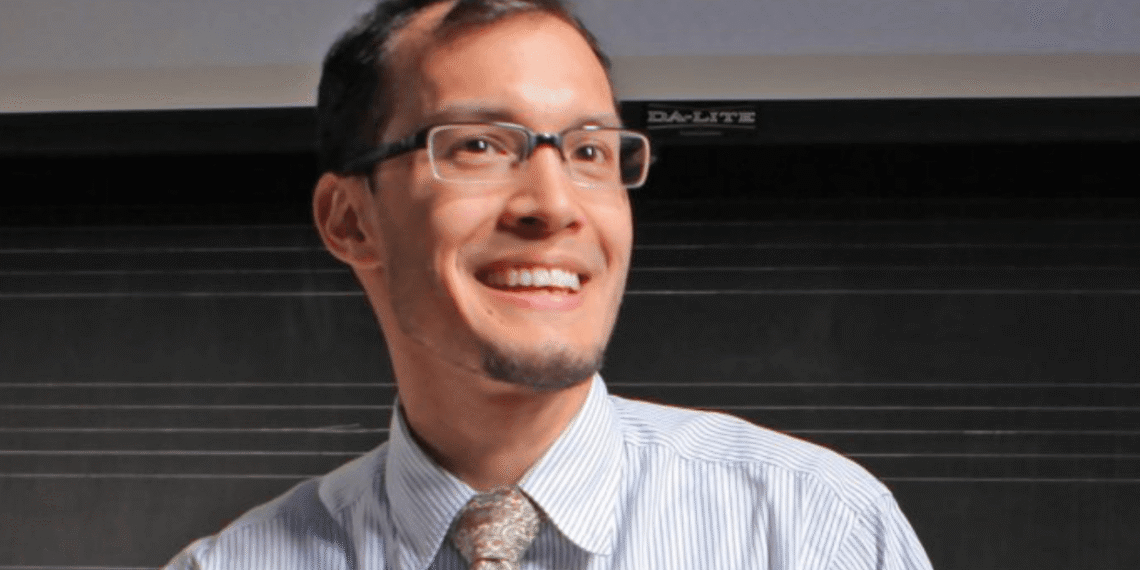
In this ECPS interview, Dr. Justin Patch argues that, in the age of populism, politics increasingly unfolds as a struggle over aesthetics. Rather than being peripheral, cultural forms—music, memes, and DIY practices—are central to how “the people” are experienced and constructed. As he notes, “the primary terrain of public contestation becomes aesthetic,” as citizens navigate complex political realities through affect, symbolism, and participation. While democracy depends on the capacity to feel “part of something larger than yourself,” this same impulse creates openings for populist capture. By showing how art can function as both democratic expression and ideological instrument, Patch highlights a central tension: aesthetic experience sustains collective belonging yet also enables its manipulation by populist and authoritarian actors.
Interview by Selcuk Gultasli
In this ECPS interview, Dr. Justin Patch, Assistant Professor of Music at Vassar College, offers a powerful account of how politics in the age of populism increasingly unfolds through aesthetics—through sound, image, gesture, affect, and participatory cultural forms. Rather than treating music, memes, art, or DIY production as peripheral to political life, Dr. Patch argues that they are central to how citizens experience belonging, identity, and representation. As he puts it, “the primary terrain of public contestation becomes aesthetic.”
The interview begins by situating democratic culture in practices that emerge from below. Historically, Dr. Patch notes, “the part we celebrate is the work done underneath the state.” From farmers’ organizations to populist gatherings, music, dancing, hymn singing, sewing circles, and potluck dinners created forms of sociability through which “the people” could recognize themselves as political actors. The crucial distinction, he argues, is between culture produced by communities themselves and culture appropriated by state actors or those seeking “state capture.”
This distinction becomes more urgent when Dr. Patch turns to the affective power of political mobilization. Democracy, he argues, depends on people feeling that they are “part of something larger than yourself.” Yet this same need is also democracy’s vulnerability. Populism, authoritarianism, and radical-right movements can offer the same emotional intensity and collective belonging while redirecting it toward exclusionary or leader-centered projects. “Unfortunately,”he warns, “that same need to feel part of something larger can be hijacked.”
A major theme of the conversation is how music and popular culture translate resentment into political identity. Dr. Patch explains that art can become “a proxy for political thought” because of its emotional accessibility. Whether in CasaPound’s punk and hardcore scenes, white-power music networks, or strands of country music, cultural forms can provide “social and emotional cues,” “cognitive shortcuts,” and a language through which grievance becomes durable belonging.
The interview also explores digital populism and the politics of re-signification. In Trump-era memes, parody videos, and online bricolage, Dr. Patch identifies an “aesthetic of domination” in which cultural materials are appropriated, inverted, and weaponized. The ability “to take something associated with one set of values and reframe it entirely,” he argues, becomes a symbolic victory.
Yet Dr. Patch does not reduce popular culture to manipulation. He insists on the democratic importance of self-expression, arguing that “democracy is about a kind of self-expression that communicates with others.” The challenge, then, is to cultivate aesthetic literacy without suppressing popular creativity. Art, he concludes, can be “a pedagogical tool” for learning how to live with difference—and for recognizing humanity “even in the face of profound disagreement.”
Here is the edited version of our interview with Dr. Justin Patch, revised slightly to improve clarity and flow.
Political Culture Begins with Who Creates It: State or Society

Dr. Patch, welcome. In your work on the “sound of democracy,” you treat music, noise, affect, and collective embodiment not as ornamental features of politics but as constitutive of democratic experience. How should we understand the role of music and art in forming democratic subjectivities at a time when polarization, distrust, and affective partisanship increasingly structure political life?
Dr. Justin Patch: When we look historically at the democratic aspects of music performance and art-making, the part we celebrate is the work done underneath the state. Even when we are talking about the 19th century—and I am being very specific about the American case here—farm labor organizing, farmers’ organizations, and populist movements, the music, art, and dancing associated with these movements came from the people themselves. It was, and I hesitate to say this, almost like a Johann Gottfried Herder-type phenomenon, where the folk arts of farmers in places like Nebraska, Oklahoma, Texas, and Minnesota became part of a political movement.
Here, I find the work of a historian named James Turner quite formative for my thinking. He talks about populist gatherings as places of much-needed sociability. In his article Understanding the Populus, which focuses on Texas, instead of looking purely at the economic output of populous counties versus democratic counties, he examines other factors, such as the number of churches and the average number of miles traveled to market. What he finds is that populous counties were actually more spread out, had less commerce from the outside, and had fewer traveling preachers. There were fewer churches coming from outside. Because they lacked established ways of gathering, populist gatherings became extremely important.
People would hold meetings lasting several days, where there were sewing circles, knitting circles, prayer circles, square dancing, hymn singing, and potluck dinners. In other words, there was a great deal of collective activity. But what is important is that these were things people already enjoyed doing, which they then did together in a collective setting.
So what you see is a distinction between music that people are already making within their communities, which is then directed toward a political purpose, and music that state actors—or those seeking some form of state capture—appropriate, repackage, and project onto society. It is a kind of push and pull, and sometimes it involves the same culture. The key difference lies in who initiates it. Is it culture initiated by the state, where the state defines what it means to be a citizen, to belong to “the people”? Or is it culture that people themselves create and practice, which they then bring into the public sphere as part of their political activity? This is a distinction we need to parse carefully.
Of course, things become more complicated when we consider musicians. In Melanie Schiller’s work with Mario Dunkel, for instance, there are cases of artists in Austria who have aligned themselves with the political right. Certainly CasaPound is an organization that uses music very effectively and has what the British once called “movement artists.” In the 1960s United States, for example, Phil Ochs was considered such a movement artist.
So, where I would begin is by distinguishing between music and art that are appropriated by state actors and those that people are already producing for themselves and then bring into the public sphere. If that makes sense.
Democracy’s Emotional Power Can Be Exploited by Populism
You argue that campaign soundscapes generate emotional intensity, collective participation, and a sense of shared political presence. To what extent are these affective atmospheres indispensable to democratic mobilization, and when do they become vulnerable to capture by authoritarian, radical-right, or supremacist political projects?
Dr. Justin Patch: This is where it becomes two sides of the same coin. Michael Kazin, in his book on American populism, writes that populist waves occur in America so often that he is tempted to say populism is built into American democracy.
Part of democracy—essentially being ruled by your peers—is something we tend to romanticize, but in reality it is a difficult position to be in. The system of popular democracy depends on people feeling that they are part of something. You feel part of something larger than yourself, and this is why democracy is often likened to religion. You secularize authority by saying you are not ruled by God but by a political system, yet you still seek what Freud calls an “oceanic feeling.”
You need that feeling for democracy to function effectively. People must feel that they belong to something larger, but this is also the weak link through which populism, authoritarianism, and similar forces can enter. They can provide that same sense of belonging while, at the same time, redistributing wealth upward to the top one percent. It is, in many ways, the same process.
I remember watching a campaign event in New Hampshire in 2024. My brother and I saw the same event and later discussed it on the phone. He was struck by a man they interviewed, who, when asked about January 6, 2020, and what the truth of it was, replied, “Whatever Donald Trump says is the truth.” I felt an immense sense of sadness at that moment. When we look at the Gini coefficient in the United States and the number of people who are struggling, we see individuals who are searching for something to believe in—who want to be part of something larger than themselves.
What troubles me is that what presented itself to them was Donald Trump and the MAGA movement—something that, beneath its rhetoric, is deeply pernicious—instead of something more constructive. As we mark May Day, we are reminded of the history of labor and labor movements in the United States and Europe. There were periods when people rallied around the idea of supporting working people. Even in the 19th century, many middle-class individuals expressed empathy for the plight of workers. There have been powerful movements in which people looked at the underclasses and said, “You deserve something better.”
As the Supreme Court rolls back the last elements of the Voting Rights Act this week in the United States, we are reminded that, in the 1960s, a majority believed that Black Americans deserved better. These are moments we look back on and recognize that there was a form of empathy—perhaps not radical empathy, but empathy nonetheless—which was tied to the need to feel part of something larger than oneself.
Unfortunately, that same need to feel part of something larger can be hijacked. This is part of the democratic process, at least in the United States. I am not sure there is any guarantee—there is no perfect democracy in which the threat of populism does not exist in some form.
Music Transforms Resentment into Political Belonging
In your analysis of music’s political economy, you emphasize how music provides “social and emotional cues,” creates “cognitive shortcuts,” and affirms identities. How does this help explain the power of far-right cultural ecosystems—from CasaPound’s aesthetic politics in Italy to white-power music networks, identitarian media, and nationalist festivals—to transform diffuse resentment into durable political belonging?
Dr. Justin Patch: When people spend time together, it has an effect on them. When I was younger, I played in rock bands, and when you are playing music, other issues inevitably come up in conversation. There is a process through which cultural leaders can become thought leaders. It is not necessarily a one-to-one relationship, but it often happens.
The beauty—and the danger—of this dynamic is that art becomes a proxy for political thought, partly because of its emotional accessibility. Terry Eagleton, in his early 1990s book The Ideology of the Aesthetic, examines how ideologies are embedded in aesthetics and in the social relations that produce them. Although he focuses mainly on visual art and literature, the insight applies here as well.
If we look at white-power music and CasaPound, for example, much of CasaPound’s music is punk rock and hardcore. This appeals to a very specific audience, often predominantly male. The resentment felt by men in the post-industrial West—if we look at the statistics, in Italy, much like in the United States, non-college-educated white men are falling behind—is captured and expressed through this music. Hardcore, in particular, channels that sense of grievance.
To borrow Althusserian language, it “hails” people together, aggregating them and creating a space in which they can think collectively. CasaPound is able to do this effectively. In smaller pockets, white-power music in the United States performs a similar function. However, there are other forms of music with much broader audiences that do something comparable.
In the United States, certain strands of country music, with far larger fan bases, operate in a similar way. Songs like “Try That in a Small Town” or “Rich Men North of Richmond,” which have charted, translate resentment into a popular idiom. They move it out of the language of newspapers and political speeches and embed it in everyday life.
Former Foreign Service officer, David J. Firestein, wrote an article called “The Honky Tonk Gap,” in which he examined George W. Bush and his relationship with Nashville country music. He argued that Bush was able to adopt the vocabulary of country songwriters in his political rhetoric, creating a link between how he spoke, how musicians sang, and how his audience spoke among themselves. This helped build a kind of intellectual ecosystem across those domains. In that sense, he was able to draw on a shared cultural repertoire with his intended voters and use it very effectively. Country music in the United States has done something similar—on a much larger scale—than white-power music does in more limited contexts, particularly in the mid-2000s.
Digital Populism Thrives on Inverting Cultural Symbols
In “Editing for Partisanship,” you describe Trump-era populist art as grounded not in stable formal properties but in a “relational aesthetic” marked by domination, ridicule, violence, and re-signification. How does this concept illuminate the contemporary radical right’s use of memes, parody, music videos, flags, street art, and digital bricolage to produce “the people” against feminists, migrants, racial minorities, liberals, and cosmopolitan elites?
Dr. Justin Patch: When I look at the digital ecosystem, what you have are communities that are, in many ways, pre-made. You have people who follow certain accounts and others who follow each other because they know one another. Within this context, digital culture—music videos, memes, Photoshop, and similar forms—gives people an opportunity to participate.
Part of the language of participation involves familiarity and humor, but there is also something like a culture and aesthetic of domination. This may sound unusual, but we can see a parallel in DJ culture. One of the things DJs do, especially when they know their audiences well, is to play tracks people have not heard for a while, disguise tracks by starting them in unexpected places, or mix together seemingly unrelated pieces. Sometimes they introduce something that feels almost like a non sequitur, but if it works, the audience responds enthusiastically. It demonstrates creativity and a willingness to think outside the box, but it is also a form of control. The DJ exercises aesthetic authority by blending disparate elements—disco and ragamuffin—into something seamless.
I think this aesthetic of domination operates in a similar way. It still relies on humor and ridicule, but the further one can push into unexpected or even transgressive territory—particularly into spaces perceived as belonging to an “enemy.” The more recognition one gains for creativity, the more one can appropriate elements associated with, for instance, left-leaning culture and invert their meaning, the more powerful the result becomes.
In Editing for Partisanship, I use the example of Footloose. For those unfamiliar with it, it is a 1980s feel-good film about tensions between urban and rural life in a conservative Christian town that bans dancing. A young man from the city arrives and mobilizes the youth against the older generation. In the end, as in many films of that era, there is a resolution: the youth are allowed to dance, authority is partially preserved, and the narrative concludes on an optimistic note.
Dan Scavino takes the chorus of Footloose and sets it to footage from Portland showing anti-government, anti-Trump protesters, including an incident in which one protester accidentally sets his feet on fire with a Molotov cocktail. What made that clip go viral, and what made it so striking to me, was the radical re-signification of a song associated with a more conciliatory cultural moment into something distinctly aligned with the MAGA movement.
It is precisely this capacity to invert meaning—to take something associated with one set of values and reframe it entirely—that is highly valued within this particular populist movement. The ability to appropriate and transform cultural material in this way is seen as a significant victory.
Imperfection Becomes the Currency of Political Credibility
Your work suggests that popular culture functions as a medium through which populist communities imagine themselves as authentic, embattled, and morally superior. How do movements such as MAGA, CasaPound, Generation Identity, Hindutva cultural networks, and European radical-right youth scenes use DIY (do it yourself) aesthetics to blur the line between grassroots participation and ideological discipline?
Dr. Justin Patch: DIY is such an interesting concept. George McKay, in his edited volume on DIY, cautions that DIY is not a utopia and is not always a left-leaning phenomenon. There is plenty of conservative DIY as well. The key point about DIY is that it carries a veneer of authenticity. DIY culture is always emblematic of the people who create it, but it also has an aesthetic—and it is this aesthetic that can be co-opted. We see this quite frequently. At the present moment, DIY culture is very important in constructing “the people.”
Let me step back for a moment. Some years ago, probably in the 2010s, I met an EDM (electronic dance music) producer by chance. We were chatting, and he remarked that when everything can be made perfect—when digital tools allow for perfect timing and sound—the real challenge is capturing the imperfection that makes something compelling. When you listen to artists like Aretha Franklin or Marvin Gaye, there is always something slightly off—slightly behind the beat or slightly out of tune—that listeners find appealing.
In a digital environment where perfection is possible, DIY and its associated imperfections become signifiers of authenticity. It is the difference between a perfectly staged shot and a slightly shaky, handheld recording. Even if the latter is less polished, it conveys a stronger sense of authenticity.
What we see now is that political actors are deliberately adopting this veneer of authenticity. Highly polished, “Madison Avenue”-style political advertising increasingly appears inauthentic to younger audiences. During the 2020 US election, for example, Joe Biden’s campaign invited individuals to record themselves explaining why they supported him. These clips were edited into campaign materials and proved more effective than professionally produced advertisements that cost millions of dollars.
The DIY aesthetic, then, becomes a marker of authenticity that political actors seek to harness, because voters respond to what feels genuine. One of the major criticisms of Hillary Clinton in 2016 was that she appeared inauthentic—overly scripted and guarded—which many voters rejected.
What remains, in many ways, is DIY. As Anthony Giddens argued, in the context of postmodernity, trust becomes central. The DIY aesthetic functions as an index of authenticity and humanity. The problem, however, is that it is still an aesthetic—and therefore something that can be appropriated and instrumentalized.
The Key Question Is Not What People Create, but Why
In your account, citizen-made art is central to the construction of populist identity because it is “by, of, and for the people.” How should we distinguish between genuinely democratic cultural participation and participatory authoritarianism, where citizens voluntarily reproduce exclusionary, supremacist, or leader-centered political imaginaries?
Dr. Justin Patch: This is always the big question. What are cultural outpourings that are essentially top-down, and what constitutes cultural production that is bottom-up—production from the peripheries, and so on?
At a certain point, it becomes difficult to draw that distinction, because if someone genuinely supports populist candidates, there is no straightforward way to say that this is not an authentic voice of the people. When I look at Trump-related art—work produced by very young people, very old people, and those at the margins of the movement—I am hesitant to say that it is all co-opted. There are people who genuinely believe that Trump will be good for them.
For me, as an analyst, it becomes more important to ask why. Where have we failed—in terms of the economy, education, or public awareness—that someone would believe that this person’s policies would benefit them, or that this person genuinely cares about their well-being? In that sense, it becomes a second-order analysis. It is one thing to examine the art people create for a populist cause; it is another to ask why this is happening.
How is it that so many young men believe in this so strongly that they create their own podcasts, memes, graffiti, T-shirts, hats, and bumper stickers, or even decorate their vehicles as shrines? Why do they feel so passionately about this? In many cases, some of the DIY art I have examined expresses messages that run counter to official campaign messaging, yet remains unapologetically pro-Trump. What these individuals believe Trumpism to be can differ significantly from actual policies, but they believe in it nonetheless.
That kind of projection offers a window into how people manage their everyday lives. In Jim McGuigan’s sense, this can be understood as a genuine voice of the people. Whether we like it or agree with it is a separate question. From an analytical perspective, the issue is whether this reflects how people actually think.
I am hesitant to dismiss such expressions outright, unless they are clearly repeating talking points from talk radio or television. If they fall outside that realm, they are worth examining, because they reveal how people understand and experience the world. And that is important to understand.
Citizens Engage More with Feeling than Policy
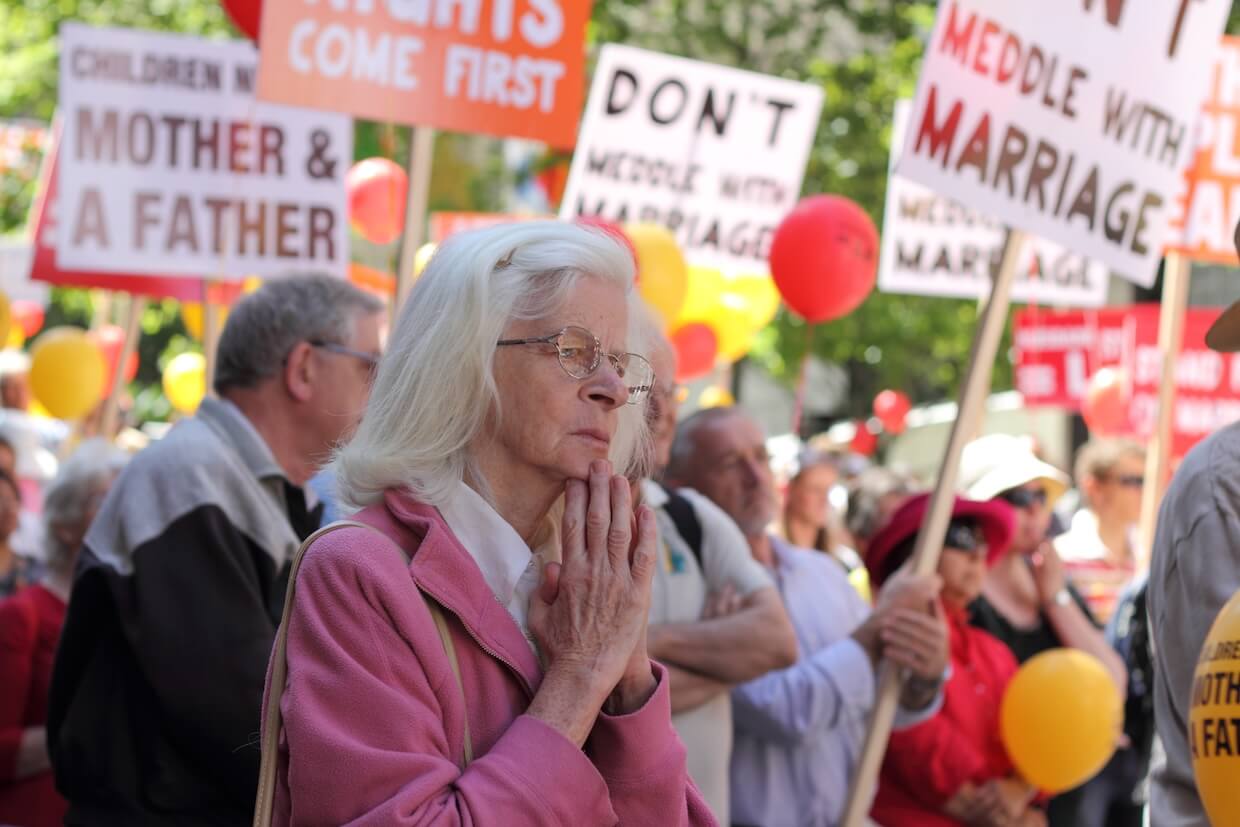
How should we theorize the relationship between aesthetic experience and democratic legitimacy when citizens feel more directly represented by songs, memes, symbols, and performative rituals than by parties, parliaments, or policy platforms?
Dr. Justin Patch: This is very much a Terry Eagleton question. Eagleton writes about the problems of the modern state: economic, educational, infrastructure, human policy, health policy—all of this is so complex that, as an everyday citizen, you are quite literally not equipped with either the knowledge or the totality of information needed to be a full participant in these discussions.
For those of us who enjoy discussing politics, at some point you have to admit that you do not have the full suite of information even to think about crafting policy. I often tell people that when I was working on Obama’s campaign in Texas, you had these incredibly crafted 45-minute speeches. But in the Texas Democratic Party office, we also had Barack Obama’s white papers—ten small volumes covering education policy, domestic policy, health policy, international policy, and economic policy. You could read through them, if you had the time to read ten books. These are two very different things. How we feel publicly about someone’s persona, how they come across, is very different from how we feel about policy.
Unfortunately, the complexities of the modern state are such that we cannot all fully participate in policy debates. But, to Eagleton’s point, what we can participate in is the aesthetic dimension. We respond to how something sounds, looks, and feels. Someone uses campaign music that makes us feel good; someone presents themselves in a particular way or frames an issue in a certain way. All of these are aesthetic elements.
I was once giving a talk at a conference in the Netherlands, and a political scientist said to me, “How can you call Trump populist? His policies are oligarchic, if anything.” I said, “You are not wrong. But I am talking about how he campaigns as populist, not what his policies are.” His campaign is anti-elite, people-centered, and displays many hallmarks of populism, even if his policies are not anti-elite.
So you can have an aesthetic that is populist, or even radically democratic, without having policies that reflect that. I think one of the dangers of modern society is that the knowledge required to govern is so specialized that the primary terrain of public contestation becomes aesthetic. As a result, we end up with these aesthetic shortcuts. For example, Nashville country becomes coded as conservative, while artists like Bruce Springsteen, Taylor Swift, or throwback Motown become associated with more progressive audiences. That becomes the dividing line, rather than the ability to have a substantive debate about policy.
A good example—just from the news this morning—is vaccine policy. Vaccine policy is remarkably complex, yet it is often reduced to a binary: vaccines are bad on one side and vaccines are good on the other. The actual substantive debate is far more complicated. If I did not know people with PhDs in virology, it would be difficult for me to evaluate those arguments. I am fortunate to have access to that expertise, but most people do not. And so, what remains for public contestation is aesthetics.
Art as a Training Ground for Living with Difference
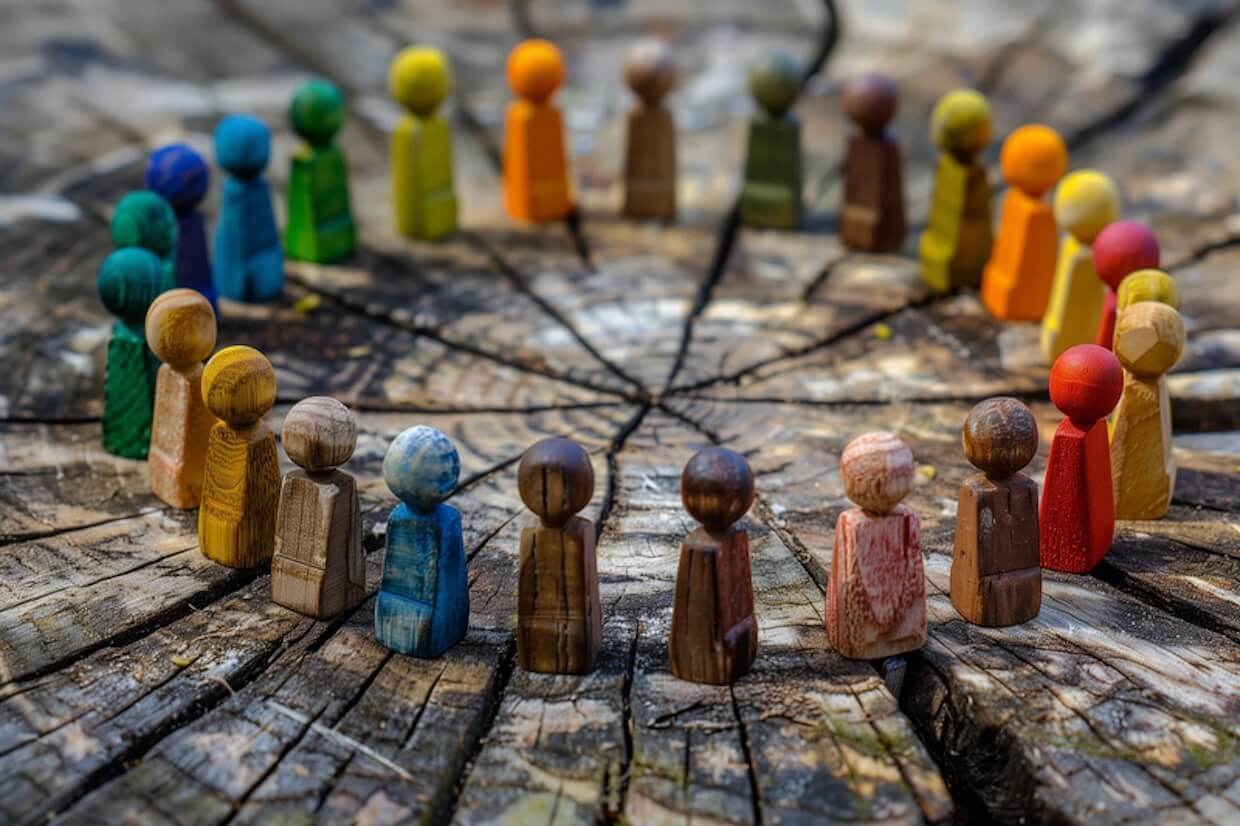
And finally, Dr. Patch, in an era of democratic backsliding, digital populism, supremacist subcultures, and authoritarian cultural politics, what responsibilities do scholars, artists, educators, and democratic institutions have in cultivating forms of aesthetic literacy capable of resisting manipulation while preserving the democratic vitality of popular culture?
Dr. Justin Patch: I think I am one of those people who, even though I teach at a conservatory, is not concerned with what kind of art people make. I am very concerned that people make art—that they are given the freedom to express themselves—because, ultimately, democracy is about a kind of self-expression that communicates with others.
From the ground up, there has to be a way for people to express themselves and share their ideas in a healthy way. When we look at partisanship, especially as it tilts toward the kind of violence we have seen in the United States, as well as in Australia and Europe, one of the issues is that there is no adequate way for people to express themselves and have healthy encounters with those who think differently.
Art is one way this can happen early on, as a kind of pedagogical training ground. One of my colleagues in Boston once described rap battles and DJ battles as a form of peer review. In academia, we write something, present it at conferences, and receive feedback; he argued that this is exactly what rappers and DJs go through. As they perform, they receive immediate feedback from audiences, who let them know in various ways how they are doing. The same applies to art exhibitions, critiques, and even “battle of the bands” events.
This kind of experience is very important for teaching people how to deal with difference. Many of the issues we face—whether in Europe, particularly regarding Muslim immigrants, or in the United States, where tensions often revolve around race, as well as religion, gender, and LGBTQ issues—reflect an inability to engage with difference and to recognize humanity beyond it.
Art, as a pedagogical tool, provides a way to learn how to engage with difference. From a young age, individuals can be placed in environments where their expressions may differ—sometimes radically—from those of others, and they can learn how to navigate those differences.
I often think about this in relation to my experience as a soccer referee. One of the things I appreciate about youth sports is that you can compete intensely with someone, but once the whistle blows, the competition ends. I think of players like Paul Scholes, who was fierce on the field but known as a genuinely kind person off it. That is, in some sense, my political ideal. People should be able to fight passionately for what they believe in and advocate strongly for what they want to create, but that process should not prevent them from recognizing the humanity of others.
Working with art—engaging in self-expression within a community, not just individually—is how we learn to live with difference. That, to me, is essential for building a society prepared for the realities of the twenty-first century, where difference is not an exception but a constant. It is something we must teach—from young people to older generations—how to engage with difference and how to recognize humanity even in the face of profound disagreement.