
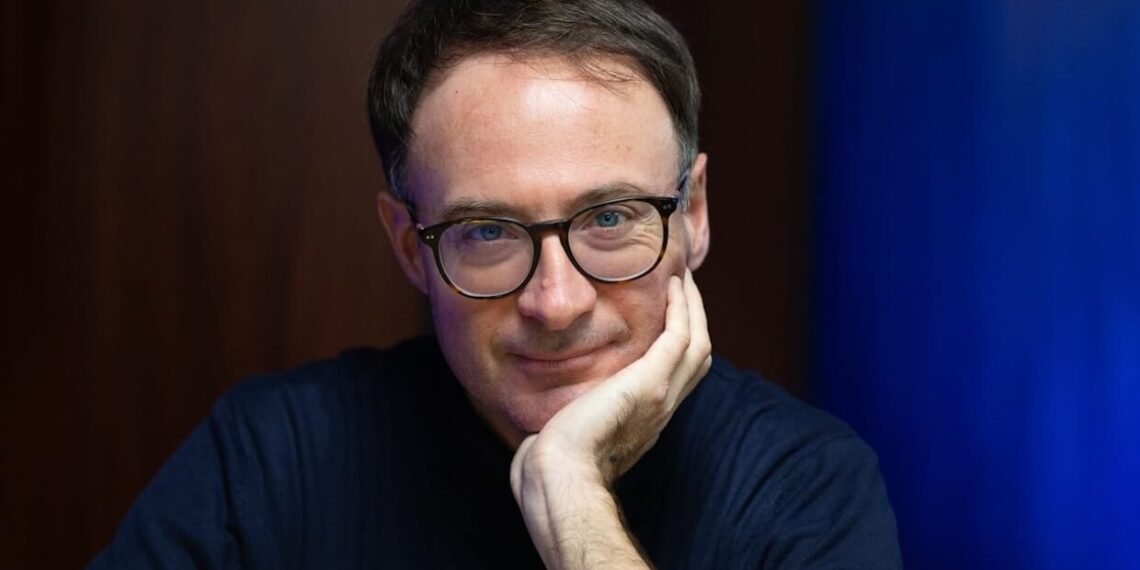
In this ECPS interview, Associate Professor Stefano Bottoni offers a compelling assessment of Hungary’s post-Orbán transition and the formidable challenges of democratic reconstruction after sixteen years of institutional capture and democratic backsliding. Rejecting simplistic notions of democratic restoration, Assoc. Prof. Bottoni argues that Hungary is not merely returning to a previous democratic order but attempting to “invent a new democracy for the twenty-first century.” Reflecting on European reintegration, anti-corruption efforts, institutional reform, civic education, and political culture, he contends that democracy cannot be rebuilt through legal changes alone. Instead, lasting democratic consolidation requires the cultivation of democratic citizens, the restoration of public accountability, and the creation of a new civic patriotism that reconciles national identity with European belonging.
Interview by Selcuk Gultasli
The electoral defeat of Viktor Orbán and Fidesz in Hungary’s April 12, 2026 election has triggered one of the most consequential political transitions in contemporary Europe. After sixteen years of increasingly centralized rule, democratic backsliding, institutional capture, and persistent conflict with the European Union, the rise of Prime Minister Péter Magyar has generated renewed debate about democratic restoration, post-populist governance, and the prospects for rebuilding liberal-democratic institutions. Yet, as scholars of democratization have long emphasized, the removal of an incumbent regime marks only the beginning of a transition rather than its successful completion.
In this wide-ranging interview with the European Center for Populism Studies (ECPS), Associate Professor Stefano Bottoni of the University of Florence—one of the foremost historians of contemporary Hungary and author of the forthcoming book The Orbán Enigma—offers a deeply historical assessment of Hungary’s uncertain democratic future. Drawing on his extensive scholarship on authoritarianism, nationalism, post-communist transformation, and democratic backsliding in Central and Eastern Europe, Assoc. Prof. Bottoni argues that the challenges confronting Hungary today may, in important respects, be even greater than those faced during the democratic transition of 1989–1990.
Rejecting simplistic narratives of democratic restoration, Assoc. Prof. Bottoni cautions that the current moment cannot be understood merely as a return to a pre-Orbán political order. “This is not simply about restoring something. Rather, it is about inventing a new democracy for the twenty-first century,” he argues. For Assoc. Prof. Bottoni, Hungary’s predicament is rooted not only in the institutional legacy of Orbánism but also in the country’s longer historical experience, which offers “only brief and largely unsuccessful democratic experiments, followed by a succession of autocratic, authoritarian, or fully totalitarian regimes.”
Throughout the interview, Assoc. Prof. Bottoni emphasizes that democratic reconstruction will require far more than personnel changes or legal reforms. While supporting the new government’s efforts to rejoin the European Public Prosecutor’s Office (EPPO), recover frozen EU funds, and confront systemic corruption, he stresses that institutional renewal must be accompanied by a profound transformation of political culture. The task is particularly difficult because, as he bluntly observes, “you cannot build democracy with a state apparatus forged by an autocratic system.”
One of the interview’s central themes is the distinction between formal institutional change and deeper democratic consolidation. Assoc. Prof. Bottoni warns against the illusion that democracy can be rebuilt quickly. “Building democratic consciousness takes 15, 20, or even 30 years,” he notes, arguing that genuine democratization requires sustained efforts across education, civil society, media, and local government. In his view, the most important test of democratic success will not be found in constitutional amendments or anti-corruption prosecutions alone, but in whether Hungary can cultivate future generations of democratic citizens rather than passive subjects.
At the same time, Assoc. Prof. Bottoni offers a nuanced interpretation of the emerging political landscape. He suggests that Hungary may be witnessing the formation of a new political cleavage across Europe, one that increasingly pits pro-European and pro-integration forces against sovereigntist and anti-European movements. Within this evolving framework, he sees the possibility of a “new civic patriotism” that reconciles national identity with European belonging.
Perhaps most strikingly, Assoc. Prof. Bottoni contends that Hungary’s current transition is “far more difficult and controversial” than that of 1989–1990 because it must confront not only political legacies but also the entrenched networks of wealth, patronage, and oligarchic power created during the Orbán era. For this reason, he concludes that “the transition taking place today is even more difficult and more challenging” than Hungary’s post-communist democratic breakthrough.
This interview offers a timely and thought-provoking exploration of democratic resilience, institutional reconstruction, political accountability, and the long-term challenges of overcoming authoritarian legacies in twenty-first-century Europe. It also raises a broader question with implications far beyond Hungary: how can democracies rebuild themselves after years of democratic erosion without reproducing the very illiberal practices they seek to overcome?
Here is the revised version of our interview with Associate Professor Stefano Bottoni, lightly edited for clarity, readability, and publication.
This Is Not About Restoring Democracy—It Is About Inventing a New One
Professor Bottoni, welcome! Much commentary has framed Hungary’s 2026 election as the end of an era. Yet democratic transitions are often easier to proclaim than to consolidate. How should we conceptualize the current moment: as regime change, democratic restoration, elite circulation, or merely the beginning of a prolonged and uncertain post-Orbán transition?
Assoc. Prof. Stefano Bottoni: As we are speaking now, at the beginning of June, almost two months have passed since the elections held on April 12, 2026. We can clearly see that the crushing electoral defeat of Viktor Orbán and his party, Fidesz, was followed by the rapid collapse of the power structure as well, which was unexpected. Political analysts in Hungary are now saying that a genuine transfer of power is taking place. It is a regime change that can, of course, be compared to the regime change of 1989–1990. But it is also very different from that. It unfolds in a different geopolitical context. We are no longer in the Cold War; we are in a very different position. It is also different because János Kádár’s Hungary in the late 1980s was an opening regime, whereas Viktor Orbán’s regime was a closing one, especially in its final years.
Democratic restoration is one of the terms you mentioned. It is very catchy and very tempting, but it probably does not capture the complexity of the task. This is not simply about restoring something. Rather, it is about inventing a new democracy for the twenty-first century in a country like Hungary, where, from a historical perspective, democracy does not really offer many functional models to follow.
After the First World War, after the Second World War, and after the end of the Cold War, Hungary experienced only brief and largely unsuccessful democratic experiments, followed by a succession of autocratic, authoritarian, or fully totalitarian regimes. So, we are not merely speaking about the consolidation or restoration of democracy. We are speaking about a demanding, but also intellectually stimulating, transition toward something new. Hungarians genuinely need something new. Of course, when searching for something new, you can turn to existing models, draw on your own history, and learn from foreign experiences. But first and foremost, you must understand what went wrong on previous occasions and then adapt democratic models to the realities of the country.
Without European Support, Serious Accountability Would Be Difficult to Achieve
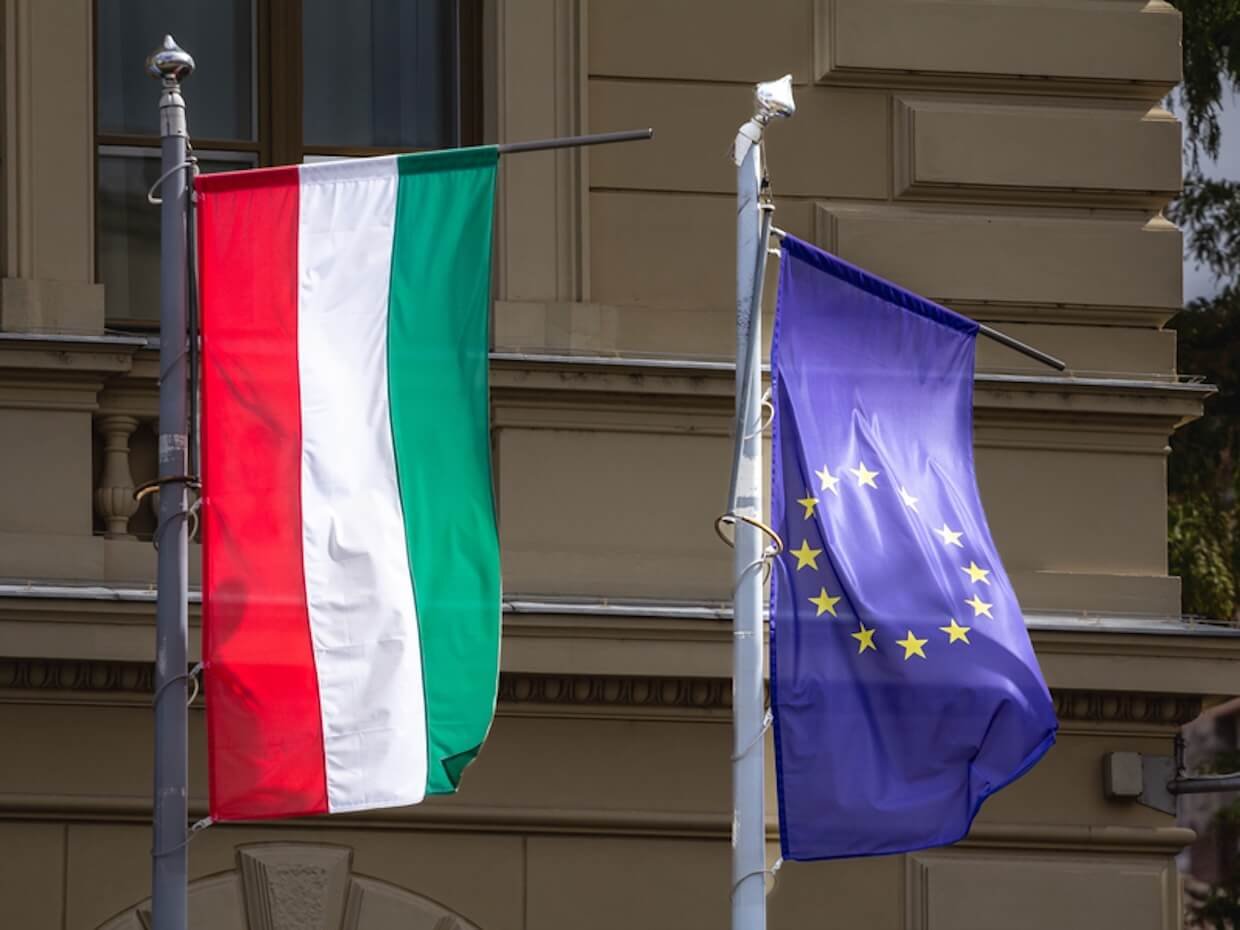
The new government has moved rapidly to restore relations with Brussels, reopen discussions on frozen EU funds, and announce Hungary’s intention to join the European Public Prosecutor’s Office. To what extent are these measures primarily symbolic gestures of European reintegration, and to what extent do they represent deeper institutional transformations?
Assoc. Prof. Stefano Bottoni: They are not merely symbolic, primarily because access to European funds and Hungary’s accession to the European Public Prosecutor’s Office are necessary political steps for consolidating Péter Magyar’s power.
Péter Magyar first needs the frozen EU funds in order to revitalize the declining Hungarian economy. In that sense, these resources are essential to the idea of a fresh start from an economic perspective. At the same time, joining the European legal framework for combating corruption provides the new government and the emerging power structure with far greater opportunities to address the corruption associated with Orbán’s system.
We should not forget that the Hungarian legal system remains largely controlled by individuals appointed by Viktor Orbán. As a result, it will be difficult to initiate a serious prosecution of crimes in Hungary until the country joins the European Public Prosecutor’s Office. From this perspective, European support is extremely important for the new Hungarian political order.
So, this is not simply a symbolic reunion with Europe. It is also a very well-conceived and, politically speaking, rewarding set of measures that Magyar must pursue to consolidate his own power.
You Cannot Build Democracy with a State Apparatus Forged by Autocracy
One of the central challenges facing the Magyar government is rebuilding institutions that many observers argue were systematically politicized over the last decade and a half. In comparative perspective, what are the greatest difficulties democratic governments face when attempting to depoliticize state institutions after prolonged periods of dominant-party rule?
Assoc. Prof. Stefano Bottoni: There are multiple challenges facing the new power structure. Let us begin with the most immediate one: the president of the republic. Tamás Sulyok, the current president, is a lawyer who previously served as president of the Hungarian Constitutional Court. He was a Fidesz appointee and, during the last two years, was essentially Orbán’s puppet. He did absolutely nothing to prevent the democratic crisis from unfolding. He remained silent on all the major political, moral, and legal issues surrounding Orbán’s power.
Magyar immediately called on him to resign before a formal procedure for his dismissal could be initiated by the new government. Of course, this creates the possibility of a serious institutional conflict. Forcing a president who was democratically elected by the Hungarian parliament to resign—or removing or impeaching him, because that is essentially what this amounts to—is not part of standard democratic practice, at least in Western Europe. For example, such a scenario would be virtually inconceivable in Germany. It is very difficult to explain to German lawyers how this could occur in a normal democratic setting. Unfortunately, Hungary today is not in a normal democratic condition.
The challenge, therefore, is to restore a more or less normal democratic order in the medium and long term by removing many individuals who were appointed by the previous regime solely on the basis of political allegiance. From an institutional perspective, this is not an elegant process. It represents a high degree of discontinuity and can create discomfort, because many people may perceive it as a purge. But it is what it is. Unfortunately, Magyar has very few alternatives, because you cannot build democracy with a state apparatus forged by an autocratic system. It is simply not possible. This is the very narrow path that Magyar must navigate, and it appears that he wants to move through it as quickly as possible.
At the moment, public support for this process is very strong. According to opinion polls, more than two-thirds of voters seem to support a rapid transition. That is what he wants to achieve. Afterwards, the real task begins: restoring democracy with new people. Once new people are in place, a new democratic framework must be built around them. At that point, it will no longer be possible to blame those appointed by Orbán, because they will have been removed—or will be removed—from key positions in the judiciary, the financial courts, the legal system, and the economic sphere.
Prosecutions will also begin against oligarchs and against those who made billions and billions of euros disappear. This is the huge difference between 1989 and 2026 in Hungary. In 1989, the struggle was about politics and ideology. It was about prosecuting crimes committed by the communist authorities—for example, after the 1956 Revolution. It was about the past.
In Hungary today, it is about money. It is not really about ideology. We are not prosecuting sovereignism or populism, because they cannot be prosecuted as such. They are debatable political positions. You cannot prosecute someone simply because he is a sovereignist or a populist, however we may define those terms.
But you can certainly prosecute an oligarch for the misappropriation of billions of euros. And if those oligarchs are closely connected to political power—and personally connected to former Prime Minister Viktor Orbán—then we encounter the clear link between politics and business that was one of the defining features of the Orbán regime throughout its entire period in power since 2010.
For that reason, this transition will be far more difficult and controversial. It must address the challenge of transforming wealth accumulated through corruption back into public resources. This is a different task from that of 1989–1990, but it is no less significant. In some respects, I would argue that the transition taking place today is even more difficult and more challenging.
Building Democratic Consciousness Takes Decades, Not Election Cycles
The Hungarian case raises a broader theoretical question about democratic resilience. Can institutions that have undergone extensive partisan capture genuinely regain autonomy, or do they inevitably retain traces of the political order that created them?
Assoc. Prof. Stefano Bottoni: This is a huge issue, and I am not in a position to answer it now. In fact, I do not think anyone is in a position to answer it at this stage, because we do not yet have an empirical basis for doing so. That empirical basis will emerge in the coming months, following the top-level personnel reshuffle. Once that process has taken place, we will see what new people can do with these old institutions. Can they transform the institutional logic according to which these institutions operate, or can they not? This is a huge issue and a major question mark. At the moment, we do not have answers; we only have hopes.
My personal intuition is that a great deal of damage has been done. Even if one accepts the idea—which is not pessimistic but simply realistic—that such a regime change implies, first and foremost, educating people in democracy, that process takes 15, 20, or even 30 years. We should therefore expect such a transition, even if it is successfully implemented, to last several decades. It requires bringing together the media system, the educational system, public engagement, local administrations, civil society, and so on within a new way of thinking. Even if all these societal subsystems are interconnected through a new democratic mindset, it still takes several decades to achieve substantial results—not merely new Potemkin villages or superficial examples of democracy. After 1990, Hungary built a highly successful formal democracy with very little democratic substance.
The divergence between these two realities became dramatically evident after the 2008 financial crisis, when it became clear that the majority of the Hungarian population no longer supported liberal democracy as it had been presented to them after 1990. This is how Viktor Orbán became possible. If we do not want another Viktor Orbán—whether from the right, the far right, or even the left—to emerge and capture the state once again, and if we want to build a stable and sustainable democratic political culture, which would be something new in Hungary, then we must recognize that Hungary has never had such a stable and sustainable democratic political culture over the past hundred years or more.
If we want to build this, we have to take our time. We also need to be patient with ourselves, and we must ask for patience from our partners as well. Of course, it is possible to shorten the path toward becoming a more consolidated democracy. It is possible to perform well. But you cannot skip the necessary steps. You cannot avoid the intermediate phases involved in building a new democratic consciousness. You simply cannot.
Magyar Must Fight Corruption Without Creating Chaos
Prime Minister Magyar has promised anti-corruption reforms while simultaneously facing intense pressure to unlock billions of euros in frozen EU funds. How sustainable is this strategy politically if economic recovery becomes dependent upon satisfying external European conditions?
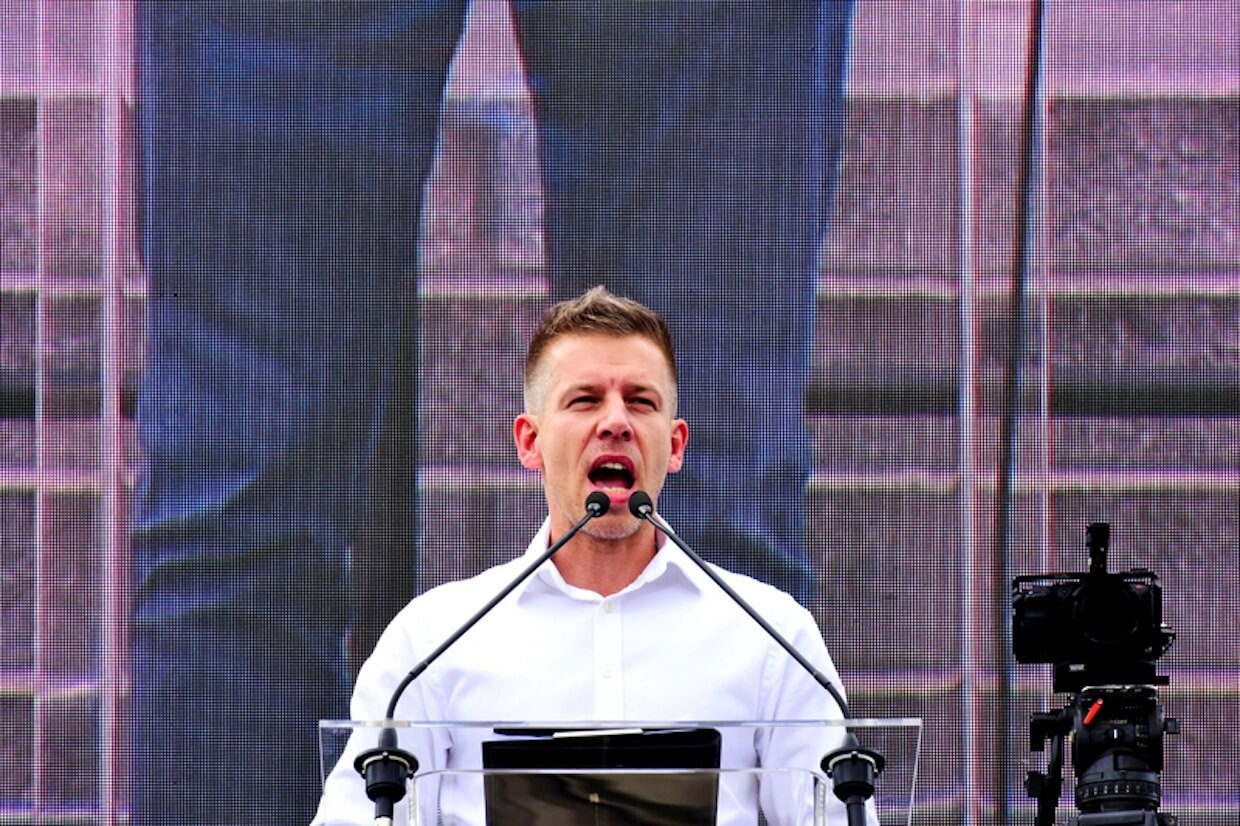
Assoc. Prof. Stefano Bottoni: He has to do both things at the same time. He has no choice. The Hungarian government and the new ruling elite can, rather amusingly, be described as a democratic one-party system. If we look at the polls, we can see that TISZA is now virtually above 70 percent, which is stunning. Fidesz is collapsing. They probably now have between 10 and 20 percent of genuine popular support, and they are still shrinking. Meanwhile, the far-right Mi Hazánk, or Our Homeland, which is represented in parliament and received 6 percent in the elections, seems unable to benefit from the collapse of Fidesz and remains stuck at around 5–6 percent.
So, we can speak of a democratic one-party system because we have a democratic party that is, paradoxically, in an almost unchallenged and unchallengeable position. They are in the best position to implement radical reforms because they cannot be challenged. But, of course, their responsibility is enormous, because they carry the full weight of difficult decisions on their own shoulders.
At the moment, there are no meaningful checks and balances through political competition. Fidesz cannot serve as a check and balance. When someone from Fidesz says, “You are doing this wrong,” the obvious response in parliamentary debates these days is, “I’m sorry, but after what you did to this country for sixteen years, be quiet.” That kind of response effectively closes every space for genuine political conversation.
But I understand your point. They have to do two very different and very difficult things simultaneously. First, they have to secure this money. I would say, whatever it takes, because Hungary’s financial and economic position is now so precarious that these 10-15 billion euros of fresh European funding are genuinely needed to fuel the economy. At the same time, they must send strong and unequivocal messages regarding corruption. Here I draw on my Italian background. I was born and raised in Italy. In 1993, the entire Italian political system collapsed under the weight of the anti-corruption campaign known as Mani Pulite—Clean Hands. It was a dramatic reshuffle. Eight thousand people were jailed, arrested, or placed in temporary custody. Entire parties that had dominated Italian political life for forty years—the Christian Democrats, the Socialist Party, the Liberal Party, and the Social Democratic Party—collapsed in little more than a year, between 1992 and 1993. And what did Italy get from all of this? We got Silvio Berlusconi and his long domination of Italian politics beginning in 1994.
Perhaps because I am a historian, and historians tend to be pessimistic, but also because I experienced this firsthand, I am acutely aware of how enthusiasm for an anti-corruption campaign can cause a democracy to derail in another direction, namely through chaos. Populism is often fueled by perceptions of chaos, by the feeling that things have become uncontrollable and that people must “take back control.” Berlusconi and his Forza Italia party successfully convinced many Italians that the chaos generated by the anti-corruption campaign was harmful, detrimental to the economy, and had to be stopped.
So Péter Magyar now has to carry out one of the most significant anti-corruption campaigns Europe has ever seen. I am not exaggerating. Experts on Hungary’s political economy consistently argue that the Orbán regime’s neopatrimonialism and appropriation of state resources are astonishing by European standards. These oligarchs cannot simply be allowed to walk away.
It is difficult to imagine that Viktor Orbán could still have a future in international politics. There are now rumors that he may be trying, with American support, to secure a senior position within the United Nations. That simply cannot happen. If it does, it would send a profoundly damaging message for democratic governance worldwide. It would suggest that you can cheat, deprive a country of its own resources, enrich yourself, and then simply leave office without any legal or political consequences. That cannot happen.
So, Magyar has to purge the former state apparatus—democratically, but still purge it. That means sending many people to jail, or at least confronting them with the prospect of jail. At the same time, he must prevent chaos from prevailing. The Hungarian public became accustomed to the stability of the system provided by Orbán. They would not tolerate a chaotic transition. You have to ensure at least the appearance of an orderly transition. This is what Magyar must deliver: democratic restoration of rights, an anti-corruption campaign, the prosecution of those who committed economic or ideological crimes, and action against those who organized what was perhaps the most remarkable Putin-era propaganda system in Europe.
It also means confronting those who helped support and finance populist and far-right parties across Europe. We now know that institutions such as Mathias Corvinus Collegium and the Danube Institute in Budapest were central nodes in a transnational network connecting far-right actors across the Atlantic. This cannot be left unchallenged. At the same time, it must not lead to a chaotic transition, because that would be unbearable for the Hungarian public. It is an extremely difficult task. But it is something that can be done now, thanks to the enormous popular support that Magyar has gathered before and after the elections. He has to take advantage of this unique momentum.
Hungary Needs Publicly Funded and Politically Free Research
Several early initiatives—including joining the EPPO, strengthening the Integrity Authority, and reforming university foundations—appear designed to address longstanding rule-of-law concerns. Do these reforms represent technocratic adjustments, or do they amount to a fundamental redefinition of the relationship between state power, public accountability, and democratic governance?
Assoc. Prof. Stefano Bottoni: I am not currently part of the Hungarian higher education system, so I would not pretend to know these issues in their full depth. But what we can see is an unprecedented challenge. The government has to take back 22 formerly public universities across the country—not only in Budapest but also in the provinces—and transform them once again into public institutions.
What is the problem? The problem is that, as in many other European and non-European countries, Hungarian public higher education was severely underfunded. Salaries were miserable. Scholarships were limited. After these universities were transferred under the umbrella of semi-private, semi-public foundations, salaries increased. As a result, many people within Hungarian higher education now fear that returning under the umbrella of a poorly financed state could worsen the financial position of university professors and the Hungarian research system as a whole.
Of course, one can argue that European grants may once again become available to the Hungarian research system, and that is true. But we also know that this is a highly competitive environment. It is increasingly difficult to obtain EU research funding through the ERC, Horizon, or other programs. This is not helicopter money that automatically arrives to keep the system running.
In this respect, the coming months will allow us to test Péter Magyar’s commitment to a new set of priorities for the Hungarian government. I would say: less money for oligarchs, less money for stadiums and non-essential infrastructure, and much more money for public health and public education—from preschool all the way through universities and PhD programs. This commitment will be tested because the university system can only be successfully transformed back into a public system if substantial resources are invested in it. You cannot do it for free.
This challenge is not unique to Hungary; it exists in many European countries. Even if we reject the idea of partially privatizing the university system because we believe it undermines institutional independence and the capacity for critical thinking, we are still confronted with low salaries and a system that does not adequately reward performance. How do we make the system more effective and more attractive to young researchers without sacrificing democracy within it? This is yet another one of the great challenges.
I think the first steps taken by Magyar and by the Minister of Education and Technology, Zoltán Tanács, are moving in the right direction. They seem genuinely committed to this agenda, and I hope they continue along this path because Hungary has a great tradition in higher education and public research. The Hungarian Academy of Sciences, for example, is now taking back control over research institutes that had previously been handed over to a questionably governed, half-public, half-private body. So, there is a major reshuffle taking place within the Hungarian research system.
Personally, as a former employee of the Hungarian Academy of Sciences, this is the part of the system I know somewhat better. There is a huge need for publicly funded and politically independent public research. The problem is funding. You cannot pay a university professor—as is currently the case in parts of the public sector—€1,000 per month. It is simply not possible. Salaries need to be adjusted to the current cost of living in Hungary, which is at least twice that amount.
The Greatest Mistake Hungarians Made Was Giving Politicians a Blank Check
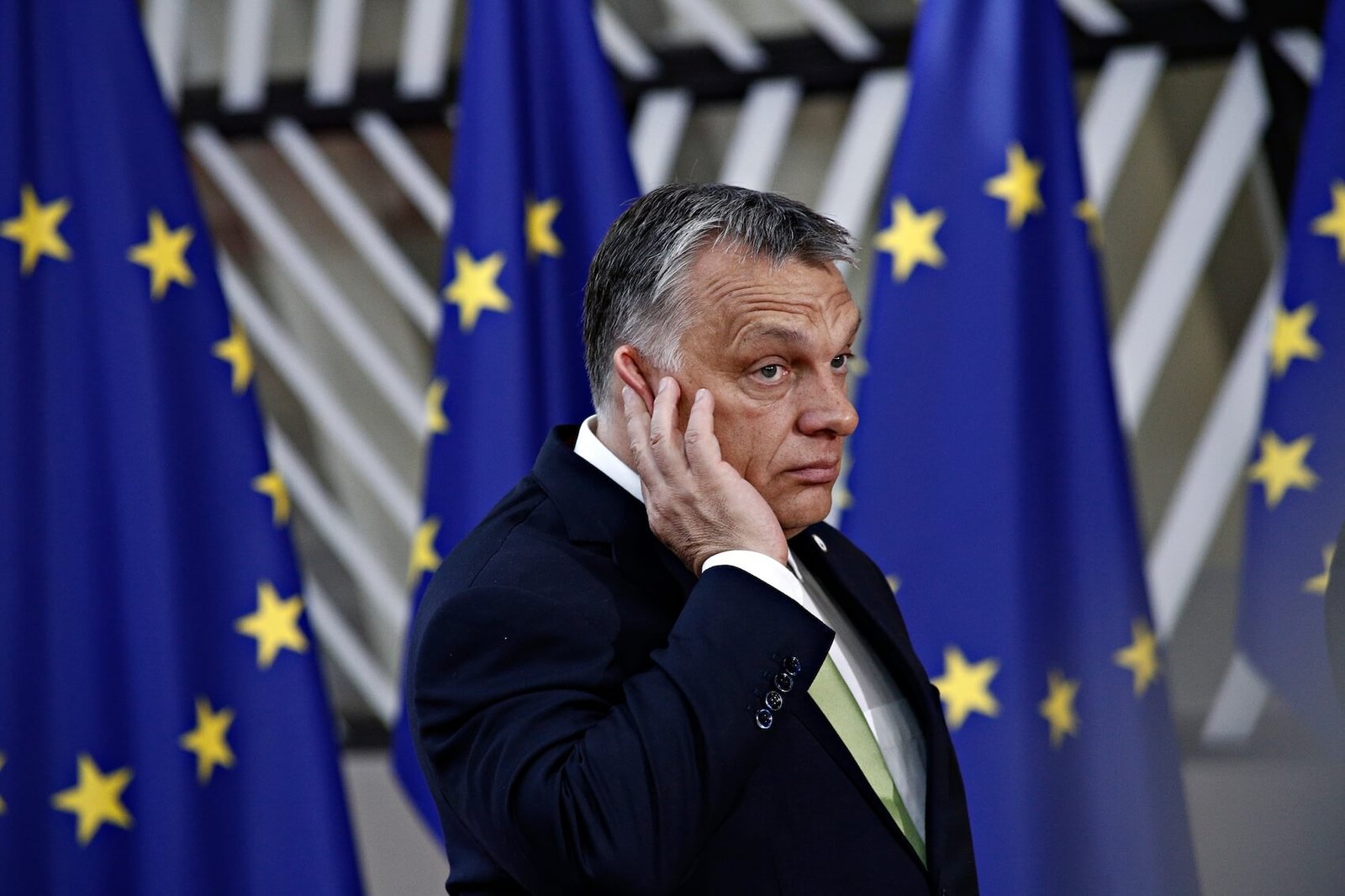
Democratic reconstruction often generates a paradox: governments must dismantle illiberal structures while avoiding the appearance of exercising illiberal power themselves. How can the Magyar government pursue institutional reform without reproducing the majoritarian logic it seeks to replace?
Assoc. Prof. Stefano Bottoni: As I tried to explain earlier, if we think seriously about this in the long run, and if we do not want to become democratic populists who pretend to build democracy on promises that cannot be delivered, then we have to accept the fact that it takes time. And time means not months, not even a couple of years, not even a single government cycle, but much more time—generations.
So, what can Magyar start now, and what does he have to start now? I hope he will begin by laying the foundations for a new democratic system. That means a new democratic framework for the education system, for example. New programs and curricular frameworks for the teaching of Hungarian language, literature, and history—the so-called ideological subjects. Not mathematics, of course, which remains more or less the same under every system, but social studies and civic education.
What does it mean to be a citizen in Hungary? What are the rights, commitments, and obligations of every citizen? What does it mean to live in a democracy? Democracy is not about the ombudsman. Of course, the ombudsman is a useful institution to have, but if people do not know how to turn to the ombudsman, what the institution is for, what fundamental rights are, or how they can be defended, then the whole thing becomes pointless. So, a huge effort has to be invested in building the mental preconditions that allow people to understand the long-term advantages of democracy over authoritarian rule.
Because we should not forget one thing. And this also helps answer your question about how democracy can be rebuilt without falling back into old authoritarian models. All the democratic and non-democratic systems that succeeded one another in Hungary over the last century—the Horthy regime in the 1920s, 1930s, and early 1940s, or the Kádár regime from the late 1950s until 1989—were not at all unpopular. They were highly successful in consolidating power, preserving power, and gathering remarkable public support.
Orbán himself always claimed democratic legitimacy. Of course, we can argue that the nearly 50 percent he received in almost every election up until April 12 was not entirely genuine because it was unfairly boosted by the misuse of state resources and state propaganda. But we cannot deny the fact that a substantial part of the Hungarian population genuinely believed in Viktor Orbán’s capacity to govern the country. The important point is that these people have not disappeared. They are still living among us.
It would be a mistake to forget that a substantial part of the country is still not mentally prepared to live in a democracy. People have to be patiently educated for it. We should not take for granted what is not, at least in my view, self-evident—that democracy can simply be restored by changing a few legal provisions or replacing one person with another at the head of an institution. Democracy is not about procedures. It is about how we imagine ourselves within society. What role do we imagine for the citizen? Is the citizen a subject of the state, or is he or she an equal partner in the social discourse?
What can we expect from Magyar? Of course, we know his past. He was a loyal associate of Viktor Orbán until 2022 or 2023. That much we know. Naturally, there are reasons to be skeptical. One can reasonably ask: how can someone who was once a loyal associate of Viktor Orbán suddenly discover the virtues of democracy? I think that is a legitimate concern. I do not want to play the role of the overly optimistic observer who dismisses such concerns as baseless. I cannot claim that. What I can claim is hope. Hope that a person like Péter Magyar, who went through what I would call a conversion to democracy—a painful one at that—and who spent two years in a full electoral campaign while facing an entire propaganda apparatus directed against him, has genuinely learned the difference between a functioning democracy and a fake one.
I also hope that the political community he has built, both from the top through his own charisma and from below through the TISZA Islands and the tens of thousands of people who, many for the first time in their lives, engaged in politics—joining a movement, collecting signatures, talking to their neighbors, trying to persuade others, becoming politically active—will not forget one of the most important democratic lessons.
One of the greatest democratic tasks in any country is to be able to control your politicians. You do not give them a blank check to use for whatever purpose they choose. That was the greatest mistake the Hungarian public made after 2010 with Viktor Orbán: they granted him unlimited credit. You cannot grant unlimited credit to anyone, even if you believe in them, even if you admire them. At least in Hungary, we have now seen that politicians can misuse such trust. They can exploit it. They can distort the public will. They can hollow out democratic institutions from within while relying on the democratic legitimacy that citizens themselves have granted them. I sincerely hope that this lesson—at least this one lesson—has now been learned in Hungary.
A New Civic Patriotism Is Emerging Alongside European Belonging
Hungary now finds itself in a unique position within Central Europe. Do you see the emergence of a new model of center-right governance that remains nationally oriented and culturally conservative while simultaneously embracing European integration and liberal-democratic institutions?
Assoc. Prof. Stefano Bottoni: I am not a political scientist myself. However, I do follow political science scholarship, and, as far as I can see, there is currently a major debate about the possible disappearance of the traditional right–left cleavage across much of the European Union. Instead, we seem to be witnessing the emergence of a different divide: mainstream, pro-European, and pro-integration forces on one side, and patriotic, sovereignist, pro-Russian, and anti-European forces on the other. If we take this new distinction seriously, we can see formerly center-right and center-left—or even left-wing—parties finding themselves on the same side of the political spectrum.
From this perspective, TISZA can be seen as part of this new experiment, and Hungary as a laboratory. In recent Hungarian history, we have often described Hungary as a laboratory of ideologies. Unfortunately, for most of the twentieth century, Hungary served as a laboratory for non-democratic ideologies. It would therefore be refreshing to see Hungary become a laboratory for something different.
Paradoxically, what we have today is a right-wing or center-right governing party that is, in some respects, the most progressive political project Hungary could have imagined. One really has the impression of living under a popular front, with many different parties and movements brought together—perhaps only temporarily—within a single broad political formation.
So, yes, this could be a sign that the old political divisions are no longer particularly useful, at least in this part of Europe and especially in Central and Eastern Europe. Take Romania, for example. Romania is facing a similar situation. What exactly is the Romanian Social Democratic Party today? In many respects, it appears just as populist as its opponents. Or consider Robert Fico, the Slovak prime minister and leader of a supposedly socialist party, whose positions have very little in common with what European socialists and social democrats advocate in Brussels and Strasbourg.
We are entering a new political landscape, and I think that TISZA and Péter Magyar fit quite naturally within it. It is possible that the political center of gravity is now much more right-wing—or at least much less left-wing—than it was twenty or thirty years ago. I would say that the average has shifted both to the right and toward a more nationally minded understanding of political identity.
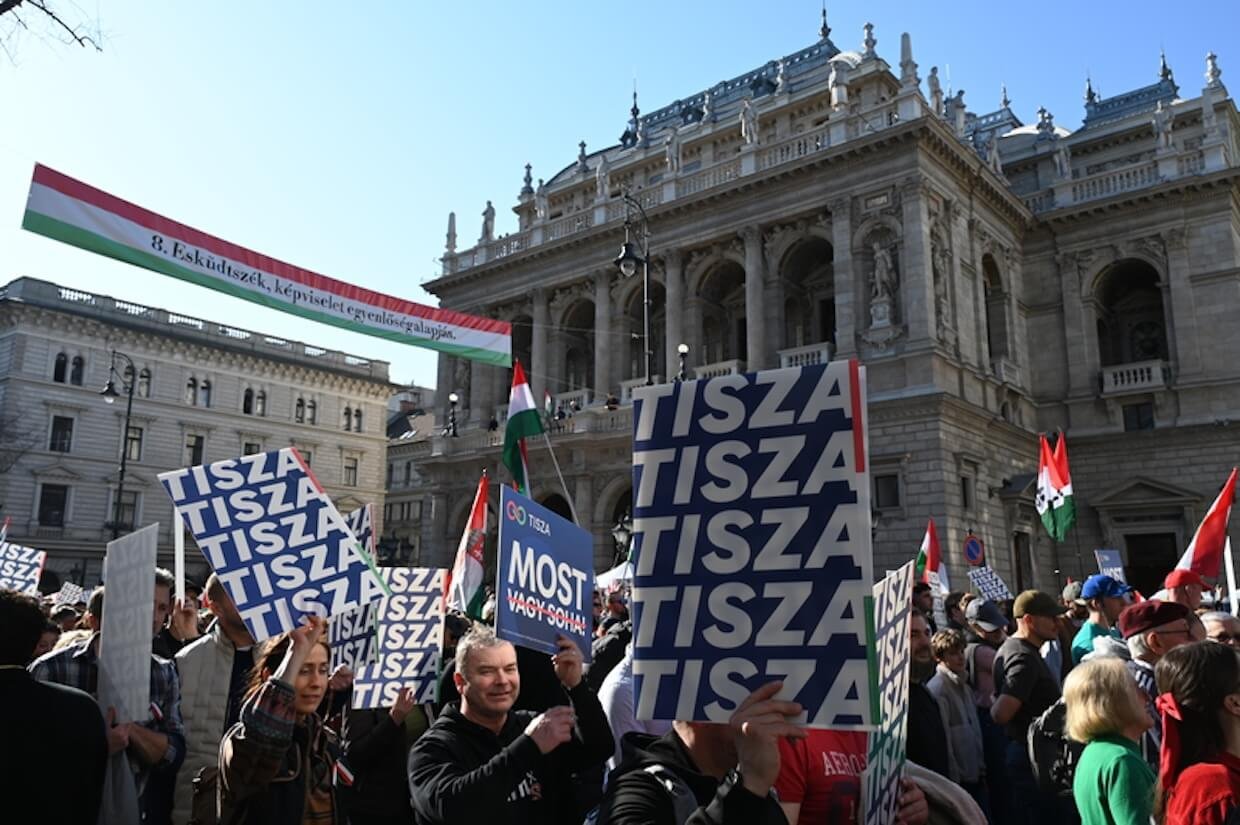
Many foreign observers were struck on election night in Budapest by the widespread and entirely normal use of Hungarian songs, Hungarian flags, and Hungarian national symbols. But that is simply the reality. We live in a nationalized space. This is not just about Péter Magyar using national symbols. It is about ordinary Hungarians using them. And, I would argue, they do so without any toxic meaning attached to them. This is not about conquering other countries. It is not about seeking revenge for Trianon or for the territorial losses suffered after the First World War. It is simply the idea that being Hungarian is not a bad thing after all.
We like being Hungarian, just as Croats have every right to be proud of being Croatian, Serbs of being Serbian, Slovaks of being Slovak, Poles of being Polish, and so on. This is more about building what Jürgen Habermas called constitutional patriotism—a new patriotism grounded in a more civic and somewhat less ethnic understanding of the nation. This, too, is something new. Europe, as well as the European Union, is very much part of this process. It is impossible to imagine this new Hungarian patriotism without a strong sense of belonging to the European Union. The issue is no longer “we Hungarians versus the EU.” The idea is “we Hungarians within the EU.” The European Union has become inseparable from Hungary.
Today, this is true not only politically but also mentally. This is a new feature compared to twenty or thirty years ago, when such ideas still had to be explained. Now, especially among younger generations—those under thirty or forty—there is an instinctive sense of belonging to a larger European community. This no longer requires explanation. It has become part of the mental framework of these generations, regardless of their individual political opinions.
The State Must Return Where It Is Needed and Retreat Where It Is Not
Finally, if we revisit Hungary five years from now, what would convince you that the country has successfully completed a democratic transition? What concrete indicators should scholars watch most closely when evaluating whether democratic restoration has genuinely taken root?
Assoc. Prof. Stefano Bottoni: The first thing that comes to mind is the education system. History textbooks—or simply textbooks in general—are a very clear indicator of a country’s self-representation. A high school history textbook is compulsory. Students have to study it for their final examinations. It represents a compulsory body of knowledge about their own country. It is the self-representation that the state communicates to its citizens.
When I see that the Hungarian education system is striving to forge citizens rather than subjects—not young people who simply have to learn and memorize things, but individuals who are encouraged to think critically about them—that will be, for me personally, the sign that something has begun to change at a deeper level.
Only by cultivating new citizens—prospective citizens—and transforming today’s teenagers into future citizens over the next five, ten, or twenty years can Hungary seize the unique opportunity to overcome its long tradition of paternalism, nepotism, and state interference in the lives of ordinary people. So, I think this is the most important thing.
Then, of course, there is the legal system, corruption, and what I would call an education in private property and fair capitalism, which is also largely missing from the mental map of most Hungarians. For many Hungarians, the state is still seen as something that must provide a very broad range of services. There is a joke in Hungary nowadays: you have the state where you would not like it, and you do not have the state where you really need it.
For example, when you need a good hospital, you do not have good public hospitals. But you do have the state telling you how to live, how to procreate, and how to run your business. In other words, you have the state interfering in your life where it is not needed at all, while failing to be there for you as a citizen where you genuinely need its presence.
So, I think we have to reverse this balance by restoring the role of the state where it is truly necessary and removing it from areas where the private economy and civil society can perform more effectively.
