
In this inaugural interview of the ECPS Youth Program’s new interview series, ECPS-ECRN member Andrei Gheorghe discusses his comparative research on populism, illiberalism, and nationalism in Romania and Hungary. He conceptualizes populism through the construction of “the people,” examining how populist actors define belonging, exclusion, and collective identity. Gheorghe highlights the contrast between Hungary’s historically rooted nationalist discourse and Romania’s comparatively understudied populist politics, arguing that “national populism in Romania is very poorly studied and researched.” He also reflects on the challenges facing early-career scholars, including limited funding, differing academic traditions, and the importance of international scholarly networks. For Gheorghe, populism may define the twenty-first century, yet Romania remains insufficiently integrated into comparative international research.
Interview by Natalia Crane
In this inaugural interview of the ECPS Youth Program’s new interview series, designed to introduce a younger generation of scholars working on populism and related fields, ECPS Early Career Researchers Network (ECRN) member Andrei Gheorghe reflects on the conceptual, comparative, and professional dimensions of researching populism in Central and Eastern Europe. The series aims to provide emerging researchers with a platform to present their work, explain their methodological choices, and bring greater visibility to new research agendas in populism, illiberalism, nationalism, and democratic politics.
Gheorghe is a PhD student pursuing a joint doctorate at the University of Bucharest and the École des Hautes Études en Sciences Sociales in Paris. His research focuses on populism, illiberalism, and nationalism in Eastern Europe, particularly Romania and Hungary, while his doctoral thesis examines how “the people” are constructed in populist discourse in the two countries between 2010 and 2020. He has also published on the political instrumentalization of collective memory in Romania and currently holds a French Government Scholarship.
At the heart of the interview is Gheorghe’s concern that Romania remains significantly understudied in international scholarship on populism. While Hungary has generated extensive academic attention, he argues that “there are very few studies of Romanian populism and Romanian politics on the international stage, and also very few in Romania.” For Gheorghe, this imbalance helps explain his comparative research design: “that is why I chose to compare the two countries: national populism in Romania is very poorly studied and researched.”
His intervention also speaks to a broader diagnosis of contemporary politics. Drawing on Pierre Rosanvallon’s Le siècle du populisme, Gheorghe observes that the twenty-first century may become “the century of populists” amid the decline of traditional ideological formations and the rise of both left- and right-wing populism. “And until now,” he adds, “he has been right.”
The interview further explores Gheorghe’s understanding of populism as a process of constructing “the people,” his comparison of Hungarian and Romanian populist discourse, and the different historical resources mobilized in each case. He also discusses the practical challenges confronting early-career researchers, including limited funding, navigating different academic traditions, and building international scholarly networks—making his reflections especially pertinent to the ambitions of the ECPS Youth Program itself.
Here is our interview with ECRN member Andrei Gheorghe, lightly edited to enhance clarity, readability, and overall flow for publication.
National Populism Rose Even as Living Conditions Improved After EU Accession

Thank you so much, Andrei, for joining me for my first interview for this ECPS Voice of Youth project. I have a couple of questions for you about your research. To my understanding, your research interests primarily lie in populism in Romania and Hungary between 2010 and 2020. To begin, could you introduce yourself, outline your academic journey, explain how your research interests developed, and why you believe this research is significant in today’s global environment?
Andrei Gheorghe: Thank you for the question. I am a PhD student in a program under double coordination. It is a PhD program hosted by the University of Bucharest and École des Hautes Études des Sciences Sociales in Paris. I have two coordinators, one Romanian and one French.
I also teach seminars in political science at the University of Bucharest. I have published several articles and one chapter concerning my particular interest in sports and politics, especially how memory is used by the football gallery from my natal town. So, it is a particular interest in politics and sports.
I also work on populism, as you already said. My PhD thesis is on how the people are constructed in populist discourse in Romania and Hungary between 2010 and 2020. I am also a researcher at the National Council for the Study of the Securitate Archives. You know about the Securitate Archive—what the Securitate was and what Securitate means? It was the political police during the communist regime in Romania.
This political police produced roughly three million files, including files on dissidents, people who were watched by the Securitate and who were against the communist regime, but also files concerning collaborators of the Securitate. It is a public governmental institution. I am a researcher at this institution.
My interest in the topic of national populism comes from my childhood because I grew up during the transition. My parents, friends, and all my relations also grew up during the transition. So, I want to understand why this resurrection of national populism occurred, why this ascension of national populism happened after accession to the European Union, basically after 2008. Because, it was a much more problematic period during the transition after the fall of communism.
Then both countries, Hungary and Romania, became members of the European Union, and living conditions and life in general became much better than during the transition. So, I want to understand what triggered this ascension.
Populism Begins with Constructing a Narrow Definition of “the People”
That’s very interesting. I loved hearing about that. My next question for you is: how do you define populism in your own research, and why have you adopted that particular conceptual approach? And has your definition of populism changed throughout your academic career?
Andrei Gheorghe: Actually, I don’t have a personal definition of populism. What I observe in my research is that populism involves a narrow definition of “the people.” Populists define and construct the people, and that is also the focus of my research.
Basically, all populists try to construct a people and give that construction a particular image, with specific traits and symbolic values. They also seek to exclude “the enemies” and draw the boundaries of the ideal people. In this sense, populism is a kind of amalgam—an arrangement of ideology, populist logic, and artistic representation. But all these elements converge around the idea of “the people” because populists seek to imagine and define who that people is. This is particularly evident in right-wing populism.
As for left-wing populism, we do not really have it in Romania or Hungary. Although my research examines speeches by a prime minister from the Social Democratic Party, the Romanian Social Democratic Party is not particularly social democratic. It is more nationalistic because it inherited old communist networks and communist nationalism, and it is more nationalistic and traditionalistic than socialist.
Hungarian Populism Looks to a Heroic Past, While Romanian Populism Targets Contemporary Elites
My next question is: how do you measure populism in your own work, especially when comparing two different countries? Given that the definition and representation of populism can vary from country to country, how do you balance different research approaches?
Andrei Gheorghe: I start with the definition of populism and apply a qualitative research approach. From this starting point, I analyze speeches and discourses, including through automated analysis. I extract the most important and relevant semantic elements in these speeches and compare the historical and social resources they draw on, as well as the ways in which they seek to construct “the people.”
We can see that Viktor Orbán, in his speeches, constructs the Hungarian people by appealing to the Hungarian nation and its historical existence. He speaks about the millennial state, the millennial nation, the Hungarian nation, the Christian nation, and the Hungarian Christian nation. Hungarians resisted multiple empires, including the Habsburg Empire, the Russian Empire, and the Ottoman Empire. They have always been in the Pannonian Basin. So, in this narrative, they will also resist Brussels, which is compared with the old imperial capital, Vienna.
This is an appeal to the historical roots of the Hungarian people. Orbán invokes the national revolution of 1848 and the 1956 spring revolution against the Soviets. When he speaks about his 2010 revolution, when he won the elections, he presents it as a new transformation, a new revolution for a new generation, while drawing on earlier Hungarian revolutions fought in the name of freedom.
His victory in 2010 was therefore presented as a new revolution, but again through an appeal to history. His speeches and the constitution are full of historical references and appeals to ethnic and cultural identity. This concerns all Hungarians beyond the country’s borders. He presented himself as the prime minister of all Hungarians, not only those living in Hungary. So, it is a transborder community.
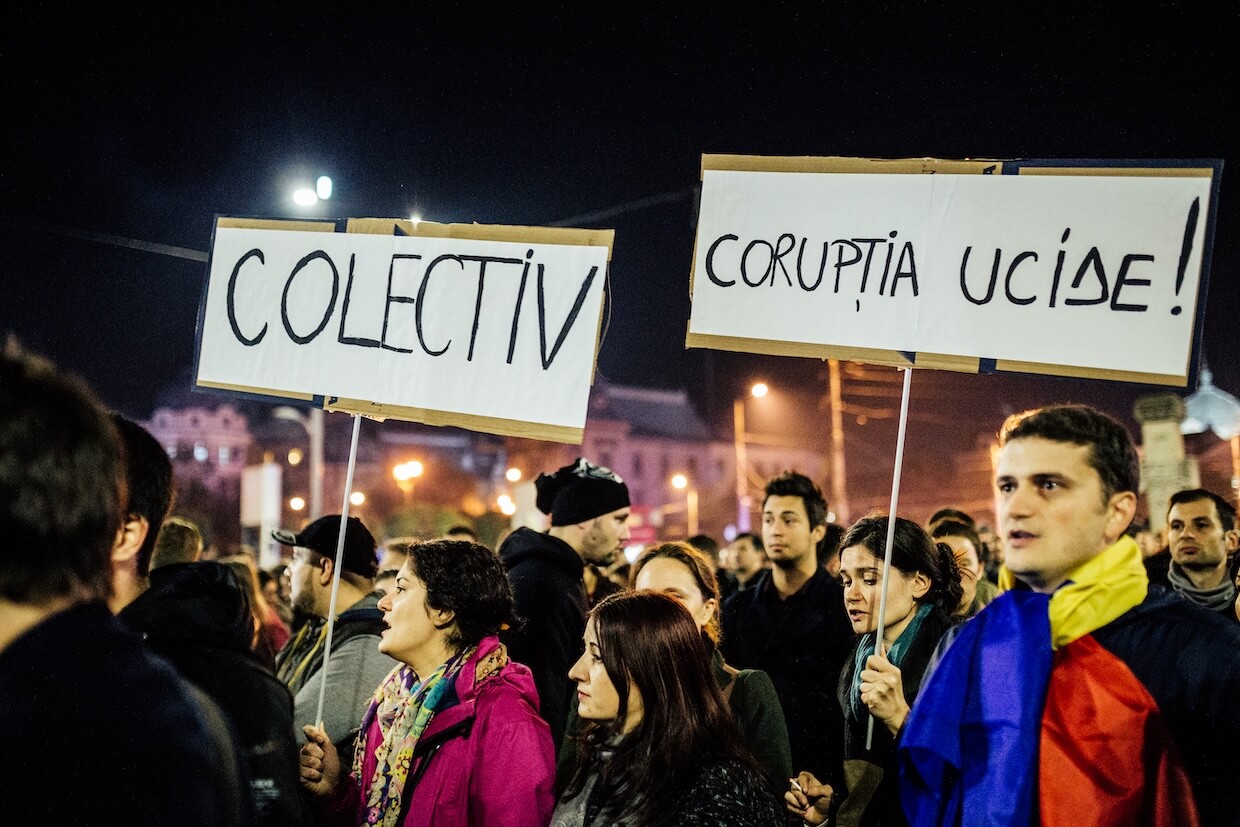
In Romania, by contrast, appeals to nationalism, the nation, and history are less prominent in populist discourse. Instead, populists define “the people” as working people, poor people, enslaved people—Romanian people betrayed by Western elites and by Romanian elites who believe in Western values. In their speeches, they portray Romania as a second-class citizen within the European Union.
So, this discourse does not rely as heavily on history or on the idea of a great nation. This began to change after 2020, with the rise of the Alliance for the Union of Romanians (AUR) and George Simion. After 2020, the nationalist-populist movement AUR—whose acronym means “gold” in Romanian—entered Parliament. In 2024, they doubled their score. They have 20% of Parliament, and now they are estimated at 40%. It is an astonishing rise.
They now emphasize this nationalistic discourse. They speak about the Romanian people and the great achievements of the Romanian people during communism, including industrial development and other achievements from that period, despite the fact that they are not communist.
So, my comparison is thematic: it is a thematic and qualitative analysis. That is my main approach. I have also conducted a brief quantitative analysis because I wanted to highlight the differences between Hungarian and Romanian discourse. Hungarian discourse is deeply historical and densely populated with references to history and to the ancient past of the Hungarian people.
They try to construct the Hungarian people by referring to their heroic past, when Hungary was an independent kingdom and included regions that are now part of Romania, Slovakia, Serbia, and Croatia—the idea of Greater Hungary. In Romania, by contrast, there is more of an appeal after 2020 to the recent past, particularly to the communist period, although my research stops in 2020. Before 2020, the discourse was directed against foreigners, international companies, globalism, liberalism, and multiculturalism, while portraying Romanian people as second-class.
ECPS-ECRN Helped Turn Academic Networking into Concrete Research Collaboration
It’s very interesting to look at the comparative approach in the speeches and how frequently you use qualitative analysis. I found that really compelling. Thank you for that. For my next question, I’d like to shift gears a little and ask about your cooperation with other scholars. Contemporary research increasingly depends on international collaboration. How has cooperation with other scholars, academic networks, and initiatives such as the ECPS Early Career Researchers Network (ECRN) influenced your research, professional development, and intellectual outlook?
Andrei Gheorghe: Actually, before becoming a member of the ECPS-ECRN Network, collaboration with other scholars was virtually non-existent. Despite participating in quite a few international conferences—not so many, around nine or ten, but for me that is a lot—I tried to develop my network, but it did not really happen.
After joining the ECPS-ECRN Network, however, I connected with an Italian scholar, and we decided to work together, collaborate, and write an article comparing Italy and Romania.
So yes, I think ECPS is a very good network. It has been a very positive factor in this kind of development.
Romanian Scholars Face Serious Barriers to Participating in International Academic Life

That’s really great to hear. Thank you for answering that question. My next question is: throughout your academic journey, what professional challenges have you faced, and what have been some of the most rewarding moments in your research?
Andrei Gheorghe: The most challenging thing for me was the transition between the French type of analysis and research and the English, Anglo-Saxon type of research, because the French approach is relatively less empirical. Despite being a PhD student in France, my participation in French academia has been quite limited, even though I want to participate more.
My work can be seen as too empirical and not sufficiently elaborate or theoretically sophisticated. But it is also very extensive because I compare two countries, while French scholars often take much narrower subjects for their analysis and go very deeply into a specific topic. So, this transition between French and Anglo-Saxon research has been one major challenge.
Another challenge is that, for Romanian scholars, it is very difficult to participate in academic events outside Romania because funding is almost nonexistent. You often have to pay all the expenses yourself, which is very challenging. There is also the question of how your work is appreciated in Romania.
As a PhD student, you also have to work to make a living. You cannot dedicate all your time to research, so you have to make sacrifices from this point of view.
On the other hand, one major achievement was publishing a chapter in a book edited by Routledge. That was a big achievement for me, as were publishing my articles and participating in conferences.
Romanian Populism Still Remains on the Margins of International Research
That’s great. Thank you so much. And I do agree with you when you say that there are challenges when studying in different countries and adapting to the different approaches that academic cultures take. I completely agree. I’ve experienced it myself. I’m going to give you one last question because, since this is my first interview for this project, I think I overestimated how many questions I would be able to fit in, but I’m getting a good sense of the time frame now. So, let me ask you one final question. Looking ahead, where do you see populism studies evolving over the next decade, especially regarding Hungary and Romania? What areas remain neglected and deserve much more attention?
Andrei Gheorghe: It’s a good question because, in his book Le siècle du populisme (The Century of Populism), Pierre Rosanvallon argues that the 21st century will be the century of populists because of the decline of traditional ideologies—the left, the right, especially the left—and the rise of populism, both left-wing and right-wing populism. But it will essentially be the century of populism. And until now, he has been right.
Concerning Hungary and Romania, Hungary is very well studied. There are many studies and a great deal of research on Hungarian populism. But there are very few studies of Romanian populism and Romanian politics on the international stage, and also very few in Romania. So, that is why I chose to compare the two countries: national populism in Romania is very poorly studied and researched.
I think that my research, and perhaps my participation in international conferences outside Romania, will make more researchers interested in Romanian politics and Romanian populism. To make a confession, when I participated in international conferences outside Romania dedicated to populism, illiberalism, and nationalism, I was the only Romanian, and they looked at Romania and my research as rather exotic. They know about Hungary, they know about Poland and Bulgaria. They know much more about Serbia because of the Yugoslav Wars. What about Romania?
That’s wonderful that you are bringing attention to a subject that is not so widely researched internationally, introducing it at different conferences, and giving it more traction. I think that’s really great for academia. So, I want to thank you very much for talking to me today and for helping me with my project. I think your research is very interesting, and I was really glad to be able to talk to you about it. I really appreciate you taking the time.
Andrei Gheorghe: Thank you, Natalia.