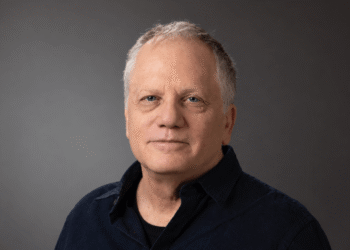
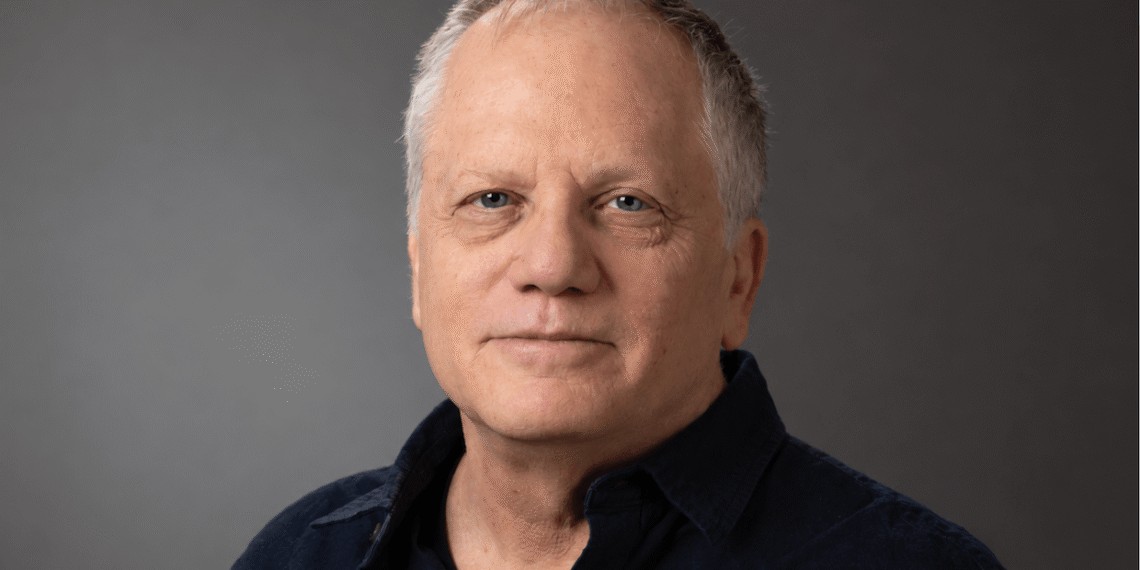
In an interview with the European Center for Populism Studies (ECPS), Professor Gideon Rahat of the Hebrew University of Jerusalem examines Israel’s democratic prospects ahead of the October 27 elections. He argues that Netanyahu’s departure could enable a redistribution of political power and a return to consensus-based democracy, while warning that deeply personalized parties and weakened institutional checks threaten democratic resilience. Highlighting Netanyahu’s role in legitimizing the religious-nationalist far right, Professor Rahat cautions: “But once you let this genie out of the bottle, which is what Netanyahu did, the genie is here to stay.” Despite these enduring challenges, he sees opportunities for democratic renewal through institutional reform, stronger political parties, and the restoration of checks and balances.
Interview by Selcuk Gultasli
As Israel approaches the October 27 elections, its political landscape remains deeply polarized by Benjamin Netanyahu’s leadership, the growing influence of the religious-nationalist far right, and the profound consequences of the October 7 attacks and the devastating war in Gaza. Beyond the immediate electoral contest, fundamental questions concern the resilience of democratic institutions, the personalization of political power, and whether a post-Netanyahu government could reverse Israel’s democratic backsliding.
In an extensive interview with the European Center for Populism Studies (ECPS), Professor Gideon Rahat, holder of the Gersten Family Chair in Political Science at the Hebrew University of Jerusalem and Senior Fellow at the Israel Democracy Institute, offers a nuanced assessment of these challenges. Drawing on his scholarship on political parties, populism, and democratic institutions, Professor Rahat argues that Netanyahu’s departure could create an opportunity for democratic renewal, although Israel’s deeply personalized party system presents formidable structural obstacles.
Central to his analysis is Netanyahu’s consolidation of political authority and his transformation of Likud. According to Professor Rahat, Netanyahu’s populism combines centralized personalism with an antagonistic division between the supposedly authentic people and institutional elites. Yet his removal could fundamentally alter these dynamics. As Professor Rahat explains, “Netanyahu did not allow anyone around him to grow politically.” Consequently, he argues, no obvious successor possesses the capacity to reproduce Netanyahu’s centralized political infrastructure. His departure could therefore allow political power to be redistributed, potentially facilitating a return to consensus-based democracy.
However, Professor Rahat simultaneously warns that Netanyahu has fundamentally transformed Israel’s political landscape by legitimizing previously marginal ultranationalist forces. Examining the rise of Itamar Ben-Gvir and Bezalel Smotrich, he emphasizes the decisive role of political elites in enabling radicalization. Referring to Netanyahu’s political elevation of Ben-Gvir, Professor Rahat observes: “But once you let this genie out of the bottle, which is what Netanyahu did, the genie is here to stay.” This normalization of the far right represents an enduring challenge that may survive Netanyahu’s eventual departure.
The interview also explores the weakening of judicial independence, the marginalization of Arab political parties, and the enduring trauma of October 7. Professor Rahat emphasizes that the erosion of institutional safeguards cannot be reversed through leadership change alone, warning that “a court cannot sustain democracy by itself.” Democratic reconstruction, he argues, requires stronger political parties, institutional reforms, and a broader distribution of political authority.
Moreover, Professor Rahat’s analysis distinguishes between the possibility of ending Netanyahu’s personalized rule and the more demanding task of rebuilding Israeli democracy. His cautiously hopeful conclusion underscores the importance of institutional transformation beyond electoral alternation: “Hopefully, this would allow Israel to return to a more consensus-based form of democracy.”
Here is our interview with Professor Gideon Rahat, edited lightly to enhance clarity, readability, and overall flow for publication.
Political Personalization Extends Beyond Netanyahu to the Opposition
Professor Rahat, thank you for joining us. Let me begin with your research on Likud’s personalization under Netanyahu. In your research with Ofer Kenig, you argue that Likud has transformed from an institutionalized leader party into a personal party under Netanyahu. Has this transformation reached the point where Likud’s political identity, organizational survival, and ideological direction have become inseparable from Netanyahu himself? What would remain of Netanyahuism without Netanyahu?
Professor Gideon Rahat: The party might collapse after Netanyahu, but you have to remember that most of the other relevant parties in Israel are also personal. This means that Likud might survive because it still has a brand name and a platform that could remain after Netanyahu. If Likud and Netanyahu were competing against an institutionalized party, Likud might have collapsed. But there are no such alternatives these days. Israeli politics is very personal—not only when it comes to Netanyahu, but also to the opposition to Netanyahu.
Netanyahu Embraced Populism Amid His Legal Troubles
Your recent research with Tristan Klingelhöfer links centralized party personalism to illiberalism and majoritarian conceptions of democracy. To what extent does Netanyahuism exemplify this relationship? Is Israel experiencing a populist challenge to liberal democracy or a more profound transformation toward personalized authoritarian governance?
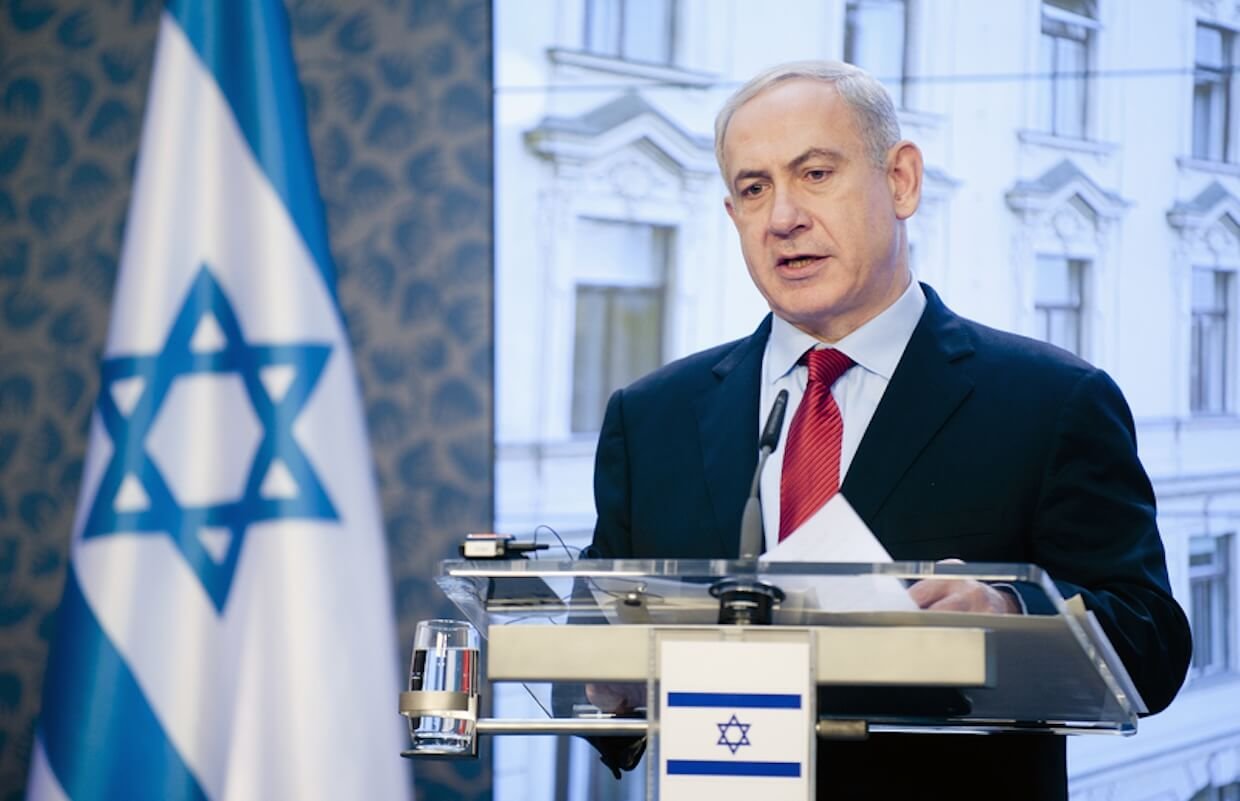
Professor Gideon Rahat: No, populism in Israel is clear. I must say that until around 2015, Netanyahu was actually blocking populism in Israeli politics. There were many initiatives that he himself blocked. In 2015, this started to change. In 2019, once he began having problems in court over allegations of corruption, he really changed course and became a populist in a very clear and simple sense: There is me, the person who represents the genuine people, and there are these corrupt elites—the courts, the prosecutors, the media, academia, and everybody else, the usual suspects of any populist regime.
So, it is clearly populism. Of course, in Israel, it is blended with centralized personalism. Netanyahu is at the center; he is the symbol of this populist side. His populism is clear, but he is also allied with other populists, such as Viktor Orbán. He was aligned with Bolsonaro and, of course, with Donald Trump.
Religiosity Matters More Than Ethnicity in Netanyahu’s Support
Likud’s historical populism drew heavily on the resentment of marginalized Mizrahi constituencies toward Ashkenazi political elites. Has Netanyahu successfully transformed these historical grievances into a durable anti-establishment identity, even after decades of Likud dominance? How much of his continuing appeal rests on identity rather than political performance?
Professor Gideon Rahat: It’s clear that Netanyahu and Likud receive more support from Mizrahi Jews than from Ashkenazi Jews, who came from Europe and the West. But I must say that the most important factor is not ethnic background but religiosity. Netanyahu’s supporters tend to be more religious, while Mizrahi Jews tend to be more traditional. They generally occupy a middle ground, whereas Ashkenazi Jews may be either very secular or very religious, like the ultra-Orthodox. Many Mizrahi Jews fall somewhere in between. They are not fully religious, but they are clearly not secular, and Netanyahu enjoys considerable support among them.
However, studies show that the growing Mizrahi middle class, which has emerged through economic and social mobility, tends to be more supportive of the opposition. More educated Mizrahi Jews, particularly those with higher incomes, are more likely to support the opposition than those who are more traditional, poorer, and more dependent on patron-client relationships.
Extreme Personalization Threatens Even Likud’s Survival
In your 2026 article Is the Party Perspective Over?, you defend the continued analytical centrality of political parties despite increasing personalization. Does Israel’s 2026 election reinforce that argument, or has competition increasingly become a contest between political personalities rather than coherent ideological and organizational alternatives?
Professor Gideon Rahat: If the entire democratic world looked like Israel, I wouldn’t defend the parties. Israel is an extreme case of political personalization. The only comparable case in the democratic world might be Italy. If Israel were the typical case rather than the exception, I wouldn’t argue that parties remain so relevant to politics. But parties are still relevant in most countries, as even very simple examples demonstrate.
Take Austria, for example. Sebastian Kurz was a very strong, highly personalized leader who took over his party. Once he was found to be corrupt, he was gone. In Japan, prime ministers change frequently because of corruption allegations. The party stays, while the leader goes. This is not, of course, the case in Israel. Elsewhere, parties survive their leaders, which demonstrates that they are institutionalized and not dependent on a specific individual. Even some personal parties become less personalized, or perhaps evolve into leader parties, where the leader remains very strong, but the party survives after their departure. The parties associated with the Le Pens in France are an example.
Israel, however, remains an extreme case where political parties come and go. Just two days ago, Benny Gantz, who led one of Israel’s strongest parties four years ago, had to leave because he found that he no longer had sufficient support to pass the electoral threshold. He had only 1% support, while he needed 3.25%. So, it’s about him, not about a political party.
His party, which was highly personalized, will probably disappear into history with him. If you look at Israeli politics, parties are constantly changing, with new parties emerging around specific leaders. Once those leaders leave, their parties disappear. Likud, of course, is a brand name that might survive Netanyahu. But as I said, it would survive because the other parties do not offer comparable alternatives in terms of brand names, not because Likud itself is not a personal party.
Netanyahu Let the Far-Right Genie Out of the Bottle and It Is Here to Stay
The political normalization of Itamar Ben-Gvir and Bezalel Smotrich has brought previously marginal ultranationalist currents into the center of government. Has their participation fundamentally radicalized Israeli politics, or does their growing influence reflect a broader ideological shift already underway within Israeli society?
Professor Gideon Rahat: Both are true. First, there has been radicalization in Israel, especially since October 7. October 7 was a traumatic event. Israelis see themselves as having been exposed to this kind of massacre, and this has produced another shift to the right. The first major shift to the right, the first political earthquake, came in 2001, during the Second Intifada, when suicide bombers attacked buses and about 1,000 Israelis were killed. This time, another thousand Israelis were killed in a single day. They could not defend themselves, and this has moved people further to the right.
However, at the end of the day, political elites are more important. If Netanyahu had not allowed Ben-Gvir to enter politics as he did, I’m not sure Ben-Gvir would have become so strong. But Netanyahu did allow him. Ben-Gvir had, if I remember correctly, around 60,000 votes, which was not enough to pass the electoral threshold, and Netanyahu brought him into the Religious Zionism Party. Now Ben-Gvir himself is very strong. So, I think much depends on how political elites shape the political landscape.
This doesn’t mean that people are not extreme, racist, right-wing, or whatever. They are. But elites often have the ability to moderate these forces. People may accept that, even if they are more extreme than their politicians, their leaders must maintain foreign relations and deal with others. They understand that. But once you let this genie out of the bottle, which is what Netanyahu did, the genie is here to stay.
And Ben-Gvir is here to stay, not because he has been particularly successful. He is the Minister of National Security, and if you look at the number of crimes and killings, nothing particularly good is happening. But he doesn’t need success. His rhetoric alone is enough to attract considerable support.
Smotrich, who is supposed to be somewhat less extreme, actually comes from the more extreme wing of religious nationalism, from a historical perspective. He is more extreme in terms of religion, as well as foreign affairs and security.
So, the national religious movement is moving toward the extremes, and this represents a historical transformation. Once upon a time, the national religious movement in Israel was moderate. It was actually part of what was called a historical alliance with the Labor Party. But after 1967, when Israel took control of the territories, the movement gradually changed course. Today, it occupies the most extreme position in the Israeli political system.
Military Service Divides Religious Nationalists and Ultra-Orthodox Jews
How should we analytically distinguish the religious-nationalist radicalism of Otzma Yehudit and Religious Zionism from the political objectives of ultra-Orthodox parties such as Shas and United Torah Judaism? Are these movements converging around an illiberal conception of the Jewish state, or do their competing interests limit the coherence of the religious right?
Professor Gideon Rahat: The ultra-Orthodox are different. If you look at public opinion in both communities regarding foreign affairs and xenophobia, their views are almost the same. But the main goal of the ultra-Orthodox elite is to isolate their community from the rest of society. They don’t want its members to modernize or move beyond the boundaries of the ultra-Orthodox community.
This creates an important distinction. While the national religious are the avant-garde, seeking to lead the State of Israel toward their goals, the ultra-Orthodox are primarily concerned with their own community.
This difference is particularly evident in attitudes toward military service. The national religious serve in the military and regard it as something very important, even as a form of serving God. The ultra-Orthodox, by contrast, do not want to serve in the military. They claim this is because they spend their days studying the Torah.
The real reason, however, is their fear that military service would expose members of their community to modernism. They would encounter women who do not dress as women do within their own community. In other words, the ultra-Orthodox leadership does not want them to be exposed to the outside world and therefore opposes their military service.
So, military service represents the main cleavage, the central dividing line between the national religious and the ultra-Orthodox.
Netanyahu’s Coalition Vows to Continue Judicial Overhaul if Reelected
Israel’s judicial overhaul controversy exposed competing understandings of democratic legitimacy: majoritarian sovereignty versus institutional checks and minority protections. Following the October 7 attacks and the Gaza war, has the struggle over judicial independence become secondary to national security, or does it remain the defining conflict over Israel’s democratic future?
Professor Gideon Rahat: It remains a defining conflict because Netanyahu and his coalition want to continue with it, while the opposition remains against it. So, this is a very important issue. What Netanyahu is trying to do, of course, is to reduce the checks and balances on the executive, as other leaders are doing around the world. He is doing this by weakening the courts and confronting the media, academia, and civil society. This is an ongoing process, and members of his coalition are saying that if they win the elections, they will continue with it.
You have to remember that in the previous elections, this judicial coup was not on the agenda. Now, everybody knows about it, and Netanyahu and his coalition are openly saying that they intend to continue with it. This has become a very important part of their agenda.
Israel’s Political Parties No Longer Provide Essential Checks and Balances
Your scholarship demonstrates how personal parties can undermine institutional accountability. To what extent has Netanyahu’s control over Likud facilitated the weakening of democratic checks and balances? Could an electoral defeat reverse these developments, or has democratic backsliding become structurally embedded beyond Netanyahu’s leadership?
Professor Gideon Rahat: On the one hand, Netanyahu has really driven populism, personalism, and the centralization of power. But let’s imagine that he’s no longer there. We still have to remember that political parties in Israel are highly personalized. When parties become highly personalized, they no longer serve as checks and balances; they simply serve their leaders.
This is a problem for democracy, particularly in a system where there are already very few checks and balances. We don’t have federalism or two houses of Congress. We have a highly centralized electoral system with a single nationwide electoral district and very weak legislators. So, when you look at Israel, you see that there are hardly any checks and balances, whereas political parties once played precisely that role.
Returning to a more democratic course would not be easy. Changes would be necessary. But without Netanyahu, I don’t think any single leader would centralize the system to the same extent.
There is also reason for hope. Look at the new Hungarian leader who came to power. He could have become Orbán II, taking all the powers Orbán had accumulated and using them for himself. But instead, he is giving up those powers. So, we can always hope that Israel’s next leader will be generous enough to distribute political power more broadly, allowing checks and balances to be reestablished.
However, political parties in Israel are really in very bad shape. They need to be reconstructed, but you cannot base your entire reform program on political parties alone. You need to consider new reforms, such as giving more power to local governments, perhaps introducing some form of regional government, and developing other creative ideas to ensure that we do not remain in the current situation, with a very strong executive and a relatively strong and courageous court. But a court cannot sustain democracy by itself.
Populism Helps Netanyahu Evade Accountability for October 7
The Hamas-led October 7, 2023, attacks represented an extraordinary failure of Israel’s security establishment. Yet Netanyahu retains a substantial electoral constituency. How do you explain his political resilience despite this failure? Has the resulting insecurity strengthened populist leadership identification rather than weakened it?
Professor Gideon Rahat: It plays into the hands of populism because, according to this narrative, Netanyahu is not to blame. Instead, the blame falls on the deep state—the military leadership, the intelligence services, and all these supposedly horrible forces. Netanyahu, meanwhile, presents himself as the representative of the genuine people, someone who is not to blame.
This is precisely how populism works. It allows leaders to escape blame for failures for which they bear responsibility. Even if we imagine that Netanyahu is not personally to blame, he is still the prime minister and therefore bears responsibility. Yet populism enables leaders to claim credit for what they regard as successes while shifting the blame for their failures onto others.
October 7 Trauma Reinforces Israel’s Zero-Sum View of Palestine
Israel’s military campaign in Gaza, involving mass Palestinian civilian casualties, extensive destruction, and accusations of war crimes and genocide, has profoundly damaged its international standing. To what extent have these developments altered Israeli electoral preferences, or has a broad national-security consensus insulated domestic politics from international criticism?
Professor Gideon Rahat: Unfortunately, most Israelis do not see it this way. They regard Israel’s military campaign as a logical consequence of what happened on October 7. They believe that the Palestinians attacked first, that the attacks were particularly cruel, and that Israel’s response was retaliation. This is how they understand the situation. They also do not perceive international criticism in the same way as much of the rest of the world does.
Some international criticism makes more sense than others. For example, when Israelis see demonstrations calling for a Palestinian state “from the river to the sea,” they interpret this as a demand for Israel to disappear. This reinforces the perception of the conflict as a zero-sum game, leaving little room for empathy or sympathy toward the other side.
Even the two-state solution, despite some support for it within Israel, is perceived by many Israelis as a threat to their survival. Israel is still experiencing profound trauma from October 7. For Israelis, this was the most horrific event to happen to Jews since the Second World War.
When you look at the situation from the outside, you might say that around a thousand Israelis were killed, compared with 60,000 or 70,000 Palestinians. Comparing these numbers, you may naturally feel greater sympathy for the Palestinians. But that is not how Israelis see it. Their argument is that there could have been 60,000 Israeli casualties as well if Israel had not responded.
This illustrates the fundamental problem with viewing the Israeli-Palestinian conflict as a zero-sum game, in which it is either us or them. If anyone wants to begin addressing the conflict, they must give Israelis the feeling that they can have security even if a Palestinian state is established. Without that sense of security, any solution is a nonstarter.
You also have to remember that this is not the first time Israelis have experienced such fears. There was the second Palestinian uprising in 2001. The Oslo Accords had created an opportunity for the Palestinians to begin building their state, but instead, thousands of Israelis were killed in suicide bombings. Then came the Hamas attack. So, Israelis are afraid, and they believe they have reasons to be afraid. Hamas itself presents the conflict as a zero-sum game.
That is how many Israelis perceive the situation. When you look at the conflict from the outside and argue that these two peoples must come together, you have to understand that both sides have their grievances. Bringing them together is extremely difficult. If you want even to begin that process, you have to think about how to change the perception that this is a zero-sum game.
A Post-Netanyahu Government Could Restore Palestinian Property Protections
The Gaza war and intensified settlement expansion in the West Bank have brought competing visions of sovereignty, annexation, and Palestinian statehood into sharper focus. Has the radical right succeeded in shifting the boundaries of legitimate political debate so far that even a post-Netanyahu government would struggle to reverse these trajectories?
Professor Gideon Rahat: For many years, Israel benefited from two factors. First, the Palestinians themselves were divided between Hamas and the PLO, making negotiations extremely difficult. Even if Israel reached an agreement with the PLO, what would that achieve if Hamas refused to respect it? This division worked to Israel’s advantage.
Second, the Israeli Supreme Court did not allow settlers to take privately owned land, only land that was not privately owned. This provided Israel with some protection against international criticism because the Supreme Court was widely respected. However, once the current government began attacking the Supreme Court and disregarding the principle of private property, Israel became much more exposed to international criticism.
Any government other than the current one would probably return to the previous policy. I don’t think there would necessarily be negotiations over Palestinian statehood, but I believe such a government would respect the previous status quo, under which the private property of Palestinians was not to be touched.
Delegitimizing Arab Parties Undermines Israeli Democracy
Palestinian Arab citizens constitute roughly one-fifth of Israel’s population, yet their parties face persistent political exclusion. Following the recent controversy over attempts to disqualify Arab-majority electoral lists, does the 2026 election expose a fundamental contradiction between Israel’s Jewish-national identity and its commitment to equal democratic citizenship?
Professor Gideon Rahat: When you look at this issue, you have to remember that the so-called Arab parties are also, in a sense, non-Zionist parties. They do not support the idea that Israel is the state of the Jewish people. However, these parties are not exclusively Arab. Although most of their voters are Arabs, the Communist Party is a Jewish-Arab party. Another party also has a Jewish representative, and there are Arab representatives in Zionist parties as well. So, the situation is not entirely clear-cut.
Nevertheless, you are absolutely right that there is a delegitimization of Arab parties. They are not regarded as legitimate coalition partners, and from my perspective, this is a problem.
Let’s imagine that some of these parties hold positions that are considered illegitimate. That may be the case. But if that is the problem, other parties should make their conditions explicit. They could say, for example, “If Party X from the so-called Arab or non-Zionist camp agrees to certain conditions—one, two, and three—we can cooperate with them.” This would put suspicions of racism aside and make the question one of political opinions and policies. From my point of view, this is what should be done.
On the other hand, you have to understand why some people are suspicious of particular parties. For example, one party has connections to the Muslim Brotherhood. The Muslim Brotherhood is a huge movement, encompassing both more moderate elements and others that are openly terrorist. Such connections make some people worry that this party’s ultimate aspiration is a Muslim caliphate rather than the State of Israel.
Then there is the Arab nationalist party, which talks about a state from the river to the sea without any special status for Jews. You have to remember that the State of Israel was established as a safe haven for Jews who had been killed in the Holocaust and persecuted and killed in many other places. The idea was to establish a state for the Jewish people.
So, there is a genuine problem here. Once again, if both sides could show empathy and understand each other’s grievances and the sources of their mutual distrust, there might be opportunities for alliances. My personal view is that such alliances are possible. I don’t see why they should not be.
However, many people carry these feelings and grievances, and after October 7 and everything that has happened since, building a coalition with these parties has become extremely difficult. It is important to distinguish between these particular parties and Arab political participation more generally. Israel has already had a Muslim Arab minister, as well as a Druze minister. Of course, the Druze community is more closely aligned with the state, so the situation is more complex than it might initially appear.
Nevertheless, you are absolutely right that this is a problem. One of the best things that could happen to the State of Israel would be some form of coming together and an effort to build these alliances. Such cooperation would not necessarily have to begin with Arab parties formally joining a coalition. They could remain outside the government and, for example, support a minority government by refraining from voting to bring it down. There are possibilities for cooperation. However, this remains the deepest rift, the most fundamental cleavage in Israeli society: the divide between Jews and Arabs, most of whom are Muslims.
Opposition Fragmentation and Weak Political Parties
Recent polling places Gadi Eisenkot’s Yashar party in close competition with Likud, while Naftali Bennett and other opposition figures compete for the anti-Netanyahu electorate. Does this fragmentation reflect healthy democratic pluralism, or does the opposition’s dependence on competing political personalities reproduce the very personalization you identify within Likud?
Professor Gideon Rahat: I must say that Likud at least has an established party organization. In the other parties, there is hardly any organizational structure. You could argue that most opposition parties, with the exception of the Democrats, the left-wing Zionist party, are almost entirely personalized parties that would probably not survive beyond their current leaders.
This is a huge problem because, even if we imagine that these leaders would behave differently from Netanyahu, there would still be no party organization capable of serving as a check and balance. Something important is missing in Israeli politics. Political parties and their organizations can play a crucial role in opposing populist forces.
You can see this in Turkey, for example, where opposition parties continue to exist as established organizations even when their leaders change. These parties remain important. In other countries with populist regimes, political parties also play a significant role. In Israel, however, this organizational dimension has become very weak.
We need to reconstruct political parties. Israel used to be what scholars call a “party state.” In the past, 25 percent of the Israeli population belonged to political parties. But these parties have largely collapsed.
Nobody particularly likes political parties, perhaps because they divide society, represent particular interests, and are associated with internal political struggles. Yet if you look at the empirical evidence from around the world, the stronger political parties are—and I mean parties in the plural—the greater the degree of party organization, or “partiness,” and the stronger democracy tends to be.
It is very important to remember the connection between political parties and democracy. You are absolutely right that we need to reconstruct them to sustain democracy in the long run, even if Netanyahu were to allow democracy to flourish.
The Far Right Would Sacrifice Israeli Children for Greater Israel
Although leading opposition figures promise to restore institutional accountability and reverse some ultranationalist policies, many remain committed to restrictive positions on Palestinian statehood. Would an opposition victory represent genuine democratic renewal, or primarily a change in leadership within an enduring ethnonational and security-oriented political consensus?
Professor Gideon Rahat: I think there would be democratic renewal. Even if the new government included clearly right-wing forces, such as Bennett, Lieberman, and others, it would still be possible to engage in dialogue with them. There would no longer be an automatic veto by the extreme right.
You have to understand that the extreme right’s veto power over Netanyahu’s government extended beyond the Palestinian issue. It even affected negotiations over the Israeli hostages in Gaza. These parties would not allow Netanyahu to reach a deal to bring Israeli citizens home from Gaza. That is before considering all the other issues. They are extremely nationalistic and are prepared to sacrifice not only others but also their own children and their own people for the sake of Greater Israel. That is their vision.
If these forces were no longer part of the government, some progress would be possible. Would the next government establish a Palestinian state? Forget about it. But there would still be opportunities to move forward. Dialogue could resume, and efforts could begin to explore whether the Palestinian Authority, together with whoever governs Gaza, could start building something that might eventually become a state. Perhaps it would not ultimately become a state, but at least the lives of Palestinians could improve to some extent.
Israel’s Fragmented Party System Makes Coalition Outcomes Unpredictable
Recent polls offer conflicting projections, with some indicating a substantial anti-Netanyahu advantage while others suggest a closely balanced parliamentary landscape. Given the 61-seat coalition threshold, the electoral weight of religious parties, and the potential role of Arab parties, which coalition scenarios do you consider most plausible after October 27?
Professor Gideon Rahat: If neither side secures a majority of 61 seats after the elections, everything remains open. Several scenarios are being discussed. One possibility currently under consideration is for the opposition, together with the Arab non-Zionist parties, to first replace the Knesset speaker and then pass legislation that would prevent Netanyahu from returning to power. This could potentially be followed by another election.
There are many possible scenarios, and you can never be certain what will happen after an election. We might even find ourselves with a unity government involving Netanyahu and Eisenkot. You simply cannot know because this is coalition politics. No single party commands a majority, and Israel does not have large parties. According to opinion polls, the largest party is projected to win just 24 of the 120 seats, or 20 percent. That means a coalition must be built.
When you build a coalition, everyone applies pressure, everyone plays chicken with everyone else, and everyone negotiates. The final outcome is impossible to know in advance. It is like cooking: you bring together many different ingredients, and you cannot be sure what the final result will be. So, if you expect the elections to produce a clear answer, I would be surprised.
Netanyahu’s Departure Could Restore Consensus-Based Democracy
And lastly, Professor Rahat, looking beyond October 27, what would constitute the more consequential outcome for Israeli democracy: Netanyahu’s defeat, the exclusion of the religious-nationalist far right from government, or a deeper institutional transformation that restores pluralism and accountability? Are we witnessing the possible end of Netanyahuism, or the consolidation of a political order that may outlast its founder?
Professor Gideon Rahat: If Netanyahu is ousted, there is a good chance for change because there is no single person who could become the next Netanyahu. Netanyahu did not allow anyone around him to grow politically. If he saw someone who might challenge him in any way, that person was pushed out.
As a result, I don’t think there is anyone who could take over the political infrastructure Netanyahu has built and use it in the same way. So, there is a good chance that once he is removed from power, political power will be dispersed and redistributed among different forces. These forces might even have an interest in dispersing power because none of them would want another leader to become the next Netanyahu.
Only someone who imagines himself as Netanyahu’s successor might want to preserve this centralized power structure. But most political leaders understand that they are unlikely to become the next Netanyahu, so it would be better for them to distribute power more broadly.
Hopefully, this would allow Israel to return to a more consensus-based form of democracy. I also hope that the next government will undertake institutional reforms to establish and consolidate this broader distribution of political power.