

In an interview with the ECPS, Dr. Andrew O’Donohue, Postdoctoral Fellow at Princeton University and Fellow at the Carnegie Endowment for International Peace, examines how political polarization, populist mobilization, and judicial institutions shape democratic backsliding. Drawing on comparative research across the United States, Turkey, Israel, and Brazil, Dr. O’Donohue argues that polarization becomes particularly dangerous when political divisions harden into antagonistic identities. He explores how populist leaders exploit these divisions, manipulate judicial institutions, and undermine democratic accountability. Challenging conventional assumptions about judicial independence, he warns that courts can themselves enable democratic backsliding. Yet he emphasizes that democratic resilience remains possible through opposition mobilization, institutional reform, and coalitions capable of defending constitutional safeguards against executive overreach.
Interview by Selcuk Gultasli
Political polarization has become one of the defining challenges facing contemporary democracies, not merely because it divides electorates but because it can transform political competition into an existential struggle between antagonistic identities. Against the backdrop of renewed debates over executive power following the 2026 US midterm elections, mounting judicial pressure on Turkey’s political opposition, and Israel’s ongoing constitutional crisis, the relationship between polarization, populism, and democratic backsliding has acquired renewed urgency. Yet polarization is not inherently destructive. As Dr. Andrew O’Donohue observes, “Sometimes polarization can be highly democratizing.”The danger emerges when political disagreements harden into seemingly irreconcilable identities: “When polarization becomes an aspect of political identity, it can be very dangerous for democracy.”
In this wide-ranging interview with the European Center for Populism Studies (ECPS), Dr. O’Donohue, a Postdoctoral Fellow at Princeton University and a Fellow at the Carnegie Endowment for International Peace, examines how polarization shapes democratic resilience and authoritarian consolidation across the United States, Turkey, Israel, and Brazil. Holding a Ph.D. in Political Science from Harvard University, O’Donohue specializes in law and courts, democracy and authoritarianism, and Middle East politics. His comparative scholarship, including the co-edited volume Democracies Divided: The Global Challenge of Political Polarization, challenges conventional assumptions about democratic institutions and the political consequences of polarization.
Dr. O’Donohue argues that polarization operates both as an independent driver of democratic backsliding and as a strategic instrument manipulated by political leaders. In today’s media environment, outrage reinforces partisan antagonism, while populist leaders exploit these divisions to justify institutional transgressions. Polarization, he warns, enables leaders “to get away with anti-democratic actions in the name of protecting one side” while encouraging supporters to overlook abuses committed by their own political camp.
This dynamic becomes especially consequential when courts enter the political battlefield. Through what he calls court baiting, populist leaders deliberately advance popular but legally vulnerable policies, forcing judges into a dilemma between tolerating executive overreach and appearing to obstruct the popular will. Yet Dr. O’Donohue cautions that judicial independence alone cannot guarantee democratic protection: “Independent courts can weaken citizens’ rights, overturn elections, empower unelected elites, or engage in anti-democratic behavior themselves.”
His comparative assessment also raises serious warnings about Turkey’s authoritarian trajectory, Israel’s competitive authoritarianism, and the limited effectiveness of prosecuting illiberal leaders in deeply polarized societies. Nevertheless, he rejects political fatalism, insisting that “polarization doesn’t mean stasis.” New political movements can disrupt entrenched divisions, while courts can resist executive aggrandizement when supported by elected officials, civil society, and international actors.
Ultimately, Dr. O’Donohue’s central message is that democratic resilience requires more than independent institutions: it demands political competition without existential antagonism, effective judicial allies, and sustained institutional reform.
Here is our interview with Dr. Andrew O’Donohue, edited lightly to enhance clarity, readability, and overall flow for publication.
Polarization Is Both a Driver and an Instrument of Democratic Backsliding
Dr. O’Donohue, thank you for joining us. Let me begin with your co-edited volume, Democracies Divided: The Global Challenge of Political Polarization. In this book, you identify severe polarization as a fundamental threat to democracy. Seven years later, has polarization become an independent driver of democratic backsliding, or does its destructive impact depend primarily on populist leaders exploiting existing divisions?
Dr. Andrew O’Donohue: As you pointed out, Selçuk, seven years ago, when my co-author, Thomas Carothers, and I published this book, our core insight was that polarization is not just an American problem; it’s a global problem. There are lessons to be learned from a comparative perspective about why political polarization is rising, not just in the United States but also in many democracies, from Brazil and Turkey to India, and about how to resist polarization.
To your question, polarization is both an independent driver of democratic backsliding—we’ve seen that very clearly across many democracies—and a dependent variable. It’s something that political leaders strategically ratchet up in order to intensify democratic backsliding.
The first thing is that polarization is a structural feature of modern politics, and a lot of that has to do with our information environment. There’s a company in Silicon Valley called Meta that makes $200 billion a year in revenue from the current information environment, and one thing that keeps us clicking and on our phones is the level of outrage and political polarization. That’s a key feature of the modern media ecosystem.
At the same time, polarization is something that populist and other political leaders often benefit from strategically. It’s a factor that enables them to get away with anti-democratic actions in the name of protecting one side and allows their voters to turn a blind eye to the abuses committed by their own side against the other.
The last thing I’ll say is that polarization does not mean political stasis. It doesn’t mean that things can’t change. What we’ve seen over the past several months, even in highly polarized societies, are remarkable political shifts.
We often think about polarization as gridlock or stasis, but what we’re seeing around the world are new political movements and new faces that have disrupted those polarized binaries. Think about Hungary, where Péter Magyar creates a new political party that defeats the existing Orbán government by over 10 percentage points. Think about Serbia, where the student list, a newly formed electoral list, rises and wins a parliamentary majority and defeats the list backed by the incumbent, Aleksandar Vučić. Or think about the United States, where an existing political party, the Democratic Party, runs a series of fresh faces, from Adam Hamilton to James Talarico, and is able to disrupt an existing polarized binary.
Polarization doesn’t mean stasis. In fact, there are numerous cases around the world where political parties overcome existing polarized binaries by disrupting them with new faces, ideas, and parties.
Polarization Is Not Intrinsically Bad
Your comparative research highlights the ways political entrepreneurs transform social divisions into antagonistic political identities. What distinguishes ordinary democratic polarization from the kind of pernicious polarization that enables institutional capture and authoritarian consolidation?
Dr. Andrew O’Donohue: One misconception many people have is that polarization is intrinsically bad. Tom Carothers and I argue the opposite in our book. Sometimes polarization can be highly democratizing. Think, for example, about the US Civil Rights Movement. That movement required decades of struggle in the United States. It was highly polarizing in public opinion, but it was also highly democratizing in the sense of enfranchising Black Americans and expanding access to voting rights.
At the same time, some degree of polarization is a necessary and positive feature of democratic politics. Voters need choices between meaningful political parties, different options, and different policies. When voters don’t have those choices, that can, in itself, create risks for democracy. An excellent example is Venezuela in the 1990s, before the rise of Hugo Chávez.
The main parties, AD (Acción Democrática) and COPEI (Comité de Organización Política Electoral Independiente), were basically operating as a cartel. There was very little that distinguished them. When an economic crisis emerged, voters decided, “Let’s get rid of the entire political system and replace it with a populist leader, Hugo Chávez.”
A similar thing happened in Tunisia in the 2010s. The political parties formed a sort of broad-tent coalition to build a new constitution, but they didn’t really differentiate themselves, especially on issues like economic policy. Then, when a populist leader, Kais Saied, entered the political scene, voters decided to throw out the existing establishment in favor of something that offered a new alternative.
So, polarization can actually be good for a political system. But it crosses the line when we see the emergence of these us-versus-them identity divides. When polarization becomes an aspect of political identity, it can be very dangerous for democracy.
Modern Democratic Backsliding Increasingly Happens Through Legal Means
Across the United States, Turkey, and Israel, political leaders have frequently portrayed institutional constraints as obstacles to the popular will. How does populist majoritarianism transform the judiciary from a constitutional safeguard into a perceived enemy of democratic legitimacy?
Dr. Andrew O’Donohue: Your question cuts to a core theme in struggles over democracy in the modern world: courts are central actors. One reason is that courts have become substantially more powerful since the end of World War II. Another is that modern democratic backsliding increasingly occurs through legal means. Political leaders these days very rarely stage military coups in which they throw out the constitution. Instead, they act through legal means—what Kim Lane Scheppele calls autocratic legalism—to change constitutions. That makes courts crucial actors that can either constrain or enable political power grabs.
So, populist leaders have a very strong incentive to portray courts as anti-democratic actors that constrain the will of the people. How do they do that?
In my research, drawing on cases such as Turkey, Mexico, and the United States, I argue that one of their strategies is what I call court baiting. Populist political leaders around the world adopt policies that are popular with their voters but are very likely to be struck down by courts or deemed illegal. That puts courts in a lose-lose position: either they allow the illegal policy, thereby weakening constraints on the political leader’s power, or they strike it down, allowing the political leader to say, “I won an election. I’m trying to do what’s popular with my voters, and these illegitimate courts are blocking the will of the people.”
This is something that happened in Turkey during the 2000s under Recep Tayyip Erdogan. In 2008, the AKP, then-Prime Minister Erdogan’s party, passed a very popular policy that gave Muslim women greater rights to wear headscarves at universities. This policy had 78% support among the public and 93% support among Erdogan’s party. But Turkey has a very secular constitution and a very secular court, so the court struck down this popular policy. Erdogan then turned to the court of public opinion and said, “Well, I represent the will of the people, milli iradein Turkish, and this court is blocking me. So, we need to pass these constitutional changes in 2010 that increase the size of the court and give the elected government more say over the court.”
A very similar pattern occurred in Mexico. In the Mexican case, President Andrés Manuel López Obrador (AMLO) passed a clearly unconstitutional law to change the constitution through an ordinary piece of legislation, which is not constitutionally permissible. What he wanted to do was give the military control over the National Guard.
The court struck that down, and AMLO went to voters and said, “Look, I’m just trying to make the streets safer from drug violence and drug cartels, and this court is blocking me from getting the military involved and making the streets safer.” AMLO then turned around and passed constitutional changes, removed the entire Mexican Supreme Court, and now the entire Mexican Supreme Court consists of judges who were nominated by the ruling party.
The exact same pattern exists in the United States. The president’s most popular issue among his base is immigration, and what we’ve seen is the president doing things that are illegal, like attempting to restrict birthright citizenship by executive order, but that allow him to turn around and say, “These illegitimate judges are blocking me from deporting immigrants, and that’s what I campaigned on.”
Independent Courts Are Not Necessarily Defenders of Democracy
Your scholarship challenges the assumption that judicial independence necessarily protects democracy. Under what conditions can courts independent of elected governments nevertheless undermine democratic representation, civil liberties, or constitutional accountability?
Dr. Andrew O’Donohue: One of our core assumptions, certainly in the United States, is that independent courts are bulwarks of democracy. There’s a very old idea, going back to Alexander Hamilton, who argued that when courts are independent of the government, they will defend democracy against backsliding. In fact, what we’ve seen is that sometimes, even when courts are independent, they can engage in highly anti-democratic behavior.
A great example of this is Brazil. You had a very independent Supreme Court that resisted an executive power grab under Jair Bolsonaro. At the same time, one of the justices who was critical in constraining Bolsonaro was allegedly involved in a major corruption scandal—I should emphasize allegedly, because he hasn’t yet been tried in a court of law. He was allegedly communicating with a disgraced banker who was asking him for advice on how to avoid arrest and was paying millions of dollars to the justice’s wife.
We’ve seen independent courts engage in diverse types of anti-democratic behavior. Courts have sometimes overturned the results of free and fair elections. For example, in Egypt in 2012, the Supreme Court derailed the democratic transition by dissolving the elected parliament and later legitimizing the 2013 military coup.
Independent courts sometimes take away citizens’ rights rather than protecting them. The US Supreme Court is a great example of this. We have a historically independent Supreme Court, and in 1857, the Court denied citizenship rights to Black Americans under the US Constitution. In 1875, the Court ruled that women, even though they were citizens, could be denied the right to vote. The Court upheld racial segregation in 1896 in Plessy v. Ferguson.
So, there are many cases in which independent courts take away citizens’ rights or overturn free and fair elections. Courts sometimes enable military coups, as has happened in countries like Honduras, Thailand, and Pakistan.
Finally, courts sometimes engage in what Steve Levitsky and Daniel Ziblatt call excessive judicial review. You can have courts that are so independent that they actually restrict the ability of elected majorities to do things that are not threatening to democracy. Brazil is, again, a great example of this. In Brazil, it was the courts, not the legislature, that set policy on decriminalizing marijuana or regulating online speech.
So, courts can sometimes become so powerful that they take away the right of elected leaders to set policy in highly anti-democratic ways.
Turkey Shows How Court Capture Creates a Crisis of Democratic Legitimacy
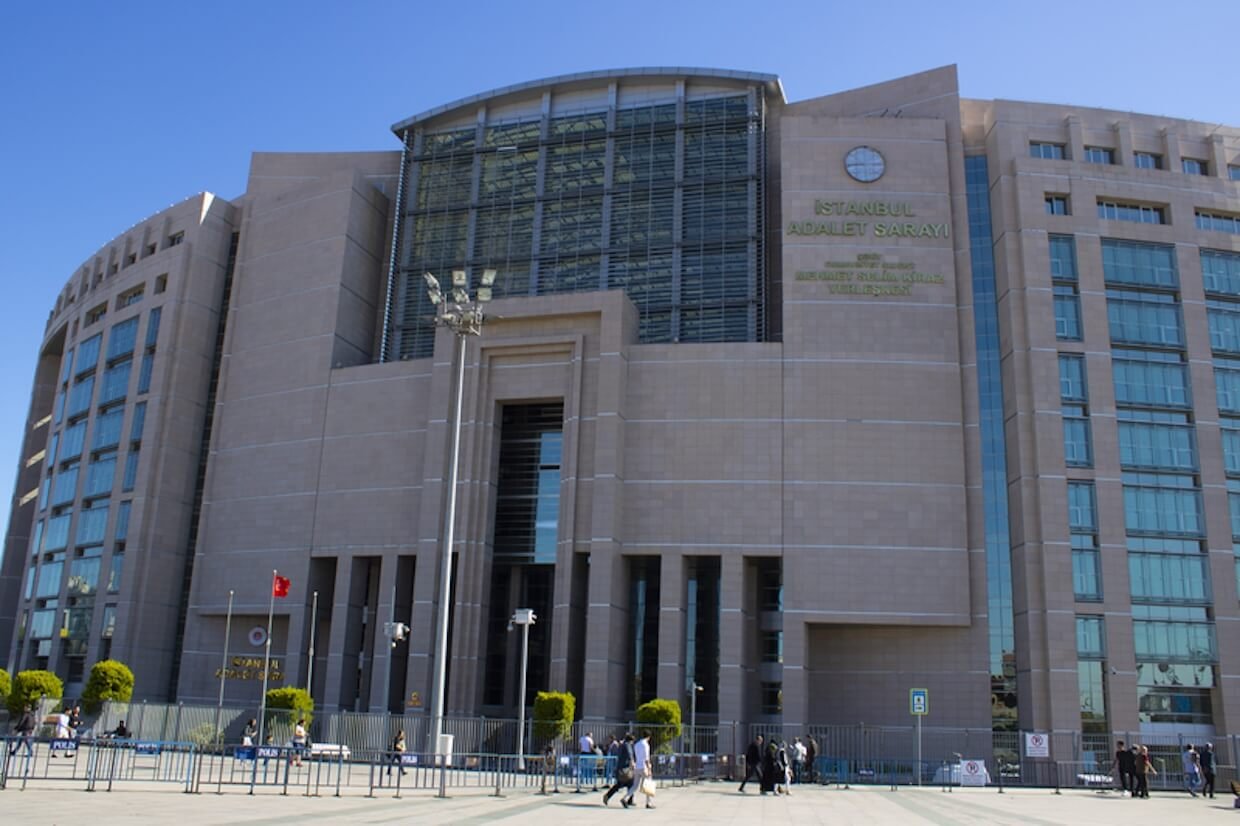
In “Law versus Democracy,” you demonstrate how judicial selection arrangements enabled unelected elites to capture Turkey’s Constitutional Court. How did this earlier pattern of judicial intervention shape the subsequent transformation of the judiciary under Erdogan?
Dr. Andrew O’Donohue: This is a very exciting area because the institutions through which we choose judges are critical in shaping whether courts defend or undermine democracy. The institutions for selecting judges are something that we, as citizens, can change and control. A core part of my argument is that there are many different ways of selecting judges around the world.
Some systems concentrate power in the hands of one political party or group. Turkey, under the 1982 Constitution, is a great example. The president had almost unilateral power to appoint all the judges on the court. The president didn’t even need to consult with the elected parliament, let alone achieve some kind of supermajority or consensus. Predictably, those power-concentrating institutions for choosing judges enabled a president to capture the court, appoint personal friends, and appoint people who were politically loyal to him.
There’s a very similar and worrying system in the United States, where you only need a simple majority in the US Senate to appoint judges for life. That enables presidents and, for example, has enabled the current president of the United States to appoint his personal lawyer to a lifetime position on an appeals court. So, that kind of system makes courts structurally vulnerable to capture.
On the other hand, you can have institutions for choosing judges that disperse power. There are better models. For example, in Germany and Italy, there are supermajority requirements for choosing judges on the Constitutional Court. That means political parties can’t simply appoint whoever they want to the court; they need to compromise with other parties.
Other countries, like Colombia and Italy, also disperse power over judicial selection among multiple branches of government. So, the president has some power, Congress has some power, and the judiciary has some power over choosing judges.
Now, to your question, the Turkish case is one in which the institutions for choosing judges gave a great deal of power to one actor. That enabled court capture by one side—in the Turkish case, the secular side—from the 1980s until about 2010. That court capture created a real deficit of legitimacy. It meant that President Erdogan, then Prime Minister Erdogan, was able to go to voters and say, “This court has been captured by a secular, unelected elite. It is not democratically accountable; it’s not representative of the will of the people.”
The court in Turkey was also very closely associated with a historically powerful military, and the pitch Erdogan made to voters was, “These constitutional changes that give me more power over the court are about saying yes to the rule of law and no to the law of rulers like the military.” Erdogan was able to secure 58% support for the constitutional changes.
So, when courts have these power-concentrating institutions that enable court capture, they can generate real backlash and create a legitimacy deficit for courts.
Turkey Is Undergoing a Shift from Competitive to Full Authoritarianism
In your June 2026 congressional testimony, you warned that Turkey was moving from competitive toward full authoritarianism. How have the imprisonment of Ekrem Imamoglu and judicial interventions in the CHP changed the prospects for electoral competition and democratic recovery?
Dr. Andrew O’Donohue: Turkey is undergoing a shift from competitive to full authoritarianism. What is competitive authoritarianism? It’s a system in which the incumbent abuses state power to gain an advantage over its opponents, but in which elections remain competitive.
From about 2015 to 2023, Turkey was a competitive authoritarian regime. There were elections, and those elections were unfair and slanted in favor of President Erdogan, but the opposition could still win them.
We have now entered a period marked by restrictions on media outlets, the imprisonment of the leading opposition candidate, Ekrem Imamoglu, and judicial intervention against the main opposition party to remove its elected leader, Ozgur Ozel, and replace him with someone who is effectively a regime ally at this point, Kemal Kilicdaroglu. Turkey is shifting away from a competitive authoritarian regime in which electoral outcomes are genuinely competitive—or, at this stage, it is at least a highly repressive regime.
We don’t yet know. Turkey must hold presidential elections by 2028, and under the Constitution, President Erdogan is not able to run for reelection unless there are constitutional amendments or the parliament calls for early elections. The central question in my mind is whether a turnover of power in Turkey is still possible through elections. The next presidential election will be a crucial test.

Economic Crises Do Not Automatically Lead to the Defeat of Populist Leaders
Your research with Ahmet Akbiyik finds that Erdogan’s economic-competence rhetoric proved more persuasive than sociocultural diversion during the 2023 inflation crisis. What does this reveal about the resilience of authoritarian populism when economic performance deteriorates?
Dr. Andrew O’Donohue: The central question my colleague Ahmet Akbiyik and I asked was: At a time when Turkey was experiencing very high inflation, with estimates of inflation above 80%, why was Erdogan still so popular? To research this question, I attended President Erdogan’s rallies, for example, at the old Istanbul airport, and talked to voters. What we found was that economic nationalism was actually a key factor in why citizens continued to support Erdogan.
Erdogan’s appeals focused on how he had made Turkey great by building an electric car, the TOGG, in Turkey; how Turkey was building drones that were being used in military combat theaters around the world; and how the country was developing its domestic industrial base.
What we found was that there was a limit to the ability of sociocultural appeals, such as religion, to influence voters. Voters already knew that; it was not new information. But promises of economic benefits, such as “We’re going to build more housing; we’re making Turkey great in this economic nationalism sense,” were actually able to persuade swing or centrist voters, including people who had not previously voted for the regime.
So, what does that tell us? Our argument is that the economy is, of course, a major vulnerability for political leaders. We saw that in the United States, where the Iran war and the rising cost of living dealt a major defeat to the Republican Party. But political leaders can still use populist strategies, especially economic nationalism, to win over voters, even when economic times are hard. I think that speaks to our argument: You can’t simply assume that because the economy is bad, the populist leader is going to lose. That’s not necessarily true.
Another part of our argument is that these appeals to economic development and economic nationalism are strategies that opponents of populist leaders can also use. You mentioned Ekrem Imamoglu, the mayor of Istanbul, who is now in prison. This was something Imamoglu also used very effectively, talking, for example, about how railway cars for the Istanbul subway, the metro, would be 100% made in Turkey. That’s a similar kind of populist policy that is actually very appealing to voters in the Turkish case.
So, our argument is that economic crises don’t automatically lead to the defeat of political leaders, particularly populist leaders. We need to examine the strategies political leaders use to understand why they sometimes survive these crises.
The last thing I’ll say is that when you’re a political leader like Erdogan in what was then a competitive authoritarian system, where you can fire the central bank governor and deploy economic policy at will, it’s much easier to use these types of appeals. You have a structural advantage because you’re able to implement your populist economic policies with relatively few constraints.
Democracy Needs Courts That Are Both Independent and Protective of Democratic Rights
Turkey’s experience illustrates how judicial institutions can first constrain elected governments and subsequently become repressive instruments of executive power. Does this trajectory expose a fundamental weakness in institutional theories that equate judicial independence with democratic resilience?
Dr. Andrew O’Donohue: Yes, you’re exactly right that judicial institutions are, in many ways, important constraints on executive power, but independent courts are not necessarily pro-democratic. As I’ve pointed out, courts can be independent of governments while remaining dependent on other actors. Independent courts can weaken citizens’ rights, overturn elections, empower unelected elites, or engage in anti-democratic behavior themselves.
Judicial resilience can serve as a very important constraint on executive power grabs. When political leaders capture the courts, they’re often able to engage in much more serious anti-democratic behavior. So, what we should fight for is courts that are both independent and protective of democracy.
The US Supreme Court Has Significantly Expanded Executive Power
Following the November 3, 2026, US midterms, how would you assess the capacity of Congress, federal courts, and state governments to constrain executive aggrandizement under President Trump? Could electoral accountability reverse deeper processes of institutional erosion?
Dr. Andrew O’Donohue: Yes, the election of an opposing party to Congress in the United States creates a check on presidential power. One finding from my comparative research on courts and judicial independence is that perhaps the strongest predictor of whether judicial independence survives an attack is whether there is an opposing party in Congress that can check the president. That prevents the president from passing legislation or taking actions that weaken the courts or seek to override them. So, the election of an opposing political party to Congress is usually a very important factor in strengthening those democratic institutions.
Now, there are clear limits to the capacity of opposition parties. In many ways, opposition parties in Congress rely on appealing to the court of public opinion. The United States has an extremely powerful executive branch, and the US Supreme Court has weakened key guardrails on executive power.
For example, the Court has allowed the president to dismantle independent agencies, increased the president’s ability to appoint officials to nonpartisan or independent agencies, and, of course, in the 2024 Trump v. United States case, weakened the president’s vulnerability to criminal prosecution for official acts performed while in office.
So, the challenge facing the Democratic Party in the United States is that, on the one hand, the Court has significantly expanded executive power, while, on the other, you have an executive branch that is very willing to exercise that power to the fullest extent.
Prosecuting Political Leaders Can Provoke Backlash Against Courts and Democratic Norms
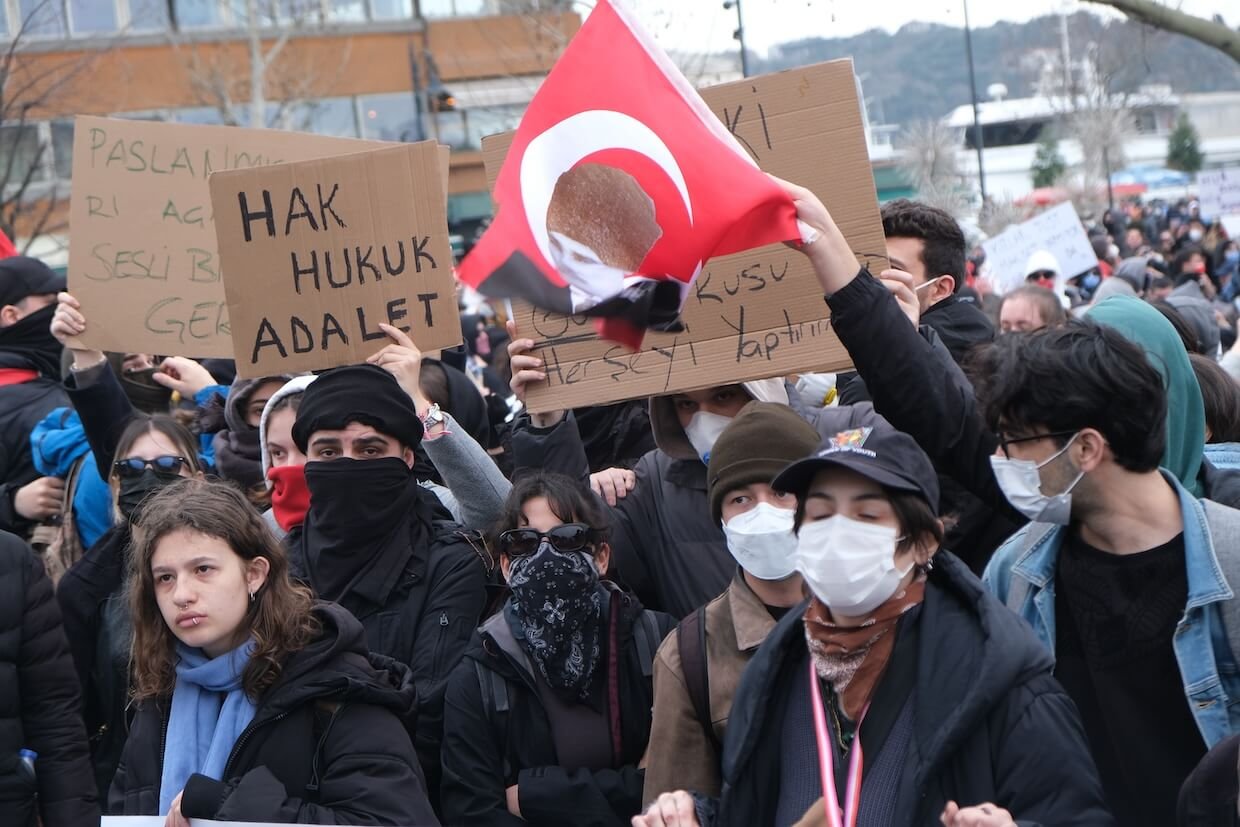
Your research with Daniel Markovits finds that legal rhetoric surrounding Trump’s criminal prosecution had limited persuasive effects and sometimes generated backlash. Does affective polarization make legal accountability increasingly ineffective against popular illiberal leaders?
Dr. Andrew O’Donohue: This is a central question facing many democracies: After democratic backsliding, how do you hold political leaders accountable? To answer this question, I conducted two parallel studies: one in the United States on the prosecution of Donald Trump and the other in Brazil on the legal conviction of Jair Bolsonaro.
In both countries, what we find, in striking parallel, is what we call an accountability dilemma. In a highly polarized society, the prosecution of a political leader can change the minds of a very small group of swing voters—people who are less polarized. At the same time, those prosecutions provoke backlash, especially among the leaders’ supporters, who become much more distrustful of judicial and legal institutions, but also among a broader swath of voters who increasingly view democratic norms as merely partisan or political.
What our research shows is that in highly polarized societies, accountability has limited effects on public opinion. It changes the minds of only a small segment of the public while also creating risks for the courts, particularly by provoking backlash. That does not diminish the importance, of course, of enforcing the law or protecting democratic institutions.
What we’ve seen in Brazil is a growing movement for court reform. It’s partly driven by the political right and a sense that Bolsonaro was wronged, but it has increasingly become cross-partisan as allegations of corruption within Brazil’s Supreme Court have intensified calls for stronger ethics rules.
Judicial Opposition to Government Does Not Always Mean Democratic Protection
Your comparative work discusses Supreme Court decisions expanding presidential immunity and limiting judicial constraints on executive action. How should we distinguish legitimate constitutional interpretation from judicial behavior that facilitates democratic backsliding?
Dr. Andrew O’Donohue: This is a central question because, in many political cases, one side will argue that what the court did was anti-democratic, while the other side will say, “No, what you did was anti-democratic.” The first side will respond, “No, we think that what the court did was anti-democratic.” So, the challenge is that both sides can often make arguments that a court’s actions were either pro- or anti-democratic.
The key to getting to the bottom of these debates is to start with a clear definition of democracy. In political science, democracy is a multidimensional concept. It means free and fair elections, the right to vote, and protections for civil liberties, such as free speech. Democracy requires a level playing field between the political actors in power—the government—and their opponents. It also requires the absence of unelected authorities, such as an autonomous military, that might usurp the elected government’s power to govern.
Once you start with that detailed framework of what democracy means, you can begin to make much more precise arguments. For example, let’s look at a case like the Callais decision in the United States, which weakened provisions of the Voting Rights Act.
You could argue that this decision weakens free and fair elections by giving state governments more autonomy to gerrymander. You could also argue that it weakens the will of elected majorities because the Voting Rights Act was passed by Congress and subsequently reaffirmed. So, starting with that definition of democracy gives us the tools to make much more precise and defensible claims about exactly when and why courts undermine democracy.
The core point is that you can’t simply look at whether a court is ruling against the government to determine whether it is defending or undermining democracy. This is one of the core mistakes many analysts make: assuming that because a court rules against a government, it is necessarily constraining the government and protecting democracy.
That’s wrong. Look, for example, at the Varieties of Democracy (V-Dem) Index, which has an indicator of judicial independence. The way V-Dem measures judicial independence is by asking whether the high court rules against the government, going against the government’s wishes. And the assumption is that this is good.
The problem is that when you look at specific cases, such as Poland, you see something different. Poland is a case where a right-wing political party came into power and packed the court.
So, judicial independence, by V-Dem’s measure, goes down because the court is aligned with the government and is no longer ruling against it. Then, when a new opposition government comes to power in Parliament, according to V-Dem, judicial independence shoots up because you now have a right-wing court that is very willing to rule against the new opposition government.
That doesn’t mean the court actually became more independent. It was still packed by a right-wing political party, Law and Justice (PiS), but the court is coded as more independent because it is now ruling against a government it doesn’t like.
So, I think the core point is that you can’t simply look at whether a court is ruling against the government. Sometimes courts rule against anti-democratic laws, such as laws that might restrict civil liberties, but sometimes they can rule against pro-democratic laws that might expand civil liberties. So, you need to look much more concretely at the substance of a case to understand whether courts are undermining democracy.
Courts Cannot Defend Democracy on Their Own—They Need Judicial Allies
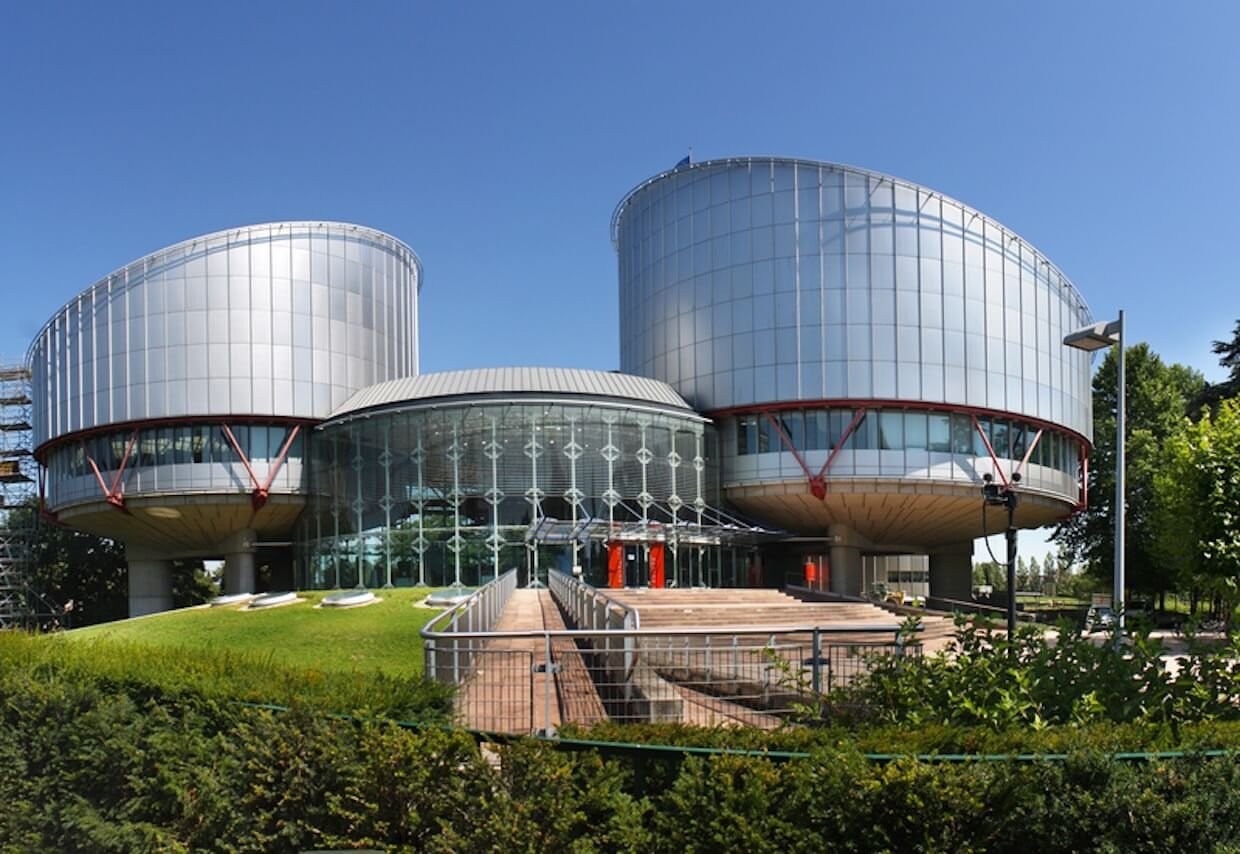
In “How Courts Survive Democratic Backsliding,” you emphasize the importance of judicial allies outside the courts. What lessons can American democratic institutions draw from Brazil, Poland, and Israel about building effective coalitions to defend judicial independence?
Dr. Andrew O’Donohue: One core lesson for Americans is that courts cannot defend democracy on their own. Courts depend on allies—what I call judicial allies—who support them in constraining executive power grabs. So, let’s ask a simple question: If the president of the United States wants to defy or disempower the courts, what’s stopping him?
Judges alone can’t prevent that. They depend on allies. So, who are the allies that can ensure court rulings are obeyed and that courts retain their power? One type of ally is elected officials. Think about governors in the United States who control state governments or members of the US Senate.
The US Senate can block efforts to remove a judge because, under the US Constitution, removing a judge through impeachment requires a two-thirds majority in the Senate. Governors can also say, “We control our state government, and we are going to comply with the court’s ruling, even if the president says he is not going to comply.” So, that’s one way elected officials can serve as crucial judicial allies.
Other judicial allies include citizens, social movements, and civil society organizations, such as bar associations or legal nonprofits. Think, for example, about the protests against Immigration and Customs Enforcement (ICE) in Minneapolis.
Those protests may not have changed the president’s mind, although there’s some evidence that they did lead to a retreat in the president’s policy. But they may have inspired lawyers or judges to take a more active role in constraining abuses of political power by ICE.
So, there can be a positive feedback loop in which protests inspire judges to constrain abuses of power, and those judicial actions, in turn, give protesters a theory of change. They show protesters that there is an audience, even if it’s not the president, that is capable of responding to their concerns.
Finally, in many other countries, including Turkey and several European cases, international actors can also serve as allies of the courts. In Poland, for example, judges facing threats to judicial independence appealed beyond the national legal system to the Strasbourg Court, the European Court of Human Rights, as well as the Court of Justice of the European Union.
So, elected officials, ordinary citizens, and sometimes even international actors can serve as allies of the courts, preventing political leaders from curbing their power.
Israel Is No Longer a Democracy but a Competitive Authoritarian Regime
In your October 2026 article with Oded Haklai, you argue that Israel has crossed into competitive authoritarianism. How have the politicization of security institutions, pressure on independent media, and Netanyahu’s judicial overhaul altered Israel’s democratic regime?
Dr. Andrew O’Donohue: Our argument is that even if you focus on the territory within the Green Line, which is Israel’s internationally recognized, pre-1967 territory, Israel is not a democracy; it is a competitive authoritarian regime. Now, what do we mean by that? By competitive authoritarianism, we mean that elections in Israel are real and competitive. As we saw this October, it’s still possible for Netanyahu to lose his majority in the legislature, the Knesset. But Netanyahu’s abuse of state power as the incumbent has given him an advantage over his opponents.
Take one very simple issue. After the October 7 attack, the norm in Israeli politics for decades has been to establish a commission of inquiry—a state commission, an independent inquiry—to investigate what allowed such a catastrophic security failure. No such inquiry took place, so there was no accountability for the incumbent government regarding why this major national security failure occurred.
Another example of competitive authoritarianism is the politicization of the police under Itamar Ben-Gvir, the Minister of National Security. At Ben-Gvir’s insistence, the incoming government expanded the police minister’s control over the police. Ben-Gvir has allegedly interfered at a micro level in police promotions, for example, by asking police officers whether they would be personally loyal to him. The police have then been used to deploy force against opposition protesters, the Arab minority in Israel, and even opposition parliamentarians.
One problem with this is that, as the police have become increasingly politicized, a majority of Israelis no longer see them as politically neutral. Pro-government actors, such as Mordechai David, have even streamed themselves harassing opposition parliamentarians, judges, and protesters. These are examples of how the politicization of state institutions, such as the police, can create an asymmetric advantage for one political leader. The police are using force against opposition protesters but not against ultra-Orthodox protesters who are, coincidentally, part of the government’s base.
Our argument is not that Netanyahu can’t be defeated. He can be defeated, and President Herzog, the president of Israel, gave the opposition leader, Gadi Eisenkot, the opportunity to form a coalition government that could remove Netanyahu. However, Netanyahu has greater control over the police and Israeli security agencies, such as Shin Bet, and that gives him an advantage over his opponents that he can use to help stay in power.
Israel’s Supreme Court and the Collapse of Informal Norms

Your research on Israel identifies the interaction between judicial supermajority requirements and the informal Noah’s Ark appointment strategy as crucial to judicial independence. What happens when political leaders preserve formal institutional rules while dismantling the informal norms that sustain them?
Dr. Andrew O’Donohue: Central to my argument is that Israel’s Supreme Court, to this day, retains surprising independence from the Netanyahu government. Prime Minister Netanyahu has been in power for 19 of the last 30 years. That’s more than half of my lifetime. Nineteen years, and yet he still hasn’t captured Israel’s Supreme Court.
Let me give you a few examples. In 2024, after the government passed a law to weaken the powers of the Supreme Court, the Court struck it down. In 2025, when the government attempted to fire the Attorney General, who is prosecuting Prime Minister Netanyahu in various criminal cases, the Court prevented the Attorney General’s removal. In 2026, in the lead-up to the elections, Prime Minister Netanyahu attempted to appoint his personal lawyer, Michael Rabello, as state comptroller. The Supreme Court blocked that appointment. Again, in 2026, when the elections committee attempted to disqualify the Arab political parties, the Supreme Court blocked that as well.
So, why is this Court so independent of Netanyahu when he’s been in power for 19 of the last 30 years?
My argument is that Israel had institutions for choosing judges that constrained the government and dispersed power. One example, as you pointed out, is that Israel’s Judicial Selection Committee required a supermajority of 78%—a very high bar—to appoint a new Supreme Court judge. Because of that, political parties couldn’t simply agree on a single Supreme Court justice who would receive 78% support. Instead, they engaged in what political scientists call logrolling, appointing judges in groups.
One conservative judge, one liberal judge—we’ll put them together as a package, and then we’ll get 78% support for those judges. I call this the Noah’s Ark strategy because you’re appointing judges two by two, one from each side, to preserve a certain balance on the Court.
The problem, though, is that this formal or written institution—the supermajority requirement—depended on informal or unwritten norms of compromise. What we’ve seen, as polarization has increased in Israel, as it has in many other countries, is that these informal institutions have broken down.
So, Israel’s Justice Minister, Yariv Levin, has said, “I’m not going to appoint any new Supreme Court judges at all. I’m not going to compromise.” And that’s why there are four vacancies on Israel’s Supreme Court. When informal norms break down, the same formal rules that once forced compromise can actually enable obstruction and gridlock in ways that are very dangerous to judicial independence.
Condemning Bolsonaro Carries Significant Political Costs for His Own Allies

Your recent research on Brazil identifies an accountability dilemma: prosecuting illiberal leaders may reduce their support while undermining confidence in courts and democratic norms. How can democracies pursue accountability without intensifying polarization or weakening judicial legitimacy?
Dr. Andrew O’Donohue: First, let me say that I was delighted to co-author this research with a former Brazilian judge, Jean Vilbert, and my colleague at Boston College, Fernando Bizzarro. I want to thank Jean and Fernando for bringing me into the Brazilian case and giving me the opportunity to conduct this very exciting research on democracy.
The core of our argument in the Brazilian case is that judicial interventions in politics create an accountability dilemma. On the one hand, they can turn citizens against an anti-democratic leader, but only to a very modest extent and at a significant cost. These judicial interventions can weaken support for the courts, trust in the courts, and support for democratic norms, such as the idea that the losers of elections should concede defeat peacefully.
Now, one thing I’ll mention that we haven’t yet discussed is that, in our Brazil study, Jean, Fernando, and I compare legal accountability—accountability through the courts—with accountability through elected elites. We compare the effect of a judicial conviction of Bolsonaro with condemnation by political party elites within Bolsonaro’s own political movement. Specifically, we look at what happens if Bolsonaro’s vice president were to condemn him. So, what do we find?
We find that a judicial conviction turns a very narrow segment of voters against Bolsonaro, but elite condemnation actually has no effect. What we find is that when an elite figure speaks out—when Bolsonaro’s vice president speaks out against him—it actually burns bridges with the political base. It doesn’t change the minds of Bolsonaristas. It increases the vice president’s popularity among liberal voters but turns off the conservative voters this politician needs to advance his political career.
And so, we argue that this is one reason why political party elites within the anti-democratic camp very rarely speak out against anti-democratic behavior. It’s because doing so sometimes makes relatively little difference to their voters while coming at a significant political cost: burning bridges with their own electoral base.
Defending and Reforming Courts Against Authoritarian Consolidation
And finally, Dr. O’Donohue, looking across the United States, Turkey, Israel, Brazil, and Poland, what determines whether courts become instruments of state capture or obstacles to authoritarian consolidation? Ultimately, which combination of institutional design, opposition mobilization, and democratic norms offers the strongest protection against executive aggrandizement?
Dr. Andrew O’Donohue: The policy takeaway for readers in your audience who may be concerned about how to protect and reform the courts is that the judiciary’s allies—pro-democracy forces—need to consider both short-term and long-term challenges.
When a political leader is attempting to defy or disempower the courts, what those courts need most is judicial allies. Courts need elected officials, citizens, and sometimes even international actors to protect judicial independence. So, when judicial independence is under attack, judicial allies need to step up, mobilize, and provide courts with the support they need to rule against a powerful leader. But the courts that judicial allies defend are rarely perfect. In the long term, the judiciary’s allies also need to consider a broader agenda of reform.
This is exactly what Brazil is dealing with today. On the one hand, during the Bolsonaro years, the judiciary’s allies stood up to protect and defend the courts. What was crucial in Brazil was that the president’s party did not have anything close to a majority in Congress. As a result, Congress was able to protect the courts, bring cases, argue that the government’s policies were unconstitutional, and protect judges from impeachment.
But now Brazil faces a second challenge: How do you reform the courts to make them more pro-democratic? My colleague Oliver Stuenkel at the Carnegie Endowment and I are considering several proposals.
The court desperately needs a binding ethics code. The president of the court has come out in favor of that, and the Brazilian Bar Association has proposed a model ethics code.
The court also desperately needs term limits for judges. Right now, in Brazil, six of the ten judges on the court were appointed in their 40s because presidents want to appoint young judges to secure long terms for them.
And the court desperately needs greater power sharing in how judges are selected to prevent political leaders from capturing the courts. One proposal from the Brazilian Bar Association is greater civil society involvement, such as public hearings, before judges are selected.
So, it’s a combination of factors. When courts are under attack, they need judicial allies. But the longer-term agenda for those judicial allies should be not only to defend the courts but also to reform them, ensuring that the courts live up to their democratic potential.