

In an interview with the ECPS, Associate Professor Erica Frantz warns that the growing rise of personalist leaders worldwide is undermining democratic institutions and increasing the risk of international conflict. Personalist systems—where power is concentrated around a single dominant figure—erode checks and balances, distort party structures, and heighten foreign-policy miscalculation. Reflecting on the United States, she notes that Donald Trump has transformed the GOP into a “personal political vehicle,” enabling rapid consolidation of executive power. As domestic constraints weaken, Dr. Frantz cautions, “we are increasingly setting the stage for more volatile and unpredictable conflict behavior in the international arena.” She identifies leader-created parties and media-driven mobilization as critical warning signs of emerging personalist capture.
Interview by Selcuk Gultasli
In a wide-ranging conversation with the European Center for Populism Studies (ECPS), Associate Professor Erica Frantz of Michigan State University offers a penetrating analysis of the global resurgence of personalist politics and its destabilizing implications for democracy and international security. A leading scholar of authoritarianism, democratic backsliding, and strongman rule, Dr. Frantz situates recent developments in the United States within broader cross-national trends, underscoring how personalist leaders erode institutions, centralize power, and elevate the risk of domestic and international conflict.
Reflecting on recent US electoral outcomes in New Jersey, Virginia, California, and New York, Dr. Frantz stresses that it is “too soon to tell whether this trend will last,” though she notes the results offer “at least a small glimmer of hope for the Democrats” after months of erosion under Trump. Yet she cautions that such gains do not signify a reversal of democratic decline. Personalist rule—defined by her as governance backed by leader-centered parties—has advanced markedly under Trump. His second administration, she argues, is marked by consolidated control over the executive and a legislative majority, patterns “consistent with what research would anticipate” in cases of democratic erosion.
Personalism, Dr. Frantz warns, not only weakens democratic institutions but also escalates international danger. She emphasizes that leaders who face minimal domestic constraints are more prone to foreign policy miscalculation, explaining that “the absence of domestic constraints makes it very difficult for the two sides to figure out what the real red lines are. That potential for miscalculation elevates the chance of conflict.” Drawing on international relations scholarship, she identifies audience-cost dynamics as critical to crisis stability—factors severely undermined under highly personalized regimes. As she concludes, “as we see personalism on the rise globally, we are increasingly setting the stage for more volatile and unpredictable conflict behavior in the international arena.”
Dr. Frantz underscores that Trump’s transformation of the Republican Party represents a paradigmatic shift toward personalist structure. Though he did not found the GOP, by 2024 the party had become “fully under his control,” with elites aligning themselves behind his false election narratives. Trumpism has thus reshaped partisan dynamics in ways that may outlast his tenure.
Looking to the future, Dr. Frantz identifies leader-created parties as a key early warning sign of personalist capture—now increasingly visible in democracies and autocracies alike. She argues that the changing media environment has dramatically lowered the cost of personalist mobilization, enabling wealthy outsiders to build movements rapidly and bypass organizational constraints.
Taken together, Associate Professor Frantz’s insights illuminate how personalism—far from a regional aberration—is now a global pattern, with the United States neither insulated nor exceptional.

Here is the edited transcript of our interview with Associate Professor Erica Frantz, slightly revised for clarity and flow.
Democratic Gains Offer Hope, But 2026 Remains the Real Test
Professor Erica Frantz, thank you very much for joining our interview series. Let me start right away with the first question: In the wake of recent Democratic victories—such as in New Jersey, Virginia, and California, as well as Zohran Mamdani’s win in New York—do you interpret these outcomes as early signs of public pushback against personalist-populist politics in the US, or are they better understood as cyclical fluctuations within a still-fragmented party system?
Assoc. Prof. Erica Frantz: That is a great question, and one that I don’t think we have a solid answer for. On the one hand, it certainly should give room for optimism that the Democrats did fairly well last week, in the November 4th elections. But at the same time, it is very possible that this was just a blip and an outlier. The real big test will be in the 2026 midterm elections. From my perspective, this was an important outcome for the Democrats in that there had been very little good news for the party since the 2024 election. So, for the first time, there was some indication that the tide of public opinion may be shifting a little bit against Trump. So, it is too soon to tell whether this trend will last, but it certainly offered at least a small glimmer of hope for the Democrats.
Small Victories Amid Deep Democratic Vulnerability
Do these electoral results indicate that institutional resilience and civic counter-mobilization remain robust in the US, or do you see them as temporary and insufficient to counter deeper trajectories of democratic erosion?
Assoc. Prof. Erica Frantz: Again, it is a little bit too soon to know what the ultimate meaning of this election result will be. From my perspective, a really big test is going to be the 2026 midterm elections.
We know a couple of things about the factors that escalate the chance of democratic erosion, and my colleagues and I have written a lot about personalist parties: when leaders come to power backed by personalist parties and the party has a legislative majority, the chance of democratic erosion increases. That is precisely what we’ve been witnessing with the second Trump administration—he now governs amid this personalist party, and the party has legislative majorities. All of that set the stage for him to consolidate power in the executive fairly rapidly in the US. So, the patterns that we’ve seen in 2025 are consistent with what research would anticipate.
To be clear, there are opportunities for citizens to push back against these efforts and signal their displeasure. This election was certainly one such opportunity. Again, the big one will be the 2026 midterm elections. It is not always the case that these leaders are able to consolidate control and destroy democracy from within; in some instances, they’re voted out of power. A good recent example would be Bolsonaro in Brazil. He was elected, did things that were harmful for Brazilian democracy, but ultimately lost his re-election bid. Slovenia would be another example. So, there is an opportunity for citizens to vote these leaders out.
But at the same time, it is not guaranteed that the 2026 midterm elections will be free and fair. Historically, US elections have been free and fair, despite allegations of fraud. The widespread consensus among experts is that we have very solid democratic elections in the US. However, there have been subtle indications that the Trump administration might try to fiddle with things in ways that threaten the integrity of the process in 2026. That is something to keep an eye on as well. Whether through gerrymandering or the disenfranchisement of key sectors of the electorate, there are certain things they could do that might not sound the alarm bell among citizens but would still threaten the integrity of the process.
Is Personalism the New Global Normal?

Given your comparative work on strongmen, how significant are these recent US elections at a global level—might they signal renewed democratic resistance, or are they isolated exceptions in a broader worldwide pattern of backsliding?
Assoc. Prof. Erica Frantz: We know that there is a broader pattern of backsliding happening, as you alluded to, and scholars debate to some degree how serious it is. But the reality is that regardless of the measure used to capture backsliding, we know that it’s occurring in places that have historically been robust to this sort of threat. Usually, wealthier democracies—democracies that have been in place for a really long time—tend to be protected from this kind of erosion.
What’s alarming about today’s backsliding wave is the ways in which countries like the United States, Poland, Hungary, and Turkey have been threatened by these sorts of incumbent takeovers. So, we know that there is a broader pattern underway, and from my own research perspective, we think that personalism is playing a very big role in fueling this dynamic.
That’s the broader global landscape. At the same time, as I mentioned earlier, just because we see a leader elected by a personalist party with a legislative majority does not mean there are no windows of opportunity for the opposition to vote these leaders out before they win re-election. I mentioned the cases of Brazil and Slovenia as examples where leaders that fit the model of what you don’t want to see, in terms of risks of incumbent takeover, did not win re-election.
So, the fact that we have this positive result for the Democratic Party—not only in terms of Mamdani, who is further to the left, winning office, but also the governors in New Jersey and Virginia, who were centrist—signals that perhaps there is some pushback against Trump’s agenda. However, it’s unclear whether that pushback is because of Trump doing things that are harmful to democracy and people not liking it, or—more likely, in my opinion—because they don’t like the direction of his economic policies. So, it would be unlikely that this result reflects frustration with what Trump has done to democracy, and far more likely that it reflects disagreement with his economic policies and the direction he has taken the economy.
From Institutional GOP to Personalist Machine
Your recent New York Times article argues that Donald Trump has transformed the GOP into a personal political vehicle. What empirical markers—organizational, ideological, or behavioral—most clearly signal the evolution of the Republican Party from a programmatic institution into a personalist structure?
Assoc. Prof. Erica Frantz: That’s a great question as well. We do a lot of research on personalized parties, and we’ve gathered a lot of data on how to capture personalism in a political party. And usually, the best indicator that a party is going to be personalist is that the leader created the party themselves—so Bukele with Nueva Ideas in El Salvador, or in Hungary with Orbán and Fidesz. Trump is unusual in that he did not create the Republican Party. This party has been around for a long time. But one indicator that his tenure as president was going to be different vis-à-vis the Republican Party was that he did not rise up within the ranks of the party to get the 2016 nomination. Instead, what happened was he was somewhat of an outsider. He, at one point, had been a Democrat, so he was not the classic candidate that the Republican Party had tended to field in their presidential campaigns.
At the time, the Republican Party happened to be divided. There were a variety of other people who were potential frontrunners for the 2016 candidacy, and Trump surprised many by virtue of winning. A lot of people at the time thought it was somewhat of a joke that he would be running for president. It was the right place at the right time for him to take over the Republican Party.
During his first term, he did not have the same control over the Republican Party that he did since 2020. And a clear indicator that the party was becoming personalized was after the insurrection on January 6, 2021. We see this really blatant, horrific episode of violence—essentially political violence—where a mob is trying to keep a democratically elected leader from taking power. That should have been a moment where Trump was completely sidelined from the Republican Party.
In the early days, a lot of Republican elites were somewhat unsure of how to respond. Should they get in line behind Trump’s false narrative that the election was stolen, or should they speak out against what happened and how much of a departure it was from our democratic norms? Slowly over time, however, Trump was able to get all of these elites to get in line with his false narrative. And so, by the time he ran for office in 2024, the Republican Party was fully under his control.
He’d gotten all of the key players within the party to support his narrative that the election was stolen, and by this point, it was pretty clear that Trump became synonymous with the party. When he would have different Republican Party events, there would be a statue of Trump or an image of Trump. Rather than promoting the party’s ideas, it was more a situation where we were seeing Trump as a person dominate. Clearly, elites started to sense that they were unlikely to maintain their political careers if they did not get in line behind Trump. So, by the time he ran for president in 2024, the party was very much one that we would consider personalist, where most elites were fearful of speaking out against Trump, and instead, he basically governs the policy agenda.
Structural Conditions Behind Trump’s Party Takeover
Photo: Chris Dorney.
Which structural conditions—party decay, institutional fragility, or shifts in public demand—have been most important in enabling Trump to centralize authority and weaken intra-party constraints?
Assoc. Prof. Erica Frantz: I don’t have a solid answer to that, because it would really be my best guess. My best guess in terms of what enabled Trump to personalize the party. I do think that the party was somewhat divided in 2016, and that was a real momentous occasion in terms of Trump being able to leverage this window of opportunity, as I mentioned. That said, the party was not fully behind Trump during his first term. Again, I can’t point to a specific cause of why he was able to fully take over the party in 2021. But we do know that slowly over time, key individuals in the party started to see themselves as not electorally viable unless they got in line behind Trump’s agenda.
In terms of the broader global landscape of why we’re able to see these sorts of things, there is some evidence that the changing media environment is enabling leaders to personalize their parties. Rather than having to build a party from the ground up, leaders can now build parties on social media. They don’t need the same organizational grassroots effort to construct a group that backs them. I mentioned earlier El Salvador with Nayib Bukele. He really is the new mold for how leaders can build movements that are personalized very rapidly and win office. He created his own political party and was very savvy in his use of social media to directly connect with voters, bypassing the need for a traditional party organization to launch his candidacy. These sorts of direct connections with citizens enable leaders to gain a following without having to rely on an established traditional party. There is some evidence that new media is facilitating the rise of personalism and personalist parties, enabling these leaders to bypass traditional institutions to gain political influence.
How Trump Hollowed Out Democratic Guardrails
Strongmen typically engage in institutional hollowing from within. Under Trump, which forms of institutional capture—of the courts, the DOJ, the Federal Reserve, or security agencies—pose the greatest long-term threat to liberal-democratic resilience in the US?
Assoc. Prof. Erica Frantz: Trump has been somewhat of an outlier in terms of the speed with which he has consolidated control. Typically, when we see these leaders come to power backed by these hollow organizations, personalist parties; it takes longer for them to get rid of executive constraints. Oftentimes, it’s strategic to do this slowly, because it’s more difficult for opponents to express alarm and mobilize against these fragmented takeovers. What has been surprising in the case of the US is the speed with which Trump has gone after multiple institutions of power and been able to do it without much pushback.
In terms of which institution is the most dangerous, in many cases we see the courts as particularly important in protecting democracy from an executive takeover. The fact that we have a Supreme Court that has seemed at least sympathetic, or willing to consider a new vision of the executive as very powerful, is particularly alarming, in that it’s possible the courts will open the door for Trump to do things like pursue a third term in office, because we have a conservative court that is not only conservative in terms of its agenda, but particularly pro-Trump. The current Supreme Court hearing over the case on tariffs and whether his tariffs are legal is going to be a very big case in terms of determining whether the courts will open the door for Trump to bypass traditional norms of behavior regarding executive power.
This is not to say that what Trump has done to gain control over other institutions is not also a problem. We ideally would like to see a bureaucracy that has people who are competent in major positions of power. Instead, what we’ve seen is that the bureaucracy has been both hollowed out—now very thin—but also staffed with his loyalists. This is going to have downstream consequences for all sorts of policy outcomes in the US. Even when we’re thinking about things like childhood vaccinations, we might see a public-health crisis on the horizon because of the ways in which Trump has appointed people in the health sector who do not have appropriate credentials for these positions.
The other domain that is also one to keep in mind is what’s going on with the military. Early on in Trump’s term, basically on a Friday night, when most people were not reading the news or maybe were asleep, he purged the top military brass of many officials. This is not the sort of thing that we are used to seeing. In a healthy democracy, the military is kept separate; it’s kept out of some of these civilian political debates. Trump seems very open-minded to trying to politicize the military. It’s been very unusual and alarming to see the ways he has deployed the National Guard to Democratic strongholds. This is not the sort of thing you’d like to see in a healthy democracy, because in theory the military is supposed to stay out of domestic political debates. The ways in which he’s used ICE to go after immigrants is also indicative of a shift where he is trying to use the security forces for political purposes in ways that are unprecedented.
Personalism and the Creation of Internal Enemies
Personalist rulers commonly manufacture “internal enemies” to justify extraordinary coercive measures. How does Trump’s rhetoric about the “deep state,” immigrants, and political opponents align with this broader strategy of threat construction?
Assoc. Prof. Erica Frantz: The ways in which Trump is fabricating a domestic enemy are very similar to what we see in dictatorships. The two cases that come to mind for me are Russia under Putin and Iran under its theocracy. In Iran, the regime very much benefits from promoting an image of the US as the enemy. It tries to get a rally-around-the-flag sort of boost in domestic support by saying that the regime is under attack from America, and that the United States is the cause of all of the country’s problems. In Russia, we’re seeing something similar with Putin’s rhetoric, saying that the United States is the cause of all of these challenges, and so forth.
Trump is not necessarily targeting a specific foreign enemy, but he likely would, at any given moment, blame a foreign country for some sort of problem that might be happening here. But he is stating that immigrants are a problem, and that immigrants are responsible for crime. He has made a number of statements completely absent any evidence about crime. In particular, he is saying false things about crime rates in Democratic cities. For people who live in these cities, this is somewhat surprising, because in many of them, they’ve actually seen their crime rates go down. So, the fact that he is deploying the National Guard to fight crime in Democratic strongholds is troubling.
It’s also his effort to rally his base. It was clear to him early on that his supporters were concerned about crime—that this was an issue he could get people to rally behind. If he paints a portrait of the United States as full of crime, as D.C. full of crime, then he can again create and craft a narrative that helps support him—an us-versus-them mentality, something that we’ve seen in many other political contexts, where leaders leverage these divides for their own political benefit.
Militarization as a Red Flag
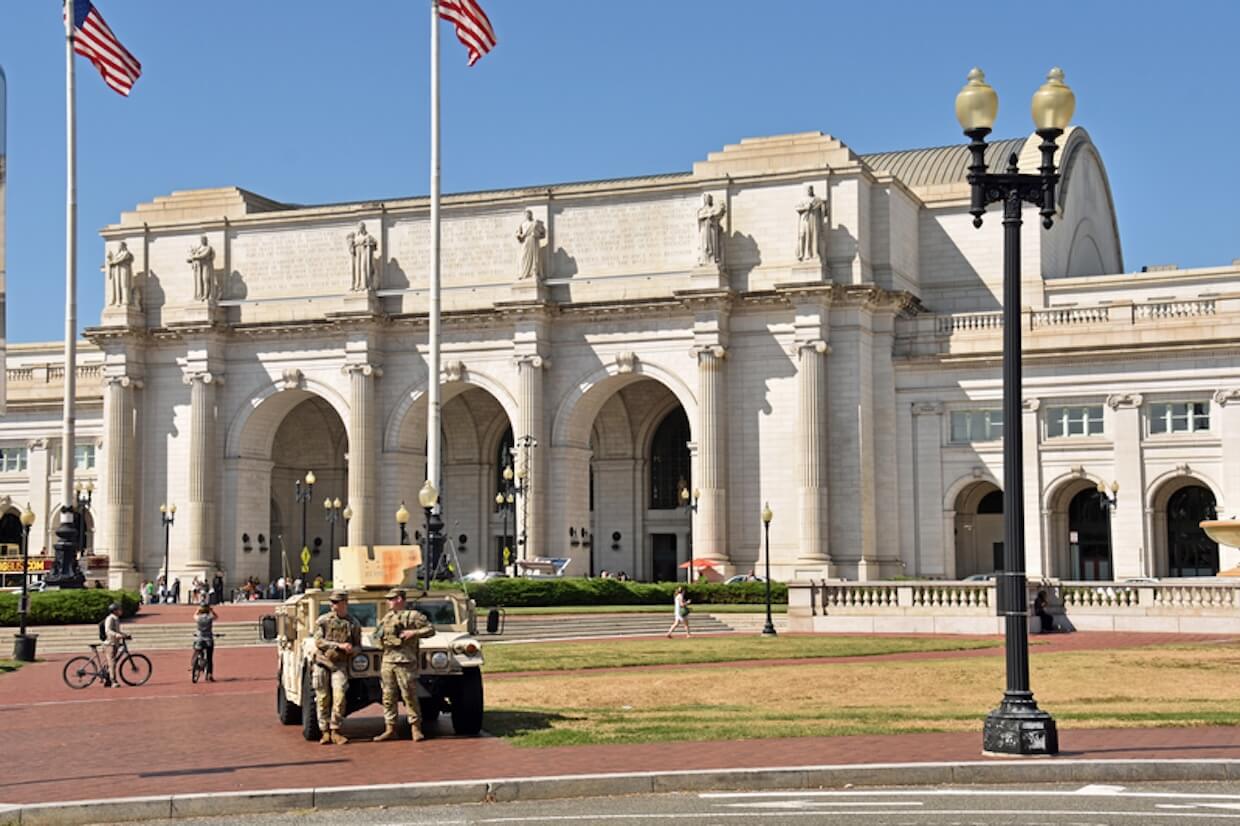
Trump’s deployment of the National Guard and increasingly militarized immigration enforcement raises concerns about domestic coercion. Should we understand this as the early normalization of militarized rule within a democratic setting?
Assoc. Prof. Erica Frantz: In most cases of incumbent-led democratic backsliding, leaders usually first go after institutional constraints; they first go after the judiciary, or the bureaucracy, the media. Then they ultimately target elections. That’s the typical process that we see with incumbent-led backsliding. Trump’s ability to, or decision to, try to go after the security forces—and by that, I mean two things: promote loyalists, get rid of dissenting voices in the security forces, and then also politicize them by deploying them against his opponents—is not something that is typically part of the classic playbook. Usually, it’s something that we see after the democracy has transitioned to dictatorship.
The US is still a democracy by all accounts right now, because the 2024 presidential election was free and fair. That’s the most basic indicator of a democracy: the free and fairness of elections. We’re still a democracy. However, usually we don’t see these leaders militarize and politicize the security forces until after they’ve autocratized. It’s a very common tactic that they try to rely on multiple different security forces; we hear about coup-proofing and balancing the different security forces against one another. The fact that Trump is doing all of these things is both inconsistent with democratic norms in the United States and also a red flag in that healthy democracies require militaries that are not used for political purposes, particularly against domestic opponents.
Personalism and Economic Vulnerability
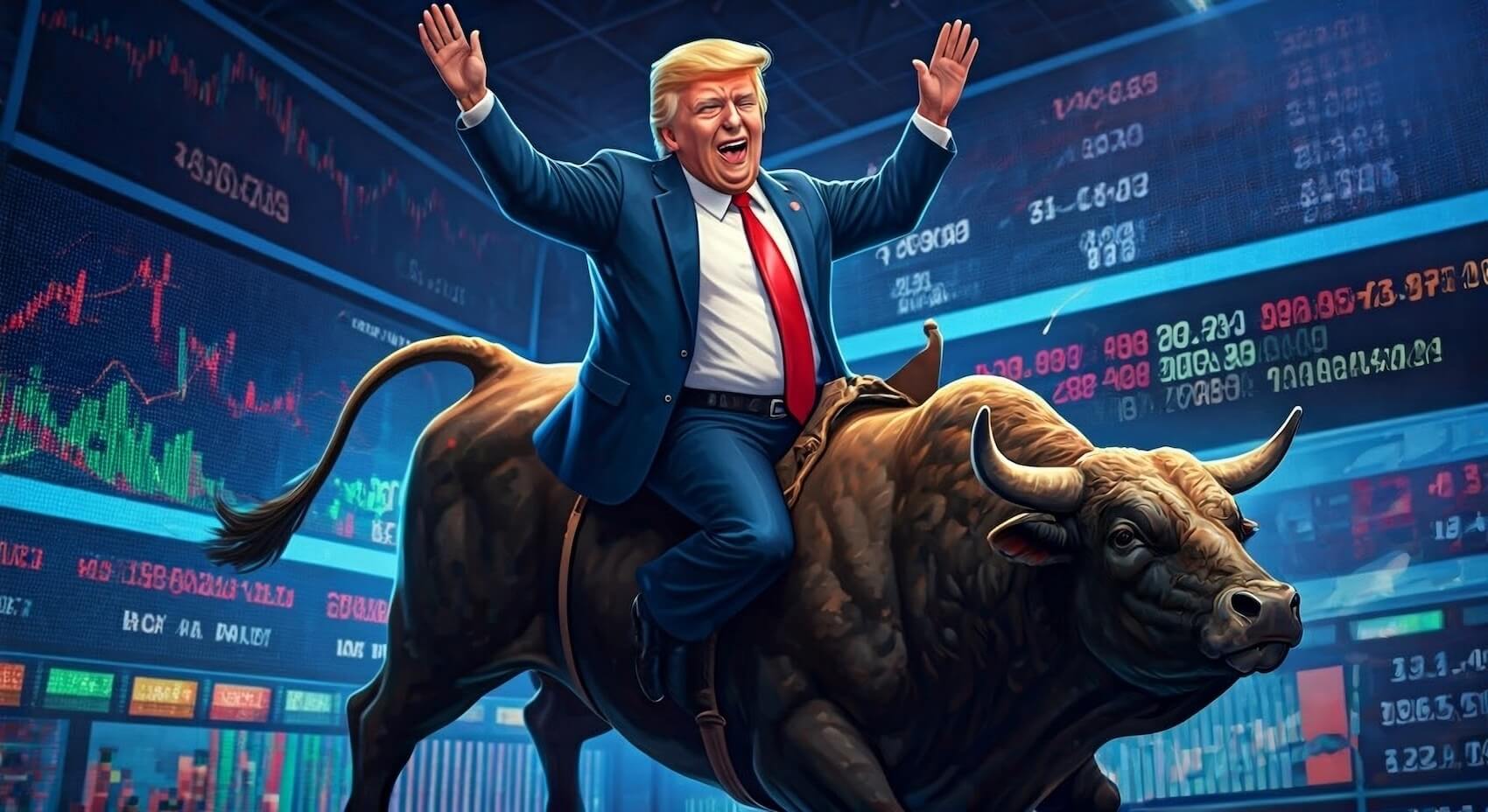
Your work suggests that personalist leaders politicize economic institutions and often embrace transactional economics. How might Trump’s pressure on the Federal Reserve, discretionary trade tactics, and patronage-based allocation threaten long-term economic stability?
Assoc. Prof. Erica Frantz: I keep mentioning personalist parties, but there’s a lot of research related to party personalism and its harmful consequences. We, my colleagues and I, just published a paper that shows that when leaders are backed by personal parties, they are more likely to attack central bank independence. This is not just something that is observed in the United States. There is a global pattern that these leaders, in their effort to ensure that no institutions can push back against them, go after the central bank as well. So, the fact that Trump has tried to interfere in the ways in which the Federal Reserve sets interest rate policies is consistent with global trends.
There is a huge body of research that shows that you want central bank independence, that this is something that political leaders should try to preserve because it’s in the country’s long-term best economic interests. So, when we have this sort of behavior, it signals that we’re likely to see disruptions in terms of inflationary policy. We are likely to have more unpredictable inflationary policy in the US. It is likely to lead to more inflation for ordinary people, and that’s already a concern among Americans. If you go to the grocery stores, prices are higher in everything. So, when I talk to my students, they can list a lot of different products that they no longer can afford because of inflation.
So, Trump’s eagerness to lower interest rates and fiddle with central bank independence is going to have long-term economic consequences. On top of this, these sorts of leaders are also likely to reward their loyalists with corruption. They’re likely to give them access to corruption and corrupt deal-making. That’s something very common, that these inner-circle elites are profiting from illicit deals. They send their money overseas to offshore bank accounts, try to hide things, and this is the way that these personalist leaders, like Trump, are able to maintain some inner-circle loyalty, by giving these sorts of kick-backs.
Corruption is not good for ordinary people. So that is another way in which these sorts of leaders, in their prioritization of their cronies and of staying in power, disrupt economic stability. So, the economic outlook for the United States does not look good. That’s not just because of the tariffs, which run counter to most economists’ advice, but because of these other layers of what’s happening with inflationary policy, interest rates, and corruption.
After Trump: Continuity or Collapse?

Personalist systems are especially fragile at succession. If the US continues along a personalist trajectory, what are the most plausible succession scenarios—heightened autocratization under loyalists, elite fragmentation, or institutional pushback?
Assoc. Prof. Erica Frantz: We don’t have a lot of research that gets into succession in personalist democracies. It’s somewhat unknown territory, what might happen if Trump were to decide not to go for a third term. That’s a big if, because he is certainly trying to put out feelers about how people would react to him going for a third term. It’s possible that he will try to stay in office beyond his term limits.
That said, in autocratic settings, we know that personalism makes it more difficult for succession to run smoothly, as you mentioned, but still, most of the time—when we have research on when leaders die of natural causes in office, for example—even in personalist places, most of the time there is a smooth succession process, at least to observers, and the regime survives it.
With personalist leaders, they can often survive even when ordinary people are doing horribly economically, because so long as they have bought off the security services and their inner circle of elites with corruption, they can maintain power.
The case I often think of when people ask what might happen next—such as whether everything would fall apart if Trump were to leave power—is Venezuela under Maduro. You know, Hugo Chávez had governed that place, autocratized it, and transformed what was once a very healthy democracy into an authoritarian system. He dies; it was around 2011. Maduro takes over, isn’t very popular, people don’t think this is going to last very long, and even though he lacks the same popularity that Chávez had, he has been able to stay in power amid an economy that’s performing disastrously. So, it would be foolish to assume that should Trump leave power—whether he dies of natural causes or whether he retires voluntarily—it’d be foolish to anticipate that that means the end of the destruction that he’s done to democracy in the United States.
Will Trumpism Outlive Trump?
Your scholarship shows that personalist parties can destabilize political competition even after their founders depart. Could Trump’s reconfiguration of the GOP generate enduring structural disruption in the US party system beyond his tenure?
Assoc. Prof. Erica Frantz: There are two points to mention here. On the one hand, because Trump did not create the Republican Party—because he took it over and co-opted it—I’m somewhat optimistic that the party could rebound and return to its former self, where it was a traditional conservative party with a conservative agenda, and where elites rose up the ranks of the party to get those positions. I think that it’s possible that we could see a reversion to the Republican Party of the past.
However, it’s also important to note that we have a lot of evidence that when these leaders lose power—let’s say they lose power in democratic elections—democracy does not necessarily rebound very quickly. Two recent examples of this would be Poland with the Law and Justice Party (PiS) losing elections. There was a lot of optimism that the democratic backsliding there had come to an end, but it has still been difficult for Polish democracy to fully rebound. There are challenges that persist in the judiciary, for example, and its ability to be independent.
The same thing could be said of Brazil with Bolsonaro. Bolsonaro loses re-election, Lula takes over, but there are really long-lasting divisions in Brazilian society that have persisted. A lot of this is because of the ways in which these leaders use polarization as a political tactic. So, it’s not that they are just voted out of office and suddenly, the 50% or so supporters that they genuinely have go away.
From that perspective, on the one hand, I am more optimistic than I would be with other places that the Republican Party could rebound and return to a more programmatic party. But at the same time, there is lasting damage that has been done to the fabric of democracy here.
Unbound Executives, Unstable Worlds
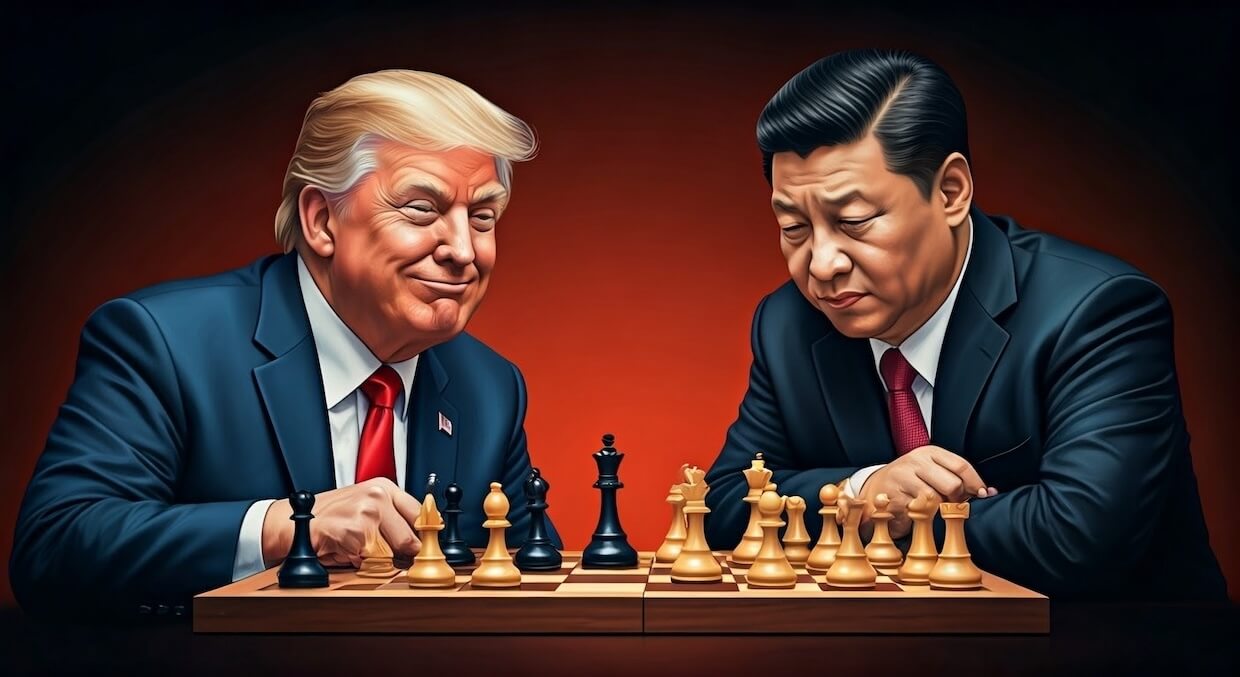
Your NYT article notes that Trump and Xi of China operate with few domestic constraints, increasing unpredictability. Why does diminished institutional constraint heighten the risks of international miscalculation and conflict, particularly among major powers?
Assoc. Prof. Erica Frantz: There is a well-established body of research in international relations that underscores the importance of domestic constraints in preventing conflict. The idea is that if leaders face domestic constraints—meaning they would face some kind of consequence for not following through on their threats—their adversaries recognize this and can interpret those threats as credible. So, if I say there is a red line—if you don’t do X, Y, or Z, we’re going to invade—and I know I face constraints at home, my adversary knows that I mean what I say.
If, however, I face no domestic consequences for making empty promises or issuing vague or meaningless threats, then my adversary no longer knows what I really mean. The absence of domestic constraints therefore makes it very difficult for both sides to discern where the real red lines are. That uncertainty increases the likelihood of miscalculation and, in turn, the risk of conflict.
As I mentioned, there is a large literature on this—called audience-cost theory—and while it is somewhat complex, it helps explain why, when personalist leaders come to power, we tend to see more conflict. Research on authoritarian systems shows that personalist leaders are the most likely to start wars; they are the most likely to escalate conflicts with democracies in particular; and they are more prone to foreign policy miscalculation.
Taken together, this suggests that as we see personalism on the rise globally, we are increasingly setting the stage for more volatile and unpredictable conflict behavior in the international arena.
Why Leader-Made Parties Signal Democratic Peril
And lastly, Professor Frantz, given rising polarization, institutional distrust, and party hollowing globally, do you expect personalist leadership to become more common across both democracies and autocracies? What early warning indicators should scholars monitor to detect incipient personalist capture?
Assoc. Prof. Erica Frantz: I mentioned this earlier, but we do think the changing media environment has facilitated the rise of personalism in both autocratic and democratic contexts. This means that all signs point toward increasing top-heavy institutional emergence. Until there is some sort of concerted effort to return to party building and grassroots organization, we are likely to continue seeing more personalism globally.
A classic red flag is when a leader creates a party. Party creation is becoming increasingly common. Many of these leaders are billionaires, leveraging their personal wealth to fund these political vehicles. So, the biggest warning sign, I would say, is when the leader on the ballot has created their own party. That usually spells trouble for democracy—and for autocracy as well.
