
In an ECPS interview following the November 3, 2026, US midterm elections, Assoc. Prof. Sam Rosenfeld, political scientist at Colgate University and author of The Polarizers and coauthor of The Hollow Parties, examines the implications of Democratic congressional victories for American democracy. Arguing that electoral backlash against Republicans should not be mistaken for democratic restoration, Assoc. Prof. Rosenfeld warns that “democracy is never fully safeguarded.” He explores the potential weakening of Donald Trump’s personalist control over the Republican Party while emphasizing the enduring influence of the populist Long New Right. Assoc. Prof. Rosenfeld also addresses political polarization, congressional oversight, democratic-socialist organizing, and the institutional hollowness of American parties. He concludes that rebuilding civic organizations, strengthening party accountability, and restoring democratic fair play remain essential long-term challenges.
Interview by Selcuk Gultasli*
The November 3, 2026, midterm elections have reshaped American politics, delivering Democratic majorities in both chambers of Congress while President Donald Trump remains in office. Yet this electoral reversal raises fundamental questions about democratic resilience, institutional checks, and the enduring appeal of Trumpism. As Republicans confront potential internal divisions and Democrats face the challenge of translating electoral victory into effective governance, the future of American democracy remains uncertain.
In an in-depth interview with the European Center for Populism Studies (ECPS), Dr. Sam Rosenfeld, Associate Professor of Political Science at Colgate University, specializing in party politics and American political development, examines these developments through the analytical frameworks developed in The Polarizers and The Hollow Parties, coauthored with Daniel Schlozman. His central argument challenges the assumption that electoral victories necessarily translate into democratic restoration or meaningful party renewal.
“Democracy is never fully safeguarded,” Assoc. Prof. Rosenfeld cautions, emphasizing that electoral outcomes should not be confused with structural democratic resilience. He argues that Americans’ commitment to democracy remains relatively fragile, particularly when compared with their immediate economic concerns. The Democratic victory, he contends, primarily reflects a backlash against Republican governance and cost-of-living pressures rather than a fundamental transformation of American political attitudes.
Turning to Republican politics, Assoc. Prof. Rosenfeld identifies a potentially consequential development: the erosion of Trump’s personalist control over the party. He argues that Trump’s declining electoral reputation and the approaching post-Trump succession could weaken his longstanding dominance. “That, at least, is now changing,” he observes, suggesting that renewed factional competition might restore internal checks on personalized leadership.
Nevertheless, Assoc. Prof. Rosenfeld distinguishes Trump’s personalism from the deeper ideological currents of the “Long New Right,” a confrontational political tradition that predates Trump and, he argues, will survive his departure. The weakening of personalist domination therefore does not necessarily imply the disappearance of radical-right populism or the restoration of traditional Reaganite conservatism.
Assoc. Prof. Rosenfeld also emphasizes the institutional consequences of party hollowness. He advocates stronger party gatekeeping, more accountable organizational structures, revitalized local party networks, and renewed connections with organized labor and civic associations. As he explains, “we believe parties are essential to democracy.” Their revival as “stewards of democratic contestation and fair play” is indispensable to strengthening democratic institutions.
His assessment ultimately combines cautious optimism about renewed political competition with skepticism toward any definitive democratic restoration. Formal reforms, electoral defeats, and institutional safeguards remain important, but none can permanently eliminate democratic vulnerabilities.
Looking toward 2028 and beyond, Assoc. Prof. Rosenfeld’s analysis underscores a central challenge confronting American democracy: whether the weakening of Trump’s personalist dominance and the rebuilding of hollow political parties can generate durable institutional accountability, meaningful political representation, and a renewed commitment to democratic fair play.
Here is our interview with Associate Professor Sam Rosenfeld, edited lightly to enhance clarity, readability, and overall flow for publication.
The 2026 Midterms Were About Living Costs, Not Democratic Resilience

The November 3 midterms handed Democrats control of both chambers of Congress, reversing Republican dominance. Does this electoral upheaval signal renewed democratic resilience, a temporary backlash against Trump, or a deeper transformation of American party politics?
Assoc. Prof. Sam Rosenfeld: This is a big and difficult question. I think the scale of the electoral backlash against the governing party shouldn’t be confused with a qualitative, transformational realignment of American party politics or with a genuine referendum on the health of democracy and Americans’ commitment to upholding democratic institutions.
Midterm elections in the United States are essentially referenda on governing parties. Over the last two years, Americans have conveyed a very clear message in public opinion polls: Donald Trump won the 2024 election largely because of dissatisfaction with the state of the economy, particularly the lingering effects of post-COVID inflation and the rising cost of living. Trump ran on promises to address those concerns. Yet, over the last two years, he conspicuously failed to address those issues and, in fact, made cost-of-living problems worse.
This election was primarily determined by differences in voter turnout. Many Republicans simply stayed home rather than turn out to support their party. But there was also some conversion among voters who had supported Trump two years earlier but turned out this time to vote for Democrats.
The election unmistakably sent a message about basic bread-and-butter cost-of-living issues, which Democrats consistently emphasized in their campaigns, much more than they emphasized Trump himself, the state of democracy, or democratic resilience. That’s what produced a remarkably massive turnover of congressional seats by American standards.
The results present possibilities and implications for the future of American democracy that are quite profound, even though the underlying electoral motivations were much more pragmatic and less concerned with questions of democracy and democratic resilience.
The Erosion of Democratic Norms Predates Trump but Escalated Under Him
In The Polarizers, you trace the deliberate construction of ideological polarization. Has polarization now moved beyond legitimate partisan competition to become a structural driver of democratic backsliding, particularly through the Republican Party’s embrace of Trumpism?
Assoc. Prof. Sam Rosenfeld: Absolutely. I think stark party polarization has its benefits, but it also poses a potential danger to the norms of democratic fair play and adherence to the rules of the game. Even before Trump, the 21st century had witnessed an escalation of political hardball, what legal scholar Mark Tushnet referred to as “constitutional hardball” in the American context.
This was particularly evident among Republicans, though Democrats responded to some extent as well. As the stakes of electoral competition came to be perceived as increasingly high, with parties becoming ever more ideologically sorted and polarized, more and more norms were rolled back, and efforts to tweak the rules of the game to advantage one side or the other intensified.
All of this preceded Trump. Republicans had already pursued a revival of voting wars, including fights over procedures governing access to voting and efforts to make voting more inconvenient and difficult in many states. Trump’s innovation was to move beyond political hardball, voter suppression, and electoral gamesmanship toward outright efforts to subvert democratic outcomes, including attempts to influence who would count the votes and to politicize the process of counting votes and declaring winners.
That was a real quantum leap into dangerous territory that we’ve seen in other places. But these developments preceded Trump, and at least part of this trajectory follows the logic of political polarization itself. If your opponents systematically stand for so many things that you consider profoundly dangerous for the country, that gives your side ever greater self-justification to bend or subvert the rules to ensure that these dangerous people don’t take power.
Democratic Party Organizations Remain Hollow Despite Electoral Success
In The Hollow Parties, coauthored with Daniel Schlozman, you argue that intense partisanship coexists with weak party organizations. Does the Democratic victory challenge your diagnosis, or does it confirm that electoral success can occur without genuine organizational renewal?
Assoc. Prof. Sam Rosenfeld: I think the second alternative is well put: You can win big victories as the out-party when the in-party—the party in power during a midterm election—screws up as badly as the Republican Party has in managing its own electoral fortunes. Democrats are not popular among Americans, including Democratic voters. This is not a story of the Democratic Party reviving its image or renewing its presence in Americans’ lives. Rather, Democrats are the beneficiaries of a referendum on the Republicans.
That said, I don’t want to discount the organizational skills of national party leadership, particularly when it comes to candidate recruitment and efforts to maximize the potential gains of a wave election by ensuring that credible, decent candidates are running in all the House districts that might come into play.
This became such a big wave that many unexpected candidates found themselves winning congressional seats that nobody thought they could win. But candidate recruitment is definitely one area in which Democratic national party leadership has proven pretty effective over multiple election cycles. There were a couple of very messy and contested primary nomination fights, but by and large, impressive candidates, well-tailored to the states and districts in which they were running, were present across the field. That is, in part, the work of national party organizations, including the campaign committees in the House and Senate, as well as Hakeem Jeffries in the House, now the majority leader and soon to be Speaker, and Chuck Schumer in the Senate.
This stands in contrast to the experience of Republicans in the age of Trump. Among other things, Donald Trump himself has become a central player in contested Republican primaries. He has a proven track record of effectively deciding who the nominee will be, often picking candidates who prove to be electoral losers compared with others who might have won had he not intervened.
Reviving American Political Parties Requires Rebuilding Civic Life
In your April 2026 New York Times article, you and Schlozman called for Democrats to become an actual political party again. What organizational reforms—especially involving unions, grassroots networks, and working-class constituencies—are now essential to turn electoral victory into durable political power?
Assoc. Prof. Sam Rosenfeld: That’s a big question. As scholars who have articulated this notion of party hollowness, we see the changes necessary for party renewal as long-term transformations that I don’t think are realistic to expect in the next two years, as Democrats are in opposition and preparing for the 2028 presidential election.
We see a broader decline in civic life in the United States and other Western societies, dating back many decades, as underlying much of this party hollowness. That decline encompasses organized labor, state and local party organizations, voluntary civil society organizations, and civic and community groups that once had a much more rooted presence in people’s day-to-day lives and face-to-face interactions. Over many decades, technological, social, and spatial changes in where people live and how they interact have caused these organizations to wither on the vine.
This is something people have paid attention to for a long time. We think this long-term hollowing out of civic and civil life has real implications for the political system. For a party to revive, there are various things it can do in the here and now to strengthen its formal organizations. Particularly on the Democratic side, this means channeling more talent, expertise, and activists out of broad, much murkier para-party networks of organizations, super PACs, consulting firms, and think tanks and into more visible and accountable organizations within the formal party structure. Parties can also build up and invest in local organizations with a stronger presence in their communities. There’s no time like the present to start doing that, but the broad-based social changes needed to create the foundation for a revival of civic life will take a long time.
The same applies to organized labor. Anything that can be done now to facilitate new organizing and reverse the very long decline in union density in the United States would be of obvious importance to the Democratic Party programmatically. But it would also be vital to restoring one of the main organizational pillars that once channeled ordinary people without college degrees, professional credentials, or particular engagement in politics into political participation, habituating them to support the Democratic Party. That revival is essential, but it’s also a long-term project.
Congress Must Ensure the Executive Branch Obeys the Law
With Democrats preparing to control Congress while Trump remains president, what should their central institutional mission be? Can congressional oversight, investigations, budgetary authority, and legislative initiatives effectively reverse executive overreach and strengthen democratic checks and balances?
Assoc. Prof. Sam Rosenfeld: That’s the $64,000 question for the next two years. What should Democrats prioritize with surprisingly large, robust majorities, a lame-duck president, and a presidential party ripe for considerable internal division and fissuring in the run-up to the first post-Trump election we’ve had in multiple cycles in 2028? What can and should the opposition party focus on?
Congress is now in a position to exercise meaningful checks on presidential power. One of the most alarming developments of the first two years, particularly regarding democratic backsliding and the functioning of the system, has been the degree to which the executive branch has illegally departed from its obligations to spend money and enforce laws passed by Congress, while Congress, under Republican control, has done nothing about it.
Congress will now be much more interested in ensuring that the laws it passes and that the president signs are actually carried out by an executive branch bound by the letter of the law. Congress will be in a position to ensure that happens and can generally expect the courts—which will no longer be filling new vacancies with Trump appointments over the next two years—to be on its side in tethering executive action to what Congress mandates.
Then there’s oversight. Congress faces an embarrassment of riches when deciding what to focus on in its investigations and efforts to uncover scandals. For political reasons, it’s important to prioritize where attention is directed. With House and Senate Democratic caucuses larger than expected and representing many strongly Republican districts and states for the first time in a while, their common ground will be an interest in investigating corruption, self-dealing, looting of the Treasury, selling pardons, and the personal enrichment of the president and his family through various foreign deals, crypto investments, and so forth.
This extends beyond his family to those around the administration who are engaging in enormous amounts of economic corruption through the use of public office. Investigating these activities would be a shared priority across the party. It would also allow Democrats to connect whatever scandals they uncover to an economic message that, broadly speaking, represents common ideological ground among members whose constituencies now range from very liberal to very conservative. That’s where I would expect them to focus their energy in exercising oversight.
Legislation is typically a dead letter during periods of divided government in a polarized era. No legislation can pass without Donald Trump’s signature. Then again, we’re currently in a lame-duck session considering a substantial bill that is likely to pass and would modify the process through which new infrastructure and development projects get off the ground and undergo environmental review. A bipartisan coalition is working together on this legislation, contrary to expectations of polarization, and it looks like the president will sign it.
We might end up with a lame-duck Donald Trump who’s bored with partisan conflict and willing to make some deals, potentially allowing some bipartisan legislation to move forward. But when it comes to a major party project, being in opposition is usually not the time when such initiatives gain significant traction.
Great Policies Alone Cannot Guarantee Democrats Lasting Political Success
Your writings criticize Democrats’ dependence on proceduralism, technocratic policymaking, and opposition to Republicans. How can the new congressional majority articulate a coherent governing project that addresses economic insecurity while rebuilding public confidence in democratic institutions?
Assoc. Prof. Sam Rosenfeld: That follows directly from what we were just saying. I’m skeptical that an opposition party will be in a position to put forward a clear programmatic vision. This is where parliamentary systems differ. You have a shadow government, and the party puts out a manifesto or articulates a critique of the government.
In the American case, congressional Democrats will be in a position to exercise considerable restraint on what the president can do and conduct extensive oversight, both for good governance and political purposes, to expose scandals and wrongdoing within the administration. However, I’m skeptical that congressional Democrats in the House and Senate will be able to articulate a clear programmatic vision of what they would do if they had full control of the government. That’s typically not what congressional parties in opposition manage to do.
For better or worse, that’s what the 2028 presidential nomination contest will generate. You’re going to see factional debates among candidates representing the left and moderates. Policy intellectuals, who play such a prominent role in Democratic political strategy these days, will put forward their white papers and articulate their agendas. That’s where the debate over what a positive agenda should look like will take place.
At that point, the message Daniel Schlozman and I have been trying to articulate is that Democrats should not place all their political and strategic bets on devising great policies and assuming those policies will automatically translate into political benefits. They should heed our advice when that time comes.
Democrats Across Ideological Lines Can Learn from DSA’s Grassroots Organizing
The 2026 elections expanded the congressional presence of Democratic Socialists of America-endorsed candidates. Does the DSA represent a promising model of grassroots party renewal, or could its growing influence deepen ideological and organizational divisions within the Democratic coalition?
Assoc. Prof. Sam Rosenfeld: The answer is yes to both. The second part is definitely true: The DSA and other left-wing factions within the Democratic Party have a more contestable argument to make that their vision is one the party as a whole should pursue to grow its majority. That’s going to remain a subject of continued factional debate within the party.
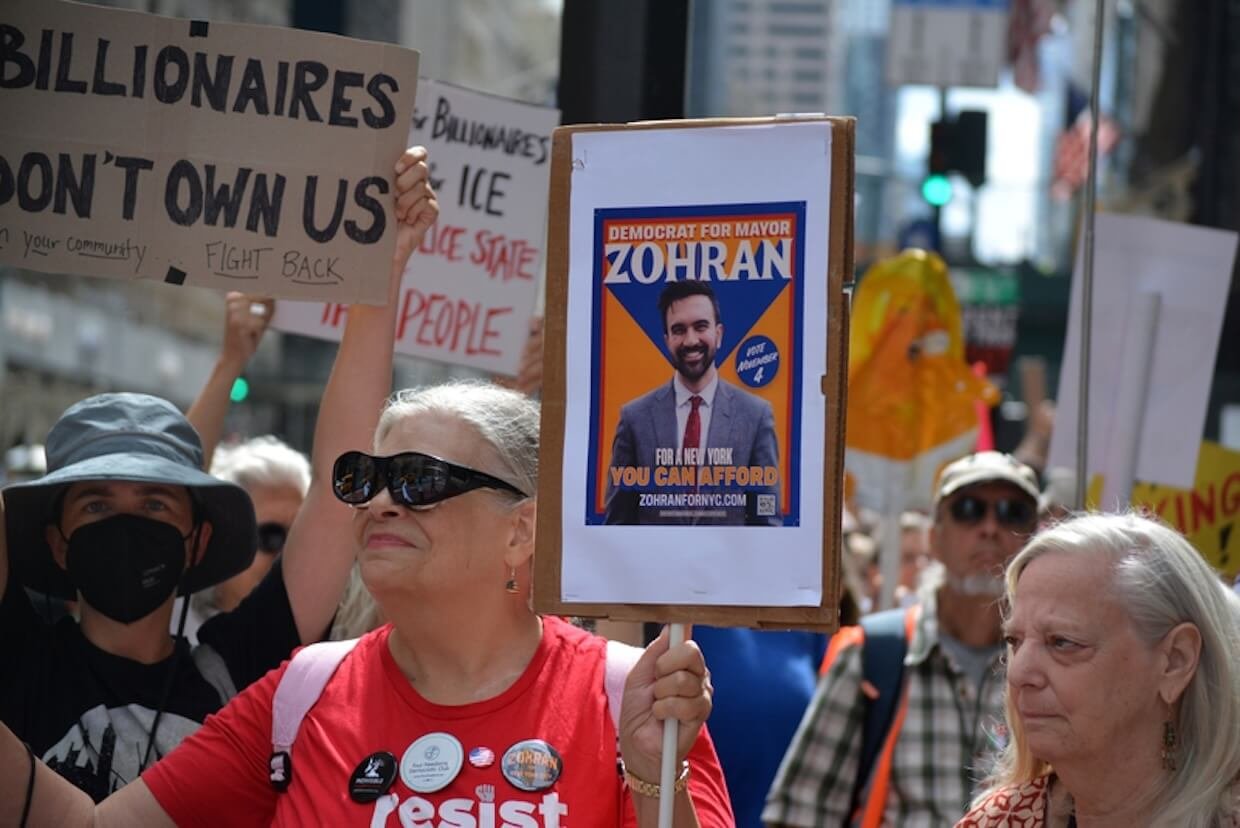
Many of the lessons from the DSA, particularly its local chapters and especially the New York City chapter, as demonstrated by Zohran Mamdani’s rise to the mayoralty, could be adopted by all sorts of actors within the party. Doing so doesn’t require embracing socialism or pursuing left-wing ideological goals.
What the New York DSA has done over the last several years is build a real organization with real members who are engaged and committed to electoral and political activity at the local level. They have made participation in that organization fun, increasing what political scientists call the “solidary benefits” of interacting with others in a shared endeavor. In his mayoral campaign, Mamdani made participation both highly engaging and enjoyable, extending well beyond the DSA’s rank-and-file membership.
Building organizations rooted in people’s day-to-day lives that make participation enjoyable, even for those who aren’t necessarily politically engaged on a regular basis, is something political organizations of all stripes and factional orientations should pursue, looking to the DSA as a model. In its own right, this is a very unhollow party.
Mamdani is also a great example of someone who has come to power with a serious set of ideological commitments. So far, he has succeeded in sustaining a successful mayoralty by paying close attention to what ordinary people want from government. This approach goes back to a tradition known as “sewer socialism,” associated with the socialists who governed Milwaukee in the early 20th century.
Pay attention to public services, demonstrate that government can function effectively, and seek to deliver tangible benefits in people’s day-to-day lives. By doing so, you build political support and political power that allow you to continue pursuing broader ideological aims. But you start by solving people’s everyday problems and frustrations. That’s something the Democratic Party in Congress, having just won this huge election on practical cost-of-living, economic, and pocketbook issues, should take to heart. Whatever Democrats do, they need to address people’s actual concerns.
Challenging Concentrated Economic Power Unites the Democratic Party
As Trump’s populist radical right confronts a more assertive democratic-socialist left, can economic left populism offer a credible response to working-class alienation and oligarchic power? What distinguishes its democratic potential from the exclusionary tendencies of right-wing populism?
Assoc. Prof. Sam Rosenfeld: Left populism, by definition, distinguishes itself from the right precisely through its commitment to an egalitarian economic project that encompasses everybody, rather than a circumscribed in-group that excludes an out-group. This is why issues like immigration and, historically, global trade have posed challenges to left-wing egalitarian politics and inclusivity.
In contemporary American politics, there is broad agreement across the center-left party. In this sense, moderates agree with left-wing factions, even if they disagree on the particulars. They share the view that the party’s strength lies in making economic issues salient and centering elections on challenging the concentrated economic power of elites, building a robust social safety net and welfare state, and redistributing power and resources in more egalitarian ways.
This represents shared ideological terrain for a large, heterogeneous party, even if left-wingers believe neoliberal moderates wouldn’t go far enough. It is also more electorally potent ground for the party of the left than questions of culture, identity, and other sociocultural issues. That’s where the whole party is orienting itself.
What this means for the particulars of economic policy remains a big open question. I’ve criticized technocracy, but I’m sympathetic enough to technocratic policymaking that I worry about the phenomenon we’re seeing in both parties, including Democrats, which some people call economic “sloppilism.” Ever since Donald Trump promised to eliminate taxes on tips for waiters and waitresses, there’s been a real vogue for tax cuts targeted at particular popular constituencies. Democrats have gotten into the business of doing this as well.
But for a left-wing or center-left political project, you need tax revenue to fund a welfare state and maintain a government with the capacity to accomplish what you want it to do. Right now, there’s a pervasive tendency to address people’s cost-of-living concerns with policies that, from a technocratic perspective, are pretty dubious and undermine the long-term project of progressive economic policy in the United States. That’s something to be mindful of.
Trump’s Personalist Control of the Republican Party Is Beginning to Break
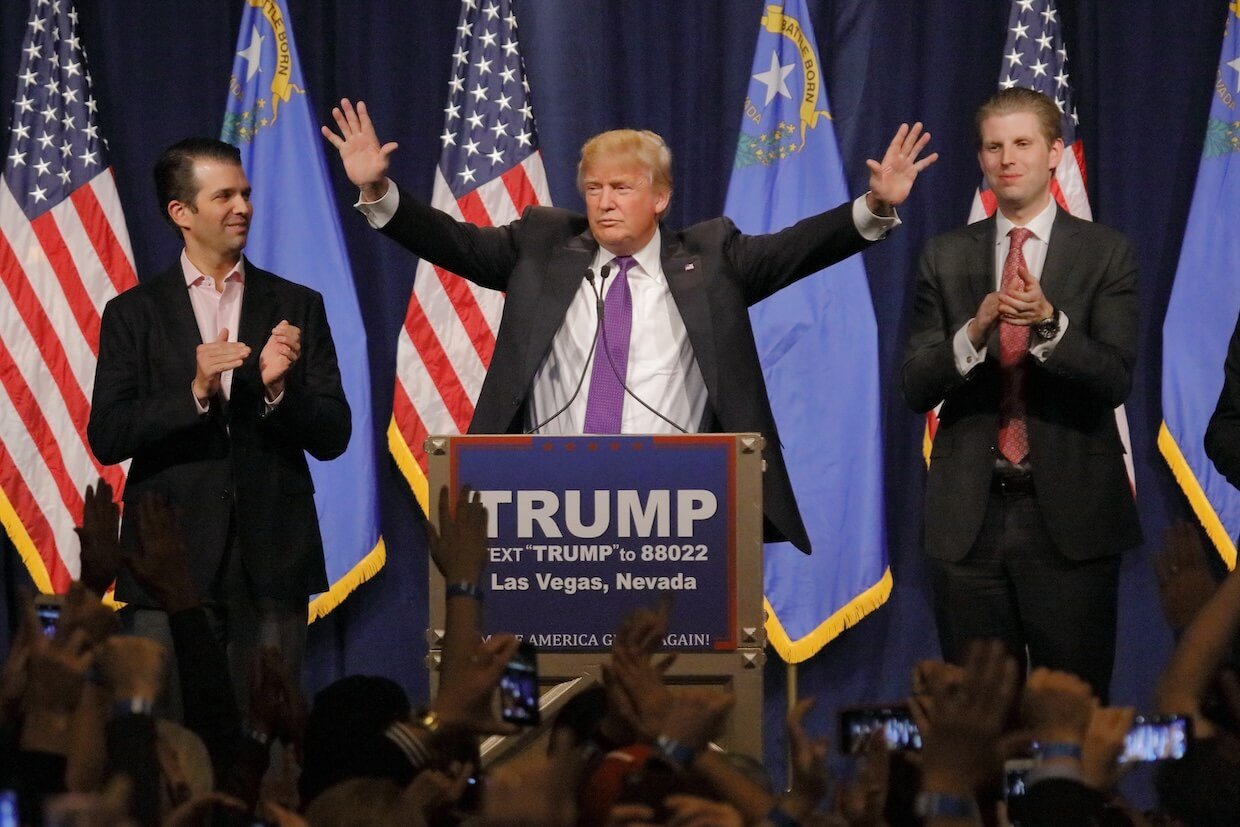
Your research on the Long New Right traces the organizational and ideological foundations of contemporary Republican radicalization. Does the 2026 Republican defeat threaten Trumpism’s structural dominance, or can MAGA survive repeated electoral setbacks through its control of party institutions and conservative networks?
Assoc. Prof. Sam Rosenfeld: I think the future of the Republican Party is more up for grabs than anything else after this election. We identify a tradition in postwar American conservative politics, dating back to the mid-20th century, characterized by a highly pugilistic political tendency defined by confrontation with perceived political enemies. This tendency undermines norms of democratic fair play and erodes the durability of collective organizations and institutions, including political parties. We call this tradition the Long New Right. It has a populist character and long predates Trump, but it laid the groundwork for the political template he adopted, and that’s not going away.
What distinguishes the Trump era, however, is personalism: the extent to which Republican Party politics became organized, over several years, around Donald Trump’s personal whims, wants, desires, and leadership. This represents a political tradition foreign to the United States, either imported by Trump or emerging around him.
It rested on the perception that Trump had a real hammerlock on the Republican Party’s mass base and that anyone within the party who crossed him would face the wrath of Republican voters, who would turn against them for defying Trump. That reputation was fairly well earned and plausible, giving him an unprecedented degree of power within the party. He became a genuine populist leader whose movement captured and cowed many Republican Party actors who had been around long before him.
But that reputation only lasts as long as it lasts. Trump is now sufficiently unpopular and has suffered such a resounding electoral defeat in these midterms that his hammerlock of personalist control over the Republican Party, which he has maintained for the past decade, is going to break. That’s partly because of the defeat, but also because he’s old and cannot run for reelection. He’s a genuine lame duck and is unlikely to remain a central figure in American political life for much longer.
The breaking of that personalist control is, in itself, a healthy development. Although the populist tendencies of the Long New Right long predate Trump and will persist well beyond him, it will be healthy for the party to engage in more open internal debates about its direction, with different factions lining up and ambitious politicians seeking the presidency beginning to jockey for position and articulate their disagreements.
That kind of internal competition has helped keep American party politics stable by providing internal checks on the actions of any particular leader or movement. Part of what has been so destabilizing about having one of America’s two major parties under Trump’s personalist leadership is precisely the erosion of those internal competitive checks. That, at least, is now changing.
MAGA Has Not Institutionalized Its Control Over the Republican Party
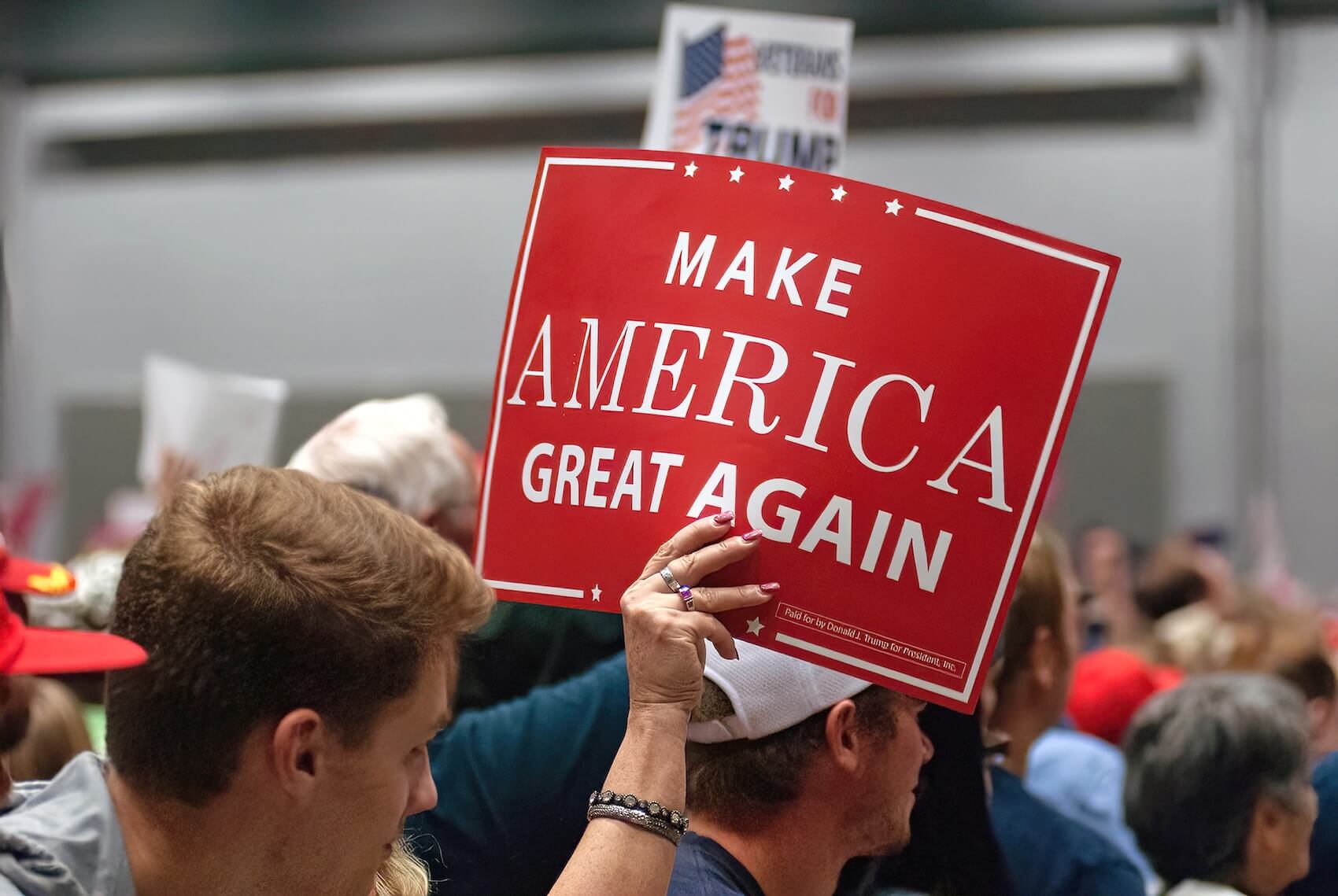
Could the Republican defeat trigger an internal struggle among MAGA loyalists, traditional conservatives, business elites, and emerging presidential contenders? Or has Trumpism become so deeply institutionalized that the post-Trump succession will primarily involve competing versions of the same movement?
Assoc. Prof. Sam Rosenfeld: Following on from what we were saying, the Republican Party, as a hollow party, remains relatively uninstitutionalized in many ways. It’s certainly true that Trump installed loyalists in various leadership positions. But the Republican National Committee, some outside super PACs, and other such entities are themselves fairly thin organizations whose leadership will come and go. So, the future of Republican politics remains relatively open and is not necessarily constrained by what MAGA has done to the party’s organizational structure over the last decade.
What that means for American democracy is a great question. Trump initially identified a significant gap between the priorities of conservative and Republican elites and what ordinary Republican voters—the party’s mass base—actually cared about in 2016. Trump was uniquely positioned to recognize and exploit that gap, allowing him to take over the party and remake it in his own image. In government, however, Trump has not addressed or satisfied the commitments and priorities of the Republican base, which partly explains why so many of those voters stayed home earlier this month. But whatever factional debates emerge within the Republican Party, I don’t think we’re going to see a return to traditional Reaganite conservatism or the coalition of interests that dominated Republican politics for several decades.
Among younger conservatives and the Tucker Carlson–J. D. Vance faction on the right, there is a pretty wild and woolly collection of ideas that depart from traditional Reaganite conservatism. These include a strong current of blatant anti-Semitism and, in some circles, openly anti-democratic orientations. These factions now have a voice within a much more open, though still organizationally hollow, party structure, and they’re going to influence what the future of the Republican Party looks like.
Ambition Checking Ambition Prevents Parties from Becoming Personal Tools
In Late to the Party, you and Schlozman emphasized the importance of parties exercising institutional authority over individual leaders. What would genuine Republican Party reform require, and can a party organized around personalized leadership recover the capacity to constrain extremism and defend constitutional rules?
Assoc. Prof. Sam Rosenfeld: Great questions. As a political scientist, there are formal reforms I’d like to see parties undertake that run counter to the direction of internal party reform over the past half-century. It would be good to reestablish certain gatekeeping functions, such as at-large delegates to party conventions—what were called superdelegates on the Democratic side—who could vote as they wished without being pledged to any particular primary winner in a given state. That kind of peer review and formal party input into the selection of nominees would be valuable, but instituting those reforms will be a tall order in an era when people perceive them as undemocratic.
Trump’s discrediting of himself, his loss of a reputation for infallibility among the Republican base, and the erosion of his reputation as a special electoral figure will, in themselves, open things up within the Republican Party again. Even without the formal gatekeeping capacity I’d like parties to have, we’re going to see Marco Rubio, Ted Cruz, J. D. Vance, and who knows who else competing to become the nominee in 2028. Trump won’t be in a position simply to designate a successor. That kind of internal competition, with ambition checking ambition, is part of what prevents American parties—which are generally too oriented around the presidency—from becoming the tools of any one person. Competition among different aspirants and ambitious political entrepreneurs within parties helps prevent that concentration of control.
As for the Republican Party, a more open party, no longer shackled to the whims of an authoritarian personality like Trump, will be a little safer for democracy and less of an agent of further democratic backsliding. But the story we tell is a long one, and conservative politics in the United States will continue to exhibit tendencies that corrode norms of political fair play and democratic stability. The road back from that is a long one.
Democracy Is Never Fully Safeguarded, Even After Major Electoral Victories
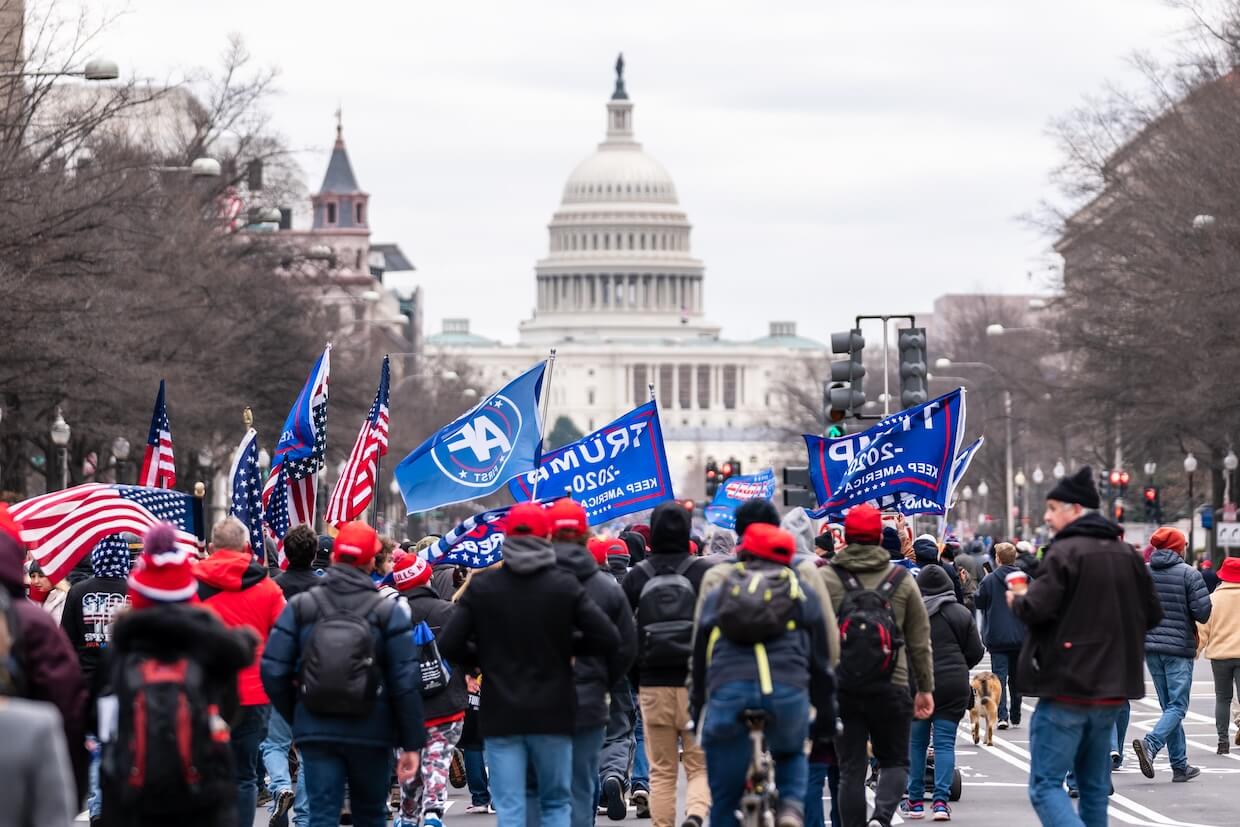
Looking toward 2028 and beyond, what would distinguish temporary Democratic electoral gains from genuine democratic restoration? Which changes in party organization, political representation, institutional accountability, and democratic norms would be necessary to prevent renewed authoritarian backsliding?
Assoc. Prof. Sam Rosenfeld: Looking at the Trump era and then at developments elsewhere—particularly in Hungary, Poland, and Brazil, which are obviously central to your center’s work—I come away chastened. There is no set of formal reforms, new laws, or new organizational practices that would leave me feeling that democracy has been restored and is safe from here on out. I now think much more about how Trump has demonstrated, in the American context, the ever-present danger to democratic self-government when elites choose, for their own incentives and reasons, to go along with leadership and activities that undermine democracy.
The public, meanwhile, is committed to democracy in the abstract, but that commitment is very thin. Such considerations don’t actually move people electorally in the same way that pragmatic pocketbook issues do. That’s simply the reality we live in: Democracy is never fully safeguarded. A major, definitive electoral defeat in a midterm election is great. But if the Republican Party were to suffer another major defeat in 2028 as a consequence of Trump’s leadership and the party’s association with Trump and MAGA, that, in itself, would represent a major step toward restabilizing the democratic system.
In terms of formal organizational changes, we believe parties are essential to democracy. In the long term, it would be vital to have parties more deeply rooted in people’s everyday lives, less top-heavy at the national level, and supported by more robust and heterogeneous local organizations, with their eyes and ears attuned to what local communities care about. We therefore see the revival of parties as stewards of democratic contestation and fair play as an important part of shoring up the system.
(*) This interview was academically curated and edited by Dr. Bulent Kenes.