The emergence of repressive and authoritarian “hybrid regimes” poses one of the most significant threats to democracy today. These regimes and authoritarian actors wield information suppression and manipulation as essential tools to disseminate narratives that erode democratic institutions. This issue transcends national borders; digital technologies now enable authoritarian states to infiltrate robust democracies, allowing them to project their authoritarian narratives globally. The transnationalization of authoritarian politics, facilitated by digital technologies, presents substantial challenges to the integrity of democratic processes and institutions.
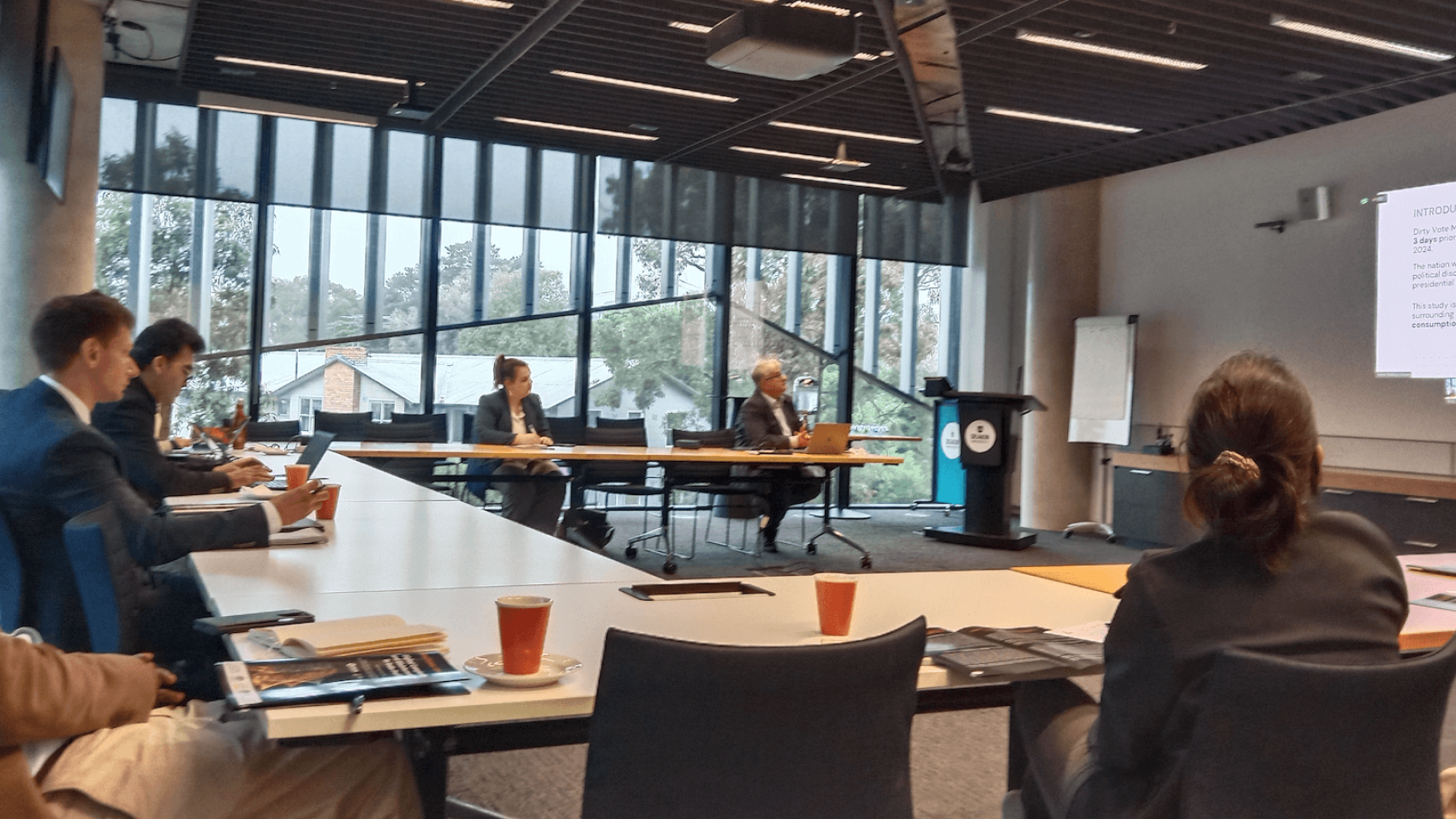
In response to these challenges, a workshop which is a collaborative effort organized on November 7-8, 2024, by the Alfred Deakin Institute for Citizenship and Globalisation (ADI) at Deakin University, Australia, and the European Center for Populism Studies (ECPS) in Brussels, Belgium. The workshop aimed to investigate how various actors—governments, non-state organizations, state-sponsored entities, and political parties—suppress and manipulate information to erode trust in democratic processes, both domestically and internationally. The workshop also examined the darker dimensions of social media, focusing on the interactions between misinformation, negativity, and polarization.
Moreover, the workshop addressed strategies to counter misinformation and disinformation, along with intervention techniques to mitigate their impacts. It also focused on countering disinformation through activism and explored everyday online experiences with misinformation, emphasizing the importance of evidence-based media literacy education initiatives. Additionally, the event discussed necessary curricular reforms to combat disinformation, toxicity, and polarization in educational contexts, as well as the responses of political elites to conspiracy theories.
The aim of the workshop, funded by the Australian Political Studies Association (APSA), the Australian Research Council (ARC), and the Gerda Henkel Foundation, is to deepen the understanding of these critical issues and explore collaborative strategies to combat misinformation and disinformation in our increasingly complex digital environment.
Round Table 1 – Foreign Interference Campaigns on Social Media: Insights from Field Theory and Computational Social Science
Keynote by Dr. Robert Ackland (Professor, The Australian National University)
Round Table 2 – Manipulating Truth: Authoritarian Strategies of ‘Attention Bombing’ and ‘Epistemic Modulation’ in Hybrid Media Systems
Keynote by Dr. Timothy Graham (Associate Professor, Queensland University of Technology)
Round Table 3 – The Dark Side of Social Media: Misinformation, Negativity, and Polarization
Keynote by Dr. Jason Weismueller (Assistant Professor, University of Western Australia)
Round Table 4 – The Influence of Familiarity and Identity Relevance on Truth Judgements
Keynote by Dr. Li Qian Tay (Postdoctoral Fellow, The Australian National University)
Round Table 5 – Countering State-Sanctioned Information Operations: The #FreeYouth Movement in Thailand
Keynote by Dr. Aim Sinpeng (Associate Professor, The University of Sydney)
Round Table 6 – Investigating Everyday Online Experiences with Misinformation and Responding with Evidence-Informed Media Literacy Education Initiatives
Keynote by Dr. Tanya Notley (Associate Professor, Western Sydney University)
Round Table 7 – Reforming the Curriculum to Counter Disinformation, Toxicity, and Polarization
Keynote by Dr. Mathieu O’Neil (Professor, The University of Canberra; Honorary Associate Professor, The Australian National University)
Round Table 8
Ignore, Rebut or Embrace: Political Elite Responses to Conspiracy Theories
Keynote by Dr. Zim Nwokora (Associate Professor, Deakin University)
And
Disinformation in the City Response Playbook
Keynote by Dr. Jessica (Ika) Trijsburg (Research Fellow in City Diplomacy at the Melbourne University)
Closing Remarks
By Dr. Lydia Khalil (Program Director, Transnational Challenges at Lowry Institute)
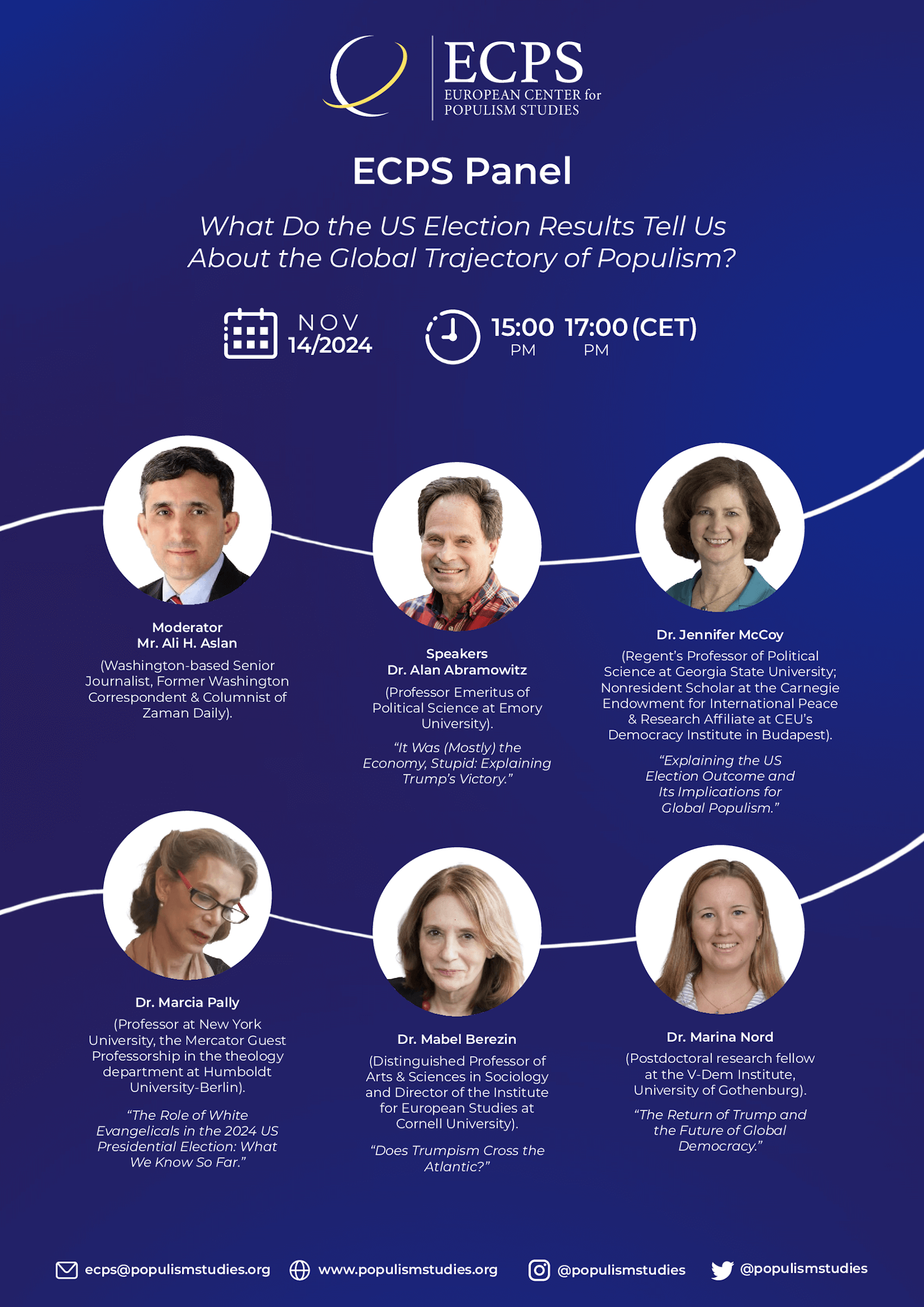
Ali H. Aslan (Washington-based Senior Journalist, Former Washington Correspondent & Columnist of Zaman Daily).
Speakers
“It Was (Mostly) the Economy, Stupid: Explaining Trump’s Victory,” by Dr. Alan Abramowitz (Professor Emeritus of Political Science at Emory University).
“Explaining the US Election Outcome and Its Implications for Global Populism,” by Dr. Jennifer McCoy(Regent’s Professor of Political Science at Georgia State University; Nonresident Scholar at the Carnegie Endowment for International Peace & Research Affiliate at CEU’s Democracy Institute in Budapest).
“The Role of White Evangelicals in the 2024 US Presidential Election: What We Know So Far,” by Dr. Marcia Pally (Professor at New York University, the Mercator Guest Professorship in the theology department at Humboldt University-Berlin).
“Does Trumpism Cross the Atlantic?” byDr. Mabel Berezin (Distinguished Professor of Arts & Sciences in Sociology and Director of the Institute for European Studies at Cornell University).
“The Return of Trump and the Future of Global Democracy,” by Dr. Marina Nord (Postdoctoral research fellow at the V-Dem Institute, University of Gothenburg).
Ali H. Aslan is aWashington-based Senior Journalist, Former Washington Correspondent & Columnist of Zaman Daily. Aslan, who was born in Turkey, holds a bachelor’s degree in business administration from Turkey’s prestigious Bogazici (Bosporus) University. Immediately after college, he started a 27-year journalism career at Zaman newspaper. Having assumed various duties at Zaman Istanbul headquarters including Deputy News Editor, he was assigned as Washington Correspondent of Zaman in 1997. He also wrote weekly columns for Zaman and its English language affiliate Today’s Zaman until they were forcibly taken over by Turkish government in 2016. Specialized in international relations with a focus on US, Turkey and the Middle East, Aslan’s work also appeared occasionally on US publications such as Foreign Policy and European Affairs.
It Was (Mostly) the Economy, Stupid: Explaining Trump’s Victory
Dr. Alan Abramowitz is the Alben W. Barkley Professor Emeritus of Political Science at Emory College of Arts and Sciences. His research focuses on American politics, political parties, elections, and voting behavior. His current work examines party realignment in the U.S. and its impact on presidential and congressional elections.
Abstract: In my presentation, I will discuss how and why Donald Trump managed to win a decisive victory over Kamala Harris in the 2024 presidential election. I will argue that Trump won the election despite having a higher unfavorable than favorable rating among the electorate, being perceived as too extreme by a majority of voters and supporting unpopular policies on a number of important issues including abortion, health care and climate change. They key to Trump’s victory was that the incumbent Democratic president was deeply unpopular. Kamala Harris simply could not overcome being closely connected with that incumbent as the candidate of the president’s party and as the sitting vice-president. Nevertheless, Trump’s serious flaws as a candidate allowed Harris to outperform the normal expectations for the candidate from the incumbent party with a deeply unpopular leader.
Harris’s defeat followed a pattern that has been seen across western democracies in the aftermath of the 2020-2021 Covid pandemic—widespread discontent with high inflation and other economic problems leading to the defeat of incumbent parties of both the left and right. I will argue that claims that the 2024 election may presage a realignment of the American party system because of increased support for the Republican candidate among nonwhite voters are premature. We have seen claims like this before after the 1972, 1984, and 2004 elections and they proved incorrect. Donald Trump is likely to be as unpopular in his second term as he was in his first and Democrats should be well positioned to make gains in the 2026 midterm elections and in 2028 when Trump will be ineligible to run again.
The Role of White Evangelicals in the 2024 US Presidential Election: What We Know So Far
Dr. Marcia Pally is a Professor at New York University and has held the Mercator Professorship in the Theology Faculty at Humboldt University, Berlin. She continues to serve there as an annual guest professor and is a member of the Center for Interreligious Theology and Religious Studies and the Berlin Institute for Public Theology. In 2019-2020, she was a Fellow at the Center for Theological Inquiry (Princeton). Her recent books include: White Evangelicals and Right-wing Populism: How Did We Get Here?; From This Broken Hill I Sing to You: God, Sex, and Politics in the Work of Leonard Cohen; Commonwealth and Covenant: Economics, Politics, and Theologies of Relationality; America’s New Evangelicals: Expanding the Vision of the Common Good.
Abstract: This presentation will first review the religious and historical factors along with the current conditions that have positioned many white evangelicals for right-wing populist positions and to vote for candidates they believe hold those positions. It will then look at tallies in the US presidential and key state elections and discuss the results (i) for the US presidency, (ii) the composition of federal and state legislative and judicial bodies (iii) speculatively, US influence abroad.
Does Trumpism Cross the Atlantic?
Dr. Mabel Berezin is Distinguished Professor of Arts and Sciences in Sociology and Director of the Institute for Europeans Studies at Cornell University. She writes on challenges to democratic cohesion and solidarity in Europe and the United States. She is working on The End of Security and the Rise of Populism under contract at Oxford that examines the current global resurgence of nationalism and the populist challenge to democratic practice.
Abstract: Whether Trump wins or loses, Trumpism is with us in the United States. But to what extent does it have a transnational appeal, or to what extent does it influence right wing populists across the globe. My argument is that the political culture of the US does not translate easily to the European context. American political culture has a deeply individualist cast that makes for American exceptionalism in a good and bad way. My talk will explore American differences in light of the outcome of the presidential election. My main point will be that it will inspire and embolden some parts of the European right and not be relevant to others—except of course that everyone will have to recognize and engage diplomatically with whomever the American president is.
Explaining the US Election Outcome and Its Implications for Global Populism
Dr. Jennifer McCoy is Regent’s Professor of Political Science at Georgia State University and Nonresident Scholar at the Carnegie Endowment for International Peace, as well as Research Affiliate at CEU’s Democracy Institute in Budapest. She was named a 2024 Andrew Carnegie Fellow for her project, “Mitigating Pernicious Polarization through Innovative Civic Educational Interventions.” Her current book project is Depolarizing Politics with Murat Somer, under contract with Princeton University Press. Her latest volume is Polarizing Polities: A Global Threat to Democracy, co-edited with Murat Somer (2019).
Dr. McCoy’s areas of expertise include democratic resilience, democratic erosion and partisan polarization; crisis prevention and conflict resolution; democracy promotion and collective defense of democracy; election processes and international election observation; and Latin American Politics. McCoy served as Director of the Carter Center’s Americas Program (1998-2015), leading projects on democratic strengthening, mediation and dialogue, and hemispheric cooperation. She has authored or edited six books and dozens of articles.
The Return of Trump and the Future of Global Democracy
Dr. Marina Nordis a postdoctoral research fellow at the V-Dem Institute (University of Gothenburg), and a member of the German research network ‘External Democracy Promotion’. Her research focuses on explaining autocratization and democratization processes, and interplay between economic processes and political transformation. Before joining the V-Dem Institute, she worked on several research projects at the Hertie School and at the German Institute for Economic Research, where she became passionate about bridging the gap between academic research and policy domains.
Abstract:What does the outcome of the US presidential election mean for the future of global democracy? As politics has become more polarized over the last decades, the outcome of the US presidential election is perceived as increasingly high stakes for the future of democracy worldwide. This presentation will give broader context to the story of global democracy and discuss the possible implications of a second Trump administration for the future of liberalism, democratic norms, polarization, and deliberation worldwide.
In an insightful interview, Professor Lucan Ahmad Wayexpressed serious concerns about the durability of American institutions under Trump’s influence. “I am extremely worried about how American institutions might respond to Trump’s autocratic tendencies,” he stated, noting that subtle abuses, like politicized audits or investigations, could escape media scrutiny yet still erode democratic foundations. While US rule of law might limit overt actions, Professor Way emphasized the risk of covert pressures aimed at silencing opposition, highlighting the fragility of democratic safeguards in polarized times.
In a thought-provoking interview with the European Center for Populism Studies (ECPS), Dr. Lucan Ahmad Way, Distinguished Professor of Democracy at the University of Toronto, expressed deep concerns over the resilience of American institutions in the face of potential autocratic shifts under Donald Trump’s leadership. “I am extremely worried about how American institutions might respond to Trump’s autocratic tendencies,” Professor Way remarked, emphasizing the risk of subtle forms of abuse that might not attract significant media attention but could undermine the democratic fabric.
Professor Way highlighted concerns that Trump could politicize key institutions like the IRS (Internal Revenue Service), Department of Justice, or FBI to target political opponents discreetly. Although the United States’ strong rule of law may prevent extreme actions, such as the imprisonment of opposition leaders, Professor Way warned about the possibility of covert audits and investigations aimed at harassing Trump’s critics or opposition-aligned businesses.
Beyond the US, Professor Way discussed the evolving priorities of liberal democracies globally, noting a growing need for robust military investments in response to threats from authoritarian powers like Russia and China. He urged Western countries to shift focus from democracy promotion to securing the physical safety of democratic nations, particularly given the heightened risks of military conflicts in regions like Ukraine and Taiwan.
Touching on the broader global landscape, Professor Way also identified economic development as a critical factor in the stability of democracies, citing the correlation between increased wealth and democratic resilience. He underscored that while economic challenges often destabilize democracies, they also threaten authoritarian regimes, as seen recently in Bangladesh. Through this interview, Professor Way sheds light on the complex dynamics influencing the future of democracy in both the US and the wider world.
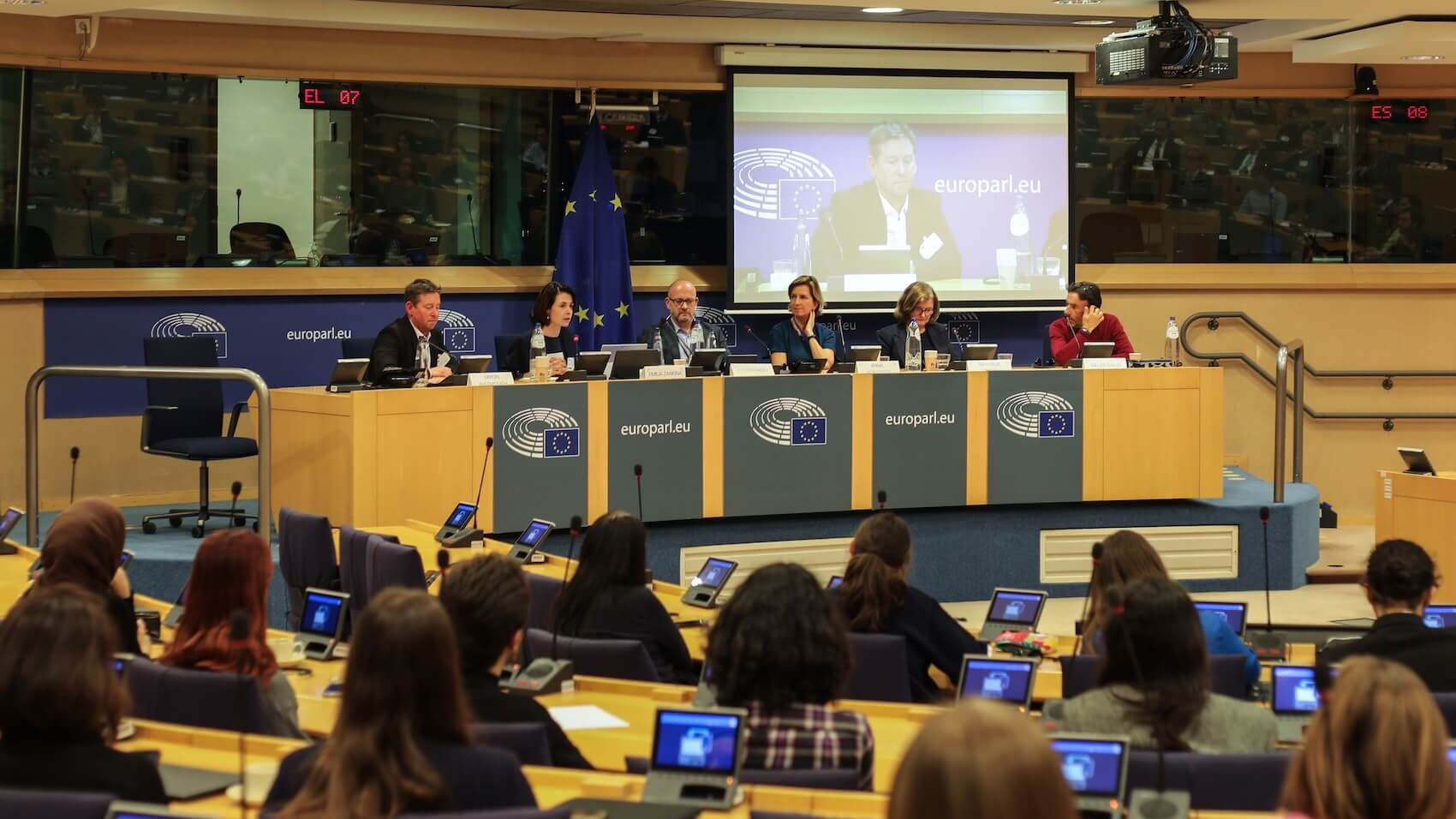
On November 7, 2024, the European Center for Populism Studies (ECPS) organized a panel at the European Parliament in Brussels to examine the critical influence of rising populism on the 2024 European Parliament elections and the forthcoming US administration. Hosted by MEP Radan Kanev and ECPS Honorary President Irina von Wiese, the event featured distinguished experts who discussed the challenges populism poses to transatlantic relations.
Moderated by Dr. Simon P. Watmough, the panel spotlighted ECPS’s comprehensive 2024 report, which analyzed populist party performance across the EU’s 27 member states. Dr. Emilia Zankina and Dr. Gilles Ivaldi, the report’s editors, provided expert insights into the outcomes of the June European Parliament elections. Keynotes by MEPs Radan Kanev and Nathalie Loiseau addressed the challenges of populist politics for EU-US relations and the implications for democratic governance.
We invite you to watch the panel video for in-depth perspectives on these pressing issues and the potential shifts in transatlantic relations amid the rise of populist movements.
In an insightful interview, Professor Lucan Ahmad Wayexpressed serious concerns about the durability of American institutions under Trump’s influence. “I am extremely worried about how American institutions might respond to Trump’s autocratic tendencies,” he stated, noting that subtle abuses, like politicized audits or investigations, could escape media scrutiny yet still erode democratic foundations. While US rule of law might limit overt actions, Professor Way emphasized the risk of covert pressures aimed at silencing opposition, highlighting the fragility of democratic safeguards in polarized times.
In a thought-provoking interview with the European Center for Populism Studies (ECPS), Dr. Lucan Ahmad Way, Distinguished Professor of Democracy at the University of Toronto, expressed deep concerns over the resilience of American institutions in the face of potential autocratic shifts under Donald Trump’s leadership. “I am extremely worried about how American institutions might respond to Trump’s autocratic tendencies,” Professor Way remarked, emphasizing the risk of subtle forms of abuse that might not attract significant media attention but could undermine the democratic fabric.
Professor Way highlighted concerns that Trump could politicize key institutions like the IRS (Internal Revenue Service), Department of Justice, or FBI to target political opponents discreetly. Although the United States’ strong rule of law may prevent extreme actions, such as the imprisonment of opposition leaders, Professor Way warned about the possibility of covert audits and investigations aimed at harassing Trump’s critics or opposition-aligned businesses.
Beyond the US, Professor Way discussed the evolving priorities of liberal democracies globally, noting a growing need for robust military investments in response to threats from authoritarian powers like Russia and China. He urged Western countries to shift focus from democracy promotion to securing the physical safety of democratic nations, particularly given the heightened risks of military conflicts in regions like Ukraine and Taiwan.
Touching on the broader global landscape, Professor Way also identified economic development as a critical factor in the stability of democracies, citing the correlation between increased wealth and democratic resilience. He underscored that while economic challenges often destabilize democracies, they also threaten authoritarian regimes, as seen recently in Bangladesh. Through this interview, Professor Way sheds light on the complex dynamics influencing the future of democracy in both the US and the wider world.
Here is the transcription of the interview with Professor Lucan A. Way with some edits.
Cultural Backlash Is the Key Driver of Populism
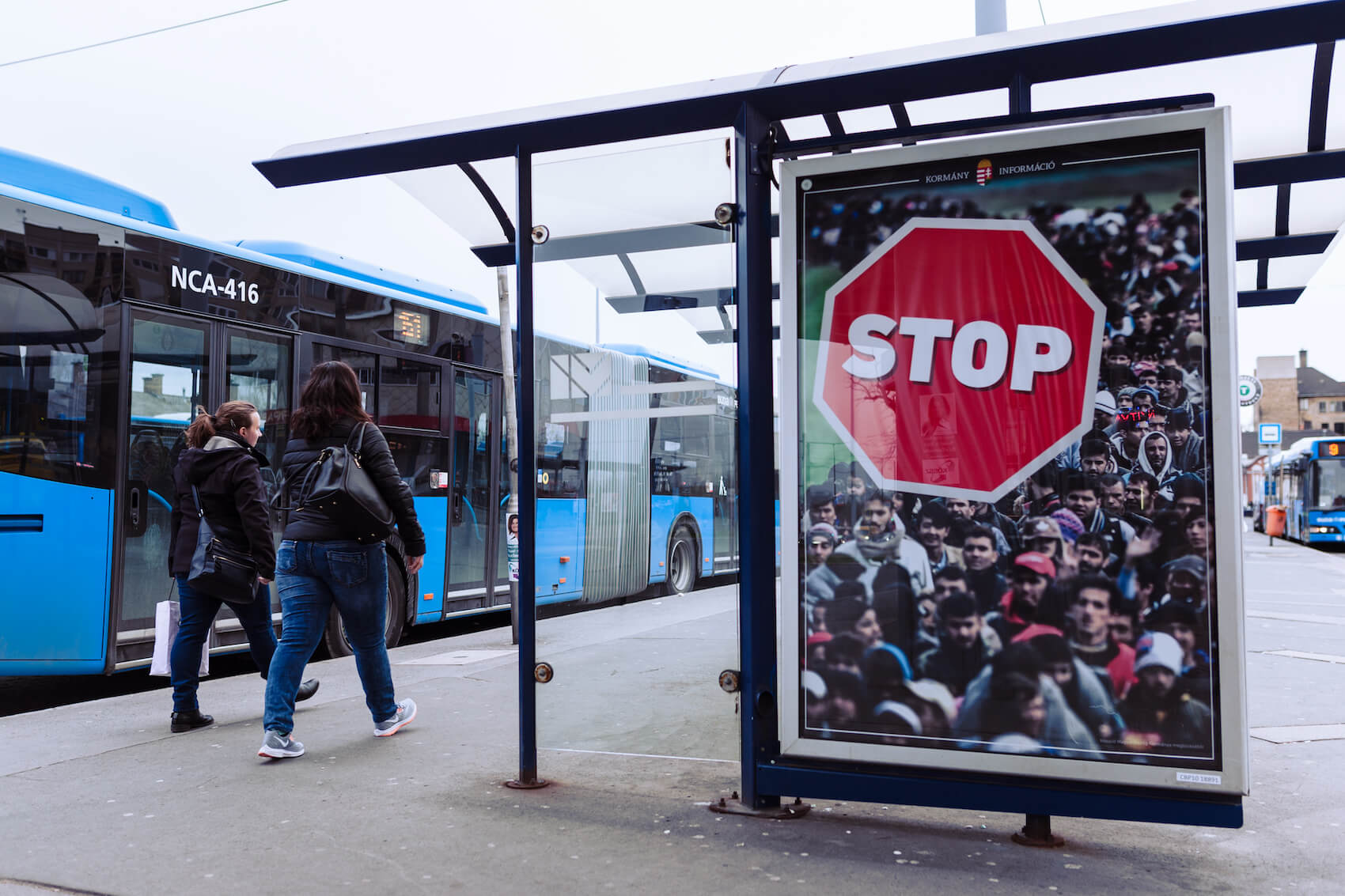
Hungarian government’s anti-immigration billboard says “STOP the refugees” in Budapest, Hungary on April 4, 2018.
Professor Lucan Way, thank you very much for joining our interview series. Let me start right away with the first question. In your view, what are the main factors driving the global rise of populism and authoritarianism today? How do these factors differ across regions, and are there shared elements that make populism a global phenomenon?
Professor Lucan A. Way: I think there are a number of factors. Traditionally, people have made two main arguments. One sees populism as a result of economic discontent or neoliberalism, specifically linked to the 2008 financial crisis. The other approach tends to view populism as a result of more cultural factors, such as fear surrounding the increasing empowerment of visible minorities. For example, in the United States, experiments show that if people are reminded that visible minorities are likely to soon make up the majority of the American population, they experience a sense of “racial threat,” which motivates support for racist parties.
Most studies show that, on a one-to-one basis, cultural backlash variables are more strongly associated with support for populism than economic factors. The evidence leans in favor of these cultural backlash variables in most cases, though they take different forms in different regions. In the United States, particularly in 2016, populism was historically tied to backlash against the civil rights movement and the empowerment of Black Americans. In Hungary, it has taken the form of anti-cosmopolitanism, where Viktor Orbán successfully tapped into resentment against urban elites to polarize the country and build support for Fidesz. In other cases, populism has been driven by anti-immigration sentiment. Overall, cultural factors, such as opposition to immigration, urban elites, or racial minorities, appear to unite most of these movements.
Given the decline of Western liberal hegemony and the rise of alternative power centers like China and Russia, how sustainable is the resilience of third-wave democracies in regions lacking robust civil societies or economic stability? How has the weakening of Western liberal hegemony, alongside the influence of countries like China and Russia, contributed to the persistence and even the rise of competitive authoritarian regimes globally?
Professor Lucan A. Way: What’s interesting is that the third wave of democracy was very much influenced by liberal hegemony in the 1990s, when the Soviet Union collapsed. During this brief decade-long period, the United States (US) and the European Union (EU) were essentially the only global powers, which led to a dramatic increase in the number of democracies worldwide.
However, as most readers will know, this changed in the 2000s with the rise of China as a major economic power and Russia’s increasing military aggression—first in post-Soviet Georgia and, most recently, in Ukraine. This period of liberal hegemony has now ended. Given that liberal hegemony helped fuel the rise of democracies, one might expect that its end would lead to a dramatic decline in democracies. Yet, that has not been the case. Instead, we’ve seen a sort of stability in third- or fourth-wave democracies since the 2000s, with only a slight dip in the number of democracies over the last decade in a few countries like Venezuela and Hungary. So far, at least, democracy has remained relatively robust and certainly more resilient than one might expect given the current Zeitgeist.
In cases like Hungary and Turkey, we see competitive authoritarianism taking root even in countries with democratic traditions. What strategies have leaders in these countries used to effectively erode democratic norms while maintaining electoral competition?
Professor Lucan A. Way: I think Turkey is a case where democracy was limited; it had long periods of military rule with only brief stretches of democracy before Erdogan’s rise. So, I would question the extent of Turkey’s democratic history. Hungary, on the other hand, experienced about 25 years of democracy. The main strategy, particularly relevant to the current US context, has been to dismantle the independent bureaucracy, effectively removing the civil service and politicizing the state. This is essentially the “Orbán plan,” a very common approach, which I worry could become more prominent in the United States.
In Hungary’s case, they argued that the “deep state” was controlled by communists, justifying a purge of officials. These officials were then replaced by loyalists to the ruling Fidesz party. This tactic—removing independent officials and replacing them with loyalists—seems to align with certain elements of Donald Trump’s agenda in the US, which is, I believe, a significant cause for concern.
Far-Right Ideologies and Anti-Democratic Actions Are Distinct Issues
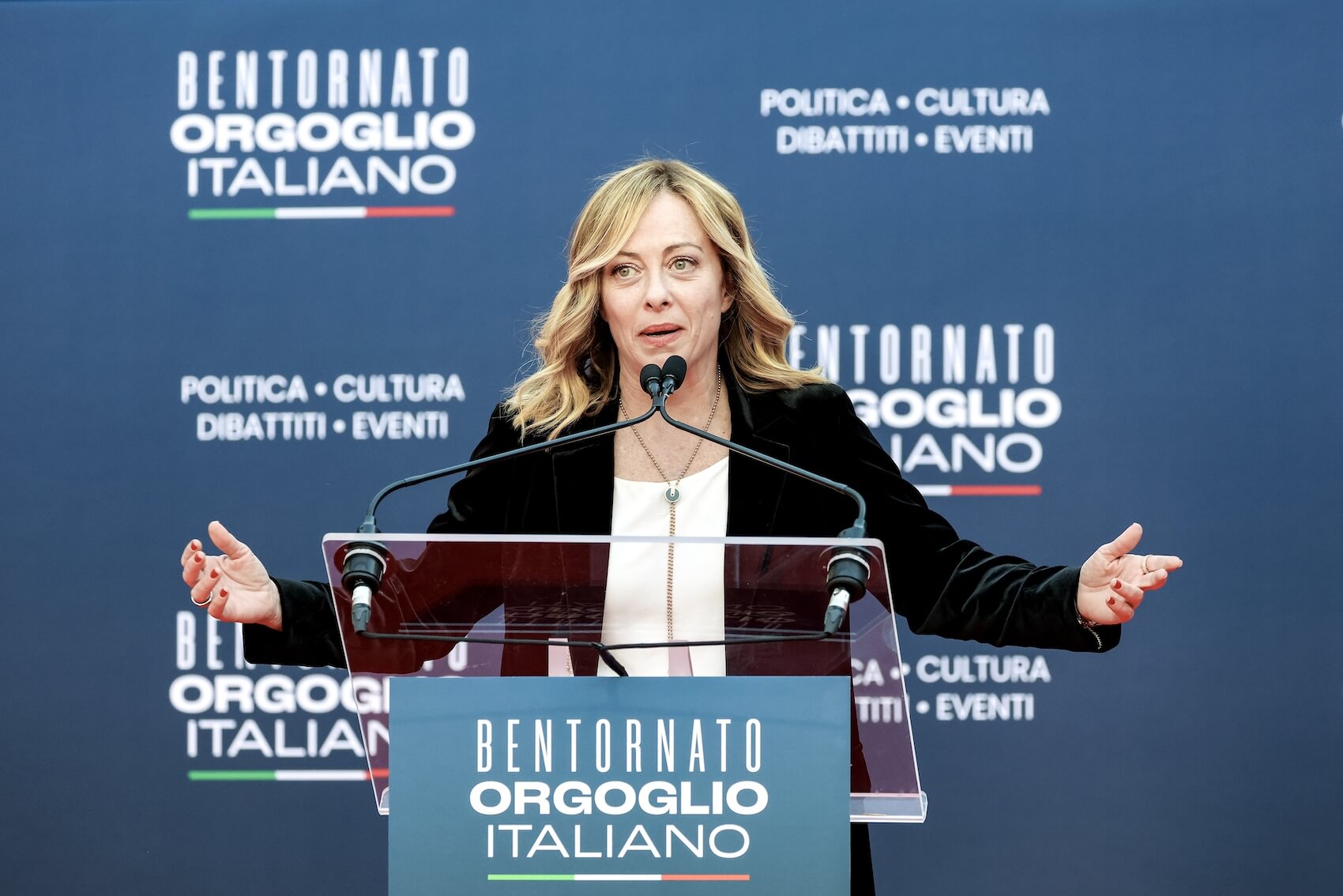
Giorgia Meloni, Italy’s prime minister, speaks at the Atreju convention in Rome, Italy on December 16, 2023. Photo: Alessia Pierdomenico.
How resilient do you believe liberal democratic institutions are to the pressures posed by populist leaders and movements? What mechanisms or strategies have been most effective in safeguarding democracy against authoritarian shifts?
Professor Lucan A. Way: Well, a few things here. I think it’s important to distinguish between the so-called far right and anti-democratic parties. These are often conflated, but they’re distinct. For instance, you may have a far-right party that is anti-immigrant or opposes rights for certain minorities, yet that doesn’t necessarily mean it fundamentally attacks democracy. These are two separate issues.
A party may be anti-immigrant or even racist without undermining core democratic institutions. For example, in Italy, Georgia Meloni’s government has been characterized by far-right views, especially concerning immigrants, yet hasn’t fundamentally attacked minorities or democratic structures. This may also be true in other cases, like France. So, it’s essential to avoid conflating opposition to minorities or immigration with opposition to democracy—they’re not necessarily the same.
In the United States, however, these elements are more closely linked; you have an anti-immigrant party that is also highly anti-democratic. Given that the US is the world’s oldest democracy, this combination is, of course, deeply concerning.
Considering recent shifts in European policies, particularly Germany’s defense initiatives and economic distancing from Russia, what do you see as the long-term implications for Europe’s role in promoting and defending democratic values globally?
Professor Lucan A. Way: I think right now Europe’s main concern needs to be security. For many decades, including myself, we didn’t fully appreciate the importance of a robust military in preserving the liberal world order. However, with Russia’s violation of the norm against invading other countries and its interference in democratic elections in the US and Europe, this is a significant concern. Right now, liberal countries outside the United States are waking up to the necessity of seriously investing in their military capabilities—not only to defend Ukraine, a democracy directly attacked by Russia, but also due to the realization that failing to defend Ukraine could have profound global implications. Without such defense, there could be a concerning increase in the frequency of countries attacking one another.
Of course, I believe the biggest concern on this front right now is the potential for China to invade Taiwan. Here, we see very direct and literal military threats against democracies, which the liberal West needs to focus on preventing. In a sense, we are beyond simply promoting democracy as seen in the 1990s; the emphasis now is much more on actively maintaining the physical security of democratic nations.
In your article, “The Resilience of Democracy’s Third Wave,” co-authored with Professor Steven Levitsky, you contend that the findings of V-Dem and Freedom House may be exaggerated and don’t entirely reflect the real state of democracy. To what degree do you think the current narrative of “democratic decline” is overstated? Do you believe the data truly indicates a global democratic backslide, or are we seeing shifts in how democracy is interpreted? Has your perspective changed in the light of Trump’s election in the U.S. and the recent successes of far-right parties in Europe?
Professor Lucan A. Way: Regarding V-Dem and Freedom House, I don’t see a reason to question the data itself, but rather the rhetoric surrounding it. Their reports often have a hyperbolic tone that doesn’t fully align with the data they present. I feel these interpretations have become exaggerated, likely aimed at attracting media attention. You’re unlikely to get calls from major outlets like The Washington Post or The New York Times with a report stating that “things are basically the same,” so there’s a tendency towards more sensational claims, like democracy being at a level comparable to the 1980s, which is demonstrably inaccurate.
Moreover, terms like “autocracy” are used quite liberally in these reports. For instance, labeling India as an autocracy feels misleading. India under Narendra Modi has engaged in concerning authoritarian practices, including suppressing opposition and targeting the Muslim population. Ahead of the last election, they even sought to freeze the accounts of the opposition Congress party. Yet, the elections themselves remain largely democratic, as shown by the BJP’s loss of majority, requiring them to form a coalition. So, calling India an autocracy overlooks the fact that its elections still hold significant power in determining leadership. It’s more accurate to view India as a competitive authoritarian system, where elections remain meaningful but are accompanied by substantial abuses of authority.
These are cases where elections remain real and effectively determine who gains and retains power, yet they are accompanied by various forms of authoritarian abuses, including attacks on the opposition. I think that’s an important distinction to make, and I do believe it’s significant, yes.
Economic Crises and Public Dissatisfaction Also Challenge Authoritarian Regimes
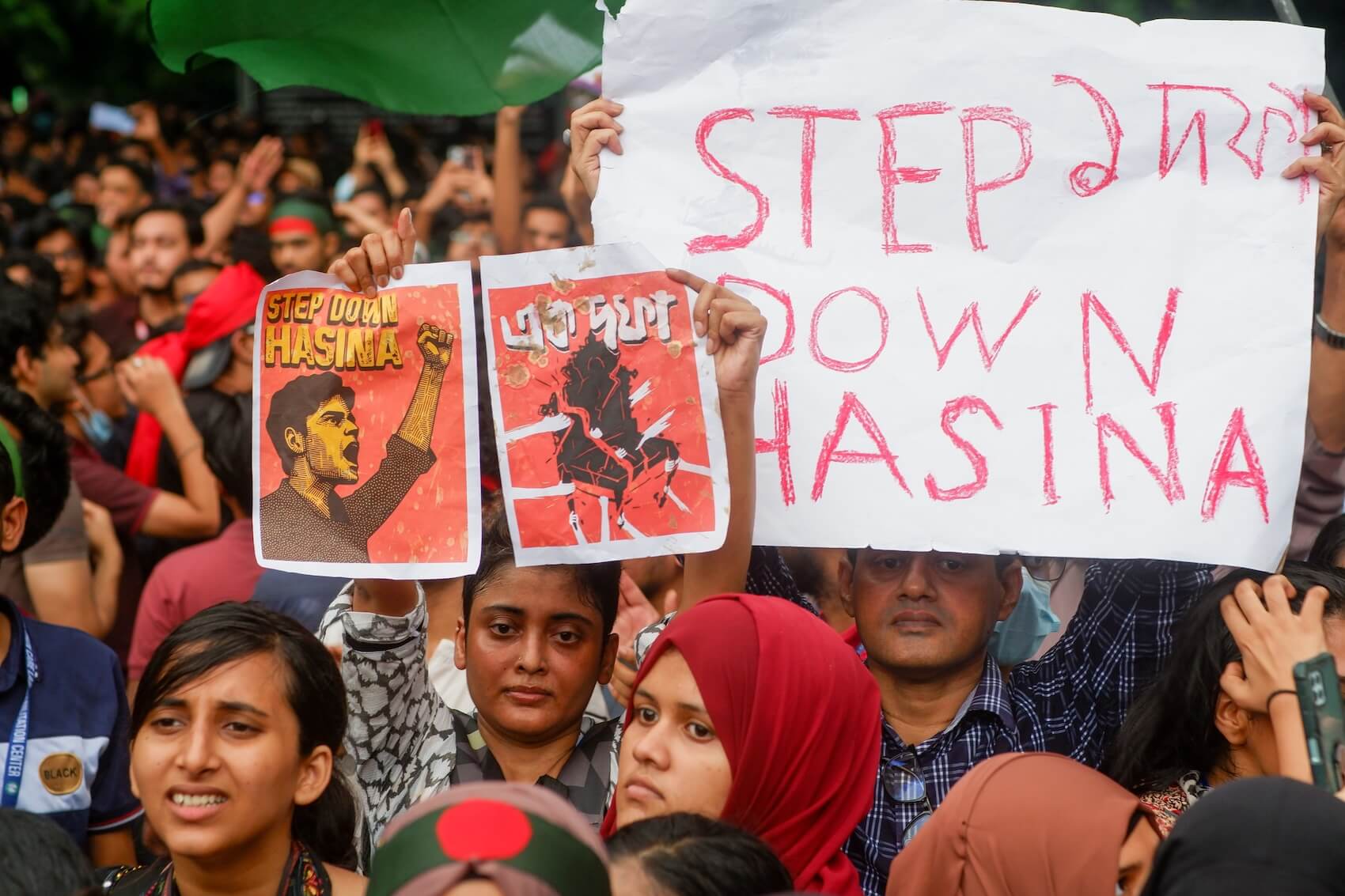
Large protests demand the resignation of Prime Minister Sheikh Hasina’s government as part of the Anti-Quota Movement and Bangladesh Quota Reform Protests. Thousands took to the streets in Dhaka, Bangladesh, on August 4, 2024. Photo: M.D. Sabbir.
Given the increasingly unfavorable international environment, why has full-scale authoritarianism failed to make a comeback? What are the international and domestic roots of the resilience of competitive electoral regimes?
Professor Lucan A. Way: I have two main responses. First, the world has become significantly wealthier over the past generation. Since the 1980s, the number of high-income countries has doubled, and there’s an extremely strong correlation between wealth—excluding oil wealth—and democracy. According to the World Bank, if we exclude petro-states like Kuwait and Saudi Arabia, which derive their wealth primarily from natural resources, 95% of high-income countries today are democratic, with only Singapore and Hungary as exceptions. This correlation has held steady over time, indicating that, in the modern era, wealth contributes strongly to democratic resilience. Since the 1980s, the global increase in wealth has bolstered democratic stability, even in places where it was previously fragile, such as Romania, Portugal, and Greece. These countries are now high-income, and their economic development and robust domestic economies play a key role in preventing full democratic backsliding.
The second point is that, even among middle-income countries, it’s easy to overlook how challenging it is to establish and sustain authoritarianism. The same economic crises and widespread public dissatisfaction that threaten democracies also pose significant challenges to authoritarian regimes. For example, this was seen dramatically in Bangladesh over the summer, where deep dissatisfaction with the autocratic Prime Minister Sheikh Hasina contributed to her eventual ouster.
We, often, assume these challenges are unique to democracies, but authoritarian and competitive authoritarian regimes face similar issues in maintaining power due to general discontent with economic instability and corruption. Bangladesh is a case in point, where frustration with issues like the quota system and high unemployment intensified dissatisfaction, highlighting the limitations on the authority of an autocratic leader.
You argue there is considerable evidence that Russian President Putin’s attack on international norms could ultimately strengthen the liberal world order. Can you please explain how that could happen?
Professor Lucan A. Way: I wrote that piece shortly after Russia’s full-scale invasion in February 2022, and I think it was impressive how strongly the West united in support of Ukraine. Putin likely hoped that Europe and the United States would not respond, partly because Russia has maintained corrupt ties with members of the European elite—most notably, Gerhard Schröder, who was paid millions by Russian oil companies and essentially became completely compromised. Putin may have believed that these relationships would allow him to divide the European elite. However, the brutal nature of the invasion shocked many and pushed Western leaders into unified action.
Remarkably, this led to Europe’s significant shift away from dependence on Russian energy resources—a transformation that has been quite notable. Many of us were pleasantly surprised by this level of unity. That said, we are not yet out of the woods. There continues to be some hesitation among European powers and an insufficient recognition of the need to strengthen their militaries against the Russian threat. I also think the war is likely to continue for some time, and I wouldn’t entirely discount the possibility of divisions emerging. I think Putin certainly hopes that, especially with Trump’s election, we might see divisions in Europe, particularly along lines similar to Orban in Hungary, who has been notably pro-Russian, or Serbia’s alignment with Russia. This is a development I’m quite concerned about.
Why do some authoritarian regimes survive for decades, often despite severe crises, while others collapse quickly, even absent significant challenges? How do you explain the nexus between social revolution and authoritarian durability? One of your articles suggests that many democracies in lower-income regions remain competitive due to authoritarian weaknesses. Could you expand on the dynamics that keep democracies stable in these challenging environments?
Professor Lucan A. Way: Why do social revolutions result in stable autocracies? Well, that’s a question we explored in our book, and it largely has to do with the fact that social revolutions—like Russia in 1917 or Cuba in 1959—almost always lead to civil war or violent conflict. This conflict enables the creation of a highly unified elite who maintain cohesion because of an outside threat, fostering a siege mentality. It also allows these regimes to build a strong military and eliminate alternative power centers, leading to a weakened civil society. China is a prime example of this phenomenon: while it faces economic issues, there is no significant opposition capable of capitalizing on public discontent with the Communist Party, which helps it remain in power.
Trump Will Make Life Difficult for His Critics and Opposition-Supporting Businesses
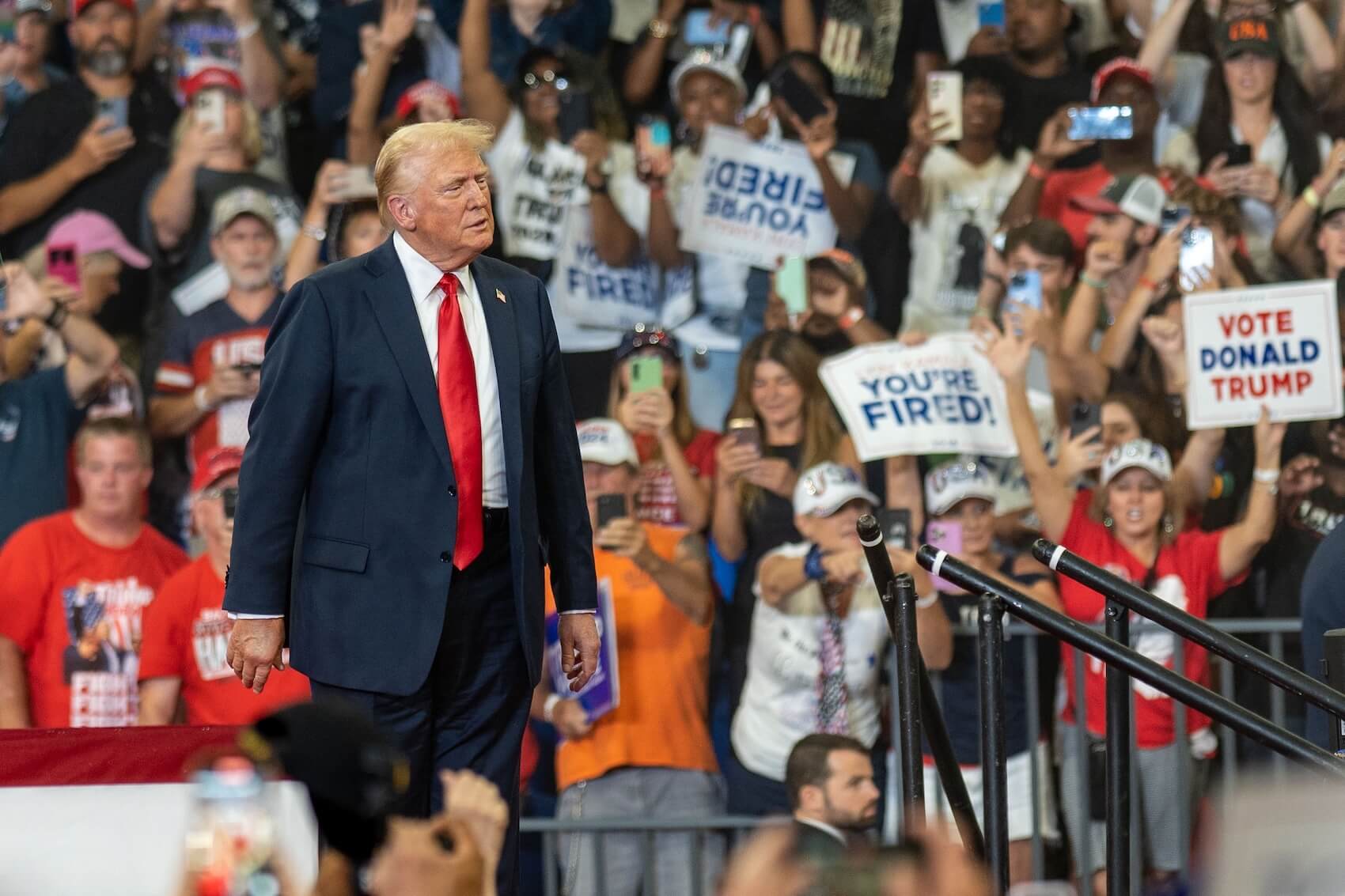
Former U.S. President Donald Trump and vice-presidential nominee J.D. Vance at a rally in Atlanta, GA, on August 3, 2024. Photo: Phil Mistry.
With the election of Donald Trump as the 47th president of the US, how do you think American institutions will react to his autocratic tendencies?
Professor Lucan A. Way: I am extremely worried about how American institutions might respond to his autocratic tendencies. While I think it’s very unlikely that this will lead to the end of elections or full-scale authoritarianism, American institutions remain vulnerable to politicization. I’m particularly concerned about potential abuses, such as using the Internal Revenue Service (IRS) to audit Trump’s political rivals or the Department of Justice or FBI to investigate his enemies.
The US has a strong rule of law, so it’s unimaginable that Trump could jail high-profile opponents like Kamala Harris or Democratic leaders. However, it’s quite conceivable he could use audits or investigations to make life difficult for his critics, targeting businesses that support opposition candidates like Josh Shapiro. Recently, there was an attempt to pass a bill in the House that would allow the Secretary of the Treasury to revoke the nonprofit status of NGOs allegedly supporting “terrorism”—a vaguely defined term that could be used selectively against left-wing organizations while protecting right-wing ones.
There are many possibilities for more subtle forms of abuse that won’t necessarily be dramatic or attract major media attention. These wouldn’t involve actions as extreme as jailing political candidates or suppressing protests but could instead happen behind the scenes through tactics like targeted audits. This kind of abuse is harder to detect, especially for outsiders—it’s challenging to gauge, for instance, if the IRS is disproportionately auditing Democrats over Republicans. Such actions are easier to carry out because they’re more opaque, which is precisely why I’m deeply concerned. In fact, I think it’s incredibly likely that we will see these kinds of abuses, and I would be very surprised if they do not occur in the United States.
How do you think populism in the US and populists worldwide will be impacted by the election of Donald Trump?
Professor Lucan A. Way: I think initially, Trump’s election will certainly fuel and boost confidence among populists globally. At the same time, I want to point out that the driving force behind support for Trump may not necessarily be a fundamental shift to the right. Instead, it could be a reflection of deep anger directed at incumbents.
The silver lining, for those opposed to such populist figures, is that now, as they hold power, this anger is likely to be directed at them. It’s just hard to be an incumbent anywhere these days. Since 2013, in wealthy democracies, 15 out of 18 elections have led to incumbents being ousted. This intense anti-incumbent sentiment likely fueled the last US election.
What’s puzzling to me, honestly, is the source of this anger. Yes, there’s inflation, but inflation in the United States was 14% in the 1980s, while now it’s around 2.4%. Unemployment is very low, nearly 4%, which is close to full employment. The economy seems to be performing fairly well, so it’s somewhat perplexing. The anger and perceptions of the economy seem misaligned with the actual indicators.
And lastly, how do you explain the electoral victory of Maia Sandu despite heavy Russian influence in Moldova?
Professor Lucan A. Way: First, it was very close. There were actually two key elections—a referendum on joining the EU and Maia Sandu’s election. Both were definite nail-biters. I think Moldovans are likely quite fearful of Russian influence, especially given what’s happened to their neighbor Ukraine. Moldova also has a long tradition of anti-Russian sentiment, particularly among Moldovan and Romanian nationalists, which provided a strong basis of support for her. So, yes, that’s a piece of good news. In Georgia, however, it’s disappointing to see that the pro-Russian party appears to have used fraud to maintain power, so there’s positive news in Moldova but less so in Georgia.
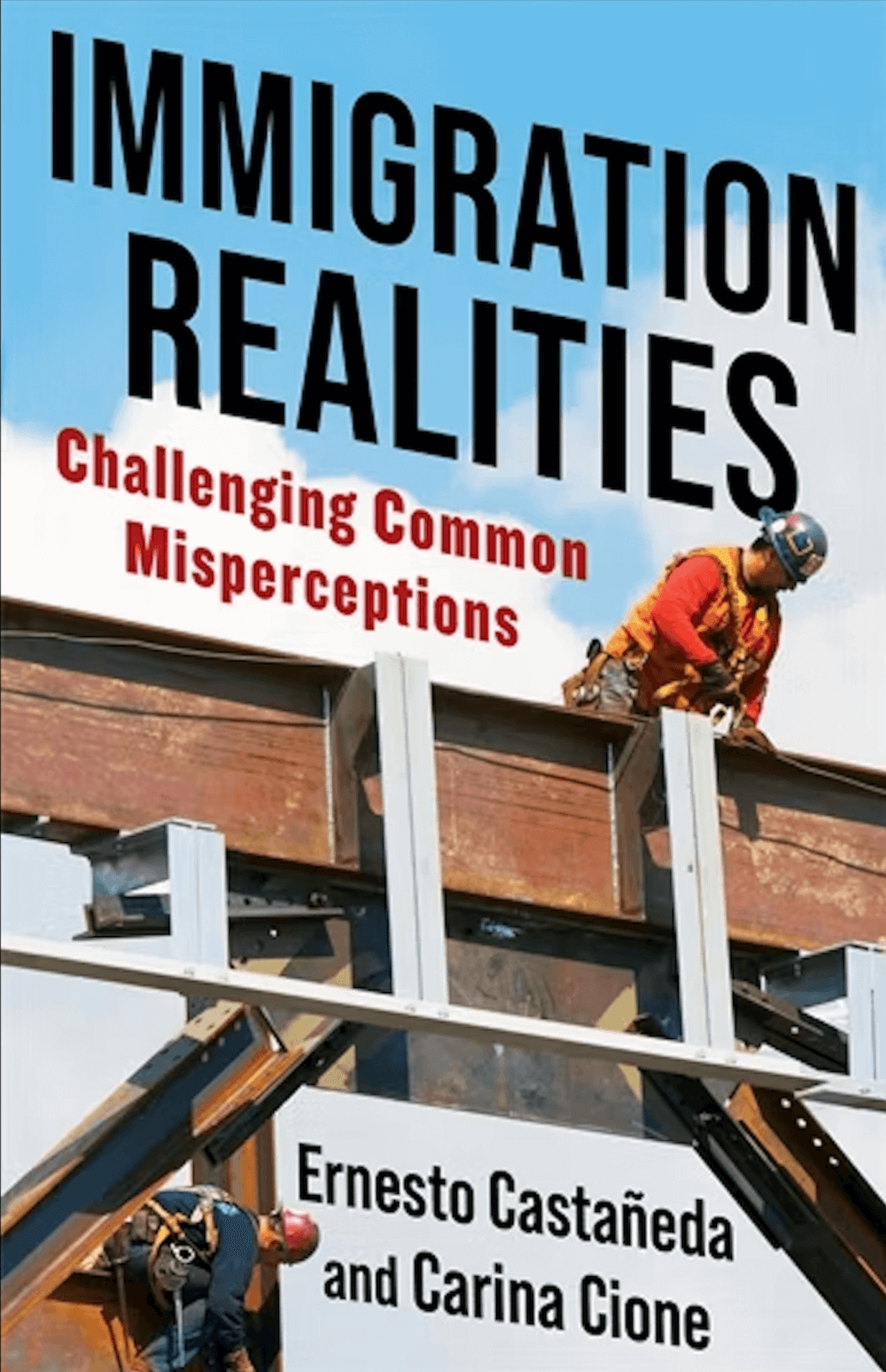
Kenes, Bulent. (2024). “Immigration Realities: Challenging Common Misperceptions.” ECPS Book Reviews. European Center for Populism Studies. November 11, 2024. https://doi.org/10.55271/br0021
Immigration Realities is a thorough, research-based analysis that examines and debunks widespread myths surrounding immigration while highlighting the contributions of immigrants. Authors Ernesto Castañeda and Carina Cione present an alternative view to common misconceptions by contextualizing migration within broader global frameworks. While the book’s perspective may not align with all viewpoints, its well-supported insights make it a valuable resource for readers interested in a nuanced, evidence-based understanding of migration, encouraging a thoughtful approach to policy and public dialogue.
In their recently released book, Immigration Realities: Challenging Common Misperceptions, authors Ernesto Castañeda and Carina Cione address some of the most pervasive and misleading assumptions about immigration, inviting readers to critically examine often-repeated beliefs with fresh, research-backed insights. They deconstruct prevalent myths about immigration, providing a research-informed perspective to clarify these misconceptions. Each chapter explores a central question, such as “Is the US-Mexico border truly dangerous?” and “Would a border wall keep undocumented immigrants away?” Further questions tackled include whether immigrants are more likely to commit crimes, if they avoid learning English, and if they are disproportionately dependent on welfare and other government programs. The book also addresses critical issues like remittances and the debate on whether they drain the host economy, the supposed “refugee crisis,” and the broader relationship between globalization and migration.
The book then extends its focus to key questions around Brexit’s impact on immigration to the United Kingdom, examining “Will the decision to leave the European Union stop immigration?” Finally, the authors explore whether immigrants integrate into host societies and what lessons can be learned from different cities and countries regarding immigrant integration. Through these questions, the book provides a robust foundation for a more nuanced understanding of migration issues.
Through this rigorous analysis, Immigration Realities not only dispels common myths but also contextualizes immigration as part of larger global and historical processes. Castañeda and Cione emphasize that migration is not merely a legal issue but a human experience shaped by complex dynamics, including exclusion and belonging. By discussing concepts such as emigration and immigration, they examine how the realities of migration are affected by issues like crimmigration, xenophobic stereotypes, and pushbacks. These discussions are balanced with an exploration of themes such as assimilation, social integration, and cosmopolitanism, revealing how migrants navigate inclusion and exclusion in host societies.
The authors further address how broader forces—globalization and deglobalization, for instance—impact migration patterns and individual experiences, while examining the effects of isolationism in shaping migration policies and public opinion. In this work, readers will encounter discussions of migradollars (remittances sent by immigrants to their home countries) and social remittances (the transfer of ideas and practices across borders), highlighting the multidimensional impact of migration on both host and origin countries.
By integrating these varied concepts, Immigration Realities seeks to bridge the gap between academic research and public understanding, making complex ideas accessible for readers who may be new to contemporary migration studies. This comprehensive approach underscores the importance of viewing migration through a lens that recognizes both its socio-political challenges and its contributions to society.
In the introduction, the authors argue that immigration, especially in the United States, is highly politicized and frequently portrayed in a way that alarms native-born populations. Misleading stereotypes about immigrants, particularly those of color, have fueled negative perceptions, creating an “us vs. them” mentality that often casts immigrants as threats to social and economic stability. The authors emphasize that these misconceptions are not only harmful but also lack factual basis, as only around 3.5% of the global population lives outside their country of birth. Castañeda and Cione also advocate for a broader understanding of migration beyond legal frameworks, viewing it as a fundamentally human experience.
They emphasize that migration is part of larger historical and global processes, including globalization, cosmopolitanism, and deglobalization. This introductory section lays the groundwork for an in-depth exploration that challenges readers to critically engage with the nuanced realities of migration, making the topic accessible without sacrificing complexity. By framing each chapter around a misconception, the authors aim to equip readers with a factual, empathetic perspective on immigration, positioning the book as both a scholarly work and a timely resource for anyone interested in understanding the multifaceted nature of migration.
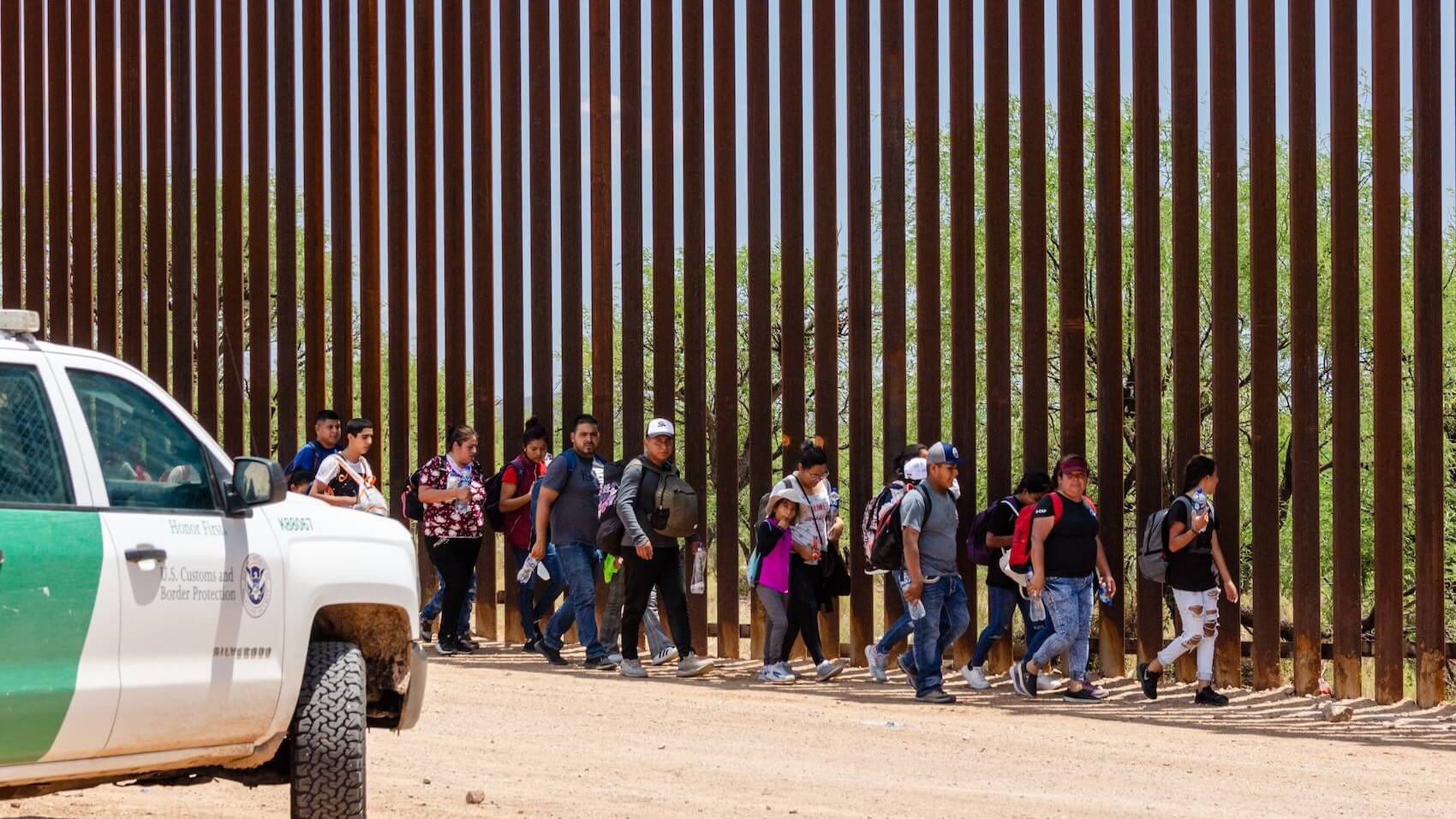
Chapter 1 of Immigration Realities, titled “The Southern Border is Safe, but Border Enforcement Makes it Unsafe for Many,” challenges the common portrayal of the US-Mexico border as a dangerous, lawless region. Through secondary data, published research, and surveys of El Paso residents, Castañeda and Cione argue that this image is largely a media-driven myth. In fact, border cities are some of the safest in the US, with lower crime rates than other areas due to heavy surveillance and Border Patrol presence. However, the authors highlight a stark contrast in experiences: while White Americans generally feel secure, migrants and minority communities face disproportionate threats of violence, detainment, and deportation, intensified by far-right rhetoric that criminalizes immigrants.
The authors underscore how populist rhetoric, notably from figures like Donald Trump, has fueled xenophobia and support for restrictive border policies. They link these policies to a border security industry that profits from a militarized approach, reinforcing exclusionary ideologies that endanger marginalized groups and undermine human rights. The chapter invites readers to question the prioritization of safety in border security discourse and raises awareness of the human rights violations inherent in populist-driven enforcement policies.
Chapter 2 of the book, titled “Border Walls Do Not Keep Immigrants Out of a Country,” offers a critical analysis of border walls’ ineffectiveness as immigration deterrents and the negative social, economic, and environmental impacts they impose. Castañeda and Cione argue that these walls, rather than serving functional purposes, act as symbolic tools driven by far-right ideologies equating border security with national identity preservation. Tracing the political momentum for a US-Mexico border wall from Reagan and Clinton through Trump’s administration, they contend that these policies stem more from ideological stances than practical immigration control.
The authors illustrate how Trump’s portrayal of immigration as an “invasion” fueled nationalist fears, leading to measures like the 2019 government shutdown over wall funding. They reveal that border walls, despite their high costs, fail to stop illegal immigration or drug trafficking, which primarily occurs at legal entry points, while also causing severe environmental damage. This chapter critiques the financial interests underlying the wall agenda, noting that private contractors, security firms, and detention centers profit from the manufactured perception of crisis. Castañeda and Cione advocate for redirecting resources toward humane immigration policies that recognize immigrants’ economic and social contributions, underscoring the need for cooperation over confrontation.
In Chapter 3, Castañeda and Cione dismantle the persistent myth that immigrants are more likely to commit crimes than native-born Americans. Through a comprehensive examination of crime data, historical analysis, and social research, the authors argue that this misconception is not only false but rooted in long-standing stereotypes and xenophobic biases. They emphasize that foreign-born individuals, especially Hispanic immigrants, tend to have lower crime rates than their native-born counterparts. For example, border cities like El Paso, which have significant immigrant populations, consistently report lower crime rates than comparable non-border cities. Additionally, immigrants contribute to safer neighborhoods, likely due to strong social networks and a desire to avoid interactions with law enforcement that could endanger their immigration status.
The authors further explore how political rhetoric has fueled the criminal immigrant stereotype, particularly through statements by figures like Trump, who in his 2016 campaign described Mexican immigrants as “bringing crime” and “rapists.” Castañeda and Cione reveal that such narratives are not only misleading but strategically used to justify exclusionary policies. They describe how these stereotypes perpetuate a “crimmigration” system that criminalizes immigrants, with laws such as the Illegal Immigration Reform and Immigrant Responsibility Act (IIRIRA) intensifying immigrant detentions and deportations, often for minor infractions that would not result in criminal penalties for US citizens. By debunking the idea that immigration increases crime, the authors point out that as immigration has risen, national crime rates have simultaneously dropped. They advocate for a critical examination of these stereotypes, urging readers to question how political agendas shape public perceptions.
In Chapter 4 of the book the authors this time confront the prevalent myth that immigrants refuse to learn English and fail to integrate into American society. The authors argue convincingly that immigrants are, in fact, highly motivated to acquire English language skills, viewing it as essential for social and economic mobility in the US. However, they also highlight the many barriers immigrants face, including limited access to language education, financial constraints, and systemic discrimination. They reveal how immigrants often experience prejudice in the classroom and discrimination in daily interactions when speaking their native languages. This “language shaming,” they argue, leads many immigrants to avoid using their native tongues in public, despite the strong desire to maintain a connection to their cultural heritage.
By addressing the structural factors that limit language learning—such as the high cost of classes, lack of time, and socioeconomic status—the authors debunk the stereotype of the “unwilling immigrant.” They argue that rather than resisting integration, immigrants are often forced to prioritize immediate survival over language acquisition. The chapter makes a compelling case for more robust support systems to assist immigrants with language learning and challenge readers to reconsider simplistic narratives around language and integration, urging empathy and policy reforms to foster a more inclusive society.
The following chapter addresses the widespread misconception that immigrants rely heavily on welfare programs. The authors provide a compelling analysis backed by historical and contemporary data to demonstrate that immigrants generally access fewer social services than native-born individuals, even when eligible. This chapter examines the social and political dynamics that contribute to this myth, such as policies from the Trump administration, which attempted to block “undesirable” immigrants based on financial criteria, using misleading statistics to justify these actions. The authors delve into the structural barriers that limit immigrants’ access to welfare, such as the 1996 Personal Responsibility and Work Opportunity Reconciliation Act (PRWORA), which reduced immigrants’ eligibility for programs like Medicaid and SNAP. They highlight that these restrictions disproportionately affect low-income immigrant families and have lasting effects on their well-being, as they often forgo essential services out of fear of jeopardizing their immigration status.
The chapter also expands the discussion to international contexts, including European Union countries and Australia, revealing similar patterns of limited welfare use among immigrants globally. By addressing racial and ethnic stereotypes, such as the stigmatization of Black and Latin American immigrants as “welfare abusers,” Castañeda and Cione illustrate how these prejudices fuel public opposition and restrictive policies. Thus, they challenge readers to reconsider the welfare myth surrounding immigrants, urging for data-driven policies that acknowledge immigrants’ contributions, such as their role in the labor force and taxes, while promoting equitable access to social services. The authors effectively debunk the stereotype of the “dependent immigrant,” emphasizing instead the resilience and economic independence of immigrant communities.
In Chapter 6, Castañeda and Cione tackle the misconception that remittances—money sent by immigrants to family in their countries of origin—drain host economies. The authors highlight that remittances, contrary to popular belief, do not deplete economic resources in host countries but rather enhance the global economy and contribute to local economies in multiple ways. The chapter addresses arguments from political figures, such as Trump, who claimed that remittances should be taxed to fund projects like the US-Mexico border wall. The aurhors argue that such taxes would not only be burdensome to implement but would also drive remittance flows underground, leading to informal, unregulated channels. Furthermore, the authors clarify that the income immigrants remit has already been taxed in the host country, making additional taxation on remittances an unfair “double taxation.”
Additionally, they emphasize that remittances are not equivalent to foreign aid, as remittances are private, intra-family transactions that meet immediate needs, such as food, education, and health care. These funds contribute directly to the welfare of recipient families without government or bureaucratic interference, unlike traditional aid. While remittances can bolster struggling economies, they are not designed to function as development tools or replace structural support. The authors advocate for respecting the economic agency of immigrants and the crucial support remittances provide to families and economies globally.
In Chapter 7, the authors critique the narrative of a “refugee crisis” as a social construct rooted in xenophobic and colonial attitudes. They argue that labeling refugee arrivals as a “crisis” frames them as societal issues, distracting from the underlying causes of displacement, such as war, imperialism, and economic exploitation by Western powers. This chapter also delves into the impacts of historical and ongoing imperialism, illustrating how Western interference in regions like the Middle East, Africa, and Latin America has destabilized nations, leading to migration and asylum-seeking. The authors point out that Western countries often resist responsibility for these displacements, even as they benefit from economic arrangements that perpetuate inequality. For instance, the term “crisis” is frequently used by media and politicians to justify strict immigration controls rather than address the systemic issues creating forced migration. The chapter advocates for a reframing of refugee discourse, emphasizing the need for policies that prioritize humane treatment and cross-cultural support for refugees, recognizing their agency and dignity.
The authors explore the often misunderstood relationship between globalization and migration in Chapter 8, emphasizing their independence. They argue that, while globalization and migration can appear interlinked, they are largely distinct processes. According to them, historical evidence shows that economic globalization—characterized by trade liberalization and capital movement—does not necessarily increase migration. Yet, the public often assumes a direct connection between these phenomena due to political rhetoric that conflates them. The chapter discusses how economic downturns, like the 2008 financial crisis, intensified backlash against globalization, which is sometimes unfairly directed at immigrants instead of economic policies. Castañeda and Cione illustrate how globalization’s impact on labor markets has led some politicians to blame immigrants for economic issues, reinforcing xenophobic sentiments rather than addressing systemic inequalities. By dissecting globalization’s influence, the authors advocate for a nuanced understanding that separates migration policy from global economic trends.
In Chapter 9, the authors critically analyze Brexit’s impact on immigration to the UK. They argue that Brexit’s promise to reduce immigration, championed by anti-EU campaigners, is largely a misconception. Although Brexit allows the UK to impose stricter regulations on European Union immigrants, it has not significantly decreased immigration rates. Instead, Brexit has complicated the legal status of many EU nationals in the UK and disrupted the lives of British expatriates across Europe. In this chapter, the authors explore how Brexit, fueled by xenophobic rhetoric and a desire for “sovereignty,” reflects a deeper issue of misinformation about immigration’s economic and social impact. They underscore that immigrants, especially highly educated ones, contribute positively to the UK’s economy, addressing labor shortages and raising GDP. Despite Brexit’s restrictive policies on EU immigrants, non-EU immigration remains largely unchanged due to existing points-based systems. Thus, the authors challenge the belief that restricting EU immigration will “take back control” of British borders. Instead, it highlights Brexit’s potential for economic drawbacks, such as labor shortages, while debunking myths about immigrants’ supposed drain on resources.
According to the authors, immigrants can effectively integrate into their host societies without sacrificing their cultural identities. They explore in Chapter 10 the concepts of assimilation, acculturation, and integration, highlighting how each affects the immigrant experience differently. Unlike assimilation, which expects immigrants to abandon their heritage, integration allows for cultural coexistence and mutual respect, fostering a more inclusive society. Drawing on case studies from New York, Paris, and Barcelona, the authors illustrate how local policies and civil initiatives can significantly shape immigrants’ sense of belonging and success. For example, according to the authors, New York City’s multicultural framework and high tolerance for diversity make it a model of inclusion, contrasting with the more rigid and assimilationist policies seen in places like Paris. In Barcelona, public policies support cultural differences, helping immigrants maintain their identities while participating actively in society. Castañeda and Cione emphasize the role of cities and civil organizations in promoting integration, encouraging local governments to adopt policies that respect immigrants’ rights and cultural heritage.
Immigration Realities offers a well-researched, comprehensive analysis that dismantles common myths about immigration while championing immigrants’ rights and contributions. Castañeda and Cione provide a valuable counter-narrative to mainstream misconceptions, effectively contextualizing migration within global economic, political, and social frameworks. However, the book’s left-leaning perspective, though clear and thought-provoking, may limit its appeal to readers with differing political views. The focus on systemic critiques—while essential to understanding many challenges facing immigrants—sometimes overshadows a nuanced discussion on how diverse perspectives might contribute to more balanced immigration policies. Nonetheless, the book’s grounded research and emphasis on compassion make it a crucial resource for readers seeking a deeper understanding of migration beyond divisive rhetoric. By bridging academic insights with accessible language, Immigration Realities encourages readers to see immigration as a multifaceted, enduring human experience that merits both empathy and informed policy reform.
Ernesto Castañeda & Carina Cione. (2024). Immigration Realities: Challenging Common Misperceptions. Columbia University Press. 368 pp. Paperback $30, Hardcover $120, ISBN: 9780231203753, ISBN: 9780231203746
Explore the insightful discussions from the International Conference on ‘Digital Complexity and Disinformation in the Indo-Pacific,’ held on September 25-26, 2024, in a hybrid format from Melbourne. This conference brought together a diverse coalition of experts, hosted by leading institutions across the Indo-Pacific and Europe, including the Alfred Deakin Institute at Deakin University, Universitas Indonesia, National Research and Innovation Agency (BRIN), Universitas Gadjah Mada, Universitas Muhammadiyah Malang, International Islamic University Malaysia, UIN Salatiga, and the European Center for Populism Studies (ECPS).
The conference delved into how digital technologies, though transformative, have become tools for disinformation, political manipulation, and digital authoritarianism, posing serious challenges to democracy and social unity. This issue is particularly urgent in the Indo-Pacific, where misinformation on platforms like Facebook, Twitter, Instagram, Telegram, and WhatsApp has fueled divisions and where political forces sometimes restrict access to vital digital spaces to consolidate control.
Attendees, including scholars, practitioners, and policymakers, shared perspectives on how digital disinformation affects the region and discussed strategies for promoting digital literacy, inclusivity, and democratic resilience.
Generously supported by the Australian Research Council, Gerda Henkel Foundation, ECPS, and the Alfred Deakin Institute, this conference aimed to foster collaboration and shed light on countering disinformation in today’s digital age.
Don’t miss the opportunity to engage with these compelling sessions—watch the full conference videos here:
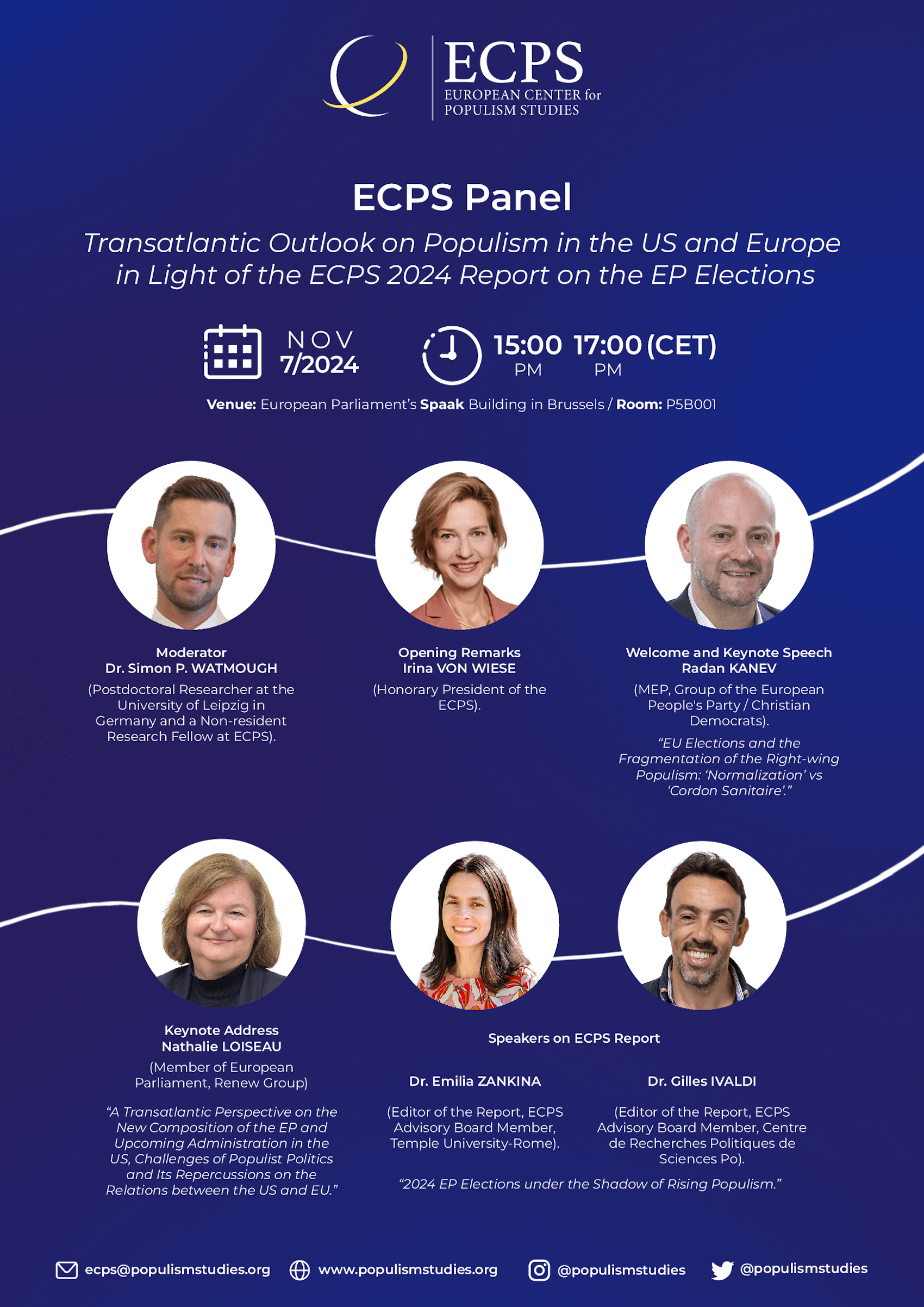
Venue: European Parliament’s Spaak Building in Brussels / Room: P5B001.
This event is hosted by MEP Radan Kanev in cooperation with the European Center for Populism Studies (ECPS)
Moderator
Dr. Simon P. WATMOUGH(Postdoctoral Researcher at the University of Leipzig in Germany and a Non-resident Research Fellow at ECPS).
Speakers
“Opening Remarks” byIrina VON WIESE (Honorary President of the ECPS).
Welcome and Keynote Speech by Radan KANEV(Member of EP, EPP) on “EU Electionsand the Fragmentation of the Right-wing Populism: ‘Normalisation’ vs ‘Cordon Sanitaire’.”
Keynote Address byNathalie LOISEAU(Member of EP, Renew) on “A Transatlantic Perspective on theNew Composition of the EP and Upcoming Administration in the US, Challenges of Populist Politics and Its Repercussions on the Relations between the US and EU.”
This event will examine the impact of populist politics on the 2024 European Parliament and US presidential elections. The ECPS report provides an analysis of populist party performance in the 2024 European elections, featuring insights from country experts on outcomes across the EU’s 27 member states. Additionally, it highlights the broader challenges that populist successes pose for the EU’s future. The report’s findings will be presented along with an analysis of the potential directions of the upcoming US administration, setting the stage for a discussion on the future of transatlantic relations.
Brief Biographies
Dr. Simon P. WATMOUGH is a postdoctoral researcher at the University of Leipzig in Germany and a non-resident research fellow in the research program on authoritarianism at ECPS. He was awarded his Ph.D. from the European University Institute in April 2017 with a dissertation titled “Democracy in the Shadow of the Deep State: Guardian Hybrid Regimes in Turkey and Thailand.” Dr. Watmough’s research interests sit at the intersection of global and comparative politics and include varieties of post-authoritarian states, the political sociology of the state, the role of the military in regime change, and the foreign policy of post-authoritarian states in the Middle East and Southeast Asia. His work has been published in Politics, Religion & Ideology, Urban Studies and Turkish Review. Since 2005, Dr. Watmough has taught international relations, diplomacy, foreign policy, and security studies, as well as Middle Eastern history at universities in Australia and Europe. In 2010–11 he was a research fellow at the Centre for Analysis of Social Exclusion (CASE) at the London School of Economics. He has held Visiting Scholar positions at Boğaziçi University in Istanbul (2012), the University of Queensland (2013), Chulalongkorn University in Bangkok, Thailand (2014) and the University of Graz (2017). In addition to his academic publications, he is also a regular contributor to The Conversation and other media outlets.
Irina VON WIESE was born in Germany, the daughter and granddaughter of Polish and Russian refugees. After completing her law studies in Cologne, Geneva and Munich, she obtained a scholarship to study at the Harvard Kennedy School where she gained a Master in Public Administration. Her subsequent legal training took her to Berlin, Brussels and Bangkok, and gave her a first insight into the plight of refugees and civil rights defenders across the globe. From 1997 to 2019, Irina lived and worked as a lawyer in private and public sector positions in London. During this time, she volunteered for human rights organisations, advising on migration policy and hosting refugees in her home for many years. In 2019, Irina was elected to represent UK Liberal Democrats in the European Parliament. She served as Vice Chair of the Human Rights Subcommittee and as a member of the cross-party Working Group on Responsible Business Conduct. The Group’s main achievement was the introduction of EU legislation to make human rights due diligence mandatory in global supply chains. During her term, she was also elected to the Executive Committee of the European Endowment for Democracy, whose task is to support grassroots civil society initiatives in fragile democracies. Having lost her seat in the European Parliament after the UK’s withdrawal from the European Union, Irina returned to the UK, where she was elected to the Council of Southwark, one of London’s most diverse boroughs. Her links to Brussels are maintained through an advisory role at FGS Global, where she works on EU law and ESG issues. In addition, Irina is an Affiliate Professor at European business school, the ESCP, teaching international law and politics (including a course entitled ‘Liberalism and Populism’).
Radan KANEV is a Bulgarian politician who is currently a Member of the European Parliament. A member of the DSB party, which he led from 2013 to 2017, he previously served as Member of the National Assembly from 2014 to 2017. At the 2024 European Parliament election, Kanev was re-elected to the European Parliament. Despite being placed fifth on the PP-DB coalition list, which only won three seats, Kanev was able to receive more preference votes than candidates placed above him. Subsequently, he was to serve 5 more years as an MEP.
Nathalie LOISEAU is a French politician, diplomat, and academic administrator who has served as a Member of the European Parliament since 2019. Previously, she was the director of the École nationale d’administration (ENA) from 2012 to 2017 and served as France’s Minister for European Affairs from June 21, 2017, to March 27, 2019. She was the lead candidate for the La République En Marche electoral list in the 2019 European elections. She has since been a member of the Committee on Foreign Affairs and the chairwoman of its Subcommittee on Security and Defense. In 2020, she also joined the Special Committee on Foreign Interference in all Democratic Processes in the European Union.
Dr. Gilles IVALDI is researcher in politics at CEVIPOF and professor at Sciences Po Paris. His main research interests include French politics, parties and elections, the far right, and the comparative study of populism in Europe and the United-States. Dr. Ivaldi is the author of De Le Pen à Trump: le défi populiste (Bruxelles: Editions de l’Université de Bruxelles, 2019), The 2017 French Presidential Elections. A political Reformation? 2018, Palgrave MacMillan, with Jocelyn Evans. He has recently co-edited The Impacts of the Russian Invasion of Ukraine on Right-Wing Populism in Europe, European Center for Populism Studies (ECPS), 2023, with Emilia Zankina. His research has appeared in journals such as Electoral Studies, the International Journal of Forecasting, Revue Européenne des Sciences Sociales, French Politics, Revue Française de Science Politique or Political Research Quarterly.
Dr. Emilia ZANKINA is an Associate Professor in Political Science, Vice Provost for Global Engagement of Temple University, and Dean of Temple University Rome campus. She holds a Ph.D. in International Affairs and a Certificate in Advanced East European Studies from the University of Pittsburgh. Her research examines populism and political parties, East European politics, civil service reform, and gender political representation. She has published in reputable journals and presses such as West European Politics, Politics and Gender, East European Politics, Problems of Post-communism, Representation, ECPR Press, Indiana Press, and more. She frequently serves as an expert for Freedom House, V-Democracy, and EU commission projects. In the past, Zankina has served as Provost of the American University in Bulgaria, Associate Director of the Center for Russian and East European Studies at the University of Pittsburgh, Managing Editor of East European Politics and Societies, and Editor-in-Chief of the Newsletter of the Bulgarian Studies Association. She is the recipient of a number of US national grants from IREX, ACLS, American Councils, Wilson Center, and more.
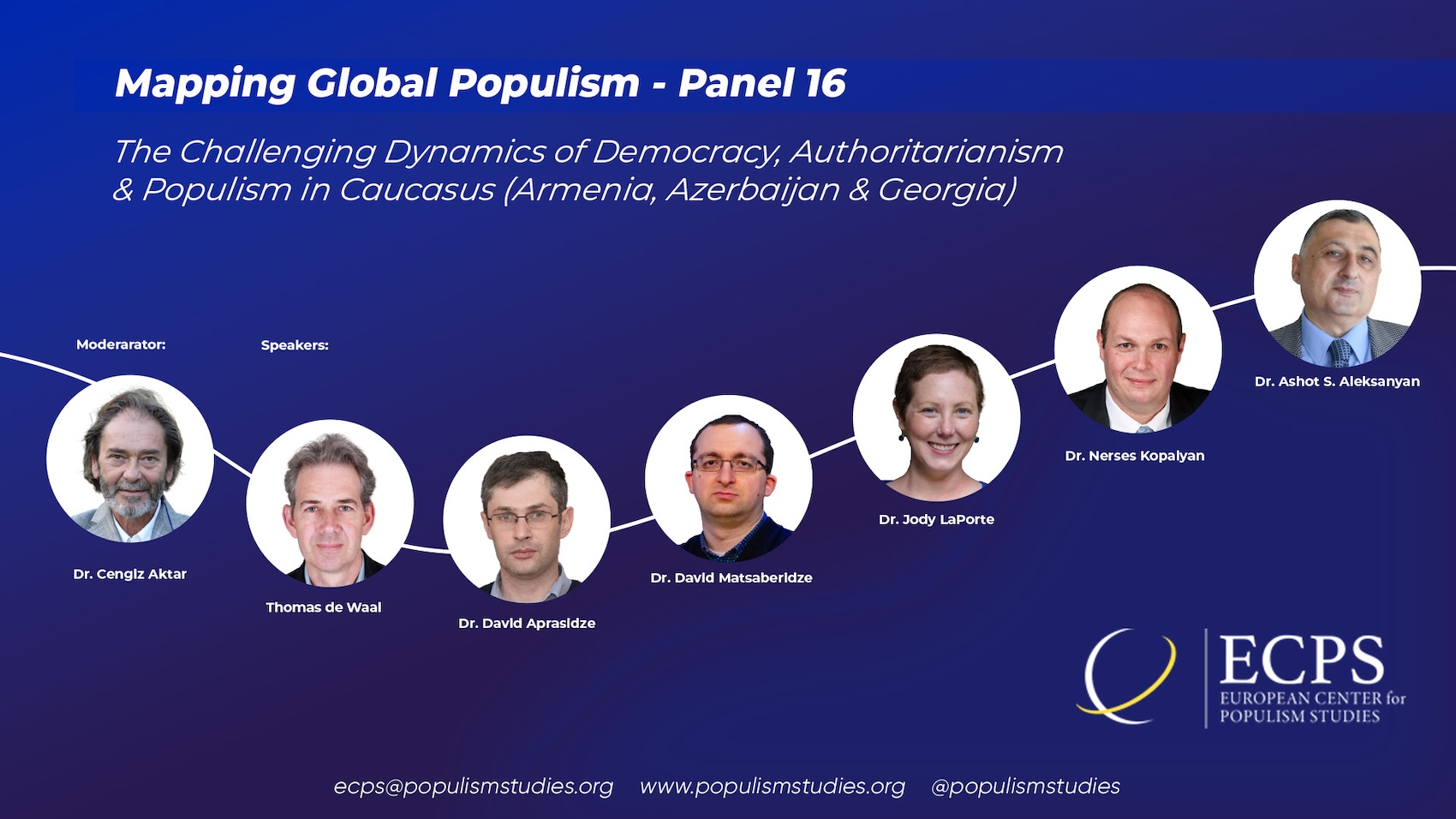
Dr. Cengiz Aktar(Adjunct Professor of Political Science at the University of Athens and Advisory Board Member of ECPS).
Speakers
“Autocracy in Azerbaijan and Its Regional Implications,” by Thomas de Waal (Senior Fellow with Carnegie Europe, specializing in Eastern Europe and the Caucasus region).
“The State of Democracy and Populism in Armenia,” by Dr. Nerses Kopalyan (Associate Professor of Political Science at the University of Nevada, Las Vegas).
“The Rotating Populist Discourses of the Post-Soviet Georgia – From the Nationalist Populismto the Conservative Populism,”Dr. David Matsaberidze (Associate Professor at Department of International Relations, Ivane Javakhishvili Tbilisi State University).
“Hegemonic Authoritarianism in Azerbaijan,” byDr.Jody LaPorte (Department of Politics and International Relations, University of Oxford, Oxford).
“Populism Against Post-war Armenia’s Democratization and European Integration,” by Dr. Ashot S. Aleksanyan(Professor, Chair of Political Science, Faculty of International Relations at Yerevan State University).
“From Technocratic Facade to Right-Wing Reality: The Evolution of Populism in Georgia,”by Dr. David Aprasidze(Professor of Political Science at Ilia State University).
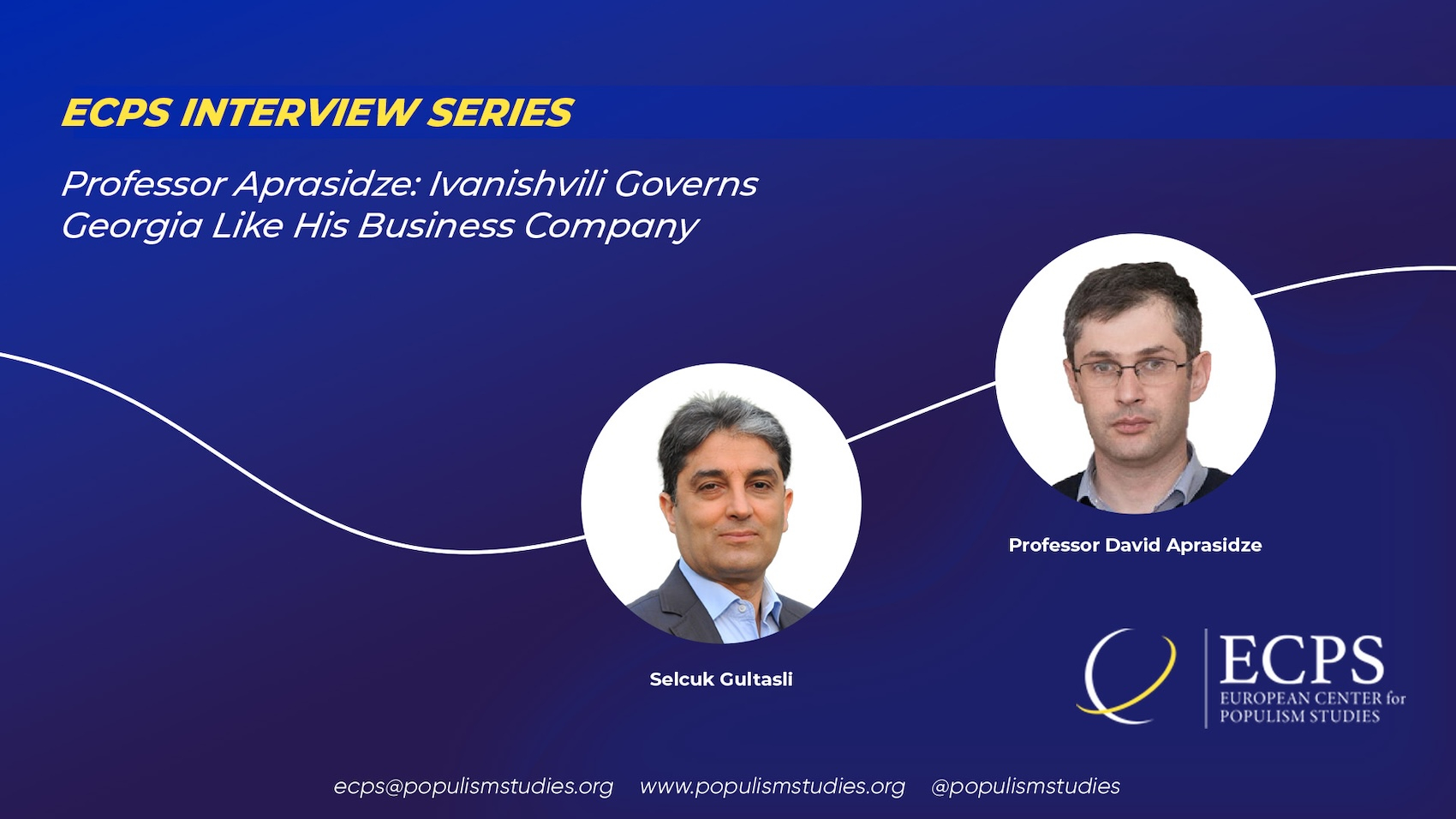
Professor David Aprasidze: In Georgia, the Georgian Dream party exemplifies a technocratic form of populism, treating state governance like corporate management. Founder Bidzina Ivanishvili, a former businessman, brings a non-ideological, efficiency-focused approach, applying principles from his business career to politics. He appoints key officials as “managers” to carry out strategic directives, allowing him to remain distanced while exercising control. This model emphasizes expertise and governance over ideology, with Ivanishvili viewing the state as if it were one of his companies.
In a revealing interview with the European Center for Populism Studies (ECPS), Dr. David Aprasidze, political science professor at Ilia State University in Tbilisi, sheds light on how Bidzina Ivanishvili, the founder of Georgian Dream, has transformed Georgian governance through a “technocratic populism” model. According to Professor Aprasidze, Ivanishvili “treats the state almost as if it were a business,” blending his extensive business experience with politics to establish a unique governance style that sets Georgian Dream apart from other political movements. Ivanishvili, who made his fortune in Russia in the 1990s, sees himself as a “highly successful businessman” who can replicate that success in governing Georgia.
Professor Aprasidze further highlights how this approach has affected democratic institutions in Georgia, where the judiciary and parliament operate less as independent bodies and more as extensions of Ivanishvili’s centralized authority. This concentration of power, Aprasidze suggests, marks a significant step back for democracy in Georgia and reveals broader trends of democratic backsliding that align with the recent autocratic shift in Georgian Dream’s populist narrative.
Interestingly, Professor Aprasidze points to Georgian Dream’s evolving relationship with Hungarian Prime Minister Viktor Orbán and his Fidesz Party. Initially, Georgian Dream was aligned with the European Socialists, positioning itself on the center-left, but “especially after the war in Ukraine,” Professor Aprasidze notes, the party quickly pivoted to the far right, embracing nationalist and traditionalist rhetoric. Professor Aprasidze observes that Orbán has become a “close ally and influential mentor to Georgian Dream,” offering a populist playbook that guides their current approach.
Reflecting on the EU’s recent stance, Professor Aprasidze underscores the European Commission’s demands for reform before recommending membership talks with Georgia. Yet he remains skeptical, stating that he and “many observers of Georgia” believe it’s unlikely the current administration will undertake the necessary democratic reforms. With a mixture of caution and insight, Professor Aprasidze’s analysis provides a critical lens on Georgia’s political transformation and its implications for both democratic integrity and EU integration.