Please cite as:
ECPS Staff. (2026). “ECPS Symposium 2026 / Panel 1: From Grievance to Radicalization — Rhetoric, Ideology, and the International Politics of Populism.” European Center for Populism Studies (ECPS). April 28, 2026. https://doi.org/10.55271/rp00149
This panel offered a concise yet conceptually rich account of how contemporary populism transforms diffuse grievances into structured political radicalization. Bridging discourse analysis, religious studies, international political economy, and historical sociology, the discussion illuminated the multi-layered processes through which democratic erosion unfolds. Rather than locating the problem solely within institutional decline, the panel foregrounded the interplay of rhetoric, identity, and emotional mobilization—particularly the roles of humiliation, status anxiety, and perceived loss of recognition. Contributions by Professors Ruth Wodak, Julie Ingersoll, Stephan Klingebiel, and Benjamin Carter Hett collectively demonstrated that populist dynamics are sustained by both narrative construction and structural change. The session thus advanced a nuanced analytical framework for understanding how anti-pluralist politics emerge, normalize, and gain legitimacy across diverse contexts.
Reported by ECPS Staff
Panel 1 of the ECPS Fifth Annual International Symposium, titled “From Grievance to Radicalization: Rhetoric, Ideology, and the International Politics of Populism,” offered a rich and interdisciplinary examination of how discontent is translated into exclusionary politics, institutional erosion, and authoritarian opportunity. Bringing together perspectives from discourse studies, religious studies, development policy, and modern history, the panel explored the pathways through which grievance is narrated, organized, and mobilized across national and transnational contexts. Although the presentations addressed distinct empirical terrains—from far-right rhetoric in Europe and Christian nationalism in the United States to multilateral institutions and the lessons of Weimar Germany—they converged around a shared concern: democratic decline rarely emerges suddenly, but is prepared through the cumulative interaction of ideas, identities, institutions, and political strategies.
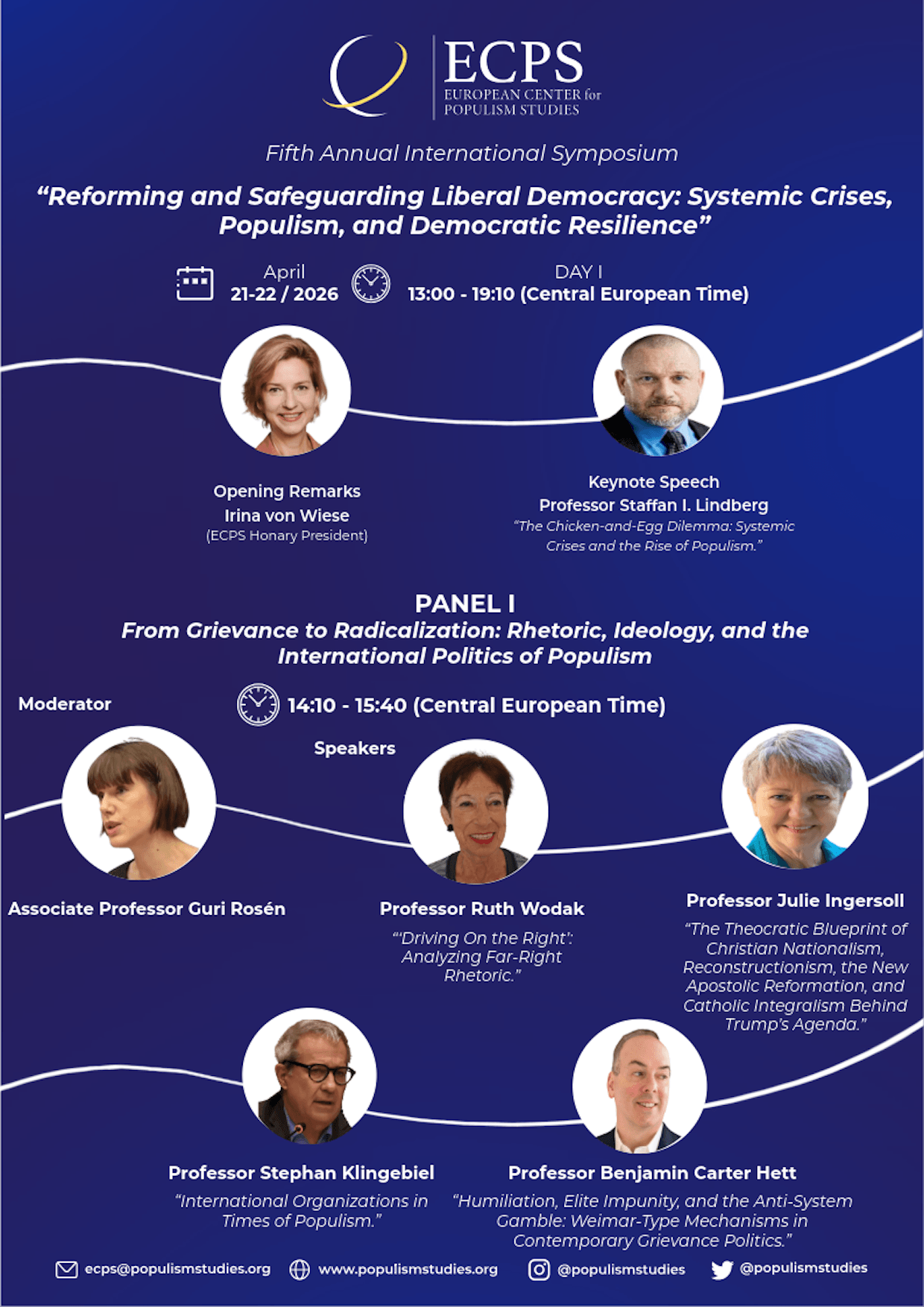
Moderated by Professor Ibrahim Ozturk, the session unfolded as a tightly connected conversation on the mechanisms through which populist and far-right forces gain traction in moments of social unease and political dislocation. A central strength of the panel lay in its refusal to treat populism as a singular or self-explanatory phenomenon. Instead, the speakers unpacked the rhetorical, ideological, emotional, and institutional infrastructures that enable anti-pluralist politics to flourish.
Professor Ruth Wodak showed how democratic norms are eroded through discourse, provocation, and the normalization of exclusionary language. Professor Julie Ingersoll demonstrated how theocratic and anti-democratic religious movements, though internally diverse, have strategically converged to influence contemporary American politics. Professor Stephan Klingebiel widened the frame to the international level, showing how populist governance affects not only domestic politics but also the normative foundations of multilateral cooperation. Professor Benjamin Carter Hett, drawing on the history of late Weimar Germany, highlighted humiliation and status anxiety as powerful emotional drivers of anti-system politics, offering a historically grounded lens for understanding present-day grievance mobilization.
Taken together, the panel made clear that contemporary democratic crises cannot be understood through institutional analysis alone. What emerged instead was a layered account in which fear, humiliation, identity, ideology, and strategic communication are inseparable from formal political change. The subsequent discussion deepened these insights further, linking personal experience, comparative reflection, and normative concerns in ways that reinforced the panel’s interdisciplinary value.
In this sense, Panel 1 did more than diagnose the current moment. It established an intellectual framework for thinking about how democratic erosion is prepared, legitimized, and accelerated across multiple arenas. By tracing the movement from grievance to radicalization, the session illuminated not only the fragility of democratic norms, but also the urgency of confronting the political, cultural, and institutional conditions that allow authoritarian and exclusionary projects to take root.
Professor Ruth Wodak: ‘Driving On the Right’: Analyzing Far-Right Rhetoric.

Professor Ruth Wodak’s presentation offered a theoretically grounded and empirically attentive exploration of how democratic erosion unfolds through discourse, rhetoric, and the gradual normalization of exclusionary politics. As the first speaker of the panel, Professor Wodak set a reflective and analytically rigorous tone by anchoring her remarks in a historical insight from John Dewey. Quoting his 1931 warning that democracy becomes a farce when citizens are not equipped to think critically and recognize propaganda, she established a conceptual bridge between past and present. While acknowledging that historical analogies must be handled with caution, she argued that certain patterns—particularly the weakening of critical judgment and the manipulation of public discourse—remain deeply relevant for understanding contemporary political developments.
Building on this premise, Professor Wodak turned to the identification of observable criteria that signal when democracies are under threat. Drawing in part on recent analytical frameworks and public debates, she outlined a series of interrelated developments that characterize processes of autocratization. These included attacks on freedom of expression, the systematic defamation or marginalization of political opponents, pressures on judicial independence, and the potential use of emergency powers to bypass institutional constraints. Additional indicators encompassed the gradual discrimination of minorities, the erosion of press freedom, the undermining of academic and scientific autonomy, the emergence of personality cults, the spread of corruption and kleptocratic practices, and the strategic redesign of legal and electoral frameworks to consolidate power.
The Politics of Shameless Normalization
A central emphasis of her argument was that these developments rarely appear in their most extreme form at the outset. Rather, they emerge incrementally, as part of a cumulative and often normalized process. Each step, while perhaps appearing limited or defensible in isolation, contributes to a broader trajectory in which democratic norms are steadily weakened. This step-by-step dynamic, she suggested, is crucial for understanding why democratic backsliding can advance without triggering immediate resistance.
The core of Professor Wodak’s presentation focused on the linguistic and rhetorical mechanisms that facilitate this gradual transformation. At the center of her analysis was the concept of “shameless normalization,” which she has developed extensively in her work. This refers to a process through which the boundaries of what is publicly acceptable are progressively expanded. Statements, ideas, and attitudes that were previously considered taboo or beyond the limits of legitimate discourse are reintroduced, repeated, and ultimately rendered acceptable. Political actors present themselves as articulating what “ordinary people” supposedly think but have been unable or unwilling to express, thereby framing transgressive speech as a form of authenticity.
Professor Wodak highlighted that this process is often driven by continuous provocation. By deliberately testing and crossing normative boundaries, political actors can shift the parameters of public debate. Over time, what initially appears shocking or unacceptable becomes familiar and normalized. This strategy, she argued, is particularly effective when it is reinforced by broader political dynamics, including the willingness of mainstream actors to adopt or adapt elements of far-right discourse.
Importantly, she emphasized that normalization does not always take an overtly aggressive or confrontational form. Alongside provocation, one also encounters what she termed “coarse civility,” a mode of communication in which exclusionary or discriminatory ideas are presented in a seemingly moderate, polite, or technocratic language. This rhetorical softening allows such ideas to circulate more widely and gain legitimacy, especially when they are taken up by mainstream conservative parties. In this way, the normalization of far-right discourse often proceeds not only through radicalization at the margins, but through incorporation at the center.
To illustrate these dynamics, Professor Wodak drew on examples from Austrian politics. She traced the trajectory of a slogan originally used by a far-right politician in the 1980s, which emphasized speaking “the language of the people.” Over time, this slogan was adopted by a mainstream conservative leader and subsequently reappropriated by the far-right Freedom Party (FPÖ). This example demonstrated how political language travels across ideological boundaries, shedding its original stigma and becoming part of a broader repertoire of acceptable discourse. Such processes, she argued, reveal how the mainstreaming of far-right ideas occurs through repetition, adaptation, and gradual legitimation.
Euphemism and Power: Sanitizing Coercion in Democratic Politics
In the final part of her presentation, Professor Wodak turned to the role of euphemism in shaping public perceptions of policy. Drawing on contemporary European debates on migration and asylum, she showed how practices such as detention are reframed through sanitized terminology, including phrases like “waiting zones” or “closed control access centers.” These linguistic choices, she argued, obscure the coercive nature of such measures and render them more palatable to the public. In this sense, language functions not merely as a descriptive tool, but as a mechanism that shapes what can be politically imagined and justified.
Professor Wodak concluded by synthesizing the broader implications of her analysis. Shameless normalization, she argued, performs multiple functions: it constructs a sense of authenticity, rejects the norms of rational deliberation, fosters identification between political leaders and “the people,” and diverts attention through provocation and scandalization. Most significantly, it facilitates the implementation of exclusionary and anti-democratic policies by embedding them within mainstream political discourse.
Her presentation thus underscored that democratic erosion is not only an institutional or legal process, but also a profoundly discursive one. The weakening of democracy occurs through shifts in language, norms, and public sensibilities, often long before formal institutional breakdown becomes visible. By foregrounding the role of rhetoric and normalization, Professor Wodak provided a compelling framework for understanding how contemporary democracies are challenged from within, and why resisting such processes requires not only institutional safeguards but also sustained critical engagement with political language and discourse.
Professor Julie Ingersoll: The Theocratic Blueprint of Christian Nationalism, Reconstructionism, the New Apostolic Reformation, and Catholic Integralism Behind Trump’s Agenda
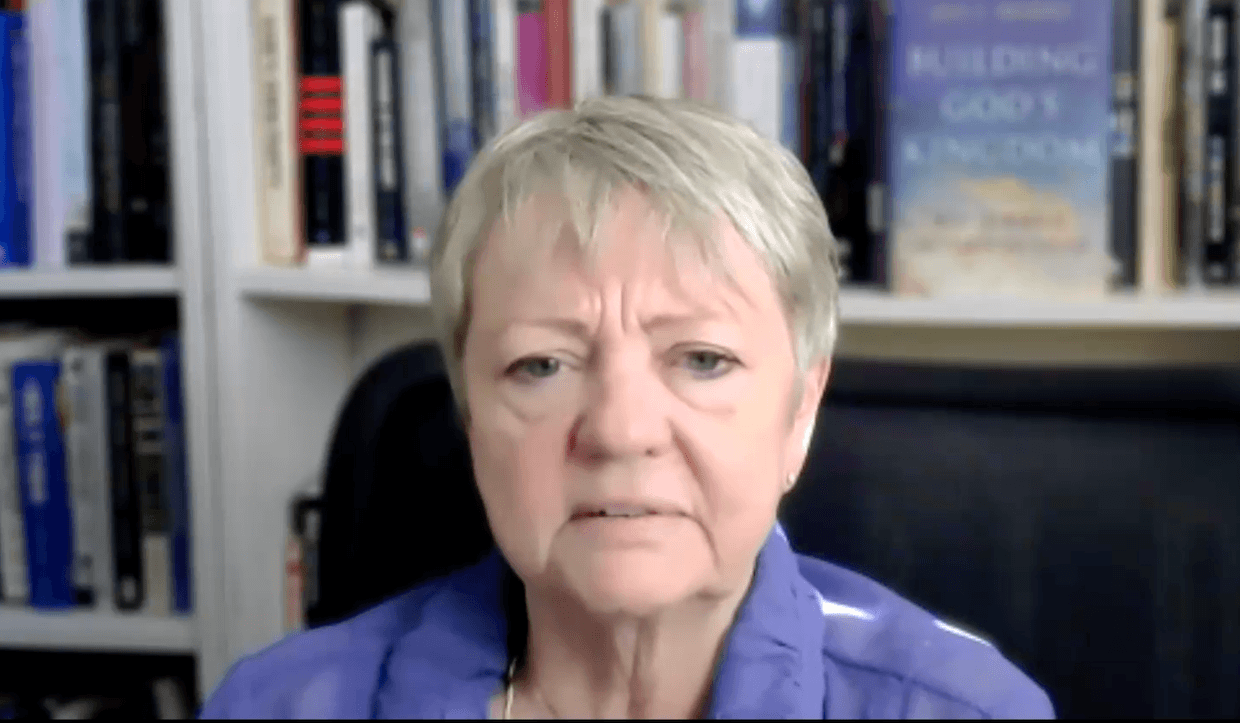
Professor Julie Ingersoll’s presentation offered a detailed and analytically nuanced account of the ideological and organizational foundations of contemporary Christian nationalism in the United States, situating it as a significant—though not singular—driver of democratic erosion. Her intervention moved beyond surface-level interpretations of religion in politics, instead tracing the historical formation, internal diversity, and strategic convergence of several distinct religious currents that have, over time, coalesced into a politically influential coalition aligned with authoritarian and anti-pluralist tendencies.
Professor Ingersoll began by clarifying a crucial analytical point: Christian nationalism in the United States is not a monolithic or representative expression of Christianity as a whole. Rather, it is a minority movement whose political influence far exceeds its demographic weight. This disproportionate power, she argued, is the product of decades-long institutional work, coalition-building, and strategic positioning within key domains of political and cultural life. Understanding its impact, therefore, requires attention not only to its beliefs but to the mechanisms through which it has embedded itself within broader structures of authority.
Three Strands, One Project: The Convergence of Christian Nationalism
At the core of her analysis was the identification of three principal strands that together constitute contemporary Christian nationalism: a white conservative evangelical tradition rooted in Christian Reconstructionism, a Catholic integralist tradition, and a Pentecostal-charismatic current associated with the New Apostolic Reformation (NAR). Each of these strands, Professor Ingersoll demonstrated, has its own theological foundations, historical trajectories, and internal logics. Yet, despite significant doctrinal differences, they have converged around shared political objectives and a common perception of existential crisis.
The first strand, Christian Reconstructionism, was presented as a theocratic and patriarchal movement with origins in mid-twentieth-century American religious thought and deeper roots in earlier Southern Presbyterian traditions. Professor Ingersoll emphasized its rejection of pluralism and its insistence that biblical law should govern all aspects of social and political life. Central to this framework is the concept of “calling,” derived from Calvinist theology, which legitimizes hierarchical social arrangements and challenges the democratic principle that authority derives from popular consent. In this view, leadership is not conferred through elections but through divine designation, a premise that fundamentally undermines democratic legitimacy.
The second strand, Catholic integralism, similarly rejects the separation of church and state, advocating instead for a political order grounded in religious authority. Professor Ingersoll noted its growing influence within legal and judicial institutions, particularly through long-term efforts to shape the composition and orientation of the judiciary. Integralist thought, she argued, frames modern liberal institutions—especially those promoting equality—as sources of moral and social decay. Its critique of the administrative state and its support for a strong, centralized executive authority align closely with broader authoritarian tendencies.
The third strand, the New Apostolic Reformation (NAR), introduces a distinct but complementary dimension rooted in charismatic and Pentecostal traditions. This movement emphasizes ongoing revelation, spiritual warfare, and apocalyptic expectation. Its doctrine of the “Seven Mountains Mandate” envisions the systematic transformation of key societal domains—such as government, media, education, and culture—under Christian authority. Professor Ingersoll highlighted the movement’s belief in the active presence of spiritual forces in contemporary political life, a worldview that intensifies polarization and, in some cases, increases the potential for legitimizing conflict and even violence.
Political Convergence in Religious Movements
A central analytical contribution of the presentation lay in explaining how these three strands, despite profound theological disagreements, have formed a cohesive political alliance. Professor Ingersoll challenged the conventional “world religions” model, which treats religious traditions as internally coherent and mutually distinct systems. Instead, she proposed a more fluid understanding of religion as a set of practices and narratives that can be selectively combined to serve social and political purposes. In this framework, doctrinal inconsistencies are less significant than shared goals related to power, identity, and social ordering.
To illustrate this point, she examined differing approaches to biblical authority across the three traditions. While Catholic integralists rely on the interpretive authority of the Church, evangelicals emphasize direct textual interpretation, and Pentecostal-charismatic actors embrace ongoing revelation. These differences, while substantial, are subordinated in practice to a set of shared political commitments: the rejection of pluralism, the affirmation of hierarchical social structures, the belief in divinely ordained leadership, and the pursuit of a theocratic or quasi-theocratic order.
Professor Ingersoll further argued that these movements are united by a common narrative of civilizational crisis. Each interprets contemporary social and political developments—whether related to gender equality, racial justice, or secular governance—as evidence of moral decline. This sense of crisis provides both a justification for radical political intervention and a framework for mobilizing supporters. Within this narrative, democratic institutions are often portrayed not as safeguards of freedom, but as obstacles to the restoration of a divinely sanctioned social order.
Internal Tensions within Christian Nationalism
The presentation also addressed the strategic flexibility of this coalition. While its proponents may utilize democratic mechanisms to gain power, they do not view democracy as intrinsically valuable. Rather, democracy is treated instrumentally, as one possible means of achieving a broader objective. Authoritarian or hierarchical forms of governance are equally acceptable if they are perceived to align with divine authority. This instrumental view of democracy, Professor Ingersoll suggested, represents a fundamental challenge to liberal democratic norms.
In her concluding remarks, Professor Ingersoll pointed to emerging internal tensions within the movement. Differences in theological interpretation, strategic priorities, and leadership styles are beginning to generate visible fractures. For example, divergent understandings of apocalyptic timelines or the role of political violence create points of friction. Additionally, certain political developments—such as controversial leadership claims or symbolic actions—have alienated segments within the coalition. While these divisions do not currently outweigh the movement’s shared objectives, they may become more significant over time.
In sum, Professor Ingersoll’s presentation provided a comprehensive and deeply contextualized analysis of Christian nationalism as a complex, evolving, and strategically coordinated force. By highlighting its internal diversity, institutional entrenchment, and ideological coherence around anti-pluralist principles, she illuminated the ways in which religious narratives and political power intersect in contemporary democratic backsliding. Her analysis underscored that the challenge posed by such movements is not merely theological or cultural, but fundamentally political, with direct implications for the future of democratic governance.
Professor Stephan Klingebiel: International Organizations in Times of Populism
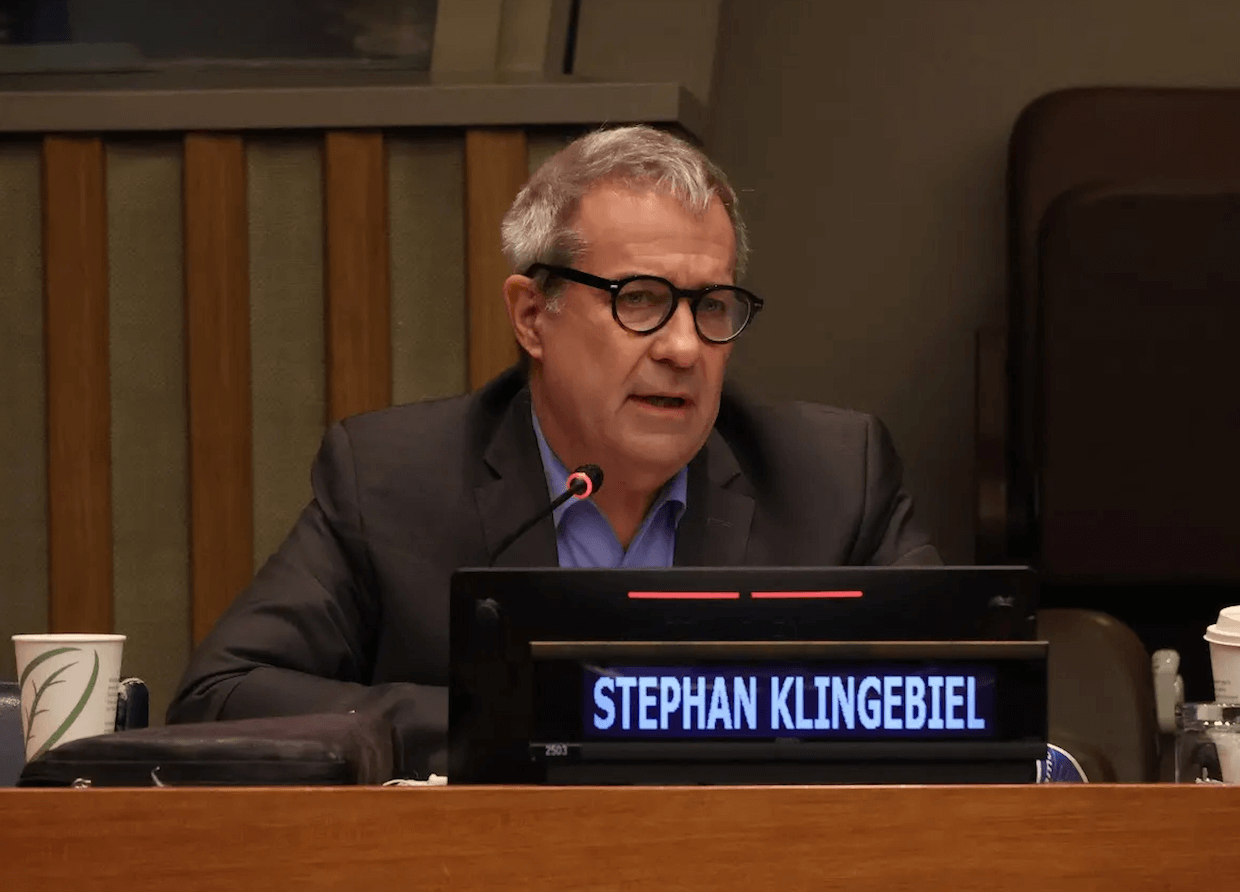
Professor Stephan Klingebiel delivered a wide-ranging and analytically grounded presentation examining how the contemporary rise of populism—particularly under the second administration of Donald Trump—is reshaping international organizations, development cooperation, and the normative foundations of global governance. His intervention moved carefully between institutional analysis and broader systemic implications, offering both empirical observations and conceptual framing.
At the outset, Professor Klingebiel positioned his remarks at the intersection of two overlapping domains: the functioning of international organizations and the evolving discourse on development and sustainability. He focused especially on the United Nations Development System, the OECD, and multilateral development banks such as the World Bank. These institutions, he argued, serve not only operational roles in development assistance but also act as key norm-setters in shaping global cooperation. It is precisely these normative and institutional roles that have come under increasing pressure in the current political climate.
From Multilateralism to Uncertainty
Reflecting on developments since early 2025, Professor Klingebiel suggested that the treatment of development cooperation—particularly the dismantling of USAID—served as an early signal of broader patterns in the second Trump administration’s approach to international engagement. What initially appeared as a sector-specific shift quickly revealed itself as part of a more comprehensive reorientation affecting multilateralism as a whole.
To explain these dynamics, Professor Klingebiel identified four interrelated driving logics. First, he pointed to what he termed “crude transactionalism,” a form of foreign policy that reduces international cooperation to immediate, bilateral exchanges rather than long-term institutional commitments. While transactional approaches have long existed in development policy, he argued that the current form is qualitatively different in its intensity and scope, extending into areas such as conflict mediation and geopolitical bargaining.
Second, he highlighted the role of ideological motivations, particularly in relation to issues such as family planning, gender policy, and population governance. Certain international agencies, including those working on reproductive health, have become focal points of contestation, reflecting deeper ideological divides over the scope and purpose of development cooperation.
Third, Professor Klingebiel emphasized the element of institutional disruption driven not by coherent strategy but by what he described as systemic unpredictability. Drawing on insider accounts of the dismantling of USAID, he suggested that many policy decisions appear to lack a consistent strategic foundation, instead reflecting fragmented and reactive processes.
Finally, he identified an “obsession with disruption” as a defining feature of the current approach. This involves the deliberate use of abrupt and highly visible actions—such as withdrawal announcements or dramatic policy shifts—to reshape expectations and unsettle established practices within international cooperation.
Populism and the Fragmentation of Global Cooperation
These underlying logics have translated into a series of concrete policy outcomes. Among the most striking is the dramatic reduction in US foreign aid, which, according to recent OECD data, declined by approximately 57 percent within a single year. Such a contraction, Professor Klingebiel noted, has profound implications not only for recipient countries but also for the broader ecosystem of development actors, including civil society organizations and democracy-support initiatives.
Equally significant is the announced withdrawal from dozens of international bodies. While the practical implementation of these withdrawals remains uneven, their symbolic impact is considerable. They signal a retreat from multilateral engagement and contribute to an atmosphere of uncertainty regarding the future of global cooperation.
However, Professor Klingebiel’s central concern extended beyond these immediate policy shifts to their deeper normative consequences. He argued that the most consequential impact of contemporary populism lies in its erosion of shared frameworks that have historically underpinned international cooperation. These include not only formal institutions but also the implicit agreements on language, priorities, and goals that enable collective action.
This erosion was illustrated through the example of the United Nations 2030 Agenda and its Sustainable Development Goals (SDGs). Once widely accepted as a minimal global consensus on issues such as poverty reduction, inequality, and gender equality, this framework is now increasingly contested. Professor Klingebiel noted that it has been reframed by some political actors as a form of “soft global governance” incompatible with national sovereignty, leading to active efforts to undermine it.
Fragmented Vocabulary, Fragmented Order
A particularly revealing dimension of this shift is the politicization of language itself. Drawing on recent analyses, Professor Klingebiel described how specific terms—such as “gender,” “gender-based violence,” and “climate change”—have become sites of contestation within international forums. The rejection of these terms is not merely semantic; it reflects a broader attempt to reshape the normative boundaries of acceptable discourse. In practice, this has led to subtle but significant changes, with institutions adopting alternative terminology that dilutes or reframes established concepts.
This process, he argued, contributes to a broader fragmentation of normative consensus. Where international cooperation once relied on a shared vocabulary and a baseline agreement on goals, it now operates within an increasingly contested and politicized environment. This fragmentation is further intensified by the emergence of competing visions of world order, in which different actors promote alternative frameworks for development and governance.
At the same time, Professor Klingebiel cautioned against attributing these transformations solely to Western populism. He emphasized the growing agency of actors in what is often termed the Global South, including countries such as China and India, as well as smaller states that increasingly pursue multi-alignment strategies. These actors are not merely passive recipients of global norms but active participants in shaping them, contributing to a more complex and pluralistic international landscape.
Within this evolving context, development cooperation itself is undergoing a fundamental transformation. Rather than serving primarily as a tool for poverty reduction or social development, it is increasingly embedded within geopolitical and geo-economic competition. Institutions originally designed for development purposes are being repurposed to secure access to strategic resources or to advance national interests.
Pockets of Cooperation: Uneven Continuity in Global Governance
Despite this challenging environment, Professor Klingebiel identified areas of cautious optimism. He pointed to the emergence of what he termed “mixed coalitions”—alliances that bring together actors from both the Global North and South who remain committed to multilateralism. Additionally, he highlighted the existence of “pockets of effectiveness,” instances in which international cooperation continues to function successfully despite broader systemic pressures.
These pockets, while limited, suggest that multilateralism is not uniformly in decline but rather unevenly contested. Understanding the conditions under which cooperation remains viable, Professor Klingebiel suggested, may offer valuable insights for sustaining and rebuilding international frameworks in the future.
In concluding, his presentation offered a sober but nuanced assessment. The current moment is marked not only by policy shifts but by a deeper transformation of the principles and assumptions that have long guided international cooperation. Yet within this transformation, there remain spaces for adaptation, coalition-building, and renewed engagement—provided that these efforts are grounded in a clear understanding of the changing landscape.
Professor Benjamin Carter Hett: Humiliation, Elite Impunity, and the Anti-System Gamble — Weimar-Type Mechanisms in Contemporary Grievance Politics

Professor Benjamin Carter Hett’s presentation offered a historically grounded and analytically provocative reflection on the political mechanisms that enabled the collapse of the Weimar Republic and the rise of National Socialism, while also considering the relevance of those mechanisms for contemporary grievance politics. Drawing on decades of research into late Weimar Germany, Professor Hett approached the subject with both scholarly caution and interpretive clarity. He was careful not to collapse historical contexts into one another, yet he argued that certain recurring dynamics—particularly humiliation, status anxiety, and the search for anti-system solutions—remain crucial for understanding how democratic orders become vulnerable to authoritarian appeals.
Professor Hett began by acknowledging the uneasy position of the historian in conversations about the present. Historians, he suggested, may at times reconstruct the past with care, but they are not necessarily the best guides to contemporary politics or future developments. Nonetheless, his long engagement with the final years of the Weimar Republic had led him to a set of conclusions about why that democracy failed, and these conclusions, he argued, may still offer insight into current political developments.
Humiliation and Status Anxiety
The core of Professor Hett’s argument was that the Nazi breakthrough in Germany cannot be fully understood simply through economic distress, institutional weakness, or generalized political radicalization. While all of these factors mattered, he emphasized that the message which most powerfully resonated with Nazi voters was a message organized around humiliation and its close companion, status anxiety. The emotional and symbolic dimensions of political life, in his reading, were central. What drove substantial sectors of the electorate toward the Nazis was not only hardship, but the belief that they had been dishonored, displaced, and stripped of their rightful standing.
To develop this claim, Professor Hett drew on voting studies, especially the work of German political scientist Jürgen W. Falter, whose statistical analyses remain among the most important accounts of Nazi electoral support. Since Germany in the late 1920s and early 1930s did not have opinion polling in the modern sense, scholars must reconstruct political behavior by examining constituency-level voting patterns and comparing them with the themes emphasized in Nazi campaigning. This allows one to identify which messages resonated with which groups, and why.
From this evidence, Professor Hett argued that Nazi appeals found their strongest reception among those constituencies most susceptible to humiliation and fears of status loss. These were particularly concentrated among Protestant middle-class voters, especially in rural northern and eastern Germany. The Nazi Party’s success, in his account, lay in its ability to transform diffuse anxieties into a coherent political narrative: Germany was being humiliated by external forces, weakened by internal enemies, and betrayed by a democratic system incapable of defending national dignity.
A major source of this humiliation, he suggested, was Germany’s place in the post-World War I international order. The Treaty of Versailles, reparations, the international oversight of German finance, and the constraints imposed on national sovereignty created a pervasive sense that Germany had lost control over its own destiny. Economic arrangements linked to reparations, including the role of international banking mechanisms and the subordination of German monetary policy to Allied preferences, reinforced this sense of national dependency. What later generations might describe as resentment toward globalization, Professor Hett argued, already had clear political expression in this period, even if the term itself was not yet available.
Seeds of Nazi Mobilization
This resentment was especially powerful in the countryside. Reduced tariffs and intensified agricultural competition placed heavy pressure on German farmers, especially in the north and east, where farm bankruptcies became common. At the same time, Germany’s limited ability to control its eastern border, particularly with newly established Poland, turned migration and refugee flows into volatile political issues. These developments fed the perception that the democratic state was either unwilling or unable to defend the nation’s interests. The Nazis capitalized on precisely these grievances, presenting themselves as nationalist champions against foreign domination, financial dependency, border insecurity, and economic dislocation.
Professor Hett also introduced a second, equally important dimension of humiliation: the perceived loss of religious and cultural status among German Protestants. Here his analysis intersected with broader questions of identity and belonging. Before World War I, Protestantism had enjoyed a privileged position within the German Empire. But the Weimar Republic, in the eyes of many Protestants, appeared to be politically shaped by forces outside that tradition. Its principal architects and defenders included Social Democrats, Catholics, and the Jewish legal scholar Hugo Preuss, who played a major role in drafting the constitution.
For many Protestants, Professor Hett argued, this generated a deep sense of displacement. They experienced the new order not merely as politically different, but as a system in which they had lost social and moral primacy. In electoral terms, this proved crucial. Catholics largely did not vote Nazi, in part because they had a confessional political home within the Center Party and did not feel comparably estranged from the Weimar system. Nor did the industrial working-class core of the Social Democrats move en masse toward the Nazis. The party that the Nazis most successfully destroyed, Professor Hett observed, was the Protestant middle class. In this sense, National Socialism became, to a significant degree, the party of aggrieved Protestant respectability.
This reading also enabled Professor Hett to place Weimar Germany within a broader comparative pattern. Across the authoritarian turn of the 1920s and 1930s, humiliation appeared repeatedly as a politically generative force. Citing the work of historian Robert Paxton, he noted that the rise of fascist or authoritarian systems correlated strongly with defeat in World War I—or, in some cases, with a perceived defeat. Italy, for example, had technically emerged from the war on the victorious side, yet many Italians experienced the outcome as a “mutilated victory,” a phrase that captured their sense of insult and dispossession. Authoritarian politics fed on that perception.
Global Echoes: From MAGA to European Anti-Globalization Movements
Having established these historical mechanisms, Professor Hett turned more tentatively to the present. Here he stressed again that analogies must remain cautious, yet he argued that the politics of humiliation and status anxiety are clearly visible in contemporary democracies, especially in the United States. In his view, these dynamics are among the strongest factors behind support for Donald Trump. Trump’s appeal, he suggested, has been rooted not simply in policy commitments or ideological clarity, but in the promise of retribution for those who feel displaced by social and demographic change.
The rhetoric of “I am your retribution,” which Trump used in the 2024 campaign, was especially telling in this regard. Retribution for what, Professor Hett asked implicitly, if not for a perceived historical loss of primacy? The contemporary politics of race, migration, and hostility to diversity initiatives were, in his interpretation, best understood as efforts to reassure a predominantly white constituency that feels that others have unjustly advanced at its expense. The appeal to a mythologized past—captured in slogans such as “Make America Great Again”—functions not simply as nostalgia, but as a restoration narrative aimed at those who believe they have been humiliated by modern equality.
Professor Hett then broadened the frame to Europe. Anti-globalization sentiment, he argued, has played a comparable role in the rise of populist and authoritarian parties across the continent. The Brexit vote, the rise of the Alternative for Germany (AfD), and wider resentment toward migration all reflect forms of status anxiety tied to the belief that one’s country is becoming “someone else’s country.” In the German case, he pointed especially to eastern Germany, where support for the far right remains heavily concentrated. Drawing on personal observations as well as broader political patterns, he described a durable sense among many East Germans that they have been serially humiliated since reunification.
From Status Loss to Authoritarian Opportunity
These feelings, he suggested, are not reducible to economics alone. They involve wounded dignity, symbolic exclusion, and the perception that one’s world has been politically and culturally devalued. In this sense, grievance politics becomes especially potent when it can link structural change to a narrative of dishonor.
Professor Hett concluded by suggesting, modestly, that if humiliation and status anxiety are indeed major drivers of anti-system politics, then effective democratic responses must address the material and symbolic conditions that sustain them. He mentioned the idea of a kind of “Marshall Plan 2.0” as one possible way of mitigating some of the economic transformations that deepen discontent. Yet he remained cautious about prescribing solutions beyond his field of expertise.
What his presentation offered most powerfully was not a simple warning from history, but a historically informed framework for thinking about how democracies are undone. By centering humiliation, elite impunity, and status loss, Professor Hett illuminated the emotional structure of grievance politics and the ways in which anti-system actors transform wounded identities into authoritarian opportunity.
Discussions
The Q&A session following the first panel unfolded as a reflective and deeply engaged exchange, bringing together personal testimony, empirical insight, and conceptual debate. The discussion not only reinforced several core arguments presented earlier—particularly those concerning humiliation, status anxiety, and democratic erosion—but also broadened the analytical frame by introducing additional variables, including pandemic effects, structural inequality, and adaptive institutional responses.
Irina von Wiese opened the exchange with a personal intervention that lent lived texture to the abstract dynamics discussed by Professor Benjamin Carter Hett. Drawing on her own experience as a West German working in eastern Germany immediately after reunification, she offered a candid account of the asymmetries that characterized that moment. As a young legal advisor involved in constitutional development in Mecklenburg-West Pomerania, she observed what she described as a pervasive arrogance among West German professionals toward their East German counterparts—many of whom had endured political repression but lacked formal credentials. This imbalance, she suggested, generated a reservoir of resentment that remained latent for decades before finding political expression.
Her reflections underscored a central theme in Professor Hett’s analysis: that humiliation is not always immediate in its political effects, but can endure, accumulate, and eventually crystallize into protest or support for anti-system actors. Von Wiese noted that the eventual rise of far-right mobilization in eastern Germany was not sudden, but rather the delayed outcome of long-standing grievances awaiting political articulation. In this sense, the emergence of parties such as the far right can be seen less as the origin of discontent than as its vehicle.
Extending her argument beyond Germany, von Wiese pointed to similar dynamics in other contexts, including her experiences in the United States and the United Kingdom. She recalled the stark social contrasts she encountered outside elite academic environments in the United States during the early 1990s, particularly in relation to poverty and racial segregation. These conditions, she argued, formed part of the underlying landscape that later enabled figures like Donald Trump to mobilize political support. Likewise, she interpreted the Brexit campaign as deeply rooted in narratives of national decline and loss of status, with appeals to a diminished imperial past serving as a powerful emotional driver.
While affirming the explanatory value of humiliation and status anxiety, von Wiese also raised a critical question regarding remedies. She expressed skepticism about whether economic interventions alone—such as a modern “Marshall Plan”—would suffice, suggesting that deeper systemic transformations may be required, particularly in relation to inequality and the structure of contemporary capitalism. Her intervention thus shifted the discussion from diagnosis to the more difficult terrain of response.
The Multi-Dimensional Nature of Democratic Backsliding
Professor Ruth Wodak followed by situating the panel within a broader interdisciplinary framework. She emphasized the importance of integrating multiple analytical perspectives in order to grasp the complexity of contemporary democratic challenges. While acknowledging the relevance of Professor Hett’s emphasis on humiliation and recognition, she cautioned against overly singular explanations. In her view, democratic backsliding and far-right mobilization are multi-causal phenomena that cannot be reduced to a single driver.
Professor Wodak introduced two additional factors that she argued deserve greater attention. The first was the long-term impact of the COVID-19 pandemic. She suggested that the pandemic generated widespread fear and uncertainty on a global scale, creating fertile ground for both authoritarian narratives and renewed forms of religiosity. Drawing on sociological insights, she noted that periods of existential anxiety often lead individuals to seek stability in identity-based frameworks, including religion, while also increasing susceptibility to aggression and polarization. In this sense, the pandemic may have functioned as an accelerant in the latest phase of far-right mobilization.
The second factor she highlighted was what might be termed anticipatory anxiety. While Professor Hett’s framework emphasizes the experience of humiliation and loss, Professor Wodak pointed to cases where far-right support is strongest not among the most economically deprived, but in relatively affluent societies. Citing examples such as Austria, Switzerland, and Denmark, she observed that high levels of prosperity have not prevented the rise of far-right parties. Instead, she suggested, these contexts are characterized by a fear of losing existing advantages—a forward-looking anxiety rather than a retrospective grievance. This introduces a subtle but important distinction: the politics of resentment may be driven as much by perceived future decline as by past injustice.
Turning to the question of institutional response, Professor Wodak engaged with the earlier presentation by Professor Stephan Klingebiel on the politicization of development discourse. She noted that while certain policy areas—such as gender and climate—have become targets of political contestation, actors within international organizations have begun to develop adaptive strategies. One such strategy involves reframing or relabeling projects in order to avoid triggering ideological opposition, while continuing substantive work under different terminology. This form of quiet institutional resilience, she suggested, illustrates how bureaucratic actors may navigate hostile political environments without abandoning core objectives.
At the same time, Professor Wodak did not understate the severity of recent developments, particularly the dismantling of major development institutions and the reduction of aid flows. She highlighted the moral and human consequences of such policies, noting the stark contradiction between global wealth concentration and the withdrawal of support for the world’s most vulnerable populations. Her remarks conveyed both analytical concern and normative urgency.
Explaining Religious-Political Convergence
The Q&A session continued with a focused exchange between Dr. Bulent Kenes, and Professor Julie Ingersoll, centering on the timing and recent consolidation of religiously driven political movements in the United States. The question probed a central puzzle emerging from the panel: while religious actors have long played a role in American public life, why have certain strands of Christian nationalism reached a new peak of visibility and influence at this particular historical juncture?
In posing the question, Dr. Kenes framed the issue as one of convergence. He invited Professor Ingersoll to reflect on whether the current moment could be explained by the interaction of structural and contingent factors—demographic change, economic insecurity, intensifying political polarization, and the strategic mobilization of religious networks within populist movements. His formulation implicitly shifted the discussion from historical description to causal explanation, asking not simply what these movements are, but why their influence has crystallized now.
In her response, Professor Ingersoll offered a careful recalibration of the premise. She challenged the assumption that these religious formations have always existed in their present form, emphasizing instead their relatively recent consolidation. While acknowledging that certain traditions—particularly Catholic political engagement—have deep historical roots, she argued that the specific configurations associated with contemporary Christian nationalism represent a more recent development. These movements, in her account, should not be understood as continuous extensions of longstanding traditions, but as new iterations shaped by decades of strategic organization.
A central element of her explanation was the long-term institutional work undertaken by groups such as the Christian Reconstructionists. Over several decades, these actors invested in building parallel educational infrastructures, including private Christian school networks that later evolved into homeschooling systems. These institutions did more than provide alternative education; they cultivated generational continuity, transmitting a distinct worldview and historical narrative that diverged from mainstream interpretations. This process, Professor Ingersoll suggested, has created a durable social base capable of sustaining and amplifying political influence.
Importantly, she situated the expansion of these networks within a specific historical context: the desegregation of public schools. The timing was consequential. As integration policies reshaped the public education system, segments of white evangelical communities withdrew into private and religious schooling structures. While often framed in theological terms, this shift also intersected with broader social and racial dynamics, allowing communities to maintain separation while articulating their choices through religious language. Over time, these parallel institutions became key sites of ideological formation.
Professor Ingersoll also pointed to more recent catalysts, particularly the COVID-19 pandemic. Echoing earlier remarks in the panel, she argued that the pandemic functioned as a moment of intensified mobilization. Religious actors capitalized on widespread uncertainty and fear, framing public health measures—such as restrictions on gatherings—as threats to religious freedom. This narrative, she suggested, resonated strongly within conservative constituencies, reinforcing existing suspicions of state overreach and contributing to a broader sense of existential threat.
At the same time, Professor Ingersoll emphasized that no single factor can account for the current prominence of these movements. Rather, their rise reflects the cumulative effect of long-term organizational strategies interacting with more immediate political and social disruptions. What appears as a sudden surge is, in her formulation, the visible outcome of processes that have been unfolding over decades.
Secularization, Inequality, and Backlash
The exchange moved beyond diagnosis toward a more reflective interrogation of responsibility, causality, and the limits of existing analytical frameworks. Professor Jack A. Goldstone suggested that what is currently unfolding across multiple contexts is not merely the resurgence of religion or populism in isolation, but the normalization of an assertive and exclusionary ideological fusion—where perceived humiliation is channeled into aggressive identity-based politics. In this reading, religious nationalism operates not only as belief, but as a vehicle for reasserting dominance in response to status loss.
Professor Goldstone then turned a critical eye toward the role of social science itself, arguing that earlier intellectual assumptions may have inadvertently contributed to the present moment. The expectation that secularization would steadily marginalize religion, he suggested, proved deeply misleading. Instead, policies and discourses shaped by this assumption often alienated religious communities, creating fertile ground for backlash movements that now seek to reintegrate religion into the core of political authority. Parallel to this, he identified a second misjudgment in economic thinking: the prioritization of growth over distribution. While aggregate prosperity increased, the failure to address inequality produced widespread discontent, reinforcing perceptions of exclusion and injustice.
Extending this argument, Professor Goldstone highlighted a longer-term global transformation. Over the past half century, the relative dominance of Western societies has eroded, as economic and technological advancements in other regions have reshaped the global hierarchy. This shift, he argued, has unsettled previously taken-for-granted assumptions of superiority among segments of Western populations. The resulting nostalgia—rooted in a memory of unchallenged status—feeds contemporary grievance politics. His central question, directed to the panel, concerned how societies might address this structural recalibration without intensifying resentment, exclusion, and the normalization of antagonistic rhetoric.
The Deepening Impact of Populist Pressure
Responding to earlier interventions and this broader framing, Professor Stephan Klingebiel emphasized that the current transformations cannot be reduced to discursive shifts alone. While the strategic avoidance or substitution of politically sensitive terminology—such as replacing “climate change” or “gender” with more neutral language—may offer short-term tactical advantages, he cautioned that such practices risk deeper forms of self-censorship. This “self-policing,” as he described it, signals not adaptation but internalization of external pressure, ultimately weakening the normative foundations of international cooperation.
Professor Klingebiel further underscored that the stakes extend beyond language to the substance of policy and institutional priorities. Changes in funding allocations, the redirection of development agendas, and the politicization of multilateral institutions reflect a broader erosion of solidarity. He pointed to a shifting political climate in which engagement with development cooperation—once a source of professional and political legitimacy—has become increasingly stigmatized. This transformation, he suggested, illustrates how populist pressures reshape not only public discourse but also the incentives and self-perceptions of policymakers.
At the same time, Professor Klingebiel stressed the necessity of active resistance. Silence or strategic accommodation, in his view, risks accelerating the very dynamics it seeks to navigate. Instead, he advocated for the formation of new coalitions among actors committed to multilateralism and democratic norms. Crucially, he also called for a rethinking of how academic and policy communities communicate their work. Empirical evidence, while indispensable, is no longer sufficient in isolation. To counter populist narratives effectively, scholars must engage more directly with the emotional and symbolic dimensions of political life—crafting narratives that resonate beyond technocratic audiences.
In sum, this segment of the discussion highlighted a convergence around a central insight: contemporary democratic challenges are sustained by an interplay of structural change, emotional response, and discursive transformation. Addressing them requires not only institutional reform or policy adjustment, but also a deeper engagement with the narratives through which individuals interpret their place in a rapidly changing world.
Conclusion
Panel 1 of the symposium offered more than a set of parallel analyses; it articulated a coherent and multi-dimensional understanding of how contemporary democratic erosion takes shape. Across the presentations and subsequent discussion, a consistent insight emerged: populist radicalization is neither episodic nor accidental, but the outcome of long-term interactions between structural transformations, ideological projects, and affective dynamics. Grievance, as the panel demonstrated, does not automatically translate into anti-democratic politics. It becomes politically consequential when it is narrated, organized, and strategically mobilized through discursive, institutional, and symbolic means.
A central contribution of the panel lies in its insistence on integrating the emotional and the structural. Processes such as humiliation, status anxiety, and fear of future loss were shown to operate not as secondary effects, but as constitutive elements of political mobilization. At the same time, these affective dynamics are embedded within broader shifts – economic dislocation, geopolitical reordering, and the erosion of normative consensus in international cooperation. The convergence of these factors creates conditions under which exclusionary ideologies can gain legitimacy and resonance across diverse contexts.
Equally important was the panel’s attention to the role of agency – both in the emergence of populist forces and in the responses available to democratic actors. The discussions highlighted how political entrepreneurs, religious movements, and institutional actors actively construct narratives that transform diffuse unease into coherent political projects. Yet they also pointed to the adaptive capacities within democratic systems, including the formation of new coalitions, the persistence of institutional "pockets of effectiveness," and the possibility of recalibrating political communication to address not only facts, but meanings and emotions.
The implications of these insights are both analytical and normative. If democratic erosion is prepared through gradual normalization, discursive shifts, and the instrumentalization of identity, then its counter requires equally sustained and multidimensional responses. Institutional reforms, while necessary, are insufficient in isolation. What is required is a renewed engagement with the cultural, social, and emotional foundations of democratic life – an effort to reconstruct not only policies, but also the narratives and forms of recognition that underpin democratic legitimacy.
In sum, the panel underscored that the trajectory from grievance to radicalization is not predetermined. It remains contingent on how societies interpret, articulate, and respond to the pressures they face. Understanding this contingency is essential not only for diagnosing democratic decline, but for imagining pathways of resilience and renewal in an increasingly unsettled global order.