
In an interview with the ECPS, Sheri Berman challenges dominant crisis narratives by arguing that democratic backsliding is “neither unexpected nor, in many cases, recent in origin.” Situating current turbulence within long-term structural and historical trajectories, she emphasizes that democratic instability reflects the enduring difficulty of building and sustaining democratic institutions. Critiquing post–Cold War optimism, she characterizes today’s moment as “a kind of natural correction” to overly teleological expectations. Berman further conceptualizes populism as both symptom and driver of democratic dysfunction, rooted in representation gaps, economic insecurity, and institutional decay—dynamics that continue to reshape both domestic politics and the global liberal order.
Interview by Selcuk Gultasli
Giving an interview to the European Center for Populism Studies (ECPS), Sheri Berman, Professor of Political Science at Barnard College, Columbia University, argues that contemporary democratic erosion should not be understood as an abrupt rupture or an unprecedented crisis, but rather as the outcome of deeper structural, historical, and institutional processes long in the making.
At a time when democratic backsliding, populist mobilization, and institutional erosion are reshaping political landscapes across regions, Professor Berman’s intervention directly challenges prevailing interpretations that frame democracy’s troubles as sudden or exceptional. Instead, she insists that the current conjuncture must be situated within longer-term transformations affecting political representation, institutional trust, and the social foundations of democratic governance. As she puts it, these developments are “neither unexpected nor, in many cases, recent in origin.”
At the center of her argument lies a powerful critique of post–Cold War democratic optimism. The expansion of democracy in the late 20th and early 21st centuries fostered what she identifies as overly teleological assumptions about liberal democracy’s inevitability. Yet, drawing on historical patterns of democratic “waves” and their inevitable reversals, she emphasizes that “building stable, well-functioning democracies is extraordinarily difficult.” What many interpreted as linear progress was, in fact, always vulnerable to reversal. In this sense, today’s turbulence is best understood as “a kind of natural correction” to earlier expectations.
A central analytical contribution of Professor Berman’s framework is her insistence that populism should be understood simultaneously as symptom and driver. It reflects deep dissatisfaction with political institutions and representation—citizens do not support anti-establishment actors unless they believe existing systems are failing them. At the same time, once in power, populists can intensify polarization and further undermine democratic norms. As she notes, while populism begins as “a symptom of democratic dissatisfaction,” it can also “actively deepen the erosion of support for democracy” once it acquires political authority.
This dual perspective is closely tied to her emphasis on structural transformations, particularly the emergence of representation gaps and the long-term consequences of neoliberal economic change. Rising inequality, economic insecurity, and technological disruption—alongside cultural tensions around identity and migration—have combined to produce a multifaceted crisis of democratic legitimacy. Importantly, these forces do not operate in isolation but reinforce one another, generating a political environment marked by both widespread dissatisfaction and a striking absence of coherent ideological alternatives.
Extending her analysis to the global level, Professor Berman offers a sobering assessment of the liberal international order. In one of her most striking remarks, she observes that “the American-led international order, at least for now, is pretty much dead.” Yet even here, she resists simplistic explanations: the disruptive impact of Trumpism, she argues, reflects not only leadership choices but also preexisting structural vulnerabilities within both American democracy and the broader international system.
Taken together, Professor Berman’s reflections offer a historically grounded and analytically nuanced account of democratic decline. Rather than treating the present as an anomaly, her assessments invite a deeper reckoning with the long-term political, economic, and institutional dynamics that have made contemporary democratic backsliding both possible—and, in many respects, predictable.
Here is the edited version of our interview with Professor Sheri Berman, revised slightly to improve clarity and flow.
From Democratic Waves to Undertows
Professor Berman, welcome. In your recently published article “Democracy’s Troubles Should Be No Surprise,” you argue that current democratic backsliding reflects long-term structural and historical dynamics rather than a sudden rupture. In light of ongoing crises, how does this perspective challenge prevailing “crisis narratives” that frame democratic decline as unexpected or recent?
Professor Sheri Berman: I would say that the most obvious way is that these developments are neither unexpected nor, in many cases, recent in origin. Let me begin by differentiating between two types of cases. The first involves backsliding in recently transitioned countries. By this, I mean those that moved from authoritarianism to democracy during what we now refer to as the third wave—that is, the large set of countries that democratized during the late 20th and early 21st centuries. These are relatively recent transitions, meaning that democracy in these contexts is still comparatively young.
Then we have a second set of countries—those with long-standing democracies, including the country I am currently in, which is at the forefront of this not very auspicious group—where we have also seen significant democratic problems, even democratic backsliding.
It is important to distinguish between these two types of cases because the nature and causes of backsliding in recent versus more established democracies differ. However, in neither set of cases should these developments be considered surprising.
Let me explain why. With regard to recent cases, when we look back at history and examine previous democratic waves—such as those following the First and Second World Wars in the 20th century, as well as in Europe in 1848—we see that all of them were followed by undertows. This is precisely why we use the term “wave”: every wave has an undertow, referring to the failure or reversal of some of these new democratic experiments. Thus, the very concept of a wave should have reminded scholars and observers that such reversals are to be expected.
This is not simply a matter of history repeating itself; there is a causal logic at work. Building stable, well-functioning democracies is extraordinarily difficult. While it may seem that the hardest task is removing an authoritarian regime—and that is indeed difficult—it is, in fact, even harder to construct a stable democracy afterward.
We can observe this in the historical record: there are far more examples of democratic transitions than of successful democratic consolidations. Therefore, we should have anticipated that many countries undergoing transitions during the third wave would struggle or fail to consolidate democracy. This should not have come as a surprise.
What is more unusual—and what we were less theoretically and historically prepared for—is the extent of the problems now facing long-established democracies such as the United States. These countries were long considered “consolidated,” a term implying that they were stable and secure. That assumption has proven incorrect.
In my recent article in the Journal of Democracy, I outline some of the reasons for this. I argue that if we had paid closer attention to the social and economic foundations upon which scholars believed democracy rested, we would have seen that these foundations had been eroding for quite some time. As a result, the institutional weaknesses and political dissatisfaction currently affecting long-established democracies should not be regarded as particularly surprising.
Today’s Democratic Turbulence as a Correction, not a Collapse
Your work suggests that earlier waves of democratic optimism—especially after the Cold War—rested on overly teleological assumptions about liberal democracy’s inevitability. To what extent is today’s turbulence, including rising geopolitical conflict and democratic polarization, better understood as a correction of those expectations rather than a systemic breakdown?
Professor Sheri Berman: They are definitely a correction of those earlier, overly optimistic expectations. The advantage of being a scholar is that you get to study both history and contemporary events. Anyone familiar with the history of democracy would have understood, based on previous democratic waves, that the idea that all the countries transitioning in the late 20th and early 21st centuries would, within a generation or two, become something like Sweden was clearly unrealistic.
At the same time, the optimism is understandable. The late 20th century was, in many ways, a remarkable period. In some respects, I wish we were still living in it. It is better to be surrounded by optimism than by pessimism, which is now quite pervasive, particularly across the West. But while that optimism reflected genuine democratic progress and the expansion of freedom and liberty in formerly authoritarian societies, it was also bound to fade.
So, on one level, what we are experiencing today is a kind of natural correction. The specific trajectories—how newer democracies have backslid or how older democracies are encountering difficulties—are hard to predict in detail. But the broader shift away from the extraordinary optimism of the late 20th century—the belief that liberal democracy would not only succeed in the short term but also consolidate over the long term, bringing freedom and prosperity to all parts of the globe, even those not yet reached in that period—was always likely to be followed by significant disappointment. Anyone with a solid understanding of history, and of what it actually takes to make democracy work, should have recognized that.
Populism as Both Symptom and Accelerator of Democratic Decay
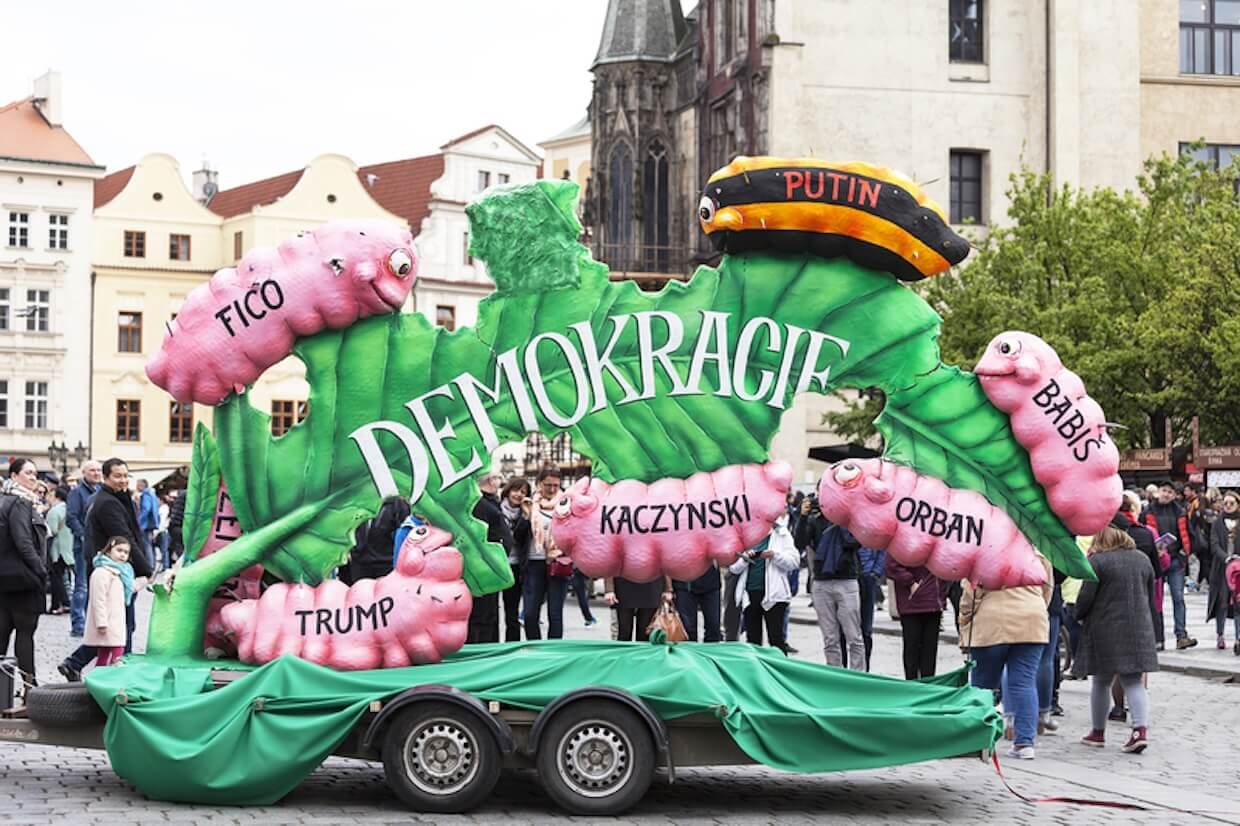
Photo: Jolanta Wojcicka.
You have famously argued that populism is a symptom rather than a cause of democratic dysfunction. In the current conjuncture—marked by inflation, migration pressures, and governance crises—how should scholars distinguish between populism as a reactive phenomenon and as an active driver of democratic erosion?
Professor Sheri Berman: I think populism is both of those things, as you suggest. It is definitely a symptom. At the same time, once populist parties or politicians gain a certain degree of power, they acquire the ability to intensify dissatisfaction, polarization, and related dynamics. Let me unpack that a bit. Populism is a symptom in the sense that people will not vote for anti-establishment parties if they believe the establishment—that is, existing mainstream parties and political institutions—is doing a good job. That is simply a truism.
So, when politicians and parties begin to gain support by criticizing existing parties, politicians, and institutions as corrupt, ineffective, or unrepresentative, they are doing so because a significant portion of the population believes this to be true. In that sense, such parties should be understood as a symptom of dissatisfaction among a not insignificant number of citizens with the establishment and the existing order. They are, as you noted, clear indicators of democratic dysfunction.
However, once these actors begin to gain power—once they have a voice within the system, participate regularly in the political process, and perhaps even enter government or coalitions—they can further deepen this dissatisfaction. The most obvious way they do so, though not the only one, is through rhetoric. By persistently portraying the system as corrupt, demonizing opponents, and framing both rival politicians and voters not merely as people with different policy preferences but as actors opposed to the common good—people who do not have your best interests at heart or who would threaten you if they gained power—they amplify polarization and democratic discontent.
This dynamic operates alongside the policies that populists implement when in power, which, as numerous studies show, are often counterproductive. Thus, while populism originates as a symptom of democratic dissatisfaction, it can also actively deepen the erosion of support for democracy and broaden dissatisfaction once it gains voice and power within the system.
When Mainstream Parties Drift, Populists Fill the Void
How does this “symptom” framework reshape our understanding of the rise of the populist radical right in Europe and Trumpism in the United States, particularly in relation to declining trust in institutions and widening representation gaps?
Professor Sheri Berman: This is another way of getting at the same issue. It is absolutely correct for both scholars and concerned citizens to view populist parties—on both the left and the right—and actors like Trump as drivers of polarization and potential undermining of democratic institutions. However, if we fail to recognize that they are also symptoms of widespread dissatisfaction, frustration, and discontent with existing parties and political institutions, then we will never be able to, so to speak, “solve” the problem of populism.
You mentioned representation gaps, which I and many other scholars have examined closely. If we look at Europe—since this is an ECPS interview—there is no doubt that establishment parties, both center-left and center-right, have developed significant representation gaps, even with their own voters, on key issues. Center-left parties, for instance, moved away from their traditional, broadly defined left-wing economic profile in the late 1990s, which alienated many of their former working-class and otherwise disadvantaged supporters.
At the same time, both center-left and center-right parties drifted away from voters more broadly on a range of social and cultural issues, most notably immigration in the European context. Studies of party positions in the early 21st century show that these parties were often quite distant from the preferences of the median voter on this issue.
As a result, they opened up political space not only for new or challenger parties to advance positions that mainstream parties had effectively abandoned, but also for the perception to take hold that these established parties had lost either the willingness or the capacity to represent voters’ preferences.
Beyond Monocausal Explanations: The Complex Roots of Populism
In your review of populism’s causes, you emphasize the limits of monocausal explanations. In today’s context of digital campaigning, algorithmic amplification, and economic insecurity, how should we conceptualize the interaction between demand-side grievances and supply-side political entrepreneurship?
Professor Sheri Berman: This is a difficult issue, sometimes more so for scholars than for concerned citizens. When people look around today, in what feels like a world of pervasive pessimism, they see a wide range of problems. If you were to ask the proverbial man or woman on the street why Trump has been so popular, or why he was able to get elected twice, they would likely point to broad economic grievances—a sense that the economy is not doing well, that people’s futures are uncertain, and that they are worried about their children’s prospects. They might also point to perceived breakdown and dysfunction in their communities, concerns about illegal immigration and uncontrolled borders, anxieties about tech companies being out of control, and social media “frying” their children’s brains while making everyone more polarized and angrier.
In other words, the average person intuitively understands that multiple factors are contributing to dissatisfaction with the existing order and, in turn, feeding into populism. Scholars, however, tend to look for a single explanatory variable—an independent variable that allows for a clear causal account. The difficulty is that the world we are dealing with is simply too complex for such simplification.
There are clearly many forces driving the current moment, including support for populism and, more broadly, the democratic dissatisfaction and dysfunction we see today. These include significant economic challenges; the serious consequences of rapid demographic change in American and European societies, often—though not exclusively—linked to unprecedented levels of immigration; and, as you noted, technological transformations such as automation, social media, and now AI.
All of these are substantial challenges, and it would be difficult for any party or government to address them effectively. While one can imagine more effective responses than those we have seen, these pressures are nonetheless real and complex. They are shaping the current conjuncture, particularly in the West.
Democratic Erosion as the Product of Both Agency and Structural Decay
Given your skepticism toward rigid structure-versus-agency dichotomies, how can we better theorize elite responsibility in democratic backsliding—especially in cases where political leaders actively challenge electoral norms or judicial independence—without neglecting broader structural transformations?
Professor Sheri Berman: There is absolutely no doubt that we need, as both scholars and citizens, to focus closely on political actors who are playing fast and loose with the democratic rules of the game. If leaders pack or ignore the judiciary, sideline the legislative branch, or undermine the independence of civil society and the media, these are clear causes and drivers of democratic backsliding, and they deserve sustained attention.
Political actors who actively seek to undermine democracy are, therefore, a legitimate focus of scholarly analysis. We need to understand the processes of democratic erosion carried out by populist, illiberal, and anti-democratic politicians and parties. Citizens, too, should remain attentive to these developments, since democracy is what enables societies to function—at least potentially—in a peaceful way, to resolve conflicts, and to address collective challenges.
That said, this is the agency side of the story: the actors who are undermining norms and institutions. But we also need to recognize, as we have discussed, that widespread frustration with establishment parties, political elites, and democratic institutions is equally important. In other words, we need a kind of two-level analysis, recognizing that the actions of populist politicians and parties often represent the final step in a broader causal chain.
Donald Trump, for example, sought political office earlier, in the 2000s and again in 2012, but received virtually no support. He rose to power in 2016 when the broader context had deteriorated, and even then, the damage he caused was more limited compared to what we have seen more recently. The ability of politicians and parties to undermine democracy depends not only on their agency, but also on the strength of the institutions and norms they confront. When those institutions and norms have weakened, actors are able to exercise their agency far more effectively.
We therefore need to understand not only the multi-causal nature of democratic backsliding, but also the broader structure–agency dynamic that underpins political life in general and is especially visible in processes of democratic erosion.
Democratic Collapse Begins Long Before It Becomes Visible
Building on your engagement with How Democracies Die, how do you assess the relative importance of formal institutional weakening versus the erosion of informal norms—such as mutual toleration—in highly polarized democracies like the United States?
Professor Sheri Berman: That is, in a way, a follow-on question to the previous one. How Democracies Die, the seminal book by Dan Ziblatt and Steve Levitsky, helped both political scientists and concerned citizens understand that we had reached a point where politicians like Donald Trump and others were beginning to undermine norms and institutions in ways that were pushing democracies toward backsliding, or even autocratization.
To my mind, what they were doing—tracing these developments historically and highlighting their dangers—was identifying the end stage of a broader process. We had reached a point where politicians and parties were coming to power and actively engaging in democratic erosion. At the same time, we are now at a stage where we understand much more about how this process unfolds. Scholars like Ziblatt, Levitsky, and many others have done an excellent job of tracing what is now often referred to as the authoritarian playbook: how democratic backsliding occurs. In the West, this typically does not happen through coups, as it often did in the past, but through a gradual process in which norms and institutions are weakened from within.
However, this should be understood as the endpoint of a longer causal process. It is a crucial stage—one at which intervention is still possible—but by the time a system reaches this point, its norms and institutions have already weakened to a degree that makes them vulnerable. In that sense, we are now moving beyond the dynamics highlighted in How Democracies Die toward a broader recognition that the processes described in that book are rooted in deeper structural conditions.
Gradual Backsliding Is Harder to Recognize—and Resist
Do you see today’s pattern of democratic erosion—often gradual, legalistic, and electorally legitimated—as fundamentally different from earlier authoritarian breakdowns, or as part of a longer historical continuum that includes past democratic crises?
Professor Sheri Berman: These questions are helpful because they build on one another. As I mentioned, and as many scholars have emphasized, coups and immediate ruptures—quick authoritarian takeovers—were quite common in the past. What we are experiencing in the West today, less so than in other parts of the world, is different. We still see coups and rapid democratic breakdowns elsewhere, but in the West, the kind of post–third wave decay we are discussing has largely occurred through what is often called the authoritarian playbook—through a much more gradual undermining and hollowing out of democracy from within.
This pattern is therefore more common today, particularly in the West, than what we have seen historically. In a way, this also makes it more difficult to respond effectively, because there is often debate about how serious the erosion really is. Are we truly facing democratic backsliding? Is any particular move decisive in either accelerating or stopping the process? This creates a kind of puzzle for both scholars and citizens.
Many people do not fully recognize what is happening until it is too late, and this dynamic also generates significant divisions within the small-d democratic camp. For example, in the United States, while most within the Democratic Party believe that Trump and the Republicans pose a threat to democracy, there are very different views about how to respond—what the appropriate strategy is and where the core problem lies.
By contrast, when there are troops in the streets, it is clear to everyone that the priority is to get them back into the barracks. In a situation like this, however, where erosion is gradual and incremental, it becomes much harder to generate consensus and to coalesce around an effective strategy for resisting democratic decline.
Why Economic Insecurity Amplifies Cultural Grievances
Your work links democratic instability to the long-term consequences of neoliberal capitalism. In light of current cost-of-living crises and inequality debates, to what extent should contemporary populism be understood as a political economy crisis rather than a cultural backlash?
Professor Sheri Berman: I think it’s both. As we have discussed before, there are a number of causes. On the demand side, both economic challenges and the grievances they generate are absolutely crucial. But social and cultural grievances are also important, along with, as we noted earlier, technological changes that are increasing polarization and dissatisfaction in our societies. It is very difficult to understand the democratic dissatisfaction that is feeding populism—and, partially through populism, democratic decay—without looking at economic grievances. That is to say, without considering rising inequality, growing insecurity, and disruptions stemming from automation, trade, and, potentially in the not-too-distant future, AI.
These are all factors creating a great deal of dissatisfaction among citizens. In turn, we know from strong scholarship that in such contexts it becomes much easier to increase the salience of social and cultural grievances, which are also central to contemporary democratic dysfunction. It becomes easier to direct attention to the perceived downsides of immigration when people believe that immigrants may be taking their jobs or using scarce public resources. Why, they might ask, should their tax money go toward housing for immigrants when there is not enough public housing for them? Why should they support a welfare state that can barely respond to their own needs, rather than helping those who have come from outside? These dynamics are therefore very difficult to disentangle, and they feed off each other in deeply pernicious ways.
From Grand Ideologies to Fragmented Discontent
You describe ideological transformation as a two-stage process requiring both the de-legitimation of existing paradigms and the emergence of alternatives. Are we currently in an “interregnum” where dissatisfaction is high but coherent ideological replacements—whether on the left or right—remain underdeveloped?
Professor Sheri Berman: I would say that this is indeed true. Part of this is that, as a historically minded social scientist, when I look back at previous eras of ideological ferment—the 1930s, for instance, the interwar period, or even the post-war period—we had real ideological alternatives. In the interwar period, we had fascism, National Socialism, and communism. These were ideologies—entire Weltanschauungen, or worldviews. They were not only opposed to liberal democracy—both clearly were—but also aspired to remake society and the economy.
What we have today are rather grievance-based movements on both the right and the left that share some similarities with their predecessors. On the left, we see anti-capitalist, anti-elite rhetoric, often accompanied by a degree of illiberalism. On the right, we see strong elements of nativism, xenophobia, and racism, as part of a broader illiberal backlash, along with, in some sectors, a kind of idealization of the past—the idea that society can return to a more traditional, often implicitly Christian, social order.
But these currents are much more inchoate than their predecessors. They draw on bits and pieces of earlier ideologies without the same coherence or power. I would also say they are more negative than positive on both the left and the right. They consist largely of grievances that have been brought together: dissatisfaction with capitalism on the left, anger about geopolitical issues such as Israel and Gaza, and on the right, resentment toward social change and elites.
It is important to remember, however unattractive it may seem to us now, that communism, fascism, and National Socialism also offered what I would carefully call positive visions. They articulated a sense of what a new future would look like. They did not only seek to destroy the old order but to create something new. I do not see that today.
That does not mean that these contemporary movements are not dangerous—they are, in many ways, very dangerous—but we are not dealing with the same kind of ideological conflict that characterized what Eric Hobsbawm and others have called the ideological twentieth century.
Why Exclusion of Populists Becomes Impossible
How does your framework help explain the persistence and normalization of far-right actors within democratic systems, even in relatively stable economies, and their increasing presence in mainstream coalition politics?
Professor Sheri Berman: To some degree, this is simply a result of their electoral success. It is very hard to keep out parties in proportional representation systems, as in Europe, that are getting 20–25% of the vote. The parties that have come to power in Europe have done so simply because they have won elections—not majorities, but enough that it is not possible to keep them out of power. In that sense, it is fairly straightforward to understand why they have gained the power and influence that they have. And it creates a number of knock-on effects, returning to the idea we discussed earlier about symptom and cause. If we look at a situation like the one that currently exists in Germany, the AfD is polling so high that it is almost impossible in many German states—and may very well soon be impossible at the national level—to put together a coalition government that does not include them.
You are therefore facing a situation in which the alternatives are either incoherent or minority governments, both of which have difficulty putting together coherent policy packages capable of solving society’s problems, thereby driving dissatisfaction further, or including in your coalition—especially in the German case, because the AfD is among the more radical right-wing parties in Europe today—a party that is clearly illiberal and potentially even anti-democratic.
This is a very difficult situation, simply from a mathematical perspective, in many of these countries. In other European countries, we have seen right-wing populists come to power, and, honestly, they have not had that much impact on democracy. We have had right-wing populists in power in the Netherlands, in Finland, and now, obviously, in Italy, and there, I would say that while they may be problematic in some ways, we have not seen the kind of democratic erosion that some predicted would occur.
So, you really have to look at these developments on a case-by-case basis. The AfD in Germany is something most observers are watching closely, because it is a much more radical right-wing party than its counterparts in places like the Netherlands, Finland, Denmark, or even Italy.
Trumpism as a Symptom of Deep Structural Divisions

In the case of Trumpism’s influence on US politics, should it be interpreted primarily as an expression of long-standing structural cleavages, or as the result of contingent elite strategies and institutional vulnerabilities?
Professor Sheri Berman: For me, Trump is very much a symptom. He has now caused a significant amount of democratic backsliding—an unprecedented amount, I would say—but there is simply no way to understand the Trump phenomenon without looking back, as I mentioned and as I discussed in the article you referenced at the beginning in the Journal of Democracy, at very deep structural problems in American society and the American economy.
There is no way to understand why people would, first, vote for him, and second, be so frustrated with the Democrats, without considering what are now decades of social decay and economic division. This is clearly a situation in which Trump was a symptom of underlying social, economic, and political problems and, once in power, has intensified all of the above—not only for the United States but for the rest of the world as well.
Trump and the Unraveling of a Fragile International System
Given your argument that democracy’s troubles are historically rooted, how should we interpret current claims about the “collapse” of the global liberal order—especially amid rising authoritarian powers and weakening multilateralism?
Professor Sheri Berman: That is downstream of many of the things we have been discussing here—most notably, but not exclusively, the rise of Donald Trump. Trump, as a key progenitor of democratic backsliding in the United States, has, since coming to power—particularly over the past year, but also since 2016—undermined democratic norms and institutions in a very significant way. He has also taken an axe to the liberal democratic order. But, again, that liberal democratic order was not particularly healthy beforehand.
I have used, in other writings—and I am sure others have as well—the idea of an immune system. If two people are standing in a train car and one has a compromised immune system, and someone coughs, that person might get sick, while the other simply leaves the train and continues with their life. The fact that Trump has been able to cause so much damage reflects the existence of significant structural weaknesses in the liberal democratic order to begin with.
This is a kind of iterative or cyclical process. At the same time, there is no doubt that the decay we have seen in the liberal democratic order over the past year, in particular, is very much the result of conscious choices made by the Trump administration—to increase divisions with allies, to attack institutions that had long been part of this order, and to form alliances with actors such as Russia that have been fundamentally opposed to it. All of these are clearly deliberate actions—agency, so to speak. But, again, his ability to come to power and to pursue this course reflects deeper structural weaknesses that he has been able to exploit.
Can Middle Powers Rebuild What US Leadership Abandoned?
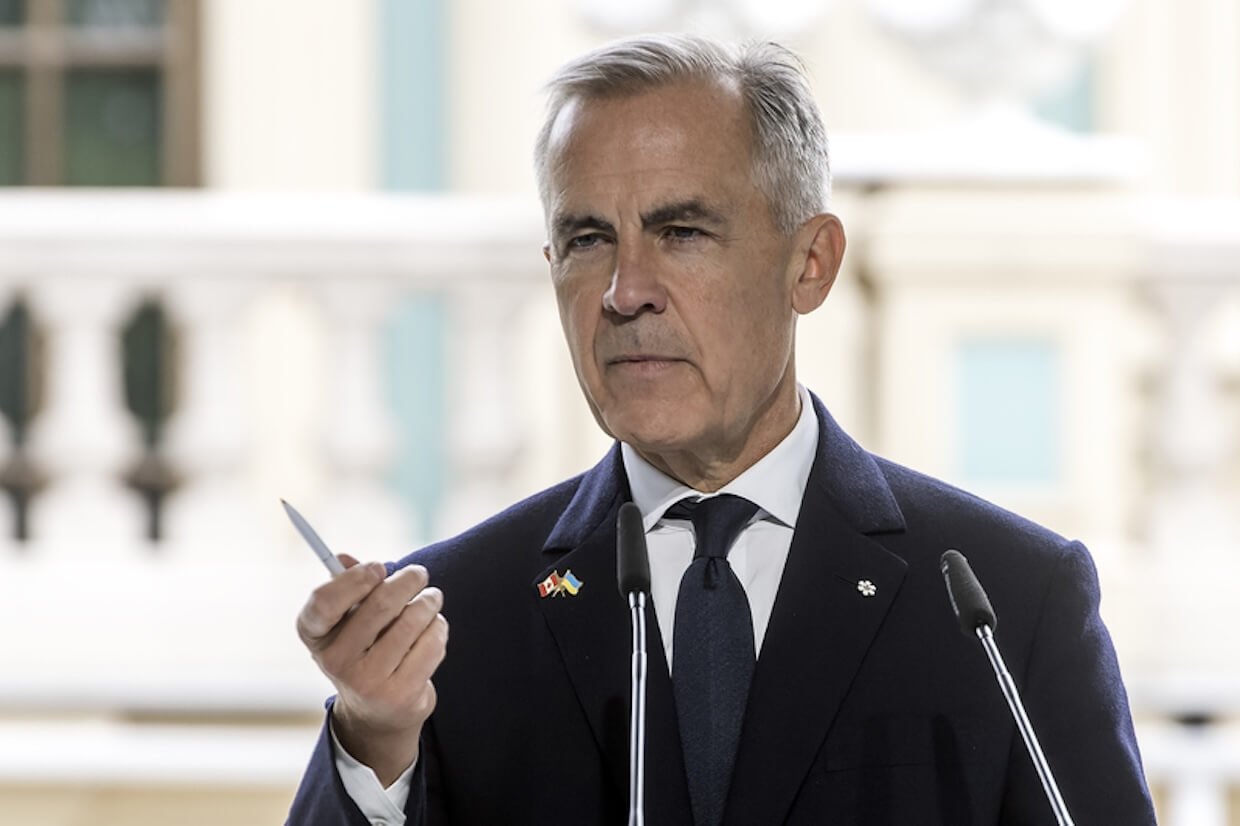
As transatlantic divergence becomes an observable reality—particularly under Trump’s renewed leadership—how should we interpret the effective “de-coupling” of the United States and Europe and its effect on the legitimacy and authority of international institutions? Does this fragmentation mark a structural erosion of the liberal international order, or the emergence of a more pluralized and contested system of governance with competing centers of norm-setting?
Professor Sheri Berman: I think it would be very hard to maintain, or to return to, some version of that liberal international order without American commitment and, alongside that, some kind of renewed alliance between the United States and Europe. I do not see that happening, even if Trump leaves, simply because at this point there is so much water under the bridge. If I were a European, even if a Democrat came to power in the next election, I would be very wary about hitching my horse to the United States, knowing that right around the corner there could come another version of Trump—Vance, Rubio, or someone similar. So, I think it is going to be very hard to recreate that, although I do think that if a Democrat comes to power, we will see some attempts to do so.
The alternative, as you mentioned, and as several people have been discussing—including Macron and Mark Carney in Canada—is to replace this American-led liberal international order with something new, potentially better, constructed by middle powers. My response to that is: more power to you. I hope you can do that. I think it would be good for those countries and for the globe. Historically, however, it is very difficult to construct an international order without some kind of hegemon, both pushing that project forward and willing to absorb some of the collective costs.
So, this is where we are right now. The American-led international order, at least for now, is pretty much dead. Whether middle powers can step in to patch things up enough to prevent further fragmentation remains to be seen. I hope they can, for the good not only of their own citizens but of the globe, but it concerns me greatly.
Rebuilding Representation as the Key to Democratic Stability
Finally, looking ahead, what are the most critical variables shaping democracy’s future in this context of geopolitical rivalry and domestic polarization: the renewal of representation, economic restructuring, or the restoration of democratic norms—and how might these interact to stabilize or further strain democratic systems?
Professor Sheri Berman: That is a very large question to end on. Let me say something broad and perhaps not particularly profound, which is that I actually think the domestic level is the key driver here. That is to say, the central challenge is figuring out how to get mainstream political parties—it does not necessarily have to be the old ones; again, some people may be fed up with social democratic, Christian democratic, and conservative parties—but parties that are committed to democracy need to figure out how to address, as we have discussed, the economic challenges their societies are facing, the social and cultural challenges they are confronting, and the technological changes that are driving so much disruption.
Can they do that? If they can, then we will see support for these anti-establishment, disruptive populist parties decline, and these political systems stabilize. I firmly believe that more stable democracies—not only in the West but also in other parts of the globe—will be in a much better position to address international challenges, whether civil wars, interstate wars, or climate change. They will also be better positioned to deal with international challenges and to recreate, as we discussed in the previous question, some form of viable international cooperation, including international institutions and organizations.
If we can reconstruct some degree of democratic stability, not just in the West but also elsewhere, the benefits would be significant. Turkey, for example, is a major actor and a bridge between the West and the Middle East. A stable, well-functioning democratic regime there would be a major boon, most importantly for Turkey’s own citizens, but also an important contribution to addressing a wide range of global challenges. So, again, I am hopeful that parties committed to liberal democracy can somehow manage to get their act together and become more effective and responsive to their citizens.