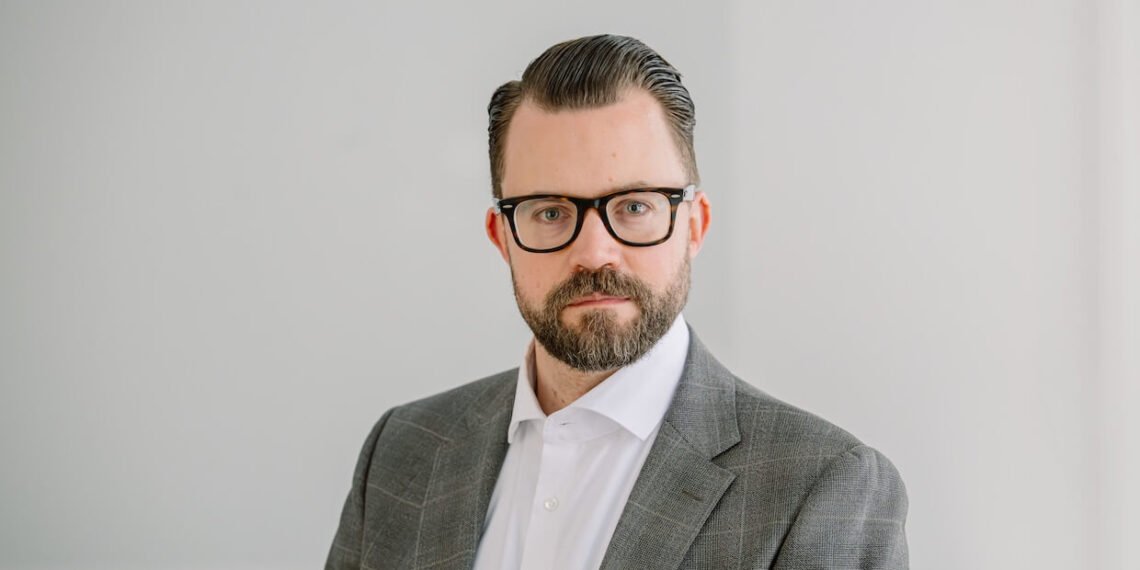
In an interview with the ECPS, Professor Marcel Lewandowsky, Professor of Government and Public Policy at Martin Luther University Halle-Wittenberg, examines the consolidation of Germany’s Alternative for Germany (AfD) and its implications for liberal democracy. Challenging the interpretation of the AfD as merely a protest party, he argues that its electoral resilience reflects deeply rooted political alienation, anti-immigration attitudes, and dissatisfaction with democratic representation. Professor Lewandowsky explains how perceptions of economic crisis activate existing xenophobic sentiments, which the AfD amplifies through populist narratives and scapegoating. He also warns that mainstream parties may inadvertently strengthen the radical right by adopting its rhetoric. Ultimately, he emphasizes that restoring democratic confidence requires socioeconomic reforms, renewed political representation, and stronger democratic engagement.
Interview by Selcuk Gultasli
Germany is undergoing a profound political realignment. Amid economic stagnation, immigration controversies, and growing distrust of established parties, the Alternative for Germany (AfD) has consolidated its position as a major political force. Its unprecedented gains in the September 2026 state elections, particularly in eastern Germany, challenge the resilience of democratic institutions and the traditional Brandmauer against the radical right. While populist movements elsewhere have experienced electoral setbacks, the AfD continues to expand its appeal, raising fundamental questions about democratic representation, political alienation, and the normalization of radical-right politics.
In an interview with the European Center for Populism Studies (ECPS), Professor Marcel Lewandowsky, Professor of Government and Public Policy at Martin Luther University Halle-Wittenberg, whose research focuses on populism, authoritarianism, and democratic politics, examines the structural foundations of the AfD’s electoral resilience and the challenges facing Germany’s liberal democracy.
Rejecting the conventional interpretation of the AfD as merely an expression of anti-establishment protest, Professor Lewandowsky argues that “the AfD has never been just a protest party. It has always been able to fill a representation gap in the party system.” Its electoral strength, he explains, reflects not only dissatisfaction with democratic institutions but also a durable alignment between voters’ ideological preferences and the party’s political agenda, particularly on immigration.
Central to his analysis is the relationship between economic insecurity, preexisting authoritarian attitudes, and populist crisis narratives. Rather than generating xenophobia independently, the AfD exploits perceptions of economic and cultural threat to reinforce existing prejudices. As Professor Lewandowsky emphasizes, “They do not create it, but they amplify it.” This dynamic becomes particularly consequential when mainstream parties adopt similar rhetoric, inadvertently strengthening the radical right’s ownership of migration as a political issue.
The interview also challenges assumptions about democratic dissatisfaction and electoral accountability. Drawing on experimental research, Professor Lewandowsky explains how voters may prioritize preferred policies over liberal-democratic principles, while AfD supporters display exceptional loyalty even when their party faces political scandals. His research further complicates the presumed relationship between loneliness and radical-right support, finding that social isolation is more closely associated with electoral abstention than with AfD voting.
Looking ahead, Professor Lewandowsky identifies political representation as central to democratic renewal. Criticizing mainstream parties for following rather than shaping the political agenda, he argues that economic and social reforms must address underlying grievances while rebuilding citizens’ confidence in democratic institutions. Above all, he insists that “political parties are at the center of saving democracy.”
In sum, the interview explores whether Germany’s established parties can reclaim their representative functions—or whether the AfD’s consolidation signals an enduring transformation of the country’s political landscape.
Here is our interview with Professor Marcel Lewandowsky, edited lightly to enhance clarity, readability, and overall flow for publication.
The AfD Has Never Been Just a Protest Party
Professor Lewandowsky, thank you for joining us. Let me begin with your research on the AfD’s evolution from a Eurosceptic protest party into a populist radical-right movement. Following its extraordinary gains in the September 2026 state elections, has the AfD become a structurally entrenched political force rather than a temporary expression of anti-establishment discontent?
Professor Marcel Lewandowsky: It absolutely has. Even early studies on the AfD showed that the driving force behind voters’ support for the party was not only protest against the establishment but also congruence with the AfD’s program, especially on the issue of migration. So, what I would say is that the AfD has never been just a protest party. It has always been able to fill a representation gap in the party system.
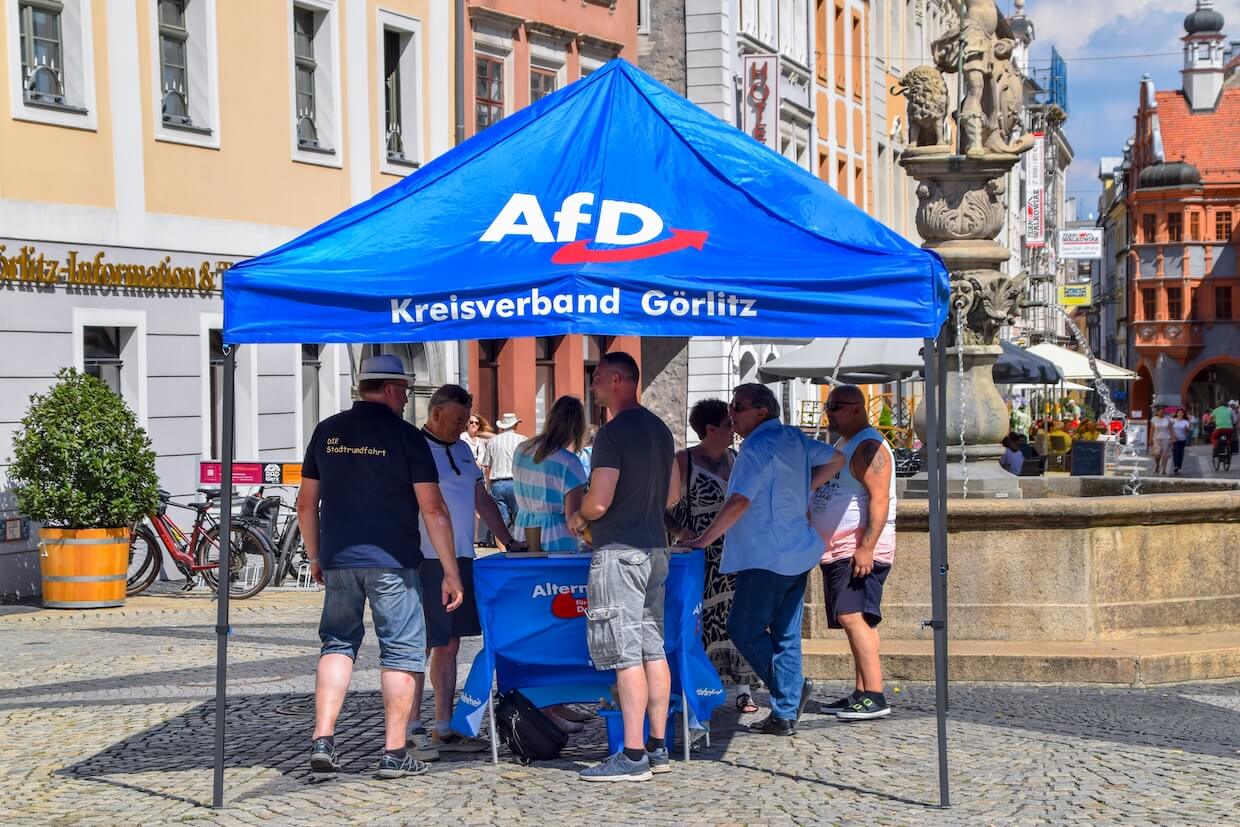
What we can see now is that AfD voters are among the most loyal in the party system. When we look at the propensity to vote and electoral availability, as studied by Aiko Wagner from the Free University of Berlin and me, we can see that AfD voters have the lowest probability of voting for another party. For example, if you vote for the CDU, there is a certain probability that you might also consider supporting the AfD. If you vote for the SPD, you have a certain propensity to vote for the Greens. But AfD voters have the lowest propensity to vote for any other party.
Why is that so? It has to do with the AfD being the only party that its voters trust. In other words, individuals who vote for the AfD do not trust any of the other parties. This distrust of the political system and its actors is not simply an expression of temporary protest. Rather, it has to do with discontent with democracy and the perception that democracy is in a state of crisis. That is something the AfD can really capitalize on, much like other parties with similar ideologies, such as the FPÖ, Rassemblement National, and others.
Economic Insecurity Activates Existing Authoritarian Attitudes
How would you distinguish the objective socioeconomic drivers of AfD support—economic stagnation, regional inequality, and insecurity—from subjective grievances involving cultural displacement and political alienation? Why have these factors proved particularly powerful in eastern Germany, where the legacies of reunification continue to shape political identities?
Professor Marcel Lewandowsky: Generally, the basic reasons individuals support the AfD are not so different between West and East Germany, just as they are not that different among AfD voters, FPÖ voters, and even Trump voters. There are certain driving factors that we find in almost all established democracies that explain why individuals vote for populist radical-right parties. These factors are the same in the case of the AfD.
So, to what extent does the economy come into play? The economy—macroeconomic factors—is a driving factor, but these factors essentially activate individual attitudes that are already in place. Let me explain. If you look at a former CDU voter or a non-voter, they might have a negative attitude toward migration. They might be skeptical about asylum seekers but remain non-voters or conservative voters, perhaps even SPD or Social Democratic voters, though to a much lesser extent, as we have seen in the work of Cas Mudde, Max Mitteregger, and Tarik Abou-Chadi.
What we do know is that the perception of an economic crisis—not necessarily being personally affected by that crisis but fearing that people like me could be affected in the future—can be a driving force behind voting for a party like the AfD. This is because such perceptions activate authoritarian or nativist attitudes that were already present but had not previously influenced voting behavior.
Parties like the AfD capitalize on this because they can take voters’ perceptions of crises and not only offer a simple solution but also engage in scapegoating, following a strategy of naming and blaming. They essentially say, “These are the people responsible for this crisis. It is those up there, and it is the ones they let in.”
So, what they capitalize on is an attitude of xenophobia. They do not create it, but they amplify it. And they have the opportunity to amplify it because there is a perception of an economic crisis. That is how these factors at the macro and micro levels work together.
Mainstream Parties Amplify the AfD’s Migration Narrative
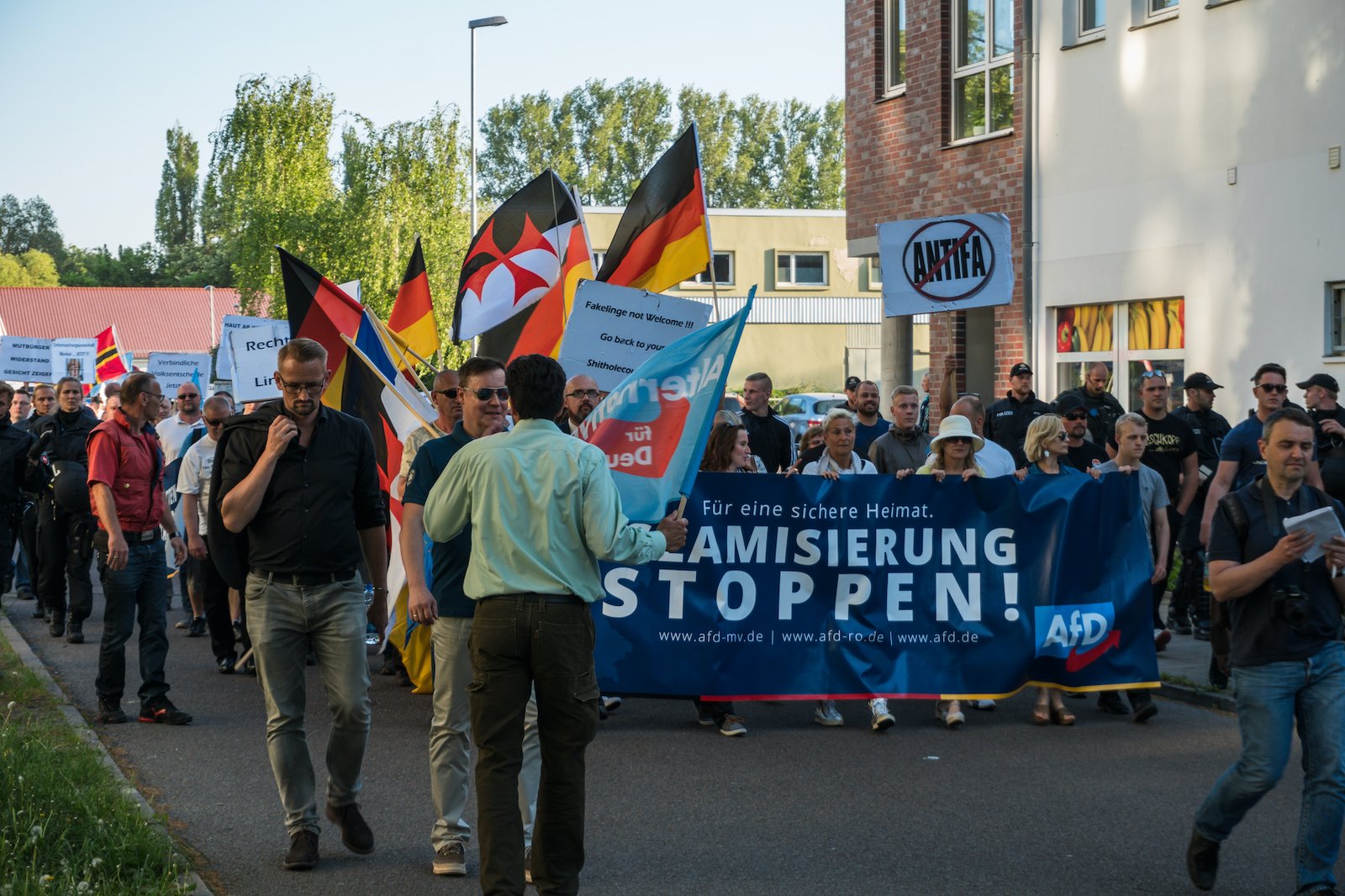
Immigration remains central to the AfD’s political mobilization, even where direct exposure to immigration is relatively limited. How does the party transform perceptions of cultural threat and demographic change into durable political identities, and why have mainstream parties struggled to counter this narrative?
Professor Marcel Lewandowsky: First of all, I wouldn’t necessarily say that the other parties struggle to counter the narrative. I would say that they struggle to imitate it. If you look at the work of Michael Bayerlein, Tarik Abou-Chadi, Werner Krause, and others, we can see that, in international comparison, conservative parties try to catch up. And it’s not only conservative parties; if you look at Denmark, Social Democratic parties do so as well, though to a much lesser extent. They try to catch up by adopting, to some extent, the narrative that outsiders pose a threat—not necessarily to national identity, but to security.
We know that when conservative parties do this, they strengthen their right-wing competitors. Parties like the AfD, the FPÖ, and the Sweden Democrats have issue ownership over migration, particularly when it comes to taking certain positions and framing the issue in a particular way. When other parties shift to the right on this issue, migration remains prominent in political and media discourse, and its importance is amplified. As Abou-Chadi, Denis Cohen, and Krause have shown, right-wing populist parties either don’t lose votes or even gain votes.
So, what are these parties able to do? I think that connects to what I said before. We know that these parties can offer a particular interpretation of a crisis. A crisis, or the perception of one, must already exist. They cannot create the perception of a crisis; it must already be present within society. What they do is offer a particular framing and certain solutions.
Benjamin Moffitt pointed this out in a 2015 paper in which he analyzed how populist parties use and frame crises. This is what we’re seeing here. These parties take an existing perception of crisis—whether concerning the economy, migration, or asylum seekers, as in 2015—and amplify it, thereby becoming stronger.
Other parties then react, making the perception of crisis permanent. Everybody starts talking about the crisis, but right-wing populist parties retain issue ownership. This is how it works. It shows that, through their own strategies and the shifts of other parties, especially conservative parties, populist radical-right parties no longer remain pariahs. To some extent, they become part of the mainstream—or at least their issues, framings, and rhetoric become mainstream. This is what helps these parties establish their narratives.
AfD Voters Support Democracy but Distrust How It Functions
In your September 2026 interviews, you distinguished between ideologically committed far-right voters and a broader AfD electorate driven by populist resentment. Given your findings on voters’ willingness to trade liberal-democratic principles for preferred policies, does AfD support primarily reflect democratic disaffection, conscious illiberalism, or an increasingly powerful interaction between them?
Professor Marcel Lewandowsky: All of it. If you look at why individuals vote for the AfD, one factor is dissatisfaction with democracy. But to be dissatisfied with democracy, you also have to have an idea, at least to some extent, of what you expect from it. You cannot be dissatisfied if you never had an expectation. What we see is that AfD voters are dissatisfied with democracy as it currently functions. They do support the idea of democracy; they are not outright anti-democratic. But we also know that they have strong populist attitudes.
Let me give you an example of what that looks like. If you look at voters as a whole and want to determine whether the likelihood of voting for the AfD increases because individuals are right-wing or because they are populist, you find that right-wing individuals without strong populist attitudes do not have a particularly high probability of voting for the AfD.
However, when individuals are both right-wing and populist—when you examine the interaction between their right-wing positions and populist attitudes—we see that the probability of voting for the AfD depends on that interaction. So, it is not simply right-wing individuals, or even necessarily populist individuals, who vote for the AfD; it is individuals who are both right-wing and populist. Those who are right-wing but not populist might be more inclined to vote for the CDU. But I think populism is a very strong driver.
At the same time, what Michael Jankovsky and I found in our 2023 paper is something that, from a normative standpoint of democracy, can be somewhat concerning. We found that when individuals have the option of voting either for a liberal-democratic candidate whose positions on certain issues differ substantially from their own or for an illiberal candidate whose positions align closely with theirs on issues they consider important, they are highly likely to support the illiberal candidate if the alignment is sufficiently strong.
That finding applies across the board. It does not apply only to AfD voters; it applies to all voters. Populist and authoritarian attitudes strongly influence that behavior, but we still observe it across the board.
This means there is a certain willingness to support illiberal candidates, at least according to our experimental design, even among voters who do not themselves hold illiberal attitudes. We do not know whether this means that the AfD, for example, can capitalize on such willingness, because it does not have much to do with ideology. Rather, it concerns a willingness to abandon liberal attitudes or liberal democracy if you believe that the issues important to you will be addressed.
Loneliness Discourages Voting Rather Than Driving AfD Support
Your recent study with Anna-Sophie Heinze finds that loneliness primarily discourages electoral participation rather than increasing AfD support. What does this reveal about the relationship between social isolation, political alienation, and radical-right mobilization, particularly among younger voters?
Professor Marcel Lewandowsky: First of all, we looked at the 2025 German election, using data from the German Longitudinal Election Study. Since we are looking at just one point in time, our findings are basically correlational. But the important message is that we did not find what other scholars have claimed. We do not find that lonely voters are more inclined to support a right-wing populist party, nor do we find that young, lonely voters are more likely to vote for such a party. If anything, we find that loneliness decreases the likelihood of participating in an election in the first place.
This is an important finding, given the ongoing discussion about what some call a male loneliness epidemic and the claim that lonely young males are voting for the far right. At least we can say that we do not find this in the 2025 German election. Even though the AfD is pretty well established at this point, we still do not see it gaining the support one would expect based on claims that the male loneliness epidemic affects the political behavior of lonely young males. We simply do not find that to be the case.
This means that perhaps it would be more interesting to study what kind of loneliness we are actually looking at. I think, first and foremost, we have a problem measuring loneliness. We ask individuals, using the standard item battery, how lonely they have felt over the past few months, or something like that. What we are actually measuring is the feeling of loneliness, not social isolation.
Measuring social isolation and the perception of social isolation in a more complex, differentiated way is something we should look into. I do not doubt that, in some instances, loneliness affects political behavior. We do find that it has a significant effect on non-voting. But when it comes to cases where individuals do vote in a certain way, support the far right, or support authoritarian alternatives, what have you, we would need a more differentiated approach. Because if loneliness is a driving factor, we are not measuring it well enough.
Distrust of Mainstream Media May Protect the AfD from Scandals
Your research on voters’ loyalty to corrupt politicians emphasizes the importance of viable political alternatives. Does the AfD benefit from an electorate that increasingly considers mainstream parties unacceptable, making scandals, extremist rhetoric, and violations of democratic norms less electorally consequential?
Professor Marcel Lewandowsky: The short answer is yes, but you’re not looking for a short answer, so let me put it this way. In our study, Christina-Marie Juen, Michael Jankowski, and I found that individuals who vote for the AfD do not punish the party when there is a scandal. Other voters do—Green voters, SPD voters, and CDU voters, all to varying degrees—but AfD voters don’t. So why is that the case?
It has to do with the AfD being the only alternative in terms of the issues that matter to its voters. Even when there is a scandal, the AfD remains the party closest to their own positions. This is consistent with other studies, including those by Aiko Wagner and me, which show that this perceived proximity between the AfD and its voters’ positions is extremely important in explaining their loyalty to the party. In this case, that proximity means voters do not defect. They stick with the AfD despite a scandal because no other party represents their demands as well as the AfD does.
Something we were unable to examine in our research is whether these voters believe the reports about the scandal. Many voters might learn about a scandal through the mainstream media, but because they do not trust those media outlets, they might not believe the scandal is true in the first place.
The AfD might frame the scandal as a lie fabricated by the mainstream media or by politicians seeking to hurt the party. Voters might be more inclined to believe that explanation. So, this is another factor that may come into play. Overall, we find that this provides further evidence of the loyalty of AfD voters.
For AfD Voters, Migration Overshadows Economic Grievances
While the AfD mobilizes grievances through nationalism, immigration, and cultural identity, Die Linke emphasizes social inequality, redistribution, and economic justice. To what extent do these parties compete for similarly alienated voters, and why do socioeconomic grievances increasingly translate into support for the radical right rather than the populist left?
Professor Marcel Lewandowsky: The populist left is not only economically left-wing but also socially progressive. Many of its positions, for example, on migration, do not align with those of AfD voters. We do not find much overlap between AfD and Die Linke voters. In some states, there is voter exchange between these parties, but in general, the AfD mostly wins voters from the CDU, sometimes from the SPD, and from non-voters. That is the non-electorate, or the segment of the electorate that the AfD is able to mobilize.
Interestingly, there had been a widespread belief in Germany that Die Linke was pretty much finished. Then, shortly before the 2025 general election, the party was able to make a comeback. It did so, on the one hand, through its frontrunner, Heidi Reichinnek, who had a strong presence on social media, and, on the other hand, by focusing on certain social and economic issues, such as housing prices and rents.
When we look at voters and their propensity to vote, we see that there is little overlap between the AfD and Die Linke. The AfD does not focus much on economic issues. These issues are not particularly important to the party or its voters. The most important issue for these voters, or the main driving factor behind voting for the AfD, is migration. That is something we found even in the AfD’s early stages, when it was not yet a populist radical-right and, in part, right-wing extremist party.
There might be objective factors or conditions under which one might think that, for some voters who currently support the AfD, it would be more rational to vote for a left-wing party. But the problem is that these issues are not as salient to them. They often believe that migration is the major issue and that, once migration is addressed and the political elite is replaced, everything else will fall into place—or they have already lost the belief that everything else might fall into place to begin with.
There is a certain mindset among AfD voters, as among voters of other parties of this kind, that binds them to the AfD. Migration and a populist idea of democracy are at the center of that mindset. That is something that, at least at this point, other parties, including the left, have been struggling to counter.
The AfD Benefits from Its Position Outside Government
As right-wing populist movements have recently encountered electoral defeats or political setbacks in Brazil, Serbia, Hungary, Israel, and the United States, the AfD continues to gain support in Germany. What explains this divergence? Are Germany’s economic conditions, party-system dynamics, and political culture creating unusually favorable circumstances for the radical right?
Professor Marcel Lewandowsky: In the United States, for example, the radical right is in office and is creating grievances. In Brazil, the left and Lula were able to mobilize, for example, through social media during the second round of the presidential election. In Hungary and Poland, parties like Fidesz and PiS had been in office, so strong opposition movements emerged, capitalizing on the grievances these parties had created while in government.
What we see in Germany, however, is that the AfD remains excluded from government. There is still such a thing as the Brandmauer, or cordon sanitaire, but it is not as strong as it used to be—if it ever was. That is something one can discuss.
Another factor comes into play here, beyond the AfD’s position as an outsider that has not yet held office. It might enter government, most likely in Saxony-Anhalt in December. There is also an extremely unpopular federal government, an equally unpopular chancellor, and a conservative party that has, to some extent, lost its ability to integrate more right-wing voters. All these factors are comparable to those in other countries. The first country that comes to mind is Austria, where the situation is quite similar. Another is France, although there is an additional factor there: extreme polarization between the extreme left and the extreme right.
Overall, I don’t think Germany is necessarily a special case compared with these countries. With the establishment of the AfD, Germany has, at least to some extent, become a normal case in Europe. Its situation is now very similar to that of other countries in the region.
Restoring Democratic Trust Requires More Than Economic Reform
And finally, Professor Lewandowsky, looking toward Germany’s next federal election and considering recent democratic developments in Hungary, Serbia, Brazil, and the United States, what would be required to reverse the AfD’s rise? Can socioeconomic reform, renewed political representation, and democratic engagement restore confidence in liberal democracy, or has Germany entered a more enduring phase of radical-right political realignment?
Professor Marcel Lewandowsky: I would say all of it, including the last option. All these aspects are interconnected. Trust in liberal democracy is, to some extent, linked to confidence in economic well-being. A paper by economists Manuel Funke, Moritz Schularick, and Christoph Trebesch, published in 2016, showed that, over the past hundred years, right-wing populist, extreme-right, or radical-right parties in democracies have mostly been successful under certain conditions of economic crisis. That is something we find here as well. The perception of an economic crisis, at least among some segments of the electorate, is associated with declining trust in democracy and government. So, I think these things are linked.
For the moment, the AfD has a certain momentum, especially after the elections in Saxony-Anhalt. In some eastern German states, the AfD is now polling at 40%. It has also scored more than 40% in the elections in Saxony-Anhalt. One crucial factor is that the other parties no longer see themselves as setting the agenda. Instead, they are essentially following—or chasing—the AfD.
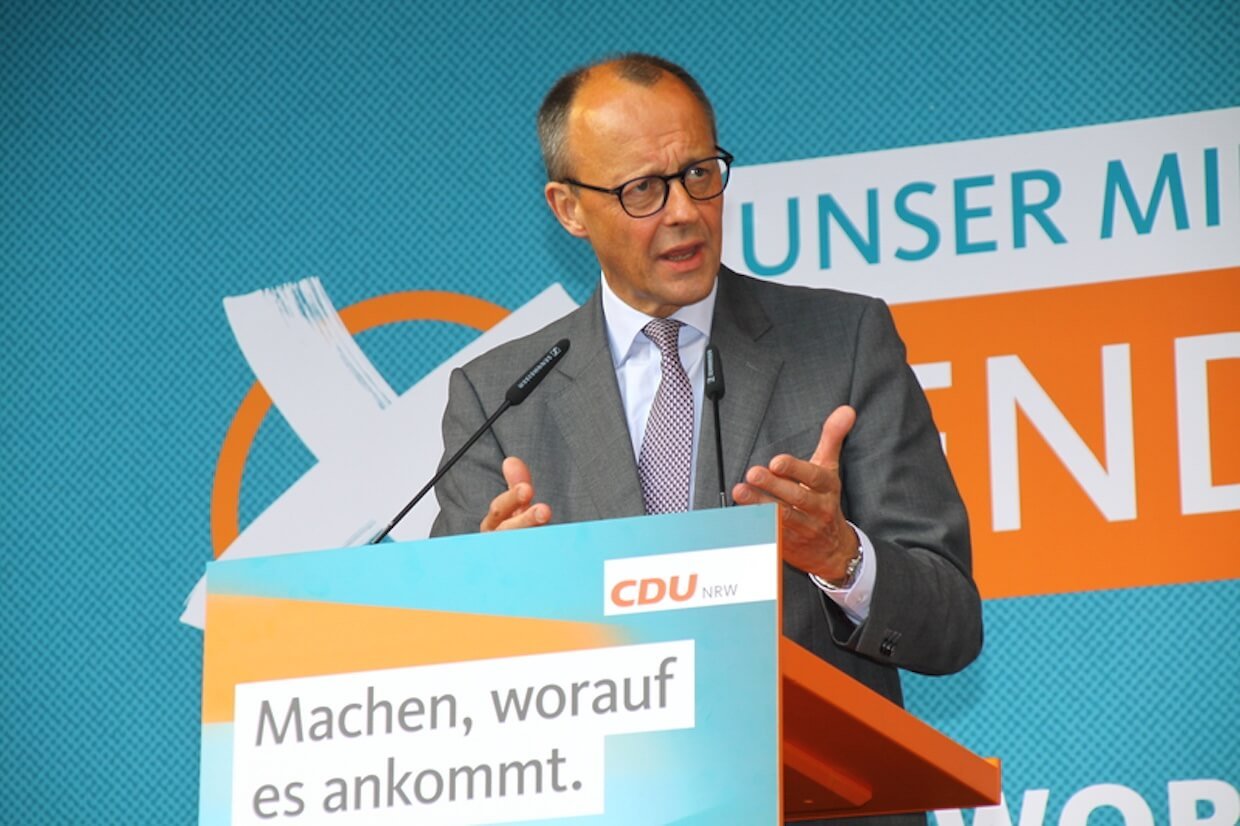
What they need to try to do, although it is extremely difficult, is address both grievances with liberal democracy and economic grievances through economic and social reforms that are also popular. I do not think Friedrich Merz is the person who can achieve that, nor do I think this government or coalition can do so. But Friedrich Merz believes that he does not need popular reforms. He believes he was elected as someone willing to do unpopular things that will eventually work out. However, as long as his policies remain unpopular, the AfD might gain votes. At this moment, I do not see that changing.
One last thing. What is crucial at this point—and something I have analyzed and argued in a paper coauthored with Anna-Lisa Neuenfeld for the Friedrich Ebert Foundation, titled Parteien im Stresstest—is that political parties are at the center of saving democracy.
One aspect here is that the AfD has been able to establish a perception of itself as the representative of “the people.” It presents itself as a party that is present in certain areas, speaks a different language, comes from a different social background, and is able to offer social gatherings where other parties have failed to do so. This is especially important in certain areas of eastern Germany.
Representation through political parties is key to restoring faith in democracy because parties are the key players. At present, the AfD is the only party able, at least in the eyes of its electorate, to present itself as its representative—speaking in Hanna Fenichel Pitkin’s terms, symbolically, descriptively, and substantively. That is something the other parties might want to look at.