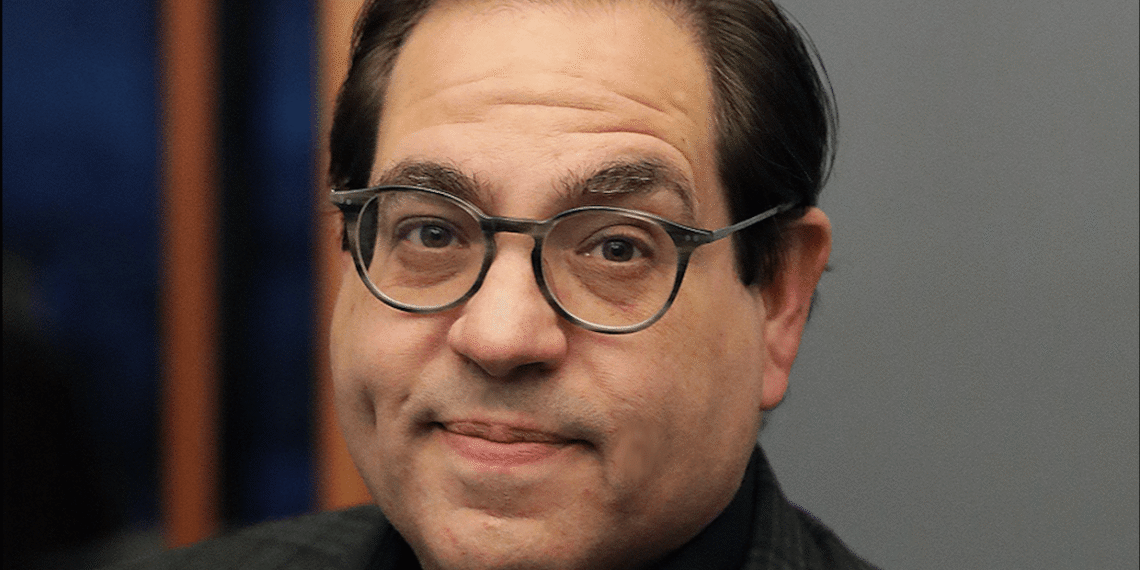
Professor Peter W. Klein offers a historically grounded warning against simplistic regime-change narratives in Iran. In this ECPS interview, the Emmy Award–winning investigative journalist and University of British Columbia professor argues that political transformation in Iran may occur, but not in ways the West expects. Drawing on cases such as Hungary in 1956, the Bay of Pigs, Iraq, and Afghanistan, Professor Klein shows how external encouragement of uprising without sustained commitment can produce abandonment, repression, and long-term instability. He stresses that Iran’s history with the United States, the entrenched role of the IRGC, and the country’s internal complexity make any externally driven transition deeply uncertain. At the same time, he warns that escalation could trigger wider regional blowback, making caution, historical memory, and strategic realism indispensable.
Interview by Selcuk Gultasli
Giving an interview to the European Center for Populism Studies (ECPS), Professor Peter W. Klein, an Emmy Award–winning investigative journalist, documentary filmmaker, and full professor at the School of Journalism, Writing, and Media at the University of British Columbia, offers a historically grounded and sobering assessment of regime change narratives surrounding Iran. Drawing on decades of reporting from conflict zones and his scholarship on media, power, and political transformation, Professor Klein cautions against simplistic assumptions that authoritarian systems collapse once a single leader is removed. As he puts it bluntly, the notion that eliminating one figure will transform an entire political order is deeply misguided: “Removing one leader—whether it is Khamenei or Maduro—is enough… [that] everything else will somehow fall into place. But Venezuela is not Iran.”
Professor Klein situates the current debate about Iran within a longer historical pattern in US foreign policy: Rhetorical encouragement of uprisings without sustained commitment. Reflecting on historical precedents—from the 1956 Hungarian Revolution to the Bay of Pigs invasion and the 1991 Shiite uprising in Iraq—he identifies a recurring cycle in which external actors implicitly encourage rebellion but fail to provide protection once uprisings occur. Recalling the Hungarian case, he notes that revolutionary hopes were fueled by signals from the West, yet “when the revolution happened… there was no cover.” The consequences were devastating: The uprising was crushed, and reformist leader Imre Nagy was ultimately executed. These experiences, Professor Klein argues, highlight the moral and strategic dilemmas that arise when “the words don’t match the actions.”
This historical lens also informs Professor Klein’s skepticism toward contemporary discussions of regime change in Iran. While acknowledging that dissatisfaction with the Iranian regime is real, he emphasizes the structural and historical constraints shaping political change. Iranian public attitudes toward foreign intervention remain deeply influenced by historical memory—especially the 1953 CIA-backed coup, which continues to generate suspicion toward US rhetoric about liberation and democracy. Even where domestic frustration exists, external calls for uprising may produce the opposite effect. As Professor Klein explains, “many Iranians may resist calls for regime change if those calls come directly from the United States.”
Beyond historical memory, Professor Klein underscores the institutional resilience of the Iranian state, particularly the central role of the Islamic Revolutionary Guard Corps (IRGC). Far from being an isolated security apparatus, the IRGC is deeply embedded in Iran’s political economy and social fabric. Its integration across military, economic, and political spheres makes the idea of a rapid grassroots overthrow highly improbable. In such contexts, he warns, expectations of swift democratic transition often ignore the realities of authoritarian resilience.
Professor Klein also highlights the dangers of escalation in the broader Middle East. With conflicts already unfolding across Gaza, Lebanon, and other regional arenas, miscalculation could transform localized confrontation into a wider regional war. The stakes, he warns, are immense: “The blowback from a regional conflict would be enormous… the cost of that may simply be too high.”
Ultimately, Professor Klein cautions against confident predictions about Iran’s political future. Transformation may indeed occur, but its direction remains uncertain and may not align with Western expectations. “There may be change,”he concludes, “but it may not be the kind of change that many people in the West would want.”
Here is the edited version of our interview with Professor Peter W. Klein, revised slightly to improve clarity and flow.
The Perils of Promising Liberation Without Commitment
Professor Peter Klein, thank you so much for joining our interview series. Let me start right away with the first question: In your article published by the New York Times, you invoke historical precedents—from Hungary (1956) and the Bay of Pigs (1961) to the Shiite uprising in Iraq (1991)—to illustrate the dangers of encouraging rebellion without sustained commitment. In your view, what structural patterns recur across these cases that contemporary policymakers still fail to internalize?
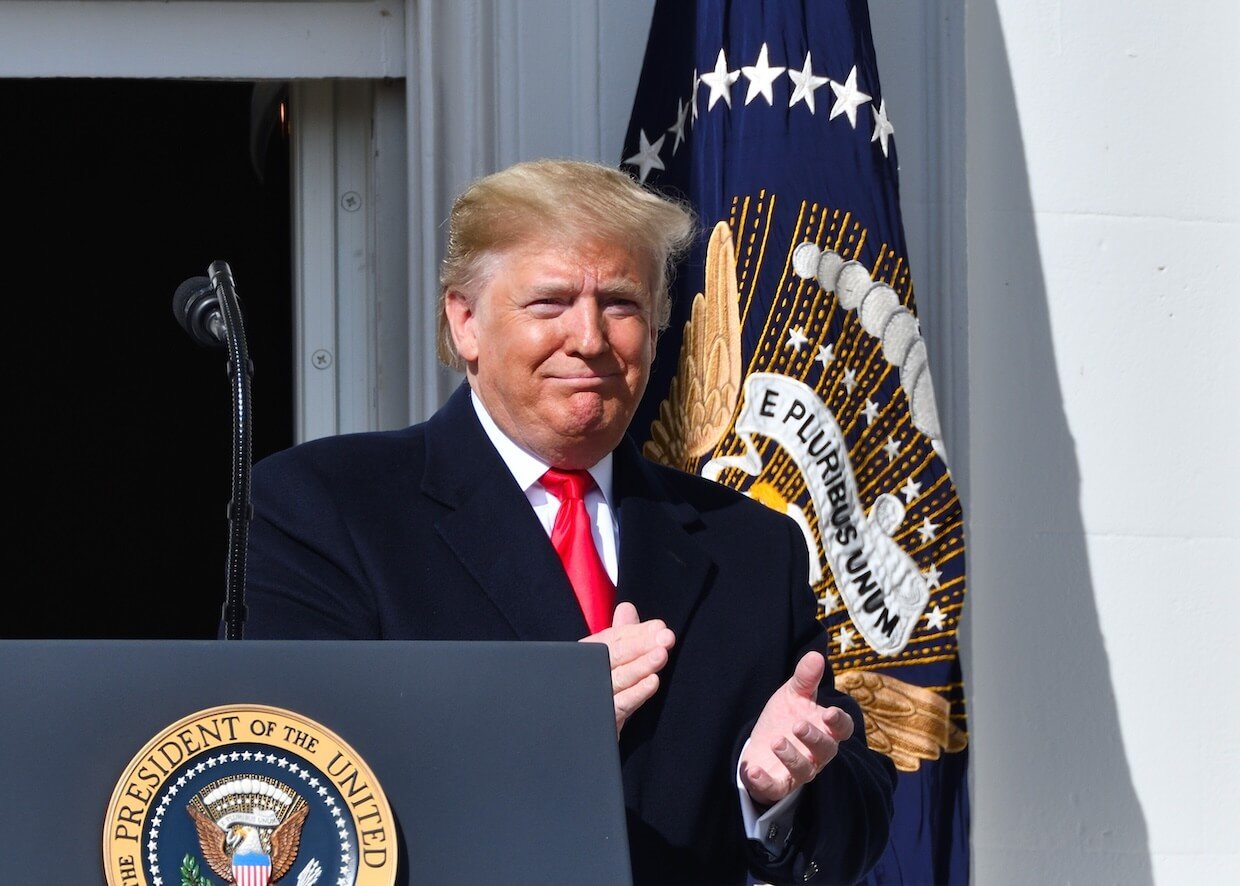
Professor Peter W. Klein: When I saw President Trump making more than one plea to the people of Iran, saying this is your opportunity to revolt and overthrow the regime, there wasn’t—at least as far as I could see—an explicit promise of cover and protection, but it was certainly implicit. And it just resonated for me, which is what led me to write that essay in the Times. It resonated on many levels.
Having been raised by Hungarian refugees, I knew what happened in 1956. I didn’t live through it the way my brother did, but I heard many stories—about listening to Radio Free Europe and the encouragement of revolution, and then what happened when the revolution actually occurred. There was no cover. Of course, you understand the political context. It was the height of the Cold War; the two nuclear superpowers were confronting each other. What followed 1956 was a series of conflicts—both hot and cold—between the United States and the USSR.
But the implication at the time was that if you took to the streets and took over your country, you would be protected. That obviously did not happen. Imre Nagy came in, tried to establish a new government, and the effort was crushed. Ultimately, he was executed.
It also resonated for me because of reporting I had done in Iraq. I was there shortly after the fall of Saddam Hussein and had been sent to report specifically on the Shia population. In 2003, I think for many American audiences the distinctions between Shias and Sunnis, the Baathist system, the subjugation of the majority population, and the complexities of the relationship with Iran were not widely understood.
I went there with my colleague Bob Simon and producer Tricia Doyle for CBS 60 Minutes. We were trying to find the right way to tell the story. We spoke with a number of people. At one point we interviewed the grandson of Ayatollah Khomeini, who had come to Iraq and was saying that it was good America was there. But many people in the Shia community told us he did not have much credibility. They suggested that if we really wanted to understand the mood on the street, we should go on a Friday night to the Imam Ali Mosque in the holy city of Najaf and meet a young cleric named Muqtada al-Sadr.
We met with Sadr, and he was very clear. He said, “Saddam was a small serpent; the United States is the big serpent. You should leave. We don’t want you here.” And this view was rooted in history—specifically the events of the first Gulf War in the early 1990s, when George H. W. Bush had made a very similar appeal to the Shia population, encouraging them to rise up against Saddam. The message was essentially: this is your opportunity to take over your country. And the Shia did revolt.
But they were crushed—brutally crushed. And the Americans essentially watched. They were observing from aircraft as kerosene was poured on people and they were set on fire. It was horrific violence carried out by Saddam’s forces. The pattern of abandonment and betrayal echoed again and again.
I also grew up in Miami among Cuban exiles, so I was familiar with the history of the Bay of Pigs as well. It’s a pattern that we have seen repeatedly. And that is why I thought the historical resonance was worth highlighting.
Why Removing One Leader Rarely Transforms a State
You suggest that rhetorical support for uprisings can become morally problematic when it is not matched by material backing. From an ethical and strategic standpoint, where should the line be drawn between normative support for democratic movements and irresponsible geopolitical signaling?
Professor Peter W. Klein: Powerful countries are always going to try to shape the world and manipulate it to their needs. That is realpolitik. The challenge is that sometimes the words don’t match the actions.
As we have seen in the examples I noted—and many others—I don’t think the intention was necessarily absent. When Eisenhower sent messages to Hungarians suggesting that they should stand up to the Soviet empire and implying that the United States would have their back, I don’t think Eisenhower had ill intentions. He was expressing rhetoric aligned with American policy. But it’s a little like the dog that catches the car: once the revolution actually begins, the question becomes, what are we going to do now? The reality sets in. Are we really prepared to confront another nuclear power?
The same question applies to Iran. If the Iranian people actually listened and launched a full-scale revolution in their country, it is hard to imagine what exactly would happen. Would the United States really intervene, especially after all the rhetoric that this administration is not about regime change and that regime change is not its intention? In this case, it becomes particularly relevant and important to discuss, because the Trump administration has been quite clear from the beginning that regime change is not its philosophy and that it is highly critical of that approach.
Trump has also pointed to what he considers the example of Maduro—removing a bad actor or despotic leader while leaving the broader infrastructure intact. The idea seems to be that if you remove one person, things will somehow fall back into place. But we have seen the opposite in cases like Iraq. When Saddam was removed and deep de-Baathification dismantled the entire governing infrastructure, the country effectively collapsed.
I was in Iraq recently reporting on corruption there. Corruption is so rampant that people often say something striking: Under Saddam there was one corrupt person you had to pay off, but now there are hundreds—hundreds of hands, hundreds of Saddams. People say they don’t even know how to function in the system anymore. You see half-built buildings everywhere, and the oil infrastructure is a mess. The state simply never rebuilt a functioning system to replace what had been dismantled.
Nation-building is extremely difficult to do from the outside. It’s a bit like building a ship inside a bottle—you are trying to assemble something complex from outside the structure rather than letting it develop organically.
Trump has been advancing this idea that removing one leader—whether it is Khamenei or Maduro—is enough, that eliminating one figure will somehow allow everything else to fall into place. But Venezuela is not Iran. The United States can exert influence in places like Venezuela because of economic and political ties. Iran is probably one of the least likely places where the United States can simply step in and impose that kind of outcome, regardless of removing one leader. So, the philosophy itself seems flawed.
Why Regime Change in Iran Is Unlikely to Be Imposed from Outside
Your analysis implies that regime change is rarely a spontaneous outcome of external pressure alone. Based on your research into Iran and past US interventions, what conditions would realistically be required for a regime transition in Iran to succeed without producing state collapse?
Professor Peter W. Klein: I’m not an expert on Iran by any means. I’ve reported on Iran, and I have many friends who are Iranian, including Iranian scholars. So, this is very much a cursory view, and if you have audience members with PhDs in political science, my apologies for simplifying this. But my sense is that the grassroots movement of frustration in Iran is, in many ways, more complex than—I’ll compare it to the Hungarian case, which I know better because I grew up among Hungarians, lived in Hungary, and worked there as a reporter.
In Hungary, in 1956, there was genuine frustration with the centralized system and with many of the issues affecting the country. So, when the United States came in and suggested that Hungarians should move in a certain direction, there wasn’t much resistance to that idea. In fact, there was quite a bit of enthusiasm—people felt it was great that America was encouraging them. The United States was also very effective in its propaganda, presenting itself as a place where the streets were paved with gold.
My father believed much of that. When he came to America, he genuinely thought the streets were paved with gold because that was the image people had been given. But he ultimately became a very patriotic American because much of that promise proved true. He was able to buy a house and build a life in ways that would not have been possible for him in Hungary.
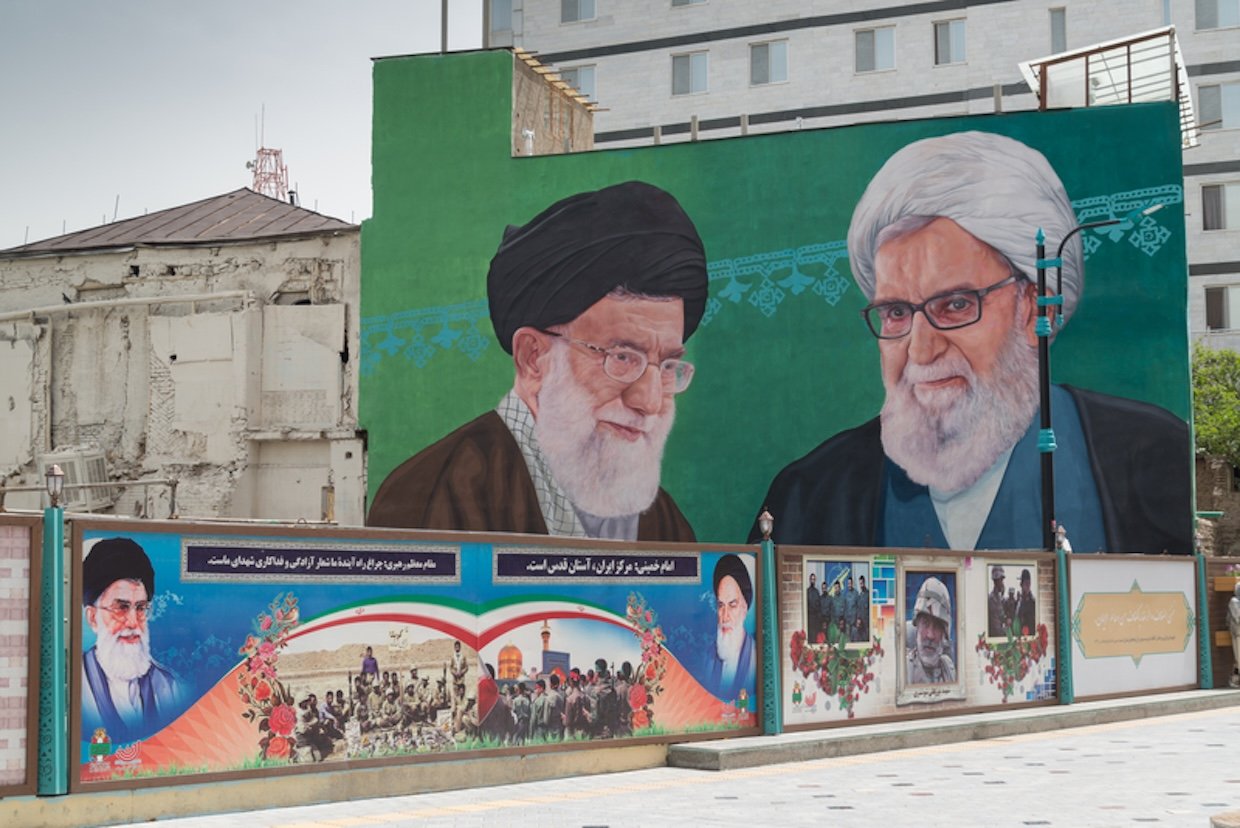
In Iran, however, the situation is far more complicated. There is the historical relationship with the United States—going back to the era of the Shah—as well as US support for Israel and the broader conflict between Iran and Israel. So even if many people are frustrated with the regime, and surveys suggest there is widespread dissatisfaction, the United States is not necessarily the actor they want telling them what to do.
It’s a bit like when I tell my kids to do something. Even if it’s a good idea, they might resist simply because it came from me. In the same way, many Iranians may resist calls for regime change if those calls come directly from the United States.
So, it is a very complicated scenario. As you suggested, regime change generally does not come from outside. It can happen if you bomb a country to smithereens, as happened in Iraq, and remove its leader. By definition, that produces regime change. But it is extremely messy regime change—often unsustainable—and it can take decades to rebuild a functioning state afterward.
The IRGC’s Embedded Power and the Limits of Regime Destabilization
You highlight the enduring memory of the 1953 CIA-backed coup in Iran as a source of skepticism toward American intentions. To what extent does this historical legacy still shape Iranian public attitudes toward US rhetoric about liberation and democracy?
Professor Peter W. Klein: It is definitely one of those sore points that continues to linger. So, the idea of the United States coming in and lecturing Iran—after having, in some cases, helped create some of the conditions that contributed to the problems they face today, and given the history of US involvement there—carries a lot of weight. This is not some theoretical issue involving something that happened in Argentina or some distant place. It happened in their own country. So, there is a great deal of sensitivity around it, at least from what I can tell from talking to Iranians. It is clear that there are real sensitivities surrounding that history.
You emphasize the institutional strength of the Islamic Revolutionary Guard Corps (IRGC) as a central obstacle to regime change. How does the IRGC’s political–economic role within Iran complicate external attempts to destabilize the regime?
Professor Peter W. Klein: That’s a tough and a very good question. I think it’s one that people much smarter than me can answer much better than I can. I spent a lot of time dealing with the Rafsanjani regime years ago in Iran, and I got a glimpse of the complexities and the connections between the business elites and the IRGC. Not just the oil industry—although, obviously, the oil industry is huge. There are so many ties there, and of course there is a lot of corruption. So, this is not a stand-alone militia that is independent of the fabric of the country. While there is a lot of frustration with and fear of the IRGC, they are also integrated in many ways. And they are huge—they are powerful. This is not some small force.
Going back to my Hungary example, it required Soviet tanks and Russian soldiers to come in and crush that rebellion. In Iran, however, this is internal. It is an internal security force that is large, powerful, and integrated into many aspects of the economy and society. So again, it makes it very difficult to imagine a grassroots revolution simply changing that regime.
Escalation Risks: How a Localized Strike Could Ignite a Regional War
The current escalation involving US and Israeli strikes against Iranian targets intersects with ongoing conflicts in Gaza, Lebanon, and the broader regional confrontation with Hezbollah. How do you assess the risk that the Iranian theater could evolve into a multi-front regional war?
Professor Peter W. Klein:, That’s the fear that so many people have: where does this go? You think back on how regional or even world wars start—they start small. They begin with some small activity that somehow gets out of control.
I do think that one of the concerns I have is the lack of clear messaging, particularly from the United States. I think Israel’s messaging is quite clear, and their agenda has always been very clear on Iran. The more challenging thing is that the United States’ messaging is very unclear, and part of that may be that Donald Trump and the people around him haven’t aligned their messaging, and Trump himself has been inconsistent in what he has said. In politics and war, messaging is so important. If you are not sending a clear message about what the intention is and where things are going, everyone becomes uneasy. It makes everyone in that region a little bit trigger-happy or gun-shy, depending on which direction they are going in, and it creates the potential for a powder-keg situation.
I’m still hopeful that cooler heads will prevail and that this situation will be quieted down, because I do think that whether some people consciously—or perhaps subconsciously—appreciate it, there is a lot at stake here. This is not, going back to the Venezuela example, one economically powerful country that is somewhat isolated regionally. The implications of what happened in Venezuela carried very little chance of turning into a regional conflict.
Here, however, there is a huge chance of it. So, I’m hoping that the people who are in charge—even including the Israelis—realize that the blowback from a regional conflict would be enormous and that this situation has to be quieted down. As much as there may be aspirations of regime change, the cost of that may simply be too high.
Proxy Networks and the Uncertain Reach of Iran’s Deterrence Strategy
Iran’s strategic influence across the region is often exercised through proxy actors such as Hezbollah, Iraqi militias, and Palestinian groups. In your assessment, how central are these networks to Iran’s deterrence strategy, and how might they respond to intensified military pressure?
Professor Peter W. Klein: That dynamic has been around for a long time. So, I don’t know how much Hezbollah or other proxies factor into this particular conflict. I do know that there are heightened concerns. There are heightened concerns in New York City, and there are heightened concerns elsewhere that the actions being taken in Iran could have broader reverberations. I know people who live in Israel, near the border of the West Bank, and there is genuine concern that there may be activities coming from the West Bank similar to October 7.
Do I think that’s going to happen? Probably not. But I don’t live there, and that’s not my world. The fact that people are genuinely concerned about it is telling. There is a sense that it could have implications and blowback in specific areas and communities. But I don’t know how significant that is on the larger scale when it comes to this war.
Talk Is Cheap: The Political Incentives Behind Rhetoric of Liberation
Your article critically examines the recurring rhetoric of liberation and democratic uprising in US foreign policy. Why does this narrative persist despite repeated historical failures, and what political incentives sustain it?
Professor Peter W. Klein: It comes down to the fact that talk is cheap. Whether it’s telling your partner, your kids, your colleagues, or the people of another country, this is what I want to do, this is what the intention is. If you don’t follow through, you lose credibility. But there can still be a short-term gain from saying you should revolt, or we have your back, or we’re going to protect you.
And it’s also a little bit like one of the challenges of politics. Because if Eisenhower did it, or Kennedy did it, or George H.W. Bush did it, that was a long time ago. People ask, what does that have to do with today? What does that have to do with my administration? So, the sins of the country from the past are often forgotten.
They are also sometimes forgotten by the people who are being encouraged to revolt. The Iranians could have learned lessons from the Cubans and the Hungarians, but they didn’t necessarily look at those historical precedents. Instead, they might think: Great, we’ll just revolt—the United States says it has our backs.
But again, talk is cheap. It’s easy to gain short-term political advantage from it and perhaps even hope that the moment never actually arrives. You can present yourself as a powerful leader who believes in freedom, liberty, and democracy—an American apple-pie version of leadership that projects a positive image.
And then the options are: Nothing happens, and you get credit for your rhetoric without having to act; or something happens and you don’t follow through, in which case you pay the short-term political cost; or, in the rare case, you actually back them up.
Militias, Fear, and Control: The Architecture of Authoritarian Survival
You argue that authoritarian regimes rarely collapse easily and often respond to threats with intensified repression. In the Iranian context, what mechanisms of authoritarian resilience make the system particularly difficult to destabilize?
Professor Peter W. Klein: This is where the Revolutionary Guard has an advantage. In many of these authoritarian regimes, they are able to maintain their control for a variety of reasons, including ruling with an iron fist.
I’ll give you just a quick sidebar example that I found interesting. Under Saddam, I think it was his nephew who ran the militia there, and he knew that they needed to put considerable effort, money, time, resources, and human power into building a militia—a state militia that could crush rebellions, especially after there had already been a Shia rebellion. So even the fear of that could be enough. People walking around with guns can be enough—you don’t have to shoot people; the threat alone is often sufficient.
What I found particularly interesting was a videotape I obtained after the fall of Saddam. I got it from the palace in Baghdad, in the Green Zone. I had received a number of videotapes that I started going through, and one of them was the strangest thing. It showed Saddam Hussein shortly before the 2003 invasion, sitting with a group of his ministers. They were examining what looked like toys—things like tacks, slingshots, and Molotov cocktails, essentially very low-level weapons.
So, I sat down with a translator and a couple of other people to understand what the conversation was about and what was going on. No one had seen this footage before. I eventually included it in a documentary that aired on the History Channel, and the New York Times did a big story about it. The Daily Show even did a spoof on it.
But what was interesting—the real insight—was that Saddam was essentially telling the people around him that the Americans might invade in 2003 and that there could be another Shia revolt. He said they needed to get the people on their side, but they didn’t want the population to be armed well enough to challenge the regime. So, the idea was to provide low-level weaponry—Molotov cocktails and slingshots—that civilians could use against other civilians, but that would not be powerful enough to challenge Saddam’s forces.
It was somewhat comical. There is a reason The Daily Show used a clip of it, because it was surreal to see Saddam Hussein, this powerful dictator, discussing what looked like toys. But the conversation itself was very serious. The logic was that the regime’s militia could crush civilians armed with low-level weapons, while loyalist civilians—Baathists—could be mobilized to confront and suppress the Shia. And it really gave some insight, at least for me, into how authoritarian regimes think about structuring military power in order to control the public.
The Devil We Know: The Uncertain Consequences of Regime Collapse
You warn that even a successful uprising could produce internal fragmentation or civil conflict. Looking at cases such as Iraq after 2003 or Afghanistan after 1989, what lessons should policymakers draw about the dangers of post-regime power vacuums?
Professor Peter W. Klein: What we keep doing is going into places that are diverse and complex without fully understanding that diversity and complexity. In Iran, I couldn’t even begin to list all the groups—whether it’s the Baluch or others. There are so many different factions within Iran, and you can easily imagine significant factional violence or strife if the whole country were to collapse.
You saw this in Iraq, and Iraq was, frankly, a much simpler place than Iran. You basically had Shias, Sunnis, and Kurds. There were also Turkmen and a couple of other groups, but you still saw huge strife among these different communities. So, this reflects the argument that sometimes it is the devil we know rather than the devil we don’t know. You might have a strongman who runs a country and keeps some of those factions at bay, and at least you know how to deal with that one leader.
Once things break into factional violence, as we saw in Afghanistan, it becomes extremely difficult to control. This is why every world power ends up struggling in Afghanistan, because it’s like trying to fight a marshmallow—you can’t really knock it out. There are so many different factions, and the enemy becomes very undefined. It has been an endless challenge, whether for the Soviets, the Americans, or others.
I’m not saying that Iran is Afghanistan. Iran is obviously a much more organized and economically developed country in most respects. In some ways, that makes the target clearer. But it is still complicated, and if you got rid of the Revolutionary Guard, I honestly don’t know what would happen in that country.
The Fragmented Media Landscape and the Crisis of Trust
As an investigative journalist and documentary filmmaker, how do you see the role of media narratives and digital information flows shaping global perceptions of the Iran conflict and the legitimacy of calls for regime change?
Professor Peter W. Klein: We have a huge responsibility. Consistently some journalists rise to the occasion and do an amazing job, while many journalists don’t. I mean, it was interesting with Venezuela. All of these journalists who couldn’t find Venezuela on a map before suddenly became experts on Venezuela, and that’s just the reality that many journalists are thrown into: You have to quickly figure out and understand a place that you may never have covered before.
I appreciate the challenge that journalists face. As a journalism professor, it’s something we often talk about—the responsibility, not just the basic ethics, but also the implications of what we do. Journalism has become so bifurcated and complicated. It’s not only that newspaper or that newscast anymore. There’s social media, there are bloggers. Some of the most influential people in media are coming from very non-traditional places, whether it’s Joe Rogan with a podcast or late-night comedians who essentially have journalists on their staff digging in and pushing particular perspectives.
So, it has become even more complicated than just the New York Times, Washington Post, or Guardian reporters shaping the narrative. And the other challenge is that you may try to do a really good job, but obviously we don’t have control over the entire media landscape. There are always going to be people who are either getting stories wrong or pushing false narratives, misinformation, or misguided agendas. And I hear it all the time from the public. Just from talking to people at conferences and presentations I do, people are frustrated and confused. Where should I be getting my news? Who can I trust? Who shouldn’t I trust?
And there isn’t a great solution. One of the solutions we often suggest in the academic world is transparency—being transparent about your positionality and transparent about your political affiliations. There is some real value to that. But then all that means is that we end up having an echo chamber, where people go only to others who share the same political views and values they have, and they’re not exposed to opposing opinions.
So, there really isn’t a great solution, unfortunately. But I think just being aware matters. Your question itself has value, because having these open conversations can have some real, real positive impacts.
Change May Come—But Not in the Way the West Expects
And lastly, Professor Klein, looking beyond the immediate crisis, what scenarios do you see as most plausible for the next decade of Iranian politics—gradual reform, intensified authoritarian consolidation, externally triggered conflict, or eventual systemic transformation?
Professor Peter W. Klein: I’m suspicious of anyone who makes predictions, and I will confess that I am a terrible predictor. I thought Barack Obama would never become president, so I’m not a good person to ask. But I can tell you what my hope is. I hope that gradual transformation happens. I do think there are some very serious problems in Iran that need to be addressed, both internally and externally.
Maybe history will show that this particular attack opened the door for change. But the opposite can happen as well—it could move in the opposite direction. So, there may be change, but it may not be the kind of change that many people in the West would want. There could be a doubling down on the nuclear program, proxy wars, and similar policies.
I personally don’t think there is going to be a huge regional conflict. I don’t think this will open the door to World War III. But it is impossible to know for certain, which is why we really need to be very careful. Policymakers certainly need to be cautious, and in academia and journalism we also need to be careful both in making predictions and in explaining and analyzing the situation, because it is so complicated that most people don’t fully understand it, including myself.