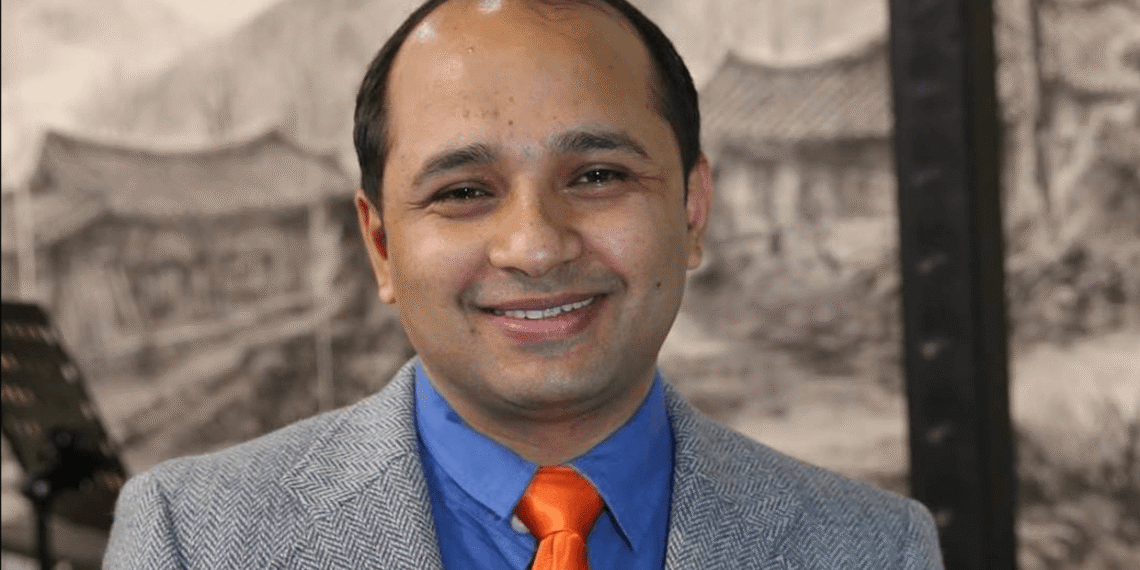
Dr. Sanjeev Humagain offers a nuanced and cautionary reading of Nepal’s post-election moment, arguing that the March 2026 vote should not be seen simply as a democratic breakthrough. While the rise of Balendra “Balen” Shah and the Rastriya Swatantra Party marks a clear rupture in elite continuity, Humagain warns that Nepal’s deeper political logic remains shaped by “institutionalized populism.” He emphasizes that the country is emerging from “a kind of institutionalized gray zone,” yet still faces serious challenges of accountability, parliamentary weakness, and policy incoherence. For Humagain, the election has validated long-standing public questions about corruption, patronage, and ineffective governance—but not yet their answers. Nepal, he suggests, stands at a critical juncture: not at the summit of democratic renewal, but “at base camp,” where the hard work of institutional reform has only just begun.
Interview by Selcuk Gultasli
Giving an interview to the European Center for Populism Studies (ECPS), Dr. Sanjeev Humagain, a political scientist at Nepal Open University, offers a nuanced and theoretically grounded assessment of Nepal’s evolving political landscape in the aftermath of the March 2026 general election. While widely interpreted as a rupture driven by Gen Z mobilization and anti-elite sentiment, Dr. Humagain cautions against overly celebratory readings of the electoral outcome. Instead, he situates the moment within a longer trajectory of institutional fragility, elite circulation, and the deepening entrenchment of populist political practices.
At first glance, the electoral victory of Balendra “Balen” Shah and the Rastriya Swatantra Party (RSP) appears to mark a decisive break with the post-1990 political order. As Dr. Humagain notes, “the rise of the Rastriya Swatantra Party… represents a clear break from that pattern,” emphasizing that “for the first time, we are witnessing an overwhelmingly large number of new members in Parliament.” This influx of political newcomers—many lacking prior ministerial experience—signals a disruption of long-standing elite continuity and suggests the possibility of institutional renewal.
Yet, as the interview unfolds, Dr. Humagain complicates this narrative of democratic transformation. He underscores that Nepal’s political trajectory has long been characterized not by linear democratization but by movement across “a kind of institutionalized gray zone,” where “there was a serious erosion of accountability” and persistent threats to democratic consolidation. In this context, the current electoral moment represents less a definitive transition than a “critical juncture”whose direction remains uncertain.
Central to Dr. Humagain’s analysis is the argument that Nepal’s contemporary politics is shaped by a deeply embedded form of populism. While new actors and generational dynamics have reshaped the electoral arena, they have not necessarily displaced the underlying logic of governance. As he warns, “the other side of the coin is that Nepali politics has already been shaped by populism for at least a decade,” characterized by “the personalization of politics” and the marginalization of institutional mechanisms such as parliament and party structures. This personalization, he argues, has rendered “several key institutions dysfunctional,” raising fundamental questions about the durability of democratic accountability.
Importantly, Dr. Humagain highlights a paradox at the heart of Nepal’s current transformation. While voters have clearly rejected established parties and endorsed systemic critique, they have not yet converged around a coherent programmatic alternative. “The questions have been approved,” he observes, noting that citizens have given new political actors “the mandate to find meaningful and democratic answers.” However, “it is not that a clear direction has already been determined”—a condition he captures through the evocative metaphor that “Nepal is at the beginning of a new journey—we are at base camp, not at the top of the mountain.”
It is precisely within this unresolved space that the central challenge emerges. Despite electoral change, Dr. Humagain expresses concern that “the populism that has already become deeply institutionalized will persist in the coming years.”This persistence, he argues, will generate “ongoing challenges for democratic accountability” and hinder efforts to strengthen parliamentary governance. In this sense, Nepal’s post-election moment is not merely a story of democratic renewal, but a test of whether institutional reform can overcome the enduring legacy of populist political logic.
Here is the edited version of our interview with Dr. Sanjeev Humagain, revised slightly to improve clarity and flow.
The Rise of the RSP Marks a Clear Break from Nepal’s Old Elite Pattern
Dr. Sanjeev Humagain, welcome, and let me begin with a foundational question: In your work on “exclusive parliamentary politics,” you argue that Nepal’s democratic system has long been dominated by entrenched elites despite formal electoral competition. To what extent does the rise of independent figures like Balendra “Balen” Shah represent a rupture in this elite continuity, or merely a reconfiguration of elite circulation?
Dr. Sanjeev Humagain: I think there are some fundamental questions we need to address at this moment. Since 1990, as I have argued in my academic work, a very limited group of political leaders has circulated within the cabinet—replacing one another over time, with the same prime ministers repeatedly returning to power. In this context, the rise of the Rastriya Swatantra Party (RSP), as well as the emergence of Balendra Shah, represents a clear break from that pattern.For the first time, we are witnessing an overwhelmingly large number of new members in Parliament, which will inevitably shape the composition of the new cabinet. I expect that nearly 90% of ministers will, for the first time, lack prior ministerial experience. In that sense, this election marks a significant departure from the political continuity we have observed since 1990.
Nepal Has Long Moved from One Gray Zone to Another
You have highlighted the persistence of feckless pluralism and weak democratic performance in Nepal’s post-1990 trajectory. Does the recent electoral volatility suggest a deepening of democratic accountability—or a further erosion of institutional stability?
Dr. Sanjeev Humagain: That’s another important question. Not only I, but also the academic literature—for example Thomas A. Marks in 2002—identified Nepal as an example of feckless pluralism. What has happened here is that, since 1990, there have been several political transitions.
Until 1996, we had three elections. Then came the Maoist civil war, followed by the abolition of the monarchy and the establishment of a republican state in 2008. Another major transition occurred in 2015. In short, there have been numerous changes. However, these shifts were not from undemocratic to fully democratic systems; rather, they moved from one gray zone to another. In that sense, Nepal experienced a kind of institutionalized gray zone, which is deeply concerning. During this period, there was a serious erosion of accountability, and, as you noted, significant threats to the institutionalization of democracy.
I think Nepali politics has now begun to move out of this zone, but it remains to be seen whether it will evolve into a process-oriented, accountable democratic system or drift into another gray zone. Some signs of populism are already visible. Still, this is a critical juncture, as the country has at least started to emerge from that phase.
Gen Z Movement Is the Result of a Long-Term Shift in Political Discourse
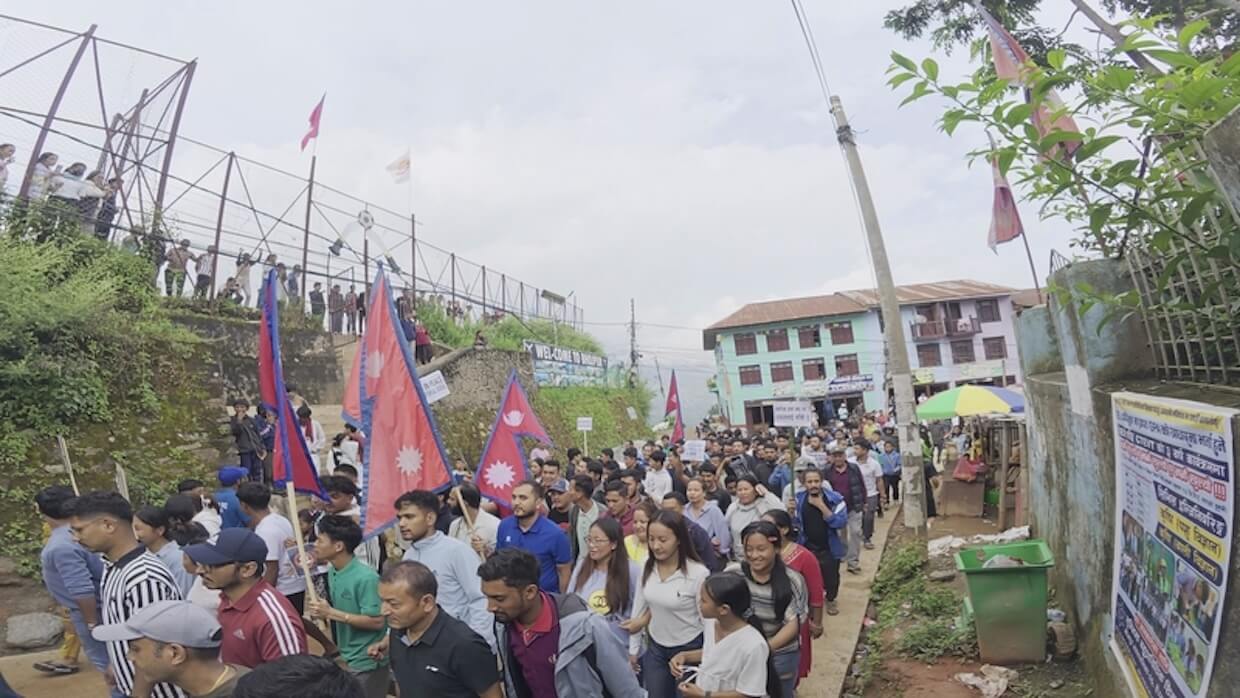
Your research on the structural determinants of democratic consolidation suggests that macro-level conditions in Nepal remain unfavorable. How should we interpret the apparent “Gen Z surge” in this context: as a corrective force, or as a symptom of systemic fragility?
Dr. Sanjeev Humagain: I think this reflects a very important particularity of Nepal, which is not common in many countries around the world. When a society undergoes rapid modernization, it typically develops new cities, new media, new educational institutions, and a broad expansion of citizen participation across social and political spheres. This process usually generates social capital and an organized middle class, which can give rise to new political parties and serve as a pillar of democracy. Historically, this pattern has been evident over the last 200–300 years, particularly in Western contexts, as well as in countries such as South Korea and Taiwan.
However, in Nepal, the situation is different. While we do observe key indicators of modernization—improvements in education, strong communication networks, rapid digitalization, and the proliferation of new media—the social base that typically drives democratic consolidation is largely absent domestically. Those who would constitute the middle class in industrialized contexts are often not in the country. Instead, they are working abroad—in places such as Kuala Lumpur, Seoul, and Riyadh.
As a result, these individuals, who contribute economically to modernization, have remained largely absent from direct political participation for an extended period. This has made the Nepali case distinct. As you rightly noted, their engagement is mediated primarily through social media. They express their views not through voting, but through digital platforms, often because they are unable to return home to participate in elections.
At the same time, they are shaping a discourse that tends to prioritize economic development over redistributive or democratic concerns, at least temporarily. Ironically, many Nepalese working abroad are employed in non-democratic countries, and the perspectives they transmit back home often reflect that experience—sometimes questioning the necessity of elections or political contestation.
These dynamics have made them important sources of new political narratives. The Gen Z movement is rooted in this evolving discourse, which has developed over at least a decade. It is not a sudden phenomenon, but rather the result of a long-term shift in how political ideas are formed and circulated in Nepal.
Reform, Not Change, May Be the New Currency of Nepali Politics
In your analysis of party evolution, you identify multiple “waves” of party formation driven by identity, institutional incentives, and political learning. Would you situate the rise of new actors such as the Rastriya Swatantra Party (RSP) and independent candidates as a fourth wave—perhaps defined by digital mobilization and anti-party sentiment?
Dr. Sanjeev Humagain: That is an interesting question—almost like homework for me—because my earlier analysis covered developments up to 2013–15. My concern at the time was that many political scientists tended to place all political parties in the same category. My work aimed to show that they are not the same.
We had strong ideological parties formed in opposition to autocratic rule. At the same time, some parties expanded within parliament during the period when identity politics was prominent in the Constituent Assembly, while others emerged directly from identity-based movements. That was the framework I developed.
You are right that this new party does not fit neatly into those three categories, so it could be seen as a fourth wave. However, we still need to be cautious before reaching a definitive conclusion. I am not entirely certain that we can fully describe it as a completely new party.
There are two points to consider. First, the prime ministerial candidate, Balendra Shah, was previously the mayor of Kathmandu Metropolitan City, the capital of Nepal. Second, the president of the Rastriya Swatantra Party is a former Home Minister and Deputy Prime Minister. Moreover, more than half of the party’s candidates had some form of prior affiliation with other political parties before joining this one. In that sense, can we really call it an entirely new party? This remains a question that requires further observation over time.
That said, you are correct in noting that, until the third wave, political movements were the primary drivers behind the rise of parties. This party, however, did not emerge from such movements or from a broader agenda of systemic change. This is a significant development in Nepalese political history.
Historically, “change” has been the central currency of major political parties in Nepal, dating back to the 1950s. In contrast, this party appears to prioritize reform rather than change. In that sense, for the first time in Nepal’s political history, we may be witnessing the emergence of a kind of conservative party—one that does not emphasize rapid transformation, but instead advocates gradual, step-by-step reform.
If the party continues along this path in government over the next five years, it could generate a new form of political polarization and establish itself as a distinct fourth wave. However, based solely on its formation process and candidate composition, it is still too early to definitively categorize it as such.
A New Polarization Between Reform and Continuity Is Taking Shape
Your Kathmandu Post article questions whether recent elections reflect swing voting or polarization. Given the persistence of party membership networks, is Nepal witnessing genuine dealignment—or simply a reconfiguration of partisan loyalties?
Dr. Sanjeev Humagain: That was the article I wrote two years ago, during the elections, when the Nepalese media were largely suggesting that Nepal had a significant number of swing voters. I argued that this was not swing voting, but rather the emergence of a new kind of polarization. This time, however, the situation appears quite different.
What is notable now is that even the major political parties of the past are questioning why their core members did not vote for them. Connecting this to your earlier question, Nepal seems to be experiencing a high level of dealignment. People are no longer strongly inclined to define themselves through partisan identities, which were quite prominent in the 1990s and the early 2000s.
In that sense, Nepal is undergoing a process of depoliticization. I have recently written in a Nepali newspaper that the results of these elections can be understood through a key lens: the breakdown of party patronage. Party patronage was a central driver of electoral success until the previous elections. Candidates would visit towns and promise tangible benefits—sometimes development projects, sometimes personal favors—in exchange for votes. However, this system now appears to have weakened significantly. At the same time, the fact that nearly half of the voters supported a single party suggests the emergence of a new form of polarization.
As I mentioned earlier, this polarization is structured around reform versus continuity. Established parties argue that they have delivered substantial progress—improvements in infrastructure, healthcare, and education—and that their achievements are underappreciated. In contrast, new political actors contend that existing parties lack sincerity and accountability, and that corruption is pervasive, making reform imperative. So, a new polarization is clearly emerging. Compared to the elections two years ago, there is also a much stronger swing. The deeper implications of this shift are likely to persist, and Nepalese politics may remain unstable for years, perhaps even decades. The long-standing 30-year pattern of competition between communist and liberal forces has now been disrupted.
The key question is how this will evolve into a new form of polarization. In any political system, polarization cannot be eliminated; it tends to develop in cycles shaped by socioeconomic conditions. At times, politics gravitates toward redistribution, while at other times it emphasizes economic growth. In Nepal’s case, the country has moved beyond traditional party patronage, but a new, stable form of polarization has not yet fully consolidated. This will be one of the most important dynamics to watch in Nepalese politics over the coming decade.
Nepal Is at Base Camp, Not Yet at the Summit of Democratic Reform
You note that informal networks remain central to electoral success. How does this reliance on patronage and personalized networks interact with the growing visibility of issue-based, urban, and digitally mobilized voters?
Dr. Sanjeev Humagain: That’s a very interesting aspect of Nepali elections at this time. I think we need to categorize this into three different segments. The first segment is that, from 1990 to the 2022 elections, party patronage dominated. It depended on informal networks; for instance, candidates would count the houses in villages and say, “Okay, I’ll take care of this, I’ll handle this, don’t worry, I will get the votes from there.” These kinds of informal networks were central, and electoral campaigns were mostly based on convincing local allies and influencing voters through them. That remained the norm.
Things started to break down in the last local and parliamentary elections. Balendra Shah himself, as an independent candidate, won the election in Kathmandu Metropolitan City. Similarly, in other sub-metropolitan cities, such as Dharan or Itahari, independent candidates also succeeded. This was the first signal that party patronage would not work in urban areas.
At the same time, the role of new media—particularly social media—became key in shaping voters’ attitudes. The use of social media has become a central strategy for winning votes.
In these elections, another segment has also emerged. The whole of Nepal has, in a sense, accepted fundamental questions about the system. It is not simply about which political party won or who will be the next prime minister. Rather, it is about broader concerns regarding the efficiency, productivity, and accountability of the system, which have been endorsed by voters. However, the important point is that while the questions have been accepted, the answers have not yet been fully articulated. There are no clear solutions so far, even among the new parties. Although they have presented many well-formulated ideas, the broader vision of the new cabinet and the priorities of parliament remain to be defined.
So, my point is that the questions have been approved. Citizens have given the Rastriya Swatantra Party the mandate to find meaningful and democratic answers to the issues that have been on the table for the last three decades. It is not that a clear direction has already been determined. Nepal is at the beginning of a new journey—we are at base camp, not at the top of the mountain. From this base camp, it is now necessary to develop a strategic roadmap to reach the summit.
Institutionalized Populism Will Continue to Challenge Democratic Accountability
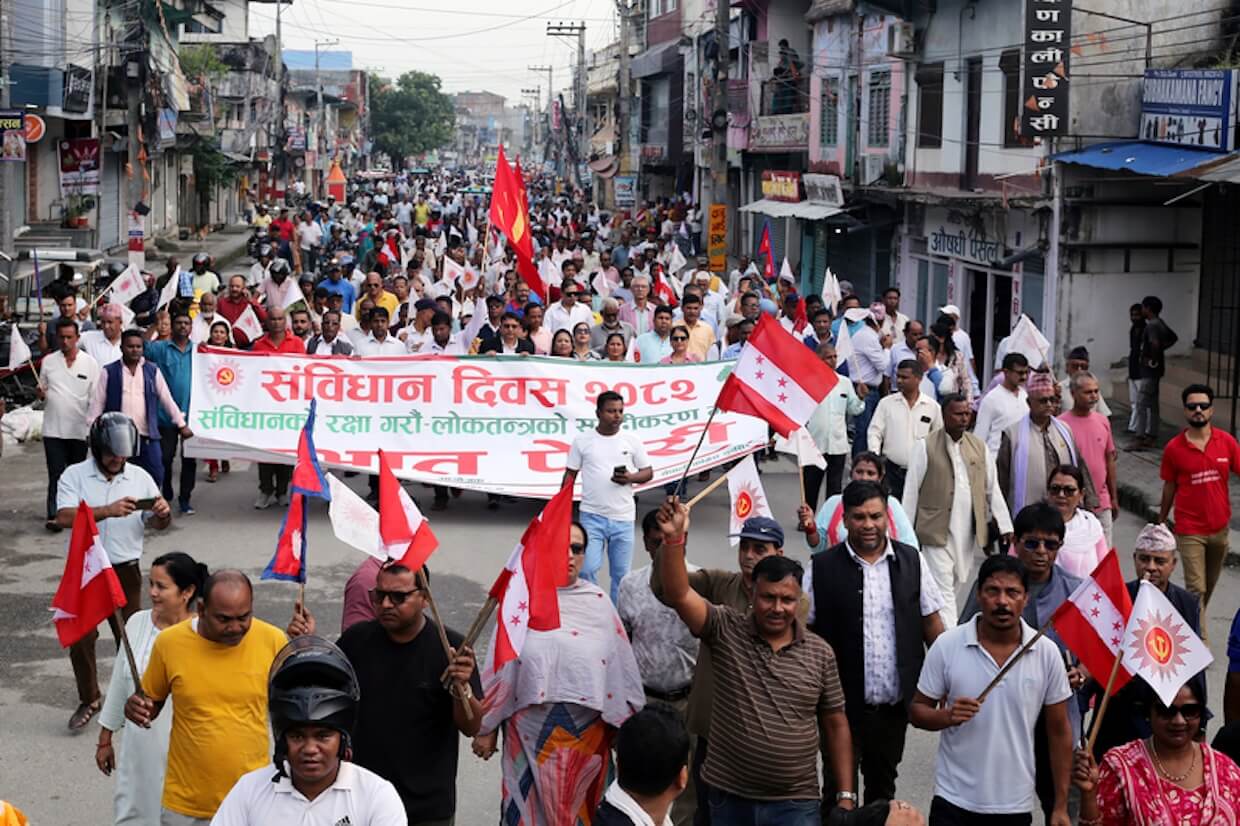
In your recent work, you argue that Nepali populism is increasingly characterized by personalization and utility-based politics, with ideology playing a diminishing role. How does Balendra Shah’s political style fit within this framework—does he embody a new form of technocratic populism?
Dr. Sanjeev Humagain: That’s a very important point to consider—the other side of the coin. Until now, you and I have been discussing one side of the coin, the change dimension, and we have been in a position to suggest that there is significant change in Nepali politics. However, the other side of the coin is that Nepali politics has already been shaped by populism for at least a decade.
The key dimensions of that populism, as you mentioned, are twofold. First is the personalization of politics—meaning the marginalization of institutions such as Parliament, the Cabinet, and the central committees of political parties. The Prime Minister increasingly behaves like an elected president. The Prime Minister’s residence, for instance, has become highly visible in daily news, almost like the White House. This personalization of politics has been one of the most serious threats to Nepali democracy. It has rendered several key institutions dysfunctional, including Parliament, which has remained largely ineffective for nearly two decades.
The second dimension relates to how Nepal has addressed socioeconomic inequality. Since 2006–07, there has been a broad recognition that the country faces deep structural inequalities. It has also been acknowledged that addressing these inequalities requires two things: first, inclusive participation in decision-making processes and institutions; and second, a capability-based approach to empowerment, given that discrimination has persisted for centuries.
In theory, Nepal’s political system was designed along these lines. However, in practice, it has diverged significantly. Political leaders have increasingly emphasized utility—focusing on majoritarian gains and immediate benefits—often at the expense of minority rights and long-term structural reforms.
In this context, the rise of the Rastriya Swatantra Party and Balendra Shah does not necessarily signal a departure from these underlying dynamics. It is difficult to assume that Nepali politics has fundamentally changed. The core worldview and governing logic of the state are likely to remain the same.
I am concerned that the populism that has already become deeply institutionalized will persist in the coming years. This will create ongoing challenges for democratic accountability, as well as for strengthening and institutionalizing parliamentary politics. I think that is the central challenge facing Nepali politics today.
Nepal’s Political Shift Closely Reflects the Global Democratic Recession
You describe populism in Nepal as moving toward a more right-leaning, communitarian discourse that balances order and freedom. How does this shift compare with global patterns of populism, particularly in Europe and South Asia?
Dr. Sanjeev Humagain: Yes, that’s true, and Nepal has almost always moved in line with global waves. If you look at the political trajectory of the country, it closely mirrors broader global developments. Nepal experienced democratization in the 1950s, followed by an authoritarian regime beginning in the 1960s that lasted until the 1990s. Since the 1990s, democratic practices have taken root, and from 2006–07 onward, redistributive policies also began to emerge. These developments have largely followed patterns similar to global trends.
More recently, the global shift toward center-right, leadership-driven politics—particularly characterized by strong, charismatic leaders—has also become visible in Nepal. I see clear parallels with developments in both Western and South Asian countries. The emphasis on growth-first approaches, where economic development is prioritized over other concerns, is also very similar.
I think the experiences of countries like Bangladesh and India—where strong economic growth has been associated with charismatic leadership—have had a significant impact on how people in Kathmandu perceive politics. Larry Diamond has described this broader trend as a democratic recession, and many of its features can be clearly observed in Kathmandu and across Nepal. So, Nepal is not following a distinct path; rather, it is part of the same global wave—the rise of center-right populism and charismatic, leader-centric governance.
Nepal’s Anti-Establishment Voice Has Largely Come from Above, Not from Below
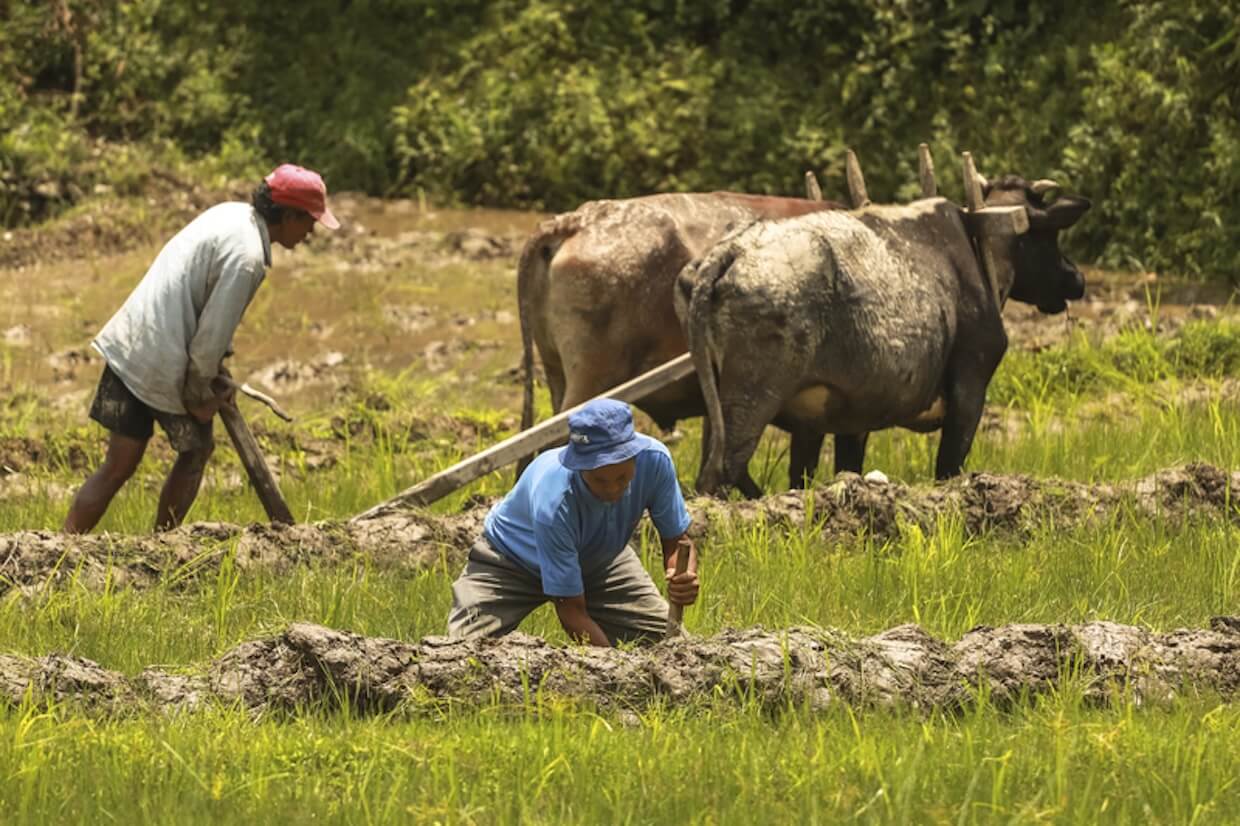
To what extent should Nepal’s current political moment be understood through the lens of “designer populism from above” versus grassroots anti-establishment mobilization?
Dr. Sanjeev Humagain: That’s a tough question—a very tough one. What I do agree with is that I really like the term you used, “anti-establishment.” People were not simply criticizing political parties; their distrust and questions were also directed toward the media, schools, and universities—in other words, the entire establishment. So, you are right in suggesting that people were questioning the whole establishment.
But the key question is: who was expressing this anger, and who was at the forefront of raising these concerns? Interestingly, many of those in the front line were individuals from the major political parties—such as the Nepali Congress, RSP, and The Communist Party of Nepal (Unified Marxist–Leninist- UML). Even within Parliament, they were pointing to various forms of nexus—sometimes political, sometimes bureaucratic—as underlying causes of low accountability and ineffective governance. So, even leaders from parties in government were raising these questions. In that sense, it is more accurate to understand these dynamics as voices emerging from above rather than from below. As I mentioned earlier, people largely approved these questions silently.
This is my main analytical framework for understanding these elections. It was not the answers that were debated—there was no substantial policy debate. Quite frankly, the electoral campaign was rather muted. What people seemed to do was to acknowledge that the questions being raised were valid.
So, the moment we are witnessing is one in which Nepal is being called upon to generate collective wisdom and provide meaningful answers to long-standing questions. These questions—such as weak intra-party democracy and entrenched networks—were raised from within the political system itself. In that sense, the anti-establishment voice has largely come from above, while voters at the grassroots level have silently—again, I would emphasize silently—endorsed these questions.
This Is Not Just a Generational Shift—It Is a Broader Political Shift
The recent electoral cycle has been widely interpreted as a “Gen Z revolution.” In your view, does this generational shift represent a substantive transformation in political participation—or a temporary protest against entrenched elites?
Dr. Sanjeev Humagain: I think both of your assumptions need some modification. What I believe is that there is a strong alliance between the voices of younger generations and those of senior citizens who fought for democracy. The rise of social media is quite significant in this regard, as it has brought all generations onto the same platform.
The questions raised by young people focus on three fundamental spheres. The first is the quality of education they receive. Many of their peers study abroad, and they hear that education systems are quite different there compared to Nepal.
The second is fairness in the job market. Fairness is not fully present in the private sector. Interestingly, public sector jobs are perceived as more fair, while private sector employment is often shaped by informal networks and personal recommendations.
The third issue is the slow development of infrastructure—especially roads and hydroelectricity. People aspire to better roads and stable energy, and these concerns directly affect their future.
These issues were initially raised by young people, but they have been taken up more broadly in society. Older generations have reframed them in terms of justice, arguing that the lack of attention to both physical and social development is turning Nepal into an unjust society.
In that sense, I would not simply describe this as a generational shift. It is more accurate to see it as a political shift. Previously, ideological divisions defined electoral competition, but now questions of justice have moved to the center and brought different generations together. The Rastriya Swatantra Party received close to 50% of the vote, which suggests that its support extends beyond young voters. While young people were the primary drivers and agenda-setters, their concerns were reinterpreted and amplified across society. This has generated something like a new social contract—perhaps not formally articulated, but nevertheless present as a shared understanding.
So, I think this should be seen as a broader political transformation. It is not just a temporary protest or short-term mobilization; rather, it is likely to have a gradual and lasting impact across the country.
The Challenge Now Is to Turn Electoral Legitimacy into Institutional Harmony
Given your findings on the perils of parliamentarism—particularly the role of dynastic politics and weak institutionalization—what constraints is a figure like Balen Shah likely to face when attempting to translate electoral legitimacy into effective governance?
Dr. Sanjeev Humagain: That’s a very important point, because the parliamentary system is, in many ways, a very good system, and I favor it, especially in the case of Nepal. We have significant ethnic and regional diversity, so the representation of each community in parliament—where laws are made—is essential. Having strong coordination among these representatives in the cabinet is also crucial. If the parliamentary system is used properly, this is a very positive feature.
At the same time, however, there are important challenges. The frequent change of governments, and the resulting inconsistency in policies, have been key concerns. In that sense, I argue that Nepal faces the same problems as other less institutionalized parliamentary systems. I think Balendra Shah has certain advantages in overcoming these challenges. First, his party has secured a majority in parliament, which is happening in Nepal for the first time since 1996. After such a long gap, this majority provides a significant advantage.
Another advantage is that, since this is not a coalition government, there is likely to be greater policy uniformity. Over the past two decades, there has often been policy conflict between the Prime Minister’s Office and key ministries—such as Finance or Home Affairs—because they were controlled by different political parties. Now, there is an opportunity to generate greater harmony.
I believe this creates favorable conditions for a more effective implementation of the parliamentary system in Nepal, similar to how it functioned in Japan after the Second World War, where parliamentary governance was accompanied by policy coherence. So, I do believe that this is a significant opportunity for the real implementation of the parliamentary system under this new government.
Nepal’s Future Depends on Turning Opportunity into Programmatic Reform
And lastly, Dr. Humagain, looking ahead, do you see Nepal’s current moment as the beginning of a more programmatic, issue-based democracy driven by new generations—or as another cyclical phase of populist disruption within a structurally constrained political system?
Dr. Sanjeev Humagain: As a citizen of this country, I do believe that the first option should be our path. As a responsible citizen, it is also my duty to raise concerns and encourage the government and parliament to move in that direction.However, looking at the current public discourse and available analyses—and even the responses of the newly elected party—I am not very optimistic so far. There are still unresolved questions regarding the political agenda. Some important issues have been raised, particularly concerning the effectiveness of federal structures, which have been central to political debate over the past decade. I believe it is essential, and also my responsibility, to encourage the government to adopt a priority-based approach to political, social, and economic agendas—focusing first on issues that can be addressed more immediately, before moving on to more complex, long-term challenges.
This is a crucial moment for Nepal’s future, especially as the new government is about to begin its work this Friday. Hopefully, this will lead, for the first time, to more program-based and programmatic discussions, both in parliament and in society. If such public debates emerge, Nepal will have an opportunity to choose the path that best serves its future. It is our collective responsibility to ensure that this opportunity is used in that direction.
Dr. Sanjay Humagain, thank you so much for your time. I appreciate it.
Dr. Sanjeev Humagain: Thank you very much for your time, and I wish you good luck in all the work you are doing. You are undertaking very important efforts, because, knowingly or unknowingly, the whole world has entered a populist era, which is not beneficial for everyone. It is therefore important to return to a rule-based, liberal order. Your efforts will contribute not only to our country but to the world as a whole, and I am truly glad that you have initiated this work.