
In this ECPS interview, Dr. Aaron Winter examines how the 2026 UK elections reveal not simply electoral volatility, but the accelerating mainstreaming of far-right discourse within British political life. Reflecting on Reform UK’s rise, anti-immigration politics, Brexit, Islamophobia, and the crisis of democratic legitimacy, Dr. Winter argues that Britain is increasingly witnessing “the mainstreaming of the far right” through narratives once considered politically marginal. Drawing on his scholarship on racism, populism, and “reactionary democracy,” he warns that anti-migrant politics now functions as a broader vehicle for exclusionary nationalism, white victimhood, and democratic erosion. The interview explores the normalization of “liberal racism,” the racialization of the “left behind,” and the growing convergence between establishment politics and reactionary nationalism in contemporary Britain.
Interview by Selcuk Gultasli
The 2026 local and devolved elections in the United Kingdom unfolded amid mounting concerns over democratic legitimacy, political representation, and the accelerating normalization of far-right discourse within mainstream public life. Against a backdrop of Labour’s declining support in key constituencies, the electoral rise of Reform UK, intensifying anti-immigration rhetoric, and growing polarization around nationalism and belonging, Britain increasingly appears caught in what many scholars describe as a broader crisis of liberal democracy. It is within this context that the European Center for Populism Studies (ECPS) speaks with Dr. Aaron Winter, Senior Lecturer in Sociology (Race and Anti-Racism) at Lancaster University and Research Associate at the University of the Witwatersrand, whose influential scholarship has long examined racism, populism, Islamophobia, reactionary politics, and the mainstreaming of the far right.
In this wide-ranging interview, Dr. Winter argues that contemporary British politics cannot be understood simply through the language of protest voting or electoral fragmentation. Rather, he contends that Britain is witnessing “the mainstreaming of the far right,” in which immigration, racism, and reactionary politics have increasingly become “the focal points of political discussion and ‘debate’” across both establishment and insurgent political actors. According to Dr. Winter, what is especially striking is not merely the electoral growth of Reform UK, but the extent to which “politics is now increasingly conducted from the center-right through the use of ideas that originate with the far right.”
Drawing on his collaborative work with Aurelien Mondon, Dr. Winter examines how overt forms of racism historically associated with fascism and white supremacy have increasingly been replaced by “liberal, colorblind racism and Islamophobia” articulated through the language of free speech, women’s rights, national security, and the protection of liberal values. He warns that this process has steadily expanded the political legitimacy of exclusionary nationalism while simultaneously hollowing out democratic alternatives. “We have hollowed out the left while simultaneously accelerating the trajectory toward authoritarianism and fascism,” he argues.
Particularly significant in this interview is Dr. Winter’s analysis of how the discourse of the “white working class” and the “left behind” has functioned as a vehicle for racialized nationalism after Brexit. He contends that contemporary British politics increasingly revolves around a much more explicit form of ethno-nationalism: “What we witnessed this weekend in London with the rallies,” he states, “is the emergence of a much more overt white supremacist and ethno-nationalist discourse operating irrespective of, and far beyond, class.”
The interview also explores the intersections between Brexit, Islamophobia, austerity, anti-migrant politics, and democratic decline, situating Britain within broader international patterns visible in Trumpism, European radical-right populism, and authoritarian nationalism. Throughout the conversation, Dr. Winter repeatedly emphasizes that the crisis facing Britain is not simply electoral, but structural: a crisis of capitalism, democracy, and political imagination itself. Yet he also insists that alternatives remain possible—provided democratic politics moves toward “radical reform, anti-racism, and opposition to inequality.”
Here is the revised version of our interview with Dr. Aaron Winter, lightly edited for clarity and readability.
Britain Is Mainstreaming the Far Right
Dr. Aaron Winter, welcome. To begin, the 2026 local and devolved elections exposed what many analysts describe as the long-term fragmentation of British politics, with Labour’s support collapsing in key areas while Reform UK consolidated backing through anti-immigration rhetoric, anti-establishment anger, and broader cultural grievances. How do you interpret these elections within the framework of your work on “reactionary democracy”? Do they represent a temporary cycle of protest politics, or evidence of a more durable restructuring of British political culture?
Dr. Aaron Winter: That’s a very good question. I do not tend to see this, broadly speaking, as a protest vote, although there are certainly elements of protest voting within it, nor do I necessarily see it as fragmentation at this stage. Rather, I think it reflects a number of overlapping factors and processes unfolding simultaneously. We are still letting the dust settle after the election, and we are still witnessing battles over the leadership of Labour, along with a number of other developments. So, I do not think we can yet conclusively determine where things are heading before further developments take place.
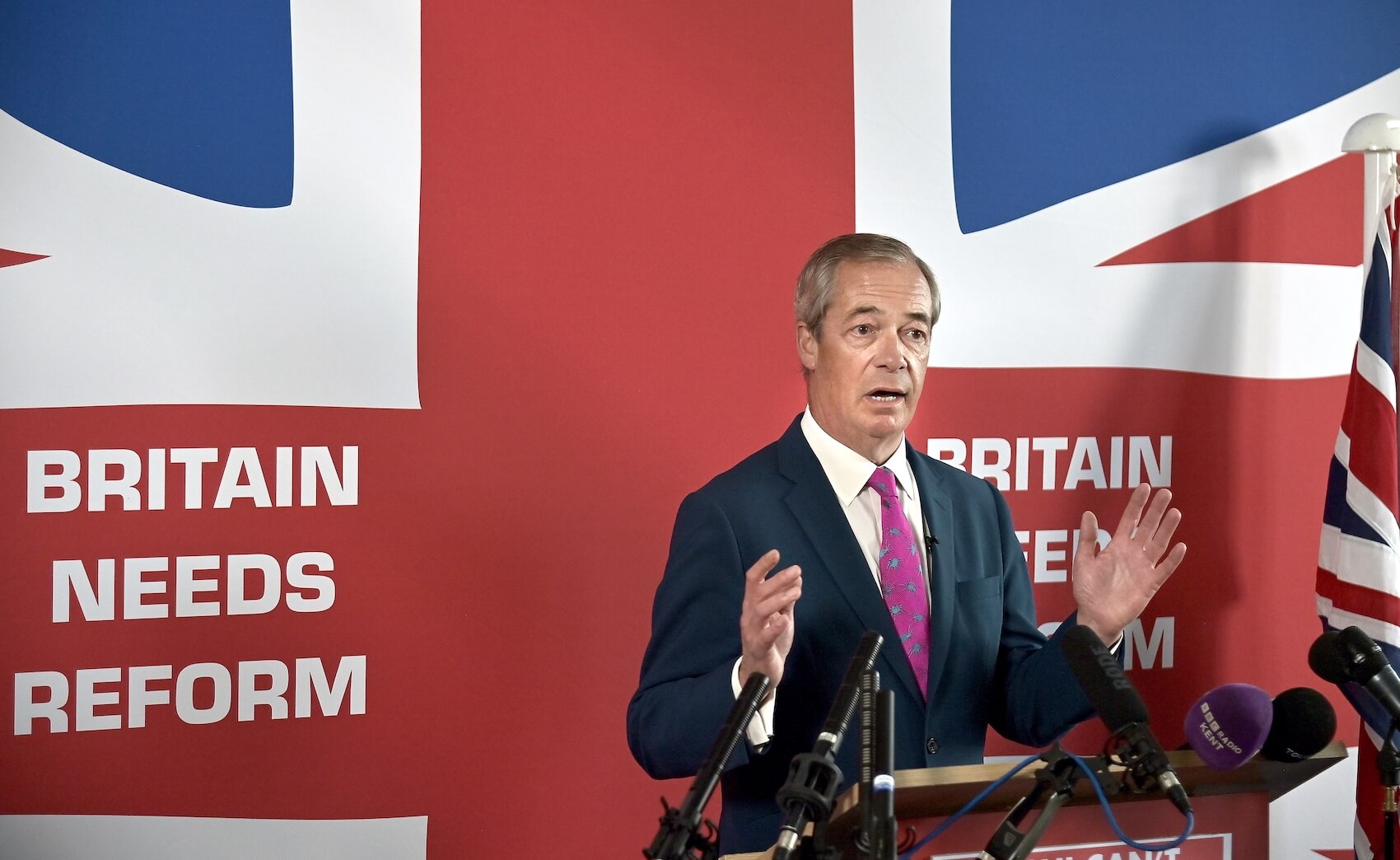
What I do think we are witnessing, however, is what I have described in my work as the mainstreaming of the far right. Immigration, racism more broadly, and other far-right ideas have increasingly become the focal points of political discussion and “debate”—I use the term somewhat ironically—between the two establishment parties, Labour and the Conservatives, as well as newer far-right parties such as Reform UK and Restore Britain, which is positioned even further to the right.
We do not necessarily see this from the Greens, who appear to be presenting an alternative to this kind of politics. Although they have made gains, much of the attention and many of the electoral gains have instead gone to Reform. I think this development has deep roots. It reflects the way in which protest voting, grievances with the system, crises of democratic trust, and growing inequality have all been absorbed into a narrative that positions Reform and the wider far right as the authentic voice of protest and political alternatives.
Yet, if we look closely, these movements actually uphold virtually every aspect of the status quo—the racial status quo, the social status quo, the political status quo, and the economic status quo. They do not challenge capitalism, inequality, or the racism, nationalism, and white supremacy embedded within the system.
Real Protest Is Treated as Extremism
So, I would not describe them as a protest vote, even though they have certainly been framed that way, which I find very interesting. By contrast, the Greens have not been positioned in this manner and have instead faced sustained attacks on various grounds, including allegations of antisemitism and accusations directed at their leader, Zack Polanski. Meanwhile, Reform has not faced the same level of sustained scrutiny for fascist statements, Holocaust denial, or rhetoric that implicitly supports both structural and physical violence.
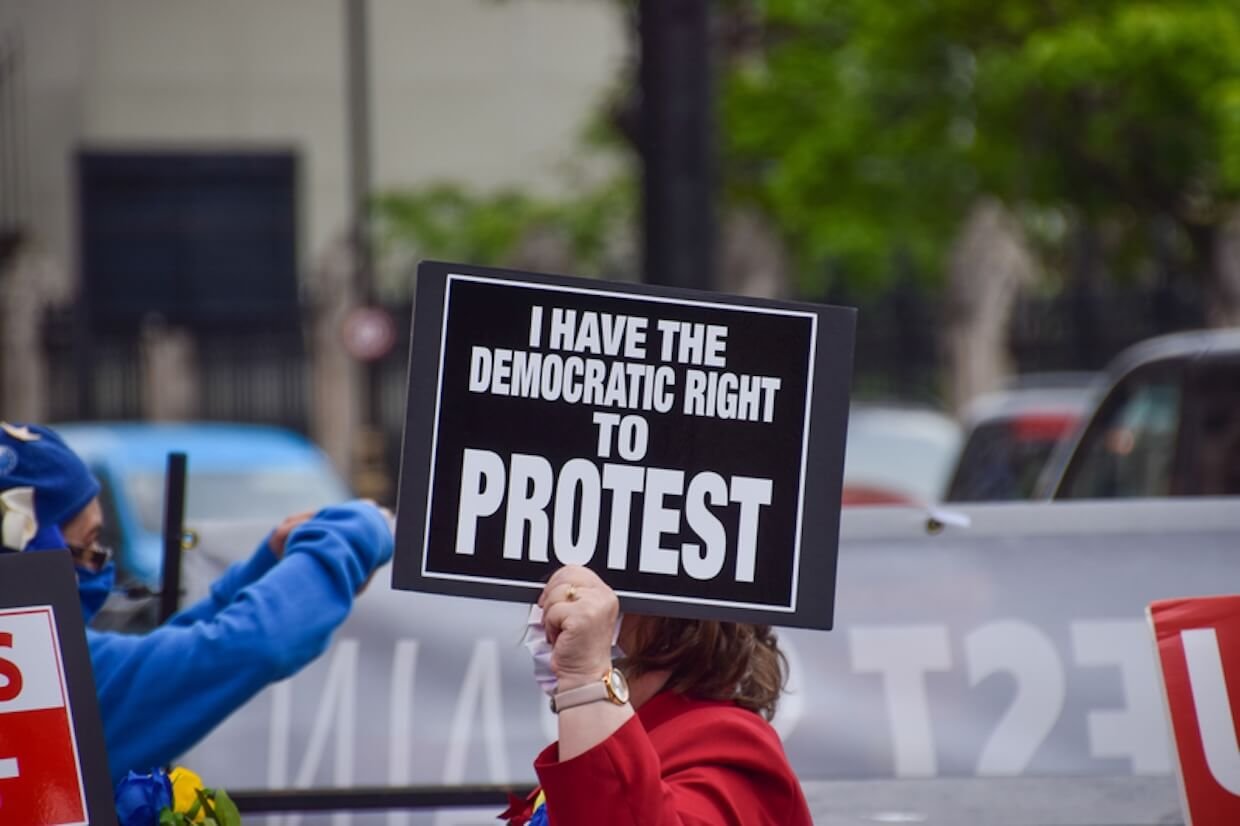
I find this contrast very revealing because it demonstrates how the system perceives protest differently depending on who is making it. Those who genuinely challenge the system—such as the Greens or pro-Palestinian solidarity movements, as we saw during the Nakba Day rally alongside the Unite the Kingdom far-right march—are labeled extremists, supporters of terrorism, antisemites, or racists. But when the far right mobilizes, it is instead framed as expressing the legitimate concerns of “the people.”
So, protest becomes something that can be domesticated and democratized if it aligns with the broader status quo and dominant political agenda. But if it genuinely threatens the system, it is treated as extremism. And that is deeply ironic at a moment when we are witnessing the mainstreaming of the far right.
Far-Right Ideas Now Shape Mainstream Politics
In your work on the mainstreaming of the far right, you argue that the boundary between mainstream conservatism and reactionary politics has become increasingly porous. To what extent did the 2026 elections demonstrate not merely the rise of Reform UK, but the deeper normalization of far-right discourses across the broader political spectrum?
Dr. Aaron Winter: Just to begin by referring back to the previous question, when you asked where I think we are heading, I would say that—worse than the fragmentation of politics—we are moving further down the road toward the mainstreaming of the far right and fascism.
I think this is a product of the blurring of political boundaries. In my work with Aurelien Mondon, we have argued that traditional forms of racism—what is generally understood as overt and explicit racism—had historically been publicly denounced. In their place emerged forms of liberal, colorblind racism and Islamophobia that claim to target culture and ideas rather than race itself.
This discourse often presents itself as an effort to fight illiberal racism by expressing such concerns in more manageable, liberal, and socially acceptable terms. So instead of openly calling for deportations, there are calls for stricter bordering policies. Instead of explicit exterminationist rhetoric, there are calls for deportation and the construction of supposedly moderate and liberal bulwarks against the far right entering government or taking to the streets to commit harassment and violence.
Yet over time, this liberal framework—which simultaneously portrays the far right as illiberal and incompatible with liberal democracy—often ends up treating Muslims and migrants in ways remarkably similar to the far right itself. The difference is that Muslims and migrants do not possess the kind of white or right-wing privilege that can be normalized and represented by establishment parties claiming to be liberal, tolerant, or mainstream conservative.
What has happened over time is that liberal tropes surrounding free speech, women’s rights, and the need to represent the so-called “silent majority” or the “left behind” have increasingly legitimized these ideas. By repeatedly legitimizing them, the far right has been able to co-opt this liberal racism and expand within the political space opened up by a mainstream that believes—or pretends—that it is opposing them.
As a result, the far right has become increasingly mainstream, increasingly legitimate, and increasingly emboldened. We are seeing this reflected not only in electoral polling, but also in far-right mobilization on the streets.
Liberal Racism Expanded the Overton Window
I often reflect on a quote from Hillary Clinton in The Guardian in 2018, where she argued that the only way to stop “right-wing populists”—by which she essentially meant the far right—was to control immigration. I have returned to this quote repeatedly in both my teaching and my research. What exactly is it about the far right that establishment figures find objectionable? It is clearly not simply racism or xenophobia. Rather, it is the threat these movements pose to establishment power.
Their ideas, however, remain acceptable to a certain degree. The concern among establishment actors is that they will lose political ground, that party systems will fragment, and that established parties will decline in support, funding, power, and influence. There is also the argument that if openly far-right actors come to power, conditions for migrants will become even worse. But that is not really a meaningful choice for migrants—to ask whether they prefer things to be bad or even worse.
What is largely absent from these discussions are questions of rights, dignity, freedom, liberation, and the ability simply to live without constantly being treated as a scapegoat or proxy for all of society’s problems.
So, what worries me is that liberal racism, combined with the exceptionalization of the far right, has steadily shifted the political center further to the right and expanded the Overton window. Politics is now increasingly conducted from the center-right through the use of ideas that originate with the far right.
We have hollowed out the left while simultaneously accelerating the trajectory toward authoritarianism and fascism. And people are being harmed in the process. To me, that is far more important than whether establishment parties lose power or whether the political system changes. The system does need to change—but it requires radical reform, not the co-option, pandering, and parroting of far-right politics.
Racism Became Compensation for Inequality
Reform UK’s electoral appeal appears strongly rooted in anxieties over migration, asylum, and national identity. Some analyses identified “anger over immigration/asylum” as one of the major “recruiting sergeants” for Reform voters. How should we understand the relationship between economic insecurity and racialized nationalism in contemporary Britain? Is immigration functioning less as a policy issue than as a symbolic vehicle for wider civilizational anxieties?
Dr. Aaron Winter: That is an extremely important issue and question. What we hear in this narrative—and part of the reason why far-right ideas and constituencies perceived as leaning toward the far right can become valuable and acceptable to establishment parties, particularly Labour—is the claim that this represents a cry against class inequality or an expression of a desire to re-engage with the political system. The problem with that argument is that, even if people are experiencing socioeconomic inequality, it is not only white people or right-wing constituencies who are affected. And those inequalities are not going to be solved by scapegoating migrants or by turning toward far-right parties that ultimately serve capitalist interests. Capitalism, rather than migrants, is responsible for much of the socioeconomic inequality people are experiencing.
It is also very revealing how political rhetoric focuses on “small boats.” The phrase itself emphasizes how small and vulnerable these boats actually are. Yet there is no comparable effort to confront banks, corporations, or the larger systems and structures of power.
What has happened, particularly since 2010, is that Britain experienced austerity alongside deepening cuts to the welfare state, benefits, labor rights, wages, pensions, healthcare, education, and many other areas. These developments have made life extremely difficult for many people.
Some individuals may respond to these conditions by blaming migrants, but many of those affected are themselves migrants or the children of migrants. Others are demanding a left-wing political alternative capable of addressing structural socioeconomic inequality and the inequalities produced by neoliberal capitalism, corporatism, militarism, and racism.
The politics of the right is not going to solve these problems. At a certain point, what happened was that the far right—initially through the Conservatives and now increasingly through Labour—effectively offered racism as compensation to largely white populations experiencing poverty, socioeconomic insecurity, and inequality. Or, at the very least, they claimed that racism was what these constituencies wanted. But that does not solve the underlying problems. Instead, it undermines solidarity between the white working class and the racialized working class, who are also British. This is a very serious, dangerous, and damaging form of divide-and-rule politics that will only intensify socioeconomic, racial, and regional inequalities.
I think we really need to confront this narrative because, too often, when people challenge the idea of the “left-behind white working class,” they are accused of ignoring “the people.” Yet the discourse surrounding populism frequently treats this constituency as though it represents the entire demos, rather than recognizing it as one increasingly valuable political constituency that has been—and likely will continue to be—neglected by economic and political policy.
So, we urgently need to get a handle on this, because racism is becoming worse while socioeconomic inequality is not improving. And that is why we need to understand both the far right and this broader narrative as functional rather than descriptive.
Cultural Anxiety Replaced Material Politics
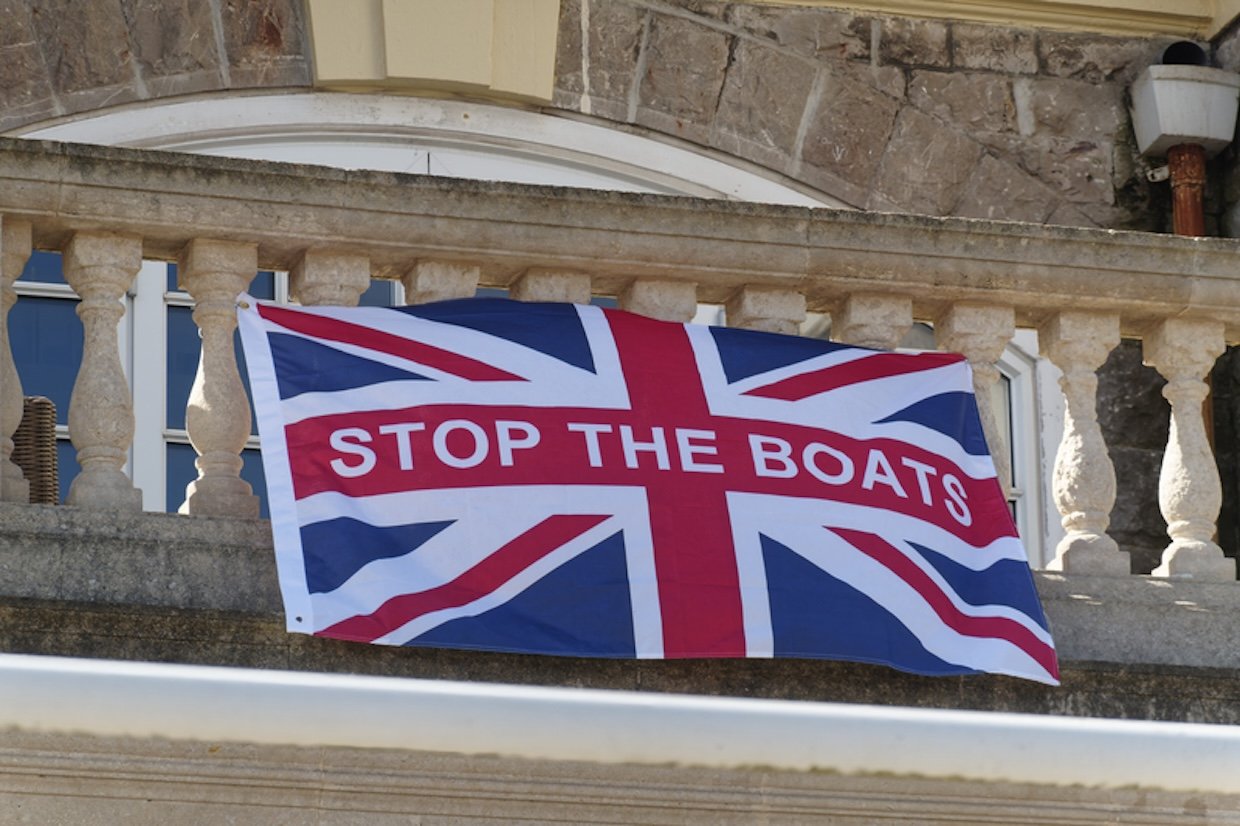
In “Whiteness, Populism and the Racialisation of the Working Class,” you critique the construction of the “white working class” as the authentic embodiment of “the people.” Did the 2026 elections reproduce this same racialized populist narrative? And how has the language of the “left behind” continued to legitimize exclusionary politics after Brexit?
Dr. Aaron Winter: That was a dominant narrative around Brexit. It had actually been a significant narrative in the 2000s, when the British National Party (BNP) was rising in former industrial and deindustrialized areas, including parts of East London. At the time, the Labour government, under Community Secretary John Denham, argued that if these identities, celebrations, and cultural concerns were not addressed and prioritized in the same way as those of other groups, their grievances could become dangerous. It was, in many ways, a kind of anti-multicultural reversal.
This was not only a BNP narrative; it was also reflected in far-right studies and political science literature that emphasized demand-side explanations, arguing that people feared ethnic competition and becoming the “losers of modernity,” and so on. What struck me at the time—I had just finished my PhD—was watching academics and the BNP effectively using the same narrative: one diagnostically, though functionally, and the other strategically. As a result, the “white working class” and “left behind” narrative came to dominate political discourse throughout Brexit and continued to do so until quite recently. It was somewhat less pronounced in this most recent election.
This election was different in certain respects. And I should add that this discussion also connects to arguments made by figures such as Matthew Goodwin and Robert Ford, as well as Arlie Hochschild in the United States, about fears of change and threats to identity. These arguments were often framed as socioeconomic in nature. But they largely ignored elites. They ignored abstention among those below the poverty line and lower on the socioeconomic scale. And what they also did was to substitute material conditions with cultural anxieties. Those are not the same thing.
What I think has happened more recently—particularly what we witnessed this weekend in London with the rallies—is the emergence of a much more overt white supremacist and ethno-nationalist discourse operating irrespective of, and far beyond, class. At the same time, we saw something else that is part and parcel of this normalization. I always believed that the “white working class” narrative used white inequality as a proxy and shortcut toward a broader white victimization narrative, which the far right has long embraced.
What has happened now is that this discourse has become so normalized that it is framed around ideas such as “our right to be British,” “our flags,” and similar themes. Simultaneously, there is a deliberate highlighting of racialized and migrantized participants in the Unite the Kingdom rally in order to claim: “See, we’re not racist.” And then they accuse the opposing side at the rallies—not in a simple binary sense, but those on the other side—of antisemitism and hate. In effect, they reverse the accusation, declass the issue, and attempt to balance overt white nationalism and fascism with a populist narrative centered on “ordinary people.”
I am not saying class has disappeared. I think Labour continues to make these arguments because it remains one of the few remaining connections to its historical legacy of representing workers and the left. So, they continue to say: “We’re going to fix inequality” and “We’re going to address the cost-of-living crisis.”
Reform Thrived on Mainstream Narratives
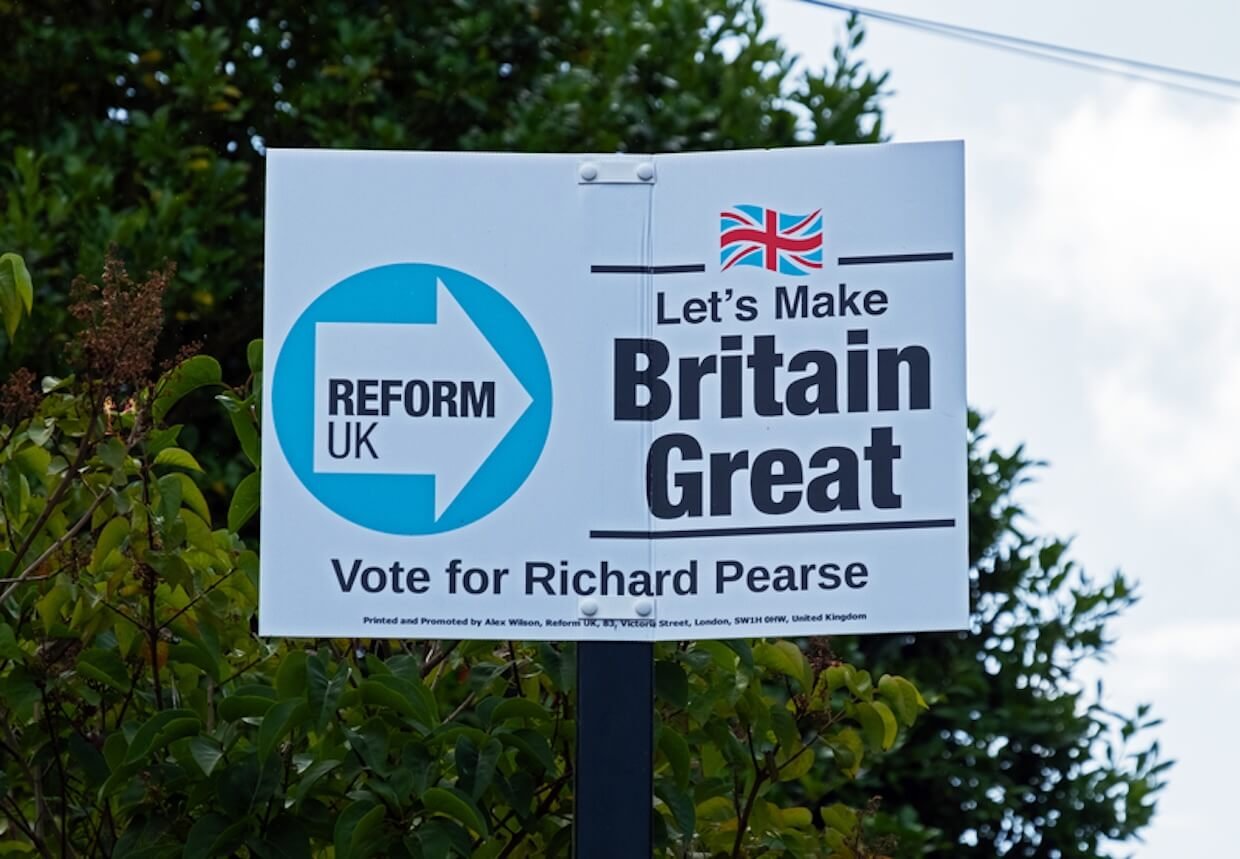
Much commentary surrounding Reform UK frames its rise as a revolt against metropolitan liberal elites. Yet your work suggests that such narratives often obscure the role of mainstream institutions, media, and political actors in legitimizing reactionary discourse. To what extent are Labour and Conservative elites themselves implicated in creating the ideological conditions for Reform’s success?
Dr. Aaron Winter: You asked earlier about Reform gaining votes, and I made the point about demand versus supply. We have an elite media and political ecosystem that has done little more than echo and parrot the far right. Academics, commentators, and political actors have repeatedly argued that this is what parties must do to survive, that this is where the votes are, and that this is what public opinion supposedly demands. So, it is hardly surprising that everyone is now talking about these issues and that Reform has benefited from it.
Part of the reason Reform has benefited is that, despite claims that it is “shaking up” politics, what we effectively have are two establishment parties and Reform, all advancing different versions of the same political agenda. That, in itself, represents a crisis of democracy rather than a genuine protest alternative, as I noted earlier.
What is also important is that many of these narratives are fundamentally false: the idea that this is purely a protest movement, that it is exclusively about the white working class, or that it is fundamentally rooted in socioeconomic inequality. There is also the recurring depiction of certain places as no longer “really” Britain or “really” England—places portrayed as mixed, lost, or transformed into so-called “no-go zones.” I hear this rhetoric constantly about London.
It is part of a strategy of divide and rule. But it also reflects an idea the far right has spent years carefully developing and refining: the notion that the “real people”—their constituency, largely white and sharing the same national identity as the nation itself—are perpetually under threat. Increasingly, this takes on an almost apocalyptic tone, expressed through “replacement” theories and related conspiratorial narratives.
Reform’s targeting of London is particularly revealing in this regard. They do not simply attack metropolitan elites; they portray London itself as a city that has been “taken over,” while simultaneously claiming that “real working-class Londoners” are now afraid to go outside. So, at the same time, London is represented as a place containing the last remaining white working-class communities who have supposedly “had enough.”
You can see the contradictions running throughout this discourse. It is similar to the idea that Nigel Farage is somehow a man of the people and a representative of the working class, despite being a private-school-educated former finance professional with considerable wealth, multiple jobs, and substantial property holdings.
Labour Cannot Outflank Reform
There is a constant deflection onto questions of socioeconomic inequality, elites, and “the people.” What is particularly striking is that tech billionaires, financiers, and media moguls are somehow excluded from the category of elites, while academics and migrants are cast in that role instead. Meanwhile, the white-only working class is framed simultaneously as both “the people” and “the left behind.”
It is a deeply distorted picture that ultimately makes very little sense. This is also why, when we talk about populism, we need to recognize that this is not a materialist analysis of power, nor is it a class analysis. It is a framing device that performs a political function while containing numerous contradictions.
Yet the media and political establishment seem unable to let go of it. They reproduce it rather than challenge it. And that is precisely why Reform is benefiting. Labour is never going to be as effective as the Conservatives at being Conservative, and neither Labour nor the Conservatives will ever be as effective as Reform at being far right.
As a result, they are losing their own constituencies. I worry particularly about Labour because the left has been hollowed out. We can already see this reflected in the leadership contest now developing. The problem is not only that Labour is losing support to Reform by trying to imitate Reform, but that it has also alienated much of the left and many of its traditional supporters. Aurelien Mondon and I have been arguing this for more than a decade now. The problem simply keeps reproducing itself and becoming worse.
Islamophobia Was Recast as Liberalism
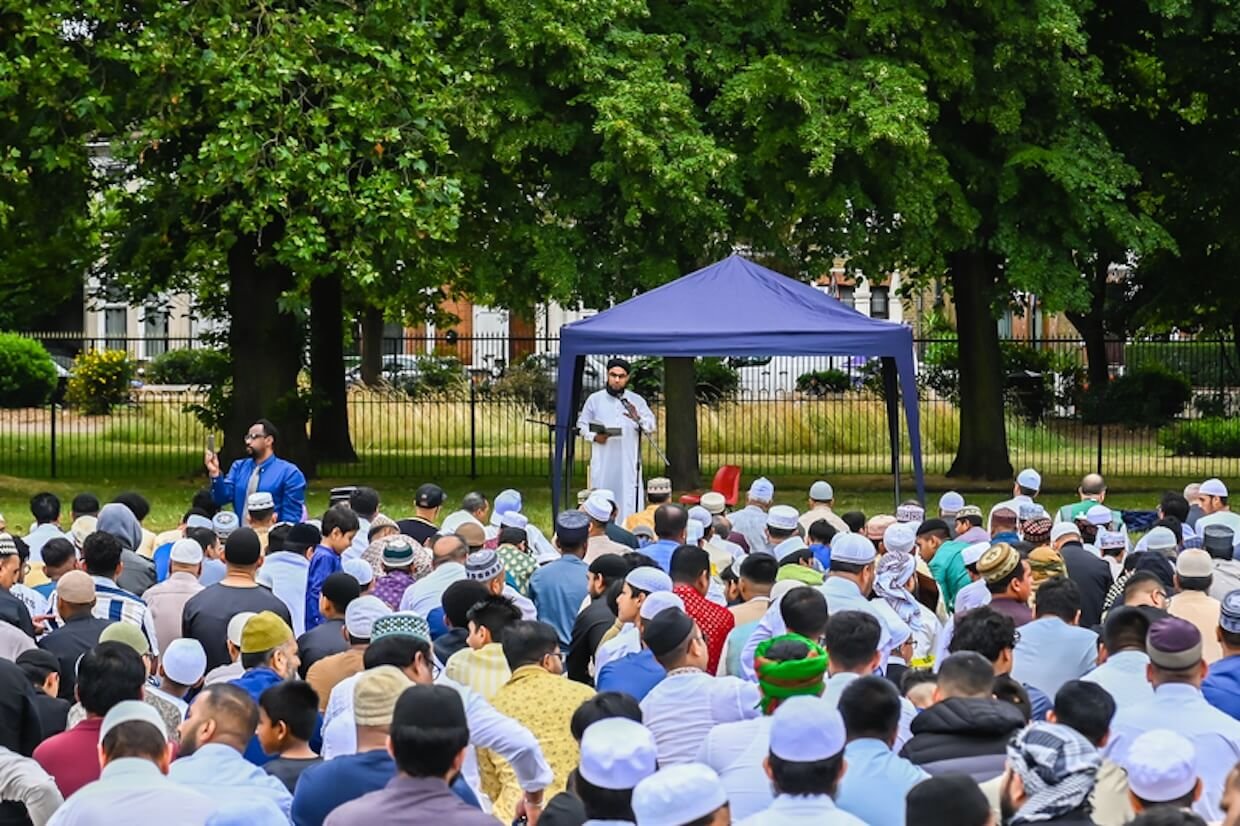
In your analysis of Islamophobia, you distinguish between “illiberal” and “liberal” articulations of anti-Muslim racism. How was this distinction visible during the 2026 election campaigns? Did anti-Muslim rhetoric emerge primarily through overt far-right language, or increasingly through securitized and culturally coded mainstream discourse?
Dr. Aaron Winter: That is a really important question. When we first started working on this, we framed it as liberal versus illiberal racism. In some of our earlier work, we examined the claimed rejection of traditional forms of racism—fascism, race science, segregation, and other explicitly illiberal forms—in favor of more liberal forms that appeared socially acceptable.
The logic was to denounce the far right while allowing more acceptable forms of racism to remain. Islamophobia became the central case study because Islamophobes often insist: “We are not against people; we are against ideas.” In other words, they claim: “We are liberal, they are illiberal.”
The far right in France, Britain, and many other countries used this strategy to shed the baggage and stigma associated with fascism and Nazism—the most overtly illiberal forms of racism within our framework. They would say things such as: “We support gay rights, women’s rights, and free speech.”
At the same time, this was also connected to a kind of free-speech opportunity model and to the claim that there was a so-called “woke conspiracy” preventing right-wing voices from appearing in the media. That is another contradiction within the Farage, Reform, or Tommy Robinson-style narrative: “We’ve been cancelled, we’ve been silenced,” while repeating those claims constantly on national television. They have not been cancelled. Again, it is an opportunity structure and a business model.
Security Politics Enabled Anti-Muslim Racism
But liberals often fell for this logic because they argued: “We must protect free speech, even if we dislike the ideas. Otherwise, pressure will build, and eventually fascism will emerge electorally, institutionally, and on the streets.”Ironically, we largely arrived at this situation through that very liberal approach.
Islamophobia has often been articulated through issues such as women’s rights and gay rights. We see a version of this in the way Israel “pinkwashes” the occupation and genocide. More recently, we have also seen how issues such as grooming gangs and the murder of young girls in the Southport attack have been mobilized as opportunities to target hotels housing asylum seekers or to justify demonstrations framed around “taking back the streets” and “protecting our women.”
These are presented as forms of liberalism and progress. But they clearly draw on a long history of patriarchal protectionism and the use of the “defense” of white women to attack racialized individuals and communities. Historically, we can trace this back to the Ku Klux Klan and lynchings in the United States.
We therefore have to understand this election, the previous election, and the riots that occurred in between as part of a broader process in which Islamophobia and anti-migrant racism are justified through the language of protecting liberal democracy. The far right does not actually want liberal democracy, while establishment parties want to preserve it. But both are increasingly focused on the same supposed threat, albeit in relation to different political ideals.
In that sense, both are doing tremendous harm to migrants and Muslims. And they are not actually protecting democracy because a democratic system would have to represent people equally, rather than representing some at the expense of the dehumanization of others treated as collateral damage.
What has also happened is that, although the United Kingdom is represented through the language of ordinary people, flags, patriotism, nationalism, pride, fear, and anxiety about migration—particularly “illegal migration”—the discussion very quickly shifts from migration in general to Muslims specifically.
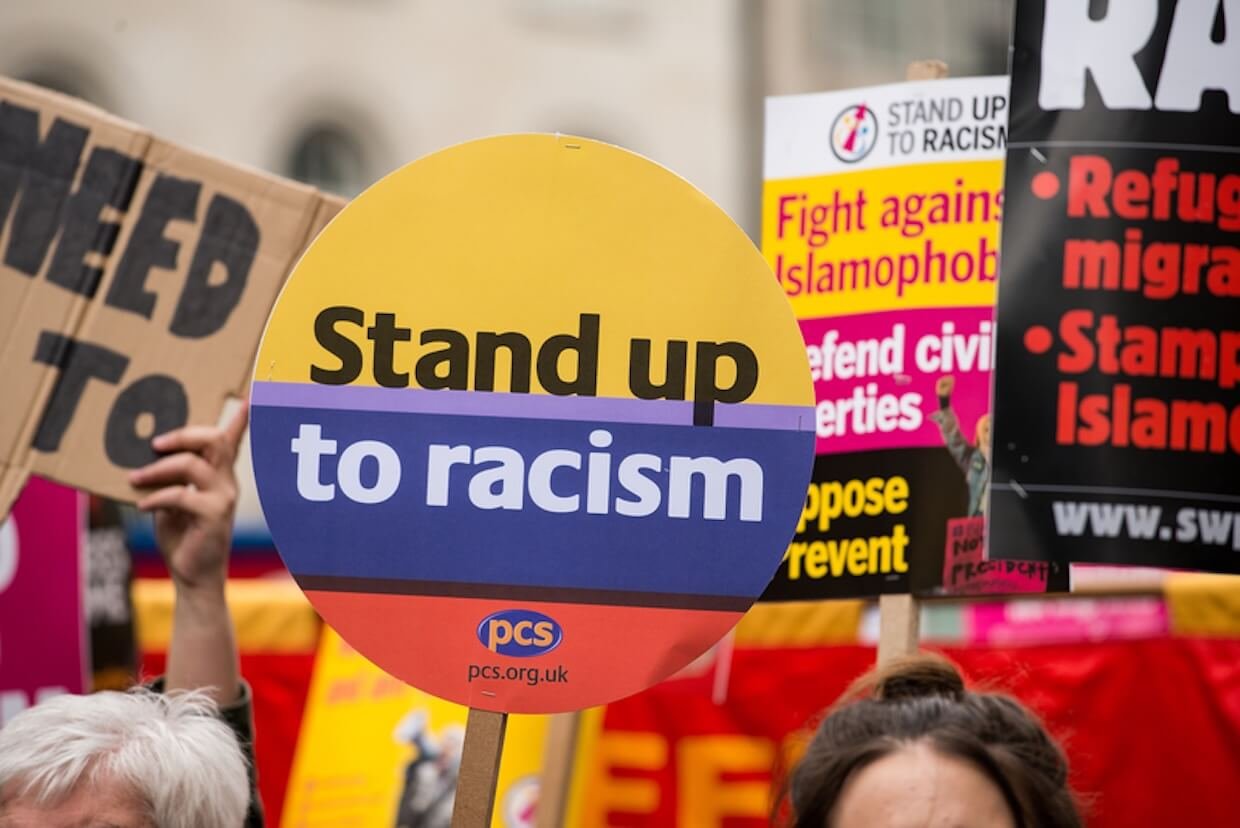
There were horrific scenes of Islamophobia at that march. And we have to remember that the other rally was Nakba 78. Pro-Palestinian protest and solidarity movements have increasingly been treated through both liberal and illiberal forms of Islamophobia: they are accused of antisemitism, of rejecting democracy, and of opposing free speech. Yet those marches are not Hamas. They include Jewish people, left-wing people, people of all faiths and none, and participants from many different communities.
But you can see how quickly politics shifts from overtly illiberal rhetoric to liberal securitized responses: “We are going to crack down, proscribe organizations, securitize, ban, accuse, and arrest.” You see a very different political response toward movements supporting racialized communities associated with Muslims than toward movements associated with Islamophobia, racism, and highly narrow and exclusionary definitions of Britishness.
The contrast has been shocking. One thing we may now be starting to see, however, is somewhat more criticism of Unite the Kingdom than in previous moments. I think that may indicate that many people are increasingly frightened by the electoral consequences, rather than genuinely defending the communities being targeted.
Brexit Was About Identity and Belonging

Following Brexit, many expected anti-immigrant politics to lose salience once Britain formally left the European Union. Yet migration appears even more central to political mobilization in 2026. What does this tell us about Brexit itself? Was Brexit ever fundamentally about sovereignty and economics, or was it always primarily about race, identity, and belonging?
Dr. Aaron Winter: I think it was about the latter. On one hand, the fact that Brexit was fundamentally about immigration and certain very particular, ill-formed ideas about sovereignty says a great deal. I say “ill-formed” because the focus was placed almost entirely on the EU as the central power structure, while offering little or no critique of internal structures of power. There was no serious reflection on domestic systems of governance, rights, or law. That is why you ended up with judges being labeled traitors.
What is also interesting is that Brexit did not ultimately “solve” migration. Partly, this is because the immigrants initially being targeted included white European migrants. But once European migration slowed, the speed with which the discourse shifted toward Muslims and Africans—and became overtly racialized—revealed how this politics had already been gradually whitewashing and mainstreaming itself.
Brexit emboldened these politics rather than satisfying them, and that is a very important point. I remember that when Jo Cox was murdered, I thought the country might stop and reflect. Instead, what we witnessed was a shift from individualizing and exceptionalizing a far-right actor and murderer to normalizing the ideas he expressed. Not the violence itself, but the rhetoric and worldview underpinning it.
That made me worry that there would be no real restraints on these politics, no stopping point, and that they would simply continue escalating. What has remained constant throughout has been the anti-immigrant argument, which has become far more extreme and widespread over time. The media bears part of the responsibility for this, as does the political establishment, both of which embraced the idea that immigration was the defining issue shaping public concern and electoral behavior. Yet I never believed that everyone voting in Britain was anti-migrant or racist.
What is also important is that migration and Islamophobia are deeply interconnected. The migrants, asylum seekers, and refugees who are most heavily targeted are often targeted precisely because they are Muslim.
So yes, Brexit was always fundamentally about migration, race, identity, and belonging, even if those concerns also served to obscure broader political and economic dynamics operating behind the scenes. At the same time, Brexit was imagined as something that could “solve” migration in ways it never realistically could. Refugee and asylum flows have continued, whereas many people seemed to believe Brexit itself would somehow end them. But these movements continue for many reasons, including ongoing wars and global crises that people are trying to escape.
I also think that the mainstreaming of racism and far-right politics has depended heavily on the demonization of migrants while simultaneously insisting that this is not racism, but simply a “legitimate concern.” It is framed through rhetoric such as: “Surely we must be able to protect our own borders.” That rhetoric continues to carry political salience regardless of whether the far right itself rises electorally or not. Unless someone directly challenges and delegitimizes that argument, it will continue to grow. But that has not happened, partly because the issue still functions as a distraction from the multiple crises that political institutions are either mismanaging or failing to manage altogether.
Brexit Exposed Britain’s Internal Divisions
The elections also revealed strong territorial fragmentation across the United Kingdom, with Wales, Scotland, and England moving in increasingly divergent political directions. How does the rise of English nationalism intersect with contemporary right-wing populism? And does Brexit continue to deepen centrifugal pressures within the Union?
Dr. Aaron Winter: We saw, particularly in the 2010s and in response to the Scottish independence referendum, the emergence of a form of unionism alongside calls for an English parliament and a stronger English nationalism. In part, this was an attempt to compete with devolution, but it was also driven by the perception that “we,” as English people, had somehow lost out.
At the same time, when we talk about Britain and Brexit, we often obscure the very real and significant differences within the United Kingdom itself. One important point is that, if Brexit had truly been a straightforward expression of white working-class alienation, disenfranchisement, and socioeconomic inequality, then Scotland, proportionally speaking, would also have voted for Brexit. But that simply did not happen.
Scotland has articulated a form of nationalism framed in much more progressive terms compared to English nationalism and to dominant forms of British nationalism more broadly. But that does not mean there are no problems in Scotland, Wales, or elsewhere regarding growing anti-immigrant sentiment.
In some places, particularly Scotland, there have been attempts to clamp down on and address these developments. But we have to watch this carefully, and we need to avoid overgeneralizing. At the same time, we also need to avoid portraying certain places as entirely exceptional, as though Scotland somehow has no such problems at all.
Likewise, we should not assume that the so-called “red wall” in the north of England is, by definition, uniformly working class and racist. We need more localized analysis, we need to actually speak to people, and we need to move beyond polling designed purely for political utility, electoral strategy, or tactical advantage. We need to understand people more seriously while also challenging narratives that scapegoat others.
Capitalism and Democracy Are Both in Crisis
The 2026 elections appear to reveal not simply partisan volatility, but a deeper crisis of democratic legitimacy, trust, and representation. Do you see parallels between Britain today and wider international trends visible in Trumpism, European radical-right populism, and authoritarian nationalism elsewhere?
Dr. Aaron Winter: Yes, I do, and I think this is fundamentally a crisis of both capitalism and democracy. The problem, however, is that the solutions currently being offered are not more egalitarian or genuinely democratic alternatives, but rather more unequal forms of capitalism alongside a model of democracy in which political representation increasingly exists only through different variations of bordering politics, conservatism, or pro-business agendas. I think, that is extremely dangerous, both for the people at the sharp end of these politics and for democracy itself. It is not a healthy democratic condition. In fact, democracy is being further degraded in response to the crisis.
Part of this is also tied to how protest and the “protest vote” are framed. We are seeing something somewhat different in the United States, where there has long been a very narrow political spectrum, consisting essentially of a centrist party and a right-wing party that has moved even further to the right. Since the Clinton era, the Democratic Party itself has also shifted rightward.
We have seen something similar with Labour in Britain, although Labour did briefly move back toward the left under Jeremy Corbyn. We do not really see an equivalent development within the Democratic Party in the United States.
So, while the crisis of polarization is certainly real in terms of how politics is experienced, performed, and articulated, it is not necessarily reflected in a major ideological distance between Democrats and Republicans on a range of issues, whether concerning Israel or the welfare state, for example.
I also think the crisis of democracy will not be resolved if political systems continue offering different versions of essentially the same politics, without creating space and oxygen for genuine forms of protest—whether on the streets, through elections, within party politics, or at local and national levels.
And we are seeing similar tendencies across the world. At the same time, we still need to distinguish between the different contexts in which these developments are unfolding. I do not particularly like framing this as a singular “populist wave.” What I do see, however, is the ongoing mainstreaming of far-right ideas. At the same time, in many cases, the status quo is being reaffirmed rather than challenged, while democracy is being degraded rather than revitalized. And I think that is a very clear international pattern.
Britain Needs Radical Democratic Reform
And lastly, Dr. Winter, your recent work argues that the mainstreaming of reactionary politics depends not only on extremist actors, but on the normalization of their discourse within public life. Looking ahead to the next UK general election, do you believe Britain is approaching a moment in which reactionary nationalism becomes hegemonic—or do you still see the possibility for a genuinely pluralistic and anti-racist democratic alternative to emerge?
Dr. Aaron Winter: It is an excellent and very important question. I certainly want such an alternative to emerge. But I think that, unless politics becomes centered around radical reform, anti-racism, and opposition to inequality, things are not going to change.
I am deeply worried about the movement toward both reactionary democracy and increasing authoritarianism and fascism. At the same time, however, I have consistently argued in my work with Aurelien Mondon, as well as in my broader scholarship, that we cannot simply fearmonger about these developments while ignoring the fact that the political center itself wants to hold. And it wants to hold without fundamentally changing anything.
I am even hearing terms now such as “radical centrism” and the “radical middle,” and I think these are currently very dangerous ideas because they effectively suggest that the choice is between fascism or more of the same—only slightly worse because we are told it is necessary in order to fight fascism.
But that is not a political trajectory that supports radical reform, structural transformation, anti-racism, or equality in any meaningful sense. We really have to push for those things. We need a healthy democracy, we need a genuinely critical alternative, and we need to stop not only the march of racism, reactionary politics, and fascism, but also the continued reaffirmation of the narratives that brought us to this point. That includes mainstream narratives about the “left behind,” about liberalism versus illiberalism, about the so-called “populist wave,” and about the idea that we must further compromise an already compromised system simply to prevent something worse, while preserving a political order that is increasingly no longer fit for purpose.