In this ECPS interview, Dr. Eszter Kováts offers a measured reassessment of Viktor Orbán’s electoral defeat and its wider implications for Europe. While the 2026 Hungarian elections mark a major rupture in domestic politics, she cautions against triumphalist readings that treat Orbán’s fall as the collapse of illiberalism itself. “It is something of a liberal dream,” she argues, to assume that the defeat of one leader means the defeat of the entire project. Kováts situates Orbánism within deeper structural, economic, and discursive dynamics, showing how it combined institutional power, culture-war politics, and claims to national sovereignty. At the same time, she underscores Hungary’s enduring polarization, the persistence of Fidesz’s electorate, and the unresolved conditions that continue to sustain illiberal-right politics across Europe.
Interview by Selcuk Gultasli
As Hungary enters the post-2026 electoral moment, the defeat of Viktor Orbán has been widely interpreted as a watershed in the trajectory of illiberal governance in Europe. For more than a decade, Orbán’s system stood as a paradigmatic case of what has often been termed “illiberal democracy”—a political formation combining electoral legitimacy with institutional centralization, ideological mobilization, and a sophisticated use of culture wars and transnational alliances. Yet, as this interview with Dr. Eszter Kováts makes clear, such interpretations risk overstating both the rupture and its implications.
In conversation with the European Center for Populism Studies (ECPS), Dr. Eszter Kováts—Marie Skłodowska-Curie postdoctoral research fellow at the University of Vienna—offers a careful and analytically grounded reassessment of this moment. While the electoral outcome may appear decisive, she cautions against reading it as a definitive break. As she puts it, “it is something of a liberal dream to treat Orbán’s defeat as the defeat of his entire project.” The persistence of “many Fidesz voters,” alongside the broader constituency of “far-right and illiberal-right parties across Europe,”underscores the continued relevance of the political and social forces that sustained Orbánism.
This insight frames the central tension explored throughout the interview: whether the Hungarian case represents a genuine transformation or a reconfiguration of underlying structural dynamics. Dr. Kováts emphasizes that both the rise and the exhaustion of Orbán’s system can only be understood through a layered analysis that combines structural, contextual, and contingent factors. Economically, the regime rested on a distinctive model—often described as a hybrid of state intervention and market adaptation—which, for a time, delivered tangible improvements in living standards. Politically, it capitalized on what she identifies as “blind spots” within liberal and progressive frameworks, constructing an antagonistic narrative around migration, gender, and geopolitical conflict, each containing a “kernel of truth” but amplified into an “apocalyptic vision.”
At the same time, the interview challenges conventional narratives that frame right-wing mobilization simply as“backlash.” Such interpretations, Dr. Kováts argues, rely on overly teleological assumptions about democratic development and obscure the deeper systemic tensions that shape political contestation. Orbán’s success, in this reading, lay not merely in institutional control but in his ability to articulate these tensions—though this articulation ultimately faltered as economic conditions deteriorated and rhetoric became “increasingly detached from reality.”
The emergence of Péter Magyar introduces a further layer of complexity. Rather than a straightforward democratic reversal, Dr. Kováts describes the transition as, in part, a “democratic rebalancing,” but also as a moment fraught with uncertainty. Hungary remains “deeply divided,” with 94 percent of voters concentrated in two opposing camps, reflecting not only political polarization but competing “perceptions of reality.” Moreover, Magyar’s own political trajectory—rooted in Fidesz—raises questions about continuity as much as change, particularly given his constitutional majority and capacity to reshape state institutions.
Beyond Hungary, the implications for European populism are similarly ambiguous. Illiberal networks, Dr. Kováts notes, are not dependent on a single figure; they are embedded in national contexts and sustained by what she terms a “representation gap.” The assumption that Orbán’s exit signals the broader decline of illiberal politics is therefore, in her words, “a compelling discourse, but… a political one rather than an analytical description.”
In sum, Dr. Kováts’s reflections invite a more measured interpretation of Hungary’s political shift—one that resists both triumphalism and determinism. Rather than marking the end of a political era, the Orbán–Magyar transition may be better understood as a contingent episode within a longer and unresolved contest between competing visions of democracy in Europe.
Here is the edited version of our interview with Dr. Eszter Kováts, revised slightly to improve clarity and flow.
Exhaustion, Not Erasure
Dr. Kováts, welcome. Drawing on your work on illiberalism and the structural drivers of populism, how should we interpret both the rise and the electoral defeat of Viktor Orbán’s system? Does this moment reveal inherent limits within the model, or rather the contingent exhaustion of a particular political configuration?
Dr. Eszter Kováts: This is already a very interesting and complex question, and we must consider both structural, contextual, and contingent elements in the rise of the system, its sustainability over 16 years, and its defeat or exhaustion, as well as how it could be defeated.
One must definitely mention the structural dimension in economic terms—essentially, the circumstances under which Orbán rose, the economic model he was building, how it functioned, and why it eventually exhausted itself. This is important because, in the international political science community, the focus is mostly on the democratic aspects—how Fidesz’s regime hollowed out democracy from within, removed checks and balances, and restricted press freedom, academic freedom, and so on.
But the system also had a very strong economic basis and a very particular economic model, often referred to as “Orbanomics.” This term comes from Gábor Scheiring, a political economist. I will not go into his writings here, but I would recommend them. It was a mixture of challenging neoliberalism while also building on several of its elements, combining state intervention with the construction of a national bourgeoisie.
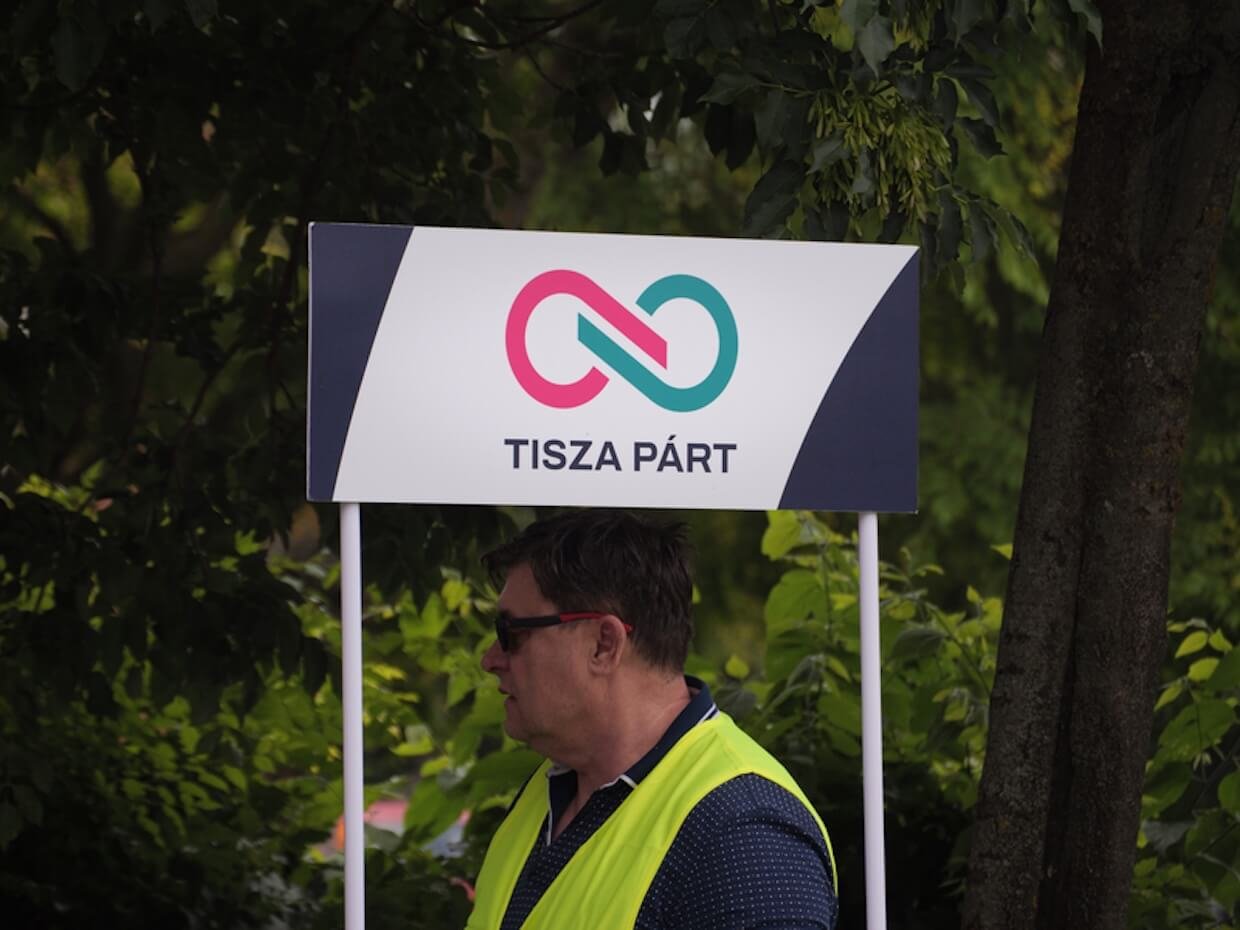
For a long time, this model had a trickle-down effect. Together with favorable global economic conditions, ordinary Hungarians experienced standards between 2013 and 2019. Then came COVID and the war in Ukraine. When Péter Magyar entered the scene with the Tisza Party, there had been recession and worsening living standards. I would highlight this briefly as a structural element.
Obviously, there were also contextual elements, such as the weakness of the old opposition parties, which, by the time Tisza appeared, were already completely discredited. Then there is the role of Péter Magyar himself, who endured smear campaigns, demonstrated a strong will to power, and emerged at a moment when there was already a significant societal uprising—a large movement over the last two years that helped sustain this energy and desire for change.
However, we must also emphasize that Hungary has not simply switched from Orbán to Magyar. Hungarian society remains deeply divided. Although Tisza and Péter Magyar won the elections by a two-thirds majority, Fidesz still received 38–39 percent. That is not insignificant. The party has not disappeared, and neither have its voters.
At the same time, 94 percent of the Hungarian electorate voted for one of the two major parties, indicating an extremely polarized political landscape. This polarization extends to perceptions of reality, as well as to competing visions of society. That will remain a major challenge for the next government.
Fear Worked Until Reality Intervened
You have argued that mobilizations often framed as “backlash” are better understood as expressions of deeper systemic tensions. To what extent did Orbán’s political project succeed in articulating these tensions—and where did it ultimately fall short?
Dr. Eszter Kováts: It is a very widespread term in the literature to describe Orbán’s regime and similar regimes, in line with concepts such as democratic backsliding. All these approaches tend to have a very teleological view of history, as if societies are moving from less democratic regimes toward increasingly developed liberal democratic systems—with more rights for minorities, better deliberative processes, and so on. Within this framework, right-wing challenges are often interpreted as a backlash, as if they seek to push history back from its “normal” trajectory.
I have been challenging this view for many years, because I think it does not adequately explain Orbán’s regime. It assumes that all right-wing forces form one homogeneous group, without internal tensions, and that all so-called democratic or progressive forces also constitute a homogeneous group. It also presumes a Western blueprint, suggesting that all societies should move toward what the Western liberal mainstream currently defines as the normative model. Whenever someone defies this blueprint or this supposed direction of history, it is very easily labeled—also in social science literature—as right-wing or as advancing right-wing ideas. It is treated as an anomaly if one does not subscribe to a unified progressive front against a so-called right-wing backlash.
But this does not describe reality. Orbán was very skillful in tapping into these blind spots and into power relations that are not sufficiently addressed, including within the European Union. He capitalized on certain blind spots or blind alleys on the progressive side and constructed an expansive, often apocalyptic narrative around them.
Across his three main ideological projects—migration, gender, and the Russia–Ukraine war—there was always a kernel of truth. However, these were accompanied by a great deal of homogenization and apocalyptic framing. He presented these issues as existential threats, claiming that Brussels, the opposition, and liberal forces all sought to impose these dangers on Hungary, and that only he, Viktor Orbán, could protect the country.
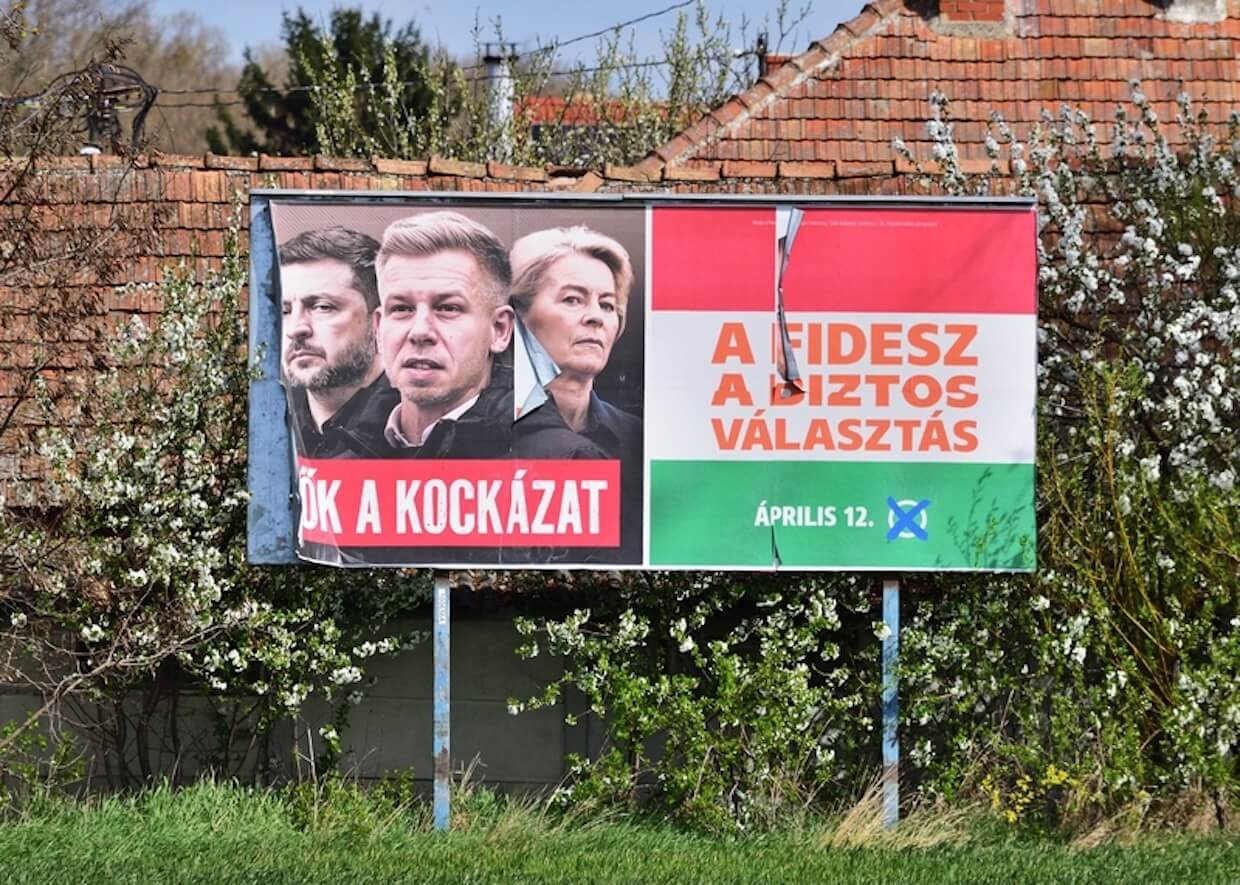
This politics of fear was effective, but only as long as the economy was functioning and as long as those kernels of truth remained credible. Over the last three to four years, however, the economic foundation of this narrative has eroded, and in the final months, even the kernels of truth largely disappeared. The campaign became increasingly surreal—for example, the anti-Ukrainian discourse was exaggerated to the point where Ukraine was portrayed as seeking to “colonize” Hungary, and President Zelenskyy was depicted on billboards all over Hungary as a figure who would take over the country if Orbán lost the election. This was clearly disproportionate and increasingly detached from reality.
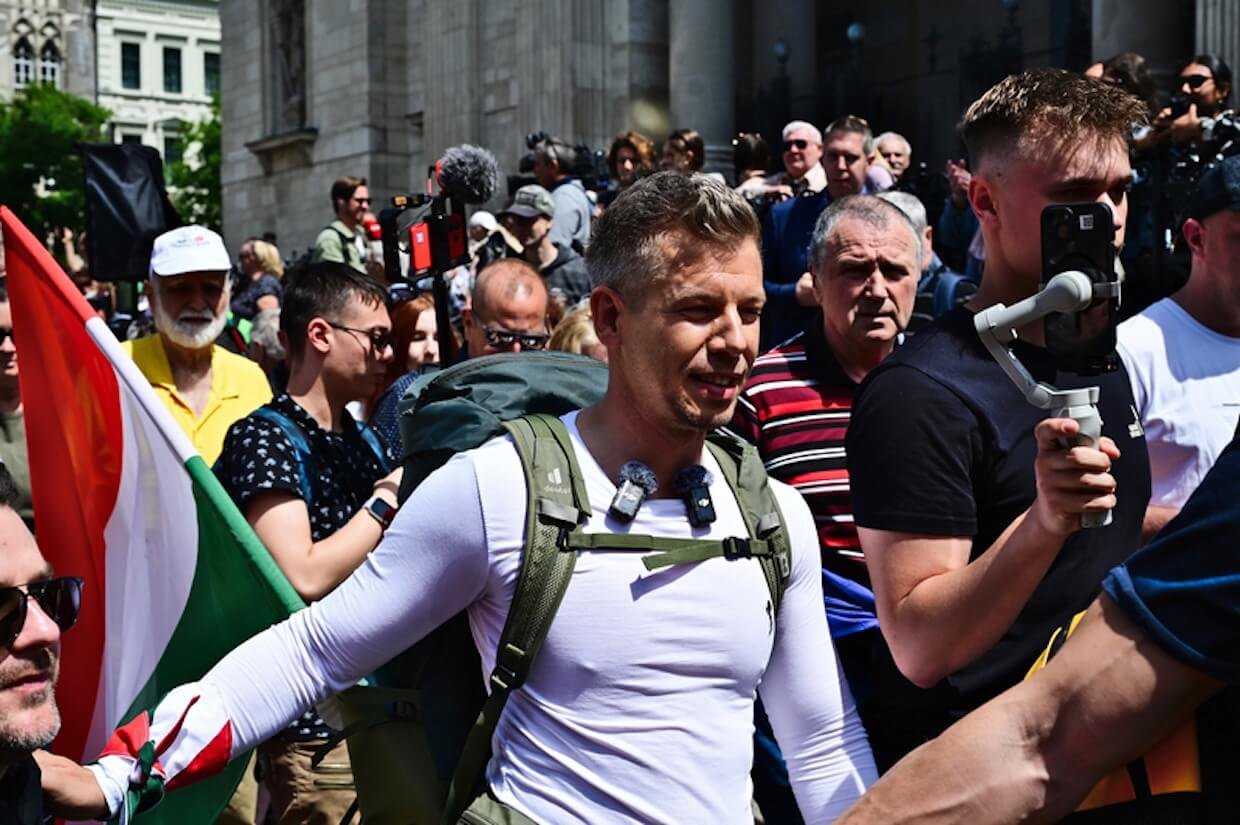
Crucially, Orbán’s narrative could function as long as there was no strong opposition. Péter Magyar, who comes from Fidesz, brought not only political instincts but also insider knowledge of how this communication machinery operates. He avoided many of the traps and managed to build a relatively narrow party structure alongside a broad social movement.
We will likely analyze the elements of his success for years to come, but one thing is clear: Orbán could operate like a tank as long as there was no counterforce. Once a credible challenger emerged, it became increasingly evident—especially in the final months of the campaign—that this strategy was no longer working.
Democratic Correction, Structural Uncertainty
In your critique of simplified ideological binaries, you highlight anti-pluralist tendencies across political camps. How should we understand the transition from Orbán to Péter Magyar in this light: as a democratic rebalancing, or as a reconfiguration of underlying structural conflicts?
Dr. Eszter Kováts: Yes, the anti-pluralism of right-wing forces is very well described, and that is their understanding of politics, at least in the case of the new right. Not everybody who is right-wing or conservative would defend this vision of politics, but within this illiberal or new right, there is clearly an understanding that politics consists of two antagonistic camps. Those who are not with us are against us. In the Hungarian case, this meant, if you are not with the government, you were portrayed as against Hungarians, against Christianity, or against children. These antagonisms are constructed continuously.
However, the other side is much less discussed, namely the progressive side, which also reproduces this binarism through the backlash narrative: we are the good people, the morally righteous, the democratic ones, and we are fighting against the other side. In the Hungarian context, this took a very specific form of anti-Orbánism. There were certain imperatives: if Orbán set the tone on something or placed an issue on the agenda, the opposition would automatically adopt the opposite position—defending stigmatized minorities, the rule of law, and democracy. Orbán deliberately reproduced these traps.
Magyar said: stop with this. Over the last two years, whenever Fidesz tried to create a rule-of-law trap—forcing him to engage in highly divisive debates, which are not framed in emotional language and are not what people feel they are fighting for—he avoided it. This is not to say these issues are unimportant, but politically they were not helpful and tended to divide the electorate.
As for whether this is a democratic rebalancing or a reconfiguration of underlying structural conflicts, in a way it is certainly a democratic rebalancing. There was a significant societal uprising. It became too much—too much coercion, too much hate, too much polarization on the side of the Orbán regime, which branded even ordinary voters as people who wanted to serve Ukraine and send children to war. There were also anti-democratic measures: in the final weeks of the campaign, whistleblowers from the police and the military revealed that Hungarian secret services were working against Tisza, the main opposition party. In that sense, this is a democratic correction.
However, as I mentioned, Péter Magyar comes from Fidesz, and until 2024 he had no problem with it. He was even a diplomat for Fidesz in Brussels and represented its EU policies. He shares core elements of Fidesz’s ideology. But we will see, because this is, in fact, a broad coalition. He may come from Fidesz and hold conservative views, but he won on a platform of broad societal unity, with one of his main promises being to reunite Hungary after deep polarization.
Regarding the structural elements, that is the key question. What room does he have to maneuver economically? There is a large hole in the budget. Will he pursue austerity? Will he be able to stimulate growth quickly? Will financial markets respond favorably to Hungary? How will he deliver on his promises? Another structural issue is his commitment to unblocking frozen EU funds—around €18 billion, which is a substantial sum. But to achieve this, he will need to negotiate with the EU, and he has already indicated that he will not compromise on certain Orbán-era policies, such as migration and Ukraine. This will be a significant challenge, as will the broader geopolitical environment involving the US, China, and Russia, which exerts pressure on Hungary.
I believe this geopolitical balancing was one of the reasons for Orbán’s defeat, as his model of maneuvering among these powers ultimately failed. Whether Magyar can manage this differently remains to be seen.
There is also the issue of restoring the rule of law and checks and balances. Now that Péter Magyar has a two-thirds, constitutional majority, he can change everything. He has already announced that he will remove Fidesz-appointed figures from key institutions, such as the Constitutional Court, the presidency, the Audit Office, the Budgetary Council, and the office of the Chief Prosecutor. At this point, we do not know whether he will appoint independent figures or loyalists.
We are therefore in a very difficult moment. There is great relief and even euphoria in opposition circles, but memories of Fidesz’s earlier two-thirds majority in 2010 remain vivid, when it reshaped the state in its own image. Magyar promises not to repeat that. The expectation is that he should not. But structurally, he could still follow a similar path. So, there are many uncertainties.
Ridicule as the Limit of Power
Over more than a decade, Orbán constructed a durable governing bloc through a combination of institutional control and narrative framing, including the strategic deployment of culture wars. Which elements of this hegemony proved most resilient, and which appear, in retrospect, more fragile?
Dr. Eszter Kováts: That is a very big question, and I am not going to answer it in detail. However, I find this understanding of hegemony very helpful, and Béla Greskovits, Dorothee Bohle, and Marek Naczyk wrote an excellent piece three years ago on how this was shifting, even before Péter Magyar and Tisza came onto the scene.
They argued that the consent elements gradually disappeared, while more coercive measures came in and the regime became more ideological. In the phase after 2010, it was much more pragmatic and opportunistic. Later on, it even took into account that EU funds were frozen, yet it continued in order to maintain power and preserve its ideological elements.
Apparently, in the last two years, coercion stopped working. It did not work because it became disconnected from reality, and it did not go beyond a certain level of coercion. We will certainly need to discuss this further in the months and years to come, but at least Hungary is not Russia or Belarus. It did not go beyond a certain point; it still maintained a minimalist understanding of democracy, which is why Orbán conceded on election night, saying that he accepted the results because the numbers were clear.
I do not want to trivialize this or suggest that what the Fidesz regime did was minor. As I mentioned, there was interference by secret services to undermine an opposition party, as well as an atmosphere of intimidation, constant smear campaigns, and sustained polarization and hostility. So, it was certainly not a harmless regime. However, it did not go beyond a certain level in practical terms, even though in discursive terms it went far beyond—constantly invoking threats.
But once a strong opposition emerged, this rhetoric no longer worked. In the final weeks of the campaign, statements that might previously have been effective instead sounded almost ridiculous. And I think ridicule is the greatest threat to autocrats—when people stop taking them seriously.
So, this was a very slow erosion of hegemony. It had economic causes, as well as contextual and contingent ones. By now, it seems that much of its base has eroded. In the days following the election, an interesting phenomenon emerged, captured by the Hungarian writer Péter Esterházy, who once said that “there is a traffic jam on the road to Damascus.” Many Fidesz loyals are now rapidly distancing themselves from the party and aligning with democracy. Suddenly, many claim they were always part of an internal opposition and had always been critical, even though they did not act on this for 16 years. Now, in the days just before and after the election, many of them have begun to speak out.
Reality Pushes Back
Your work emphasizes the role of discourse, particularly the construction of political antagonisms. To what extent do the interpretive frameworks established during the Orbán era continue to shape political perception and competition in Hungary today?
Dr. Eszter Kováts: I belong to the soft constructivists, who argue that discourse has its limits. Not everything can be constructed. Every crisis, every enemy, ultimately encounters material reality, and that was, in a sense, the end of it. Discourse must be taken seriously, including the discourse of the left. But I also believe that, in social constructivist social science literature—and in approaches inspired by it—as well as in much of the Western media landscape, there is too strong an emphasis on, or belief in, the power of constructing things.
We can see this in debates about migration or gender. There are limits to this, and it does not convince people if it does not align with their material perceptions or lived realities. That was also, in a sense, the end of the Orbán era. However, as I said, it is not a simple switch where everything is suddenly debunked and over.
We are talking about around 800,000 people who moved from Fidesz to Tisza. There was one opposition party that managed to unite the previous opposition, and besides that Magyar succeeded in attracting over 800,000 voters. But this does not mean a complete transformation of reality in every respect. It is devastating for Fidesz, and there is clearly a process of soul-searching beginning within the party. What will happen to Orbán and to this right-wing illiberal project remains to be seen. So, we should be cautious not to discard all our analytical frameworks altogether.
Bread-and-Butter Politics Against Culture War
Hungary has often been described as a polity divided into parallel informational and political realities, in part structured through enduring culture war cleavages. Does the 2026 election represent a genuine rupture in this duality, or merely a shift in the dominant narrative without deeper societal reconciliation?
Dr. Eszter Kováts: I think it is a genuine rupture, in the sense of how Magyar has developed his discourse over the last two years. As I said, he did not simply take up the opposite position. He did not do what Fidesz wanted him to do by stigmatizing a minority and making very threatening statements, such as getting rid of NGOs and media financed from abroad or banning Pride parades. These were often presented in a way where you never knew how far they would go, but they frequently went quite far, creating major rule-of-law and minority-rights concerns. The old opposition would then respond by defending those minorities and liberal democratic institutions, the rule of law, and the right of assembly.
Magyar simply ignored this dynamic. Again, this is an ambivalent issue. On the one hand, it can be explained by his Fidesz instincts—these liberal causes or agendas may not mean much to him. On the other hand, it was a very smart tactic: he did not allow himself to be derailed and instead focused on rural Hungary.
A key element of his approach was to speak consistently about state failure—that hospitals do not function properly, that it is difficult to make ends meet, that the education system does not serve people well, and that housing costs are high. In other words, he focused on economic, bread-and-butter issues. He connected these to the failures of the state and kept the focus there, rather than on rule-of-law debates or culture war issues.
He also traveled extensively across Hungary. This may not sound like a novel strategy, but in the Hungarian context it proved significant. Since his appearance in March 2024, he has been constantly on the move, visiting a large number of settlements—around one-third of all Hungarian villages and cities. He met people directly, shook hands, and gave speeches even to small groups of 10, 30, or 100 people. This required a great deal of energy and is often underestimated. We tend to focus on structural factors, ideologies, and media narratives, but this basic element of presence—listening to people, asking about their concerns, and engaging directly with Fidesz voters—made a substantial difference.
When asked about culture war issues, he often simply repeated the Fidesz position. Again, this remains an open question, particularly regarding migration and Ukraine, and we will likely see in the coming weeks and months whether this was merely a tactical move or reflects a deeper strategic and ideological stance.
Culture Wars Were Central to Orbánism
You have shown that symbolic issues—such as debates around gender—can serve as vehicles for broader political mobilization and culture wars. How central were such symbolic frameworks to Orbán’s project, and do you expect them to retain salience in the post-Orbán period?
Dr. Eszter Kováts: It was very central to Orbán’s ideology, for both practical and power-related reasons. He knew that it served his interests, because whenever he introduced a symbolic issue, the urban liberal intelligentsia and the European elites would react in a predictable way—opposing it in very clear terms but not being able to mobilize a broad social movement around it. As a result, it became a kind of elite hysteria in the discourse. This then allowed him to position himself as defending Hungary, so to speak, against those elite dictates.
This became a rehearsed performance on all sides, and I believe this is one of the main takeaways from the last two years: this dynamic should probably stop, because Magyar stopped it, and it worked. However, Magyar won on a very broad voter base; it is a big-tent coalition. Many liberal and leftist voters, as well as the intelligentsia and urban elites, effectively swallowed the pill, accepting that if Orbán can be defeated this way, then be it.
But after his victory, they may seek to present the bill. I assume that in the weeks and months to come, these liberal and leftist sensibilities and ideas will not disappear; rather, they will resurface and attempt to exert pressure on Magyar. However, if they lack broader societal support, this may result only in empty gestures—open letters or outrage on social media—without real political impact.
If they want to represent these ideas—for example, to argue that not all minority rights are “woke” or trivial but are in fact important—then they will need to organize social movements or rethink opposition in a new configuration. For a long time, Péter Magyar will be able to respond by saying: stop this, because if you continue in this way, Orbán could return. This argument may be effective, given that he achieved a two-thirds majority against an autocratic system. He now has considerable credibility, and there is a sense of gratitude among many voters, which he can invoke to marginalize competing demands.
Orbán’s Exit Will Not End the Network
Given that many of these mobilizations were embedded in transnational networks, how might Hungary’s political shift alter its position within broader European and global constellations of right-wing and populist radical right actors?
Dr. Eszter Kováts: I agree with those who argue that this should not be overestimated. It is not the case that removing Orbán from the scene will cause everything to collapse. These networks exist beyond Hungary; they have their own national structures, and all these parties—from Rassemblement National to AfD, from Vox to others—have their own societal drivers and root causes.
Péter Magyar was asked exactly this question on Monday, the day after the elections, by international media. He responded by saying: look at your own countries. The people who vote for Rassemblement National or AfD are not necessarily far-right. Drawing on his own experience of speaking with Fidesz voters, he emphasized the importance of listening to them and understanding what is missing for them. Essentially, he was pointing to a representation gap—there are reasons why people vote for these parties, they see their concerns unaddressed by mainstream parties.
So, I think it is somewhat simplistic, or perhaps too comfortable, for some liberals to assume that if Orbán is gone, the illiberal challenge will also disappear. It may indeed create some uncertainty among illiberal elites—what do we do without Orbán?—but I do not think it will bring an end to these movements. They are rooted in national contexts, and their voters orient themselves toward their own far right or illiberal parties, not toward Orbán personally. In that sense, the underlying causes and structural problems will not disappear simply because Orbán is no longer in power.
A Different Tone Toward Brussels
You have highlighted the importance of East–West asymmetries in shaping political discourse in Central and Eastern Europe. How might a renewed orientation toward the European Union under Magyar reshape these dynamics?
Dr. Eszter Kováts: These far-right or illiberal right parties all have different backgrounds in their respective contexts, and in East-Central Europe, what they have been able to mobilize—also beyond Hungary—are these asymmetrical relationships within the EU, which are often denied. Orbán exposed this hypocrisy and double standards: what France can do, Hungarians cannot do, and how Eastern Europeans are sometimes treated as second-class Europeans.
Ivan Krastev and Stephen Holmes have written about this, arguing that right-wing populists in Eastern Europe have been able to capitalize on this second-class Europeanness, where societies feel judged by Western Europeans—whether they are European enough, civilized enough, and so on. These dynamics have economic, symbolic, and epistemic dimensions, shaping how Central and Eastern Europeans are perceived as inferior. There is extensive literature on this from the past decade.
I assume that Péter Magyar will not fulfill the expectations of Western liberals and mainstream center-right actors by simply aligning fully with the Western mainstream. He will likely preserve some of the room for maneuver that Orbán built. He has a well-known phrase: we do not want to be a stick among the spokes, but a spoke in the wheel—meaning a constructive partner within the EU. This will likely be a relief at the EU level, as he may avoid vetoing for its own sake or subordinating EU foreign policy so directly to imminent Hungarian party political interests.
However, in normative terms, as I mentioned, he was part of Fidesz and supported its EU policies for a long time. He also understands that Hungary’s structural position within the EU has not changed, so it is not in his interest to abandon everything Orbán established in recent years, whether for better or worse.
At the same time, Orbán placed Hungary in a very precarious position. In the weeks before the elections, conversations leaked by secret services to the media between Putin and Orbán, as well as between Lavrov and the Hungarian foreign minister Szijjártó, suggested a deeper connection between Hungary and Russia than previously acknowledged. If such information were further exposed, it could have deepened Hungary’s isolation in the event of an Orbán victory. So, I think that, in the corridors of Brussels, there is a sense of relief. There will likely be some realignment, but not the complete shift that some may expect.
Orbán Is Gone, the Project Is Not
Orbán positioned Hungary as both a challenger to and a critic of liberal democratic consensus within the EU. How significant is his electoral defeat for the broader trajectory of illiberal governance in Europe and the evolution of the far-right?
Dr. Eszter Kováts: As I said previously, I think it is something of a liberal dream to treat Orbán’s defeat as the defeat of his entire project. There are still many Fidesz voters, and there are voters of far-right and illiberal-right parties across Europe. At the moment, there is a sense of moral high ground — “look, he is gone, so everything was wrong and has been debunked.” I am not sure about that. It is a compelling discourse, but it remains a political one rather than an analytical description, and I am not convinced it will have the effect on the voters of those parties that such narratives might hope for.
Agency Matters, but So Do Structures
Finally, Dr. Kováts, stepping back, does the Orbán–Magyar transition mark a broader inflection point in European politics, or should it be understood as a contingent episode within a longer cycle of contestation between liberal and illiberal visions of democracy?
Dr. Eszter Kováts: We are going to spend many months and years discussing this question. I think social scientists tend to look for the reasons behind everything and to underestimate contingency. At the same time, those of us who prefer structural explanations also tend to underestimate agency, and I believe there is much to correct in this regard.
This is what Péter Magyar’s success demonstrates: he exercised agency. It was not predetermined in a system designed to keep Orbán in power that it could be challenged. It required creativity, hard work, and strategic thinking. Of course, the previous 14 years were also necessary—we learned collectively from many mistakes. Or perhaps not “we,” since liberals and the left were not central to this success; it was someone else who achieved it.
Magyar himself also learned, probably in part because he was inside the system. There were many elements that contributed to his success. Some were contingent, others structural; some related to talent, effort, good intuitions, and having the right people at the right time. There was also an important social movement dimension. For instance, in rural Hungary, some of the biggest losers of Orbán’s regime were small and medium-sized entrepreneurs, and they formed a core part of the Tisza movement. They had networks and were able to mobilize and organize effectively.
We will need further research to fully understand these elements and what made this outcome possible. But it is clear that there are many factors at play. I am not in favor of sweeping explanations that look for a single determining factor or draw definitive conclusions that one model has ended, and another has decisively triumphed.