
At a time when democratic backsliding, populist polarization, and executive aggrandizement dominate political debate across the globe, Professor Javier Corrales offers a timely challenge to one of the most pervasive assumptions in contemporary political science: that democratic erosion inevitably culminates in consolidated authoritarianism. Drawing on his recent article, co-authored with Susan Stokes, Professor Corrales argues that elections, opposition mobilization, party coordination, and institutional constraints continue to provide viable pathways for removing democracy-eroding leaders. In this wide-ranging interview, he examines why even heavily manipulated elections can remain competitive, how opposition movements can overcome demoralization and fragmentation, why excessive presidential popularity may itself constitute a democratic vulnerability, and how courts, parties, and legal institutions shape democratic survival. His reflections offer both analytical insight and cautious optimism about the resilience of democratic politics in an age of global democratic uncertainty.
Interview by Selcuk Gultasli
Across much of the contemporary world, democratic pessimism has become increasingly pervasive. From Latin America and Eastern Europe to South Asia and the United States, concerns about democratic backsliding, executive aggrandizement, institutional capture, and the erosion of liberal norms have fueled a growing belief that once elected leaders begin dismantling checks and balances, democratic decline becomes almost irreversible. In this climate, elections are often viewed with skepticism, particularly when incumbents manipulate institutions, tilt the playing field, and exploit state resources to entrench themselves in power.
In this wide-ranging interview with the European Center for Populism Studies (ECPS), Professor Javier Corrales challenges this prevailing narrative. As the Dwight W. Morrow Professor of Political Science at Amherst College and one of the foremost scholars of democratic backsliding, populism, and authoritarianism, Professor Corrales has spent decades examining how democracies erode and how leaders concentrate power. Yet his recent work, co-authored with Susan Stokes and published in the Journal of Democracy under the title “How Aspiring Autocrats Exit,” offers a more nuanced and cautiously optimistic perspective. Rather than focusing exclusively on how democracies die, Professor Corrales asks an equally important question: How do aspiring autocrats leave power?
The answer, he argues, is more encouraging than many observers assume. While acknowledging that “there is plenty of evidence that illiberal presidents and hyper-populist presidents can undermine democracy, concentrate power, and erode liberal democracy,” Professor Corrales emphasizes that “they often do not go much farther than that, and they may even get ejected from office.” Indeed, one of the central findings of his research is that the most traditional democratic mechanism remains surprisingly resilient. As he puts it, “the most old-fashioned route is still available, which is defeating them at the polls.”
This conclusion runs counter to widespread assumptions about electoral politics under conditions of democratic erosion. Professor Corrales notes that many backsliding leaders continue to maintain elections even after weakening institutional constraints. Although such contests are frequently marred by irregularities and heavily skewed in favor of incumbents, they often remain meaningful arenas of political competition. “These elections,” he observes, “are very often incredibly rigged in favor of the incumbent. But the election still happens, and there can be enough opportunities for competition.”
The key challenge, according to Professor Corrales, is not merely institutional manipulation but political demoralization. Autocratizing leaders seek to convince citizens, and opposition forces that resistance is futile. Yet the comparative evidence from countries as diverse as Poland, Hungary, Brazil, Zambia, and elsewhere suggests that democratic recovery remains possible when opposition forces overcome fragmentation, mobilize new voters, and maintain faith in electoral competition.
In this interview Professor Corrales discusses the resilience of elections, the importance of opposition unity, the dangers of excessive presidential popularity, the role of courts and parties in democratic survival, and the common authoritarian playbook shared by populist leaders across ideological divides. His reflections offer a timely reminder that democratic backsliding is neither predetermined nor irreversible—and that even under adverse conditions, democratic institutions can still provide pathways to political renewal.
Here is the revised version of our interview with Professor Javier Corrales, edited lightly to enhance clarity, readability, and overall flow for publication.
Many Aspiring Autocrats Can Still Be Removed Through Elections

Professor Corrales, welcome, and thank you for joining us. Let me begin with your recent research on how aspiring autocrats leave power. In your recent Journal of Democracy article, you challenge the widespread assumption that democratic backsliding inevitably culminates in consolidated authoritarianism. What motivated you to study how aspiring autocrats actually leave office, and what does this tell us about the resilience of democratic institutions in the twenty-first century?
Professor Javier Corrales: Let me preface this by saying that there is plenty of evidence that illiberal presidents and hyper-populist presidents can undermine democracy, concentrate power, and erode liberal democracy. There is ample evidence that this can happen. But they often do not go much farther than that, and they may even get ejected from office.
What prompted this research was Susan Stokes; she has just come out with a fantastic book on backsliding. We would give talks about the process of backsliding and all its dangers, and people always wanted to know: What can we do? So, we started to look at the evidence from cases where it was actually possible to put a stop to it. And we found that, many times, it is indeed possible to stop them and remove them from office. So that is the motivation: answering people’s call for what can be done. The most important point we make is that the most old-fashioned route is still available, which is defeating them at the polls.
The Biggest Mistake Is Believing the Election Is Already Lost
Your research identifies elections as the most common mechanism through which democracy-eroding leaders are removed from power. How do you explain the continued effectiveness of elections even in political systems where incumbents have already weakened checks and balances and tilted the playing field in their favor?
Professor Javier Corrales: This is a trend that we may not have a good answer for, but it is one that we have been able to identify ever since the field of democratic backsliding emerged. Presidents will concentrate a great deal of power and change the rules, but they still maintain elections. Obviously, we know—and this is where the term from Levitsky and Way comes in—about competitive authoritarianism and electoral autocracies. We are not really sure that we have settled the debate as to why they keep elections, but they do.
Now, these elections, of course, are full of irregularities. They are, very often, incredibly rigged in favor of the incumbent. But the election still happens, and there can be enough opportunities for competition. The problem is that many times leaders, as well as voters, give up. They think that the system is so unevenly stacked in favor of the incumbent that they say, “Why bother?”
What we find is that those opposition parties that counteract this tendency among voters to abstain and, of course, form a coalition can actually generate a coalition that is capable of winning an election. It is possible. It happens. But first, you have to overcome the tendency to abstain and also the tendency of the opposition to divide into multiple candidacies.
The First Battle Is Defeating Opposition Demoralization
Many opposition movements become demoralized once democratic backsliding reaches an advanced stage. Based on your findings, what strategic lessons should opposition parties draw from cases such as Hungary, Poland, Brazil, and Zambia regarding electoral mobilization under uneven conditions?
Professor Javier Corrales: Exactly, you’re totally right. One of the main objectives of autocratizing presidents is to demoralize the opposition. There is probably more intentionality behind demoralizing the opposition than behind repressing it, although they do some of that as well. The goal is to get the opposition to feel that the game is set, that they should not even bother. To almost make that perception credible. They almost do not hide the fact that this system—we are never going to admit it, but it is true—is stacked against you. They create this sense that we are invincible, that there is nothing you can do.
Those cases you mentioned, and others, show that the real objective of the opposition is to overcome that demoralization. In fact, in most of these cases, what you get is a surge in voting. So, you cannot simply rely on the conventional electorate that always votes. You have to be able to produce more voters, which means you actually have a very difficult battle in front of you. We find—I find in the vast majority of these electoral successes; the opposition wins only if it generates a voter surge. The number of people registering and voting increases significantly. We know that, many times, that surge tends to favor the opposition in autocratizing environments.
The Rise of Irregularities Is Not a Reason to Give Up
In your work on Venezuela, you have shown how electoral irregularities can coexist with regular elections and gradually contribute to democratic erosion. How can scholars and practitioners distinguish between elections that remain meaningful instruments of democratic accountability and those that have become largely authoritarian rituals?
Professor Javier Corrales: There is a fine line between a system that has a lot of irregularities but can still produce a competitive election and one in which those irregularities become so overwhelming that the situation is almost hopeless. All I can say is that you want to think like an athlete who faces increasingly difficult obstacles. In autocratizing environments, as the incumbent president introduces more and more irregularities, the way to think about this is to act like an amazing athlete. Consider what is happening as a series of new obstacles, and develop the skills needed to overcome them.
I understand that there comes a point when it becomes impossible. You can have an electoral authority that is so biased against you, or a type of malapportionment, or gerrymandering, or misallocation of funding, or attacks on the opposition. Sometimes the obstacles can become insurmountable, but there is a long way to go before you reach that point.
The point is not to feel defeated by the rise in irregularities, but to say, alright, we face a greater challenge—let’s see what we can do.
I know it’s easier said than done when you live in a country like this one. It’s so easy to come to the realization that the game is so rigged against you that you ask yourself, why bother trying? I get that. But the cases of electoral ejection of autocratizing presidents all show that the opposition engaged in effective strategies of voter mobilization.
The Biggest Institutional Challenge Is Opposition Fragmentation
Your research frequently emphasizes the importance of party systems. To what extent does the strength, cohesion, or fragmentation of opposition parties determine whether a backsliding leader ultimately exits through elections or succeeds in consolidating authoritarian rule?
Professor Javier Corrales: Thank you for bringing up that point, because I do think we need to talk about it. In many ways, Susan Stokes and I have been giving answers that have to do with agency. What is it that an opposition leadership ought to do? But in many ways, it also depends on the institutional context. I happen to think that the party system you have makes agency either easier or harder. To me, a crucial variable is what I call the potential fragmentation of the opposition. Other than the tendency of voters to abstain, this is perhaps the biggest institutional challenge facing the opposition.
Many times, we tend to think that a common foe unites. This is like what people say: people come together to defend themselves against a common foe. We assume that in situations of democratic backsliding, the opposition has a common enemy and therefore should reunite. But the central tendency is the opposite. The opposition tends to bicker among itself and engage in enormous disagreements about the right strategy, the right candidates, where to negotiate, what not to negotiate, and so on. This can lead to a splintering of the opposition.
This is probably why I hear people all the time saying, “Oh my God, you have a strongman, but the opposition is split.”Well, that is exactly what you are typically going to get. That is the starting point. The key issue is identifying those cases that manage to reduce the effective number of parties in the opposition. In other words, they lessen what I call the asymmetry of party fragmentation.
It is initially asymmetric because the ruling party is large and coherent and tends to operate like a personalist machine. It is a big tank. The opposition, by contrast, is fragmented. So, you need to restore some balance by reducing the effective number of parties representing the opposition and, ideally, by having unified candidates for every post being contested in an election.
Term Limits Are Often the Last Barrier to Executive Aggrandizement
You argue that term limits remain one of democracy’s most effective safeguards against executive aggrandizement. Yet many contemporary populists seek to weaken or abolish them. What explains the persistent attraction of term-limit removal among aspiring autocrats, and why do such efforts sometimes backfire politically?
Professor Javier Corrales: I started working on term limits before I began focusing on the theory of democratic backsliding, and I was looking at exactly that question: why is it that some presidents, not all of them, want to relax term limits or even abolish them? And I have come to the realization that there are times when term limits are all that works. Not always, because, as you say, the natural tendency of autocratizing presidents is to eliminate term limits. Here’s the logic.
One could argue that, in a liberal democracy, the strongest check on presidential power is the expiration date of an administration. The date that the Constitution says it’s over for you. If you think about it, that is probably the strongest check. This helps answer the question of why illiberal presidents focus on eroding term limits. We know that, by definition, illiberal presidents want to weaken checks on executive power. So, of course, when they encounter term limits, they are going to want to go after them, relax them, and try to circumvent them. As a result, we see many efforts in that direction.
But there are times when they fail to do so. There are times when that is the one thing, they are unable to change. And they end up respecting it. We saw a perfectly good example of this in Mexico in 2024. Andrés Manuel López Obrador (AMLO), the president of Mexico at the time, entertained the possibility of ending term limits. Historically, they have been very firmly established in Mexico. He had the popularity to try it, but he didn’t. He respected the term limit, and so he stepped down.
Term limits simply mean that you are going to bring an end to an illiberal administration. They do not automatically replace it with a new democracy, but they provide a chance for the political system to reset itself.
Popularity Can Become a Populist Tool for Capturing the State

Your work on presidential re-election in Latin America highlights the role of power asymmetries and presidential popularity. How should we understand the relationship between electoral popularity and democratic vulnerability? Can highly popular leaders become the greatest threat to constitutional constraints?
Professor Javier Corrales: I think there are two extremes that one could argue are bad for democracy. One is having a democratically elected president who is very unpopular. That always ends badly. So, we should not pray for presidents to become super unpopular. Normally, what leads to that unpopularity is bad news, and the way presidents react to low popularity can also be dangerous. But I would go as far as to say that high popularity may be bad as well.
There was a time when we used to think, “Oh my God, this leader is so beloved, so well-liked. Citizens and voters really love him. He has a lot of popularity.” And we used to think that was great—that it was exactly what a leader needed to achieve. But what we now know is that illiberal presidents can weaponize that popularity. They can use it to create asymmetrical party-system fragmentation and turn it into an instrument for autocratizing the regime.
So now, after the research I have done, I think that if you have a populist president who wins by a very large margin and enjoys a great deal of popularity, rather than representing a triumph of democracy, this may actually constitute a democratic vulnerability. Because it creates an opportunity for the president to weaponize that popularity, capture state institutions, and go after detractors.
For example, this weekend there was a major election in Colombia. It was a close election, perhaps a little too close; it should not have been that close. But it may very well be that the new president, a far-right populist, will come to office with a small margin. Psychologically, it matters for both the president and the opposition to know that we do not have a president who was elected with an overwhelmingly broad mandate.
Voters need to know that, and the president does not need yet another advantage—high popularity—that can be used as an instrument for capturing the state. So, I now feel that these two extremes—an incredibly unpopular president on the one hand and a highly popular president on the other—represent serious democratic vulnerabilities.
There Is a Cost to Impeachment—and a Cost to Not Using It
One of the more surprising findings in your article is that impeachment has rarely succeeded in ending democratic backsliding. Does this suggest that constitutional accountability mechanisms are less effective than commonly assumed, or does it reveal deeper structural advantages enjoyed by incumbents?
Professor Javier Corrales: This point in our paper is still somewhat open to interpretation because there have been cases in which impeachments have worked to stop presidents who were on a path toward autocratization.
The thing is this: in many polarized democracies—and polarization is often even higher in autocratizing democracies—every attempt to remove a president through something other than a vote, namely an election, is immediately portrayed by the president’s defenders as a miscarriage of justice. It is presented as evidence that the other side is not playing by the rules.
As a result, illiberal forces can take full advantage of impeachment and make the case that it is their opponents who are trying to cheat their way into power. The hyper-politicization of the legislature can therefore work to the advantage of the incumbent.
For that reason, impeachment often fails. Presidents manage to secure popular or even legislative support to remain in office. They can create the perception that it is the opposition that is engaging in foul play.
That is why we do not see many cases of autocratizing presidents being removed through impeachment. We saw it in Peru with Pedro Castillo, and we saw it recently in South Korea. But for the most part, many of these presidents survive impeachment attempts. In fact, some autocratizing presidents emerge even stronger. This is what Donald Trump achieved during his first administration in the United States. He came out stronger after each impeachment.
So, while there is some evidence that impeachments can work, I also see considerable evidence that impeachment can backfire in ways that help autocratizing presidents more than they help the cause of democracy.
Now, here is the thing: when a president is breaking rules and norms and violating the Constitution, if you do nothing about it, people begin to think, “Oh my God, you can get away with murder. There are no consequences.” So, there is a cost to not using impeachment. It is important to recognize that. But we may need to understand that this cost is the price we pay for pursuing something that may not work, even if it appears to be the right thing to do from the standpoint of legality.
Polarization Diverts Attention Away from Democratic Erosion
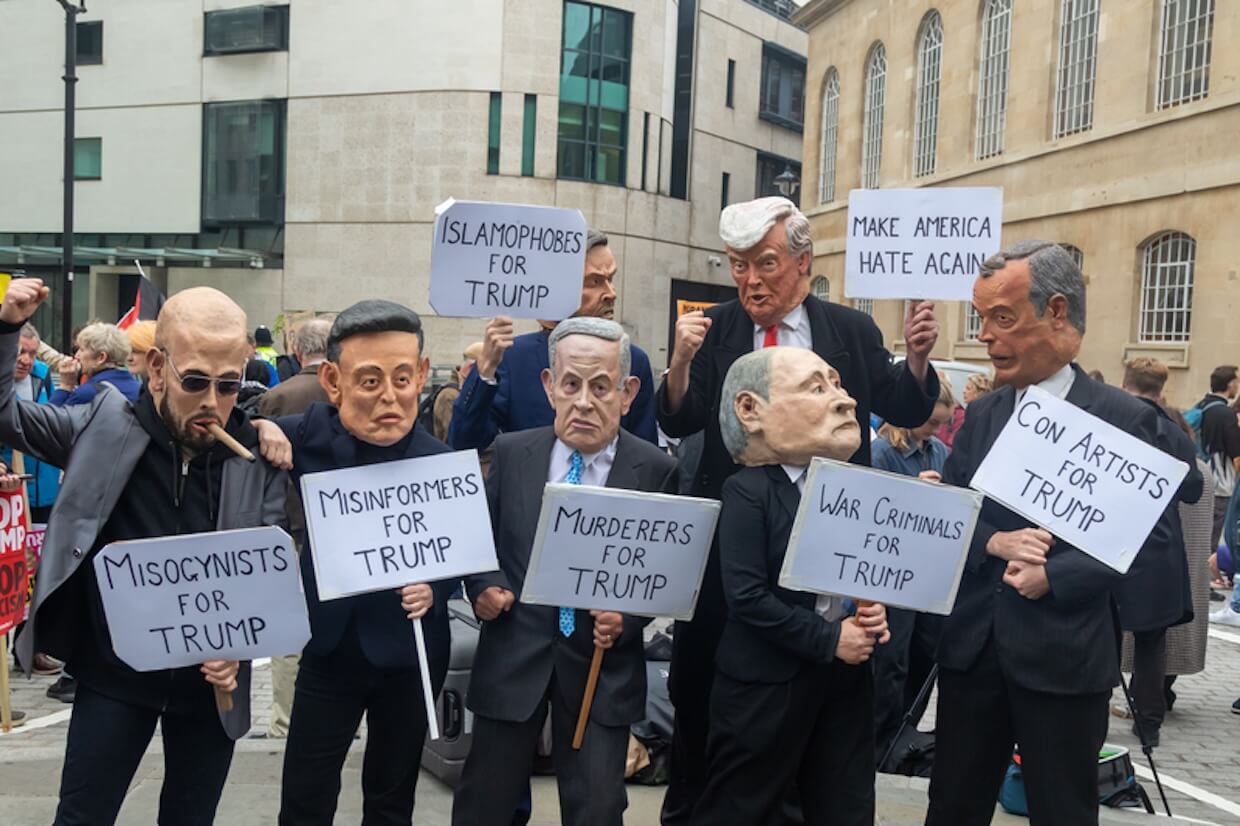
In your work on intentional polarization, you argue that backsliding executives often deploy ideological extremism and policy radicalization strategically. How does polarization help aspiring autocrats survive politically, and under what conditions can it eventually undermine them instead?
Professor Javier Corrales: Right, the argument there is that we were trying to study why some presidents who seek to concentrate power end up adopting very radical ideologies, extremist ideologies, and sometimes even extreme policy positions. Not everywhere, but often enough. The argument we make in that paper is that, in many ways, this serves to shift attention away from debates about whether the president should have more power or less power, whether we should scrutinize the president’s illiberal actions, and instead redirect attention toward policy debates. But it is also a way of provoking the opposition—of encouraging the opposition to become more extremist, to scream very loudly, and to do crazy things.
There is, of course, a risk for incumbent presidents when they radicalize. The danger is that their radicalism may not sit well with moderates. So, there is a risk to them. But in the paper, we discuss how they mitigate that risk. In other words, they radicalize themselves while knowing that moderates may become less enthusiastic about them. So, they develop strategies to split the opposition, say bad things about the opposition, and co-opt parts of the opposition so that the other pole never becomes strong enough. Or they encourage the other pole to commit its own excesses. In other words, they provoke the opposition into becoming equally radical in certain ways.
So, you’re right that intentional polarization can backfire on the incumbent president. But we also discuss the strategies that incumbents deploy in conjunction with intentional polarization to protect themselves from those risks.
Populism’s Democratic Sugar Comes with Anti-Pluralist Salt
You have described populism as the “sugar, salt, and fat” of contemporary politics—highly appealing yet potentially toxic for democracy. How does populism interact with democratic backsliding, and why do populist movements often remain electorally resilient even after their leaders leave office?
Professor Javier Corrales: I developed this metaphor while reading about the food industry. Research has demonstrated that the food industry, at least in the United States, creates what are called ultra-processed foods by taking natural nutrients—things like sugar, salt, and fat. These are all macronutrients, and we should consume them. But if you manipulate the dosage—for example, if you make a chocolate bar with a lot more sugar, a lot more fat, and a lot more salt—you can create addiction. In other words, you manipulate the natural elements of food to produce a certain degree of addictiveness. That is what got me thinking that populism is a little bit like that.
Populists take the natural elements of democratic politics: sugar, fat, and salt. Sugar is the desire to do something for the little guys—the crowd-pleasing policies that are always characteristic of populism.
Salt is the condiment that heightens flavor. It is the transgressive speech directed against opponents, oligarchs, elites, and the perceived enemies of the community. It is intense and emotionally charged.
And fat, which is the equivalent of agenda density, comes from populists arriving with the idea that they are going to change everything, rewrite the Constitution, and take over the entire state—packing the system with energy and punch.
So, they oversupply these elements, and this produces followership, not unlike the way junk food produces addiction. It also produces opposition. It creates people who do not like these foods. Now, the point I wanted to make is that many people who continue to defend populism do so by focusing only on the sugar component. The sugar component of populism is the part that seeks to help the little guys, provide assistance to low-income groups if you are on the left, provide security for communities that feel threatened, and amplify the voices of those who are not being heard. All populist movements contain that element. Many people continue to argue that this makes populism democratic.
But what I wanted to emphasize is that populism also comes with a lot of fat and, especially, a lot of salt. The salt component—the high salt content—is the transgressive rhetoric directed at critics, the constant division of the electorate into “we, the good guys” and “you, the bad elites,” the privileged people. It is the notion that we must constantly restrict your rights. This is always part of populism, together with the sugar. They come as a package.
That is what I wanted to convey with this analogy. It helps explain why populism has always been so difficult to study within the context of democracy. It contains a deeply democratic component—the desire to include the little guys, the sugar coating. But it also contains what other scholars, such as Cas Mudde and Cristóbal Rovira Kaltwasser, have described as an inherently anti-pluralistic element—an element that generates antagonism toward those who dissent. That is what that thought piece was about.
When the Referee Is Captured, the Game Is Over
Your scholarship on Venezuela demonstrates that democratic erosion often occurs incrementally through institutional capture rather than dramatic constitutional breakdown. Which institutions are most critical for preventing the transition from democratic backsliding to full authoritarianism, and why?
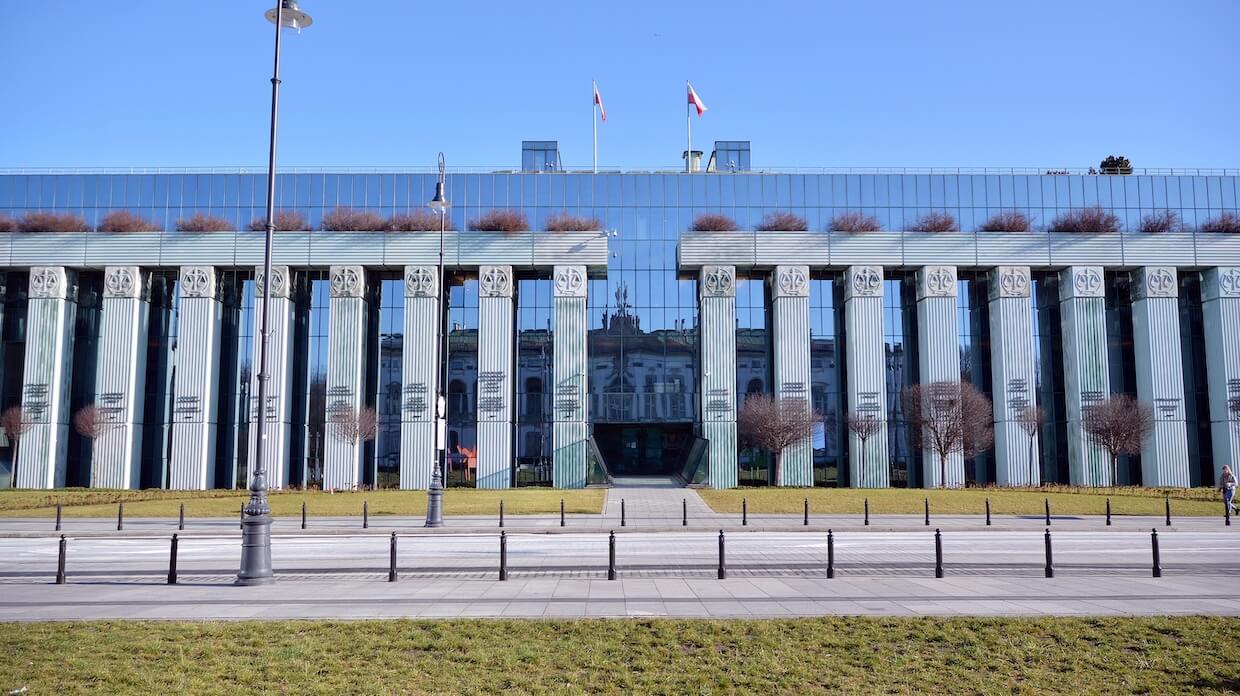
Professor Javier Corrales: They all matter, of course. But if I had to pick one—if I had to identify the institution whose fall would most concern me, the one that, once fully captured by the executive branch and the ruling party, signals the greatest danger—it would have to be the court system. More broadly, I mean the legal system: the Attorney General’s Office, the Ministry of the Interior, and the Justice Department.
This is not to say that the other institutions matter any less. But this one is especially important because, in a liberal democracy, the name of the game is competition—competition between the government and the opposition. And that competition can be ferocious.
You need an arbiter. You need a referee. It is essential.
The moment that referee becomes partial, becomes rigged, or becomes an instrument of one of the players, it is over.
The court system then gives you permission to engage in what I call autocratic legalism, whereby you begin to apply laws in ways that favor yourself and go after your critics.
Illiberal Leaders Need Institutional Vehicles to Succeed
Many observers focus on charismatic leaders when analyzing democratic decline. Yet your research frequently highlights the importance of ruling parties, courts, electoral authorities, and state institutions. Are we still overestimating the role of leaders and underestimating the institutional foundations of autocratization and democratic recovery?
Professor Javier Corrales: In political science we have always had a debate between the role of agency and the role of institutions. Perhaps we should not be trying to choose between them. Rather, we should continue to recognize that agency operates within institutional contexts and that individual choices vary according to those contexts. At the same time, institutions alone, without taking agency into account, may not necessarily provide strong predictive power.
That said, I think the literature on democratic backsliding has come a long way in understanding the role of institutions. Let me give you an example. One of the best books on the subject that I have read recently focuses on whether a president has a ruling party that has become highly personalistic. This is work by Erica Frantz and her colleagues. The argument is that you may have an illiberal president with a great deal of illiberal agency. But that president may not go very far. They may not be able to advance democratic backsliding very far unless they possess the institutional mechanism of a personalized party. Frantz and her colleagues define precisely what they mean by that, and they make a very compelling case that you need a war tank—and that is what a personalistic party provides.
Now, the concept of a personalistic party has a long lineage in political science. We have been studying the rise, role, and institutionalization of parties since Huntington in the 1960s. So, we have long been familiar with the notion that parties can either become highly institutionalized machines or little more than rubber stamps for the leader in office. We are now at a point where important lines of research successfully incorporate both agency and institutional analysis into the study of democratic backsliding.
Corruption and Incompetence Are Authoritarianism’s Greatest Vulnerabilities
Your comparative work suggests that only a small number of backsliding cases ultimately culminate in consolidated authoritarianism. What explains why countries such as Venezuela and Nicaragua crossed that threshold while others, despite serious democratic erosion, eventually experienced electoral turnover?
Professor Javier Corrales: Two words: corruption and incompetence. Let me expand. A natural, almost inevitable tendency of all autocratizing presidents is to engage in a significant amount of corruption. All the evidence I have seen, both from the work of others and from my own research, shows that as soon as you begin to erode the system of checks and balances, corruption proliferates. Corruption damages the popularity of all presidents. It is their greatest vulnerability. They can survive it, but it becomes a very significant weakness. These strongmen eventually become associated with highly corrupt regimes, and voters see it. They see it with their own eyes. So that is vulnerability number one.
The second vulnerability is less inevitable. Not all autocratizing presidents fall into this trap, and that is public-administration incompetence. Obviously, some autocracies are very technocracy oriented. That can happen. But we also know—and this comes from the work of Barbara Geddes in the 1990s—that autocratizing presidents, when deciding how to staff the bureaucracy and public administration, often face a choice between appointing technical experts and appointing loyalists. They choose loyalty. To the detriment of technical competence. Think about it. If you diminish technical competence and elevate loyalty, you may end up with a bureaucracy that always says yes to the president, but public administration is going to suffer.
And so, over time—not immediately—what happens is this: Many autocratizing presidents come to power with a specific problem they want to solve, and often they succeed. People appreciate it, and they get re-elected. But as time passes, that problem recedes and new problems emerge. By then, the bureaucracy has been transformed, with more loyalists and fewer technical experts. As new public-policy challenges arise, the government becomes less equipped to deal with them and increasing levels of incompetence become visible. This is why, over time, many autocratizing presidents lose popularity and electoral advantage.
That does not necessarily mean it is the end of the line for them. They can survive it. But I think those two elements—corruption and incompetence—are natural vulnerabilities associated with autocratization and the move away from liberal democracy.
Orbán and Chávez Followed Remarkably Similar Playbooks

Lastly, Professor Corrales, looking beyond Latin America, do you see common patterns connecting the trajectories of leaders such as Hugo Chávez, Viktor Orbán, Recep Tayyip Erdoğan, Narendra Modi, Donald Trump, and Andrés Manuel López Obrador? Or are regional and institutional differences ultimately more important than the shared label of populism?
Professor Javier Corrales: This is really the debate about what matters more. There are policy differences, and those differences can be very significant. There is no question that a far-right populist has policy preferences that appear very different from those of a left-wing populist president. No doubt about it.
Or should we focus instead on their commonalities? The commonality lies in their hostility toward checks and balances, their desire to expand presidential power through executive aggrandizement, and their disdain for pluralism. When we look at policy agendas, a right-wing leader like Orbán and a left-wing leader like Hugo Chávez in Venezuela appear to be polar opposites. But when you examine their approaches to government-opposition relations, they follow a remarkably similar playbook. They seek to do many of the same things: capture the state, engage in autocratic legalism, co-opt the legal system, attack the press, and portray critics as elites or privileged groups. The convergence is striking. They may have very different policy prescriptions for addressing poverty. But when it comes to dealing with the opposition, they converge.
I spend a great deal of time thinking about democracy—which is fundamentally about regulating relations between governments and oppositions—I personally find the similarities more striking than the differences. It is remarkable that leaders who enter politics with such different ideological perspectives on the policy problems of the day ultimately converge on a very similar governing playbook. That is why the policy differences matter less than these commonalities. So, I would be comfortable saying that, in many ways, an illiberal president like Orbán and a left-wing president like Chávez represent different sides of the same coin.