
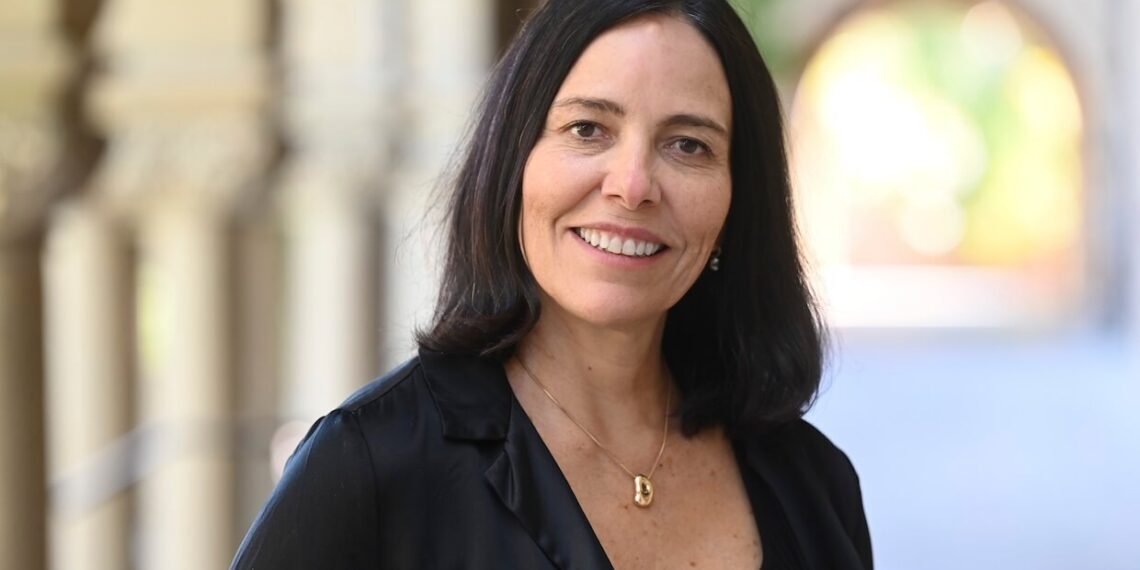
Professor Beatriz Magaloni, Graham Stuart Professor of International Relations at Stanford University, argues that contemporary democratic crises cannot be understood solely through institutional erosion or elite manipulation. Drawing on her recent research, she contends that growing dissatisfaction with democracy stems largely from failures of delivery rather than a rejection of democratic values themselves. While citizens remain strongly committed to civil liberties, competitive elections, and democratic norms, many feel that democratic governments are no longer providing security, opportunity, and effective public services. In this wide-ranging ECPS interview, Professor Magaloni examines democratic backsliding, populist leadership, authoritarian resilience, polarization, immigration, and the future of democracy. Her central message is clear: people still believe in democracy, but democracies must deliver better if they are to retain public trust and legitimacy.
Interview by Selcuk Gultasli
At a time when democratic backsliding, populist mobilization, declining institutional trust, and the rise of high-performing autocracies are reshaping political life across the globe, scholars and policymakers are increasingly confronted with a fundamental question: Are contemporary democratic crises primarily the result of institutional erosion and elite manipulation, or do they stem from a deeper failure of democratic systems to deliver tangible benefits to citizens? Few scholars are better positioned to address this question than Professor Beatriz Magaloni, the Graham Stuart Professor of International Relations at Stanford University and one of the world’s leading authorities on democracy, authoritarianism, state capacity, and political development.
Through seminal works such as Voting for Autocracy and a distinguished body of research on authoritarian resilience, electoral politics, governance, and political violence, Professor Magaloni has transformed scholarly understanding of why citizens support political regimes and how both democracies and autocracies maintain legitimacy. In recent years, her research has increasingly focused on the relationship between democratic legitimacy and state performance, arguing that democratic survival depends not only on institutions and norms but also on governments’ capacity to deliver meaningful outcomes.
In this wide-ranging interview with the European Center for Populism Studies (ECPS), Professor Magaloni challenges conventional explanations of democratic decline that focus exclusively on populist leaders or institutional weaknesses. While acknowledging that democratic support remains rooted in principles and freedoms, she argues that scholars have overlooked what she calls “the critical importance of delivery.” Across regions as diverse as Europe, Latin America, Asia, and North America, voters increasingly believe that “democracy is not delivering what they want” and express growing dissatisfaction with democratic governance.
Yet Professor Magaloni rejects the notion that democracy itself is losing public legitimacy. On the contrary, she insists that “democratic backsliding is not universal” and cautions against interpreting dissatisfaction with government performance as a wholesale rejection of democratic values. Drawing on extensive survey research, she emphasizes that citizens remain strongly committed to core democratic principles, particularly civil liberties and competitive elections. “There is still commitment to democratic norms,” she argues. “What people are telling us is: please deliver better.”
The interview explores why citizens increasingly support anti-establishment leaders, how authoritarian regimes cultivate loyalty through performance and selective benefits, why immigration has become a powerful driver of populist radical-right mobilization, and how democratic institutions are being challenged in both established and emerging democracies. Despite expressing concern about contemporary developments—particularly in the United States and parts of Latin America—Professor Magaloni ultimately offers a cautiously optimistic assessment of democracy’s future. Her central message is both sobering and hopeful: citizens have not abandoned democracy, but democratic governments must become far more effective at meeting citizens’ expectations if they hope to preserve public trust and democratic resilience.
Here is the revised version of our interview with Professor Beatriz Magaloni, edited lightly to enhance clarity, readability, and overall flow for publication.
We Have Missed the Critical Importance of Delivery
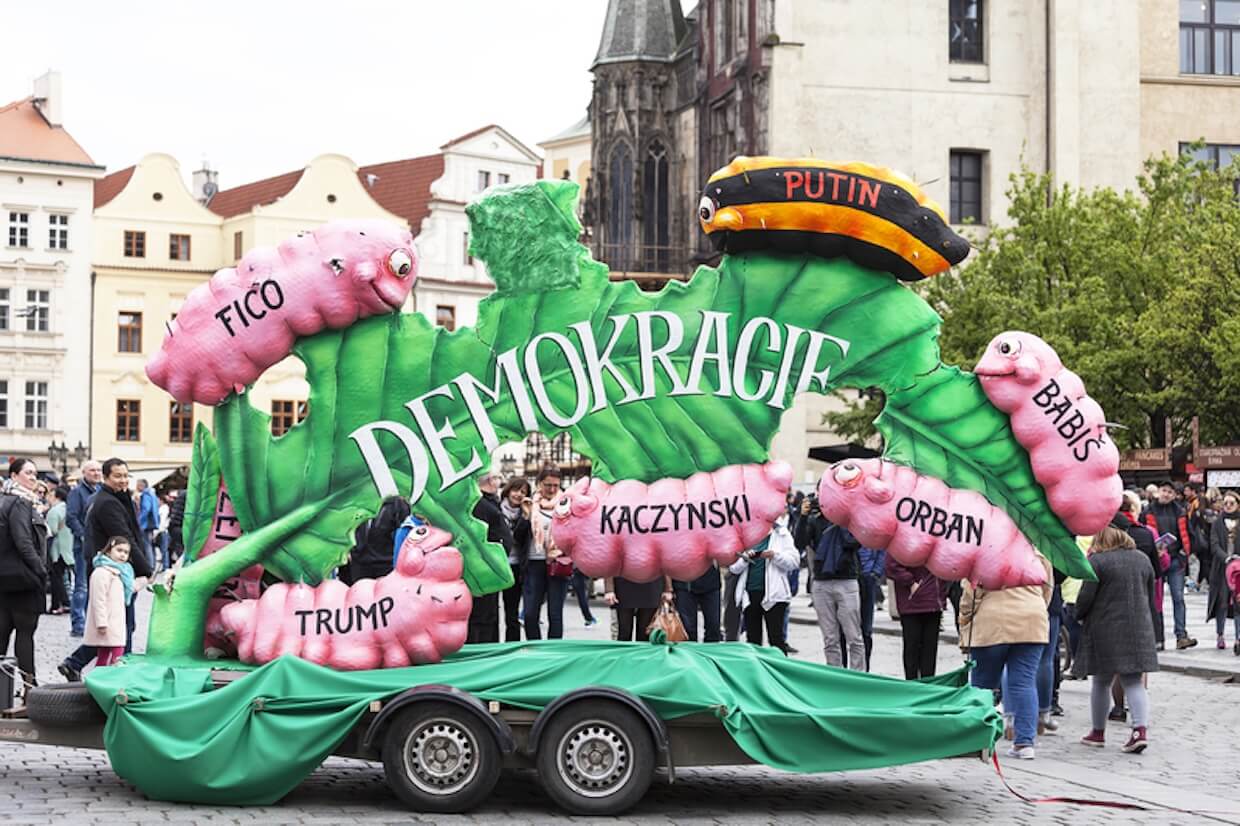
Professor Magaloni, welcome! To begin, your recent article “Delivering for Democracy: Why Results Matter” challenges the view that democratic backsliding can be explained solely by elite manipulation and institutional erosion. To what extent do you believe contemporary democratic crises are rooted in a deeper failure of democratic systems to deliver security, opportunity, and public goods to citizens?
Professor Beatriz Magaloni: Obviously, the process of backsliding is a complex one, and every country has some unique characteristics. In some countries, it is manifested more through fear of immigration and what that means for culture and also redistribution within a country. But what we have seen is an overarching dissatisfaction with what democracy delivers in many countries. As I argue, it is manifested differently in Europe, Latin America, the United States, Asia, and so on. But there is a common feeling among voters—and we see this in survey after survey—that democracy is not delivering what they want and that they are dissatisfied with the democratic system.
Of course, we see this in surveys with questions that ask whether people endorse democracy, whether they believe democracy is the best form of government, or whether they would be willing to accept a strongman or woman leader who would deliver what they want. We consistently observe a decline in satisfaction across the globe, and that worries us because we have been understanding democratic support as being based exclusively on principles, norms, freedoms, and the substantive normative content of democracy.
Voters are still committed to those things, but we have missed the critical importance of delivery. That is basically the content of that article. We have now extended this work, with other co-authors and myself, to the region of Latin America, asking very specific questions about what type of delivery people feel they are missing from democracies and how far they are willing to go in supporting leaders who would undermine some basic democratic norms in order to achieve economic security, health, and public service delivery that they are not observing. That is the general pattern that we are describing in that article that you just cited.
Voters Turn to Outsiders When Democratic Institutions Stop Delivering
Many scholars emphasize the role of populist leaders in undermining liberal-democratic institutions from within. In your view, why are significant portions of the electorate willing to support leaders who openly challenge constitutional constraints, judicial independence, and pluralism?
Professor Beatriz Magaloni: I think it’s related to what we just mentioned. Often, dissatisfaction leads voters to reach conclusions about the current system. They conclude, for example, that political parties are ineffective. These are very unpopular institutions in the region that I study, but also across the globe. Party identification has declined. Voters also perceive legislators as incompetent. They don’t see legislators responding to what they want. They view the judiciary as something that imposes constraints. They don’t really understand specifically what each institution is doing, but we know that, for example, in Latin America, the least popular institutions, besides the police, are political parties and legislatures.
So, these strong leaders are able to capitalize on this dissatisfaction and portray themselves as outsiders, people who do not even come from the political class. Often, they are entrepreneurs or people without political experience who are able to use very smart and strategic communication techniques, along with highly curated social media campaigns, to gain the attention and support of voters.
Often, these leaders are real outsiders. For example, in Colombia, in the elections right now—the second round that is going to take place this Sunday—the candidate, Abelardo de la Espriella, is clearly an outsider. He presents himself as a very successful entrepreneur. He even has Italian and US passports, so he has triple nationality. He portrays himself as a successful entrepreneur, very much in the way Trump tried to portray himself. And he is capitalizing on the very strong dissatisfaction among Colombians at the moment with the peace accords and what they have brought for some sectors of society, specifically those located more in the cities and in the peripheral areas of the cities, not so much in the countryside, where the war and human rights violations have been very significant and where he is not popular.
Similarly, Bukele in El Salvador was able to capitalize on a comparable dissatisfaction with the democratic political system, where two parties had alternated in power, left and right, and voters had concluded that neither of these parties had been able to deliver on something that was very dear to them, namely security. El Salvador was, back then, one of the most violent—and often the most violent—countries in the world. Even though homicides had been declining before Bukele took office, he was able to capitalize on that dissatisfaction to gain support and then, little by little, destroy democratic institutions.
We saw a similar process in Brazil with Bolsonaro, although he was not really an outsider. He was a congressman and a member of the military, but he also campaigned using the same language.
Similarly, Trump came to power with that same strategy. We also see that these leaders copy one another and have really figured out which strategies work. And there is also a very powerful dissemination of these messages through social media, and they have been very strategic in reaching across borders through different means.
Citizens Have Not Rejected Democracy

Across Europe and North America, surveys reveal declining trust in political parties, legislatures, and public institutions. Should this be interpreted as a crisis of liberal democracy itself, or rather as a crisis of state performance and governance capacity?
Professor Beatriz Magaloni: We have to be cautious about saying that voters really don’t like democracy anymore. Also, in our surveys—again, in Latin America, but I can also go back to Europe and the United States—voters understand the value of these principles. So, when we see, for example, people protesting in the United States in the No Kings march, it’s a very well-attended march. Millions of voters, citizens in this case, and non-citizens come out to protest. When you read what they are protesting about, it is often violations of very concrete democratic institutions. That’s the meaning of No Kings. They don’t like that accumulation of power. They don’t like that Trump is concentrating power, going around Congress, dominating the judiciary, and prosecuting his opponents. Also, all the human rights violations that come through the way he’s enforcing immigration.
We see that constantly. We have also been very surprised in Europe—positively surprised—by voters putting a halt to this language and really choosing parties and candidates that are more moderate. So, we have to be cautious about saying, this is just going to happen everywhere. Democratic backsliding is not universal. It’s happening slowly in several countries. We see, surprisingly, attacks on norms and institutions that we have really become accustomed to, as well as the abandonment of the language of protecting these sacred institutions. But I don’t think we can reach the conclusion that there is no normative commitment to democracy at all.
There are very specific things voters are asking for. There is dissatisfaction with economic performance, dissatisfaction with service delivery, and dissatisfaction with immigration and the way countries have dealt with it. Obviously, this creates a great deal of tension in society. Parties on the left have also been able to correct their language and the way they have approached these processes.
However, I am not so pessimistic as to say that we’re going to observe the same backsliding all over Europe. Democracy in Europe has shown itself to be quite solid, although there is obviously space for these leaders, and people are paying attention to them.
Performance Matters—Even in Authoritarian Regimes
In Voting for Autocracy, you demonstrated how citizens may support authoritarian regimes not merely because of coercion but because authoritarian systems create incentives and dependencies that shape political behavior. Do you see similar mechanisms operating today in contemporary electoral autocracies and even in some democracies?
Professor Beatriz Magaloni: Yes, in my work on authoritarianism, I really paid a lot of attention to the meaning of elections and the fact that voters can choose. So, these are electoral authoritarian regimes where there is real choice, although one single party or leader holds power. We see, for example, Venezuela with Chávez and then Maduro. Now what happened in Venezuela is a different story. Staying in power for a long time while having elections—the PRI in Mexico was in power for over 70 years with multi-party elections. There was obviously limited competition, but still those elections were meaningful. We see, increasingly around the world, that this is the modal form of authoritarianism. But we also observe countries like China, for example, where there are no elections.
My work really focused on why authoritarian leaders need to mobilize support from the masses or voters in order to stay in power. Essentially, I discovered that, similarly to democracies, voters and people in authoritarian regimes evaluate leaders according to what they deliver. So, authoritarian countries that are high-performing in terms of economic growth and some redistribution tend to be more solid and more stable than those that do not have economic growth, do not redistribute, do not create public goods, and do not invest in public goods. That’s the main finding of my work: performance matters. I started my work thinking about different ways in which voters evaluate autocracies. One of them is through what I call performance legitimacy, where the more economic growth and better performance you have observed—not only in the current electoral cycle but throughout your entire life cycle—the more loyal to that regime you become.
But obviously not every authoritarian regime can deliver. Some are not that great. For example, when I studied the Mexican PRI, the PRI stopped delivering as it used to with the debt crisis of the 1980s and the economic adjustments that all countries in the developing world had to go through. At that moment, the PRI started to become more strategic in terms of how the party targeted direct benefits to buy off electoral support—what I call clientelism. In that book, I call it the punishment regime, where autocrats reward supporters with benefits, and by that, I mean, for example, the benefits of social programs. Only those sectors of society that support the autocratic regime receive those benefits, while voters who do not support the system are punished. So, I argue that this creates, even in lower-performing autocracies, an incentive for many poorer voters to turn to the autocrat.
That’s the way I explain support for Chávez during his term in Venezuela. He was able to profit from the oil boom and use those profits to create social programs, the misiones bolivarianas, and many other investments that reached sectors of society that had been left out of the democratic system. By capturing that sector of society and punishing those who did not support him, he was able to gain a lot of support through that strategy, as well as through his rhetoric and all the other things we talked about—his anti-institutionalism and his language about revolution: “We are coming here to create a completely new system that democracy never delivered.”
But then, obviously, we saw Venezuela enter a huge economic recession under Maduro, accompanied by an enormous humanitarian crisis. The oil boom was no longer there, and the system started to use more and more coercion to stay in power. So that’s what I discovered: autocrats use multiple strategies to remain in power. But if they have economic performance and effective service delivery, they don’t need so much coercion to keep people supporting them. In fact, there can be genuine support for authoritarian leaders.
Power Sharing Is Essential for Dictators
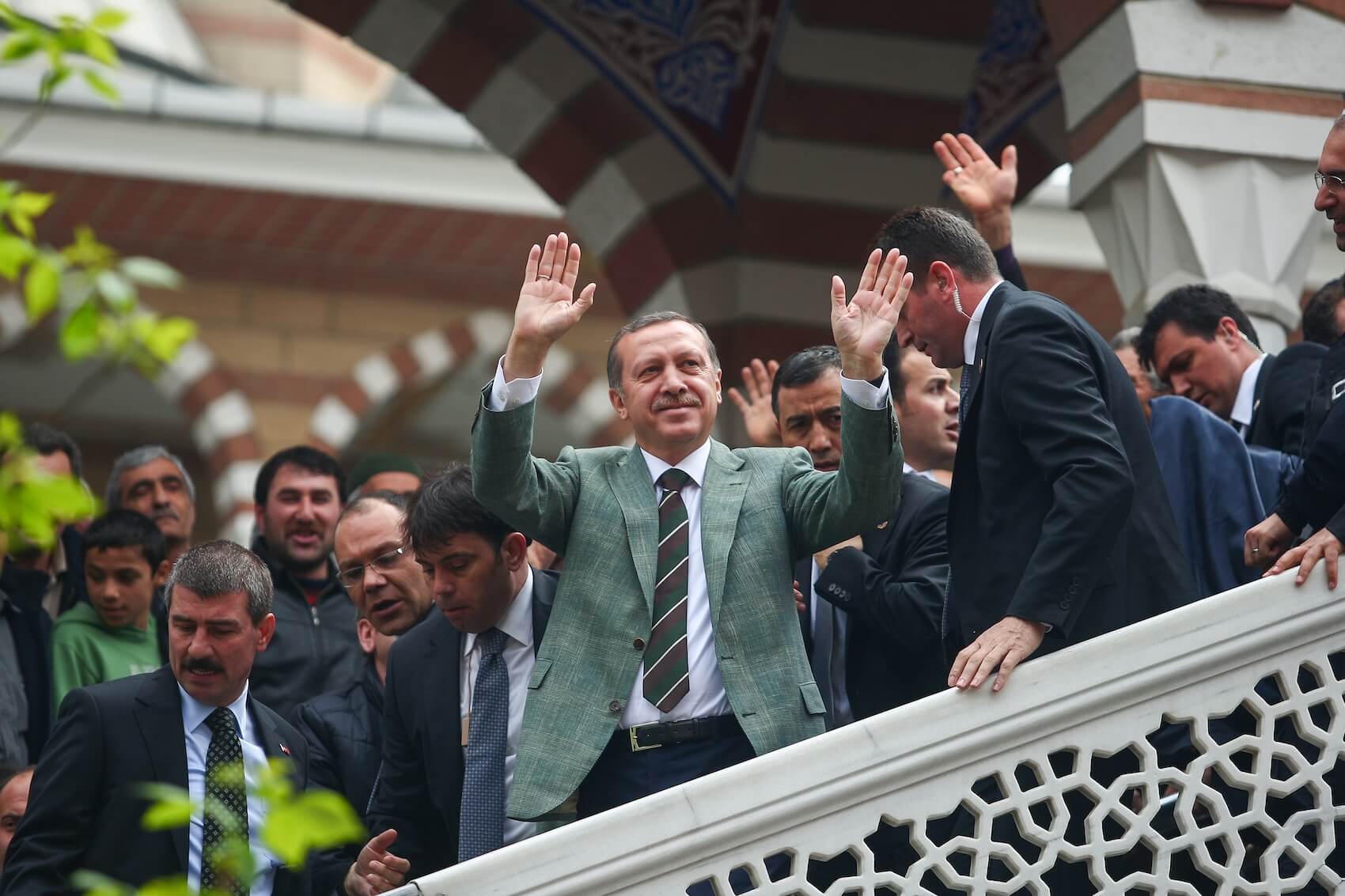
Your work has shown that authoritarian regimes often survive through sophisticated mechanisms of power-sharing, co-optation, and institutional adaptation rather than brute repression alone. How useful is this framework for understanding the durability of contemporary authoritarian regimes such as those in Turkey, Russia, or Venezuela?
Professor Beatriz Magaloni: Very good question. As I mentioned, autocrats use a combination of strategies. They use coercion, and they have that system in place because, ultimately, they are authoritarian. They are not going to cede power willingly. They are going to repress those who openly challenge the regime. And they can do that selectively rather than massively. They do retain coercion, and that’s very important to emphasize because, ultimately, that’s going to play out in the system. But they can do many other things—and they need to do many other things—to keep themselves in power if they want to succeed as dictators or autocrats.
One of those strategies is what I call power sharing. This is not only my work; other scholars studying authoritarian regimes have also focused on this. These are ways in which autocrats bring political and economic elites into a system of redistribution of benefits, often through institutions. For example, becoming part of the ruling party or the apparatus of government brings benefits, including economic benefits, to their cronies. That’s what I call power sharing. They create incentives for those supporters—very critical supporters at the elite level of the regime—to remain loyal. Because if they don’t, that is going to make the regime very vulnerable. Definitely, that’s essential. They operate through that mechanism, often by creating different institutions that bring different players into the system and allow them to share power. Obviously, these actors do not challenge the leader. Although in some unusual cases, like Mexico, there was alternation of the leader; there was alternation of the president himself. In China, for example, we see that as well. Less often than in Mexico, but there is a system to remove the leader and choose a new one.
That’s the second strategy. And finally, what we’ve been talking about: if they don’t mobilize and maintain some support or loyalty from the masses, what I discovered is that they become vulnerable. There is always a chance that someone within the regime could challenge the leader and the system. The more dissatisfaction there is among the population, the greater the opportunity for leaders, often emerging from within the ruling elite, to challenge the system.
That’s the set of strategies that we have seen—not only in my work. My work, I think, pioneered this line of research, but there has been a great deal of work since then on how these systems combine these strategies. But we have to acknowledge that coercion remains a powerful tool. That tool is used, and it is ultimately what distinguishes autocrats from democrats. That’s what we hope—that in democracies we do not observe this form of coercion. Although we can talk a little bit about that because my current work has moved into the instruments of coercion that are used in democracies and that unfortunately persist. Many of them have to do with the police and the carceral state, which are still used in democracies in ways that no democrat would agree are correct.
But definitely, yes, power sharing is essential for dictators. When we look at Turkey or, as you mentioned, Russia today, that is a very fine balance they have to maintain. One of my co-authors on this paper also argues that delivering very visible public goods is important. My co-auther, who is a PhD student, is writing his dissertation now, has a theory that is very solid: autocrats can signal good performance by delivering very visible public goods. So, investments in infrastructure—big bridges and airports that are highly visible, especially to middle-class voters—become important signals. And autocrats do pay attention to that.
Autocrats Are Becoming Increasingly Sophisticated
One recurring theme in your scholarship is that authoritarian institutions often perform functions that outside observers underestimate. What lessons should democracies draw from the institutional adaptability of authoritarian regimes without sacrificing democratic accountability?
Professor Beatriz Magaloni: Yes, I think that’s where we are underperforming as democracies and democrats. I’ve been studying the regime in El Salvador under Bukele, and I am now paying very close attention to developments in Colombia. I have studied the PRI, and I have studied Venezuela. Clearly, the strategies that autocrats are using are becoming increasingly sophisticated.
As I mentioned, there is also coordination among populist leaders in their language, as well as in their electoral strategies, messaging, and interventions. People are very worried about foreign intervention, for example, from Donald Trump in Latin American elections, signaling who the right candidate is and, interestingly, delivering messages in support of certain candidates. Increasingly, if you look at the elections today in Colombia, for example, the candidate Abelardo de la Espriella, has been incredibly strategic in ways that we did not anticipate would become so popular. His way of communicating with voters—even through performing shows and doing things that excite voters—has been effective in ways that we would not have anticipated before.
So, I think that democracies and democrats around the world have not yet figured out how to respond to these strategies in similarly effective ways that truly reach voters, especially younger generations who have become more disappointed with the system because they have not grown up in a system that has delivered in the way some democracies delivered in the past.
Performance Failures Are Driving Democratic Vulnerability
The rise of high-performing autocracies has revived debates about whether citizens prioritize outcomes over democratic procedures. Is the contemporary challenge to democracy fundamentally ideological, or is it increasingly performance-based?
Professor Beatriz Magaloni: That’s a very interesting question, and there is an ongoing debate in political science. Some scholars argue that democratic backsliding and challenges to democratic institutions often stem from the fact that voters are highly polarized along partisan lines, and especially along ideological lines. There is very important work by Milan Svolik, for example, and his co-authors, which shows that if people are polarized—not only ideologically, but also through what we call affective polarization, where they dehumanize their opponents and no longer see them as legitimate players in the democratic system—this affective polarization drives voters to condone violations of democratic institutions by their preferred leader and party. They would rather vote for a non-democrat than for an opponent who is no longer, in their view, a legitimate participant in the system.
So, we see that playing out very clearly in some political systems, such as the United States. And we observe that elsewhere as well. One could, for example, look at the elections in Colombia today, or even Peru, which recently experienced similarly contentious elections and is now in the process of determining who the next president will be. It looks like Keiko Fujimori is going to be. And there was very intense polarization in both countries.
But I don’t see this as necessarily ideological polarization in either Colombia or Peru. Rather, it is a polarization rooted in how people experience the state in their everyday lives. For example, voters who live in cities and in the peripheral areas of cities experience democracy very differently from voters living in the countryside—indigenous populations and Afro-descendant populations who were severely victimized during the civil war in Colombia.
So that polarization emerges not necessarily because of left-right ideology, but because of these different experiences of what the war meant to them and what the peace accords have meant to them. There is also a very strong anti-incumbent polarization. A large sector of society does not like Gustavo Petro today. They strongly dislike Petro because they see him as someone who negotiates with insurgents and guerrillas and who has brought about changes in society that a large segment of the population does not support. That’s the polarization we observe there. Which is also left and right, so there is polarization on those grounds as well. But I want to emphasize this experiential dimension—the experience people have in their everyday lives that leads them to adopt these positions. It’s not only about policy positions and what we traditionally understood as left and right. That has always been part of democratic politics. That’s what democracies are about. They are about policy debates and competing economic visions, where one party may favor less redistribution and another more redistribution.
What we are observing now is a different set of issues that are deeply dividing voters. So, I would agree with that aspect of Milan Svolik’s work—that polarization is indeed important. But what we are discovering in our own research across Latin America—and it is very expensive to conduct all these surveys across the region; I wish I could do that worldwide—but at least in the seven countries we have studied in great depth, we find that a great deal of the problem has to do with performance in areas that people regard as essential. If a party, or especially a candidate, promises to deliver what voters feel has been missing, they are often willing to go along with that leader, even if it means undermining institutions.
What Happens in the US Shapes Democratic Trends Worldwide

In the United States, democratic institutions have proven more resilient than many expected, yet political polarization remains extraordinarily high. Do you see polarization primarily as a symptom of institutional dysfunction, economic grievances, or deeper transformations in political identity?
Professor Beatriz Magaloni: That’s a very important and complex question, and I think that the process in the United States has surprised many scholars. Because the United States has a high level of economic development and a long history of democratic institutions, we never thought that democratic institutions would backslide in the way they have in the United States. And I agree with you that the system has proven resilient because there is still opposition. But, to my surprise, that opposition seems to be coming more from the elites.
There has been incredible success in undermining key democratic institutions, principles, and norms in the system. Part of the reason, as I see it, is that the Republican Party has not put any brakes on what Donald Trump has been doing to the democratic system. They have gone along with him, placing no meaningful constraints on him, and that has allowed President Trump to do things that we would never have predicted could happen in the United States. This includes the way he is enforcing immigration laws today in non-democratic and completely non-humanitarian ways, but also the way he has persecuted his opponents.
For example, we observe lower-level courts putting a halt to anti-democratic actions. But when it comes to the Supreme Court, we have observed the Court surprisingly going along with Trump in ways that we would never have anticipated from a system of checks and balances. So, I do believe that the system is—or at least we hope the system is—resilient, because we are still waiting to see what is going to happen in the coming elections.
We have also observed a very clear intent to manipulate electoral rules at the state level in order to give Republicans an advantage, even when they are not popular. Trump is the least popular president. So, by all means, he should not be able to retain a majority in the House with his current levels of popularity. But we also have to understand that there are many elements in the democratic system in the United States that are not majoritarian, that give a great deal of power to minorities, and the system is designed that way. For example, the Electoral College is one of those institutions in which you can still win the presidency without winning a majority of the vote, and that places considerable power in certain states. For example, I teach at Stanford, so I live in California. If you are pro-Trump, you are really powerless in that state.
So, I am less optimistic, frankly, about what I have observed in the United States. I think the backsliding has gone farther than in any country in Europe. I think Europe has proven to be more solid as a region. Turkey, obviously, is not part of the EU, and it’s different. There is clear backsliding in Turkey. That’s not Europe, but it is part of it. But the United States has really, in my opinion, gone farther than any solid democracy has gone.
Many Voters See Immigration as Both a Cultural and Redistributive Threat
Europe is witnessing the normalization of parties that were once considered outside the democratic mainstream. How should we understand the growing electoral appeal of the populist radical right and far right: as a protest against globalization, a reaction to migration, or evidence of dissatisfaction with democratic governance itself?
Professor Beatriz Magaloni: You just identified the right set of reasons why we observe these parties, which are very anti-system and often employ very non-democratic language, emerging as highly popular alternatives in Europe. I would place immigration as the number one reason, and particularly what it means to European societies. I think immigration has generated a strong reaction among voters because it is perceived as a cultural challenge to their way of life. But it is also because many feel threatened within the system of redistribution. They do not want to share the welfare system with people who are perceived as non-European. So, this is in part rooted in race and culture, and there has been a very strong reaction to that. Some people perceive immigrants as dangerous, not only in terms of security, but also in terms of culture and what immigration means for European societies.
There Is Still Considerable Commitment to Democracy Around the World
Finally, if current trends continue, what do you expect democracy to look like ten to twenty years from now? Are you ultimately optimistic that democracies can renew the social contract and restore public confidence, or are we entering a prolonged period of democratic fragility and authoritarian experimentation?
Professor Beatriz Magaloni: This is a difficult question. I tend to be more of an optimist, and I do see that there is a great deal of commitment to democracy. We have talked a lot about performance and why it matters, and that is a very important aspect for democrats to consider. They have to understand how to deliver better.
In the surveys and research that I have been conducting, there is still a strong commitment to democratic norms. People remain very strongly committed to civil liberties. They do not want to be denied the right to protest. They want to see open debate. They do not want to see a system where opponents are sent to prison. They remain committed to certain principles. In the studies I have conducted, civil liberties rank first. Competitive elections are the second most important aspect that voters value. People want elections to take place, and they want their voices to be heard. And thirdly—and this is what worries me the most—there is less commitment to the rule of law. Due process and protecting individuals from the coercive apparatus of the state are less firmly supported in the surveys I have conducted. But there is still commitment to democratic norms. What people are telling us is: please deliver better. If democrats receive this message and manage to create a system in which delivery becomes the highest priority, democracies will be okay.
What I want to emphasize, however, is that what happens in the United States plays an important role in shaping global democratic trends. As I have mentioned, President Donald Trump has been directly supporting certain anti-institutional and anti-democratic candidates and has sent very clear signals about who those candidates are. He has sent very strong signals. So, what happens in the United States is going to continue influencing the rest of the world. That is why I am paying very close attention to these elections in November and to the coming years of this presidency in the United States, because it shapes the world in ways that we never expected would be so dramatic.
I want to end on an optimistic note. One example is what happened recently in Hungary, with the electoral defeat of Viktor Orbán by TISZA, and all the mobilization around democracy, the enthusiasm at the local level, and the extensive organizing that was undertaken to finally defeat Fidesz and Orbán in Hungary. I think that is a very important lesson. While these cycles are undoubtedly troubling—I think Latin America is entering a troubling cycle of extreme populist right-wing presidencies—some of these leaders, surprisingly, have not challenged democratic institutions. For example, in Argentina, Milei has been more respectful of democracy, even though he is an extreme-right libertarian leader. But we did not observe the same in El Salvador, where we have really witnessed the destruction of democracy. We are going to be watching Colombia very closely to see what happens there.
But I do want to end with a sense of optimism. These cycles happen and I just want to emphasize that there is still a considerable commitment to democracy around the world. We simply have to be more strategic and more careful about delivering what people want.