Authoritarian governments, populist movements, and rising powers are increasingly challenging the liberal international order not only by contesting specific human rights norms but also by questioning the institutions that create and enforce them. In this interview with the ECPS, Assistant Professor Gino Pauselli of the University of Illinois Urbana-Champaign examines how international norms are negotiated, resisted, and reshaped in an era of geopolitical rivalry and democratic uncertainty. Drawing on research spanning LGBTQ+ rights, migration, border securitization, China’s influence in global governance, international organizations, and civil society, he argues that contemporary struggles over human rights are fundamentally contests over political authority, sovereignty, and the power to define international law itself.
Interview by Selcuk Gultasli
Throughout the post-Cold War era, the international human rights regime has often been understood as one of the defining pillars of the liberal international order. Built upon the principles of universality, multilateral cooperation, and the progressive expansion of international legal protections, this order has contributed to significant advances in the promotion of civil liberties, minority rights, and transnational accountability. Yet, in recent years, these foundations have come under mounting pressure. Across both established and emerging democracies, populist leaders, authoritarian governments, and rising powers have increasingly challenged not only specific human rights norms but also the institutions and legal processes through which those norms are produced, interpreted, and enforced. Far from being confined to domestic politics, contemporary conflicts over sovereignty, migration, borders, LGBTQ+ rights, and civil society have become central battlegrounds in a broader contest over the future of global governance and the legitimacy of liberal universalism.
It is precisely these transformations that lie at the heart of the scholarship of Dr. Gino Pauselli, Assistant Professor in the Department of Political Science at the University of Illinois Urbana-Champaign. Combining insights from international relations, comparative politics, and human rights scholarship, Dr. Pauselli examines how international norms emerge, diffuse, and are contested through interactions among states, international organizations, NGOs, and transnational advocacy networks. His research offers an original perspective on the contemporary struggle between liberal and illiberal visions of international order, moving beyond simplistic accounts of democratic decline to reveal the complex political processes through which global norms are negotiated, resisted, and reshaped.
In this wide-ranging interview with the European Center for Populism Studies (ECPS), Dr. Pauselli argues that contemporary disputes over LGBTQ+ rights are ultimately less about sexuality than about political authority itself. As he puts it, “the ostensible subject is LGBT rights, but the deeper objection concerns who gets to make international law and how.” In his view, sexual orientation and gender identity have become powerful symbolic markers through which states signal their position in an increasingly polarized international order. Consequently, “LGBT rights have become the issue through which states perform that boundary—a way of signaling which side of a supposed civilizational divide a state stands on.”
Dr. Pauselli also offers important insights into the changing dynamics of authoritarian and populist politics. While acknowledging that anti-LGBT rhetoric often serves to divert attention from policy failures, he argues that it represents something more ambitious: “an active project to reshape society or build society around a notion of a heteronormative state.” Similarly, his research on border securitization demonstrates that restrictive migration policies can generate unintended human rights consequences. Rather than rhetoric alone, he finds that visible state projects such as border walls communicate heightened threat perceptions to border officials, thereby increasing the likelihood of abuse.
The interview further explores China’s growing influence within international institutions, the contestation surrounding sexual orientation and gender identity resolutions at the UN Human Rights Council, the emergence of illiberal NGO networks, and the evolving relationship between populism and international human rights governance. Throughout the conversation, Dr. Pauselli challenges conventional assumptions that rising powers necessarily reject global governance altogether. Instead, he argues that they increasingly seek to reshape existing institutions from within, because they “do value order and global governance,” while contesting the liberal content of the norms that sustain them.
Despite documenting an increasingly coordinated transnational backlash against liberal human rights norms, Dr. Pauselli remains cautiously optimistic about the future of the human rights project. Resistance to human rights, he observes, is hardly new; what is new is “the transnational coordination of this opposition at both the state and non-state levels.” Yet he also insists that attacks on the postwar human rights regime cannot ultimately succeed without offering a compelling alternative. The greatest challenge for liberal actors, he concludes, is not simply defending abstract legal principles but demonstrating, through people’s lived experiences, how universal human rights meaningfully improve everyday life. In an era increasingly shaped by populism, geopolitical rivalry, and normative contestation, this interview offers a timely and sophisticated examination of the future of democracy, international law, and the global human rights order.
Here is the revised version of our interview with Assistant Professor Gino Pauselli, edited lightly to enhance clarity, readability, and overall flow for publication.
Opposition to LGBT Rights Is Ultimately a Contest Over International Authority
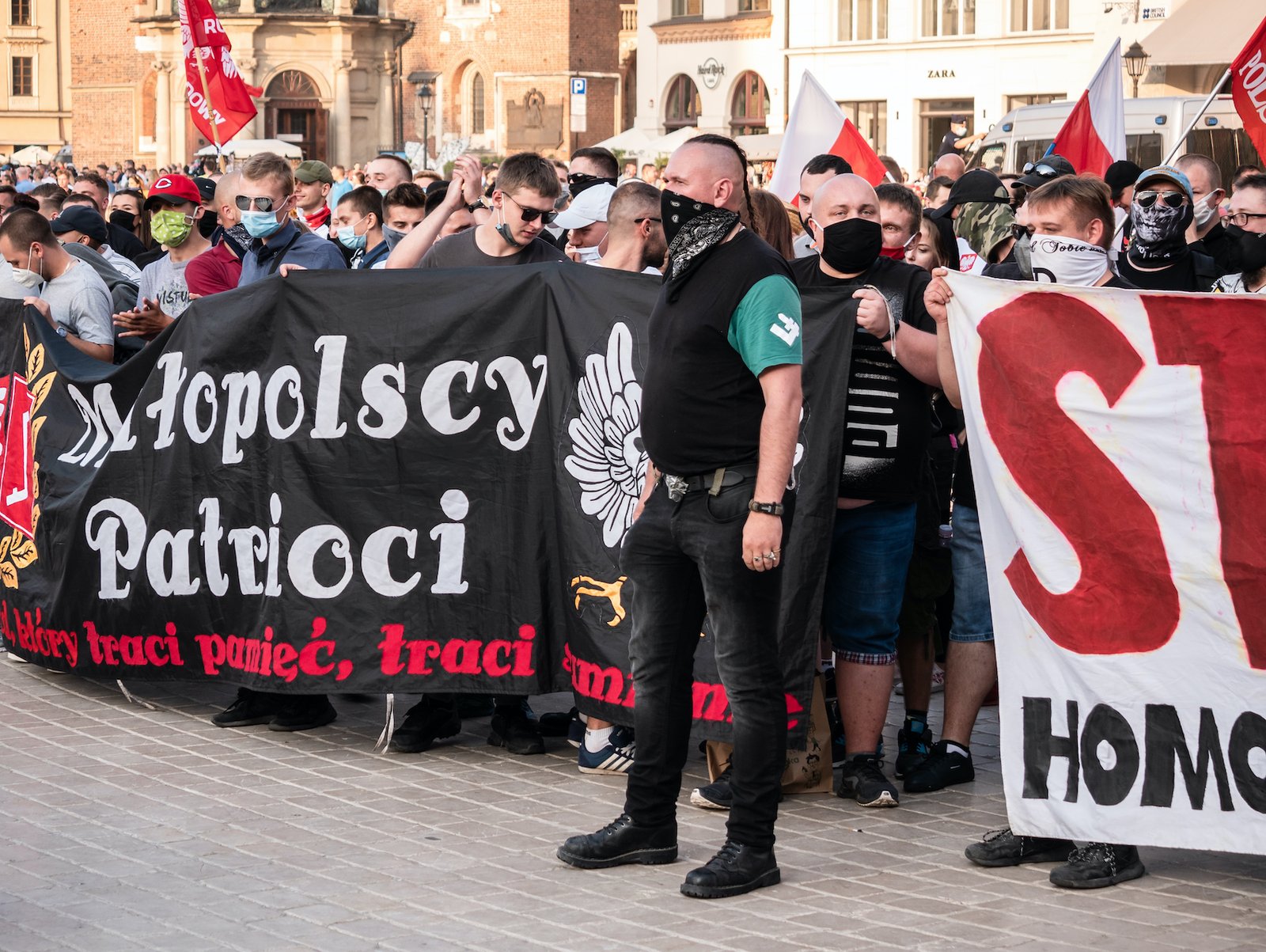
Dr. Pauselli, welcome! Let me begin with your recent research on LGBTQ+ rights and authoritarian politics. You suggest that opposition to LGBTQ+ rights is often embedded within broader resistance to the liberal international order. Why have sexual orientation and gender identity issues become such powerful symbols in contemporary struggles over sovereignty, nationalism, populism, and global norms?
Asst. Prof. Gino Pauselli: First, international law has historically been understood through consent. Sexual orientation and gender identity norms, by contrast, expanded rapidly at the international level, largely through the interpretive work of courts, treaty bodies, and non-state actors rather than through explicit state agreement. That makes them an almost ideal target for a sovereigntist critique: they can be portrayed as obligations imposed without consent by unelected actors, thereby expanding the jurisdiction of international institutions. The ostensible subject is LGBT rights, but the deeper objection concerns who gets to make international law and how.
The second reason is that these issues rest upon the symbolic material that nationalism mobilizes: the family, reproduction, the gender order, and the continuity of the nation across generations. That makes them a clear boundary marker. In my own work, I think about this in terms of ingroups and outgroups. Criticism over human rights tends to produce compliance among states that see the critic as one of their own and backlash among those that see the critic as an adversary. LGBT rights have become the issue through which states perform that boundary—a way of signaling which side of a supposed civilizational divide a state stands on.
Third, opposition is cheap. Restricting these rights carries little material cost and threatens no powerful economic interests, while yielding a high identity return. It is a low-cost, highly visible signal of standing apart from the liberal international order.
Many authoritarian governments portray LGBTQ+ rights as foreign impositions or manifestations of “Western values.” How much does this rhetoric overlap with contemporary populist narratives that oppose cosmopolitanism, globalization, and transnational human rights norms in the name of national sovereignty?
Asst. Prof. Gino Pauselli: This is exactly what I was mentioning. It is true that populist and conservative governments have used anti-LGBT rhetoric to challenge what is perceived as a foreign imposition. But this rhetoric, as I mentioned before, is itself borrowed from transnational actors, including both non-state actors and organized state actors abroad.
Economic Growth Can Strengthen, Rather Than Weaken, Anti-LGBT Projects
To what extent do anti-LGBTQ+ campaigns serve as political instruments through which populist and authoritarian leaders mobilize conservative constituencies, manufacture moral panics, and divert public attention from governance failures or economic grievances?
Asst. Prof. Gino Pauselli: This is a very common interpretation of the instrumentalization of anti-LGBT rhetoric. I wouldn’t say that this is not the case. This powerful strategy of opposing LGBT rights and LGBT norms does, indeed, divert attention away from economic grievances. But in the research that I’m conducting with a graduate student at the University of Illinois, what we’ve been observing is that this is not the full story. There’s also an active project to reshape society or build society around a notion of a heteronormative state and heteronormative norms.
So, on the one hand, it is true that there’s the scapegoating thesis, which basically argues that anti-LGBT rhetoric is useful for leaders because it diverts attention from the failures of their own policies. But at the same time, there is some evidence that, during periods of economic growth and economic development, this rhetoric actually becomes even more powerful in strengthening the state and reinforcing certain ideas about the state. In other words, it is precisely when the state has the resources to impose and advance these anti-LGBT projects that this rhetoric becomes most effective.
The Real Contest Is Over Who Has the Authority to Shape International Law
The UN Human Rights Council has become a major arena for disputes over sexual-minority rights. What do the debates surrounding sexual orientation and gender identity (SOGI) resolutions reveal about the changing nature of global human rights governance and the growing contest between liberal and illiberal visions of international order?
Asst. Prof. Gino Pauselli: The idea of sexual orientation and gender identity being discussed and debated at global international institutions, especially human rights organizations, is relatively new. In the UN Human Rights Council, the first attempt to pass a SOGI resolution occurred in 2003, while the first resolution to be voted on and adopted came only in 2011. So, this is a very recent development—less than two decades old. And every time these initiatives have emerged, we have observed strong opposition from a bloc of countries. Although this bloc has changed over time, SOGI resolutions have consistently been among the most contested issues before the UN Human Rights Council.
So, this leads to the question that I’m essentially reframing from your question: Why is this the case, and what does it tell us about the contestation between liberal and illiberal visions of the international order?
One of the things that has become much clearer recently, especially after the many interviews I conducted in Geneva last summer, is that many states—particularly liberal states—are deeply concerned about the ability of multiple international institutions to reshape international law independently. The concern is that—or at least the way many states frame it—non-state actors, including the Human Rights Council and treaty bodies, have modified or reinterpreted international law beyond the consent of states. This challenges the basic, traditional understanding of international law, which has historically rested primarily on state consent.
What many states argue is that they never signed up for this. They basically say that they never consented to incorporating sexual orientation as one of the categories protected by international human rights law. They’re not necessarily contesting that these rights should not be protected. Rather, they do not accept this as part of the international human rights project because they never consented to it.
There is no international human rights treaty that explicitly includes it, and it is not part of the Universal Declaration of Human Rights. So, the concern is deeper than sexual orientation and gender identity themselves. It is fundamentally about the ability of these bodies—these non-state actors—to reshape international law and then hold states accountable for standards to which they have never consented.
But there is also concern about these norms empowering domestic actors who are currently repressed and who might use these international frameworks to challenge the domestic status quo. For authoritarian rulers, this is particularly threatening. They fear allowing advances and changes at the international level that domestic actors could subsequently invoke to challenge their own rule.
Political Anxiety, Not LGBT Rights Themselves, Drives Much of the Conflict
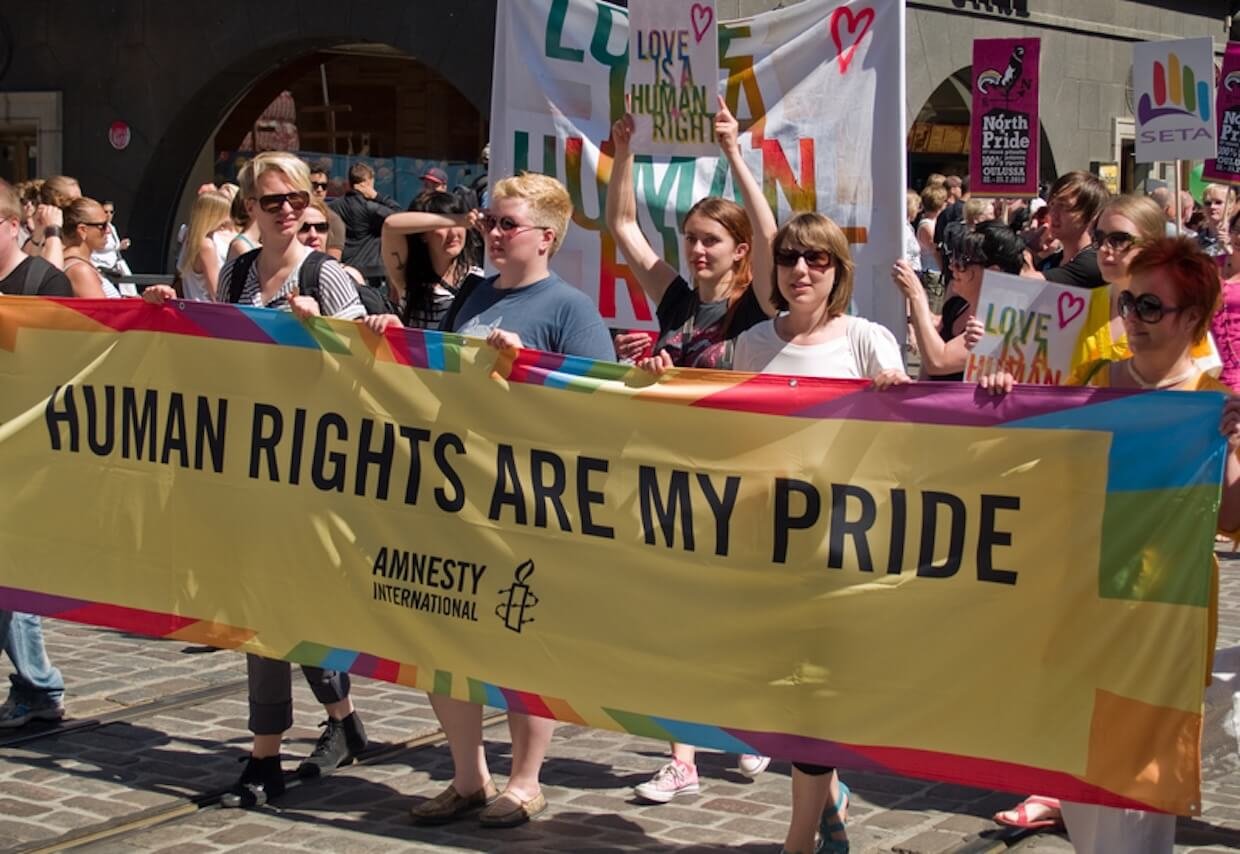
Looking ahead, do you expect conflicts over LGBTQ+ rights to remain one of the principal battlegrounds between liberal and authoritarian visions of international order, or are other human rights issues likely to supersede them?
Asst. Prof. Gino Pauselli: This is very hard to tell. It’s very difficult to predict the future, and every time social scientists have tried to do that, they usually fail because we’re not trained to know what’s going to happen. But one thing I’ve been observing is that the transnational LGBT movement is learning how to counteract the conservative backlash. Actors who have been promoting and protecting LGBT rights have been thinking very carefully about the frameworks and strategies that might be most helpful and effective in preventing the conservative backlash from gaining further ground. If these actors ultimately succeed in limiting the conservative backlash, then conservatives will probably find another issue to politicize. In that case, LGBT rights would gradually move away from the center of this contestation over the international liberal order.
At the end of the day, societies care about their well-being. The lack of progress and the anxieties generated by technological change have probably led many individuals to embrace anti-LGBT rhetoric as a way of resisting change and channeling their own anxieties. But the current challenge for the conservative side is that it ultimately needs to start delivering results and providing answers to those anxieties. If opposition to LGBT rights fails to do that, then they may find themselves in some trouble. They may need to turn to another issue or rely on something else to maintain their political power.
Rising Powers Prefer to Reshape Existing Institutions Rather Than Replace Them
In your research on China’s influence within the UN Human Rights Council, you show that Beijing’s presence systematically affects the voting behavior of other states. What does this finding tell us about how rising powers can reshape international norms from within existing institutions rather than by creating alternative ones?
Asst. Prof. Gino Pauselli: There are many things that are relevant to this issue. One is that, when we observe China being effective or successful in undermining international legal norms through its participation in the UN Human Rights Council, the first thing that comes to mind is that creating new institutions and providing them with legitimacy is very difficult. So, many authoritarian or illiberal states that oppose the international liberal order may find it much easier to advance their own agenda—even if it is an illiberal one—from within existing institutions that already enjoy high levels of legitimacy than through creating new institutions that few people know about and that may lack legitimacy in the eyes of the international community.
But, to address your question directly, the first thing this tells us is that rising powers like China are deeply interested in global governance. They’re not after anarchy, per se. So, by opposing the international liberal order, they are not opposing order itself. They do value order and global governance, but they may object to the content of the current norms that sustain that order. As China rises to the top of the global power hierarchy, it does not isolate itself. On the contrary, it actively participates in international institutions that help build and sustain order at the global level. It works through these institutions to advance its own goals.
Secondly, the other point I want to make is that international organizations are very important actors in shaping international norms. These norms essentially delineate what constitutes appropriate state behavior and what does not. They may not have teeth. We know that there is no global police force, and there is no United Nations army. But the norms that are developed and shaped within international organizations create a context—a normative structure—in which certain forms of state behavior become more or less costly. That normative environment may benefit some countries more than others. That is precisely where the contestation lies.
Independent Expert Bodies Are More Resistant to Political Contestation
Your research challenges the assumption that participation in international institutions necessarily socializes rising powers into liberal norms. Based on the case of China, under what conditions can international institutions instead become vehicles for norm revision, contestation, and the diffusion of illiberal ideas?
Asst. Prof. Gino Pauselli: This is a very interesting question, and it’s a very difficult one for me to answer. I don’t think I have a definitive answer. What I would say is that, based on research conducted by colleagues, it seems that institutions with broad participation—especially those characterized by direct state participation, where governments send representatives who ultimately decide whether to approve an institutional outcome, and where there are no independent experts or autonomous bureaucracies—are the institutions most likely to be used by illiberal states to challenge and contest international liberal norms. That’s the case with the UN Human Rights Council, for example. Every state has one vote, and every resolution is adopted if a simple majority of states votes in favor of it.
That is not the case, for example, with treaty bodies, where decisions are made by independent experts who adjudicate the cases brought before the institution. In those settings, states cannot—or at least do not necessarily—directly influence the outcomes through official channels.
Opposition to Human Rights Is Old—Its Transnational Coordination Is New

How do you interpret the growing convergence between right-wing populist movements and authoritarian governments in their critiques of international human rights institutions? Are we witnessing the emergence of a transnational backlash against liberal universalism, and if so, what are its implications for the future of global human rights governance?
Asst. Prof. Gino Pauselli: One thing that I find very revealing when I teach international human rights to my students is that resistance to international human rights—and even to liberal conceptions of rights—has been with us for a long time, almost since the beginning of the universal human rights project in the post-war era. What I would say is that norms that provide tools for marginalized individuals, communities, and other actors to resist power, abuse, and the arbitrary exercise of power will always be resisted and criticized by those who benefit from the existing status quo.
What I do think is somewhat new in recent years, or perhaps over the past few decades, is the transnational coordination of this opposition at both the state and non-state levels. This coordinated opposition to the international liberal order and its norms—especially human rights—is something that is genuinely new. The opposition itself has always existed, but the coordination of that opposition is new.
I’m not sure what the future of the human rights project will be. But I would be very surprised if attacks on the human rights project were successful without offering an appealing alternative. What I do think is that, in the short run, attacking the international liberal order may be politically appealing to some individuals or actors, but, at the end of the day, something else has to replace it. I don’t see that happening right now. Nor do I think such an alternative would be particularly appealing to most actors.
Fear Flourishes Where Diversity Is Least Experienced
Your research on intergroup contact suggests that exposure to diversity can increase support for human rights. How should we understand this finding in light of the success of many contemporary populist movements that thrive on anti-immigrant, anti-minority, and exclusionary narratives?
Asst. Prof. Gino Pauselli: It’s actually quite consistent with what we’ve been observing regarding the success of these movements in advancing anti-group rhetoric and exclusionary visions of society. If we think about Brexit, or about some research that I’ve conducted on the LGBT-free zones in Poland, the areas that have embraced this rhetoric most strongly are precisely those that have had the least contact with these perceived outgroups. So, these movements tend to be particularly successful in areas—and among individuals—with relatively little exposure to migrants, minorities, or other perceived outgroups.
Securitization Changes How Border Agents Perceive Threats
In your work with Beth Simmons, you demonstrate that border hardening can increase allegations of torture and abuse by border and immigration officials. What does this reveal about the unintended human rights consequences of securitization policies in contemporary states?
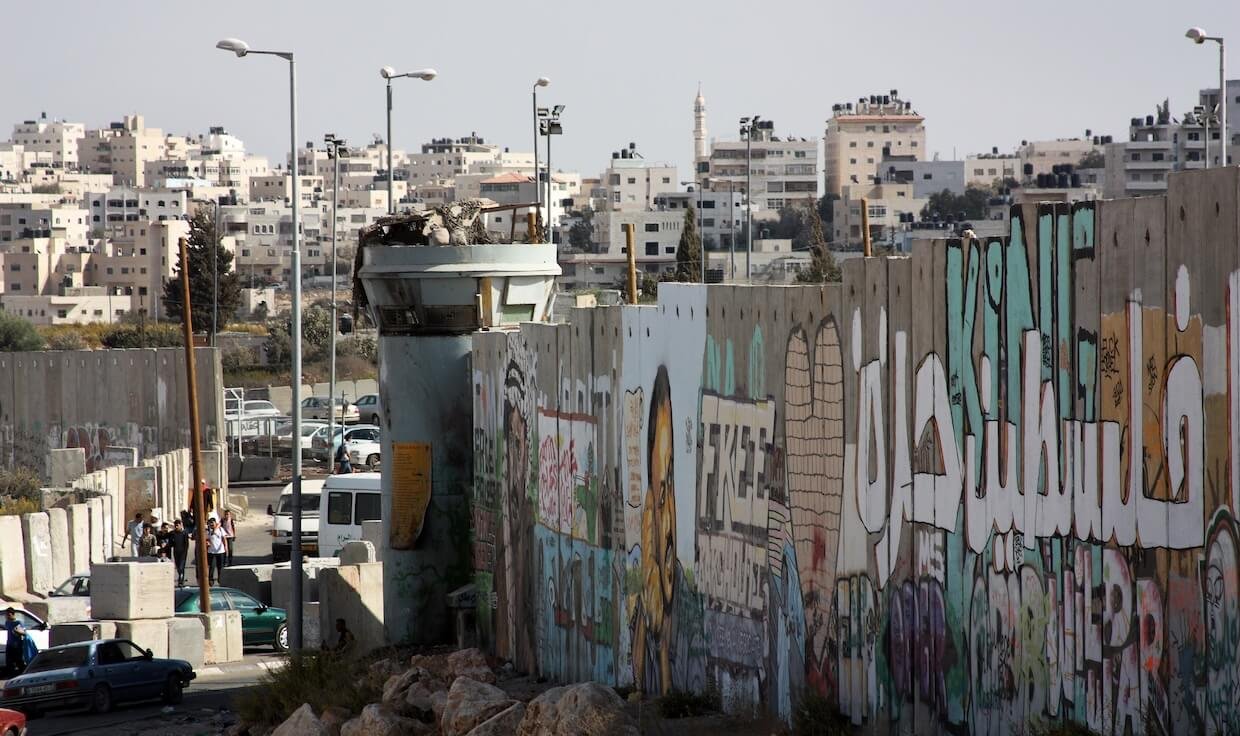
Asst. Prof. Gino Pauselli: What we find in our research is that the construction of border walls predicts, in the short run—between one and four years—an increase in allegations of torture committed by border and immigration officials. Importantly, this effect is limited to that specific subset of state agents. We do not observe a corresponding increase in torture allegations against other state agents, such as the police or the military, but only among those tasked with enforcing the border.
What these findings tell us is that there is a human cost to promoting securitization projects. Expensive and highly visible initiatives, such as border walls, which are designed to restrict the entry of individuals into a given country or territory, may signal to the state agents responsible for border enforcement that there is a serious threat out there—even if, in reality, there is not.
The presence of these highly visible and costly projects may also signal that these agents need to rely on more extreme measures to protect the nation or its territory. This ultimately translates into concrete actions in the form of more cases of physical abuse and human rights violations. It’s not necessarily that border walls constitute a direct instruction from political authorities to torture individuals. Rather, these projects are interpreted by border agents in two ways: first, that there is a heightened threat, and second, that they should rely on a broader range of tools to prevent that threat from affecting their own country.
Border Walls Transform Political Messages into Enforcement Practices
Many governments justify stricter border controls in the language of security and sovereignty. To what extent has the rise of populism transformed migration governance by legitimizing policies that may undermine international human rights protections while claiming democratic legitimacy?
Asst. Prof. Gino Pauselli: What we actually find in our research is very interesting in terms of the connection between populist movements and rhetoric. Rhetoric alone—whether expressing anxiety over borders or anger about migration—does not predict greater abuse. Simply having a leader speak publicly about the border, migrants, and the need to protect the nation from an external threat does not, by itself, translate into border agents committing more acts of torture. This is conceptually and theoretically related to the idea that security and sovereignty are not necessarily at odds with human rights, or at least with sovereign border control. In principle, they can coexist.
The real risk lies in how this rhetoric is interpreted by the agents tasked with enforcing the border. The situation changes when this rhetoric is combined with a costly signal. One thing is for an agent simply to hear the leader talking about the border. But it is something quite different to hear the leader talking about the border while also observing a massive border wall that has cost millions of dollars. That is a much more concrete signal that this is a serious issue, that it is a priority for the state, and that there is a serious threat out there.
Human Rights Monitoring Depends on Networks of Trust
Your research on international organizations and NGOs emphasizes the importance of trust-based relationships in the production of credible human rights information. Why are some NGOs more influential than others in shaping international responses to rights violations?
Asst. Prof. Gino Pauselli: Here’s where we move to the micro level of these actors. As political scientists, we’ve traditionally thought about international organizations and NGOs as actors. We call them non-state actors, but, in reality, they are made up of individuals. NGOs do not walk down the street by themselves. We cannot observe an NGO in the same way we observe a person. An NGO doesn’t have a conscience, nor do international organizations. Individuals do. They are the staff of these organizations, and they are the ones who actually carry out their work. So, trust between organizations is often built through trust between the individuals who belong to those organizations.
In our research, we find that interactions between NGO members and international organization staff over time increase the likelihood that the international organization will later speak out about issues in the countries those NGOs care about. For example, during a hearing before the Inter-American Commission on Human Rights, certain NGOs participate in the proceedings. They interact with Commission members, have conversations, and even share coffee with them. Then, months or even a couple of years later, because they now have their WhatsApp number or email address, they can contact the Commission and say, "Look, this is what’s happening in this country right now."
It’s not that the Commission would have been unaware of those violations if the NGO staff had not reached out. Rather, because the information comes from an NGO with which Commission members have already established a relationship, that information is trusted—or at least trusted more—than the same information arriving through other channels, where they may not have the same ability to assess the credibility of the source.
This is how interactions between NGOs and international organizations can shape the monitoring role of international organizations in holding states accountable to international norms. It’s not that NGOs are the only providers of this information. Rather, because of prior contacts and repeated interactions, the information they provide carries greater credibility and is therefore more likely to influence the organization’s response.
Illiberal Regimes Are Building Their Own NGO Networks
Across Europe and the Americas, populist leaders frequently frame international organizations, NGOs, and human rights advocates as unelected elites disconnected from ordinary citizens. How has this populist critique affected the legitimacy and effectiveness of global human rights institutions?
Asst. Prof. Gino Pauselli: That’s a very interesting question. At the moment, I’m not aware of research that provides a clear answer to it. But I can imagine a few ways in which we might approach it. I think rhetoric is a very powerful tool for advancing political goals. But at the same time, these same populist and authoritarian leaders have also used NGOs themselves to boost their own legitimacy and advance their own agendas. So, while they argue that nobody elected these organizations and that it is unclear whom these NGOs actually represent, they also send their own NGOs abroad and rely on the credibility of the broader NGO community to shield themselves from international criticism.
I am currently developing research with a colleague, Sarah Bush, in which we examine what we call "illiberal NGOs," or "cheerleader NGOs." These organizations essentially participate in international institutions to praise authoritarian governments. We’re still not sure whether this is an effective strategy, but these populist and authoritarian regimes are clearly relying on NGOs to advance their own rhetoric. At the same time, whenever NGOs say things these governments don’t like, they respond by arguing that nobody elected them. That they do not necessarily represent or enjoy the support of society.
Norms Are Contested Because They Redistribute Power
Across your scholarship, a recurring theme is that international norms are not simply imposed from above but are contested, negotiated, and reshaped through interactions among states, international organizations, and civil society actors. How should we rethink the process of norm diffusion in an increasingly multipolar world where populist, nationalist, and sovereigntist actors challenge the universality of human rights norms?
Asst. Prof. Gino Pauselli: This is a tough question. I’d like to begin by saying that we should think about norms and international norms as not being value-free. They’re not value-free. At their core, a norm is an expectation of appropriate behavior. The content of these norms may reflect liberal ideas, but they can also generate expectations about illiberal behavior. It’s not the case that, simply because a norm exists, it is, by definition, a liberal one.
At the end of the day, norms are about what constitutes appropriate or expected behavior for states, actors, or individuals in general. That behavior may be either consistent or inconsistent with the status quo. The expectation may be for individuals or actors to behave differently from how they have behaved in the past, or to behave in ways that challenge the existing distribution of power.
Because norms create expectations about certain forms of behavior over others, multiple actors naturally become interested in how those norms are developed, diffused, or resisted, since they affect the status quo in one way or another. They either reinforce it or challenge it. The contestation and negotiation that you’re asking about are really about the content of these norms. Norm diffusion should be understood as the diffusion of normative frameworks that benefit certain groups over others, depending on the content of the norm.
The Future of Human Rights Depends on Their Relevance to Everyday Life
And lastly, Professor Pauselli, taken together, your work examines authoritarian resistance, rising powers, borders, human rights, international organizations, and civil society. Do you see contemporary populism as primarily a challenge to specific liberal policies, or as a broader challenge to the universalist foundations of the postwar human rights regime? What does this imply for the future of democracy and global human rights protection in the twenty-first century?
Asst. Prof. Gino Pauselli: Many colleagues might not agree with this, but the way I understand populism, or the concept of populism, is that it is, by definition, at odds with liberal conceptions of the polity and of how societies are organized. In terms of what populism implies for the future of this project, populism is the latest effective tool that certain sectors of the elite have found for gaining and maintaining power. I’m not sure whether they even think about the future of the international human rights regime. Populism is simply instrumental for them in maintaining or gaining power. It is effective because of the contemporary anxieties that societies face—anxieties that many members of society do not necessarily see being addressed by liberal democracy or liberal norms.
So, basically, there are two things going on here. On the one hand, we have the supply side, where elites find populist strategies and rhetoric effective for gaining or retaining power. On the other hand, we have the demand side, where members of society are looking for alternatives that can reduce their anxieties over issues such as economic development, progress, and inequality in general. And this is why populism is so effective right now.
Now, turning specifically to the human rights project, those actors who are engaged—or have long been engaged—in promoting and protecting human rights, the liberal actors, in some way, should be thinking about developing and strengthening tools that effectively communicate, through people’s lived experiences, how these norms—how human rights—positively affect their lives. Their everyday lives, in the areas and issues they care most about. I know this is very difficult. It is very hard for a human rights NGO to communicate to rural communities, or even marginalized urban communities, that an abstract text signed 70 or 80 years ago is relevant to them if they cannot see exactly how it connects to their own lives, especially when their lives lack so many basic things. This is the main challenge if the human rights project is to survive in the future: for constituents, broadly speaking—not just elites—to understand the value of that project for their own lives.