
In this interview with ECPS, Dr. María José Urzúa Valverde examines how authoritarianism, populism, and democratic backsliding increasingly intersect with struggles over civil society and international norms. She argues that autocracies view independent civic mobilization as a strategic threat because rights-based movements can generate broader networks of resistance. The conversation also explores how conservative and populist actors use transnational networks to contest LGBTQ+ rights, human rights norms, and the role of international organizations. Dr. Valverde highlights the growing polarization of international civil society, the strategic use of migration as interstate leverage, and the resurgence of sovereignty-based challenges to the liberal international order. Together, these developments reveal how democratic erosion increasingly unfolds across both domestic and international arenas.
Interview by Selcuk Gultasli
In an era marked by democratic backsliding, transnational populism, and growing contestation over international norms, the struggle over civic space has become increasingly central to the future of liberal democracy. In this wide-ranging interview with the European Center for Populism Studies (ECPS), Dr. María José Urzúa Valverde, Assistant Professor in the Department of International Studies at ITAM in Mexico, argues that authoritarian governments do not merely resist particular rights claims; they are deeply concerned with the broader political capacity that autonomous civil society can generate. As she puts it, “Any rights-based mobilization becomes a focal point around which other regime opponents can build networks to resist the regime’s power.”
This insight lies at the heart of Dr. Valverde’s analysis of authoritarian opposition to LGBTQ+ rights. Drawing on her Journal of Democracy research with Gino Pauselli, she emphasizes that conservative ideology alone cannot explain authoritarian behavior. Their argument instead identifies a threefold logic: “repression of civil society, opposition to the liberal international order, and the instrumental use of conservative ideology.” For Dr. Valverde, the civil-society mechanism is especially revealing because rights-based mobilization can create organizational capacities that extend well beyond a single policy issue. Hence her conclusion that “both liberal and illiberal networks and governments understand civic space access itself as a strategic asset.”
The interview also broadens this argument beyond domestic authoritarianism. International organizations themselves, Dr. Valverde argues, have become arenas of normative competition. Conservative NGOs and governments increasingly use the same institutional channels once associated primarily with progressive advocacy, while seeking to influence judges, commissioners, and policy agendas. What is at stake, she stresses, is “not only outcomes, but also the IO’s function itself.” This process can produce what she calls “neutralization”: weakening an international organization’s capacity to advance norms without formally reversing its previous commitments.
These dynamics are closely connected to populism. Dr. Valverde rejects the idea that populists simply learn from autocracies; she instead points to “shared transnational infrastructure” linking conservative and populist actors across borders. She also warns against reducing democracy to electoral legitimacy. Populist leaders, she notes, often reason that “If I won the election, then I represent the people, and if I represent the people, I can do no wrong.” Such logic, she argues, can rapidly undermine checks and balances and weaken non-elected institutions essential to democracy.
Taken together, the conversation presents civic space not as a secondary democratic concern, but as a core arena in which authoritarianism, populism, human rights, and international order increasingly intersect.
Here is our interview with Dr. María José Urzúa Valverde, edited lightly to enhance clarity, readability, and overall flow for publication.
Rights from Above Do Not Empower Civil Society
Dr. María José Urzúa Valverde, welcome! Your Journal of Democracy article argues that authoritarian governments oppose LGBTQ+ rights not simply because of cultural conservatism but because these rights strengthen civil society, reinforce liberal international norms, and potentially expand spaces for political contestation. This moves the discussion beyond morality into regime survival. To what extent should we understand contemporary anti-LGBTQ+ campaigns as instruments of authoritarian governance rather than merely expressions of conservative ideology?
Dr. María José Urzúa Valverde: That’s a fantastic question, and first of all, thank you very much for your interest in my article with Gino Pauselli in the Journal of Democracy. As scholars, we always dream of being read and of our scholarship being of interest. Responding to your question, I think that the dichotomy is analytically useful, but empirically, maybe it’s too clean. Our article shows that autocracies vote against SOGI, or Sexual Orientation and Gender Identity Resolutions at the United Nations Human Rights Council, over 80% of the time. It explains this through a threefold logic: repression of civil society, opposition to the liberal international order, and the instrumental use of conservative ideology, not ideology alone.
I think that maybe the civil society repression channel is the most diagnostic. Social rights function as a proof of concept that a minority, once granted rights, mobilizes to expand them, or also just to gain them. That, exactly, is a capacity autocracies need to suppress, regardless of the issue. The clearest evidence in our article that the governance logic beyond ideology is what works best is Cuba: an authoritarian government that voted in favor of all five United Nations Human Rights Council social resolutions between 2011 and 2022, while never empowering independent LGBTQ+ civil society. So, rights granted from above, with no domestic accountability and mobilization attached.
So, yes, conservative ideology is one of the three interacting levers in our article, but we think about it as deployed instrumentally, where useful for legitimation and alliance building, and dispensable where regime survival logic points elsewhere, as in Cuba.
Civic Space Is a Strategic Asset
Your explanation places civil society at the center of authoritarian calculations. Rather than fearing LGBTQ+ communities themselves, authoritarian governments appear to fear the broader mobilizational capacity that rights-based movements generate. Does this suggest that authoritarian regimes increasingly perceive all forms of autonomous civic organization as interconnected threats, regardless of the specific issue around which they initially mobilize?
Dr. María José Urzúa Valverde: Yes, I do think so. I think that the mechanism doesn’t necessarily depend on said rights specifically. Any rights-based mobilization becomes a focal point around which other regime opponents can build networks to resist the regime’s power. So, this generalizes empirically to the tools autocracies more generally use, like foreign agent laws, NGO registration barriers, and propaganda status.
I’m currently working on anti-gender network mobilization at the Organization of American States (OAS), which shows the same generalized logic from the opposite ideological direction: conservative civil society networks treating access to international organizations (IOs) as an important focal point for infrastructure building, so, like, for training, coalition formation, and the creation of relevant normative frameworks, independent of any single policy win. And so, I think both liberal and illiberal networks and governments understand civic space access itself as a strategic asset.
Transnational Networks Matter More Than Autocratic Learning
Across Europe and Latin America, populist leaders frequently portray LGBTQ+ rights, gender equality, migration, and multiculturalism as elements of a single ideological project imposed by liberal elites. Do you see evidence that contemporary populists have learned from authoritarian regimes how to transform cultural issues into broader narratives about national sovereignty and democratic legitimacy?
Dr. María José Urzúa Valverde: That’s also a great question. I would resist learning from autocracies as the primary mechanism. It is better explained by shared transnational infrastructure than by diffusion from authoritarian regimes to populist governments.
I’ve been working on gender ideology at the OAS, and that gender ideology, as a concept, is a deliberately elastic floating signifier that articulates SOGI, reproductive rights, education, and public health into a single civilizational frame. In the case of the OAS, that infrastructure is facilitated by some very famous NGOs and networks, like Alliance Defending Freedom, CitizenGo, the International Organization for the Family, and the Congreso por la Vida y la Familia, which train and finance authoritarian-adjacent but also democratically elected populist actors at the same time.
So, I would say that, in the case of Latin America, the populist right couples sovereigntist nationalism with a religiously coded foreign threat, rather than immigration-centered nativism, which is also interesting. But this is a parallel development to the frameworks used and the narratives employed by authoritarian regimes. I wouldn’t say that populist governments learn from authoritarian regimes.
International Norms Create Lasting Institutional Effects
Your research demonstrates that battles over LGBTQ+ rights increasingly unfold within international organizations, particularly the United Nations Human Rights Council. Some observers assume these debates are largely symbolic. Yet your work suggests they have genuine political consequences. Why do authoritarian governments invest so much diplomatic capital in resisting seemingly non-binding international norms?
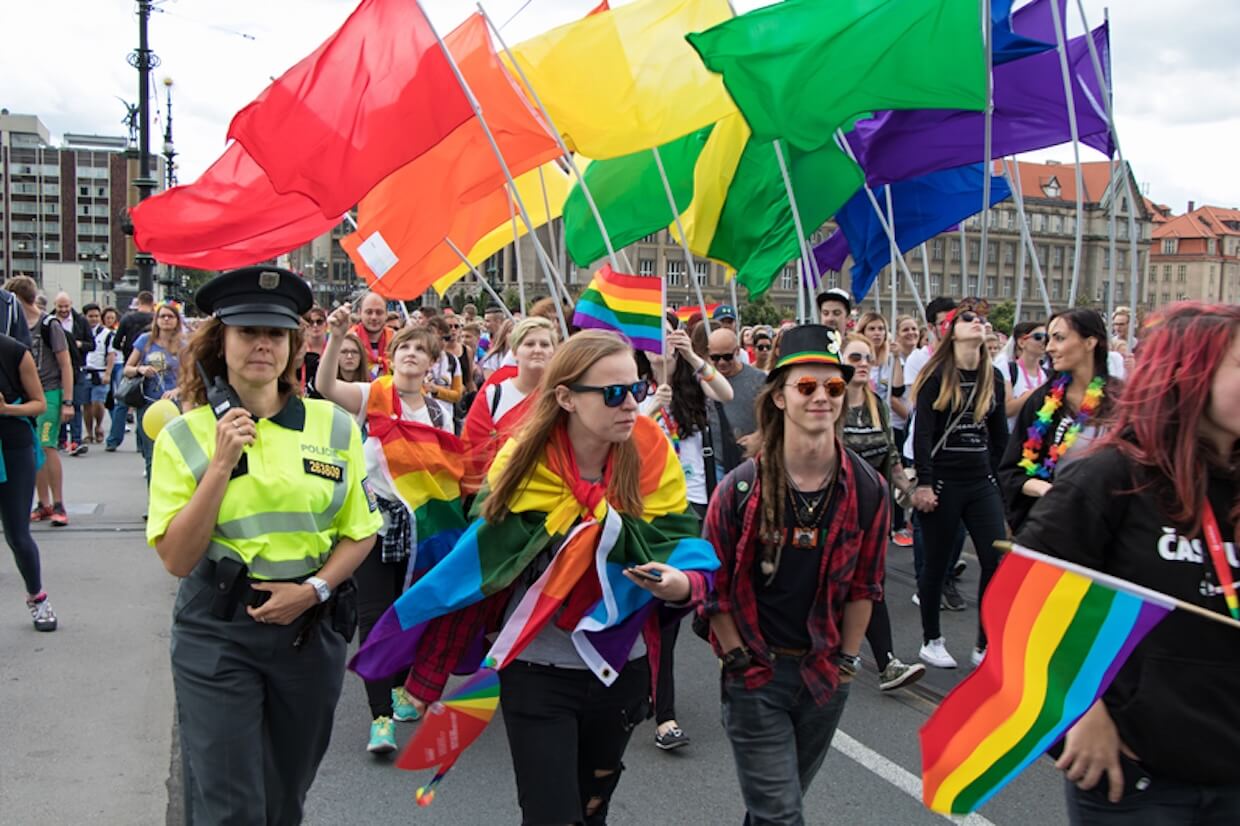
Dr. María José Urzúa Valverde: That’s a great question as well. I would say that non-binding norms matter. Non-binding doesn’t mean costless or inconsequential, so precedent accumulates. Also, regarding United Nations Human Rights Council resolutions specifically, they might be non-binding, but at the same time they establish mandates. For example, in the case of SOGI resolutions at the United Nations, they created the Independent Expert on SOGI rights in 2016, whose mandate was renewed by the resolutions of 2019 and 2022. That creates institutional machinery, reporting, monitoring, and a reference point that autocracies correctly read as a foothold for further, maybe even binding, developments.
In the case of autocracies, what happens at the domestic level matters less because of their repression of civil society and the lack of pathways for different domestic actors to influence politics. But in the case of democracies, even non-binding resolutions may serve as mobilization focal points for domestic policy wins. So, non-binding norms have evidently become relevant sites of contestation for both authoritarian regimes and opposing democratic regimes. And that has made such resolutions rare items at the United Nations Human Rights Council because they are consistently forced to a formal vote.
So, unlike the 74% of resolutions passed by consensus at the Council between 2006 and 2020, SOGI resolutions are usually voted on because of the relevance attached to them, and they draw above-average opposition, with up to 43% voting no against a 21% baseline. I would also say that what happens at the United Nations Human Rights Council is relevant as a coordination good for autocracies and other anti-SOGI rights actors themselves, because participation and opposition allow them to build what we can call backlash networks and rehearse a shared vocabulary that travels to other normative fights in international and national forums.
International Organizations Are Arenas of Normative Competition
Your doctoral research examines how civil society gains access to international organizations and transforms access into political influence. At a time when authoritarian governments seek to restrict civic participation both domestically and internationally, have international organizations themselves become contested arenas where democracy and authoritarianism increasingly compete for normative influence?
Dr. María José Urzúa Valverde: Yes, I would say definitely so, and increasingly in more symmetric ways. You mentioned my doctoral thesis, and in my thesis I work on civil society access to international organizations. In my thesis, I show, for example, conservative NGO participation at the Organization of American States (OAS), which is an organization I mentioned before but didn’t quite explain. The OAS is the main regional, multi-purpose organization of the Americas. The United States, Canada, Latin American countries, and the Caribbean countries participate in this organization, and it has been very relevant in terms of normative developments in the human rights arena, as well as in other issues.
In the case of human rights, it has a commission, the Inter-American Commission on Human Rights, and the Inter-American Court of Human Rights, which closely parallels the European Court of Human Rights, if people reading this interview are familiar with the European Court. Individuals can access the Commission and the Court in order to get redress for human rights violations at the national level. And it’s very interesting how the Inter-American human rights system has driven progress on SOGI rights, especially in Latin America.
It, for example, led to the adoption of same-sex marriage in Costa Rica, and that has generated backlash. Conservative NGO participation—anti-SOGI rights NGO participation at the OAS, especially at the General Assembly—went from zero in the 1990s to 128 organizations by 2019, reaching close to a third of civil society participation at its peak, using identical access channels and similar strategies to those of pro-SOGI rights NGOs.
Conservative NGOs and conservative governments are also lobbying for the election of conservative judges and commissioners, so what’s contested is not only outcomes, but also the IO’s function itself.
In a later paper, which builds around my work on my doctoral dissertation, I talk about neutralization, which is disabling an IO as a driver of norm expansion without reversing prior commitments. That’s what we see today at the OAS, where discussions on SOGI rights are being stalled because of backlash and fear of backlash. I think that’s a very interesting development happening at IOs today.
International Civil Society Is More Polarized Than We Thought
Much of the democratic backsliding literature focuses on elections, constitutions, and judicial independence. Your scholarship instead highlights civil society, international norms, and transnational advocacy networks. Has political science underestimated the extent to which democratic erosion occurs through the gradual weakening of societal actors rather than through dramatic institutional change?
Dr. María José Urzúa Valverde: I am a student of international relations, a scholar of international relations, so I would say that, yes, political science has indeed underestimated the extent to which democratic erosion might also be advanced at the international level—at that level, through the weakening of societal actors rather than through dramatic institutional change. I wouldn’t necessarily generalize to research on domestic politics.
But I do think that, at the international level, in international relations, we have tended to think of societal actors as pretty homogeneous. So, most of the literature and research of the 1990s on civil society actors in IOs and transnational advocacy networks focused on pro-progressive human rights actors, or progressive actors more generally. And it was, like, the conventional knowledge that only those actors actually cared about what happened at the international level and accessed the international level to exercise pressure on their domestic governments to advance human rights causes, for example.
We have learned more recently that that’s definitely not the case, and that we even ignored, for a long time, how diverse civil society is, not only at the domestic level but also at the international level, and the polarization dynamics that emerge when civil society organizations that have contrasting ideas on certain topics, like SOGI rights, all access and all try to push forward their agendas in IOs.
I do think that this is a phenomenon that is usually not observed as dramatic institutional change, but rather as something that builds more progressively in IOs, and that has interesting implications for what IOs can do in terms of advancing human rights and advancing democracy. And I think that neutralization, for example, which I already mentioned, is a category that talks about this more nuanced and more progressive, little-by-little institutional change.
‘Backlash Networks’ Are Still Mostly Defensive
In your Journal of Democracy article, you describe how authoritarian governments cooperate internationally to resist the expansion of LGBTQ+ rights through what might be called “backlash networks.” These coalitions appear increasingly coordinated across regions. Are we witnessing the emergence of an alternative international normative order, or are these alliances better understood as defensive coalitions seeking to slow liberal norm diffusion?
Dr. María José Urzúa Valverde: Based on the empirical evidence, I would say that, up until today, the system is more defensive. So, for example, the anti-gender networks’ litigation at the OAS is reactive, no? It tries to diminish the influence of progressive actors at the OAS, for example, by submitting amici curiae in cases brought by others. So, I read that as a response to an unfavorable opportunity structure in the Inter-American human rights system, and that might change over time.
But I do think that, right now, what we see is not reversal yet. I think reversal might happen, but right now, we don’t see decisions at the OAS or at the United Nations Human Rights Council that adopt substantive alternative standards from anti-SOGI rights networks. So, we do not see resolutions regarding, for example, an absolute right to life, or gender ideology being used as a category to talk about a threat, as it is usually framed by anti-SOGI rights actors.
So, rather, we see defensive coalitions seeking to slow liberal norm diffusion, as you mentioned. Influence shows up in stalled agendas and dissenting opinions, not new international norms. That said, I would say that the coordination infrastructure of backlash networks—for example, lobbying for ideologically proximate judges and commissioners at the OAS, training pipelines, and north-south funding flows—is being built for the long run.
And elected officials now sympathetic to these agendas are positioned to eventually build an alternative international normative order. So, I would say that being defensive today and building an alternative order later are not mutually exclusive, and we might see that in the future.
Migration Control Creates Interstate Leverage
Your more recent work introduces the concepts of migration power and migration statecraft, arguing that migration flows themselves have become instruments of interstate influence. This shifts migration from being merely a humanitarian or domestic policy issue to becoming a foreign policy resource. How does this conceptualization change the way political scientists should understand migration in an era of geopolitical competition?
Dr. María José Urzúa Valverde: That’s an interesting question, and also thank you for reading that paper with Natalia Saltalamacchia. In that paper, we reconceptualized migration flows themselves as a power resource, comparable in kind, not just in effect, to more conventional instruments of statecraft.
Using Baldwin’s relational anatomy of power, the key conceptual move is that migration power is constituted, so it exists only because destination states have decided domestically that controlling migration is a vital interest.
So, the target zone securitization of migration is what turns a transit or origin state’s population movements into leverage, or an instrument of statecraft. I think this is interesting. It reframes the weapon of the weak intuition as conditional, not structural. Exercising migration power credibly requires real institutional capacity, so border enforcement and processing infrastructures, which some fragile states lack.
But that’s why we see the strongest cases, like Morocco, Turkey, and Egypt. They are all states with functioning migration bureaucracies. But I do think that it’s an interesting turn to think not necessarily in terms of geopolitical competition. I think it’s more interesting for thinking about North-South relations.
What typically is the leverage that less powerful states have vis-à-vis more powerful states? So, for example, the case of Mexico vis-à-vis the United States. For the United States, for the government of Donald Trump, it is very important that Mexico engages and cooperates with the US in terms of the containment of migrants at the US-Mexico border. That gives Mexico some leverage vis-à-vis the United States, even when we as Mexicans have always been very aware of how asymmetrical our relationship with the US is. So, it’s very interesting to think about how North-South dynamics change when this leverage exists on the side of southern countries, and this leverage is, paradoxically, created in part by northern states that see migration as a threat.
Migration Statecraft Raises Serious Ethical Problems
Migration has increasingly become a bargaining tool in relations between states—from the Belarus–EU border crisis to Turkey’s agreements with the European Union and Morocco’s management of migration toward Spain. Does your framework suggest that migration is evolving into a standard instrument of statecraft comparable to sanctions, trade policy, or energy diplomacy?
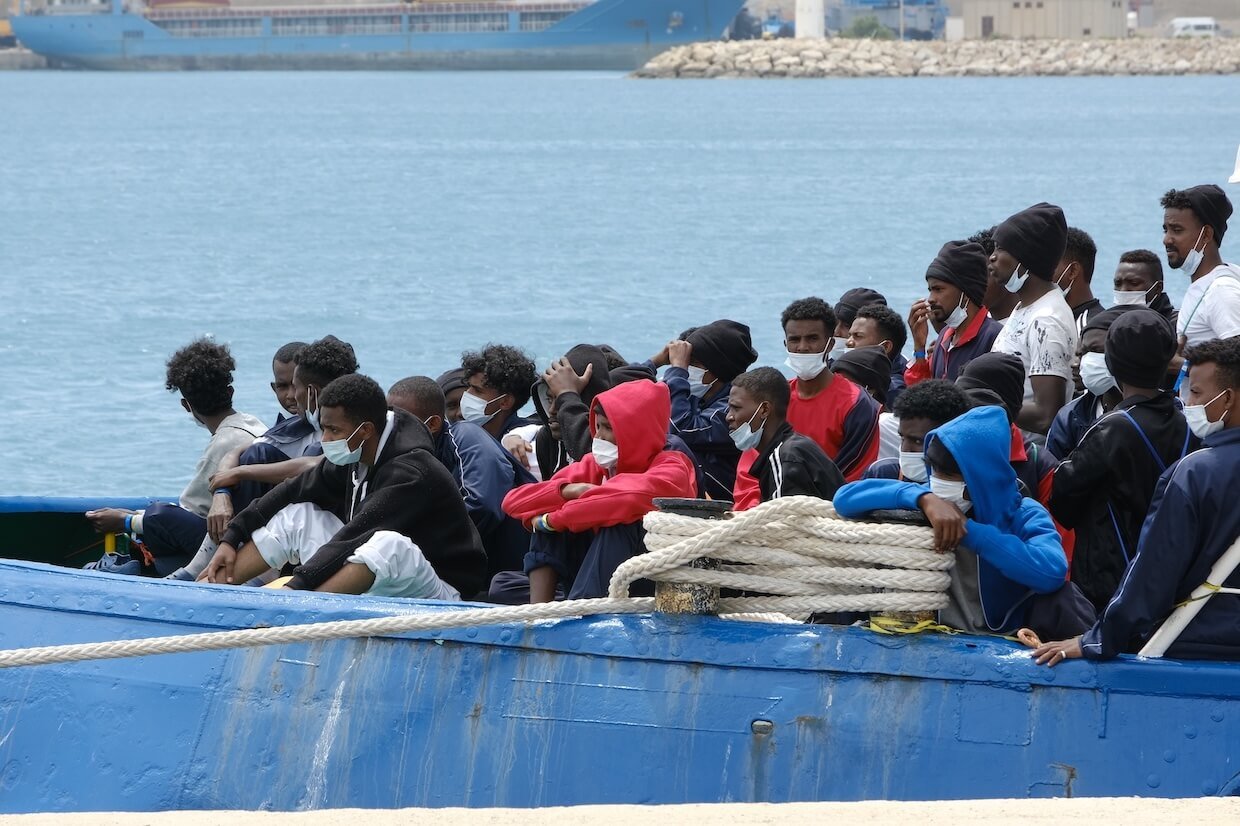
Dr. María José Urzúa Valverde: I am not a scholar of migration, but I think this is a conceptual article. It is trying to provide some analytical tools and some relevant concepts to understand dynamics that we are indeed observing today, including some of the relevant empirical examples you just mentioned. I would also mention the very recent crisis regarding Morocco-Spain relations in Ceuta. In late July, thousands of people left Morocco and tried to reach Spain through Ceuta, which is a Spanish territory, in an enormous flow of people that unfortunately had terrible humanitarian consequences, because many of those migrants died.
What probably happened, given the enormous number of people crossing at the same time, was that the Moroccan government facilitated the crossing, or encouraged the crossing, to exercise political pressure on Spain. Migration is being used as an instrument of statecraft. I would compare it to energy sanctions or trade policy. In this case, the one that can exercise migration statecraft is the less powerful state, which doesn’t necessarily happen with all types of statecraft. Obviously, it varies.
I just want to finish the comment by recognizing also how problematic this is in terms of ethics. Because what we’re talking about is people’s lives. Exercising migration contention, or facilitating migration flows to exercise pressure on other states, depends on governments mobilizing or containing people who are trying to move across borders to have access to better living conditions. Migration statecraft is very problematic in this sense, but it’s something that we are observing today in the world, and that it’s important to name.
Populism and Migration Diplomacy Reinforce Each Other
Populist leaders often frame migration as an existential domestic threat, while governments simultaneously employ migration strategically in international negotiations. How do these two dimensions interact? Are domestic populist narratives and international migration statecraft increasingly reinforcing one another?
Dr. María José Urzúa Valverde: That’s a great question, and I think the two are indeed mutually reinforcing through the co-constitution mechanism at the center of Natalia Saltalamacchia’s and my article. Populist domestic narratives that frame migration as an existential threat are precisely what increase the value states place on migration control. That value, in turn, creates leverage that other states can exploit.
So, the causal relationship runs both ways. When migration statecraft succeeds, the episode can also be interpreted domestically as confirmation that migration is indeed the existential threat populists have described, thereby reinforcing the very narrative that generated the vulnerability in the first place. This creates a feedback loop with no obvious breaker.
The more governments perform toughness on migration for domestic audiences, the more valuable migration becomes as a lever for whoever controls the migration flow. That’s a genuinely understudied dynamic linking the populism and migration diplomacy literatures, which have generally developed separately.
The Liberal Order Is Being Challenged from Within

Throughout your scholarship, there is an ongoing tension between universal human rights and state sovereignty. In today’s geopolitical environment, where sovereignty has re-emerged as a central political slogan for both populist and authoritarian governments, has the balance between these principles shifted in ways that fundamentally challenge the post-Cold War liberal international order?
Dr. María José Urzúa Valverde: That’s also a great question. I would start by recognizing that the tension between universal human rights and state sovereignty has always existed. What universal human rights seek to achieve is to protect citizens from abuses of power by their own governments. There has therefore always been this very interesting tension between international human rights norms, institutions, and mechanisms, on the one hand, and state sovereignty, on the other, because when IOs or other states criticize a country’s human rights record, they are addressing a deeply internal matter: how a government treats its own citizens. So, this is not new.
However, I do think that the sovereignty-based justification for opposing international human rights norms has become more salient in the last couple of years because of the turn toward more nationalist governments in much of the world, and also because of the rise of authoritarian governments. These governments are, of course, particularly opposed to universal human rights norms and to international actors expressing opinions about or criticizing their domestic records, because they frequently violate human rights. That’s a basic trait of authoritarianism.
But yes, this is also because they want to maintain very tight control over domestic civil society. So, I would say that, yes, definitely, this tension has become more salient over time, and this does challenge the post-Cold War liberal international order. We must also recognize that it is not only authoritarian governments or populist governments in the Global South that are opposing or contesting universal human rights. Some of the main proponents of the liberal international order itself are also doing so, with the United States being the most relevant case.
So, besides normative contestation at IOs, we must also look at what happens, for example, with funding in the next couple of years. There is a real threat that international institutions may no longer be able to deliver in areas such as monitoring mechanisms because funding that has traditionally been provided by the United States may no longer be available. I think this is also a highly relevant dynamic, beyond the more discursive contestation of universal human rights norms.
Winning Elections Is Not Enough for Democracy
Your work on civil society implicitly broadens the concept of political representation beyond elected institutions. Many populist leaders claim that elections alone provide sufficient democratic legitimacy. Yet your research suggests that democratic governance also depends upon organized civic participation and international advocacy. Should we rethink democratic representation as extending well beyond electoral politics?
Dr. María José Urzúa Valverde: Yes, I would say it is a fundamental, core trait of populist governments to associate democratic legitimacy almost entirely with the electoral mandate, and that’s obviously worrisome. It leads populist leaders to say, “If I won the election, then I represent the people, and if I represent the people, I can do no wrong.” That kind of logic can quickly lead to dynamics of democratic erosion, for example, at the domestic level, by contesting and weakening non-elected officials who are also fundamental to democracy. A particularly emblematic case is the judiciary.
So, we must consider that democratic representation extends well beyond electoral politics and also depends on checks and balances on elected leaders, however large their mandates might be. We traditionally think of those checks and balances as domestic, and those are obviously the most relevant ones—for example, what happens at the legislative and judicial levels. But I think the international system also matters as a check and balance on the actions of domestic governments, especially in the case of human rights and other international commitments that the international community has a legitimate interest in upholding.
Gender Ideology Bundles Multiple Political Conflicts
The political contestation surrounding LGBTQ+ rights increasingly overlaps with debates about migration, gender equality, reproductive rights, and academic freedom. Do you see these issues gradually converging into a broader global struggle over the meaning of democracy itself, rather than remaining separate policy debates?
Dr. María José Urzúa Valverde: It’s a very interesting question. There is definitely some convergence across the issue agendas you mentioned. I would not necessarily describe it as a struggle over the meaning of democracy itself, but there is certainly a real convergence in the way these issues are framed.
For example, in my research on the OAS, I examine the use of gender ideology as a unifying concept among populist-right actors and conservative NGOs. In that context, it functions as a deliberately elastic floating signifier that allows the same coalition to move across different topics—including education, public health, SOGI rights, and reproductive rights—without losing coherence.
Populist sovereigntist rhetoric performs a similar bundling function in relation to issues such as migration and multiculturalism. But I would caution against treating all of this as one undifferentiated struggle. The actors, mechanisms, and even regime-type correlations differ from one issue to another.
For example, the relationship between autocracy and LGBTQ+ rights is very robust, as we have already discussed, and autocracies are very likely to oppose SOGI rights. Migration statecraft, by contrast, operates differently. In the case of migration, it is wielded by both democracies and autocracies with roughly symmetric logics.
And regarding the meaning of democracy itself, I would say that the dispute is not so much about democracy being destroyed as about how much democracy actually matters and whether democratic regimes are still considered necessary. It is also about whether we still need the international system and the liberal international order that was constructed after World War II. Two main issues definitely contested across these different, issue agendas.
Populist-Right Trends Are Converging Across Regions
Having worked extensively on Latin American politics while engaging broader comparative questions, do you believe Latin America offers distinctive insights into democratic resilience that Europe and North America often overlook? Conversely, are there emerging authoritarian strategies in Europe that may increasingly influence political developments across Latin America?
Dr. María José Urzúa Valverde: I would actually say that the current trends in Europe and Latin America are quite similar. We are seeing a rise of populist-right governments in both regions. In Latin America, over the past few months, we have seen the election of Alberto de la Espriella in Colombia and Kast in Chile. Elections are coming up in October in Brazil, and it’s unclear whether the Bolsonaros will return to government or whether Lula will be re-elected. We also see this turn in Argentina with Milei—this is not just a development of the last couple of months, but of the last couple of years.
We also see right-wing governments associated with Fujimori in Peru and with Noboa in Ecuador. And there is a broader trend, at least in the Western world, toward these right-wing governments. We might even think of them as forming a kind of transnational coalition, in the sense that there are links between different far-right and populist-right actors at both the European and Latin American levels.
For example, the influence of the Spanish far right in Latin America is very interesting. In Spain, the far right is represented by Vox, which also has a civil society branch, CitizenGo. CitizenGo and Vox have very interesting links to the populist right in Latin America, including support for political campaigns. Some of the narratives they employ are also copied and used in Latin American countries, and CitizenGo provides funding to Latin American conservative civil society organizations.
So, there are definitely political developments in both regions influencing one another. I don’t know whether Latin America offers distinctive insights into democratic resilience. I’m actually very concerned about current political developments in the region, and our institutions are weaker than those in most European countries. We will see how institutions respond to the democratic erosion dynamics that may emerge across Latin America in the next few years, and how those processes compare with developments in Europe. But the jury is still out on this particular question.
Backsliding and Institutional Backlash Are Increasingly Intertwined
And lastly, Professor Valverde, taken together, your scholarship examines civil society, international organizations, migration, human rights, and democratic governance from multiple perspectives. Looking ahead, which emerging development—whether democratic backsliding, transnational populism, migration diplomacy, digital disinformation, geopolitical fragmentation, or the weakening of international institutions—do you believe will most profoundly reshape the future of liberal democracy over the next decade, and where should scholars concentrate their attention?
Dr. María José Urzúa Valverde: I am particularly interested in democratic backsliding processes and in how international institutions might lock in certain international commitments to preserve international norms such as human rights norms, or whether they will fail to play this relevant locking role, which is something that has been theorized in international relations.
So, for example, there are some very famous articles from the 1990s, especially the one by Andrew Moravcsik on how transitioning democracies lock in international commitments in order to prevent future governments from backsliding, because there is already an international commitment to uphold. He writes about this in the context of European countries committing to the European human rights system.
I think that we are at an interesting time to test that theory and to see whether the international system will provide some safeguards against democratic backsliding, but also how international organizations and international institutions more generally will be—and already are—arenas of contestation over issues related to democratic backsliding, but also to the more general upholding of international human rights norms.
I think it’s a very interesting time to study, both from the perspective of comparative politics and from international relations, how these dynamics of democratic backsliding and the backlash against international institutions interact.