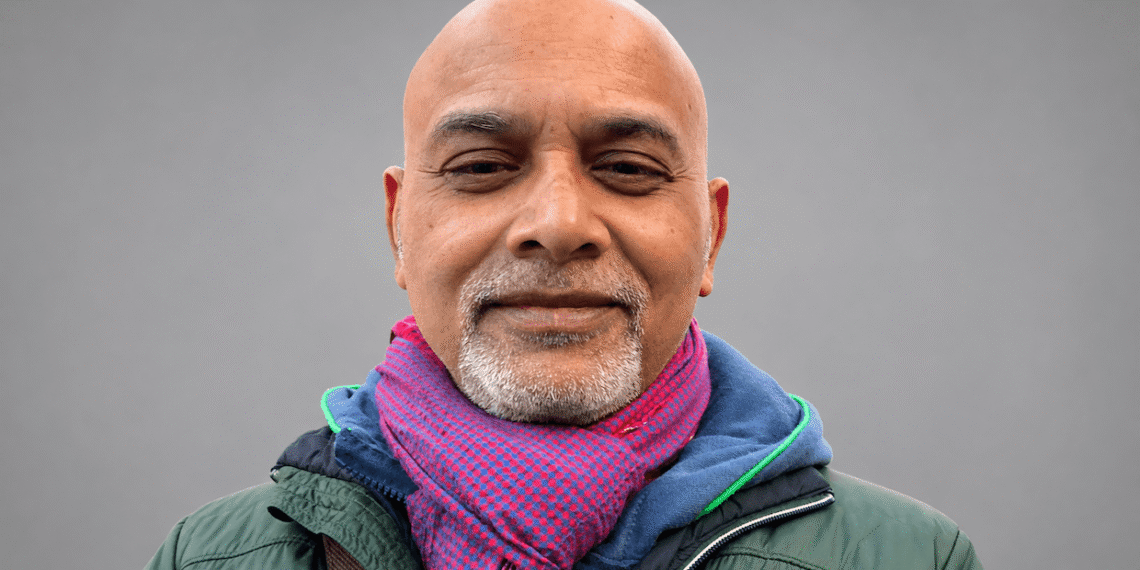
In an in-depth interview with the ECPS, Dr. Subir Sinha, Director of the SOAS South Asia Institute, examines how India’s emerging Cockroach Janta Party (CJP) is challenging Narendra Modi’s authoritarian-populist hegemony. Situating youth mobilization within broader crises of unemployment, neoliberal restructuring, electoral legitimacy, and Hindu majoritarianism, Dr. Sinha argues that Modi’s strategies for containing generational discontent have begun to unravel. He identifies the CJP as a potential “counter-people” capable of challenging Modi’s construction of political sovereignty through digital resistance, Dalit and Muslim participation, and decentralized mobilization. Drawing comparisons with youth movements in Senegal, Bangladesh, and Serbia, he explores how state repression can undermine political legitimacy and how popular protest might evolve into structural democratic transformation. He emphasizes the importance of translating counter-hegemonic mobilization into legislative power.
Interview by Selcuk Gultasli
India’s emerging youth revolt is exposing the fragility of Narendra Modi’s authoritarian-populist hegemony, challenging not only the government’s developmental promises but also its construction of political legitimacy, popular sovereignty, and Hindu majoritarian identity. In an in-depth interview with the European Center for Populism Studies (ECPS), Dr. Subir Sinha, Reader in the Theory and Politics of Development, Director of the SOAS South Asia Institute, member of the SOAS Food Studies Centre, and affiliate of the Department of History at SOAS University of London, examines how generational discontent is developing into a potentially transformative counter-hegemonic movement.
Across India, Senegal, Bangladesh, Serbia, Nepal, and France, youth-led protests have challenged corruption, economic insecurity, political exclusion, and established structures of power. Our discussion examines India’s emerging Cockroach Janta Party (CJP) movement within this comparative framework, exploring why similar generational grievances produce different forms of mobilization, institutional responses, and democratic outcomes. Dr. Sinha’s scholarship on authoritarian populism, political hegemony, and social movements provides valuable insights into these dynamics.
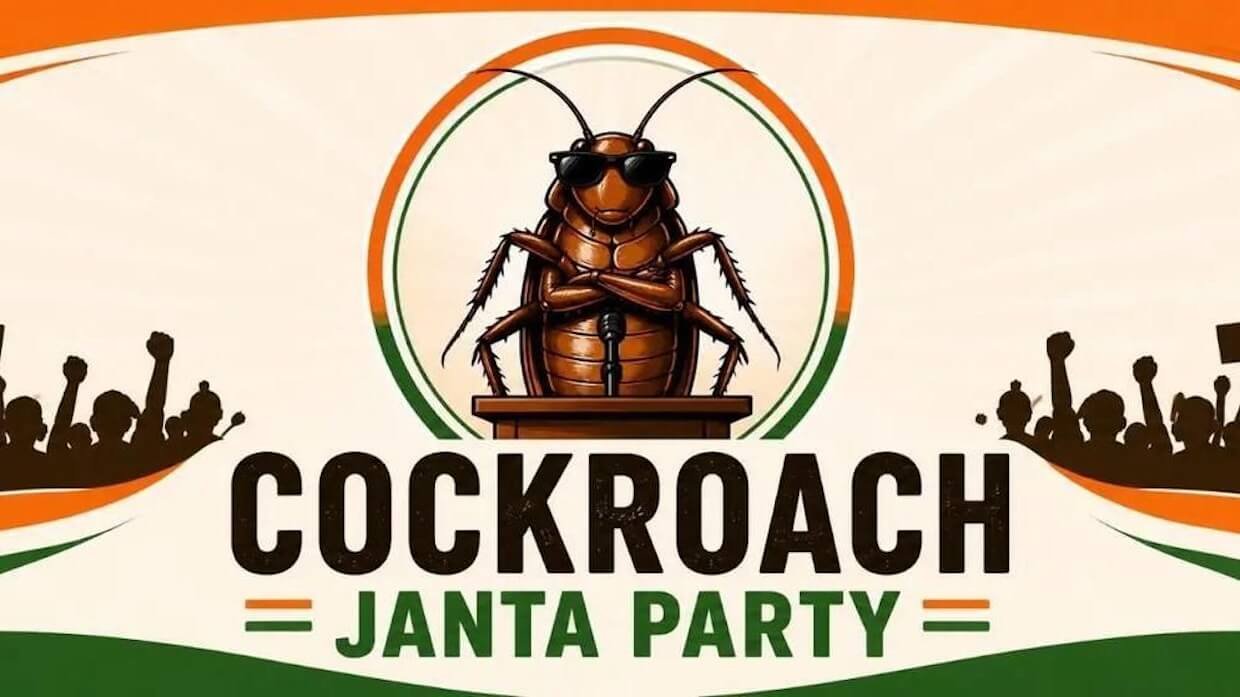
At the center of Dr. Sinha’s analysis is the argument that unemployment, educational injustice, and democratic exclusion have generated a profound crisis of political representation. Observing that Modi’s strategies to absorb popular discontent into authoritarian populism have begun to unravel, he identifies the CJP as potentially “the central mechanism through which a counter-people is being imagined and manifested on the streets.”
This emerging counter-people challenges the ideological foundations of Modiism. Dr. Sinha argues that young protesters are dismantling Modi’s conception of “the people,” creating space for Dalits, Muslims, and economically marginalized citizens within a more inclusive political imagination. Digital mobilization has proved particularly disruptive. According to Dr. Sinha, “the social media game that the BJP had mastered” has slipped from its control, while “the image of a feared and revered leader” has been broken.
State repression, meanwhile, risks further undermining the government’s legitimacy. Dr. Sinha describes how police violence and vigilante attacks have alienated even some longstanding BJP supporters, exposing tensions between coercive authority and democratic consent.
The interview also explores a striking cultural contradiction: Dr. Sinha observes “an increasing feeling that Hinduism is in danger from Hindutva,” suggesting that dissatisfaction with religious majoritarianism may extend beyond conventional opposition constituencies.
Ultimately, Dr. Sinha distinguishes between temporary institutional concessions and enduring structural transformation. Drawing comparative lessons from youth movements worldwide, he argues that meaningful change requires converting popular mobilization into legislative power. The decisive question is whether India’s fragmented movements can construct an inclusive counter-people capable of translating resistance into lasting democratic change.
Here is our interview with Dr. Subir Sinha, edited lightly to enhance clarity, readability, and overall flow for publication.
Modi’s Strategy of Neutralizing Youth Anger Has Begun to Unravel

Dr. Sinha, thank you for joining us. Let me begin with India’s Cockroach Janta Party, which emerged from anger over examination irregularities and youth unemployment before expanding into protests over electoral accountability. How do you explain this transformation from sectoral grievances into a broader challenge to Modi’s government? Does it signify an emerging crisis of legitimacy for his authoritarian-populist project?
Dr. Subir Sinha: Many jobs in India, especially in the state sector, as well as admissions to universities, particularly for technical degrees in engineering and medicine, are determined through competitive exams. Over the past 10 years, there have been many instances in which examination papers have been leaked in advance and then sold in the underground market for large sums of money. In other cases, exams are held, but the results are delayed, or the results are declared, but no appointments are made on their basis, even two, three, or four years later.
There were protests over these issues well before the Cockroach Janta Party (CJP) took shape. But in most of these cases, particularly in the states of Uttar Pradesh and Bihar, which are part of the Hindi heartland, where Mr. Modi commands considerable electoral support, student movements have been met with massive repression. There is a term in India called lathi charge, which refers to the police using batons to beat protesters. We have witnessed that, as well as the use of water cannons. Elected politicians regularly threaten that leaders or participants in these movements will find it difficult to obtain employment in the state sector. In some cases, there has been even further state repression, such as the use of bulldozers to demolish the homes of protesters or their leaders. So, this has been a simmering issue for some time.
Now, India has high unemployment among people under 30. Remember, people under 30 make up 52% of the Indian population, and there is a huge amount of underemployment in that age group, affecting something like 25 to 30% of university graduates. On the one hand, we are being told that our growth rate is the highest or second highest in the world—7.8%, according to the Prime Minister. But the employment situation for young people entering the job market, both in terms of examinations and their results, and particularly in terms of underemployment, is very poor.
So, when the Cockroach Janta Party emerged—and we have had very popular Bollywood movies dealing with the question of educated unemployment since the pandemic—it is also worth looking further back historically. Even the movement against Mrs. Gandhi’s Emergency from 1975 to 1977, when she suspended democratic rights and institutions, was led by the so-called unemployed youth. Unemployed young people have historically had considerable potential to force radical political change, and there is a vast reservoir of disappointment and anger among the youth.
Mr. Modi and the BJP’s strategies to neutralize that anger or incorporate it into their own brand of authoritarian populism worked for a while but have now begun to unravel over the last two or three years.
Now, you asked a couple of valid questions: How does this narrow movement concerning employment issues become a broader movement concerning the theft of votes and, effectively, electoral irregularities?
India’s Young People Have Lost Faith in Elections, Media, and Courts
I think the people leading the Cockroach Janta Party realized this fairly early on. Remember, they are highly educated. They have degrees from Boston University in political communications. They themselves come from Dalit backgrounds, among whom Modi also has considerable support. So, they quickly realized that there are three different routes through which governments can be held accountable in a democracy. The famous French historian of democracy, Rosanvallon, argues that for democracy to function well, you need counter-democracy, or outlets for counter-democracy. In other words, beyond the ballot box, how do you keep governments in check within a democratic framework? We have three different ways of doing that.
Obviously, number one is elections. But this is where the issue of the electoral system’s lack of credibility comes in, which is very widespread, including among people who regularly support Modi. That is really quite something, because we are looking at approximately 15%, which would be a conservative estimate. In Delhi, something like 40–50% of voters’ names are missing from the voters’ list, even though they have all the documents normally required to prove citizenship.
Whether they are being targeted or not, by some counts, in some places, 70% of those left off the voters’ list are Muslims. But that’s not all. My sister, for example, in Calcutta, an upper-middle-class woman, is also missing from the list, along with her entire family and her neighbors. This is something really widespread, and we don’t have a full explanation for it.
You may also be aware that Mr. Modi got a law passed last year granting full immunity to any Chief Election Commissioner during and after their tenure in office. At the time of that vote in Parliament, 140 opposition members were suspended.
It’s a very strange situation. That’s the first issue. The elections, the Election Commissioner, and their conduct do not give young people confidence that the electoral and legislative routes can resolve their grievances.
Number two is the media. We have a very high concentration of media ownership. There is a term used in India, Godi media, referring to media that sit in Mr. Modi’s lap. You will find very few voices critical of the government, which is why young people no longer get their news from mainstream media. They have their own sources through YouTube and other platforms.
And finally, the courts. Their attitude toward grievances brought before them for adjudication against Mr. Modi seems to be that they either do not take them seriously or fail to act decisively. For example, it was a Supreme Court justice who called young people “cockroaches,” in response to which this party emerged. Despite mounting evidence of electoral malpractice, if one wants to call it that, or certainly anomalies, the courts have not yet reached any decisive conclusions.
Those are the three routes. Perhaps there is a fourth one, which is popular protest. But now we have the complete criminalization of popular protests and the banning of protests at their historical sites. Young people’s aspirations cannot be pursued through legislative, media, popular protest, or judicial routes, which is why the agitation continues.
The Cockroach Janta Party Is Creating a Counter-People to Challenge Modi
In your article “Fragile Hegemony: Modi, Social Media, and Competitive Electoral Populism in India,” you emphasize the vulnerability of political dominance to alternative forms of popular mobilization. Does the Cockroach Movement represent the emergence of the “counter-people” you anticipated, capable of challenging Modi’s construction of political legitimacy?
Dr. Subir Sinha: Yes, I do think they represent one of the initiatives to create a counter-people. I should emphasize that, in my understanding of populism, as I argued in that particular article, there is no stable construction of “the people.” Rather, there are competing, overlapping, and sometimes perhaps cooperating mechanisms through which a counter-people can be imagined.
This happens through social movements and different political parties, taking different forms across India’s states. As you know, India has many states and different regional political parties, so the idea of a counter-people will not be uniform across the country.
But I do think the CJP is a very important initiative and perhaps, at the moment, the central mechanism through which a counter-people is being imagined and manifested on the streets.
In relation to the article you just mentioned, their use of social media has been exemplary. Mr. Modi and his ruling party did not really anticipate this and are finding it very difficult to deal with.
India’s Youth Are Dismantling Modi’s Construction of “the People”
In “Modi’s ‘People’ and Populism’s Imagined Communities,” you examine Hindutva’s transformation of the constitutional idea of “We the People” into a majoritarian political identity. Could the Cockroach Movement articulate a more inclusive conception of popular sovereignty, or might its anti-establishment rhetoric reproduce some of the exclusionary tendencies of populism itself?
Dr. Subir Sinha: To answer that question, let us first look at how they dismantled Mr. Modi’s notion of the people and used popular media to do so. This brings us to the question of a new kind of popular sovereignty.
As I said earlier, this particular generation relies primarily on social media for its news. One of the major reasons for Mr. Modi’s success, which I discussed in that 2017 article on fragile hegemony that you mentioned, was that his party was the first to recognize the power of social media. Modi had accounts on Facebook and then Twitter, along with large WhatsApp groups, well before any other political party. They literally had that entire space to themselves.
One of Mr. Modi’s successes has now become one of the reasons for his slight unraveling: the very large number of Indians who have smartphones. India is probably first or second in the world in this regard. It also has one of the largest user bases for many platforms, including WhatsApp, other Meta platforms, and X. These platforms worked very well for Mr. Modi for a long time, particularly for mobilizational purposes. But the Cockroach Janta Party and the country’s youth were born into that ecosystem. They know social media far better than a BJP official in their 50s running the party’s so-called IT cell. The way they used Instagram completely took the BJP by surprise. Secondly, their use of the filthiest abuses directed at Mr. Modi in their posts, songs, and memes dismantled the people–leader relationship on which Mr. Modi’s hegemony had so far rested.
That relationship was based on the idea that Mr. Modi is above politics. There are three or four different ways of portraying him: perhaps as a god, because that comes up very often; as a highly religious person—we have many pictures and video clips showing him worshipping; and as a father figure. During the COVID pandemic, for example, you could see him literally emulating a father figure from a very popular television show, lighting lamps and praying to the gods to save us from COVID. Now, the Cockroach Janta Party’s construction of the counter-people does not rely on these kinds of tropes.
A New Counter-People Could Challenge Modi’s Hindu Majoritarianism
For Modi, obviously, Hindu majoritarianism is central because 80% of the population is Hindu. But within the CJP, you see Muslims among the second-rung leadership, even if not in the top leadership. There is massive participation by Muslims, both in the protests themselves and, interestingly, among those who provide food to protesters for free. They might arrive at protest sites with vans full of food packets to distribute, along with water, soft drinks, fruit, and other things. For those who were excluded from Modi’s conception of the people, this is a good way to reassert themselves, participate in these demonstrations, and signal that they, too, are part of the people. The CJP has been open to their participation.
The second issue—and we don’t talk enough about this—is that the violence associated with Modi, his party, and his political formation has been directed primarily against Muslims, as has been fairly well documented around the world. But the second target of violence by Hindutva groups has been the Dalits. This is a paradoxical relationship because, on the one hand, Dalits have enjoyed more political representation through the Hindu far right than ever before in the country’s history. The mode of incorporation has been to make them legislators or members of Parliament and things like that.
But at the same time, if they step outside certain boundaries—for example, by falling in love with a girl from a so-called upper caste, or even by wearing a turban, riding a motorbike, riding a horse, or keeping a mustache, things supposedly considered transgressive for someone so historically subordinated—there have been numerous incidents of violence against them, especially in Uttar Pradesh, which is the absolute base of the BJP’s power. So, not surprisingly, educated Dalits have been at the forefront of the CJP. A very large section of Dalit youth is no longer happy to be seen simply as Dalits incorporated into Hindutva at a subordinate level, within well-understood and well-specified boundaries.
Then there are very large numbers of young people who are neither Muslim nor Dalit but face very bleak employment prospects. Whenever there is an opening for what might be considered lowly jobs—and I don’t mean to denigrate these jobs; I’m simply making the point that they are not the jobs people aspire to in terms of status or money—such as a railway guard, someone cleaning a railway station, or someone employed at the lowest level of a post office or bank, you will find millions of people applying for tens of jobs, many of them with PhDs. So, you have a very high number of people with higher education degrees and very few jobs available to them.
If you think in terms of the composition of the people, there is a vast reservoir of resentment and aspirations among a restless population—the classic background against which forms of populism emerge. So, there is such a reservoir for the production of a counter-people.
Now, whether or not the CJP will become populist, I’m not the first to say that all Indian politics is, at some level, populist. And that will likely be the case here as well. But there are different ways of being populist. You can be a populist by following the great man and essentially becoming part of an authoritarian-populist definition of the people. But as you saw in Serbia, you can also have a leaderless youth movement in which the idea of the people and that of the leadership are not the same.
As you mentioned regarding political sovereignty, there are different ways of thinking about it. There is the Modi model, where, we are told, the people have vested all their hopes, imaginations, and ways of authorizing power in one man. The other model could be much more decentralized, with far more inclusive leadership. But we are still a fair distance away from the CJP becoming a political party with any electoral footprint. So, at the moment, we are looking at this interesting situation in which they are negotiating their relationship with the established political parties.
Modi’s Image as a Feared and Revered Leader Has Been Broken
The Cockroach Movement transformed an insulting metaphor into a digitally mediated identity of resistance. Drawing on your research into Modi’s social-media populism, how does this strategy challenge the BJP’s communicative dominance? Can online satire and decentralized mobilization develop into durable counter-hegemonic political organization?
Dr. Subir Sinha: First of all, shortly after the protests emerged and the first few CJP demonstrations took place, abusive memes targeting Mr. Modi began circulating. His party fired the entire so-called IT cell. A very influential man named Amit Malviya, who had been the architect of Modi’s social media policy, was fired, and many of the main influencers were let go.
Obviously, they realized they had made a huge mistake and that young people had left them behind in terms of social media. Mr. Modi, not exactly someone known for having little to say, was completely blindsided by this development. His response was also very ham-handed.
He tried to act cool, introducing a number of memes using Gen Z language, which was also very awkward. Then he tried other things. These days, among right-wing youth in India, especially the religious right, there is something called bhajan clubbing. Bhajan means religious chanting. Basically, people gather in halls and similar venues where religious songs are played with techno music, and they dance. When Mr. Modi attended one of these events to signal, “I’m one of you,” that, too, was very awkward.
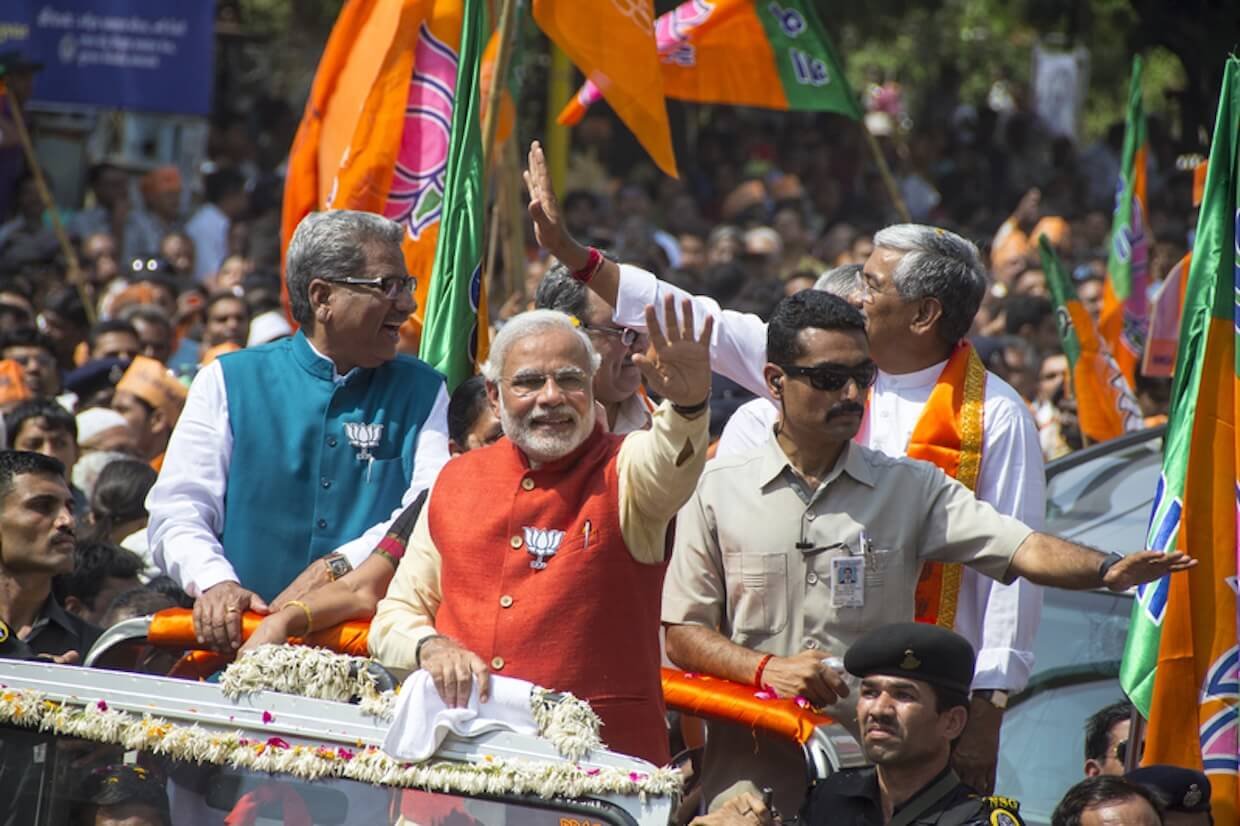
So, at the moment, the social media game that the BJP had mastered, with Mr. Modi himself as a central figure, has slipped out of its hands. Anyone who follows him, as I do, can see that almost anything he posts on X or other social media platforms attracts hundreds of abusive responses from very young people. The image of a feared and revered leader, which was very much constructed through social media, has been broken in a way that I cannot see being restored anytime soon.
India’s Jobless Growth Has Created a Massive Reservoir of Discontent
In “Strong Leaders, Authoritarian Populism and Indian Developmentalism,” you connect Modi’s political project to neoliberal restructuring and economic insecurity. To what extent do unemployment, educational competition, and frustrated aspirations explain the current youth mobilization? Has the gap between developmental promises and material opportunities become a structural vulnerability for Modiism?
Dr. Subir Sinha: What we have been seeing in India is effectively jobless growth. In fact, I increasingly feel that the term neoliberalism is somewhat limiting when it comes to understanding what exactly has happened over the last five years. When Mr. Modi came to power in 2014, he had a very neoliberal platform. The state would withdraw from business, businesses would become much more autonomous, and the government would facilitate this process. He even had a slogan, “Ease of Doing Business.”
But over time, other elements have become very powerful. I’m not too sure whether the acute concentration of media ownership in the hands of Mr. Ambani and Mr. Adani, two of the richest people in the world who have backed Mr. Modi, fits that model. In fact, when Mr. Adani bought the NDTV news channel, he even said, “This is a gift for my friend, Mr. Modi,” and things like that. So, while elements of neoliberalism certainly remain, there are many other factors at play.
Take, for example, the huge subsidies. You may know that half of the Indian population receives food subsidies from the government. That is a damning indictment of the current economic model: half the population cannot afford to buy food from the market and has to be provided with considerable amounts of food.
His neoliberal model began to unravel before the 2024 elections. There are several symptoms of this. One is the farmers’ movement. Remember, India remains among the countries with the highest proportions of their populations engaged in agriculture, close to 50%. We have never really completed the agrarian transition, and the so-called agrarian questions remain unresolved.
We also have a situation of highly concentrated employment. This is why large numbers of migrant laborers leave the poorest parts of the country and flock to Delhi, Bangalore, Calcutta—well, not so much Calcutta—Mumbai, Hyderabad, and Chennai. In fact, just last week, our Minister for Trade and Commerce, Piyush Goyal, while speaking to investors in Europe, said, “Come to India. Our workers work seven days a week. They don’t complain about hours, and they never ask, ‘Can I get the weekend off?’”
The idea of a hyper-exploited labor force made available to domestic and transnational capital as a main engine of Indian growth has been the definitive feature of Indian neoliberalism. We know that neoliberalism worldwide has depended on the demobilization and demoralization of labor.
From that perspective, this is why we have such a massive reservoir of discontent. Again, one has to go back to the pandemic for insights into what is happening now, because it revealed the extent of the precarity faced by migrant workers. Something like 80% of them either received no wages or experienced wage theft during that period. It also became clear that many people were in very precarious employment in the cities for most of the year but had to return to their villages for part of the year.
Modi’s Neoliberal Model Is Unraveling
So, they are not a working class in the classical sense. They constitute a restless, somewhat footloose population—half-working-class, half-peasant, partly urban, and partly rural. That is the main demographic. Looking around the world, at Brazil, the US, and similar cases, it is not surprising to me that victims of neoliberalism are essentially up for grabs by different political projects.
In some cases, they mobilize on their own. In others, they flock to political parties on the basis of region, caste, or tribal affiliations. In areas where other political parties have done considerable work, they might come forward and become part of those formations. But the CJP is very easy to follow, and they are fun, much as Modi’s campaigns could have been seen as fun at one point. Their campaigns are very catchy, and that poses a major problem for Modi’s particular neoliberal model.
Keep in mind, however, that the CJP itself has not necessarily positioned itself as anti-neoliberal, although it has identified a number of people, such as Adani, Ambani, and others, as being among its targets. We have not yet heard a comprehensive anti-neoliberal program articulated by the CJP, although many of its allies have been campaigning against neoliberalism for quite some time.
Exclusion from Voter Lists Is Becoming Exclusion from Social Welfare
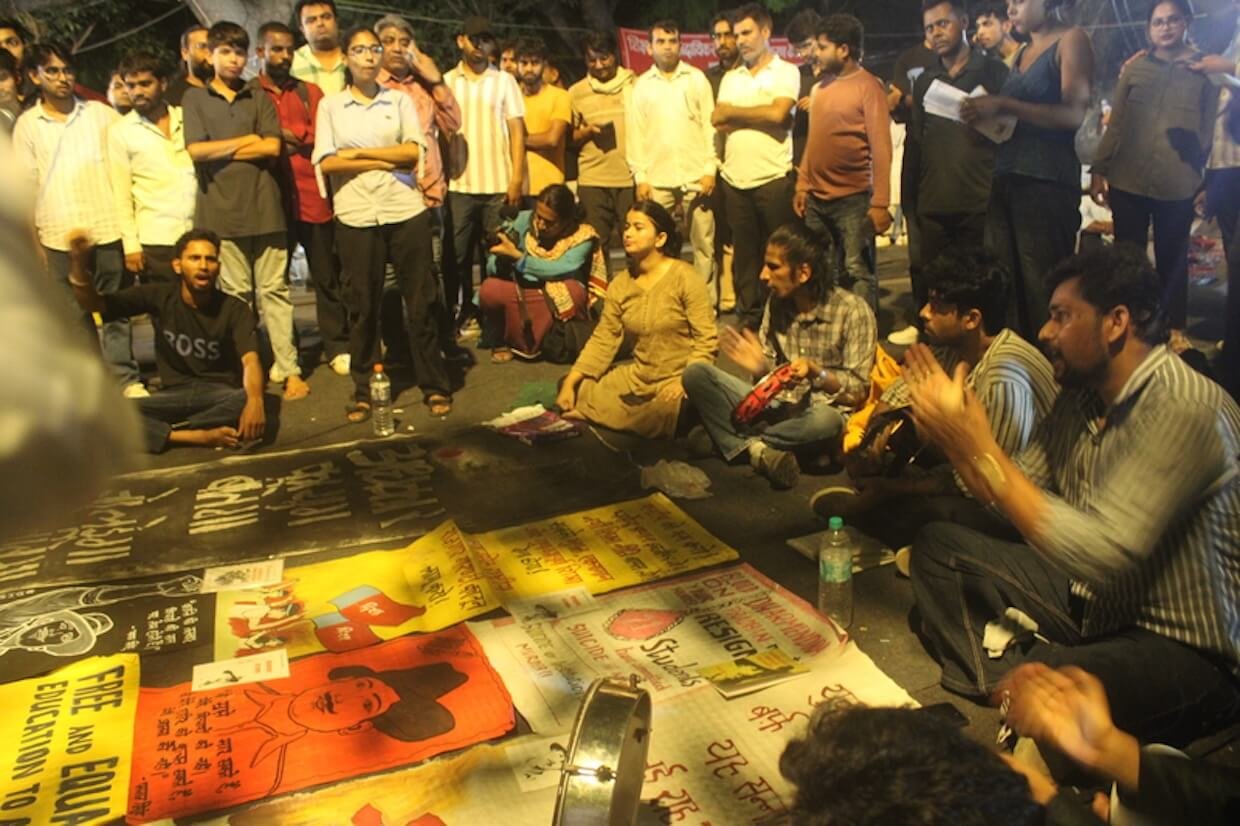
The Cockroach Movement’s October protests challenged the Election Commission’s voter-list revisions, which critics argue risk disenfranchising eligible citizens. How should we understand this shift from demands for educational fairness to contestation over political citizenship? Does it expose a deeper tension between formal electoral democracy and substantive democratic inclusion?
Dr. Subir Sinha: As I mentioned earlier, there are several paths through which people can voice their grievances. The electoral path, which involves electing representatives to state legislative assemblies or Parliament, is one of the main, commonsensical ways for people to seek redress. But we have had this particular problem with the voter-list revision, which was announced rather hurriedly. The former Chief Election Commissioner, S. Y. Quraishi, who was an exemplary Chief Election Commissioner, has argued that there is no constitutional basis for this exercise. In fact, we still don’t know who authorized it. If you have been following this story, you will know that there are three Election Commissioners: the Chief Election Commissioner and two others. There is controversy over whether the other two were consulted when these decisions were made.
Secondly, because of the particular app that was chosen, it appears that the deletions were directed from New Delhi. By law, these decisions were supposedly to be made at the level of the polling booth and constituency. In fact, a couple of booth-level officers responsible for this process have committed suicide because of the pressures they felt. So, it appears to be a highly centralized process, surrounded by a kind of opacity. You cannot ask questions. The courts respond by saying, “No, this seems okay to us.” And the Election Commissioner has been extremely arrogant in responding to what seemed like relatively reasonable questions from the opposition.
To disenfranchise 15–20% of the population, or to cast doubt on the eligibility of 50% of people, is a huge thing in a democracy. Previously, we had been told that this exercise would have no implications for citizenship or the benefits associated with citizenship, such as social welfare programs. But now some states are saying, “If you’re not on the electoral roll, how can you claim that you are eligible for any of these benefits?” So, what began as a restricted issue of inclusion on the voters’ list has snowballed into exclusions from universal social welfare programs, and that’s a pretty big development.
Moreover, as many people have pointed out, it is not just the deletions. There are also mysterious additions to the electoral roll. Right now, in Uttar Pradesh, six million people have been mysteriously added to the electoral roll. No one knows who these people are. In fact, in the 2024 elections, Mr. Modi ended up with 240 seats, representing a loss of 20% of his seats in Parliament. There is widespread speculation that 60 to 80 of those 240 seats were won through mysterious additions to the number of votes polled. So, at the end of the day, if your figure is X, because the counting does not happen immediately but continues over several days, by the sixth or seventh day, that figure could become X plus 20,000.
We were speaking with the former Chief Election Commissioner, Mr. Quraishi, who said, “Listen, India is a huge country. People might still be standing in line to vote, so we can accept an upward revision of up to 4–5% in the number of votes polled. But an upward revision of 10–15% in the votes polled just seems unbelievable.”
We saw this in Uttar Pradesh and also in Maharashtra, where Mumbai is located. There have been a number of such anomalies, including in the counting of votes. Someone appears to be leading, then the system goes offline—“Oh, there has been a power cut”—and when the system comes back online, the BJP is leading.
So, faith in the electoral system is declining to such an extent that the electoral and legislative pathways for achieving the changes young people want to have become very difficult. That is why the CJP’s list of demands now includes changes to the conduct of the Election Commission and a ban on the government offering post-retirement jobs to Election Commissioners.
India’s Authoritarian Repression Is Losing Its Popular Legitimacy
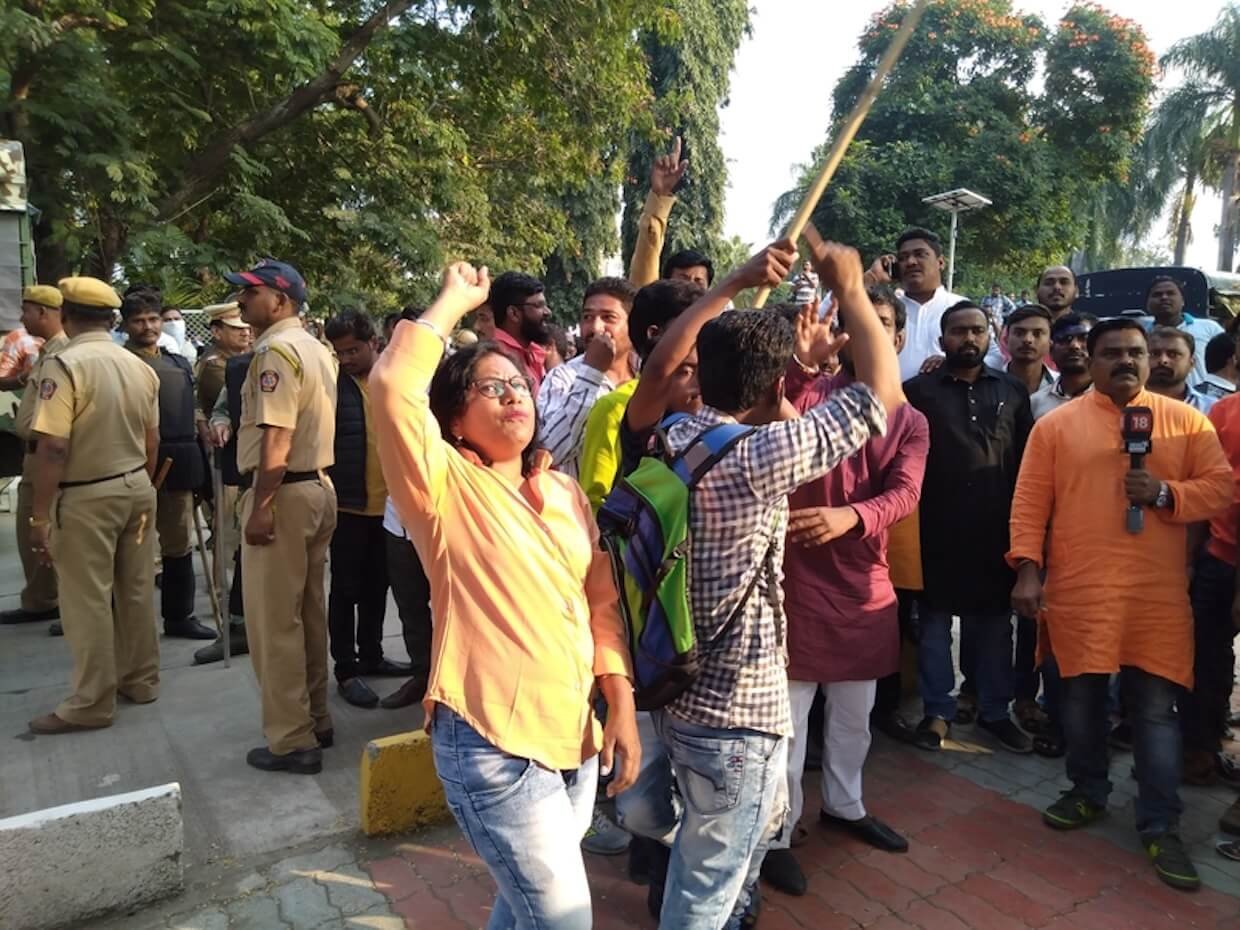
Recent demonstrations have encountered preventive detentions, restrictions on mobility, and interruptions to communications. In light of your work on authoritarian populism, how should we interpret these responses? Does repression consolidate Modi’s authority by discouraging dissent, or can it inadvertently broaden opposition by exposing the coercive foundations of political dominance?
Dr. Subir Sinha: India leads the world in internet shutdowns. It also leads the world in blocking certain apps, and this is not even a new phenomenon. It used to be restricted to certain places, such as Kashmir and the Indian Northeast, where there have been numerous demonstrations. Mr. Modi then extended these methods to the demonstrations held by farmers during the so-called Farmers’ Movement, as well as to the movement against the Citizenship Amendment Act of 2020, which involved large demonstrations around the time of the pandemic. This movement ended with a massive spate of violence in the national capital, in which many Muslims, as well as some Hindus, were killed.
So, these are tried-and-tested methods that Mr. Modi has used. People used to consider such measures justified because Mr. Modi and the media he controls rhetorically labeled protesters as members of the Tukde-Tukde Gang, meaning people who want to dismember the country into tukdes, or pieces; urban Naxals, essentially Maoists living in cities; or, in the case of the farmers’ movement, Khalistanis, associating them with terrorist attempts to create a separate state of Khalistan from Punjab.
At the rhetorical level, they used these descriptors for the movements in ways that effectively, and discursively, authorized violence. If someone is labeled a terrorist, many people would support state violence against them. If you call someone a Maoist, having already claimed that Maoists are waging a civil war in the center of the country, there will obviously be people who say, “Yeah, that’s a good thing.” Similarly, if you refer to protesters as separatists or members of the Tukde-Tukde Gang, you can mobilize a degree of popular authorization for state violence.
Even now, there is a core of Modi supporters who essentially ask, “What is a strong leader for?” In fact, they regard authoritarianism as a positive thing. Let’s not forget that India is the largest market for Mein Kampf in the world. So, there is a streak of authoritarianism, which I discuss in my Strong Leaders paper.
Modi’s Use of Vigilantes Is Deepening Public Anger Against His Government
Many of our nationalist leaders, such as Subhas Chandra Bose, advocated a 20-year period of hard dictatorship. Mrs. Gandhi obviously provided a prior example of this sort of thing. So, authoritarianism is not without popular support. In 1997, on the 50th anniversary of Indian independence, one of our leading magazines conducted a survey in which 30% of Indians expressed support for the idea of a limited dictatorship. So, there is some support for authoritarianism in popular perceptions and expectations of political leadership. But that support has diminished considerably, partly because of what we are seeing in the CJP protests. Who are the people out on the streets in Delhi?
There are many different people, but a large proportion are English-speaking, from elite universities, and from the middle and upper-middle classes. In fact, Neha Bora, a left-wing leader of these demonstrations and a PhD scholar at Jawaharlal Nehru University (JNU), has said publicly that both her parents were hardcore BJP supporters and worshippers of Mr. Modi. When she joined the left-wing party, they threatened to disown her. In fact, her mother later joined the demonstrations when protesters were being assaulted. Many people who had never been politically active saw the police brutality in Delhi and decided that they could no longer stand by while young people were being assaulted.
Another thing that has really upset people is that Mr. Modi’s party does not rely solely on the police. It also makes extensive use of vigilantes affiliated with its political formation, who are given police uniforms and clubs with nails sticking out. They enter crowds and beat the hell out of demonstrators. This has been so extensively exposed on social media by the CJP and its affiliated protest organizations that even Modi supporters have become deeply upset.
In my own circle of friends, there are lifelong BJP and RSS supporters who were initially skeptical of the vote-theft allegations. But now they and their entire families have been left off the voters’ list, and they cannot seem to find an easy way to get back onto it. So, they feel that something is wrong.
Any Opposition Coalition in India Must Cross Caste, Class, and Religious Divides
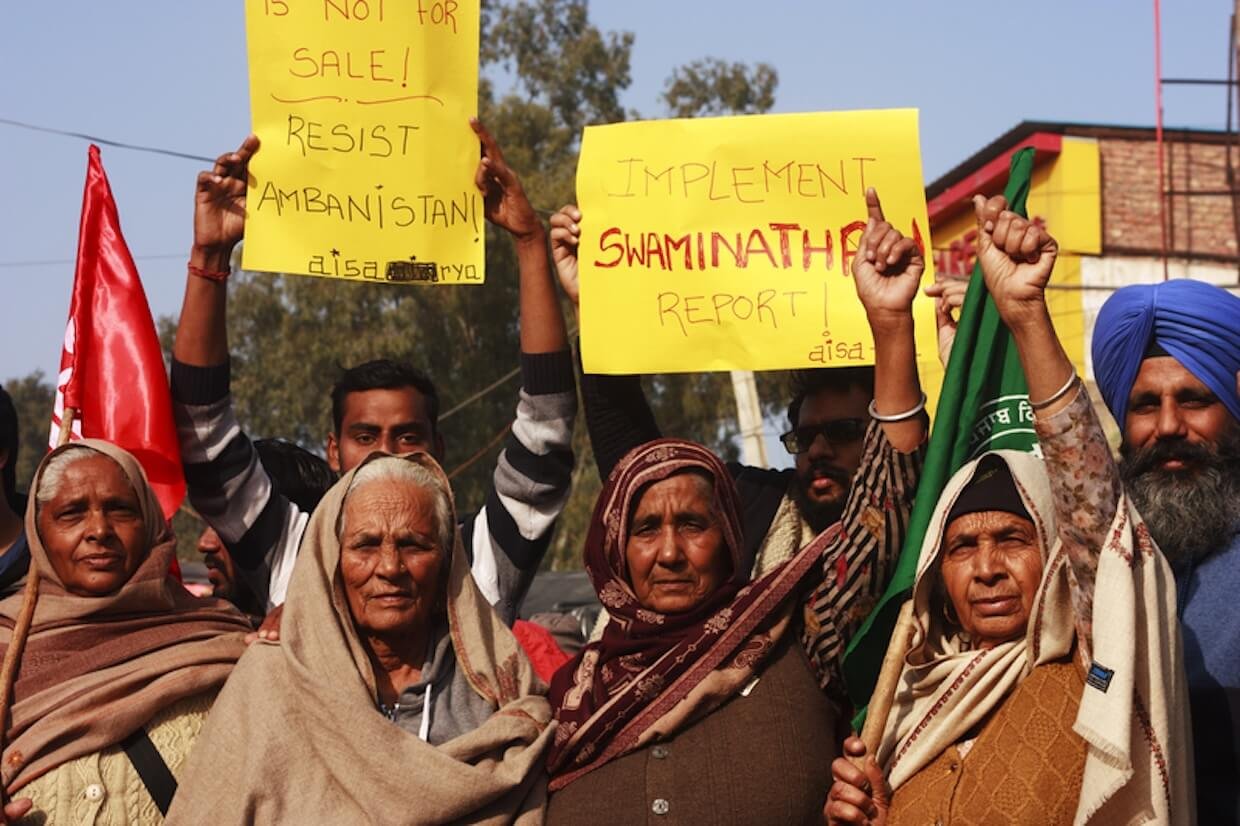
Your research contrasts authoritarian populism with the agrarian populism of India’s farmers’ movement, which secured the withdrawal of the 2020 farm laws. What lessons could the Cockroach Movement draw from that experience? Can students, precarious workers, farmers, and marginalized communities construct a durable coalition across their different economic and political interests?
Dr. Subir Sinha: As I said in my article on the Farmers’ Movement, it was a very significant movement that achieved a very significant victory. It was not a complete victory, and I don’t think that, in this day and age, any opposition movement in India can achieve a complete victory. But the partial victory they achieved was very important because it prevented the complete rollback of the last remaining independence that farmers had. So, the movement was not against capitalist agriculture; it was against neoliberal agriculture, and that distinction is important. In many cases, it was led by very rich farmers, as well as moneylenders and others. So, it was a cross-class movement.
Interestingly, however, it was not a national movement. It was concentrated primarily in the Green Revolution areas: western Uttar Pradesh, Haryana, and Punjab. Some years earlier, farmers from another major Green Revolution rice-producing area in the south, Tamil Nadu, had been coming to Delhi, without much success, to highlight some of their key concerns. The central issue was support prices for agricultural produce: the state should boost prices by procuring produce at a basic minimum price and include more crops, vegetables, and other agricultural products in the list of commodities it would purchase at that minimum price. The mainstream left parties were also quite important in mobilizing farmers, among whom they have always been fairly powerful.
But there are other issues, particularly caste. For example, even in Punjab, there are migrant laborers from my home state of Bihar and elsewhere, many of them Dalit farmers. Would rich farmers agree to an agricultural minimum wage? That wasn’t clear. The rich farmers’ organizations in Punjab were more progressive and more accommodating toward Dalit-caste laborers. But in neighboring Haryana, they were much more conservative. They did not want the farmers’ movement to become a vehicle through which Dalit agricultural workers and small-scale farmers could voice their agenda or in any way threaten the localized hegemony of rich farmers. So, even within the farmers’ movement, there was no genuinely all-India bloc encompassing everyone working in agriculture.
As far as the endurance of a lasting opposition bloc is concerned, all blocs in India have to be cross-caste, cross-class, cross-region, and more or less cross-religion. Now, in Modi’s case, his coalition is cross-region, cross-class, and cross-caste, but it is not cross-religion. He feels that, with 80% of the population being Hindu, he does not need Muslim voters. In fact, you can hear this explicitly in the election speeches of some second-rung BJP leaders, who say, “Muslim voters, we don’t want your vote. We don’t want to do anything for you. You are not our voters.” They believe that this is a way to consolidate the Hindu vote by making it very clear that Muslims are not welcome within that particular coalition.
So, any counter-coalition, apart from incorporating large numbers of Muslims, would also need to chip away at the Hindu constituency, which is the mainstay of the BJP’s electoral coalition. And that can be done on cultural, economic, and political grounds. On political grounds, the question “Where is my right to vote?” is a very strong one. In a slightly less politicized way, there is also the argument that he has had 12 years in power, and he has built railways, roads, and things like that. But now it is time for a change—he has become stale. So, there is nothing particularly political about it. The critique itself is not political. People are simply saying, “Okay, 12 years is quite enough time.”
Hinduism Is Increasingly Seen as Being in Danger from Hindutva

On the cultural front, things become very interesting because there is an increasing feeling that Hinduism is in danger from Hindutva and from the crassness that has crept into religious practices. These practices are necessary for Mr. Modi to keep unemployed subaltern youth on his side. By this, I mean very vulgar dances at religious festivals; highly hateful songs played during religious festivals, specifically in front of mosques; and large-scale permission given to young people to go on pilgrimages during which they openly consume huge amounts of drugs and destroy public property, vehicles, and other things. Many people feel that this is no way to conduct what was once a low-key and significant annual pilgrimage.
So, there is a question about their hold over the imagination of what Hinduism is. We also saw that the whole Ram Temple construction did not work for them electorally as well as they had hoped. In fact, after that, they lost 20% of their seats. Any counter-coalition, therefore, is going to have to take on certain attributes. For example, I don’t think it can be very strongly anti-Hinduism. It would have to pay some lip service to Hinduism while also saying that, historically, we have lived relatively peacefully. We have had episodes of Hindu–Muslim violence throughout our history, but there has also been coexistence of a far better variety than what we have seen.
So, the deterioration of Hinduism under Hindutva, the breakdown of long-standing relations of coexistence between communities, and the accommodation of caste aspirations in response to the fact that more Dalit people are now much better educated and have their own very strong intellectuals and political formations—all of this creates the possibility for a counter-people to emerge. But there are still certain things that have to be done before such a counter-people can actually emerge.
Senegal’s Counter-Elite Offers Lessons for India’s Youth Movement
Senegal’s youth mobilization helped bring Bassirou Diomaye Faye to power in 2024 through a coalition built around anti-establishment politics and democratic reform. How does this experience compare with India’s Cockroach Movement? What determines whether youth protest develops into an electoral alternative rather than remaining an autonomous pressure movement?
Dr. Subir Sinha: In the case of Senegal, they already had a political party dating back to around 2016. Political protests can be expressed through popular movements, in what we call the social movement form, or through the party form. That is a major difference between the Senegalese movement and the Cockroach Janta Party movement. The Senegalese movement emerged through the party form, and from what I understand, its leadership came from a relatively elite background.
That is one major distinction. In Senegal, you have a counter-elite that has come to power on issues common across the world, particularly corruption and the accountability of officials. But the differences between the two cases are considerable. That is not to say there are no lessons for India. There certainly are, but the major differences concern the size of the country and its cultural heterogeneity.
There is also the structure of Indian federalism, which grants considerable powers to the states while retaining many powers at the center. So, which level of government should your protest address, given the nature of your demands? Does the state government have the power to resolve them, or does that authority rest with the central government?
Then there is the issue of caste, for which I don’t think most countries have anything analogous.
You also have a historical sedimentation of political parties and their supporters. In India’s case, the number of political parties is very, very large.
Finally, returning to the point about social media, I have no personal experience of having been to Ghana or Senegal. But in India, people’s lives are so heavily mediated through mobile phones and social media that this represents another important difference in terms of how you would go about mobilizing people.
Bangladesh’s Youth Movement Shares Troubling Similarities with Modi’s BJP
Bangladesh’s 2024 student uprising began with disputes over public-sector employment quotas before expanding into a challenge to Sheikh Hasina’s regime. What explains the escalation of educational grievances into regime-level opposition? Could India’s current protests follow a comparable trajectory, or do differences in political institutions and opposition organization make such comparisons misleading?
Dr. Subir Sinha: Let me be slightly controversial here. I found a number of aspects of the Bangladeshi movement quite similar to the BJP in 2014. By that, I mean the very large presence of conservative religious figures and the idea that, in Mr. Modi’s case in 2014, India should be a Hindu nation, while in Bangladesh, it should be an Islamic country. In both cases, there was the idea of constitutional change that would essentially entrench religious majoritarianism. There were also major attacks on mainstream media and a reliance on so-called fake history.
Just as Mr. Modi attempted to destroy the image of Jawaharlal Nehru, India’s founding Prime Minister, in Bangladesh, there was an attempt to destroy the image of Sheikh Mujibur Rahman, the country’s first Prime Minister. This involved not only his image but also his house and all visible symbols of him in the public sphere.
Now, whether or not this will lead to the changes we are discussing, there are certain variables in Bangladesh that do not exist in the Indian case. There are long-standing disputes between two political families in Bangladesh. In India, by contrast, the dispute is effectively between one party dominated by a family and another dominated by a broad, deeply ideological organization, the RSS. That is a second important difference.
The third point concerns similarities. If you think about Bangladesh and the ways in which it is experiencing what I would call a collapse of the future, two elements come into play. The first is climate change, of which Bangladesh is a particular victim, much more visibly so than India. It affects large numbers of people every year, yet the state does not really have a widespread agenda for their rehabilitation or for restoring their housing, employment, and other necessities. The other element is corruption. In Bangladesh, there is a huge amount of what people refer to as crony capitalism, although I would basically just call it capitalism.
These issues are also becoming part of the conversation in India. The close relations between the ruling party and its cronies are becoming increasingly similar under the Modi government to those under the former government of Sheikh Hasina. So, I would say there is a cancellation of the future, also reflected in high unemployment. In fact, we have a PhD student working on the examinations used to recruit people into public services in Bangladesh.
It is quite interesting to see the similarities, although I don’t think Bangladesh has experienced the same widespread leakage of examination papers or non-declaration of examination results. But you would find that, in youth protests around the world—certainly in the Philippines, Indonesia, Mozambique, Madagascar, and other places—unemployment and corruption are seen as somehow intertwined. Young people’s faith in the political systems governing their countries has rapidly faded.
Their capacities for mobilization and for creating satire through means available to anyone—a mobile phone and a few apps—have created a ubiquity of anger and satire, along with the ability to take political risks. This is common not just to Bangladesh and India, but to all the countries currently experiencing an upsurge of youth activism.
Serbia Shows How Student Movements Can Evolve into Electoral Parties
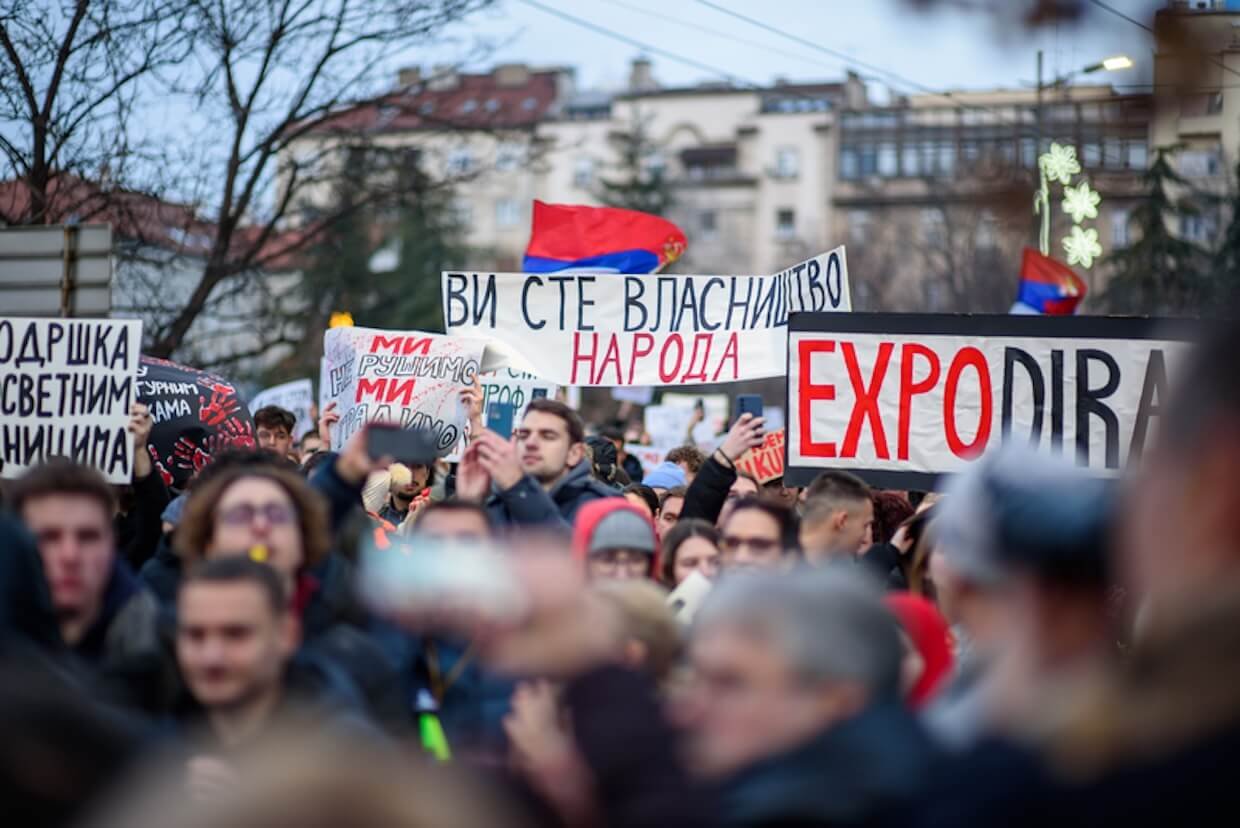
Serbia’s student-led movement has just secured a historic electoral victory after nearly two years of anti-corruption protests. What organizational and political conditions enabled this transition? Could India’s youth movement learn from Serbia’s combination of decentralized mobilization and electoral coordination, or would such a strategy compromise its independence?
Dr. Subir Sinha: There are many lessons to learn from the Serbian example as well. Remember, it was the Novi Sad railway station collapse that essentially took the movement to another level. Before that, anti-mining protests had already been taking place, so the Novi Sad incident was not the beginning of the Serbian movement.
One important difference is that Serbia has a student-list party that includes people who are not politicians and have no background in electoral politics. Large numbers of its members and electoral candidates are academics and members of the university community. So, the involvement of students and the way the movement’s demands have evolved from one issue to another are very important.
Another very important lesson, and one could say the same about Hungary in this regard, is that even political leaders and parties with near-total control of the media can be defeated by popular uprisings that have evolved into electoral parties. That is something that needs to be taken into consideration.
On the other hand, I return to the question of India’s size and the importance of political learning. Authoritarian-populist leaders learn from one another. They learn from what happened in Hungary and Serbia and will therefore recalibrate their strategies in the countries they lead.
Nonviolent Resistance Exposes the Injustice of State Repression
In your essay on Gandhi’s contested legacy, you examine how traditions of nonviolent resistance coexist with the exclusionary politics of contemporary Hindutva. Does the Cockroach Movement represent a revival of Gandhian civil disobedience through new forms of digital and street-level protest? How does it compare with the protest repertoires employed by students in Serbia and Bangladesh?
Dr. Subir Sinha: Gandhi’s legacy is contested, particularly among Dalits. Let’s not forget that many Dalits feel Gandhi did not take Ambedkar, the preeminent intellectual often seen as the main intellectual figure behind the upsurge of Dalit students, seriously. Gandhi is seen as having cheated him on a couple of occasions. He also seems to have prioritized Hindu unity over social and cultural justice for Dalits. That has created a degree of resentment, and these are valid criticisms. So, Dalits have a number of reservations about Gandhi, even as many other parties continue to regard him with reverence. His legacy is therefore not viewed uniformly among today’s protesting youth; perceptions of it are somewhat fragmented.
But when it comes to the strategies and tactics of movements, nonviolence is a very interesting phenomenon. In the Gandhian approach, when police forces or other forces of injustice attempt to suppress protesters through violence, absolute nonviolence somehow creates the perception of a massive gap in power.
On one side is the nonviolent protester, voluntarily allowing their body to be subjected to police violence; on the other are the police and vigilantes, who use extralegal force against protesters. This makes the police forces appear extremely unjust, while the victims appear to be on the side of justice. So, for any government in India, including Mr. Modi’s—which, paradoxically, also wants to be seen as Gandhian—state repression against nonviolent protesters is ill-advised. It will have repercussions, further eroding the government’s legitimacy.
India’s Opposition Must Convert Popular Mobilization into Electoral Power
Finally, Dr. Sinha, your scholarship emphasizes the relationship between political economy, popular mobilization, and competing forms of hegemony. Across India, Senegal, Bangladesh, Serbia, Nepal, and France, youth movements have achieved different degrees of political change. What distinguishes protests that merely replace political elites from those capable of transforming the institutions and inequalities that reproduce authoritarian populism?
Dr. Subir Sinha: That’s a huge question, but in brief, institutional change is more achievable than structural change. Most people would agree, because structural changes go deeper. You could achieve institutional change by changing the leadership of an institution. For example, you could say, “This particular Election Commissioner is corrupt, but let’s get a better one.” You could also change the rules of the game while still remaining within the realm of institutional change. For example, you could say that the appointment of the Chief Election Commissioner should involve the Chief Justice of India, as was previously the case, along with the Leader of the Opposition and the Prime Minister. So, you change the rules governing how that person is appointed. You could do that without too much difficulty.
You could also introduce other kinds of institutional changes. There’s an excellent Indian journalist, Ajaz Ashraf, who has compared India’s experience with electronic voting machines with that of Brazil. He has noted that, in the Brazilian EVM system, there is an independent group of verifiers who examine whether the code is functioning properly and things like that. So, you could introduce institutional changes of this kind or modify the rules governing existing institutions.
Now, structural changes are what the BJP is trying to make. For example, if you say that 15–20% of the population is excluded from the electorate, that is a structural issue. They are also looking at a so-called delimitation bill, which would create a massive imbalance between the southern and northern states and basically result in an undefeatable, enduring majority for them. Those would be structural changes.
Now, what movements can do, by putting pressure on the system from the outside, is force, at best, institutional change. Structural change becomes possible only when that movement power is converted into legislative power, because ultimately it is Parliament that has the authority to make fundamental changes. In some cases, Parliament and the state legislatures can also make changes to the Constitution. For that to happen, you need electoral victories. And to achieve those electoral victories, you have to break the current political coalition in power.
Remember, there are two political parties that were previously part of the opposition coalition: Janata Dal (United), from my state of Bihar, and Telugu Desam, from Andhra Pradesh. If these two parties alone were to withdraw their support from Mr. Modi, his government would lose its majority. So, in my view, the strategy should be to work out an electoral coalition that brings together many of these movements, despite their own frictions and problems. If that were possible over the next couple of years, and a counter-people were able to find electoral expression, that is when you could begin to see structural changes with an abiding influence, perhaps even spelling a long-term decline of Hindutva.