
In an in-depth interview with the ECPS, Associate Professor Sharan Grewal of American University and Nonresident Senior Fellow at the Brookings Institution examines the paradox of Tunisia’s democratic collapse. Drawing on his new book, The Rise and Fall of Tunisian Democracy, Assoc. Prof. Grewal argues that prolonged grand coalitions, initially designed to safeguard democratic transition, instead fueled populism, intensified polarization, and facilitated Kais Saied’s authoritarian takeover. His comparative research suggests that democracies governed through such coalitions are approximately three times more likely to collapse. Challenging conventional assumptions, Assoc. Prof. Grewal warns that too little polarization can be as dangerous as too much. He also discusses military complicity, international support for authoritarianism, emerging opposition, and the constitutional reforms necessary for democratic restoration.
Interview by Selcuk Gultasli*
Tunisia’s democratic collapse presents one of the most consequential paradoxes of the Arab Spring: How could the region’s most celebrated democratic transition, built upon elite compromise and inclusive power-sharing, ultimately facilitate an authoritarian takeover supported by much of the population? Fifteen years after Tunisia’s revolution, President Kais Saied has consolidated executive power, weakened judicial independence, and restricted political opposition. Yet renewed protests amid economic hardship suggest persistent demands for political change.
In this wide-ranging interview with the European Center for Populism Studies (ECPS), Associate Professor Sharan Grewal of American University and Nonresident Senior Fellow at the Brookings Institution examines how Tunisia’s celebrated consensus politics inadvertently undermined democratic consolidation. His award-winning Soldiers of Democracy? explores military legacies and democratic transitions following the Arab Spring, while his latest book, The Rise and Fall of Tunisian Democracy, challenges conventional assumptions about the stabilizing effects of political compromise.
Assoc. Prof. Grewal argues that Tunisia’s prolonged grand coalitions between secular and Islamist parties eroded mainstream political identities, weakened electoral representation, and fueled populist resentment. As he explains, “If you continue pursuing grand coalitions, your democracy can begin to unravel. That’s what happened in Tunisia.” His comparative analysis further reveals that democracies governed through prolonged grand coalitions are “about three times more likely to die,” particularly during the critical years between democratic transition and consolidation.
Central to Assoc. Prof. Grewal’s interpretation is the paradox that consensus intended to prevent polarization instead intensified it. By bringing competing political forces into the same governing establishment, grand coalitions created opportunities for anti-system mobilization. This dynamic helped Kais Saied portray himself as an outsider confronting corrupt political elites. Assoc. Prof. Grewal identifies frustration with political parties and hostility toward the Islamist Ennahda as the strongest predictors of popular support for Saied’s 2021 power grab.
Challenging conventional democratic theory, Assoc. Prof. Grewal maintains that “while too much polarization is dangerous for democracy, too little polarization is also dangerous.” His proposed alternative is the “Goldilocks level of polarization”: consensus over constitutional rules combined with meaningful competition over government policy.
The interview also explores the military’s paradoxical complicity in authoritarian consolidation, European migration cooperation, Saied’s expanding international partnerships, and the potential resurgence of democratic opposition. Assoc. Prof. Grewal observes that “the sands are finally shifting,” although he warns that another revolution would face greater obstacles than Tunisia’s 2011 uprising.
Looking toward democratic restoration, Assoc. Prof. Grewal advocates constitutional reform, an independent constitutional court, economic recovery, accountability, and transitional justice. Above all, he cautions against repeating the elite bargains that undermined Tunisia’s first transition. As he concludes, “you want consensus initially on the rules of the game, but then you need to move toward competition.”
His analysis offers important lessons extending beyond Tunisia: democratic survival requires not merely political compromise, but accountable governance, meaningful representation, and institutionalized competition.
Here is our interview with Associate Professor Sharan Grewal, edited lightly to enhance clarity, readability, and overall flow for publication.
Grand Coalitions Can Fuel Populism, Deepen Polarization, and Destroy Democracy
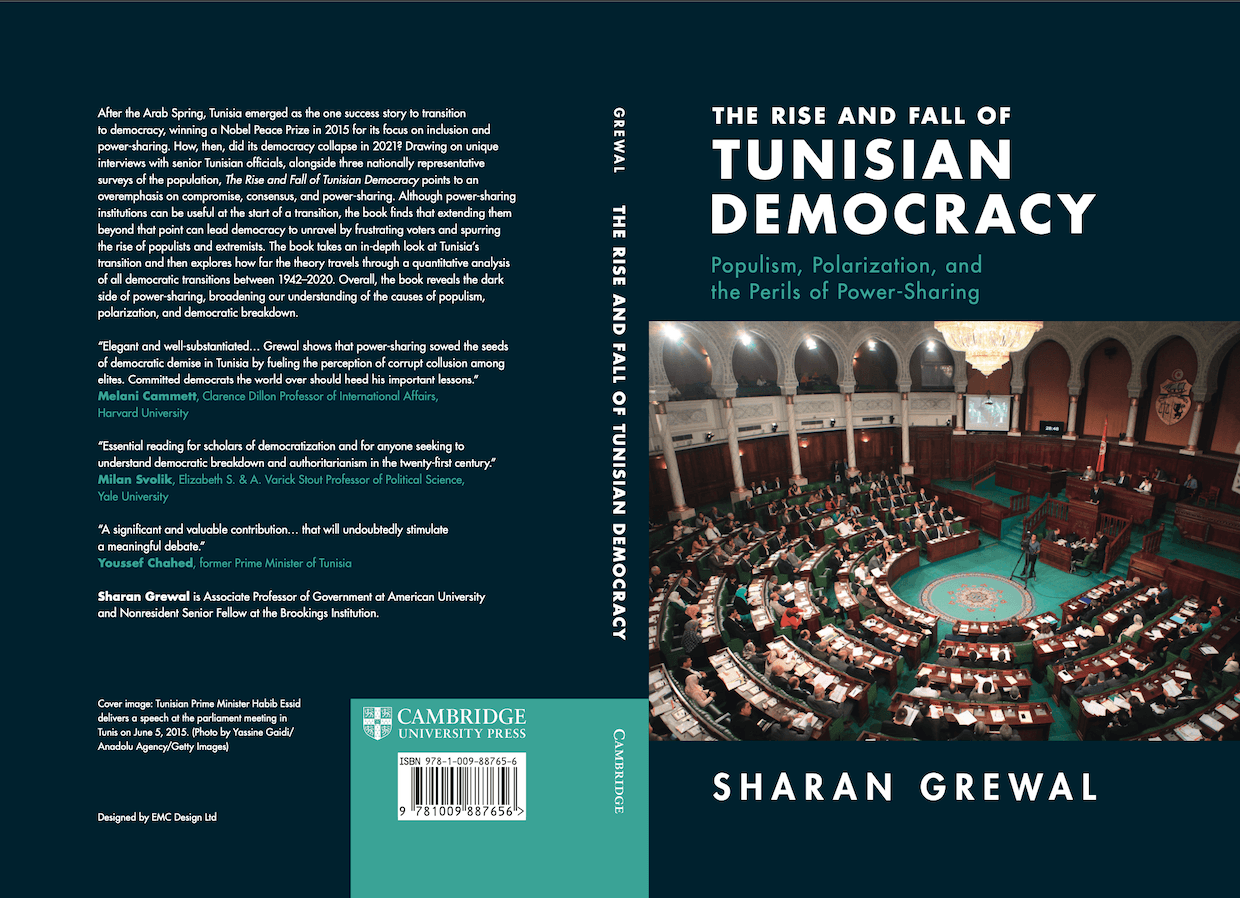
Professor Grewal, thank you for joining us. Let me begin with your book’s central paradox: In your new book, The Rise and Fall of Tunisian Democracy, you argue that power-sharing can facilitate democratic transitions but undermine their long-term survival. How did Tunisia’s celebrated consensus politics and prolonged grand coalition fuel populism, deepen polarization, and ultimately facilitate Kais Saied’s authoritarian takeover?
Assoc. Prof. Sharan Grewal: Tunisia had been the one success story of the Arab Spring. It had managed to transition to democracy and sustain it for 10 years. But in 2021, democracy collapsed through an incumbent takeover, as the elected president seized all power for himself. Surprisingly, Tunisians cheered, and public opinion polls reported 80–90% approval for his power grab. So, the central questions of the book are: What went wrong in Tunisia? Why was the democratic breakdown so popular? And what broader lessons can we draw about managing transitions to democracy?
Tunisia’s democratic collapse was especially surprising because, up until that point, the country had been doing everything right. The academic literature tells us that the way to achieve democracy is through power-sharing, ensuring that all major political actors have a stake in the system, so they do not become spoilers.
Arend Lijphart, for instance, advocates grand coalitions involving all major parties, arguing that this keeps them invested in the democratic transition rather than encouraging them to undermine it. That’s exactly what Tunisians did throughout their transition. The defining feature of Tunisian democracy was consensus, or wafaq, among the major political actors, most notably reflected in grand coalition governments that brought together the secular and Islamist sides of the political spectrum.
The argument I make in the book is that this may have been the right strategy at the beginning of a democratic transition. You want all political actors at the table when drafting a new constitution and establishing the rules of the game. In that respect, the literature is right about the initial phase of a transition. But once the rules of the game have been established, you need to move toward normal, competitive democratic politics, with a government and an opposition. If you continue pursuing grand coalitions, your democracy can begin to unravel. That’s what happened in Tunisia.
The major secular and Islamist parties formed another grand coalition in 2015, which led to the collapse of both mainstream moderate parties by the next elections. Nidaa Tounes, the major secular, old-regime party, fell from 38% of the vote to just 2% in the following elections. Ennahda, the major Islamist and revolutionary party, likewise lost approximately one-third of its voters between 2014 and 2019.
This happened because voters were frustrated with the grand coalition and the politics of consensus. They had voted for Nidaa Tounes and Ennahda because these parties stood for something. One represented the secular old regime, while the other represented revolutionary and Islamist politics. When the two parties came together, their respective bases felt frustrated and unrepresented by this unexpected coalition.
Voters were also upset by what the grand coalition entailed: essentially, a pacted transition between the secular old regime and the Islamist revolutionaries, involving immunity for both sides for crimes that voters believed the other side had committed. People wanted the old regime punished for torture and corruption under the dictatorship, but that was swept aside as part of the pact and grand coalition. Likewise, secular voters wanted the Islamists investigated for any role in sending foreign fighters to ISIS and possible involvement in domestic political assassinations. Those concerns were also swept under the rug as part of the consensus.
The Grand Coalition That Was Supposed to Save Tunisian Democracy Helped Destroy It
This led to the collapse of the political center. The grand coalition caused the moderate mainstream parties to lose much of their support by the next elections while fueling the rise of populists and extremists. When the two major parties move toward the center in a grand coalition, they create space for hardliners at either end of the political spectrum. Thus, bringing the two major parties together actually worsened polarization.
We subsequently witnessed the rise of hardliners on both sides, making polarization even more intense. The hardline secularists and Islamists who entered Parliament in 2019 engaged in fistfights, tarnishing the reputation of the new Parliament and democracy more generally while further intensifying polarization. That was one dark side of the grand coalition: it actually worsened polarization.
The second dark side was that the grand coalition sparked the rise of populism. With all the major parties governing together, they became tainted as part of the establishment, creating an opportunity for political realignment around a system-versus-anti-system cleavage. This is where the populist president, Kais Saied, emerged. He ran in 2019 on an anti-party platform, arguing that all the parties involved in the grand coalition were corrupt and were granting one another amnesty. He promised instead to clean up the political system and subject the parties to the rule of law.
So, we witnessed both the rise of populism, represented by Kais Saied’s election in 2019, and worsening polarization as consequences of the grand coalition. Ultimately, these two dynamics generated massive public support for Saied’s seizure of power in 2021.
In surveys I conducted, the two strongest predictors of support for Saied’s decision to shut down Parliament and seize all power were, first, frustration with political parties—a desire to dissolve all parties, reflecting the populist element—and, second, polarization, particularly the desire to dissolve one specific party: Ennahda, the Islamist party. In short, the book argues that grand coalitions may be useful at the beginning of a democratic transition. But if they continue over the long term, they can fuel populism, worsen polarization, and thereby make democratic breakdown more likely.
Tunisians Supported Saied’s Power Grab While Still Believing in Democracy
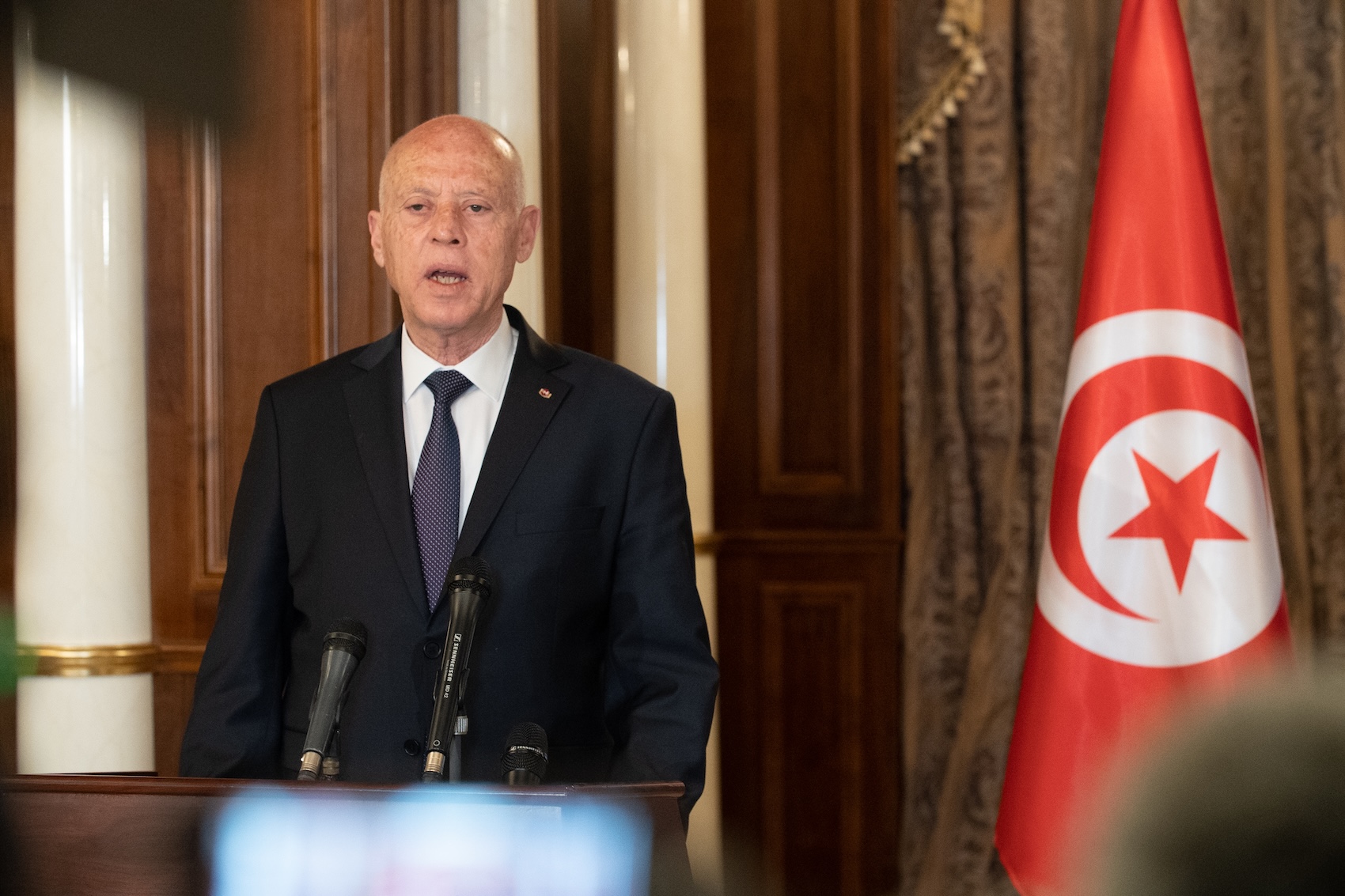
Your research identifies anti-party sentiment and polarization as major drivers of support for Saied’s 2021 self-coup. Why did Tunisians embrace authoritarian presidentialism despite their experience of democratic freedoms?
Assoc. Prof. Sharan Grewal: Tunisians had democratic freedoms, and one argument we often hear is that 10 years of democracy was simply too short a period for them to truly embrace those freedoms and incorporate them into their democratic culture. But I think it’s less about the brevity of that period and more about how those 10 years didn’t really seem like genuine democratic politics to them.
Instead, the political system appeared to be a collusive elite cartel of parties that weren’t representing their voters but were governing together. This perception became particularly powerful as populist sentiment began to take root, suggesting that these parties were governing together primarily to secure their share of the spoils. The major parties simply wanted ministerial positions, their share of the budget, and positions for their people in the bureaucracy.
Once that populist sentiment took hold, Tunisians no longer viewed the system as a genuine democracy. Instead, it appeared to represent elite capture of the political system. That, in turn, helps explain why surveys conducted during and after the coup showed that Tunisians still liked democracy and considered it the best form of government, while simultaneously supporting Kais Saied’s imprisonment of political party members and his seizure of all power for himself.
It was this populist element that, in some ways, made Kais Saied appear to be the true democrat. Having been elected in a landslide with 73% of the vote, he was seen as having a mandate to clean up the system. His supporters viewed him as the true democrat who was doing precisely that. They had embraced the populist rhetoric that corrupt political parties and elite capture were responsible for the poor economy and the failures of the democratic transition more generally.
Prolonged Power-Sharing Can Fuel Populism Even During Economic Growth
Your book demonstrates, both qualitatively and quantitatively, that the destabilizing consequences of prolonged grand coalitions extend beyond Tunisia. Under what conditions does democratic consensus become a catalyst for populist backlash and democratic breakdown?
Assoc. Prof. Sharan Grewal: In the final chapter of the book, I conduct a cross-national analysis to determine whether this phenomenon is specific to Tunisia or whether the finding that grand coalitions can be dangerous for democracies can be generalized. I find strong evidence that if you continue governing through grand coalitions, your democracy is about three times more likely to die. Grand coalitions can actually pose a danger to democracies, even though the literature suggests that power-sharing is the way to make democracy work.
This suggests that Tunisia’s experience can be generalized. At the same time, there are a few scope conditions, both empirical and theoretical. As I’ve described, there is a temporal dimension. Grand coalitions may be helpful at the beginning of a democratic transition because they facilitate the establishment of a new constitution and the rules of the game.
During the first five years of a democratic transition, we don’t observe this negative effect of grand coalitions. They may even be beneficial at the outset. But once the rules of the game have been established, roughly between years five and 20 in my quantitative analysis of democracies, grand coalitions become especially dangerous. You don’t want to continue governing through grand coalitions. Instead, you want to keep voters invested in mainstream parties by allowing those parties to maintain their distinct brands and retain their electoral bases, rather than diluting their identities and losing supporters by governing together.
Grand coalitions are therefore particularly dangerous between years five and 20. After 20 years, once democracy has consolidated, we rarely see grand coalitions leading to democratic breakdown. However, I would argue that we still observe the same dynamics, with prolonged grand coalitions fueling populism and worsening polarization.
If we look at European democracies today, for instance, we see grand coalitions in Germany and Austria having the paradoxical effect of increasing the vote share of the populist AfD or other excluded parties in successive electoral cycles. The rationale behind these grand coalitions is to keep populists out of politics. And yes, that works in the short term while the coalition remains in place. But in subsequent elections, populist parties tend to perform better as voters become frustrated with this politics of compromise, particularly the dilution of party identities when the center-left and center-right govern together.
These parties would be better off maintaining their distinct brands and their distance from one another, thereby keeping voters within the mainstream parties rather than frustrating them into supporting populist outsiders.
The main scope condition I identify, therefore, is this temporal dimension: the stage in the democratic life cycle at which a grand coalition is pursued. The other scope condition I expected to find concerned economic crises. Certainly, in Tunisia, the situation was exacerbated by the economy’s failure to improve. As a result, all the mainstream parties became tainted by the economic crisis, and voters turned to populist outsiders because all the major parties were governing together and were associated with the crisis.
We see a parallel in Weimar Germany, where a grand coalition governed from 1928 to 1930. Those mainstream parties became tainted by the Great Depression, and voters turned to the Nazis and Communists in subsequent elections. At the same time, I found no quantitative interaction between economic conditions and grand coalitions. The negative effect of grand coalitions did not appear to be any stronger during economic crises.
Indeed, there were also cases in which the economy was growing, yet grand coalitions still contributed to democratic collapse. Thailand, in the late 1980s, experienced a brief democratic period during which the major parties governed together and the economy boomed. At one point, economic growth reached 13% during this brief democratic transition. Yet voters remained frustrated by perceptions that the grand coalition was corrupt and that the major parties were simply lining their pockets with public funds. This fueled perceptions of corruption despite economic growth, which, in turn, contributed to public support for a coup in Thailand that ended its democratic experiment.
So, theoretically, I had expected some interaction with economic conditions, but I didn’t find it empirically. I think there is some logic to that. Even when economies are growing, perceptions are often relative. If it appears that the grand coalition and these elite parties are doing even better than the populists, perceptions of inequality and corruption may still emerge, fueling populist frustration with the system.
Democracies Need Consensus on the Rules but Competition over Policies
Your comparative findings suggest that grand coalitions can undermine young democracies. How can democratic transitions reconcile the need for initial elite compromise with subsequent political competition without fueling destructive polarization?
Assoc. Prof. Sharan Grewal: We need to remember the literature from the 1980s and 1990s that described two transitions to democracy. There’s the first transition, when you establish the rules of the game, establish the constitution, and create the new system. Then there’s the second transition, when you consolidate this new system and democracy itself. Power-sharing and grand coalitions are useful in the first stage but dangerous in the second. This provides a clear lesson: You may want grand coalitions at the start, but you need to move on after that.
South Africa is the most emblematic case of what you’re supposed to do. At the start of the transition, you had a grand coalition between Nelson Mandela’s party, the ANC, and the party that had implemented apartheid. That helped them agree on a new constitution for South Africa. But once they agreed on the constitution, they parted ways. The grand coalition ended, the ANC led the government for the next 25 years, and the major party representing white South Africans led the opposition for the next 25 years. It was the distance between these two parties that allowed both to retain their bases, avoid diluting their brands, and therefore stem the rise of populists and extremists.
Notably, today, 25 years later, they’ve recreated a grand coalition for the first time, and it’s certainly hurting the ANC’s popularity. This might further demonstrate that even 25 years into democracy, you still see the dangerous effects of grand coalitions. But South Africa initially shows what you’re supposed to do: move on to competitive politics. You want differentiation among mainstream parties, competition between them, and even a bit of polarization. That’s how you keep voters invested in those parties and in the system, rather than turning to populists and hardliners.
The danger, of course, is finding the right level of polarization. What I’m arguing is that while too much polarization is dangerous for democracy, too little polarization is also dangerous. That’s the new argument I’m trying to make here. If the mainstream parties govern together without showing any differentiation, you get this populist backlash. So, striking the right balance and finding the Goldilocks level of polarization is the key dilemma or challenge for democracy.
It may be a cliché, but a helpful way to think about it is that you want consensus over the rules of the game. If you’re trying to change the constitution, the electoral system, etc., you want all the parties to agree on those changes. If it’s not about the rules of the game, but instead about policy, you actually want differentiation, polarization, and contestation. You want clear positions from the government and the opposition on policy. That’s what keeps voters aware that there are options and that different parties represent different constituents. But you want consensus when making major changes to the rules of the game. That’s how you strike a balance between a dangerous, pernicious level of polarization and too little polarization, on the other hand.
Tunisia’s Military Leaders Have Vested Interests in Saied’s Authoritarian Rule
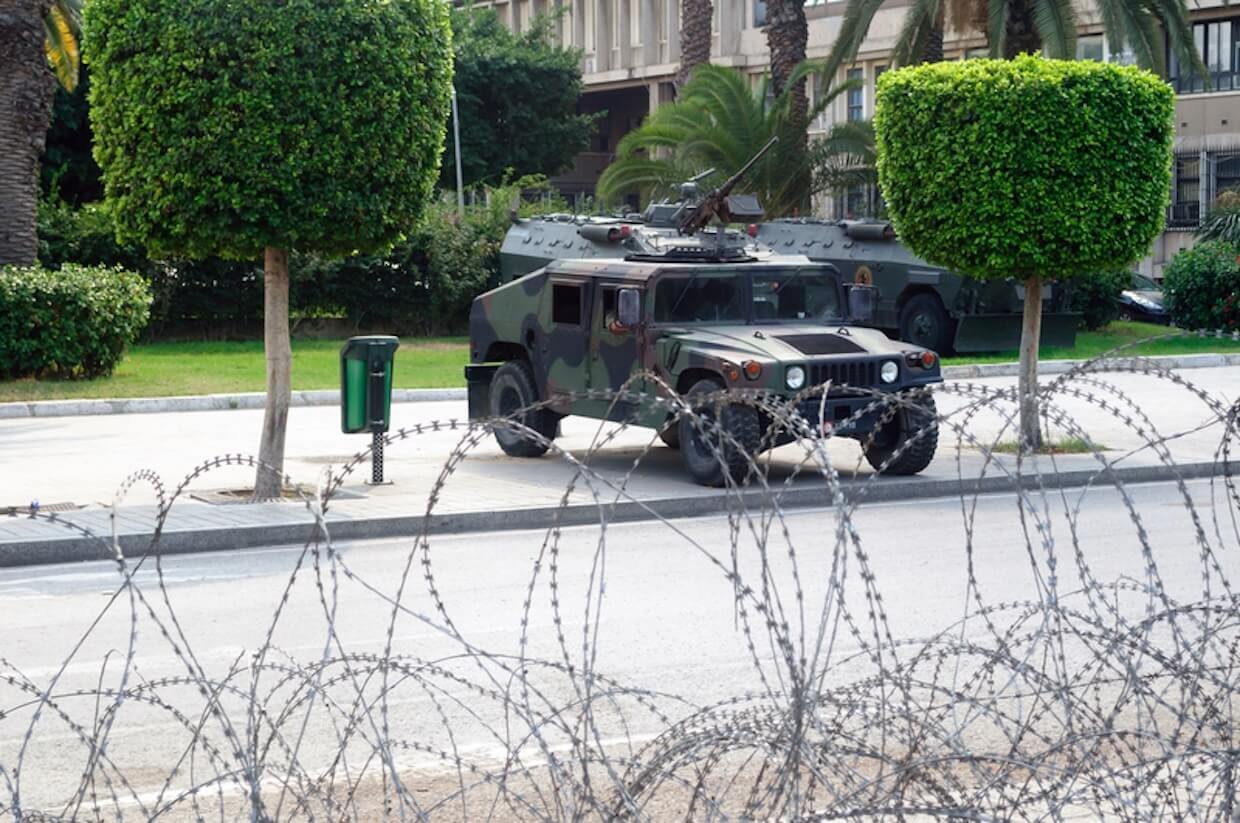
In Soldiers of Democracy and subsequent research, you examine military complicity in presidential self-coups. How has Saied’s politicization of Tunisia’s military transformed the prospects for resisting authoritarian consolidation?
Assoc. Prof. Sharan Grewal: Tunisia’s military had been unique in the region. Unlike other militaries in the Middle East, it had never been involved in politics, staged a successful coup, or governed the country. It was a very professional force, but also a very small and counterbalanced one. Historically, Tunisia’s dictators were fearful of the military, and their strategy was to counterbalance it with the police, the National Guard, and the Presidential Guard while keeping the military small and far from politics.
That was unique in the region and initially facilitated Tunisia’s democratic transition. The military didn’t have a culture of staging coups, so it didn’t stage one when the opportunity arose in 2013, following Egypt’s coup. There were calls for Tunisia’s military to do the same and overthrow the Arab Spring transition, but it refused. This was both because it was a very professional, apolitical force and because it was benefiting from the transition. Having been so small and neglected, the military was finally seeing its budget and weapons increase under democracy to levels that could match the security threats it needed to address.
So, as I argue in my first book, the military facilitated the transition and didn’t initially stage a coup. But Kais Saied was also able to co-opt it into his incumbent takeover. The argument I make in my first book is that the type of military Tunisia had was one that doesn’t stage coups itself but is paradoxically more easily co-opted into presidential or incumbent takeovers.
This is for both of those same reasons. First, you can more easily co-opt the military through its budget and weapons, given how neglected it had been historically. Kais Saied was able to further increase its budget and weapons and even expand its ministerial positions, appointing military officers, for instance, as Minister of Health and Minister of Agriculture, thus enhancing the military’s corporate interests.
But there’s also this paradox of professionalism, whereby military officers don’t want to challenge their commander-in-chief. When President Kais Saied ordered them to close Parliament in 2021, they instinctively obeyed, believing they weren’t supposed to question the commander-in-chief but were always supposed to obey and follow his commands. That’s what civilian control entailed for them. They told me that, in their minds, saying, “No, this is unconstitutional for us to close Parliament,” would have meant wading into politics. That would have been the political option. It was better for them simply to obey orders. Paradoxically, I argue that this type of military—an apolitical, professional military—is actually more likely to go along with incumbent takeovers, whereas more politicized militaries more readily tell the president, “No, we’re not following your orders.”
Today, it’s not so clear that this military will facilitate a return to democracy as easily as it did back in 2011 during the Arab Spring. The military today is somewhat less neglected and marginalized. In that sense, it has more vested interests in sticking with Kais Saied than it ever did under the previous dictators, Bourguiba and Ben Ali. Today, at least the top officers have these vested interests: higher budgets, more weapons, and ministerial positions. The very top officers, especially, continue to be promoted year after year and remain in their positions well beyond retirement age. So, they also have personal interests in sticking with Kais Saied in a way they never did under the previous dictators.
You also have to wonder to what extent the military’s apolitical, professional culture is changing as a result of these ministerial positions and greater political influence. It may be too short a period—only five years so far under Kais Saied—to really shift the military’s political culture. But it’s possible that Tunisia now has a somewhat more politicized military than it did, certainly, in 2011 and 2013. It’s therefore possible that a return to democracy will become a little harder now that the military has changed in this way.
At the same time, we should recognize that, structurally, many aspects of the military remain the same. You still have a conscripted military, so the soldiers on the ground who would actually need to repress protests, for instance, are more likely to side with the population because they’re randomly selected from it. So, while the top officers may have more interest in sticking with Kais Saied, the lower-level soldiers are likely to side with the population.
European Migration Priorities Have Helped Kais Saied Consolidate Authoritarian Power
Your research traces Saied’s growing engagement with China, Russia, and Iran. How do these relationships, alongside European migration priorities and Western security cooperation, affect the durability of his authoritarian rule?
Assoc. Prof. Sharan Grewal: It has certainly helped that Kais Saied had these foreign partners during the initial years of his consolidation of power. Neighboring Algeria has perhaps been his strongest ally. But European powers, as you mentioned, have also been very concerned about migration into Europe and have likewise helped Saied consolidate power, providing him with economic and even security assistance to keep migrants in Tunisia and prevent them from reaching Europe. Italy, in particular, has perhaps been the most supportive of Kais Saied.
In more recent years, we have seen Kais Saied try to branch out and engage more with Russia, China, and Iran, particularly through high-level visits to Iran and China. These visits were unprecedented in many ways in Tunisian history, given that Tunisia had historically been aligned with the US and Europe rather than China and Iran.
That said, Kais Saied doesn’t have strong allies abroad in the same way that Tunisia’s former dictators, Bourguiba and Ben Ali, did in France, the US, and elsewhere. France, for instance, was still offering Ben Ali additional tear gas in the final hours of the Arab Spring revolution. How could France help him stay in power rather than let him fall?
I don’t think we’re going to see that if mass protests emerge against Kais Saied today. He doesn’t have strong alliances abroad that are as invested in his survival as France was in Ben Ali’s survival back then. In that sense, although he has some new partners, both rhetorically and economically, I don’t think they would support him in a way that would allow him to survive a mass uprising. So, if and when the sands shift, Saied loses his popularity, and protests start to gain momentum and strength, I do think he is a relatively weaker dictator than Tunisia’s previous ones.
The Sands Are Finally Shifting as Kais Saied Begins to Lose Popular Support
In your January 2026 analysis, you describe a weakened Tunisian General Labour Union (UGTT, Union Générale Tunisienne du Travail), fragmented opposition, and an increasingly politicized military. Can Tunisia rebuild the societal and institutional foundations that enabled its 2011 democratic transition?
Assoc. Prof. Sharan Grewal: For five years, Kais Saied was able to benefit from each of those factors. The opposition was highly polarized, as we saw in the final years of the transition, when polarization had worsened. That inhibited the opposition’s ability to unite against Saied.
Likewise, the labor union, a powerful, Nobel Peace Prize-winning organization in Tunisia, has strong legitimacy stemming from its role in the independence movement. It, too, was unable and unwilling to challenge Kais Saied. It understood that, given the 80–90% support Saied enjoyed, many workers also supported him and wouldn’t protest or go on strike against him. So, the labor union, the UGTT, likewise capitulated and allowed the power grab to take place.
But finally, this year, we’re starting to see some shifts in both the divided opposition and the weakened labor union. After maintaining that popularity for five years, Kais Saied is finally beginning to face criticism from Tunisians. This summer, there were water and electricity cuts as summers continued to get hotter every year in Tunisia and the infrastructure was unable to keep up. During the hottest hours of the day, there were power cuts, air conditioning couldn’t run, and water wasn’t available.
Those failures in service provision are finally catching up with Kais Saied and hurting his popularity. There’s nobody else to blame at this point, given that Saied rewrote the constitution to grant himself hyper-presidential powers. He is where the buck stops at this point. So, finally, this summer, we started to see Saied being blamed. As that happened, the opposition began to unite, realizing that perhaps they could mobilize their bases against him.
Perhaps even more importantly, the labor union finally started to challenge Saied this past year. In August and October, just these past few months, we began to see larger protests against Saied than in the past, led by the labor union, with all the political parties quietly uniting behind it. That is a new and welcome development in terms of a potential return to democracy. It’s still very early, and these protests remain quite small, numbering only in the thousands, not yet reaching the 20,000 or 30,000 participants we saw during the Arab Spring revolution. But the sands are finally shifting, and Kais Saied is beginning to lose some of his popularity. So that’s potentially a good sign for the return of democracy.
Restoring Tunisian Democracy Will Be More Difficult Than It Was in 2011
You suggest that another Tunisian uprising would face considerably greater obstacles than in 2011. Is democratic restoration more plausible through renewed popular mobilization, negotiated transition, or gradual institutional openings?
Assoc. Prof. Sharan Grewal: The current president, Kais Saied, is not willing to negotiate. If these past five years have taught us anything, it’s that he is not open to compromise or dialogue. He rewrote the constitution with minimal input from others. He had assembled what he called a dialogue, in which participants had a few weeks to provide input on the new constitution. But in the end, Kais Saied ignored what they said and wrote the constitution on his own.
More generally, you don’t see Kais Saied trying to negotiate, compromise, or make concessions to the opposition. So a negotiated transition is unlikely. Even if these protests grow and gain momentum—which remains uncertain, since we’re starting to see the sands shift but we’re certainly not there yet—I’m not sure Kais Saied would be willing to come to the table and permit a negotiated transition.
As a result, the more likely scenario is another revolution. A revolution, though, would be more difficult than it was in 2011, when you had a military that was neglected and apolitical and didn’t want to save the dictators. Today, that may be slightly different.
Likewise, although the political parties have started to unite and the labor union is beginning to challenge Kais Saied, both are less popular than they were in 2011. The political parties have been delegitimized as a result of the last 10 years of grand coalitions.
The labor union has also lost much of its popularity, partly because it staged a number of general strikes during the democratic transition that inhibited economic reforms. So, the parties of the grand coalition have certainly been upset with the labor union. More generally, perhaps its inability to defend democracy has likewise tarnished its reputation.
So, it’s a little more difficult for these intermediary institutions—the labor union and the political parties—to capitalize on another revolution today. The situation is likely to be a little more chaotic in terms of which actors would actually be able to rise to power if a revolution occurred today. They’re unlikely to be the same institutions we saw the first time around.
A New Democratic Transition Must Deliver Economic Gains and Transitional Justice
Finally, Professor Grewal, what five concrete political, constitutional, and international priorities would you recommend dismantling Saied’s authoritarian system, restore pluralist democracy, and prevent Tunisia from repeating the mistakes of its post-2011 transition?
Assoc. Prof. Sharan Grewal: On the one hand, I don’t think it’s my place to tell Tunisians what to do. If there were to be a revolution, it would need to come from within, with Tunisians determining their own priorities and policies. That said, we can learn some lessons from the previous transition about what went wrong and, therefore, what we might do differently next time.
A major priority would certainly be to revise the current constitution, which grants the president hyper-presidential powers. Relatedly, a second priority would be to finally establish a constitutional court, which was missing during the democratic transition. They could never agree on its members, the justices who would serve on the court, so it was never established during the transition. Kais Saied has had no interest in creating it either. Such a court would provide checks and balances on Parliament and, certainly, the president.
The economy also needs to be a greater priority than it was during the initial transition. At the beginning of the Arab Spring transition, three or four years were devoted to drafting the new constitution, and it was healthy and normal for the process to take so long. Given the grievances, especially among Islamists who had been repressed, it was normal for these debates about the role of religion in the constitution and related issues to finally take place. Those debates were polarizing, but they were necessary at the beginning of the transition.
As a result, however, the Arab Spring transition perhaps put the economy on the back burner. That would need to change this time around. Alongside rewriting the constitution, there would need to be a much greater focus on the economy, demonstrating to the population that democracy can deliver tangible gains.
Fourth, transparency is an important part of what went wrong the first time around. People want accountability on all sides for crimes, as well as for the broader neglect and mismanagement that occurred.
Under the old regime, there was torture and corruption. Regarding the democratic era, people want investigations into what actually happened concerning foreign fighters and the assassinations. Certainly, given what has happened under Kais Saied, people will also want transitional justice.
All of this needs to happen. It cannot be swept under the rug again through some type of pact or elite cartel that grants immunity to all sides. I think the lesson from the first transition is that you actually need accountability and transitional justice to keep people invested in the system.
The final point is, of course, the central argument of the book: If you have a new opening, a new transition to democracy, you want consensus initially on the rules of the game, but then you need to move toward competition. You want a little bit of polarization to keep people invested in the new system you create.
(*) This interview was academically curated and edited by Dr. Bulent Kenes.