
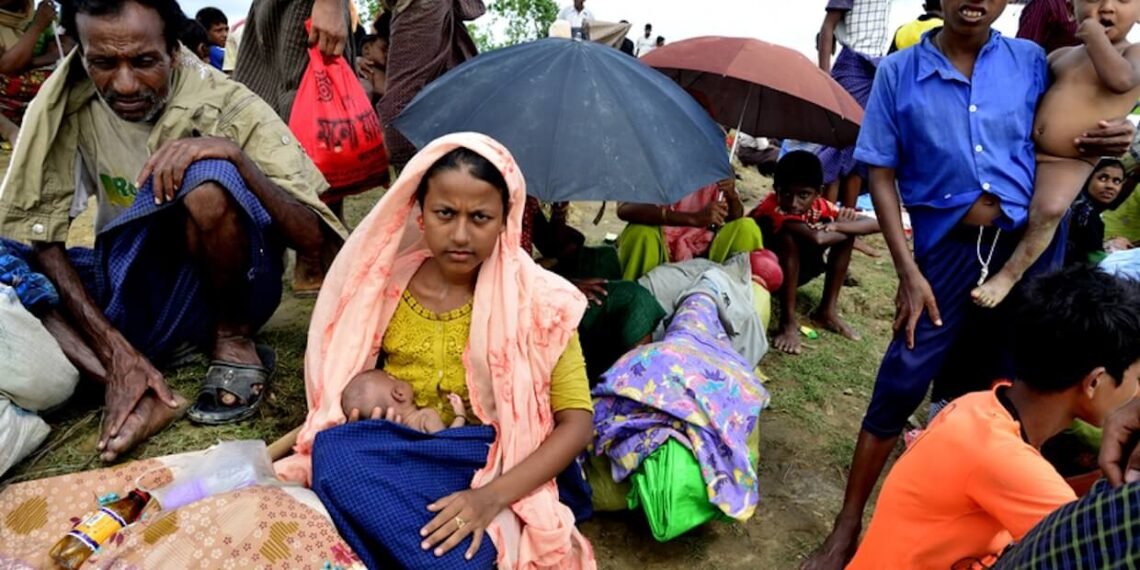
In this reflective Voice of Youth commentary marking Rohingya Genocide Remembrance Day on August 25, PS Ayaas, a young Rohingya writer, activist, and community advocate, examines the enduring relationship between genocide, statelessness, exclusion, and political belonging. Drawing on the Rohingya experience, Ayaas argues that the 2017 violence cannot be separated from decades of citizenship restrictions, majoritarian nationalism, and narratives that constructed a minority population as an alien “other.” He connects this history to broader debates on populism, showing how exclusionary definitions of the “people” can normalize discrimination and undermine democratic protections. Moving beyond remembrance, Ayaas calls for accountability, equal rights, recognized education, sustainable livelihoods, meaningful Rohingya participation, and conditions for voluntary and dignified return. His central message is unequivocal: remembrance must become responsibility, and belonging must never be conditional.
By PS Ayaas
Every August 25, I remember a day that did not end when the gunfire stopped. For Rohingya families, August 25 is not simply a date in history. It is carried in memory: in the stories of parents, in the names of villages, in photographs saved after flight, and in the silence that sometimes follows a question about home. I was still a child when I first understood that leaving home could mean never knowing when, or whether, you would see it again.
Rohingya communities mark August 25 as Genocide Remembrance Day to honor those who were killed, those who survived, and those who continue to live with displacement. But remembrance also asks a harder political question: how did an entire population come to be treated as if it did not belong?
From Violence to Exclusion
The violence of 2017 cannot be understood as an isolated eruption. It emerged from a much longer history of legal, political and social exclusion. Rohingya communities in Myanmar faced restrictions on citizenship, movement, education, marriage and livelihoods long before the mass displacement of 2017.
The UN Independent International Fact-Finding Mission on Myanmar documented the scale and systematic character of abuses committed during the 2017 military operations. It reported that more than 700,000 Rohingya fled to Bangladesh and documented killings, sexual violence and the burning of villages. UN human-rights investigators also recorded patterns of violence and deliberate actions that created fear and drove Rohingya civilians from their homes.
This history matters because genocide does not begin only when the world sees bodies or burning villages. It can be preceded by years of making a population politically disposable: denying people a secure legal identity, portraying them as outsiders, restricting their movement and normalising discrimination.
The 1982 Citizenship Law became a central part of this exclusionary structure. Rohingya were increasingly treated not as a recognised national community but as foreigners in the place many had always called home. The political message was devastatingly simple: you may live here, but you do not fully belong here.
The Politics of “Us” vs “Them”
This is where the Rohingya story becomes relevant to the study of populism. Populist politics often divides society into a morally pure “people” and an allegedly dangerous “other.” The boundaries of the “people” can be constructed through ethnicity, religion, race or nationality. Once a minority is portrayed as an existential demographic, cultural or security threat, exclusion can be presented not as discrimination but as protection.
Myanmar’s experience shows how dangerous this logic can become when it interacts with majoritarian nationalism, state power and organized violence. Anti-Muslim and anti-Rohingya narratives did not remain confined to rhetoric. They helped create an environment in which discrimination could be normalized, and extraordinary violence could be justified.
This does not mean that every aspect of the Rohingya crisis can be explained by populism. Military authoritarianism, ethnic nationalism, citizenship policy, colonial legacies, local conflicts and political economy all matter. But the construction of an “authentic” national community while defining a minority as alien offers an important lens.
The danger is not limited to Myanmar. Across the world, migrants, refugees and minorities can be turned into symbols of national decline or threats to social cohesion. When political actors persuade citizens that rights belong primarily to the “real people” and that minorities are outsiders who deserve fewer protections, democratic institutions become vulnerable. The Rohingya experience is therefore not only a humanitarian story; it is also a warning about what happens when belonging becomes conditional.
Remembering What Statistics Cannot Say
More than 700,000 Rohingya crossed into Bangladesh following the 2017 violence. In 2026, UNHCR reported that around 1.2 million stateless Rohingya remained in Bangladesh. Numbers are essential for policy, but numbers cannot tell us what displacement feels like.
A statistic cannot describe a mother deciding what to carry when a lifetime must fit into a few possessions. It cannot describe a child growing up knowing the name of a village he or she has never seen. It cannot capture the psychological weight of living in a place that is simultaneously a refuge and a reminder that the original home remains inaccessible.
Nine years after the mass displacement, displacement has become a childhood, an adolescence and, for many young Rohingya, almost an entire lifetime. Humanitarian assistance remains essential, but humanitarian assistance alone cannot constitute a political solution. UNHCR reported in 2026 that limited livelihood opportunities left Rohingya refugees heavily dependent on aid.
This creates a dangerous paradox. The international community says that the future should ultimately be sustainable, while policies surrounding displacement can leave young people with too few opportunities to acquire recognized education, build livelihoods or participate meaningfully in decisions affecting their lives.
Home Is More Than a Location
For many Rohingya, return to Myanmar remains the deepest expression of hope. But “return” cannot simply mean crossing a border. A return that leaves people stateless, unsafe, segregated or without freedom of movement would reproduce the conditions that made displacement possible. A sustainable return requires citizenship or an effective legal status guaranteeing equal rights, physical security, freedom of movement, access to education and healthcare, protection of property and meaningful participation in public life.
International law has already placed important obligations on Myanmar. In January 2020, the International Court of Justice (ICJ) ordered provisional measures requiring Myanmar to take measures within its power to prevent acts within the scope of Article II of the Genocide Convention and to preserve evidence. In July 2022, the Court rejected Myanmar’s preliminary objections and confirmed that the case could proceed. The proceedings are not a substitute for political action, but they demonstrate that the Rohingya question is not simply a matter of humanitarian charity. It is also a matter of international law, accountability and rights. The Rohingya should therefore not be asked to choose between justice and return, or between hope and realism. A genuine pathway home must combine both.
A Future Cannot Be Built in a Waiting Room
The greatest danger of protracted displacement is that waiting becomes normal. A child who has spent nine years in a refugee settlement is not living through a temporary interruption. Those years are education, adolescence, friendships and formative memories. A generation can lose opportunities while governments continue to describe its situation as temporary.
Durable solutions must therefore be broader than repatriation alone. First, Rohingya children and young people need meaningful, recognized and continuous education. Second, refugees need safe and lawful opportunities to develop skills and livelihoods rather than being treated as permanently dependent. Third, Rohingya representatives — especially women and young people — must have meaningful roles in discussions about return, protection, education, resettlement and reconstruction.
Third-country pathways should also be discussed honestly where appropriate, without turning resettlement into a substitute for the right to return. Different Rohingya families may have different futures. Some may return when conditions permit; some may pursue resettlement; others may build lives in Bangladesh or elsewhere. A rights-based approach must respect those choices rather than forcing one political solution upon an entire people.
Remembering As Resistance
On August 25, remembrance is more than mourning. It is a refusal to allow political violence to erase political responsibility. To remember is to say that the dead had names. The villages had names. The families had histories. The people who fled were not an anonymous mass. They were citizens, neighbors, students, farmers, teachers, parents and children whose lives were interrupted by violence and exclusion.
It is also to say that the story did not end at the Bangladesh border. The crisis continues in displacement, statelessness, insecurity in Rakhine State, shrinking humanitarian resources and the uncertainty of a generation growing up without a secure relationship to home. Remembrance is therefore a challenge to the international community. If the world recognizes atrocities but allows the political conditions that produced them to remain, remembrance becomes ritual without prevention.
The lesson of August 25 is not simply “never forget.” It is “never normalize.” Do not normalize statelessness. Do not normalize indefinite displacement. Do not normalize political narratives that define minorities as less deserving of rights. Do not normalize a humanitarian crisis that has lasted so long that an entire generation has grown up inside it.
A Future in Which Belonging Is Not Conditional
I still think about home. For my generation, home is sometimes a place we remember through our parents’ stories. It is a landscape inherited through memory. But home should not have to remain only a memory.
The future of the Rohingya should not be decided by the logic that excluded us in the first place. We should not be forced to prove that we deserve to belong. We should not have to choose between dignity and survival.
A meaningful future requires accountability for grave crimes, equal rights, political inclusion, education and livelihoods, and conditions that make return genuinely voluntary, safe, dignified and sustainable. It also requires listening to Rohingya people themselves.
Every August 25, the world is invited to remember what happened. It must do more than remember. It must understand how exclusion was built, how an “other” was created, how violence became possible, and how those patterns can be prevented elsewhere.
Remembrance is the beginning of responsibility. And responsibility means building a future in which no child has to learn that belonging can be taken away.
PS Ayaas is a young Rohingya writer, activist and community advocate based in Cox’s Bazar, Bangladesh. He is the founder of Refugee Wellness Mission, a youth-led initiative supporting community wellbeing, and currently pursuing a Bachelor of Health Science through the University of the People. His writing addresses displacement, statelessness, and the lived experience of the Rohingya community, drawing on volunteer work with organizations including BRAC and Save the Children, and participation in international fellowships focused on human rights, health, and youth empowerment. He speaks English, Bengali, Burmese, Hindi, and Rohingya. His work has previously appeared with the European Center for Populism Studies and Mixed Migration Center. Email: rohingyapubgsquad@gmail.com
August 25: From Remembrance to Responsibility for the Rohingya
In this reflective Voice of Youth commentary marking Rohingya Genocide Remembrance Day on August 25, PS Ayaas, a young Rohingya writer, activist, and community advocate, examines the enduring relationship between genocide, statelessness, exclusion, and political belonging. Drawing on the Rohingya experience, Ayaas argues that the 2017 violence cannot be separated from decades of citizenship restrictions, majoritarian nationalism, and narratives that constructed a minority population as an alien “other.” He connects this history to broader debates on populism, showing how exclusionary definitions of the “people” can normalize discrimination and undermine democratic protections. Moving beyond remembrance, Ayaas calls for accountability, equal rights, recognized education, sustainable livelihoods, meaningful Rohingya participation, and conditions for voluntary and dignified return. His central message is unequivocal: remembrance must become responsibility, and belonging must never be conditional.
By PS Ayaas
Every August 25, I remember a day that did not end when the gunfire stopped. For Rohingya families, August 25 is not simply a date in history. It is carried in memory: in the stories of parents, in the names of villages, in photographs saved after flight, and in the silence that sometimes follows a question about home. I was still a child when I first understood that leaving home could mean never knowing when, or whether, you would see it again.
Rohingya communities mark August 25 as Genocide Remembrance Day to honor those who were killed, those who survived, and those who continue to live with displacement. But remembrance also asks a harder political question: how did an entire population come to be treated as if it did not belong?
From Violence to Exclusion
The violence of 2017 cannot be understood as an isolated eruption. It emerged from a much longer history of legal, political and social exclusion. Rohingya communities in Myanmar faced restrictions on citizenship, movement, education, marriage and livelihoods long before the mass displacement of 2017.
The UN Independent International Fact-Finding Mission on Myanmar documented the scale and systematic character of abuses committed during the 2017 military operations. It reported that more than 700,000 Rohingya fled to Bangladesh and documented killings, sexual violence and the burning of villages. UN human-rights investigators also recorded patterns of violence and deliberate actions that created fear and drove Rohingya civilians from their homes.
This history matters because genocide does not begin only when the world sees bodies or burning villages. It can be preceded by years of making a population politically disposable: denying people a secure legal identity, portraying them as outsiders, restricting their movement and normalising discrimination.
The 1982 Citizenship Law became a central part of this exclusionary structure. Rohingya were increasingly treated not as a recognised national community but as foreigners in the place many had always called home. The political message was devastatingly simple: you may live here, but you do not fully belong here.
The Politics of “Us” vs “Them”
This is where the Rohingya story becomes relevant to the study of populism. Populist politics often divides society into a morally pure “people” and an allegedly dangerous “other.” The boundaries of the “people” can be constructed through ethnicity, religion, race or nationality. Once a minority is portrayed as an existential demographic, cultural or security threat, exclusion can be presented not as discrimination but as protection.
Myanmar’s experience shows how dangerous this logic can become when it interacts with majoritarian nationalism, state power and organized violence. Anti-Muslim and anti-Rohingya narratives did not remain confined to rhetoric. They helped create an environment in which discrimination could be normalized, and extraordinary violence could be justified.
This does not mean that every aspect of the Rohingya crisis can be explained by populism. Military authoritarianism, ethnic nationalism, citizenship policy, colonial legacies, local conflicts and political economy all matter. But the construction of an “authentic” national community while defining a minority as alien offers an important lens.
The danger is not limited to Myanmar. Across the world, migrants, refugees and minorities can be turned into symbols of national decline or threats to social cohesion. When political actors persuade citizens that rights belong primarily to the “real people” and that minorities are outsiders who deserve fewer protections, democratic institutions become vulnerable. The Rohingya experience is therefore not only a humanitarian story; it is also a warning about what happens when belonging becomes conditional.
Remembering What Statistics Cannot Say
More than 700,000 Rohingya crossed into Bangladesh following the 2017 violence. In 2026, UNHCR reported that around 1.2 million stateless Rohingya remained in Bangladesh. Numbers are essential for policy, but numbers cannot tell us what displacement feels like.
A statistic cannot describe a mother deciding what to carry when a lifetime must fit into a few possessions. It cannot describe a child growing up knowing the name of a village he or she has never seen. It cannot capture the psychological weight of living in a place that is simultaneously a refuge and a reminder that the original home remains inaccessible.
Nine years after the mass displacement, displacement has become a childhood, an adolescence and, for many young Rohingya, almost an entire lifetime. Humanitarian assistance remains essential, but humanitarian assistance alone cannot constitute a political solution. UNHCR reported in 2026 that limited livelihood opportunities left Rohingya refugees heavily dependent on aid.
This creates a dangerous paradox. The international community says that the future should ultimately be sustainable, while policies surrounding displacement can leave young people with too few opportunities to acquire recognized education, build livelihoods or participate meaningfully in decisions affecting their lives.
Home Is More Than a Location
For many Rohingya, return to Myanmar remains the deepest expression of hope. But “return” cannot simply mean crossing a border. A return that leaves people stateless, unsafe, segregated or without freedom of movement would reproduce the conditions that made displacement possible. A sustainable return requires citizenship or an effective legal status guaranteeing equal rights, physical security, freedom of movement, access to education and healthcare, protection of property and meaningful participation in public life.
International law has already placed important obligations on Myanmar. In January 2020, the International Court of Justice (ICJ) ordered provisional measures requiring Myanmar to take measures within its power to prevent acts within the scope of Article II of the Genocide Convention and to preserve evidence. In July 2022, the Court rejected Myanmar’s preliminary objections and confirmed that the case could proceed. The proceedings are not a substitute for political action, but they demonstrate that the Rohingya question is not simply a matter of humanitarian charity. It is also a matter of international law, accountability and rights. The Rohingya should therefore not be asked to choose between justice and return, or between hope and realism. A genuine pathway home must combine both.
A Future Cannot Be Built in a Waiting Room
The greatest danger of protracted displacement is that waiting becomes normal. A child who has spent nine years in a refugee settlement is not living through a temporary interruption. Those years are education, adolescence, friendships and formative memories. A generation can lose opportunities while governments continue to describe its situation as temporary.
Durable solutions must therefore be broader than repatriation alone. First, Rohingya children and young people need meaningful, recognized and continuous education. Second, refugees need safe and lawful opportunities to develop skills and livelihoods rather than being treated as permanently dependent. Third, Rohingya representatives — especially women and young people — must have meaningful roles in discussions about return, protection, education, resettlement and reconstruction.
Third-country pathways should also be discussed honestly where appropriate, without turning resettlement into a substitute for the right to return. Different Rohingya families may have different futures. Some may return when conditions permit; some may pursue resettlement; others may build lives in Bangladesh or elsewhere. A rights-based approach must respect those choices rather than forcing one political solution upon an entire people.
Remembering As Resistance
On August 25, remembrance is more than mourning. It is a refusal to allow political violence to erase political responsibility. To remember is to say that the dead had names. The villages had names. The families had histories. The people who fled were not an anonymous mass. They were citizens, neighbors, students, farmers, teachers, parents and children whose lives were interrupted by violence and exclusion.
It is also to say that the story did not end at the Bangladesh border. The crisis continues in displacement, statelessness, insecurity in Rakhine State, shrinking humanitarian resources and the uncertainty of a generation growing up without a secure relationship to home. Remembrance is therefore a challenge to the international community. If the world recognizes atrocities but allows the political conditions that produced them to remain, remembrance becomes ritual without prevention.
The lesson of August 25 is not simply “never forget.” It is “never normalize.” Do not normalize statelessness. Do not normalize indefinite displacement. Do not normalize political narratives that define minorities as less deserving of rights. Do not normalize a humanitarian crisis that has lasted so long that an entire generation has grown up inside it.
A Future in Which Belonging Is Not Conditional
I still think about home. For my generation, home is sometimes a place we remember through our parents’ stories. It is a landscape inherited through memory. But home should not have to remain only a memory.
The future of the Rohingya should not be decided by the logic that excluded us in the first place. We should not be forced to prove that we deserve to belong. We should not have to choose between dignity and survival.
A meaningful future requires accountability for grave crimes, equal rights, political inclusion, education and livelihoods, and conditions that make return genuinely voluntary, safe, dignified and sustainable. It also requires listening to Rohingya people themselves.
Every August 25, the world is invited to remember what happened. It must do more than remember. It must understand how exclusion was built, how an “other” was created, how violence became possible, and how those patterns can be prevented elsewhere.
Remembrance is the beginning of responsibility. And responsibility means building a future in which no child has to learn that belonging can be taken away.
PS Ayaas is a young Rohingya writer, activist and community advocate based in Cox’s Bazar, Bangladesh. He is the founder of Refugee Wellness Mission, a youth-led initiative supporting community wellbeing, and currently pursuing a Bachelor of Health Science through the University of the People. His writing addresses displacement, statelessness, and the lived experience of the Rohingya community, drawing on volunteer work with organizations including BRAC and Save the Children, and participation in international fellowships focused on human rights, health, and youth empowerment. He speaks English, Bengali, Burmese, Hindi, and Rohingya. His work has previously appeared with the European Center for Populism Studies and Mixed Migration Center. Email: rohingyapubgsquad@gmail.com
Latest News
August 25: From Remembrance to Responsibility for the Rohingya
Prof. Gest: The Way Countries Treat Their Most Vulnerable Is Indicative of the State of Their Democracy
Long Read — The Economist versus Acemoglu: Who Will Govern the Next World Order?
Prof. Gest: The Way Countries Treat Their Most Vulnerable Is Indicative of the State of Their Democracy
Look Up, Not Across: How Elites Weaponize Migration as a Distraction from Class Inequality
August 25: From Remembrance to Responsibility for the Rohingya
Prof. Gest: The Way Countries Treat Their Most Vulnerable Is Indicative of the State of Their Democracy
Long Read — The Economist versus Acemoglu: Who Will Govern the Next World Order?
Category
August 25: From Remembrance to Responsibility for the Rohingya
Prof. Gest: The Way Countries Treat Their Most Vulnerable Is Indicative of the State of Their Democracy
Long Read — The Economist versus Acemoglu: Who Will Govern the Next World Order?
Prof. Gest: The Way Countries Treat Their Most Vulnerable Is Indicative of the State of Their Democracy
Look Up, Not Across: How Elites Weaponize Migration as a Distraction from Class Inequality
The Polish Exception: Religiosity and Political Right