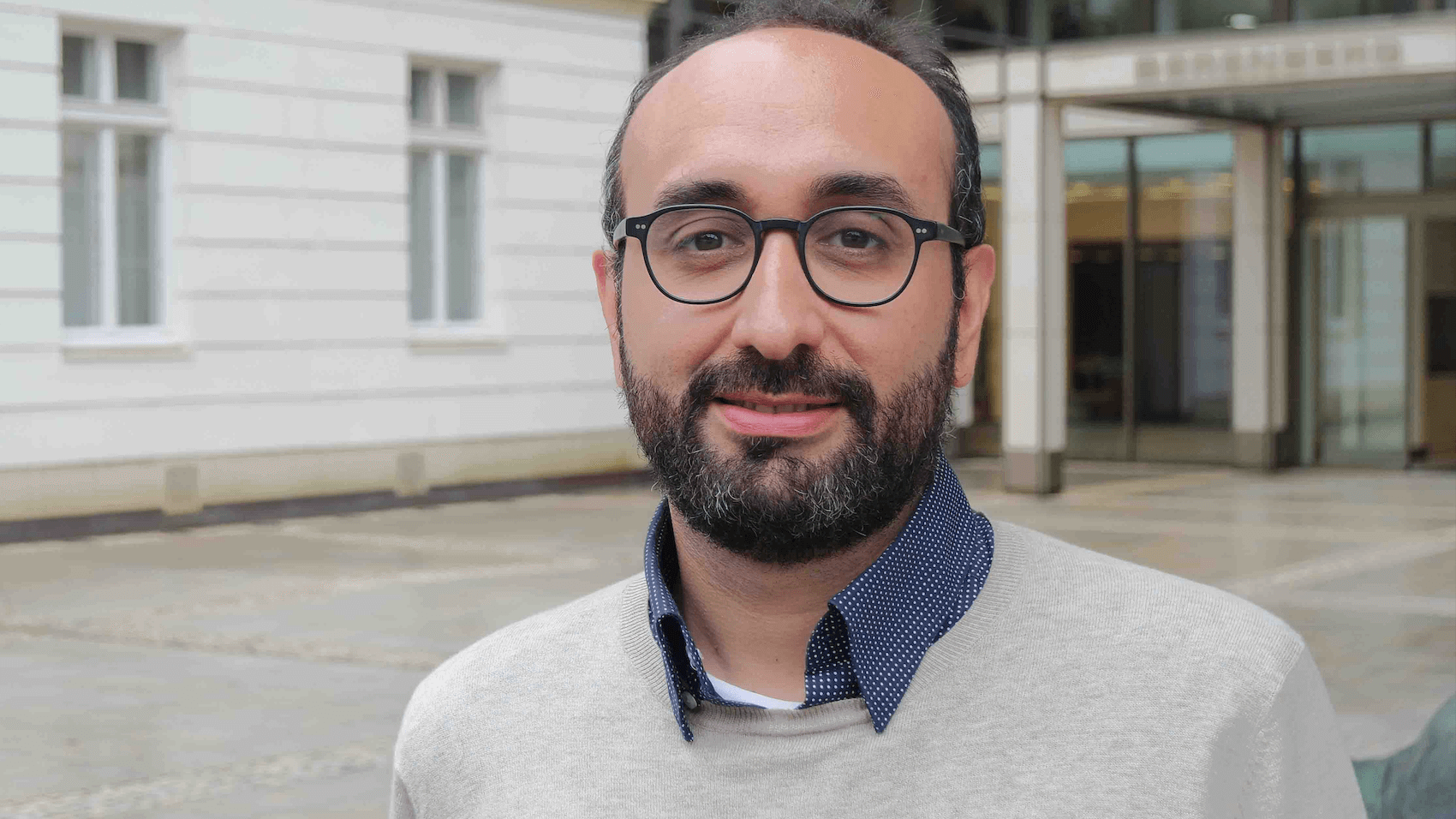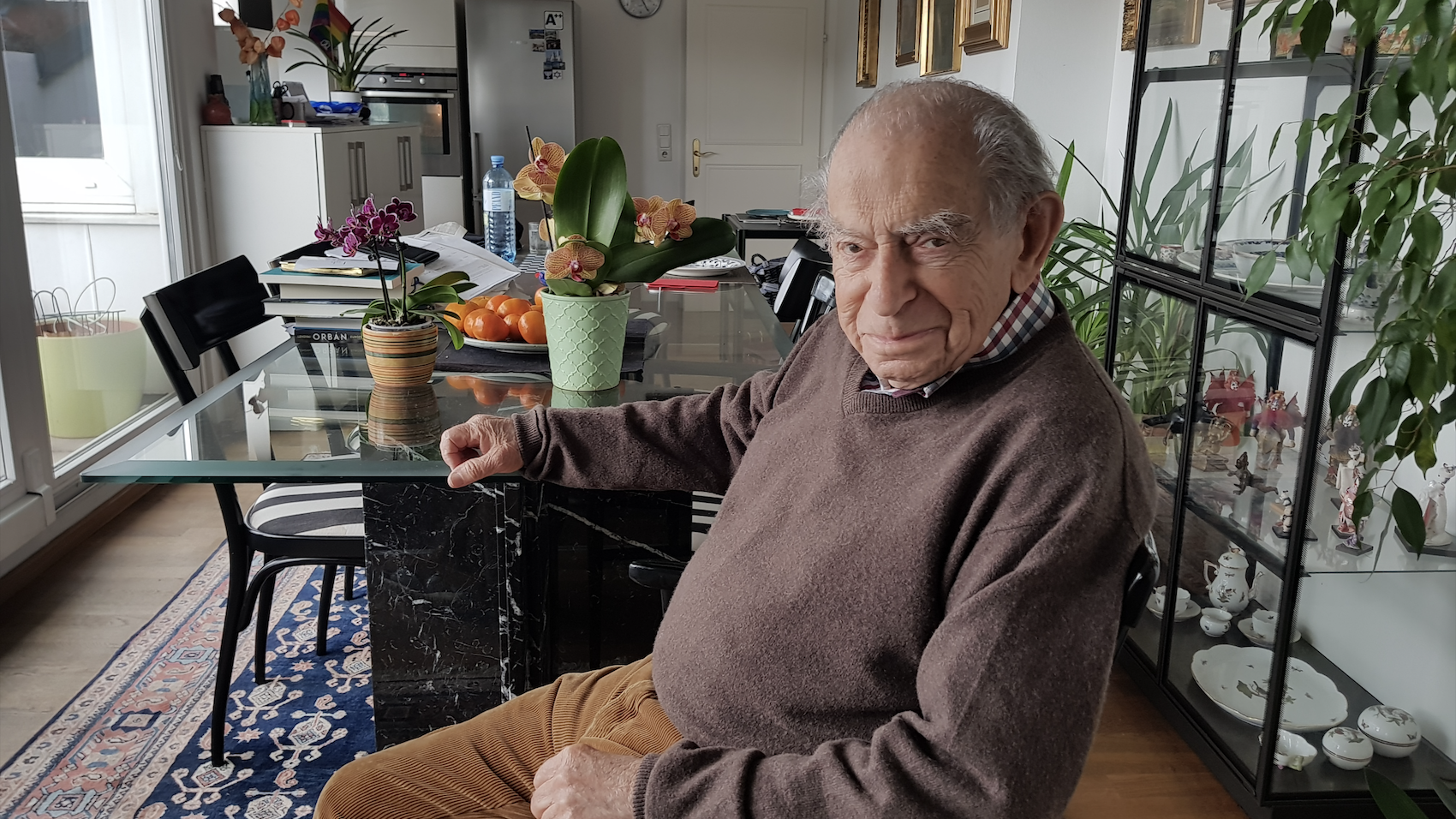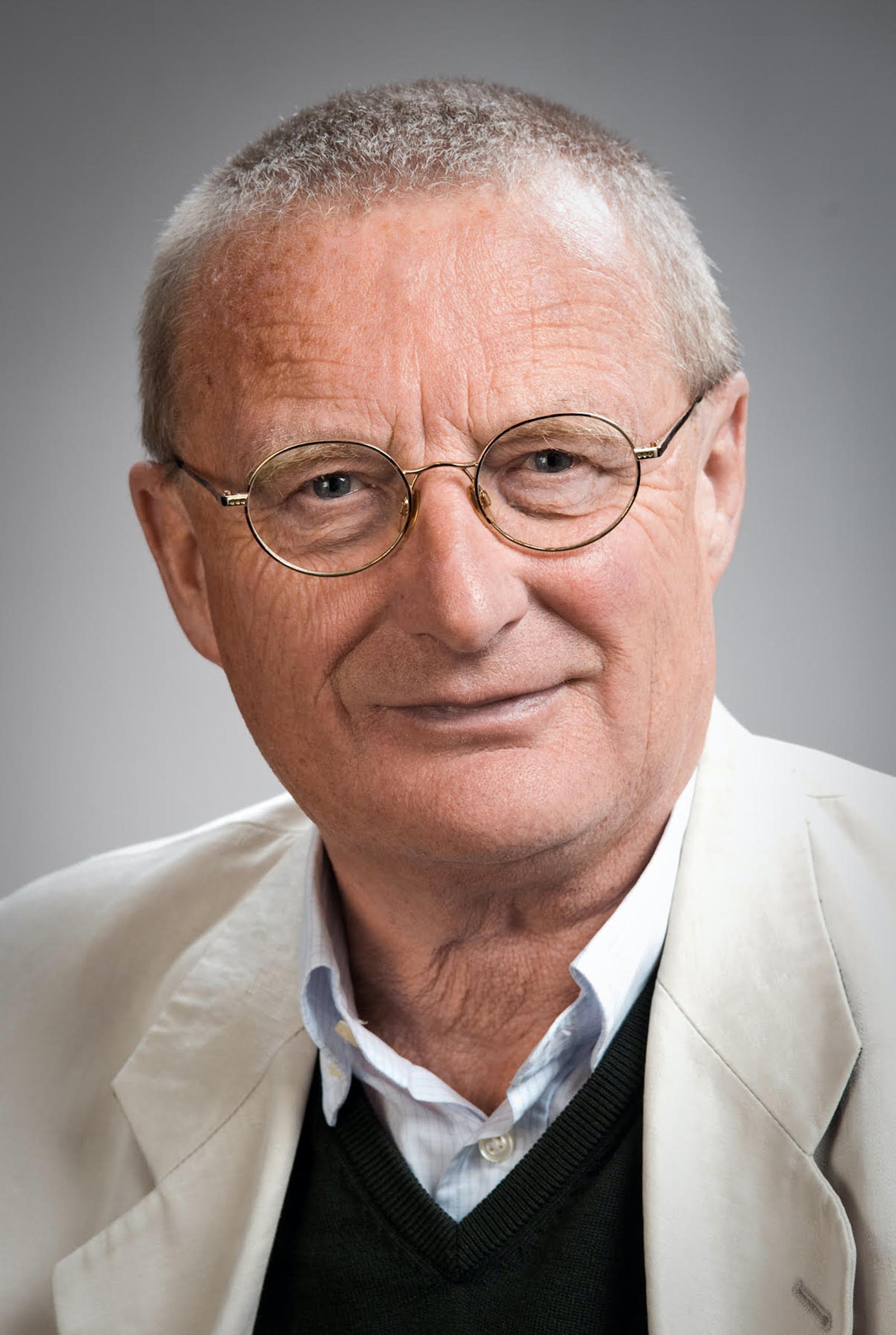
Professor Brian C. J. Singer, a Senior Scholar at Glendon College, York University in Toronto. Photo: Erdem Kaya

Prof. Singer: Populism’s thin ideology renders performative truth

“Populism tends to exploit democracy’s symbolic resources to the point of their possible implosion, potentially resulting in a transition towards either authoritarian forms of political rule or increasing ungovernability, even civil war. This is less likely to happen when the populist movement arises from the bottom up and retains both its internal divisions and a critical distance relative to its leaders.”

Interview by Erdem Kaya

Professor Brian C. J. Singer is a Senior Scholar at Glendon College, York University in Toronto. He is the author of two monographs and numerous scholarly articles and book chapters in both French and English, covering a range of topics in philosophy and social theory, especially French social and political thought.

In this series of interviews on populism, Professor Singer asserts that ideology supposes a relation to truth, as it seeks to justify a given socio-political order and its corresponding power. But to the extent that populism entails a “thin” ideology or, possibly, no ideology, its relation to the truth of external reality can be dramatically diminished. In such a performative truth, one can ignore or oppose the facts when the facts appear contrary to the truths that people claim for themselves. A lightly edited transcript of the conversations follows.

There is much debate in the populism literature as to how to define populism. But you come up with a particular definition that speaks of a loose and symbolic “logic” while drawing on Marcel Gauchet’s argument. Could you clarify how you define populism? 

It is a bit of a fool’s game to seek to define populism empirically, as if one could establish a set of traits that all discourses, movements, and governments must have in order to merit being called “populist.” There is a necessary, minimal definition that opposes “the people” to “the elite” — particularly the political elite. But almost every democratic government (and many that are not properly democratic) claims to govern in the name of the people, and most opposition parties (and even some parties in power) claim to be against an existing political elite. In other words, this minimal definition, however necessary, barely distinguishes populist from non-populist regimes. 

Of course, the claim to oppose the people to an elite can be made more or less adamantly and understood more or less literally. There is, thus, a “populism light” that remains merely rhetorical and a “populism heavy” that promises or threatens much more than just another change in government. Concerning the latter, reference is made to what I would call democracy’s founding “primal scene,” when “the people” overthrew an aristocracy, monarchy or dictatorship, and established a democracy—though here the reenactment of the primal scene would occur within an already existing democracy, however discredited the latter may be. 

It Is a Fool’s Game to Define Populism Empirically

In this sense, such a “populism heavy” appears as a revolution, not of democracy, but within democracy, a revolution achieved by an election, thus a “revolution without a revolution,” but introducing its own torsions. In speaking of this reenactment of a “primal scene,” I am suggesting that populism draws on democracy’s most fundamental symbolic resources, insisting on the rule of the demos, the idea of the people as sovereign, a people whose power is absolute, the source of all legitimate powers. 

In drawing on such symbolic resources, populism can initiate a far-reaching, if loose, symbolic logic, as it seeks to translate the imperatives that result from this appeal to the sovereign people. Who are the people that are being appealed to? Clearly, not people in their empirical diversity, but a people formed discursively with purportedly distinctive traits. And what does it mean to represent such a people when the very existence of political representation threatens to divide the representatives from the represented and thus betray the people? And in the appeal to the people, is one conjuring up a sovereign constitutive power that, no longer held in reserve, is actively opposed to the constituted powers associated with government institutions? To what degree is one seeking to overturn the institutional mediations that seem to distance the people from the immediacy of what is said to be their will? 

When speaking of a loose symbolic logic, one is referring to tendencies to respond to such questions in certain coherent ways. But whether a given “populist” movement or government so responds very much depends on the context and whether that context supports, and how it supports, such tendencies. This is why it is a fool’s game to define populism empirically in accordance with a delimited set of defining characteristics. 

Crowd of people walking on the street of Moscow. Photo: Anton Gvozdikov

To follow up with Gauchet’s work, how do you understand the difference between “the political” and “politics” and with the rise of populism, how do you explain “the revenge of the political” in terms of the socio-historical dimension? 

The distinction between “the political” (le politique) and “politics” (la politique) is used by other thinkers besides Marcel Gauchet, though often with different nuances. “The political” exists in every society, as every society has to, as it were, establish sufficient distance from itself in order to identify itself as a specific society, to describe and reflect on its order, coherence, and values, and to act on itself as a coherent whole. In pre-modern societies, this place at a distance entails a reference to the divinity or divinities, or some cosmic principle—in short, to a heteronomous power that transcends those humans who live in that society. With modern societies, there is a movement towards establishing an autonomous human power—that is, to individual and collective self-determination.  For Gauchet, this movement is away from all figures of transcendence towards a totally disenchanted world.  

In my view, this claim must be qualified. First, because we still speak of, and indeed argue about, values such as justice or truth that speak to the socio-political order not so much as it is, but as we would like it to be—values that, therefore, transcend society as it presently exists. And second, because the reference to a sovereign people, which exists in the singular and is said to have absolute power (at least within its own frontiers), does not refer to an existing, empirical people. The reference is to a power that is simultaneously above and beneath society, both within and without; within in the sense that it is composed of those who live (and sometimes who have lived or will live) in that society; and without both in the sense that, as a power, it is established less by the people than it establishes the people as a people, and in the sense that it still corresponds to the distance from society presented by “the political.” In this regard, the sovereign people can be said to bear an immanent transcendence; it carries more than a whiff of the sacred. 

The term “politics,” in contrast to “the political,” is deemed exclusive to democracies, both because in democracies power, being autonomous, politics occurs largely “within” society, and because, even as it is “within,” it is only one sphere of activity amongst several, each with its own set of institutional mechanisms and norms. It should be noted that often—though less in the case of Gauchet—“politics” is seen, relative to “the political,” as less oriented towards “transcendent” matters, being more concerned with the often rather dirty struggle for positions of power.  

The expression “the revenge of the political” is Gauchet’s. His argument, which is not without merit, is that in the last fifty years, the economic sphere (with neo-liberalism) and the juridical sphere (with the emphasis on charters of rights) has eclipsed the political, seemingly rendering democratic politics increasingly impotent and irrelevant. Populism appears as a reversal of this situation, as the return of politics with a vengeance. Suddenly the stakes of politics have been raised enormously. But the degree to which populist politics then seeks its revenge on neo-liberal economics and individual rights claims is contestable, at least relative to the United States. Donald Trump’s economic policies could be described as “neo-liberalism in one country,” and his supporters refused to wear masks or socially distance themselves in the name of their individual, constitutionally guaranteed freedoms, effectively blocking a political response to the pandemic, with the tragic results that we are all aware of.

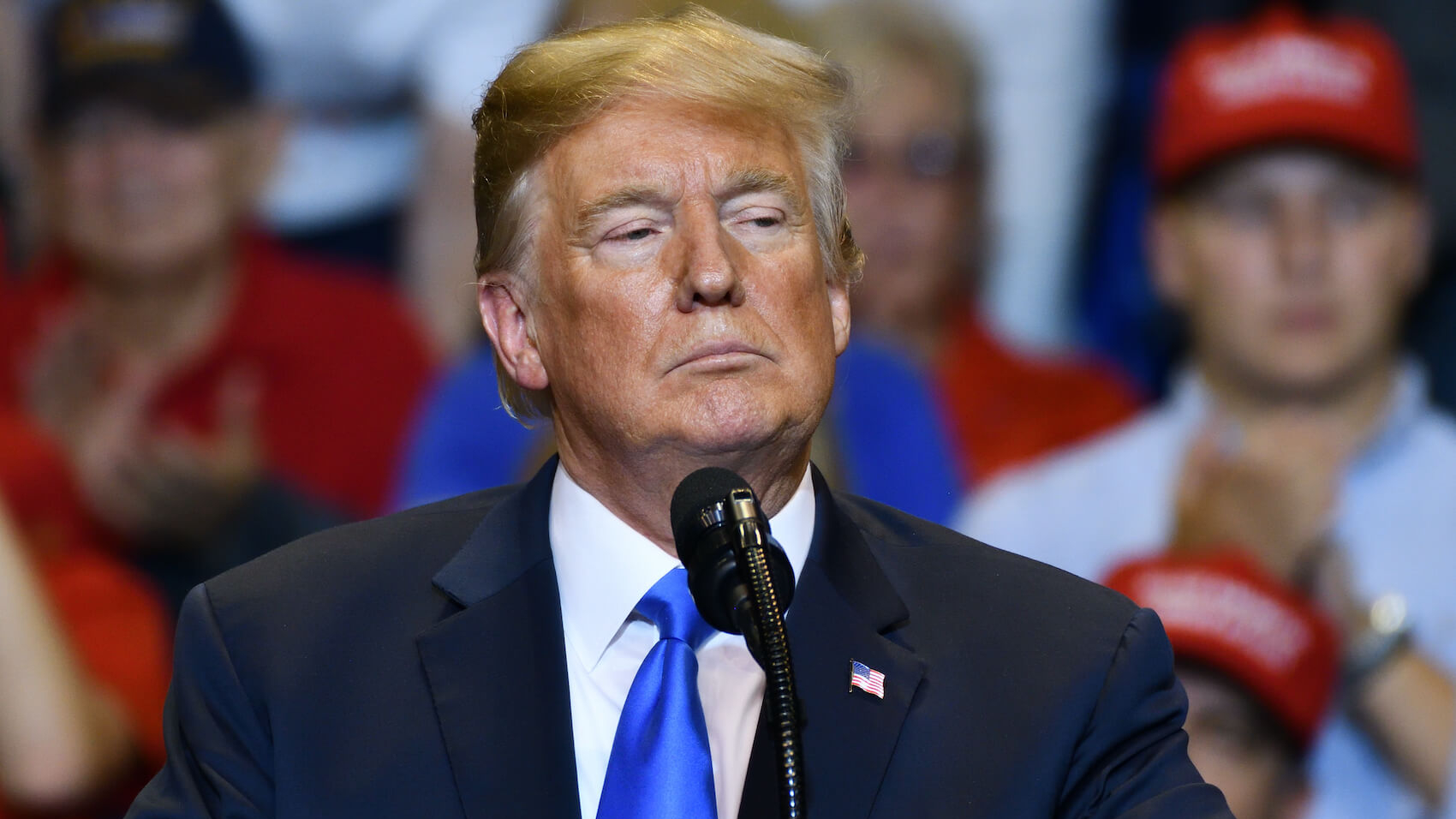
Former US President Donald Trump at rally in support of Kansas Secretary of State Kris Kobach who is the Republican candidate for governor in Topeka Kansas, USA on October 6, 2018. Photo: Mark Reinstein

The Chances of Populism Returning in Even More Brazen Form in the US Are All the Greater

In this respect, what are the characteristics of American populism that distinguish it from the European brand? 

There are three characteristics that I would like to note:

First, right-wing populism in Europe today appears very much a reaction to (in some cases the threat of) increased immigration, particularly from the Islamic world. In American right-wing populism, the opposition to immigration cannot be separated from America’s original racial divide between whites and blacks (and, to a lesser extent, the indigenous population). Trump’s reference to Mexicans as “murderers and rapists” is a perfect example of condensation, these epithets having been used against blacks for centuries.  Thus, in Europe, populism claims to be preserving Europe from a recent external threat. In the United States, where blacks, not to mention the indigenous populations, have existed on American soil before most whites, one faces a problem that is not recent and cannot simply be projected outwards. The “race problem,” with its dynamics of backlash and what Jeffrey Alexander calls “frontlash,” has dogged the United States from its beginnings. This renders the definition of the people at once more contested and more fraught.

Second, the American right has long traditions of anti-government folk libertarianism, which Trumpism has only exacerbated. This is why, to allude to the previous question, right-wing populism in the United States appears opposed to the welfare state, whereas in Europe, notably Eastern Europe, populist parties have expanded the latter, if selectively, to benefit their supporters. And this is why the response to the pandemic was politicized in the United States in the name of the defense of individual liberties. Trump, who, one must remember, is a germaphobe, made a calculation—which was correct in itself but politically disastrous—that his supporters would balk at mask-wearing and social distancing. Right-wing parties in Europe, by contrast, can draw on much more centralist and openly authoritarian traditions. 

And third, the United States has a two-party system. Until recently, populism appeared limited to third parties (e.g., those of George Wallace or Ross Perot), so it seemed unlikely that it would gain political power. But once one of the two parties became populist, its success could be all the more complete, particularly to the extent that it succeeded in dismantling the system of checks and balances. By contrast, in most of Europe (the exceptions being Hungary and Poland), populist parties can hold government positions, but as part of a multi-party coalition, which neutralizes at least some of their influence. Because the United States remains a two-party system, the chances of populism returning, and returning in even more brazen form, are all the greater. 

“Populist discourse often seems to swing between claims to a more direct democracy and a barely disguised representative despotism.”

Regarding Michel Foucault’s “power and knowledge” approach, where the two were almost echoes of each other, you argue in your recent article for a new approach—namely, “separation of power from knowledge.” How does this separation occur? Could you elucidate it a bit more?

In pre-democratic Europe, monarchic power was modeled, if at a distance, on the divine power, which was said to be all-powerful and all-knowing. In this sense, monarchic power did not separate power from knowledge, and as such, was tasked with maintaining truth—at first, the truth of religion and then the suppression of untruths through censorship. The struggle against the latter by the Enlightenment supposed a different understanding of the relation of truth and power: where truth does not have its source in power; where power does not (or should not) regulate the production of truths; and where, at times, truth should speak to (i.e., oppose) power.

When Michel Foucault sought to bring power and knowledge together, it appeared scandalous, another of his anti-Enlightenment moves. But note that he brought them together not in the visible domain of political power but in the relatively concealed domains where power was hidden by expertise and woven into non-political institutional practices.  

For those interested, I have written two articles with Lorna Weir, in which I discuss Foucault’s claims concerning “knowledge/power” with reference to democracy as a symbolic regime (in European Journal of Social Theory, Vol. 9, No. 4, 2006 and Thesis Eleven, No. 94, 2008). In these articles, we argue that the separation of knowledge and power at a political level is not a “screen” covering over what is really happening, but a condition for, but also a limit on, the sorts of things that Foucault examined.

You also indicate that the separation of power and knowledge cannot be absolute. What makes this separation unstable? 

When one claims that the people are sovereign, the claim is that their power is absolute (within the limits of the nation-state), not that their knowledge is absolute. On the other hand, the claim that the people are absolutely separated from knowledge (i.e., that they are congenitally ignorant and irrational) is an anti-democratic trope. Democratic discourse must defend itself by establishing a weak relation between the people and truth, if only in the longer term, by speaking of some notion of moral virtue, common sense, or public opinion, often attached to some pedagogical project.

Even populism claims that the people understand the truth, the truth of who they are, and what is required to preserve their sense of themselves and their well-being. Thus, if the people claim something to be true (e.g., that crime rates are rising despite data demonstrating the contrary), then something must be taken as if true. There is another, more practical reason why the separation cannot be absolute, though it applies not to the people but their representatives. If they are to be at all effective with regard to their ends, the latter must have some knowledge of the environment in which they are acting. Again, even Donald Trump, despite his apparent disdain for much scientific expertise, listens very carefully to one set of experts, those who are versed in the “techne” of winning elections.  The Cambridge Analytica affair, which supposed a sophisticated knowledge of psychological modeling, as well as the digital world, was a demonstration of how far right-wing populism is willing to go in this direction.

Authoritarian Leaders Appear Less Intent on Speaking the Truth

In explaining the fusion of power and knowledge under monarchic regimes, you state that “representation renders present what it represents” to point to how representation itself shapes and gives meaning and form to the real world. So, “what is represented” loses its positive existence, and “representation” becomes the only reference point. Do you think such a fusion of power and knowledge can serve a new modern and secular form of apotheosis of the representative leader? I mean the authoritarian-leaning leaders that remain or expected to remain in power for life with nearly unlimited powers and turn into a kind of savior “god-king” in the eyes of the supporters since they are the ones not necessarily representing divinity like the monarchs of the middle ages but becoming reality itself and speaking “the truth” in spite of the establishment. 

When stating that “representation renders present what it represents,” I have in mind, amongst other things, the concept of sovereignty, including popular sovereignty. The latter does not represent that which already exists independent of its representation; it refers to the people’s symbolic, not its empirical, existence. Thus, it is wrong to think that such representation is exclusive to democracies. But in democracies, if we follow Claude Lefort’s discussion of “the empty place of power,” the political representative can never fully embody the place of power held by the sovereign people.

The question here, however, concerns secular, non-democratic forms of power. In the totalitarian regimes of the twentieth century, the leaders sought a fusion of knowledge and power but had to seek their knowledge in this world, that is, in representations that represent what is present in the real world, in this case, the laws of history, whether given by a “racial science” or by “scientific materialism.” (Xi Jinping in this regard claims a form of such fusion, as his thought is now capitalized and incorporated in the Constitution of the Chinese Communist Party and mentioned in the preamble of the Constitution of the People’s Republic of China).  The problem, of course, is that, in the end, actual events tend to give the lie to the sciences that claimed to know and master them.

Aleksandr Dugin, Russian political analyst, strategist and philosopher, in a press conference in Bucharest in 2017.

It is noteworthy that the populisms of the “post-truth” era appear to oppose science and scientific truths rather than claiming to speak in the name of a superior (pseudo-)science.  Today’s authoritarian leaders appear less intent on speaking the truth, at least relative to an external reality, than one undercutting not just claims concerning reality that they see as threatening—they seek to undercut the very existence of that reality as a horizon of possible knowledge. One thinks of the title of Peter Pomerantsev’s book, Nothing is Real and Everything is Possible: The Surreal Heart of the New Russia. Whether such a strategy is possible in the long term is another matter. Even Putin references, at least for local consumption, the neo-fascist, Aleksandr Dugin, who sought to revive the notion of an “eternal Russia” as the third Rome.

You argue that Ernesto Laclau’s concept of a “constitutive outside” obscures the arbitrariness of the populist representation, and you criticize his singular emphasis on political rhetoric and disregard of populists’ truth claims, such as the definition of the “real people” and “the enemy.” How do you think the representatives’ truth claims shape the relation of the people to the truth?  

The problem is not with Ernesto Laclau’s idea of a “constitutive outside,” which implies that the meaning of a term is given by its relations with other terms. And Laclau is quite aware that a “constitutive outside” introduces a degree of arbitrariness in a term’s meaning, as the latter changes with a change in that outside. The problem is that the “constitutive outside” is understood in terms of simplified semiotics based on binary oppositions, such that the “constitutive outside” appears opposed, and thus as a threat, to the “constituted inside.” In other words, the sense of “the people” is defined by its enemies, and if one wants to change that sense, one can find new enemies. What Laclau does not state is that when the “inside” is constituted by its enemies, the sense of the “inside” hardens and thus loses its arbitrariness, at least in appearance.  

A more complex semiotics would understand meaning as given “diacritically,” but that implies only a web of differential terms. Canadians define themselves as “not-Americans” without seeing Americans as their enemies. At the same time, Canadians see themselves relative to other peoples, as well as in relation to values that they are supposed to have, geo-historical adaptations they are supposed to have made, traditions they are supposed to keep, and so on. It is all really quite complex, fluid, and subject to constant questioning and revision. Of course, if Canadians were single-mindedly focused on an enemy, as in times of war, the sense of being Canadian would be simplified, not to say rigidified, and all questioning would be discouraged. Populism often entails a focus on an enemy for precisely these reasons. 

For Laclau, politics is about the formation of a people, that is, the formation of its identity as a people, and in the manner just criticized. In truth, most of the time, politics is not about the identity of a people but about different policy options. Most Canadian elections are not about who we are as Canadians, certainly not directly. Politics is only about the identity of a people when that identity is (or is made to appear) under threat and cannot, therefore, be backgrounded. In seeking to foreground the appeal to the people, to its identity as a people, populism often exploits such a sense of threat.  

“Populism often claims an identity between the people and their representatives, but a complete identity would render one of the two terms redundant, either the representatives (as the people could speak directly) or the people (as the voice of the representatives would be the more than adequate substitute for the voices of the people).” 

Still, Populism Is Not Able to Entirely Fill the Place of Power

In this context, could you also clarify how we should understand the interplay between “the empty place of power” and the populist claim of appealing to the people? 

When Lefort claimed that democracy implies an “empty place of power,” he meant that those who held power, the powerholders, held it only under the sufferance of the people who may well decide in an election to “throw the bastards out.” Suppose the people, as the sovereign, can be said to hold the ultimate power. In that case, the representation of their power is necessarily uncertain, as the people and the will of the people are “introuvable” and “immaîtrisable”—that is, they can never really be determined (both because it is divided and changeable) and thus can never be mastered. 

Brazil President Jair Bolsonaro poses with anti riot police agents after cast their ballot in Rio de Janeiro on Nov. 29, 2020.

The loose symbolic logic of populism seeks to reduce the emptiness of the place of power without, I would argue, being able to fill it entirely. This requires two moves. First, a move to lessen the indetermination of the people, such that the identity of the people, its purported character, appears more determinate. This often entails a rhetorical division of the people into those who are the real, genuine, or authentic people and those who are not. The second movement concerns the reduction of the division between the people’s representatives and the people themselves. Populism often claims an identity between the people and their representatives. However, a complete identity would render one of the two terms redundant, either the representatives (as the people could speak directly) or the people (as the voice of the representatives would be the more than adequate substitute for the voices of the people).

Thus, populist discourse often seems to swing between claims to a more direct democracy and a barely disguised representative despotism. And when a populist movement is clearly identified with its leader, there is a tendency to suppress divisions, not just between the representatives and the represented, but divisions within the representatives and within the people—divisions that ensure the “openness” that is characteristic of a functioning democracy. Still, populism cannot entirely fill the place of power, at least in so far as the populist leader can still be overturned in an election and cannot embody the will of the divine, the principles of truth or justice, the laws of history, and so on. 

Then it comes to the question of the relationship between populism and post-truth politics?

Populism has been described as having a “thin ideology.” Beyond the claim that there is a crisis of political representation, which opposes the people to their political (and other) elites, the definition of populism requires no other content. Of course, any given populist movement may borrow an ideology (Chavez in Venezuela borrowed from socialist ideology, Bolsonaro in Brazil draws from the ideology of the military dictatorship of the late sixties and seventies). Ideology supposes a relation to truth, the truth of an external reality, though one whose relation is distorted, as ideology seeks to justify a given socio-political order and its corresponding power. 

But to the extent that populism entails a “thin” ideology or, possibly, no ideology, its relation to the truth of external reality can be dramatically diminished. For the only truth with which it is concerned is that of its appeal to the people, to its sense of identity, and to the symbolic wounds that nourish this sense of identity. And such an appeal can be powerful in a very literal sense, for it conjures up the sovereign, the power at the base of all power. Now, note that this appeal “renders present what it represents,” that is, it presents its own truth, at least to the extent that it resonates with those to whom it appeals—such resonance being precisely the measure of its veracity. In effect, one is dealing with a performative truth, one that can ignore or oppose the facts when the latter appears contrary to the truths that this people claims for itself. Indeed, given the fragility of the identity of the people, opposing the facts that threaten it cannot but appear to strengthen its truth claim.

Having said this is a form of “post-truth politics,” how can democratic societies fight against conspiracy theories that, as you stated, present the world as totally opaque but potentially totally transparent? 

There is a sense in which one cannot fight against conspiracy theories, particularly what Muirhead and Rosenblum (in A Lot of People are Saying: The New Conspiracism and the Assault on Democracy) characterize as contemporary conspiracist theories, which thrive on mere assertion and repetition — these theories too are, in a sense, performative. One cannot argue with claims that, by virtue of their refusal, both facts and any logical criteria cannot be disproved. And attempts at the regulation of social media and the public sphere more generally, however desirable, will have only limited effects and can potentially be quite dangerous. 

More promising, at least in the middle to long term, would be efforts to improve civic education (thus providing greater political literacy regarding democratic institutions, their strengths, but also their weaknesses). And such education should examine how to judge the validity of an argument, realizing that arguments can be more or less true and some conspiracies are genuine. Still, the problem with contemporary conspiracism is not primarily epistemological but “psycho-social.” In this respect, there are certain things that one should not do, such as rub salt in the symbolic wounds. Attempting to demonstrate to people that they are deluded, ignorant, immoral, racist, etc., is liable only to cause them to double down, as such demonstration only threatens an already embattled and fragile sense of self. In truth, conspiracy theories bear on a more general topic. 

Claude Lefort spoke of democracy as dissolving the markers of certitude. Sometimes and for some people, the degree of uncertainty appears, or is made to appear, unbearable, particularly when things are not just going one’s way, but when they no longer appear to make sense, leaving one feeling totally alienated and disoriented—“a stranger in one’s own land.” This is when matters appear totally opaque, and one reaches for the magic formula that would render them entirely transparent. A functioning democracy is one that enables and, indeed, teaches people to live with a certain level of uncertainty. This, however, supposes that they also live with a level of certainty sufficient to allow them to believe that they can work and struggle for a better future. 

“At the level of political form, populism tends to exploit democracy’s symbolic resources to the point of their possible implosion, potentially resulting in a transition towards either authoritarian forms of political rule or increasing ungovernability, even civil war.” 

Is it correct to demonize populism at all? Isn’t there any argument that populist movements truly raise? For instance, almost all populist movements claim to speak on behalf of “the people” rather than “ruling elites” and “bureaucrats,” as this argument intrigues the masses. And the record of ruling elites so far is not so promising all around the world. 

Populism supposes a crisis in political representation, which often reflects a larger, “organic crisis.” In this respect, it is a response to a failure, or a perceived failure, of the ruling elites and their policies. Populism today, both in its right and left-wing versions, is generally a response to the failures of neoliberalism and globalization. Of course, a response can be progressive or regressive. Here, I believe, one must distinguish between political content (the different policy options) and political form (which plays at the level of what I am terming “loose symbolic logics”).  

Bolivian president Evo Morales participates in the traditional Aymara New Year ceremony in Tiwanaku, Bolivia on June 21, 2019. Photo: Radoslaw Czajkowski

As populism is “thin,” it can deploy very different political contents, some of which may be progressive. The People’s Party in late nineteenth-century America prepared the way for the Progressivism of the early twentieth century; the classical Latin American populism of Peron in Argentina and Vargas in Brazil, but also of Morales and MAS in Bolivia (to take a more contemporary example) certainly improved on the oligarchical regimes that preceded them.

My argument is that, at the level of political form, populism tends to exploit democracy’s symbolic resources to the point of their possible implosion, potentially resulting in a transition towards either authoritarian forms of political rule or increasing ungovernability, even civil war. This is less likely to happen when the populist movement arises from the bottom up and retains both its internal divisions and a critical distance relative to its leaders. Such was the case with the original People’s Party and, it would seem, Bolivia’s MAS, assuming it succeeds in sidelining Evo Morales. 

“We are living in a period where the future appears in crisis.  Contemporary right-wing populist movements play on this, presenting a vague reference to a better past, with few concrete policies to confront the problems posed by the future as, to quote Hartmut Rosa, conservatives no longer believe in conservation, liberals in progress, and the left in the Revolution.”

There Are Convincing Ways to Fight Populism

A handful of scholars and a small number of NGOs that favor a free world strive to fight against rising populism despairingly. Their outreach efforts do not appear to resonate among the masses since populist movements are discrediting “elites.” Do you think a convincing way to fight populism exists?

There are, to be sure, convincing ways to fight populism, as evidenced by the fact that populist movements and governments often suffer defeat, most recently in the United States. Here I would emphasize two points. First, one needs to struggle to maintain the integrity of democratic institutions. Donald Trump’s attempt to overturn the results of the last election only failed because members of the Republican Party in key states and key positions chose to defend democracy as a set of rules and processes over the wishes of their party’s leaders. These people are presently being purged, even as the parties in Republican states are seeking to change the rules of democratic functioning. This is extremely worrying. At the same time, I realize that elections are generally not won at the level of the defense of seemingly arcane democratic norms.  

Second, one must acknowledge the failures that led to the rise of populism while offering alternative and ultimately more credible solutions. This often requires a critique of earlier policies and of those who advocated them; it may entail the rise of new parties or at least a considerable circulation of elites. We are living in a period where the future appears in crisis. Contemporary right-wing populist movements play on this, presenting a vague reference to a better past, with few concrete policies to confront the problems posed by the future as, to quote Hartmut Rosa, conservatives no longer believe in conservation, liberals in progress, and the left in the Revolution.  

Trumpism, in particular, seems to present itself as a sort of survivalism (both individual and collective) in the face of an increasingly dangerous world. The alternative must reconstruct a vision of a future, a better future, one that brings us together. The alternative must also reconstruct the institutions that enable us to feel not just that the future is being reconstructed but that we can actively contribute to that reconstruction.

You argue that the division in knowledge—I mean the differences between the “instrumental” knowledge of the representatives of people and the “substantive” knowledge held by the people—is a potential point of vulnerability for populists. What do you think is the best way to widen and make use of this division in knowledge for the fight against populism?

Nobody likes to feel that they have been hoodwinked, particularly by politicians. But some have invested more in the con than others and will find it easier to divest themselves of its more fantastic elements (which they never really believed in). However, they may still remain with the party because everyone they know identifies with the party, and they hate the alternative.

On the other hand, for those who reveled in—and felt empowered by—the con, it takes a particular inner strength to admit one was blind to what was going on. In this regard, what is happening to the right-wing militias in the aftermath of the invasion of the Capitol on January 6, 2021, is illuminating. Clearly, many now feel that they have been duped: the fantasies of QAnon proved to be just that, fantasies; the politicians in whose names they felt were acting ultimately condemned them, however ambivalently; they now feel exposed to the “deep state’s” retribution; and in the case of the Proud Boys, there are doubts about the loyalty of their leader.

As a result, some are clearly drifting away, and one can imagine that a few of these will find careers as “deprogrammers” of hate groups. However, some are reinvesting themselves in the same sorts of narratives, but without, as it were, the semblance of an official stamp of approval. In other words, they are fragmenting, moving further underground, and dreaming ever more desperately of the Great Reckoning. One can use this division in knowledge between instrumental and “substantive” forms—and between the representatives and whom they represent—to fight populism, but the results will not always be happy.

Who Is Brian C.J. Singer?

Professor Brian C. J. Singer is a Senior Scholar at Glendon College, York University in Toronto. He is the author of several books and of numerous book chapters and articles. Singer’s first book, Society, Theory and the French Revolution(1986), presents a fascinating reading of the period of the French Revolution (1789 –94) that sheds new light on the revolutionary imaginary of the period and its heritage. His most recent book, Montesquieu and the Discovery of the Social(2013) offers a new reading of Montesquieu’s The Spirit of the Laws. It uncovers the multiple ways “the world’s first social theorist” defined and used “the social” and the important implications of Montesquieu’s work for our own time. This interview mentions an article of his that recently appeared in Thesis Eleven on March 9, 2021.

Celebration of the Labour Day in Prague, Czech Republic on May 1, 2017. Banner is illustrating democracy as a leaf bitten by caterpillars with names: Putin, Kaczynski, Orban, Babis, Trump, Fico. Photo: Jolanta Wojcicka

Prof. Heinisch: The end of liberal democracies is possible

Prof. Reinhard Heinisch has predicted we will likely see more illiberal democracies, which build from the top down, as in Hungary, or populist democracies, which are built from the bottom up. He has underlined that the institutions in Western Europe and the United States are strong against the populist onslaught; however, the rest of the world is prone to populism’s dangers.

Interview by Selcuk Gultasli

One of the leading experts on populism, Prof. Reinhard Heinisch, of Salzburg University, has argued that the end of liberal democracies—or the dawn of illiberal democracies—is possible. Prof. Heinisch has predicted we will likely see more illiberal democracies, which build from the top down, as in Hungary, or populist democracies, which are built from the bottom up. Heinisch has underlined that the institutions in Western Europe and the United States are strong against the populist onslaught; however, the rest of the world is prone to populism’s dangers. “Outside Western Europe and North America, where these institutions are less well entrenched, we have seen the biggest backsliding in the quality of democracy,” he said. Prof. Heinisch also criticized European Union (EU) for not taking necessary measures in a timely manner.

The following are excerpts from our interview with Prof. Heinisch.

Why do you think Austria has been the cradle of populist and far-right parties? Is it about culture, politics, or what? 

There were two main factors: to recover from civil strife and WWII, Austria created the ultimate consensus democracy—to the point that elaborate power sharing mechanisms between the two major parties, the Social Democrats and Christian Democrats, dominated national politics for over 40 years. Their complete control of all political institutions—and even civil society—resulted in power cartelization, influence peddling, and political nepotism. This, in turn, provided the initial raison d’être for the radical-right Freedom Party to style itself as an anti-system, protest party fighting corruption.

The second factor is sociocultural: The forebearers of today’s Austrians considered themselves largely German. The experience of Nazism—and the need to distance the country from its German past—left Austrians with a highly ambivalent and insecure national identity. Often local customs, lifestyle, and widely shared sensibilities serve as superficial substitutes for a deeper understanding of what it is to be Austrian. To be a “real” Austrian often just means to like and do certain things and not others or to look and behave a certain way. Cultural outsiders and immigrants challenge these ideas and force Austrians to confront their own ambivalent identity. Political operators can effectively appeal to this sense of cultural insecurity by claiming that Austrian culture is under threat. Austrians also have a selective view of their past, often glamorizing the imperial legacy but exorcising the darker chapters. External criticism has in the past led to a rally around the flag that was exploited by populists. 

In your article with Fared Hafez, you argue that right-wing populism has changed Austria’s political approach to Islam. In what ways did these changes occur? Can you please elaborate?

Austria had very tolerant and liberal political approach to Islam going back many decades. While this was in part a consequence of Austria not having a [large] Muslim population, this also did not change once the share of guestworkers and immigrants, especially from Turkey and the former Yugoslavia, substantially increased the population. Also, a number of terrorist attacks in and around Austria carried out by Middle Eastern commandos in the 70s and 80s never resulted in a discussion about Islam. Even after 9-11, this was essentially not the case. Only the radical-right populist Freedom Party (FPÖ) mobilized against Islam in the 1990s, opposing the construction of mosques and minarets, raising the issue of headscarves and foreign imams, and constantly associating Muslims with terrorism and the subversion of Christian civilization. Gradually this language was picked up—especially by the Christian Democrats, who adopted an anti-Islamic discourse and aim to pass new legislation directed against what they call “political Islam.” Under Chancellor Sebastian Kurz, the Christian Democrats moved substantially to the right in an effort to steal voters away from the Freedom Party.

Islam has been one of Austria’s official religions since 1912, yet it is so alien. What is the correlation between the rise of populism and Islamophobia?

Islam is the third largest religion in Austria, ahead of Protestantism, and the fastest growing. In Vienna’s largest district, the name Mohammed was the most popular name for a baby-boy in 2020. In general, the Austrian [Muslims] population has grown substantially in recent decades (by about 20%) resulting in sizable increases of both foreign residents (18.5%) and Austrians with an immigrant background—for Vienna, this percentage is 34%. 

Activists of the identitarian movement Austria block the access-road to the border from Hungary to Austria at Nickelsdorf on October 17, 2015. Photo: Johanna Poetsch

Immigration and asylum also mean increases in the Muslim population, which is now 8% of the total population but highly concentrated in certain areas. At the same time, we have seen a general decline of traditional Austrian religions, which has prompted traditionalists and the radical right to frame the issue of immigration and asylum as a battle for national identity and culture. The extent to which populism is an ideology framing politics as an antagonism between corrupt elites and dangerous outsiders on one hand and the virtuous people of the heartland on the other, allows populists to score political points by portraying Muslims as the “cultural other” who pose a threat to the “heartland,” whose identity and way of life is in need of defending. Immigrants—especially from outside Europe–are the most palpable sign of global change in everyday life and can be easily framed as a danger and scapegoated by populists, whether in Austria or in the US of Donald Trump.

Francis Fukuyama in his famous article The End of the History claimed that liberal democracy had won, and it [liberal democracy] would spread all over the world. Yet today we see a surge of populism and populist parties. What went wrong? Why are illiberal democracies gaining ground, in particular in Central Europe?

Like all complex developments, this one is multicausal and represents a confluence of developments. First and foremost, there is a loss of political legitimacy of established institutions and parties who have committed failures of representation. A growing number of people have the sense that vital decisions affecting their daily lives are made by unaccountable elites in far off capitals, in opaque international institutions and trade organizations, in Brussels or some boardroom. These policies may in and of themselves be efficient, rational, and in the long-run economically beneficial, but for countless people the consequences are disruptive, divisive, and feel at best technocratic. 

Second, globalization and the spread of sociocultural liberalism resulted in traditionalist and parochial backlashes. We may not necessarily agree with Huntington’s Clash of Civilizations, but most of us clearly underestimated the ability of political actors to mobilize on the basis of identity and construct identity narratives. 

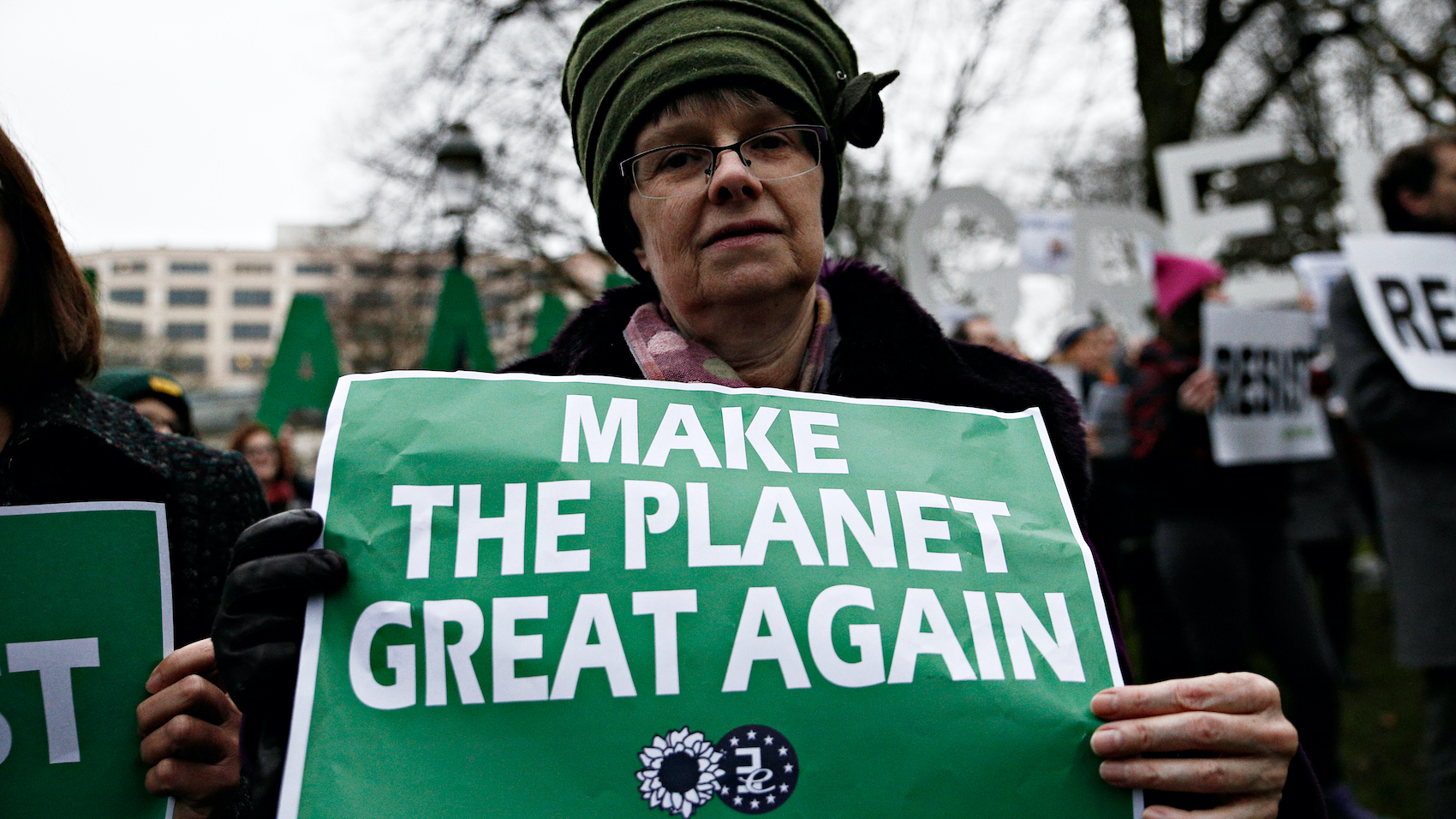
The third cause is technical in the sense that new forms of electronic communication and the internet have resulted not only in competition at a global level but also in raising both expectations and fears. Whereas the former may induce merely discontentment or a willingness to migrate, the other breeds resentment. In times of change that induce distress and pressures to adjust, people crave stability and a return to the status quo. This is when authoritarians and populists can excel by promising order and thus a modicum of protection and safety. Populists are change agents who promise that in the future, the present will be more like the past, a familiar place where the community was whole, and everyone had their place—Make America Great AGAIN. In Eastern Europe, the return to a rose-coloured past is precluded by the negative historical experience, so populists construct an imagined and idealized national destiny, be this a hyper Catholic Poland or an ultraconservative and authoritarian Hungary that has moved past its Trianon trauma.

The integration of economies and the creation of large markets created new forms of competition and winner and losers…

Yes, this is an important aspect in global or integrated markets: the economic winners can uncouple themselves from the local economic losers. As a result, the experience of two groups within the same political system become detached from each other. In Austria, wages—especially of male workers in certain blue-collar jobs—have experienced significant stagnation. As such, they [blue-collar male workers] become susceptible to populist politicians scapegoating immigrants and purportedly uncaring elites. In Austria, the radical-right, populist Freedom Party has been the dominant blue-collar party going back to the late 1990s.

Looking at the huge surge of populist leaders all over the world, shall we start talking about “the end of liberal democracy” and the “dawning of illiberal ones”?

I think both are possible, and we are likely to see further increases either in illiberal democracy from the top (cf. Hungary) or populist democracy from below (unchecked majoritarian dictates through clever mass mobilization). However, as we saw in the US and also in Austria when populists were in government (2017-19), in long established democracies, institutions are quite durable and sticky. Despite Trump’s best efforts, he was unable to bend election officials, the courts, and the media to his wishes. It is the institutions of liberal democracies and the roles of individuals therein that give me confidence in the durability of democracy. Outside Western Europe and North America, where these institutions are less well entrenched, we have seen the biggest backsliding in the quality of democracy. 

Facing a huge boom of populism, do you think the European Union has taken necessary steps to counter it? Fidesz has left the EPP only yesterday!

Clearly no! Democratic institutions are not set up to fight democratically supported parties and groups operating from within democracy. This is what makes populism both so effective and dangerous in that it plays within the rules of democracy. Populists are responsive but not responsible actors; however, democracy generally rewards responsiveness more than responsible action. The EU especially often acts responsibly by being measured, deliberate, and bringing in diverse interests but this is precisely what gives it a bad reputation in the eyes of those who see only their own interests, favour quick but simple solutions and focus on headlines and messages.

In the cases of Hungary and Poland, there was a clear failure of imagination on the part of the EU. Brussels and the member states would have had to take actions much sooner and much more decisively. They would have had to imagine effective mechanisms that work even if more than one-member state decides not to play by the rules and that result in automatically suspending the offending member countries. Unfortunately, the ill-conceived action by EU member states against Austria in 2000 because of its inclusion of the radical right in the government backfired badly and spooked the EU later, when forceful action would have been warranted.

Nested dolls depicting world autocrats Vladimir Putin, Donald Trump and Recep Erdogan on the counter of souvenirs in Moscow

Populists usually and inevitably fail because they do not know how to govern. However, there are some populist leaders—like Erdogan, Orban, and Putin—who have kept power for a long time. How can their long stay in power be explained

This thesis of success in opposition and failure in government, which is the title of my most frequently cited article, needs to be qualified. There is something in the DNA of populists that makes them a poor match for running governments because populists are fundamentally voter-seeking in their strategy; thus, their operation and organization, their candidate selection and campaigning, is geared toward maximizing votes. This means they simplify and overpromise and ignore policy talent and policy expertise in favour of popularity and charisma. This catches up with them in government.

However, this is mainly a problem when populists need to interact in government with non-populists, such as in coalitions with mainstream parties (Austria, the Netherlands, Denmark, Norway, etc.) or with strong democratic institutions (the US). There, populists either fail or are sufficiently tamed/mainstreamed that they have little lasting effect. However, where they end up in complete control of government and where institutions are weak, they are able to dominate the discourse and reframe the issues, engage in conspiracy theories, and explain away their own failures as the result of the machinations of “fake news media” (Trump) and “corrupt elites” (think of Orban’s campaign against George Soros). This is why successful populists try to change the rules (election laws, the constitution, the composition of high courts) to give themselves more control. Orban, Kaczynski, Erdogan, and Putin are each in their own way good examples. Trump was trying hard to do likewise but failed this time.

What will replace eventually failed authoritarian populists? Liberal democracies or harder dictatorships?

This is hard to say. Social scientists are not good at predicting the future as we do not have hard data on what will come next. Even successful authoritarians such as Erdogan, Putin, or Orban differ from a more totalitarian system like China in that power in the former is highly personalized. Take the person out, what happens? These are all not young men (Trump included). While the formula for power is clear, it is still not easily transferrable because in each case leaders also require personal attributes that make them successful—successful populist leaders were each able to convert certain personal abilities and strengths into political power, and they will each leave a certain vacuum that may result in wars of the Diadochi. Venezuela, with the transfer of power from Chavez to Maduro, is the most successful example. Personalized power that is neither dynastic nor based on a police-state like structure is hard to preserve when leadership changes. We would expect that after the leader’s demise, these systems will revert to flawed liberal democracies prone to seeking populist answers to political problems when needed, so that at some point the cycle may start again.

Are there any tested successful ways to fight against populist leaders and populist movements? Will they keep gaining ground? 

As argued above, my answer revolves around liberal institutions. I know this is unpopular, because these days it is all about grassroots activism and mobilization against political evils, and people often do not trust institutions. But my concern is that mobilization can go in different directions, and, of late, we have seen a lot of mobilization against Coronavirus measures where neo-Nazis, populists, people waving rainbow flags, and leftists were all marching in lockstep. Conspiracy theories come in all stripes, and people who are convinced that they are right and need to do what they need to do to save the planet or save something will ride roughshod over those standing in their way. Strengthening liberal institutions is an important antidote by providing sufficient funding for courts, prosecutors, and the justice system, for shoring up media independence and investigative platforms, for training civil servants, for supporting NGOs and watchdog groups, for strengthening parliaments to increase staff and boost the policy expertise of MPs, to fortify election systems and enhance the democratic accountability of social media platforms. Politically, we know that a so-called cordon sanitaire—that is the ostracization of populist actors—has worked to weaken their policy influence (e.g., the Vlaams Belang in Belgium) whereas adopting populist policy positions by mainstream parties may strengthen populists in the long run because it legitimizes these positions. As populism is a multicausal phenomenon, the answer is also multicausal—there are no silver bullets.

Some argue that populism has, to a certain extent, a democratizing aspect in terms of increasing democratic participation. Do you agree? When do you think populist parties/actors start to pose a danger to democratic values?

There is good empirical work on this by two of my former students, Robert Huber and Christian Schimpf, who have shown that in opposition, populism can have a democratizing effect by bringing into the political arena new or politically marginalized groups (this was especially the case in countries like Bolivia, Venezuela, Ecuador, etc.). Populists also successfully draw the spotlight onto existing problems and democratic corruption (Austria, Italy, France) or on policies that were quite unpopular but hard to change within the existing political system (Switzerland, Denmark, Norway, Sweden, etc.). There are also scholars who persuasively argue that politics and political systems require conflict and choices between opposites and that in late capitalist liberal democracies, all this has vanished. By reintroducing conflict into the political system, populism serves a purpose. However, we have also seen that once in government, especially when they are not controlled by checks and balances, democratic quality suffers, and corruption goes up substantially. So, if populists gain too much power, they do pose a danger to democratic values, which was clearly on display in the US following the relentless campaign to overthrow the outcome of the last election and culminating in the storming of the US Capitol.

Who is Reinhard C. Heinisch

Reinhard Heinisch is Professor of Comparative Austrian politics and also Head of the Department of Austrian Politics in Comparative Perspective at Salzburg University. His main research interests are comparative populism, Euroscepticism, and democracy.

He is the author or co-author of numerous publications including Understanding Populist Organization: The West European Radical Right (Palgrave 2016), Political Populism; A Handbook (Nomos/Bloomsbury 2017) and Populism, Proporz and Pariah: Austria Turns Right (Nova Science 2002). Other publication appeared in West European Politics, Democratization, Comparative European Politics, and others. He is currently co-editor of a special issue of Comparative European Politics on Populism and Territory as well as contracted for a book with Routledge on the same subject.


Political sociologist Dogu Ergil. Photo: Evrensel

Political sociologist Ergil: Populism has a deadline

“Populists share the populace’s negative feelings towards the establishment, but they lack the depth of solid criticism and a sound roadmap of reform. This is populism’s inherent weaknesses. As a sweeping movement, populism starts to wane as reality overwhelms the excitement of the rhetoric. Thus, populism has a deadline. The deadline is the realization that populist leaders do not deliver what they promise.”

Interview by Alparslan Akkus

 In this series of interviews on populism, Professor Dogu Ergil argues that conditions are ripe for the emergence of populist leaders. Such figures take centre-stage if popular hopes are shattered and institutional fatigue weakens governmental systems. Populism may surface even in the most developed democracies when systemic fatigue takes hold and populist leaders start exploiting people’s fears, pessimism, and hopes. In general, these leaders idealize the glorious past but seldom have a solid projection of the future. Populist leaders will persist as long as the conditions require their existence, but populism has a deadline; the deadline is reality.

Scholars argue that there has been a worldwide rise in populist movements over the last decades. Some of these populist movements are defined as inclusionary, but most of them are exclusionary; all of them are fed by various ideologies and sentiments like racism, nationalism, xenophobia, souverainism, homophobia, polarization, dividing society into “us” vs “them,” creating internal and external enemies, aggravating anti-immigration sentiments, antisemitism, islamophobia, Euroscepticism, and anti-globalism, etc. Do you also see a rise in populist movements and, if so, what are the main reasons driving this phenomenon?

Populism is a political approach adopted by politicians that do not trust the “people” and popular government. They claim to be the true representatives of the people. Hence, there is no need for the involvement of the people in the political process. Instead, they can do a better job of representing the people and deciding on their behalf.

“The reason behind the rise of populist movements all around the world can be explained by several factors. Initially, people, by and large, do not feel comfortable deciding on their own on critical issues. Instead, they expect able leaders to lead them to a better future. People are willing to give up their right of choice and pass it on to political leaders who they deem to be superior to them.” 

Given this definition, populism and popular government are quite different in nature. Populist leaders dislike organized society. They shy away from popular participation in politics (participatory politics) that can hold them responsible for their deeds and decisions. In fact, the politics of populism is an indirect process; it may be called “proxy politics”: for the people, by the leader!

In the politics of populism, institutions, societal organizations (civil society), and organized labour (trade unions) are probable sources of opposition to and conspiracies against the populist leader, who knows and does the best for the people. 

The reason behind the rise of populist movements all around the world can be explained by several factors. Initially, people, by and large, do not feel comfortable deciding on their own on critical issues. Instead, they expect able leaders to lead them to a better future. People are willing to give up their right of choice and pass it on to political leaders who they deem to be superior to them. As Eric Fromm coined, this is a sort of “flight from freedom.” Masses do not feel capable enough to decide on complex issues that involve serious risks and require a certain level of expertise like economic management, security, or international affairs. This void allows populist leaders to exploit people’s trust. 

Wherever you see an increase in populism, you see people who feel insecure and threatened by existing conditions. By and large, people feel excluded – like they’re on the losing side or their living standards are deteriorating. They gasp for help and hope from a source that is more powerful than themselves. At that moment, the populist leader appears at their doorstep to restore their hope and self-esteem. The slogans of populist leaders are almost identical: 

“Let’s make our country great again,” or “Our strength is in our blood, history, and unique qualities,” etc. 

Populist leader generally attribute greatness to the past, which has been usurped by sinister imperialist forces and their villainous internal counterparts. Reclaiming the might and glory of the past is the most attractive promise of populist leaders. For instance, in Turkey, the reconstruction of the idealized Ottoman period is almost necrophiliac; it’s as if the Empire didn’t disintegrate a century ago.  

Populists seem to promise an idealized past instead of a better future, which they fail to deliver. That is why the past is always gilded and more glorious in populist discourse. The masses do not question this regressive image as long as it satisfies their need for pride and hunger for self-respect.

“Populist leaders do not emerge out of the blue. The deteriorating conditions necessitate them. The gap between the failing or ailing system and disillusioned people is filled by populist politicians. People are in need of confidence and self-respect and are in search of better living standards. Populist leaders will always emerge as long as such conditions surface. Once adverse conditions disappear, populist leaders will become invisible.”

Professor Dogu Ergil.

Reality Overwhelms Hope

Is it correct to demonize populism in general? Isn’t there any valid pretext for emergence of populist movements when conditions avail? Furthermore, almost all populist movements claim to speak on behalf of “the people” rather than “ruling elites” and “imposing bureaucrats.” This rhetoric intrigues people. And the record of the ruling elites so far is not so promising, all over the world. 

Populist leaders do not emerge out of the blue. The deteriorating conditions necessitate them. The gap between the failing or ailing system and disillusioned people is filled by populist politicians. People are in need of confidence and self-respect and are in search of better living standards. Populist leaders will always emerge as long as such conditions surface. Once adverse conditions disappear, populist leaders will become invisible.

We need to remember that “populism” is just the opposite of “popular rule.” Popular rule, in other words, “popular government,” enables people to exercise their will and be involved in the governance of daily life in a less indirect way. This may be approximately called democracy. Democracy is the best way of governance that human beings have so far invented; it’s certainly better than any other existing system. 

Populist leaders propose simple answers to complicated questions. For instance, imagine a country where there is a badly run economy, an unproductive system, huge debts, rampant unemployment, dysfunctional education, negative balance of payments, and so forth: all these issues require sophisticated expertise to solve them. People do not understand or do not bother to understand the root causes and remedies of such complex issues. This is the opportune moment when a group of opportunistic politicians may emerge and propose simple answers like deporting immigrants or denying minorities basic human rights. 

These simplistic answers or remedies garner support from fragile groups who feel threatened. The promise of “making things better” resonates with social classes who feel their expectations of a secure present and better future has been lost. They increasingly feel that the ailing system is inefficient, corrupt, and heartless. Populists exploit these negative feelings. Their rhetoric – to make up for past losses and to build a better future – wins the hearts and minds of the expectant people. Unfortunately, they offer no solid foundation for problem solving, instead offering only pejorative remedies.

Populists share the populace’s negative feelings towards the establishment, but they lack the depth of solid criticism and a sound roadmap of reform. This is populism’s inherent weaknesses. As a sweeping movement, populism starts to wane as reality overwhelms the excitement of the rhetoric. Thus, populism has a deadline. The deadline is the realization that populist leaders do not deliver what they promise. The power of mobilization does not match with the success of realized hopes. Populist leaders either do not make comprehensive structural changes or fail while trying. Reality overwhelms hope and excitement. The balloon inflated by the populist leaders bursts on the surface of the sharp realities of the day.

The people are left with two choices: either to organize and be a part of the efforts to build a popular governance or join the trail of another populist leader and continue to be duped. The second way is much easier, although it does not lead to anywhere. Populist politicians sway people but do not lead them to “El Dorado.”

 Well, do you see any correlation between Wallerstein’s anti-capitalist views, like the world system theory, and the rise of populist movements in Latin America? 

Capitalism is prone to crisis but also has the potential to correct and upgrade itself until the next crisis. Marx predicted that the capitalist system will collapse one day, a prophecy that is not yet realized. However, Marx was right in pointing out that capitalism has innate flaws: exploitation and inequality, hence injustice. As long as there’s inequality and injustice within a system, it will sooner or later collapse or undergo dramatic changes. 

Indeed, capitalism has proved resilient and undergone serious changes. It led to social democracy, a more egalitarian form of governance. With technological changes, working patterns changed along with class structure. You no longer have two antagonistic classes but many layers of the workforce that are complimentary. Tensions between them can be institutionally reconciled. These changes mitigated class struggle in industrialized countries. However, the fierceness of competition between antagonistic classes still rages in non-industrialized countries. Having said this, let me remind you that exploitation, inequality, and injustice remain unchanged in the capitalist system and these systematically hurt people. Dissatisfaction and suffering worsen at times of crisis, and [this is when] populist politicians take centre-stage. 

The struggle for equality will go on forever, further improving the system and ensuring the struggle for justice will not end. Although it isn’t the collapse of the capitalist system and the realization of the ensuring revolution, as Marx predicted, multiple revolutions have occurred in science and technology. These changes altered the modes of production and politics. Rather than a big, sweeping revolution, there have been multiple revolutions, which have changed life as we know it. However, in societies which have benefitted little from improving conditions, or where existing systems experienced entropy, we have witnessed the emergence of populist movements and leaders.

How exactly do you define the interplay of populism and authoritarianism? Is it just a matter of strongman politics, or are there some other social, economic, and/or political factors?

Populist leaders can emerge anywhere, even in the most economically and/or politically developed countries. Populism raises its head when democracy and affluence decline, and pessimism is on the rise. By definition, populism is a by-product of a degenerate democracy or popular government that has enjoyed elections and elected governments. 

There are also traditional autocracies, kingdoms, and emirates where democratic culture or popular government have not been developed. Political development is gradual and slow in such societies. Democratic culture doesn’t flourish where there are no individual freedoms and basic rights. We cannot talk about populism in such societies. However, we can talk about forced mobilization and ruler domination. Populism exists where individuals give up their free will for a “superior” person who they expect to be their “saviour.”  

Respect for freedoms – like freedom of expression or freedom of association – are key to forming a democratic culture. It’s hard to form popular governments where democratic ideals are not institutionalized. For instance, after the Ottoman Empire, the sultanate was replaced by an authoritarian bureaucratic government that claimed to directly represent the people. In fact, “populism” was among the basic [constitutional] principles of the Turkish republic. 

The leaders during the first decades of the republic were not coming from liberal backgrounds. They all relied on the unrivalled power of the state rather than rallying popular support. Only after multi-party politics was instituted (1950), did we witness the emergence of populist leaders. 

“There is a direct correlation between conspiracy theories and the way things are perceived among less enlightened groups. The atmosphere of populism is riddled by conspiratorial thinking. Faults are projected onto alien perpetrators. Failures are attributed to the misguidance of foreigners or their treacherous internal agents.”

Populism Is Based On Conspiracies

How do you interpret the relationship between conspiracy theories and rising populism?

There is a direct correlation between conspiracy theories and the way things are perceived among less enlightened groups. The atmosphere of populism is riddled by conspiratorial thinking. Faults are projected onto alien perpetrators. Failures are attributed to the misguidance of foreigners or their treacherous internal agents. With regards to Turkey, economic problems are the result of a so-called “interest lobby” that manipulates Turkey’s monetary system and undermines its monetary system. There are always sinister foreign forces that want Turkey to fail and to disintegrate. Conspiracy is a substitute for failure. Populist leaders do not say that they have failed but attribute their failure to conspiracies where the culprits are external agents. Populist leaders need conspiracies; they are an integral part of their discourse.

Do you see any correlation between pessimism about the future of the world (or country or self) and the rise of populism? Do they affect each other?

Pessimism, fear, feeling of loss, but with the hope of regaining what’s lost – these are the psychological foundations of populism. 

Do you think this widespread rise in populism is a permanent situation or a conjunctural phenomenon triggered by socio-political and economic problems?

Well, there are developed and undeveloped economies. There are also developed and undeveloped democracies, or put in different words, developed and undeveloped political institutional edifices. But all of these can be shattered by an economic (market collapse) or political crisis (i.e. war). Affluent economies can disintegrate, and people may fall into poverty. Germany for instance, at the end of the World War I, was destabilized and this industrial power had become a poor country. Or on the other hand, an exemplary political system, such as the United States, fell into such political disenchantment that Mr. Trump emerged triumphant from the 2016 elections. Many commentators have stipulated that the “American Dream” has come to an end, and people were reacting by supporting a populist politician, namely Mr. Trump. Trump called for the rejection of the established system and proposed his own “wisdom” as its replacement. 

The U.S. example suggests that a rich and productive economy and an established constitutional democracy may fall into entropy, allowing the emergence of populist leaders.

Do you think populism is related to political culture? Is it possible that it wins general approval in some societies and is refused in others? 

Not really. A particular political culture may resist the lure of populism, if its politico-economic system works smoothly, meaning if it sustains a satisfying living standard, political representation, and responsive government. However, a systemic crisis in the institutional structure may lead to the attrition of hopes and confidence. Then, the rise of populist movements cannot be prevented. Just look at post WWI Germany, which once produced the greatest philosophers, scientists, and artists that the world had ever seen; it turned into a country where racism, chauvinism, and expansionism prevailed. When the good declines, the bad emerges. Opportunistic leaders feed on dead hopes, fears, and self-humiliation. 

“People have multiple fears. However, the fear associated with survival is the mother of all fears. Turks have lost an empire. Populist leaders have incessantly provoked their fear of losing again. They fear losing the motherland, the sovereignty of the state, and internal cohesion that may be disrupted by unrest among minorities.” 

Does provoking fear among the masses – or in other terms, a politics of fear / a politics of (in)security – pave the way for populist movements? 

People have multiple fears. However, the fear associated with survival is the mother of all fears. Turks have lost an empire. Populist leaders have incessantly provoked their fear of losing again. They fear losing the motherland, the sovereignty of the state, and internal cohesion that may be disrupted by unrest among minorities. Every single populist leader in Turkey played on these fears rather than finding solutions that could eradicate them. 

Another fear common among Turks is being denigrated and losing respect in the international arena. When somebody – be it a political leader or a nongovernmental organization or a think tank – says something critical about Turkey, then the Turkish people feel offended. They demonstrate on the streets for days. This is a result of a lack of confidence. Just remember the Russian plane incident: when a Turkish Air Force F16 fighter jet shot down a Russian attack aircraft near the Turkish-Syria border on 24 November 2015, Turkish leaders boldly said that “we did it.” But later, when they began to experience the brunt of Russian retaliation against Turkey, they back tracked. They went to Moscow and almost begged for reconciliation. 

Their first reaction was for internal consumption. Their second reaction was an act of repairing the damage done in the international arena; it was far from boasting. In this case, populism is sort of an internal propaganda process to polish up the image of the regime and the leadership. 

Kurdish people walk by the bombed buildings after the curfew in Şırnak province of Turkey on March 3, 2016. Armed conflict between Turkish security forces and PKK (Kurdistan Worker’s Party) members killed hundreds of people.

“Kurdishness As An anomaly”

Considering the political Islamist hegemony and the prevalence of the Kurdish problem in Turkey, how do you see the relationship between “religion and populism” as well as “religion and nationalism” in terms of the authoritarian populist discourse? 

Turkish nationalism is an ethnic ideology that excludes all other nationalities other than Turks. It is a reductionist political ideology, which does not incorporate all the citizens of Turkey.

As for the religious perceptions of Turkish society, we could state that the political Islamist ideology looks at society as an ummah (a union of believers) and refers to all existing congregations as the nuances of the whole. Political Islam expects people to behave as part of the larger ummah. When one emphasizes his/her ethnic identity and exacerbates it, nationalism and religious identity exhibit an uncomfortable co-existence, each identity claiming the upper hand. However, when it comes to the Kurdish “question,” nationalism and religion concur on the suspicion and exclusion of the Kurds. 

The nationalists and the political Islamists leave aside their differences and agree that Kurdishness is an anomaly. Kurds are excluded from every single equation at the national political level.

In both the nationalist and religious rhetoric, Kurds are either “our brothers and sisters,” not a distinct identity group, or an alien existence that should be kept under control. This is an enormous contradiction in terms of the “national solidarity” that is so exalted. 

There’s no problem in nature; there are facts and realities. Kurds are a fact. Just as any fact that is not perceived and managed properly, they have turned into a problem. Turkey has created a “Kurdish problem,” which it does not know how to handle. 

Who is Dogu Ergil?

Professor Dogu Ergil.

Dogu Ergil has served as a professor of political sociology at various universities in Turkey and in the US. He has been a visiting scholar in various universities in the US, Britain and Sweden. Mr. Ergil was chairman of the Department of Political Behaviour at the Faculty of Political Science at Ankara University until late-2000s.

Ergil has earned his BA degree in Turkey; MA and Ph.D. degrees in the US. He worked on political inclinations, ethnic relations, political parties and political violence. He accomplished the first research on political violence in Turkey, which was consummated in a book called ‘Social and Cultural Roots of Political Violence in Turkey’ in 1980, based on interviews in the prison system, on right-wing and left-wing militants. He completed his seminal research ‘The Eastern Question’ in 1995, offering peaceful social conflict resolution methods rather than ongoing violent police and military tactics. 

Ergil has worked with various NGOs on developing more effective leadership, conflict management, and creative problem-solving. He has won awards for his work in international organizations promoting peace and democracy. He has authored 28 books, published a sheer number of academic articles and book chapters.