Prime Minister Narendra Modi is showing victory sign with both hand to supporters at Bharatiya Janata Party office amid the results of the Indian General Elections 2024 in New Delhi, India on June 4 2024. Photo: PradeepGaurs.

The 2024 General Election and the Future of Authoritarian Populism in India 

The 2024 election was the least free and fair election in India’s history. Just days after India’s nationalist-populist Bharatiya Janata Party (BJP) formed a government for the third time, Delhi’s BJP Lieutenant Governor, V.K. Saxena, proceeded to charge the writer Arundhati Roy, a fierce critic of Modi, under the Unlawful Activities (Prevention) Act (UAPA) 2019 for a speech she gave in 2010. The already draconian law was amended in 2019 to allow the government more extraordinary powers to designate individuals and organizations as terrorists without a formal judicial process. BJP leaders accused Roy of being a traitor backed by the Congress party. This strongly indicates that some version of authoritarian populism, with its attacks on dissent, undermining of institutions, and social polarization, will likely continue to shape governance under the new government.

By Priya Chacko* and Kanchan Panday** 

Introduction: India’s Unfree and Unfair 2024 Election 

India’s nationalist-populist Bhartiya Janata Party (BJP) has formed government for the third time. The 2024 election was the least free and fair election in India’s history. For much of its history as an independent state, India has been an electoral democracy, defying the ‘Lipset hypothesis’ that democratic institutions and cultures usually only thrive in affluent societies. Barring a period of Emergency rule in the 1970s when elections were suspended, India has met the threshold for free and fair elections. Its voter turnout has typically been high at around 70%, and a complex electoral structure involving phased voting, a Model Code of Conduct (MCC), travelling electoral and security officials seek to reach all voters, and electronic voting has been put in place to prevent fraud. Since 2018, however, there has been a steep decline in the quality of India’s electoral democracy. The V-Dem Institute now regards India as an electoral autocracywithout sufficient freedoms and safeguards to ensure free and fair elections. 

The BJP went to the polls supported by a pro-government mainstream media and with vastly more resources than other parties. This was thanks to an opaque electoral financing system it introduced, which was belatedly declared unconstitutional by the Supreme Court in February. Opposition leaders allege the Modi government is misusing state agencies to target them on charges of money laundering and tax violations. Before the election, two prominent opposition Chief Ministers, Arvind Kejriwal of the Aam Aadmi Party (AAP) and Hemant Soren of the Jharkhand Mukti Morcha (JMM), were arrested on charges of corruption.

However, even though Modi is embarking upon a third term, and despite the lack of a level electoral playing field, his party has been denied a majority for the first time in a decade. To continue to govern, he must rely on two veteran regional leaders who are a part of the NDA, Nitish Kumar of the Janata Dal (United) (JD) and Chandrababu Naidu of the Telegu Desam Party (TDP). 

In this article, we discuss India’s decade-long descent into authoritarian populism – following its praxis and its traces in the 2024 campaign discourse. We probe into the increasingly authoritarian character of India’s state under Modi, which includes the growing prevalence of Islamophobic rhetoric, the suffocation of dissent, the curbing of critical spaces, and the capture of institutions by the Sangh Parivar or Hindutva movement. We conclude with a discussion on the limits and the future of India’s authoritarian populism following the election results.

Decade of Authoritarian Populist Rule 

In the last decade, the Modi government has used nationalist-populist discourses and strategies to legitimise and facilitate increasingly authoritarian and exclusionary forms of governance. The government has promoted discourses and policies aimed at marginalising and stigmatising India’s Muslim population and propagating Hindu upper-caste social norms, exposing the most vulnerable groups, Muslims, Dalits, and Adivasis, to vigilante violence. Its economic policies favoured the private sector and trickle-down economic growth, increasing economic inequality. It has enabled institutional disintermediation, concentrating power in the executive and eroding institutional independence and federalism. It grew increasingly intolerant of dissent, using laws against sedition, defamation and anti-terrorism as well as tax and corruption investigations to jail and intimidate journalists, activists and political opponents. India was always a flawed democracywith draconian laws applied particularly to restive regions with large numbers of minorities, inadequate public goods, overly centralised governance structures and a Hindu bias in its Constitution. However, the Modi government’s inherently authoritarian nationalist-populist politics of Hindutva has intensified these pre-existing illiberal and anti-democratic features of governance.

Hindutva is an organicist nationalism that draws on religious concepts from ancient texts from the Vedic era (1500-500 BCE) to construct India as a living organism. Hindutva ideologues like Deendayal Upadhyaya and M.S. Golwalkar conceptualised India as Virat Purusha (Cosmic Man) –  with a Hindu soul (chitti) and limbs that are analogous to the caste order of Brahmins (head), Kshatriyas (arms), Vaishyas (abdomen) and Shudras (legs). This organic national unity underpinned by the caste order is seen as threatened by religious, political, caste and class conflict. To create a unified Hindu nation and stigmatise dissent, Hindutva leaders have utilised populist political strategies to construct an aspirational Hindu people, privileging upper caste forms of Hinduism while encouraging caste pride to secure acceptance for an unequal status quo. These Hindu ‘people’ were pitted against ‘anti-national’ secular, liberal-left elite and religious minorities, particularly Muslims, who are characterised as dangerous and disloyal because they adhere to foreign religions and ideologies. In the past decade, so-called elites – opposition leaders, university students, activists, intellectuals, bureaucrats, independent journalists – were accused of being anti-national, corrupt and ‘appeasing’ Muslims who were posed as threats to the Hindu people in various ways. Modi fashioned himself as a representative of God with divine origins who embodied the common people and was sent to rescue the poor and restore India’s (Hindu) civilisational greatness.

Such discourses framed the government’s policies and its institutional capture. For instance, the government’s welfare policies, consisting of small cash transfers, small loans, food rations, and subsidies for private goods like toilets and insurance, have been communicated as superior to previous programs, which were constrained in their delivery by elite corruption and as  ‘guarantees’ of a better life from Modi. Yet their limited nature means the considerable onus is placed on personal duty to pursue ‘empowerment’ through market participation, which is consistent with Hindutva’s emphasis on swadharma (own duty) for the upholding of social order rather than transformation. Nationalist-populist discourses underpinned the introduction of policies targeting and stigmatising Muslims, such as curtailing interreligious marriage –  on the grounds they often involve religious conversion and the coercion or tricking of Hindu women by Muslim men – and the promotion of Hindu upper caste behavioural norms, for instance, banning beef production and consumption. Both religious conversion (termed ‘love jihad’) and beef production, the BJP claimed, permitted establishment elites to cultivate Muslim ‘vote banks.’ Liberal universities were targeted as full of ‘anti-national’ elites, and their administrations were filled with pro-government leaders. Courts increasingly favoured the executive, including by adopting its rhetoric. The mainstream media became increasingly uncritical of the government, while the independent media were subject to censorship, defamation charges and tax investigations to stifle their dissent.

Authoritarian Populism and the 2024 Election Campaign

People wait in queues to cast votes at a polling station during the 3rd phase of Lok Sabha polls, in Guwahati, India on May 7, 2024. Photo: Hafiz Ahmed.

Authoritarian populism also framed the 2024 election campaign. In the lead-up to the election, the largest party of INDIA block, the Congress, which the BJP alleges is led by corrupt elites, accused the government of instigating the income tax department to freeze its accounts for late tax filings, leaving it unable to effectively campaign.

Modi’s initial campaigning revolved around his welfare ‘guarantees’ for improving the lives of the poor and the building of a temple marking the birthplace of the god Rama on the site of a mosque demolished by Hindutva activists in 1992. This campaigning emphasised aspirational nationalist-populism, tinged with anti-Muslim resentment. Modi has sought to represent himself as an aspirational leader, leaving the espousal of anti-Muslim rhetoric to colleagues like Amit Shah, vigilante groups and his supporters. During the inauguration of the Ram Temple in January, for instance, while Modi declared the temple a symbol of religious unity, his supporters filled public spaces, both virtual and physical, with anti-Muslim rhetoric

As the campaign wore on, however – perhaps due to low voter turnout and negative internal polling – Modi resorted to explicitly Islamophobic and anti-elite rhetoric. Modi declared the Congress Party manifesto as having an “imprint of Muslim League” (The party often blamed for the partition of India in 1947). He also accused the Congress Party, which pledged to of wanting to snatch away affirmative action benefits of lower castes to satisfy the ‘Muslim vote bank.’ In the state of Bengal, ruled by prominent regional party and Congress ally Trinamool Congress’s Mamata Banerjee, the Prime Minister evoked the fears of infiltrators (implicitly Muslims) snatching away resources of the Hindu people of Bengal. He also alleged the Congress’s emphasis on redistribution meant that it wanted to snatch away the mangal sutras  (an ornament worn by married Hindu women) and buffalos of Hindus to give to Muslims. The Election Commission failed to adequately enforce the Model Code of Conduct with respect to these comments.

In several fawning interviews with pro-government legacy media channels, Modi sought to respond to charges that he is cultivating a dictatorship by invoking a victimised ‘common man’ persona. In one such interview, he said, “People used to slap me if they feel they have been given cold tea, so I am accustomed to accusations and harassments. As I am a common man, I know these people in higher echelons of society abuse the common man.” Though social media and especially YouTube emerged as a site of alternative and critical news coverage, it was also targeted with censorship

During the long seven phases of polling, numerous reports of voter suppression and intimidation emerged. In Uttar Pradesh’s Muslim-dominated constituency of Sambhal, Muslim voters were beaten up, their voter IDs snatched, effectively barred from voting. BJP officials were caught on camera bribing the polling officials to intimidate Muslim voters. The election commission stayed silent on most accounts of polling irregularities, and also delayed voter turnout data for first two phases of polling raising questions on the sanctity of voting process. 

The Limits of Authoritarian Populism

Modi had begun his election campaign proclaiming his intention to win more than 400 seats and media pollsters predicted him to win by a substantial margin. However, signs of discontent were visible. A pre-poll survey conducted by the Centre for the Study of Developing Societies (CSDS) from mid-March to early April showed significant voter discontent about inflation and unemployment. While 44% of respondents want the government to return to power, a sizeable 39% did not want the government to be re-elected. Interviews by independent media organisations with voters during the campaign reflected this discontent. There is visible distress in India’s rural economy, where wages have been stagnant for the past ten years. Rural growth rates were on the decline even before Modi took office, but they have only worsened since then, contrary to his promises. The “Ache Din (Good days)” rhetoric has fallen deaf after ten years. Reports also indicated a lack of enthusiasm among BJP party workers, who have been important vote mobilisers in previous elections and strong campaigning by the opposition Indian National Developmental Inclusive Alliance (INDIA). 
Taking advantage of repeated claims by BJP leaders about needing to change the Constitution, Congress leader Rahul Gandhi’s speeches highlighted a commitment to protecting the Constitution, addressing caste-based injustice by undertaking a caste census to reveal the extent of disadvantage and the concentration of wealth. Rashtriya Janata Dal (RJD)’s Lalu Prasad Yadav, an important ally of the INDIA block, warned the BJP intended to change the Constitution to end caste-based affirmative action. Though this was denied by Modi, the allegation was plausible given that BJP leadersoften spoke of the need to change the Constitution and seemed to strike a chord with voters. Caste presents a dilemma for Modi’s Hindutva politics, which is dominated by upper-caste leaders and valorises upper-caste Hindu practices and behaviour while relying on support from the lower-caste majority to win elections. The BJP has sought to ameliorate this tension by promoting welfare schemes. In the lead-up to the election, Modi, who often emphasises his lower caste background, claimed to have replaced traditional forms of caste stratification with four castes of welfare ‘beneficiaries’ – women, farmers, youth and the poor. However, the government’s welfare schemes only compensate for the stagnation of incomes and the lack of jobs. Its spending on health and education, which could have transformative effects on social mobility, has languished

Ultimately, the BJP was reduced to 240 seats, the NDA won 293 seats, and INDIA performed much better than pollsters had predicted, winning 232 seats. Modi’s victory margin in his seat of Varanasi dropped to about 150,000 votes from 500,000 in 2019, and a post-poll survey indicated stagnation in his popularity. The BJP lost one-third of its rural seats. The Congress Party almost doubled its tally, winning 99 seats and made gains in Rajasthan, Haryana and Maharashtra, taking advantage of discontent among rural voters and particular caste communities like Jats and Rajputs. The Samajwadi Party (SP), a regional party, won 37 seats and made a comeback in Uttar Pradesh. The SP previously dominated Uttar Pradesh politics by fashioning a voter base of lower caste ‘Other Backward Class’ (OBC) Yadavs and Muslims. This politics, however, generated resentment among non-Yadav and Dalit voters, which the BJP exploited to make gains in the state in the 2014 national election and win the state election in 2017. In this election, the SP fashioned a new broader caste coalition, including Dalit and non-Yadav OBC candidates. Other important parties in the INDIA bloc, including the Dravida Munnetra Kazhagam (DMK)  as well as the Trinamool Congress (TMC), also made sweeping regional gains in their respective states of Tamil Nadu and West Bengal, respectively. 

The euphoria over the Ram temple did not result in votes, with the BJP even losing the seat of Faizabad, where the Ram temple is located, to a Dalit candidate, Awadhesh Prasad, of the SP, who may have benefitted from discontent over the construction process which displaced and dispossessed poor residents and the failure of promised jobs to materialise. 

The CSDS post-poll survey revealed that 69% of voters decided who to vote for during the campaign or shortly before voting. Hence, Modi’s anti-Muslim campaign statements may have backfired, encouraging a consolidation of Muslim voters (92%) for INDIA in Uttar Pradesh, where they constitute 20% of the population, and increasing concerns among voters about communal conflict. Modi lost in 20 of the 22 constituencies where he made anti-Muslim speeches. While in the CSDS pre-poll survey, 3% of voters listed communalism and religious conflict as the most disliked aspect of the government’s performance issues, in its post-poll survey, this rose to a total of 9% of voters.

The lessons from the 2024 election are that regional political parties and caste politics remain potent forces in Indian politics and that even when elections are unfree and unfair, opposition parties can dent the dominance of ruling parties by presenting a united front and sticking to a consistent message reflecting specific issues of voter discontent. 

Conclusion: The Future of Authoritarian Populism 

Mira Bortakhur Goswami congress party candidate of Guwahati constituency during door to door election campaign ahead of Lok Sabha Election 2024 in Guwahati, India on April 7, 2024. Photo: Dasarath Deka.

While the BJP now needs coalition partners to govern, it remains India’s dominant political party, losing only one per centof its vote share. Moreover, it has made inroads in new regions and retains its broad-based caste and class voter coalition. It swept the state of Odisha, taking advantage of high anti-incumbency against the 20-year-old state government of the regional Biju Janata Dal led by Naveen Patnaik. It consolidated its presence in Madya Pradesh and Gujarat, where no strong regional opposition exists. It increased its vote share in the southern state of Tamil Nadu and won its first seat in Kerala, where it won support from upper caste and OBC voters in particular. 

While there was a significant rise in the youth vote share for the Congress’s allies, and the BJP’s support has declined among the older voters, it has kept its lure among young voters (below 25 years), with 39% of young voters supporting it, despite high unemployment and irregularities in the selection process of public sector jobs. Modi’s ‘development man’ image, associated with a higher standard of living and its social media outreach, might be the reason for the voting pattern among youngsters. 

Among women voters, we see a marginal increase in the vote share of Congress and allies, with a 2% increase for Congress and a 5% increase for its allies. Both the INDIA bloc and NDA centred their campaign on wooing women voters through welfare schemes. Meanwhile, the women’s vote share has remained stagnant for NDA. While the BJP claimed that the Lakhpati Didi scheme has successfully curbed unemployment by creating 10 million Lakhpati Didi, grounds reports by independent media organisations showed a rather grim image of the implementation. Survey trends suggest that women vote for immediate improvement in household conditions, which has been showing stagnation in recent years. In states such as Odisha and Chhattisgarh, a reverse trend has also been observed, where women voters have pushed the BJP’s victory, though this may reflect broader factors like high anti-incumbency in the former and a lack of regional party alternatives in the latter.

Upper castes remain a reliable vote bank for the BJP. It has also made noticeable inroads among the Adivasi voters, broadening its caste network of voters with few deviations. It is the other backward castes (OBC) and Dalits who more significantly stand opposed to BJP’s financial and political governance. It also needs to be mentioned that though the Muslim vote has aggregated against the BJP, 10% of Muslims voted for BJP in 2024. 

Recent allotments of portfolios show that ministers and officials at the forefront of the authoritarian populist agenda, such as Amit Shah, whose Home Affairs ministry is responsible for discriminatory citizenship laws and drives the intimidation of civil society, continue to occupy positions of power. Only 26 Muslim legislators are part of the 18th Lok Sabha, the second lowest ever in the lower house. For the first time, the Indian cabinet does not have any Muslim representatives. 

Moreover, in the past ten years, many aspects of the Hindutva agenda have become mainstream. Opposition parties have been shying away from openly appealing to Muslims for fear of being labelled appeasers and anti-Hindu. Both pre-poll and post-poll surveys show that the building of the Ram temple, a core Hindutva issue, has been popular with voters and that Modi still remains India’s most popular leader. 

Much focus has been given to the coalition aspect of the new government, but it remains to be seen whether regional parties in the NDA will hinder the BJP’s governance. Chandrababu Naidu and Nitish Kumar consider Muslim voters partof their electoral coalition; both have previously criticised the BJP for its authoritarian governance. However, both also have their own agendas that require support from the BJP and the central government. Naidu intends to revive his Amravati capital city project for Andhra Pradesh, which has been a long-standing issue since the state’s bifurcation in 2014. The cost of building a smart city has been increasing, and it will need the central government’s financial support. Although the NDA won the most seats in the state of Bihar, Nitish Kumar’s party, the JD(U), lost its vote share to the Rashtriya Janata Dal, a regional caste-based party, which commanded the highest vote share as a single party. Nitish Kumar needs greater national government assistance to appeal to voters for the upcoming 2025 state legislative election and may downplay issues on which he diverges from the BJP. Additionally, both Naidu and Kumar want special category status for their respective states, which will perhaps make them more amenable to the BJP’s Hindutva agenda. 

Just days after the new government was sworn in, Delhi’s BJP Lieutenant Governor, V.K. Saxena, proceeded to charge the writer Arundhati Roy, Modi’s fierce critic, under the Unlawful Activities (Prevention) Act (UAPA) 2019 for a speech she gave in 2010. The already draconian law was amended in 2019 to allow the government more extraordinary powers to designate individuals/organisations as terrorists without a formal judicial process. BJP leaders accused Roy of being a traitor backed by the Congress party. This is a strong indication that some version of authoritarian populism, with its attacks on dissent, undermining institutions and social polarisation, will likely continue to shape governance under the new government.


(*) Dr. Priya Chacko is an Associate Professor of International Politics | Department of Politics and International Relations, School of Social Sciences at the Faculty of Arts, Business, Law and Economics at the University of Adelaide. She is also co-editor of South Asia: Journal of South Asian Studies and Steering Committee Member of Open Society University Network Forum on Democracy and Development.

(**) Kanchan Panday is a PhD student at Deakin University.

Italian Prime Minister Giorgia Meloni and EU Commission President Ursula von der Leyen meet in Brussels, Belgium on November 03, 2022. Photo: Alexandros Michailidis.

Professor Wiesner: Von Der Leyen and EPP Are Playing a Dangerous Game by Preferring Far-right to Greens

Professor Claudia Wiesner voices her concerns regarding the troubling trend of the European People’s Party (EPP) and Ursula von der Leyen, showing a preference for collaborating with populist far-right groups over the Greens. Professor Wiesner argues that this strategy is fraught with risks for the European Union. She questions the strategic interest behind such alliances, emphasizing, “These parties would not support strong European integration. They favor a weaker Europe, whereas the Greens support a stronger Europe. It would be in the interest of a strong European Commission to align with parties favoring a stronger European Union.” Wiesner further highlights the potential legitimacy crisis the EU might face if it continues down this path.

Interview by Selcuk Gultasli

In an intriguing interview with the European Center for Populism Studies (ECPS), Dr. Claudia Wiesner, Jean Monnet Chair and Professor for Political Science at Fulda University of Applied Sciences, discussed the concerning trend of the European People’s Party (EPP) and its leader, Ursula von der Leyen, showing a preference for collaborating with far-right groups such as Giorgia Meloni’s Fratelli d’Italia over the Greens. Professor Wiesner argued that this strategy is fraught with risks for the European Union. She questioned the strategic interest behind such alliances, emphasizing, “These parties would not support strong European integration. They favor a weaker Europe, whereas the Greens support a stronger Europe. It would be in the interest of a strong European Commission to align with parties favoring a stronger European Union.”

Wiesner further highlighted the potential legitimacy crisis the EU might face if it continues down this path. “If the major faction in the European Parliament collaborates with groups that have previously acted against these principles and the rule of law, it will create a legitimacy problem for the EU,” she warned. She raised critical concerns about how citizens could trust von der Leyen’s commitment to defending democracy when she collaborates with leaders like Meloni, who has been accused of undermining media liberty in Italy, or the Polish Law and Justice Party (PiS), known for driving democratic backsliding in Poland.

The issue of coalition-building in the European Parliament is another significant challenge. According to Wiesner, the volatility of majorities necessitates a coalition of at least four political groups, including Conservatives, Social Democrats, Liberals, and Greens, to achieve consensus. However, current debates suggest the possibility of excluding the Greens in favor of the European Conservatives and Reformists (ECR), which could further complicate efforts to foster a unified and strong European Union.

Professor Wiesner’s insights underscore the complexities and potential pitfalls of current political maneuvers within the EU. Her critique serves as a stark reminder of the importance of adhering to the EU’s foundational values and the risks involved in straying from these principles for short-term political gains. “If the European Union wants to be credible in defending its values, it needs to defend these values internally as well,” she concluded, highlighting the need for consistency and integrity in EU governance and policymaking.

Dr. Claudia Wiesner, Jean Monnet Chair and Professor for Political Science at Fulda University of Applied Sciences.

Here is the transcription of the interview with Professor Claudia Wiesner with some edits.

Rising Populist Parties Seek to Redefine European Identity or Values

How do you define European identity? Is there a European identity? What are the problems and contradictions when we try to define a European identity? Has the EU been successful in constructing a European identity?

Professor Claudia Wiesner: This is a difficult question to answer briefly. So, let me start with a yes or no. The answer isn’t strictly no, but it does resemble the “glass half full or half empty” perspective. 

There are elements of European identity. For instance, people identify with the European Union (EU) as a polity, participate in European elections, and the relatively high turnout in the last European Parliament (EP) elections shows that people find the EU politically relevant. Additionally, events like the current football competition in Germany, with participants from all over Europe and coverage by the German tabloid Bild calling Europe a great country, indicate elements and dimensions of European identity. Eurobarometer data shows that EU citizens feel European and believe that membership in the EU is beneficial. These indicators suggest there is something to this concept of European identity.

Early research on European identity often compared it to national identity, a comparison I believe is unattainable. The question isn’t whether people would die for the European Union, as they might for a nation-state. We must recognize that identification with the EU differs from identification with a nation-state. European identity is a dual identity; people might say, “I’m a German and a European,” or even, “I’m from Frankfurt, I’m German, and I’m European.”

In conclusion, the answer is complex. Despite this complexity, there is a certain degree of European identity.

How does the rise of populist movements within the EU challenge the formation of a cohesive European identity, and what strategies can be employed to mitigate these challenges while promoting democratic values?

Row of EU Flags in front of the European Union Commission building in Brussels. Photo: VanderWolf Images.

Professor Claudia Wiesner: You mentioned three key points here: the rise of populism, European identity and the defense of democratic values. The rise of populism has multiple causes and is a significant field of research, with contributions from many colleagues. There are various triggers for the rise of populism, including social inequality, dissatisfaction with the government, a surge of nationalism and an anti-migration stance.

The success of populist parties and actors generally mobilizes a feeling of “us versus them,” often articulated in nationalist terms. I am currently leading a work package in a Horizon project on resilient social contracts and we recently finished data collection on the European elections. We collected TikTok videos, revealing how populist arguments work. In Germany, a strong right-wing extremist/populist party uses mobilization to emphasize this “us versus them” narrative. In their rhetoric, “us” represents the hardworking German citizens, the taxpayers, and the average citizen, while “them” includes governmental allies portrayed as incompetent or corrupt, and sometimes the European Union.

Interestingly, the “others” are no longer other nations, like the French, the Greeks, or the Belgians, but everyone who doesn’t fit into a right-wing populist worldview. This conflict is not necessarily against European identity but is about defining a different European identity. This is where values come into play. The European Union’s values, outlined in Article 2 of the Treaty on European Union, include liberal representative democracy, freedom, the rule of law, human rights and equality between men and women.

Right-wing extremists or populists criticize these values to some extent but mainly attempt to reformulate them. They might say, for instance, that they support democracy, but it should be democracy as they define it. Or they might claim to support equality between men and women but insist on traditional gender roles, arguing that women staying at home to care for children is natural and doesn’t mean inequality.

Therefore, rising populist parties do not necessarily oppose European identity or values but seek to redefine them, arguing that current practices are not in favor of the good citizens or hardworking people and need reformation.

They would add that this perspective doesn’t mean treating women and men unequally but recognizing their differences. So, rising populist parties wouldn’t explicitly state that they are against European identity or values. Instead, they would seek to redefine these values, arguing that their current enactment is not beneficial for good citizens or hardworking people and thus needs reformation.

Viktor Orban Engages in Conceptual Politics

Ursula von der Leyen, President of the European Commission arrives for a EU Summit, at the EU headquarters in Brussels, on June 30, 2023. Photo: Alexandros Michailidis.

In the light of your article titled “Actors, concepts, controversies: the conceptual politics of European integration,” how do the conceptual politics of European integration influence the formation of a European identity, especially in the context of increasing populism across member states?

Professor Claudia Wiesner: Conceptual politics is a well-established concept and a significant research focus. It provides a way of looking at and analyzing phenomena in the political realm. Conceptual politics involves being sensitive to how people frame, use, describe and contest political concepts.

For example, the reinterpretation of European values, such as democracy within the European Union, is a case of conceptual politics. It involves the EU claiming certain meanings for concepts like democracy, while others, such as Victor Orban, argue that these concepts should mean something else.

Orban is a case in point. The European Court of Justice has numerous rule of law cases and infringement procedures against Hungary based on the values outlined in Article 2 of the EU Treaty. The Court has ruled against Hungary in many of these cases, questioning Hungary’s adherence to these values.

Orban engages in conceptual politics by claiming he is not against democracy but upholds it more robustly than the EU bureaucrats. He redefines democracy, coining the term “illiberal democracy,” suggesting this is the true form of democracy. Whether he personally believes this or not, his actions exemplify conceptual politics by presenting an alternative idea of democracy. This contestation around the concept of democracy is a common feature in current populism.

In what ways do populist movements challenge the existing conceptual frameworks of EU integration, and how does this affect the EU’s ability to foster a cohesive European identity? Could you please elaborate on the role historical narratives and past conceptual controversies play in shaping current debates on identity and populism within the EU?

Professor Claudia Wiesner: I think it’s okay if we leave out the historical context for a moment and start with a concrete example. I just read about the debate regarding the alignments and collaborations in the next European Parliament. Specifically, there is a discussion on whether the European People’s Party (EPP), the classical Conservatives, will collaborate with the right-wing populists or the very conservative fringe of the Conservatives, such as the European Conservatives and Reformists (ECR), which includes the Polish Law and Justice Party (PiS) and Giorgia Meloni’s Fratelli d’Italia. Broadly speaking, they can be classified somewhere between very conservative and right-wing populist.

The European Conservatives and Reformists, along with the even more right-wing Identity and Democracy (ID) group, have voted jointly with the European People’s Party on issues like the NextGenerationEU and REPowerEU, the two main policy packages currently in focus. This suggests the emergence of a de facto coalition between the classical conservatives and right-wing populists when it comes to energy policy. They have voted against harsh climate conditions and measures for energy transformation.

There is also a debate on whether all these measures against climate change are necessary. Right-wing populists often argue against climate change measures, pointing out the economic challenges of restructuring industries. These arguments are evident in the ongoing debates.

The challenge for the European Union is clear: the Commission, led prominently by Ursula von der Leyen, has put forward the idea that the EU needs to become the leading world region in climate protection. To achieve this, the EU must change the way its economy is organized, promoting more green industries. This approach faces opposition, especially from the German car industry, which will need to undergo significant changes. Interestingly, this opposition comes from within von der Leyen’s own camp. The European People’s Party wants to dilute this goal, mixing classical populist arguments against climate protection.

I would say it’s a very new cleavage around climate change and climate protection that we see at work here. This cleavage and the debates around it obviously impact the EU and its policies because the EU has promoted this goal and it has been concluded. However, when it comes to the nitty-gritty details, the laws that follow from it, we see a watering down in the European Parliament.

No Tension between National and European Identities

How do the conceptual politics of EU integration address the issues raised by populist rhetoric, especially regarding sovereignty and national identity and what role do these politics play in either exacerbating or alleviating the tensions between national and European identities?

Professor Claudia Wiesner: The interesting thing is that I don’t see many tensions between national and European identities at the moment. Interestingly, not even Marine Le Pen or Giorgia Meloni want to leave the European Union. Viktor Orbán doesn’t want to leave the European Union either, as it is too beneficial.

What we see is that political actors like these tend to say “Hungary first,” “France first,” or “Italy first.” It’s not exactly placing national identity against European identity but rather establishing a priority, saying “Italy first” and then the European Union or “Italy first” meaning Italy needs to lead the European Union.

For instance, Giorgia Meloni would make strong claims for a restrictive migration policy, advocating that the European Union should adopt a policy modeled after Italy’s approach. This is essentially an Italian model, driven by Meloni as the current leader of Italy, suggesting the EU should adopt policies reflecting Italy’s stance.

So, the conceptual politics here don’t create an opposition but rather establish priorities, implying that national identity and interests come first, followed by European interests.

Regarding historical parallels, this prioritization of national identity over European interests is not new. It has been a recurring theme ever since European integration began.

If the EU Wants to Be Credible, It Should Defend Its Values Internally as Well

How would you assess the recent European Parliament elections compared to former elections of EP? Do the results of the EP elections point to a serious crisis of the EU in terms of legitimation?

Professor Claudia Wiesner: Yes and no.

On one hand, we have a very high turnout with many people genuinely interested in European Parliament elections. There isn’t a majority of anti-EU voices in the European Parliament. The estimates regarding the outcome of the European Parliament election were initially much more critical for the Democratic camp. For instance, prognoses predicted a higher percentage for Identity and Democracy than what they actually achieved. So, we have a pro-European majority in the European Parliament, composed of a multi-party coalition.

Given the volatility of majorities in the European Parliament, it is necessary to have four political groups in this majority, which raises difficulties in finding consensus. This coalition would need to bring together Conservatives, Social Democrats, Liberals, and Greens under one common roof. Alternatively, the current debate suggests excluding the Greens in favor of the European Conservatives and Reformists.

This brings me to the challenges these parliamentary elections present. It’s a dangerous game, seemingly still pursued by von der Leyen and the European People’s Party, which shows strong sympathies for collaborating with Meloni’s Fratelli d’Italia rather than with the Greens. I struggle to understand the strategic interest behind this, as these parties would not support strong European integration. They favor a weaker Europe, whereas the Greens support a stronger Europe. It would be in the interest of a strong European Commission to align with parties favoring a stronger European Union.

Additionally, the European Union is based on the principles outlined in Article 2 and there are existing rule of law conflicts. If the major faction in the European Parliament collaborates with groups that have previously acted against these principles and the rule of law, it will create a legitimacy problem for the EU. How can citizens trust von der Leyen’s commitment to defending democracy when she collaborates with Giorgia Meloni, who is undermining media liberty in Italy or with Polish PiS, which has driven democratic backsliding in Poland?

Obviously, this idea of defending the rule of law might even appear as a lie. People recognize this issue. I have been in many public discussions and it’s something that even average citizens—not just EU scholars—realize: there is a problem. My point is that if the European Union wants to be credible in defending its values, it needs to defend these values internally as well.

In your book “Politicisation, Democratization and the European Identity,” you argue that the EU appears as a kind of defective democracy. Where do these deficiencies stem from and how can they be fixed? What can be done to reduce democratic deficiency of the EU?

Professor Claudia Wiesner: This is a crucial question. The concept of a “defective democracy” doesn’t originate from EU research but from political science research on the quality of democracy. It refers to a system that falls between fully fledged representative democracies and autocracies. A defective democracy lacks some of the criteria of a fully functioning liberal representative democracy.

An EU politician famously stated that if the EU were to apply for membership, it would have to decline because it doesn’t meet its own rule of law standards. There’s a long-standing debate on the democratic deficit in the European Union, with many criticisms still valid.

My main point at the moment is the lack of transparency and accountability within the European Union (EU). The EU is too complicated and complex, which is a recurring issue. Citizens often don’t understand what’s going on, leading to a legitimacy problem. How can a political system be considered legitimate if people don’t understand how it works? Additionally, this complexity creates an accountability problem because it’s unclear who is responsible for decisions. To support this, I need several research projects that examine citizen views on the European Union.

Brussels, as a political hub, houses many actors, making it challenging to identify who exactly makes decisions. There’s also a transparency deficit, with many political decisions made behind closed doors during negotiations. This lack of visibility makes it difficult for citizens to oversee EU decisions.

One main point is the need to increase transparency and accountability in the EU. This isn’t just about formal accountability but about visible transparency that citizens can perceive. People feel that if they wanted to hold someone accountable, they wouldn’t know where to start.

The remedy would be treaty reform, which is an optimistic perspective at present and fostering more public reasoning and debates within EU institutions.

Critics: “EU Does Not Adhere to Its Own Ideals”

In your article, “The War Against Ukraine, the Changing World Order and the Conflict Between Democracy and Autocracy,” you argue that a world structured around a maximum of two hegemonic great powers has been successively replaced by a world order in which several poles of larger and smaller states confront and compete with each other—politically, territorially, economically, militarily and ideologically. For the EU, this means that its previous global political strategy, which focused strongly on ‘change through trade’ and its role as a ‘normative power Europe,’ no longer looks promising. In this multi-order world, what should EU do to regain its clout and stay relevant?

Professor Claudia Wiesner: In the lecture series that I conduct every winter term, I invite politicians and academics to discuss various topics with my students. About a year ago, we had a Green MEP from Germany who remarked that the European Union must decide whether it wants to “sit at the table or be on the menu.” While this is a harsh way of putting it, the point is significant.

The EU has lost importance, economic power and ideological influence in the world and there isn’t an easy solution to regain it. This challenge encompasses ideological, economic and geopolitical battles. If the EU wants to regain influence, it needs to be attractive and convincing across all these policy fields.

I think this is quite a challenge without an easy answer. A key issue is credibility. Many students from the Global South at my university are strongly critical of the EU. Interestingly, even my German and other European students share this critical view, believing the EU lacks credibility in its defense of democracy and human rights.

When discussing the EU’s role in non-EU countries, former developing countries and the Global South, there is significant criticism and dissatisfaction with the EU’s actions. They argue that the EU does not adhere to its own ideals and is unconvincing in its efforts.

To regain confidence, the EU needs to address this issue. They must work diligently to appear convincing and uphold their promises.

In the same article, you argue that there are several signs that liberal democracy is under threat, not only from outside the EU, but from within the EU itself. What does the recent EP elections tell us about the internal challenges of EU against the liberal democratic order?

Professor Claudia Wiesner: I believe I made my point quite strongly. One internal challenge is the democratic backsliding in several EU member states. Today, I read about a new law passed in Slovakia that restricts media freedom. They dissolved the public TV station and created a new one to replace journalists who did not report favorably on the government. This is similar to what we’ve seen in Hungary and Poland. Interestingly, the government in Slovakia is of a different political color than those in Poland or Hungary.

The European Commission addresses these issues through rule of law reports and, if necessary, infringement procedures, with the Court of Justice of the European Union stepping in. This highlights why the EU and any incoming European Commission and Commission President need to be highly attentive in this area.

In Germany, there is currently a debate about maintaining a “firewall” against right-wing extremists, emphasizing that conservative parties should not collaborate with them. This principle is crucial for the European Union. Right-wing populists, such as Giorgia Meloni in Italy, often limit media freedom and pose significant internal challenges to democracy in the EU.

If centrist politicians, including the European People’s Party (EPP), disregard this firewall and collaborate with right-wing extremists, it becomes more than a matter of political color. It supports democratic backsliding and strengthens the internal threats to democracy in the EU, which is very dangerous for anyone who supports liberal democracy.

Possible Implications of a Probable Le Pen Victory

Marine Le Pen and Jordan Bardella are seen at the end of a polical meeting in Marseille for Rassemblement National party on March 3, 2024. Photo: Obatala-photography.

How do you think a likely victory of Le Pen in France would change the EU and EP in particular?

Professor Claudia Wiesner: A likely victory of Le Pen in France would not change the European Parliament immediately because it has just been elected, and its composition is set. Le Pen’s potential victory wouldn’t affect this.

I’m not certain about a likely victory for Le Pen except for the next Presidential elections in France, which are in three years. The next parliamentary elections in France are more uncertain.
I, along with many French commentators, don’t understand why Emmanuel Macron called for snap elections. It seemed like a bad moment for his party, which performed poorly in the EP elections, especially when right-wing extremists in France are strong.

Interestingly, the left in France united very quickly, within four days, forming joint lists and joint candidacies. This sets up an intriguing opposition between Le Pen, Jordan Bardella and the “Nouvelle Union Populaire.” We might see a victory for the left or the extreme right, but it’s unlikely we’ll see a strong showing from Macron’s camp.

If we look at the election results in France, they are not very strong in the French Parliament because the French Parliament is elected through a majority voting system based on constituencies. This means that to win a seat in the National Assembly, you need to win a constituency. Even in this scenario, it’s going to be difficult for Rassemblement National (RN) to win a majority of the constituencies because they are alone. They don’t have many experienced partners with them, except probably the party of Éric Zemmour. So, really, we’ll have to see because there is a right-wing extremist potential of between 35 and 50% in France. Yes, but you need to realize it in every constituency. And I’m not 100% sure this will be the case, so I wouldn’t set my thoughts entirely on a victory of the right-wing extremists.

But, if they win, there would be a Prime Minister from Rassemblement National. I think it wouldn’t be Le Pen, it would be Jordan Bardella, so, the young president of Rassemblement National. It would mean that there would be another right-wing populist government in Europe, in a big founding member state along with Italy. So, probably they would work very well together.

Interestingly, what we see is that collaboration in the European Union has a kind of moderating influence even on those right-wing populists. So, as long as there is no right-wing populist majority in the Council, there wouldn’t be such a massive effect. There would be some effect, but it would be moderated, especially because there is no right-wing majority in the European Parliament.

Dr. Othon Anastasakis is the Director of the European Studies Centre and South East European Studies at Oxford (SEESOX) at St Antony’s College, Oxford University.

Dr. Anastasakis: Biggest Risk in the EU is Far-right Parties Deciding to Unite in the EP

From a historical perspective, Dr. Othon Anastasakis acknowledged that the rise of far-right parties in the European elections does not represent a significant rupture from the past. The mainstream political context still dominates European politics, which he finds reassuring. However, he sees two main risks for the future: the unification of far-right parties within the European Parliament and the potential alliance of center-right parties with far-right elements, which could normalize extremist rhetoric.

Interview by Selcuk Gultasli

Following the European Parliament elections, Dr. Othon Anastasakis gave an interview to ECPS, discussing the risks confronting the European Union and European liberal democracies. Dr. Anastasakis, the Director of the European Studies Centre and South East European Studies at Oxford (SEESOX) at St Antony’s College, Oxford University, stated, “What I see in Europe today is a process of securitization and the geopoliticization of the European Union. This shift is largely a response to the wars in neighboring regions, especially Russia’s full-scale invasion of Ukraine. In the face of these realities and a multipolar global environment, there is a turn towards a defense-oriented agenda.” He emphasized that this process of geopoliticization is shaping the EU’s future direction.

Dr. Anastasakis underscored the significant risk to the EU’s normative agenda, noting that the EU, as a democratic club, shares specific values, rules, and procedures. He expressed concern that as the EU faces increased geopolitical and security challenges, it may struggle to maintain its commitment to these normative values, particularly in external relations, trade, and foreign policy decisions. He highlighted the risk that the EU might compromise its democratic credentials to bring in countries that may not yet be ready for membership.

Another risk Dr. Anastasakis highlighted is the potential for far-right parties in Europe to unite within the European Parliament to create obstacles on issues such as migration and climate change. He also pointed out the risk that center-right parties, particularly those in the Christian Democrat bloc, might be tempted to ally with far-right parties on certain issues or adopt parts of their discourse, leading to the mainstreaming of far-right rhetoric. He noted that this has already been observed in the field of migration, where mainstream parties are often influenced by far-right narratives.

However, from a historical perspective, Dr. Anastasakis acknowledged that the rise of far-right parties in the European elections does not represent a significant rupture from the past. The mainstream political context still dominates European politics, which he finds reassuring.  Overall, Dr. Anastasakis cautioned that while the current situation does not mirror the catastrophic rise of far-right movements in the early 20th century, it poses significant challenges that require vigilant attention to safeguard the EU’s democratic values and stability.

Here is the transcription of the interview with Dr. Othon Anastasakis with some edits.

Populism and the Far-Right Are Broad Umbrella Concepts

How do you see the historical evolution of populism and far-right movements in Europe influencing current political landscapes, particularly in the context of the recent European Parliament elections?

Dr. Othon Anastasakis: Populism and the far right are two broad umbrella concepts that encompass a wide variety of parties and formations. Due to their broad nature, they are understood in different ways and include many different far-right parties and movements. This makes it very challenging to group them together or understand them as a single entity.

Far-right parties themselves are not united as a whole. Their intrinsic nationalism means they have very specific goals related to their own nation-states. When observed collectively, especially in contemporary Western and European politics, they can be highly disruptive and reactionary to mainstream democratic politics, which has been the norm in Europe for the past eight decades or so.

Far-right politics are also evolving, often softening their positions when they are close to power. As long as nationalism and the nation-state remain central in international politics, far-right parties will continue to advocate their extreme nationalistic, racist and populist discourse. They are particularly influential during times of low economic growth and increasing economic inequality, as they find audiences receptive to their messages.

Finally, when democratic leadership is weak or lacks determination, it creates an environment where far-right parties can infiltrate, penetrate and promote their ideas.

What happened in the European Parliament elections regarding populism and the far-right? Is this a watershed moment in European history?

Dr. Othon Anastasakis: I wouldn’t call it a watershed moment. Yes, there was an expectation and a lot of publicity about the rise of far-right politics during these European elections. However, the outcomes showed no massive change overall. While there was some rise of far-right parties in various national European settings, the Christian Democrats managed to increase their position in the Parliament, the Liberals lost somewhat, and the Social Democrats remained more or less the same. Mainstream parties maintained their numbers and power within the European Parliament.

That said, what we did see was significant: the rise of the far right in two particularly influential countries in Europe. In France, the far right gained ground, impacting national politics and leading to immediate elections under Macron. Similarly, in Germany, the AfD’s rise weakened the Social Democratic Party. These developments in France and Germany, which are often pivotal in shaping European politics, are more indicative of the rise of the far right than the overall European Parliament spectrum.

One Lesson from History Is the Danger of Appeasement

Poster of Vladimir Putin looking like Hitler in a demonstration against the invasion of Ukraine by Russia in Valencia, Spain on February 27, 2022. Photo: Shutterstock.

Considering the rise of far-right parties across Europe as proved once again by EP elections, can we draw parallels with similar movements in the early 20th century? What historical lessons should we keep in mind to understand and address these modern developments?

Dr. Othon Anastasakis: First, let me say that history never repeats itself in exactly the same way, which is important to keep in mind. We never encounter identical circumstances that produce the same outcomes repeatedly. However, understanding what happened in the past helps us comprehend why the present has unfolded as it has.

Given that history doesn’t repeat itself precisely, we can still draw valuable lessons from it. One common question we face today is whether we are seeing a repeat of the 1930s with the rise of the far right, and to what extent. The 1930s were unique in European history due to the circumstances that led to the rise of many fascist parties, especially the Nazi party in Germany.

One lesson from history is the danger of appeasement during moments of aggressive behavior. The 1938 appeasement of Hitler serves as a lesson not to follow a similar path with someone like Putin, who has invaded Ukraine. Negotiating with aggressive behavior can lead to further territorial ambitions.

Another lesson is that persistent economic inequality, especially during times of economic crisis, can bolster the strength of far-right parties. This was evident in the 1930s following the 1929 economic crisis. These historical insights remind us to address economic disparities and avoid appeasement to prevent similar political outcomes today.

In your 2001 article “Post-communist extremism in Eastern Europe: The nature of the phenomenon,” you discussed the emergence of far-right parties in Eastern Europe, particularly in Poland and Hungary, years before the governments of Kaczynski and Victor Orbán. Do you think the dynamics that led to the rise of far-right parties have changed in Eastern Europe? What patterns can you identify?

Dr. Othon Anastasakis: First, let me say that while far-right politics is a wider European phenomenon, it is not exclusively a Central European issue. In my reading of the European continent, three main factors may create divergences between Western Europe and Eastern Europe.

First, there is the Communist legacy. This long and totalitarian history has created circumstances that can sometimes lend themselves to a lingering appeal of authoritarianism. The Communist legacy remains a significant point of reference in these regions.

Second, we must consider the legacy of empires versus those who were colonized. When discussing post-Empire Europe, we often assume all countries were colonizers, which is not the case. Western European countries like Britain, France, Italy, Spain, and the Netherlands had overseas empires. In contrast, many Eastern European countries, from Poland down to Greece, were part of empires. This division affects the development of politics, particularly nationalistic politics.

Third, connected to the second point, is the division between civic and ethnic nationalism. The understanding of national development and the way citizens are embedded within this context vary significantly. In Western Europe, there is often a more civic understanding of nationalism, whereas, in Eastern Europe, there is a longer historical experience of ethnic nationalism. This influences how far-right nationalism behaves and forms its ideology in these regions.

How has the narrative and strategy of far-right parties evolved from the post-communist era in Eastern Europe to the present day? Are there historical factors that continue to play a significant role in their resurgence?

Dr. Othon Anastasakis: Even in Eastern Europe, where we can roughly divide nationalism into civic versus ethnic types, history plays a very important role in the development of far-right parties and politics in general. The national experiences of these countries significantly impact how their politics evolve.

For example, Hungary, part of the Austro-Hungarian Empire, became a nation-state after World War I, leaving many ethnic Hungarians outside its borders. This created a unique brand of Hungarian nationalism. In contrast, Poland, which also faces issues with the rule of law similar to Hungary, has a different historical background. Poland, often caught between Russia and Germany, has experienced its territory being divided and annexed by these powers. This historical context results in a far-right experience that can be either anti-German or very much anti-Russian.

Thus, the historical experiences of these countries influence how far-right parties develop and form their own versions of nationalism.

Meloni Is Not Mussolini, the AfD Is Not Comparable to Hitler’s Germany

Giorgia Meloni, Italy’s prime minister, speaks at the Atreju convention in Rome, Italy on December 16, 2023. Photo: Alessia Pierdomenico.

In the same article, you discuss four theses about the rise of far-right extremism, one of which is the revival of the fascist era. With the rise of Giorgia Meloni in Italy and her party, Brothers of Italy, and the rise of the AfD in Germany, do you see a revival of the fascist era?

Dr. Othon Anastasakis: Not in the way that it happened in the 1930s. As I mentioned earlier, history doesn’t repeat itself exactly. There are lessons to be learned, but the context is always different. In the 1930s, the aftermath of World War I played a significant role. The experience of being winners or losers, especially in Germany’s case, where it was a clear loser, defined how the country developed during the turbulent interwar period. This era saw the testing and eventual failure of liberal politics, leading to the authoritarian regimes of the 1930s.

Today, the background is very different. We have the European Union, which provides a unique context of political and economic integration among its member countries. Any attempt by far-right parties or anti-European, protectionist forces to gain power would first have to involve dismantling the EU, which is not an easy task.

In this sense, we are in a different historical moment. Meloni is not Mussolini, and the AfD is not comparable to Hitler’s Germany. However, these parties do contain elements that make them susceptible to fascist ideas, language, and rhetoric.

One important and common issue that enables these parties to develop their discourses is migration. Unlike in the 1930s, today’s migration context has been developing for a few decades, but under conditions of crisis, it becomes a significant scapegoat. Migration is an issue that many far-right parties across Europe use to their advantage.

In your article “Europeanization of the Balkans,” you underline how the EU membership process has transformed Balkan countries in terms of consolidating democracy and the rule of law. When you consider the surge of far-right populism in Western Europe, can we talk about the Balkanization of Europe?

Dr. Othon Anastasakis: Overall, I don’t use the term “Balkanization” because I think it’s a stereotypical and simplistic way of understanding a region. It doesn’t accurately reflect the true complexity of the area. My thesis back then was that the conditionality imposed by the European Union, particularly in the political context, was crucial. This conditionality made the countries accept and adopt certain norms required for EU membership. In this sense, Europeanization—a much broader concept—was able to take root in those countries.

What I see in Europe today is not Balkanization, but a process of securitization and the geopoliticization of the European Union. This shift is largely a response to the wars in neighboring regions, especially Russia’s full-scale invasion of Ukraine. In the face of these realities and a multipolar global environment, there is a turn towards a defense-oriented agenda. This shift could change the nature and spirit of the EU, moving it beyond its historical focus on economic integration and soft power.

One significant risk I see is the potential impact on the EU’s normative agenda. The EU is a democratic club, a group of countries that share specific values, rules and procedures. As the EU faces increased geopolitical and security challenges, it may struggle to maintain its commitment to these normative values. This concern is particularly relevant in its external relations, trade and foreign policy decisions. Even with the enlargement agenda, there is a risk that the EU may compromise some of its democratic credentials to bring in countries that may not yet be ready for membership.

So, while I do not fear Balkanization, I do see a process of geopoliticization that is shaping the future direction of the European Union.

In your doctoral thesis “Authoritarianism in 20th Century Greece,” you examine the authoritarian ideology and educational policy of two dictatorial regimes in 20th century Greece: the Metaxas dictatorship of 1936-1941 (the 4th of August regime) and the military junta of 1967-1974 (the 21st of April regime). What interactions do you observe between these two periods and the rise of Golden Dawn in the 2010s and the Greek Solution party now?

Dr. Othon Anastasakis: Dictatorships, particularly in the Greek context, belong to the past and do not present themselves as viable alternatives for political power and governance after the transition from dictatorship to democracy in 1974. The periods of the 1930s and 1960s were different as the military was a significant force in Greek politics. During political or party crises, the military often positioned itself as an alternative, intervening in politics multiple times. For instance, Metaxas, a military man, managed to influence politics in the interwar years, and the colonels in 1967 abruptly halted the democratic process.

The rise of far-right parties like Golden Dawn in Greece is not reminiscent of those military interventions. Golden Dawn, which gained prominence during the severe economic crisis in Greece, is also a criminal organization and most of its members are now imprisoned, rendering it unable to operate as a political party. Other nationalistic and far-right parties, such as the Greek Solution, exist but are often not sustainable. Over the past three decades, we have seen how some far-right parties have managed to raise their percentages. For instance, the Orthodox Popular Rally led by Georgios Karatzaferis in the 1990s and early 2000s, and the Independent Greeks, who cooperated with Syriza during the mid-2010s crisis. These far-right parties experienced a rise but eventually descended, demonstrating a pattern of emergence and decline.

These parties tend to be disruptive, reactionary and extremely nationalistic. They often gain support during times of political crisis or when mainstream parties struggle to address issues. This pattern of rise and fall is evident in the Greek Solution and two other extreme nationalist parties that secured seats in recent elections. The fact that these three far-right parties collectively garnered around 18-19% of the vote is concerning, indicating a particular situation in the Greek political context.

Populism and Populist Leaders Will Continue to Exist

In your research on authoritarian regimes in Greece, what historical patterns do you see re-emerging in contemporary European politics? What impact do you think, as an historian, the resurgence of far-right populism will have on the future of European integration and the EU’s democratic values? Are we witnessing a cyclical pattern of populist surges similar to previous historical periods?

Dr. Othon Anastasakis: Populism and populist leaders will continue to exist, whether they are on the far-right, far-left or somewhere in between. Populism, as a broad umbrella term, encompasses various parties and movements, making it an enduring feature of the political landscape. A specific example of this is Brexit, which was a significant populist moment in Europe. Brexit challenged the European edifice as the UK, driven by populist sentiments, decided to leave the EU. This move was representative of both Euroscepticism and Europhobia.

Brexit demonstrates both the potential and the drawbacks of populism. On one hand, it successfully led a country out of the EU, showcasing populism’s power. On the other hand, it highlighted the immense challenges and turbulence associated with such a move. This experience serves as a lesson to other Eurosceptic parties that exiting the EU is not a straightforward endeavor.

Today’s far-right parties, which are often very Eurosceptic and reactionary, face a dual challenge. They must navigate their national political landscapes, creating an environment of opposition to their own elites while also dealing with the supranational context of Europe. They are limited in how reactionary they can be because pushing too hard against the EU could lead to their countries leaving the union, something that most populations do not desire. This tension makes it difficult for far-right parties to fully adopt their reactionary, nationalistic and racist rhetoric.

From a historical perspective, how concerned are you about the rise of far-right parties in the European elections? Many pundits argue that the center-right and center-left have held strong, and there is not much to worry about. Do you agree with these pundits?

Dr. Othon Anastasakis: I agree that this is not a significant rupture from the past. We haven’t seen a massive surge that could radically change the landscape. The mainstream context still dominates European politics, which is reassuring. However, I see two risks for the future.

The first risk is whether far-right parties in Europe will decide to unite within the European Parliament to create obstacles on issues such as migration or climate change. While it’s challenging for them to achieve unity, it is not entirely out of the question.

The second risk involves the extent to which center-right parties, particularly those in the Christian Democrat bloc, might be tempted to ally with far-right parties on certain issues or adopt parts of their discourse. This could lead to the mainstreaming of far-right rhetoric. We have already seen this in the field of migration, where mainstream parties are often influenced by far-right narratives.

A notable example is the European People’s Party (EPP), which for many years included Hungary’s Fidesz party. Although they eventually decided to expel Viktor Orbán’s party, they tolerated his presence for some time to maintain their numbers and votes. This indicates a potential risk where center-right parties might seek alliances with far-right parties to further their own interests.

Peter Magyar, a popular opposition politician of celebrity status meeting the press at the site of a soccer arena and miniature train station in Viktor Orban's village in Felcsut, Hungary. on May 24, 2024. Photo: Blue Corner Studio.

Shifting Political Landscapes: The Rise and Fall of Opposition Parties Amidst Fidesz’s Dominance in Hungary

The EP election results in Hungary indicate interesting dynamics. The governing Fidesz party achieved a somewhat pyrrhic victory. Although it won 44.82% of the votes, making it the winner, this result is the worst the party has ever achieved in its EP election history. The big winner of the EP election is Magyar’s Tisza party, which received 29.6% of the votes and may send seven representatives to the EP. Given that the party practically did not exist in the minds of voters a few months prior, becoming the largest opposition party was a significant success. A big question now is, in which faction of the EP will the Hungarian parties find their political home?

By Robert Csehi* 

For the first time in history, the European Parliamentary elections in Hungary were held simultaneously with local municipal elections. This dual campaign posed a unique challenge for political actors, as they had to address both local and European issues in their messages. However, in this summary, I will focus solely on the results of the European Parliamentary election.

The governing party, Fidesz, in coalition with the Christian Democratic People’s Party (KDNP), launched its European Parliament campaign in late April and Prime Minister Viktor Orbán encapsulated the party’s core message with the slogan: ‘no migration, no gender, no war.’ This slogan was supposed to reflect an antagonistic relationship between the position of Fidesz and that of ‘Brussels.’ Orbán claimed to stop illegal migration into Hungary despite the EU’s alleged liberal policies and called for resistance against ‘gender ideology’ in the name of safeguarding Hungarian children against the alleged LGBTQ+ propaganda. While these two elements featured in the social media messages of the governing party in the beginning, the third message, ‘no war,’ gained ever-increasing attention in Orbán’s campaign and ultimately eclipsed the other two. 

Orbán, relying on a populist discourse, crafted an artificial cleavage between the ‘pro-peace’ (Fidesz) and ‘pro-war’ (practically everybody else) political actors. He and his party used this differentiation not only domestically but also extended it to the European political scene, claiming that most European leaders were suffering from ‘war psychosis.’ He appealed to the most basic fears of the population, constantly portraying the European Parliamentary elections as a decisive battle between war and peace, life and death. The party messages often featured European politicians, from Emmanuel Macron and Manfred Weber to Ursula von der Leyen, as war propagators, along with their alleged domestic alliances with relevant opposition figures like former prime minister Ferenc Gyurcsány, MEPs Klára Dobrev, Anna Donáth, and Katalin Cseh, and new political actor Péter Magyar. Interestingly, the social media campaign of the governing party never mentioned Russia as responsible for the war in Ukraine but rather blamed European actors and NATO for escalating the conflict by supporting Ukraine with money and weapons. Throughout the campaign, it was unclear what Orbán and his party meant by ‘peace’ and how they intended to achieve it once their candidates appeared in the European Parliament.

The greatest challenger to Fidesz and Orbán proved to be a completely new political actor, Péter Magyar, and his party, Tisza (Respect and Freedom). Magyar, a former bureaucrat and the ex-husband of Orbán’s former Justice Minister, Judit Varga, gained attention following a political scandal. This scandal arose after the former Hungarian President Katalin Novák and Varga granted clemency to a convicted paedophile accomplice, with Varga supposed to lead Fidesz’s EP list.

Magyar’s EU program remained somewhat vague during the election campaign. However, it was known that he wanted Hungary to join the European Public Prosecutor’s Office, aimed to gain access to the suspended EU funds for Hungary, and supported a strong Europe of strong nations rather than a European federation. He consistently blamed the government for making Hungary the second most corrupt and second-poorest country in the EU despite the substantial funds received from the union since 2004. As a newcomer, the Tisza party did not invest much in online campaigns but relied on Magyar’s countrywide tour and his social media platform.

The leftist-environmentalist coalition (DK-MSZP-P) led by Klára Dobrev campaigned with a federalist view of Europe, claiming to be the most Europeanist party in Hungary, and focused on European wages, pensions, and welfare. The liberal Momentum built its EP campaign around the two MEPs, Anna Donáth and Katalin Cseh, highlighting their contributions. They claimed to have played a role in the suspension of EU funds to Hungary to limit corruption but also stressed that, thanks to them, Hungarian SMEs, CSOs, and municipalities can now apply for more EU funds directly, bypassing the corrupt channels of the Hungarian government. They also contributed to the Media Freedom Act, which combats political interference in editorial decisions. 

Finally, the radical right party, Our Homeland, campaigned with negative messages about the EU. László Toroczkai blamed the EU for its undemocratic nature, globalist agenda, and corrupt dealings.

The EP election results indicate interesting dynamics. Fidesz has achieved a somewhat pyrrhic victory. Although it won 44.82% of the votes, making them the winners, this result is the worst the party has ever achieved in its EP election history. Pro-government commentators are quick to highlight that the party received over two million votes, more than it ever received before, thanks to the higher-than-average turnout due to the double election. However, this does not change the fact that the governing party-coalition has lost two mandates in the EP and will send 11 representatives this time.

It is also noteworthy that Orbán promised to achieve a mobilization record and pushed the campaign to the extreme by appealing to the electorate’s greatest fears, equating the election with a choice between life or death, war and peace. Additionally, the governing party spent an enormous amount of money on the campaign, both online and offline, compared to its main challenger, Magyar’s Tisza party. Overall, support for Fidesz has decreased, and it is not yet clear how Orbán will manage the situation with looming economic and acute political challenges. Nevertheless, one cannot underestimate the strength of Fidesz.

The big winner of the EP election is Magyar’s Tisza party, which received 29.6% of the votes and may send seven representatives to the EP. Given that the party practically did not exist in the minds of voters a few months prior, becoming the largest opposition party was a great success. Although about 10% of Tisza supporters came from Fidesz, according to surveys, the party had a more devastating impact on the existing opposition parties. 

The leftist-environmentalist coalition (DK-MSZP-P) managed to secure only two seats, compared to their previous five (DK: 4, MSZP-P: 1). In the 2019 EP election, DK received 16.05% of the votes, whereas now the coalition managed only 8.03%. While the leftist coalition survived Tisza’s challenge, the liberal Momentum did not. The party received only 3.7% of the votes, losing its two mandates in the EP. 

Another winner of the election was the radical Our Homeland party (Jobbik), which secured one seat in the EP with a vote share of 6.71%. However, this should not be overestimated, given that Jobbik, the previously far-right party, also had one representative in the EP during its last term. While eleven parties competed for mandates, in the end, only four parties (or party coalitions) will represent the Hungarian people in the EP.

A big question is, in which faction of the EP will these parties find their political home? It is clear that the leftist-environmentalist coalition will continue within the S&D faction. Magyar recently met with Manfred Weber, the leader of the European People’s Party (EPP), and both seemed pleased with the prospect of joining political forces. As a result, KDNP, Fidesz’s coalition partner which remained in the EPP after Fidesz left the center-right bloc in 2021, announced they will also leave the EPP. The governing parties appear to strive to join the European Conservatives and Reformists (ECR) group led by Italy’s Georgia Meloni, despite potential friction over certain policies. For instance, Meloni, Kaczynski, and smaller Finnish, Latvian, and Lithuanian members within the ECR have diametrically opposed views on the Ukraine war and voted overwhelmingly for financial assistance to Ukraine. The Identity and Democracy (ID) faction, with Le Pen and Salvini, voted against this measure, but other policies seem to keep Orbán away from this faction.

The far-right Our Homeland party planned to create a new faction with Germany’s Alternative für Deutschland (AfD), whose leader visited Hungarian counterpart László Torockai before the election. However, AfD officials have already signaled their aim to return to the ID faction. If Torockai decides to join this faction as well, it is questionable whether Fidesz MEPs would then join. This situation illustrates how far Fidesz has drifted from its center-right position on European matters. Consequently, it is unlikely that Fidesz will tone down its Eurosceptic populist voice in the coming years.

(*) Dr. Robert Csehi is an Assistant Professor at Corvinus University of Budapest.

European Union flags against European Parliament in Brussels, Belgium.

The Populist Radical Right in the New European Parliament

The 2024 European Parliament elections have justified fears of the rise of the populist radical right (PRR) and a potential shift towards more right-wing policies over the next five years. While pro-European parties will still maintain a majority in the new parliament, the populist radical right has registered significant gains, however with varied performances across countries and regions.

By Emilia Zankina & Gilles Ivaldi

The 2024 European Parliament elections have justified fears of the rise of the populist radical right (PRR) and a potential shift to more right-wing policies over the next five years. While pro-European parties will still maintain a majority in the new parliament, the populist radical right has registered significant gains, however with varied performances across countries and regions.
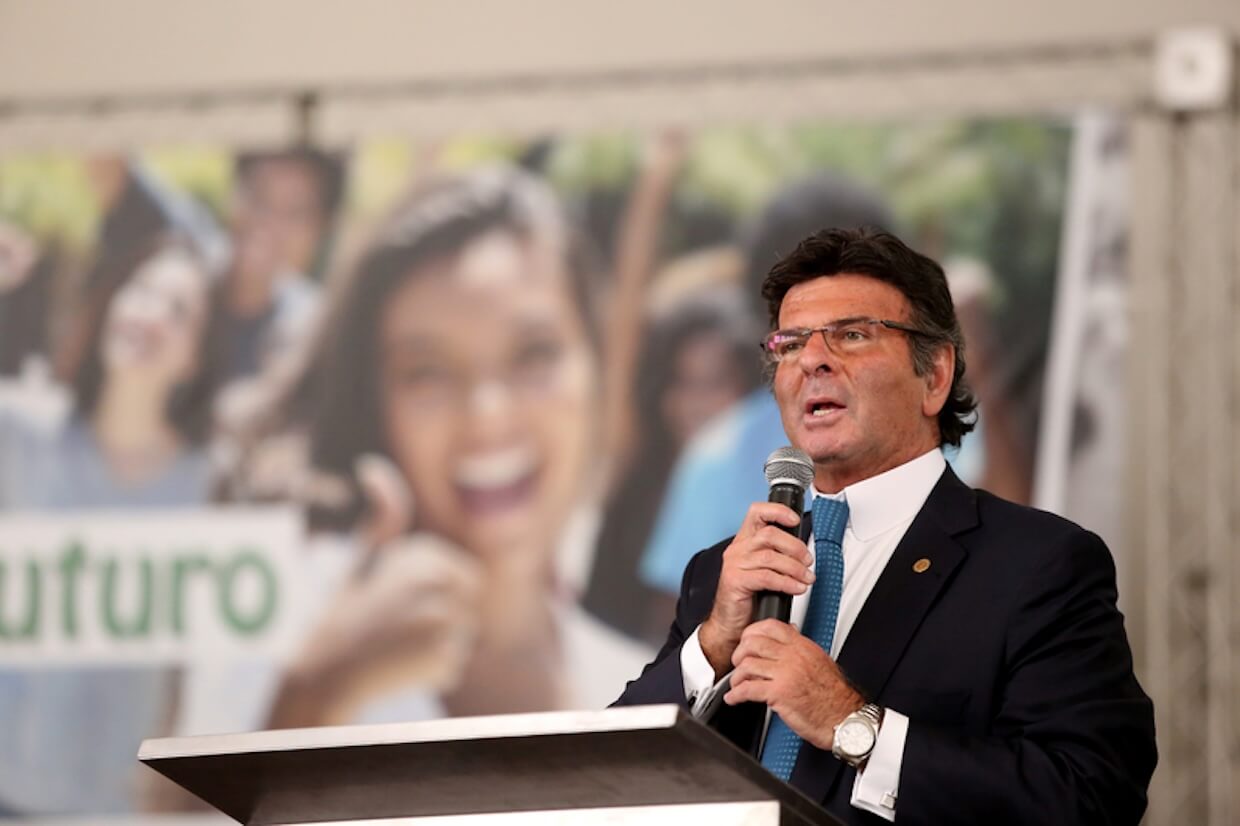

A Good Day for the Populist Radical Right

Overall, populist radical right forces have won nearly 180 seats, making up 25% of all seats in the new European parliament. The largest contingents come mainly from France’s Rassemblement National (National Rally, RN), Fratelli d’Italia (Brothers of Italy), the Polish Law and Justice (PiS), the German AfD and Hungary’s Fidesz. These five parties alone account for more than half of all far-right elected representatives.
Notwithstanding such magnifying effects, these results reflect the electoral consolidation and increasingly the mainstreaming of those parties across Europe. The current popularity of the populist radical right is rooted in the multiple crises to which EU citizens have been exposed since 2008 – the financial crisis, the 2015 refugee crisis, the Covid-19 pandemic and now the war in Ukraine and cost of living.

Ironically, some of the largest gains have come from the EU founding countries. Most striking is the win of National Rally (RN) in France with over double the votes of President Macron’s coalition. As a result, Marcon called snap parliamentary elections in an attempt to reaffirm a pro-European majority – a risky strategy that is already bringing political chaos that analysts compare to madcap reality TV– strikingly resembling David Cameron’s political gamble on Brexit 10 years ago.

In Germany, the Alternative for Germany (AfD) has come in second ahead of Chancellor Scholz’s social democrats. The Christian Democrats have registered a decisive victory, but at a cost of shifting their rhetoric to the right, especially on topics such as migration. 

As expected, Brothers of Italy registered a resounding victory, cementing prime-minister Giorgia Meloni’s position at home and making her a key player at the European level, a few days before hosting the G7 summit. While she has upheld a firm pro-European position on security and foreign policy matters, she has been critical of EU’s policies on climate, migration, and social issues.

Following the formation of a new coalition government, Geert Wilders Party for Freedom (PVV) in the Netherlands also placed second, just 4% behind the leading Green and Labor party. The Freedom Party of Austria (FPO) was the winner in the elections with a slight advantage over the Christian Democrats. Austria and the Netherlands have for long been a fertile ground for the populist radical right who have enjoyed not only representation in parliament, but also in government.

In Hungary, Viktor Orbán gained the most votes in a system that is ever less democratic, though, his Fidesz party showed the worst ever results in a European parliament election. Orban’s dominance was challenged by a former party member who ran on an anti-corruption platform. Péter Magyar’s Tisza party scored almost 30%, giving hope for democracy in Hungary. More to the right, Fidesz was also challenged by the rise of Our Homeland Movement (MHM) about 7% of the vote.

In Poland, the fragile government majority managed to maintain its upper hand over the Law and Justice party (PiS) which has systematically eroded democratic institutions over the past decade. Such good news notwithstanding, PiS will be sending a solid 20 MEPs to the European parliament, making it the second largest member of the European Conservatives and Reformists (ECR) after Meloni’s Fratelli d’Italia (24 seats).

In addition to these big wins, we witnessed a surge in the representation of smaller populist radical right parties across Europe. The Alliance for the Union of Romanians (AUR) came second (although far behind the leading pro-European grand coalition), as did the Latvian National Alliance and the Cypriot National Popular Front. The Slovak Republica and the Croat Homeland Movement came third, as did the Spanish VOX and the Portuguese Chega. In Bulgaria the Revival party surpassed the social democrats – the oldest party in the country, and the Swedish Democrats (SD) gained an additional seat. 

Together these parties could shift the European Parliament further to the right. The saving grace for the pro-European majority is that they are not united and split across three groups in the European parliament – the European Conservatives and Reformists (ECR) led by Meloni and the Polish PiS, the Identity and Democracy (ID) around Le Pen and Wilders, and the non-attached. Orbán, whose party was expelled from the European People’s Party (EPP), has urged Le Pen (ID) and Meloni (ECR) to join forces with his non-attached Fidesz party and form what would be the second largest group in the European parliament. The dynamics and negotiations in the coming weeks among these populist radical right actors will determine their overall leverage and likely impact on policy matters.

A Real Threat or Politics as Usual

The clear winner of the elections is the European People’s Party (EPP), which gained 12 seats for a total of 190. The Socialists and Democrats (S&D) secured 136 seats, only a few seats below their representation in the previous parliament. The big losers of the election are the liberals with Renew Europe losing 22 seats and the Greens who lost 20 seats. Still this gives the pro-European parties a majority of over 400 seats in the new 720-seat parliament.

Despite such majority, the populist radical right is likely to have greater influence over key policy matters. Although divided over security questions, economics, and the war in Ukraine, populist radical right parties are much more united in their positions on climate change, migration, and enlargement. While Ursula von der Leyen speaking on behalf of the EPP vowed to create “a bastion against the extremes,” it remains to be seen whether the EPP will seek support from the radical right on certain policy matters and whether we might notice an overall shift to the right in the European Parliament’s agenda.

Dr. Rodrigo Castro Cornejo, Assistant Professor in the Department of Political Science at the University of Massachusetts-Lowell and Associate Director of the UMass-Lowell Center for Public Opinion.

Professor Cornejo: Sheinbaum’s Democratic Background Contrasts with Her Actions That Erode Mexican Democracy

Professor Rodrigo Castro Cornejo says Claudia Sheinbaum’s government in Mexico is set to begin in October, and it will be a period of significant interest as both the current president and the president-elect navigate this transition. He noted that Sheinbaum has a democratic trajectory, having worked as a scholar and scientist before joining López Obrador’s movement and stated that “Given her background, one might expect her government not to pose a threat to democracy. However, recent signs indicate she supports measures that could further erode Mexican democracy. We will need to wait until her government starts to see if these policies are implemented.”

Interview by Selcuk Gultasli

General elections were held in Mexico on June 2, 2024, marking a significant moment in the nation’s political landscape. Voters elected a new president to serve a six-year term, alongside all 500 members of the Chamber of Deputies and all 128 members of the Senate. The election saw Claudia Sheinbaum, a member of the left-wing National Regeneration Movement (Morena), secure the presidency. This result underscores a continuity in the political direction established by the outgoing president, Andrés Manuel López Obrador (AMLO).

In an insightful interview with the European Center for Populism Studies (ECPS), Dr. Rodrigo Castro Cornejo, Assistant Professor in the Department of Political Science at the University of Massachusetts-Lowell and Associate Director of the UMass-Lowell Center for Public Opinion, discussed Sheinbaum’s political trajectory and the implications of her victory. Professor Cornejo highlighted that Sheinbaum actively supported López Obrador’s transformation agenda throughout her campaign, aligning herself closely with his policies. This raised questions about whether she would carve out her own positions once in office or continue on the path set by her predecessor.

Professor Cornejo pointed out that Sheinbaum recently reiterated her support for controversial reforms, such as electing judges by popular vote, which suggests a continuation of policies that may weaken checks and balances. This stance has raised concerns about potential democratic erosion under her administration.

Sheinbaum’s government is set to begin in October, and it will be a period of significant interest as both the current president and the president-elect navigate this transition. Professor Cornejo noted that Sheinbaum has a democratic trajectory, having worked as a scholar and scientist before joining López Obrador’s movement and stated that “Given her background, one might expect her government not to pose a threat to democracy. However, recent signs indicate she supports measures that could further erode Mexican democracy. We will need to wait until her government starts to see if these policies are implemented.”

As we delve into this interview, Professor Cornejo sheds light on the historical development of populist movements in Mexico, the impact of populist rhetoric on voter behavior, and the potential long-term implications for Mexican society and governance. Join us as we explore these critical issues and gain a deeper understanding of the current political dynamics in Mexico.

Here is the transcription of the interview with Professor Rodrigo Castro Cornejo with some edits.

Populism in Mexico Is Essentially Embodied by AMLO

Thank you very much, Professor Cornejo, for joining our interview series. Let me start with the first question. Can you provide an overview of the historical development of populist movements in Mexico? How have these movements evolved over the past few decades? Especially, how do left-wing and right-wing populism manifest differently in Mexico, and what are the unique characteristics and strategies of each within the Mexican political context?

Professor Rodrigo Castro Cornejo: It’s an interesting moment in Mexican politics because there was a presidential election just a few days ago. Populism in Mexico is essentially embodied by Andrés Manuel López Obrador (AMLO), the current president. He first ran for the presidency in 2006, then in 2012, and finally won in 2018. Throughout his campaigns, he has consistently divided Mexican society in a populist manner, framing the former mainstream political parties as a corrupt elite and his movement, The National Regeneration Movement (Morena), as the representative of the “good” people.

Mexico experienced a non-democratic hegemonic regime from the 1930s until 2000, eventually transitioning to democracy in 2000. López Obrador was always critical of this transition, not because he opposed democracy, but because he believed it wasn’t a true democracy—it was a neoliberal democracy that served only a few people and political parties. He was especially critical of the neoliberal reforms approved between 2012 and 2015 and the massive corruption scandals during the Institutional Revolutionary Party (PRI) government of that period. These events significantly boosted his political career, allowing him to tap into the public’s anger and ultimately win the presidency in 2018 with more than 50% of the vote, a historic achievement in Mexico.

In 2024, López Obrador couldn’t campaign for re-election as it is constitutionally banned in Mexico. However, his loyal ally, Claudia Sheinbaum, the former mayor of Mexico City, won the presidential election with almost 60% of the vote. She campaigned on continuing the policies and direction set by López Obrador over the past six years.

Andrés Manuel López Obrador, Mexican President and Claudia Sheinbaum, Mexico City Governor, in an event in judiciary city in Mexico on September 4, 2019. Photo: Octavio Hoyos.

What has been the impact of populist rhetoric and strategies on recent Mexican elections? How have populist leaders and their discourses influenced voter behavior? What are the long-term implications of these policies and discourses on Mexican society and governance?

Professor Rodrigo Castro Cornejo: I think populism, especially in the last decade and most notably in the past six years, has played a significant role in Mexican politics. It has influenced day-to-day politics and voter behavior. In some of my studies, I found that affective polarization, particularly negative partisanship against the PRI, is a main driver of voting behavior. People are making decisions at election time not necessarily based on the future but on their independent judgment, particularly against the PRI, which is perceived as a highly corrupt government. Even though the PRI has not governed in the past six years, they are still being punished for their previous performance.

López Obrador has been very strategic about this. He holds daily press conferences, sometimes for up to two hours every morning, where he frequently criticizes the PRI government of six, twelve, or even eighteen years ago. He rarely discusses the current policies of his own government, focusing instead on the past. This strategy has been very useful for him, allowing him to divert attention from current issues such as public insecurity, drug cartel-related violence, and his government’s poor handling of the pandemic. Mexico had one of the worst excess death rates during the pandemic, but López Obrador kept talking about the past rather than addressing current problems.

People are not evaluating his actual performance; instead, they are looking at the past and his rhetoric. This populist rhetoric has been very important for his government.

Affective Polarization and Negative Partisanship Are Significant Factors Driving Voter Behavior

In your article titled “The AMLO Voter: Affective Polarization and the Rise of the Left in Mexico,” you suggest that affective polarization played a crucial role in López Obrador’s victory in the 2018 presidential election. Can you elaborate on how the use of populist rhetoric contributed to this affective polarization in Mexican politics and influenced voter behavior in recent elections and contributed to the electoral success of Claudia Sheinbaum?

Professor Rodrigo Castro Cornejo: Yeah, it’s interesting. Normally, you would expect a lot of retrospective voting, especially given the huge corruption scandals, the struggling economy before 2018, and the ongoing public insecurity in Mexico. You’d think these issues would dominate voters’ decisions. But when I analyzed the data, I found that while people do consider retrospective assessments, the influence of party identification and, more importantly, affective polarization, is much stronger.

When you control for these factors, you see that traditional variables influencing voting behavior are less significant. People assess the economy, corruption, and public insecurity through the lens of their party loyalties and biases. My research shows that negative partisanship against the established political parties, particularly the PRI, was a main driver of López Obrador’s victory in 2018. Another significant factor was the perception that the National Action Party (PAN) and PRI were essentially the same, especially after they approved several neoliberal legislative reforms before his victory. This convergence in their policies helped López Obrador by making them seem indistinguishable to voters.

These elements—economic struggles, political scandals, and the perceived similarity between the PAN and PRI—were very advantageous for López Obrador in 2018. Although I don’t have data for the most recent election, it’s likely that affective polarization and negative partisanship against the PAN and PRI continue to be significant factors driving voter behavior, potentially contributing to Claudia Sheinbaum’s success as well.

Your article titled “Who Believes in Fraud in the 2006 Mexican Presidential Election? Election Denialism, Partisan Motivated Reasoning, and Affective Polarization,” emphasizes the role of affective polarization in sustaining the belief in electoral fraud during the 2006 Mexican presidential election. Could you elaborate on how affective polarization interacts with partisan identification to reinforce these misperceptions over time and in recent elections?

Professor Rodrigo Castro Cornejo: It’s an interesting moment in Mexican politics, particularly since the 2006 presidential election when López Obrador first ran for the presidency. Despite a lack of substantial evidence, he claimed he lost due to electoral fraud. This allegation became a political myth that fueled his movement. At that time, he was part of the PRD, Mexico’s traditional leftist party. Eventually, he founded his own party, Morena.

López Obrador’s narrative has been particularly effective during these years, framing the PAN and PRI as not only neoliberal and corrupt but also responsible for creating widespread poverty in Mexico. He has also perpetuated the myth that the presidency was stolen from him in 2006, which has been a powerful tool for mobilizing support.

In his second presidential campaign in 2012, his claims of fraud were less successful since he lost by a wider margin (more than 5% of the vote) compared to the less than 1% margin in 2006. However, this narrative continued to shape his populist rhetoric, activating grievances among the electorate not just about the economy and corruption but also about the perceived injustice of the stolen presidency.

This strategy of targeting and activating grievances has been central to his success, particularly in the 2018 presidential election and in the most recent elections. By constructing an in-group against the PAN and PRI, López Obrador has effectively used populist rhetoric to galvanize support for himself and his party, Morena.

People Fail to Hold Their Own Party Leaders Accountable

Mexican President Andres Manuel Lopez Obrador during an Indigenous ceremony as part of ceremony of the takeover as the new President of Mexico on December 1, 2018 in Mexico City. Photo: Carlos Tischler.

Your 2023 study finds that emotions, particularly anger, significantly influence how voters perceive corruption involving their co-partisan candidates. How can political campaigns either mitigate or exploit these emotional responses to influence voter behavior, and what are the broader implications for political accountability in Mexico?

Professor Rodrigo Castro Cornejo: It’s interesting because anger is a main driver of political behavior. When people feel aggravated by issues like corruption, which was rampant during the years before López Obrador, they become angry. López Obrador capitalized on this anger, blaming mainstream political parties for the country’s structural problems, particularly corruption. This strategy led people to react against these scandals and support López Obrador as a way to punish corruption.

However, my research shows a problem with accountability. While people may be angry and willing to punish opposition parties for corruption, they are less likely to do the same when it comes to corruption within López Obrador’s Morena party. In experiments where I manipulated the source of a corruption scandal, participants were less likely to punish the scandal if it involved their own party’s politicians. This has been evident over the last six years in Mexico. Despite numerous corruption scandals within his government, including those involving his own family, López Obrador’s approval ratings have remained remarkably stable around 60%, which is very high for a Latin American democracy.

This stability persists despite ongoing violence, economic struggles, and a poor pandemic response. The issue is that in a world of affective polarization combined with populist rhetoric, people are likely to overlook the flaws within their own party. They use partisan bias as a shield, becoming immune to scandals, and fail to hold their co-partisan leaders accountable.

Your article titled “How Do Campaigns Matter? Independents, Political Information, and the Enlightening Role of Campaigns in Mexico,” discusses how campaigns help voters align with candidates that match their underlying political predispositions. How do populist candidates in Mexico leverage campaign strategies to appeal to independents and low-information voters, and what role does populist rhetoric play in shaping these voters’ political alignments?

Professor Rodrigo Castro Cornejo: It’s interesting because in Mexico, over the last 20 years, around 50% to 60% of people have shown strong party identification, which is quite high for Latin America. Typically, about a third to 40% of the electorate is independent, varying by election. This independent group is what politicians aim to target. For instance, in 2006 and 2012, when López Obrador lost the presidential elections, he did not win the independent vote. During those campaigns, the PAN and PRI successfully portrayed him as a threat to Mexican democracy and the economy, suggesting that if he won, both would collapse.

However, by 2018, due to the poor performance and numerous scandals of the mainstream parties, López Obrador was able to win the independent vote for the first time. Independents are generally more responsive to current political events than partisans, who view everything through their partisan biases. When independents see corruption scandals or poor economic performance, they react accordingly, which was beneficial for López Obrador in 2018.

The 2024 campaign has been one of the most stable in recent history regarding polling. Claudia Sheinbaum started with about 50% support, while the opposition candidate from PAN and PRI, Bertha Xóchitl Gálvez Ruiz, had around 30%. This remained largely unchanged over the three months of the campaign, reflecting the highly polarized and partisan nature of Mexican politics today. With a high level of party identification, people’s political orientations and voting intentions did not shift much during the campaign.

López Obrador’s influence remains strong, with Morena winning the independent vote once again. However, these so-called independents are less independent than in previous campaigns, likely due to the successful positioning of Morena under López Obrador’s leadership in Mexican politics.

The study suggests that political campaigns serve an enlightening role, particularly for independents. How does this enlightenment process impact the support for populist candidates who often rely on broad, anti-establishment messages? Do these campaigns reinforce or weaken the appeal of populist rhetoric as election day approaches?

Professor Rodrigo Castro Cornejo: Exactly. This last presidential campaign differed from previous ones because this time, Morena was the party in government, with Claudia Sheinbaum and López Obrador having completed six years of leadership. They couldn’t solely rely on stirring anger against the PAN and PRI, although they did so successfully. Instead, they also focused on promoting their achievements.

A significant part of Sheinbaum’s rhetoric was about the better economy under their administration. They emphasized that they represented the people, a theme that was very common in their political communication. They highlighted the creation of social programs, increases in the minimum wage, and other economic improvements as contrasts to the previous neoliberal policies of the PAN and PRI.

However, they also had to downplay the criticisms regarding democratic erosion. The opposition parties, particularly the PAN and PRI, accused them of trying to capture the Supreme Court, eroding democracy, and undermining electoral authorities. Despite these criticisms, Sheinbaum’s campaign focused on the positive changes over the last six years and continued to activate anger against the mainstream political parties.

Overall, the strategy was to highlight their accomplishments while maintaining the narrative that the PAN and PRI were responsible for past issues, ensuring voters remained focused on the supposed improvements and continued to distrust the previous governments.

Most People Endorsed “Reforms” That Ultimately Undermined Democracy in Mexico

Your study titled “Do (Perceptions of) Electoral Polling Affect the Vote? Campaign Effects, Partisan Bias, and Strategic Voting in Mexico” highlights the role of partisan bias in shaping voter perceptions of electoral polling information. From a populism perspective, how do populist leaders in Mexico exploit or reinforce these biases to galvanize their base, and what impact does this have on strategic voting behavior among their supporters?

Professor Rodrigo Castro Cornejo: In the last few years of López Obrador’s government, he has consistently emphasized his mandate. Almost weekly, if not daily, he has highlighted that he won over 50% of the vote, claiming a majority of the electorate’s support. He often cited high presidential approval ratings, with some surveys showing nearly 80% approval, though the average was closer to 60%. He used these numbers in his daily press conferences to argue that he represented the people and had a mandate to pursue his policies.

From a political perspective, high approval ratings can indeed help push through economic and political reforms by pressuring opposition parties. However, this rhetoric also extended to justifying actions that eroded democratic institutions. For example, he argued that the Supreme Court was obstructing his administration and therefore needed reform. Similarly, he claimed that the electoral authority was not fair to his government, justifying attempts to weaken its independence.

Over the past few years, López Obrador sought constitutional reforms to undermine the independence of electoral authorities and to exert control over the Supreme Court. He justified these actions by citing his electoral victory and high approval ratings, claiming democratic legitimacy. However, this has been problematic as it has actively eroded democratic norms and institutions in Mexico.

Due to the partisan bias we discussed earlier, many people supported these measures, believing that the Supreme Court and electoral authorities were indeed obstructing the government. This significant portion of public opinion endorsed reforms that ultimately undermined democracy in Mexico.

Your article titled “Anti-Democratic Attitudes, the Winner-Loser Gap, and the Rise of the Left in Mexico,” indicates that López Obrador’s supporters showed increased satisfaction with democracy after his victory, yet also exhibited a willingness to support anti-democratic interventions. How do populist leaders like López Obrador reconcile or exploit this apparent contradiction between promoting satisfaction with democracy while simultaneously undermining democratic norms and institutions?

Professor Rodrigo Castro Cornejo: It’s interesting because, normally, you would expect that voters whose party won the last presidential election would be more satisfied with democracy. This expectation was met in the 2018 presidential election, where López Obrador’s partisans were very happy about his victory and their satisfaction with democracy increased significantly.

However, these same voters were also the most likely to endorse measures that could actively erode democracy. The question is why. From López Obrador’s perspective, he would argue that these measures are not about undermining democracy but about creating a true democracy that represents the people. He portrays the judiciary and the Supreme Court as corrupt entities that do not represent the public.

One of the proposed reforms, likely to be discussed in Congress in September, involves having judges in Mexico, including those on the Supreme Court, elected by popular vote. The argument is that this will ensure judges represent the people. However, this could politicize the judiciary further, making judges more responsive to political interests rather than the public.

So, how do people reconcile these two views? Partisan bias plays a significant role. Supporters of López Obrador trust his discourses and narratives. Additionally, if democracy hasn’t brought tangible benefits, measures that claim to ensure representation, such as electing judges, can seem appealing to the public. Thus, these kinds of reforms might gain support among the public, even if they undermine democratic norms.

Sheinnbaum’s Government May Not Pose a Threat to Democracy

Claudia Sheinbaum, candidate for the presidency of Mexico, celebrates at Zocalo square the significant advantage that makes her the virtual winner in Mexico City, Mexico on June 2, 2024. Photo: Paola Garcia.

During the campaign, Claudia Sheinbaum backed many of Obrador’s most contentious policies, including a slate of constitutional changes that critics say would severely undermine democratic checks and balances. Do you think she would continue the populist streak Obrador started?

Professor Rodrigo Castro Cornejo: I think so. That was always one of the questions. During the campaign, Claudia Sheinbaum actively campaigned for the continuity of López Obrador’s transformation agenda, as he often refers to his government’s efforts to transform Mexican politics. She consistently supported continuing his policies.

The question was whether she was being strategic during the campaign, appearing to fully support López Obrador but planning to establish her own positions once in office. Recently, she reiterated her support for reforms like the one proposing that judges be elected by popular vote. This suggests a strong likelihood of continuing policies that weaken checks and balances and erode democratic norms.

Her government begins in October, and it will be an interesting period with both the current president and the president-elect in the spotlight. She may strategically maintain her successful political alliance with López Obrador initially, but there is a possibility she will develop her own positions over time.

Sheinbaum has a democratic trajectory, having worked as a scholar and scientist before joining López Obrador’s movement. Given her background, one might expect her government not to pose a threat to democracy. However, recent signs indicate she supports measures that could further erode Mexican democracy. We will need to wait until her government starts to see if these policies are implemented.

How do you think a possible win by Donald Trump in the US could affect populist movements in Mexico and in Latin America? 

Professor Rodrigo Castro Cornejo: It’s interesting because López Obrador and Donald Trump had a surprisingly good relationship, despite their differing ideologies—Trump from the right and López Obrador from the left. They found common ground in their populist approaches, albeit to different extents.

This relationship proved functional for both Mexico and the US in recent years. Under both the Trump and Biden administrations, the primary US expectation has been for Mexico to curb immigration from Central America. Mexico has done this, though often in ways that have raised significant human rights concerns. This arrangement has been somewhat successful for the Biden administration, with Mexico acting as a de facto wall between the two countries.

In exchange, it seems that the US has largely overlooked issues of democratic erosion in Mexico. The primary concern for the US has historically been stability over democracy. This was evident even during the 70 years of the hegemonic party regime in Mexico last century. While there has been some interest in promoting democracy, political stability has always been the main priority.

Even if López Obrador didn’t fully respect some NAFTA agreements, these disagreements were eventually negotiated. Ultimately, the most critical issue for both the Trump and Biden administrations has been immigration control. López Obrador’s administration has been astute in not criticizing the US on its democratic standards, focusing instead on maintaining a stable relationship that aligns with their interests.

Several people during a rally calling for the contra la amnistía resignation of Pedro Sanchez, at Plaza de Cibeles, on March 9, 2024, in Madrid, Spain. Photo: Oscar Gonzales Fuentes.

The EP Elections in Spain: A New Composition of the Radical-right?

The elections to the EP in Spain largely reflect the broader trends occurring at the European Union (EU) level but also have unique dynamics and consequences. Notably, the evolution of the radical-right space is crucial; it appears divided yet shows potential for growth. The expansion of the Eurosceptic radical-right should concern all pro-European parties. It seems logical for mainstream parties to consider whether incorporating radical-right ideas contributes to their normalization and electoral success.

By Hugo Marcos-Marne*

A major concern before the European Parliament (EP) elections was the electoral strength of the radical right and, relatedly, the ability of mainstream parties to resist electorally. Overall results for the 27 member states indicate the consolidation of radical-right parties as a significant electoral force, but also show that mainstream center-left and center-right parties retained enough power to secure a majority in the EP. However, aggregate results often mask different or even divergent dynamics, highlighting that EP elections have had heterogeneous outcomes across European Union (EU) countries. This commentary focuses on the results and effects of the EP elections in Spain.

The elections held on June 9th took place after a polarized electoral campaign in which national issues occupied a prominent role. As a textbook example in this regard, the main opposition party (Partido Popular, PP) framed the campaign as a plebiscite against the Prime Minister (Pedro Sánchez), and there were abundant references to “internal issues” such as the amnesty law affecting the Catalan procés, alleged corruption cases affecting the Socialist government, or the government’s decision to recognize the Palestinian state. The relevance of national issues in the EP elections is well reflected in data gathered just before the elections by the Spanish Center for Sociological Research (CIS). Only 29% of the respondents declared that EU and EP topics would be key for them to cast their vote, a figure that reaches 63% when they were asked about the importance of national politics. Furthermore, more than 50% of the respondents declared to be little or no informed at all about EU issues, and only 4.8% of the sample assigned the highest importance to the EP elections (CIS study 3458). This is in line with an interpretation of the EP elections as second-order, which can also be seen in the low(er) turnout rates.

The elections’ main results had been anticipated by most polls. The PP won the elections with roughly 34% of the valid votes (22 MEPs), followed by the Partido Socialista Obrero Español (PSOE) with 30% of the votes (20 MEPs), and the radical-right VOX occupied the third place with 9.6% of the suffrages (6 MEPs). The fourth place was to the electoral coalition Ahora Repúblicas (Now Republics), formed by left-wing peripheral nationalist parties such as EH-Bildu, Esquerra Republicana de Catalunya (ERC) or the Bloque Nacionalista Galego (BNG) (4.9% and 3 MEPs). A divided state-wide radical-left won approximately 8% of the votes and 5 seats in the EP (SUMAR 4.9% and 3 MEPs, Podemos 3.3% and 2 MEPs), and the candidatures by Junts and CEUS (lead Partido Nacionalista Vasco and Coalición Canaria) secured one MEP each. 

The 61 seats that Spain had in the EP were completed with the 3 seats (4.6% of the valid vote) gained by the anti-politics/outsider candidature Se Acabó La Fiesta (SALF, The Party Is Over). SALF is led by Luís Pérez (commonly known as Alvise Pérez), a former political advisor retrained into social media activist with a discourse combining anti-feminist, anti-immigration, nationalist, and anti-party ideas, the latter mostly directed against PSOE and left-wing forces. Pérez has also incorporated strong authoritarian ideas in his (quickly formed) electoral platform, such as building a macro jail for 40,000 people, restating forced labor, or allowing security forces to kill drug dealers.

There is an overall intuitive connection between the general results at the EU level and those from Spain. The main representatives of both the European People’s Party (EPP) and the Socialist and Democrats (S&D) family come in first and second place, respectively. The liberals lost many votes, to the extent that Ciudadanos disappeared from the EP (0.7% of the votes, 0 MEPs). The stablished radical-right party VOX improved their results to a certain extent, and a new outsider platform (SALF) strongly aligned with radical-right ideas emerged and secured 3 seats in the EP. Therefore, the results of the elections in Spain evidence the strength of mainstream parties, suggest a general movement towards the right, and leave a divided space in the radical-right camp that is now occupied by two forces. 

In fact, more than 50% of SALF supporters had voted for VOX in the past general elections, which raises the question of what the main differences between those are who remained loyal to VOX and those who switched to SALF. It initially looks as if the electorate of SALF is (even) more masculinized, younger, more educated, and self-position comparatively less to the right on the left-right scale (CIS Study 3458). It is notable that the most popular points on the ideological scale among those who intended to vote for VOX were 8 and 10, with more than 52% choosing one of these options. For those who intended to vote for SALF, the most popular points were 5 and 7, with more than 56% selecting one of the two. Various interpretations may explain this phenomenon, including a less radical electorate casting protest votes regardless of the electoral platform, a less informed electorate that does not interpret the left-right scale in the same way, or an electorate influenced by desirability biases, choosing not to identify with the radical right while supporting policies typically associated with that space. Future analyses are needed to determine if SALF resorts to populist ideas, but preliminary evidence suggests its discourse resembles that of other politicians who use strong anti-elite rhetoric without constructing a benevolent and homogeneous definition of the people.

The elections to the EP have had significant consequences in some member states, such as Belgium, where the Prime Minister resigned, and France, where legislative elections have been announced. In Spain, the effects were less dramatic but still notable. Yolanda Díaz, founder of SUMAR, resigned her position as party general coordinator, although she remains the vice-president of the government and Minister of Labor. The election results may also impact the ongoing formation of a government in Catalonia, where the PSOE was the most voted party on June 9th, following Salvador Illa’s success in the May 2024 regional elections.

The elections to the EP in Spain largely reflect the broader trends occurring at the European level but also have unique dynamics and consequences. Notably, the evolution of the radical-right space is crucial; it appears divided yet shows potential for growth. The expansion of the Eurosceptic radical-right should concern all pro-European parties. It seems logical for mainstream parties to consider whether incorporating radical-right ideas contributes to their normalization and electoral success.

(*) Dr. Hugo Marcos Marné is an Assistant Professor at the University of Salamanca.

Demonstration of the Austrian Identitarian Movement organized a demonstration "to defend Europe in Vienna" on June 11, 2016. Photo: Shutterstock.

Professor Vieten: Individualized Profit and Socialized Risk Fuel Far-Right Populism

Dr. Ulrike M. Vieten points out that the 2008 economic crisis played a significant role in exacerbating people’s anxieties, highlighting that “profit is individualized while risk is socialized.” This economic instability, coupled with the recent pandemic, has deepened the feeling of insecurity across Europe. These socio-economic factors, she argues, have paved the way for the far-right’s rise, as people seek to channel their distress and anger. Drawing parallels with the normalization of far-right ideologies in the early 20th century, Vieten underscores that this historical context is crucial in recognizing how quickly societal values can shift and the dangers of complacency.

Interview by Selcuk Gultasli

As critical European Parliament elections take place across Europe, Dr. Ulrike M. Vieten, an Assistant Professor in Sociology of Gender, Migration and Racisms, at Queen’s University Belfast, points out that the 2008 economic crisis played a significant role in exacerbating people’s anxieties, referencing German philosopher Jürgen Habermas, by highlighting that “profit is individualized while risk is socialized.” This economic instability, coupled with the recent pandemic, has deepened the feeling of insecurity across Europe, particularly among young people and students who lost their jobs. These socio-economic factors, she argues, have paved the way for the far-right’s rise, as people seek to channel their distress and anger.

In an interview with European Center for Populism Studies (ECPS) on Friday, Professor Vieten discussed the complex dynamics driving the rise of populist and far-right parties in Europe, one of the most affluent regions globally. Professor Vieten, a historical sociologist, offers valuable insights into the multifaceted factors contributing to this phenomenon. “The emergence of far-right, particularly racist populism, is surprising in such a wealthy continent. In my view, this has to do with the population itself; it is a class issue,” she explains, emphasizing the middle class’s fear of losing social status and the sense of entitlement that fuels these fears.

The professor also underscores the importance of understanding history to grasp the current political landscape. Drawing parallels with the normalization of far-right ideologies in the early 20th century, she notes, “The shocking reality is that within just ten years, a very cosmopolitan, modern, and diverse society like Germany in the late 1920s could suddenly transform into a monocultural, antisemitic, and racist society.” This historical context is crucial in recognizing how quickly societal values can shift and the dangers of complacency.

Addressing the role of migration as a propeller of far-right populism, Professor Vieten explains how the politicization of migration creates divisions and anxieties. She highlights the interconnectedness of the housing crisis and xenophobic sentiments, exacerbated by media and political rhetoric. “The ideologically loaded notion of migration and migrants is something that has developed over the years,” she notes, pointing to the lack of effective strategies to address these issues.

In combating the influence of far-right populism, Professor Vieten advocates for a culture of open-mindedness, solidarity, social justice, and equality. She emphasizes the need for counter-mobilization against authoritarian tendencies and the importance of cultivating anti-racism bystander habits to challenge the normalization of exclusionary ideologies.

Through this interview, Professor Vieten provides a nuanced understanding of the rise of far-right populism in Europe, rooted in historical context and contemporary socio-economic challenges. Her insights call for a concerted effort to address these issues and promote a more inclusive and equitable society.

Here is the transcription of the interview with Professor Ulrike M. Vieten with some edits.

Rise of Populist Far-Right Is a Class Issue

Professor Vietenthank you so very much for joining our interview series. Let me start with the first question. What do you see as the primary factors driving the rise of populist and far-right parties in Europe which is one of the most affluent parts of the planet? Are there common social, economic, or political conditions that are particularly conducive to their growth across different European countries?

Ulrike M. Vieten: This is an interesting question, and I’m glad we can discuss this issue. As you noted, Europe is a wealthy and rich continent, so the emergence of far-right, particularly racist populism, is surprising. In my view, this has to do with the population itself; it is a class issue. Contrary to some prejudices, this issue is primarily about a middle class that increasingly fears losing its social status.

This fear of losing social status is tied to a sense of entitlement that, unfortunately, many European citizens have. The notion of citizenship plays a crucial role here, as it is still largely based on territorial rights. The European Union or Europe as a concept has not promoted or engaged sufficiently with the idea of a common European citizenship that transcends national identities and citizenships.

The rise of the far-right, particularly in the last 10 years, is also connected to the economic crisis of 2008. Many people tend to forget the impact of that crisis. As Habermas noted years ago, profit is individualized while risk is socialized. This means that the cost of living crisis we are currently experiencing is real, with more people losing ground in terms of income and job security.

We must also consider the impact of the pandemic. Some people, such as white-collar workers, academics like myself, or those working in offices, were relatively privileged because we could switch to online work. Although we experienced isolation and related emotional challenges, we were able to continue working. This experience contrasts sharply with that of young people and students who lost their jobs. The widespread feeling of anxiety and insecurity has affected various European countries.

This issue is complex. A journalist in Paris raised the point that there might be significant divisions between different regions of Europe or the European Union. The experiences of Eastern European countries may differ from those of Western, Central, or Scandinavian countries. It’s crucial not to generalize across all countries. Instead, studies and researchers should examine what is happening in different countries to understand what is triggering these feelings and the rise of far-right populism.

Of course, we do have some commonalities, as I mentioned previously in my speeech at the conference in Paris. For example, the housing crisis is a significant issue, not only in Ireland but also in other countries, contributing to the rise of far-right parties, such as in the Netherlands. It’s an issue in Spain as well. Despite these countries’ differences, they share an unfortunate trend of commercializing housing to an extreme extent, often lacking a functional rental market.

I’m originally from Germany, where renting is generally well-regulated, although there are issues in places like Berlin. On average, however, Germany maintains a more balanced rental market, emphasizing the right to decent housing. This level of regulation is absent in countries like the UK and Ireland. I’m focusing on Ireland because it’s part of the European Union, and the situation there illustrates a broader problem. Addressing this housing crisis should be a priority for policymakers.

The current conditions have led to a rise in xenophobic sentiments across various countries, targeting migrants and refugees. This is partly due to a sense of entitlement among long-settled citizens who feel their needs are being neglected while international migrants are accommodated. This growing xenophobia and the housing crisis are interconnected, reflecting deeper societal issues that need urgent attention.

The Temporal Proximity of Shifts Toward the Far-Right Is Shocking

An old published photo of Adolf Hitler, leader of Nazi Germany, in 1934, with enthusiastic locals from the Obersalzberg area. Photo: Andreas Wolochow.

In your speech at the “Do not wake the Dragon,” you often refer to history. Why do you think history is so central in understanding the rise of far-right populism?

Ulrike M. Vieten: I’m a historical sociologist, not just a political sociologist, and, as I mentioned earlier, I come from Germany and was born in the sixties. Therefore, one must come to terms with the impact of national socialism, institutional anti-semitism, and the Holocaust not only on Germany but on Europe as a whole. This historical context is essential for understanding the significance of these events.

In my recent publication with my Australian colleagues, we focus on the normalization of the global far-right. It is absolutely important and central to examine contemporary witnesses of the rise of Hitler’s nationalist socialism and fascism in other countries, such as Italy and Spain. This helps us understand what we refer to as normalizing processes. Fortunately, there is a wealth of knowledge available, including books, archival materials, and documentaries, which is why I emphasize the importance of this historical study.

The shocking reality is that within just ten years, a very cosmopolitan, modern, and diverse society like Germany in the late 1920s could suddenly transform into a monocultural, antisemitic, and racist society. This drastic change is where the mythical figure of the dragon becomes relevant. My argument is that the seeds of such transformation are embedded within liberal democracies and capitalism itself. This transformation often occurs due to a mixture of socioeconomic crises and deliberate manipulation of majority populations, making them believe that a specific group is responsible for their hardships.

Historically, this scapegoating targeted European Jews, who were assimilated into various national identities—German, French, Romanian, Bulgarian, etc. Despite their assimilation, they were singled out as the “other” and blamed for the societal disruptions and economic challenges, particularly those faced by the disadvantaged classes. This process of targeting a minority group as responsible for societal issues has repeated throughout history, highlighting the importance of understanding these mechanisms to prevent future occurrences.

The shocking element is the temporal proximity of these changes. From the late 1920s to the early 1930s—a span of just 10-13 years—Germany transformed rapidly. This serves as a stark reminder of how quickly such shifts can occur, paralleling events unfolding before our eyes today.

We have lived through the 1980s and 90s, a period when multiculturalism, diversity, equality, and inclusion were highly valued. We could not have imagined that within 10-15 years, the discourse would shift so dramatically. This change has significant consequences for the political landscape and the kinds of parties that emerge and gain influence.

Some of these far-right parties, for example, in France, have been established and present for years, so this is not a new phenomenon. The normalization process involves their ideologies becoming respectable and acceptable to a significant minority, not necessarily a numerical majority, but enough to wield considerable influence. This minority can empower these parties to gain parliamentary seats, not just in national elections but also in the European Parliament.

This trend is concerning and underscores the importance of studying history and listening to contemporary witnesses. Many people may not fully comprehend the gravity of the situation because it is human nature to take things for granted until they are lost. As an academic, and for organizations like yours, it is crucial to alert and alarm people about these developments. Understanding the past is essential to grasp the potential implications of current events, and to recognize that the rise of such parties is not entirely new.

It’s not new; it has been done before. It’s not simply a matter of history repeating itself, but the elements are there. So, in response to this concern, I like to cite intellectuals of the Frankfurt School in exile, particularly Adorno and Horkheimer. If these names ring a bell, my favorite quote comes from Max Horkheimer, who wrote in 1939: “Those who do not want to talk about capitalism should be silent about fascism.” In my view, this encapsulates the core of the problem.

Adorno, in the 1960s, gave a very famous lecture in Vienna, which was published in both German and English. He foresaw that the transformations and different stages of capitalism might again lead to feelings of losing social status and the concentration of capital. We are witnessing a further push in modernity and the dynamics of late capitalism, which can exacerbate these issues. This is why understanding history is so crucial.

Migration Has Become Politicized

How do the increasing populist and far-right tendencies in various member states affect the process of European integration and the overall stability of the European Union? Are there specific policy areas (like migration) where their influence is particularly noticeable? Can you please especially explain the role of migration as one of the propellers of far-right populism in Europe?

Ulrike M. Vieten: It goes back to what I mentioned earlier about migration being the main problem, which I believe was staged. I wouldn’t go so far as to directly compare the projection of anxieties and racism toward Jews in the 1930s to the current situation with migrants. However, we do see similar patterns and structures. The ideologically loaded notion of migration and migrants is something that has developed over the years. As someone who has observed this both from within and outside the European Union, I find it very interesting to understand.

Until 2016, before Brexit, there was always a distinction between migrants, refugees, and asylum seekers. These distinctions, which are also legal, have somewhat collapsed over time. We are not just talking about migration as an issue; it produces anxieties for the reasons I outlined earlier. For example, if there is a systemic housing catastrophe, as Irish President Michael Daniel Higgins noted two years ago, and no real strategy to resolve it, it becomes easier to blame arriving international protection applicants and refugees who need housing. These individuals have a right to accommodation, while in many countries there are issues not only with homelessness but also with the availability and affordability of housing.

These divisions are often exacerbated by the media and politics, which unfortunately are not helpful here. They often play into the tune of far-right populism by creating boundaries and divisions. Instead of framing the issue as one that affects all people living in a particular country and promoting solidarity, it’s easier to focus on numbers, like saying there are 13,000 refugees coming into the country while there are 10,000 homeless citizens. Even if those 10,000 homeless people can’t vote because they don’t have an address, others perceive the situation as unfair. People might relate more to a fellow citizen than to a refugee or someone from Sudan. This issue intersects strongly with racism, highlighting differences between white and black bodies and is heavily gendered. It becomes a mixture of various complex areas, influencing who is welcomed and allowed to stay.

In my view, migration has become politicized. Emotions and distress are being used to channel anger, rather than being fair or open about capitalist interests. The housing market is commercialized, interest-focused and privatized rather than collective. Some discussions have really gotten out of hand. The media and mainstream politicians have not been helpful, as they often follow the lead of far-right populist politicians and leaders. Efforts to counter this division and the racism it conveys are not very visible, at least in the news I follow, which includes German-speaking and English-speaking media.

Assumption That Younger Generations Would Be More Liberal and Left-Wing Disproved

Demonstrators of the Austrian Identitarian movement form a guard of honor of flags in Vienna, Austria on June 11, 2016. Photo: Johanna Poetsch.


What strategies are populist and far-right parties using to attract voters ahead of the upcoming EP elections? How are they framing their messages to resonate with a broader audience, and what role does social media play in their campaigns?

Ulrike M. Vieten: I must say this question is a bit beyond my comfort zone, as I’ve been outside the European Union for a few years now. However, from what I understand, various countries have successfully gauged the type of anger and socio-economic upset present in different localities, particularly at the subnational level. They take the frustration and anger of local people seriously. This approach seems more successful, perhaps because a crucial element of populism is its anti-elite stance. Populists argue that the political elite has not listened to people’s concerns and has had 20 years to address these issues but has not done much. This narrative has been a success story for far-right populists, as they can relate to and communicate with people on a very local level, at least pretending to take their concerns seriously.

Regarding social media, I mentioned earlier that the pandemic, in my view, triggered a lot of what’s happening now. Social media’s potential for spreading conspiracy theories and fake news has been exploited, with platforms like WhatsApp and Telegram being used to mobilize people. You might have heard about the incidents in Ireland last year, which were based on false information about the events and the actors involved. The Irish police, Gardaí, were apparently unprepared for the resulting outrage and riots on the streets. Populists are very capable of using social media, which is also a generational issue. We might assume that younger generations would be more liberal and left-wing, but that’s not the case. The landscape is much more fragmented, with movements like the Identitarian movement in France capturing the interests of younger people. This is a significant concern. While I can use social media, I am not able to fully understand its extent or impact. Established parties may not use or understand these tools as effectively, which could be attributed to generational differences.

People in Poorer Urban and Rural Areas Often Feel Abandoned

In your opinion, what measures can mainstream political parties and civil society take to effectively counter the narratives and influence of populist and far-right movements? Are there successful examples of such counterstrategies in recent European political history?

Ulrike M. Vieten: European history sounds grand, but here I refer to the constructive, positive experience of a group called “Hope, Not Hate” based in Ireland. Originally, they started with a different name that more explicitly focused on monitoring far-right activities. They have since shifted their focus to promoting a positive, inclusive vision. Their approach is similar to some strategies used by far-right populists: they engage with local communities, taking their concerns seriously. Instead of immediately stigmatizing those protesting the accommodation of new asylum seekers in previously empty hotels, they engage in dialogue to understand the sources of their anxieties and frustrations. This is hugely important as it addresses feelings and experiences of deprivation in a very tangible sense.

It’s not by chance that in poorer parts of cities or rural areas, people often feel abandoned. These communities, already experiencing significant deprivation, are then confronted with a larger group of people who look different, speak differently, and have different cultures. There is often no encompassing structure to help them manage their fears and learn about these individuals. In some places, volunteers have addressed this by not only offering language training but also organizing shared cooking and socializing activities. This helps break down barriers and the sense of “otherness” that dehumanizes and stigmatizes these groups. Without normal or spontaneous communication, it becomes easy to criminalize and marginalize them. As soon as people target a specific group and that group becomes marginalized, it becomes abstract, making it easier to criminalize them.

What’s happening right now with the illegal Migration Bill is concerning. At another time, I would argue that such a bill would have been considered illegal. Some actions may become legal, but in terms of ethics and a deeper understanding of what law and justice should be, it’s the opposite. This is where historical knowledge is crucial. We must be very aware of how legal systems can be established to criminalize, marginalize, and rationalize the exclusion of others. This is what’s on the agenda now.

Re-election of Trump Expected to Further Normalize Far-Right Ideologies

QAnon Shaman, Jake Angeli is seen as roaming near the US Capitol during the January 6, 2021 insurrection which was initiated by Former US President Donald Trump in Washington D.C.. Photo: Johnny Silvercloud

How do you think a possible victory by Donald Trump at the upcoming US elections will affect the normalization of global far-right movements?

Ulrike M. Vieten: My spontaneous answer to this is that it’s already normalized. That’s the problem. This normalization started 10-20 years ago, possibly even after 9/11, with the racialization of Muslim communities. It’s a process where people become accustomed to accepting that a vulnerable group can be stigmatized. For example, in some Continental European countries like Belgium, where you’re based, there’s criminalization of headscarves and targeting of gendered clothing. This normalization process makes it acceptable to criminalize wearing certain types of clothing.

If Trump wins a second term, which I think is very likely, it will only continue a trend he started earlier. It’s almost like a theater of absurdity, where a politician can encourage followers to attack the symbolic buildings of liberal democracy in the United States. He should stand trial for such actions, but instead, the most significant trial he faces seems to be about paying hush money to a sex worker. This shows how far we have come in this process of normalization.

It might be a new stage, and that’s very relevant in terms of international politics. However, it’s not a symptom of a new stage of normalization because the normalization and accommodation of far-right, racist, white superiority, as embodied by Trump, is part of an ongoing process. This process involves machismo, patriarchy, and white superiority. The shocking aspect I mentioned is the widespread polarization in different societies, including the United States, European countriesand Brazil. Social cohesion is gone, and there is no longer a consensus on what democracy, social values, gender equality, or inclusion mean. We now have polarized positions.

Trump’s prominence is partly due to his many white, middle-class, or working-class followers who admire his sexist and racist positions. This admiration of certain identities and claims globally is alarming. Reading history books, we often wonder how people could have admired figures like Hitler. However, what we see now has similarities, including the sexualization of politics, which helps explain why figures like Trump become so successful.

Silencing Dissent Can Lead to Increased Polarization and Fragmentation

Lastly, Professor Vieten, based on your recent article, “Accomplices to Social Exclusion? Analyzing Institutional Processes of Silencing,” how do institutions systematically mobilize silencing as a tool of power, especially given the rise of populist radical right and far-right parties that are socially and politically exclusionary? Can you elaborate on how institutional silencing specifically affects intersections of social class, gender, race, and ethnicity and what the potential effects of these exclusions and silencing might be in the upcoming EP elections?

Ulrike M. Vieten: That’s a very complex question that touches on various dynamics inherent to these problems. I’ll start with the institutional processes of silencing. In opposition to silencing, we could argue that there is a right to free speech. Far-right parties and politicians definitely have the right to express what they think is right and wrong. Likewise, populations who identify with these far-right populist views have the right to tell their stories.

On the other hand, limitations on free speech must align with constitutional rights, values, and respect for others. These limitations are necessary to maintain a balanced discourse. The issue of silencing is not limited to far-right populist parties; it’s more complex. What I’m observing is institutional silencing on controversial issues, which varies by country. For example, discussions about the war in Gaza are handled very differently in Ireland and Spain compared to Germany and France. In some places, expressing critical views about certain politicians or Israeli policies can lead to being labeled as antisemitic. This kind of silencing can lead to increased polarization and fragmentation, making people feel disenfranchised.

Far-right populist parties often capitalize on this feeling of being silenced or marginalized. This can drive people toward these parties as they seek a platform to express their views. This phenomenon isn’t as visible with left-wing parties at the moment, unlike in previous years when left-wing populist parties were stronger in Greece and Spain. This is a macro societal issue that affects the overall political landscape.

Another issue that hits close to home involves institutions like universities, newsrooms and even public spaces like buses or trains. What does it take to speak up and overcome bystander silence? We should cultivate what I would call anti-racism bystander habits. This idea is linked to countering authoritarian characters, harking back to the Frankfurt School’s analysis of how National Socialism emerged and became successful. They identified the authoritarian character as a key factor.

We need counter-mobilization to combat the silencing of different views. Traditions and cultures of communication vary across countries, but there is a universal need for a positive understanding of conflict. Conflict can be constructive if disputes are accepted and people are trained to understand communication dynamics. This is not just about becoming a successful leader but about understanding how communication works and how enriching it can be to listen to different perspectives. Understanding where other views come from is crucial, and this skill is currently lacking. There is much work to be done in this area.

Unfortunately, my final thought on this topic is rooted in my experience as an academic. I began writing about cosmopolitanism in Britain and Germany in 2004-2005 and published on it in 2012. Back then, I thought the idea of cosmopolitanism was beautiful, but it can’t exclude any groups or people from other countries. That was a naïve perspective. Claiming cosmopolitanism as a specific cultural attitude for Europe, Europeans or even worse, European Union Member State citizens, is absolutely ridiculous.

We need to recognize that cosmopolitanism was already visible as potentially being co-opted for middle-class mobility and cosmopolitan interests, rather than embracing its true vision. The vision of cosmopolitanism should be about developing a culture of open-mindedness, solidarity, social justice, and equality—principles that are still not fully realized. Achieving this would require a willingness to share and support local communities. It isn’t something that can be achieved overnight, but it involves unlearning a sense of entitlement developed over centuries and learning to engage with others, with the stranger, to lessen fear and build connections.

A poster of a political party in Cape Town, South Africa, on January 18, 2024, for the 2024 elections. Photo: Remo Peer.

The Rise of Populist Parties in South Africa and End of the ANC’s Parliamentary Majority

In the recent national elections in South Africa, the African National Congress (ANC) lost its parliamentary majority for the first time, indicating widespread discontent with its governance. While the ANC remains the ruling party, its ongoing failure to address the nation’s economic woes, violent crime problem, and racial inequalities has made South Africa fertile ground for charismatic populist leaders, like Jacob Zuma and Julius Malema, who make grand promises to solve these issues.

By Nicholas Morieson

This commentary briefly examines the decline of the African National Congress (ANC) and the concomitant rise of populist parties in South Africa, focusing on the uMkhonto weSizwe (MK) and the Economic Freedom Fighters (EFF). In the recent national elections, the ANC lost its parliamentary majority for the first time, receiving less than 50% of the vote, indicating widespread discontent with its governance. The success of the new populist movements stems not only from their leaders’ charisma but also from their ability to exploit the ANC’s failures. While the rise of populism may invigorate political competition, it also poses significant risks given these new parties’ often radical and exclusionary rhetoric.

The Decline of the Ruling African National Congress

The African National Congress (ANC), which has governed South Africa since the end of apartheid, lost its parliamentary majority for the first time following national elections this week. In an unprecedented turn of events, the party is estimated to have won less than 50% of all votes, forcing it to find a coalition partner in order to govern. The result suggests that a majority of South Africans now believe that the ANC is incapable of solving the country’s problems. Despite its long rule, the party has not been able to create enough employment, particularly for its young people, 40% of whom do not have a job. Nor has it found the funds to construct an adequate electricity grid and supply power to its cities twenty-four hours a day, or decrease the astonishing number of violent crimes and robberies committed each year, and which places South Africa among the world’s most dangerous nations. 

The decline of the ANC has not come due to a dramatic rise in support for their traditional rival, the Democratic Alliance, which won around 23% of all votes and is most widely supported by white and Asian South Africans. Rather, an increasing number of black voters have turned away from the ANC and now vote for populist parties such as former ANC leader Jacob Zuma’s uMkhonto weSizwe (commonly abbreviated to MK), which has been estimated to win around 15% of votes contesting its first election, and the Julius Malema led Economic Freedom Fighters (EFF), which won more than 9% of votes. Both Malema and Zuma are products of the ANC, and in a way their success might be understood as a breaking apart of the ANC into three parties, representing the interests of different groups in South African society, rather than the rise of entirely new political movements. However, what is new is the intrinsically populist nature of the new parties. Thus while many reports on South Africa’s elections will focus on the decline of the ANC, the rise of populist parties is an equally important story and the primary cause of the ANC’s loss of its cherished parliamentary majority. 

Although different, MK and the EFF share important characteristics. First, both present themselves as the voice of the authentic black people of South Africa. Second, both promise to solve South Africa’s problems by removing the corrupt ANC elite and installing a wise leader who knows the will of the people and will govern in their interests. Third, both parties blame many of the nation’s economic and social difficulties on foreigners and – in the case of the EFF – on white South Africans. 

MK 

uMkhonto weSizwe, meaning ‘spear of the nation,’ is a populist movement based around the personality of Jacob Zuma, South African president from 2009-2018, who founded the party in 2023 after leaving the ANC. Zuma’s presidency was marred by numerous allegations of corruption, eventually leading to a criminal case against him and a subsequent conviction for contempt of court. Despite this, Zuma remains a popular figure, and is considered by his supporters a man of the people who fights for the interests of the authentic Zulu people of South Africa. Such is Zuma’s popularity, particularly among Zulus, that his conviction led to the worst violence in post-Apartheid South Africa, which saw more than 350 killed in mass riots.  

It is difficult to discern a particular ideology behind MK’s political statements and positions. The party is so closely tied to the personality and charisma of Zuma, and his peculiar combining of Zulu traditional culture (including support for polygamy – Zuma himself has several wives), social conservatism on issues such as same sex marriage, and left-wing economic policies, that it is difficult to imagine the party existing without its leader. Zuma launched MK by declaring that he would not betray the South African people by campaigning for incumbent President Cyril Ramaphosa, and that the return of the ANC would “lead our people to more misery, poverty, racism, unemployment, deepening load-shedding (power cuts) and a government led by sellouts and apartheid collaborators”.

In contrast, Zuma promised his new party would bring South Africans “total liberation” from the nation’s corrupt elite and a better future.  

Although Zuma was banned by a South African court from running for parliament, his name still appeared on ballot papers, where he was listed as MK leader, a bizarre situation that demonstrates flaws in South Africa’s electoral processes.  

His immediate electoral success came almost exclusively at the ANC’s expense, especially in KwaZulu-Natal province where MK has won the largest share of votes, and the party must now decide whether MK and Zuma can be relied upon as a coalition partner in the government they attempt to form. 

The Economic Freedom Fighters

The EFF, founded in 2013, is most often categorised as a communist and populist party. However, the party is perhaps best understood as a ethnonationalist populist movement that blames South Africa’s lack of development on both the corrupt ANC elite and – most importantly – white South Africans. The latter are portrayed by the EFF and its leader, expelled ANC member Julius Malema, as possessing a monolithic identity as the enemy of ‘the people’, i.e. black South Africans. The party is thus in certain respects not left-wing at all, but rather a nativist, exclusivist, and racist group that far from abhorring violence makes its anthem the old anti-white rule song ‘Kill the Boer,’ and which tells followers to not “be afraid to kill” and that “killing is a revolutionary act”. Malema is also famous for refusing to rule out the mass killing of white South Africans, although he did suggest that this event, should it take place, would occur in the future, and that he was not at present calling for any killings to occur. 

The EFF’s key policies in 2024 reflect its populist nativism, especially its call for land reform without compensation to white farmers who lose their land, plan to nationalise the country’s most important industries including banks and mines, it’s aim to end efforts at reconciliation between black and white people and move towards giving black people ‘justice’, and what it calls “massive protected industrial development” intended to give create jobs for all Africans and to end income inequality between racial groups. 

The EFF’s platform appeals to educated and young black South Africans who often struggle to find jobs despite holding a degree, and who are tired of watching on as ANC policies failed to address the country’s persistent economic and racial inequalities, which they believe will not be resolved until the ANC is removed from power and land is redistributed from whites to the black people from whom it was taken.

Although the party appears to have failed to substantially increase its share of the vote from previous elections in 2019, the EFF remains an influential political movement, and together with MK will play a major role in deciding who governs South Africa. 

Conclusion

The growth of populism in South Africa in the form of MK and the EFF has come at the expense of the once unassailable ANC. Significantly, both Zuma and Malema are former ANC men who turned against the party, and now present themselves as saviours of the true people of South Africa and authentic Africans who fight against ANC corruption and white oppression. 

Now lost, it is unlikely the ANC will win back its parliamentary majority, and therefore South Africa enters a new period of its politics in which populist movements promising liberation from corrupt elites and, in the case of the EFF, revenge against whites, now play vital roles in deciding which parties will govern in coalition with the ANC, and may even themselves win important roles in government. 

The ANC remains the ruling party of South Africa, but its continuing failure to solve or even improve the nation’s economic woes, violent crime problem, and racial inequalities make South Africa fertile ground for charismatic populist leaders who make big promises to solve the nation’s problems. And although the ANC’s decline fuels the rise of new parties, and in this way may reinvigorate South African democracy or force the ANC to improve its governance, populists such as Malema or Zuma are unlikely to deliver the South African people from the poor and corrupt governance they have experienced for two decades. 

Professor Simon Tormey, a political theorist and the Executive Dean of Arts and Education at Deakin University in Australia.

Professor Tormey: The World Is in an Era of Economic Liberalism with Great Power Rivalry

Professor Simon Tormey stated that great power rivalry is more significant than any new ideology, indicating a shift away from globalization, which suggested diminishing differences between countries. Tormey highlighted that nationalist and nativist power struggles are likely to shape political outcomes for at least the next two decades. He noted the reemergence of great power rivalry, alongside economic interconnectedness and trends of de-globalization and decoupling. Tormey predicted continued regional conflicts and the persistence of populism without evolving into a new form of neo-populism.

Interview by Selcuk Gultasli

In an interview with the European Center for Populism Studies (ECPS) on Monday, Professor Simon Tormey, a political theorist and the Executive Dean of Arts and Education at Deakin University in Australia, discussed the complex dynamics shaping the current global political landscape. Professor Tormey offered a deep dive into what he describes as an era characterized by economic liberalism intertwined with great power rivalry.

“Great power rivalry is probably more important than any neologism or new ideology,” stated Professor Tormey, highlighting the significant geopolitical shifts that have overshadowed the once-dominant narrative of globalization. He pointed out that we are witnessing a retreat from the idea that the differences between countries are becoming less significant than their similarities. Instead; nativist, nationalist great power rivalries are reemerging and are likely to dictate political outcomes for the next 15-20 years.

The interview covered various topics, including the role of populism in modern democracies. Professor Tormey explained that populism, whether from the right or left, often arises in response to crises. “We are in an era of poly-crisis,” he noted, referring to the simultaneous challenges of economic turmoil, climate emergencies, geopolitical conflicts, and social instability. These conditions create fertile ground for populist movements that seek to undermine trust in ruling elites and offer radical solutions.

Despite the rise of populism, Professor Tormey argued that the fundamental structures of capitalism and economic liberalism remain robust. “Neoliberalism is more entrenched than this description suggests. The belief in the market, capitalism, and the ability of people to invest in various countries is intrinsic to capitalist modernity,” he asserted.

On the topic of migration and social cohesion, Professor Tormey acknowledged the concerns of right-wing populists but emphasized the benefits of multiculturalism. He pointed out that successful multicultural societies, such as the US, Canada, and Australia, enrich democratic life. However, he also recognized the need for a balanced approach to immigration, as seen in the ongoing debates in the UK, the Netherlands and Australia.

Reflecting on the future, Professor Tormey underscored the importance of democratic engagement and innovation. He believes that democracy must adapt to include both traditional institutions and new forms of participation driven by technological advances. “We need both established institutions and the energy of street protests and new forms of political participation,” he concluded.

This insightful interview with Professor Simon Tormey offers a comprehensive overview of the current state of global politics, the challenges of populism and the enduring influence of economic liberalism and great power rivalry.

Here is the transcription of the interview with Professor Simon Tormey with some edits.

Crisis and Populism Are Closely Intertwined

Israelis protest in Tel Aviv against Netanyahu’s Judicial Coup in Israel. Photo: Avivi Aharon.

Thank you so much, Professor Tormey, for joining our interview series. I’d like to start right away with the first question. In your article titled “Stresses and Strains: Will We Ever Agree on What’s Going Wrong with Democracy?” you discuss the chronic nature of democracy’s crisis under capitalist conditions. How do you think current global economic trends, such as rising inequality and economic uncertainty are influencing this crisis and the public’s perception of democracy?

Professor Simon Tormey: We are in an era of poly-crisis, a modern term that encapsulates our current multifaceted challenges. We face an economic crisis, a climate emergency, significant geopolitical risks, a land war in Europe and threats of conflict elsewhere. Additionally, poverty, starvation and political instability plague many regions. These crises provide fertile ground for populism, which thrives by undermining trust in the ruling elites and their ability to improve the situation. To understand populism, we must recognize its deep interconnection with crisis; the two are closely intertwined.

We can see this dynamic clearly in Europe, where a confected immigration crisis is fueling the far-right. Italy currently has a far-right leader, and the Netherlands has just formed a new government. We’ve got the British, who are trying desperately to avoid tumbling into a populist right-wing formula for dealing with immigration problem. Ireland may also shift to the right soon. Additionally, of course, we have the run-up to the French Presidential election in 2027. It looks like the far-right is poised to do very well in the next European elections.

Another crucial point is that contemporary media amplifies these crises. The media thrives on crisis, generating a sense of collective doom with images from Palestine and other troubled regions. This exacerbates the feeling, especially among young people that we are heading towards disaster and that only those with radical, simplistic solutions can help. Contemporary democracy has amplified our sense of crisis, and populism feeds off this, making life increasingly difficult for the once dominant technocratic elite.

In your discussion of the democratic crisis, you mention that the global financial crisis and subsequent austerity measures accelerated certain negative traits in liberal democracy, leading to the rise of populism. How do you see the interplay between economic factors and political populism evolving in the current global landscape?

Professor Simon Tormey: These issues are very intimately interconnected. Before the global financial crisis, interest in populism was quite limited in my field. In political science, it was mostly a few scholars examining curious, idiosyncratic movements like the Narodniks in Russia, certain figures in the US during the 1920s and 1930s, and the Cordillo movements and parties in Latin America. However, what really sparked contemporary interest in populism was the global financial crisis, which called into question the competence and trustworthiness of the elites leading Western Europe, Australia, New Zealand, the US and similar regions.

This crisis elicited two main reactions. The first is the right-wing populist approach, which argues that open markets, free borders and cosmopolitanism have created a precarious interconnectedness where problems in one part of the world quickly impact another. This perspective fuels a backlash against these principles, exemplified by figures like Donald Trump, who represent a right-wing rejection of open markets and cosmopolitanism.

On the other hand, the global financial crisis also provoked a left-wing reaction. This began with Syriza in Greece and continued with movements like Podemos in Spain and Jeremy Corbyn’s anti-austerity stance in Britain. These movements also employ populist rhetoric, framing the struggle as the people versus the elites and critiquing the European Union as a pro-capitalist, pro-austerity entity.

The contemporary wave of populism is thus deeply rooted in the aftermath of the global financial crisis, manifesting in various forms. We see both right-wing and left-wing backlashes. Mark Blyth highlights this well in his work, justifiably arguing that populism can be seen as a response to the perceived failure of neoliberalism.

As populism scholars, we recognize that populism predates the financial crisis. It is more intrinsic to democratic life than merely a backlash or reaction to economic turmoil. Populist movements have existed since the mid- to late-19th century. Thus, there is a deeper aspect to populism beyond just responding to financial crises. It is a political stance that seeks to position elites as complicit in the hardships faced by the people. These hardships can be expressed in economic terms but also in other ways.

In unequal societies, there is a persistent dynamic where some claim that the people are being used or abused by elites for their own purposes. This is inherent in unequal societies, particularly in feudal and aristocratic systems, and in our modern capitalist societies, where inequality is deeply embedded in the structure.

Even Anti-Representative or Anti-Elite Movements Make Representative Claims

Techno-populist movements include the Five Star Movement (Italy) and the AfD (Germany), Podemos (Spain) in Europe, Occupy Wall Street in the US and One Nation in Australia through online communication. Photo: Shutterstock.

Given your discussion on the decline of traditional party-based representative politics and the emergence of new forms of political engagement, what do you consider the most promising alternatives to traditional democratic structures for addressing the current democratic stress? Additionally, what role will populist parties and leaders play in either exacerbating this crisis or potentially mitigating the crisis of representation and democracy?

Professor Simon Tormey: I think populism is an interesting case because populist leaders often say, “We, the voiceless, need a voice. I can be that voice for the voiceless.” This represents a paradoxical response to the crisis of representation. In my 2015 book, I didn’t delve deeply into this because it predated the rise of many populist figures. Populism can be seen as a form of hyper-representation, positioning the people against those who are supposed to represent their interests.

On the other side of the coin, we have various democratic innovations, closely linked to technological advances over the last 20-30 years. Researchers like Lance Bennett and Clay Shirky have documented the impact of digital mechanisms on increasing connectivity among people. Some political scientists dismiss this as “slacktivism” or “clicktivism,” but my research suggests that tools like Twitter, Facebook, and flash mobs have flattened organizational structures, transforming how political life operates. This shift calls into question the traditional modus operandi of political parties.

In Spain, for example, we’ve seen the rise of instant political parties. Technology hasn’t rendered political parties obsolete; it has transformed them. Now, we have a variety of political party types, from mainstream parties to pop-up parties, single-issue and flash parties, even those that are anti-representational by design. This has expanded the repertoire of representation forms, some paradoxically anti-representative.

I agree with Ernesto Laclau, who argues that even anti-representative or anti-elite movements still make a representative claim, asserting that they represent the people’s deepest needs. This challenges traditional theories of representation, leading to a rethinking of why we need political parties to represent us. Social media and digital mechanisms have dismembered, dismantled, and reprogrammed our understanding of political representation.

Despite these changes, I believe democracies are as lively as ever. We haven’t lost the desire to come together, participate, and make our grievances heard. The mechanisms for doing so have become more diverse, and we are still learning which are most effective.

Democracies Inherently Involve Crisis

Anonymous & Stop Mass Incarcerations Network held a Million Mask March & Rally that started in Union Square & marched to Columbus Circle by way of Times Square in New York on November 5, 2014. Photo: Shutterstock.

You highlight that some theorists view the democratic crisis as a permanent and endemic condition, while others see it as episodic and short-lived. How do you think these differing perspectives influence the strategies proposed to address the democratic crisis? You also argue that the term “stress” might be more appropriate than “crisis.” Can you elaborate on specific actions or reforms that could help alleviate this ‘democratic stress’ and strengthen democratic institutions?

Professor Simon Tormey: At one level, I share David Runciman’s view on democratic crises: democracies inherently involve crisis. Similarly, we might agree with Nassim Nicholas Taleb that democracies are “Anti-Fragile.” Democracies provoke crises, respond to them, and this is one of their strengths. If we consider democracy as a style of crisis management, it prompts the realization that crises aren’t existential threats to democracy. Instead, they are what democracies are designed to manage and organize. There’s always a crisis, whether it’s a COVID crisis, a geopolitical crisis, or a climate crisis. Democracies are remarkably permeable, malleable, and resistant to the kind of existential crises that often concern critics.

On the other hand, we might discuss democratic stresses—factors that impact how democracy functions. When people shut down a national newspaper, threaten insurrection or imperil the modus operandi of democracy, these can be seen as stresses. We need to be mindful that democracy is a civilizational construct, a way of life as well as a set of institutions and practices. Therefore, it’s crucial to consider how we can protect and fortify democracy against these stresses.

I’m still surprised by how little emphasis is placed on education in the accounts of those who support democracy. In most countries, we don’t teach citizenship or strive to inspire young people with the heritage and inheritance of democratic structures. This is evident in places like Australia and the UK, where I recently observed the same issue. There’s very little civics education, the kind that late-19th century thinkers like J.S. Mill or Henry Thoreau advocated for—educating and encouraging young people to understand and nurture democracy.

In the Australian case, for example, we have compulsory voting. Initially, I wasn’t in favor of this policy when I moved to Australia, as I lean towards a libertarian viewpoint and prefer people to make their own decisions about how to act. However, I’ve seen the impact of compulsory voting on my own children, their friends and students in general. It forces people to take a stake in the system, prompting them to get off the fence and stop blaming others for their situations.

If we consider enhancing civics education, maintaining compulsory voting and involving citizens more directly in deliberative or citizen juries, we could introduce interesting innovations. These could alleviate some issues related to the perception that democracy is controlled by elites in places like Canberra, Brussels or London. Viewing democracy as a practice that everyone should engage in—and indeed has an obligation to engage in—through voting and other interactions with our systems could foster a shared sense of responsibility. This collective engagement could serve as a defense against the unrealistic promises and rhetoric of some populist leaders.

The Contemporary Mindset Is Inherently Democratic

In your article published in 2015 and titled “Democracy will never be the same again: 21st  Century Protest and the transformation of Politics,” you discuss the emergence of new forms of political mobilization such as cloud, swarm, and connective initiatives. How do these new forms challenge traditional organizational structures, and what implications do they have for the future of representative liberal democracy?

Professor Simon Tormey: In political science literature, we discuss the difference between vertical organizations, like political parties and horizontal political organizations. Horizontal organizations are characterized by a commitment to open participation, with no leaders or representatives for the movement or groups. We’ve seen examples of this in recent history with the Occupy Movement, the Indignados Movement in Spain, and the Arab Spring. These innovations are often technologically driven. This isn’t to say that the belief in horizontal structures didn’t exist in classical, Marxist or socialist traditions but technology has made them easier to operationalize for social movements.

On the other hand, another recent lesson is that even these movements, like the Indignados, represent a broad social base and make collective claims. They speak for “we, the 99%” and highlight systemic failures and necessary changes. Despite their horizontal nature, these movements still embody elements of representation. This reveals that even the most horizontal movements incorporate vertical elements.

The binary between vertical and horizontal is not as clear-cut as we once thought. Vertical organizations, such as modern political parties, now often include elaborate forms of participation and engagement. They have evolved significantly over the past 40-50 years to include open structures, consultations, mechanisms of self-control, and accountability.

Conversely, horizontal structures, like social movements, need to be more transparent and accountable regarding leadership and organization. They must clarify their rules and regulations for diverse actor participation, ensure balanced agendas and maintain an equitable platform. This blend of vertical and horizontal elements in both types of organizations suggest a more nuanced understanding of political organization is needed. 

All of these points suggest to me the need for greater sophistication in our understanding of organization and how we organize. We need to be more visible, accountable, and transparent. This aligns with the current Zeitgeist. These themes are prevalent in universities, corporate governance and business. Society is now less accustomed to hierarchy and asymmetry and more inclined towards democracy, accountability and transparency, regardless of the organizational form.

The contemporary mindset is inherently democratic. We want people to be present and involved as much as possible. It’s crucial to establish and maintain mechanisms that enable this participation.

You highlight the decline in trust and participation in traditional electoral politics and the rise of anti-representative movements. Do you see these movements as capable of sustaining long-term political engagement and effecting substantial policy changes, or are they more likely to remain episodic and focused on immediate issues? What kind of populism-proof democracy are you envisaging?

Professor Simon Tormey: This is really about institutionalizing social energies. Reflecting on my fieldwork in Spain, there were initially many street demonstrations, followed by semi-permanent encampments. However, sustaining that level of engagement is impractical—people need to care for children, look after the elderly, work and study. Institutionalization is intrinsic to political life.

Agnes Heller, the renowned political philosopher, made this observation when I interviewed her about 30 years ago. She pointed out that we can’t have a polis or demos that is permanently active. People have lives to lead and responsibilities to manage, so institutionalization is necessary. A healthy democracy is one where both these dimensions—the vibrant moments of direct engagement and the stable institutional structures—are vividly enacted.

We also see citizens participating in various ways, whether through street protests, creating new Facebook groups or finding other methods to make their voices heard. Some of these activities will be brief and fleeting, while others will become institutionalized. For example, in Spain, the Indignados movement gave rise to Podemos, and other movements led to figures like Ada Colau in Barcelona and Manuela Carmena in Madrid. These leaders emerged from street protests and social movements, carried forward by the organizational structures that developed from those movements.

Currently, while large-scale demonstrations have subsided, there is still activity and noise from neighborhood communities and committees. This shows a blend of direct citizen engagement and the institutionalized outcomes of previous movements, reflecting the dynamic nature of democratic participation.

Political parties, in a few years, will themselves be challenged. This reflects a healthy democratic ecology, where we need both established institutions and the energy of street protests and new forms of political participation. If you have one without the other, problems arise.

For instance, if you only have street protests and public clamor without trust in political elites, you’re close to a breakdown, akin to post-Chavez Venezuela or Argentina. Conversely, if you only have a traditional party system without citizen participation beyond political parties, the system becomes stale and susceptible to challenges from those with vigorous social agendas. Thus, democracy requires both institutional structures and dynamic citizen engagement to thrive.

Democracy Should Be Emotional and About What People Want and Need

For right-wing populists in the Western world, “the others” primarily include immigrants but also encompass “welfare scroungers,” regional minorities, individuals with “non-traditional” lifestyles, communists, and more. Photo: Shutterstock.

In your article ‘Populism: Democracy’s Pharmakon’, you argue that framing populism as either negative or positive is, in an important sense, unsatisfactory. Taking into consideration the fact that populism is usually construed negatively, can you please elaborate the positive side of populism?

Professor Simon Tormey: In the 1980s, 1990s and early 2000s, much of the political science literature focused on why citizens were turning off, becoming apathetic and feeling bored with politics. This was largely due to a technocratic consensus around neoliberalism, market centrality and cosmopolitanism. This consensus dictated how the world should function, leading to a lack of contestation and technocratic governance, where citizens felt unheard.

What disrupted this system was the global financial crisis and the emergence of voices challenging the consensus. These challengers argued that democratic debate and discussion should encompass more than what the consensus allowed. Populists often brought this energy and sense of emotion into the public sphere, highlighting the need for a more inclusive and contested democratic discourse.

Depending on your ideological orientation, reactions to populism vary. Left-wing individuals may dislike far-right populism, while right-wing individuals and culturalists may oppose left-wing movements. However, it’s undeniable that this shake-up was probably necessary in hindsight. We were blindly walking towards a collapse of democratic life, marked by a lack of debate and a consensus that left citizens feeling unneeded. We had a democracy without citizen engagement, devoid of the contingency and emotion about the collective’s fate that populists brought with them.

So I saw very closely in Spain, at close hand, a left-wing set of responses to the global financial crisis. People like Ada Colau and Manuela Carmena from Podemos self-declared their populism. I’m not accusing them of being populist; they said we needed a populist series that required popular leaders like Jeremy Corbyn for the many, not the few. These are populist phrases and movements. What they did was shake our sense that we had to accept whatever the elites brought to us as medicine. They re-energized politics.

They re-energized the sense of possibility for citizens at a time when it seemed harmless. I use the parable of the pharmakon as a way of saying that sometimes shaking the tree hard is a necessary antidote to the opposite, which is boredom, paralysis and apathy on the part of citizens. Where it leads, of course, is dependent on the nature and forms of the populist movements that arise in those moments of crisis and urgency. But I think that is the political. I agree with Ron Sierra and Chantal Mouffe. Democracy isn’t a technocratic image; it’s not a machine and shouldn’t be one. It should be emotional and about what people want and need, where they see their interests, and it needs to play out. But that energy also needs to be institutionalized because, without institutions, we do have chaos, no doubt about it.

How can we check and balance the elite and make the elite more accountable?

Professor Simon Tormey: Obviously, in a democracy, we do have traditional means. We do have political parties and I’m not the kind of person who says that there’s no difference between them. There are incredible differences between political parties and there’s also an incredible difference now between presidential candidates if we look at the upcoming US election. The choice for citizens between Trump and Biden is significant, particularly in areas like geopolitics and immigration. However, if you’re looking for a candidate who supports socialism or transformational changes to capitalism, you will be disappointed.

But we know that in American political life, there are candidates who highlight these issues. We’ve had Bernie Sanders running for president, who brought these issues to the forefront. We’ve got Alexandria Ocasio-Cortez, we’ve got Kennedy, we’ve got Beto O’Rourke, and so on. It’s naive to imagine that these arguments aren’t being discussed, but it’s also naive to imagine that the scales aren’t tipped in favor of the status quo in terms of consensus and so on. But I think that is all part of the cut and thrust of democracy.

I’d also point out that we have many more effective ways of being heard and participating in democratic life than our forebears. For example, in the 1950s and 1960s, street protests and demonstrations were seen as last resorts by some democratic theories. I can almost hear my former colleague, Pippa Norris, saying that elections are really what count. However, we can’t imagine that people standing for election are immune to street protests, mobilizations or the kind of ruckus we see regarding the Israeli-Palestinian conflict. All these forms of clamor are ways of being heard. They are capable of influencing public opinion and ultimately, we don’t achieve social progress simply by trusting political elites and parties to do what’s best for us. We get progress because those elites come under pressure to respond and react to what ordinary citizens are articulating.

The welfare state, free education, housing and healthcare are products of a groundswell of popular opinion, sometimes expressed at the ballot box but also in various other ways—subtle and not so subtle—that citizens have available to them. That is the right and proper approach in a democracy. Democracy is not just about casting a vote every four or five years (or every three years in Australia); it’s also about people making themselves heard and they have many opportunities to do that.

Without Immigration, Aging Societies Are Dead in the Water

Is populism or its right-wing version problematic for social cohesion?

Professor Simon Tormey: Of course, right-wing populists believe that they are in favor of social cohesion. They think social cohesion is threatened by an influx of refugees and new migrants from parts of the world with different values, whether that’s the Middle East, Asia, or elsewhere. Their view is that social cohesion is a cultural artifact of indigenous people organizing themselves according to a common core of values. I believe multiculturalism is the antidote to that. There are very successful multicultural societies, such as the US, Canada, and Australia (where I am currently), which are essentially nations of migrants. The proper counterbalance is to point out the incredible richness and diversity of contemporary democratic societies.

One can also understand the concerns people have and that’s the debate we’re having at the moment in the UK, the Netherlands, Belgium, Australia and so on. Is there a critical mass picture? Is there an optimal number of people coming into a society before it gets out of control? We are living in an experiment of transnational populations, movements, and flows of people at the moment. There is also a very serious reaction to that, and we will find out over the next couple of decades whether people are happy to concede that our societies have been enriched or otherwise.

Ultimately, I think this is a topic for democratic contestation. People feel that the balance may tip too far towards open borders, creating issues. Here in Australia, the debate is about housing. We don’t have enough housing, infrastructure lags behind the sheer number of people coming in and so on. We’ll just have to find a happy medium. This is democratic life—people are interested in how many people are enough, basically.

However, we also have the problem of aging populations in places like Italy, Japan and parts of Europe. Without immigration, these societies are actually dead in the water—they won’t be able to pay for their welfare bills or support their aging populations and they won’t be able to renew themselves. So, there is an interesting balance in the argument and we just have to see how democracies are able to cope with this set of issues.

Economics Trumps Politics vis-a-vis Rise of Populism and Great Power Rivalry

Aerial view of a large, loaded container cargo ship traveling over open ocean. Photo: Sven Hansche.

How can liberal democracies tackle with the rising civilizational populism in the US, Russia, India, China, Turkey and elsewhere?

Professor Simon Tormey: It’s a kind of backlash against globalization argument. For 30, 40, 50 years, we’ve had globalization. We’ve had relatively porous borders and increased mobility. I was born in Ireland, moved to the UK, then to Australia, and back to the UK. My kids all have multiple passports, which has been a great advantage. However, this advantage is primarily enjoyed by the elite. The problem is that elites, even those who benefit from globalization—such as Donald Trump with his overseas investments, Nigel Farage, Marine Le Pen, and others—are often the ones arguing against it. This two-faced aspect is evident, but politicians are responding to the demands of their populace and trying to come up with creative solutions.

I hope the wheel will turn, as I believe economics trumps politics in this matter. Economic globalization and the ability of countries to import and export goods and people have driven significant economic growth over the last half-century. For example, the relative integration of the US and China means that China would be very unlikely to jeopardize this relationship by invading Taiwan, as the US has made clear that this would harm their economic ties. China also holds substantial investments in the US.

Even the emerging great power politics involving Russia, China, India and the US will likely be tempered by their economic needs. However, we are on the edge of a precipice. There’s no doubt about it. We must hope that the economically and commercially minded elites prevail over the aggressive nationalist and nativist factions, which are powerful in places like India, China, and the US. These economic elites are crucial, as many politicians depend on them for support and to maintain their political parties and privileges. We’ll see how it goes, but it’s a key question for the next part of the 21st century.

In a New York Times article titled “A New Centrism is Rising in Washington,” it is argued that a new centrism is emerging in Washington because neoliberalism has failed to deliver, and both Democrats and Republicans have grown skeptical of free trade. This shift is referred to as “neo-populism.” Do you agree with the assertion that we are witnessing the dawn of neo-populism?

Professor Simon Tormey: It’s an interesting article. Of course, people are reflecting on the 30 years between the early to mid-1970s and the global financial crisis when there seemed to be a strong consensus in favor of free trade, open borders, transnational flows and so on. In the current phase, it seems that this consensus has come to an end. People are using phrases like de-globalization or neo-nationalism to describe these emerging trends.

I think neoliberalism is more entrenched than this description suggests. The belief in the market, capitalism and the ability of people to place their money and bets in whatever currency they choose and to invest in various countries, including those in Europe and China, is intrinsic to capitalist modernity. I don’t see any real threats to this fundamental organization of our society. At this level, we’re kidding ourselves if we think politics will trump economics. We tend to take capitalism for granted as we try to come up with new phrases and terminology to describe the current situation. 

I think we are in an era of economic liberalism with great power rivalry. I would take a more cautious approach, much like John Mearsheimer, who I’ve been watching a lot recently because he’s very controversial, particularly regarding the origins of the Ukraine war and the rise of China. It seems that great power rivalry is probably more important than any neologism or new ideology. I don’t think we’re heading towards a new kind of consensus, as neo-populism suggests. Instead, we’re witnessing a retreat from the narrative of globalization, which posited that the differences between countries would become less significant than the similarities.

The core of nativist nationalist great power rivalry is present and will likely dictate political outcomes for the next 15-20 years at least. We’re in the shadow of the reemergence of great power rivalry, with an undercurrent of economic interconnectedness. This includes some forms of de-globalization and decoupling at the core, along with numerous regional wars and conflicts to manage over the next 15-20 years. It’s reasonable to imagine that populism is not going to die, but nor is it going to evolve into a new ideological neo-populism. I’m not a believer in that perspective.