Thumbnail FrancescoTamburini

Professor Tamburini: The Absence of Ennahda Is a Bleeding Wound for Tunisian Politics

The re-election of Kais Saied on October 6, 2024, has sparked debates about the future of Tunisia’s democracy and the legacy of the Arab Spring. With only 28.8% voter turnout, the result reflects a growing disillusionment among Tunisians. Professor Francesco Tamburini examines the wider impact of Saied’s actions, drawing comparisons between Tunisia’s path and other post-revolutionary autocratic regimes in the MENA region. He emphasizes that “the absence of Ennahda is a significant loss for Tunisian politics,” noting that the lack of a moderate Islamic voice has left a deep void in the country’s political landscape.

Interview by Selcuk Gultasli

The re-election of Kais Saied on October 6, 2024, has ignited discussions about the future of Tunisia’s democracy and the remnants of the Arab Spring. With a turnout of only 28.8%, the election result signals a growing disillusionment among the Tunisian people. As Dr. Francesco Tamburini, a Professor of Political Science at Department of Political Sciences, Università di Pisa, points out in his interview with the European Center for Populism Studies (ECPS) on Thursday, the problem is not necessarily one of legitimacy, but rather a reflection of widespread political disaffection. “The country is in a state of economic suffering, with young people struggling to find proper jobs. Tunisia is being suffocated by a relentless economic crisis that Saied cannot solve and at the moment, no one seems to be able to address it,” Professor Tamburini notes.

A key theme of this interview is the absence of Ennahda, which Tamburini considers a “bleeding wound” for Tunisian politics. Following the 2011 Revolution, Ennahda and its leader, Rached Ghannouchi, had the opportunity to shape a vision of modern Islam combined with democratic principles. Yet, due to internal divisions and lack of experience, the party failed to govern effectively. Today, Ennahda has been sidelined and many of its intellectuals are now excluded from political life, largely due to Kais Saied’s declaration that the party is illegal. “The absence of Ennahda is a great loss for Tunisian politics. The lack of a moderate Islamic voice is a significant wound for Tunisian politics today,” Professor Tamburini asserts.

In this wide-ranging interview, Professor Tamburini delves into the broader implications of Saied’s actions, comparing Tunisia’s trajectory with other post-revolutionary autocratic consolidations in the MENA region. He explores how Tunisia, once an exception in the Arab Spring, now faces the challenge of maintaining democratic institutions amidst growing authoritarian tendencies.

Here is the transcription of the interview with Professor Francesco Tamburini with some edits

Thumbnail Dr.Thorsten Wojczewski

Dr. Wojczewski: Trump Externalizes US Problems, Presenting Them as Originating from Abroad

In an ECPS interview, Dr. Thorsten Wojczewski of Coventry University argues Trump uses foreign policy as a tool to externalize US problems, reframing issues like poverty and unemployment as outcomes of foreign influence. Trump’s “American people vs. Washington establishment” narrative, Wojczewski says, fuels populist-nationalist sentiment by attributing domestic challenges to global elites and immigration, aligning with longstanding US nativist narratives. Wojczewski compares this approach to other populist strategies, contrasting it with left-populists like Bernie Sanders, who emphasize multilateralism and solidarity.

Interview by Selcuk Gultasli

In an insightful interview with the European Center for Populism Studies (ECPS), Dr. Thorsten Wojczewski, Lecturer in International Relations at Coventry University, examines how Donald Trump’s foreign policy discourse reframes domestic issues as external threats, solidifying a populist-nationalist coalition. According to Dr. Wojczewski, Trump went beyond the typical “Republicans versus Democrats” divide, framing the political landscape as “the American people versus the Washington establishment.” This re-framing allowed Trump to attribute societal issues, such as “poverty, unemployment, decaying infrastructure, and crime,” to foreign policy decisions driven by “the ‘globalist’ establishment, immigrants, and foreign nations.” Wojczewski notes that “foreign policy became a projection screen for societal problems” in Trump’s rhetoric, attributing America’s domestic challenges to flawed foreign influences.

Dr. Wojczewski  also explains that this tactic of externalizing US issues resonates with longstanding nativist narratives, as Trump portrayed foreigners and the “globalist” establishment as key threats to American interests. Trump’s rhetoric, which framed the elites as an existential threat, blended populist anti-establishment sentiments with nationalist elements that particularly appealed to white Americans. “This approach draws on longstanding nativist themes in US history,” Wojczewski remarks, adding that Trump’s discourse taps into the deeply ingrained idea of America as a civic community threatened by outsiders.

Wojczewski further contextualizes this strategy within a broader populist landscape, referencing other populist actors like Germany’s Alternative for Germany (AfD) and France’s Rassemblement National (RN), who similarly emphasize national identity and seek to project foreign influences as detrimental to national well-being. While AfD plays with Euroscepticism, often highlighting Germany as the “stupid paymaster” within the EU, RN frames the EU as a German-dominated project that harms French interests, showing how national narratives shape distinct yet similar populist approaches.

In contrast, left-populists like Spain’s Podemos and Bernie Sanders in the United States offer a more inclusive notion of “the people.” As Wojczewski points out, “Sanders and Podemos criticize the establishment for securitizing migration,” presenting the people as an open, pluralistic group rather than focusing on an ethnocultural identity. This is reflected in Sanders’ appeals to America’s legacy as a “nation of immigrants,” emphasizing solidarity over isolation. Unlike the extreme nationalism seen in Trump or RN, Podemos and Sanders criticize liberal internationalism as masking a militaristic agenda. Sanders, for example, advocates multilateralism, as “issues like climate change and economic inequality require multilateral action and solidarity,” explains Wojczewski, showing a left-wing populist commitment to international cooperation rather than exclusion.

Through these comparisons, Dr. Wojczewski illustrates the diversity in populist foreign policy, noting that populism can vary widely depending on its ideological combination, from extreme nationalism to global solidarity. Trump’s approach, however, clearly leverages external threats to build a populist-nationalist base, setting a precedent that aligns with right-wing populist movements worldwide.

Here is the transcription of the interview with Dr. Thorsten Wojczewski with some edits

Thumbnail TomGinsburg1

Professor Ginsburg: The Search for a ‘Strongman’ to Fix Everything Is a Naive Approach

Professor Tom Ginsburg warns against the simplistic notion that a “strongman” can solve complex political and social problems, arguing that such leaders often weaken democratic institutions by eroding trust. He discusses how authoritarian regimes manipulate international law to shield themselves from scrutiny. Despite these trends, Ginsburg remains cautiously optimistic, believing that well-established democracies can endure with vigilance and strong institutions. However, he emphasizes the need for constant global cooperation to prevent the further erosion of democratic norms and institutions.

Interview by Selcuk Gultasli

In an insightful interview with the European Center for Populism Studies (ECPS), Dr. Tom Ginsburg, Leo Spitz Professor of International Law at the University of Chicago, discusses global democratic backsliding and the rise of authoritarianism. He cautions against the simplistic notion that a “strongman” can solve complex political and social issues, emphasizing that such leaders often undermine democratic institutions and erode public trust, ultimately weakening nations rather than strengthening them. Ginsburg highlights the importance of safeguarding democracy and the critical role of strong institutions.

Professor Ginsburg underscores the importance of institutions in preserving democracy, noting that while democracies may experience backsliding, complete breakdowns are rare. He also warns of the manipulation of international law by authoritarian regimes to entrench power and diminish democratic principles. Reflecting on historical examples, Professor Ginsburg points out that many authoritarian regimes, during their first term, often present themselves as relatively moderate, only to erode institutions more effectively once they learn how to wield power. He notes that although democracies, especially established ones like the United States and France, are resilient and unlikely to break down completely, they are vulnerable to backsliding, particularly when polarization intensifies. When political opponents are seen as existential threats, the foundations of democracy can weaken.

In discussing the impact of rising authoritarianism on international law, Ginsburg highlights how authoritarian regimes are increasingly manipulating international institutions to protect themselves from scrutiny and criticism. He warns that authoritarian regimes are using international law strategically to legitimize their rule and repress opposition through tactics like exploiting vague terms such as “extremism” or “separatism.” He also mentions how some authoritarian governments have hijacked institutions like Interpol to target political opponents under the guise of legal protocols.

Despite these troubling trends, Professor Ginsburg remains cautiously optimistic about democracy’s survival in well-established systems. While authoritarianism poses serious challenges, he believes that, with vigilance, democracies will continue to endure and that the resilience of their institutions can help them weather periods of backsliding. Nonetheless, he calls for constant awareness and global cooperation to prevent the further degradation of democratic norms and international institutions.

Here is the transcription of the interview with Professor Tom Ginsburg with some edits.

Thumbnail FelixRoesel

Professor Roesel: FPÖ Will Remain a Permanent and Strong Force in Austrian Politics

Highlighting that the success of the Freedom Party of Austria (FPÖ) is rooted in Austria’s long history of far-right politics, with origins tracing back to the post-World War I period, Professor Felix Roesel argues that the FPÖ’s presence as a dominant force in Austrian politics is unlikely to diminish, as historical, social, and political factors continue to bolster the party’s influence. He explains that Austria’s far-right movement is unique compared to other European countries, given its established presence both before and after World War II. According to Professor Roesel, the continuity of this tradition, marked by personal and ideological ties to the Nazi era, sets the FPÖ apart from other modern far-right parties in Europe.

Interview by Selcuk Gultasli

In an interview with the European Center for Populism Studies (ECPS), Dr. Felix Roesel, a Professor of Economics, especially Urban and Regional Economics at Technische Universität Braunschweig in Germany, provides an in-depth analysis of the political landscape in Austria, specifically focusing on the rise and entrenchment of the Freedom Party of Austria (FPÖ). Professors Roesel argues that the FPÖ’s presence as a dominant force in Austrian politics is unlikely to diminish, as historical, social, and political factors continue to bolster the party’s influence. He discusses how the FPÖ has effectively capitalized on Austria’s distinct historical context, conservative traditions, and societal anxieties to secure its place in the Austrian parliament for decades.

Professor Roesel highlights that the FPÖ’s success is rooted in Austria’s long history of far-right politics, with its origins tracing back to the post-World War I period. He explains that Austria’s far-right movement is unique compared to other European countries, given its established presence before and after World War II. The continuity of this tradition, marked by personal and ideological ties to the Nazi era, sets the FPÖ apart from other modern far-right parties in Europe.

Moreover, Professor Roesel emphasizes the FPÖ’s anti-establishment and anti-immigration rhetoric as key factors in its continued success. During the 1980s, under the leadership of Jörg Haider, the FPÖ transformed from a minor political party into a significant force, gaining widespread support through its anti-establishment stance. This approach resonated with Austrians who felt disillusioned by the two dominant parties—the Social Democrats (SPÖ) and the Conservatives (ÖVP)—which had controlled Austrian politics since the post-1945 period. Haider’s populist strategy of appealing to those excluded by the political mainstream, combined with anti-immigration narratives, positioned the FPÖ as a viable alternative for disaffected voters.

Professor Roesel also sheds light on Austria’s unique political system, known as ‘Proporz,’ which historically ensured that both major parties were represented in various aspects of everyday life, creating the perception that there was little difference between them. This lack of differentiation provided the FPÖ an opportunity to position itself as an outsider and criticize the system, further appealing to voters dissatisfied with the status quo.

Looking ahead, Professor Roesel foresees that the FPÖ will remain a significant and permanent force in Austrian politics, as its deep-rooted historical connections, strategic adaptations, and appeal to nationalist sentiments continue to resonate with a substantial portion of the Austrian electorate.

Here is the transcription of the interview with Professor Felix Roesel with some edits.

Thumbnail JenniferMcCoy

Professor McCoy: A Trump Victory to Embolden Populist Movements and Authoritarian Regimes Globally 

In an interview with ECPS, Professor Jennifer McCoy warns that a Donald Trump victory in the November 5th US presidential elections could embolden populist movements and authoritarian regimes worldwide. Professor McCoy asserts that Trump is unlikely to prioritize reinforcing democracy in countries where leaders are consolidating power or undermining democratic norms. “Instead, his victory will empower authoritarian regimes, particularly in countries like Russia and China,” she explained, highlighting the potential global consequences of another Trump term.

Interview by Selcuk Gultasli

In an extensive interview with the European Center for Populism Studies (ECPS), Dr. Jennifer McCoy, Regent’s Professor of Political Science at Georgia State University, predicts that a Trump victory in the November 5th elections will embolden populist movements and authoritarian regimes worldwide. “I think it will embolden populist movements globally because Trump will likely support them,” McCoy stated. She explained that Trump would not prioritize reinforcing democracy in countries where leaders are concentrating power or eroding democratic norms. “Instead, his victory will empower authoritarian regimes, particularly in countries like Russia and China,” McCoy argued, highlighting Trump’s differing stances on global powers.

Professor McCoy, an expert on democratic decline and polarization, also delved into the broader effects of pernicious polarization on democracies. She explained how polarization, especially the extreme form she terms as “pernicious,” divides societies into hostile camps that undermine democratic institutions. “Pernicious polarization involves a perception of threat and a zero-sum mentality, which leads people to cut off communication with those on the other side,” McCoy said. ‘‘This kind of division complicates governance, reduces the capacity for compromise, and fosters deep social and political rifts.’’

Drawing from her research, McCoy emphasized that this destructive form of polarization often leads to a weakening of democratic systems. Historically, the resolution of such polarization has required significant systemic upheavals, such as wars, colonial transitions or authoritarian regime changes. However, McCoy warned that relying on such extreme disruptions today would be detrimental. Instead, she advocates for addressing polarization by restoring the ability of democracies to govern effectively without resorting to such drastic measures.

When asked about the rise of far-right parties in Europe and advanced democracies, Professor McCoy pointed to economic dislocation and political convergence around market-based policies as significant factors. “Globalization was rising and many people felt left behind,” Professor McCoy noted, explaining that traditional parties’ failure to address these concerns opened the door for populist outsiders. These leaders, often using divisive rhetoric, scapegoat marginalized groups—especially immigrants—offering simplistic answers to complex socio-economic issues.

As Professor McCoy sees it, the challenge for democracies lies not just in addressing the root causes of polarization but in mitigating its effects before democratic institutions are irreparably damaged. In her analysis, both electoral reforms and changes in political strategy are essential to restore stability in deeply divided societies.

Here is the transcription of the interview with Professor Jennifer McCoy with some edits.

Thumbnail Reinhard Heinish

Professor Heinisch: If You Don’t Want the FPÖ in Government, Hope They Come in First in Austria Polls

As Austrians head to the polls on Sunday, Professor Reinhard Heinisch contends that “If you don’t want the Freedom Party (FPÖ) in government, you might actually hope they come in first.” He explains this paradoxical statement by noting, “If the FPÖ comes in first, there’s a much greater probability that no other party would want to join a government led by someone as radical as Herbert Kickl. The Conservative Party (ÖVP) would have several options available—they could form a coalition with either the Social Democrats (SPÖ) and a smaller party, or with the FPÖ. But why would the ÖVP want to be the junior partner in a coalition under Kickl when they could be the senior partner in a coalition with the SPÖ?”

Interview by Selcuk Gultasli

As Austrians head to the parliamentary elections on Sunday, September 29, 2024, the political landscape is tense, with the far-right, anti-immigration Freedom Party (FPÖ) potentially poised to achieve an unprecedented success. Although the FPÖ is unlikely to secure an outright majority in the 183-seat Nationalrat (National Council), the implications of their potential rise to power have sparked widespread debate and concern. 

In a timely interview with the European Center for Populism Studies (ECPS), Professor Dr. Reinhard Heinisch, a leading expert on Austrian politics from the University of Salzburg, provides critical insights into the possible outcomes of this election. Professor Heinisch offers a paradoxical yet intriguing perspective: “If you don’t want the Freedom Party (FPÖ) in government, you might actually hope that they come in first.” He elaborates on this by explaining that if the FPÖ wins, there is a greater chance that other parties, particularly the Conservative Party (ÖVP), will refuse to join a coalition led by such a radical figure as FPÖ lider Herbert Kickl. “The ÖVP could form a coalition with the Social Democrats (SPÖ) instead, avoiding the complications of being a junior partner under Kickl,” Professor Heinisch notes.

However, Professor Heinisch also highlights the risks if the ÖVP comes in first and the FPÖ follows closely behind. In this scenario, the likelihood of an ÖVP-FPÖ coalition increases, with potentially significant implications for Austria and the European Union (EU). Professor Heinisch warns that Kickl, unlike some other far-right leaders who moderate once in power, has a clear agenda to fundamentally alter Austria and its position within the EU. “I take him seriously when he speaks about his goals,” Professor Heinisch asserts, pointing to Kickl’s past actions and statements that suggest a deep commitment to his radical agenda.

The interview with Professor Heinisch delves into the historical factors that have shaped the FPÖ, the party’s impact on Austria’s political dynamics and the broader European implications of its rise. Heinisch’s analysis provides a comprehensive understanding of the potential consequences of the upcoming election, making it essential reading for anyone interested in the future of Austrian and European politics.

Here is the transcription of the interview with Professor Reinhard Heinisch with some edits.

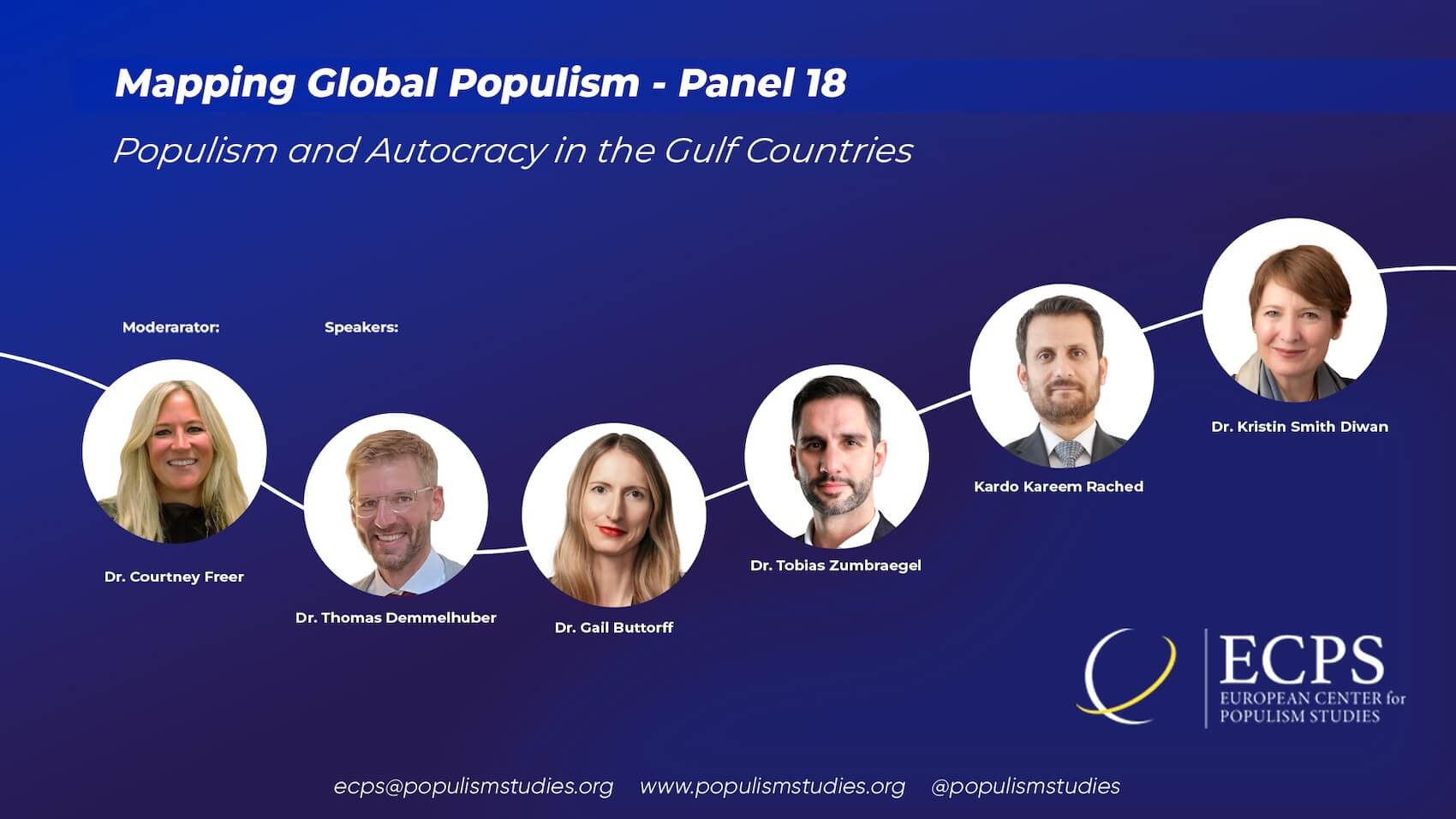
MGP15

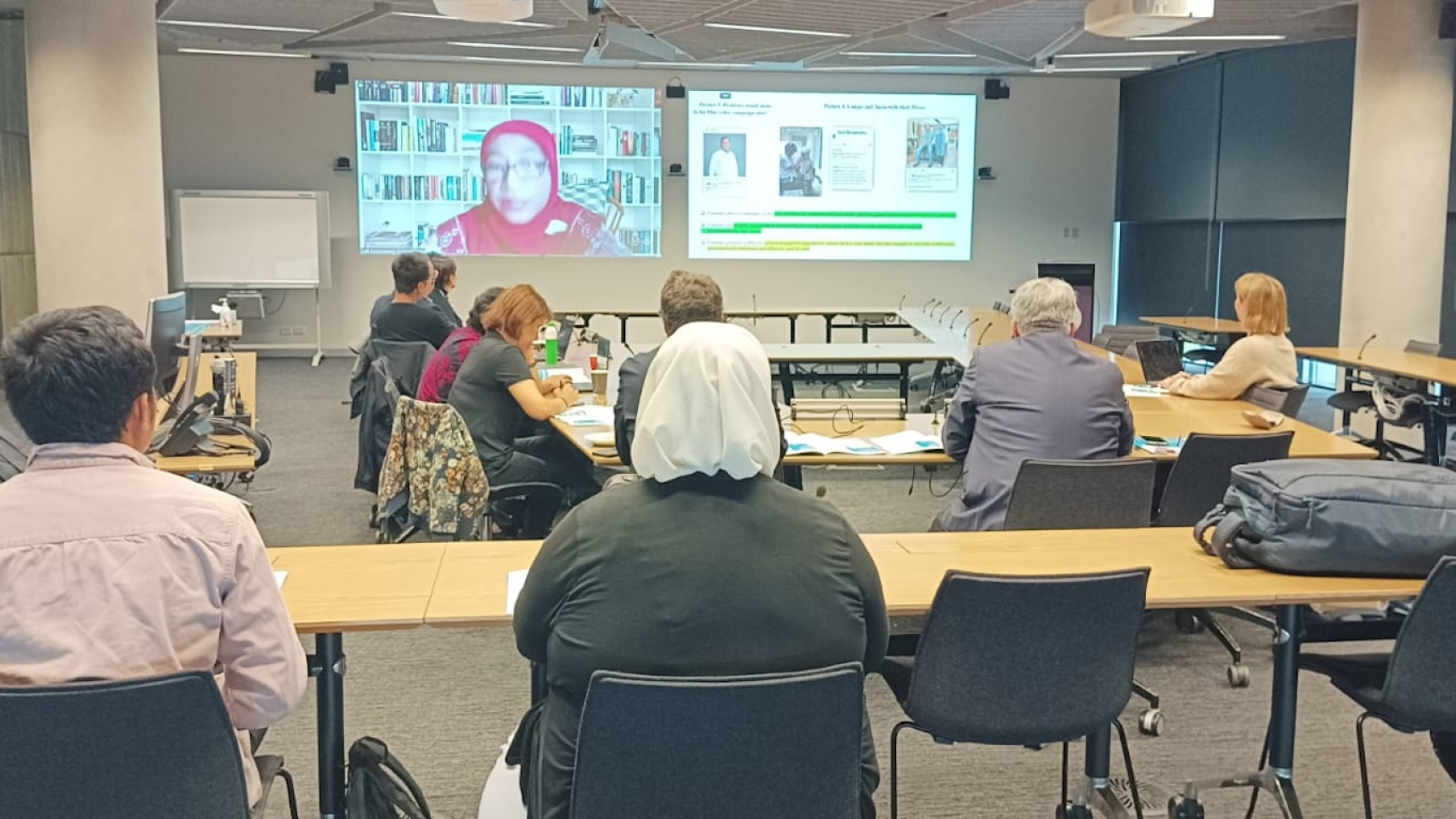
Mapping Global Populism — Panel XV: Theocracy, Radicalism and Islamist/Secular Populism in Iran, Afghanistan & Tajikistan

Moderator

Dr. Simon P Watmough (Postdoctoral Researcher at the University of Leipzig in Germany and a Non-resident Research Fellow at ECPS).

Speakers

“Counter-extremism and Authoritarian Governance in Tajikistan,” by Dr. Hélène Thibault (Associate Professor in the Department of Political Science at Nazarbayev University, Astana, Kazakhstan).

“The Taliban’s Totalitarian Regime: Governance, Extremism, and Control,”  by Dr. Zakia Adeli (Deputy Minister of Justice of the Islamic Republic of Afghanistan and a Professor in the Department of Political Science and International Relations at Kabul University (2018-2021) before joining East-West Center).

“The Rise of Populism in Iran: Inequality, Class Conflict, and Nationalist Authoritarianism,” by Amir Hossein Mahdavi (Ph.D. candidate at Department of Political Science, University of Connecticut).


Alan Abramowitz

Professor Abramowitz: Signs Indicate Polarization in the US Could Lead to Violence If Trump Loses

Interview by Selcuk Gultasli

In a compelling interview with the European Center for Populism Studies (ECPS), political scientist Dr. Alan I. Abramowitz, Alben W. Barkley Professor Emeritus at Emory College of Arts and Sciences, sheds light on the critical state of American democracy as the 2024 election approaches. Reflecting on the deeply polarized political landscape, Professor Abramowitz warns, “As we approach the 2024 election, there are signals that this polarization could again lead to violence, particularly if Trump loses the election.” His concerns are grounded in the rhetoric of Donald Trump, who has already suggested that any loss would be due to fraud, effectively claiming the election would be stolen from him. “This kind of rhetoric raises serious concerns about the potential for another outbreak of violence,” Abramowitz notes, emphasizing that while the events may not mirror January 6, the risk remains substantial, fueled by the provocative language of Trump and his allies, including his vice-presidential candidate, J.D. Vance.

Professor Abramowitz’s analysis highlights the unprecedented challenges facing American democracy. He points to the January 6, 2021, Capitol attack as a stark example of the violent potential of current political divisions, but he also expresses concern about other disturbing trends, including assassination attempts on former President Trump. These incidents, while rooted in complex motivations, are symptomatic of a nation deeply divided. “We tend to see things like that in times of deep division and polarization,” Abramowitz observes, adding that the normalization of such extreme actions is a dangerous precedent.

Looking ahead to the 2024 election, Professor Abramowitz predicts a tight race, with Kamala Harris likely to win by a narrow margin. However, he cautions that the dynamics of the Electoral College could result in a repeat of 2016, where the popular vote and the electoral outcome diverge. “There’s a real possibility that Harris could win the national popular vote but lose the electoral vote,” he states, underscoring the uncertainty and tension that will define the upcoming election.

Through his detailed examination of the current political climate, Professor Abramowitz provides a sobering assessment of the threats to American democracy. His insights offer a crucial perspective on the risks posed by heightened polarization and the potential consequences of another Trump presidency.

Here is the transcription of the interview with Professor Alan Abramowitz with some edits.

YaschaMounk Thumbnail

Professor Mounk: Second Trump Presidency Could Be Even More Dangerous Than His First

Professor Yascha Mounk observes that many Americans perceive the Democratic Party as being out of sync with mainstream values and believe that Kamala Harris is too progressive, while fewer think Donald Trump is too conservative. He suggests that Democrats should consider making cultural concessions that align with public opinion, particularly where common sense prevails. Mounk presents two very different scenarios in the event of Trump’s victory on November 5. On one hand, he notes that Trump’s first term, though damaging and chaotic, was perhaps less consequential than some, including Mounk himself, feared in 2016. On the other hand, Mounk offers a sobering analysis of what a second Trump term could mean for the future of the US.

Interview by Selcuk Gultasli

In a comprehensive interview with the European Center for Populism Studies (ECPS) on Tuesday, Dr. Yascha Mounk, Professor of the Practice of International Affairs at Johns Hopkins University’s School of Advanced International Studies and founder of Persuasion—an online magazine dedicated to defending the values of free societies—delivers a compelling analysis of the rise of populism and its implications for the future of democracy. Professor Mounk identifies three key drivers that have contributed to the rise of populism in the United States: the stagnation of living standards for ordinary citizens, rapid cultural and demographic transformations, and the rise of the internet and social media. These factors, he argues, have collectively fueled a sense of disillusionment and alienation among significant segments of the population, creating fertile ground for populist leaders like Trump to thrive.

As the November 5, 2024, US presidential election approaches, the stakes have never been higher. With Donald Trump’s re-election campaign gaining momentum, Professor Mounk states that ‘there are two very different prognostications. On one hand, you could argue that Trump was in power for four years, which turned out to be damaging and chaotic, but perhaps less consequential than some of us, including myself, feared in 2016’. He also offers a sobering analysis of what a second Trump term could mean for the future of the United States. He reflects on the evolution of Trump’s political influence, noting that “Trump now has about a 45% chance, according to betting markets, of regaining power,” highlighting the tight race and the potential consequences of his victory. Touching on the potential consequences of a second Trump presidency, Professor Mounk warns that while Trump’s first term was damaging, his probable second term could be even more dangerous given his increased experience, a loyal base within the Republican Party and a desire for retribution against institutions he believes hindered his first administration. The risks to American democracy, Professor Mounk suggests, are substantial, and the outcome of the 2024 election could have long-lasting implications for the country’s political landscape.

Reflecting on the broader debate about the resilience of democracies in the face of populist threats Professor Mounk acknowledges the strengths that have allowed American democracy to endure, while he also cautions against complacency, noting that the challenges posed by populism are far from over. Mounk points out that Trump’s four years in office, while chaotic, were mitigated by the resilience of American institutions, including the federal system and the economy. 

One of the central themes of the discussion in the interview is the impact of the changing demographic landscape on American politics. Professor Mounk notes that while immigration and demographic change are related, they are conceptually distinct phenomena. He argues that frustration over perceived loss of control—over borders and the cultural direction of the country—has been a significant driver of populist sentiment. This has been particularly evident in the case of Trump, whose appeal to voters is deeply rooted in cultural identity politics rather than purely economic concerns. Professor Mounk explains that Democrats had once banked on demographic shifts securing their electoral future, assuming that as the number of non-white voters increased, so too would their dominance. However, this assumption has not played out as expected. “The leftward drift of the Democratic Party has pushed many of these voters away,” Professor Mounk notes, underscoring the complex dynamics that have kept Trump competitive.

Professor Mounk also delves into the evolving media landscape, highlighting the profound shift from traditional broadcast networks to a more fragmented and polarized media environment dominated by social media, podcasts and independent platforms. He expresses concern over the term “misinformation” and how it has been used to suppress certain viewpoints, urging a more nuanced approach to the concept in public discourse. Professor Mounk’s insights provide a timely and critical perspective on the future of democracy in the United States and beyond.

Here is the transcription of the interview with Professor Yascha Mounk with some edits.

NataliaSatyro

Professor Sátyro: Authoritarian Leaders in Brazil Face Fewer Obstacles to Implementing Harmful Strategies

In her deep analysis of the challenges facing Brazil’s democracy under the influence of authoritarian populism, Professor Natália Sátyro, editor of the recently released book “Social Policies in Times of Austerity and Populism – Lessons from Brazil,” highlights the vulnerabilities within Brazilian social policies and democratic institutions. She notes how these weaknesses have allowed authoritarian leaders to introduce harmful strategies with fewer obstacles. As Brazil navigates its political future, Professor Sátyro warns of the potential consequences if such populist strategies persist. She argues that Brazil’s resilience, while notable, will be further tested if global trends toward authoritarian populism continue to gain momentum, particularly with the possibility of leaders like Donald Trump regaining power in other countries.

Interview by Selcuk Gultasli

In an exclusive interview with the European Center for Populism Studies (ECPS), Dr. Natália Guimarães Duarte Sátyro, a professor and researcher at the Post-Graduate Program of Political Science at the Federal University of Minas Gerais (UFMG) in Belo Horizonte, Brazil, provides a deep analysis of the challenges facing Brazil’s democracy under the influence of authoritarian populism. Highlighting the vulnerabilities within Brazilian social policies and democratic institutions, Professor Sátyro notes how these weaknesses have allowed authoritarian leaders to introduce harmful strategies with fewer obstacles.

Reflecting on Brazil’s political landscape, Professor Sátyro emphasizes that while some areas of the country’s social policies are strongly institutionalized, the impeachment of Dilma Rousseff exposed significant fragility in Brazil’s democratic institutions. “They withstood the process, but the effects were significant,” she states, drawing parallels with how populist authoritarian governments in other countries, like the United States and Hungary, have exploited identity-based antagonisms to mask their true predatory interests.

Professor Sátyro also discusses the broader global context, comparing Brazil’s right-wing populist movement with similar movements worldwide. She points out that the post-material issues such as neo-conservatism, gender debates and family roles distinguish the populist radical right from the mainstream right. Additionally, she stresses the inherent anti-democratic nature of the populist radical right’s reliance on fake news and disinformation drawing a connection to the strategies used by Donald Trump in the United States.

As Brazil continues to navigate its political future, Professor Sátyro warns of the potential consequences if similar populist strategies persist. She argues that Brazil’s resilience, while notable, will be tested further if global trends toward authoritarian populism continue to gain momentum, particularly with the possibility of leaders like Trump regaining power in other countries. This interview offers a compelling examination of the complex dynamics at play in Brazil’s ongoing struggle between democratic resilience and the rise of authoritarian populism.

Here is the transcription of the interview with Professor Natália Sátyro with some edits.