Professor Jonathan Olsen, Chair of the Department of Social Sciences and Historical Studies at Texas Woman’s University.

Professor Olsen: AfD’s Growth Faces a Ceiling Despite Eastern Stronghold

Despite the AfD’s strong performance in Germany’s Sunday elections, securing nearly 21% of the vote and dominating in the East, Professor Jonathan Olsen argues that the party faces a ceiling in its growth. “Opinion polls consistently show that around 80% of Germans do not support the AfD,” he notes, emphasizing its high negative ratings. While the AfD has solidified its base in the East, its influence in the West remains limited, requiring a broader appeal to expand further. Professor Olsen highlights that migration and security remain the party’s key mobilization issues, while economic concerns, though present, rank lower in importance for its voters.

Interview by Selcuk Gultasli

In a comprehensive interview with the European Center for Populism Studies (ECPS), Professor Jonathan Olsen, Chair of the Department of Social Sciences and Historical Studies at Texas Woman’s University, offered his insights into the Alternative for Germany (AfD)’s recent electoral performance. While the party’s near 21% result in the 2025 German elections signals strong support—particularly in eastern Germany—Professor Olsen argues that its growth potential may be reaching a ceiling. “Opinion polls have consistently shown that around 80% of Germans do not support the party,” he noted. “The AfD has the highest negative ratings of any political party in Germany.”

Despite its success, Professor Olsen highlights that the AfD’s ability to broaden its voter base remains uncertain. “They remain the largest opposition party, securing nearly 21% of the vote and mid-30% in Eastern Germany. But moving forward, the key question will be: How do they expand beyond their current level of support?” He suggests that, while the AfD has solidified its position in the East, its influence in the West remains limited. “They receive about twice as much support in the East as in the West. If I were advising the AfD, I would recommend they focus on broadening their appeal in the West and refining their messaging to attract a wider voter base.”

One of the more striking aspects of the AfD’s campaign was its issue selection. Professor Olsen describes the party as a “populist issue entrepreneur,” effectively capitalizing on migration and domestic security as central themes. “I don’t see that the AfD mobilized any new issues except for the economy and the performance of the Ampel coalition (Ampelkoalition). Migration was by far the most important issue driving their vote, followed closely by domestic security,” he explained. Economic concerns ranked much lower in priority, though Professor Olsen points out that 75% of AfD voters expressed concerns about rising prices and future financial security.

Despite some international attention, Professor Olsen downplays the impact of endorsements from figures like Elon Musk and J.D. Vance on the AfD’s performance. “There was no discernible bump from Musk’s endorsement or from J.D. Vance’s and Trump’s implicit support. So, I think it had zero effect,” he stated.

Looking ahead, the AfD’s position within both Germany and the broader European far right remains complicated. While it seeks alliances with transnational populist movements, many European far-right parties still consider it too extreme. “Even Marine Le Pen’s National Rally and Giorgia Meloni’s Brothers of Italy have distanced themselves from the AfD,”Professor Olsen noted. As the party continues to grow in the East while struggling to expand in the West, its long-term trajectory remains a crucial question for German and European politics.

Here is the transcription of the interview with Professor Jonathan Olsen with some edits.

The AfD’s Growth Is Strong, but Its Ceiling May Be in Sight

Photo: Shutterstock.

Professor Olsen, thank you very much for joining our interview series. Let me start right away with the first question: You observed the German elections in Germany. How do you interpret the performance of the AfD in the German elections, in which it almost doubled its vote since the last election in 2021? Did its electoral strategy evolve compared to previous elections?

Professor Jonathan Olsen: I think the AfD’s performance can be considered a strong one. The party is certainly pleased with the outcome. They didn’t exceed some expectations—some thought they might reach 21 or 22%—but they ended up just under 21%, so it can’t be characterized as disappointing. This result may suggest that there is a ceiling for AfD support. They remain the largest opposition party, securing nearly 21% of the vote and reaching the mid-30% range in Eastern Germany. It was a very successful election for them, but moving forward, the key question will be: How do they broaden their voter base? How do they expand beyond their current level of support? Because, in my view, there seems to be a limit to their electoral growth.

As for your second question—did their electoral strategy evolve compared to previous elections? I wouldn’t say it changed significantly. However, if you examine their campaign posters—I spent a lot of time walking around the city analyzing different posters, and I previously conducted research with my co-author on AfD election posters in 2017 and 2021—there is a noticeable shift. While I haven’t done a systematic study of the 2025 election, a first glance at their campaign materials suggests a much more mainstream presentation. Their advertising appears more conventional, more in line with other parties, and lacks the provocative posters seen in 2017.

The 2025 campaign placed significant emphasis on Alice Weidel as their lead candidate. When I examined their posters, nothing stood out as particularly different from other parties. Their strategy largely capitalized on the issues that were already prominent in public discourse—migration and domestic security—particularly following high-profile attacks involving asylum seekers in various parts of Germany. These events effectively handed the AfD its key campaign themes. Additionally, the CDU’s response to these issues, which in some ways reinforced the AfD’s position, made it even easier for the party to highlight its main message.

Do you think Elon Musk and J.D. Vance’s endorsement of the AfD had any effect on the party’s performance?

Professor Jonathan Olsen: No, I don’t think it had any effect. If you look at the AfD’s polling over the last year or so, it has stayed pretty steady, right around 20%. There was no discernible bump from Musk’s endorsement or from J.D. Vance’s and Trump’s implicit endorsement of the party. So, I think it had zero effect. It did not have any negative effect that I could tell—that is, I don’t think it drove people away from the AfD, but it certainly didn’t drive people to vote for the AfD either.

AfD’s National Expansion Remains Uncertain
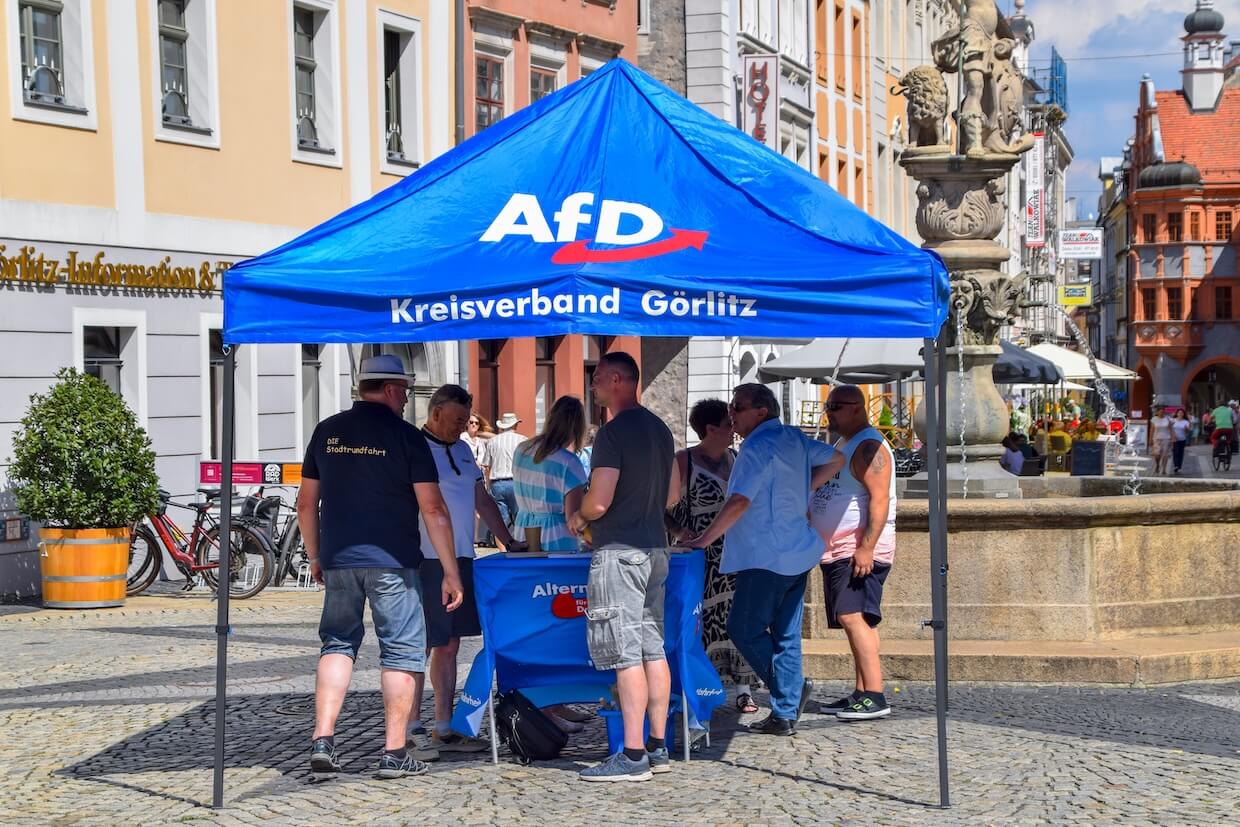
The Alternative for Germany (AfD) booth in Görlitz, Germany, on August 16, 2024. Photo: Shutterstock.

The AfD has seen significant support in the elections, particularly in eastern Germany. How do you interpret their latest electoral performance? Does it signal a deepening of their influence or a potential ceiling to their growth?

Professor Jonathan Olsen: Well, to address your last question first, which I partially answered earlier, I see a potential ceiling to the AfD’s growth. Opinion polls have consistently shown that around 80% of Germans do not support the party. The AfD has the highest negative ratings of any political party in Germany.

If you’re looking at people who didn’t vote for the AfD—not always the best way to gauge their future potential—you still have to consider that 80% of Germans did not vote for the AfD in 2025. As part of this election trip, we had a representative from the AfD speak to us, and I asked him what the party could do to broaden its support. He didn’t have much of an answer. It seems the AfD expects political issues to fall into their lap and assumes that the failure of mainstream parties to address key problems will automatically boost their support. But I’m not convinced that’s the case. I don’t see their support growing dramatically unless they take proactive steps to make themselves more appealing to a broader segment of German voters.

Now, in eastern Germany, the situation is different. This is more of a West German problem than an Eastern German one. In Eastern Germany, the AfD is the largest party. If you look at the first vote election results in East and West, it’s predominantly the CDU and CSU in the West, while in the East, it’s primarily the AfD. They secured 35–36% of the vote in Eastern Germany, making them the dominant party there. It reminds me of the vote totals Die Linke was getting 10–15 years ago, but which they no longer achieve.

The AfD has clearly solidified its base in Eastern Germany. Although they perform relatively well in the West, they still lag significantly behind other parties there. They receive about twice as much support in the East as in the West. I believe the average was 34% in the East compared to around 18% in the West. If I were advising the AfD, I would recommend they focus on broadening their appeal in the West and refining their messaging to attract a wider voter base. That’s how I would approach it.

AfD’s Success Driven by Migration and Security, Not New Issues

Your research highlights the AfD as a “populist issue entrepreneur.” What new issues has the party successfully mobilized in this election?

Professor Jonathan Olsen: This was interesting because I don’t see that the AfD mobilized any new issues except for the economy and the performance of the Ampel coalition (Ampelkoalition). If you look at the issues the AfD was running on and that were important to their voters, it was migration and domestic security. After that, it was the performance of the Ampel coalition, specifically regarding the economy and energy.

Whether they have a coherent answer is another question. I don’t think so, and I know that most German voters didn’t find their answers to economic issues particularly convincing. However, that may not matter much to their core voters. For them, the most important thing is that the AfD continues to stress migration and domestic security issues. Whether they can develop their economic message in the future is an important question for broadening their voter base. Finding a coherent and convincing economic platform will be crucial for the AfD if they want to expand their appeal.

I wanted to look at this because there were some interesting exit polls available on Tagesschau. Looking at the issues that were important to voters overall, domestic security was the top issue, tied with economic and social security. After that came migration, followed by economic growth.

For AfD voters specifically, migration was by far the most important issue driving their vote, followed closely by domestic security. Far behind those were concerns about economic growth, rising prices, and other issues. So, it’s clear that for AfD voters, the party’s primary appeal comes from its stance on migration and domestic security, with much of the security debate tied to migration—curbing violence by asylum seekers, for example. Economic issues rank far lower in importance. Right now, this prioritization works for them, but if the AfD wants to broaden its voter base in the future, they will have to develop more convincing economic solutions.

Far-Right Degrowth: A Mix of Nationalism, Eco-Asceticism, and Climate Skepticism

How does the far right’s concept of “degrowth” differ from the left’s vision, and what role does this play in its political messaging?

Professor Jonathan Olsen: So that’s a real shift in gears, moving from the AfD to the broader far right. The AfD, like most populist far-right parties, is more of an anti-environmental party than an environmental one. While they talk about alternative environmental solutions, their primary concern is denying climate change or denying that it is man-made. They advocate for a return to traditional fossil fuels and are strongly opposed to alternative energy sources. There is nothing in the AfD’s program that suggests any real concern for environmental issues.

However, the broader far-right milieu in Germany and elsewhere takes some of these issues more seriously. Unlike the AfD, some far-right groups do not deny climate change or its human causes. They support some use of alternative energies and acknowledge major environmental challenges. The most the AfD does in this regard is to conceptualize a nationalist environmental policy. They frame themselves as the true environmentalists, arguing that only patriots—those who love their homeland—can truly protect the environment. They mention environmental initiatives, but their proposals are quite limited.

This is where degrowth comes in. Unlike the broader far right, the AfD—like almost all other populist far-right parties—does not question economic growth. Degrowth is a concern primarily for other far-right groups and circles that take environmental issues more seriously. That being said, this remains a relatively small segment of the far right.

Their conception of degrowth aligns with what Bernhard Forchtner and I called “eco-asceticism.” This vision promotes self-renunciation, self-control, and a reduction in consumption. In this regard, it is not entirely different from the left’s vision of degrowth. However, where they diverge is in their views on global capitalism. The left firmly identifies global capitalism as the main driver of environmentally destructive economic growth, whereas the far right is more ambiguous. They are certainly against globalism, but not necessarily against all forms of economic growth.

Another key difference is that some segments of the far right that discuss degrowth also tie it to an ethno-nationalist vision of the nation and a concept of ethnocultural purity. You don’t find this element in the left’s vision of degrowth.

AfD Remains an Outlier but Gains Leverage in German Politics
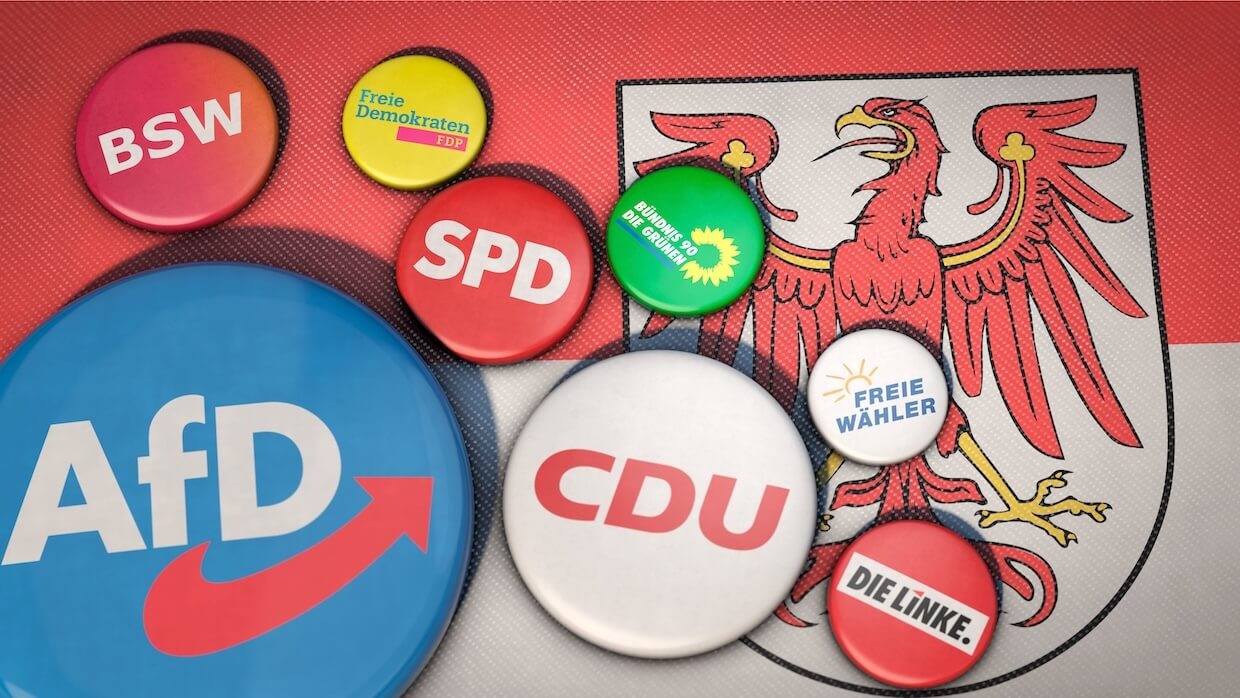
Photo: Shutterstock.

In your view, has the AfD managed to fully integrate into the German political system, or does it remain an outlier? How has the response of mainstream parties impacted its trajectory?

Professor Jonathan Olsen: Well, it still remains an outlier because no other party is willing to form a coalition with it. The AfD is trying to bide its time—returning to a point I made earlier, the AfD’s strategy at this stage seems to be to wait it out. That is, they are not going to do much differently from what they have done before. They are not actively trying to increase their vote share; instead, they are counting on the decline of mainstream party support, which would eventually leave conservatives with no other option than to form a coalition with the AfD. That appears to be their strategy. So, the AfD is definitely still an outlier in the political system. However, its growing vote totals are making it harder for other parties to form coalitions—both at the national and state levels—and to completely ignore the issues it is raising.

How has the response of mainstream parties impacted the AfD? Well, a couple of weeks before the election, Friedrich Merz tried to push through a non-binding resolution on limiting migration in a particular way, and he had to rely on AfD support to get it passed. He didn’t want to; he had expected other parties to support it, but it turned out to be a miscalculation on his part. Many observers saw that as providing a certain degree of legitimation to the AfD and the far right. People have been discussing the Brandmauer—the firewall against the AfD—as if it is not completely down, but at least damaged.

I think the response of mainstream parties is going to be really important for the AfD’s trajectory in the future. If they can continue to marginalize the AfD—treating it as a non-legitimate party—while at the same time addressing the concerns that matter to AfD voters and a broader segment of the German electorate, then they have a chance of decreasing the AfD’s vote share.

In other words, I believe the next four years will be crucial—assuming the coalition lasts its full term. Whatever government forms next, most likely a CDU/CSU and SPD coalition, it will be essential to address key issues in a way that satisfies German voters. If they succeed, I think we will see a decline in the AfD’s vote totals. If they fail—especially if the new coalition resembles the Ampelkoalition in its inability to resolve basic concerns—then the AfD will likely continue to receive 20% or more of the vote.

AfD Support Driven More by Perceived Decline Than Economic Hardship

Many analysts highlight economic anxieties and globalization backlash as drivers of AfD support. How much of their success do you attribute to economic factors versus cultural or identity-based appeals? To what extent did dissatisfaction with the government’s handling of recent crises, such as the economy or migration, contribute to AfD’s support in Sunday’s elections?

Professor Jonathan Olsen: I’ll answer that last question first, and it contributed a lot to the AfD’s support. Migration, as we’ve discussed, was by far the biggest issue. The economy also played a role, even though it ranked lower on AfD voters’ list of concerns. That doesn’t mean it was unimportant. Certainly, the Ampel coalition’s perceived incompetence and inability to get things done had a significant effect on the AfD’s vote.

Regarding economic factors versus cultural and identity-based issues, I don’t think you can completely separate the two. If you look at AfD voters objectively, the majority are not economic losers. In terms of income levels and other economic markers, they are not primarily drawn from the unemployed or lower-income groups. Instead, the AfD’s support comes from middle- and higher-income levels. So, it is not necessarily their objective economic situation that is driving AfD voters. However, there is a strong sense of anxiety among AfD voters that they are losing—that they are falling behind compared to other groups.

This reflects a distinction between subjective perceptions and objective markers of economic status. Looking at the available data, Tagesschau exit polling showed that domestic security played a far larger role among AfD voters than among any other party’s electorate, with 33% citing it as a top concern. Migration, as expected, was twice as significant for AfD voters compared to supporters of any other party. Conversely, economic growth was a much lower priority for AfD voters compared to other parties.

One particularly interesting finding is that 75% of AfD voters expressed strong concerns that rising prices would make it difficult for them to pay their bills. Similarly, 74% feared that their standard of living could not be maintained in the future, and 71% were deeply concerned about having enough money in old age. So, while AfD voters clearly have economic anxieties—especially regarding globalization—these concerns are not necessarily grounded in their objective circumstances but rather in their subjective perceptions and fears about economic decline.

AfD Seeks Alliances but Remains ‘Too Extreme’ for Europe’s Far Right
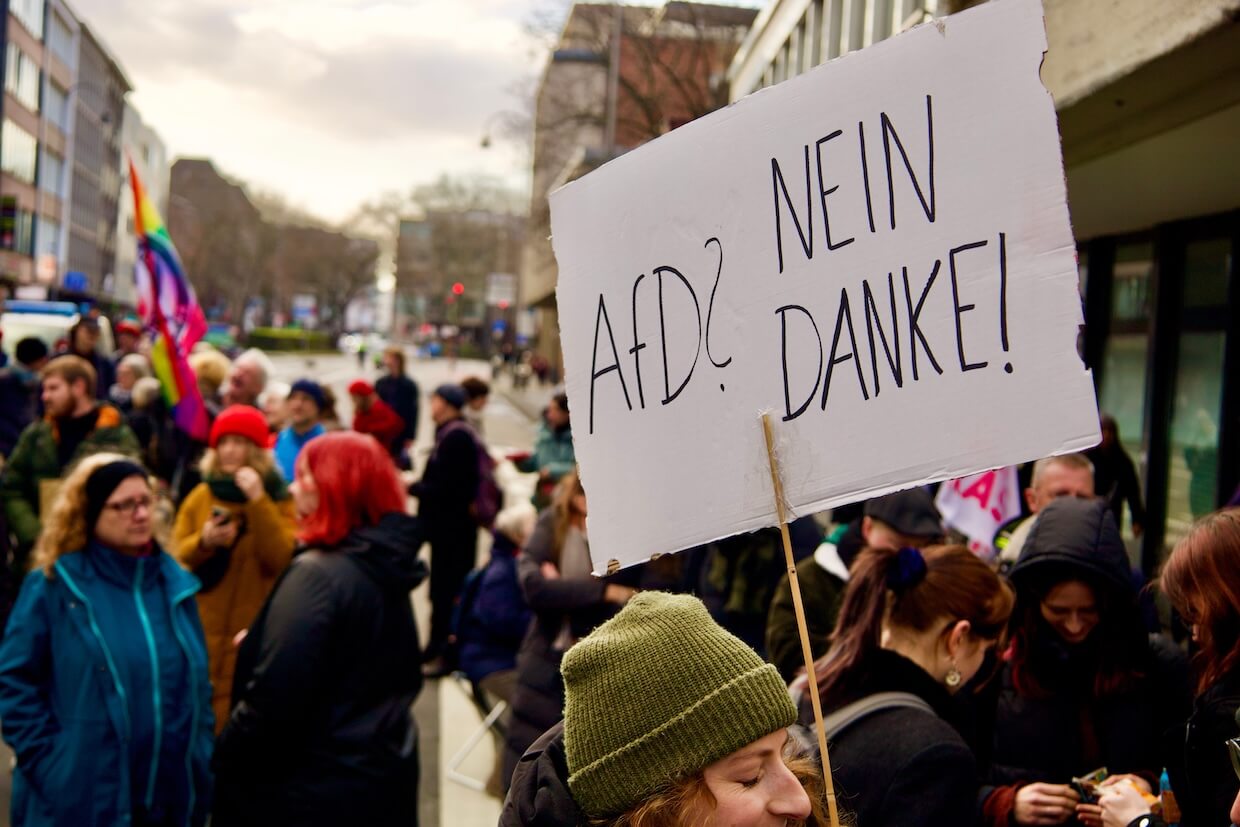
Hundreds of people demonstrated against hatred and the AfD at a rally organized by Fridays for Future Cologne in Cologne, Germany, on February 1, 2024. Photo: Ryan Nash Photography.

Given the rise of far-right parties across Europe, do you see the AfD aligning more with transnational populist movements, or is its strategy still largely domestically driven?

Professor Jonathan Olsen: I see the AfD trying to align itself more with transnational populist movements. It does seek out international partners, particularly in Europe. However, interestingly enough, the AfD is still viewed as too extreme by many far-right populist parties—certainly by the National Rally in France, which did not want the AfD as part of its group in the European Parliament. It is also seen that way by Giorgia Meloni’s Brothers of Italy, as the AfD is considered too far to the right. Some of the party’s controversial statements regarding the Nazis, the Holocaust, and the war have contributed to this perception.

As a result, the AfD currently stands somewhat apart from other far-right populist parties in Europe, even though they share many of the same issues. Migration is a central concern for all far-right populist parties, as is globalization. Anti-EU or at least highly EU-skeptical sentiments are common across these parties, as is the cultivation of nationalism and national identity. However, the AfD remains farther to the right than most.

Domestically, the AfD is primarily focused on appealing to East Germans, where some of its more controversial statements on National Socialism have not appeared to harm its electoral support. However, these same controversies have damaged its relationships with other far-right populist parties in Europe.

AfD’s Environmental Stance: Nationalist Framing or Anti-Green Identity?

Farmers and truckers protest against subsidy cuts at the Brandenburg Gate in Berlin, Germany, on January 14, 2024. Photo: Shutterstock.

Does the AfD’s environmental discourse resonate with voters, or is it more of a symbolic strategy aimed at rebranding the party’s ideological image?

Professor Jonathan Olsen: Whatever pro-environmental discourse the AfD has is not really something that resonates with voters. When you look at the AfD’s messaging, it is primarily focused on anti-environmental positions. It advocates for a return to fossil fuels, opposes alternative energy sources like wind power, rejects subsidies for electric vehicles, and promotes climate change denial or skepticism.

The environmental aspects of the AfD’s messaging are mostly framed within a nationalist perspective. This includes rhetoric about protecting the German environment, preserving the homeland, and safeguarding natural spaces. However, this nationalist environmentalism is minimal and does not seem to attract many voters.

The interesting question moving forward is whether the AfD—or other populist far-right parties—will attempt to moderate their stance on environmental issues, climate change, and related policies. It remains to be seen whether they will consider such a shift too risky, as their anti-environmental message is distinct from that of any other party. If they were to embrace more pro-environmental policies, they might lose their unique positioning in the electoral marketplace.

And lastly, Professor Olsen, how has the AfD framed issues like sustainability and environmental protection? Does their rhetoric on ecology differ from traditional far-right parties, and how do they position themselves against the German Greens?

Professor Jonathan Olsen: Well, there has been some great work looking at the relationship between the AfD and the Greens. I think the Technical University of Dresden has written a couple of pieces on this. I remember one article that essentially discusses the AfD as the “anti-Greens.” They position themselves as such because they take very distinct, opposing positions from the Greens and view them as their biggest enemy—not necessarily in terms of electoral strength, but certainly in terms of policies and ideology. The image of the Greens and the image of the AfD are diametrically opposed, and the AfD very much positions itself in direct opposition to them.

Issues like sustainability and environmental protection are, again, wrapped within a German nationalist framework. Their rhetoric suggests that, of course, they want environmental sustainability and to protect the environment, as it is part of the natural basis of life and the German homeland. The argument follows that those who love their homeland will naturally want to protect its environment.

This framing allows the AfD to present some environmental policies—such as reducing the use of pesticides or other forms of environmental protection—as being in line with their nationalist agenda. However, where they truly differentiate themselves and cast themselves as the “anti-Greens” is in their opposition to climate protection and alternative energies, particularly as part of a broader climate policy.

Dr. Ellen Desmet, an Associate Professor of Migration Law at Ghent University.

Dr. Desmet: EU Countries Systematically Violate Non-Refoulement with Indiscriminate Pushbacks

The EU’s human rights commitments are weakening as populist movements push restrictive migration policies, warns Dr. Ellen Desmet, Associate Professor of Migration Law at Ghent University. She describes a growing disregard for human rights, stating, “We are witnessing blatant human rights violations that are only increasing.” A 2024 report documented over 120,000 pushbacks at EU borders, violating non-refoulement by forcibly returning asylum seekers without assessing their protection needs. “Some EU countries have even legalized these pushbacks,” Desmet cautions, while the European Commission hesitates to act. She also points to far-right rhetoric shaping restrictive policies, with mainstream parties following suit. Meanwhile, according to Dr. Desmet, Belgium’s new government threatens judicial independence and tightens asylum rules, further escalating human rights concerns.

Interview by Selcuk Gultasli

The European Union’s commitment to human rights and asylum protections is under increasing strain as populist movements push for restrictive migration policies. Dr. Ellen Desmet, an Associate Professor of Migration Law at Ghent University, highlights this deterioration in a compelling interview with the European Center for Populism Studies (ECPS). She provides an evidence-based assessment of how EU member states are violating fundamental principles of international refugee law, including the principle of non-refoulement.

According to Dr. Desmet, while “lip service is still paid to human rights on paper, in practice, we are witnessing blatant human rights violations that are only increasing.” She points to a 2024 report by a Belgian coalition of NGOs, which documented over 120,000 pushbacks at EU external borders. These pushbacks, often occurring in Greece and other key entry points, involve forcibly returning people without assessing their need for protection—a direct violation of non-refoulement, which prohibits states from deporting individuals to places where they risk torture, persecution, or threats to their life and dignity. Disturbingly, some EU states have even enacted laws to legalize these pushbacks, while institutions like the European Commission remain reluctant to take action against these clear breaches of international law.

Beyond border policies, Dr. Desmet emphasizes a broader deterioration in the rights of migrants, asylum seekers, and refugees. She warns that European states are increasingly treating migrants as security threats, with a growing trend of externalizing migration policies—a tactic designed to shift asylum responsibilities away from the EU. This is particularly evident in Belgium’s recent policy shifts, where the new coalition government has adopted a more restrictive approach. “We see worrying developments from a rule-of-law perspective,” she explains, referring to how judicial rulings on asylum reception have been ignored and how judicial independence is now under threat.

Dr. Desmet also discusses how far-right movements and mainstream political parties alike are fueling anti-migration policies by framing migration as a “crisis.” This has led to ‘a race to the bottom’, where governments are tightening asylum laws to outmaneuver populist opponents. Policies once considered extreme are now becoming mainstream, further undermining human rights and democratic principles.

In this interview, Dr. Ellen Desmet provides a critical analysis of how legal frameworks, political rhetoric, and migration policies intersect, shedding light on one of Europe’s most pressing human rights challenges.

Here is the transcription of the interview with Dr. Ellen Desmet with some edits.

A Decline in the Rights of Migrants, Asylum Seekers, and Refugees Across Europe

For right-wing populists in the Western world, “the others” primarily include immigrants but also extend to “welfare scroungers,” regional minorities, individuals with “non-traditional” lifestyles, communists, and others. Photo: Shutterstock.

Professor Desmet, thank you very much for joining our interview series. Let me start right away with the first question: There is a great deal of information, speculation, and conspiracy theories surrounding migration in Europe. Could you provide an evidence-based overview of the current migration landscape, particularly regarding refugees and asylum seekers from a human rights perspective?

Dr. Ellen Desmet: That’s a very broad question to start with. On the one hand, what we see, and what we also learn from sociological research, is that the flows or the number of people forcibly fleeing their country fluctuate, driven by wars, conflicts, and other factors. On the other hand, if you look at the current migration landscape from a human rights perspective, we see a deterioration in the rights of migrants, asylum seekers, and refugees, who are increasingly being treated as suspects. There is also a growing tendency towards the externalization of migration policies, where European countries seek to prevent migrants and refugees from even reaching EU borders. This is because, once they arrive at EU borders, EU Member States become responsible for assessing their applications for international protection. To avoid this responsibility, efforts are made to externalize asylum procedures.

This trend is evidenced by agreements signed with various countries, such as Mauritania, among others. Additionally, last year, the New Pact on Migration and Asylum was adopted, introducing ten new legislative instruments that are currently in the process of being implemented. Member States are required to enforce these measures by the summer of 2026.

However, even within these legislative instruments—intended to create a more common European asylum system—we observe a reduction in the rights of refugees and asylum seekers. There is now greater emphasis on the duty of cooperation for asylum seekers. For example, if they come from a country with a low recognition rate, they will be automatically placed in a border procedure. This raises concerns, including questions about access to legal assistance.

Overall, at the EU level, both in legislation and implementation, as well as at the national level within Member States, we see a decline in respect for the human rights of migrants—not only in legal frameworks but also in policies and enforcement.

What role does the framing of migration as a ‘crisis’ play in fueling racist narratives in Belgium and across Europe?

Dr. Ellen Desmet: Previous research and arguments from other colleagues suggest that when migration is framed as a key issue in elections, and its salience increases, as we see now across Europe, it benefits populist anti-immigration parties. By making immigration a central political theme, it actually leads to anti-immigration parties gaining more votes.

Another consequence of this framing and the problematization of migration as a crisis is that it influences mainstream political parties to adopt or co-opt anti-immigration legislative and policy proposals from the extreme right. As a result, policies that diminish the human rights of migrants are increasingly being incorporated and implemented by so-called mainstream political parties.

Restrictive Migration Policies and Far-Right Rhetoric Reinforce Each Other

In recent years, European countries and the EU have undergone significant shifts in their refugee and asylum policies, from Merkel’s Willkommenskultur to increasing restrictions under more recent governments. How do you see these policy changes influencing public discourse and the political success of far-right parties like Vlaams Belang in Belgium and AfD in Germany?

Dr. Ellen Desmet: I think it’s somewhat of an interaction. On the one hand, these policy changes stem from shifts in political discourse. On the other hand, these policy changes may further fuel the political success of far-right parties, especially because the policy proposals of these parties are increasingly being adopted and implemented by mainstream political parties.

How has the rise of right-wing populism in Europe, particularly in Belgium, shaped national policies on migration and asylum seekers?

Dr. Ellen Desmet: Vlaams Belang, the far-right populist party, previously had what they called the “70 Points Plan.” Now, we have a new federal government with a new coalition agreement being presented. In the coalition agreement, many of these proposals have already shifted towards restrictive measures, such as investing in the externalization of migration and halting resettlement until the reception crisis is resolved.

We also see worrying developments from a rule-of-law perspective. Under the previous government, many judicial rulings related to the reception crisis were simply ignored by the executive branch. For example, there were there were thousands of judgments requiring the government to provide material reception conditions for asylum seekers, yet these were disregarded.

Now, in the current coalition agreement, there are even more concerning proposals. One example is that the Council for Alien Law Litigation, which is the appeal tribunal for asylum and migration cases in Belgium, would see a change in how its judges are appointed. Instead of being nominated for life, as is standard to ensure judicial independence, the proposal suggests a renewable five-year term, which could put judicial independence under pressure.

So, my interpretation is that the rise of right-wing populism has contributed to more restrictive migration policies, as reflected in the current government agreements in Belgium.

EU Countries Undermine Non-Refoulement with Indiscriminate Pushbacks

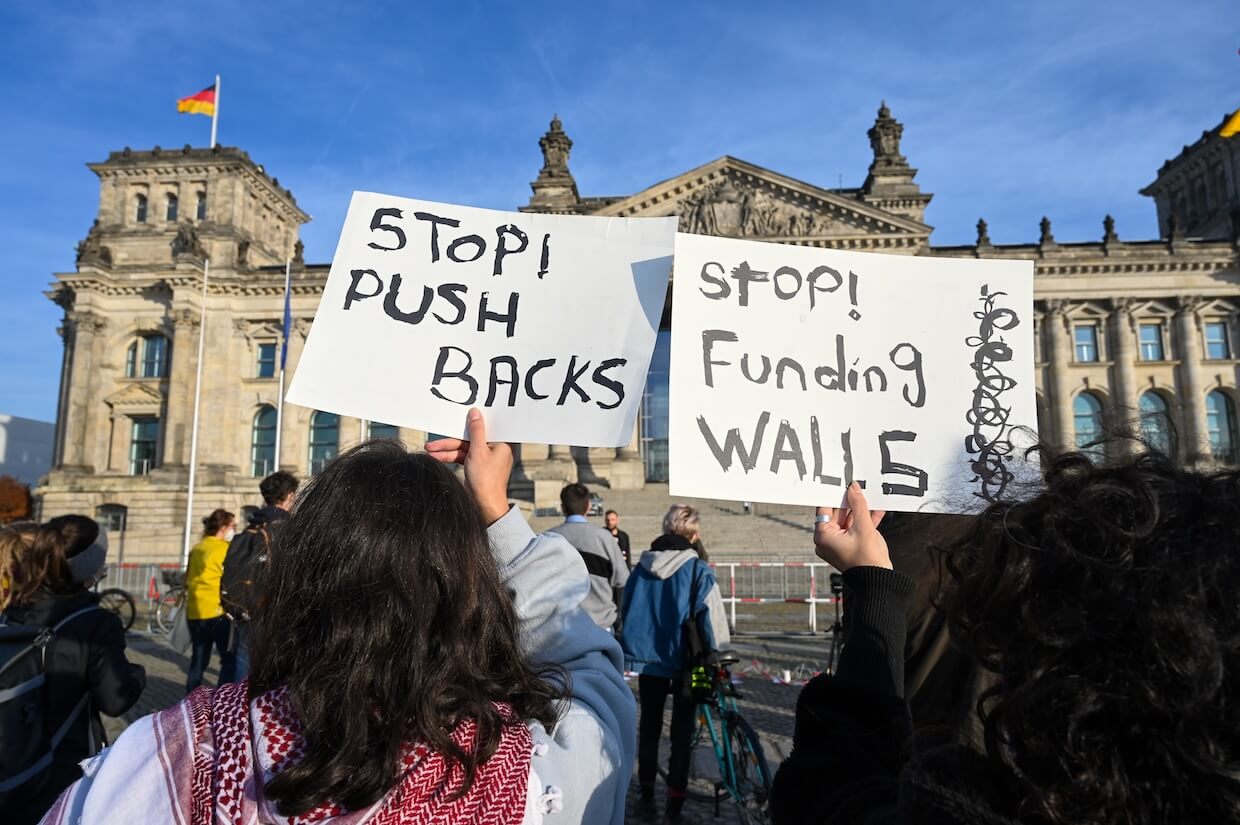
A woman activist holds a “Stop Pushbacks” banner in front of the Bundestag in Berlin, Germany. Photo: Ajdin Kamber.

The EU member states have legal obligations under international refugee law but rising populist sentiments and electoral pressures often push governments to tighten migration policies. How do you see this tension evolving, and what role can legal scholars and human rights advocates play in ensuring the protection of asylum seekers?

Dr. Ellen Desmet: I think we are witnessing a race to the bottom among EU Member States, where countries, following the example of Denmark and the Netherlands, and now Belgium, are striving to implement the strictest asylum and migration policies ever, as they have announced.

Here, I believe it is important to make a distinction. On the one hand, some rules can be tightened within legal boundaries. For example, under EU law, the Family Reunification Directive currently provides some legal flexibility, allowing for certain restrictions while remaining within the framework of EU law and human rights. This is explicitly mentioned in Belgium’s new government agreement, where it is stated that authorities will explore how far they can go in making migration, family reunification, and asylum rules as restrictive as possible within the limits allowed by existing legal frameworks.

On the other hand, while lip service is still paid to human rights on paper, in practice, we are witnessing blatant human rights violations that are only increasing. A recent report issued by the Belgian coalition of NGOs, in collaboration with nine other organizations, documented over 120,000 pushbacks at the EU’s external borders in 2024. These pushbacks involve people being forcibly returned without individual assessment of their need for protection, which is a clear violation of the principle of non-refoulement—the rule that prohibits sending people back to a place where they risk torture, persecution, or threats to their life and dignity.

These pushbacks are occurring at external borders such as Greece, and some countries have even enacted laws to legalize them. However, the European Commission and other institutions remain reluctant to act against these clear violations of international law.

As legal scholars and human rights advocates, our role is to inform the public about the current state of the law, highlighting where legal flexibility exists within the system, but also calling out policies that clearly violate the rule of law and fundamental human rights. For instance, the recent proposals concerning the Council for Alien Law Litigation, where judicial appointments would become temporary rather than lifetime positions, pose a serious threat to judicial independence. It is essential to emphasize these issues and raise awareness about the legal safeguards that should be in place.

By sharing knowledge about the rule of law, explaining what is happening, and informing people about the legal protections that should be upheld, we must do our part to contribute to the protection of asylum seekers and the integrity of legal systems.

Human Rights Obligations Are Being Set Aside for Political Convenience

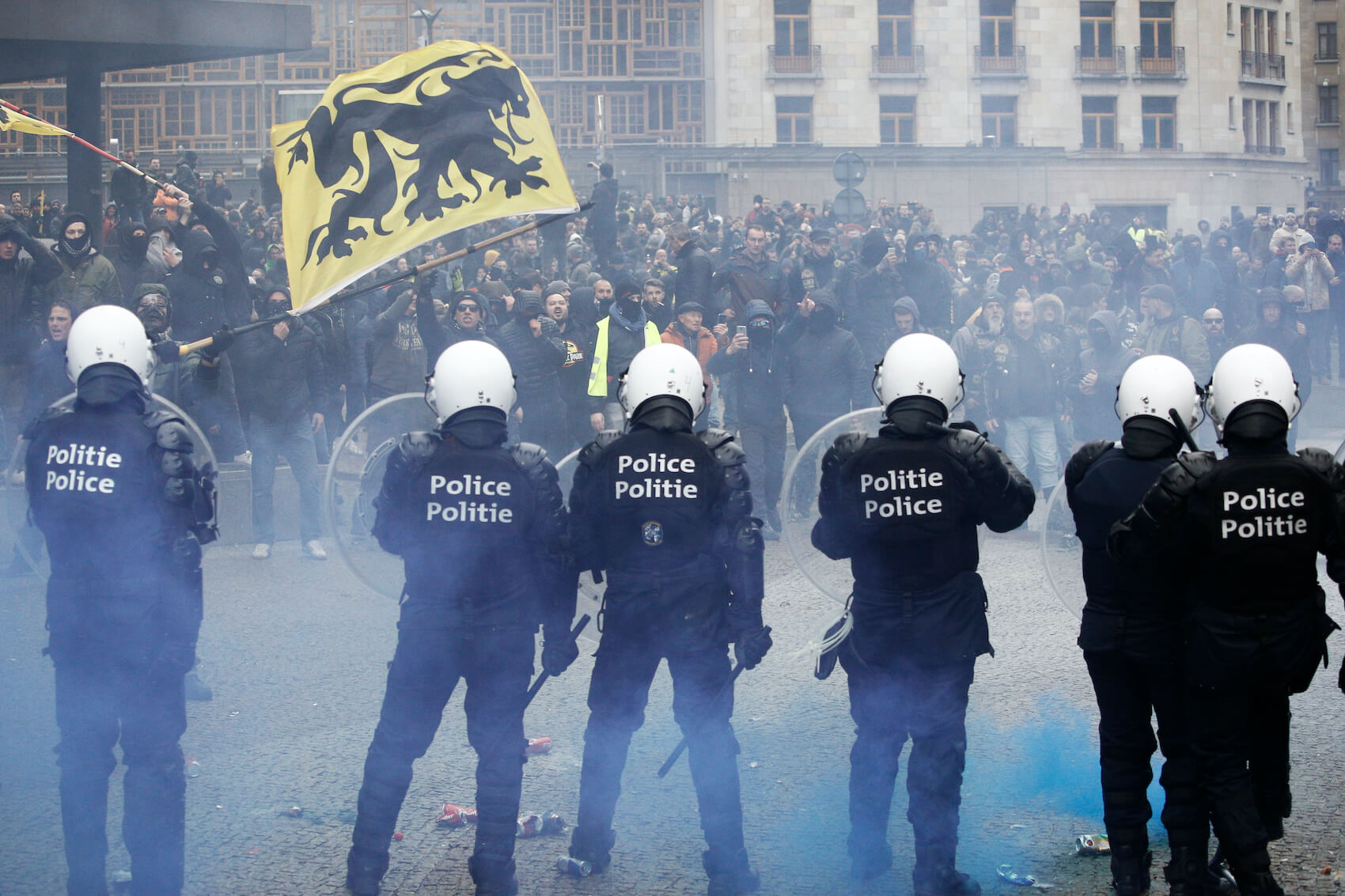
Far-right supporters clash with riot police during a protest against Marrakesh Migration Pact in Brussels, Belgium on December 16, 2018. Photo: Alexandros Michailidis.

In what ways have European states, in particular Belgium, balanced human rights obligations towards migrants with increasing domestic political pressure from populist movements?

Dr. Ellen Desmet: I think that today we see that human rights obligations tend to be ignored. As I previously mentioned regarding the reception crisis, which has lasted for two and a half years in Belgium, single adult men are being forced to sleep on the streets, even after being recognized as refugees. Due to Belgium’s ongoing housing crisis, many people do not have access to decent accommodation.

Previously, I believe it would have been unacceptable and concerning from a rule of law perspective for even one court ruling to be ignored. However, today, human rights obligations related to the provision of reception seem to be set aside under the argument that it is not feasible practically or politically. Sometimes, these obligations are not fulfilled out of fear that doing so might benefit populist movements. I believe that the balance between upholding human rights and responding to political pressures needs to be reaffirmed.

Your research discusses civil society’s role in resisting restrictive migration policies. How effective has civil society been in countering populist-driven migration policies in Belgium?

Dr. Ellen Desmet: I think the assessment is mixed. Under various previous governments, particularly during the 2014–2019 legislative period, when the Secretary of State for Asylum and Migration was controlled by the New Flemish Alliance (N-VA), there was very little space for civil society to be consulted before legislative proposals were introduced. Many laws were passed without meaningful negotiation or consultation, and a significant number of these legislative proposals raised concerns from a human rights, migrant, and refugee rights perspective.

When the concerns of civil society organizations are not taken into account before the adoption of legislation, their only remaining option is to challenge these laws through legal appeals, such as filing cases with the Council of State or the Constitutional Court. Over the past years, civil society actors in Belgium have been vocal and active in bringing contested aspects of new migration and refugee policies before these higher courts. However, this judicial approach requires substantial human and financial resources, placing significant pressure on civil society organizations, as they must engage in lengthy legal battles to challenge problematic legislation.

As for the courts’ responses, the reactions have been mixed. In some cases, higher courts, including the Council of State and the Constitutional Court, have intervened to halt the most extreme or concerning policies. For example, during the 2014–2019 coalition, a quota was imposed on the number of asylum applications that could be submitted per day in Belgium. The Council of State overturned this measure, ruling that it clearly violated higher legal obligations. However, on other issues, the courts have taken a more minimalist approach, refraining from stronger interpretations of human rights protections. I think civil society organizations have been active in bringing cases to court to challenge new legislation. The courts have overturned some measures, but definitely not all.

The Global Compact for Migration Sparked Controversy but Had Little Legal Impact

How have international legal frameworks, such as the Global Compact for Migration, influenced migration policies in countries with strong far-right movements?

Dr. Ellen Desmet: I think it’s interesting to see how, seven years ago, all the talk was about the Global Compact for Migration, which in Belgium even led to the fall of the government when the New Flemish Alliance (N-VA) left the coalition government over the Marrakesh Pact, as it was called. The concern at the time was that it would create new obligations for member states, despite the fact that the Global Compact for Migration explicitly stated that it was merely a restatement of existing obligations, was non-binding, and did not introduce any new legal commitments. The fact that a populist party left the federal government over a non-binding political instrument was a unique event in Belgium’s constitutional history, highlighting once again the political sensitivity of migration issues.

As for the actual impact, despite the initial controversy, the practical influence of the Global Compact for Migration has been quite limited. A first analysis of judgments before the Council for Alien Law Litigation, conducted a few years ago, showed no significant legal or judicial impact of the Global Compact for Migration in the Council’s case law.

So, while its adoption sparked significant debate and skepticism among anti-migration and populist parties, in practice, the Global Compact for Migration, as a non-binding political instrument, has not had a strong legal impact on national policies. Instead, I believe that the New Pact on Asylum and Migration from the European Union is likely to have a greater effect, as it consists of binding regulations that EU Member States are legally required to comply with and implement.

Given the growing influence of far-right politics across Europe, do you believe the EU and big players in EU politics can sustain a balanced asylum system that upholds human rights while addressing public concerns? What policy changes would you recommend creating a more sustainable and inclusive approach to migration and integration?

Dr. Ellen Desmet: That’s a very big question, but it’s not hard to answer. I think a lot of public concerns are not based on empirical knowledge of how migration actually works, including the fact that a certain level of migration is necessary for society. I believe it is also a matter of political will and political courage to recognize that migrants, refugees, and asylum seekers are human beings who are entitled to the same human rights as everyone else. It is in the best interest of society to facilitate family reunification, rather than making it overly restrictive, because such restrictions negatively impact the integration trajectories of refugees.

We recently completed a four-year research project on the integration trajectories of refugee families in Flanders and Belgium. Our policy recommendations emphasize the need for greater alignment and interaction between different policy domains, such as access to employment, education, and social services. Currently, too much emphasis is placed on Dutch language proficiency, which may actually hinder a smoother integration process.

Another issue lies in Belgium’s complex federal structure, where there is a disconnect between different levels of governance. For instance, at the federal level, the government is responsible for the reception of asylum seekers, but once refugees are recognized, access to housing falls under Flemish jurisdiction. This creates a gap, as no single government agency is explicitly responsible for ensuring that refugees obtain decent accommodation.

Additionally, there is a trend toward restricting social rights for refugees and migrants, which arguably hinders successful integration into society. In the federal government agreement, we often see contradictory approaches—on the one hand, migration policies focus on restricting family reunification, making it difficult for individuals to live with their families. On the other hand, in other policy areas, the government emphasizes the family as the cornerstone of society. These inconsistencies should be addressed by developing a more unified and coherent approach to migration and integration policies.

Belgium’s New Migration Policies Threaten Judicial Independence and Human Rights

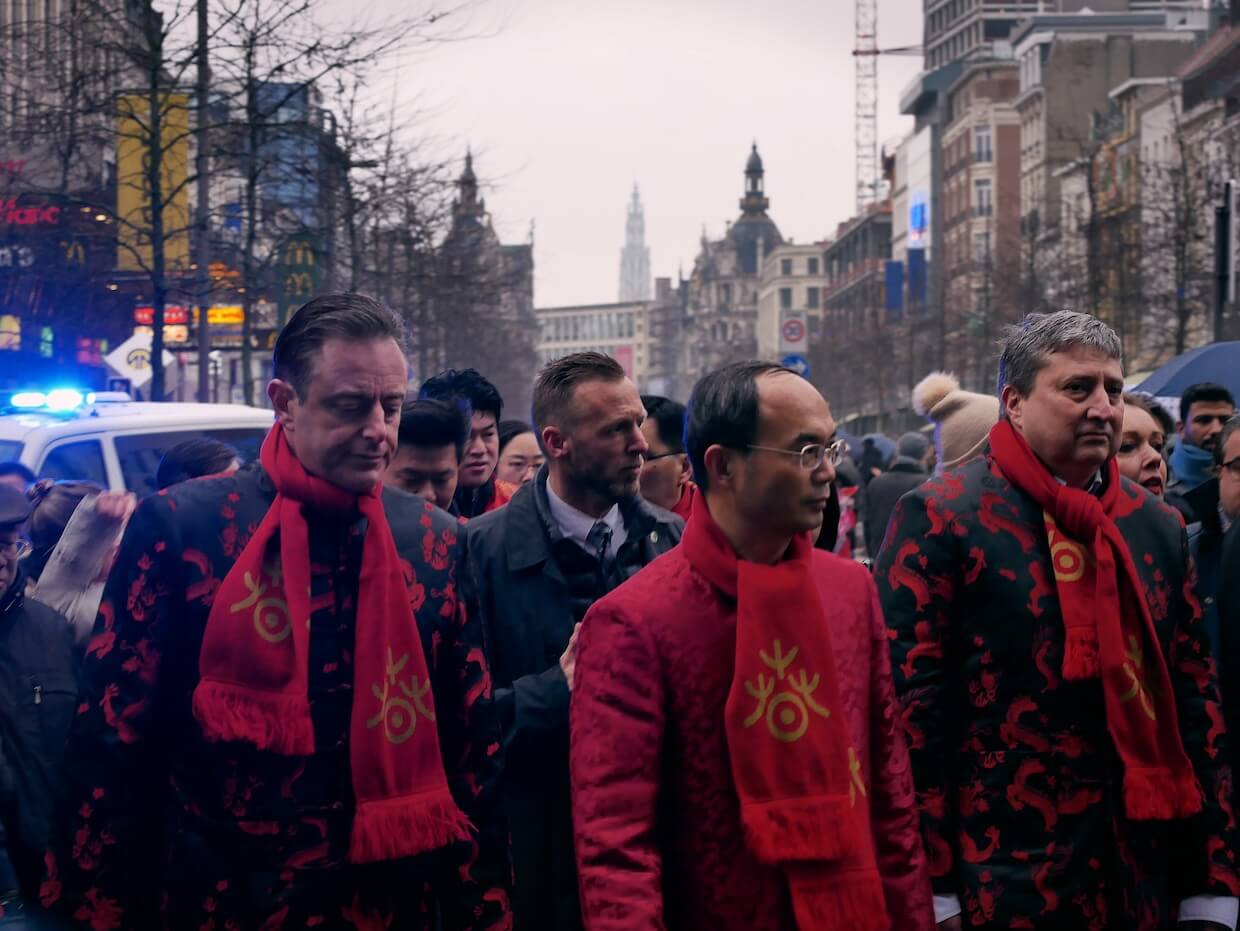
Bart De Wever, former Mayor of Antwerp, at the Chinese New Year parade in Antwerp, Belgium, on February 2, 2019. Photo: Yves Van Tente.

How do you assess the new Belgian Prime Minister Bart De Wever’s government policies and proposals on immigration from a human rights perspective?

Dr. Ellen Desmet: I already touched upon some of the more concerning proposals. From a rule of law perspective, the measures concerning the Council for Alien Law Litigation are particularly troubling. Recently, some colleagues in human rights, constitutional law, and migration issued an opinion piece challenging these measures, as they risk undermining the independence and impartiality of the Council.

Beyond this, judicial independence is being threatened in other areas as well. The Commissioner General for Refugees and Stateless Persons, which is currently an independent institution, is also at risk. The government agreement explicitly states that more people should receive subsidiary protection instead of refugee status, and there are plans to merge the Commissioner General for Refugees and Stateless Persons with the Immigration Office into one large migration service. This proposal is problematic because, in Belgium, applications for international protection have traditionally been assessed independently by the Commissioner General, rather than by an Immigration Department, which falls under the direct authority of the Secretary of State or the Minister for Migration and Asylum. This independence is now being jeopardized through institutional restructuring and direct policy influence, which raises serious concerns.

Furthermore, Belgium appears to be following Germany’s approach by granting more subsidiary protection while simultaneously restricting family reunification rights for those under this status. Currently, EU law (the Family Reunification Directive) grants more favorable rights to refugees than to those with subsidiary protection. The Belgian government intends to increase subsidiary protection numbers while extending the waiting period and tightening family reunification rules for this group, effectively limiting their rights.

Additionally, another worrying development is the government’s decision to halt resettlement programs as long as the reception crisis persists. Resettlement is the only safe and legal pathway for asylum seekers to enter Belgium and putting it on hold further restricts access to protection.

Other proposals include increasing the duty of cooperation for asylum seekers, which could involve automatic monitoring of their social media accounts, such as Facebook. These measures, along with other restrictive policies, raise serious human rights and rule of law concerns. Overall, the new coalition government’s agreement places significant pressure on the rights of migrants and asylum seekers, making their situation increasingly precarious.

Dr. Conrad Ziller, Assistant Professor of Political Science at the University of Duisburg-Essen, Germany.

Dr. Ziller: Terror Attack in Munich Likely to Sway Voters More Than J.D. Vance’s AfD Endorsement

Dr. Conrad Ziller, Assistant Professor of Political Science at the University of Duisburg-Essen, discusses the key factors shaping voter sentiment ahead of Germany’s elections. In an exclusive interview with the ECPS, he argues that the recent terrorist attack in Munich is likely to have a greater impact on voter behavior than US Vice President J.D. Vance’s endorsement of the far-right AfD. Highlighting the growing openness of radical right parties, Dr. Ziller warns of the AfD’s shifting strategy—from Euroscepticism to consolidating political power through ideological alliances and nationalist rhetoric.

Interview by Selcuk Gultasli

As Germany heads into a pivotal election on Sunday, Dr. Conrad Ziller, Assistant Professor of Political Science at the University of Duisburg-Essen, sheds light on the factors shaping voter sentiment, particularly the growing influence of the far-right Alternative for Germany (AfD). In an exclusive interview with the European Center for Populism Studies (ECPS) on Monday, Dr. Ziller argues that while the recent endorsement of the AfD by US Vice President J.D. Vance is significant, it is unlikely to shift voter behavior as much as real-world events, such as the recent terrorist attack in Munich.

“I don’t believe J.D. Vance’s statement will have a major impact, but the recent terrorist attack in Munich might, as it is a deeply tragic event that affects people on an emotional level,” he explains. “This, of course, is a serious issue. I think such incidents have a greater effect on voter sentiment than what J.D. Vance said.”

Dr. Ziller situates this development within a broader trend: the increasing openness of populist radical right parties about their true political ambitions. “Vance’s endorsement is part of a broader effort to shift the political narrative further to the right and enable more power for the AfD,” he notes, emphasizing that “what is surprising is how openly he has expressed his support.” This, he argues, reflects a larger shift in global politics, where far-right movements no longer attempt to mask their agendas but instead push their narratives forward with unprecedented transparency.

This shift presents both challenges and opportunities for European leaders. “In a way, this increased openness could be beneficial because it allows European leaders and the European Union (EU) to fully recognize the situation and take action accordingly,” Dr. Ziller observes. He points to the upcoming conference on Ukraine as an example of how European leaders are already strategizing to counter the rise of nationalist and far-right influences across the continent.

Another key factor in the AfD’s rise is its evolving stance on European identity and sovereignty. Unlike traditional nationalist parties that focus on ethnic distinctions, the AfD’s rhetoric has shifted toward ideological alliances rather than national ones. “Previously, right-wing populists or extremists in Germany might have rejected alliances with Southern Europeans, people from Turkey, or Eastern Europeans, insisting on a strictly German national identity. Now, however, these ethnic categories are no longer as significant,” Dr. Ziller explains. Instead, the AfD aligns itself with like-minded political figures such as Viktor Orbán, Marine Le Pen, Giorgia Meloni, and Vladimir Putin, forming transnational far-right networks based on shared political goals rather than national identity. While the party remains Eurosceptic, its focus is not on defining who belongs within Europe, but rather on shaping alliances that strengthen its broader nationalist and anti-immigration agenda.

Against this backdrop, the upcoming elections in Germany will be a test case for how effective the AfD’s strategies—capitalizing on issues like immigration, security, and anti-elitist sentiment—will be in mobilizing support. In this interview, Dr. Conrad Ziller delves into the party’s tactics, its positioning within the broader European far-right movement, and the implications for democracy in Germany and beyond.

Here is the transcription of the interview with Dr. Conrad Ziller with some edits.

The AfD Thrives on Fear—Immigration, Welfare, and Political Distrust

Photo: Shutterstock.

Professor Ziller, thank you very much for joining our interview series. Let me start right away with the first question: How has the AfD (Alternative für Deutschland – Alternative for Germany) capitalized on anti-immigrant sentiment in Germany? In your research, how do you see social trust mediating the relationship between nativist attitudes and radical right-wing support?

Dr. Conrad Ziller: Thanks for having me. Immigration is at the forefront of this election, and the AfD is capitalizing on it, as you already mentioned. Why are anti-immigrant attitudes and immigration such important topics?

First of all, there have been terrorist incidents in Magdeburg, Aschaffenburg, and Munich, which are highly problematic. At the same time, these incidents have increased the salience of the immigration issue. Not only the AfD but also mainstream parties have taken a very strong stance on immigration, competing over who can be the toughest on it.

Immigration is a salient topic, but it is also proximate—people experience immigration in their everyday lives. Additionally, it is an ambivalent issue. On one hand, immigration can contribute to economic growth, but on the other hand, it may also increase conflict and raise concerns about newcomers benefiting from the welfare system.

So, it is a complex issue, and politics can play a crucial role in shaping public perception. Unlike topics such as unemployment or economic growth, which are widely agreed upon, immigration remains a subject of ongoing debate. This is where politics has normative power—it can shape public discourse about immigration.

What role does welfare chauvinism play in the AfD’s electoral success? How do perceptions of welfare access by migrants influence native support for far-right parties?

Dr. Conrad Ziller: Welfare chauvinism refers to the view that public support is needed, but at the same time, it should be restricted and only be available to non-immigrants. There has been a huge debate about this, and as I already mentioned, all the mainstream parties are currently quite restrictive toward immigration. If you look at the electoral manifestos and programs of these parties, most of them—except for the Left, the Greens, and the SPD—favor restricting immigrants’ access to welfare. The center and right-wing parties, including the liberal FDP, also advocate for limiting these benefits.

A key issue is the so-called Bürgergeld, which is the basic welfare support that everyone has the right to receive, including Ukrainian refugees. The AfD strongly opposes this and seeks to take these benefits away from immigrants who are already eligible. Both centrist and right-wing populist parties are using welfare chauvinism as a strategy to shift public discourse further to the right, with right-wing populists, in particular, capitalizing on these sentiments to mobilize electoral support.

Strong Local Governance Can Curb Nativism 

Does local governance efficiency impact nativist sentiment? Your research highlights how local government performance affects public attitudes toward immigrants. Could decentralization in Germany mitigate or exacerbate these attitudes?

Dr. Conrad Ziller: First of all, immigration presents a challenge to the social cohesion of receiving societies. Newcomers may not speak the language, and both immigrants and local residents need time to adapt to the new system. At the same time, there is the question of how integration should be structured, which can come with certain transactional costs.

The ability of local governments to efficiently manage integration-related tasks—such as housing—while maintaining high-quality public services is crucial. Administrative work, public service availability, and the management of public spaces, including street maintenance, all play a role. When local governments perform well in these areas, it can help mitigate resource competition, reducing the perception among non-immigrants that something is being taken away from them. This, in turn, helps maintain social cohesion.

Moreover, effective local governance fosters strong community structures by supporting organizations and associations that facilitate integration. A well-functioning local government contributes to a stable and cohesive social fabric where newcomers can be integrated more smoothly. In this way, efficient local governance can be a key factor in reducing nativist sentiment and fostering a more inclusive community.

Misinformation Spread by AfD Fuels Division

AfD’s Alice Weidel and Tino Chrupalla at a meeting in Berlin, Germany on July 4, 2023. Photo: Shutterstock.

What is the relationship between conspiracy beliefs and far-right support in Germany? Does misinformation play a role in strengthening AfD’s voter base? If so, to what extent has the AfD leveraged conspiracy theories to mobilize support, and how do these narratives influence public trust in democratic institutions?

Dr. Conrad Ziller: The AfD is a right-wing populist party, and we see that, especially from the radical right, but also to some extent from the radical left, there are conspiracy theories. You can think of Trump and the Republicans, and also the QAnon movement, which accused politicians of being engaged in child abuse and other extreme things. In Germany, it is not like this—there are no typical conspiracy theories of that magnitude. However, there is, of course, misinformation, which is something we do see here, though not as much conspiracy theorizing.

This misinformation is problematic because it challenges social norms, serves to break political correctness, and hinders the narrative of equality. If people believe there is a corrupt political elite that they must act against, it opens the door for even more misinformation. You can think of this as a kind of “information smog,” where people struggle to distinguish between what is true and what is false.

This is also a strategy used by the right-wing populist AfD. They engage in a significant amount of misinformation, both about political elites and about immigrants, making it difficult for ordinary people to discern what is right and what is wrong. So, while conspiracy theories are not as prominent, the AfD does engage in spreading misinformation and contributing to this information smog.

Your research suggests that political corruption erodes trust in institutions and drives radical right support. How has this dynamic played out in Germany, and what role has the AfD played in capitalizing on political distrust?

Dr. Conrad Ziller: Political distrust is a really important issue that has gained momentum in the past years. One strategy of the AfD is to undermine the competencies of the established center parties, especially regarding immigration and integration. They deflect from other pressing issues such as prices, climate problems, and inequality by shifting the focus to immigration.

By making immigration the dominant issue, the AfD positions itself as the party with the toughest stance, claiming to have the best solution—namely, restricting immigration as much as possible. If immigration becomes the primary topic in political discourse and the AfD is perceived as the most competent in handling it, this naturally undermines public confidence in the established political actors and fosters political distrust.

Regarding corruption, Germany has not experienced many corruption scandals in recent years, at least not in comparison to Southern and Eastern European countries. Corruption is not the most pressing issue here. However, issues related to government quality and economic policies have also faded into the background, as political discourse is largely dominated by other topics.

Political discontent can stem from two main sources. One is the experience of actual unfairness, such as firsthand encounters with corruption. While some corruption does exist in Germany, it remains relatively limited compared to other countries. The second source is the perception of problems that may not actually exist. If people struggle to distinguish between real issues and fabricated ones, this fuels political discontent.

It is also worth noting that the AfD itself has faced issues related to campaign donations and financial transparency, making it one of the parties with more corruption-related concerns. However, much of the political discontent today arises from perceived rather than actual problems, which is a key factor shaping public attitudes at the moment.

Affective Polarization Fuels AfD’s Growth by Deepening Divides

What impact does affective polarization have on radical right-wing support? Are voters more motivated by anti-elite sentiment or ideological alignment when choosing to support the AfD?

Dr. Conrad Ziller: Both are important. Affective polarization occurs when parties, especially nowadays, are divided not so much along the economic left-right axis but more along the social-cultural left-right axis. For example, progressive parties like the Greens in Germany stand in opposition to socio-culturally conservative parties like the AfD on the right.

If these opposing groups increasingly dislike each other and develop strong negative sentiments toward one another, this further fuels the perception that center parties do not represent them. As a result, voters may feel compelled to align with either the far-left or the far-right. Affective polarization is partly a consequence of the increasing popularity of populist right-wing parties, but it also serves to reinforce their growth.

Anti-elite sentiment is another key factor. It has long been a central narrative alongside anti-immigration stances. This aspect becomes particularly important for voters who may not be strongly anti-immigrant themselves. Even established immigrants—those who arrived in Germany years ago—can be drawn to anti-elitist rhetoric. The AfD actively exploits this, particularly through social media.

For example, on platforms like TikTok, many AfD-affiliated channels specifically target individuals with a Turkish immigrant background. These channels do not focus as much on anti-immigration rhetoric but instead emphasize anti-elite narratives. This messaging has proven quite effective, while democratic and center parties struggle to develop similarly compelling narratives that can attract voters in the same way.

In your work on public support for state surveillance, you highlight the role of security threats in shaping policy preferences. How has the AfD framed surveillance policies, and what are the implications for civil liberties in Germany?

Dr. Conrad Ziller: I think the most important thing is that most people are no longer as critical of state surveillance. A lot of this has to do with the fact that we have already become quite accustomed to it through our use of cell phones and digital technologies.

As a result, there isn’t much of a political debate about surveillance in the sense that some parties are strongly against it, advocating for civil liberties, while others push for more surveillance. That kind of clear divide does not really exist. Most people accept surveillance, but it is not currently a politically salient issue. It tends to resurface from time to time, especially in response to terrorist attacks, such as those we have seen recently in Germany, for instance, in Munich or Aschaffenburg.

However, in these discussions, the focus is more on surveilling immigrants. The debate is framed around where agencies have struggled to track or monitor certain immigrants—particularly Islamic individuals who could potentially commit terrorist attacks. Essentially, the conversation revolves around immigration policy, with political actors competing over who has the toughest rules and the most restrictive stance on immigration.

Beyond that, there are also broader discussions, such as whether Germany should maintain a registry of individuals with specific psychological conditions—both to provide them with help and to track them if issues arise. However, due to Germany’s historical experiences with the GDR and National Socialism, civil liberties and data protection remain highly valued. Unlike some northern European countries, it is not easy to create such registries in Germany.

So while surveillance remains an important topic, it is largely discussed in the context of immigration, and aside from that, it is not a major political issue at the moment.

Crisis and Social Media Propel AfD’s Rise in Germany

AfD demo with slogan Stop Islamization and counter demonstration of the Left in Luetten Klein in Rostock, Germany on May 14, 2018. AfD, Alternative for Germany, is a right wing political party in Germany. Photo: Shutterstock.

The AfD has gained traction by opposing immigration and EU policies. How does their success compare to other radical right parties in Europe, and what unique factors have contributed to their rise in Germany?

Dr. Conrad Ziller: The AfD is similar to other right-wing populist parties in Europe, which are currently quite successful. There are different reasons for this. One key reason is the series of crises we have faced—the Russian invasion of Ukraine, the conflict in Gaza between Israel and Palestine, and, to some extent, the lingering effects of the COVID-19 pandemic. There is a general feeling of insecurity among many people, and the AfD, like other right-wing populist parties, does not need to be constructive or implement policies. They have an easy time positioning themselves because they can simply be against something and act as critics without needing to govern or prove that their ideas work.

Another major factor is that immigration remains a highly salient and visible issue, as I previously mentioned. The AfD currently holds a stable support base, similar to parties like the FPÖ in Austria, ranging from approximately 18% to 25%. This is a significant increase compared to three and a half years ago during the last federal election when they had only around 10% or 11% of the vote.

I believe this rise is largely due to the ongoing crises, but also because right-wing populists have been highly effective in promoting themselves on social media. They have been particularly successful in reaching younger cohorts—who are not only experiencing these crises firsthand but are also more engaged with digital platforms. The AfD has developed a strong strategy in terms of marketing and social media outreach, which has contributed to their recent electoral gains.

How does AfD’s position on European integration shape its voter appeal? What factors drive the party’s Eurosceptic stance, and how does it compare to other radical right parties in Europe?

Dr. Conrad Ziller: The anti-European Union stance was a core narrative for the AfD in the mid-2010s. When the party was founded in 2013, its main focus was anti-EU rhetoric—calls to return to the national currency, withdraw from Schengen, and even leave the European Union entirely. One of the key motivations for the AfD’s formation was opposition to the bailout of Greece during the financial crisis. Greece was still struggling, and resisting financial aid to Greece was a primary reason for establishing the party in the first place.

Nowadays, the EU is not their central focus. If you look at the AfD’s current election program, the European Union is still mentioned, but the rhetoric has shifted. Their arguments are more about the EU lacking legitimacy—claiming that the EU should not have the authority to raise taxes but does so anyway—and suggesting that Germany should refuse to pay. The AfD’s broader vision is to replace the EU with a federation of European nations, essentially dismantling the existing structure. They also oppose Germany’s financial contributions to the EU, knowing that Germany plays a key role in funding the Union. If Germany were to withdraw, it would severely destabilize the EU in its current form.

However, the AfD’s approach to solidarity is conditional. If other countries were also led by right-wing populists, they might be open to cooperation, but we are not at that stage yet. At the moment, while they remain anti-EU, their primary focus has shifted. Their main emphasis is now on immigration and gaining political power.

Compared to previous elections, this shift is evident—the AfD is now actively working to gain influence in parliament and explore potential collaboration with the conservative CDU. This is a significant change from their earlier strategy, which was primarily focused on opposing the European Union. Now, they really want to grab political power.

AfD’s Politics Is Less About Identity, More About Ideological Alliances

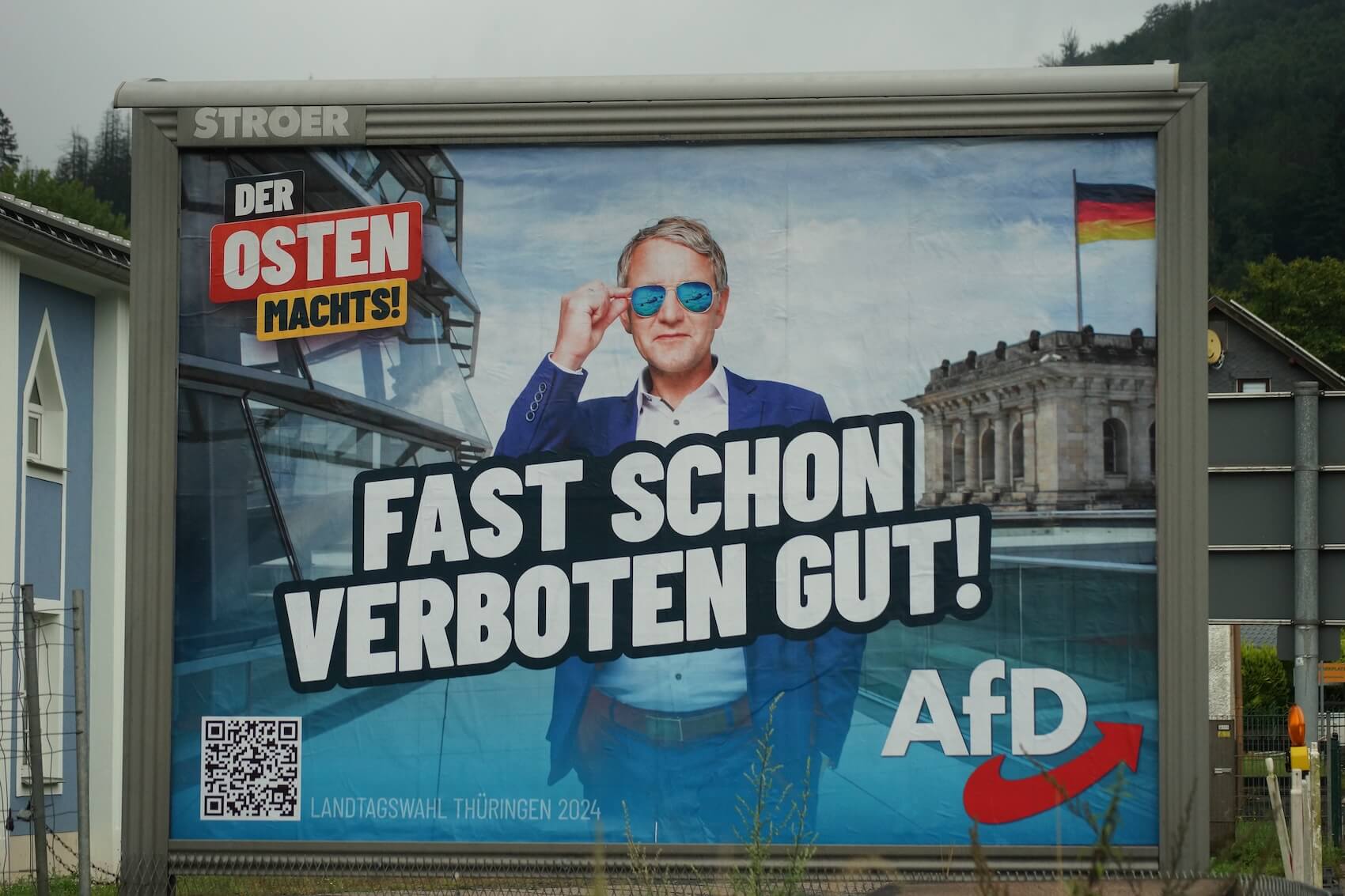
Election poster of Björn Höcke for the AfD party with the slogan roughly translating to “forbidden good” in Sonneberg, Thuringia, Germany, on August 4, 2024. Photo: Shutterstock.

How has the AfD framed the EU as a threat to German identity? Does its discourse on sovereignty and immigration reflect broader trends in European far-right movements?

Dr. Conrad Ziller: I think that immigration and the question of who belongs—who is considered a citizen—are still central issues. This is particularly important for immigrants in Germany, who may worry about whether their citizenship could be withdrawn or, if they do not yet have citizenship, what might happen if the AfD gains more political influence, even if they do not attain full power.

For immigrants without citizenship in another European country, these concerns are especially pressing. However, when it comes to the AfD’s stance on European identity, I would say that it is not a priority for them. They are not particularly concerned with the idea of a shared European identity. This is not the framework in which they think. Instead, their perspective is shaped more by a distinction between friends and foes—who is an ally and who is an enemy.

What we have seen over the past ten years is that right-wing populists and extremists have increasingly formed connections across borders. Previously, right-wing populists or extremists in Germany might have rejected alliances with Southern Europeans, people from Turkey, or Eastern Europeans, insisting on a strictly German national identity. Now, however, these ethnic categories are no longer as significant.

Instead, the focus has shifted to aligning with political groups and leaders who share similar ideological positions. The AfD has built connections with figures such as Viktor Orbán in Hungary, Marine Le Pen in France, Giorgia Meloni in Italy, and, of course, Vladimir Putin in Russia. These relationships are based on shared political stances rather than ethnic or national identity.

As a result, questions of European identity—such as defining who is or is not European—are not central to the AfD’s discourse. While these issues were once more relevant to debates about the European project, the AfD does not actively frame or engage with them in its political messaging today.

AfD Exploits Anti-Elite Narratives While Facing Its Own Corruption Scandals

Your research explores how direct experiences with corruption influence voting behavior. How does the perception of elite corruption fuel support for the AfD, and how does the party itself navigate corruption scandals?

Dr. Conrad Ziller: Direct experiences of corruption can occur in situations where, for example, someone needs a doctor’s appointment and has to pay extra to get one or if someone encounters trouble with the police and can offer a bribe. However, in Germany, instances of everyday corruption are extremely rare, similar to what we see in Northern European countries. In Southern and Eastern Europe, corruption is somewhat more prevalent, but still not at the level seen in developing countries in the Global South. So, corruption in daily life is not a major issue in Germany.

The idea behind this research was to examine whether individuals who have encountered corruption—however rare—experience a decline in political trust, which in turn could lead them to support radical right-wing populist parties. There is some connection between these factors, but it is not strong or systematic enough to conclude that corruption is a primary driver of radical right support.

What is more significant, however, is the broader sense of deprivation—when people feel they are not receiving what they believe they deserve. This feeling contributes to anti-elite sentiments, where people perceive that a corrupt political elite is operating behind the scenes. The AfD actively reinforces this perception, promoting the narrative that the established political parties are not only incompetent but also corrupt.

Ironically, the AfD itself has been embroiled in numerous corruption-related scandals, particularly regarding campaign donations of undisclosed origins. Some AfD politicians have also been linked to China and Russia—countries considered political adversaries of Germany—which could be labeled as political corruption. So, the party that frequently accuses others of corruption is often the one facing the most serious allegations.

The question, then, is why voters continue to buy into the AfD’s anti-corruption narrative despite these scandals. The answer lies in the AfD’s ability to deflect attention from its own issues. Rather than attempting to conceal their actions, they openly acknowledge their efforts to dismantle institutions, weaken administrative structures, and undermine principles of equality—similar to the approach taken by Donald Trump in the US. Instead of hiding, they shift the focus to other issues, primarily immigration, while painting all other parties as corrupt.

Surprisingly, this strategy has been highly effective. Many of their voters no longer deny the party’s extremist tendencies; instead, they openly embrace them. Over the past four to five years, public discourse and social norms have shifted significantly, making these radical positions more mainstream.

Vance’s Endorsement Unlikely to Sway Voters, but Munich Attack Might

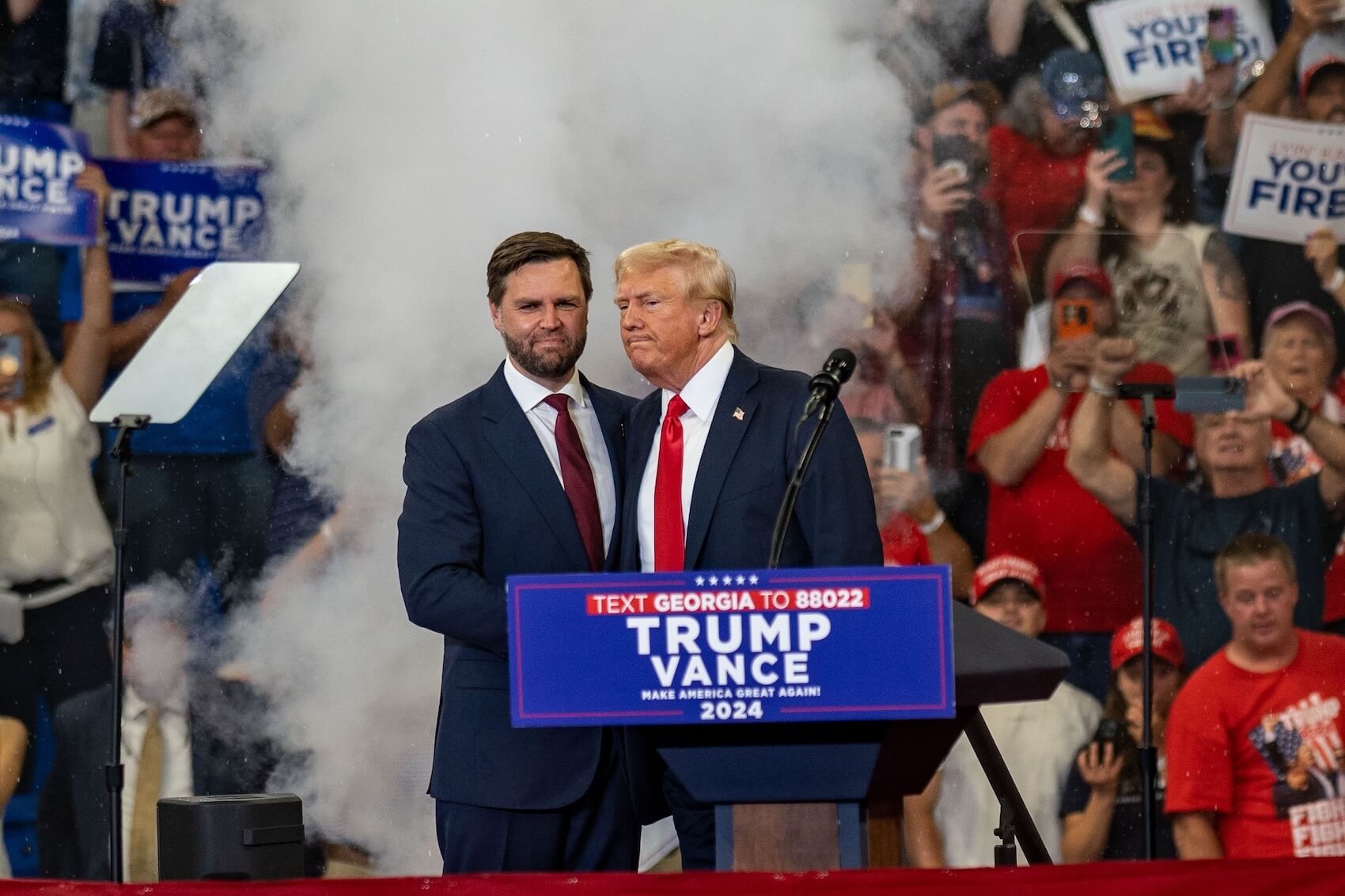
U.S. President Donald Trump at a rally for then-VP nominee J.D. Vance in Atlanta, GA, on August 3, 2024. Photo: Phil Mistry.

And lastly, Professor Ziller, American Vice President J.D. Vance and Elon Musk have both openly supported the AfD. How do you think their support will influence the elections on Sunday?

Dr. Conrad Ziller: This is a good question. This is similar to Friedrich Merz, who introduced a law in Parliament that was also supported by the AfD, leading to a significant debate about the extent to which this shift in their firewall policy might influence election outcomes.

What we are seeing at the moment is that the AfD is not necessarily gaining beyond 20 or 21%. Their support remains relatively stable. One might ask whether we are underreporting their numbers or whether some voters are not openly disclosing their support for the AfD. Perhaps a few do underreport, but overall, our surveys indicate that a considerable number of respondents now openly state their intention to vote for the AfD. This is a notable shift compared to previous years.

In the end, I don’t think we are underestimating what the AfD might gain. However, a significant segment of the German electorate remains undecided about how they will vote on Sunday. For these voters, the final days leading up to the election may still be crucial, and certain events or rhetoric could influence their decision.

I don’t believe J.D. Vance’s statement will have a major impact, but the recent terrorist attack in Munich might, as it is a deeply tragic event that affects people on an emotional level. This, of course, is a serious issue. I think such incidents have a greater effect on voter sentiment than what J.D. Vance said. However, his endorsement is part of a broader effort to shift the political narrative further to the right and enable more power for the AfD. What is surprising is how openly he has expressed his support.

This is also reflective of a larger trend in which populist radical right parties are becoming more transparent about their real intentions. In a way, this increased openness could be beneficial because it allows European leaders and the European Union to fully recognize the situation and take action accordingly. In fact, they are already responding, as seen in the upcoming conference on Ukraine, where efforts are being made to strengthen cooperation.

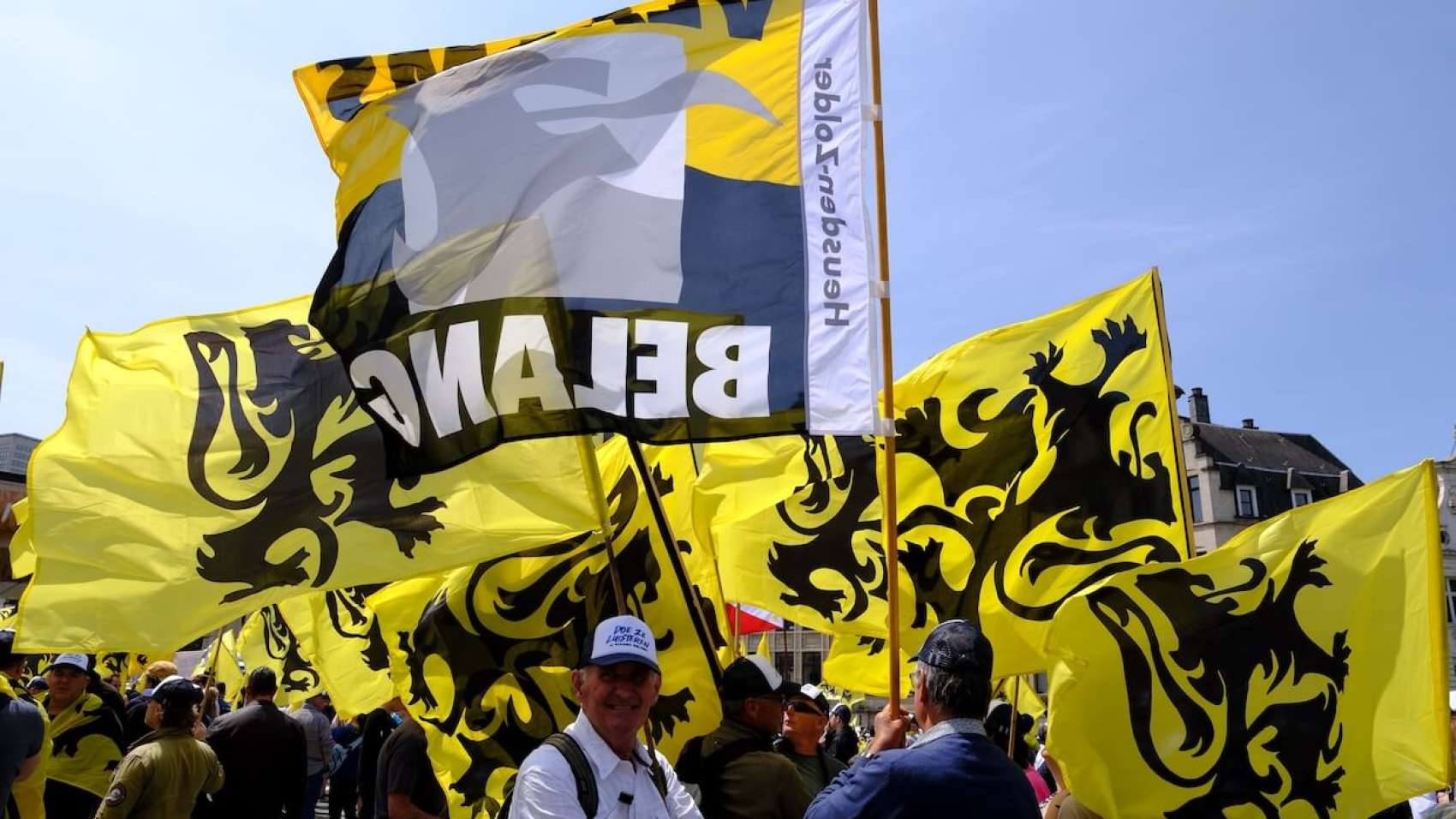
Supporters of the Flemish far-right party Vlaams Belang wave Flanders flags during a protest in Brussels, Belgium, on May 29, 2023. Photo: Alexandros Michailidis.

Dr. van Haute: The Habits of Consensus Democracy Are Slowly Fading in Belgium

Belgium’s long-standing reputation as a consociational democracy—marked by power-sharing, compromise, and consensus-building—is under strain. According to Dr. Emilie van Haute, the country’s political landscape has undergone a fundamental transformation, with growing polarization and the increasing influence of populist radical parties. In this compelling interview with the ECPS, Dr. van Haute examines the rise of populism on both the left and right, the impact of linguistic divisions, and how mainstream parties are adapting to radical competition. She provides valuable insights into Belgium’s shifting democracy and the challenges ahead.

Interview by Selcuk Gultasli

Belgium has long been regarded as a model of consociational democracy, characterized by political compromise, power-sharing, and consensus-building. However, according to Dr. Emilie van Haute, Associate Professor of Political Science and Department Chair at SciencePo ULB, and researcher at Cevipol, this perception no longer reflects reality. “The habits of consensus democracy are slowly fading,” she warns. “That poses a significant challenge for future government formation and the stability of coalition governments.”

In an insightful interview with the European Center for Populism Studies (ECPS), Dr. van Haute explores the shifting dynamics of Belgian politics, particularly the rise of populist radical parties on both the left and the right. She highlights how political parties like Vlaams Belang (VB) and Parti du Travail de Belgique (PTB–PVDA) have capitalized on discontent and distrust in mainstream political institutions. “These are voters who feel alienated from the political system,” she explains. “They opt for radical parties not randomly, but because these parties align with their political priorities.”

Belgium’s linguistic and regional divisions further shape this political landscape. In Flanders, Vlaams Belang’s ethno-regionalist stance has gained traction by advocating for Flemish autonomy and opposing so-called “solidarity transfers” to the French-speaking south. In contrast, in French-speaking Belgium, populist momentum has been driven by the radical left, which prioritizes economic redistribution and national solidarity. These diverging political priorities contribute to a growing polarization within the country.

Mainstream parties have not remained immune to these shifts. As Dr. van Haute notes, they have increasingly adopted populist rhetoric and strategies in response to radical party successes. “Mimicking the radical right legitimizes their positions and facilitates their electoral success,” she observes, citing the New Flemish Alliance (N-VA) and the French-speaking Liberal Party (MR) as examples of this trend.

Looking ahead, Dr. van Haute sees Belgium at a crossroads. With growing affective polarization, the erosion of consensus politics, and populist parties gaining ground, the country faces an uncertain future. “It is difficult to govern with multiple coalition partners when parties are constantly engaging in antagonistic politics,” she warns.

In this thought-provoking discussion, Dr. van Haute dissects these pressing political challenges and reflects on the implications of populism, nationalism, and polarization in Belgium’s evolving democracy.

Dr. Emilie van Haute, Associate Professor of Political Science and Department Chair at SciencePo ULB, and researcher at Cevipol.

Here is the transcription of the interview with Dr. Emilie van Haute with some edits.

What Drives the Success of Populist Parties Is Discontent and a Lack of Trust in Mainstream Political Actors

Professor van Haute, thank you very much for joining our interview series. Let me start right away with the first question: What are the key similarities and differences between left-wing and right-wing populist parties in Belgium in terms of their ideology, voter base, and political strategies? How have economic, social, and cultural factors contributed to the rise of populist movements in Belgium, and how do these factors differ between the radical left (PTB–PVDA) and the radical right (Vlaams Belang)?

Dr. Emilie van Haute: That’s three broad questions. The commonality between the two radical forces is their protest appeal—their protest and populist appeal. You can clearly see in the voters they attract that this protest appeal is quite strong. So that’s the commonality because, otherwise, in terms of political positioning, they are at two opposite extremes. Politically, they are radically different. The radical right is positioned at the extreme right, both socioeconomically and culturally. Although we often hear that the radical right can sometimes have a blurred position on socioeconomic issues, that is not the case here. They are located at the right end of the political spectrum, whereas the radical left is on the left, both socio-economically and socio-culturally.

These two political forces are not identical when it comes to their political positions, but what they share is a protest appeal—protest against mainstream parties and the political system. That’s how they are similar and different.

Now, what drives their success is, again, discontent and a lack of trust in mainstream political actors, which generates discontent and protest. This strong protest appeal is where they find their success.

Now, why is it the radical right that attracts support in the north of Belgium (Flanders) and the radical left in the south (French-speaking Belgium)? It is because Belgium has two different party systems. On the Dutch-speaking side, the system is dominated by the mainstream right. When voters protest against the mainstream right, they turn to the clean or pure equivalent, which is the radical right. If they are not happy with the mainstream right, they shift to the radical right.

In contrast, in French-speaking Belgium, the dominant actor has been the Socialist Party, which is mainstream left. When voters are dissatisfied with the mainstream left, they turn to the alternative, which is the radical left. That is why these polarizing trends have occurred in Belgium.

The Evolution Over the Last Decade Has Clearly Been Toward More Polarization

How has Belgium’s political landscape changed over the last decade, especially in relation to the growing influence of Vlaams Belang (VB) and the Workers’ Party of Belgium (PTB–PVDA)? Looking at the historical trajectory, how have populism and populist parties developed over time? Would you classify sub-state nationalist parties such as N-VA, VB, and DéFI as populist movements?

Dr. Emilie van Haute: Okay, so the evolution over the last decade has clearly been toward more polarization—polarization of the political landscape due to the success of radical parties. The radical parties have pulled the party system to the extremes, and you can clearly see that voters are increasingly positioning themselves further away from the center. That is one of the most important developments.

The radical right has fluctuated over time. If you look at the electoral performance of Vlaams Belang, it has evolved. It was a party that saw a constant increase in its electoral performance throughout the 1990s until the early 2000s. Then, it reached a ceiling.

N-VA emerged as a mainstream right alternative for voters. At that time, Vlaams Belang started to lose voters to the benefit of N-VA because N-VA had a protest appeal and had not participated in the federal government. However, as soon as N-VA entered the federal government, it lost that protest appeal. Then, we saw a shift again—Vlaams Belang started to gain voters, and N-VA began losing voters. So there has been a back-and-forth dynamic in the Dutch-speaking political landscape between the mainstream right and the radical right. Right now, the radical right has regained the protest appeal and is once again on the rise.

On the French-speaking side, there has never been a successful radical right party, as I mentioned, because the radical left has embodied the protest appeal. The radical left has only gained traction in the last two or three federal elections, so it is a more recent phenomenon.

Now, regarding how to characterize these parties as radical or populist—clearly, Vlaams Belang and PTB–PVDA qualify as radical parties. Whether other parties have a populist component—essentially, a protest appeal—fluctuates over time. N-VA, at some point, had that protest appeal and, therefore, a populist component.

You can see that when the party first entered the federal coalition in 2014 and again more recently, its protest component dropped. It is really difficult for a party to be included in the government while maintaining a protest discourse. Once you are part of the establishment and making decisions, it becomes hard to continue criticizing decision-makers. As a result, N-VA has started to lose its protest and populist component.

Regarding DéFI, another regionalist party, it is a Brussels-based party that defends French speakers in Brussels. It has been part of coalition governments at the regional level for a long time and does not necessarily have a protest component in that context. However, when DéFI attempted to develop a branch in Wallonia, the other French-speaking region, it adopted a strong protest component because it was an emerging party and positioned itself against the existing political actors.

So, you can really see that parties tend to have a protest and populist component, particularly when they are in opposition and able to challenge the mainstream parties in their respective party systems.

Vlaams Belang and PVDA-PTB Share a Common Main Driver: Protest

What are the drivers of support for populist radical left and populist radical right parties in Belgium? How have protest attitudes and ideological considerations affected the recent election results of Vlaams Belang (VB) and Parti du Travail de Belgique (PVDA-PTB)?

Dr. Emilie van Haute: Clearly, these two parties share a common main driver: the protest component. Voters with a low level of political trust—trust in political institutions—have a higher probability of voting for these parties. Voters who are cynical toward the political system, those with a low level of political interest, and those who do not feel politically efficacious—meaning they do not believe they can change the political system—all exhibit attitudes that drive support for these two radical parties.

In a nutshell, these are voters who feel alienated from the political system and mainstream parties, leading them to opt for radical parties. However, they do not choose randomly; they also select protest parties that align with their political priorities.

These parties not only have a protest component but also offer specific political positions. In Flanders, voters who support Vlaams Belang are positioned on the right of the political spectrum and prioritize migration issues. These are protest voters who support a party that matches their political priorities but is more radical than the mainstream parties in power. Their vote is a protest against the governing mainstream parties—they seek specific policies, are disappointed by the ruling parties, and turn to more radical alternatives on the same issues.

In French-speaking Belgium, the pattern is similar. Protest voters tend to support radical left parties, but their vote is driven by positions on socioeconomic issues and left-wing economic policies.

Considering that radical-right parties like VB thrive in Flanders, whereas French-speaking populist radical-right parties struggle to gain traction, how does linguistic fragmentation impact the ideological positioning and success of populist radical parties in Belgium?

Dr. Emilie van Haute: In Flanders, Vlaams Belang is clearly an ethno-regionalist party—one that defends Flemish culture and interests and advocates for greater autonomy for Flanders. This is not the case in French-speaking Belgium.

The radical party that has the most traction there is a unitary party, meaning it has branches across the entire national territory, which is an exception in Belgium. Because of this unique characteristic—having branches in both Flanders and French-speaking Belgium—it is difficult for this party to advocate for regionalism. Instead, it emphasizes socioeconomic issues as its main priority and promotes national solidarity in socioeconomic redistribution.

So, in French-speaking Belgium, the radical party pushes for more national solidarity in socioeconomic matters, while in Flanders, Vlaams Belang advocates for more autonomy for the region. This dynamic is also one of the key polarizing debates in Belgium.

Ruling N-VA Is the Successor of a Former Ethno-Regionalist Party

Bart De Wever, former Mayor of Antwerp, at the Chinese New Year parade in Antwerp, Belgium, on February 2, 2019. Photo: Yves Van Tente.

A new government has just been announced in Belgium under the leadership of the New Flemish Alliance (N-VA), with Bart De Wever becoming the country’s first nationalist prime minister. How would you define the N-VA as a political party? Based on your research, how do you explain the party’s emergence and breakthrough, its organizational choices, ideological profile, prospects for survival, and potential trajectory following its first experience in government?

Dr. Emilie van Haute: N-VA is actually the heir of a former ethno-regionalist party, Volksunie. So it is not necessarily a completely new party. It has existed in its current form since 2001 but is the successor of Volksunie, a party that emerged in 1954. In that sense, it is a “new party with old roots.”

This historical background is important to understand because, as a “new” party, it was able to establish its organization based on existing party branches. As a result, it quickly developed territorial anchorage, which is extremely important for party survival. This is one of the reasons why N-VA was able to establish itself and survive more easily than other new parties.

N-VA positions itself on the right wing of the political spectrum, both socioeconomically and culturally. Initially, the party performed poorly in elections and had to form an alliance with the Christian Democrats in Flanders. That alliance was crucial—it not only helped the party survive electorally but also allowed it to present itself as a protest party. While allied with the Christian Democrats, N-VA distinguished itself as a more radical alternative, particularly on linguistic issues, refusing to compromise on certain key positions.

This stance appealed to voters, particularly those who had previously supported Vlaams Belang. Some of these voters saw N-VA as a “purer” party on linguistic issues while also being more embedded in the political system, giving it a chance to participate in government—something Vlaams Belang could not do due to the cordon sanitaire. As a result, some former Vlaams Belang voters decided to support N-VA, seeing it as a viable alternative that could both enter government and maintain strong, radical positions.

N-VA built its position on this foundation. From the start, it participated in power at the regional level, gaining coalition government experience in Flanders. It also joined the federal government once, between 2014 and 2019. Therefore, it is not an inexperienced party; it has both governmental experience and a strong party organization.

These elements—its historical roots, organizational strength, and governmental experience—are crucial for its survival. N-VA is a party that is well-established and is likely to remain a key player in Belgian politics for the long term.

As you mention in your articles, the Flemish Nationalist Party N-VA is a relatively young or newly established party. How do you account for its success, and what internal and external dynamics have contributed to its rise? Given the N-VA’s evolution from a regionalist successor party to a dominant force in Belgian politics, what insights can be drawn about the adaptability and trajectory of nationalist and populist radical-right movements?

Dr. Emilie van Haute: So, N-VA is, as we mentioned, an “old-new” party, established in 2001 with roots in a former ethno-regionalist party. The way it developed was by not becoming a single-issue party. While regionalist issues were central, they were not enough to gain electoral traction. So, the party embedded its ethno-regionalism into socioeconomic issues.

They started developing a socioeconomic program that is conservative—but it is conservative ethno-regionalism, emphasizing the idea of rewarding workers, the workforce, and economic dynamism. However, behind this rhetoric, the underlying message is about rewarding Flanders. Since Flanders has a higher active workforce than French-speaking Belgium—where more people rely on unemployment benefits—N-VA framed its policies as a way to reward Flanders.

This allowed them to combine the two core issues, presenting economic conservatism as a means to defend Flemish interests and stop what they call “solidarity transfers” to unemployed French speakers in the rest of the country. By intertwining these themes, they managed to appeal to a broader electoral audience.

The Habits of Consensus Democracy Are Slowly Fading in Belgium

Billboards for the 2024 Belgian elections in Berchem-Sainte-Agathe, Brussels-Capital Region, Belgium, on May 18, 2024. Photo: Werner Lerooy.

Belgium has traditionally been regarded as a classic example of a consociational or consensus democracy. How does this political system influence the opportunities and constraints faced by populist parties, and in what ways have these parties adjusted to Belgium’s intricate institutional structure? In the light of the N-VA’s electoral success and the growing support for Vlaams Belang (VB), do you believe this characterization still accurately reflects Belgium’s political landscape?

Dr. Emilie van Haute: No. Consensual democracies—and Belgium has been an ideal type of consensus or consensual democracy—are characterized by cooperation and compromise. However, you can clearly see, first in Flanders, growing antagonisms, and this is partly driven by N-VA. I would say N-VA, even more than Vlaams Belang, plays a very antagonistic game and does not necessarily adhere to the consensus logic, which has, of course, an effect on voters. Increasingly, we see more polarization among voters in Flanders than in French-speaking Belgium.

However, a similar trend is emerging in French-speaking Belgium, partly due to the radical left, but also increasingly among conservatives. The French-speaking Liberals are starting to play a role similar to the one N-VA has played in Flanders. You can see that the conservative party in French-speaking Belgium is beginning to adopt a more antagonistic stance.

The habits of consensus democracy are slowly fading, and I think this poses a significant challenge for future government formation and the stability of coalition governments. It is difficult to govern for four to five years with five coalition partners if parties are constantly engaging in antagonistic politics. This is becoming an increasingly significant challenge, and we have already seen that government formation and coalition stability have become more difficult due to the gradual erosion of Belgium’s consensus democracy.

How has affective polarization been instrumental in Belgian elections and in the success of populist parties? How do you think separatist politics will be influenced by the victory of N-VA?

Dr. Emilie van Haute: We have seen affective polarization present in Belgium, more so in Flanders than in French-speaking Belgium. This is due to the presence of parties like Vlaams Belang and N-VA in Flanders, which polarize the electorate into groups that do not necessarily like each other. However, we are also starting to see the same trend emerging in French-speaking Belgium.

Affective polarization is present, though not as strongly as in other representative democracies. It is still at a lower level compared to many other countries, but it is a clear sign of the vanishing consensus. There is a growing dislike between electorates from different parties.

I believe this is a self-reinforcing cycle: parties antagonize, leading to more polarized voters. As voters become more polarized, parties have less incentive to seek consensus, further fueling the cycle.

‘Contamination Effect’ of Populist Parties on Mainstream Political Discourse

Given the indirect “contamination effect” of populist parties on mainstream political discourse, how has their presence impacted traditional parties in Belgium? Have mainstream parties adopted elements of populist rhetoric or policies in response?

Dr. Emilie van Haute: Clearly, the answer is yes. The way mainstream parties react to their radical competition is through imitation.

In Flanders, the mainstream right—primarily N-VA and, to a lesser extent, the Christian Democrats and the Liberals (Open VLD)—has adopted some of the rhetoric of the radical right. N-VA, in particular, made migration a highly salient issue when they were in power at the federal level between 2014 and 2019. In fact, they exited the government before the end of the legislature over migration issues. Research shows that mimicking the radical right tends to legitimize their positions and facilitate their electoral success. So, in Flanders, there is clear evidence of mainstream parties adopting the radical right’s rhetoric, effectively mainstreaming their positions.

In French-speaking Belgium, the Socialist Party, which was the dominant mainstream left party and was challenged by the radical left, also adopted more radical positions on socioeconomic issues. The presence of radical parties has led to polarization across the political spectrum.

Additionally, in French-speaking Belgium, there has been a rightward shift of the Liberal Party (the conservative party). When faced with strong competition from the Socialist Party and the Workers’ Party on the left, the Liberal Party moved further to the right to engage in the same antagonistic dynamic. This has contributed to a clear polarization of the political landscape.

The Main Challenge for Belgian Politics Is the Adoption of a ‘Trump 2.0’ Version by Mainstream Parties

Former U.S. President Donald Trump and vice-presidential nominee J.D. Vance at a rally in Atlanta, GA, on August 3, 2024. Photo: Phil Mistry.

How do Belgian populist parties engage with European politics, particularly in relation to the European Union and broader transnational populist networks?

Dr. Emilie van Haute: Clearly, regarding the European Union, it is easy for these parties to adopt an anti-EU rhetoric, engaging in “Europe bashing” to highlight various issues they want to make salient. This is a commonality between the radical right and the radical left—both hold Eurosceptic views and positions.

That being said, there are links with transnational movements of the same kind. For instance, there are connections between Vlaams Belang and other populist radical-right parties in Europe, although these relationships can be somewhat of a love-hate dynamic. Coordinating among these parties is not always easy because, while they advocate for their national interests, promoting international collaboration can sometimes create tensions.

On the left, the radical-left party has strong ties with other radical-left parties in Europe. This collaboration is well-established and has existed for a long time, making it relatively easier to maintain.

Overall, Belgian populist parties exhibit Euroscepticism while still engaging in some forms of transnational collaboration.

And lastly, Professor van Haute, how do you think populist parties in Belgium will be affected by the second Trump administration in the US?

Dr. Emilie van Haute: I am less concerned about the impact on populist radical parties than on how mainstream parties will be affected. That is my main fear. We are already seeing conservative parties—both N-VA and MR, on the Dutch- and French-speaking sides, respectively—adopting some of the strategies and rhetoric of early Trump, perhaps resembling Trump in 2016. The question is whether they will move toward adopting a “Trump 2.0” version. The main concern is not necessarily the radical parties that remain in opposition. Rather, the challenge lies in governing parties increasingly adopting radical rhetoric. That is the main challenge.

(L-R) Iran President Hassan Rouhan, Belarusian President Aleksander Lukashenko and Russian President Vladimir Putin at the session of the supreme Eurasian Economic Council in Yerevan, Armania on October 1, 2019. Photo: Asatur Yesayants.

Dr. Leukavets: The West Must Maintain Sanctions Against the Lukashenko Regime in Belarus

In an exclusive interview with the ECPS, Dr. Victoria Leukavets highlights the critical role of sanctions in pressuring Lukashenko’s authoritarian regime. She argues, “Sanctions do work, though some have a delayed effect—particularly economic and sectoral sanctions. However, they do have an impact.” Dr. Leukavets also discusses Russia’s deepening control over Belarus, media repression, and the resilience of Belarusian democratic forces in exile. She underscores that continued Western support for independent media and civil society is essential to counter Lukashenko’s grip on power and prevent Belarus from becoming a full extension of Russia’s influence.

Interview by Selcuk Gultasli

In a candid and insightful interview with the European Center for Populism Studies (ECPS), Dr. Victoria Leukavets, a Research Fellow at the Stockholm Center for Eastern European Studies (SCEEUS), discusses the evolving political landscape in Belarus, Aleksander Lukashenko’s populist strategies, Russia’s growing influence, and the role of the West in countering authoritarian consolidation. Dr. Leukavets emphasizes that the continuation of Western sanctions is essential in exerting pressure on the Lukashenko regime, stating, “Sanctions do work, though some have a delayed effect—particularly economic and sectoral sanctions targeting strategic sectors of the Belarusian economy. However, they do have an impact.”

According to Dr. Leukavets, recent waves of political prisoner releases signal that sanctions are forcing Lukashenko to test the waters for negotiations with the West. “Many would agree that sanctions’ pressure has played a key role in forcing him into this scenario, making him test the waters for negotiations. His primary goal remains easing sanctions’ pressure.” However, she warns that Lukashenko remains committed to tightening his grip on power and that sanctions must continue to be a key instrument in the EU’s foreign policy toolbox.

Throughout the interview, Dr. Leukavets provides a historical overview of Lukashenko’s use of populist rhetoric to maintain control over Belarus, tracing it back to his first electoral campaign in 1994, when he positioned himself as a “man of the people” and an anti-corruption crusader. She explains that Lukashenko’s authoritarian populism has evolved over time, particularly after the 2020 protests, with an intensified level of repression and a media crackdown that has silenced independent voices.

Moreover, Russia’s role in propping up Lukashenko has deepened, making Belarus increasingly dependent on Moscow’s economic, military, and cultural influence. “Frankly speaking, what we are witnessing is the gradual transformation of Belarus into an extension of Russia’s military, economic, and cultural space.”

Dr. Leukavets also discusses the complex relationship between Lukashenko and far-right parties in Europe, the potential U.S. stance under Donald Trump’s presidency, and the strategies Belarusian democratic forces are employing to challenge the regime. She underscores that support for independent media, civil society, and opposition groups in exile remains crucial in resisting Lukashenko’s authoritarian consolidation.

In this interview, Dr. Leukavets offers a compelling analysis of Belarus’s future, outlining what the West can do to counter Lukashenko’s grip on power while avoiding further repression.

Dr. Victoria Leukavets, a Research Fellow at the Stockholm Center for Eastern European Studies (SCEEUS).

Here is the transcription of the interview with Dr. Victoria Leukavets with some edits.

Media as a Key Tool for Lukashenko’s Grip on Power

Dr. Leukavets, thank you very much for joining our interview series. Let me start right away with the first question: How has Aleksander Lukashenko used populist rhetoric to maintain his grip on power in Belarus? In what ways does his approach differ from or resemble other authoritarian populist leaders?

Dr. Victoria Leukavets: Thank you very much for inviting me to do this interview. I think you have raised a very important question. Alexander Lukashenko has indeed used populist rhetoric to maintain his power, and he started using it in the early 1990s. During his first electoral campaign in 1994, he built his campaign on strong anti-corruption narratives. Before running for president, he was the head of the Anti-Corruption Committee in the Supreme Council of Belarus. At that time, he began constructing an image of himself as a man of the people—someone who was very close to the Belarusian electorate and could be seen as a defender of the nation. He positioned himself as a new voice, a fresh figure in the Belarusian political spectrum, and someone capable of cleaning up the system by removing bureaucrats.

His main opponent in the election was Vyacheslav Kebich, who was the Prime Minister of Belarus. Lukashenko’s populist rhetoric at the time proved very successful, as many Belarusians believed in him. In fact, the 1994 elections are considered the only free and fair elections in the history of independent Belarus. As a result, Lukashenko managed to win and secure the presidency.

He has continued to use populist rhetoric throughout his rule up until today. One of his favorite strategies to maintain control over the elites in Belarus and co-opt them has been the use of selective purges. Whenever members of his inner circle showed signs of criticism or disagreement with his political course, he would initiate a public purge, accusing them of corruption or tax evasion. He would present himself as the one capable of identifying and imprisoning these individuals, portraying himself as a fighter who protects the nation from such “parasites.” Thus, Lukashenko has consistently used populist rhetoric as an instrument to maintain and solidify his control over Belarus.

How has Lukashenko’s state-controlled media shaped public perception of his rule? To what extent does propaganda fuel populist narratives and suppress opposition voices in Belarus?

Dr. Victoria Leukavets: Media is very important for Lukashenko to maintain his power. Starting from the early 1990s, as soon as he was elected President in 1994, he began consolidating his power, first and foremost, by taking control of the media space. Throughout his subsequent presidencies, we can observe that he gradually tightened control over the media space. 

After 2020, what we witness now is that almost all independent media outlets have been labeled as extremist. Most journalists from these independent outlets are either behind bars, imprisoned, or operating from exile. According to the most recent data, around 400 representatives of independent mass media are currently working from abroad. Lukashenko has effectively managed to take full control of the media space, which has been particularly crucial for him, especially before his most recent presidential campaign and the elections, which took place on January 26.

Lukashenko’s Escalating Repression to Prevent Another 2020 Uprising

Peaceful protests on Niezaliežnasci Street in Minsk, Belarus. Demonstrators rally and march toward Independence Avenue on August 23, 2020. Photo: Shutterstock.

Do you see Lukashenko’s rule as primarily authoritarian, or does it still retain elements of populist appeal? How has his rhetoric and governance style evolved over time, especially after the 2020 protests?

Dr. Victoria Leukavets: First of all, I would say that one does not contradict the other. Many authoritarian states have a populist appeal, and in fact, populism is used—as we have already discussed—as a tool to maintain a connection with a loyal segment of society and the broader electorate.

If we look at the evolution of the regime in Belarus from the early 1990s until now, 2020 can clearly be considered a watershed moment. Before 2020, Lukashenko resorted to repression, but after 2020, the extent, level, and scale of these repressions have significantly increased. There are now over a thousand political prisoners in Belarus. Lukashenko also engages in trans-border repression, targeting civil society and independent media. As I have already mentioned, he silences anyone who dares to criticize him.

The recent presidential elections were also held in a highly repressive environment. Most of the leaders of the 2020 protests and key opposition figures were imprisoned, and they remain behind bars. Some managed to flee abroad and continue their activities from exile, but they lack strong links to influence the situation in Belarus effectively.

Once again, the level of repression in Belarus is now extremely high. Lukashenko is doing everything he can to tighten his grip on power to prevent a repeat of the 2020 scenario, when his rule was challenged by an unprecedented wave of popular protests.

Belarus Transformed into an Extension of Russia’s Military, Economic, and Cultural Sphere

How does Russia’s influence impact Belarus’s political landscape? To what extent does Lukashenko balance populist nationalism with growing economic and security dependence on Moscow?

Dr. Victoria Leukavets: That’s a very important question. In fact, the Russia factor is a crucial variable in the equation. When we discuss Belarus-Russia relations, Russia’s influence plays a significant role in shaping the Belarusian political landscape. Since the early 1990s, Russia has been trying to increase its influence and control over Belarus in various spheres—political, economic, military, and cultural.

Lukashenko was able to resist this influence with relative success before 2020. However, after 2020, when he was challenged by popular resistance, he turned to the Kremlin for support. Moscow was the one that helped him stay afloat. Since then, Russia’s influence has increased tremendously across all the spheres I identified. It has grown in the economic and political realms but, most importantly, in the military domain.

Belarus and Russia are now effectively building a common defense space. They recently signed a package of agreements, including the security concept of Belarus, which unifies the military policies and armies of both countries even further. Russian influence is also growing in the cultural space, and developments in this area are truly concerning.

One of the most recent developments I would like to highlight is the decision to establish a so-called media conglomerate that would unify the media spaces of Russia and Belarus. This entity would broadcast news in Russian across Belarusian territory, further strengthening Russia’s hold over Belarusian cultural discourse. Additionally, both Belarus and Russia are actively rewriting history books. More subjects in Belarusian schools and universities are now being taught in Russian. 

Frankly speaking, what we are witnessing is the gradual transformation of Belarus into an extension of Russia’s military, economic, and cultural space.

As Europe’s longest-serving leader, Lukashenko cruised to his seventh election victory in a row in a contest that his exiled opponents dismissed as a sham. EU called the elections ‘neither free nor fair.’ How would you characterize the elections as an academician?

Dr. Victoria Leukavets: Indeed, these elections were not democratic. For any election to be recognized as democratic, they must adhere to certain international standards, and these elections failed to meet those standards at every phase of the electoral process. I would like to remind our audience that when we talk about elections, it is not only election day (E-day) that should be analyzed but the entire electoral process, starting from the beginning of the electoral campaign.

Once again, I would like to emphasize that the Lukashenko regime violated international standards for free and fair elections during every phase—the electoral campaign, election day, and the post-electoral phase.

If we look at the most common violations, I would highlight three major points. First, the highly repressive environment, which I have already mentioned, and the tightly controlled media space allowed Lukashenko to manipulate the narrative and deprived Belarusian citizens of alternative sources of information.

Second, the candidate registration process was highly flawed. Although four other candidates ran in the election alongside Lukashenko, they could not be considered real opponents or challengers. They were merely spoiler candidates whose main goal was to create the illusion of political competition.

Third, independent electoral observation was severely restricted. The OSCE/ODIHR mission, for example, was not invited to participate in the elections in time. The Belarusian regime did send an invitation, but it was too late—only about 10 days before the election. This was far too late for international observation missions from organizations such as the OSCE, the Council of Europe’s Parliamentary Assembly, or the EU, whose role is to monitor the entire electoral process, beginning with the campaign period. These organizations typically begin their observation at least a month before election day. The lack of independent electoral observation further compromised the integrity of the election results and simply helped Lukashenko accomplish his mission—to “win” the elections with an inflated vote count that does not reflect his actual support among the Belarusian population.

European Far-right Parties and the Lukashenko Regime Share Certain Synergies

Photo: Shutterstock.

Far-right parties in Europe like Alternative for Germany (AfD), hailed the vote as a victory for democracy and denounced criticism of the election by European officials and the European Parliament. How would you explain the dynamics of relationship between Lukashenko and European far-right parties?

Dr. Victoria Leukavets: It’s an interesting relationship. Far-right parties and the Lukashenko regime share certain synergies, particularly in their opposition to Western liberal values and Western influence. This is where their interests converge. For instance, Germany sent some electoral observers representing these problematic far-right parties to observe the previous parliamentary elections in Belarus, which took place last year. All of them praised how well the elections were organized.

Lukashenko’s connection with these right-wing parties essentially helps him offset Western criticism and send a signal that his regime, his values, and his positions are supported by certain forces in Europe. He tries to present these forces as growing in popularity, claiming they represent a significant segment of the European public. This, in turn, helps him promote the narrative that there is currently a global demand for authoritarian regimes and dictatorships—as he explicitly calls them. In precisely this way, he argues that the world is increasingly seeking out dictatorial governance.

It is known that the newly elected US president Donald Trump is sympathetic to far-right parties and populist parties in Europe. Elon Musk, who is now responsible for government efficiency in the US has already declared his support for German far-right Alternative for Germany (AfD). How do you think the relationship between US and Lukashenko will  evolve during Trump’s presidency?

Dr. Victoria Leukavets: That’s an important question—one that many Belarusian analysts and representatives of Belarusian democratic forces are trying to answer. We need to understand that we are all in the realm of speculation here, as Trump is known for his unpredictability. That being said, most analysts agree that we will not witness any drastic shifts in US policy toward the Lukashenko regime or the Belarusian democratic movement. For instance, it is unlikely that we will see an easing of sanctions or a reduction in pressure against the Lukashenko regime. The new US administration will likely continue criticizing Lukashenko for human rights violations and repression while maintaining or even imposing new restrictive measures against him.

It is also highly unlikely that we will see any high-level visits from US officials to meet with Lukashenko. Let me remind that during the previous Trump administration, several US representatives visited Belarus. For instance, Mike Pompeo and John Bolton traveled to Minsk, where they met with Lukashenko and discussed various critical issues, including energy supply. In fact, Belarus even began purchasing some energy from the US to offset its dependence on Russia. We will not witness anything of this sort during the new presidency. Instead, US policy will likely continue along the lines established by the Biden administration.

The nature of relations may, however, become more transactional. It is not out of the question that the US administration might signal an openness to negotiations, but any such negotiations would come with very strict conditions. Any offer from international partners, including the US, to the Lukashenko regime would be accompanied by firm preconditions.

As for Belarusian democratic forces, they remain hopeful. They hope that the US will continue supporting them and maintaining the strategic dialogue with the Belarusian democratic movement, which was launched during the Biden presidency. They also hope to send a message that Belarus remains highly relevant to US interests—primarily because Belarus serves as a gateway for China’s growing influence in Europe. Given the US’s strong interest in curbing Chinese influence, they may recognize the importance of supporting the Belarusian democratic movement.

Belarus Under Lukashenko Is Sliding Into a Totalitarian Regime

Given the repression of the Belarusian opposition, what strategies have emerged to challenge Lukashenko’s rule? Is there potential for a new populist movement from the opposition, or is Belarus heading toward deeper authoritarian consolidation?

Dr. Victoria Leukavets: Belarus is definitely under the Lukashenko regime, and it is sliding further into a totalitarian state. However, Belarusian democratic forces have developed very efficient methods, and they are doing their best to challenge the Lukashenko regime.

One of these methods is active advocacy on the international stage. Over the past five years, since Sviatlana Tsikhanouskaya was forced into exile, they have been actively building contacts with numerous international actors and institutionalizing relations with various organizations. For example, the Council of Europe (CoE) has already established a working group on Belarus that raises issues such as human rights violations and ongoing repression in the country. A similar group was established within the OSCE Parliamentary Assembly. The European Parliament also signed an agreement for cooperation with the Belarusian Parliament in Exile, the Coordination Council.

In general, this parliamentary dimension of cooperation is very strong and continues to grow. The Belarusian democratic forces have created an international parliamentary alliance in support of Belarus, which includes over 20 countries, both EU and non-EU. In the parliaments of these countries, there are groups of friends for democratic Belarus that serve as vehicles for keeping Belarus on the international agenda, raising awareness, and attracting global attention to the country’s problems.

Democratic forces also prioritize the issue of political prisoners—not only their release but also their rehabilitation. Thanks to their efforts, they established the International Humanitarian Fund to support political prisoners. Several countries have already contributed substantial amounts of money to this fund to assist those who have suffered from the harsh repressions of the Lukashenko regime.

Overall, I would characterize the Belarusian democratic movement as relatively united. Yes, of course, there are certain conflicts within the movement—this is inevitable and part of a healthy process. However, on a comparative scale, if we look at other opposition movements in exile, such as the Russian opposition, we can see that the level of internal cohesion and coherence within the Belarusian democratic movement is very high. This unity is one of the key markers of its success.

Belarusian Democrats in Exile Represent the Future of a Free and Democratic Belarus

Belarusian opposition leader Sviatlana Tsikhanouskaya participates in a protest against the political situation in Belarus outside the European Parliament in Brussels, Belgium, on September 21, 2020. Photo: Alexandros Michailidis.

You highlight the Kremlin’s role in sustaining Lukashenko’s regime. What specific steps should the EU take to counter Russia’s leverage in Belarus and support a democratic transition without provoking further repression?

Dr. Victoria Leukavets: It’s a very difficult question. It’s a tough balancing act, and, in fact, counterbalancing Russia’s influence in Belarus might not be entirely feasible under the current circumstances. One way to do so is by supporting free and independent Belarusian media, as media serves as a powerful instrument for providing unbiased information to the Belarusian people and combating propaganda from both the Russian and Lukashenko regimes.

Of course, the West should continue its sanctions. Sanctions do work, though some have a delayed effect—particularly economic and sectoral sanctions targeting strategic sectors of the Belarusian economy. However, they do have an impact. Some analysts argue that, thanks to sanctions pressure, Lukashenko is now seeking ways to open negotiations with the West.

A recent development worth mentioning is that he has been releasing political prisoners in Belarus since July last year. There have been several waves of prisoner releases, leading many to speculate on Lukashenko’s motivations. Many would agree that sanctions pressure has played a key role in forcing him into this scenario, making him test the waters for negotiations with the West. His primary goal remains easing sanctions’ pressure.

So once again, sanctions do work—they are one of the most effective tools in the EU’s foreign policy toolbox, and the EU should continue using them.

Lastly, another critical instrument the EU can use to help democratic Belarus is to support Belarusian democratic forces and civil society, particularly those in exile. These individuals are agents of change and key stakeholders who can exert real pressure on the Lukashenko regime. They represent the future of a free and democratic Belarus.

Photo: Shutterstock.

Dr. Smajljaj: Sunday’s Elections Will Be Decisive for the Future of Democracy in Kosovo

As Kosovo heads into a decisive election, Dr. Avdi Smajljaj warns of its significance for the country’s democratic trajectory. “The upcoming elections this Sunday will be crucial in determining the future of democracy in Kosovo,” he explains, emphasizing the risk of increasing authoritarian tendencies. Meanwhile, tensions with the EU and US complicate Kosovo’s international standing. “Kosovo’s statehood remains heavily dependent on US support,” he adds, particularly with the uncertainty of second Trump presidency. With growing populism and strained foreign relations, Kosovo’s future hangs in the balance, making this election a turning point for its domestic and international course.

Interview by Selcuk Gultasli

In an insightful discussion with the European Center for Populism Studies (ECPS), Dr. Avdi Smajljaj, a lecturer in Political Science and International Relations at Epoka University, Albania, highlights the significance of Kosovo’s upcoming elections, its evolving relationship with the European Union, and the critical role of US support—particularly in light of a potential second Trump presidency. With Kosovo still in the process of democratic consolidation, the elections this Sunday will be a pivotal moment. “The upcoming elections this Sunday will be crucial in determining the future of democracy in Kosovo. If opposition parties manage to return to power, either alone or through coalitions, this could help prevent further steps toward authoritarianism,” Dr. Smajljaj explains.

A key player in Kosovo’s current political landscape is Vetëvendosje, the ruling party, which has transitioned from an anti-establishment movement to the dominant force in government. Since gaining power, Vetëvendosje has maintained a populist rhetoric that emphasizes anti-corruption, sovereignty, and resistance to foreign interference. However, Dr. Smajljaj notes that the party has also consolidated its control over state institutions, mirroring some of the very practices it once opposed. “The government has increasingly relied on ethno-nationalist mobilization, particularly in northern Kosovo, to maintain public support despite governance failures,” he explains. The party’s initial promises of justice, meritocracy, and institutional reform have been overshadowed by its own efforts to replace existing officials with loyalists, raising concerns about democratic backsliding.

Vetëvendosje’s approach has also influenced Kosovo’s relations with international actors, particularly its stance toward the EU and US. While the government officially supports European integration, its unilateral actions—especially in northern Kosovo—have drawn criticism from both Brussels and Washington. “The Kosovo government has taken what it describes as unilateral actions, leading to diplomatic consequences,” Dr. Smajljaj states. These tensions have resulted in EU sanctions and strained relations with the Biden administration, fueling speculation about how a second Trump presidency might approach Vetëvendosje’s governance style. With populism shaping both domestic politics and foreign policy, the party’s future role will be a critical factor in determining Kosovo’s stability and international standing.

Beyond domestic concerns, Kosovo’s international standing remains highly dependent on the United States, which has historically been its most influential ally. However, a second Trump administration could alter the dynamics of US engagement in the Balkans. “Kosovo’s statehood remains heavily dependent on US support… It remains heavily dependent on increasing the number of recognitions, heavily dependent on possible membership in NATO, and in EU membership as well,” he states. US troops within KFOR serve as the primary security guarantee in the region, and any change in American priorities could have serious consequences. “If there were a decision to minimize US troops in Kosovo or to withdraw them, this would be bad news for the prosperity of Kosovo as a state,” he warns.

Dr. Smajljaj also reflects on past US diplomatic efforts, particularly under the Trump administration, which proposed alternative approaches to resolving the Kosovo-Serbia dispute. “Just before Trump left office, the Washington Agreement was signed, but this agreement was completely ignored by the new government in Kosovo,” he notes. There was also discussion of a controversial land swap deal between Kosovo and Serbia, which, according to some reports, could have influenced Russia and China’s stance on Kosovo’s UN membership. With Trump’s unpredictability and “America First” approach, a second Trump term could bring either new diplomatic strategies or reduced engagement, potentially leaving Kosovo in a precarious position.

At the same time, Kosovo’s relationship with the European Union remains strained. While Kosovo officially supports EU integration, tensions with Brussels and dissatisfaction with the EU-facilitated dialogue process have led to what Dr. Smajljaj calls “implicit Euroscepticism.” “Currently, Kosovo is under sanctions from the European Union, and the United States has consistently blamed the Kosovo government for unilateral actions,” he explains. With both the US and EU at crossroads in their foreign policy approaches, Kosovo faces an uncertain future, making the upcoming elections and potential shifts in global politics more consequential than ever.

In this interview, Dr. Smajljaj provides a critical analysis of Kosovo’s political landscape, the rise of populism, and the uncertain role of international actors, particularly in the face of shifting US policies under a potential second Trump presidency.

Dr. Avdi Smajljaj, a lecturer in Political Science and International Relations at Epoka University, Albania.

Here is the transcription of the interview with Dr. Avdi Smajljaj with some edits.

Populism in Kosovo: A Persistent Force Since the 1990s Democratic Transition

Professor Smajljaj, thank you very much for joining our interview series. Let me start right away with the first question: How has populism shaped political discourse in Kosovo, and which parties or leaders have utilized populist rhetoric most effectively?

Dr. Avdi Smajljaj: Actually, a dose of populism has almost always been present since the introduction of pluralism and democracy in the 1990s. However, it was a sort of soft populism, mostly found in the rhetoric of politicians trying to mobilize people through specific words and expressions.

More recently, since 2019 and especially in 2021, one of the major parties has shifted from this soft populism to a much harder form. This transformation is evident in its strong anti-establishment stance, which is a key characteristic of hard populism. One of the main slogans of the party was that they were going to build the “Third Republic,” referring to the consecutive developments of the French Revolution, where one republic replaced another. This idea aimed to create a new establishment in Kosovo while also dividing society into two groups, another defining feature of populism—the “corrupt elite” versus the “good people.”

Another feature of this party is that its leader, associated with the Lëvizja Vetëvendosje (Self-Determination Movement), initially hesitated to call it a party. They claimed to be a movement, positioning themselves as a social movement rather than a political party. However, they are indeed a political party, as they contest elections and seek governmental power.

Regarding ideology, if we categorize populism into left and right, this movement incorporates elements of leftist ideology, but it is mostly a mixed form of populism. On the leftist side, they have pursued policies related to redistribution, though at a relatively low level. For example, they implemented social policies such as small monthly payments for children, starting at €10 and later increasing to €20. Additionally, they provided financial support for mothers who gave birth. Although these measures gained them considerable public support, their primary appeal stemmed from their strong anti-establishment stance.

The party also initially promoted an ethno-nationalist agenda, advocating for the creation of a unified Albanian state encompassing Kosovo, Albania, Macedonia, and other regions with Albanian populations. Furthermore, they were strongly opposed to the role of the international community in Kosovo. However, Kosovo’s statehood relied significantly on international involvement, given its legal status and the complexities of the Yugoslav break-up. Despite this, due to their ethno-nationalist ideology, they rejected such external influence.

Since coming to power—now almost completing four years in office—they have somewhat toned down their ethno-nationalist rhetoric. However, actions taken in northern Kosovo, where the government still struggles to assert its authority, have further fueled ethnic nationalism. These actions have also hindered efforts to integrate the Serbian community in northern Kosovo into state institutions and recognize Kosovo’s authority. In many ways, these policies align with the ethno-nationalist ideology that has defined the Self-Determination Movement for a long time.

Rising Euroscepticism Among the Masses

How does Vetëvendosje’s populism differ from other populist movements in the Western Balkans and Europe, particularly in terms of its nationalist and leftist ideological blend?

Dr. Avdi Smajljaj: If we first examine populism in the Western Balkans, I think populism in this region is still primarily at the level of rhetoric. Excluding, perhaps, the case of Republika Srpska in Bosnia, where Milorad Dodik’s political party is also an anti-establishment party that seeks secession from Bosnia—either to become an independent state or to join Serbia—populism in other parts of the Western Balkans remains largely rhetorical. At various levels, we see populism as a strategy for gaining votes rather than a direct challenge to the establishment.

Unlike in some other cases, populist movements in the Western Balkans are not actively fighting against institutions such as prosecutors’ offices or courts, nor are they attempting to blur the separation of powers. However, as Kosovo is still a developing democracy, these institutions remain in the process of consolidation. What we are currently witnessing in Kosovo is an attempt by the government to exert greater control over these institutions.

When I refer to “Valence Populism,” I mean the kind of populism that focuses on fighting corruption and state capture. One of the main slogans of the ruling party was that the state had been captured by the opposition parties, which governed for around 20 years, and that they came to power to combat this. However, in practice, they are engaging in similar behaviors—removing existing officials and replacing them with their own loyalists.

In relation to populism in Western Europe, which is often linked to xenophobia—particularly anti-migrant sentiment—this is not an issue in Kosovo. We are not overwhelmed by migrants, though Kosovo may occasionally serve as a transit route. Migration is not a major political issue requiring attention in the way it is in Western Europe.

Regarding populism and Euroscepticism, which is a significant issue in Europe, I would say that there is a degree of hidden Euroscepticism in Kosovo. Why hidden? If we examine Eurobarometer data, which consistently measures public attitudes toward the EU, Kosovo ranks highest in support of European integration. However, the current government, through its ethno-nationalist ideology and its actions in northern Kosovo over the past four years to extend state authority, has contributed to a form of implicit Euroscepticism.

This sentiment is particularly tied to the role of the European Union in the dialogue between Serbia and Kosovo, with the EU often being accused of taking sides—favoring Serbia rather than maintaining neutrality or supporting Kosovo. As a result, there is a growing dose of Euroscepticism at the masses’ level. However, I would still classify it as implicit, because no party dares to openly oppose EU membership. 

Vetëvendosje’s Populist Strategy: Electoral Success and Governance Contradictions

“No Negotiation – Self-Determination!” spray-painted overnight in a clandestine operation on a concrete structure near a highly frequented pedestrian bridge in Peja, Kosovo, on March 12, 2006. Photo: Shutterstock.

To what extent has populist rhetoric contributed to the electoral success of parties like Vetëvendosje, and how has their governance aligned with or diverged from their populist promises?

Dr. Avdi Smajljaj: Populist rhetoric has played a significant role, and the most extreme example was the polarization of society into two highly opposed groups—Vetëvendosje on one side and all other parties grouped together on the other. Their rhetoric suggested that the previous governments had completely destroyed the state over the past 20 years. However, this was not entirely true, as during that period, Kosovo gained its freedom and established statehood, which it did not have before.

Nonetheless, the narrative focused on the claim that institutions had been captured by previous ruling parties, that corruption was rampant, and that organized crime was deeply entrenched. Through this rhetoric, Vetëvendosje managed to gain significant popular support. Kosovo has a multi-party system with a single electoral district and a proportional system, which usually makes it difficult for any single party to govern alone. However, in 2021, against expectations, Vetëvendosje was able to defeat all other previous ruling parties, primarily due to its strong polarization strategy—portraying itself as the force for good and the opposition as corrupt and evil.

Vetëvendosje campaigned on promises of justice, meritocracy, the rule of law, and equal opportunities for all. A key aspect of their platform was employment reform, claiming that, under previous governments, securing a job in public institutions or state-owned enterprises required party affiliation. These promises resonated with voters, allowing Vetëvendosje to win more than 50% of the vote—an extraordinary achievement in a proportional multi-party system.

However, after coming to power, their actions deviated from these promises. If we refer to Jan-Werner Müller’s theory on how populists “colonize” institutions upon gaining power, Vetëvendosje followed a similar pattern. They used all possible legal means, including legislative amendments, to place their own people in key institutional positions—essentially engaging in the same practices they had previously criticized. This has disappointed many of their supporters, who had voted for them based on their pledges to bring justice, equal opportunities, and institutional reform.

To compensate for their shortcomings in fulfilling campaign promises, the government has increasingly relied on ethno-nationalist mobilization, particularly in northern Kosovo. By invoking wartime experiences between Albanians and Serbs, they have sought to maintain public support despite governance failures. However, rather than breaking from past practices, their governance has, in many ways, mirrored the actions of previous ruling parties.

Sunday’s Elections Will Be a Defining Moment for Kosovo’s Democratic Future

Your article, titled “Populism in a Never-Ending and Multiple System Transformation in Kosovo: The Case of Vetëvendosje,” argues that Kosovo’s incomplete democratic transformation has provided fertile ground for populism. In what ways has Vetëvendosje capitalized on this, and do you see any indications that it may shift towards authoritarianism as a governing party?

Dr. Avdi Smajljaj: As a never-ending transition—yes, I would say the entire Western Balkans is experiencing this process. The Western Balkans started transitioning in the early 1990s with the fall of the Berlin Wall, and now we have entered the fourth decade of democratization.

In Kosovo, the process began a bit later due to the war. However, we are now in the third decade of democratization, following the country’s liberation. During this period, several studies have discussed a regression toward authoritarianism, and some argue that we are witnessing a transition back to authoritarian rule. Across the Western Balkans, we see the dominance of single-party rule. For example, Serbia has a dominant party system, and the same trend can now be observed in Albania.

Currently, the only factor still maintaining multi-party systems in the region is the presence of ethnic parties. These parties, representing specific ethnic groups, remain significant in preserving pluralism. In the case of Kosovo, the upcoming elections this Sunday will be crucial in determining the future of its democracy. If opposition parties manage to return to power, either alone or through coalitions, this could help prevent further steps toward authoritarianism.

Additionally, as Kosovo is a young democracy and not yet fully consolidated, its institutions are fragile and weak, making them highly vulnerable to authoritarian tendencies—especially when faced with a government that has more than 50% of the vote. This, combined with the country’s political culture and its historical lack of democratic governance, has contributed to the persistence of authoritarian political values within society.

For example, during the current electoral campaign, there have been reports of people referring to the leader of Vetëvendosje, Albin Kurti, as a “father” figure. Such rhetoric is an authoritarian signal. Moreover, while Kosovo’s institutions were already weak—partly because they had been captured by previous ruling parties—this has created an opportunity for the current government to consolidate its control over institutions.

This institutional takeover has been evident in the restructuring of governing boards in public companies, changes across all ministries where possible, and amendments to the law on civil servants. These legal changes facilitate the replacement of existing civil servants with individuals loyal to the ruling party. Additionally, there has been an open attack by the Prime Minister on the judiciary and prosecution.

For instance, a corruption case was under investigation in one of the ministries, and the prosecutor sent an invitation for the Prime Minister to be interviewed as a witness. However, he refused to comply, stating that the prosecutor could come to his office at a designated time instead. This incident is just one of many indicators of the government’s tendency to undermine or disregard the separation of powers, which is essential for democracy to function properly.

Democracy in Kosovo and the broader Western Balkans remains fragile and susceptible to regression. It still heavily relies on international support. However, with ongoing changes in the US administration and the EU facing uncertainty, if external support for democratization in the region declines, it will provide further opportunities for populist parties to reinforce authoritarian regimes.

Kosovo’s Populist Government Is Undermining Its EU Future

Kosovo’s Prime Minister, Albin Kurti, speaks to the media after a meeting in Brussels, Belgium, on February 27, 2023. Photo: Alexandros Michailidis.

How do populist movements in Kosovo interact with the European Union and other international actors? Does populism present a challenge to Kosovo’s European integration?

Dr. Avdi Smajljaj: I would say yes, it presents a challenge in relation to the European Union and also to the US, which are the two main sponsors of democratization in the region and in Kosovo as well.

The current government has mostly dealt with them with a sovereignist attitude, claiming that Kosovo is a sovereign country while downplaying the role of the international community in building the state of Kosovo. This has led to unilateral actions, particularly in the northern part of Kosovo, which have significantly affected relations between the Kosovo government, the European Union, and the United States. At one point, the European Union even imposed sanctions on Kosovo due to these actions.

Of course, it is well known that the Serbian government often uses the Serbian community in Kosovo to prevent their integration into Kosovo’s institutions, effectively trying to sabotage Kosovo’s statehood. However, the international community has maintained that such issues should be resolved through dialogue and with their involvement. Instead, the Kosovo government has taken what it describes as unilateral actions, leading to diplomatic consequences.

As a result, Kosovo is currently under sanctions from the European Union, and the United States has consistently criticized the Kosovo government for these actions. This has led to repeated statements by US special representatives for the region, expressing that such actions complicate US efforts to advocate for Kosovo’s international recognition. The government seems to have ignored the fact that Kosovo is recognized by fewer than two-thirds of UN member states—approximately 100 to 117, though some recognitions have been withdrawn or frozen, making the exact number unclear. However, this number is not sufficient for Kosovo to become a UN member, which is a crucial step for consolidating its statehood at the international level. Without US and EU support, achieving this goal would be nearly impossible. While other countries around the world support Kosovo, they do not have the influence that the US and EU have in convincing other states to recognize Kosovo. This recognition is vital for Kosovo’s international legitimacy and statehood.

Furthermore, such a populist government delays the process of European integration. The main criteria for joining the European Union include democracy, separation of powers, and strong institutions. However, if there is a tendency to capture institutions, weaken the state, and blur the lines between the legislative, executive, and judicial branches—particularly between the executive and judiciary—this represents a setback in meeting the EU’s membership criteria.

Declaratively, the government tries to appear active in the EU integration process. For example, when the EU introduced the Growth Plan for the Western Balkans, the Kosovo government quickly submitted its reform agenda. However, if we look at actual developments, there are actions being taken that undermine progress in meeting the EU’s accession requirements.

The Second Trump Presidency Could Leave Kosovo in a Precarious Position

French KFOR soldiers guard the Brnjak border crossing around September 2011 in Kosovska Mitrovica. Photo: Nikola Fific.

Given Donald Trump’s “America First” approach and past skepticism towards US commitments abroad, how do you foresee a second Trump presidency impacting Kosovo’s relationship with the US, particularly in terms of security guarantees and diplomatic support?

Dr. Avdi Smajljaj: I would say that the Trump administration is still consolidating itself in terms of priorities at the global level. As we see now, new ideas are emerging, and issues that were previously top priorities are being revised—such as the role of USAID, for example. USAID has been one of the main supporters of the democratization process in the region.

I would say it is still a bit early to predict exactly how a second Trump presidency would approach the region, including Kosovo. We are entering a highly unpredictable period. However, what is clear for now is that Kosovo’s statehood remains heavily dependent on US support. This includes increasing the number of recognitions for Kosovo’s independence and potential membership in NATO. US influence also plays a crucial role in Kosovo’s EU membership prospects, given the relationship between the US and the EU, and Washington’s ability to encourage its allies to support Kosovo’s integration.

Furthermore, US troops stationed in Kosovo as part of KFOR are the primary guarantors of security in the region. Their presence plays a crucial role in preventing any potential conflict, particularly between Kosovo and Serbia. Serbia continues to challenge Kosovo’s sovereignty, particularly in the northern part of the country, by leveraging the loyalty of local Serbs to Belgrade.

If, for instance, a decision were made to reduce or withdraw US troops from Kosovo, or if Kosovo were no longer a priority for the US government, this would be very bad news for Kosovo’s stability and prospects as a state. While there are other international partners willing to assist, they do not have the same capacity as the US.

The role of the US in NATO’s intervention to stop ethnic cleansing in 1999 was vital. Additionally, US support was crucial in giving Kosovo the green light to declare independence and encouraging many states worldwide to recognize it. The highest number of recognitions for Kosovo’s independence came as a result of US diplomatic efforts. If Kosovo is no longer among the priorities of the US, this would create a bleak future for the long-term prospects of Kosovo as a state.

Kosovo’s Statehood Remains Heavily Dependent on US Support

And lastly, Professor Smajljaj, as you mentioned, Kosovo has relied heavily on strong U.S. backing in its international recognition efforts and dialogue with Serbia. If Trump were to reduce US engagement in the Balkans or push for a different diplomatic strategy, what potential risks and opportunities might arise for Kosovo’s international standing and regional stability?

Dr. Avdi Smajljaj: As I have already said, Kosovo’s statehood remains heavily dependent on US support. Currently, there is an agreement known as the Franco-German plan, along with an annex to this plan, which Kosovo and Serbia agreed upon in Brussels and Ohrid as a potential solution to the ongoing dispute. Up until now, the US has supported this agreement, particularly under the Democratic administration when it was reached. However, the agreement has not yet been fully implemented by either party, with both sides often stating that they have accepted it but have not formally signed it.

At present, this agreement serves as the primary framework for both the European Union and the US in resolving the Kosovo-Serbia issue. One of the key elements of the agreement is the creation of an association of Serbian municipalities in Kosovo, which, under the Brussels Agreement, would grant a degree of self-management to the Serbian community. However, the exact definition of “self-management” remains to be determined within the statute of this association.

With the new US administration, I believe it is still somewhat early to determine the direction of its policies. The government is still in the process of consolidating itself and is likely reviewing various international engagements. I hope that in this revision process, Kosovo remains a priority for the US government because American support is vital—not only for Kosovo’s international recognition and diplomatic efforts but also for preventing potential conflicts in the region. US backing is also crucial for the consolidation of Kosovo’s statehood, increasing the number of recognitions, gaining membership in international organizations, and, if possible, securing a seat at the United Nations. If Kosovo were to achieve UN membership, it would no longer be viewed as a contested state by a significant number of countries, thereby fully legitimizing its statehood on the international stage.

US support has played a key role in Kosovo’s diplomatic advancements. For instance, just before Trump left office in his first administration, the Washington Agreement was signed. However, this agreement was completely ignored by the new government in Kosovo. One of its outcomes was the recognition of Kosovo by Israel, marking a significant diplomatic achievement. While the Washington Agreement did not propose a final settlement, it was designed to enhance dialogue between Kosovo and Serbia, potentially paving the way for a comprehensive resolution. It remains to be seen whether this agreement will be revisited in the future.

Additionally, during the Trump administration, there was also discussion of a potential land swap proposal, involving the exchange of the northern part of Kosovo for areas in the Presheva Valley, where Albanians reside. This proposal was ultimately dismissed by the current government, but at the time, there was speculation that such a deal could have persuaded Russia and China—two permanent members of the UN Security Council—to support Kosovo’s UN membership. However, there was also strong opposition, with some labeling the proposal as a betrayal, arguing that it amounted to giving land to Serbia.

It remains uncertain whether such proposals could resurface under a second Trump administration, or if entirely new options might emerge. As I have already mentioned, we are in a period of highly unpredictable developments, making it very difficult to foresee the exact direction that US policy toward Kosovo and the Balkans might take.

Dr. Senada Šelo Šabić, a political scientist and Scientific Advisor at the Institute for Development and International Relations (IRMO) in Zagreb, Croatia.

Dr. Šelo Šabić: If the US Under Trump Ceases to Be the Anchor of Stability in the Balkans, the Region Will Wake Up to a Different Future

In an interview with the ECPS, Dr. Senada Šelo Šabić discusses the shifting geopolitical landscape of the Balkans, emphasizing the critical role of the United States in maintaining regional stability. She highlights concerns over the potential impact of Donald Trump’s second term, arguing that if the US withdraws from its stabilizing role, the region could face new uncertainties. Dr. Šelo Šabić also explores Croatia’s position within the EU and NATO, the rise of populist leaders, and the influence of Russia and China, offering a comprehensive analysis of the region’s evolving political dynamics.

Interview by Selcuk Gultasli

In an exclusive interview with the European Center for Populism Studies, Dr. Senada Šelo Šabić, a political scientist and Scientific Advisor at the Institute for Development and International Relations (IRMO) in Zagreb, Croatia, shared her insights on the evolving political landscape of the Balkans. She discussed the role of populist leaders, the future of European integration, and Croatia’s position within NATO and the EU, particularly under President Zoran Milanović.

Dr. Šelo Šabić addressed international concerns regarding Milanović’s rhetoric, especially in relation to NATO, Ukraine, and EU foreign policy. While some accuse him of being a “pro-Russian puppet,” she emphasized: “I always wait to see more evidence that Milanović is a pro-Russian player. He has made statements that could lead to such a conclusion, particularly in discussions about Ukraine, NATO’s engagement in Ukraine, and NATO enlargement concerning Sweden and Finland’s membership. But I have not seen concrete evidence that he could significantly steer Croatian politics away from the European Union or cause a fundamental shift in Croatia’s foreign policy.”

When discussing Milanović’s record-breaking electoral success, she attributed it to his personal appeal rather than an ideological shift: “He did appeal broadly to Croatian citizens. He comes from a social-democratic background, but he also has a distinct personal political character and a very specific way of communicating. This is something that a majority of traditional citizens respect and accept.” She further explained that “while Milanović ran in the parliamentary elections and did not win, citizens overwhelmingly chose him as President. This suggests that they see him in that specific role, rather than as a political leader shaping government policy.”

Dr. Šelo Šabić also reflected on the potential consequences of Donald Trump’s second term as US President, cautioning that a radical shift could have serious implications for the region. “Some leaders in the Balkans are very hopeful, while others are fearful of what a new Trump administration might bring. The United States has been, for the last 30-plus years, a key force in stabilizing this region. If that changes—if the United States ceases to be the anchor of stability in this region—then we will wake up to a different future. I sincerely hope this does not happen and that peace is maintained in the Balkans.”

Beyond Milanović and transatlantic relations, Dr. Šelo Šabić also examined Croatia’s role in EU enlargement, the rise of populist movements, and the growing influence of Russia and China in the region. Her analysis provides a striking perspective on the challenges facing Croatia and the Western Balkans today.

Dr. Senada Šelo Šabić, a political scientist and Scientific Advisor at the Institute for Development and International Relations (IRMO) in Zagreb, Croatia.

Here is the transcription of the interview with Dr. Senada Šelo Šabić with some edits.

The Balkans Turned from Refugee Solidarity to Migration Securitization

Dr. Šabić, thank you very much for joining our interview series. Let me start right away with the first question: How do populist narratives in the Balkans leverage the refugee crisis to deepen divisions and reinforce ethno-nationalism, particularly in relation to the securitization of migration? What role does the portrayal of refugees as cultural or economic threats play in populist movements within the Balkan region, and how does this compare to similar strategies in Western Europe?

Dr. Senada Šelo Šabić: I will try to give a short answer to this complex question. There are three key elements in responding to your question. The first is the personal experience of many Balkan citizens from the 1990s, when they were refugees and displaced persons due to the wars in the former Yugoslavia. Many people still have personal reflections and direct experiences from that time.

The second element is that, since the refugee crisis in 2015, we have seen—at first a more humanitarian or solidarity-based response from most countries in the Western Balkans and Southeast Europe, including Croatia. However, this later transformed into a more securitized and border-focused approach to migration. This shift was also a result of the European Union’s policy and approach, which prioritizes border protection, prevents irregular crossings, and increasingly lacks both the capacity and the willingness to process asylum claims with empathy.

The third emerging element is the trend of new immigrants as foreign workers. Like many other countries in the European Union (EU) and beyond, these nations face a labor shortage. This shift is creating additional social, political, and economic challenges for societies that are unprepared for such changes. The transformation is happening without real policy discussions, and I see that as a problem.

How has the rise of populist leaders in the Balkans influenced policymaking during and after the refugee crisis, especially regarding border security and the treatment of asylum seekers?

A group of war refugees walks through a cornfield on the Serbia-Croatia border on November 3, 2015, as they seek passage to the EU. Many are Syrian refugees fleeing conflict. Photo: Ajdin Kamber.

Dr. Senada Šelo Šabić: As I mentioned earlier, most governments at the time—except for a few, particularly in the Western Balkans—took a similar stance. Without delving too much into history, if we focus on Croatia, for instance, the country demonstrated a humanitarian approach by accepting, assisting, and facilitating the transit of refugees.

Our concept of humanitarianism was largely defined by our ability to provide aid and ensure safe passage. Even today, most Western Balkan nations remain transit countries for refugees, except for certain foreign workers who settle. In general, refugees continue to move through these countries toward wealthier European nations.

Currently, a radical anti-migrant political force has not fully taken root. However, it is gaining traction due to several factors: the EU’s securitization policies, populist narratives, and the arrival of new legal migrants. The lack of public discourse, education, and engagement with the local population has led many to perceive these migrants as a threat. This is further amplified by the rise of a broader global anti-liberal discourse.

Why EU Rule of Law Reforms Falter in the Western Balkans

You argue that the underlying gap between massive formal transfers and shallow or reversible enforcement of EU rules is particularly evident in the area of the rule of law (RoL) across the Western Balkan countries. Can you explain why this is the case?

Dr. Senada Šelo Šabić: You are referring to an article that I wrote with my colleague, Roald Elbassani, where we compared Croatia and Albania. However, the main theme has been explored by many different researchers and authors.

We see evidence of this issue in a number of what one could call new EU Member States, although by now they have had quite a long membership. The idea has been that EU accession transforms candidate states, and once they fulfill the criteria and conditions set before them, they will reform in a way that enables them to become fully functional members of the European Union.

However, the problem lies in these countries’ low level of democratic development. Many have undergone post-war transitions, as well as post-socialist or post-communist political and economic transitions—from a collective to a market economy—along with dealing with wars and broader global changes. These countries still need assistance in democratic development. At the same time, the EU is facing its own internal problems, where, despite pledges, the promise of enlargement remains distant.

Both sides publicly commit to the process, yet in reality, they remain reserved and not structurally or objectively dedicated to the goal of reform. Many of my colleagues say that the EU pretends it wants to enlarge and admit new members, while candidate countries pretend they genuinely want to reform to join the EU. This creates a kind of “dance of pretense.”

For many reasons, this applies not only to Western Balkan countries but also to any other potential EU candidate states. The EU, as a mechanism for sharing values—normative values of peace, dialogue, cooperation, and solidarity, along with the four key freedoms—has a crucial role to play. These goals remain essential for the sustainability of the EU itself. Hopefully, the EU will be able to incorporate new members in a way that strengthens rather than weakens it.

What has Brexit’s impact been on the Europeanization of Croatia’s foreign and defense policies and the possible advancement or undermining of its Europeanization process?

Dr. Senada Šelo Šabić: Limited. The only fun fact, let’s say, is that when Croatia joined the European Union in 2013, the pre-campaigning for Brexit had already begun. Very soon after, there was a referendum, and a few years later, the United Kingdom officially left the European Union. For Euro-enthusiasts in Croatia, this was hurtful because we were joining a union—an organization that had been the country’s key political goal since gaining independence—while a prominent member was departing. However, in many other aspects, bilaterally, Croatia and the UK were not deeply entangled, so Brexit did not significantly diminish or decrease Croatia’s European aspirations.

‘Euroscepticism in Croatia Is Not a Significant Political Force’

Street view in the city center of Zagreb, Croatia. Photo: Arsenie Krasnevsky.

How have elite and public Euroscepticism in Croatia evolved towards key EU policies such as Eurozone membership, enlargement, common security and defense, and the rule of law? How do populist parties and rhetoric leverage narratives of national identity, sovereignty, and economic or cultural anxieties to shape public opinion and resistance to deeper European integration, both domestically and in comparison with other Balkan countries?

Dr. Senada Šelo Šabić: I think this question is a prospective one, and we will see whether stronger Eurosceptic political parties emerge. In 2016, for example, there was a short period of six months when we had a different parliamentary makeup, with more right-wing or even far-right populist Eurosceptic parties. These parties were not anti-European but rather Eurosceptic. However, this was short-lived.

Currently, all our key political parties remain committed to EU membership. Our key political figures, including the President and the Prime Minister, are pro-EU and pro-NATO. Despite political differences in ideology or preferences and the natural competition among political actors, there are not many significant differences regarding EU membership.

It will be interesting to see if changes occur due to evolving realities within the European Union or, more broadly, in transatlantic relations. However, at present, Euroscepticism in Croatia is not a significant political force. That said, it does not mean that it may not become one in the future.

How does the rise of conservative ideologies and nationalist rhetoric in Croatia reflect broader populist trends, and what role does EU membership play in either amplifying or mitigating these tendencies?

Dr. Senada Šelo Šabić: As in any other EU Member State and even in candidate countries, every society is pluralistic, and we have seen trends of polarization in many societies. Croatia is no exception. Polarization is not a novelty here—it is evident in Germany, France, the results of the American elections, and elsewhere in Europe and the world.

Regarding how EU membership influences these forces, yes, it fosters liberal thought, but it also strengthens conservative thought, as both are strongly present within the European Union. In that sense, liberals, centrists, conservatives, and right-wing individuals all have their interlocutors in other EU Member States and in the European Parliament.

‘Croatia Must Engage More Substantially in Enlargement Discussions’

How has the interaction between populist rhetoric and Euroscepticism in Croatia impacted its role as an advocate for EU enlargement in the Western Balkans?

Dr. Senada Šelo Šabić: Croatia is in the minority within the European Union in advocating for further enlargement, as most Member States and their citizens are generally against it. The UK was actually an exception compared to some other wealthier EU Member States, and in that sense, Brexit was a loss for enlargement. However, the issue I see with Croatian support is that while Croatia is particularly keen on supporting the enlargement of the Western Balkans—specifically the six Western Balkan countries—it needs to engage more actively in the process.

I’m trying to find the right way to phrase this: it is one thing to say, “We want the EU to expand,” but we must recognize that one of the key problems with enlargement is the issue of internal decision-making within the European Union. If a country wants to see the EU admit new members, it should also be willing to discuss the rules—or even consider changing them—regarding decision-making in the EU. For example, if we agree on qualified majority voting, this could alleviate fears of inefficiency and blockades caused by Member States using veto powers. This would lead to a more constructive discussion on enlargement. Croatia remains largely silent on this topic, and I believe we need to engage more substantially in this discussion. If we want to defend and realize our interests, we must also acknowledge the interests of other members—this is still lacking.

What are the key factors driving the rise of populist movements in Croatia, and how do these factors differ from those in Western Europe?

Dr. Senada Šelo Šabić: When you say “populist movements,” it is a broad term, and definitions may vary. However, if I consider political parties that exhibit at least some similarities to those seen elsewhere, certain trends emerge. We have a strong conservative ideology, with a significant influence from the Catholic Church, particularly in terms of upholding and protecting values, norms, and cultural aspects of traditional society—such as family values and language.

Additionally, as I mentioned, the anti-migrant narrative is not yet as prominent in Croatia. While it is developing, it has not been central to populist ideology thus far. One additional factor that may not be as prevalent elsewhere is the legacy of the wars in this part of Europe at the end of the 20th century. There are still many unresolved issues with neighboring countries, and this remains a major driver of populist rhetoric, particularly for citizens who feel these issues strongly on an emotional level.

Reckoning with the Past Is the Only Path to Lasting Stability

To what extent do populist leaders in the Balkans utilize nationalism and historical narratives to consolidate their power, and how does this impact regional stability?

Dr. Senada Šelo Šabić: This builds on your previous question. Ethnic hatred, ethnic distrust among different nations, and exclusive nationalism as an ideology fueled the contested issues in the former Yugoslavia, ultimately leading to violent wars. Even today, we still face unresolved problems and challenges from three decades ago that continue to burden our present reality.

Our societies still need to go through a phase of reckoning, and I hope we will take that path without new conflicts—either in Europe or in our region. This path should involve confronting the past, investing in dialogue with former enemies, and working toward reconciliation and peace with our neighbors and within our own societies.

We can continue insisting on our own version of the truth and our own rights, but if we do so without making an effort to establish channels of communication, understanding, and dialogue with those we disagree with, we will remain closed societies.

The whole idea of the European Union was founded on the decision that wars should no longer be used as instruments for resolving disputes, and I truly hope that one day, Balkan societies will mature enough to follow this path.

How have external actors, such as the European Union, Russia, and China, influenced the trajectory of populist politics in Balkan countries?

Dr. Senada Šelo Šabić: We have already mentioned the EU, as there is a reflection, communication, and sharing of political ideologies within the European Union. Different parties or political families in the EU have their counterparts in this region. Some of these align closely with the political ideology and worldview coming from China and Russia.

They are not necessarily all in the same category, but there are overlaps. I am not sure how much detail you want me to go into regarding Balkan politics, but let’s say that, as elsewhere in Europe and within the European Union, in the Balkans—particularly in Croatia—there are overlaps, similarities, or at least a certain level of sympathy and understanding for different positions in relation to mainstream European politics.

How have Croatian far-right parties employed populist strategies to address economic grievances, such as rising costs of living and inflation, and how effective has this been in broadening their appeal beyond traditional nationalist bases?

Dr. Senada Šelo Šabić: Not successfully—not because these issues are unimportant, but rather because, somewhat unexpectedly, Croatia is currently experiencing a relatively favorable financial situation due to European funds. In this financial framework, Croatia has received substantial support from the European Union, leading to salary increases and higher public spending, including investments in reconstruction and various other projects.

Inflation is a concern, but so far, economic hardship has not become a dominant issue in Croatia. However, this does not mean it won’t in the future, particularly when EU funding is reduced. This is something to monitor closely, as Croatia faces several negative economic trends, including demographic decline, an aging population, deindustrialization, and a heavy reliance on tourism as one of its key industries. Given the impact of climate change and the volatile geopolitical environment, tourism remains a highly sensitive sector. These factors make the economic outlook something to watch closely.

‘Milanović’s Victory Is Unquestionable In Terms of Legitimacy

President of Croatia, Zoran Milanović, addresses a press conference in Ploče, Croatia, on September 14, 2024. Photo: Jure Divich.

Zoran Milanović achieved the highest electoral score for a presidential candidate since Croatia’s independence in 1991. What factors contributed to this remarkable success during his second term?

Dr. Senada Šelo Šabić: Several factors contributed. He appealed broadly to Croatian citizens. While he comes from a social-democratic political background, he also has a distinct personal political character that he brings to the public and a very specific way of communicating with people. This is something that a majority of traditional citizens respect and accept.

Additionally, the Croatian Constitution mandates that the President is popularly elected but holds limited power, as most authority lies with the government in Croatia’s parliamentary democracy. Zoran Milanović also ran in the parliamentary elections, where he did not win, which indicates that citizens overwhelmingly chose him for the presidential role rather than as a parliamentary leader.

His election reflects not only his personal appeal but also his role in maintaining checks and balances within the system. In that sense, his victory is unquestionable in terms of legitimacy, particularly within the constitutional framework of Croatia.

‘If the US Ceases to Be the Anchor of Stability in This Region…’

US Presidential candidate Donald Trump held a campaign rally at PPG Paints Arena in Pittsburgh, Pennsylvania, on November 4, 2024. Photo: Chip Somodevilla.

Milanović is often accused of being a “pro-Russian puppet” who undermines Croatia’s credibility within NATO and the EU. With leaders like Viktor Orbán in Hungary and Robert Fico in Slovakia, how significant is Milanović’s potential influence in weakening the EU’s pro-Ukraine stance?

Dr. Senada Šelo Šabić: I always wait to see more evidence that Milanović is a pro-Russian player. He has made statements that could lead to such a conclusion, particularly in discussions about Ukraine, NATO’s engagement in Ukraine, and NATO enlargement concerning Sweden and Finland’s membership. He has also linked these issues to the situation in Bosnia and Herzegovina. However, I have not seen concrete evidence that he could significantly steer Croatian politics away from the European Union or cause a fundamental shift in Croatia’s foreign policy. Many of the mutual suspicions and accusations stem from domestic political debates rather than an actual change in the country’s foreign policy orientation.

And lastly, with Donald Trump beginning his second term as US President, how might Milanović and other populist leaders in the region be impacted by Trump’s renewed leadership?

Dr. Senada Šelo Šabić: I don’t think Milanović is in the same camp as other leaders in the region, if we are discussing the broader Balkans, because Croatia is a member of the European Union. We still operate under a collective umbrella that largely determines our transatlantic relationship with the United States.

However, some other leaders in the Balkans are either very hopeful or very fearful of what the new Trump administration might do. The United States has been, for the last 30-plus years, a key force in stabilizing this region. If that changes—if the United States ceases to be the anchor of stability in this region—then we will wake up to a different future. I sincerely hope this does not happen and that peace is maintained in the Balkans.

President of Croatia, Zoran Milanović, addresses a press conference in Ploče, Croatia, on September 14, 2024. Photo: Jure Divich.

Dr. Petsinis: Populism in the Balkans Shaped by Persistent Ethno-Nationalism and Euroscepticism

The Balkans, a region deeply influenced by historical tensions and sociopolitical complexities, has become a breeding ground for diverse populist movements. Dr. Vassilis Petsinis, an authority on Central and Eastern European politics, dissects the dynamics driving populism in Croatia, Serbia, and North Macedonia. According to Dr. Petsinis, the persistence of ethno-nationalism is a defining characteristic that distinguishes Balkan populism from its Western European counterparts. His analysis explores the interplay of nationalism, Euroscepticism, and historical grievances, shedding light on how populist actors consolidate power and reshape political landscapes, offering insights into the unique challenges populism poses in the region.

Interview by Selcuk Gultasli

The Balkans, a region marked by historical tensions and complex political dynamics, has emerged as a fertile ground for populist movements in recent years. In this illuminating interview, Dr. Vassilis Petsinis, Associate Professor of Politics, Corvinus University in Budapest and a prominent scholar specializing in Central and Eastern European politics, delves into the factors driving populism in Croatia, Serbia, North Macedonia, and other nations. According to Dr. Petsinis, regarding differences between the Balkans and Western Europe, one key element is the persistence of ethno-nationalism across Balkan societies. Dr. Petsinis sheds light on how these movements leverage nationalism, Euroscepticism, and historical grievances to shape public narratives and consolidate power.

According to Dr. Petsinis, Balkan populism differs significantly from its Western European counterparts. In Croatia, for instance, the Domovinski Pokret (Homeland Movement) capitalizes on anti-establishment sentiment and critiques of European Union policies. The party’s focus on defending Croatian sovereignty and opposing perceived EU intervention resonates strongly with voters disillusioned by traditional parties. However, as Dr. Petsinis observes, the Homeland Movement’s transition into a coalition government has tempered some of its anti-establishment rhetoric, reflecting the fluid nature of populist politics.

In Serbia, Dr. Petsinis highlights how the ruling Serbian Progressive Party (SNS) under President Aleksandar Vučić employs ethno-nationalist narratives centered on Kosovo. By emphasizing the reintegration of Kosovo into Serbia and the protection of Serbian cultural and historical sites, Vučić consolidates support among nationalist constituencies. Meanwhile, in North Macedonia, left-wing populist movements, such as Levica, incorporate nationalist and anti-imperialist themes, favoring alignment with BRICS nations rather than traditional Western alliances.

Dr. Petsinis also explores the influence of external actors, including the European Union, Russia, and China on Balkan populism. Serbia’s populist actors, for example, view Russia as a key ally, particularly in the context of the Kosovo issue. Conversely, Croatia’s populist rhetoric often distances itself from Russia due to historical alignments with Serbia. Dr. Petsinis emphasizes that China’s economic investments in the region offer populist leaders a viable alternative to EU frameworks, further complicating the geopolitical landscape.

With populist leaders like Zoran Milanović in Croatia combining Euroscepticism with domestic critiques of corruption, Dr. Petsinis underscores the delicate balancing act these figures perform to appeal to diverse voter bases. This interview offers a nuanced analysis of Balkan populism, highlighting the interplay between nationalism, external influences, and shifting political landscapes under Dr. Petsinis’s expert guidance.

Dr. Vassilis Petsinis, Associate Professor of Politics, Corvinus University in Budapest and a prominent scholar specializing in Central and Eastern European politics.

Here is the transcription of the interview with Dr. Vassilis Petsinis with some edits.

Ethno-Nationalism and Populism in the Balkans: A Unique Political Landscape

Professor Petsinis, thank you very much for joining our interview series. Let me start right away with the first question. What are the key factors driving the rise of populist movements in the Balkan countries such as Serbia, Croatia, and Montenegro, and how do these factors differ from those in Western Europe?

Dr. Vassilis Petsinis: I think that, depending on the perspective, we should first address the question of defining populism. For example, if we start with Serbia, I would suggest that whether we study populism from a more discursive perspective, like that of Ernesto Laclau, or from the ideational approach, as presented by Cas Mudde, we don’t have genuine populist political actors in these countries.

In Serbia, the leading right-wing Serbian Progressive Party could be seen mostly as a cartel or an established right-wing party with certain anti-establishment rhetoric, especially regarding international, global, and European institutions. However, I wouldn’t classify it as a genuinely populist political actor.

In Croatia, we have the Domovinski Pokret (Homeland Movement), which is currently a government partner to HDZ (the Croatian Democratic Union). This right-wing party has incorporated powerful anti-establishment rhetoric since its formation in 2020, focusing on ethno-nationalism, gender-related issues, nativism, and relations between the Church and State. It also emphasizes anti-abortion and pro-life stances. However, last spring, the Homeland Movement quickly entered a coalition government with HDZ, thereby alleviating many of its anti-establishment prerogatives. Overall, it could now be classified more as a national conservative party.

As for North Macedonia, we see an interesting case with the left-wing populist party Levica. This party, while left-wing, also incorporates a nationalist component and expresses a preference for the BRICS global alliance in international politics. Additionally, elements of right-wing populism exist under the umbrella of the leading VMRO-DPMNE party, although its new leadership has sought to curb these tendencies.

Regarding differences between the Balkans and Western Europe, one key element is the persistence of ethno-nationalism across Balkan societies. For example, in Croatia, sociocultural factors such as Vatican contracts with the Roman Catholic Church have strengthened anti-LGBT and pro-life tendencies within populist, radical-right, and national-conservative circles. These factors contribute to the unique landscape of populist movements in the region compared to their Western European counterparts.

How do you interpret the relationship between the rise of right-wing populism in Central and Eastern Europe and its influence on domestic ethnopolitics, particularly in terms of shaping public narratives around minority groups and immigration?

Dr. Vassilis Petsinis: I think it depends on the context. Central and Eastern Europe is such a vast region geographically, politically, and socioculturally. To narrow down the discussion, I would prefer to focus on the countries of the former Yugoslavia, as I have dedicated several reports on Croatia and ethno-nationalism for ECPS.

Starting with ethno-nationalism, there are specific open issues. For instance, in Croatia, for the radical right and the national conservative right, maintaining the country’s national sovereignty is of paramount importance. A common theme in the rhetoric of parties like the Homeland Movement, as well as the right-wing faction within the ruling HDZ in Croatia, is the emphasis on protecting Croatia’s sovereignty. This sovereignty, tied to the country’s independence following the Homeland War of the 1990s, is often framed within the current international context, highlighting the need to maintain autonomy while participating in alliances like NATO and the EU.

In Serbia, the situation revolves around the status of Kosovo, the protection of the ethnic Serbian minority in Kosovo, and the preservation of cultural monuments in the region. These issues fuel ethno-nationalist tendencies and provide substantial material for right-wing populist forces in Serbia.

These specific, contextual ethno-nationalist concerns drive much of the particularistic ethnopolitics in these societies. They fuel ethno-nationalism and provide material for radical right-wing populism, which may not be directly applicable to other societies in Central and Eastern Europe or Europe as a whole.

Populist Rhetoric and Ethnic Identity: Contrasting Strategies in the Baltics and the Balkans

In your comparative analysis of the Baltic States and Western Balkans, what role does populist rhetoric play in framing ethnic minorities as either threats or integral parts of national identity, and how does this rhetoric vary across these regions?

Dr. Vassilis Petsinis: I think it really depends on the country. Starting with Estonia, the main radical right-wing party there, although its popularity has been declining since 2022, initially securitized the collective status of the ethnic Russian minority in Estonia. However, in recent years, they have also attempted to approach this minority by playing the card of allegedly shared conservative values.

In Latvia, the National Conservative National Alliance Party has also been somewhat suspicious of the ethnic Russian minority. It was only after Russia’s invasion of Ukraine that they began calling more emphatically for the securitization of domestic politics in Latvia.

Moving further south to Croatia, the Domovinski Pokret (Homeland Movement) and the right-wing faction within the ruling HDZ have been very skeptical of the ethnic Serb political party, the Serbian Independent Democratic Party. The Homeland Movement, in particular, has included in its political program calls for the semi-securitization of bilateral relations between Serbia and Croatia. They have also demanded that Serbia pay reparations for the war in the 1990s.

In Serbia, the broader radical right and national conservative circles have primarily focused on Kosovo, which they continue to regard as a constitutional part of Serbia. Domestically, however, there is less emphasis on framing ethnic minorities as threats. For example, the ethnic Hungarian community in Vojvodina is no longer perceived as a threat. While there has been some suspicion about the Bosniaks in Sandžak, the focus has shifted toward Euroscepticism and the protection of Serbia’s sovereignty in European and global politics, rather than targeting ethnic minorities in the same way as in the 1990s.

Given your discussion of Euroscepticism and populism, how do populist parties in Central and Eastern Europe balance their critiques of the EU’s influence on sovereignty with their need to engage with EU frameworks on issues like ethnic minority rights and migration?

Dr. Vassilis Petsinis: I think it depends. Again, I would like to focus mostly on Croatia and Serbia, as these are the countries I prepared for this conversation.

In the case of Croatia, the Homeland Movement is rather rigid regarding the protection of national borders by the state itself, rather than relying on the EU. They are against the EU’s common defense policies, and since their formation, they have been skeptical of EU intervention, such as that of the Venice Commission of the Council of Europe, particularly before Croatia’s accession to the EU. This skepticism extends to the enhancement of collective rights for minorities, especially the ethnic Serb minority and their institutional representation in the Croatian Parliament. This is a significant dimension of their emphasis on state sovereignty.

Turning to Latvia, parties such as the National Alliance were, in their early stages, quite skeptical of what they perceived as EU interventionism, which they felt challenged the ethnic democracy model applied in Latvia. A similar sentiment existed in Estonia. However, over time, the context has evolved.

For instance, in Croatia, while nationalist principles are maintained, the focus has shifted primarily to domestic politics, such as efforts to exclude the ethnic Serb minority party from power, without directly blaming the EU for this.

As for Serbia, and also Estonia and Latvia, the context becomes more complex. In Estonia, EKRE (the Conservative People’s Party of Estonia) attempted to approach the ethnic Russian community in recent years. However, Russia’s invasion of Ukraine significantly altered the situation.

Overall, there is no uniform pattern here. The strategies of these populist parties vary depending on the national and geopolitical context.

Populism’s Role in Power Dynamics and Regional Stability in the Balkans

Serbian President Aleksandar Vučić participates in an SNS political campaign at Hall Čair in Niš, Serbia, on March 30, 2022. Photo: Radule Perisic.

To what extent do populist leaders in the Balkans utilize nationalism and historical narratives to consolidate their power, and how does this impact regional stability?

Dr. Vassilis Petsinis: I think it depends on the context. In Serbia, for example, there is the prominent issue of Kosovo. All political parties, including the leading SNS under Aleksandar Vučić, programmatically prioritize the defense of Kosovo, advocating for its effective reintegration into the Serbian state structure. Additionally, they emphasize the protection of the ethnic Serbian minority and Serbian cultural monuments in the region, presenting these as top priorities. This issue holds significant weight in both domestic and international politics.

In Croatia, on the other hand, there is a strong emphasis on the concept of sovereignty. The prevailing notion is that Croatian sovereignty must be staunchly defended and not compromised, whether in relations with Western, Eastern, or other global partners. This focus on sovereignty is a key element of the political narrative.

How have external actors, such as the European Union, Russia, and China, influenced the trajectory of populist politics in Balkan countries?

Dr. Vassilis Petsinis: I think it really depends on the context. In the case of Serbia, right-wing populist actors have long viewed Russia as a key partner, especially since the 1990s. Political parties, including more recent ones like Dveri, as well as the broader radical and national conservative right-wing spectrum, regard Russia as Serbia’s main ally in international politics.

In Croatia, however, the situation is different. There is a more staunch approach, and while China has been viewed as a more reliable economic partner compared to the EU by the broader right-wing spectrum in Serbia, this perspective is not as prevalent in Croatia. The radical and national conservative right in Croatia has historically been open to a degree of economic cooperation with Russia. However, they have always been somewhat suspicious of Russia, largely due to its perceived partnership with Serbia. This skepticism intensified after Russia’s invasion of Ukraine in 2022.

In North Macedonia, we see the example of the Levica party, which adopts a different approach. They are quite open to cooperation with the BRICS countries, including Russia and China, as well as other nations they associate with the Global South. Levica justifies this stance through a quasi-anti-imperialist platform, presenting it as an alternative to traditional Western alliances.

How Religion Fuels Populist Rhetoric and National Identity in the Balkans

What role does religion play in shaping the rhetoric and appeal of populist parties and leaders in the Balkan countries?

Dr. Vassilis Petsinis: Well, of course, it does. In Croatia, for example, parties like the Domovinski Pokret, the right-wing faction within HDZ, and smaller parties such as the Croatian Sovereignty Movement, Bloc for Croatia, and Most (Bridge), to the extent that it can be regarded as a national conservative right party, advocate for a partnership-like relationship between the state and the Roman Catholic Church. They also strongly support the protection and continuation of the so-called Vatican contracts.

In Serbia, the broader right-wing political spectrum emphasizes a similar partnership-like relationship between the state and the Orthodox Church. This includes some particularistic interpretations of the Orthodox doctrine, such as Svetosavlje. This Serbian-specific brand of Orthodox theology, rooted in the teachings of Serbian theologian Justin Popović during the interwar period, remains a distinctive and particularistic interpretation of Orthodoxy. It is often espoused by political actors from the radical right, reinforcing their ideological narratives.

How do the national conservative and radical right-wing parties in Croatia use populist rhetoric to mobilize support, particularly regarding issues like the “Homeland War” and minority rights, and how does this compare to similar movements in other Central and Eastern European countries?

Dr. Vassilis Petsinis: Well, they do. For instance, the Domovinski Pokret (Homeland Movement), founded in 2020, has been very active in protests, both through demonstrations and online campaigns via their websites. A notable example is their opposition to the public use of the Serbian Cyrillic script in areas like Vukovar. Vukovar holds a central symbolic role in contemporary Croatian nationalism due to the resistance mounted by the Croatian military against the Yugoslav People’s Army and Serbian auxiliary forces in 1991.

The Homeland Movement also incorporates ethno-nationalist principles into its broader anti-establishment rhetoric, targeting Croatia’s two major parties: the center-right Croatian Democratic Union (HDZ) and the center-left Social Democratic Party (SDP). However, the interplay between ethno-nationalist principles and anti-establishment rhetoric can be quite malleable. For example, since last spring, the Homeland Movement has been a member of a governing coalition with HDZ.

This intersection of ethno-nationalism and establishment politics shows that parties like the Homeland Movement are not always as anti-establishment as they claim to be. It is worth noting that a faction within the Homeland Movement opposed the coalition pact with HDZ, seeing it as a betrayal of the movement’s anti-establishment principles. In response, this faction formed a new party, Domovinski Otpora (Homeland Resistance), in September 2024.

Euroscepticism and National Sovereignty in a Shifting Political Landscape

In a recent chapter, you discuss the soft Euroscepticism of Croatia’s Homeland Movement (DP). How does the populist framing of national sovereignty by this party challenge or reinforce broader European Union integration narratives?

Dr. Vassilis Petsinis: Well, the Homeland Movement does not have a standard pro-EU stance. They advocate for a Europe of sovereign nations and do not support Eurofederalism.

In your analysis, how have Croatian far-right parties employed populist strategies to address economic grievances, such as rising costs of living and inflation, and how effective has this been in broadening their appeal beyond traditional nationalist bases?

Dr. Vassilis Petsinis: They have consistently accused the government of mismanaging the economy. Like other political actors on the broader right across Europe, they have also blamed the EU’s Green Deal for the increase in energy prices over the last couple of years.

At the same time, there has been a powerful emphasis on ethno-nationalist underpinnings. The Homeland Movement’s critique of alleged economic mismanagement often focuses on the revitalization of Croatian regions such as Slavonia, Lika, or parts of Dalmatia—areas ravaged by war. These regions have a notable presence of wartime veterans or invalids, making them key target groups for the party.

Alongside its critique of economic mismanagement by HDZ and the Social Democratic Party in the past, the Homeland Movement has also promoted a more concrete program for economic support specifically aimed at these categories of the population, particularly war veterans from the Homeland War.

SDP Voters Back Milanović Despite Diverging Views on Euroscepticism

Croatian President Zoran Milanović attends a ceremony in Vrgorac, Croatia, on July 1, 2022. Photo: Jure Divich.

According to Euractiv, Zoran Milanović achieved the highest score by a presidential candidate since Croatia’s independence in 1991. How do you explain this huge success during his second term as president?

Dr. Vassilis Petsinis: I think Zoran Milanović is a rather controversial character, and it’s not easy to pin down his appeal. He has made several contentious statements in the past, particularly regarding relations between Croatia and Bosnia, as well as Croatia and Serbia. He has also expressed doubts about the protection of collective minority rights of ethnic groups in Bosnia. Furthermore, he questioned Serbia’s legitimacy as a candidate for EU membership. More recently, since 2022, he has expressed skepticism about Ukraine’s eligibility for NATO or EU membership. So, he’s been quite a colorful figure, so to speak.

At the same time, his success in the elections likely has several explanations. First, since the constitutional amendments of 2000–2002, the actual powers of the Croatian president have been significantly reduced. The current president has far more limited competencies compared to Franjo Tuđman’s term in office during the 1990s. This semi-parliamentary arrangement doesn’t make the president a purely decorative figure, but the role is definitely less influential compared to the prime minister.

Most likely, Milanović’s success reflects the fact that Croatian voters, who elect the president directly, saw him as a more reliable candidate compared to others.

Last Sunday, after the vote in Zagreb, Milanović criticized Brussels as “in many ways autocratic and unrepresentative,” run by unelected officials. The 58-year-old Milanović regularly blames the HDZ for the party’s long-standing corruption problems and calls Prime Minister Plenković “a Brussels employee.” How much of a role did his attacks on the EU play in his victory in the presidential elections?

Dr. Vassilis Petsinis: I think they did play a part, as he managed to create an umbrella for Eurosceptic trends among the Croatian electorate. These are voters who do not necessarily want to align with the national conservative or radical right and do not want to vote for HDZ. This could be one explanation.

Additionally, Zoran Milanović originates from the Social Democratic Party (SDP), which does not necessarily adopt such strong Eurosceptic stances on a party level or share Milanović’s harsh criticism of the EU. However, having a representative from the SDP in the presidential office could enhance the party’s standing vis-à-vis HDZ in Croatian politics. This may have been another incentive for SDP voters to support Milanović, even if they do not entirely agree with his Eurosceptic views.

Donald Trump has just started his second term as president of the US. How do you think the populist Milanović and other populist leaders in the region will be affected by Trump’s second term?

Dr. Vassilis Petsinis: I think it depends on the context. Milanović has not expressed any real preference, even indirectly, for Donald Trump.

Now, in Serbia, considering the political establishment, particularly the ruling SNS (Serbian Progressive Party) under President Aleksandar Vučić, they may look for a better deal regarding Kosovo during Donald Trump’s term in office. This seems to be what they are aiming for.

Dr. Sorina Christina Soare, Associate Professor of Political Science at the University of Florence.

Professor Soare: Romania’s Radical Right Populism Reflects Deep-Rooted Socio-Economic Frustrations

Describing Călin Georgescu’s first-round presidential victory as “shocking,” Professor Sorina Christina Soare highlights the pivotal role of social media, particularly TikTok, in mobilizing young voters. “TikTok’s visual simplicity and limited regulatory scrutiny allowed candidates to amplify anti-establishment narratives, effectively engaging younger demographics,” she explains. She emphasizes Georgescu’s populist appeal, driven by “simple yet resonant nationalist rhetoric” and a well-executed campaign strategy. “Georgescu’s polished image and reassuring tone contrasted with more vocal populist figures, enhancing his credibility,” she notes. Despite warning of potential instability, Professor Soare remains optimistic that Romania’s semi-presidential system and pro-European coalitions can sustain the country’s European trajectory.

Interview by Selcuk Gultasli

In a candid and insightful interview with the European Center for Populism Studies (ECPS) on Thursday, Dr. Sorina Christina Soare, Associate Professor of Political Science at the University of Florence, delves into the dynamics shaping Romania’s political landscape. She examines the resurgence of radical-right populist parties (RRPPs), their connections to historical and socio-economic grievances, and the transformative role of social media in contemporary politics.

Professor Soare begins by contextualizing Romania’s political evolution, emphasizing its “tradition of populist mobilization in post-communist politics” while highlighting systemic issues that have persisted since the democratic transition. She attributes the 2020 resurgence of RRPPs like the Alliance for the Union of Romanians (AUR) to a “perfect storm of pandemic-driven malaise, skilled political entrepreneurship, and strong grassroots mobilization.” She explains, “Significant portions of the Romanian population do not see themselves as beneficiaries of the democratic transition or EU membership, fueling dissatisfaction and driving migration.”

The interview also explores the rise of far-right parties such as AUR and SOS Romania. Despite their shared emphasis on defending national identity and traditional values, Professor Soare draws a clear distinction between their organizational strategies, noting that AUR is a “rooted party with strong social ties,” whereas SOS operates as a “personal party” reliant on its leader’s visibility. This reflects broader societal trends, she adds, where “diffuse nationalism and skepticism about EU norms cross party lines,” resonating deeply with voters.

Professor Soare further examines how social media, particularly TikTok, has become a powerful tool for mobilizing young voters, pointing to Călin Georgescu’s “shocking” first-round presidential victory in 2024. “TikTok’s visual simplicity and limited regulatory scrutiny allowed candidates to amplify anti-establishment narratives, effectively engaging younger demographics,” she observes. On Georgescu’s candidacy, she emphasizes its populist appeal, underpinned by “simple yet resonant nationalist rhetoric” and a well-executed campaign strategy. She notes, “Georgescu’s polished image and reassuring tone contrasted with more vocal populist figures, enhancing his credibility.”

Finally, discussing the implications of Georgescu’s potential presidency, Professor Soare underscores the risks and safeguards within Romania’s semi-presidential system. While cautioning against possible instability, she remains optimistic about the country’s ability to maintain its European trajectory, provided mainstream parties can mobilize effectively. 

Here is the transcription of the interview with Professor Sorina Cristina Soare with some edits.

Causes of the Populist Resurgence in Romania

Professor Soare, thank you very much for joining our interview series. Let me start right away with the first question. In your two articles on Romania for two ECPS reports in 2023 and 2024, you argue that the country was once considered a partial exception to the global diffusion of populism. However, in 2020, Radical Right Populist Parties (RRPPs) made a notable return to Parliament. What factors do you believe have driven this resurgence of RRPPs in Romanian politics?

Professor Sorina Cristina Soare: Thank you for your question. There are different reasons to consider. Romania has a tradition of populist mobilization in post-communist politics, and this is something we have to take into account, particularly in the 1990s and early 2000s, when different political parties adopted populist platforms with relevance in terms of electoral success.

What happened in 2020 reflects, on the one hand, a specific event connected to the pandemic and the malaise felt by different segments of the population. On the other hand, it highlights something more systemic that has crossed the political arena since the very beginning of the transition to democracy: the lack of widely distributed economic benefits. This is crucial because significant portions of the Romanian population do not see themselves as beneficiaries of the democratic transition or, later, of the EU membership status achieved in 2007.

This dissatisfaction helps explain why Romania has one of the highest levels of citizens living abroad. Many emigrated due to the lack of a decent standard of living in Romania, while a smaller but significant minority sought opportunities where their training and high competencies could be better recognized in the job market.

There was an insightful article published today on Politico that illustrates the stark disparities in Romania, including gaps in education, the economy, and the pronounced divide between Bucharest and the rest of the country, as well as between the major cities and rural areas.

The 2020 resurgence of RRPPs was the result of a perfect storm: a context of widespread malaise driven by the pandemic, the rise of a skilled political entrepreneur in George Simion’s personality, and the organizational strength of the AUR party. Unlike some other populist movements, AUR cannot be considered a personal party. It has developed strong grassroots mobilization through associations and other structures, which have provided it with stable support over time since 2020.

The Rise of AUR and SOS Romania

George Simion, president of the Alliance for the Union of Romanians (AUR), answers journalists’ questions during a press conference at the party’s headquarters in Bucharest, Romania, on May 10, 2023. Photo: Shutterstock.

How do you interpret the rise of far-right parties like AUR and SOS Romania in the context of Romania’s political landscape? What specific societal or political factors have contributed to their increasing influence? What role do you think Romanian national identity and Euroscepticism play in shaping the populist rhetoric of parties like AUR and SOS Romania, particularly in their emphasis on sovereignty and traditional values?

Professor Sorina Cristina Soare: Thank you for your question. It is very relevant and covers several aspects. AUR and SOS Romania come from the same origins, or a new class of populist radical-right movements. Considering that SOS Romania’s leadership is represented by Diana Iovanovici Șoșoacă, who was elected as an MP on AUR’s list in 2020, there is some alignment between the two parties. However, the difference is particularly linked to their type of party organization. As I mentioned, AUR is a rooted party with social ties to various associative and activist experiences on the ground. On the other hand, SOS Romania operates more like a personal party, heavily relying on the vocal presence and visibility of its leader.

Both parties, however, share an emphasis on defending national identity. This emphasis is not unique to them. In the current presidential election, particularly during the first round, we can see that symbols of nationalism and religion are prevalent across the political spectrum. For instance, the candidate presented as pro-European, liberal, and progressive also subtly echoed these themes. She wore a small bracelet with the Romanian flag and a large cross, signaling diffuse nationalism and religious sentiment that transcends party lines.

What distinguishes AUR and SOS is the intensity with which they voice these themes. AUR increasingly resembles a radical-right party that tries to control the populist elements of its discourse, making it appear more mainstream. In contrast, SOS frequently crosses constitutional boundaries, echoing extremist rhetoric, including anti-semitism, which fundamentally clashes with Romania’s democratic constitutional pillars.

Regarding the European Union, mainstream parties often temper their criticism due to their positions in government and affiliations with European parliamentary groups. Opposition parties like AUR and SOS, however, are freer to express vocal critiques. AUR does not advocate an EU exit but calls for greater compatibility and synergy between Romanian values and EU expectations. For example, they argue against being forced to accept certain norms, such as those related to the LGBTQI+ community. Interestingly, this stance is not unique to AUR but is voiced more strongly because they are outside the governing establishment.

What I want to emphasize is that nationalism and skepticism about certain EU-related aspects are widespread in Romania. This sentiment is rooted in society, not concentrated in specific groups, and it crosses party lines. These attitudes were channeled effectively during the 2024 presidential election by a candidate who presented himself as an outsider, not part of the establishment. This provides a bridge to understanding more recent political developments.

Radical-Right Populism’s Shift in Romania From Ethnicity to Morality

How do you interpret the shift in focus from ethnic-based exclusion to cultural and religious-based exclusion among Romania’s radical-right populist parties, and what factors might have driven this transformation?

Professor Sorina Cristina Soare: In my most recent fieldwork, I gained a better understanding of the origins and organization of AUR. During earlier phases of research with Glad and Țufiş, we identified two main roots of AUR’s ideology. One root emphasized the need to restore a “Greater Romania,” particularly through unification with the Republic of Moldova. The other focused on conservative values, which draw on Romania’s history, including the so-called fascist period between the two World Wars. I use “so-called” because the term refers to the legendary movements of that era.

Beyond these two roots, there is a third, particularly evident in Transylvania, where a group of militants focus on defending Romania’s cultural integrity. This group views the Hungarian minority as a potential threat to the country’s territorial integrity. This tension helps explain why Viktor Orbán was so vocal when AUR joined the ECR group after the 2024 EP elections. However, ethnic minority integration is not a central issue in Romania’s political arena. Instead, AUR and SOS Romania emphasize the need to control the cultural and moral identity of the Romanian people.

Why is this so? From my interviews with militants, members, voters, and candidates for the EP elections, the explanation is relatively straightforward. There is a widespread frustration that European integration and globalization threaten the survival of Romania’s national identity. On one side, there is the perception that values inconsistent with Romania’s religious traditions—such as a liberal understanding of gender—are being imposed. On the other side, there is economic frustration, with narratives portraying Romania as a “colony” of other countries, forced to import norms and values misaligned with its traditions.

This frustration extends beyond short-term concerns. For instance, Romania experiences one of the most intense flows of economic migration in Eastern Europe, leading to a population decline. AUR and SOS claim that this shrinking population weakens Romania’s demographic strength and diminishes the relevance of the Romanian majority. While they do not explicitly target the Roma community, other groups, such as Hungarians, are subtly framed as long-term threats.

This also explains their stance on the role of women in society. AUR and SOS advocate for a traditional role for women, not only as part of Romania’s cultural traditions but also as a strategic element in ensuring the reproduction of the Romanian people. Women are viewed as critical to maintaining and securing the nation’s demographic sustainability in the long run.

Romania’s 2015 Law Transformed Party Dynamics

Official campaign posters for the 2024 Romanian presidential election in Timișoara, Romania, on October 27, 2024, featuring candidates Marcel Ciolacu, Nicolae Ciucă, Mircea Geoană, Elena Lasconi, George Simion, Hunor Kelemen, Ludovic Orban, and Cristian Terheș. Photo: Adrian Păcurariu.

How changes in Romania’s party registration laws in 2015 created an opportunity for the proliferation of new political parties? To what extent do you believe these changes reflect a broader trend in post-communist democracies, and how sustainable are these new parties in the long term?

Professor Sorina Cristina Soare: Romania has been criticized, particularly by various NGOs active in democracy advocacy and monitoring, for having one of the most rigid laws regulating political parties. Previously, party registration required a threshold of 10,000 to 25,000 members, along with additional criteria for territorial distribution, and so on.

The original purpose of this regulation, introduced in the 1990s and amended in the early 2000s, was to reduce fragmentation in the political arena and enhance governability. However, NGOs, experts, and academics highlighted its negative consequences. The most significant issue was the difficulty new parties faced in organizing themselves, which severely restricted opportunities for renewal within the party system. Romania’s party system has often been described in the literature as relatively closed. While this framework provided predictability and stability, it also created an artificially constrained system—a cartel of parties that, through legal regulations on party laws, funding, and electoral thresholds (e.g., requiring a high number of signatures for candidacies), implicitly controlled not only Parliament but also broader political competition, thereby limiting the voice of the people.

When the party registration law changed, lowering the membership threshold to just two or three members—the same number required to establish an NGO—it symbolically aligned political parties with genuine civil society representation. This change significantly increased the number of new parties being created. As Claudia Țuțuianu and I observed in an article even before 2020, there was already evidence of radicalism in the extra-parliamentary political party landscape, indicating a demand for representation.

The change in the law facilitated the development of radical parties in Romania. For example, ahead of the legislative elections scheduled for December 1, several new parties associated with former AUR MPs are emerging as potential surprises. One such party, focused on young people, even endorsed the unexpected candidate who won the first round of the 2024 presidential election.

While the legal reforms certainly encouraged the proliferation of these parties, they did not create them. These parties emerged in response to existing conditions on the ground—political entrepreneurs addressing widespread frustration and a perceived need for greater representation.

This phenomenon is not unique to Romania and can be observed across Eastern Europe. A useful comparison is Bulgaria, where the political party system also experienced significant changes and increased fragmentation, particularly with the rise of radical right populist parties. These developments highlight similar levels of frustration and disillusionment among the electorate in both countries.

AUR Mobilized Economic Anxieties and Harnessed Diaspora Support 

How has the Alliance for the Union of Romanians (AUR) managed to capitalize on economic and social anxieties to expand its political influence despite its controversial ties and radical rhetoric?

Professor Sorina Cristina Soare: I think one element I forgot to mention in the previous question, but which I will use as the starting point here, is that while the law facilitated the proliferation of parties, some of these parties are well-developed in terms of organizational infrastructure, and AUR is one of them.

How AUR succeeded in voicing these anxieties is quite simple. First of all, through its origins, particularly at the diaspora level. What we observed in our research with Claudio Țuțuianu was that many militants were already active in providing social services to Romanians in Romania. They were channeling part of their well-being in Western countries to help their families, relatives, and, more broadly, the Romanian community in need back home. 

By channeling these frustrations and demonstrating that they cared—through recruitment and by creating networks and connections with active individuals in formal and informal diaspora associations—AUR showed credibility. It was not just a political entrepreneur making promises; it presented itself as genuinely engaged. These networks significantly increased its credibility.

Additionally, George Simion himself was seen as credible because of his involvement in these networks, particularly in projects related to the union with the Republic of Moldova. While SOS Romania uses skilled communication and a highly fluid approach, the capacity of AUR to voice these anxieties is linked to its stability and organizational pervasiveness. The difference lies in AUR’s solid and far-reaching networks compared to SOS’s reliance on skilled political representation, particularly in the person of its leader, Mrs. Șoșoacă.

What role has the Romanian diaspora played in shaping the electoral success of populist parties like AUR, particularly in the light of their strategic targeting of diaspora voters?

Professor Sorina Cristina Soare: This is one of the most intensive areas of research on my agenda, so I feel quite comfortable answering it. The Romanian diaspora began to matter politically, becoming a significant actor capable of altering the direction and results of national-level competition, particularly starting with the 2009 presidential election.

The diaspora did not become active solely with AUR; its mobilization has evolved over time, particularly after 2008, when a change in the electoral law reserved seats in Parliament for diaspora representation. This created an incentive for political parties to mobilize diaspora voters. Of course, when discussing the diaspora, we are referring to a multi-layered and multi-sectoral community.

Why multi-layered? Because there are different temporal layers corresponding to various waves of migration. Some began their migration trajectory before the fall of the Berlin Wall, others in the early 1990s, and more in the 2000s and beyond. The level of integration within their resident communities varies depending on these chronological trajectories. There is also significant variation in professional trajectories—some diaspora members moved to highly skilled jobs, while others took less-skilled positions. Some exchanged exploitation in Romania for severe exploitation in other areas, particularly in southern Sicily, where there have been numerous reports of Romanian agricultural workers being exploited by Italian entrepreneurs. This triggered mechanisms from the Romanian state to defend its migrant workers.

The Romanian diaspora is highly heterogeneous. Why have these people felt mobilized by AUR, SOS, and even a credible, liberal party like USR? They have been mobilized primarily by parties presenting themselves as new—whether through their origins, age (as newer parties), or connections with the diaspora—and by their vocal anti-establishment platforms. These parties stood out as different from the traditional offerings of political parties, particularly the Social Democrats and Liberals.

Diaspora voters tend to vote not only based on the content of party platforms but also on the belief that they need politicians who are fundamentally different from the traditional post-communist elite. They seek politicians who can dismantle the “cartel” of parties, reduce corruption, and bring real change. Interestingly, in my interviews, I found that many diaspora voters expressed a strong desire for a future for themselves in Romania. They viewed their investment in these parties as a way to increase the quality of life and democracy in Romania.

The people I interviewed were not extremists, to the best of my knowledge. None of them advocated for regime changes or anti-democratic positions. Instead, their concerns centered on increased transparency, reduced corruption, and improved living standards in Romania, which would enable them to return and rebuild. This is, I believe, an important aspect of their motivation.

Calin Georgescu’s ‘Shocking’ Rise

Although far-right independent candidate Calin Georgescu was not seen as a serious candidate in almost all the polls, he won the first round of presidential elections which was dubbed as ‘shocking’ by many European experts. What are the key factors behind the unprecedented surge in support for Georgescu, particularly given his low polling numbers before the election? Do you agree with the characterization of his victory as ‘shocking’?

Professor Sorina Cristina Soare: Yes, it was definitely shocking on different levels. First of all, as you rightly pointed out, it was unexpected based on the analyses and surveys published before the elections, which foresaw a runoff between the candidate endorsed by the Social Democrats and, in second position, a tight fight between the candidates of USR (Uniunea Salvați România-Save Romania Union) and AUR.

This candidate seemingly came out of nowhere. He was not very well known to the broader public, but he was not entirely new to Romanian politics. Those familiar with Romania’s political landscape and its moments of governmental instability know that his name had been mentioned on various occasions, starting in 2011 and again in 2015, as a potential technocratic Prime Minister. Additionally, after the 2020 elections, AUR initially endorsed Călin Georgescu as a potential Prime Minister before distancing themselves from him. This split occurred after a highly controversial interview in which Georgescu publicly supported two controversial figures in Romanian history—one a leader of the Legionary Movement and the other a marshal who aligned with Nazi Germany during the war in Russia. These statements were widely criticized as aligning with anti-democratic ideals, and Georgescu faced legal scrutiny over them, though the outcome of these proceedings remains unclear.

Furthermore, Georgescu has been active in publishing books and participating in associations that echo themes deeply rooted in nationalist rhetoric. These themes, while seemingly simple and basic, are reminiscent of ideas prevalent in the 1990s and even earlier. For example, he has espoused an unrefined form of nationalism, portraying Romanians as an extraordinary people and civilization. In one interview, he controversially claimed that proto-Romanian is the basis of Latin, which contradicts conventional historical and linguistic understanding.

Georgescu has also propagated conspiracy theories, such as denying the moon landing or questioning the official narrative of the September 11 attacks in the United States. While these ideas are contentious, they resonate with certain segments of the population, aligning with the common suspicions and frustrations of everyday people. This ability to connect with widespread sentiments is a hallmark of populism: speaking like the people while presenting oneself as a savior or a figure with extraordinary abilities.

Georgescu excels in this role. He voices what people think and does so with a reassuring tone and demeanor. He is well-educated, speaks polished Romanian, and appears as a composed and credible figure. These traits contrast with George Simion’s more vocal and aggressive style, which uses a simpler Romanian. Georgescu, by comparison, projects an image of sophistication and calm.

His campaign also made strategic use of visual and symbolic elements. For example, TikTok videos depicted him on a white horse wearing traditional Romanian clothing or as a wolf with fire emanating from his eyes or mouth, symbolizing strength and purity. These portrayals reinforced his image as a savior or protector. What truly explains his success, however, is his effective use of TikTok. His campaign on the platform was remarkably successful, allowing him to reach a broad audience with simple, relatable messages that resonated deeply with many voters.

How do you interpret the role of social media, particularly platforms like TikTok, in mobilizing voter support for far-right candidates in Romania? Does this signal a broader trend in European politics?

Professor Sorina Cristina Soare: I wouldn’t generalize about TikTok at the European level, but it has definitely been both utilized and challenged by different candidates—not only in Romania but also across Europe and in the United States. TikTok is undoubtedly efficient. Why? Because it allows for short, impactful messages. While there is limited space for interaction, there is significant potential for engagement.

TikTok’s visual nature and simplicity make it highly accessible, which explains why a significant portion of Georgescu’s support came from young people, who are particularly familiar with the platform. Moreover, TikTok has been less scrutinized by regulatory organizations responsible for monitoring campaign activities, giving it an edge in reaching audiences without strict oversight.

As you may know, there has been ongoing debate in the European Parliament about TikTok’s policies, particularly its claim that it does not allow political campaigns or engagement. However, cases like this reveal vulnerabilities or loopholes in the system that enable mobilization in gray areas. This is a challenge not only for Romania but potentially for Europe and beyond.

Risks and Scenarios for Romania’s Future in EU and NATO

Marcel Ciolacu, president of the Social Democratic Party (PSD) and Romanian prime minister, delivers a speech at the conclusion of the PSD Congress at ROMEXPO in Bucharest, Romania, on August 22, 2024. Photo: Shutterstock.

Lastly, Professor Soare. What chance do you give to Calin Georgescu in the second round of presidential elections that will be held on December 8th? If elected, how efficient will he be in challenging EU and NATO’s positions on Ukraine? Given Georgescu’s pro-Russia stance and criticism of NATO, what might his potential presidency mean for Romania’s foreign policy, especially its role as a NATO member and supporter of Ukraine?

Professor Sorina Cristina Soare: It is difficult to assess Georgescu’s chances at the moment. There has been significant endorsement for his opponent, and a burgeoning cordon sanitaire is forming among mainstream political parties. However, one major factor is missing: the position of the Social Democrats. This is understandable, given the strategic importance of the legislative elections, which are scheduled between the two rounds of the presidential elections. The legislative elections will take place on December 1, followed by the second round of the presidential election on December 8.

Parties may be hesitant to publicly endorse Elena Lasconi at this stage, as such endorsements could jeopardize their own performance in the legislative elections. This creates a significant risk because Romania is a semi-presidential republic. On one hand, if the legislative elections result in a pro-European and mainstream coalition securing a majority, the risk posed by Georgescu’s presidency could be mitigated. The constitutional court’s rulings over the past decades have circumscribed presidential powers, meaning that control by a pro-European government and Parliament would ensure stability.

However, there is also a significant risk given that, in the first round, radical right candidates, including Georgescu, collectively received around 37% of the vote. This suggests strong potential for these parties, including smaller ones connected to AUR’s network, like the Party of Young People, which was active in supporting Georgescu’s candidacy. These parties could gain substantial influence in the next Parliament, complicating coalition-building efforts.
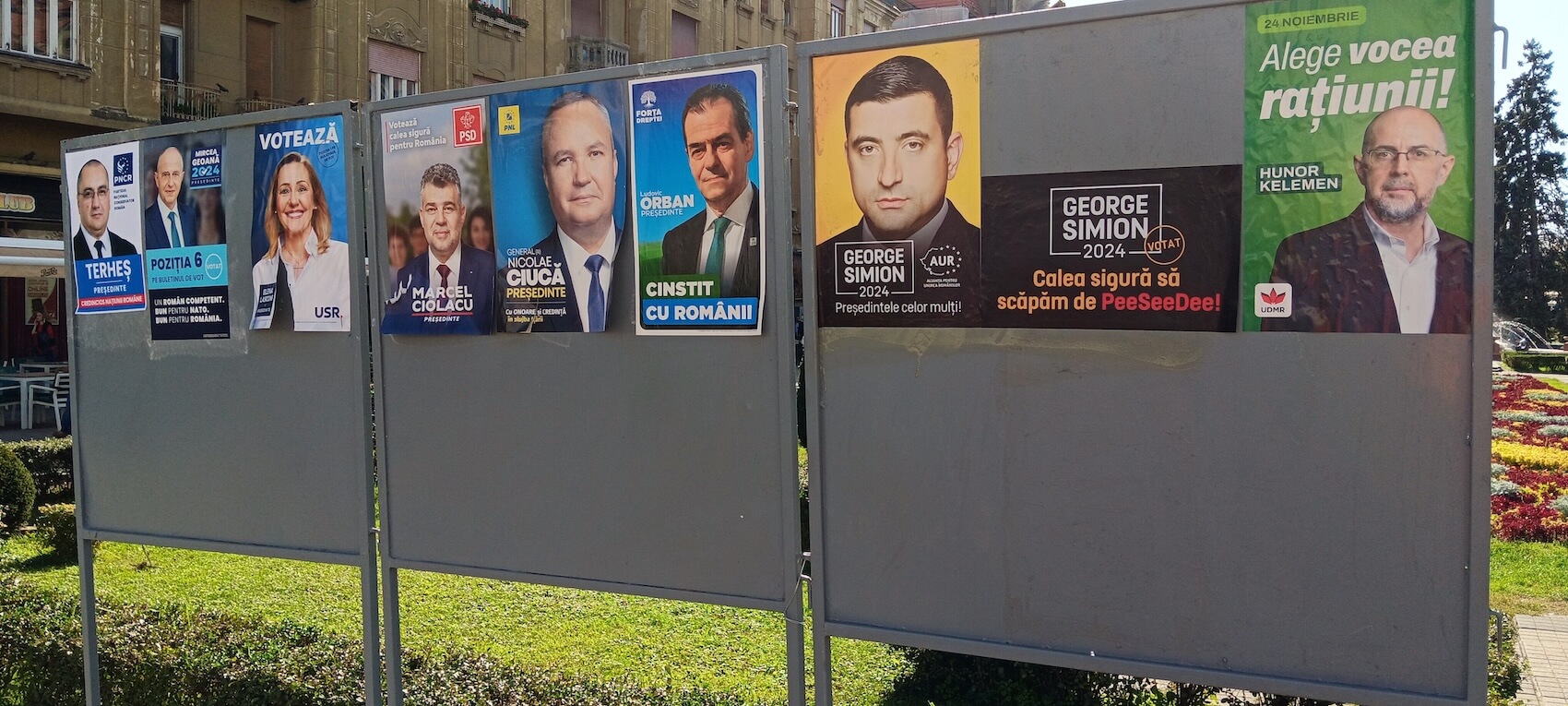
Two scenarios are plausible: i) A co-habitation scenario where Georgescu wins the presidency but is constrained by a pro-European government and Parliament, similar to the political situation in Poland. ii) An alignment between a pro-European coalition and Lasconi’s victory, driven by increased voter mobilization in the second round. This scenario seems credible but faces challenges.

One significant risk for the second round is that Georgescu could position himself as a victim of the establishment. If voter mobilization for Lasconi fails to materialize, it could instead rally anti-establishment voters behind Georgescu. This risk is heightened by the current complaint filed with the constitutional court, alleging illegal activities related to Georgescu’s TikTok campaign and calling for the annulment of the first round. Such actions could provoke greater sympathy for Georgescu and further energize his supporters, especially those with anti-establishment sentiments.

If Georgescu wins, however, there are still factors that could maintain Romania’s European trajectory. The alignment of Parliament and government with pro-European forces would act as a counterbalance, ensuring the preservation of Romania’s commitments to the EU and NATO. Thus, while his presidency could introduce instability, the broader political framework offers some safeguards for maintaining the country’s European route.
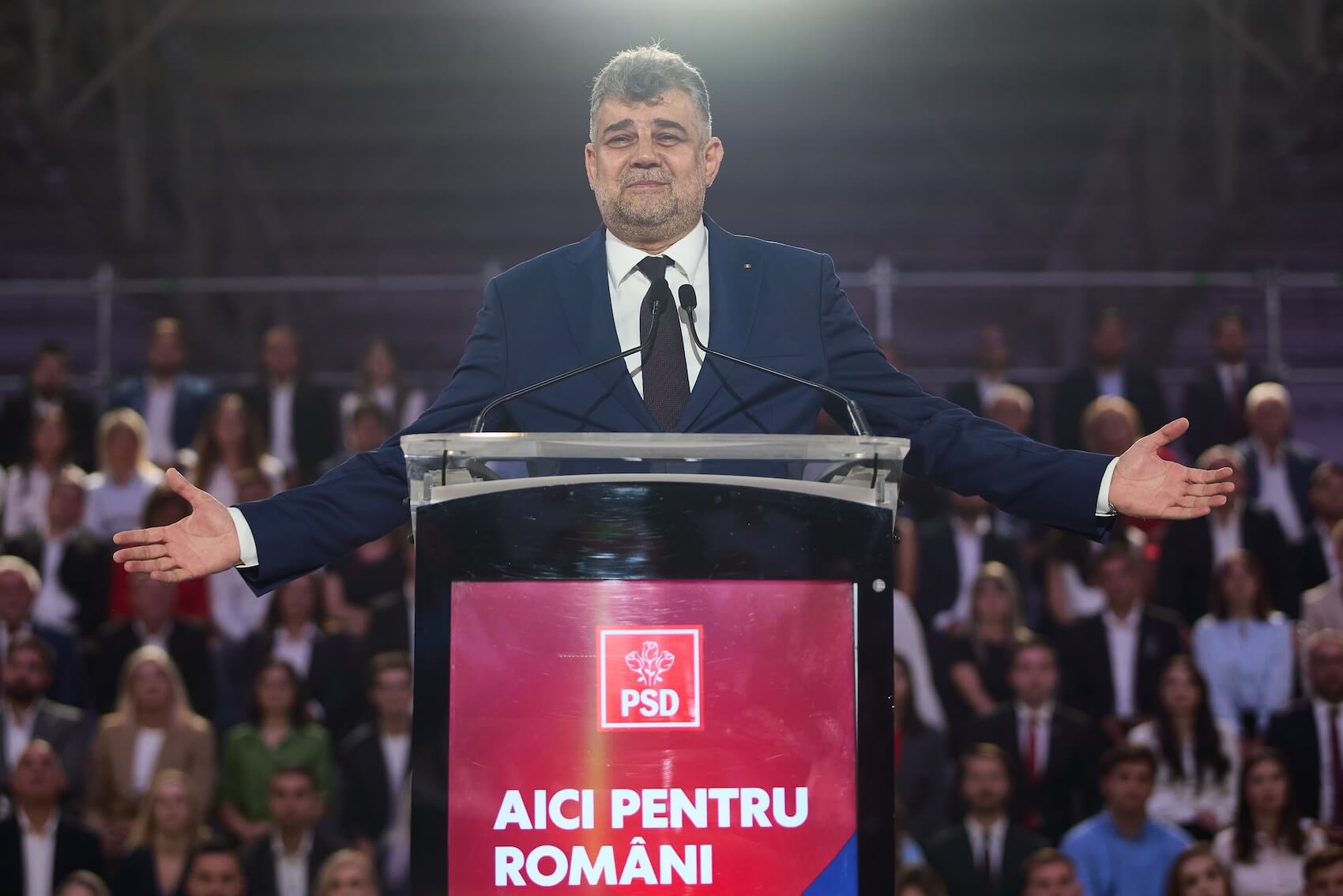
Dr. Emilia Zankina is an Associate Professor in Political Science, Vice Provost for Global Engagement of Temple University, and Dean of Temple University Rome campus.

Professor Zankina: Many Bulgarians Remain Deeply Skeptical of the West

In an interview with ECPS, Professor Emilia Zankina explains that, despite the financial and mobility benefits of EU membership, “many people remain deeply skeptical of the West” due to Bulgaria’s strong historic ties to Russia. The communist era deeply embedded Russian language, culture, and education in Bulgarian life, and “for many,” Professor Zankina notes, “Russia is still seen as a liberator.” She observes that while the war in Ukraine initially reduced pro-Russian sentiment in the country, as the conflict continued, some Bulgarians have returned to their original views.

Interview by Selcuk Gultasli

In a comprehensive interview with the European Center for Populism Studies (ECPS), Professor Emilia Zankina, a leading expert in political science and Vice Provost for Global Engagement at Temple University, delves into the intricate landscape of Bulgarian politics. Currently Dean of Temple University’s Rome campus, Dr. Zankina offers an in-depth analysis of Bulgaria’s shifting political dynamics, particularly highlighting the nation’s complex relationship with Russia, the rise of populism, and public sentiment toward the West.

In Bulgaria’s recent parliamentary election, the center-right GERB party secured first place, but will need a coalition partner to govern. GERB garnered 25.52% of the votes, with the reformist We Continue the Change (PP) party in second at 13.74%, and the ultra-nationalist Vazrazhdane (Revival) party in third with 12.92%.

Exploring Bulgaria’s historic affinity with Russia, Dr. Zankina explains that despite the financial and mobility benefits gained through European Union membership, “many people remain deeply skeptical of the West.” She attributes this sentiment to the powerful legacy of the communist era, during which Russian language, culture, and education were integral to Bulgarian life. “For many,” Zankina notes, “Russia is still seen as a liberator, and this view endures across generations, who often make little distinction between Russian people and the government.” She describes how, initially, the war in Ukraine prompted a decline in pro-Russian sentiment, but as the conflict has continued, some Bulgarians have reverted to their original views.

Addressing Bulgaria’s “mushrooming” populist landscape, Dr. Zankina sheds light on why the country has faced seven elections since 2021. The rapid turnover of parties, she explains, is fueled by populism’s promise of quick solutions and charismatic leadership, which attracts voters eager for change but dissatisfied with democratic processes’ slow pace. “This populist formula,” she says, “favors emotional appeals and big promises without real solutions.” In Bulgaria, populism has contributed to a “never-ending cycle” of new parties, each aiming to capture a portion of an electorate constantly shifting its support.

Dr. Zankina also highlights the unique dynamic of female representation within Bulgaria’s populist radical right (PRR) parties, where women play a “strategic role” in appealing to female voters. However, the PRR remains largely male-dominated, reflecting broader perceptions of these parties as “Männerparteien.” As Bulgaria navigates its future in the EU amidst the influence of both Russian-aligned parties and anti-establishment movements, Dr. Zankina’s insights underscore the complexities of national identity, populism, and external influences in shaping Bulgarian democracy.

Here is the transcription of the interview with Professor Emilia Zankina with some edits.

Populism Fuels Ongoing Volatility in Bulgaria’s Party System

Professor Zankina, thank you very much for joining our interview series. Let me start with the first question. With the fragmentation of the Bulgarian parliament and the presence of nine parties, what role does populism play in shaping public perception and voter alignment within Bulgaria’s complex political landscape? Could this be the primary reason why Bulgaria has gone to the polls seven times since 2021? Additionally, what role have populist parties specifically played in contributing to this political crisis?

Professor Emilia Zankina: Populism is a broad phenomenon that has contributed to developments in party systems, not only in Bulgaria but throughout Europe. What we see is that populist appeals favor easy solutions in Manichean rhetoric and salvation narratives that make voters less patient with the difficulty and complexity of the democratic process, making them eager to vote for the next “savior” and the next quick solution. So certainly, the growing penetration of populism, both as a discursive technique and a way of organizing parties, as well as a way of moving away from hardcore ideologies, has contributed to an overall expectation by voters that they could be offered a simple solution by the next new party.

So we have this combination of populism breeding a string of new parties that come in a never-ending cycle with new promises and a core body of voters who move from one new party to the next. There is certainly a lot to be said about populism contributing to an overall volatility of a party system which, in the case of Bulgaria, was never fully stable, as it is a relatively young party system. It’s been 35 years, and we have already seen populist appeals for the last 20 or so years making their way, and these have become even more prevalent in the past four years.

Eastern Europe Tries to Build Party Systems as Western Models Erode

Boyko Borisov at a meeting with the President of Bulgaria in Sofia on April 20, 2023. Photo: Shutterstock.

How has the shift from traditional political parties to personalistic, charisma-centered leadership impacted Bulgaria’s democratic institutions, and what long-term effects do you foresee? What role do crises play in the rise of charismatic leaders in Bulgaria, and how have leaders like Simeon and Borisov utilized such moments to construct and sustain political charisma? What made GERB and Boyko Borisov so successful in Bulgarian elections since 2006?

Professor Emilia Zankina: Moving away from traditional parties is a significant shift for Western European countries. Central mobilizing themes—often described by the “frozen party thesis” with divisions such as rural versus urban or industrial versus agricultural—have become less relevant as new issues like migration, climate change, and economic crises come to the forefront. In Eastern Europe, however, moving away from traditional political parties holds less relevance because there isn’t a long history of such parties. Eastern Europe emerged from a one-party system that was far from democratic; it could hardly be called a party system—it was essentially an authoritarian regime masquerading as a party system.

In building a party system, Eastern Europe faces a situation where the systems it seeks to emulate in the West are gradually eroding. Now, trends between West and East are less discernible because we also see interparty connectedness, transnational party cooperation, European party families, and so forth, as well as the replication of organizational formulas or personalistic behavior formulas.

In Bulgaria, a major shift occurred with the arrival of Simeon, a charismatic figure with significant legitimacy who attracted a substantial share of votes. During his tenure, he accomplished much and fulfilled many of his promises. At the same time, he established a personalistic model of charisma that Boyko Borisov later emulated in a markedly different style. While the two differ greatly in character, objectives, and persona, Borisov managed to replicate Simeon’s success through his own personal appeal.

Borisov’s approach is less refined and graceful, focusing instead on the image of a “tough guy” capable of handling criminals due to his familiarity with such environments. This approach quickly earned him credibility, not only domestically but also with the European People’s Party, which endorsed him as soon as GERB was formed. In the 2007 elections—Bulgaria’s first for the European Parliament—he gained this support and has continued to benefit from it due to the predictability and stability he brought to Bulgaria.

Borisov’s electoral record is impressive: in 15 years and 11 parliamentary elections, he has only faced defeat twice. His success extends to presidential elections, with his candidates winning twice, as well as to local and European Parliament elections. However, his party, GERB, has been marred by associations with corruption, fueling opposition that combines grassroots protests with a series of populist parties and personalities riding this wave of discontent. This opposition has recently challenged Borisov’s hold on power, while also enabling numerous newcomers to rise on anti-corruption narratives and critiques of GERB. Not all of these actors are necessarily sincere in their appeals, as each has specific political objectives and aims to gain power.

How significant is Boyko Borissov’s ability to distance himself from far-right oligarch Delyan Peevski for GERB’s potential coalition-building efforts, and what does this suggest about the influence of corruption-related sanctions on Bulgarian politics?

Professor Emilia Zankina: He has not shown any willingness to distance himself, even in the aftermath of the elections. On Sunday night, in his speech, he did not exclude Peevski and the MRF(Movement for Rights and Freedoms)-New Beginning from potential coalition-building efforts. Although We Continue the Change-Democratic Bulgaria—the most likely and much-needed potential partner for Borissov—has called for a cordon sanitaire around Peevski, GERB remains one of the few parties in Parliament unwilling to join this exclusion. In fact, every other party has supported the cordon sanitaire except Borissov’s party, which suggests that there may be dependencies between Borissov and Peevski that are not apparent to the broader public. Whether it’s a question of financing or compromising information, he appears reluctant to sever that connection. This stance will undoubtedly create significant challenges in finding other coalition partners and establishing a viable governing coalition.

Far-Right Parties Gain from Alignment and Financial Support from Putin Regime

Demonstration commemorating May 9, Russia’s Victory Day over Nazi Germany, with participants expressing their emotions and displaying slogans in Sofia, Bulgaria, on May 9, 2022. Photo: Yulian Staykov.

Given the rise of pro-Russian and far-right groups like Vazrazhdane, how do you interpret the current balance between Bulgaria’s pro-European aspirations and the growing appeal of populist, anti-Western ideologies? How might Bulgaria’s prolonged political instability impact its path towards EU integration, and do you foresee populist narratives either accelerating or hindering this process within the current coalition negotiations?

Professor Emilia Zankina: The nationalist vote in Bulgaria has traditionally accounted for around 10 to 12%, beginning with ATAKA in 2005. However, in the latest elections, Vazrazhdane and other new parties like March for Justice and Great Glory collectively gathered over 20% of the vote. It’s important to interpret this cautiously, as it doesn’t necessarily reflect purely nationalist sentiment—a significant portion of this vote is protest-driven. Nationalist parties have capitalized on widespread discontent regarding various issues, from the economic crisis to Bulgaria’s stance on the war in Ukraine, becoming a magnet for groups experiencing different types of dissatisfaction. Whether these supporters are genuinely nationalist or simply unhappy is, in some ways, beside the point. If these parties manage to gain power, nationalists, once in government, tend to govern as nationalists.

We have already seen these parties push through two pieces of legislation in the previous parliament: one against so-called LGBT “propaganda” in schools and another targeting “foreign agents,” similar to measures observed in Hungary and Georgia. Additionally, these parties benefit not only from alignment with the Putin regime but also, at times, from its financial support. Examination of their financial reports over the past 10 years reveals that around European elections, unexplained funds—though not substantial—appear in the records of these populist parties. This is particularly notable as the categorization of these funds often shifts from donations to memberships, showing a lack of consistency, which strongly suggests these funds may originate elsewhere.

While directly linking these funds to the Putin regime is complex, it is well-documented that Western parties like Rassemblement National (RN) in France have received similar support. We can therefore reasonably surmise that Russian support reaches these parties, not only financially but also through disinformation campaigns and internet trolls, which amplify their narratives while eroding others, including basic facts.

In your view, what are the primary challenges for pro-European coalitions such as PP-DB in countering populist narratives, especially regarding issues like judicial reform and anti-corruption efforts? Given the “top-down, externally driven” approach to reform in Bulgaria, what specific measures do you believe could enhance the sustainability and local ownership of these reforms?

Professor Emilia Zankina: It doesn’t help that the champions of judicial reform and pro-EU orientation have proven to be quite incompetent themselves and often rely on populist narratives. They also depend on swing votes from the right, left, and center. The first priority is to establish themselves as legitimate political figures capable of predictable political behavior, which they have yet to demonstrate. Despite the sound programmatic appeals behind many of their reforms, their behavior during the campaign has been one of endless bickering with Borisov, and the collapse of the government showed a lack of political experience and acumen. Their inability to inspire trust or project legitimacy and experience doesn’t help their cause.

Furthermore, they face a complex situation: the largest party is GERB, and they have run on an anti-GERB platform, yet now they are in the position of having to uphold the pro-European line, with GERB as their only viable partner. It’s not an easy position, as GERB is both their biggest opponent on corruption—after Peevski—and their strongest ally on European versus pro-Russian orientation. This is a very delicate balance and a difficult task.

They must attempt to form this pro-European coalition while pushing GERB to distance itself from Peevski and commit to anti-corruption reforms. Although complex and challenging, they have no other option but to try to take this difficult step.

Corruption Persists, Demanding Focused and Sustained Solutions

People protesting on the main streets of the capital, demanding the Prime Minister’s resignation, in Sofia, Bulgaria, on July 14, 2020. Photo: Shutterstock.

How have historical legacies and political choices shaped the challenges in Bulgaria’s public administration reform, particularly regarding transparency and accountability? What is the role of corruption in either consolidating or weakening populist parties in Bulgaria? 

Professor Emilia Zankina: Corruption has been a major mobilizing factor, as there have been numerous corruption scandals involving key GERB figures, some of whom, like Tsvetan Tsvetanov, are no longer in power. Corruption remains a persistent problem, and it’s crucial to focus on and stay committed to solutions.

From experience in other former communist countries with similar bureaucratic legacies—a nomenklatura system, highly politicized, and, after the collapse of communism, highly corrupt—we know that one effective solution is electronic governance. Reforming public administration and expanding e-governance across more sectors and procedures have already made substantial strides in addressing corruption, particularly at lower levels. Currently, however, Bulgaria is dealing with political corruption at the highest levels, embodied by figures like Peevski. Peevski’s influence, demonstrated by his control over both the prosecution and the courts, also extends to swaying party behavior within other political groups.

The fact that he managed to secure more votes than party founder Ahmed Dogan, with only 25% of these votes coming from ethnic Turks and over 50% from the Roma population, suggests he has substantial resources for elections and vote-buying. Many of these votes are indeed purchased. Meanwhile, the splinter party Alliance for Freedom and Rights holds over 50% of the ethnic Turkish vote and the majority of the ethnic Turkish vote abroad, indicating that it is the party most recognized by ethnic Turks as their representative. Nonetheless, Peevski has managed to partially hijack the party, purchasing votes and accumulating around 280,000 votes—a considerable number and a significant financial investment.

How does voter perception of corruption differ from expert evaluations in Bulgaria, and what does this reveal about public tolerance for corruption among political parties? How does the relationship between ethnic identity and party support complicate anti-corruption voting behavior in Bulgaria? Furthermore, what role does voter apathy or ‘fatalism’ about corruption play in shaping the success of anti-corruption parties like “There Is Such a People”?

Professor Emilia Zankina: We have a political culture with low institutional trust, which opens opportunities for anti-establishment rhetoric and allows populist parties across the spectrum to benefit from this general distrust. At the same time, there is a dissonance between actual corruption, perceived corruption, and experienced corruption. Corruption is a significant problem in Bulgaria; at the highest levels, there is political control over prosecution and the distribution of EU funds—both serious corruption issues. These factors make it easy for new parties, like There Is Such a People, to exploit the issue. However, the question remains: what are the solutions, and which of these parties actually offers viable ones?

Judicial reforms were pushed by the last regular government with support from GERB, PP-DB, and Peevski; however, many of these reforms were poorly designed. They are often targeted at specific political situations or figures, and in 10 years, these reforms may prove as problematic as the current laws. We need to move away from witch-hunting and detach reform efforts from specific political figures when considering institutional solutions and mechanisms to combat corruption and prevent such opportunities from arising in the first place.

Pro-Russian Sentiment in Bulgaria Rooted in History and Soviet Legacy

How have the war in Ukraine and the Russian influence in the country affected populism and nationalism in Bulgaria?

Professor Emilia Zankina: This has certainly enabled parties like Vazrazhdane to increase their support tenfold over the past three years. In Bulgaria, there is a blend of genuine pro-Russian sentiment, rooted in the country’s long history, including its war for independence and a communist regime backed by Moscow. This regime benefited large portions of the population, though it also harmed many others. Nevertheless, deep-rooted support for all things Russian persists, embedded in families and generations who feel an affinity for the Russian language, culture, country, and worldview.

Meanwhile, the war in Ukraine has placed many people with moderate views—those who may be pro-European but not anti-Russian—in a difficult position, forcing them to choose between their progressive pro-European stance and their affinity for Russia. This dynamic has contributed to the growth of parties like Vazrazhdane.

Interestingly, another strongly pro-Russian party, the Bulgarian Socialist Party, has almost disappeared, losing over 1 million voters in just a few years and now falling below 8%, despite holding nearly 30% in the 2017 elections. This indicates a limit to the mobilizing power of both pro-Russian and anti-Russian rhetoric. Roughly a third of the population is likely strongly pro-Russian, while about half supports a position of neutrality in this war. For many Bulgarian voters, the stance of the European Union and the Western world on this conflict is challenging to accept.

How do you explain the mushrooming of populist parties in Bulgaria? What are the similarities and differences with other populist parties in Europe?

Professor Emilia Zankina: There are many similarities and differences, perhaps more than we might expect, with considerable variety. Across Europe—whether east or west, north or south—we see a proliferation of populist parties, and within each country, there is significant variation. In Bulgaria, populist parties emerge from the center and the right, while in other Eastern European countries, like Slovakia, they also emerge from the left.

What has become firmly established, however, is the populist formula: strong emotional appeals, a charismatic figure highlighting sharp divisions and real societal problems, yet offering no real solutions—only big promises and quick fixes that fail to materialize. In the long run, this erodes the foundations of democracy by creating voters who are less patient and loyal, making party identification and loyalty seem like luxuries.

Instead, we see an emphasis on responding to the mood and crisis of the day, with different charismatic figures performing almost in a TV show setting to attract more votes. This is a Europe-wide trend. In a country without a well-established party system, it’s even easier to erode what was never solidly in place to begin with.

Ethnic Turkish Minority in Bulgaria Endured Trauma from Forced Assimilation and Expulsions

The Banya Bashi Mosque, a landmark and the largest mosque in Bulgaria, on September 18, 2013, in Sofia, Bulgaria. Photo: Shutterstock.

Why have populist radical right parties significantly increased their share of the vote in the June 2024 European Parliament elections, and what key issues have driven their success? How has the Turkish minority influenced the mobilization of nationalist votes, and what role does ethnic and nationalist populism play in the strategies of Bulgarian political actors, particularly regarding the Turkish minority and the Movement for Rights and Freedoms (MRF) party?

Professor Emilia Zankina: Bulgarian nationalism does exploit anti-Turkish rhetoric, but this is not its main mobilizing argument, as there is another minority in Bulgaria, the Roma minority, which actually has a far stronger mobilizing factor—much more so than the ethnic Turks or even external migrants. The Roma minority has traditionally been the primary target of such rhetoric, generating narratives around issues like welfare chauvinism, pensions, schooling, and healthcare, emphasizing access only for taxpayers.

Other issues, like the war in Ukraine and pro-Russian sentiments, also influence the discourse, particularly on topics such as energy policy—decisions around local refineries, the atomic power plant, and related matters. Regarding the ethnic Turkish minority, one key argument fueling nationalist parties is the portrayal of the Ottoman Empire in history books. The ongoing debate centers on whether Bulgaria was under the so-called “Turkish yoke” or merely experienced Turkish presence or dominance, making history books a battleground for these interpretations.

The ethnic Turkish minority, meanwhile, has faced significant historical trauma in Bulgaria, especially during the renaming process, when 800,000 ethnic Turks were forced to leave the country, and the entire minority was subjected to forced assimilation policies, including killings, expulsions, and restrictions on language, culture, and religion. This history has created a deep distrust within the ethnic Turkish community toward all parties, pushing them to continue supporting a corrupt party like the MRF, which understands their loyalty is rooted in a lack of trust for any other party.

Despite attempts from both left and right to reach out to the ethnic Turkish minority, the distrust runs deep, as the wounds are recent and severe, dating back only 30 to 40 years. Many people still hold passports with multiple names, reflecting the forced name changes. It will take time before the ethnic Turkish minority feels confident enough to vote outside an ethnically Turkish party and place their trust elsewhere.

In your recent article for the ECPS report, you note that prior to 2022, 58% of the population reported positive attitudes toward Russia and Putin, suggesting that the war in Ukraine has created fertile ground for PRR parties with strong pro-Russian stances. What are the main reasons behind this pronounced pro-Russian sentiment?

Professor Emilia Zankina: Immediately after the war began, this percentage dropped sharply, but it started climbing again as the conflict continued and Ukrainian refugees arrived in the country. The initial backlash and shift away from strong support for Russia were reversed as refugees from Ukraine came, and as the war extended into a second and third year, people gradually reverted to their original views. Here, we return to the powerful legacy of the communist regime and a party that had 1 million members, with many families still revering Russia regardless of its current regime. Little distinction is made between the Russian people and the Russian government, which becomes problematic; few people object to Russian culture and people, but many oppose Putin’s regime, including within Russia itself.

The historical legacy frames Russia as a liberator, followed by a communist regime that actively promoted Russian culture and language for many years. Many people studied in Russian schools, pursued professional development in Russia, and were raised with that cultural influence. Despite the benefits of the European Union—funds, improved living standards, and mobility—many people remain deeply skeptical of the West.

Populist Radical Right Parties Typically Remain “Men’s Parties”

How do you interpret the discrepancy between the low female representation in Bulgaria’s populist radical right (PRR) parties and the comparatively high level of activity on women’s issues among PRR women MPs? How might the presence of women in PRR parties in Bulgaria influence broader perceptions of these parties as “Männerparteien,” and what factors contribute to this dynamic?

Professor Emilia Zankina: There is extensive research, not only mine but also by many other authors, showing that populist radical right parties are typically “men’s parties.” They are represented by men, supported by men, and largely serve men’s interests. However, we have also seen a narrative of traditional family values promoted by women within these parties. This trend, while not dominant, has been firmly established, extending from the UK to France and across Eastern Europe.

These parties have also strategically positioned women as a tactic to appeal to female voters and as a more legitimate means of promoting specific policies. When addressing gender issues, reproductive rights, or family services, having a woman advocate for these policies lends greater legitimacy. Consequently, parties have co-opted and promoted more women to the forefront as part of this strategy. Yet, for the moment, the appeal remains predominantly directed toward male voters, and representation within these parties still skews male. Despite these efforts, if you examine the gender balance in these parties, on electoral lists and among MPs, it remains largely male-dominated.