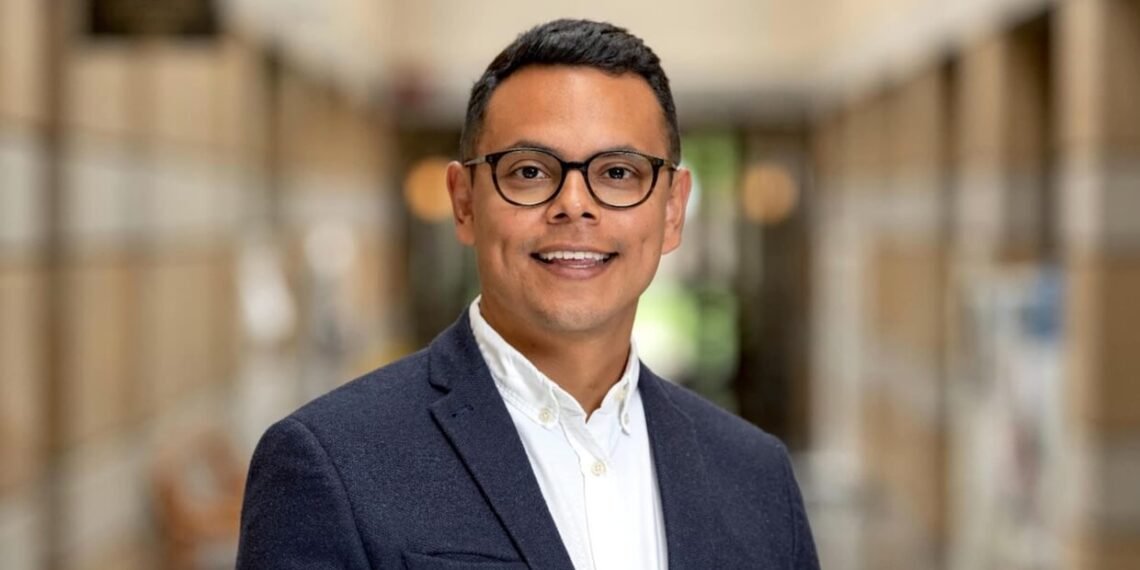
In this ECPS interview, Dr. Javier Pérez Sandoval examines how democratic erosion is increasingly shaped by forces operating beyond conventional accounts of executive aggrandizement and electoral backsliding. Drawing on his research on global illiberalism, state erosion, populism, political violence, and subnational authoritarianism, Dr. Sandoval argues that the international democratic environment has become less supportive of opposition forces and more permissive of illiberal practices. He warns that while populist leaders may be defeated electorally, the institutional damage they leave behind is far harder to reverse. The interview also explores Mexico’s “ballots, bots, and bullets” dynamic, where digital manipulation and criminal violence reshape democratic competition from below, while declining trust undermines democratic recovery at both domestic and international levels.
Interview by Selcuk Gultasli
The accelerating crisis of liberal democracy is no longer confined to domestic arenas of polarization, institutional decay, or electoral contestation. Increasingly, democratic erosion unfolds within an international environment that has itself become more permissive of authoritarianism, more tolerant of illiberal governance, and less capable of sustaining democratic norms across borders. In this context, the European Center for Populism Studies (ECPS) spoke with Dr. Javier Pérez Sandoval, Postdoctoral Research Associate in Democracy at the Kellogg Institute for International Studies at the University of Notre Dame, whose research explores the intersections of global illiberalism, populism, state capacity, political violence, democratic resilience, and subnational authoritarianism. Across a wide-ranging conversation, Dr. Pérez Sandoval offers a rich analysis of how contemporary democracies are being reshaped not only from above by executive aggrandizement, but also from below through institutional hollowing, criminal governance, digital manipulation, and declining public trust.
At the center of the interview is Dr. Sandoval’s argument that the international democratic order itself has undergone a profound transformation. Drawing on his recent Journal of Democracy article, he argues that the post-Cold War assumption that “linkages to the West” would provide a reliable democratic impetus has weakened considerably. As democratic turbulence intensifies within the United States and Europe themselves, “it is no longer certain that these linkages to the international arena, and specifically to Western democracies, provide robust support for democratic forces around the globe.” In their place, long-established autocracies have become “increasingly organized and much more sophisticated in how they operate internationally,” contributing to what he repeatedly describes as the “normalization of illiberal practices” both domestically and internationally.
This transformation, Dr. Sandoval argues, has profound consequences for democratic oppositions operating in hybrid regimes and eroding democracies alike. Global illiberalism raises the costs of resistance, fragments opposition coalitions, and produces what he terms a “credibility gap,” in which democratic actors may sacrifice long-term democratic commitments for short-term electoral viability. The result is an increasingly zero-sum international environment in which “policy preferences and regime preferences are becoming increasingly aligned.”
The interview also explores Dr. Sandoval’s influential work on state erosion and populist governance. In his collaborative research with Andrés Mejía Costa, he distinguishes democratic backsliding from the “hollowing out” of state institutions through mechanisms such as the dismantling of bureaucracies, the rearrangement of state agencies, fiscal centralization, and judicial reconfiguration. While populist leaders may be removed electorally, the institutional damage they leave behind is far more enduring. As he warns, “state erosion and state damage are much harder to undo.”
Particularly striking is Dr. Sandoval’s discussion of democratic trust in both domestic and international contexts. Reflecting on transatlantic relations, he observes that “a partner that was once regarded as reliable may suddenly appear far less trustworthy,” adding that “even when a government leaves office or is voted out, the damage to trust may already have been done.” This erosion of institutional confidence, he argues, extends from citizens’ relationships with the state to alliances such as those between the United States, NATO, and Europe. Hence the interview’s central warning: the erosion of trust often outlasts electoral change itself.
The conversation further examines Mexico as a paradigmatic case of democratic vulnerability under conditions of criminal governance, digital misinformation, and political violence. Discussing the country’s 2024 elections—described through the now familiar formula of “ballots, bots, and bullets”—Dr. Sandoval analyzes how criminal organizations increasingly shape electoral competition and democratic participation. He warns that when political elites are effectively “vetted by criminal organizations,” the minimal democratic principles of electoral contestation and elite rotation become fundamentally distorted.
Yet despite the gravity of these developments, Dr. Sandoval does not embrace fatalism. Instead, he repeatedly returns to the importance of democratic diagnosis, documentation, institutional rebuilding, and civic cooperation. Democratic resilience, he argues, begins with the ability “to diagnose and call things what they are,” and with the willingness of democratic actors to unite around minimal democratic thresholds rather than maximalist ideological positions. In sum, this interview presents a sobering but deeply illuminating reflection on the contemporary condition of democracy—and on the difficult but necessary work required to defend it.
Here is the edited version of our interview with Dr. Javier Pérez Sandoval, revised slightly to improve clarity and flow.
The International Arena No Longer Guarantees Democratic Support
Dr. Javier Pérez Sandoval, welcome. In your most recent Journal of Democracy article, you argue that global illiberalism reshapes the strategic environment in which democracies operate. How should we conceptualize the transition from a democracy-promoting international order to one that is increasingly permissive—or even enabling—of authoritarian practices?
Dr. Javier Pérez Sandoval: That is one of the big questions we have to face and answer, and one that we try to address in the paper. In thinking about this question, my first response is to suggest that we have to acknowledge that it is happening. Sometimes the international environment appears distant or somehow separate from domestic politics. There is already enough happening within domestic politics, and the international environment can seem either too far removed or very static.
The first task in conceptualizing, theorizing, and properly understanding what is happening is to look closely at the changes that have taken place over the last decade or 15 years. In the paper, we suggest that there are at least three key ways in which the international environment has changed. Critically, the point of departure is an idea that was very prominent in the 1990s and early 2000s—namely, the concept developed by Levitsky and Way regarding linkages to the West. The assumption was that the international environment possessed a pro-democratic “flavor,” so to speak, and that one could rely on the international arena to provide a democratic impetus. But given the pressures we now see in the US and Europe, along with their own domestic democratic turmoil, that dynamic has certainly weakened.
So, the argument we present in the paper is that it is no longer certain that these linkages to the international arena, and specifically to Western democracies, provide robust support for democratic forces around the globe.
The second point, very evidently, is that long-established autocracies have become increasingly organized and much more sophisticated in how they operate internationally. They have strengthened their presence within international organizations and become far more adept at navigating the international system.
Ultimately, what this suggests is a certain normalization of illiberal practices. I would not necessarily describe these as openly anti-democratic practices, because I still think the democratic narrative retains the upper hand. You can see this even in the way illiberal and populist leaders continue to adopt the democratic umbrella rhetorically.
So, in narrative terms, democracy still has the upper hand, but there is nonetheless a growing normalization of illiberal practices, both domestically and internationally. That would be my two-part answer to the question.
Global Illiberalism Raises the Costs of Resistance
You highlight that global illiberalism constrains opposition actors by raising the costs of resistance and reducing external support. How do these shifting international conditions alter the prospects for democratic resilience in hybrid regimes?
Dr. Javier Pérez Sandoval: This is an interesting question, especially the last part. Because, when we were writing this piece, we were thinking primarily about eroding democracies—democracies facing autocratizing pressures. But the setup of hybrid regimes makes me think that we perhaps have to refine our thinking about what the starting position is for forces that are trying to strengthen democracy domestically. Even so, I would say that the three key areas or domains in which we highlight increasing costs are still applicable to hybrid regimes. There is the very obvious issue of material and financial support, which might become harder to secure.
But on top of that, we also add the domain of symbolic support. In the paper, we argue that this creates a sense of the narrowing of the international space, in which politics increasingly becomes a kind of zero-sum game. Opposition forces have to compete for international alignment, or they are immediately sidelined by it. And so there is this zero-sum logic that is becoming increasingly present in the international arena when it comes to democratic support.
The immediate consequence of this is the fragmentation of oppositions. Whether you are in an eroding democracy, in a consolidating democracy that is eroding, or in a hybrid regime, this situation fosters the fragmentation of opposition forces. Rather than cooperating and presenting a united democratic front, what happens instead is that these forces begin to fragment and fall apart.
The third cost—which is perhaps the trickiest one because it requires a great deal of strategic thinking—is what we label the credibility gap. This is the idea that some opposition forces will prioritize short-term electoral viability and, in order to achieve that, may compromise their democratic credentials. But what does that imply for democracy-promoting actors in the future if their democratic credentials can later be questioned? It creates a dilemma and a misalignment of incentives between short-term electoral goals and long-term democratic promotion.
It also highlights that, between this fragmentation, the narrowing and zero-sum nature of the international space, and the credibility gap, we may be observing a situation in which both policy preferences and regime preferences are becoming increasingly aligned. Whereas perhaps in the past you would not have compromised your regime preferences if you wanted to support or campaign on a right-wing ideological platform—or a left-wing ideological platform—today, choosing one or the other may also limit what you are then able to stand for in terms of the regime-level question.
Illiberal Practices Now Outlive Their Leaders
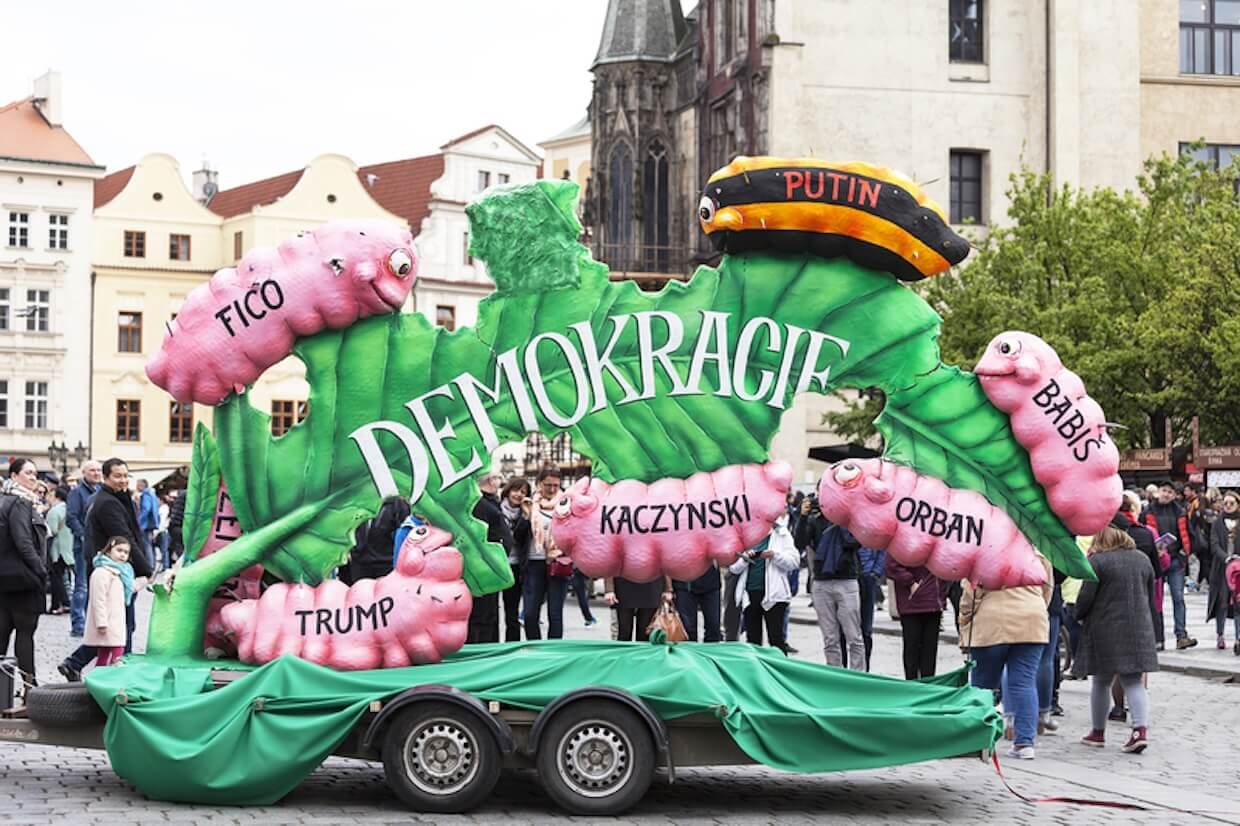
Photo: Jolanta Wojcicka.
Your work suggests that illiberal regimes increasingly learn from one another. How significant is this transnational diffusion of strategies for the consolidation of populist and authoritarian rule?
Dr. Javier Pérez Sandoval: That is a big question, and the first thing I would say is to return to this idea of normalization. So, not only is there perhaps a learning of strategies, but there is also a normalization of what, in other contexts and historical periods, would have been considered highly abnormal behavior, non-standard behavior, or sometimes even openly illegal behavior. In that sense, this undermines not only the domestic rule of law, but international law itself.
We are seeing—people often describe it as a return to inward-looking politics, a turn toward domestic issues at the expense of international ones—but I also think we are witnessing a very evident shift toward, for lack of a better word, realpolitik, where law, and especially the normative dimension of law, is increasingly sidelined in the face of economic interests and power politics.
The normalization of those practices and values is perhaps one of the most pressing and long-term dangers that we face. Because insofar as this process is generated and reinforced through diffusion, it creates a mechanism through which these practices survive and outlive current leaders. So, this is not only a conjunctural issue, but also a question of duration: how long are we going to remain in this process? How long will it last? I think that is the key danger and the key issue we should continue to watch closely.
State Erosion Is Harder to Undo Than Electoral Defeat
In “Why Populists Hollow Out Their States,” you argue that populists systematically erode state capacity. How does this process differ from more familiar accounts of democratic backsliding focused on executive aggrandizement and institutional capture?
Dr. Javier Pérez Sandoval: That is another piece that I had the fortune to write with Andrés Mejía Costa, and you are putting your finger on perhaps the most challenging empirical question we face. Ultimately, this asks us to distinguish between what the political regime is and what the state itself is. And sometimes—indeed, often—these things coexist, and they can be difficult to pull apart. Perhaps the best way to think about it is that you can have measures that erode democracy without necessarily hampering the state, and measures that hamper the state without necessarily damaging democracy. So, I will try to give examples of both in order to answer your question.
One measure that might damage the state without necessarily damaging democracy has to do with one of the examples we discuss in the paper: the centralization of spending. If you centralize public spending, you might not necessarily damage the liberal or electoral aspects of democracy, but you may still facilitate executive aggrandizement in the long term, or hamper accountability and the ability of subnational actors, for example, to exercise budgetary authority. So, there is an aspect in which the state clearly changes, while the regime itself may remain relatively constant and not immediately erode.
Another example is the current debate in the United States over gerrymandering and redistricting. These practices have immediate electoral and democratic consequences, but they do not necessarily have immediate consequences for the state itself. So, there are aspects in which we can analytically tease apart these elements.
In the paper, we present at least four ideas—or four mechanisms—through which we can clearly observe forms of state erosion that differ from democratic backsliding alone. These are the dismantling of bureaucracies, the rearrangement of state agencies, the centralization of spending, and the last one—which is perhaps the closest to democratic backsliding—the dismantling or reconfiguration of the judiciary. Those four mechanisms are the key ideas we present in the piece in order to offer a clearer empirical distinction between democratic backsliding and state erosion.
And I would add that the ultimate concern in the piece is that we see both processes as going hand in hand: the process of state erosion and the process of democratic erosion. Our key concern is that while you can push back against the regime question—you can remove illiberal or populist leaders through elections—state erosion and state damage are much harder to undo.
So, our concern is that by damaging certain state institutions and state capacities, democratic recovery becomes much more difficult in the long term. I think that is perhaps one additional distinction that I would emphasize.
Rebuilding Trust Is Harder Than Removing Populist

You emphasize that state erosion can occur rapidly, whereas state-building is slow and cumulative. What does this asymmetry imply for the long-term prospects of democratic recovery after populist rule?
Dr. Javier Pérez Sandoval: You are really putting your finger on the issue. As you said, from what we know from the literature on state-building and state capacity, it takes generations to build autonomous and capable institutions that are able to deliver public goods and services. And there seems to be a profound asymmetry between how long it takes to build and accumulate those capabilities and how quickly they can be dismantled.
One key area in which I see this tension emerging very clearly concerns not only public service delivery but also trust—both among citizens and among international allies and partners. Take, for example, the domestic arena. After a populist leaves office, a pro-democratic government may come in and attempt to rebuild institutions. But if citizens have already come to perceive that the state, and the services it provides, can be easily politicized and quickly stripped away, they may become much more wary of relying on or engaging with the state in the future.
In the international arena, you can perhaps see something similar in the relationships between, for example, the United States, NATO, and Europe. A partner that was once regarded as reliable may suddenly appear far less trustworthy. Even when a government leaves office or is voted out, the damage to trust may already have been done, and I do not think it can be rebuilt so easily. So, there is definitely an underlying tension there. Rebuilding that trust will require commitment on both sides: domestically, from incoming governments trying to reconstruct institutions, and from citizens willing to trust again and reengage politically and publicly. And the same can be said at the international level.
When Reform Becomes a Pretext for Capture
Your analysis suggests that populist leaders often justify institutional weakening through anti-corruption and austerity narratives. How do these discursive strategies help legitimize policies that ultimately undermine democratic governance?
Dr. Javier Pérez Sandoval: The key answer to that is that they do work. In most instances, if you look at the trajectories through which populist leaders not only get elected but also manage to get away with these measures, what you usually find behind them is a narrative—a campaign in which, with some degree of truth, the institutions being attacked or dismantled are already widely perceived as corrupt, deficient, problematic, or incapable of fulfilling the duties for which they were originally created.
You see this, for example, in Mexico, across Latin America, but even in the United States, where there are attacks on key institutions based on their past performance, or their perceived performance. Those institutions are then dismantled or significantly weakened, and only afterward do people suddenly realize that, despite their deficiencies, they were still performing important functions.
Here, I cannot help but refer to the Mexican case and the recent reform of the judiciary. We all know that Mexico has extremely high levels of impunity. Only around 2 percent of criminal cases ever receive a judicial sentence. So, there are very high levels of impunity, and the central banner of the campaign became: “Well, we need to reform the judiciary.”
But under that pretense, what ultimately happened was the takeover of the judiciary. The long-term consequence then becomes: how do you reverse that damage? I try to put myself in the position of an incoming government—a non-Morena government, a pro-democratic government—and the question they will likely face is whether they, too, should reform the judiciary under the pretext of restoring democracy. But by doing so, do they then expose themselves to criticism for also trying to reform the judiciary in order to capture it?
So again, trying to connect the dots between the issues raised in the first paper on opposition forces and the issues raised in the second paper on the state, this creates extremely complex scenarios in which the decisions made by democratic forces will be crucial in determining both how quickly and how successfully we are able to recover from certain conditions and situations.
Social Spending Can Become an Electoral Instrument
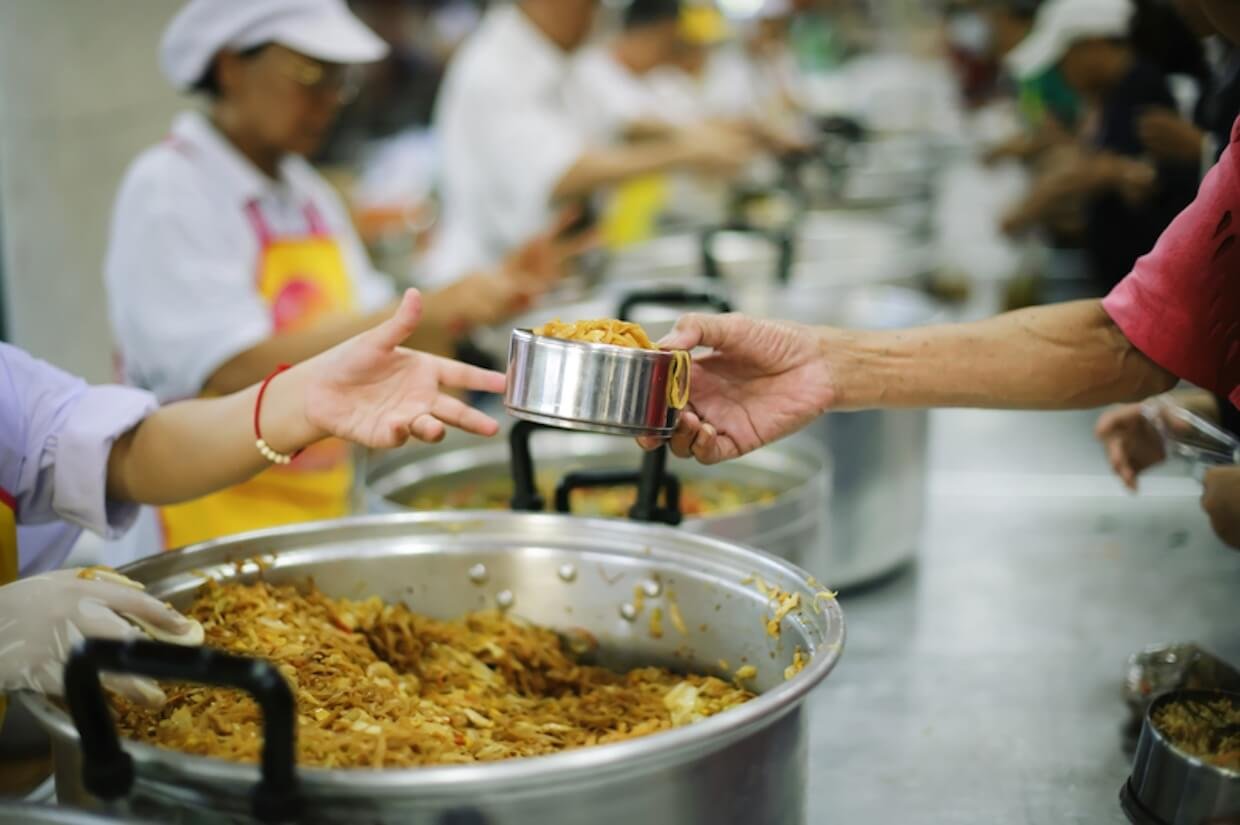
Drawing on the Mexican case, how should we interpret the reallocation of state resources—such as shifts toward social spending at the expense of institutional capacity—in terms of democratic quality and state effectiveness?
Dr. Javier Pérez Sandoval: I was once asked whether any and all re-budgeting was necessarily a sign of hollowing out or state erosion. The answer to that is no. In principle, if you were to ask me that question, let’s say in a vacuum—do we think that simply repurposing spending toward welfare and social spending is necessarily a problematic sign for democratic governance? My answer would be no. It is in the context of everything else that is happening, particularly in the Mexican case, where my answer would have to be: Actually, we might need to be worried about it.
Precisely because one of the key things, for example, is that in the Mexican case they are re-shifting the budget and implementing all of these austerity measures, but coincidentally—and I say this ironically—for purposes that are very beneficial to the incumbent government. So, if you redesign social policy in a way that provides beneficiaries with direct, non-conditional cash transfers, the expectation is that you will reap the electoral benefits from those transfers. And not only that, but you are also opposing any sort of strong or robust fiscal reform that would actually expand the size of the pie. By engaging in this kind of budgetary shifting, you are therefore taking resources away from other potentially relevant state activities.
So, again, in and of itself, it is not necessarily the case that any one of these measures would be problematic, but we always have to situate the analysis within its broader context.
When Elections Face Bots, Bullets, and Criminal Power
In the context of Mexico’s 2024 elections, characterized by “ballots, bots, and bullets,” how do digital misinformation and political-criminal violence interact to reshape electoral competition and citizen participation?
Dr. Javier Pérez Sandoval: This is what keeps me up at night, and one of the reasons is precisely because I have the Mexican case very close to home. I am from Mexico, so it feels very immediate to me. But more broadly, Mexico is perhaps a paradigmatic extreme case of the growing relationship between criminal governance, democracy, and the increasing growth and permeability of digital life.
So, I will say two things. First, they have completely reshaped electoral competition, at least in the Mexican case. I can also think of the Brazilian case, particularly at the local level, where it is now pretty hard to win an election if, A, you are not at least on good terms with criminal organizations, and B, you do not have a strong online presence.
There is also the fact that it is hard to collect evidence to ascertain this with 100 percent certainty, but criminal organizations themselves have become quite embedded not only in local politics, but also in terms of their technological reach. The domain of their activities no longer pertains only to drug trafficking. So, it is hard for me to see exactly where the influence ends, if that makes any sense. It is one thing to think about the traditional vision of drug-trafficking organizations as groups simply in charge of moving drugs from point A to point B, and that is basically all they do. Now, however, we are talking about really complex systems of criminal governance.
I recently read a paper that even referred to criminal hybrid regimes, in which state institutions and criminal organizations are conceptualized as fused. And again, in the Mexican case, the now former governor of Sinaloa—who recently stepped away from office—has been accused of having close ties with a criminal organization.
So, absolutely, there has been a reshaping of what elections might allow you to do in a democracy. The question then becomes: how do we protect the electoral mechanism from such complex and disruptive forces as, online misinformation, and criminal organizations? There are ample opportunity and space to learn in terms of candidate selection and campaign monitoring.
Violence Hollows Out Democracy from Below
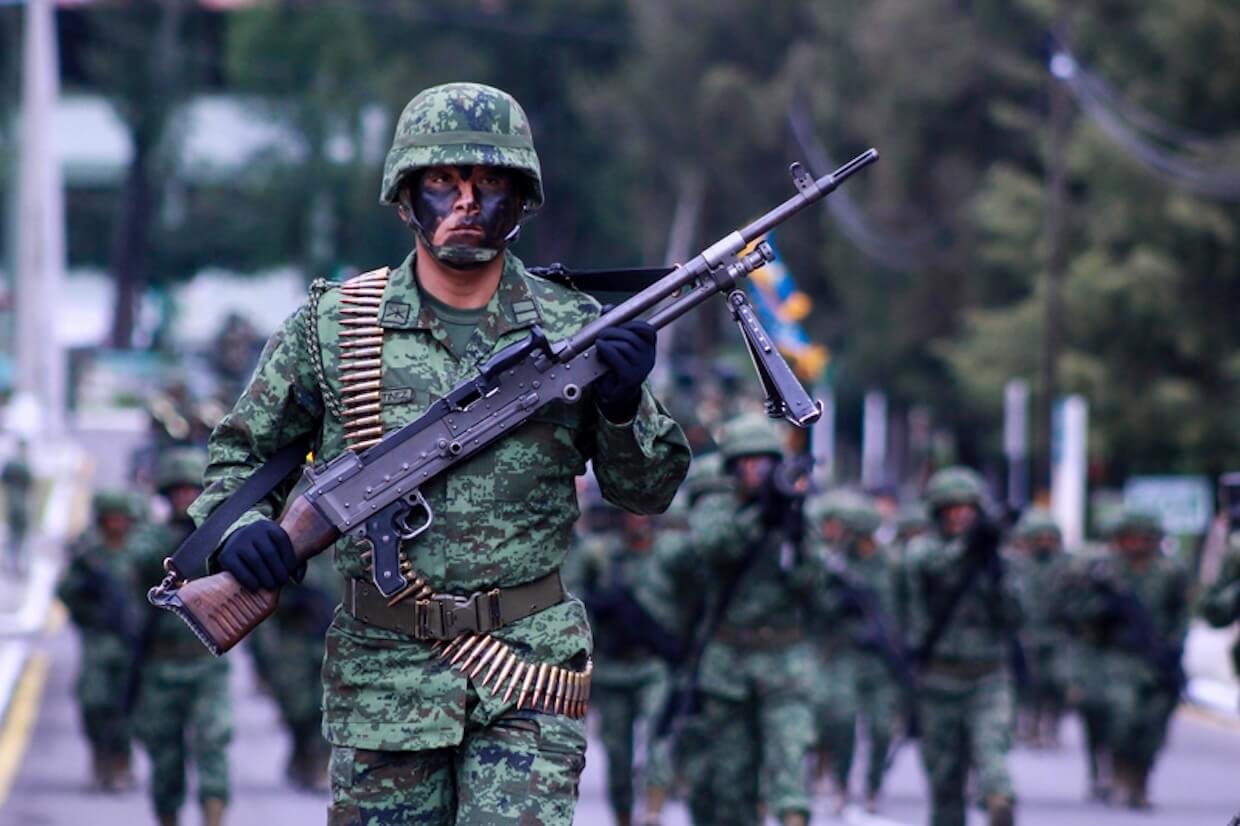
Given the documented 401 attacks on political actors during the recent electoral cycle, to what extent does violence function as an alternative mechanism of political selection, effectively hollowing out democracy from below?
Dr. Javier Pérez Sandoval: This completely redefines the situation, and you are right to point out that this is not necessarily the kind of executive-led aggrandizement from the top down that we usually conceive of, but rather more of a bottom-up—I do not want to call it grassroots—dynamic. But it completely distorts what the minimal definition of democracy entails, namely the rotation of elites and electoral contestation. So, if the only elites rotating through the system are those effectively vetted by criminal organizations, and if, from their very inception, they already possess what we might call a very lax commitment to the rule of law, then I do not see a very bright future for liberal democracies at the local, subnational, or national level, in Mexico or elsewhere where this might be happening.
Local Politics as a Space of Experimentation and Democratic Defense
To what extent do populist and far-right actors exploit subnational arenas—such as regional governments or municipalities—as laboratories for illiberal experimentation and institutional erosion?
Dr. Javier Pérez Sandoval: This is an interesting question, and you will get different answers depending on the case and who you ask. Subnational arenas, or subnational units, have been described both as laboratories of authoritarianism—where exactly the kind of dynamics you mention take place, with parties and politicians experimenting, learning, and seeing what they can get away with—and as arenas of resistance, in which politicians and parties resist and withstand autocratizing pressures from above.
In that sense, it ultimately becomes a matter of the preferences of the actors in power and what they are actually able to push for. The subnational arena allows for experimentation in either direction. It can function in an autocratizing way: actors can learn what the legal framework allows them to do, how they might reshuffle certain budgets, which agencies are absolutely necessary, and which messages resonate with the electorate, and which do not. This can actually catapult actors to the national stage. But it can also serve as a space of resistance—a space in which we learn how to contest autocratization from above.
So, I would try to balance the picture and say that there is evidence for both dynamics. My hope is that we are building enough research and collecting enough evidence regarding best practices in both scenarios: on the one hand, to identify these dynamics early and recognize that certain types of practices tend to lead to autocratizing outcomes; and, on the other hand, to replicate successful efforts toward rebuilding and resisting in defense of democracy.
Trust Is the Long-Term Challenge of Democratic Recovery
Your work suggests that declining state capacity undermines citizens’ trust and fuels disengagement. How does this dynamic contribute to a vicious cycle in which democratic dissatisfaction further empowers populist or authoritarian actors?
Dr. Javier Pérez Sandoval: I’ll connect that question to your previous question by saying that there is research showing that the democratic features of the subnational unit in which you live shape citizens’ perceptions of how democratic their country is, and also shape trust in the state, government, and public institutions. In that sense, this broader process of declining state capacity and democratic erosion at multiple levels also affects how we see and relate to the state, the government, and public institutions across different levels.
Trying to connect the two dots, there may still be opportunities, particularly in the subnational arena, where efforts of resistance can serve as bastions for democratic preferences. We may observe national autocratizing trends and the normalization of certain radical ideologies or political preferences, but perhaps the local sphere can still remain a space in which a minimal threshold of democratic practices, norms, and behaviors endures. And that, in turn, can become a baseline from which we can begin rebuilding again from the bottom up.
So, there is this recognition that, as I mentioned earlier, the key issue in the long term is trust. How do you rebuild trust for the future? My hope—and I say this very openly—is that by identifying these very local good practices and efforts, we can find a baseline from which to begin building back up again.
Democratic Defense Begins with Naming the Problem
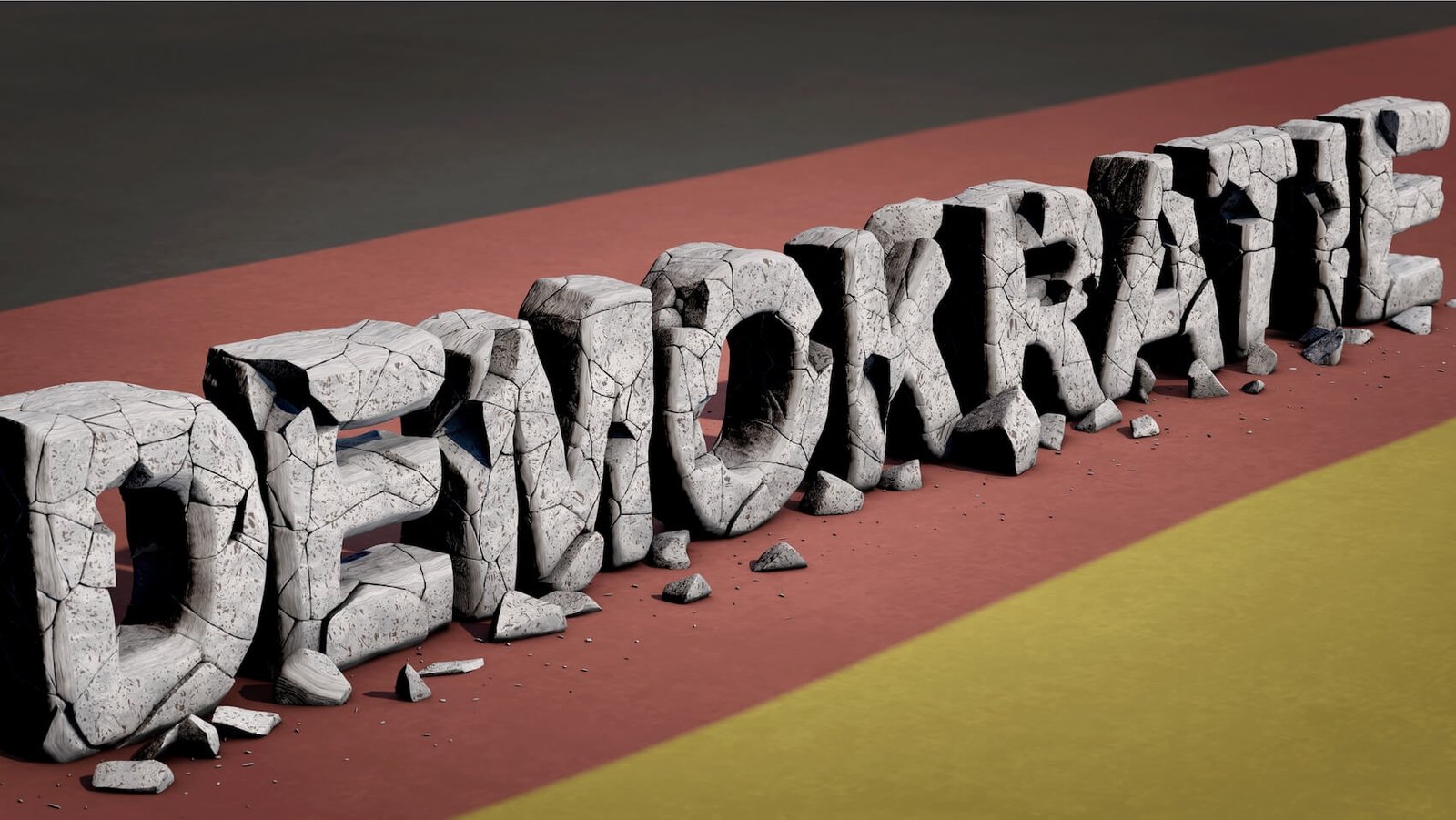
And finally, considering the combined pressures of global illiberalism, state hollowing, digital manipulation, and political violence, what would a viable strategy for democratic resilience look like in the contemporary era?
Dr. Javier Pérez Sandoval: If I nail this question, I probably need to ask for a raise, because this is perhaps the question being asked in a lot of quote-unquote war rooms for the opposition. The broader question is: How do we successfully defend democracy? And there are multiple answers to this. Perhaps I am thinking of two things. One is a very personal answer, in terms of the way I try to approach it myself. The other is a more practical way of thinking about it from the perspective of an opposition movement or political actor.
The way that I try to do it personally is through documenting—trying to track what is happening to democracy in Mexico, in Latin America, and more generally; trying to document, gather, and collect evidence of where democracy is declining and where democracy is able to make a stand and resist. So, if I were to answer that question from my own experience—”how do I see myself as defending democracy?”—that would be my answer: documenting where it erodes, and also documenting where it resists, not only in a cross-country comparative way, but also within countries, through a subnational lens and perspective.
But beyond that and perhaps trying to extrapolate from that experience more broadly, the first thing would also be to document and agree on the diagnosis. Sometimes—I was watching some depositions in the US Congress where some members of the current administration could not even identify a very blatant non-constitutional act as such. We have become so politicized, and partisanship has seemingly trumped everything, that we cannot even agree on what a plain and clear reading of the Constitution is.
So, simply agreeing on the diagnosis, documenting it, and being able to call things by their proper names would already be a great first step. And then, moving forward, it would also be a crucial first step toward finding a common dialogue.
This is one of the calls that we make in the paper on illiberalism and democracy with Maryhen Jiménez and Timothy J. Power. One of the things that history teaches is that democratic defense and democratic oppositions are more likely to coalesce—and therefore more likely to succeed—when they agree on a minimal threshold. Agreeing on a maximalist position or a very high ceiling is always a difficult strategy. But agreeing on the minimal conditions that we can all defend and stand for is a much more feasible strategy and a more realistic act across different contexts.
But unfortunately, we are still in a situation where there is a precondition for that, which is simply the capacity to diagnose and call things what they are. And agreeing on that language today seems even harder than it was in the past. So, if anything, I hope that my work, and the work of my colleagues—and of the Center, for example, in this space—helps us create that common language to diagnose problems and then move forward.