In this wide-ranging ECPS interview, Professor Giuseppe Martinico—Full Professor of Comparative Public Law at the Sant’Anna School of Advanced Studies in Pisa—examines how contemporary populist and illiberal movements increasingly weaponize constitutional law, sovereignty, and democratic institutions from within liberal constitutional orders themselves. Challenging conventional understandings of democratic backsliding, Professor Martinico argues that today’s populists often operate through “a sophisticated internal process of erosion operating under the guise of legality.” He warns that “populism acts as a parasite on the host organism of democracy,” occupying the language of constitutionalism while hollowing out its pluralist substance from within. The interview explores constitutional counternarratives, Euroscepticism, lawfare, judicial independence, memory politics, and the future resilience of constitutional democracy in Europe and beyond.
Interview by Selcuk Gultasli
Professor Giuseppe Martinico, Full Professor of Comparative Public Law at the Sant’Anna School of Advanced Studies in Pisa, is among the leading contemporary scholars examining the relationship between populism, constitutionalism, Euroscepticism, and democratic backsliding in Europe. Across a wide-ranging body of work—including Filtering Populist Claims to Fight Populism and the recent The Eurosceptic Mobilization of Constitutional Law, co-authored with Pablo Castillo-Ortiz—Professor Martinico has explored how illiberal and populist actors increasingly seek not to reject constitutional democracy outright, but to hollow it out from within by appropriating its language, institutions, and legal mechanisms.
In this interview with the European Center for Populism Studies (ECPS), Professor Martinico offers a sophisticated constitutional analysis of the contemporary populist challenge confronting liberal democracy across Europe and beyond. Rather than understanding democratic erosion primarily through the classic image of coups or overt authoritarian ruptures, Professor Martinico argues that today’s populist radical-right movements increasingly operate through what he describes as a “sophisticated internal process of erosion operating under the guise of legality.” As he explains, “Populism acts as a parasite on the host organism of democracy. It does not displace the vocabulary of democracy and constitutionalism; it occupies it. It exploits internal ambiguities and rewrites their meanings and definitions.”
Throughout the conversation, Professor Martinico examines how populist and sovereigntist actors weaponize constitutional law, sovereignty, referendums, judicial politics, and memory narratives in order to challenge the pluralist foundations of post-World War II constitutionalism. Drawing on examples from Hungary, Poland, Italy, Russia, Turkey, (Brexit) Britain, and the European Union itself, he demonstrates how contemporary illiberalism increasingly relies on formal legality, constitutional revisionism, and “lawfare” rather than open constitutional rupture.
The interview also explores the rise of what Professor Martinico and Castillo-Ortiz call “Eurosceptic constitutional counter-narratives,” through which radical-right movements transform constitutional law into a strategic weapon against European integration. At the same time, Professor Martinico warns against simplistic or purely technocratic responses to populism. Liberal democracies, he argues, must become more participatory and responsive while still preserving the “untouchable core” of pluralism, judicial independence, minority rights, and constitutional limits on majority power.
Importantly, the interview moves beyond diagnosis to address the future of constitutional democracy itself. Professor Martinico reflects on the erosion of Europe’s postwar constitutional memory, the delegitimization of intermediary institutions such as universities and courts, the growing tensions between constitutional openness and ethnonationalist identity politics, and the increasingly difficult role of supranational institutions such as the European Court of Human Rights and the Court of Justice of the European Union in resisting democratic decay.
Yet despite these profound challenges, Professor Martinico remains cautiously optimistic. Constitutional democracy, he argues, still possesses “considerable institutional and normative resources,” provided democratic societies are willing to reconnect participation with deliberation, strengthen civic institutions, and defend pluralism without abandoning democratic responsiveness.
Here is the revised version of our interview with Professor Giuseppe Martinico, lightly edited for clarity and readability.
Democratic Erosion Advances Through Internal Constitutional Capture
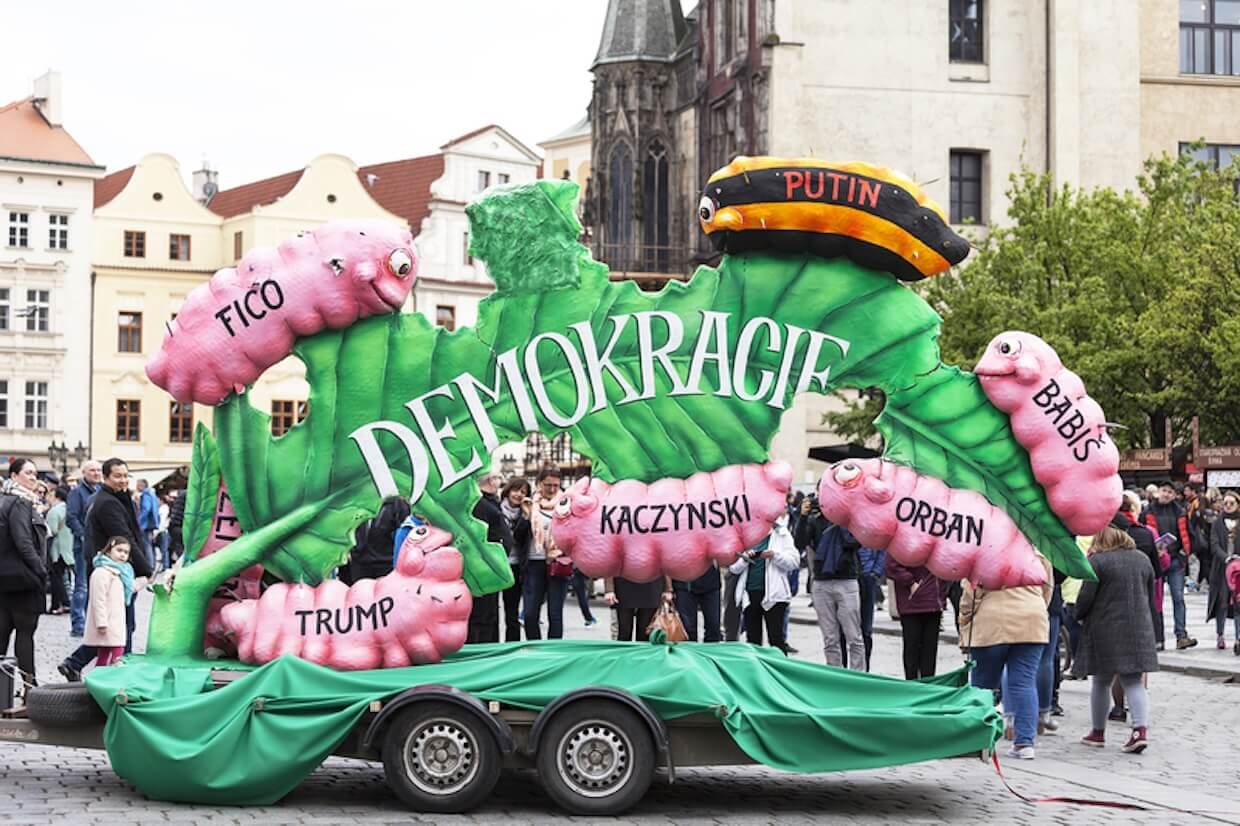
Photo: Jolanta Wojcicka.
Professor Martinico, welcome! To begin, in your recent work on “constitutional counternarratives,” you argue that contemporary populists no longer simply attack constitutionalism from the outside but increasingly weaponize constitutional language and institutions from within. How does this transformation change our understanding of democratic backsliding in Europe today?
Professor Giuseppe Martinico: Thanks for this excellent opening question. This transformation represents a fundamental paradigm shift in how we conceptualize democratic decay, forcing us to move beyond classic 20th-century models of authoritarian takeovers. It also obliges us to recognize that democratic backsliding is often not a violent external coup, but rather an internal and incremental erosion, because illiberal populists frequently operate through the existing legal framework. The decay is subtler, harder to detect, and wrapped in a facade of formal legality. In this respect, what we are witnessing today in Europe and beyond is a sophisticated internal process of erosion operating under the guise of legality.
Indeed, contemporary populist and illiberal actors win elections and enter the institutional architecture in order to dismantle liberal constitutional democracy from within. This shift changes our understanding of backsliding in three major ways.
First, it introduces the challenge of formal compliance, because these actors borrow and weaponize the precise language, concepts, and mechanisms of constitutionalism and constitutional law. As a result, the erosion is often slow, incremental, and legally formalistic—what Kim Lane Scheppele has called “autocratic legalism.” To the outside observer, the system appears to function normally: courts are operating, laws are being passed, and referendums are being held. Yet the normative substance of the constitutional order is systematically drained.
Second, this development forces us to re-examine the main features of what constitutional lawyers define as post-World War II constitutionalism, particularly characteristic of postwar Europe, with Italy and Germany serving as primary examples. This model of constitutionalism was intentionally designed with robust counter-majoritarian instruments—for instance, entrenched clauses, eternity clauses, and strong forms of judicial review—precisely to guard against a return to totalitarianism.
The contemporary internal weaponization of law, particularly constitutional law, exploits the inherent openness of this system. It uses the master tools of the constitutional state to dismantle its own protective walls. This is also what Paul Blokker describes as the use of liberal tools for illiberal gains. In this respect, I find Clifford Bob’s seminal work Rights as Weapons particularly insightful.
Third, this shift alters how we diagnose the crisis itself. We are no longer dealing with a simple cyclical crisis of political representation, but rather with a profound structural attempt to alter the relationship between political power and legal limits. By framing their actions as an authentic implementation of the constitutional text, populist actors create a high degree of legal ambiguity, making international monitoring far more difficult. It is a form of evolutionary autocratization that transforms the constitution from an instrument designed to limit power into a highly effective instrument of executive government.
Mimetism and Parasitism Reveal How Populism Occupies Democratic Language
Your scholarship repeatedly emphasizes that populism should not be understood merely as anti-elitist rhetoric, but as a broader constitutional project grounded in what you call “mimetism” and “parasitism.” Could you explain how populist actors appropriate the vocabulary of constitutional democracy while simultaneously hollowing out its liberal foundations?
Professor Giuseppe Martinico: Indeed, to understand how this internal hollowing out occurs, we must look at two distinct yet deeply intertwined strategic mechanisms driving the populist approach to constitutional law: mimetism and parasitism.
Mimetism describes the strategy whereby populist leaders endeavor to present themselves as entirely consistent, compatible, and compliant with the formal language and text of the Constitution. They do not openly reject the Constitution. Rather, they hide behind its words in order to legitimize their political claims and insulate their actions from criticism.
A concrete example of this mimetic approach can be found in Italian political history. In 2018, during a speech at the United Nations, the then-Italian Premier Giuseppe Conte, now leader of the Five Star Movement, addressed critics by stating that, when some accused his government of sovereigntism or populism, he enjoyed pointing out that Article 1 of the Italian Constitution explicitly cites sovereignty in the people.
He claimed that he was merely interpreting the exercise of sovereignty by the people exactly as the constitutional text dictated. This is the essence of mimetism. But it relies on a deeply abusive and cherry-picking approach, because when populists quote Article 1 of the Italian Constitution, they tactically omit—on purpose, of course—that the second half of the very same sentence adds something fundamentally important. The provision explicitly reads “Sovereignty belongs to the people and is exercised by the people in the forms and within the limits of the Constitution.” So, they omit the reference to the limits. By severing the concept of popular sovereignty from its mandatory constitutional limits, mimetism allows populists to use literal textual fragments to advance a radically majoritarian agenda that defies the system’s checks and balances.
And this leads directly to parasitism. Drawing on concepts from political theorists like Nadia Urbinati and Benjamin Arditi, we can apply parasitism to constitutional law to describe how populists alter the delicate equilibria within the constellation of values that define a constitutional democracy. Populism acts as a parasite on the host organism of democracy. It does not displace the vocabulary of democracy and constitutionalism; it occupies it. It exploits internal ambiguities and rewrites their meanings and definitions. Under a parasitic logic, democracy, understood purely as majority rule, is treated as a trump card that must automatically prevail over other constitutional values, whether judicial independence, fundamental minority rights, or supranational obligations.
So, populists construct a false and dangerous dichotomy between democracy, which they claim to embody, and constitutionalism, which they depict as an elite-driven straitjacket designed to frustrate the true will of the people. They literally steal our core academic concepts—popular authority, constituent power, democracy—and hollow them out from within, leaving the formal structure intact while destroying the liberal, pluralistic substance that keeps democracy alive.
Eurosceptic Movements Transform National Constitutions into Weapons Against Europe

In The Eurosceptic Mobilization of Constitutional Law, you and Pablo Castillo-Ortiz introduce the concept of “Eurosceptic constitutional counter-narratives.” How have radical-right and sovereigntist movements across Europe transformed constitutional law into a strategic tool against European integration itself?
Professor Giuseppe Martinico: First of all, thanks for mentioning my latest book. In this co-authored volume, written with my friend Dr. Pablo Castillo-Ortiz, we try to take a distinct approach by analyzing Euroscepticism not only as a political or sociological phenomenon, but specifically as a constitutional law issue. Our core argument is that Eurosceptic movements possess a profound strategic interest in constitutional law. They have increasingly integrated constitutional law into their political playbooks, converting national constitutional arguments into powerful political weapons for strategic ends—a process we call the mobilization of constitutional law.
Why do they do this? There are two primary strategic reasons, in our view.
First of all, respectability. By couching their anti-EU rhetoric in the sophisticated vocabulary of constitutional theory, Eurosceptic forces secure a semblance of intellectual credibility and institutional respectability for their political agenda.
Second, framing. It is politically far easier and more persuasive to present oneself to the domestic electorate as a proud defender of the national constitution than as a mere obstructionist opponent of European integration.
As a result, they constantly construct what we call Eurosceptic constitutional counter-narratives. These counter-narratives are highly diversified across different countries and political parties. Yet, in our view, they also share distinct common traits across Northern, Southern, and Eastern Europe. We can map these traits across three main levels.
First, the theoretical constitutional level. These movements operate on an exclusionary understanding of the demos. For them, the only legitimate demos is the national one. Any supranational dimension of belonging is rejected as an artificial falsification. They depict identity as entirely static, rooted in rigid historical or traditional values, and they present national authority as an absolute unilateral shield.
Second, the level of judicial politics. They systematically attack supranational courts, such as the Court of Justice of the European Union and the European Court of Human Rights, while actively mobilizing domestic judicial and political actors to resist their rulings—especially when they manage to capture these courts themselves, as in Hungary or Poland, for instance.
Third, the level of party politics. They fill their electoral manifestos with high-prestige constitutional terminology in order to wage war against European law.
Through these constitutional counter-narratives, the European Union is consistently demonized, portrayed as an invasive transnational elite and as a dispositif of depoliticization that acts like a vampire, sucking the blood out of national democracies.
Populists, in this sense, claim that coexistence between national constitutions and EU treaties is impossible. They take an aggressive stance in favor of absolute national supremacy while framing the primacy of EU law as a constitutional aberration.
In doing so, they attempt to transform the historic project of integration through law into a regressive process of disintegration through constitutional law, actively seeking to dismantle the European construct from within rather than leaving the EU altogether, as happened with Brexit.
Sovereignty Has Become an Emotional Device for Attacking Constitutional Constraints
You have written extensively on sovereigntism and illiberalism. To what extent has “sovereignty” become a symbolic and emotional political device through which populist radical-right actors legitimize attacks on judicial independence, minority rights, and supranational institutions?
Professor Giuseppe Martinico: Very good question. In contemporary sovereignist and populist radical-right discourse, sovereignty has increasingly ceased to function as a purely legal or constitutional concept and has instead become a symbolic and emotional political device. Sovereignty is presented by these actors as the embodiment of the authentic and undivided will of the people, imagined as culturally homogeneous and morally unified. Homogeneity is, of course, a key word in this respect. Once sovereignty is framed in these absolutist terms, any institution capable of limiting majority power can easily be portrayed as illegitimate.
This is why courts, supranational institutions, minorities, and even independent media are often depicted as external or counter-majoritarian obstacles preventing the people from expressing their true will. This rhetoric is deeply emotional because it transforms institutional constraints into existential threats against collective identity and democratic self-government.
In Europe in particular, scholars have tried to distinguish between two forms of sovereigntism: what they call identitarian sovereigntism and what they call allegedly democratic sovereigntism.
The first, identitarian sovereigntism, presents the European Union as a threat to national identity, religion, and tradition. The second form of sovereigntism portrays the EU as a neoliberal constraint on social justice and democratic choice. Despite their differences, both share a tendency to oppose domestic constitutional democracy to supranational constitutionalism. In identitarian sovereigntism, in particular, there is a clear Schmittian flavor.
What is especially important is that this rhetoric often presents constitutions and international law as incompatible, as we already discussed. But this is historically inaccurate, because post-World War II constitutionalism in Europe was built precisely on the idea of constitutional openness—the idea that sovereignty could co-exist with international cooperation, international law, and shared systems of rights protection.
So, the paradox is that sovereigntism frequently mobilizes the language of constitutionalism in order to challenge some of the core premises of post-World War II constitutional democracy and constitutionalism: pluralism, openness, judicial independence, and limits on majority power.
Responding to Populism Requires More Than Defending the Status Quo
Many populist leaders present themselves as defenders of “the people” against allegedly unelected courts, bureaucracies, and international institutions. How should liberal constitutional democracies respond to this narrative without themselves appearing technocratic, elitist, or democratically detached?
Professor Giuseppe Martinico: That’s another tough question. Liberal constitutional democracies should avoid two opposite mistakes. The first possible mistake is to simply dismiss populist criticism as irrational or anti-democratic. The second possible mistake is to accept the populist idea that constitutional constraints and representative institutions are inherently illegitimate.
In this sense, I agree with scholars such as Stefan Rummens and Koen Abts that a purely defensive protection of democracy, and a mere defense of the status quo, is not enough. The rise of populism also reflects real frustrations: feelings of exclusion, political passivity, and distance between citizens and decision-makers. So, the answer cannot simply be “trust the experts” or “trust the courts.” Liberal democracies must become more participatory and responsive without abandoning the core principles of post-World War II constitutionalism: pluralism, judicial independence, and minority rights.
In this respect, in my work I try to distinguish between structural populism, or populism as such, and populist claims. Populist claims may contain legitimate democratic concerns. Some of these claims can be filtered and incorporated into constitutional democracy, provided that—and I want to stress this—they remain compatible with its fundamental principles, such as pluralism.
For example, populists are often right to insist that democratic systems should make better use of digital participation. But participation must remain compatible with deliberation. The same applies to referendums. I do not think the answer is to reject direct democracy altogether. Instead, we should design referendums in less binary and more deliberative ways. We should make referendums less primitive. Comparative law offers interesting examples, from multi-option referendums in New Zealand to the nuanced approach developed by the Canadian Supreme Court in the 1998 Quebec Secession Reference, where referendums were seen as important democratic instruments. But, as the Court stated, they cannot replace parliamentary deliberation and compromise.
Ultimately, the goal should not be to give people the illusion of ruling without institutions. The goal should be to reconnect participation with constitutional democracy. Indeed, participation, if coupled with deliberation, can reduce passivity and distrust without destroying liberal constitutionalism.
Postwar Constitutionalism Is Being Reinterpreted Through Illiberal Identity Politics
Your work highlights the tension between constitutional openness and identity politics. How do you interpret the contemporary convergence between ethnonationalism, memory politics, and constitutional revisionism in countries such as Hungary, Poland, Italy, and beyond?
Professor Giuseppe Martinico: I interpret this convergence as a reaction against one of the foundational features of post-World War II constitutionalism in Europe: constitutional openness. After World War II, many European constitutions were deliberately designed to overcome the nationalism and exclusionary logic that had contributed to the collapse of interwar democracies. Sovereignty was therefore not conceived merely as a shield protecting the state from external influence, or as something that could be unilaterally activated to protect the national interest, but also as a constitutional mechanism enabling state participation in international cooperation. This is why postwar constitutions are full of openness clauses—provisions allowing limitations on sovereignty, including references to international law and commitments to human rights protection.
Contemporary identitarian and sovereigntist movements challenge precisely this constitutional culture of openness. They tend to present constitutions and international treaties as incompatible, as we already discussed, and in doing so they reinterpret constitutions less as pluralistic and open frameworks and more as instruments for protecting a homogeneous national identity.
Think, for instance, of the case law of the Hungarian Constitutional Court. This is where memory politics becomes central. Illiberal revisionism is often accompanied by attempts to constitutionalize selective historical narratives, religious traditions, or notions of civilizational identity.
We can see this not only in Hungary, but also in Turkey, where constitutional identity—and, in the Hungarian case, Christian culture—is explicitly invoked. More broadly, we see attempts to redefine the constitution as the expression of a historically unified and culturally homogeneous people.
In this sense, the convergence between ethnonationalism, memory politics, and constitutional revisionism becomes mutually reinforcing. Memory politics provides the historical narrative, ethnonationalism supplies the emotional and identity-based dimension, and constitutional revisionism translates these elements into legal and institutional language.
Lawfare Turns Constitutional Law into a Weapon Against Democratic Pluralism

In recent years, we have witnessed the increasing use of “lawfare” by elected governments against opposition parties, as seen most recently in Turkey regarding journalists, academics, NGOs, and even constitutional courts. From a comparative constitutional perspective, how should we understand this juridification of authoritarian politics?
Professor Giuseppe Martinico: Lawfare represents, to a certain extent, the exploitation of legal procedures, courts, and regulations to silence political opponents, civil society, and independent media. From a comparative constitutional perspective, we should understand this phenomenon as the juridification of enemy politics. In many contemporary illiberal populist regimes, law is no longer primarily conceived as a limit on power, but increasingly as a weapon used to identify, stigmatize, and neutralize perceived enemies of the “true people,” according to a deeply dichotomous approach.
We can clearly see this in countries such as Hungary, Poland, and Russia. In this context, memory laws, constitutional amendments, defamation laws, and strategic prosecutions are used not simply to regulate public life, but to monopolize historical truth and delegitimize dissent. A striking example is the 2020 reform of the Russian Constitution, which constitutionalized the protection of historical truth. Similarly, the Hungarian Basic Law links constitutional identity to Christian culture and has often been mobilized against minorities or dissenting voices. In Poland, memory legislation concerning national responsibility for historical crimes became, under the previous government, part of broader memory wars aimed at protecting a state-sponsored narrative of national innocence and victimhood.
Governments use courts, criminal law, administrative law, constitutional amendments, and even legal action to attack journalists, NGOs, academics, artists, and opposition parties while maintaining a veneer of legality. In this sense, the enemy is not only the political opposition in the traditional sense. The enemy also becomes the independent judge, the dissident historian, the investigative journalist, or the academic challenging the official narrative.
This dynamic reminds me of what Nadia Urbinati called “objectocracy.” Populists claim not only to represent the people morally, but also to monopolize objective truth itself. Once governments present their version of events as the only legitimate truth, disagreement is no longer treated as democratic pluralism, but as betrayal.
So, paradoxically, illiberal populism does not always challenge constitutionalism openly. Instead, it weaponizes law—particularly constitutional law—against the pluralistic foundations of democracy itself.
The Politics of Immediacy Treats Compromise as Betrayal
Your writings suggest that populists frequently exploit the “politics of immediacy,” particularly through referendums and plebiscitary appeals. Why do populist movements tend to distrust mediation, representative institutions, and parliamentary deliberation so deeply?
Professor Giuseppe Martinico: Populist movements tend to distrust mediation because they conceive democracy as an immediate and unmediated relationship between the leader—the charismatic leader—and the people. As political scientists such as Yves Mény and Yves Surel have argued, populism is fascinated by the idea of power without mediation. This is also what Luigi Corrias, in a seminal article, called “the politics of immediacy”—a political logic that rejects political compromise and the pluralism inherently embedded in representative democracy.
From a populist perspective, parliaments, political parties, and intermediary institutions appear suspicious precisely because they filter and slow down the supposedly authentic will of the majority. Parliamentary deliberation is therefore seen not as a democratic virtue, but as an obstacle, as an element fragmenting the homogeneous identity we mentioned earlier.
Populist rhetoric often equates mediation with corruption, compromise with betrayal, and social complexity with elitism. This also explains the central role played by referendums and plebiscitary appeals in populist politics.
Referendums, in theory, allow leaders to claim a direct connection with the people while bypassing institutional intermediaries. Of course, referendums themselves are not inherently populist—I want to stress this. Comparative constitutional law shows that referendums are extremely flexible instruments. They can function as democratic correctives, counterweights, or tools of participation. But constitutional lawyers have traditionally approached referendums with caution because they can create tensions with representative democracy if they become substitutes for parliamentary deliberation rather than complements to it.
The Brexit experience illustrates these risks very clearly. After the referendum, the attempt to bypass parliamentary mediation generated profound constitutional tensions in the United Kingdom, including clashes among the government, Parliament, and the courts, particularly in the famous Miller judgments.
Ultimately, populists distrust mediation because mediation institutionalizes pluralism. Populists, by contrast, tend to imagine the people as morally unified—as a single body whose will should be implemented immediately and without institutional friction.
The Imperative Mandate Threatens the Deliberative Nature of Parliament
In your analysis of the Italian case, you warn about the possible “return of the imperative mandate.” How does this development threaten the autonomy of parliamentarians and the broader post-war constitutional tradition built around pluralism and representative democracy?
Professor Giuseppe Martinico: The return of the imperative mandate is significant because it challenges one of the core assumptions of post-war representative democracy: the idea that members of Parliament represent the nation as a whole and must therefore remain free from binding instructions. This is also something that Edmund Burke had already clarified much earlier. The prohibition of the imperative mandate emerged historically in order to protect Parliament from external pressures. This is why many European constitutions explicitly reject it. The Venice Commission itself has also pointed out that the imperative mandate is generally incompatible with Western constitutional democracy.
Populist movements, however, often regard parliamentary autonomy with suspicion. From their perspective, if members of Parliament deviate from the party line or change political groups, this is interpreted not as an aspect of representative freedom, but as a betrayal of the people’s will. This explains why movements such as the Five Star Movement in Italy attempted to promote a constitutional amendment reforming Article 67 of the Italian Constitution, which prohibits the imperative mandate. The argument presented at the time was framed as a way to combat political defections and corruption. But the broader constitutional implications are, of course, much deeper. If members of Parliament risk losing their seats whenever they dissent from party leadership, Parliament ceases to be a deliberative institution and risks becoming little more than a chamber of ratification.
In this sense, the imperative mandate threatens pluralism in at least two ways. First, it undermines the individual autonomy of representatives, who are no longer free to exercise independent political judgment. Second, it reinforces vertical and plebiscitary forms of party leadership, especially in populist movements centered around charismatic leaders or digital platforms.
Mnemonic Constitutionalism Rewrites the Memory of Totalitarianism
You have argued that post-World War II constitutionalism was fundamentally shaped by the memory of authoritarian catastrophe. Do you believe contemporary Europe is losing that constitutional memory, particularly as younger generations become more receptive to nationalist and illiberal rhetoric?
Professor Giuseppe Martinico: That’s a big question. Yes, I do think there is a gradual weakening of the constitutional memory that shaped post-World War II European constitutionalism. Indeed, after 1945, many European constitutions were shaped by what I would call the memory of evil. They were built upon the traumatic experiences of totalitarianism, war, nationalism, and the collapse of democratic institutions. Concepts such as pluralism, openness, and limits on sovereignty were therefore not abstract ideals. They were conceived as safeguards against the return of authoritarian politics.
As historical distance from those events increases, however, this constitutional memory inevitably becomes less immediate, especially for younger generations. But the problem is not simply one of forgetting the past. The deeper issue is that many contemporary illiberal movements actively seek to monopolize memory and historical interpretation. We can clearly see this in countries such as Hungary, Poland, and Russia, where memory laws are used to impose official historical narratives and delegitimize dissenting interpretations. This is what some scholars describe as mnemonic constitutionalism. Sometimes this process is closely connected to the dynamics of mnemonic constitutionalism itself—that is, the instrumental use of historical memory and constitutional identity to legitimize authoritarian transformation. But in other cases, additional dynamics are also at work.
So, the challenge today is not only the erosion of constitutional memory, but also its transformation into an instrument of identity politics. The paradox is that the memory of past authoritarianism, which originally inspired openness and pluralism, is now sometimes being reinterpreted in order to justify exclusionary and illiberal constitutional projects within an increasingly illiberal political context.
Attacks on Universities and Courts Erode the Epistemic Foundations of Democracy
Across Europe, far-right and populist parties increasingly portray courts, universities, independent media, and civil society organizations as obstacles to “popular sovereignty.” How dangerous is this sustained delegitimization of intermediary institutions for the long-term survival of constitutional democracy?
Professor Giuseppe Martinico: I would say that not only far-right movements, but also some far-left movements, engage in this rhetoric. Intermediary institutions are the critical infrastructure of a plural society. Without independent courts, free media, and critical academia, there are no mechanisms left to verify truth, hold power accountable, or protect dissent, leaving democracy hollowed out.
The control of knowledge—and of those who produce knowledge—thus becomes a crucial instrument for reshaping the public sphere, weakening dissent, and eroding the epistemic foundations of democracy. Defending the freedom to conduct research and to teach is therefore not merely a corporatist concern of academics, but a constitutional imperative. Without autonomous knowledge institutions, democracies lose their capacity for self-correction, and citizens lose access to a shared and verifiable account of reality.
In this sense, universities and knowledge institutions more broadly are under siege, not only in Europe, as demonstrated by the case of Central European University, which was forced to relocate from Budapest to Vienna. Another example comes from the United States and is reflected in the attacks by Vice President J.D. Vance on academics. At one point, he stated “If any of us want to do the things that we want to do for our country and for the people who live in it, we have to honestly and aggressively attack the universities in these countries.” I think these words are very telling of the cultural atmosphere we are witnessing today.
Without Supranational Courts, Domestic Democracies Would Be Far More Vulnerable
In your recent work on judicial independence, you examine the role of international and supranational courts in resisting illiberalism. How effective can institutions such as the European Court of Human Rights and the Court of Justice of the EU really be when democratic erosion is driven by elected governments from within member states?
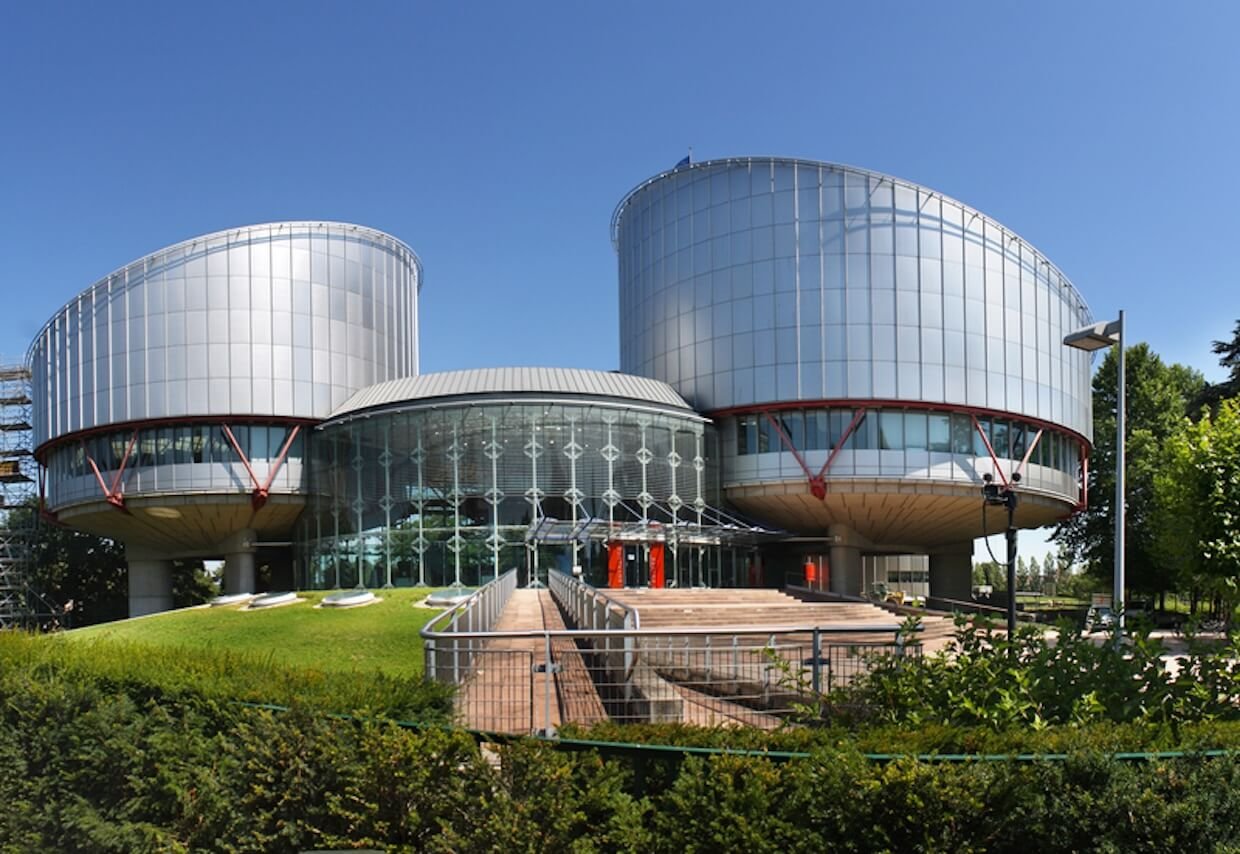
Professor Giuseppe Martinico: Their effectiveness is obviously not unlimited. I am a constitutional law scholar, but I know that constitutional law or international law alone cannot solve all these problems. We need something more. Supranational courts cannot replace domestic political culture, constitutional loyalty, or democratic mobilization within member states. At the same time, however, I do believe that institutions such as the European Court of Human Rights and the Court of Justice of the EU provide an essential multilayered safeguard against democratic erosion.
The key problem today is that democratic backsliding often originates from within national constitutional systems themselves. The threat is no longer primarily the classic external coup d’état, but rather the internal decay of constitutional democracy through legally enacted reforms promoted by elected governments. So, the question becomes: how do we protect constitutionalism when domestic safeguards themselves begin to collapse or weaken? European law, comprising both EU law and the European Convention on Human Rights system, offers at least four important forms of added value in this respect.
First of all, European law creates an external constitutional anchor based on shared values. Think, for example, of Article 2 of the Treaty on European Union, which establishes a common commitment to democracy, judicial independence, pluralism, and the rule of law. There are many judgments of the Court of Justice demonstrating the EU’s strong commitment in this regard. For instance, last month we had the very important Commission v. Hungary judgment.
Second, European law provides new rights, particularly through EU law. Even the UK Supreme Court, in the famous Miller judgment, recognized that EU law had become deeply embedded in the domestic constitutional order because it conferred new and concrete rights upon individuals. It also provides new remedies—that is, new ways to enforce these rights before national courts.
Third, supranational law operates at a scale capable of addressing transnational concentrations of power that individual states struggle to regulate on their own. Think of Google, Facebook, or X: they cannot be effectively domesticated or restrained relying solely on national constitutional law. We therefore need these transnational forms of regulation.
This is especially evident in fields such as privacy, digital platforms, and data protection, where EU law has enabled important judicial interventions against major tech actors. In parallel, the European Convention on Human Rights system increasingly confronts the weaponization of free speech narratives within democratic systems. Think of how Donald Trump, Elon Musk, and J.D. Vance have weaponized free speech against attempts to regulate their activities.
Finally, supranational courts also play an important symbolic and discursive role. They help preserve a common European constitutional vocabulary centered on pluralism and fundamental rights, thereby resisting democratic erosion.
In conclusion, supranational courts are not sufficient on their own. But without them, domestic constitutional democracies facing internal decay would be far more vulnerable.
Constitutional Democracy Can Survive Only If Citizens Experience It as Meaningful
And finally, Professor Martinico, despite the spread of populist radical-right politics and democratic erosion across Europe and beyond, do you still see grounds for optimism regarding the resilience of pluralist constitutional democracy? What kinds of institutional, legal, and civic reforms are most urgently needed to defend democratic constitutionalism without sacrificing openness, diversity, and fundamental rights?
Professor Giuseppe Martinico: I would say that, yes, despite everything, I still see grounds for cautious optimism regarding the resilience of pluralist constitutional democracy. Indeed, liberal constitutionalism has shown throughout history a remarkable capacity for adaptation and self-correction. However, defending it today requires abandoning the illusion that democratic backsliding can be reversed simply through technocratic governance or by merely debunking populist counter-narratives. These are important measures, but they are not enough. Constitutional democracy survives only if citizens continue to perceive it as meaningful, participatory, and capable of responding to social anxieties.
In my view, one of the key challenges is to distinguish between structural populism and specific populist claims. Some of these claims can be filtered and, if properly filtered, incorporated into constitutional democracy. The crucial issue, therefore, is how to filter such claims while preserving the untouchable core of liberal and post-authoritarian constitutionalism. Comparative law offers useful examples in this regard.
For instance, techno-populists are correct in emphasizing the democratic potential of digital technologies, because new technologies can reinforce democratic participation and help us rethink the relationship between constitutionalism and democracy. Yet replacing representative institutions with instantaneous forms of online decision-making would create what my colleague and friend Ming-Sung Kuo has called a dangerous form of “instantaneous democracy,” thereby eroding deliberation and parliamentary mediation.
Similarly, populists are not entirely wrong when they criticize phenomena such as opportunistic party switching, which may weaken democratic trust and can sometimes even be perceived as corruption. However, the solution cannot be a return to the imperative mandate, as we discussed earlier. Comparative law instead offers more nuanced solutions, such as the model found in the Portuguese Constitution, which contains a sophisticated proportional anti-defection mechanism while still preserving the autonomy of members of Parliament.
Again, the same applies to referendums, as we discussed. We should therefore be creative because, more generally, participation must be coupled with deliberation. As Albert Hirschman once argued, we should aim to convert mounting distrust into an active democratic virtue.
This is especially important for the European Union. Citizens will not trust the EU unless they understand what the EU actually does for them. Too often, the Union is portrayed merely as an external constraint imposed upon national democracy, but I find this interpretation deeply incomplete because, as we have seen, the EU can actually add value to our democracies. That said, the EU must become more transparent, understandable, and participatory. Citizens need to see participation producing real political consequences. In the end, the challenge is how to improve participation without generating participatory fatigue or frustration.
I also tend to believe that civil society is indispensable. It functions both as a watchdog and as a channel of participation. So, ultimately, I remain cautiously optimistic because constitutional democracies still possess considerable institutional and normative resources. But preserving constitutional democracy requires a dual effort: defending the counter-majoritarian and pluralist core of constitutionalism while simultaneously making democratic institutions more responsive, more central, and more capable of generating a genuine sense of political belonging.
That was a very difficult question, but I hope I managed to provide an answer.