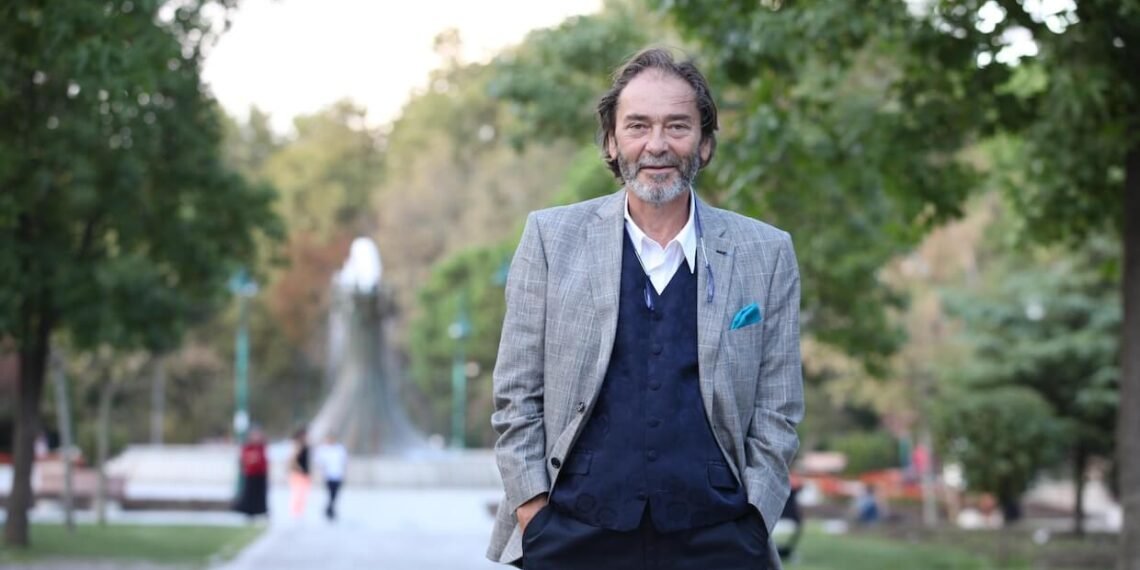
In this timely ECPS interview, Professor Cengiz Aktar examines the political, geopolitical, and democratic implications of Armenia’s 2026 parliamentary elections. While acknowledging Armenia’s democratic resilience in an authoritarian neighborhood, he challenges prevailing narratives about the country’s westward turn, arguing that Armenia’s economic, energy, and security dependence on Russia remains profound. Describing the European Union as “the greatest populist actor in this game,” Professor Aktar contends that Brussels is fostering expectations it cannot realistically fulfill. The interview explores Nikol Pashinyan’s evolving populism, post-Karabakh politics, democratic backsliding, normalization with Turkey and Azerbaijan, Russian influence, and the enduring significance of historical memory. At its core lies a fundamental question: how can a fragile democracy survive amid competing geopolitical pressures?
Interview by Selcuk Gultasli
Armenia’s 2026 parliamentary elections have been widely interpreted as a pivotal moment in the country’s post-Karabakh trajectory. Taking place amid the aftermath of military defeat, the forced displacement of Armenians from Nagorno-Karabakh, ongoing normalization efforts with Turkey and Azerbaijan, and growing tensions between Russia and the West, the elections raised fundamental questions about democratic resilience, populism, sovereignty, and geopolitical realignment in the South Caucasus.
In this wide-ranging interview with the European Center for Populism Studies (ECPS), Professor Cengiz Aktar—adjunct professor of political science at the University of Athens, guest lecturer at Yerevan State University, and one of the foremost analysts of Turkey-Armenia relations, memory politics, and regional geopolitics—offers a provocative assessment of Armenia’s democratic future and its increasingly complex international environment.
While acknowledging Armenia’s democratic achievements, Professor Aktar stresses the extraordinary constraints under which the country operates. As he observes, Armenia remains “the only democracy in the Caucasus, indeed in the region,” a small, landlocked state surrounded by authoritarian neighbors and exposed to intense geopolitical pressures. Yet he warns that many assumptions currently shaping discussions of Armenia’s future rest on unrealistic expectations regarding Europe’s role and capacity.
The most striking theme of the interview concerns Armenia’s growing rapprochement with the European Union. Contrary to prevailing narratives that portray Armenia’s recent political direction as a decisive shift toward Europe, Professor Aktar argues that Armenia’s economic, energy, and security dependence on Russia remains overwhelming and cannot be easily replaced. In his view, European policymakers are encouraging expectations that they cannot realistically fulfill. “None of this can be replaced by the European Union,” he argues. “Yet the EU is systematically giving false hopes to Armenia. In that sense, the greatest populist actor in this game is Europe. Because Europe is offering hopes that it simply cannot fulfill.”
Professor Aktar is equally skeptical of assumptions that Armenia faces a straightforward geopolitical choice between Russia and Europe. While recognizing the country’s genuine democratic aspirations and strong cultural connections with Europe, he contends that geography, energy dependence, trade networks, and security realities continue to bind Armenia closely to Moscow. For this reason, he warns that unrealistic promises of European integration may ultimately prove counterproductive, potentially undermining Armenia’s stability while provoking Russian backlash.
The interview also explores Armenian Prime Minister Nikol Pashinyan’s evolving populism, the politics of peace and normalization with Turkey and Azerbaijan, democratic backsliding, Russia’s continuing influence, historical memory, and the unresolved legacy of the Armenian Genocide. Throughout, Professor Aktar returns to a central dilemma confronting Armenia today: how a fragile democracy can preserve its autonomy and democratic character while navigating an increasingly hostile regional environment shaped by authoritarian power politics and great-power competition.
Here is the revised version of our interview with Professor Cengiz Aktar, lightly edited for clarity, readability, and publication.
Armenians Were Tired of War, and Pashinyan Successfully Capitalized on That Fatigue
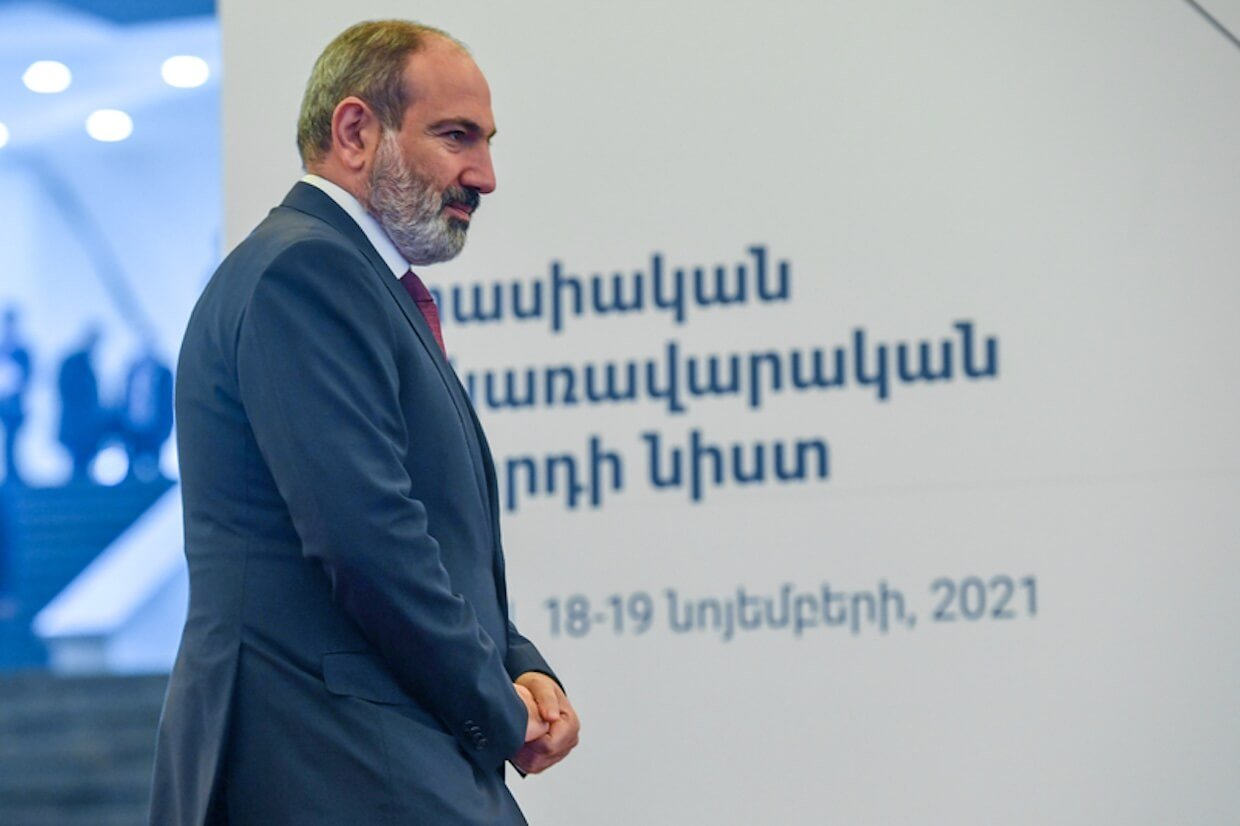
Professor Aktar, welcome! You recently argued that the 2026 elections would reveal the direction of Armenian democracy after the trauma of Karabakh and the pressures of regional geopolitics. How should we interpret Nikol Pashinyan’s re-election? Does it represent a democratic endorsement of his peace agenda, or merely a choice of the “least risky” option in a constrained political environment?
Professor Cengiz Aktar: Before going into the details of the Armenian political microcosm, we should underline that this small country— less than 30,000 square kilometers after all—completely landlocked and surrounded by two enemy nations, Azerbaijan and Turkey, is the only democracy in the Caucasus, indeed in the region. This is something that people tend to forget. They are doing their best to remain a democracy. It is not easy because they have to deal with anti-democracies. But so far, they have been doing all right.
We will see how the final results of these elections play out. They are not final yet, and there are many issues—we will come to them. We will see the outcome and how the authorities address some of the serious questions that have arisen after the elections.
That being said, the people have re-elected the Prime Minister and, at the end of the day, endorsed his views. This is quite a remarkable achievement because, normally, when a leader loses a war and, moreover, loses a territory—which is the case with Nagorno-Karabakh, a historic Armenian land that was given by the Soviets to Azerbaijan and later reclaimed by Azerbaijan through war with Armenia, openly and extensively supported by the Turkish armed forces—the political consequences are severe. The reality was therefore quite harsh for a prime minister seeking a new mandate. Yet he succeeded. Of course, this may seem contradictory or paradoxical, but it is not.
There are two elements at play here. We could talk for hours about this. As you know, I have written extensively on the subject in Turkish for Agos, the Armenian newspaper published in Turkey in both Turkish and Armenian.
The first and foremost reason is that the people of Armenia are tired of fighting. There is a clear war fatigue. Although we cannot compare it to what is happening in our region, in Mesopotamia and elsewhere, this sense of insecurity has been very real. The Prime Minister used—and abused—this feeling extensively, essentially saying: if you do not vote for me, we will go to war. That was, of course, highly manipulative and a very populist way of dealing with such a sensitive issue as peace and security. Nevertheless, it worked.
The second element is that this country is virtually unrecognizable. I have been going there since 1990, and today Armenia is experiencing a boom in personal spending and consumption. It is becoming a mass-consumption society of the kind we saw in Western Europe after 1945. This, of course, is music to the ears of the Armenian public. I visit regularly, but this time I was genuinely amazed by the number of brand-new cars. There are hardly any old cars left in the city. Everybody seems to have a new one. Where does this money come from? Of course, no one asks such questions. But the main source of these finances, as in other countries of the region—including Turkey, Georgia, and others—comes from sanctions-busting.
The West—the United States and the European Union—sanctioned Russia, first after the annexation of Crimea and then following the full-scale war against Ukraine. Yet many countries have been circumventing these sanctions. This is not speculation. There are extensive reports on the matter, including in leading newspapers such as the Financial Times, documenting the flow of goods and cash to and from Russia. Russian gold, for example, moves through the South Caucasus and then to China and India, where it is processed and made marketable before returning to Russia. As one can imagine, this trade is extremely lucrative, and we see its effects in the economy of Yerevan.
So, all in all, the people have voted—although not for a full majority, and we will come to that. They voted for a different type of future. That is understandable. But is it sustainable? I think that is the real question.
Who Is Not Populist When Seeking Re-Election?
Pashinyan originally emerged from the 2018 Velvet Revolution as an anti-establishment figure challenging entrenched oligarchic networks. To what extent can he still be understood as a populist leader, and how has his populism evolved from opposition mobilization to governing power?
Professor Cengiz Aktar: Who is not populist, Selçuk? Especially when one is running for re-election. It is almost compulsory to be a populist, unfortunately. Nikol Pashinyan was in full swing when it came to populist moves, actions, speeches, and narratives. That is all true. But it worked. The question is whether he really represents a future for the country. Some observers say so, but at what price? That is the real issue, the real problem that Armenians will have to confront sooner or later.
What he has managed to achieve with Turkey and Azerbaijan—two longstanding foes of Armenia—is not yet fully accomplished, but it is on track; it is in the pipeline. However, it has been pursued through, once again, a very populist way of handling highly sensitive matters. It has been achieved by making huge concessions to both countries, without really receiving anything in return. This is very dangerous in the sense that one cannot ignore the imbalance involved.
I often think of a famous observation by Henry Kissinger, who was not exactly a commendable figure. He used to say that the best and most sustainable peace deals are those concluded by parties that leave the negotiating table equally dissatisfied with the outcome. That is very true. Yet in the case of Armenia and Azerbaijan—and also Turkey—that did not happen, and it will not happen, because Azerbaijan and Turkey do not have much to offer in return, except perhaps opening the border in Turkey’s case, and maybe Azerbaijan’s as well.
Even then, there are enormous conditions attached before anything concrete can happen. As you may have noticed, there has been much discussion in the Turkish media about the possibility that the two land border crossings could open during the summer. We will see whether Azerbaijan will allow Turkey to move forward with this symbolic—or perhaps concrete—opening of the border, which has been closed since 1993. That is a very long time.
As of today, the 12th of June, only five days after the elections, there remains a great deal of uncertainty. The Prime Minister did not get everything he wanted, and the opposition actually performed quite well. Does that mean that those who voted for the opposition are pro-Russian or anti-Western? I do not think so. That would be far too hasty a conclusion.
Frankly, I remain quite skeptical about the future, and there are some very unpleasant developments unfolding at the moment. But we will come to those in due course.
People Were Willing to Sacrifice Almost Anything for Peace
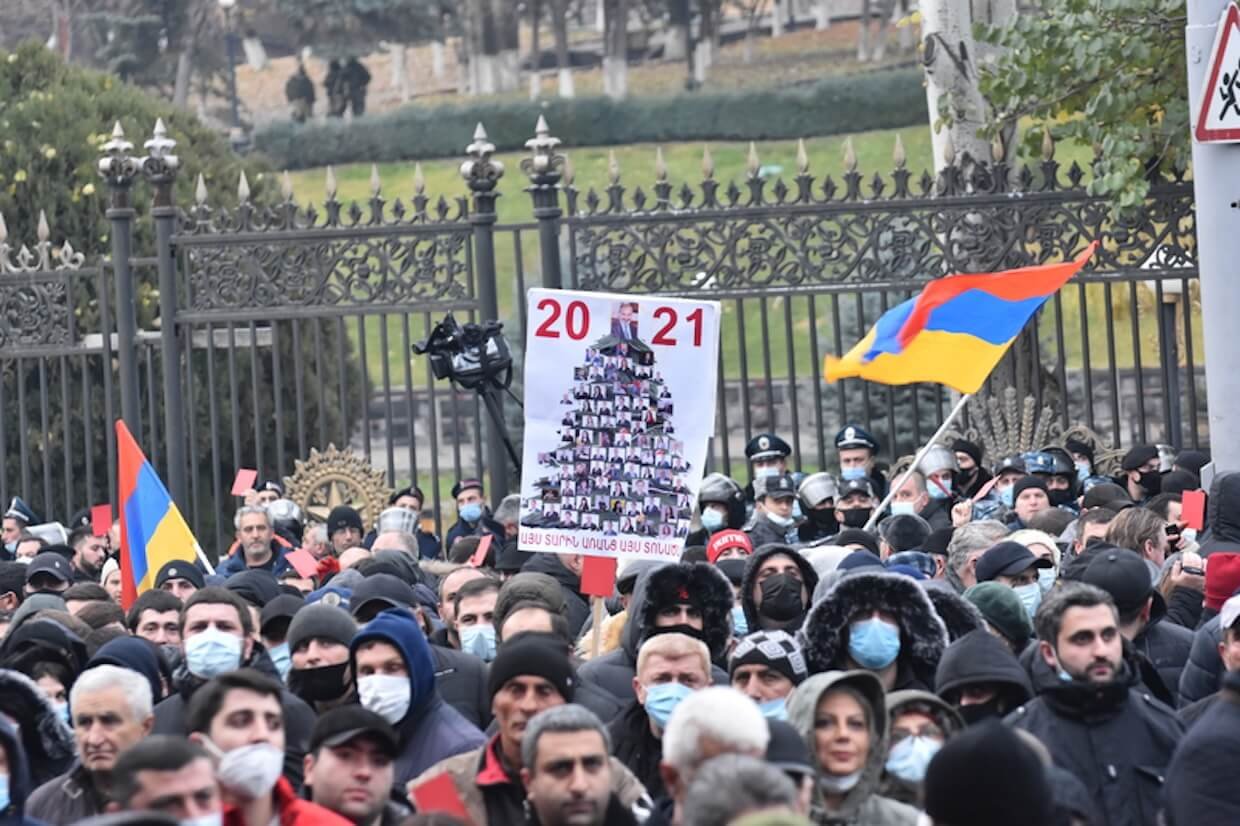
Comparative scholarship often suggests that military defeats weaken populist governments. Yet Pashinyan survived both the 2020 war and the loss of Nagorno-Karabakh. What explains his resilience, and what does it tell us about the relationship between populism, accountability, and democratic legitimacy?
Professor Cengiz Aktar: Democratic legitimacy is a big word. But frankly, as I said at the beginning, the appeal of a consumer society and the symbolic peace narrative played a major role. Pashinyan used this message effectively, even adopting the little heart as the symbol of his campaign, which is totally un-Armenian. It is not something that is commonly used in Armenia, nor in the Caucasus. Anyhow, these two elements—peace and consumption apparently worked. That is the reality. But again, are they sustainable? That is the question.
It worked perfectly. Elderly people were appearing on television, in street interviews and similar formats, saying remarkable things about the importance of peace at any cost. They were prepared to give up almost anything in exchange for peace and greater consumption. So, once again, the question remains: is it sustainable? I do not think so.
The Dominant Geopolitical Orientation Remains Russia, Not Europe
Many observers described the election as a referendum on Armenia’s geopolitical orientation. Do you think Armenian voters primarily voted on domestic democratic concerns, or was this fundamentally a choice between Russia and Europe?
Professor Cengiz Aktar: In Armenia, since the Velvet Revolution of 2018, there has been a genuine sense of democratic aspiration within society. Of course, not every individual is pro-democracy or democratic—that exists nowhere in the world—but overall, the aim, the tendency, and the willingness are there. Armenians want to build a democratic society.
But there are major impediments. It is a very small and a very dependent country. Despite the strong Western tropism that developed during the election campaign, particularly through the major event that took place in Yerevan at the beginning of May—the annual meeting of the so-called European Political Community, which was revived by Macron after an earlier French initiative had been abandoned in 1954—the reality remains quite different. The European Political Community is not a binding European institution; it is essentially a talk shop. Yet during this gathering, the whole of Europe was present, along with Canada, and they all delivered very warm messages to the Armenians. The message was essentially: “You are now part of Europe. You are welcome,” and so on.
But the reality is not quite that. The dominant and determining geopolitical orientation of Armenia remains Russia, not the West. Everything that happened during May before the elections—including these Western visits and those from the United States as well; the Vice President was there in March, carried the same message: “Armenia, we love you, and you are one of us.”
What explains this sudden affection? It is rooted in the anti-Russian policies of the West. In a sense, Armenia has been used for that purpose. Now tensions are emerging with Russia, which remains by far Armenia’s most influential neighbor. Armenia depends on Russia on an unbelievable scale. This dependence cannot be replaced or superseded by any European initiative, however well-intentioned. Geographically, historically, politically, and economically, it is impossible.
You have read what I have written about this dependency. More than 82 percent of Armenia’s gas and energy needs are covered by Russia, at an extraordinarily low price—$177.5 per 1,000 cubic meters of gas. There is nothing comparable anywhere else. If Russia were to change that arrangement unilaterally, Armenia would face tremendous difficulties. Not to mention Metsamor, the country’s only nuclear power plant, located near the Turkish border. It was built by the Russians, and Rosatom supplies its fuel. Nor should we forget the petrol and oil products that Armenians use every day in their new cars. There is also the enormous Russian market for Armenian products such as fruits, vegetables, and flowers.
None of this can be replaced by the European Union. Yet the EU is systematically giving false hopes to Armenia. In that sense, the greatest populist actor in this game is Europe. Because Europe is offering hopes that it simply cannot fulfill. People are now even talking about future EU membership for Armenia. But that is out of the question. One of the indispensable conditions for EU membership is territorial continuity. So where is the territorial continuity? It simply does not exist. It will not happen. There is no realistic chance whatsoever. Yet people are buying into this rhetoric without fully understanding the realities involved, and in the process they are jeopardizing the country’s relations with Russia. That is where we find ourselves today.
Russia Remains the Ultimate Game Changer in Armenia
You have repeatedly emphasized Moscow’s declining credibility in Armenia after its failure to prevent the loss of Karabakh. Has Russia now lost its position as Armenia’s primary external reference point, or does it still possess significant instruments of influence inside the country?
Professor Cengiz Aktar: Of course, as I said, yes. Russia remains the game changer in Armenia. Armenians are certainly not in love with Russia, particularly since the Russians did nothing to stop the Azeris and the Turks from taking back Nagorno-Karabakh. So, every Armenian has reason to be unhappy about what Russia did. But, the reality is something else. As I explained, the country remains highly dependent on Russia, and that dependence will not change from one day to the next.
Moscow May Have Felt No Need to Interfere
Several reports suggested Russian attempts to influence the election through economic pressure, disinformation, and support for pro-Russian actors. How should we understand these efforts within the broader framework of transnational authoritarian influence and democratic resilience?
Professor Cengiz Aktar: The OSCE’s Office for Democratic Institutions and Human Rights (ODIHR) was there. The ODIHR has a specialized body that monitors elections in OSCE member states, and it was present during these elections as well. According to ODIHR, there was no interference whatsoever. There was a great deal of fake news on the subject, but neither the Electoral Commission nor the independent media found any substantial evidence of vote-buying or influence operations orchestrated by Russia.
On the contrary, there were reports concerning officials from Civil Contract, Nikol Pashinyan’s party, exerting pressure on civil servants to vote for Civil Contract. A civil servant is, after all, an obedient servant, so if the boss says, “Go and vote for me,” he or she generally will. These kinds of irregularities were noted.
Overall, however, I do not think that Russia intervened in the Armenian elections. If I put myself in the position of Russian decision-makers, I would say that they are probably so confident in their leverage over the Armenian economy that they felt no need to intervene directly in order to influence the outcome of the elections.
European Tropism Is a Myth and a Pipe Dream
The election result appears to strengthen Armenia’s rapprochement with Europe. In your view, is this shift primarily strategic and security-driven, or does it also reflect a deeper normative commitment to liberal democracy and European political values?
Professor Cengiz Aktar: No, as I said, this European tropism is a myth. It is a myth. Armenians are not discovering Europe. Armenia is, in a way, a very European country. Just look at the diaspora. The European Armenian diaspora is very strong and remains highly present in Armenia itself. If you compare the two countries, for instance Azerbaijan and Armenia, Armenia is by far more European than Azerbaijan, which has virtually no connection to Europe whatsoever. There is no significant Azeri diaspora in Europe. That is not the case with Armenia. Armenia knows what Europe means, in a way.
But, having said that, I repeat: this European tropism is a pipe dream. It is a personal choice, but it will not have any real consequences for the development of Armenian democracy in the foreseeable future. They are not there, and they will not be there.
The Americans are another matter altogether. They are much more focused on transactionalism. They buy and sell, and they do not care at all about the democratic future of any country in the world—including their own.
Autocratic Tendencies Are Clearly Visible
Some critics argue that Pashinyan has displayed increasingly personalized leadership tendencies and a growing concentration of power. Do you see signs of democratic erosion under his government, or are such concerns exaggerated given Armenia’s broader regional context?
Professor Cengiz Aktar: The trend is troubling. There have been some anti-democratic and illegal actions directed against the opposition, but not only against the opposition. Let me give you the example of the director of the Genocide Museum in Yerevan. This lady offered a book to the American Vice President during his visit to Yerevan. The book dealt with the fate of the Nagorno-Karabakh Armenians. As you know, 150,000 Armenians were forced to flee Nagorno-Karabakh. She was subsequently sanctioned by the Prime Minister, who forced her resignation. This is far from any democratic way of handling public affairs. The lady was compelled to resign and was replaced by a bureaucrat close to the Prime Minister who has no real understanding of the history of the Armenian genocide.
He is also challenging the role of the Church. Etchmiadzin, the Holy See, is systematically under pressure from the government. That is not the role of a government—to intervene in the affairs of the Church, whatever the circumstances. There may be all sorts of accusations against the head of the Church, Karekin, involving embezzlement and other matters, but that is not the role of a government.
During the campaign as well, there were some quite worrisome developments targeting opposition figures, and these developments are still continuing.
Moreover, the election results are not yet entirely clear, because we still do not know whether a fourth party will make it into Parliament. Unfortunately, since the closure of voting on the night of the 7th June, there has been considerable pressure on election officials to ensure that this fourth party remains below the 4 percent threshold and does not enter Parliament. By cheating, of course.
And now the scandal is completely out in the open. All opposition parties are protesting loudly. They are taking the matter to the Electoral Commission and will probably proceed to the Constitutional Court afterwards in order to seek a proper resolution, because this party’s votes have been cancelled. The objective has been to ensure that it does not enter Parliament and remains below the 4 percent threshold. We cannot call this democratic. It is anti-democratic, it is illegal, and it challenges the principle of free and fair elections. So, are there autocratic tendencies? Yes, definitely. They are very much there. Are they widespread? No. But the danger is there.
Concessions Without Reciprocity Create Fragile Peace
Pashinyan campaigned explicitly on a message of peace with Azerbaijan and normalization with Turkey. Is this the emergence of a new political cleavage in Armenia between peace-oriented pragmatism and nationalist revisionism?
Professor Cengiz Aktar: It is a good question. National revisionism, okay—but revise what? Those who challenge the Prime Minister’s positions, policies, actions, and narratives are saying something that is very meaningful. They say: “We are not against peace.” After all, who can be against peace? Who can be in favor of war? That is a form of universal wisdom. But they are asking a different question: How did you achieve that peace? What do you receive in return when you make concessions to Azerbaijan and Turkey?
That is the real question. It is fascinating to observe that a very similar dynamic is unfolding in Turkey with the Kurds. The Kurds speak about peace, a peace process here and a peace process there. But what do they receive in return from the Turkish state? In line with their longstanding demands—for example, the freedom of the Kurdish language and the recognition of Kurdish as an official language in Turkey—they receive nothing.
It is the same in Armenia. The practice is exactly the same. Everybody talks about peace, but when you ask what they receive in return for their concessions, the answer is: nothing. They say they receive peace. But this peace exists entirely under the shadow and control of the other parties, who can challenge it at any moment. They have not given anything themselves, and therefore they can always come back and say: “No, we want more.”
That is precisely what is happening now. As you may know, before the elections—more specifically on May 15—there was an important development. The Azerbaijani ambassador to Ankara openly and quite happily declared that the opening of the border between Turkey and Armenia was directly linked to the so-called peace process between Armenia and Azerbaijan, and that Baku and Ankara were coordinating their moves and policies.
He was speaking on behalf of Baku, and the condition for this so-called peace process was—and still is—a change to the Armenian Constitution. Specifically, Azerbaijan wants the removal of the provision concerning Nagorno-Karabakh, which is referred to in the Armenian Constitution as an Armenian territory, or as a territory inhabited by Armenians. In other words, Baku wants Yerevan to eliminate this provision, and this remains the principal condition for accepting a lasting peace with its neighbor.
The problem is that, in order to do that, the Prime Minister needs a two-third qualified majority in Parliament, which he did not obtain. Now, with all the controversy surrounding vote-rigging and alleged manipulation concerning the fourth party I mentioned earlier, I do not see how he can satisfy the Azerbaijani demand by amending the Constitution and removing the reference to Nagorno-Karabakh. This means that the prospects for peace with Azerbaijan—and, consequently, with Turkey—are in serious difficulty.
They are compromised, and no one can foresee the outcome at this stage because we still do not have the final count, nor do we know exactly how many parties will ultimately enter Parliament. But in any case, even if the fourth party fails to enter Parliament, the ruling Civil Contract party still lacks the necessary majority to amend the Constitution. So, we are facing a deadlock, and no one really knows how it will evolve.
The Perversion of Justice Starts With the Denial of Memory
Professor Aktar, you have often argued that Turkey cannot become a fully democratic society without confronting its historical crimes, particularly the Armenian Genocide. How does the current normalization process affect questions of historical justice, memory, and democratic reconciliation?
Professor Cengiz Aktar: This is a question that really deserves a separate discussion, but in a nutshell, I can offer an example. Turkey is in dire straits. Turkish democracy does not exist. In fact, I would argue that it never truly existed. But the rule of law, for which Turks have struggled since 1923—and especially since the end of the Second World War—is now gone as well.
These are structural problems, even structural diseases. I do not particularly like using that term, but this is what we are dealing with: a dysfunction that goes back to the founding sin of the state—the Armenian Genocide and the Syriac Genocide, which are inseparable and which occurred more than a century ago.
A country that does not come to terms with such a painful and sinful past can easily digest other sins, as is the case today, including sins that are far less serious and far less painful than what happened 111 years ago.
What I am saying is not abstract. I am not talking about ghosts. I am talking about the perversion of the sense of justice in this country. And I am quite sure that Turkey will not make it through the remaining decades of the twenty-first century without recognizing, reflecting upon, and recalling this tragic past, which ultimately resulted in the disappearance of the entire non-Muslim population of Anatolia. We are talking about three million people.
So, it is really a matter of either-or. What is the significance of an embezzlement scandal involving a Turkish politician—for instance, Erdoğan—when compared with genocide? It is nothing. It is peanuts.
Therefore, a population, a polity, a society, and a state that do not wish to remember what happened a century ago—which was carried out by Turks and Kurds —can easily digest, accept, and live with far less serious wrongdoings, as we see happening today.
This is simply a normal consequence of this absence of memory, or rather this voluntary loss of memory and de-memorization of the past. It is very dangerous, and it is very unhealthy.
False European Hopes May Push Armenia Back Into Moscow’s Orbit
And lastly, Professor Aktar, at a time when much of the post-Soviet space is characterized by authoritarian consolidation, Armenia remains one of the few competitive democracies in the region. What lessons does the Armenian experience offer for understanding democratic resilience, populism, and geopolitical pressure in the twenty-first century?
Professor Cengiz Aktar: Interestingly, we began our discussion with this point, and we will conclude with it as well. Armenia remains the only country in its immediate neighborhood that is genuinely trying to remain a democracy. The next democratic country, after all, is Greece, which is quite far away.
It is doing its best to preserve democratic governance. But it is extremely difficult to survive in a non-democratic, and even anti-democratic, environment when you are surrounded by countries that do not share the values, principles, and norms of democracy.
This is not merely a theoretical issue; it is a practical one. Non-democracies and anti-democracies can conclude agreements with democratic countries, sign them, and then simply ignore their commitments. Because they are not accountable. A non-democratic or anti-democratic regime is not accountable to its population. It simply does not care.
Take Russia, for example. I mentioned earlier the figure of $177 for 1,000 cubic meters of natural gas. That gas is supplied under an agreement between Moscow and Yerevan. But Moscow, as a non-democratic—indeed, a totalitarian—state, can simply say: “We are no longer bound by that agreement. We are raising the price to the international market level of $600. Take it or leave it.” This illustrates the difficulty of operating—and indeed surviving—in such an environment. I sincerely hope that the Armenians will manage and succeed.
The problem is that the false hopes offered by European countries and by the European Union itself are not helpful. In fact, they indirectly push Armenia back into Moscow’s orbit and deeper into Russia’s sphere of influence. The Russians are already deeply upset with the Europeans, not least because of what is happening in Ukraine. And they are unlikely to tolerate what they would perceive as a second strategic setback in their immediate neighborhood. After all, the Caucasus is their backyard.
There is one final point. Anyone interested in the South Caucasus should take a serious and analytical look at what happened in Georgia. Georgia went through a very similar process—loosening its ties with Russia and moving closer to the West. In the end, it failed. The country ended up with two portions of its territory effectively invaded and, while not formally annexed, indirectly administered by Russia. Meanwhile, all the Western hopes and aspirations of eventually joining the European Union have faded away. They are gone. Finished. Today the country is governed by a tycoon who is completely infatuated with Moscow.
This, unfortunately, is the reality of the South Caucasus. We will see how things evolve. I wish the very best to Armenia, but the task before it is not easy at all.